

Tip Toe: Brilliant, Flawed, Provocative — Russell T Davies at His Most Dangerous and Daring
By Steven Smith
There will be many who rush to label Channel 4’s Tip Toe as simply “a gay drama.” Those people, in my view, will have entirely missed the point.
To reduce Tip Toe to a story about sexuality alone is to overlook the remarkable ambition of Russell T Davies’ writing. This is not merely a drama about gay men — it is a collision of worlds, ideologies, loneliness, masculinity, identity, validation, repression, and the pressures of modern life. It is a masterfully crafted exploration of what happens when opposing views on life violently collide and the emotional strain of simply trying to survive in a complicated world finally explodes.
Russell T Davies has never been interested in easy storytelling, and Tip Toe may well be one of his boldest and most divisive works to date.
However, with brilliance comes risk.
My concern with Tip Toe is that many viewers will watch it and lazily place all gay people under one umbrella. The danger is that some audiences will assume this world represents all LGBTQ+ people, when in reality it reflects only one particular corner of an incredibly broad and diverse community. The LGBTQ+ community is made up of teachers, nurses, doctors, lawyers, electricians, carers, artists, accountants, and parents. Many live wonderfully ordinary, quiet lives, contributing enormously to society without spectacle or drama. Not every gay man is on Grindr. Not every gay man lives loudly, chaotically, or sexually openly.
That is where Tip Toe becomes both fascinating and potentially problematic. While Davies presents extreme behaviour and emotional dysfunction with staggering honesty, many viewers may fail to recognise that excess and dysfunction exist in every community. I have often sat in pubs during football matches and witnessed behaviour far more sexually aggressive, crude, and chaotic than anything I have ever seen in a gay bar. Yet somehow society tends to excuse one while sensationalising the other. That imbalance is worth discussing.
Still, to critique aspects of Tip Toe is not to dismiss Russell T Davies. Far from it.
For me, Davies may well be the Shakespeare of our generation. His visionary masterpiece Years and Years remains one of the most prophetic and extraordinary dramas ever written for British television — compulsory viewing, in my opinion, for anyone wanting to understand modern Britain and the frightening direction society can take when division and fear are allowed to flourish. With Tip Toe, Davies once again proves he is unafraid to provoke uncomfortable conversations.
What makes the series so compelling is not simply the writing, but the extraordinary ensemble cast Russell T Davies has assembled.
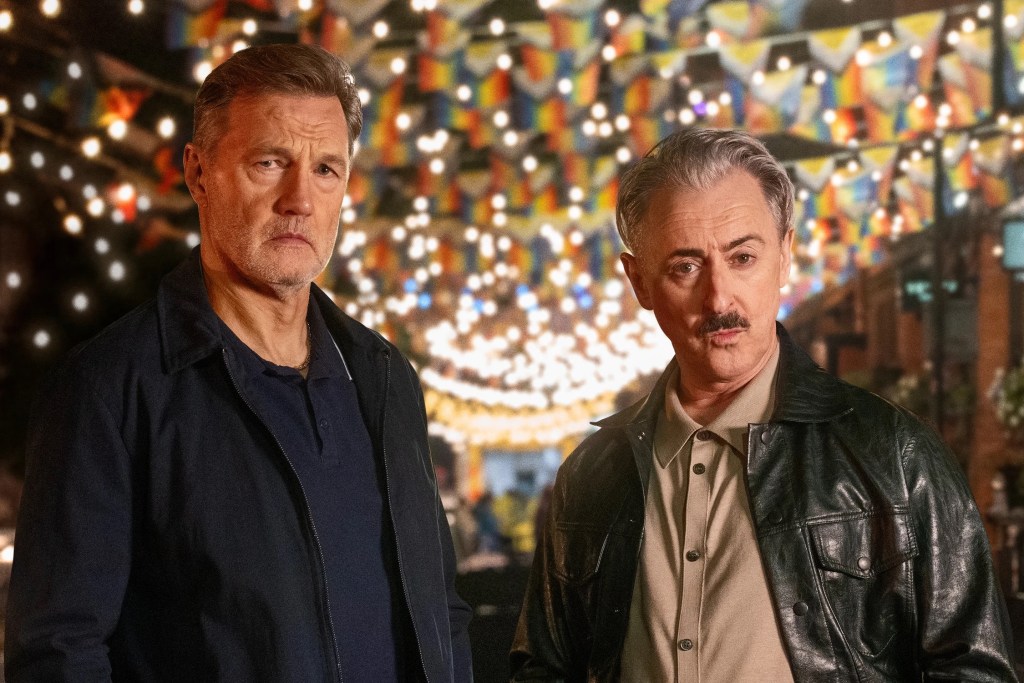
If David Morrissey does not win every award possible for his performance as Clive, then something has gone very wrong. Quite simply, he is electrifying — if you will forgive the pun.
Clive is a man trapped in emotional confusion: frustrated, isolated, conflicted, angry, and deeply lost. Morrissey gives us a character wrapped tightly in contradictions, wrestling with identity, desire, social expectation, and years of internal repression. You simply cannot stop watching him.
There are moments where Clive is frustrating, moments where he is selfish, and moments where he is heartbreaking. Yet throughout it all, Morrissey commands the screen with extraordinary authority. He knows precisely when to hold back and when to erupt emotionally. It is one of those performances where the actor disappears entirely into the role.
Then there is Alan Cumming as Leo.
Now, I will be honest — Alan Cumming has never particularly been my favourite actor. Yet here, he somewhat surprised me. Leo is a man desperate to be liked, desperate to be validated, desperate to feel wanted after emotional loss and heartbreak. It is a role filled with vulnerability and pain beneath the flamboyance, and Cumming captures that fragility beautifully.
Leo’s emotional desperation felt painfully recognisable to me because I have seen it repeatedly among gay men, particularly those who have grown up feeling rejected by family, bullied, or made to feel “other.” When love and acceptance have been absent for years, validation can become addictive. For Leo, sex is not really about sex. It is about affirmation. It is about being seen. It is about momentarily silencing the voice inside that says: you are not enough. What Leo truly craves is love.
Cumming plays that emotional hunger with tremendous sensitivity, even if there were moments in his performance that personally left me slightly cold and veered back towards overacting. Yet perhaps that emotional discomfort is exactly the point. Leo becomes increasingly obsessed with those who disapprove of him rather than the people who genuinely care. His tragedy lies in needing acceptance from the wrong places. In many ways, I believe this may be Alan Cumming’s finest work to date.
Yet Tip Toe occasionally suffers from trying to say too much at once. There are moments where you want to scream because so many worthy topics — each deserving of their own television series — are hurled at the audience in rapid succession: loneliness, marriage, monogamy, sexual identity, internalised shame, family rejection, masculinity, validation, addiction, ageing, political division, and social fear.
The script occasionally resembles an extravagant trifle piled dangerously high. The ingredients are exceptional, but at times it feels as though Russell T Davies could not resist adding just one more layer. If anything, Tip Toe might have benefited from slightly less frosting. A little more restraint.
At moments, the messaging around indiscretion and performative sexuality becomes repetitive, pushed towards the audience almost pantomime-style at one point, as though the viewer must repeatedly be reminded what point is being made. Just like the straight guy in the pub talking about his conquests, gay men can do it too. Less, occasionally, might have been more.
One particularly interesting thread is Clive’s observation about Leo’s husband leaving him for someone unexpected. It quietly raises larger questions around sexuality itself. People are not always fixed. Many people are bisexual, pansexual, or exist somewhere on a spectrum. As the legendary Tallulah Bankhead once famously joked: “Why rule out fifty percent of the population?”
Tip Toe asks difficult questions many dramas avoid. Can people trapped in loveless marriages ever truly survive emotionally? Is monogamy healthy for everyone? Are we expecting human beings to suppress needs they cannot articulate? Can loneliness become dangerous?
These are not “gay” questions. They are profoundly human questions.
Watching Tip Toe feels rather like sitting down to a fifteen-course tasting menu, only there is no opportunity to relax, no comfortable pacing. Instead, every emotional course arrives unexpectedly — some exquisite, some uncomfortable, some almost deliberately shocking. At times, the audience experiences little emotional electric shocks, forced to confront difficult truths they may rather avoid. Then comes something softer just as you think you can breathe.
The emotional sorbet of the piece arrives in the form of Denise Welch, who, in my opinion, remains one of Britain’s most underrated actresses. While many know her for television and panel shows, those familiar with her award-winning theatre work understand just how exceptional she truly is.
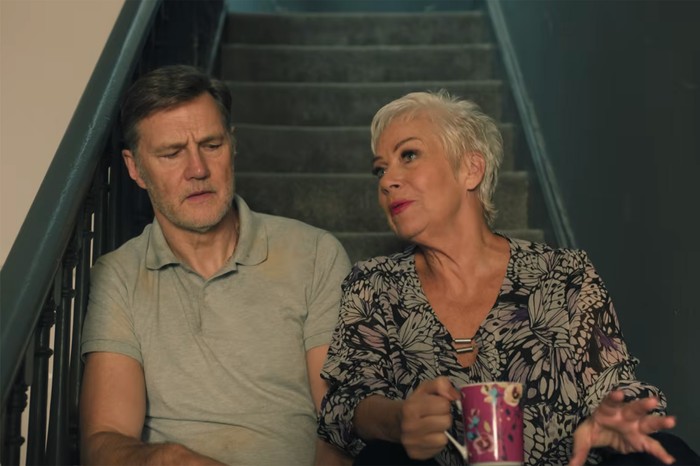
Her performance as Diane is quietly devastating. Diane is every bit as lonely as Clive, though her loneliness manifests differently. She self-medicates emotionally through drugs, avoidance, and emotional fantasy, desperately trying to remain relevant in a world that increasingly makes her feel invisible.
When Diane encounters Clive, she sees possibility — a portal back towards feeling wanted, feeling alive, attractive, and human.
And is that not what so many people want?
At its core, Tip Toe repeatedly returns to one painful truth: most of us simply want someone to choose us. Someone to find us desirable. Someone to make us feel less alone. Welch delivers this aching vulnerability magnificently.
The younger cast are equally impressive. Jackson Connor gives a beautifully sensitive performance as a sixteen-year-old navigating coming out within a deeply homophobic family environment. There is tenderness and realism in his portrayal that never feels forced or overplayed.
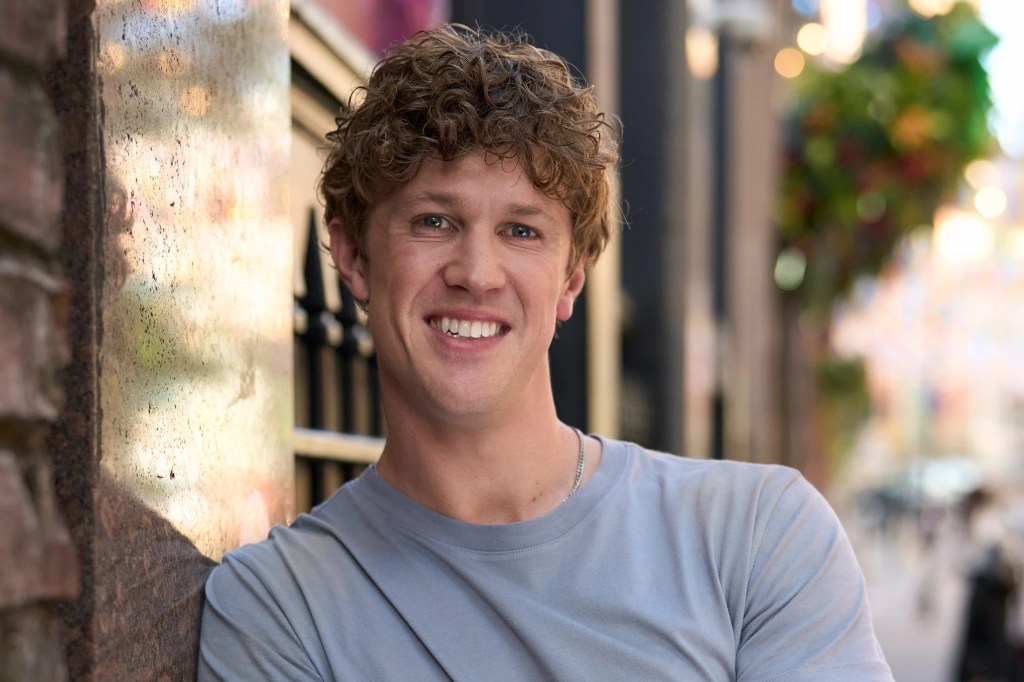
Meanwhile, Joseph Evans, playing the son secretly earning money through OnlyFans, possesses genuine screen presence and undeniable star quality. Yes, there is certainly some eye candy involved — although, if I am being completely honest, I rather preferred the father — but Evans offers far more than surface appeal. He is unquestionably one to watch.
There are also beautifully nuanced performances from Pooky Quesnel as Clive’s frustrated wife and Charlie Condou as Curtis, Leo’s long-term former partner. Both actors bring emotional texture and grounding to a story that occasionally threatens to spiral into emotional overload.
And then there is Paul Rhys.
My goodness.
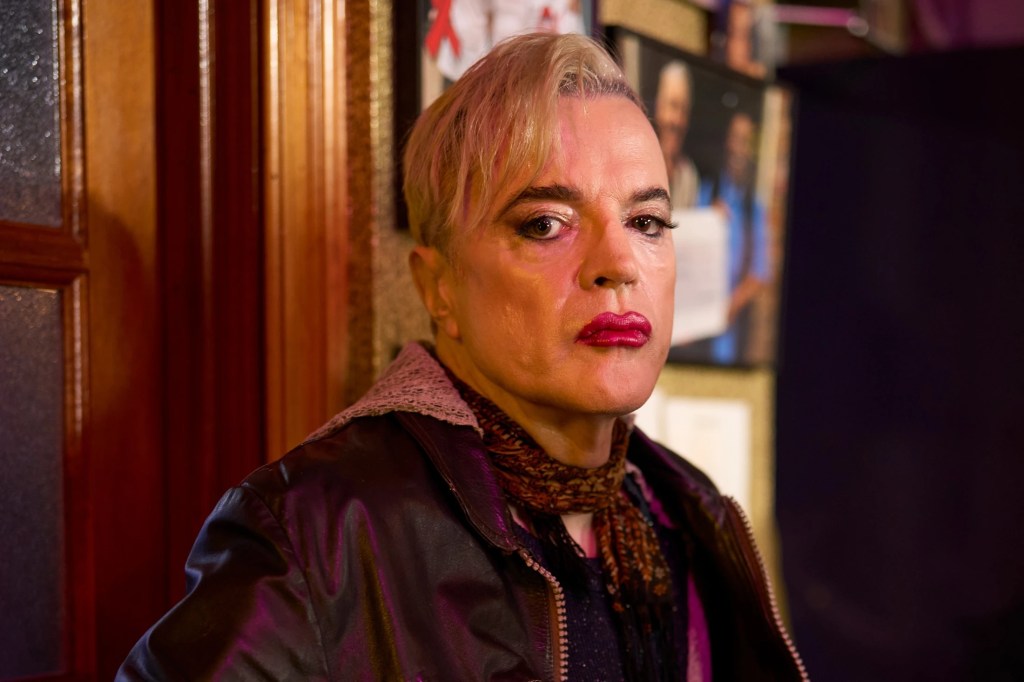
Paul Rhys does not merely appear in Tip Toe — he elevates it.
His character, Melba, delivers one of the show’s most heartbreaking observations: “I used to walk into a room in drag and go, ‘Ta-ra!’ Now I tip toe.”
It is a line that lands with enormous emotional force. Suddenly, Tip Toe becomes about something even bigger — fear. Fear of judgement. Fear of violence. Fear of ageing. Fear of becoming invisible. Fear of no longer belonging.
At one point comes the chilling line: “They hated us. They’ve always hated us. Only now the President of America has given them permission to do so.”
Whether viewers agree politically or not, it speaks powerfully to how vulnerable many minority communities can feel when social attitudes begin to harden.
Rhys’ performance is exquisite. Come awards season, neither David Morrissey nor Paul Rhys will be tiptoeing anywhere. They should be walking into every ceremony glittering with trophies.
So where does that leave Tip Toe?
Does it help “the cause”?
If by “the cause” we mean presenting LGBTQ+ lives in the safest, cleanest, most universally palatable way possible — perhaps not. but it is a masterpiece and art should challenge.
END


One reply on “TIP TOE Russell T Davies at his most dangerous and daring to date .”
While enjoying your review and agreeing with much of what you wrote I couldn’t help but notice that you failed to include the potential evils and negatives of a world increasingly dependant on ‘ social media ‘ and the internet. Without that, Tip Toe would remain yet another drama about prejudice and ignorance…I know I’m in a minority today in not being addicted to such devices and ‘ sites ‘, but I think it is worth mentioning how, in my opinion, the world is at times a less safe place than it was before people lived their lives being inseparable from mobile phones and computers, accepting tips and opinions from complete strangers and ‘ influencers ‘ with whom they have no personal interaction and little or no knowledge of those proffering those opinions and points of view… just another viewpoint !
LikeLiked by 1 person