

Steven’s Viewz for June
“Pride” means self-esteem, self-respect, and the joy that comes from being who you are. It’s a celebration of identity and community—and it’s also a protest, because the fight for equality is far from over.
How far we’ve come. In the 1970s, the only LGBTQ+ publication I knew of was Gay News—a paper I used to smuggle into my family home as a teenager. Mainstream magazines rarely showed gay people in a positive light, and doing so could sink a publication. In the entertainment industry, being openly gay could mean career suicide. Even being suspected of homosexuality could get you thrown out of the armed forces.

I came out at 15, creating scandal at school and chaos at home. When my mum discovered my hidden copy of Gay News, she screamed, “There’s no such thing as ‘Gay News’, only bad news.” While she’s now a proud LGBTQ+ ally, back then it was a different story. Only my 13-year-old sister offered comfort—squeezing my hand and saying, “I always knew. I love you.”
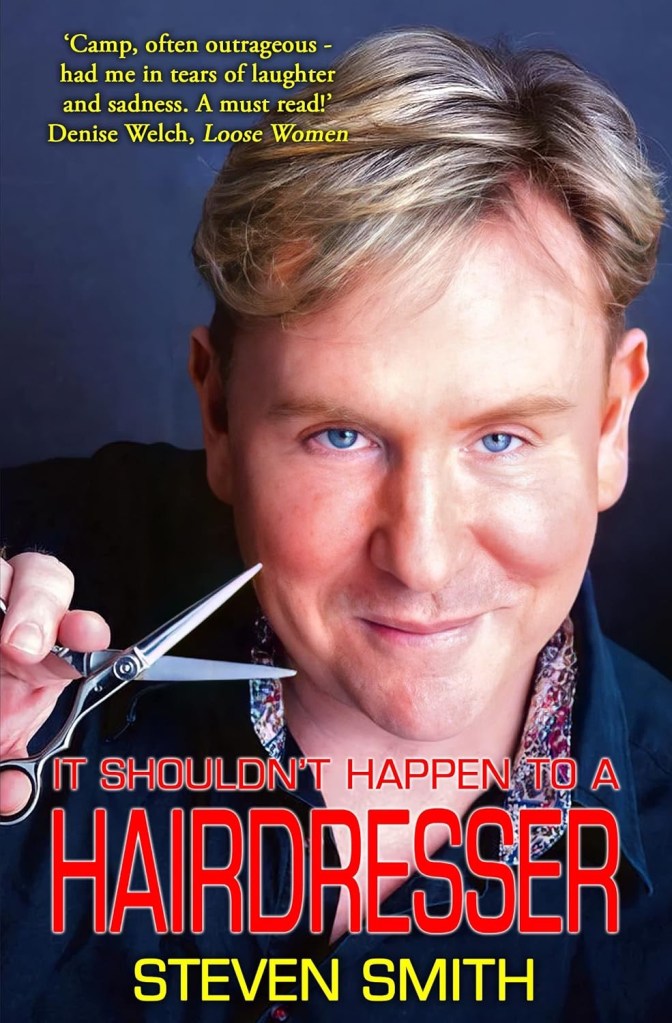
My parents, desperate to “understand,” took me to the Samaritans, where I was introduced to a man who had been in the merchant navy who “knew about gays.” I remember his pale-blue jumper and the awkwardness in his voice. He warned me that not all gay men looked like David Bowie or Marc Bolan—who, I pointed out, were bisexual. He added, “If you go to Portsmouth, there are big, hairy men on bikes looking for young lads.”
Once back in the car, I asked, “Where’s Portsmouth—and how do I get there?”
Coming out still shocks some families. I’ve seen parents devastated by something they must have known deep down. In It’s A Sin, Keeley Hawes’ character, Valerie Tozer, denies her son’s truth even as he dies of AIDS. Another mother asks her pointedly: “What were you looking at when he was six? Ten? Fifteen?”
Today, LGBTQ+ teens are still being thrown out of their homes. Others are allowed to stay—but endure silence, shame, or abuse. All for the “crime” of loving someone, or being themselves.
Meanwhile, the same parents hand their kids toy guns and cheer them on during war games—yet recoil at a same-sex kiss. The hypocrisy is astonishing.
I cried watching Heartstopper on Netflix. When Nick comes out to his mum, played with grace by Olivia Colman, she simply thanks him and checks he’s okay. That’s the world we need. Fewer traumas. More love.
Yes, things are better. But the LGBTQ+ community is still under attack. Survival requires strategy—and education is key. We need LGBTQ+ role models in schools. We need to support young people who don’t fit gender norms. We need to tell our stories and make space for others to tell theirs.
I recently had a woman say to me, “You don’t seem that gay. My hairdresser Eduardo is gay—he’s a scream! He does drag on Tuesdays.” I replied, “The Kray twins were gay.” She went quiet, then apologised. I wasn’t offended—but I had made her think.
Positive role models matter. Jake Daniels, the first openly gay footballer, recently made headlines. So have Gareth Thomas and Tom Daley. But the fact that coming out still makes headlines shows how far we’ve yet to go.

It was heartening to see David Beckham support Jake Daniels—but disappointing to see him promote the World Cup in Qatar, where homosexuality is punishable by death. Allies must not sit on the fence when human rights are at stake.
Let’s not forget: the gay community isn’t immune to internal bias. Flamboyant men are often sidelined. Some fear being labelled “camp” or “too much.” But icons like Quentin Crisp, Boy George, David Bowie, and Marc Bolan showed us that difference is not a weakness—it’s a strength.

If an alien asked to meet a “typical gay person,” we couldn’t comply. There’s no such thing. Just like there’s no one image of a straight man—despite the stereotype of a pint-wielding football fan in a Union Jack tee.
https://www.imdb.com/title/tt36961315/mediaviewer/rm721848066/
People ask me, “Why do you need Pride? There’s no Straight Pride.” My answer: “Be grateful you don’t need one.”
There are also calls to give Pride Month over to Veterans’ Day. I believe veterans deserve honour every day—but not at the expense of Pride or any other group or organisation One doesn’t cancel the other.
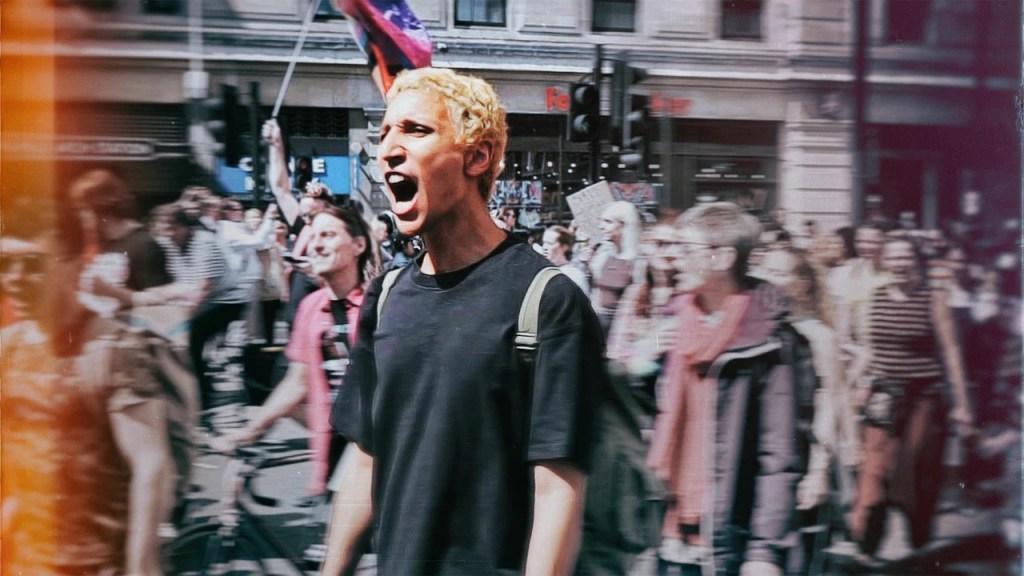
We’re living in frightening times. In countries like Argentina and the U.S., governments are trading human rights for promises of prosperity. In the UK, I fear the rise of Reform UK. We must not just defend our rights—we must be louder, prouder, and more visible than ever.

At the premiere of Legendary Children: All of Them Queer, activist Peter Tatchell said that change comes from entering non-LGBTQ+ spaces and being a shining example. I believe that. I hope one day I can hold my boyfriend’s hand in public without fear. I hope one day, every child who comes out is embraced by their parents, not shunned.
We’ve made progress. But we’re not there yet.
And if we don’t act now, we risk going back to the bad old days.

 2Shades Magazine