

Steven’s Viewz
“Stop the world—I need to get off!”
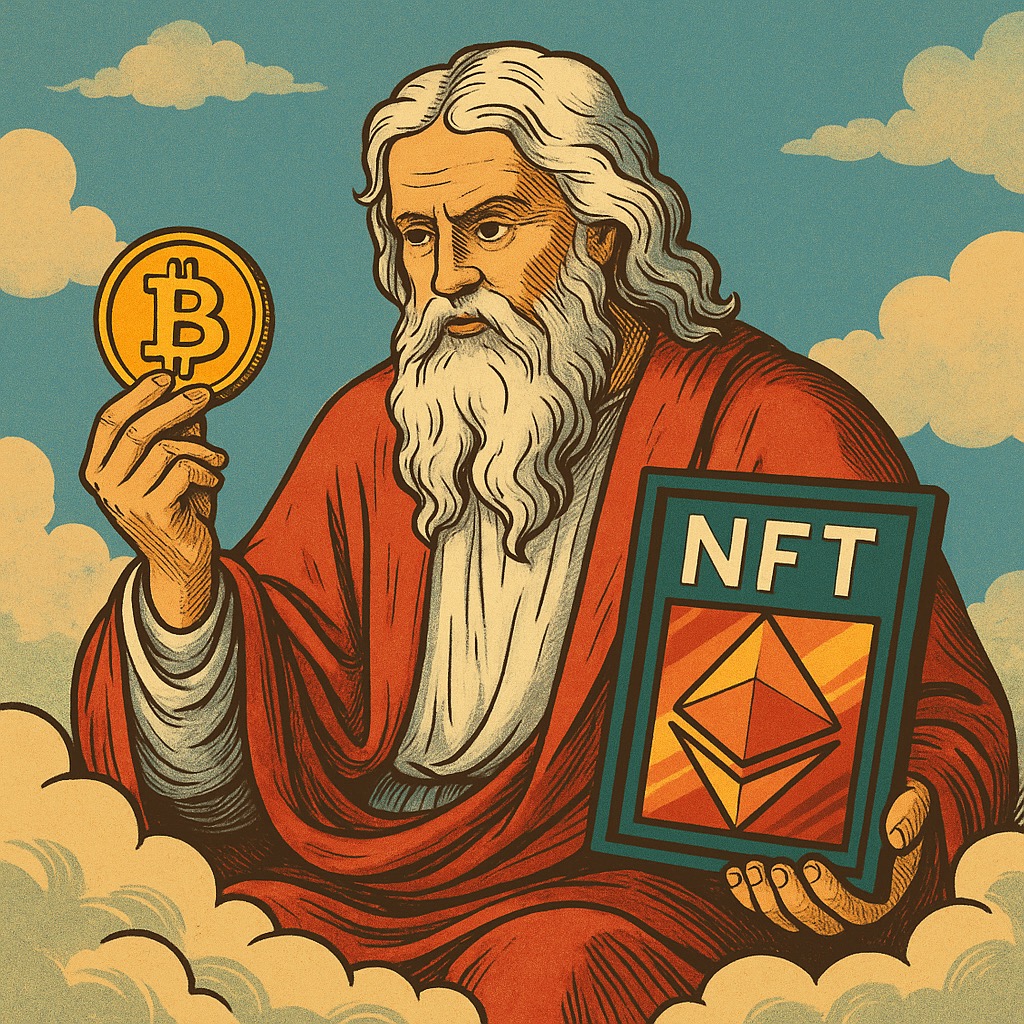
I hear many of you saying that in these bizarre and often crazy times. You could be forgiven for wondering if the great God (if you believe in such an entity) might reach down and reply, “Sure! Will you be paying for that in crypto, Bitcoin, or the old-fashioned pound?”
He may even offer you one of His NFT-signed art posters, promising that once you re-join Earth, it will have quadrupled in value—guaranteeing your return comes with a bang and, most certainly, millionaire status… well, in crypto land, at least. Just as Alice drops through a hole in search of it all.
Well, I found myself asking what an NFT is last year. I keep hearing it mentioned at events and parties. A friend visiting LA called and said,
“Darling, you’re no one here if you’re not into NFTs or crypto.”
Cue the sinking feeling—like when someone tries to sell me a multi-level marketing scheme.
“People felt the same about stamps when they started,” she added.
Fair point. Our great-grans kept money under the mattress after losing trust in banks during the Great Depression of 1929. And let’s not even get started on Lehman Brothers filing for bankruptcy in 2008, leaving people penniless and robbed of their life savings.
NFT (Non-Fungible Token) is a record on a blockchain associated with a particular digital or physical asset. Ownership is recorded and transferable via the blockchain, making NFTs something that can be sold or traded.
So what is an NFT in relation to art? An NFT is a digital asset that exists purely in the digital world—you can’t touch it, but you can own it. It can take the form of any digital file: an artwork, an article, music, or even a meme. For instance, Disaster Girl, the original photo, sold for $500K earlier this year.

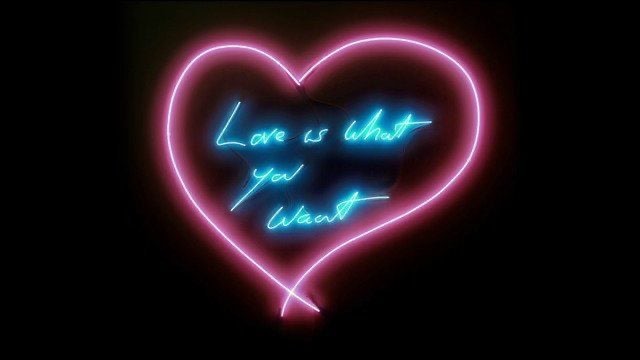
But is it the emperor’s new clothes? For every artist who champions NFT art, there are others who won’t touch this new way of trading. Boy George has opened his own digital platform: www.cryptoqueenznft.com. Though he hasn’t sold through auction houses like Sotheby’s or Christie’s, his work has fetched significant sums at charity events—and he certainly has talent. Tracey Emin has also joined the NFT art scene alongside several well-known artists. But many remain firmly against it.

In Business of Business, a piece titled Artists Against NFT quoted Zilch, an Atlanta-based artist:
“Personally, I’m against NFTs. However, we have to acknowledge that the system exists. It still requires regulation—it’s not a free-for-all, unmoderated space where all hell breaks loose. Systems get made, systems get abused, then they get regulated.”
London saw its first NFT gallery, Quantus Gallery, open earlier this year. The star-studded launch featured Ant Middleton, makeup model Jodie Kidd, and the dashing Callum Best, mingling with socialites, City boys, and what looked like would-be Kray brothers. It was a glamorous and eclectic crowd—and the buzz was undeniable.
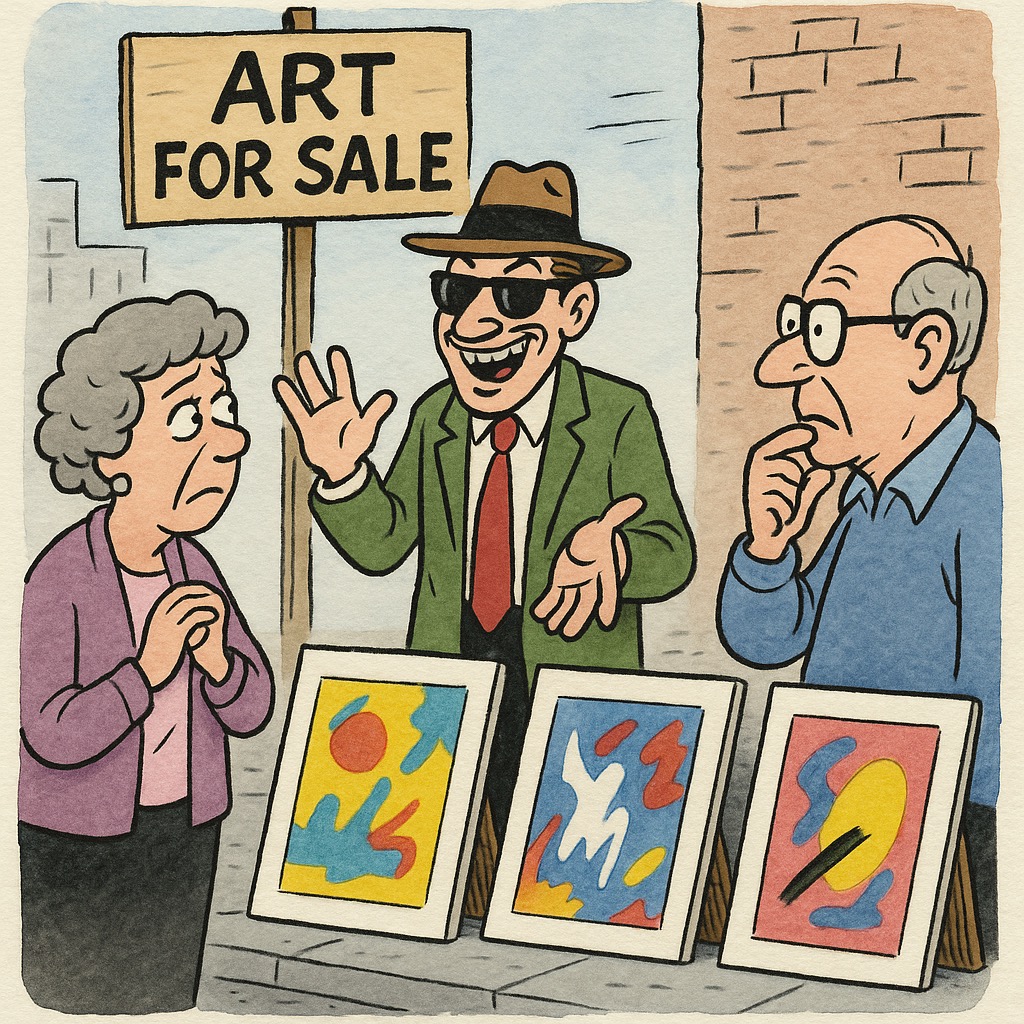
Art is subjective, and let’s not forget where the term con artist comes from. A brilliant salesman can sell snow to an Eskimo. It’s the same with paintings. Remember ART, the award-winning play? Serge, indulging his taste for modern art, buys an expensive, completely white painting. Marc is horrified. Their friendship unravels over what constitutes “art,” while Yvan tries to play peacemaker. Art, ultimately, is what you decide it is.
Every wise boy seems to be dipping into crypto. I’m absolutely convinced that, like in multi-level marketing, some will make a mint—and others will get burnt. At one point, my inbox was flooded with “get rich with crypto or Bitcoin” invitations. I nearly joined one, as many top business names were involved. But during the meeting, it became clear they were investing in… well, something that wasn’t quite there.
“We’re hoping to get Adele and Tom Cruise involved,” they said. Apparently, people will pay thousands to sit at a computer in NFT sunglasses. I guess people have spent fortunes on dressing up avatars in virtual games for years. It certainly helped the Kardashians build their portfolio.

But when I asked what Adele’s or Tom Cruise’s agents thought of all this, the answers were vague. It was clearly a wish list. I followed my instinct and said: “No, thank you.” A year later, despite the impressive credentials of its founders, the venture has gone nowhere.
There’s definitely a strong element of the hard sell from NFT enthusiasts. Personally, I’d still take the advice of my financial advisors and avoid anything with a gambling edge—especially if you have an addictive personality or can’t afford to lose. Most serious investors in high-end art use qualified advisors and buy through reputable auction houses or galleries that mentor their artists. They often request first refusal if the work is resold.
NFT art is certainly something to watch. If you have disposable income, then by all means—fill your boots. But in a volatile market, with crypto prices constantly swinging, it’s not something that helps me sleep at night.
I asked a woman who’s doing an incredible job promoting NFTs how she was paid. As she knocked back a glass of champagne, she replied:
“God, money, darling!”
That said it all to me.
Added Note: Buying Art as an Investment
Added Note: Buying Art as an Investment
When buying art as an investment, choose wisely. While some artists are natural-born salespeople—able to “sell snow to Eskimos,” as the saying goes—it’s important to remember that enthusiasm and charm are not guarantees of long-term value.
Be cautious when you hear the phrase “It sold at auction.” This often refers to a charity auction or fundraising dinner—not a prestigious sale at Christie’s or Sotheby’s. There is a significant difference between these venues in terms of how the sale reflects on an artwork’s market value and provenance.
Reputable artists are usually represented by established and well-known galleries for a reason. These galleries not only help manage the artist’s career but also serve to protect the integrity and long-term value of their work. Many of them will request first refusal if you ever decide to resell the artwork, helping maintain consistency and trust in the secondary market.
Serious collectors often work with art consultants or experts to guide their purchases—again, to protect the investment’s value. There are always exceptions in the art world, of course, but if you’re not properly informed or protected, and an artist has persuaded you their work is worth £50,000, don’t be surprised or disappointed if, when it comes time to resell, it turns out not to be worth the canvas it’s painted on.
Art should be enjoyed and loved, but if you’re buying with investment in mind, do your homework—and seek trusted advice.
END

 2Shades Magazine