
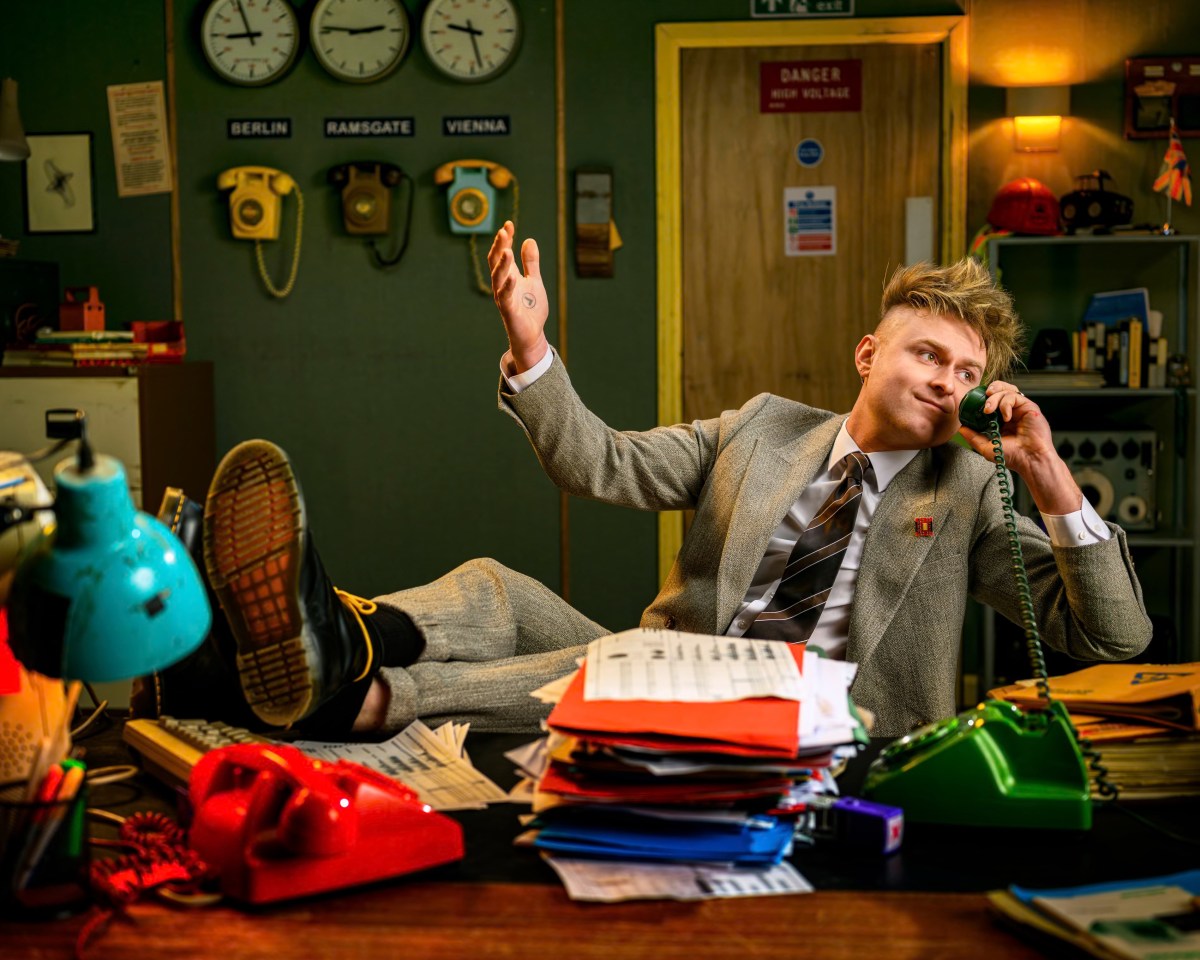
Eurovision 2026: The UK Sends Camp, Catchy Chaos with “Eins, Zwei, Drei”
There is a long-standing joke that the real gay New Year takes place not on 1 January, but every May when the glitter cannon fires up for the Eurovision Song Contest. And this year, the United Kingdom has certainly leaned into the camp spectacle with its entry for 2026: “Eins, Zwei, Drei” by LOOK MUM NO COMPUTER.
At first listen, the track leaves you momentarily speechless — partly because it is so unexpected, and mainly because it is, to put it politely, gloriously naff. But in true Eurovision fashion, what initially feels baffling somehow begins to grow on you. Like a moth drawn to a flame, you find yourself humming the hook without quite knowing why.
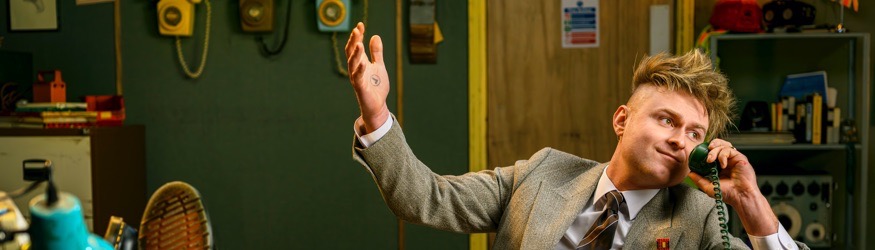
The UK’s representative this year is Sam Battle, better known online as Look Mum No Computer, an electronic musician and YouTube creator famous for building bizarre homemade synthesizers and experimental sound machines. It is perhaps no surprise, then, that the song he has delivered for Eurovision is anything but conventional.
“Eins, Zwei, Drei” is a quirky blend of synth-pop, electronic beats and tongue-in-cheek humour. With parts of the chorus sung in German — counting “one, two, three” — the song is as playful as it is peculiar. Throw in the slightly surreal lyric “I’m in the mood for something salty” and you have the kind of line that Eurovision fans will be quoting for weeks.
Reaction to the song has, unsurprisingly, been mixed — which in Eurovision terms is often a very good sign.
Some critics have praised the entry for being bold, catchy and refreshingly different. BBC commentators have described it as “joyful and supremely catchy,” applauding its rebellious energy and its refusal to take itself too seriously. Early reactions online have called it “delightfully bonkers,” suggesting that its eccentricity could make it stand out among a field of more traditional pop songs.
Fans who enjoy Eurovision’s more playful side have also embraced the track. For them, it represents the competition at its best: colourful, quirky and unapologetically fun. After all, Eurovision has always celebrated the unusual and the flamboyant.
Others, however, are far less convinced.
Some reviewers argue that the song leans too heavily on novelty rather than strong songwriting. Critics have described it as eccentric, odd and undeniably naff, raising concerns that the UK could once again struggle to win over the Eurovision juries.
There is also the question of whether its humour and quirky lyrics will translate well across Europe. Eurovision audiences are famously unpredictable, and what delights one country can leave another completely bewildered.
Online fan reactions have reflected this divide.
Some listeners say the track is fun, catchy and unmistakably Eurovision, praising its retro synth-pop energy and absurd humour. Others feel it is simply too strange or gimmicky, predicting that the UK may once again find itself lingering near the bottom of the scoreboard.
In short, people seem to either love the weirdness — or absolutely hate it.
Yet there is something strangely compelling about the song. Despite its oddity, the hook is undeniably infectious. Once you have heard the chant of “Eins, zwei, drei…”, it becomes almost impossible to forget. Hours later you may find yourself humming it absent-mindedly, wondering how such a peculiar tune has embedded itself in your brain.
And perhaps that is exactly the point.
Eurovision has always thrived on spectacle and personality as much as musical perfection. While this year’s UK entry may not be a masterpiece, it certainly brings a sense of humour and a touch of eccentric British charm to the contest. After all, Britain has long been known for producing its fair share of lovable eccentrics.
Of course, some fans may wish the UK would send one of its world-class superstars to Eurovision. After all, this is the country that gave the world artists like Adele, Sam Smith, and Boy George. One can only imagine the impact if a performer of that calibre decided to take on the Eurovision stage.
For now, however, the UK has opted for something rather different.
Instead of polished pop perfection, we are offering Europe something camp, quirky and undeniably memorable. It may not be the entry that finally brings the trophy back to Britain, and nil points is always a lingering possibility.
But there is another prediction worth making.
While it might not win Eurovision, “Eins, Zwei, Drei” has all the ingredients of a guilty-pleasure summer anthem. It is easy to imagine the track blasting from beach bars and nightclubs in places like Benidorm, Tenerife , with holidaymakers gleefully shouting along to the chorus.
Love it or hate it, the song is impossible to ignore.
And long after Eurovision is over, one thing seems certain: somewhere, someone will still be singing “Eins… zwei… drei…”.

 2Shades Magazine