
A Film That Will Change the Way You Think
By Steven Smith. https://www.animalaid.org.uk/news/transform-world-roadshow-launches-26-may/
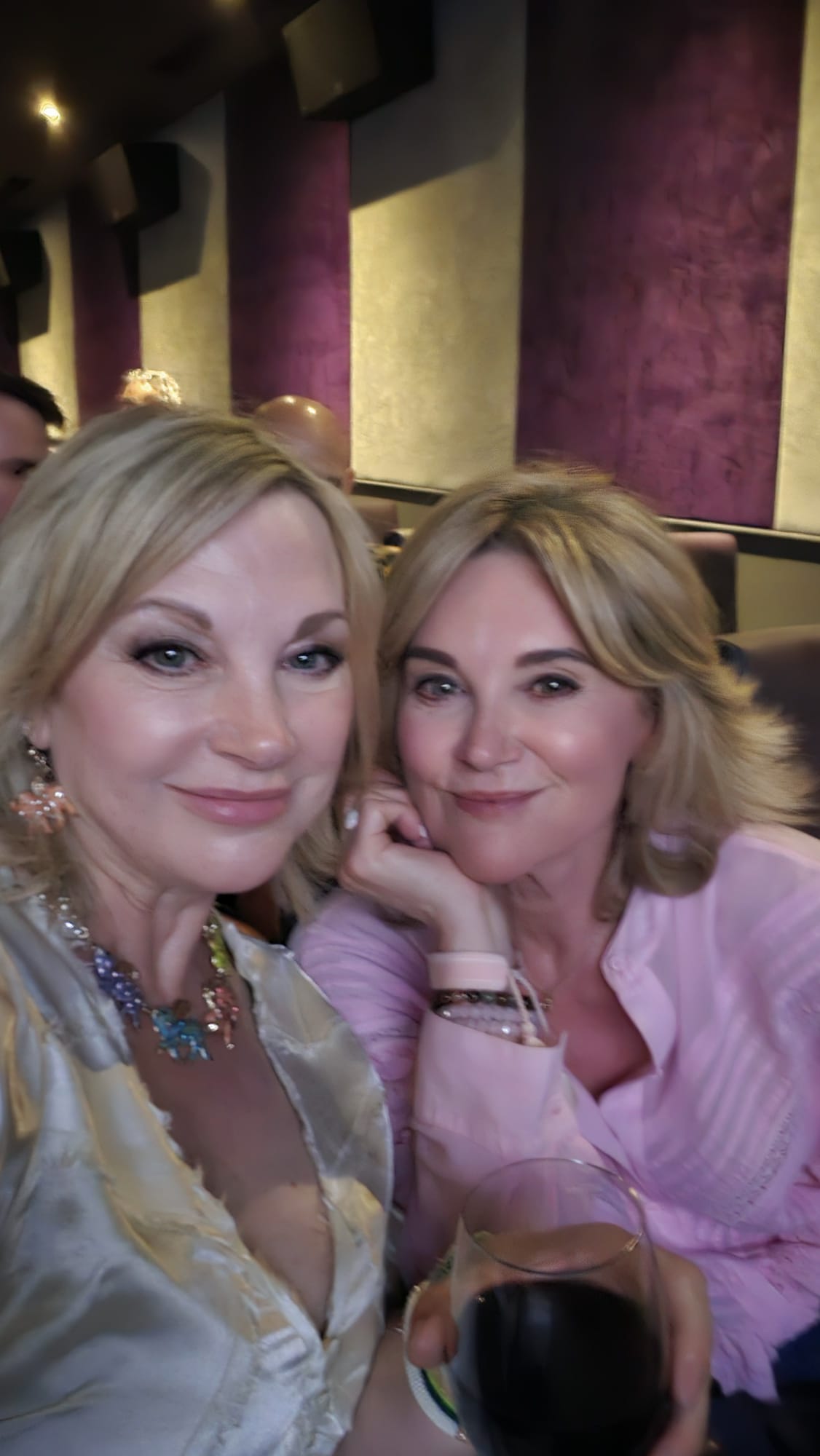
It might have looked like an evening filled with lights, cameras and celebrity glamour, but behind the smiles and red-carpet photographs was a cause that could not have been more important.
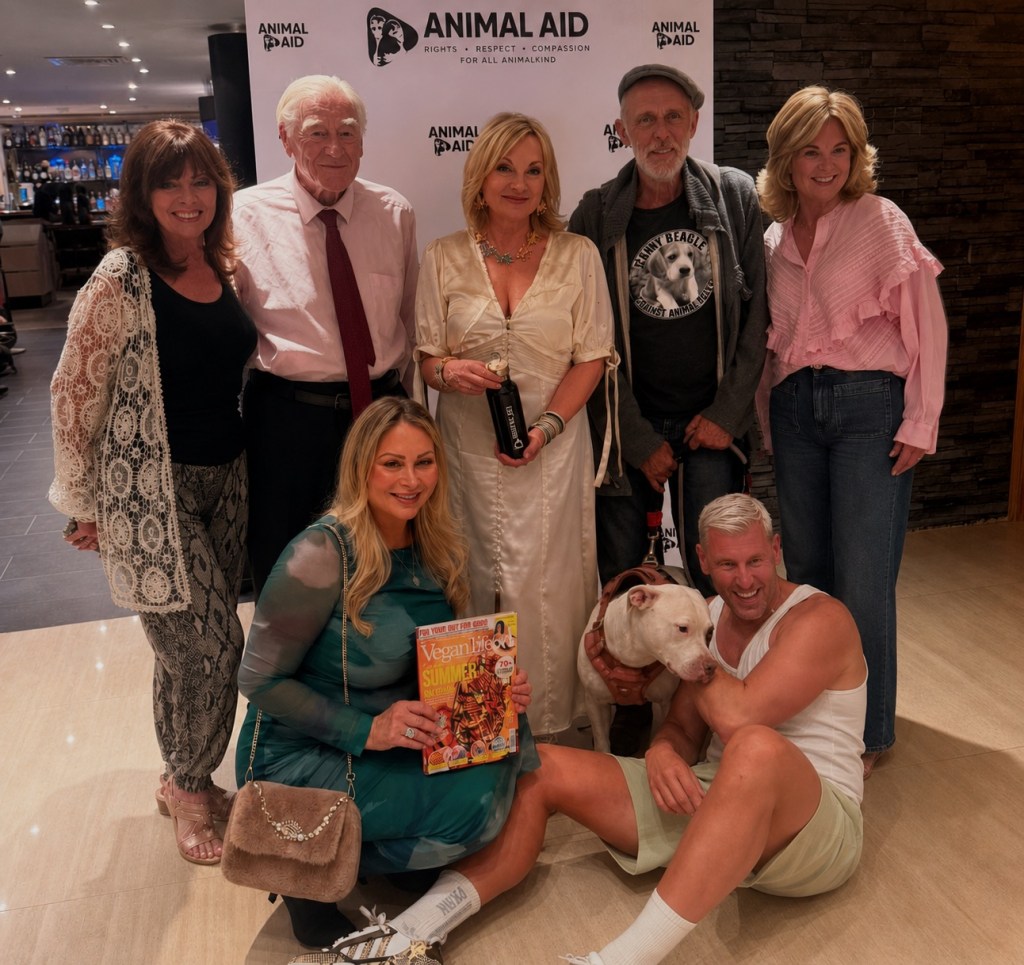
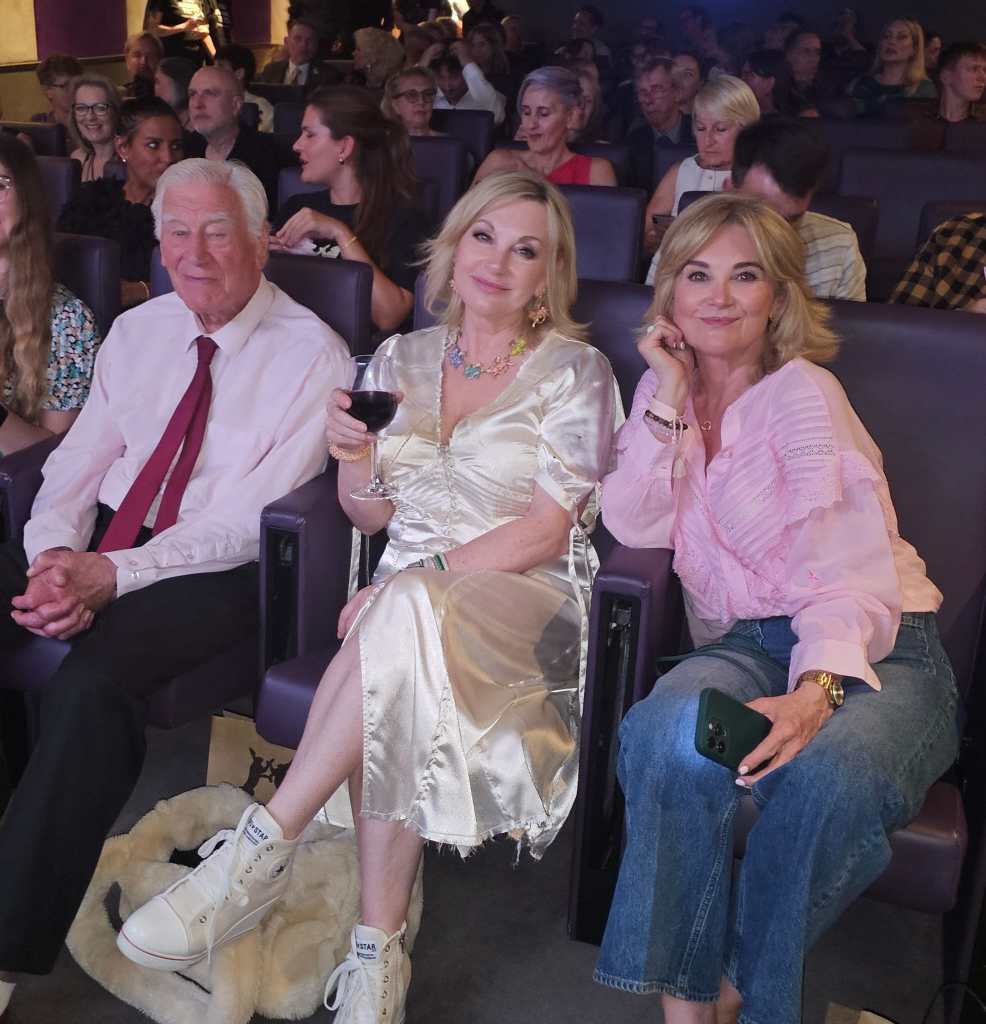
Television sisters Wendy Turner-Webster and Anthea Turner, alongside their inspirational father Brian, came together to unveil their new feature-length documentary, Turner’s Take on the Big WHY?, produced by Animal Aid.
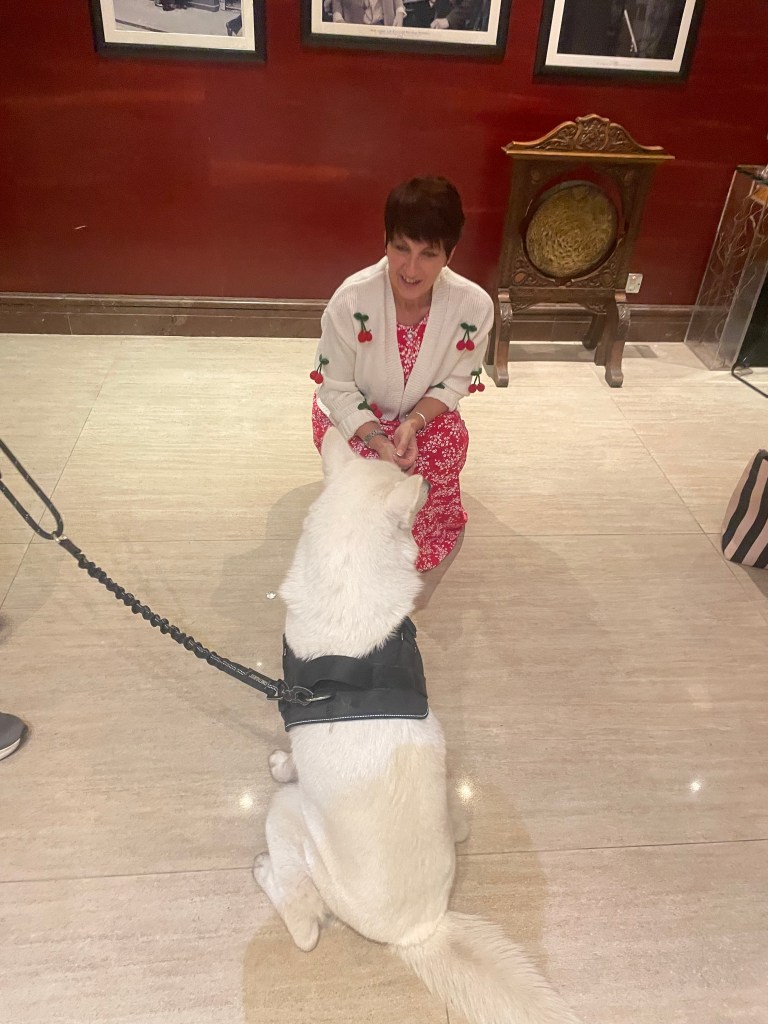
I joined the ever-active Dr Anna Kennedy OBE and a host of celebrities, campaigners and animal welfare activists at the beautiful Courthouse Hotel in London’s West End for what proved to be one of the most thought-provoking film premieres I have attended in a long time. Among those supporting the launch were Vicki Michelle MBE, Victoria Featherstone Pearce, singer Simon King, Dr Anna Kennedy OBE Gary Webster and many others who share a passion for animal welfare. It certainly had all the ingredients of a glamorous premiere.
But once the cameras stopped flashing and everyone took their seats inside the hotel’s intimate cinema, the atmosphere changed completely. Between the glitz and glamour lay a serious subject that many of us would rather avoid discussing, let alone watching on the big screen.
Animal testing.
I’ll be honest—I entered the screening with some trepidation. I’m one of those people who only has to watch a film where a dog hurts its paw and I’m in floods of tears. The thought of sitting through a feature-length documentary about animal experimentation didn’t exactly sound like my ideal afternoon. In fact, I found myself wondering who on earth thought this would make an engaging cinema experience.
Well…
I couldn’t have been more wrong.
What Wendy, Anthea and Brian have created is something remarkably clever. Rather than bombarding the audience with endless graphic images designed simply to shock, Turner’s Take on the Big WHY? gently draws you into the conversation. It asks questions instead of preaching, educates rather than lectures, and encourages viewers to think for themselves.
That is perhaps the film’s greatest strength.
The documentary explores why animals are still being used in laboratory experiments in the UK and around the world despite the existence of increasingly sophisticated, modern alternatives that many scientists believe are more accurate and humane. It raises uncomfortable questions.
Why are millions of animals still suffering in laboratories?
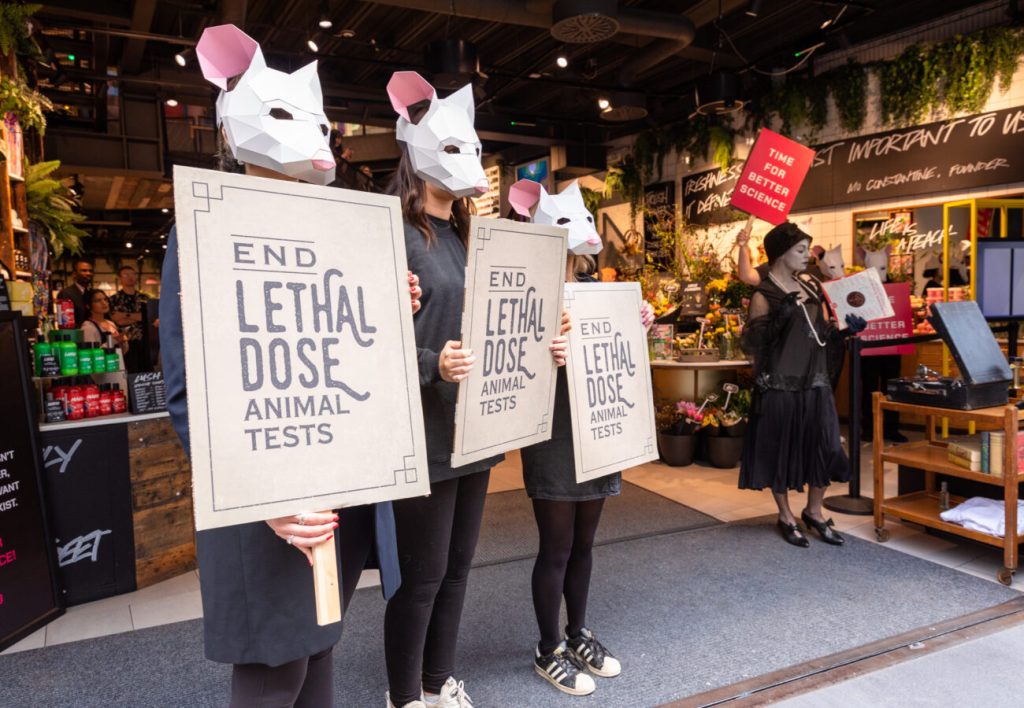
If newer technologies exist, why aren’t they being used more widely?
Are we simply continuing with outdated systems because that’s the way things have always been done?
These are not easy questions, but they are questions worth asking.
What impressed me most was the balance the filmmakers achieved. Yes, there are emotional moments. There are scenes that tug firmly at the heartstrings, particularly when viewers are shown the conditions in which beagles and other laboratory animals are kept. Those images are upsetting. They should be.
But the documentary never becomes so distressing that you feel compelled to look away. Instead, it carefully guides you through the facts, allowing the audience to stay engaged and absorb the information rather than switching off emotionally. It’s an incredibly intelligent way of tackling such a difficult subject. By avoiding sensationalism, the film actually becomes far more powerful.
You leave wanting to know more.
Wanting to read more.
Wanting to ask more questions.
For me, that’s exactly what a great documentary should do.
One of the biggest surprises was just how much warmth and humour runs throughout the film. Anyone expecting an hour and a half of relentless sadness is in for a surprise.
The relationship between Wendy and Anthea provides genuine moments of laughter. At one point Wendy jokingly tells her sister, “You said my hair looks like straw.”
Anthea immediately looks horrified before replying, “No I didn’t!”
The expression on her face and the playful exchange between the sisters is wonderfully natural and gives viewers a glimpse of the family behind the public image. It is refreshingly authentic.
For decades we’ve seen Wendy and Anthea perfectly styled on television and across glossy magazine covers. Here, they strip all of that away. What we see are two sisters exactly as they are at home—supporting one another, teasing each other, laughing together and united by a cause they genuinely believe in. That honesty makes the documentary even more engaging.
However, for me, the real star of the film is their father, Brian.
At 92 years of age, Brian is an absolute inspiration.
Following the death of his wife and Wendy and Anthea’s mother, he moved to London and became passionately involved in campaigning for animal welfare. Rather than slowing down, he embraced a completely new chapter in his life, proving that purpose has no age limit.
His enthusiasm is infectious, his warmth shines through every scene, and his gentle humour is impossible not to warm to. He isn’t afraid to speak his mind, and his compassion for animals is both genuine and deeply moving. Watching Brian is a reminder that it is never too late to reinvent yourself or devote your time to something you truly believe in. He is living proof that passion doesn’t retire.
You can also clearly see where Wendy and Anthea inherited their natural screen presence. The charisma most definitely runs in the family.
One of the documentary’s greatest strengths is that it doesn’t rely solely on the Turner family to carry the message. Throughout the film we also hear from some of Britain’s most respected voices in wildlife, entertainment and animal welfare, each bringing their own perspective to the conversation.
Chris Packham is, as you would expect, one of the documentary’s standout contributors. Passionate, knowledgeable and utterly compelling, he explains the issues surrounding animal experimentation in a way that is both accessible and impossible to ignore. Chris has spent decades campaigning for wildlife and conservation, and his contribution gives the film real authority. He speaks not with anger but with conviction, encouraging viewers to question practices that many of us simply accept because they’ve existed for so long.
Singer Will Young also brings sincerity and compassion to the discussion, while comedian Diane Morgan offers thoughtful observations that remind us this isn’t simply an issue for scientists or campaigners—it’s something that affects every one of us as consumers, patients and members of society.
What I particularly admired was that none of these contributors appeared to be there simply because they were famous. Every interview felt genuine. Every voice had a purpose. Rather than distracting from the central story, they strengthen it, helping to build a documentary that feels informative, balanced and surprisingly personal.
Another highlight is how beautifully the documentary has been produced. It flows effortlessly between interviews, archive footage and campaign footage without ever feeling heavy-handed. The pacing is excellent, allowing viewers time to absorb the information while still remaining thoroughly engaged. Before you know it, the credits are rolling, and you realise you’ve spent the last ninety minutes learning far more than you expected.
Perhaps the biggest achievement of Turner’s Take on the Big WHY? is that it doesn’t leave you feeling hopeless. Instead, it leaves you feeling empowered. Whether that’s by choosing cruelty-free products, supporting organisations like Animal Aid, writing to your MP or simply starting conversations with family and friends, the film reminds us that meaningful change often begins with ordinary people asking important questions.
Whether you agree with every argument presented or not, the documentary succeeds because it starts a conversation.
Surely that is exactly what great filmmaking should achieve.
I also admired that the film never tells you what to think. Instead, it encourages you to research the issue for yourself, contact your MP if you feel strongly, support cruelty-free products and simply become more informed.
Education is always more powerful than confrontation.
As someone who wasn’t sure whether I even wanted to watch the film, I left genuinely pleased that I had.
It challenged me.
It educated me.
It made me laugh.
And yes…
It made me shed a tear or two.
More importantly, it reminded me that behind every campaign are real people prepared to dedicate years of their lives to creating change.
Whether you’re an animal lover, someone interested in science, or simply enjoy thoughtful documentaries, Turner’s Take on the Big WHY? deserves to be seen. It is emotional without being manipulative, educational without becoming a lecture, funny when it needs to be, heartbreaking when it has to be, and ultimately hopeful.
By the time the credits rolled, I realised this wasn’t simply a film about animal testing.
It was a film about compassion.
About progress.
About family.
And about asking one very important question. Oh we were even loved bombed with a treat from LUSH and some scrumptious sweets from The Vegan Candy Man .


