Categories
Culture

Don’t be a drag just be a doll

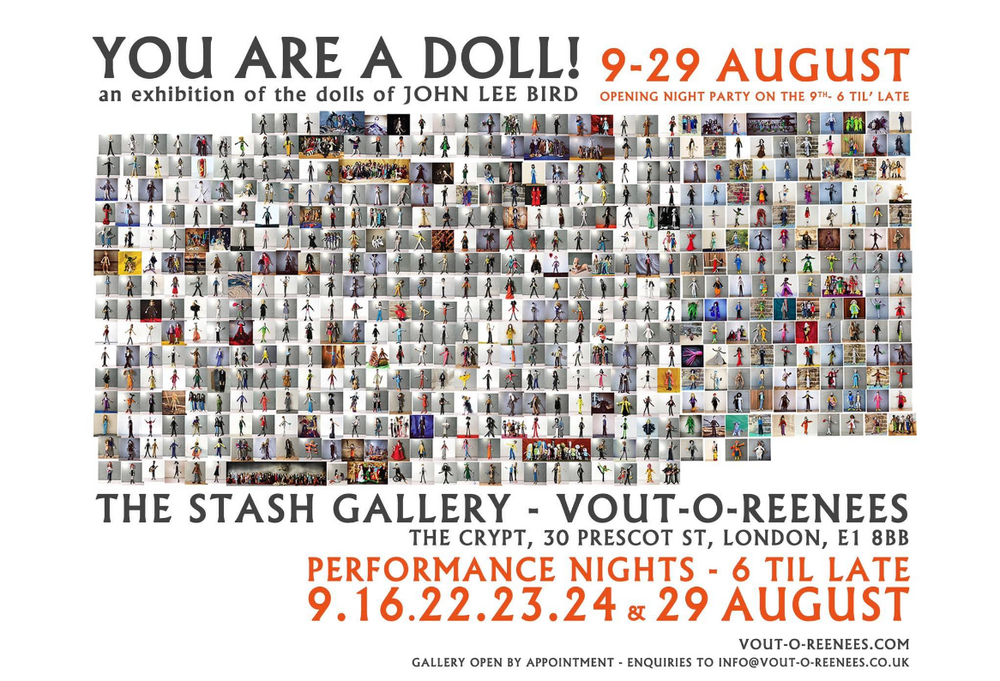
John Lee Bird’s brings solo exhibition to The Crypt, London from 9th-29th August
This intimate display of John’s creative imagination through small-scale textile dolls will wow you.
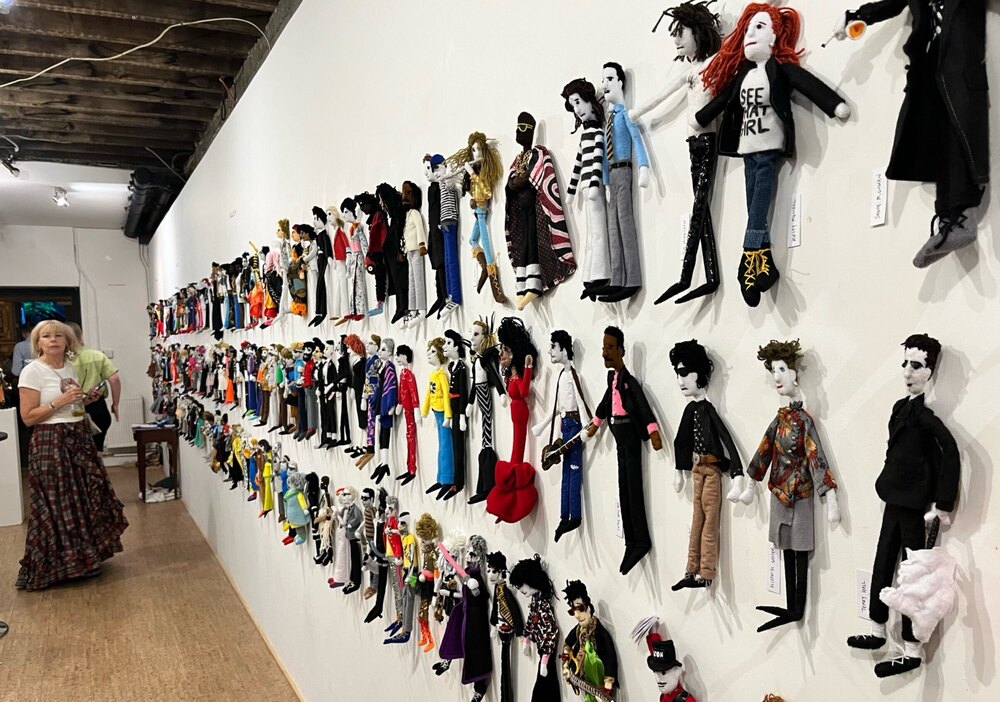
‘You are a doll! exhibition by John Lee Bird

Tucked away in an underground pub is a doll exhibition by the genius, John Lee Bird.

I was greeted warmly by him before I could step into his lair of imagination. He was a piece of artwork himself with a campy-gothic paint dripping down his head. I could not wait to dive into his world of art, knowing the person behind it has such a lovely yet intriguing presence.

I may have taken five or six rounds to completely capture the essence of each doll in the exhibition. They were all dolls of friends and celebrity idols who are an inspiration to him.

I think my favourite would have to be the doll Scarlet Johansson’s ‘Under The Skin‘. I’m a huge fan and John’s doll is the perfect representation of such an underrated film.
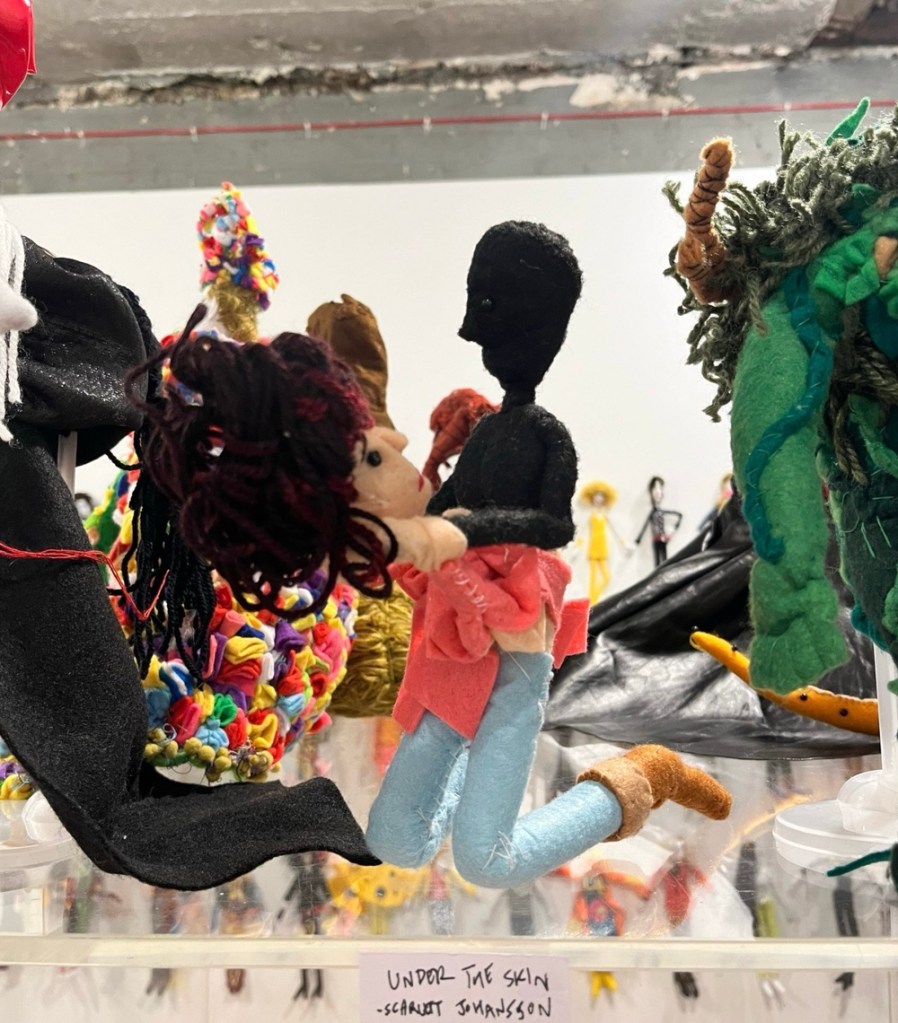
It was then that I realised that each of the dolls had intricate details that told a story. Some were statement dolls, others were silly, goofy and absolutely out of this world. No really, there were aliens and predators.

The entire display was an enigma and the depths of John’s mind made me wonder, how does he do it? And why?

I asked him a few questions to understand the purpose behind his explorative, niche art.


  1. When did the creation of your dolls begin? What sparked the idea?

I had a little accident and slipped, ended up in hospital and diagnosed with a spinal problem. I could barely walk or do anything so confined to my kitchen table I looked down at my art/craft stash of materials and spotted some sheets of black and white felt and a ball of orange wool and for some crazy reason (or just because I’m a Bowie nut) decided I’d make a David Bowie doll; the look from the LOW album and THE MAN WHO FELL TO EARTH.

Twelve hours of messing around later it was done. All the little movements, reaching out to pick up cotton, stretch to grab some stuffing or some beads…it was a form of exercise and relief from the pain I was in. Plus hand stitching takes time so it filled the day of boredom trapped at home and distracted me from the pain I was in. So that night I ordered a whole bunch of felt. I’d made one Bowie so now I surely had to make 69, because he died when he was 69. Thankfully Amazon did next day delivery so my project was born. For 69 days I made a new Bowie doll each day. It was an excuse to dive deep into each album and outtakes and live recordings. To play things on loop as I stitched. I used stitching and Bowie as therapy.

  1. How long does it take to make one of them? 

About 12 hours of constant sewing. Minus quite a few roll-up breaks when my brain is boggling over how to fold or roll or cut a piece of felt to conjure it into an outfit. Working out tiny pattern cutting isn’t really a thing I’d done before. Problem solving tailoring conundrums sort of motivate me while I’m stitching the boring bits like legs and arms. The fun bit is at the end when all the details start flowing into place.

  1. Do you feel like this helped you find your calling as an artist? 

I still draw and cut lino prints and make music. But making these ‘doll’ sculptures does give me focus. It’s become a daily practice, something that had never been on the horizon for something I wanted to do. I actually still have no idea why it’s consumed me so much, other than those odd stretches and problem solving bits that I mentioned earlier. I guess it really is just about me being so locked away from socialising, so I’m trying to document my heroes and friends.

To show them how much I appreciate them and how they inspire and motivate me. It’s a way to say hi and remind people that they’re important. Dolling up my iDOLLS.
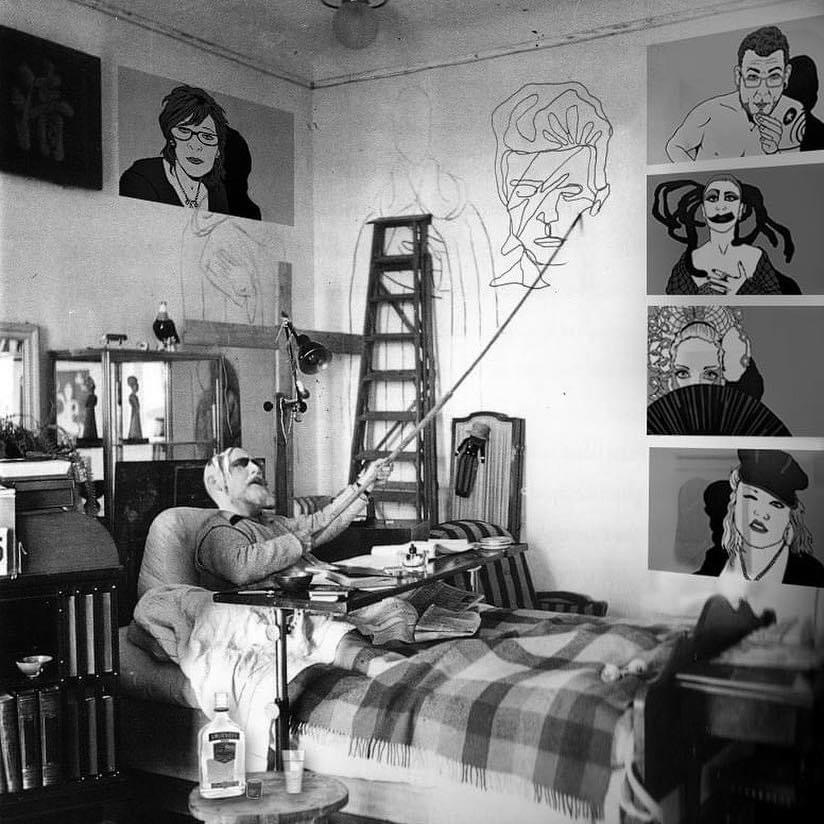
John Lee Bird captured by Suey Sue
  1. Which doll/collection of dolls do you have a deeper connection to? Any favourites? 

Bowie, Alien, Derek Jarman, Simon Fisher Turner, Xiu Xiu, the ones of my cabaret and performance friends. Especially the ones that I’ve roped in to bring their dolls to life at this exhibition.

The ones I’ve made silly videos for: there’s a whole playlist on my YouTube channel where I’ve recreated trailers or made little promo videos for songs. Silly, humble tributes. Fully felted from my heart.

  1. What do you hope for people to experience throughout this exhibition?  

I hope people will look at their own inspirations and idols. Mix it all up like I do. Place their family and friends in the same rightful position with their heroes of stage and screen. To work out their own web…and maybe point out some idols I may have missed from my own obsessions along the way. My fingers still need to be busy!


John has a wonderful community of friends who support him. I was invited to the opening night with performances by his dearest friends and icons Sukie Smith, Dusty Limits and Jemma Freeman and The Cosmic Something.

The energy in the room was friendly, warm and full of laughter. If you’re looking for a cozy bar with vibrant people and a mind-bending exhibition in London, this is your sign to be a part of John’s brilliant way of existing.

For tickets, visit https://www.ticketsource.co.uk/null/t-vvdokkz
Categories
Culture Lifestyle People

Art and soul. Meet global art sensation Pedro Sousa Louro.

Steven chats over coffee with art sensation Pedro Sousa Louro

Pedro Sousa Louro is one of the most talked-about LGBTQ artists at the moment. The Portuguese born painter is exciting the art world with his blend of styles and fresh take on painting.

Educated at the Chelsea College of Arts in London, Pedro’s work caught the attention of many at the prestigious Kunstmesse art fair in Germany last year.  He is also among the headliners at the START art show this autumn at the Saatchi Gallery. Our very own art connoisseur, Steven Smith, catches up with him at his studio in Wimbledon. 


Do you remember the first painting you ever did and what made you want to become an artist?

I was fascinated by Greek and Roman statues, especially the beauty of the naked form and the stillness from an early age. It caused quite a stir when my first drawing at school was a statue, and some teachers were not impressed, though others thought it was great. Of course, my style at the time was hardly refined, and to some eyes, it may have looked like mischief-making. 

Either way, art captured my imagination from an early age and creating images was something that excited me. So, becoming an artist was something that has always been at the forefront of my life.

Who in the art world influences you?

Francis Bacon and Picasso, as well as Dame Rachel Whiteread and Robert Rauschenberg. Art is always a personal thing, and these artists really speak to me. When I am looking at their work, it moves me and inspires me to create.

What training did you do to become an artist?

I graduated with an Arts degree from the Chelsea College of Arts in 1998. Two decades later, I graduated from the Kensington and Chelsea Art College in Abstract Expressionism and Abstract Vision. 

Your work has been shown all over Europe, and you are appearing later this year at START in the Saatchi Gallery London. Can you tell us a little about START and do your audiences differ from country to country?

It is my first time exhibiting at the Saatchi Gallery and START Art Fair in London. The timing could not be better. It is an honour to be a part of this prestigious event and a chance to network with new artists as well as established ones. The fair is a global gathering of artists and gives new talent a chance to show their work. 

Last year my work was shown at the fifth Kunstmesse art fair in Leipzig, Germany. I do not think that the audiences differ. In every show that I have been a part of, people have been enthusiastic and inspiring. 

https://www.startkx.com/exhibitions/

What advice would you give to a young artist starting out?

It is not easy at all to be an artist seeking recognition, especially in these modern ages, where social media platforms are making a colossal and gigantic difference in the careers of artists. I’m one of them! I want to be recognised by the public and by the established art scene. I want my artwork and my abstract visual language on our new modern living expressionism to be taken seriously as another important artist legacy and statement. The advice is only one. Don’t stop working even in times when it seems you aren’t going anywhere. If we don’t stop working, we’ll arrive somewhere, and that is inevitable. If you don’t stop creating you will arrive somewhere – a good place or a not-so-good place – but you’ll arrive somewhere!

How do you think COVID has affected the arts and LGBTQ community in general?

I have seen artists, where I have my studio, for instance, leaving their studios because they cannot afford the rent or because they have lost their other jobs, the direct income support of their lives. It is unfortunately sad, but on the other side, I have seen so many artists making sales over the internet and on social media platforms. Some of them did exceptionally well. 

Do you think that with apps like Grindr and Scruff being so popular, romance is dying?

Inevitably, yes. The technology of these sex and social apps on our phones completely eradicate so many vital personal elements of each one of us. From educational factors to responsible factors and so on, this new way of interaction between us has changed so profoundly that romance has become an old-fashioned item, not even vintage!     

Some of our best British artists have been LGBTQ, from Francis Bacon, David Hockney to sculptress Maggie Hambling. How much does your sexuality influence your artwork?

I have heard so many different views and opinions about my work being too connected with my sexuality. There are people from galleries from the art world itself, saying that it is 100% related to and influenced by my sexuality. I just let them talk and say what they want. 

I would say between 50% to 70% is undoubtedly associated with my sexuality. But there are quite significant elements which come from my art studies and the art research that I attach to my creativity.

How does your family feel about your work?

My parents still live in Portugal. My dad is the silent type, and my mum is vocal about her love of my art. They are both proud. My sister lives in Oxford, and she is a huge fan, I am hoping she will be at START. I am one of six children, and we are all proud of one another.

What would you like to see happening in the art world in the future?

I would like to see myself happening more, actually. I would like to see myself coming out as a more established artist, flourishing and gaining recognition worldwide. Yes, it’s all about me! Well, why not? 

QUICKFIRE ROUND

Your favourite restaurant in London?

Right now, Sexy Fish in Mayfair. Amazing Asiatic food.

The one thing you find to be a turn off in others?

Their selfish, cynical side that makes them think they can always get away without doing the work. 

The most romantic place in London?

I think London is a very romantic city, but for me, Chelsea Embankment is a more private environment. It is so romantic. 

What is one thing you would change about London if you were the mayor for a day?

As Mayor of London for just one day, I think I would want to make all galleries and transport free .

What is your favourite film?

Well, I used to have a favourite film, The Bridges of Madison County with Meryl Streep, but now I have so many. So, now anything with Cate Blanchett for me is a good movie. She is my new obsession! 

www.pedrosousalouro.co.uk

Categories
Culture

Art Exhibition: The Places We Carry – Healing Through Arabic Art and Poetry

An an evening scroll on Eventbrite turned out to be the most holistic and heroic experience I’ve ever been to.
Pioneers of peace from Arabic lands gathered to remind us how art can heal us and speak our prayers.
Grand Junction at Warwick Avenue

In pursuit of my next cultural experience in London, I happened to tap my finger on a poetry and prose event at a church in Warwick Avenue. 

It was the closing day of an exhibition called, ‘The Places We Carry‘ and something about that made me raise an eyebrow. 

I went through the description and found out that the guest speakers were Arabic poets and artists from Syria, Iraq, Lebanon, Libya and Palestine. 

My heart instantly went out for the Palestinian guests and how gut-wrenching it must be witness the ongoing brutality against their homeland.

My body moved without hesitation to go to this event. I had to know how immigrants from these countries translated their sorrows into extraordinary pieces of art.

When I arrived, Dima Karout, the curator of the exhibition, was giving the visitors a tour of all the art displayed in the basement. 

She graciously walked us through the artwork put together by her team that focused on immigrant lives in the UK ever since they moved here. And shared stories of their journey of finding a home away from home through artistic expression.

Dima Karout (left) giving us a tour of all the artwork

There were paintings, sketches and clay art that portrayed various Arabic cultures. Tools and artefacts used in households and agriculture that reminded me of my country in many ways.

The name of the event suddenly struck me then, ‘The Places We Carry’. The whole exhibition was a reflection of the emotions and attachments we have to objects and places that will always remind us of home and never leave us.

Each picture had a simple yet moving story that resonated with me like a warm hug. With unique narratives on how they adjusted to the lifestyle and the difficulties of they faced in terms of belonging.

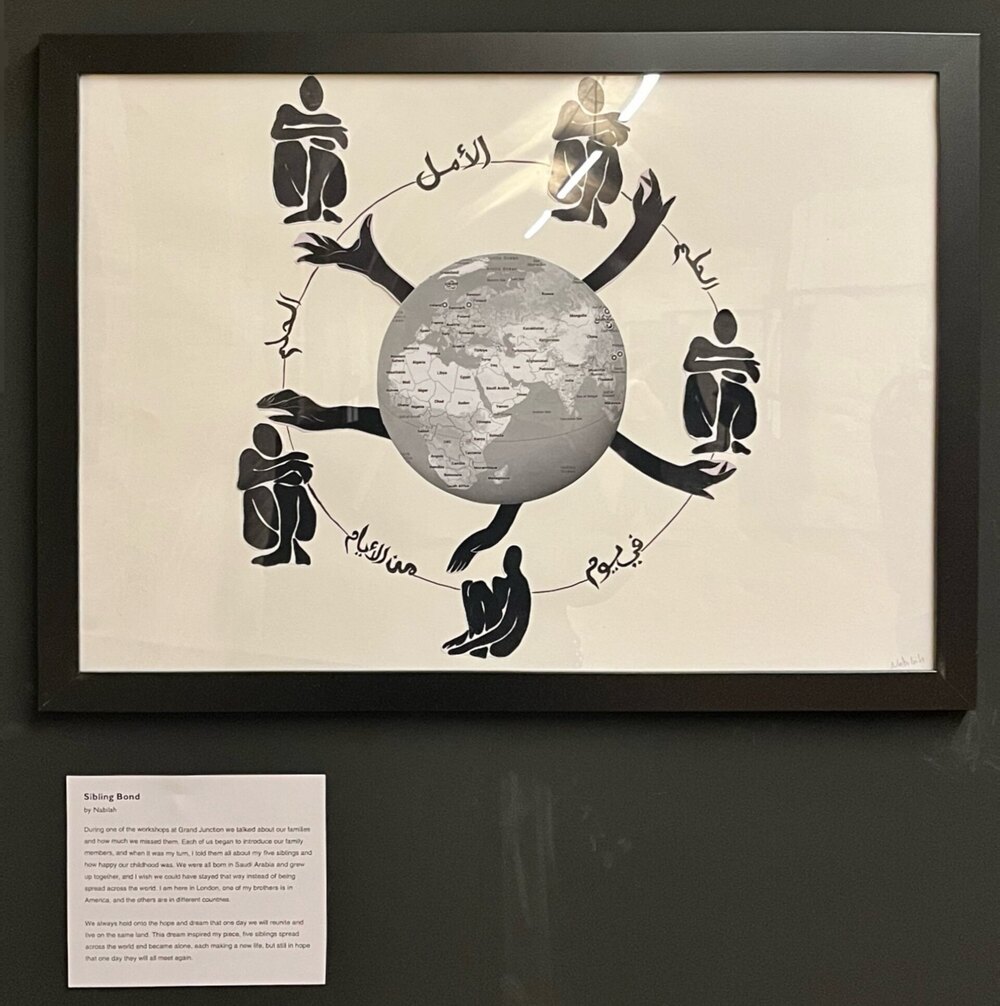
An art piece that stood out to me was about siblings scattered across the world knowing they might never live in the same city or country.

I felt a rush of acceptance and resolution for a lingering sadness I felt over the years. I hadn’t quite faced the truth that I might never live in the same country as my brother or my cousin ever again until that moment.

As immigrants we make bold career and financial decisions to move away from our families to build new roots on a foreign soil. 

We have our own reasons to do it and to each their own. Some flee the horrendous political and economic climate of their country in search of better opportunities. And others move with a sense of purpose to become more expansive as an individual.

But a sweet energy surrounded the exhibition like a silent acknowledgement for everyone’s journey. That no matter the reason, we were all there to recognise our own growth.

Sibling Bond by Nabilah

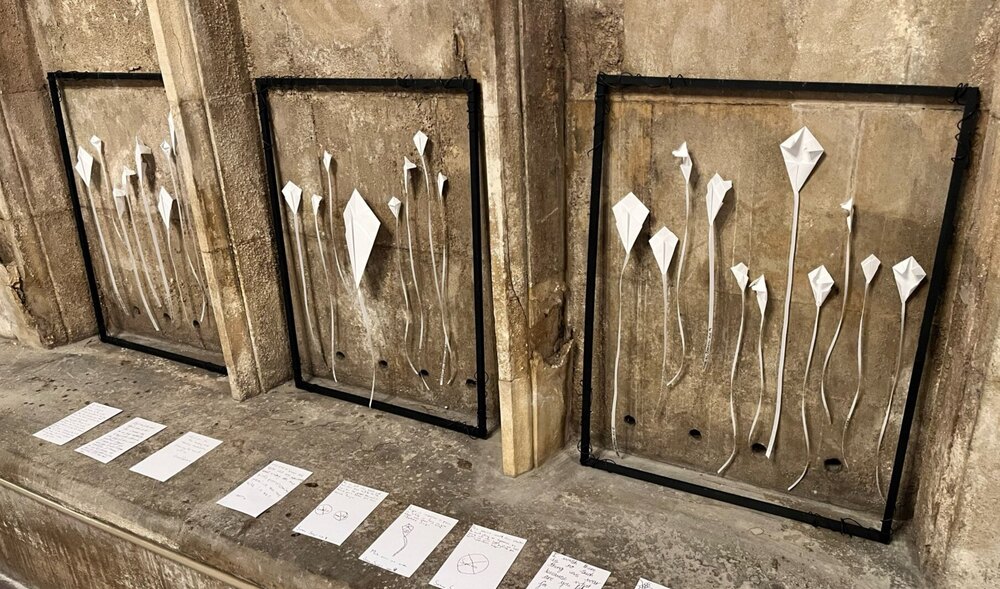
I made my way into a shrine that was dedicated to Palestinians. I noticed an art piece made of paper kites with names written on the strings. I soon found out they were names of innocent children whose lives were taken away as a result of genocide.

It grappled my heart and made me silently weep. It was overwhelming to look at this piece of art and admire the heart behind it but I couldn’t help but catch a glimpse of the horror those children had to face. I felt terrified for the state of humanity.

I suddenly became aware of the location we were at. I prayed to Jesus for a permanent ceasefire more than I usually do but I also prayed for any kind of divine intervention to bring softness to the world.

There were letters of love and consolation laid on what looked like a burial cloth. As I read each letter I was grateful for the humanity we as people cling so hard to while people in power seem to have lost theirs.

Paper kites by Helen Alzhar

We were allowed to write words of compassion of our own and I wrote mine without flinching. Words from the heart flow easily when you stop worrying about who might read it, it doesn’t matter anymore. When the purpose is beyond measure, every contribution is invaluable.

I placed it next to the other cards people had also written letters of support. I looked around and the faces I saw weren’t strange to me anymore. I felt a sense of unity without conversation, the language of our emotions seemed to be aligned.

Letters of love and consolation laid out on a cloth

We made our way up to the church to be seated for the second part of the exhibition. Dima and her team had gathered a few artists who read poetry, extracts, performed music and spoken word pieces.

Rama Alcoutlabi is a passionate musician, a dedicated scholar and an activist from Syria. She opened the performances with a soothing song in an ancient language called Aramaic using a traditional percussion instrument called the Daf.

She gave me the release I was seeking after all the heaviness I felt. Her angelic voice compelled me to close my eyes and listen intently to a language I had never heard before, yet harmonised perfectly with the emotions emanating from her melody. 

She also closed the show with three beautiful pieces on her Syrian stringed instrument called Oud, that wrapped the entire evening with such grace and warmth.

Rama Alcoutlabi performing with her Oud

Hafiza Ibrahim is a Palestinian poet who settled down in the UK after her graduate degree and is now an English language teacher, translator and interpreter (Arabic-English).  Her poetry emphasised on the longing of migrated residents of Palestine who wish to return to their land and reunite with their people. She gave us an imagery of a beautiful life lived in Palestine before genocide took away their simplicity of being.

Sarona Abuaker Bedwan is a Palestinian-American writer and Outreach & Programmes manager at Makan, a Palestinian led educational organisation. She read two poems from her book, “Why so few women on the street at night” and her narration reflected the ardent activist that she is. She has a strong voice and a powerful presence that made me want to listen to her every word. With short sentences compiled into a chronological sequence of emotions, she took me on a rhythmic vision to paint a picture of how human rights are being manipulated and criminalised by perpetrators who lack any awareness of themselves.

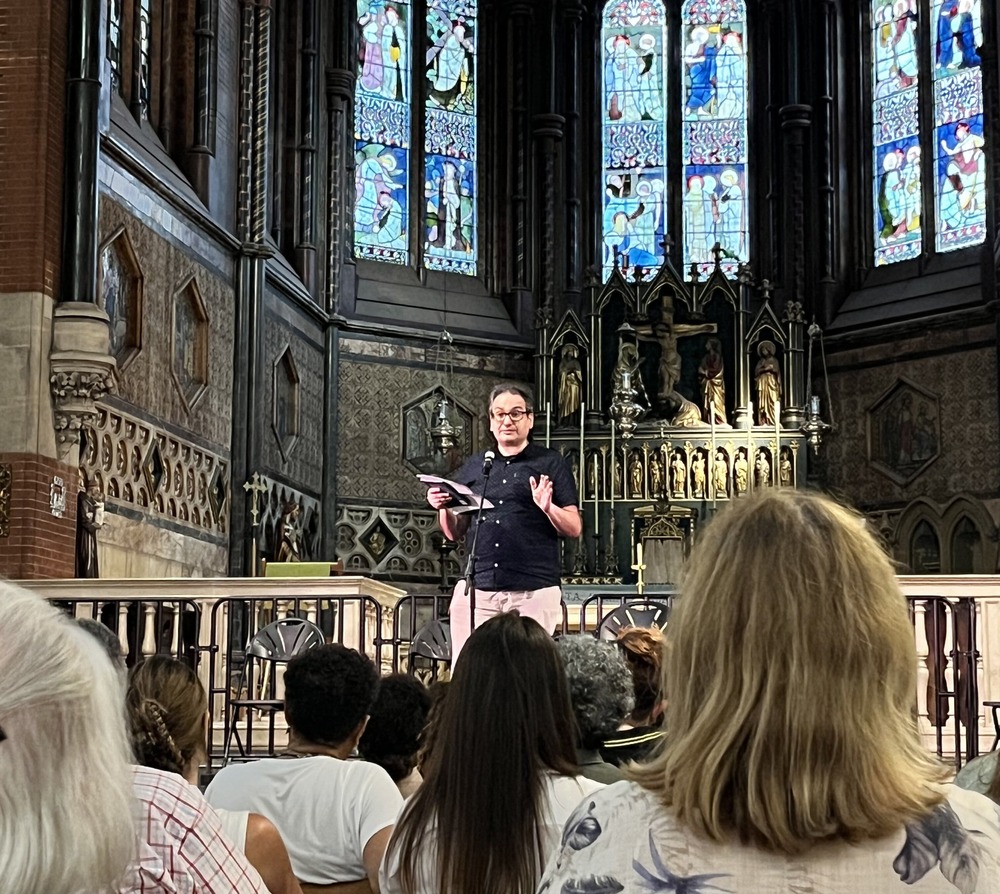
Laith Elzubaidi is a British-Iraqi TV/Film writer and producer based in London. His unserious and impactful presence on the stage made me adore him. I could see the comedy and drama writer in him bouncing out as he read an extract about his trip to Iraq with his mum after 30 years. He was unafraid to share his confusion about his dual ethnicity as he explained how Iraq is not how imagined it would be. And how his mum tried to rat him out to the airport security for not knowing the language. He was hilarious, I needed a good laugh and I could hear people around me snorting and gagging. But he also highlighted a lot of real emotions 2nd generation children face when they experience the other half of their culture for the first time. 

Hassan Abdulrazzak is an award-winning Iraqi writer who settled down in the UK and continues to pursue his passion as a playwright. He read extracts from his play so charmingly, I hardly believed he’s not a performer even if he said so. His extracts were humorous and sweet, with a touch of purity to it. Particularly the, ‘Enemy Of The Sun’, a very vulnerability piece where he spoke of the citizens who will continue to fight no matter how hard other nations try to take away their land. And that “They will not compromise, till the last pulse in their veins” in his own words.

Hassan Abdulrazzak

Lisa Minerva Luxx is a poet, playwright, essayist and political activist of British-Syrian heritage. In the three poems she read, I could see a halo forming over her head for how persistently she advocates for peace in the world. A true warrior and empath who not only helped permanently shut down manufacturing companies in the UK who supply drones to Israel out of the law, but also speaks with such depth in her poems about the lives lost in her country and the bombing in Beirut.

She performed her pieces in a spoken word style with gestures that tempted me to sway with her. Her ability to be a voice for the suffering of many people, her family and herself was sensational and deeply inspiring. 

I fetched two lines from her poems that made me connect to my own life. One of them being “If it feels impossible, you are going the right way.” And the other which isn’t really a line but an important reason for why we face the injustice that we do, “Bone collectors in cufflinks.”

It’s fascinating how a tap of the finger on an event page lead me towards heroes who make remarkable movements for a reformed world.

The exhibition reinstated my faith that if I continue to do my bit to spread the message of kindness and peace, I can help in the construction of a safer destination for future generations to arrive at.

Dime Karout and her team organise several art exhibitions, go here for more information and explore the tapestry of cultures that reside in London