

Zohran Mamdani: A New Dawn for New York — and a Setback for Trump’s America

By Steven Smith
Let’s get one thing straight: Sadiq Khan is a terrible mayor — but not because he is Muslim. He’s a terrible mayor because, quite simply, he hasn’t done the job well. Faith has nothing to do with competence.
I would like to think I ever judge anyone by their religion. Yet when I hear from certain extreme right-wing Christians, my instinct is that they’re often deeply uncomfortable with the LGBTQ+ community. Many cherry-pick verses from the Bible to justify their prejudices, conveniently ignoring the passages about kindness, humility and turning the other cheek — a principle that seems to have lost all meaning for them. As are extreme Muslims and many other religious devotees. I do not want them in power.
And how many of these self-proclaimed moral crusaders have later been exposed as hypocrites, caught in scandals that betray the very values they preach? No one wants to live under Sharia law, but equally, most of us are not rejecting Eastern culture or faith. Jewish politicians, for instance, aren’t out trying to convert everyone. The truth is simple: people should be judged on their integrity, their empathy, and their ability to lead — not the faith they were born into.
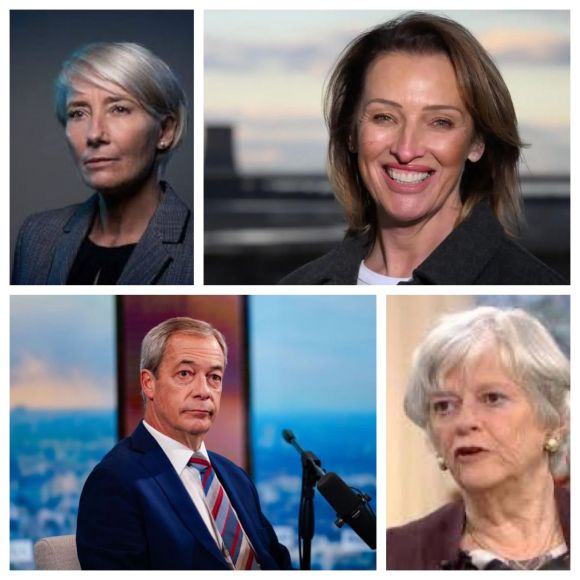
Historically, the right wing has struggled with LGBTQ+ acceptance. Look at Reform’s Ann Widdecombe, a devout Christian who remains openly opposed to gay rights, or Nigel Farage, who rails against same-sex marriage yet hasn’t exactly been a shining example of domestic harmony himself.
So, why shouldn’t New York — one of the most diverse cities in the world — have a Muslim mayor? The measure of leadership isn’t found in the label of one’s faith but in the breadth of one’s humanity.
When Zohran Mamdani swept to victory as New York’s new mayor, he didn’t just win an election — he ignited a cultural and political shift. At just 33, the Ugandan-born, Queens-raised son of Indian immigrants and the first Muslim to hold the office, Mamdani represents a fresh, progressive vision of leadership grounded in empathy, equity, and inclusivity. For women and LGBTQ+ citizens, his victory signals something powerful: a mayor who sees diversity not as a slogan, but as the city’s greatest strength. And for Donald Trump and the hard-right movement that thrives on fear and division, Mamdani’s rise is a direct ideological defeat.

Mamdani’s political roots run deep in social justice. Long before his mayoral run, he made his name in the New York State Assembly by fighting for tenant protections, affordable housing, and workers’ rights. But what sets him apart is his understanding that social equality must include gender and sexual equality. His policies go beyond token representation — they promise tangible protections and support for women, LGBTQ+, and trans individuals who continue to face discrimination and economic barriers in one of the world’s most diverse cities.
During his campaign, Mamdani declared: “New York must be a sanctuary — not just for immigrants, but for every person whose existence has been politicised.” That message resonated strongly with LGBTQ+ voters and women’s advocacy groups, weary of years of policy rollbacks and toxic rhetoric at the national level.
His mayoral platform includes one of the most comprehensive pro-equality agendas ever proposed for New York City. At its heart are three major commitments: establishing an Office for LGBTQIA+ Affairs to coordinate inclusive policies and investigate discrimination; pledging $65 million for gender-affirming healthcare and reproductive rights clinics; and strengthening women’s economic and reproductive rights through expanded paid family leave, subsidised childcare, and increased funding for domestic violence shelters and legal aid. These policies represent not just symbolic progress but systemic reform, tackling the intertwined roots of inequality and positioning New York as a beacon for progressive governance in a deeply divided nation.
Some observers initially wondered whether a devout Muslim mayor could fully champion LGBTQ+ and women’s rights. Mamdani’s leadership has already answered that question decisively. He has stated repeatedly that his faith teaches compassion, justice, and respect for human dignity — values entirely consistent with protecting the vulnerable. By separating personal belief from public duty, he embodies the pluralism that defines modern New York. His election sends a potent message that faith and equality are not mutually exclusive.
To understand why Mamdani’s victory is such a blow to Donald Trump, one must look beyond New York’s borders. Trumpism thrives on nostalgia — a yearning for a rigid, exclusionary version of America defined by dominance and division. Mamdani represents the opposite: a confident, multicultural future where inclusion and equality are strengths, not threats. Under Trump, the federal government rolled back protections for transgender people, restricted abortion access, and emboldened hate groups. Mamdani’s success proves that this politics of fear no longer holds sway everywhere — especially not in America’s largest city.
What happens in New York often echoes nationally. Just as Fiorello La Guardia’s social reforms and Michael Bloomberg’s urban policies shaped national conversations in their eras, Mamdani’s agenda may set the tone for a new wave of progressive mayors. His approach fuses social justice with fiscal realism — leveraging the city’s enormous budget to create measurable improvements in equality and opportunity. His administration’s first-year priorities include making the Metropolitan Transportation Authority free for students and low-income riders, expanding affordable housing projects on city-owned land, increasing investment in public schools with inclusive sex education, and introducing gender-balanced representation in city boards and commissions.
Mamdani’s election is also a cultural moment — one that renews New York’s identity as a sanctuary for those who dream of freedom in all its forms. From Stonewall to suffrage, the city has long been a crucible of progress. His leadership promises not only policy change but also a revival of civic optimism: a belief that governance can be both compassionate and competent. His first speech after victory captured this perfectly: “We are not here to manage decline. We are here to imagine abundance — for women, for queer and trans people, for every New Yorker who has been told to shrink their dreams.”
Let’s get one thing straight: Sadiq Khan is a terrible mayor — but not because he is Muslim. He’s a terrible mayor because, quite simply, he hasn’t done the job well. Faith has nothing to do with competence.
Nor would I ever judge anyone by their religion. Yet when I hear from certain extreme right-wing Christians, my instinct is that they’re often deeply uncomfortable with the LGBTQ+ community. Many cherry-pick verses from the Bible to justify their prejudices, conveniently ignoring the passages about kindness, humility and turning the other cheek — a principle that seems to have lost all meaning for them.
And how many of these self-proclaimed moral crusaders have later been exposed as hypocrites, caught in scandals that betray the very values they preach? No one wants to live under Sharia law, but equally, most of us are not rejecting Eastern culture or faith. Jewish politicians, for instance, aren’t out trying to convert everyone. The truth is simple: people should be judged on their integrity, their empathy, and their ability to lead — not the faith they were born into.
Historically, the right wing has struggled with LGBTQ+ acceptance. Look at Reform’s Ann Widdecombe, a devout Christian who remains openly opposed to gay rights, or Nigel Farage, who rails against same-sex marriage yet hasn’t exactly been a shining example of domestic harmony himself.
So, why shouldn’t New York — one of the most diverse cities in the world — have a Muslim mayor? The measure of leadership isn’t found in the label of one’s faith but in the breadth of one’s humanity. rise represents a decisive shift away from the politics of grievance and exclusion. His administration promises to put women’s rights, LGBTQ+ equality, and social justice at the heart of city governance. For a nation still grappling with polarisation, his victory is both an inspiration and a challenge: proof that diversity can win, compassion can govern, and inclusion can be a source of strength rather than division. For Donald Trump and those who profit from cultural conflict, Mamdani’s triumph is a warning shot: the future belongs to those who build bridges, not walls. He is a mayor for all and a flash that thinking Americans have had enough of the red hat .
END
 2Shades Magazine