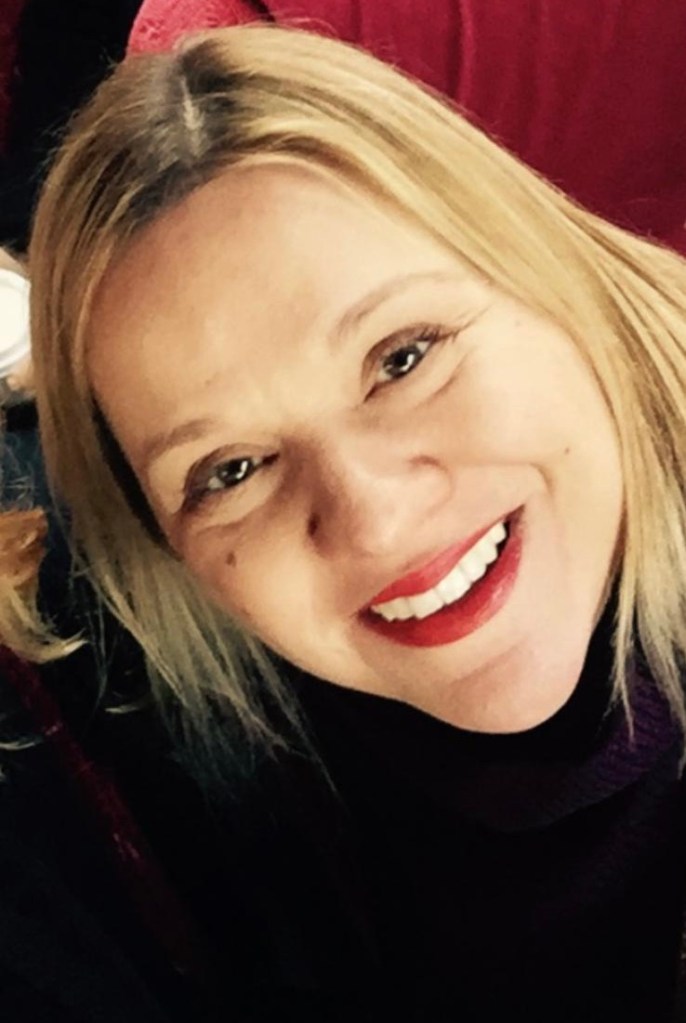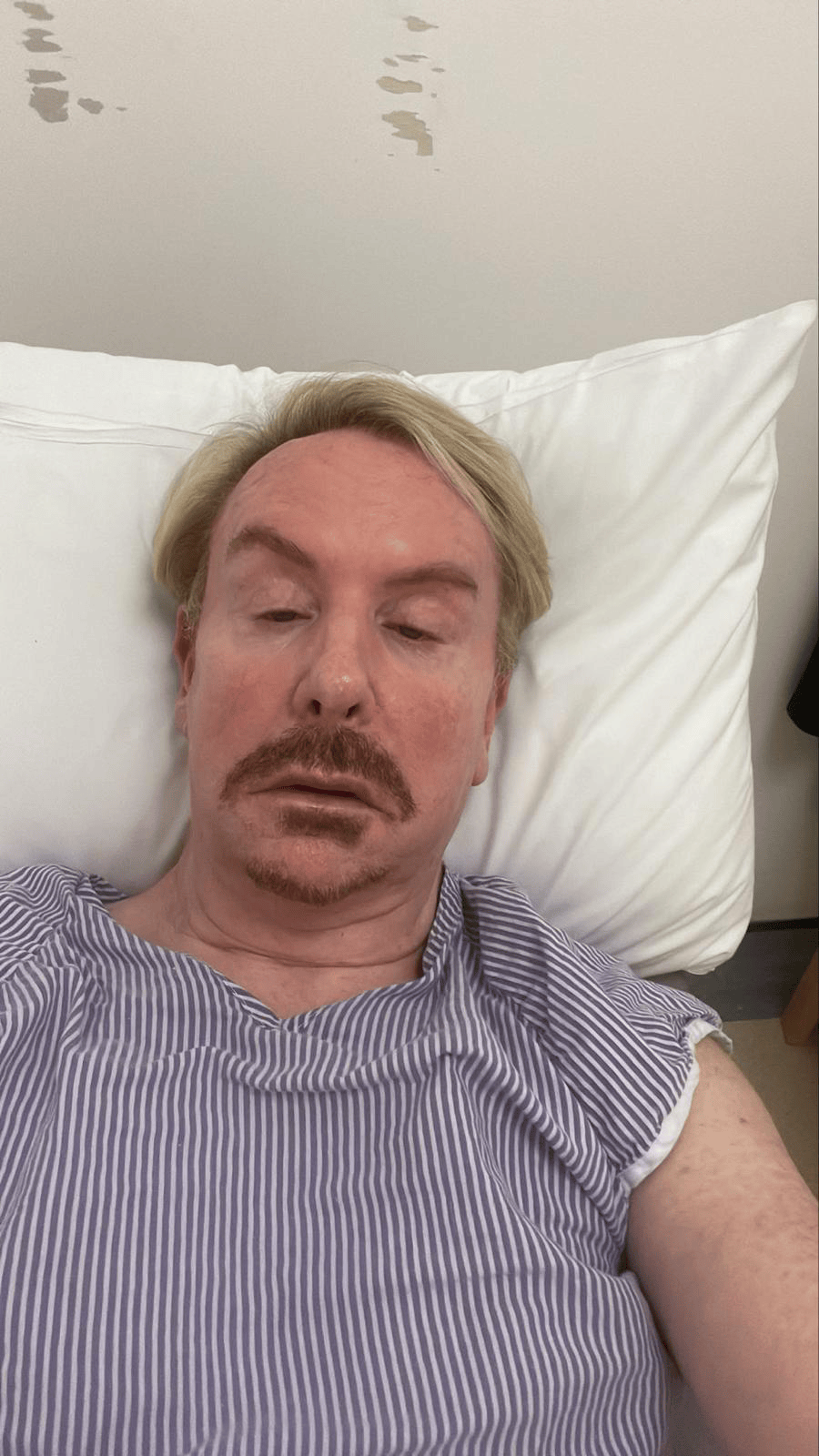
Looking through my old photographs brings back an extraordinary collection of memories. But what really stands out among them is my time with Anna Kennedy Online and, in particular, being a volunteer for Autism’s Got Talent. This year marks the 15th anniversary of Autism’s Got Talent, and for 13 of those years I have had the privilege of being involved.
When I first became involved, I could never have imagined the journey ahead. There have been red carpets, interviews, photographs, laughter, a few tears and, above all, some truly remarkable people. What started as supporting Anna and her work became something very personal to me. Thirteen years later, I am incredibly proud to have been asked to become, and to remain, one of the patrons of Anna Kennedy Online.
At the heart of it all is, of course, Dr Anna Kennedy OBE. Anna is one of those people who simply does not give up. I have watched her campaign, encourage, fight for families and create opportunities for autistic people year after year. We have stood together at countless events, and I have seen first-hand just how much work goes on behind the scenes.
We joke that Anna can get you to move mountains, even when you had no idea you could!
Today, the charity is involved in so much more, including Autism & Art, the Autism Hero Awards and many other events and initiatives throughout the year.
But one event has always had a particularly special place in my heart: Autism’s Got Talent. It was through this wonderful event that I really became part of the team.
The name may say “Got Talent”, but this has never been a competition. There are no winners and losers. It is about giving autistic performers a stage on which they can simply be themselves, celebrate their talents and show an audience exactly what they can do.
Over the years, I have watched performers walk onto that stage nervous and walk off absolutely glowing. Singers, dancers, musicians, comedians and performers with talents you could never predict have all become part of its history. Some moments have made us roar with laughter; others have left us fighting back tears.
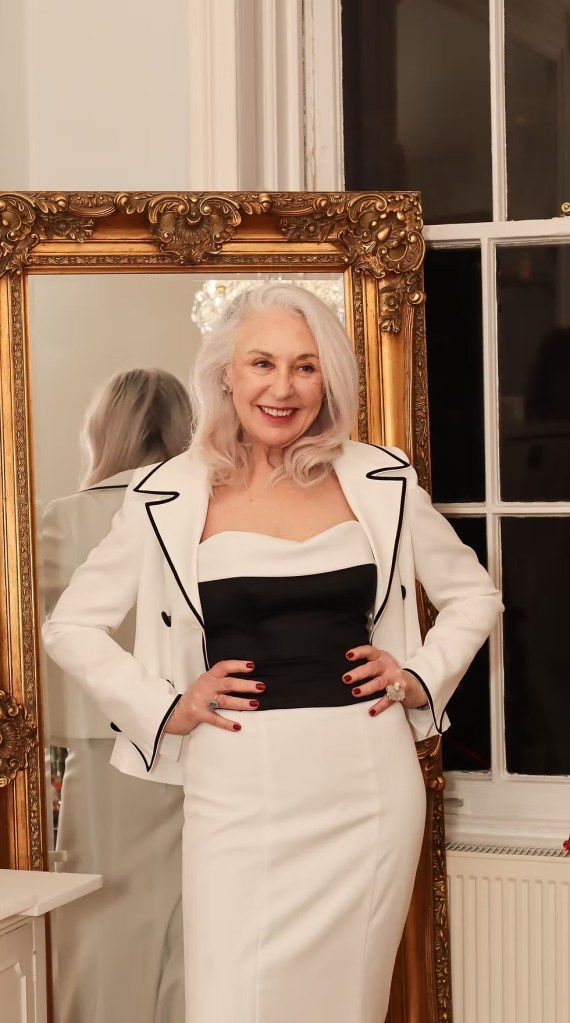
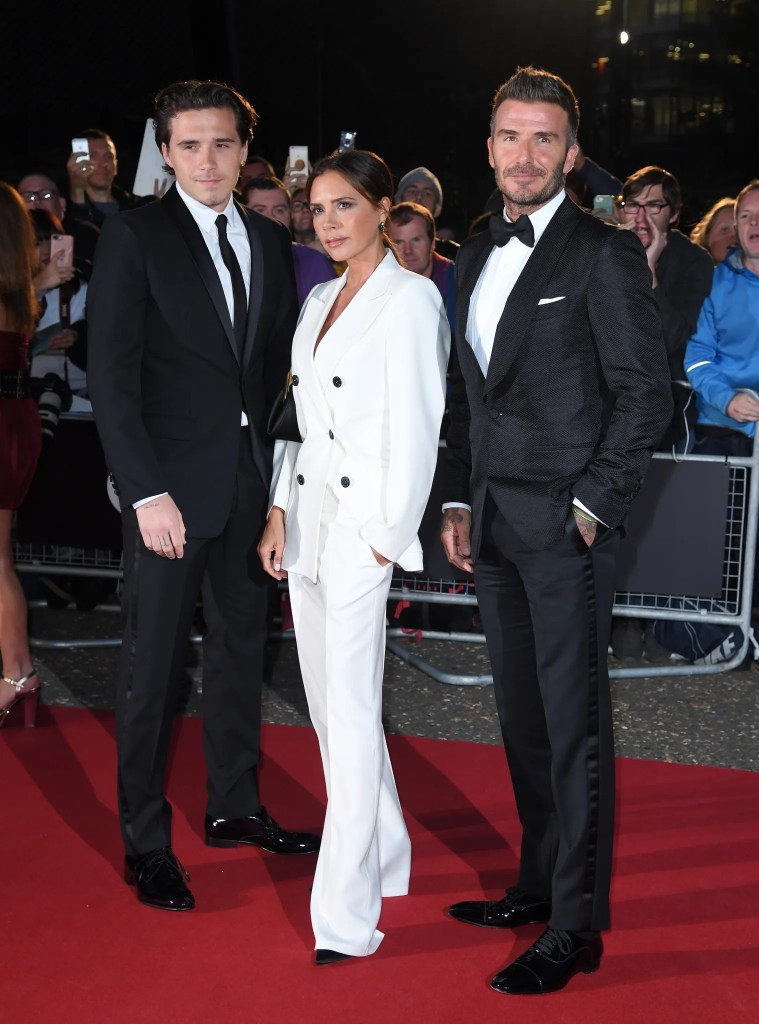
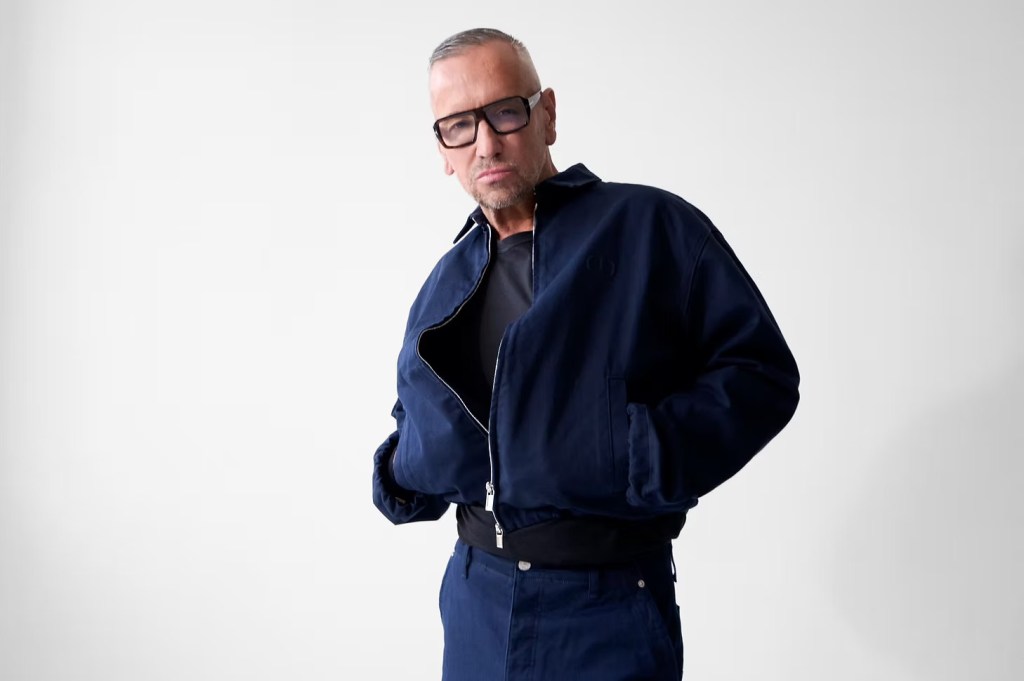
The photographs here capture just a fraction of my own journey. The hairstyles may have changed — and looking back, perhaps some of the suits should remain firmly in the past! — but my reason for being there has never changed.
I have met wonderful families, performers, volunteers, supporters and fellow patrons. Some have become genuine friends. There is a sense of family surrounding Anna Kennedy Online that is difficult to explain until you have experienced it for yourself.
One of those friendships is with Aston Avery and his family. I will never forget meeting Aston and his mum and dad, Dawn and Keith. We became instant friends, and today I have the pleasure of joining Aston for our monthly show on Gateway Radio in Essex. Aston’s talent continues to blow me away, but equally impressive is his commitment to charity work and volunteering. He is an absolute credit to his family, and watching his journey over the years has been a privilege.
What I also love is how Autism’s Got Talent has evolved. Autism awareness has changed enormously during those years, but there is still so much work to do. Awareness is important, but acceptance, inclusion, opportunity and respect matter even more.
On 10 October 2026, Autism’s Got Talent returns to London’s Mermaid Theatre for its 15th anniversary. It promises to be an emotional night for everyone who has been part of its story.
For me, it will also be a chance to look back over 13 years and think: Where on earth did that time go?
I am immensely proud to have played my small part in this journey and even prouder of Anna, the team and, most importantly, every autistic performer who has had the courage to step onto that stage and share their talent with us.
Thirteen years has given me friendships, memories and moments I will treasure forever. And if there is one thing I have learned from Anna and Autism’s Got Talent, it is never to underestimate what someone can achieve when they are simply given the opportunity to shine.
Happy 15th anniversary, Autism’s Got Talent. Here’s to the next chapter. ❤️\
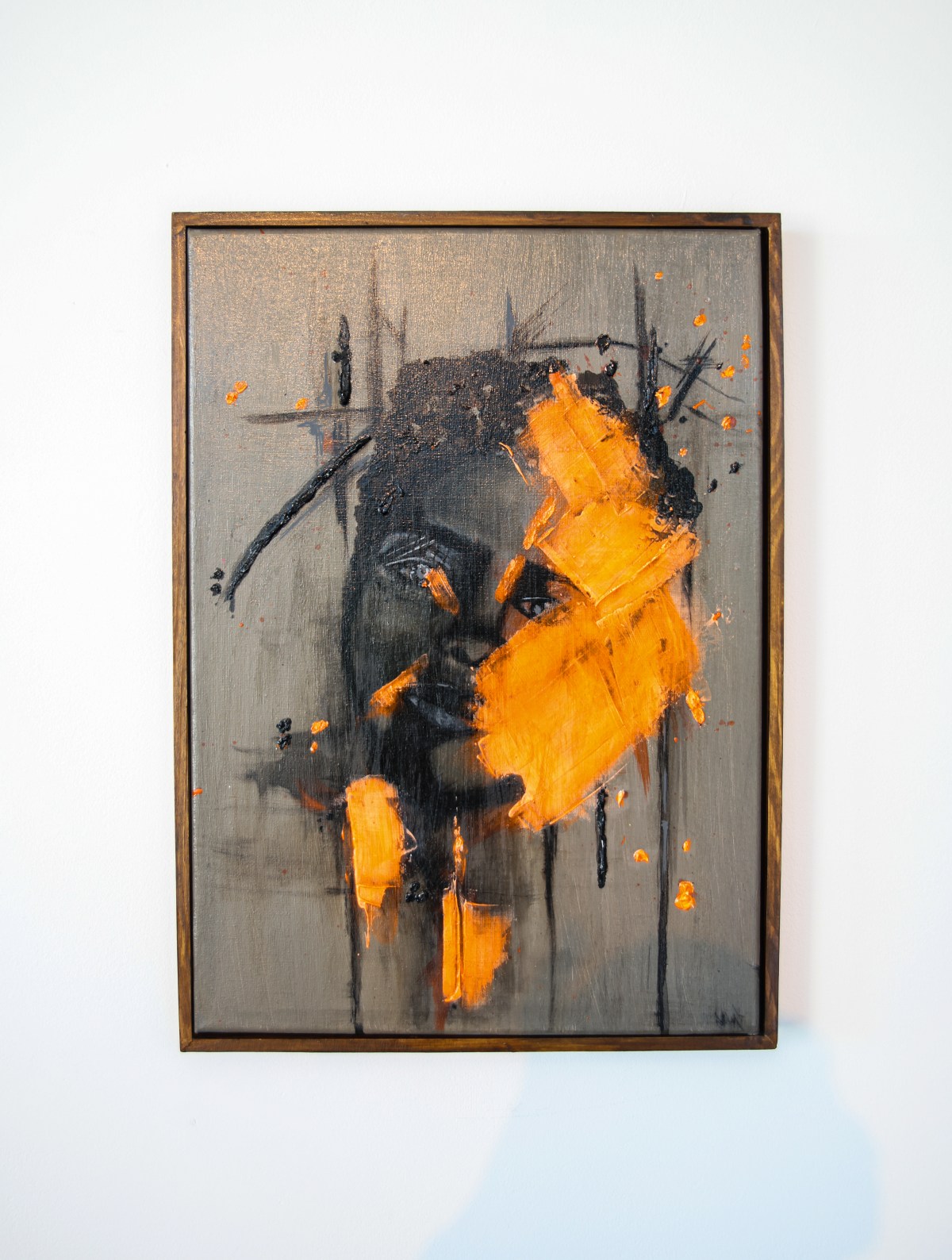
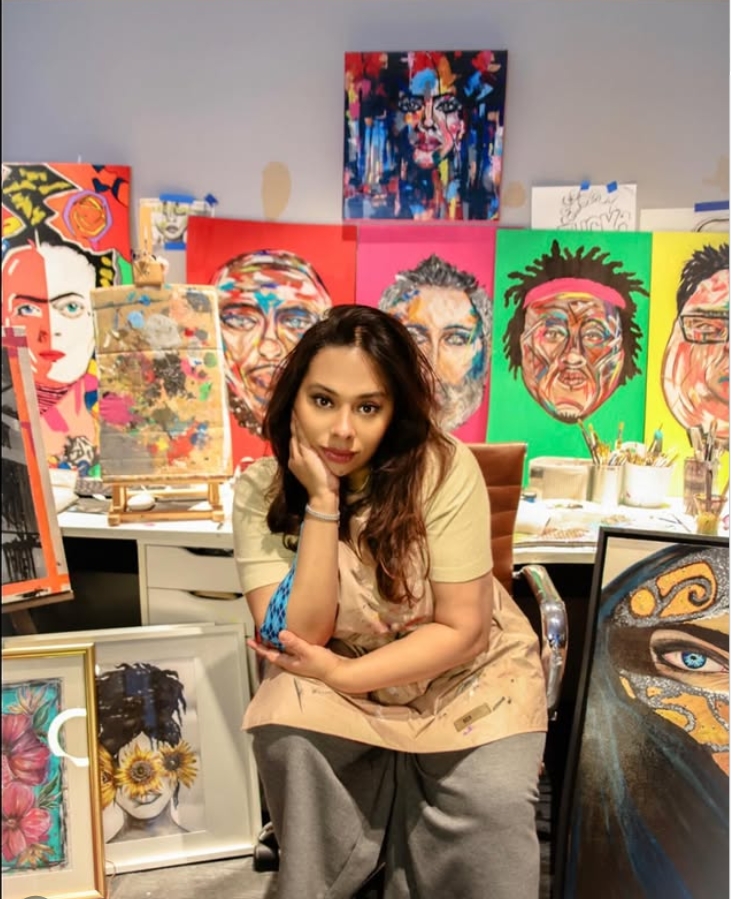
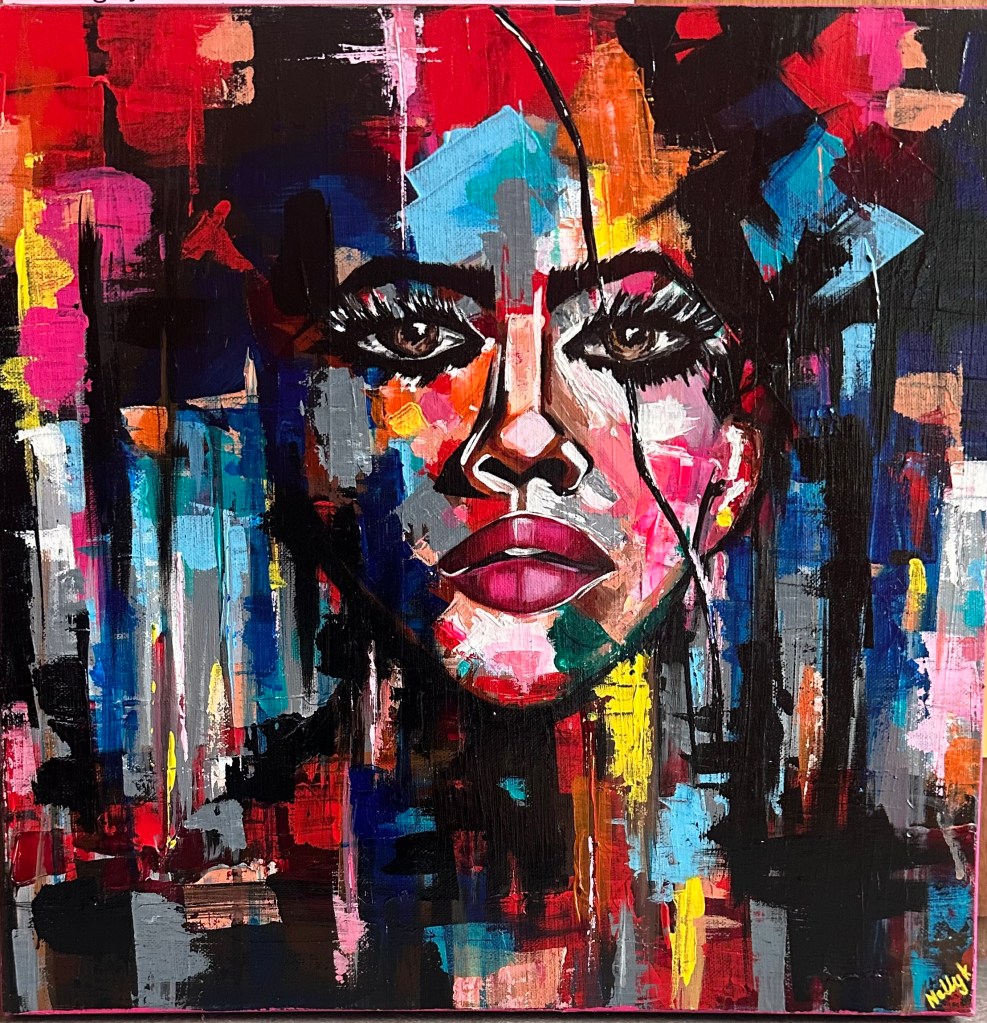
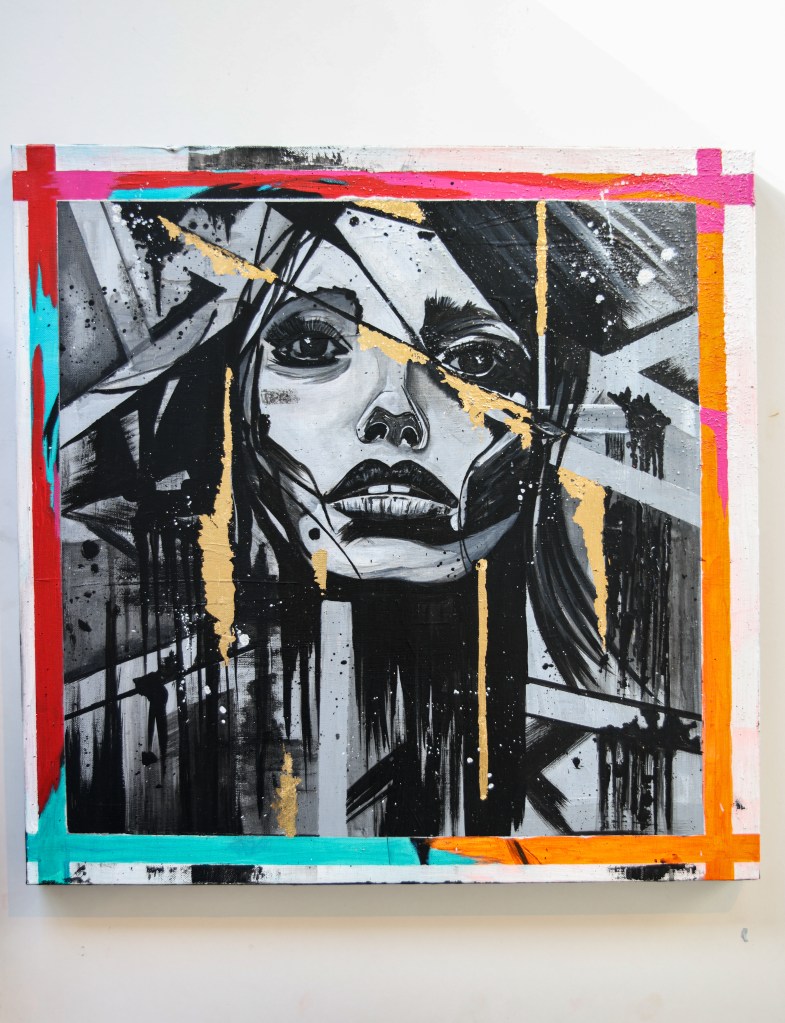
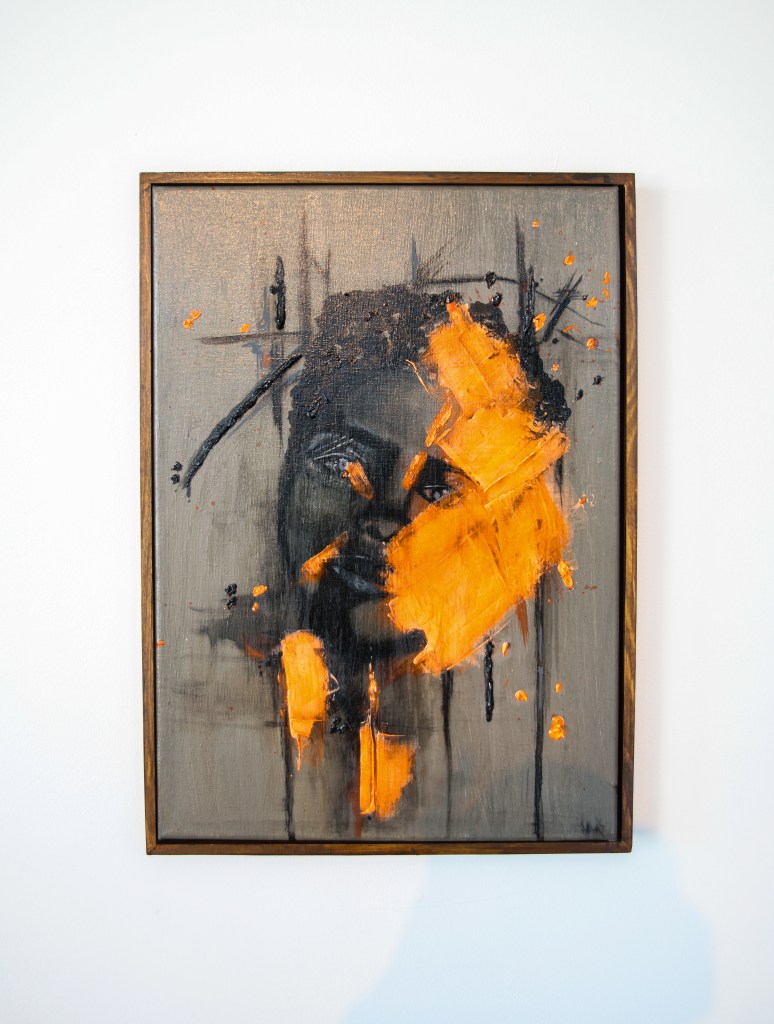
Art can be beautiful. It can be decorative. It can make us smile, stop us in our tracks or completely divide opinion. But at its most powerful, art can also start conversations about subjects we sometimes find difficult to put into words.
For artist Nelly K, creativity is about far more than producing something to hang on a wall. It is a way of communicating, challenging perceptions and, importantly, helping to break down the stigma that still surrounds mental health.
After earning her degree in Art from Birmingham University, Nelly began developing a creative path that brought together two things she cares deeply about: artistic expression and social impact.
Her work is bold, thought-provoking and unafraid to tackle difficult subjects. Rather than staying within the traditional boundaries of art, Nelly uses her creativity as a catalyst for conversation and change, exploring mental health and the way it is viewed and discussed within society.
Throughout her career, she has exhibited in local galleries, worked alongside mental health organisations, appeared on podcasts and become involved in community projects designed to encourage greater understanding and inclusivity.
There is also something very human at the heart of what she does. Art can give us a voice when finding the right words feels impossible. It can make the invisible visible and allow someone else’s experience to suddenly feel a little less distant.
Nelly remains committed to the belief that art shouldn’t simply be about personal expression. It can advocate, educate and even play a part in healing.
That immediately caught my attention.
So, for this edition of Art Attack, I wanted to find out more about the woman behind the work. Where does her inspiration come from? Why has mental health become such an important part of her artistic identity? Does an artist have a responsibility to challenge society? And can a painting genuinely change the way we think?
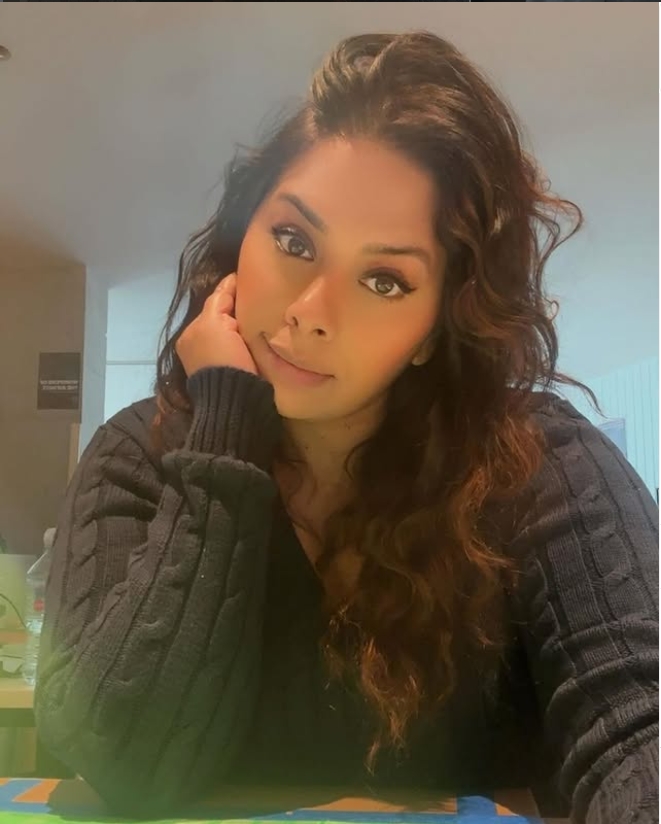
It’s time to meet Nelly K.
1. Nelly, let’s start right at the beginning. Were you one of those children who was always drawing and creating, or did your love affair with art come later?
I think creativity has always been part of who I am. Art became a way for me to express things that weren’t always easy to put into words. Over time, I realised that creativity could be much more than personal expression; it could be a way of understanding myself, connecting with others and exploring the world around me.
My relationship with art has grown alongside my own personal journey. It has given me a voice and, importantly, a way to explore identity, both my own and the identities of the people whose stories I encounter.
2. You studied Art at Birmingham University. What did those years teach you, not just technically, but about the sort of artist you wanted to become?
Studying Art at Birmingham University gave me the space to experiment, challenge myself and really think about the purpose behind what I was creating.
Technically, I learned a great deal, but the biggest lesson was realising that I wanted my work to mean something beyond the visual. I wanted to use art as a form of storytelling and as a way of starting conversations about issues that affect people in real life.
Those years helped me understand that I wanted to be an artist whose work combined creativity with social impact; someone unafraid to explore difficult subjects while still leaving room for hope.
3. Mental health is central to much of your work. Was there a particular moment or experience that made you realise this was something you wanted to explore through your art?
My practice is deeply rooted in my own journey and in the real experiences of people I meet. That authenticity is incredibly important to me.
I became interested in exploring mental health through art because I recognised that people are often far more complex than the labels society gives them. Our emotional wellbeing is influenced by our background, experiences, relationships and sense of self.
Art gave me the freedom to explore those complexities without reducing anyone to a diagnosis or a single story. I wanted to create work that encourages people to look beyond stigma and see the person first.
4. Mental health awareness has improved enormously, yet stigma certainly hasn’t disappeared. What frustrates you most about the way society still talks about mental health?
What frustrates me most is that awareness doesn’t always equal understanding. We have become much better at talking about mental health, but people can still feel judged or defined by a diagnosis or difficult period in their lives.
There is no single experience that represents everyone. Our backgrounds and circumstances shape how we experience the world, which is why listening is so important.
I think we need to become more comfortable with complexity and allow people to define themselves rather than having society do it for them.
5. Your work can be bold and thought-provoking. When you begin a piece, do you start with the image, an emotion, or with the message you want the viewer to take away?
Usually, it begins with a feeling, a story or a question. Sometimes it comes from something personal, and sometimes inspiration comes from something I have witnessed or heard.
The image often develops alongside the message. Visual storytelling is a huge part of my practice, and I’m fascinated by the way an image can communicate something that words sometimes cannot.
I don’t want to tell the viewer exactly what to think. I’d rather leave enough space for people to bring their own experiences and interpretations to the work.
6. Art is incredibly subjective. Have you ever created something that provoked a reaction you weren’t expecting, either positively or negatively?
Absolutely. Once you put artwork into the world, you lose complete control over how it will be interpreted. People bring their own memories, emotions and experiences to it, and they may see something completely different from what you originally intended.
That is one of the things I find most powerful about art. Something that begins as very personal to me can take on an entirely different meaning for somebody else.
Those unexpected reactions remind me that art doesn’t always need to provide answers. Sometimes simply making somebody stop, think or feel something is enough.
7. Is there one piece you’ve created that feels particularly personal to you, perhaps one that was difficult to make or that you found emotional to let go of?
The pieces that feel most personal are often the ones rooted most closely in my own journey. Creating them requires vulnerability because you are revealing something of yourself through the work.
We often see vulnerability as weakness, but I see it very differently. There can be enormous strength in allowing yourself to be open.
Letting go of a personal piece can be emotional, but there is also something wonderful about knowing that something which began with you can go on to have a life and meaning of its own.
8. You’ve worked with mental health organisations, podcasts and community projects. Has anyone ever approached you and told you that your art genuinely helped them or made them feel understood? How did that make you feel?
That is probably one of the most meaningful things an artist can hear. When somebody tells me that a piece has resonated with them personally, it reminds me why I create.
My work isn’t about speaking for other people or telling them who they are. I simply want to open a door to conversations that might otherwise be difficult to have.
Knowing that something I created has touched somebody or made them feel less alone is incredibly humbling. Moments like that stay with you.
9. If money, space and practicalities were no object, what would be your dream piece or exhibition to create, and where would you love to see it exhibited?

My dream would be to create a large-scale immersive exhibition that takes people on a real emotional journey.
It would bring together many different voices and perspectives, exploring not only struggle but vulnerability, resilience, healing, joy and celebration. I’d want visitors to experience something rather than simply walk around looking at pictures on walls.
I would love it to be staged in a major public cultural space, but ultimately I’d want it to travel. Art with an important message shouldn’t be restricted to traditional galleries or to people who already feel comfortable entering those spaces.
10. Finally, complete this sentence for me: “Without art, I would…”
Without art, I would be missing one of the most honest ways I know to understand myself, connect with others and make sense of the world.
Quick Fire
1. The most romantic place in London?
My bed.
2. What is your favourite colour?
Yellow. Loud, warm, fun and full of energy — a bit like myself!
3. Best meal you have ever had?

Every meal my mother made.
4. Can you describe happiness?

Happiness is feeling free to be yourself, feeling understood and fully present in the moment. Usually when it’s just me and my paintbrush.
5. Why do you love the Firepit Gallery?I love the Firepit Gallery because it feels like a place where creativity and people naturally come together. It gives artists the freedom to share their voices while making art feel welcoming and accessible. There’s a genuine sense that everyone is invited to be part of it, and I think spaces like that are incredibly important
There was great excitement when, as a late birthday gift, my nephew took me to Marbella for five days.
We flew out with British Airways, and I came back on a codeshare flight operated by a Spanish airline called Vueling. Now, I have no complaints about the flight itself. Everything went perfectly well.
The same, unfortunately, cannot be said for my luggage.
There are certain things you expect to bring home from a holiday: photographs, memories, perhaps a few extra pounds around the waist and a vague promise that next time you’ll pack less.
What you don’t expect is for your suitcase to continue its European travels without you.
My luggage has now been missing since Saturday, and what began as an inconvenience has turned into a bizarre international mystery involving airports, telephone calls, automated updates and a suitcase that appears to have had a far more adventurous journey than I did.
The reference number, which I now know almost as well as my own telephone number, is LGWVY28092.
The bag was particularly important because I had been sharing it with my nephew, Matthew, who was due to fly to the United States shortly after we returned. His clothes were inside, along with mine. So this wasn’t simply a case of waiting patiently for a delayed pair of socks to turn up.
Then came the updates.
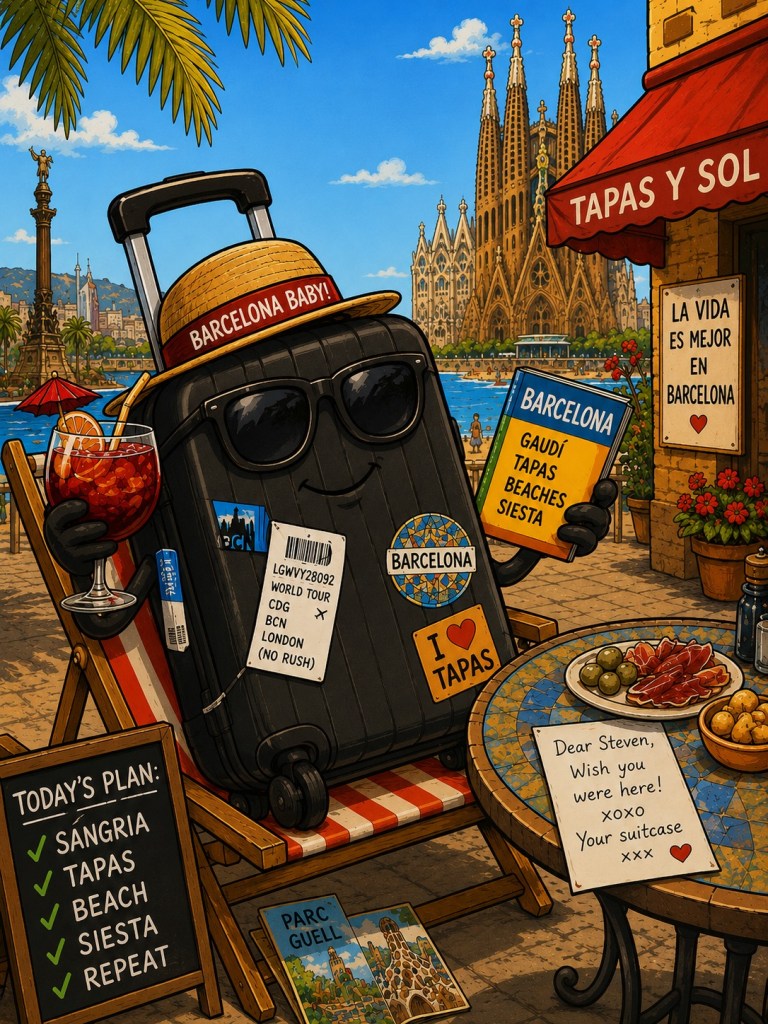
At one point, my luggage appeared to be in Paris Charles de Gaulle. Why Paris? Your guess is as good as mine. From there, I was told it was being sent to Barcelona before eventually — hopefully — making its way back to me in London.
Paris to Barcelona to London. My suitcase was practically Interrailing.
What has made the whole experience considerably worse, however, is the extraordinary difficulty in getting a clear answer from anyone.
I have telephoned. I have messaged. I have chased. I have watched the online tracking system with the dedication of an air traffic controller. I would love to be in Paris ,
Eventually, the status changed to the rather exciting announcement:
“Your piece of baggage has been located.”
Wonderful!
Except there was one small problem.
Where exactly had it been located?
Being told something has been “located” is not particularly reassuring when nobody can confirm where it physically is, whether it actually arrived in Barcelona, when it will be placed on a flight to London, or when it might finally arrive at my front door.
Each telephone call seems to produce another version of: “We are waiting for information.”
Meanwhile, my suitcase continues to exist somewhere in the mysterious world of international baggage handling.
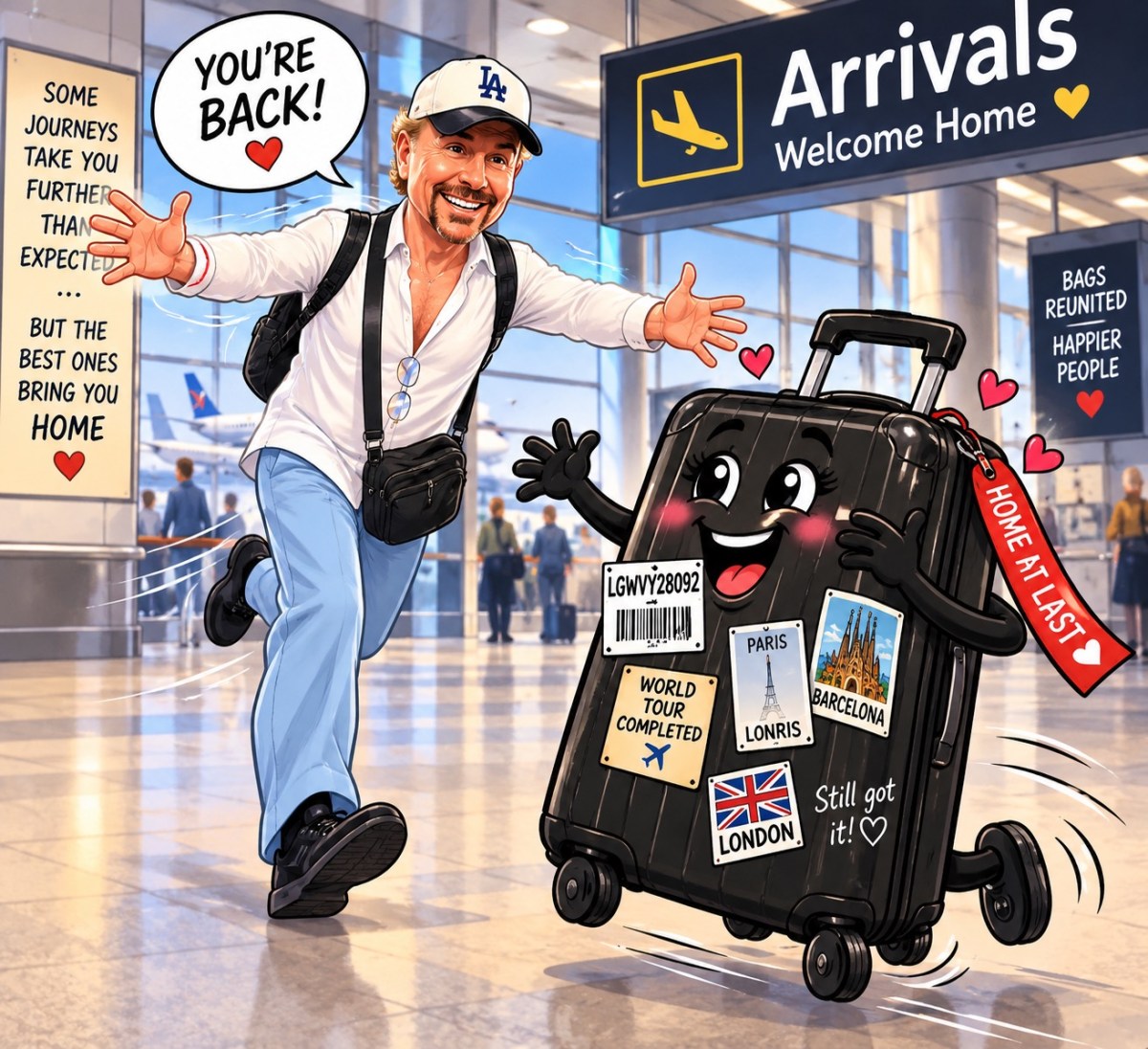
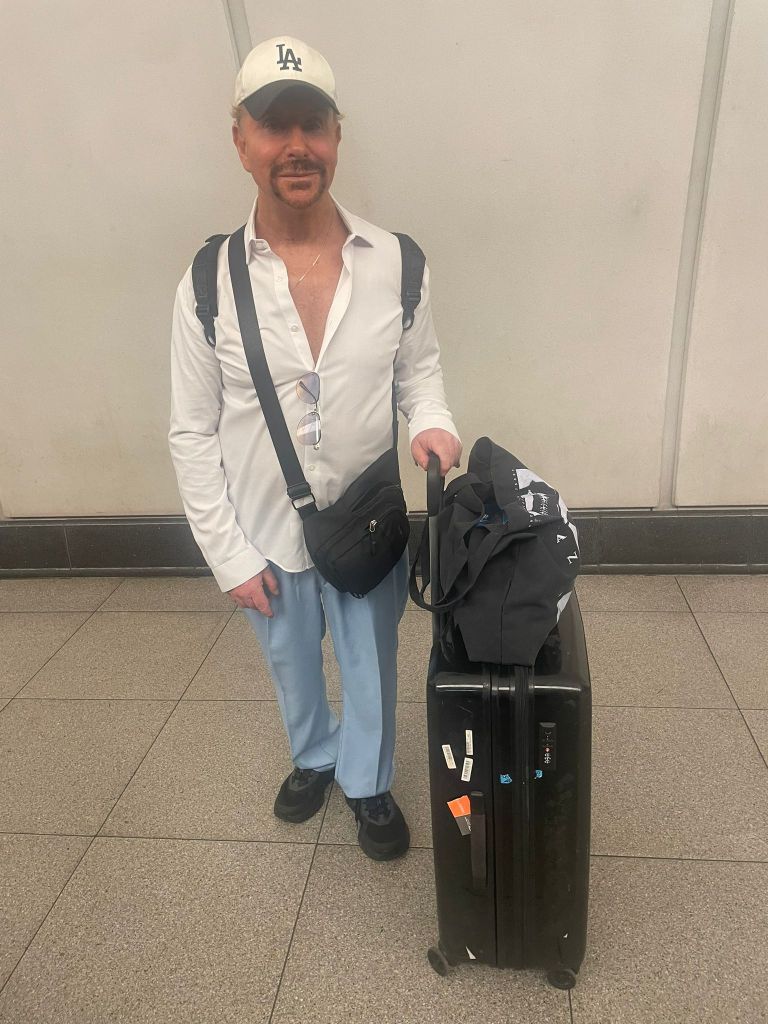
My suitcase before its extended holiday .
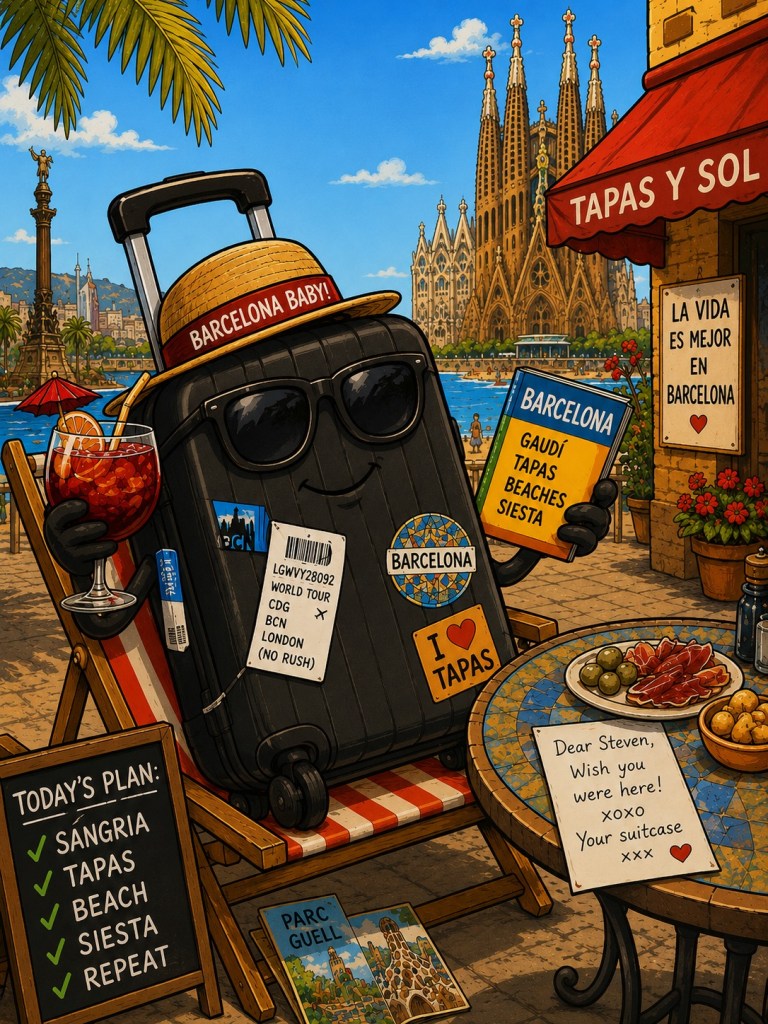
There is, of course, a funny side. I have visions of it sitting beside a swimming pool in Barcelona, sipping sangria while I sit in London trying desperately to discover its whereabouts.
But underneath the humour is a serious point.
When airlines lose passengers’ belongings, communication matters enormously. People may have medication, work clothes, sentimental possessions or valuable items inside their cases. A computer-generated message saying a bag has been “located” simply isn’t enough after days of uncertainty.
Passengers deserve to know what is happening to their property.
So, as I write this, the great suitcase saga continues.
Somewhere between London, Paris and Barcelona is one extremely well-travelled piece of luggage that belongs to me.
If anyone sees it, could you possibly tell it that its holiday is over?
Steven would quite like his clothes back.
P.S. The latest piece of “help” from Vueling Airlines was the suggestion that I call Barcelona Airport myself and see if I can find my luggage.
You really couldn’t make it up.
UPDATE: THE SUITCASE FINALLY COMES HOME!
Now for an update on my luggage.
After around ten more phone calls — yes, I am like a dog with a bone — there was finally some good news.
Now, the people at Vueling Airlines are actually very charming. You are given the choice to speak to them in English or Spanish and, even as they told me that no one could find my luggage in Barcelona but that they would keep trying, there was always the cheerful: “Is there anything else I can help you with?”
I have to admit, the latter did begin to irritate me slightly. YES — FIND MY SUITCASE!
Eventually, on Friday, six days into my suitcase’s extended stay in Barcelona, there was good news: it had been found!
However, it still wasn’t showing on the system the following morning, so naturally I called again. Yes, apparently it was on its way back to Gatwick, although no one seemed quite sure exactly when. They estimated somewhere around 12:45.
I called again later and there was still no confirmation that it had actually landed.
Then, at around four o’clock on Saturday, I received a text from Eagle Aviation, who were going to deliver my luggage.
There was an odd delivery time showing, so I emailed them. They told me they hadn’t actually received the luggage yet, so I was safe to go out.
The following morning it was much the same story. At around 11am, I was told that perhaps it would be in the 12:30 batch they were expecting, but they couldn’t confirm it.
So, safe in the knowledge that my suitcase was apparently still nowhere near my front door, I headed off to Chelmsford to see my great friend Aston Avery, who had been nominated at the Make a Difference Awards. I reckoned I could easily be home by six.
There I was, sitting next to Anna Kennedy OBE — who, I should point out, did forgot to share her Skittles however provided me with some great popcorn Thank-you — when at around 3:45pm my phone started buzzing.
“Your luggage will be delivered today between 16:42 and 18:42.”
AN HOUR’S NOTICE!
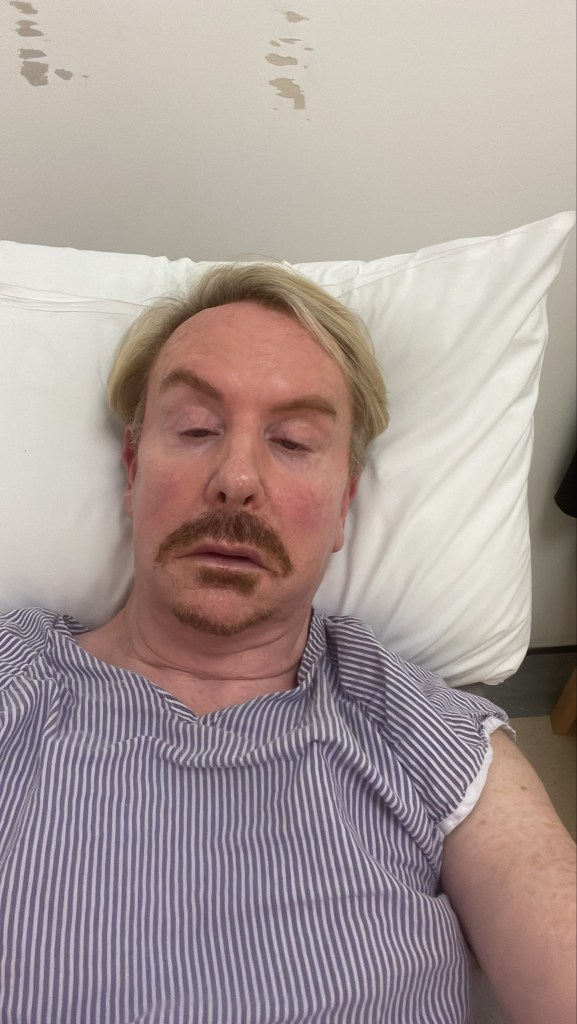
Luckily, it was towards the end of the show, so I legged it. And no wonder I have a hernia now!
Somehow, I made it back home by 5:30pm.
At 5:55pm, the call finally came.
Could I come downstairs and be reunited with my luggage?
Apparently, they don’t bring it to your actual door.
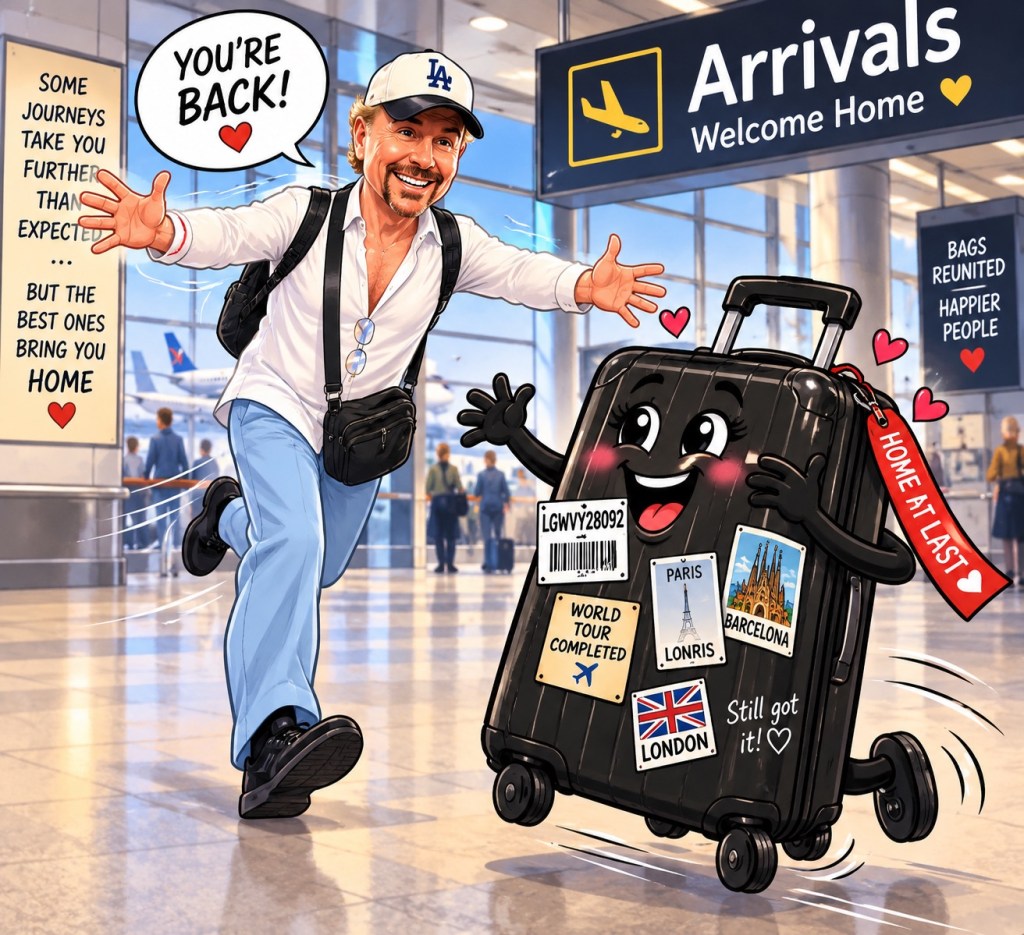
And there it was. After eight days missing in action, several countries, countless telephone calls and considerably more stress than any suitcase deserves to cause, we were finally reunited.
I am going to do exactly what my nephew told me to do in the first place and buy an Apple AirTag. I also now have the pleasure of posting my nephew’s belongings back to the USA!
On the upside, in nearly 50 years of travelling, this is the first time anything like this has happened to me. The actual flight with Vueling was very good, and the cabin crew were professional, smart and charming. So I’m going to put the whole thing down to very bad luck — or perhaps Malaga Airport!
Would I fly with Vueling again? Yes, I probably would.
Would I ever travel without an AirTag again?
ABSOLUTELY NOT.
As for my luggage, it is very happy to be home.
Although after its unexpected European adventure, it is now telling me that it needs a spa day.
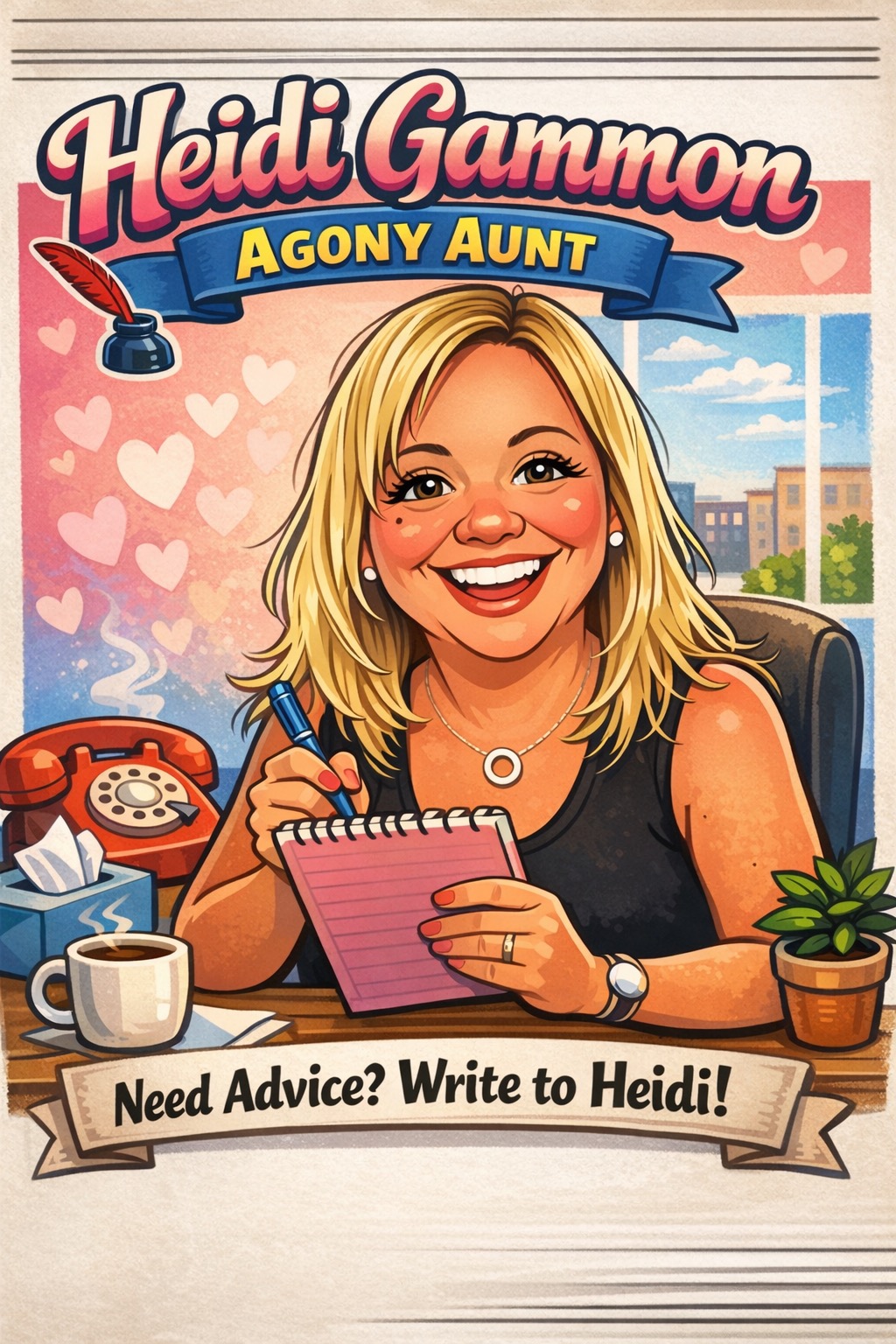
Dear Heidi: Secrets, Scandals and Saying It Straight
Life rarely arrives neatly wrapped. It tends to crash in—uninvited guests, complicated families, late-night worries, and questions that don’t come with easy answers. This week’s inbox is a heady mix: secrets hovering just beneath the surface, friendships being quietly tested, and the kind of family drama that would make even the most seasoned soap writer raise an eyebrow. From Pride-season dilemmas to Ibiza invasions, from hoarding chaos to the emotional minefield of a changing will, one thing is clear—when life gets messy, honesty may not fix everything, but it’s usually the best place to start. As ever, Heidi is here to cut through the noise, call it as it is, and offer a little perspective—with a knowing wink when needed.
Dear Heidi, It’s Pride season coming up, and I’m a big ally. I’m attracted to the same sex, though I’m engaged to a lovely girl. My best pal dates girls, but nothing ever comes of it, and he’s very good-looking. I’ve noticed him looking at guys, and I think he may be gay. However, he’s Catholic, so coming out might be an issue. I feel that, as his best friend, I should have that chat. How do you go about it? Steven, Ilford
Heidi: Slow down, Agony Uncle—this isn’t your grand reveal to orchestrate. I know you mean well, but you don’t get to pull back the curtain on someone else’s life, no matter how sharp your “eagle eye” might be. Sexuality is not a group discussion, and it certainly isn’t something to be gently cornered into over a pint.
What you can do is far more powerful—and far less intrusive. Be the friend who makes it obvious, without fanfare, that you’re open, accepting, and entirely unshockable. Talk naturally about LGBTQ+ issues, share your own experiences honestly, and remove any sense that there’s something to fear in being open. That quiet reassurance often speaks louder than any “big chat.”
And don’t underestimate the weight of his background. Faith, family, culture—these things can create a knot that takes years to untangle. If he is struggling, the last thing he needs is to feel observed or analysed. So step back, be kind, and let him lead. If he chooses you as the person to confide in, that’s a privilege. Until then, your job is simple: be safe, be steady, and—occasionally—be silent.
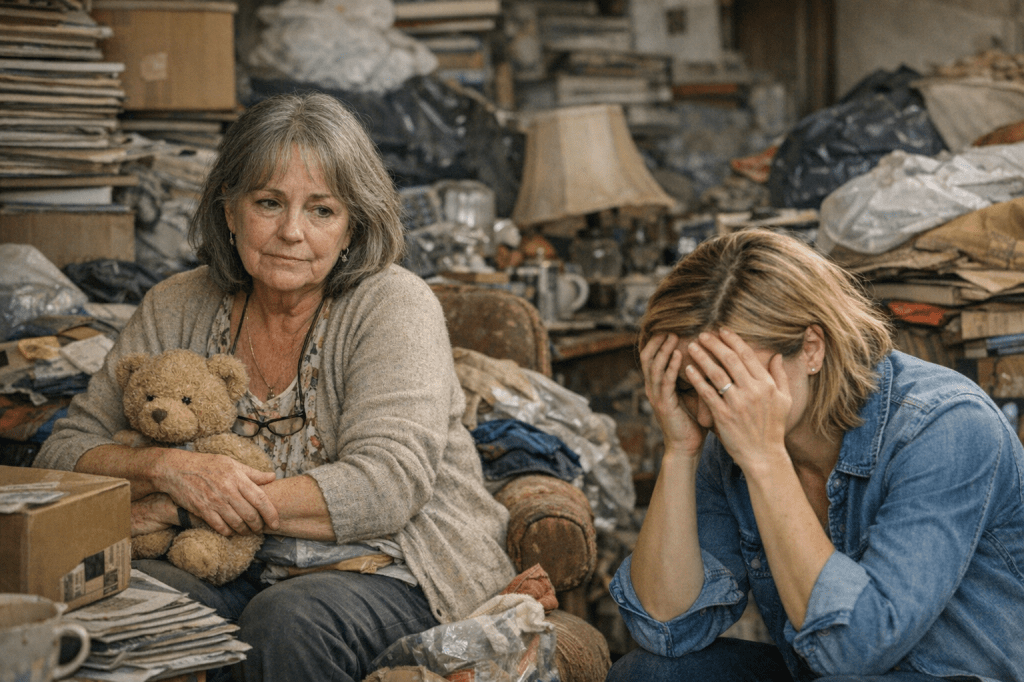
Dear Heidi, I’m living a nightmare. My mother is a hoarder, and I’ve been forced to move in with her after losing my job. My friend says hoarding is an illness. What can I do about it? It’s driving me mad and affecting my mental health.
Vicky, Raleigh Heidi: Nightmare is exactly the word—and yes, your friend is right. Hoarding isn’t just a bad habit or a refusal to tidy up; it’s a recognised mental health condition, often tangled up with anxiety, loss, or trauma. That doesn’t make it any easier to live with, of course—it just explains why a few stern words and a skip outside won’t magically fix it.
Here’s the uncomfortable truth: you cannot solve this for her. You can support, encourage, and gently nudge—but you cannot force change, and trying to will only exhaust you. So before anything else, protect yourself. Claim a space that is yours alone, however small—a room, a corner, even just a desk—and keep it clear. That’s not selfish; it’s survival.
Encourage her to seek help, but do it without judgement. A GP is a good starting point, and there are specialist services that deal specifically with hoarding behaviours. But timing matters—push too hard, and she’ll dig in further.
And you? You need support too. Living in that environment is emotionally draining, and it’s entirely reasonable to say, “This is affecting me.” Whether it’s a friend, a counsellor, or simply time out of the house, find ways to protect your own mental health. You can care about her without sacrificing yourself in the process—and that’s a boundary worth holding.
Dear Heidi, My best friend and I are going to Ibiza—we’ve been pals since high school. Out of the blue, one of her friends from the salon she works in is coming too. She didn’t even ask if it was OK; it was more like, “Great news—Danielle’s coming, and she’s got her own room.” I don’t want this. What can I do?
Dawn, Basildon Heidi: Ah, Ibiza—the land of sun, cocktails, and the occasional friendship reality check. Let’s be clear: this wasn’t “great news,” it was a decision made without you, and you’re absolutely entitled to feel put out. Holidays, especially ones rooted in long friendships, come with expectations—and one of those is mutual respect.
Now, before you start mentally reassigning sun loungers, have the conversation. Not a dramatic showdown, just a calm, honest moment. Tell your friend you were really looking forward to it being your time together, and that being told—rather than asked—has knocked you sideways. That’s not being difficult; that’s being honest.
This isn’t about banning Danielle or creating an awkward triangle—it’s about balance. Suggest carving out time that’s just for the two of you, and time when the three of you can all get along. Most situations can be salvaged with a bit of clarity and a dash of compromise.
But here’s the thing: if your feelings are dismissed or brushed aside, don’t ignore that. Ibiza might come and go, but how someone treats you in moments like this tends to stick. Consider it less a holiday hiccup and more a helpful insight.
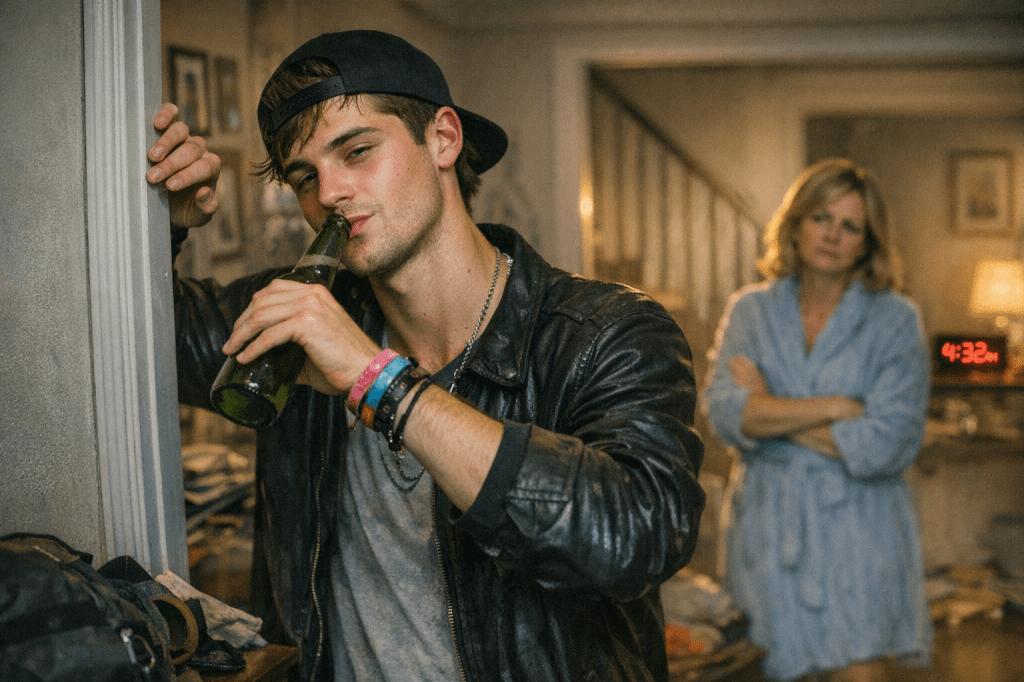
Dear Heidi, I’m in a terrible state. My 18-year-old son goes out at all hours, and I’m almost certain he’s taking drugs. The problem is, he has a job and his grades are good at college. When I tell him it’s not on, he threatens to move out. I don’t know what to do about the drugs—what should I say?
Ann, Uxbridge
Heidi: Welcome to the tightrope of parenting a young adult—where control slips through your fingers just as your worry ramps up. It’s a tricky place to be, because technically he’s an adult, but emotionally—and practically—he still needs guidance.
Charging in with accusations will only push him further away. At 18, independence is currency, and if he feels policed, he’ll spend it elsewhere. So the strategy here is softer, but smarter. Choose a calm moment—no raised voices, no dramatic entrances—and speak from a place of concern. “I’m worried about you” lands very differently from “I know what you’re doing.”
Focus on safety, not morality. The reality is, if there is drug use, the risks are real, and that’s where your concern should sit. Keep the door open, even if the conversation doesn’t go perfectly. Sometimes it’s not about winning the argument—it’s about keeping the connection.
And don’t carry this alone. There are support services for parents dealing with exactly this situation, and seeking advice doesn’t mean you’ve failed—it means you’re taking it seriously. The goal isn’t to control him; it’s to stay close enough to guide him when it matters.
Dear Heidi, My sister has suddenly reappeared in our lives as our mother is dying. Mum hasn’t seen her for five years but has welcomed her back like the prodigal daughter. Now she’s changing her will to include her again. My brother and I are furious—what can we say to them both? Samantha, Bromley
Heidi: Ah, family—the one arena where history, emotion, and timing collide with spectacular force. I can hear the hurt in this, and it’s completely understandable. Someone disappears for years, returns at the eleventh hour, and suddenly the script is rewritten—it’s bound to sting.
But here’s the part you won’t like: it’s your mother’s decision. Her money, her will, her sense of closure. That doesn’t mean your feelings don’t matter—it just means you can’t dictate the outcome.
What you can do is choose how you respond. Marching in with anger will only entrench positions and risk turning a painful situation into an all-out war. Instead, opt for calm honesty. Tell your mother how this has made you feel—hurt, confused, perhaps even overlooked. Keep it about your feelings, not accusations about your sister.
As for your sister, this may not be the moment for a full reckoning of the past. Sometimes, timing matters more than being right. There may be conversations to be had later—but right now, with emotions heightened and time possibly limited, a degree of restraint might serve you better.
You may not get the outcome you want, but you do have control over how you carry yourself through it. And when all is said and done, that dignity will matter far more than winning an argument that can’t truly be won.
Cath Heidi on Gateway Radio with Aston Avery and Steven Smith
Hello darlings, I’m back—with an interview with the divine darling of poetry, Joy Jewett, and some fabulous book reviews. Stand by for my own column, sweetie—it will be honest, a little wicked, and a full-on bitch fest that will have you laughing. Coming this April.
2Shades Magazine Exclusive Beauty, Brains and a Poet’s Soul — A Supermodel in Her Own Words
In a world obsessed with image, she offers something far more enduring: depth. Model, author, and keen observer of human nature, she sits down with David to discuss the passions that shaped her, the poetry that moves her, and the moments that make her laugh.
David: What was your childhood passion? Joy: My childhood passion was always reading. While others played with dolls, I found comfort and excitement in books. I could spend hours completely immersed in stories—it was my own little world.
David: How do you feel when you write? Joy: Writing, for me, is almost an out-of-body, spiritual experience. I am deeply drawn to human emotion—I observe people, listen to their stories, and then transform those feelings into poetry. It’s incredibly personal, yet universal at the same time.
David: Who are your favourite authors? Joy: In poetry, I greatly admire the Swedish poet Tomas Tranströmer and the incomparable Maya Angelou. When it comes to classic literature, I love Shelley, James Joyce, and, of course, the Brontë sisters. Their depth and timelessness continue to inspire me.
David: When did you last laugh? Joy: Just this morning. A friend from Sweden said to me, “Why don’t you have a man in your life? Are you just too cold-hearted?” My response was, “Why do you assume I have a heart?” We both laughed—it was one of those wonderfully sharp, unexpected moments.
David: What is your idea of a dream day out? Joy: A perfect day for me would be a long walk around historical sites with friends—places filled with ancient stories and atmosphere. We’d stop at a café for coffee or tea, imagining what life must have been like in those times. Then I’d return home inspired, writing poetry about the place, the people, and the echoes of history—ending the day with laughter and meaningful conversation with those I care about.
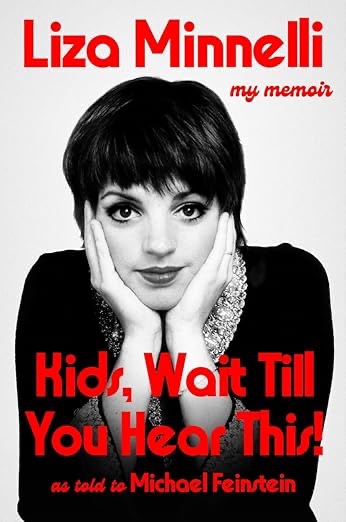
Liza Minnelli — Kids, Wait Till You Hear This! ⭐️⭐️⭐️⭐️⭐️ (5/5)
Kids, Wait Till You Hear This! is a dazzling, deeply personal memoir that captures the essence of a woman who has lived her life centre stage—both triumphantly and turbulently. Co-written with Michael Feinstein, the book pulls back the velvet curtain on Minnelli’s extraordinary upbringing as the daughter of Judy Garland and Vincente Minnelli. From the very first pages, readers are immersed in a world of Hollywood legend and Broadway brilliance, but what sets this memoir apart is its unmistakable honesty—Liza is not interested in myth-making; she is here to tell the truth.
What makes the memoir particularly compelling is its unflinching exploration of her personal struggles. Minnelli speaks candidly about her battles with addiction, offering a nuanced and often moving account of the pressures that come with fame, legacy, and expectation. Yet, the narrative never lingers too long in darkness. Instead, it balances vulnerability with resilience, weaving in vivid recollections of her career highs—from electrifying stage performances to iconic film roles. Her relationships, both romantic and professional, are painted with warmth, wit, and occasional heartbreak.
Ultimately, this is more than a celebrity memoir—it is a testament to survival, artistry, and reinvention. Minnelli’s voice is unmistakable: bold, theatrical, and laced with humour even in her most reflective moments. Fans will relish the behind-the-scenes stories, while newcomers will discover a richly layered narrative of fame, family, and identity. A truly star-studded triumph.
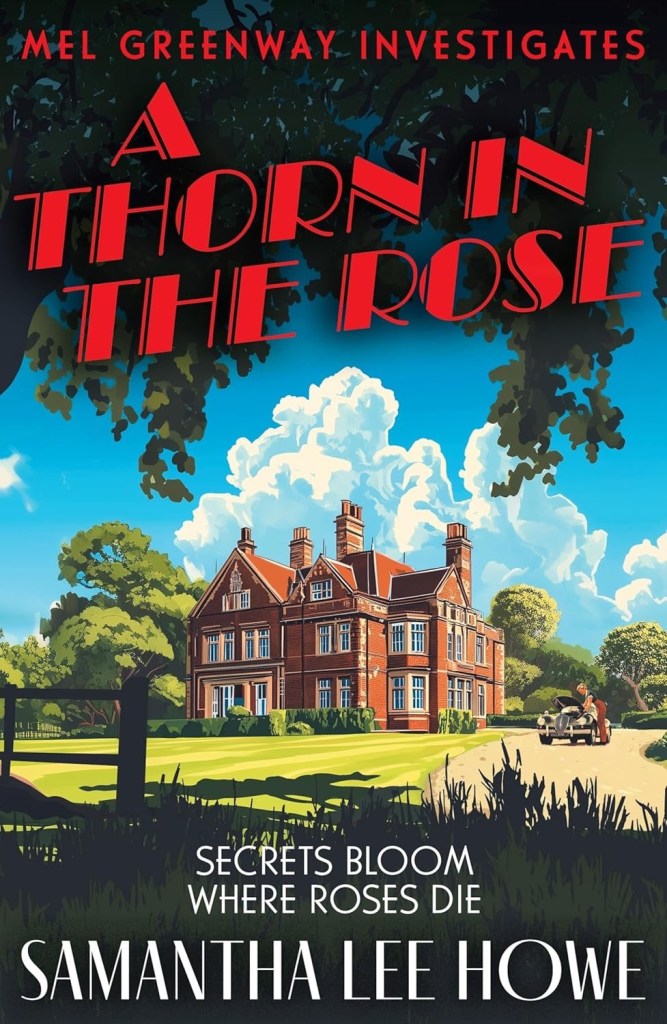
A Thorn in the Rose — A Haunting Tale of Secrets, Scandal and Survival ⭐️⭐️⭐️⭐️⭐️ Five Star
There is something irresistibly seductive about a crumbling estate and the ghosts it refuses to bury, and A Thorn in the Rose leans into that allure with confidence and style. Set in post-war Britain, Avonby Estate becomes a character in its own right—dripping with decay, privilege, and long-suppressed secrets. From the moment Lady Melinda “Mel” Greenway uncovers a body beneath the roses, the novel pulls you into a world where beauty and brutality exist side by side.
At the heart of the story is Mel—a refreshingly complex heroine whose grit as a former army mechanic sets her apart from the fragile aristocracy around her. Her dynamic with Inspector Derrin Bradley adds emotional tension that elevates the narrative beyond a traditional whodunnit. Their shared past crackles with unfinished business, while a richly drawn supporting cast ensures suspicion lingers around every corner.
What lingers long after the final page is the atmosphere—cinematic, brooding, and steeped in quiet menace. With its blend of suspense, romance, and class tension, this is a gripping and elegant mystery that keeps you guessing, even if it occasionally lingers a touch too long in its own shadows.
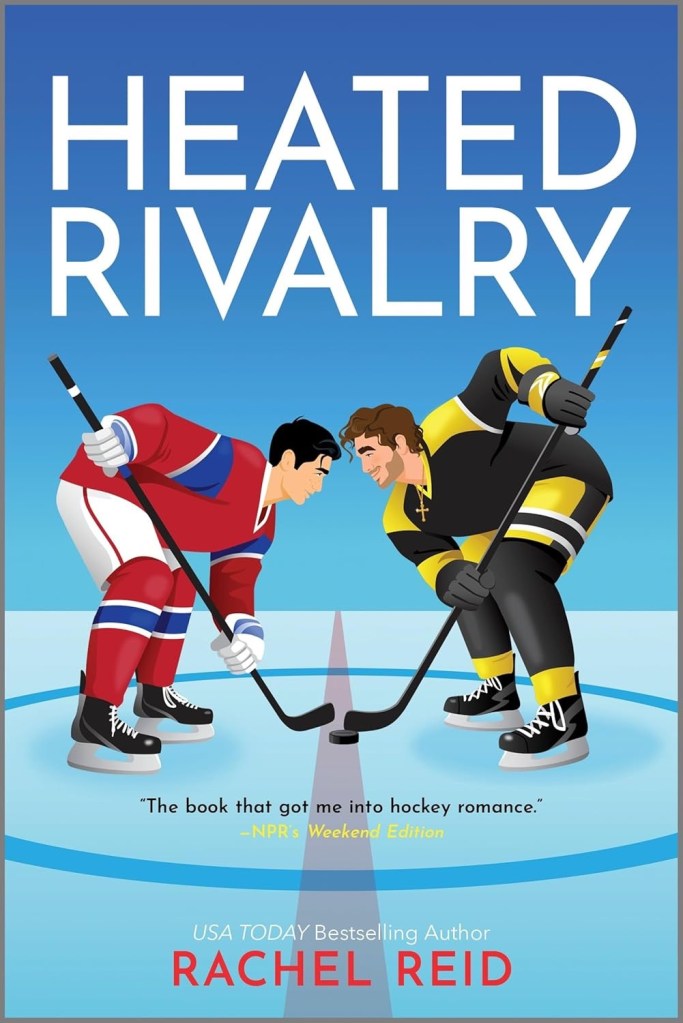
Heated Rivalry — Love, Lust and the Politics of the Ice ⭐️⭐️⭐️⭐️⭐️ (5/5)
Rachel Reid’s Heated Rivalry is not just a sports romance—it’s a cultural moment wrapped in sharp writing, raw chemistry, and emotional intelligence. Set in the brutal, high-pressure world of professional ice hockey, this bestseller delivers far more than locker-room tension. It’s slick, seductive, and surprisingly soulful.
Shane Hollander and Ilya Rozanov are electric—two rival captains locked in a dangerous game both on and off the ice. Public enemies, private lovers, their connection is explosive and deeply human. Reid explores masculinity, identity, and the suffocating expectations placed on elite athletes with refreshing honesty.
What sets this apart is its fearlessness. It challenges perceptions, breaks boundaries, and delivers a love story that feels both modern and necessary.
Steven’s Viewz: Sexy, smart, and unapologetically bold. If you think you know sports romance—think again. This one doesn’t just play the game… it rewrites the rules.
David Nailer’s Final Word: Darlings, whether it’s scandal in a crumbling estate, passion on the ice, or survival under the brightest of spotlights, one thing is certain—great storytelling always leaves a mark. And trust me… I’ve only just warmed up. See you in April—bring a thick skin and a sense of humour.
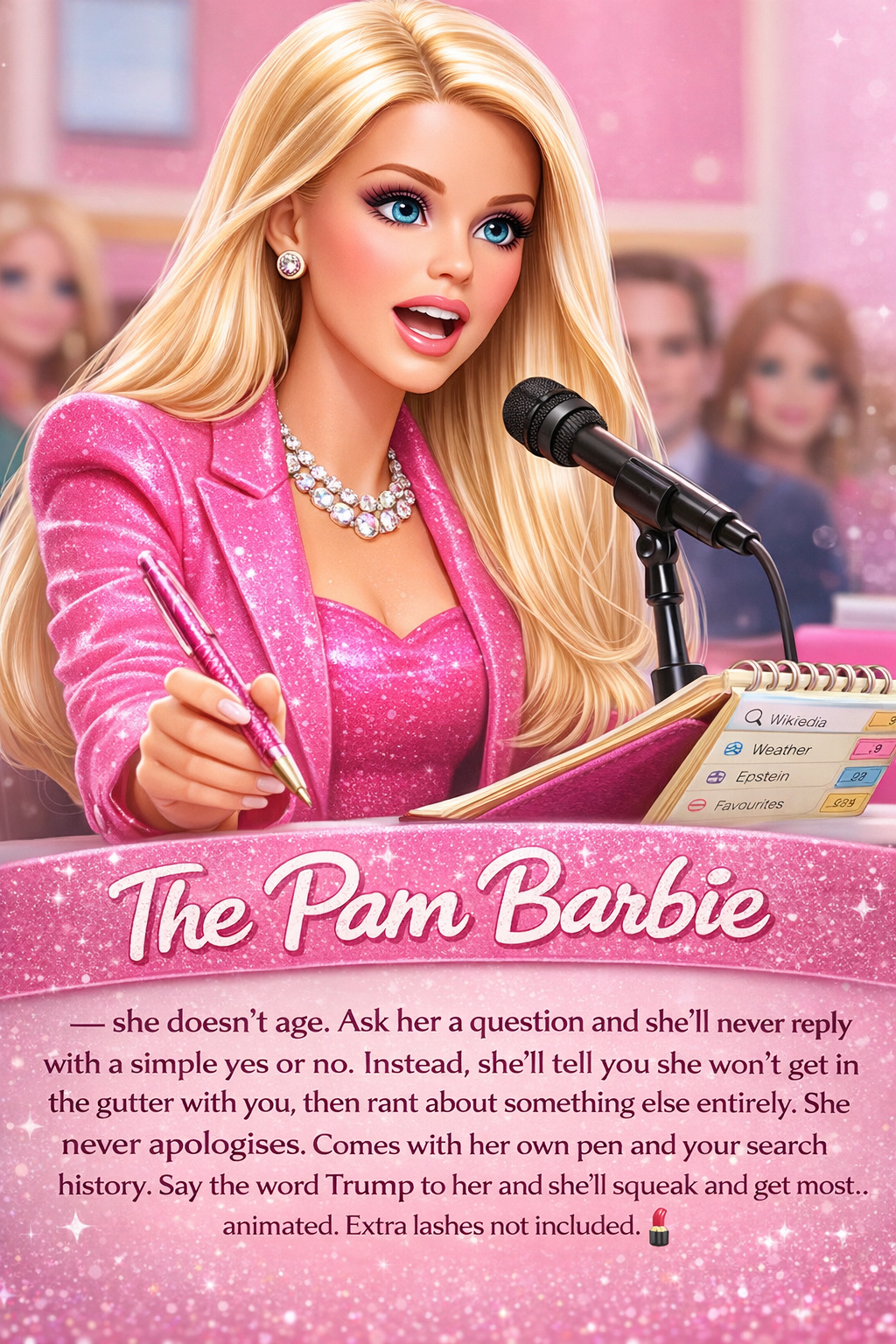
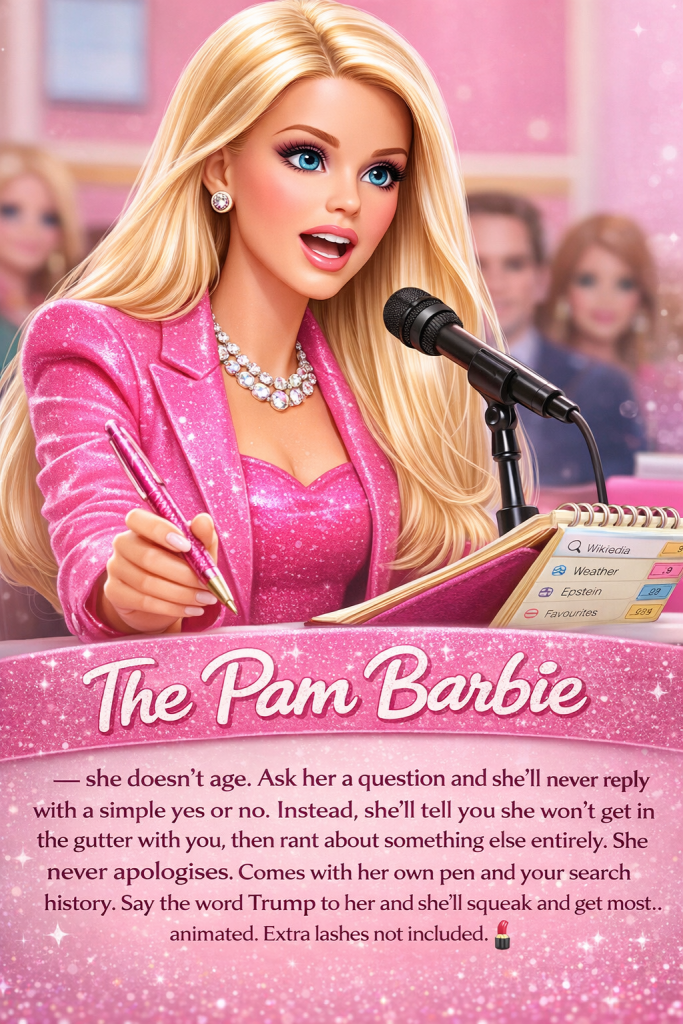
The Pam Barbie — she doesn’t age. Ask her a question and she’ll never reply with a simple yes or no. Instead, she’ll tell you she won’t get in the gutter with you, then rant about something else entirely. She never apologises. Comes with her own pen and your search history. Say the word Trump to her and she’ll squeak and get most… animated. Extra lashes not included. 💄
Do not forget two more in the set
ICE ICE BABY BARBIE
Throw myself on the cross for Trump Press Barbie
WARNING NOT SUITABLE FOR PEOPLE WITH COMMON SCENSE , OR WHO UNDERSTAND EMPATHY OR ARE PART OF GROUP THAT DOES NOT BOW DOWN TO TRUMP.
Give Me a Break: Why Jim Ratcliffe Shouldn’t Have to Apologise for Speaking His Mind
Give me a break. Jim Ratcliffe should never have been asked to apologise simply for saying what he thinks. You may not agree with him — and that’s perfectly fine — but he is entitled to express his views. That is how debate works. Someone speaks, others respond, and through discussion we decide where we stand. Silencing people helps no one.
The Monaco-based Manchester United co-owner has faced anger from politicians and football fans over words branded “disgraceful.” But really, what he did is what many of us do when we are frustrated: he spoke honestly. He didn’t dress his feelings up in polite clichés or empty phrases. He said what he meant.
Most of us are experts in polite dishonesty. “With all due respect” often means “I completely disagree with you. or F—U ” “That was pleasant” usually means “that was awful.” And “I’m sorry if you were offended” is perhaps the most passive-aggressive phrase of all. Anyone with a bit of intelligence knows it isn’t a real apology — it’s a way of avoiding responsibility while appearing polite.
We have become obsessed with forcing public figures into rehearsed apologies. They are expected to grovel, backtrack, and apologise for having opinions. Often, these apologies are meaningless. They are written by advisers, polished by PR teams, and delivered with no genuine feeling behind them.
We should be careful not to turn into a country where people are afraid to speak openly. Suppressing opinions does not make racism, homophobia, or prejudice disappear. It simply pushes those views into the shadows, where they cannot be challenged or confronted. Open discussion, however uncomfortable, is far healthier than silence.
If someone chooses to apologise on their own terms, that is their right. But forcing an apology achieves nothing. Once people have spoken, we know who they are and what they believe. Then it is up to the rest of us to agree, disagree, challenge, or ignore them.
Free speech is not about comfort. It is about honesty. And we should defend it — even when we don’t like what is being said.
Take your mind of Andy . Mandy . Epstein a Trump came too . Beast Games is Great Viewing .
Thank God for the Winter Olympics and the latest instalment of Bridgerton. At times like this, they are exactly what we need — a welcome distraction from the endless cycle of headlines Andy, Mandy, Epstein, and Trump came too . Sadly, it’s not a children’s cartoon we can simply switch off and forget. This is real life, and sometimes it feels overwhelming.
Let’s not even go there with the innuendo. Some stories are so grim and uncomfortable that they leave you wishing for a remote control that could pause the world for a while. Instead, we scroll, we sigh, and we carry on, trying to protect our sanity as best we can.
That is why entertainment matters more than people realise. It isn’t shallow or pointless. It is a form of escape, a mental breather. Whether it’s athletes pushing themselves to the limit on icy slopes or glamorous characters sweeping through Regency ballrooms, these moments remind us that there is still beauty, talent, and creativity in the world.
And if you are looking for something fun and completely absorbing, look no further than Amazon Prime’s Beast Games. It is fast-paced, dramatic, and unapologetically entertaining. The challenges are outrageous, the stakes are high, and it is impossible not to get drawn in. It is the kind of programme that makes you forget your phone, your worries, and even the news for an hour or two.
Sometimes, switching off is not avoidance — it is survival. We cannot live in a constant state of outrage and anxiety. We need sport, drama, laughter, and even a bit of escapist nonsense to balance things out.
So yes, thank God for the Winter Olympics, Bridgerton, and shows like Beast Games. In a noisy, reedless world, they offer us something precious: a moment of peace.
I want to make one thing 120 per cent clear: I am absolutely in favour of physical self-improvement and anything that helps us feel good about ourselves, including anti-ageing treatments. After all, if your house starts to crumble or needs a repair, most of us don’t think twice about getting a tradesperson in to fix it. We patch, we paint, we renovate. So why should our faces, bodies, or confidence be treated any differently?
Fill your boots. Have the facial. Get the Botox. Try whatever makes you feel better when you look in the mirror. Confidence is attractive, and feeling good in your own skin can be genuinely life-enhancing. But—and this is the crucial bit—we also need to be careful. There’s a line where self-care quietly slips into obsession, and sometimes it isn’t your gorgeous face that needs work at all, but your mental health.
Age, after all, is just a number. Reaching 60 is not guaranteed. If you’re lucky enough to get there, rejoice—many don’t. Yet we live in a culture obsessed with youth, where growing older is treated as something faintly shameful rather than something earned. I constantly hear phrases like “age-appropriate dress” or “age-appropriate behaviour,” usually delivered with a raised eyebrow and a side-order of judgement.
Let’s be honest. If gravity has taken a firm grip and décolletage is mapped with red veins, tiny shorts and a boob tube probably won’t make you look younger—it’ll likely do the opposite. But equally, if you want to wear them, then shake it honey 🥾. Personal style should be about expression, not apology. Dressing “younger” doesn’t make you younger; dressing confidently makes you look alive.
What I genuinely struggle to understand is why so many people feel entitled to judge others for ageing gracefully. There’s a peculiar cruelty in sneering at someone who has chosen not to fight time with needles and fillers, as if dignity itself were an act of rebellion.
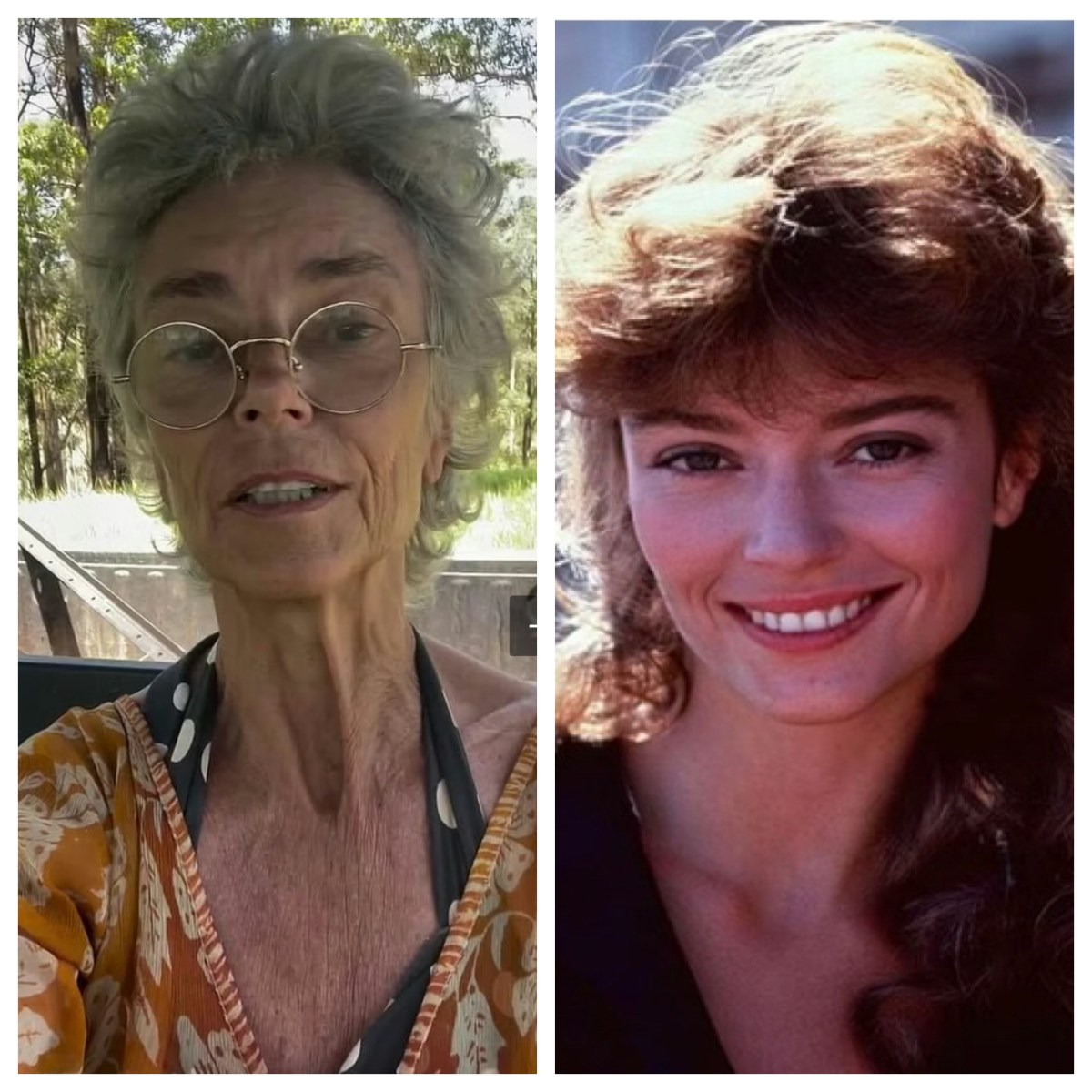
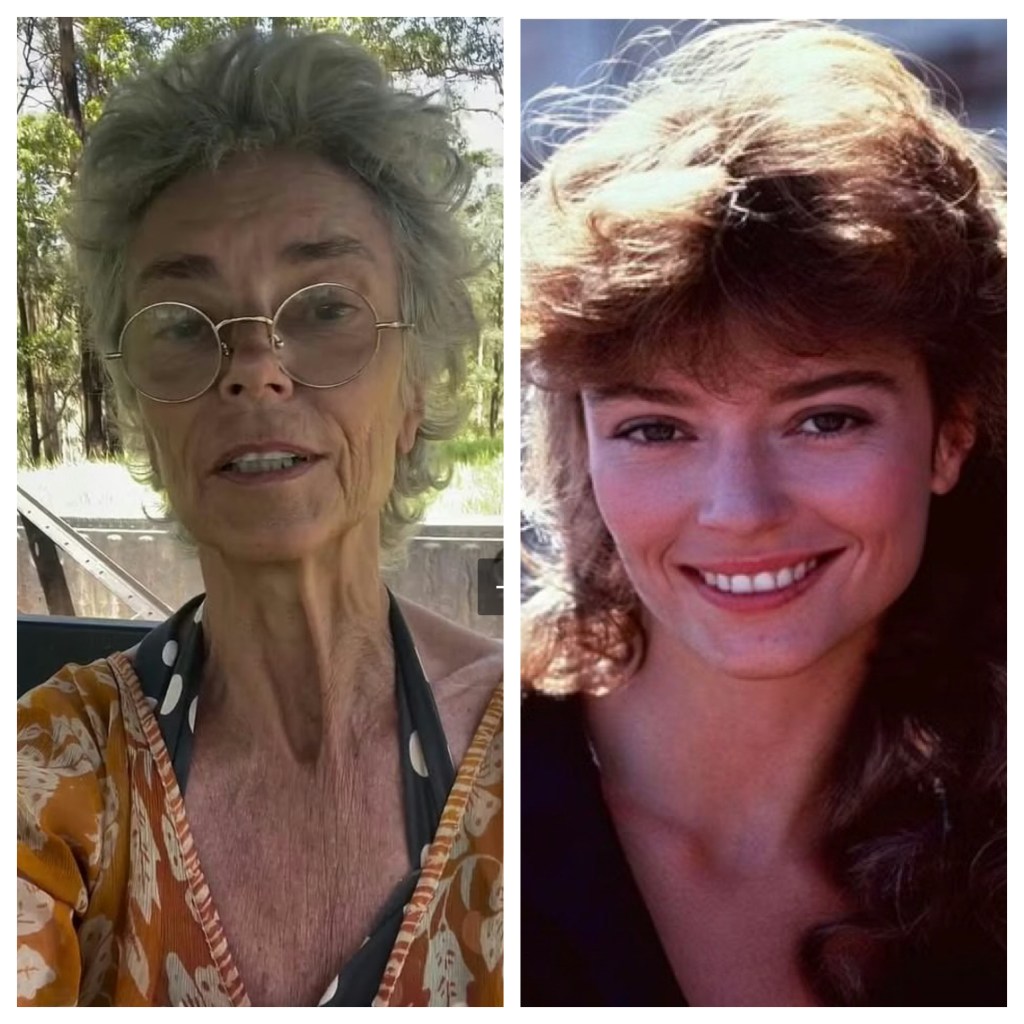
Take Rachel Ward, once heralded as one of the great beauties of the 1980s after her unforgettable role in The Thorn Birds. She could have spent decades trying to drag her face back to that era, chasing a frozen echo of her younger self. Instead, she chose something braver. She embraced her face in her sixties—lines, movement, expression intact—and looks refreshingly real. There’s no stiffness, no denial, just a face that tells a story. A face you want to know.
No frozen look here. Just confidence, character, and the quiet power of self-acceptance.
Perhaps that’s the real anti-ageing secret: not erasing who we’ve been, but owning who we are.
Re: The Beckhams
From “harmless mum dancing” to accusations of being overly controlling, the Beckhams have once again found themselves dominating headlines—at a time when the world is facing far graver realities. Bodies lie in the streets of Iran, conflicts rage across multiple countries, and yet we are invited to clutch our pearls over a family wobble involving a pop star, a dance floor, and a grown man with opinions.
Brooklyn Beckham, we’re told, had a tough childhood. Listen, pal—we all had to listen to your mum sing. Perspective is a wonderful thing.
But let’s be honest: no one truly knows what goes on behind those carefully curated, smiling family photographs. Families are complicated. Fame magnifies everything, distorts nuance, and turns private disagreements into public sport. Judging any family—famous or not—based on fragments and hearsay is a fool’s errand, and none of us are in possession of the full story.
What did give me pause, however, was DJ Fat Tony choosing to speak out. It was a paid gig. He was hired, did the job, and that should have been the end of it. Unless subpoenaed or dragged into court, discretion would have been the wiser—and classier—option. Airing opinions after the fact feels less like honesty and more like self-publicity. A whiff of Paul Burrell, if you will.
As for the rest of it, let’s calm down. If Victoria Beckham wants to dance in a way deemed “inappropriate” by the commentariat, someone could have gently steered her off the floor. It was hardly the crime of the century.
If anything, the whole saga has had the unintended consequence of resurrecting Victoria’s singing career—long thought buried—rising again like a bad smell. Some things, it seems, never stay dead.
Here’s hoping The Beckhams do what most families eventually manage: talk, regroup, and move on—preferably without the rest of us pretending it’s global news. However if mum or dad is nightmare I urge anyone to put boundaries down asap as it only gets worse .
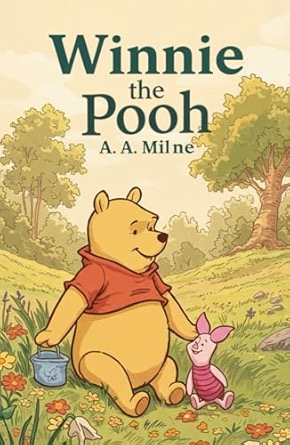
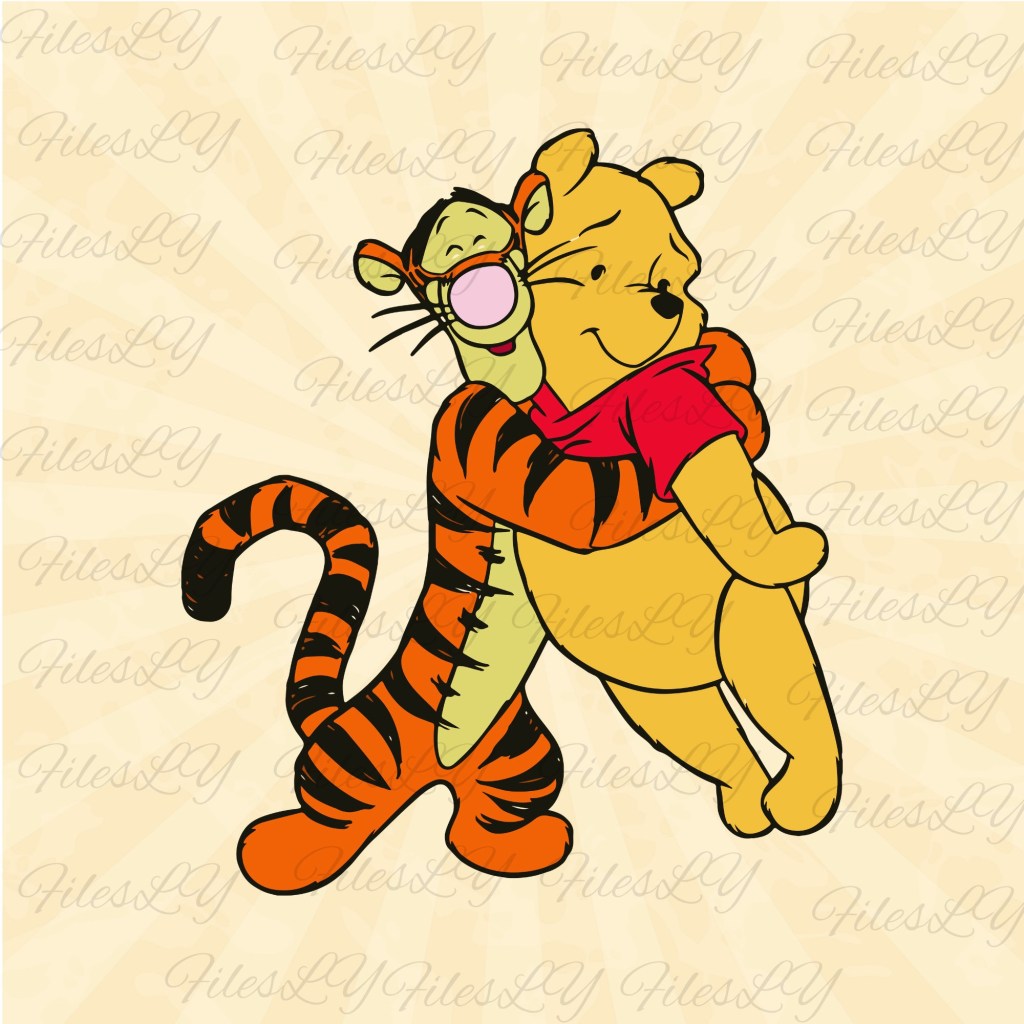
I have a very soft spot for Winnie-the-Pooh. My former partner of twenty years used to call me Tigger, after the ever-bouncy tiger, and over the years he sent me affectionate cards featuring Pooh and friends. One of the last films we saw together was Winnie-the-Pooh, and we loved it—gentle, comforting, and quietly profound.
Pooh and his friends beautifully emulate life itself. Eeyore carries his depression with weary honesty; Tigger bounces through the world with unstoppable enthusiasm; Piglet worries; Owl pontificates; and Pooh simply is. There’s something deeply enchanting about a group of characters who mirror our own emotional landscapes so tenderly, without judgement or pretence.
Created by A. A. Milne, Pooh gives us permission to slow down. In a world increasingly obsessed with productivity, achievement, and noise, the bear of very little brain reminds us that gentleness is a strength. He values friendship over status, kindness over cleverness, and a good walk in the woods over almost everything else—except, perhaps, honey.
For many of us, Pooh arrives early in life, read aloud at bedtime, his world drawn in soft, timeless lines by E. H. Shepard. But he grows with us. As adults, we return to the Hundred Acre Wood and discover unexpected wisdom in its simplicity: that it’s all right not to have the answers, that listening matters, and that being present is often enough.
Pooh’s importance lies in his humanity. He reassures us that you don’t need to be extraordinary to be loved, and that friendship—steady, imperfect, and loyal—is what truly carries us through life.
One hundred years on, Winnie-the-Pooh still whispers the same gentle truth: sometimes the smallest things take up the most room in your heart. 🍯💛
Welcome to Steven’s Viewz — the first of 2026. And let’s start the year with an uncomfortable truth.
Adam and Holly
Is it ever okay not to invite a family member to a major life event? Is it ever acceptable to distance yourself — or even cut ties completely?
The short answer is this: yes, sometimes it is not only acceptable, it is necessary.
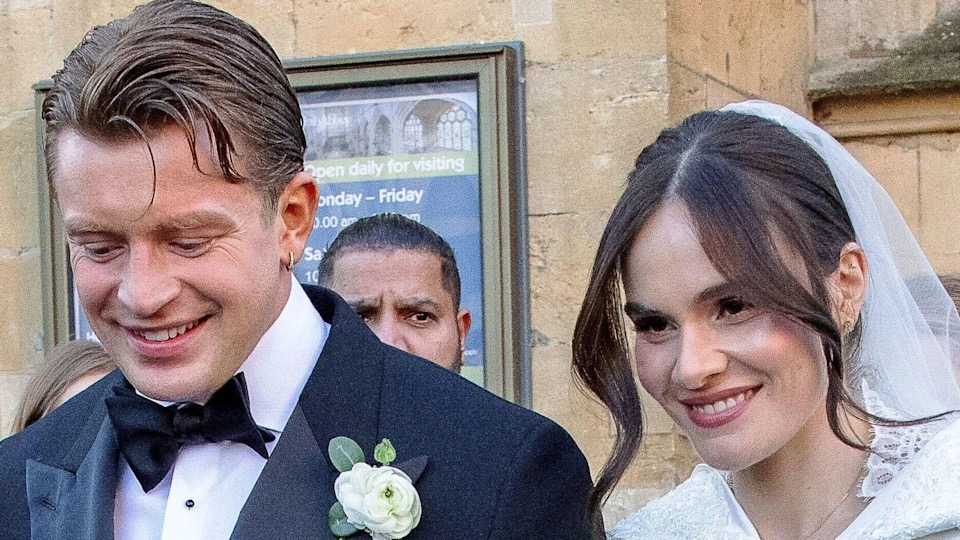
The question has been dragged into the spotlight following the wedding of the year, as Adam Peaty married Holly Ramsay and chose not to invite his mother. Predictably, the outrage machine kicked into gear. Headlines screamed. Opinions flooded in. Armchair judges — armed with no facts and limitless certainty — rushed to condemn.
Here’s what struck me most: how quick people are to defend family in theory, and how unwilling they are to accept the damage family can cause in reality.
Not all families are The Waltons. Some families are battlegrounds dressed up as photo albums.
Behind the smiling Christmas cards and Facebook posts lie power struggles, control, emotional manipulation, and silence that screams louder than words. And when someone finally says “enough,” the world often turns on them — not the behaviour that pushed them there.
I know this terrain well.
I grew up in a family where people disappeared without explanation. At nine years old, I came home to find myself locked out. Eventually, the letterbox opened and my mother asked, “Are you on your own?” A row between her and her mother — my grandmother — had ended the relationship entirely. One moment she was part of our lives; the next, she was erased.
Visiting my grandparents had once been a joy. Then it became forbidden. When I later wrote to my gran, there were consequences. At fourteen, I was sent alone to Glasgow — not to reconnect, but to persuade my grandparents not to take my father’s side in court. That was the last time I ever saw them.
That isn’t family warmth. That’s family politics.
So when people scoff and say, “But she’s his mother,” I don’t hear wisdom — I hear denial.
Adam and muu Caroline .
Because sometimes family isn’t a source of love. Sometimes it’s a source of fear, obligation, and emotional exhaustion. And no wedding day — no milestone — should be overshadowed by anxiety about who might erupt, undermine, or hijack the moment.
Much as you try to make it work, some people are only content when they are in control. When they aren’t centre stage, they create drama to pull the spotlight back. And when confronted, they cast themselves as the victim — never acknowledging the trail of damage behind them.
Let’s be honest: if a friend behaved that way — belittling you, calling you names, sabotaging your happiness — would you keep them in your life? Of course you wouldn’t. Yet when it’s family, we’re told to endure it. Smile through it. Absorb it.
Why?
Mental health does not become optional because someone shares your DNA.
Often, when people move into new social circles or build lives different from the ones they were raised in, it triggers insecurity in those left behind. Even when efforts are made to include them, their anxiety spills out as disruptive behaviour. Weddings, birthdays, celebrations — all become stages for unresolved resentment.
If Adam’s mother were truly the injured party, dignity would have been her strongest ally. Silence, reflection, restraint — not public outrage. Those who are genuinely wronged rarely need to shout the loudest.
Adam didn’t just make a decision about a wedding invitation. He changed his surname. That is not impulsive. That is not petty. That is the culmination of years of internal conflict, careful thought, and emotional cost.
And I applaud him for doing it early — before resentment calcifies, before damage multiplies, before patterns repeat. Family member may love you but it does not allow them to hurt you and be in denial.
No family member should ever make you feel small, fearful, or unworthy. Family should be the safest place — not the one you brace yourself for.
Sometimes the bravest, healthiest choice is to step away. Not out of bitterness, but out of self-respect. Not to punish, but to protect.
And if that makes people uncomfortable, perhaps it’s because it forces them to confront a truth they’d rather ignore:
Family doesn’t get a free pass to hurt you.
Why Amandaland Was the Christmas Treat We Didn’t Know We Needed
There is a particular kind of Christmas television that feels like slipping into a familiar jumper: slightly stretched, deeply comforting, and faintly ridiculous. The Amandaland Christmas special is exactly that kind of viewing — and all the better for it.
Christmas Day television is a battlefield. Big budgets, earnest dramas, and aggressively “heartwarming” narratives often jostle for attention, all while families argue over the remote and someone burns the sprouts. Amandaland cuts through the noise by doing something radical: it knows precisely what it is. A sharp, character-driven comedy about social aspiration, emotional repression, and the very British terror of appearing ordinary — now wrapped in tinsel.
The episode’s premise is delightfully simple. Amanda, our tightly wound heroine, decides to recreate a “perfect” childhood Christmas at her aunt’s country home. Naturally, this requires absolute aesthetic control, emotional denial, and an unwavering belief that nothing — not weather, children, or other people — should interfere with her vision. What follows is a festive slow-motion collapse, played with exquisite comic timing.
Enter Jennifer Saunders, who turns up as Aunt Joan like a glitter cannon fired directly into the episode. Saunders doesn’t merely steal scenes — she annexes them. Her performance is gloriously unfiltered, full of physical comedy, throwaway lines, and the sense that she is enjoying herself enormously. This is not nostalgia casting; this is a master at work, reminding us how joyful comedy can be when it’s driven by confidence rather than caution.
Then there’s Joanna Lumley, a woman who could make a shopping list sound withering. As Amanda’s emotionally glacial mother, Lumley delivers her lines with that unmistakable mix of elegance and quiet disdain. Every raised eyebrow lands like a punchline. She doesn’t chase laughs — she allows them to come to her, which somehow makes them sharper. Watching Lumley and Saunders share the screen again is less a reunion and more a reminder: this is what happens when comic icons are trusted to do what they do best.
What makes Amandaland such perfect Christmas viewing is its refusal to be falsely sentimental. Yes, there’s warmth here — but it’s earned, not imposed. The show understands that Christmas isn’t magical because it’s perfect; it’s memorable because it rarely is. The forced cheer, the unresolved family tensions, the desperate attempts to manufacture tradition — all of it rings painfully, hilariously true.
In an era where television often feels either too bleak or too bland, Amandaland occupies a sweet spot we desperately need more of. It’s clever without being smug, affectionate without being soft, and funny without shouting for attention. Most importantly, it trusts its audience — and its performers — to appreciate humour rooted in character rather than spectacle.
By the time the credits roll, you feel lighter. Not because everything’s been neatly resolved, but because you’ve laughed at the chaos instead of pretending it doesn’t exist. And really, isn’t that the whole point of Christmas television?
Heidi is back, and she’s here to help you get through and enjoy the holiday period.Hear her on Gateway Radio on the Aston Avery Show and on YouTube.Please write to her at 2Shades: spman@btinternet.com if you have a problem.Heidi can only answer so many, but she will try her best. Heidi is back, and she’s here to help you get through and enjoy the holiday period.spman@btinternet.com if you have a problem.Heidi can only answer so many, but she will try her best.
Dear Heidi Hope you are well. My son is coming with his girlfriend for Christmas. She is a lovely girl, but she’s not really my kind of person — though she makes my son happy. Lunch is going to be a problem: she is vegan and we are all meat eaters. Making it worse, she talks about animal cruelty while we’re eating. Now my son has decided he’s vegan too. I will make a nut roast and vegetables for them, but is it acceptable to tell them I don’t want to hear about animals and cruelty while we eat? Diana, Uxbridge
Heidi replies: You’re being considerate by preparing vegan options, and it’s perfectly reasonable to set boundaries at the table. Explain kindly that you respect their choices, but mealtimes need to stay pleasant for everyone. A gentle, “Let’s save the debate for later,” is enough. Mutual respect works both ways. Maybe try having a coffee with her before Christmas, go over the menu, and then explain your boundaries so it doesn’t become a big issue on the day.
Dear Heidi My boyfriend and I like to party and occasionally take drugs. I feel it’s under control on my end — high days and low days, that kind of thing — but I am a traditionalist when it comes to Christmas. He wants to invite two friends over and seems more interested in getting drugs in for after lunch than the food or the day itself. What can I do? I want a white Christmas — not that kind of white one. Mike, Bournemouth
Heidi replies: You deserve a Christmas that feels safe and joyful. Tell your boyfriend clearly that you want a drug-free day and that you aren’t comfortable hosting a gathering that revolves around substances. If he can’t respect that boundary, it’s a sign something needs addressing in the relationship — and perhaps in your habits as a couple. A peaceful Christmas requires mutual respect. Any regular drug use is not only illegal but a sign of addiction; once it’s in your life, it has a habit of resurfacing.
Dear Heidi Can you please help me? My mother is a total control freak and she runs Christmas like a military operation. This year I want to go to my friends’ in Cornwall. I am 19, at college, and have a part-time job. How do I break the news? I hinted at the idea and she brushed it off. How do I tell her? Malcolm, Newcastle
Heidi replies: You’re an adult now, and part of growing up is making your own plans. Be direct, calm and kind: “Mum, I love Christmas here, but this year I’m spending it with friends.” She may protest, but stick to your decision. Set the boundary with respect, not guilt, and give her time to adjust. The sooner you tell her, the better — and be aware she may not stop being controlling, so learning to stand firm now will help.
Dear Heidi Please help. We are going to my fiancé’s for Christmas. His mum is nice, but his dad is awful — he constantly makes crude comments and flirts with me when no one is looking. What can I do? Do I tell my fiancé or just put up with it since we don’t go that often? Tiffany, Leeds
Heidi replies: You should not put up with inappropriate behaviour, no matter how infrequent the visits. Tell your fiancé privately and calmly what has been happening. He needs to know, and the two of you can decide together how to handle it — whether that’s him speaking to his father or setting clearer boundaries. You deserve to feel safe and respected.
Dear Heidi I am going home for Christmas. This summer I came out at university. My parents are religious and it is going to be a shock to them. Should I go down sooner to tell them? I don’t want to ruin Christmas. Paul, Cardiff
Heidi replies: If you feel emotionally ready, telling them before Christmas may ease some of the pressure on the day itself. It gives them time to process without the intensity and expectations of the holiday. Choose a calm moment, be honest, and remember: their reaction is about their adjustment, not your worth. You deserve to be loved and accepted as you are.
Dear Heidi How are you? Please can I beg for your help? My best friend is driving me mad. She goes from one bad relationship to another. She loves the bad boy look — covered in tattoos and looking like they got out of prison last week. It’s always a car crash, and to be honest, my empathy is running low. It’s my birthday soon, and honestly, her whining on about her love life is not my idea of fun. Would it be wrong not to invite her? — Nadine, Essex
Dear Nadine, Oh, the endless bad-boy drama — I think we’ve all had a friend like this! It’s exhausting watching someone you care about drive straight into the same brick wall again and again, isn’t it? Here’s the thing: you can’t fix her, and it’s not your job to. If she chooses chaos, that’s her story to live — but you’re allowed to protect your own peace. For your birthday, surround yourself with people who bring joy, not stress. If inviting her will spoil your day, then don’t. You can see her another time when you have the energy to listen. Being a good friend doesn’t mean being a doormat — sometimes it means stepping back with love. Or be brave and tell her how you feel, that it’s draining you. Love, Heidi
Dear Heidi Really love the show. My husband has always been a bit homophobic. Six months ago, he liked my hair so much he wanted a few highlights. Knowing he’s not great about the gay thing, I suggested he shouldn’t go to my beautiful stylist — who is also a friend — but he insisted. His hair looked amazing, but a few weeks later I was shocked to find he’d been out for drinks with my hairdresser, and now they’ve become friends. He says it’s rubbish that he’s homophobic and that he enjoys the laughs they have together. There’s a lads’ weekend to Ibiza coming up — no ladies allowed, which is fine — but can you imagine my hairdresser going too? I asked him why, and he said he’s going anyway and will get them into a few clubs. What’s going on? — Marieanne, Southend
Dear Marieanne, Well, this is a twist! It sounds like your husband has discovered that friendship doesn’t have to come with labels — and that’s actually a good thing. Maybe getting to know your hairdresser has opened his eyes a little and softened his old prejudices. As for the Ibiza trip — I can see why your eyebrows are raised! But before your imagination books a one-way ticket to Jealousville, take a breath. This might simply be two people enjoying new company and shared humour. If your instincts tell you there’s something deeper going on, have an honest, calm chat. But don’t jump to conclusions — this could be the best thing to happen to your husband’s attitude. Who knows? He might come home with a tan, a hangover, and a new respect for your fabulous friend. Love, Heidi
Dear Heidi I am madly in love with this lad, and he’s only gone and asked my friend to the dance! Honestly, Heidi, I am fuming — and she knew I liked him. I’m fifteen, and she dresses like she’s a dancer, while my mum says no to lashes and short skirts. It’s not fair. I’ll probably never speak to her again. What can I do? — Mandy, Basildon
Dear Mandy, Oh sweetheart, teenage love can feel like the end of the world — but I promise, it isn’t. You’re fifteen, and your heart is still learning who deserves it. This boy clearly doesn’t, and your friend’s choices say more about her than they ever could about you. You don’t need lashes or short skirts to shine — confidence is far more magnetic than mascara. Let her have her dance; you focus on being you. One day soon, someone will see the real you and won’t want to dance with anyone else. For now, dry your tears, hold your head high, and remember — nothing burns brighter than self-respect. Love, Heidi
Dear Heidi I’m feeling really down. I’m so fat, my budget won’t stretch to fat injections, and the gym just leaves me flat. No girls like me, and I’m nineteen and not going out anymore. What can I do? — Peter, Brighton
Dear Peter, First, let me tell you this — you are not alone. So many young people feel exactly the way you do, especially with all the “perfect” bodies plastered across social media. But real attraction doesn’t come from injections or six-packs — it comes from self-worth, kindness, and confidence. Start small: walk, move, cook decent food, talk to people. Find one thing every day that makes you feel good — music, a hobby, helping someone, anything that builds you up instead of tearing you down. The more you value yourself, the more others will see your worth. Confidence isn’t something you buy — it’s something you grow, and it lasts far longer than any gym membership. Love, Heidi
Dear Heidi My husband has announced that his mother is coming for Christmas. She’s horrible — the most passive-aggressive, rude woman you could meet. We’ve never got on; she has a way of finding a cloud in every silver lining. She’s on her own, and honestly, that’s what she deserves. My husband says she’s not that bad. Should I tell him it’s me and the children or her — and leave home for Christmas? — Sandra
Dear Sandra, Ah, the mother-in-law Christmas horror — a timeless festive classic! I can hear the carols already: “Silent night? Not likely.” You clearly feel hurt and unseen by your husband, but issuing ultimatums rarely ends well. Instead, set clear boundaries. Tell him you’ll welcome his mother — but only if everyone treats each other respectfully. If she can’t manage that, then maybe she stays elsewhere next year. Remember, Christmas is one day. Don’t let her steal your sparkle — pour a glass of something festive, smile sweetly, and rise above her barbed comments. Nothing annoys a passive-aggressive person more than calm happiness. Love, Heidi
Hi Heidi Not really a problem, but how do you get to be a counsellor or agony aunt? — Simon
Dear Simon, What a lovely question! Becoming a counsellor or agony aunt starts with empathy — and you clearly have that. Training in counselling, psychology, or journalism helps, but life experience and genuine curiosity about people matter just as much. Start small: volunteer with support organisations, write advice pieces online, or train in active listening. The best agony aunts aren’t perfect — they’re just honest, compassionate, and willing to help others make sense of their messiest moments. And who knows, Simon — you might be writing your own “Dear Simon” column one day! Love, Heidi