


It would be easy to rush to call Rocco Ritchie a “nepo baby” and dismiss his artistic success as being down to his famous parents. Of course, any help in an industry riddled with nepotism and driven by who you know can be an advantage. However, I am the first to say that Rocco is a huge talent with an original voice — if there is such a thing — and that originality is precisely why he is taking the art world by storm.
Rocco Ritchie is gaining recognition not because of who his parents are, but because of who he is becoming. In an industry often suspicious of famous surnames, he has quietly and confidently carved out a space that feels earned rather than inherited. Far from the caricature of a “nepo baby,” he has demonstrated discipline, originality, and a genuine commitment to craft that has surprised critics and collectors alike.
The label of nepotism is an easy one to reach for. As the son of global icon Madonna and filmmaker Guy Ritchie, Rocco grew up surrounded by creativity, privilege, and cultural capital. Yet what is striking about his artistic rise is how deliberately he stepped away from the spotlight that might have guaranteed instant attention. For years, he worked under a pseudonym, allowing his art to speak before his name did. That decision alone signals intent: Ritchie wanted critique, not cushioning.
His work does not rely on imitation or celebrity gimmickry. While many emerging artists fall into the trap of echoing fashionable trends or overtly referencing their influences, Ritchie resists this. Too often, artists with minimal talent but strong PR and marketing skills are sold to naïve buyers on the strength of a story rather than substance. The work may look good on a wall, but when it comes time to resell, the narrative unravels. Ritchie’s art does not rely on hype; it stands on its
own.
His work feels personal and idiosyncratic, and my hunch is that it will one day sell at serious auction houses. His paintings often explore mood, texture, and form with a restraint that belies his youth. There is confidence in his mark-making and composition, but also vulnerability — an understanding that art is as much about questioning as it is about declaring.
What sets Ritchie apart is that his work resists easy categorisation. There are echoes of classic portraiture, abstract expressionism, and urban grit, yet these elements are filtered through a distinctly contemporary lens. His use of layered surfaces and muted palettes gives the impression of images emerging from memory rather than being presented as finished statements. This refusal to over-explain is refreshing in an age of overexposure.
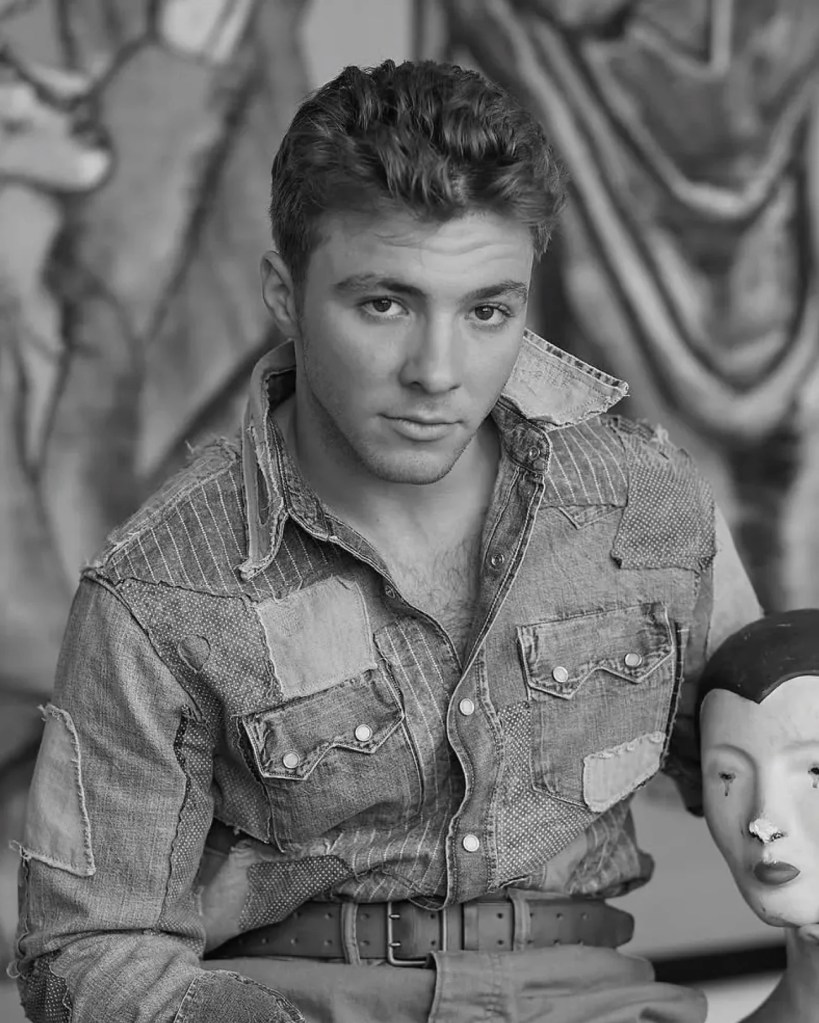
Equally compelling is Ritchie’s personal evolution. Over recent years, he has grown into a strikingly handsome and self-assured man, yet without the performative bravado often associated with celebrity offspring. There is a quietness to his public presence — a sense that he is more comfortable in the studio than on the red carpet. This grounded demeanour enhances his credibility as an artist committed to longevity rather than instant fame. He does not overtly reference other artists in his work, though there may be subtle echoes of the Mexican greats Frida Kahlo and Diego Rivera — favourites of his mother — woven quietly into his visual language.
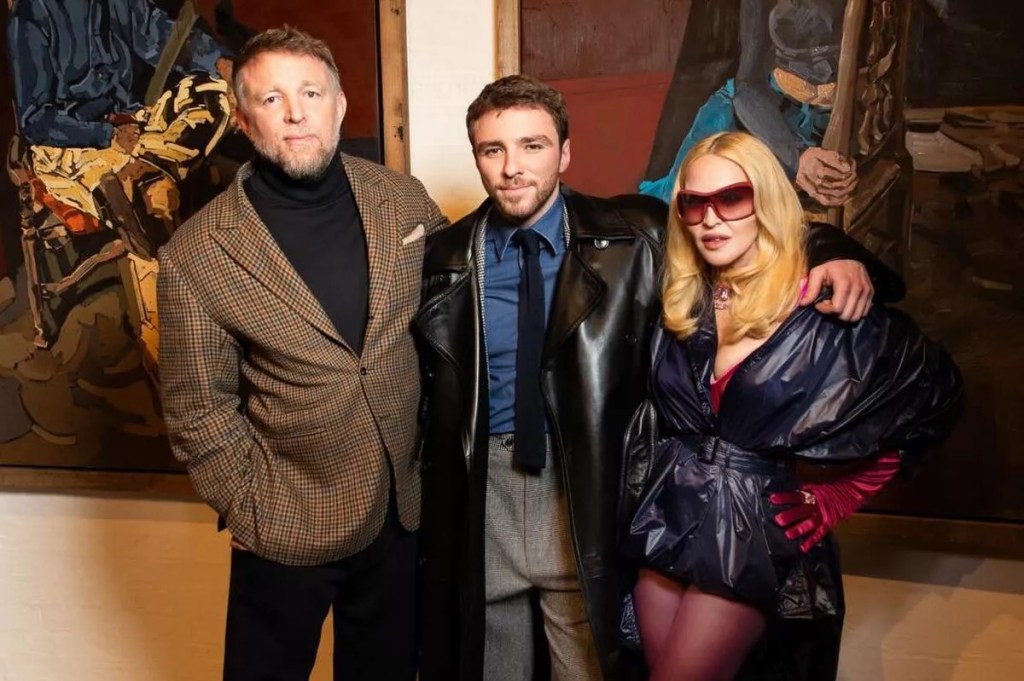
Public fascination has also been reignited by rare and genuinely touching moments of unity between his parents. Seeing Madonna and Guy Ritchie together in public for the first time in years, supporting their son, struck a chord. In an era where celebrity family dynamics are often reduced to spectacle, their shared pride felt sincere. It underscored that Rocco’s journey has not been about rebellion or reaction, but about reconciliation — between heritage and independence, privilege and purpose.
It would be naïve to deny the influence of Madonna’s deep love of art. A lifelong collector with a formidable eye, she has immersed herself in fine art, from classical masters to cutting-edge contemporary works. Growing up around such visual literacy undoubtedly shaped Rocco’s sensibilities. But influence is not imitation. Rather than copying his mother’s tastes, Ritchie appears to have absorbed an understanding of art as dialogue — between past and present, self and society.
What makes his rise feel so timely is that audiences are craving authenticity. Collectors and critics alike are increasingly weary of hype without substance. Ritchie’s work rewards slow looking. It invites interpretation without dictating meaning. This approach has helped him build genuine momentum, with exhibitions that attract attention not because of scandal or surname, but because viewers are curious to see what he will do next.

Rocco Ritchie’s emergence reminds us that legacy does not have to be a burden. It can be a foundation — one that still requires effort, risk, and humility to build upon. He is not storming the art world with noise, but with nuance. And in today’s cultural climate, that quiet confidence may be the most radical statement of all.
END

 2Shades Magazine