
Is it ever okay not to invite a family member to a major life event?
Is it ever acceptable to distance yourself — or even cut ties completely?
Steven’s Viewz
Welcome to Steven’s Viewz — the first of 2026. And let’s start the year with an uncomfortable truth.
Is it ever okay not to invite a family member to a major life event?
Is it ever acceptable to distance yourself — or even cut ties completely?
The short answer is this: yes, sometimes it is not only acceptable, it is necessary.
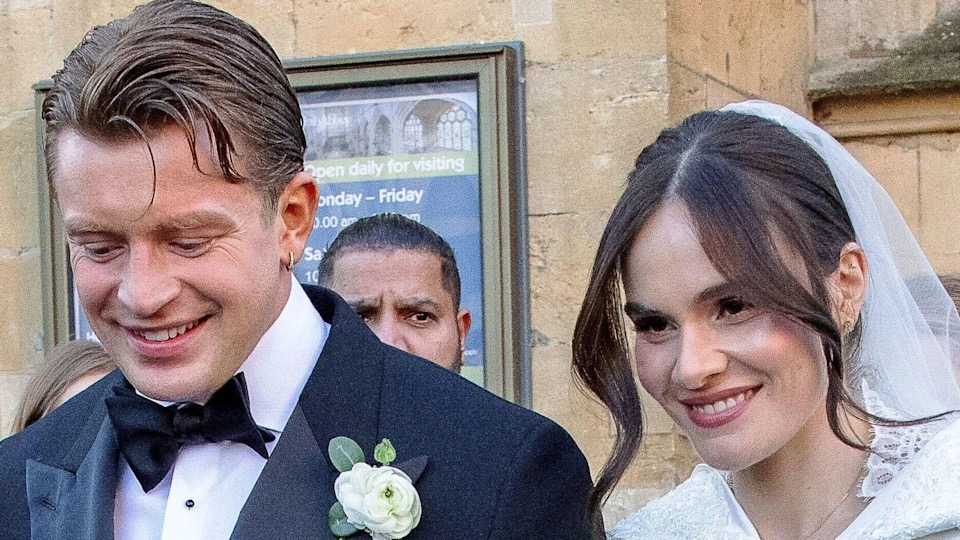
The question has been dragged into the spotlight following the wedding of the year, as Adam Peaty married Holly Ramsay and chose not to invite his mother. Predictably, the outrage machine kicked into gear. Headlines screamed. Opinions flooded in. Armchair judges — armed with no facts and limitless certainty — rushed to condemn.
Here’s what struck me most: how quick people are to defend family in theory, and how unwilling they are to accept the damage family can cause in reality.
Not all families are The Waltons.
Some families are battlegrounds dressed up as photo albums.
Behind the smiling Christmas cards and Facebook posts lie power struggles, control, emotional manipulation, and silence that screams louder than words. And when someone finally says “enough,” the world often turns on them — not the behaviour that pushed them there.
I know this terrain well.
I grew up in a family where people disappeared without explanation. At nine years old, I came home to find myself locked out. Eventually, the letterbox opened and my mother asked, “Are you on your own?” A row between her and her mother — my grandmother — had ended the relationship entirely. One moment she was part of our lives; the next, she was erased.
Visiting my grandparents had once been a joy. Then it became forbidden. When I later wrote to my gran, there were consequences. At fourteen, I was sent alone to Glasgow — not to reconnect, but to persuade my grandparents not to take my father’s side in court. That was the last time I ever saw them.
That isn’t family warmth.
That’s family politics.
So when people scoff and say, “But she’s his mother,” I don’t hear wisdom — I hear denial.

Because sometimes family isn’t a source of love. Sometimes it’s a source of fear, obligation, and emotional exhaustion. And no wedding day — no milestone — should be overshadowed by anxiety about who might erupt, undermine, or hijack the moment.
Much as you try to make it work, some people are only content when they are in control. When they aren’t centre stage, they create drama to pull the spotlight back. And when confronted, they cast themselves as the victim — never acknowledging the trail of damage behind them.
Let’s be honest: if a friend behaved that way — belittling you, calling you names, sabotaging your happiness — would you keep them in your life? Of course you wouldn’t. Yet when it’s family, we’re told to endure it. Smile through it. Absorb it.
Why?
Mental health does not become optional because someone shares your DNA.
Often, when people move into new social circles or build lives different from the ones they were raised in, it triggers insecurity in those left behind. Even when efforts are made to include them, their anxiety spills out as disruptive behaviour. Weddings, birthdays, celebrations — all become stages for unresolved resentment.
If Adam’s mother were truly the injured party, dignity would have been her strongest ally. Silence, reflection, restraint — not public outrage. Those who are genuinely wronged rarely need to shout the loudest.
Adam didn’t just make a decision about a wedding invitation. He changed his surname. That is not impulsive. That is not petty. That is the culmination of years of internal conflict, careful thought, and emotional cost.
And I applaud him for doing it early — before resentment calcifies, before damage multiplies, before patterns repeat. Family member may love you but it does not allow them to hurt you and be in denial.
No family member should ever make you feel small, fearful, or unworthy. Family should be the safest place — not the one you brace yourself for.
Sometimes the bravest, healthiest choice is to step away. Not out of bitterness, but out of self-respect. Not to punish, but to protect.
And if that makes people uncomfortable, perhaps it’s because it forces them to confront a truth they’d rather ignore:
Family doesn’t get a free pass to hurt you.
Why Amandaland Was the Christmas Treat We Didn’t Know We Needed
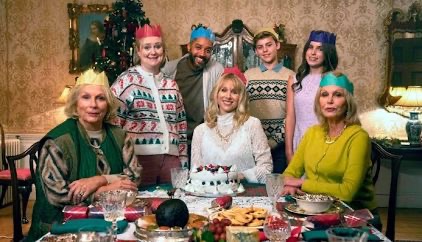
There is a particular kind of Christmas television that feels like slipping into a familiar jumper: slightly stretched, deeply comforting, and faintly ridiculous. The Amandaland Christmas special is exactly that kind of viewing — and all the better for it.
Christmas Day television is a battlefield. Big budgets, earnest dramas, and aggressively “heartwarming” narratives often jostle for attention, all while families argue over the remote and someone burns the sprouts. Amandaland cuts through the noise by doing something radical: it knows precisely what it is. A sharp, character-driven comedy about social aspiration, emotional repression, and the very British terror of appearing ordinary — now wrapped in tinsel.
The episode’s premise is delightfully simple. Amanda, our tightly wound heroine, decides to recreate a “perfect” childhood Christmas at her aunt’s country home. Naturally, this requires absolute aesthetic control, emotional denial, and an unwavering belief that nothing — not weather, children, or other people — should interfere with her vision. What follows is a festive slow-motion collapse, played with exquisite comic timing.
Enter Jennifer Saunders, who turns up as Aunt Joan like a glitter cannon fired directly into the episode. Saunders doesn’t merely steal scenes — she annexes them. Her performance is gloriously unfiltered, full of physical comedy, throwaway lines, and the sense that she is enjoying herself enormously. This is not nostalgia casting; this is a master at work, reminding us how joyful comedy can be when it’s driven by confidence rather than caution.
Then there’s Joanna Lumley, a woman who could make a shopping list sound withering. As Amanda’s emotionally glacial mother, Lumley delivers her lines with that unmistakable mix of elegance and quiet disdain. Every raised eyebrow lands like a punchline. She doesn’t chase laughs — she allows them to come to her, which somehow makes them sharper. Watching Lumley and Saunders share the screen again is less a reunion and more a reminder: this is what happens when comic icons are trusted to do what they do best.
What makes Amandaland such perfect Christmas viewing is its refusal to be falsely sentimental. Yes, there’s warmth here — but it’s earned, not imposed. The show understands that Christmas isn’t magical because it’s perfect; it’s memorable because it rarely is. The forced cheer, the unresolved family tensions, the desperate attempts to manufacture tradition — all of it rings painfully, hilariously true.
In an era where television often feels either too bleak or too bland, Amandaland occupies a sweet spot we desperately need more of. It’s clever without being smug, affectionate without being soft, and funny without shouting for attention. Most importantly, it trusts its audience — and its performers — to appreciate humour rooted in character rather than spectacle.
By the time the credits roll, you feel lighter. Not because everything’s been neatly resolved, but because you’ve laughed at the chaos instead of pretending it doesn’t exist. And really, isn’t that the whole point of Christmas television?
More of this, please. Preferably every year. https://www.bbc.co.uk/iplayer/episode/m002p137/amandaland-christmas-special
Wishing you an amazing 2026 please support 2shades by sharing and subscribing .

 2Shades Magazine
One reply on “Steven’s Viewz”
[…] My viewzs on the family . https://2shadesmagazine.com/2026/01/01/stevens-viewz-7/ […]
LikeLike