Categories
Columns Health and Fitness Lifestyle People

Anna Kennedy’s September Column

Hi everyone!

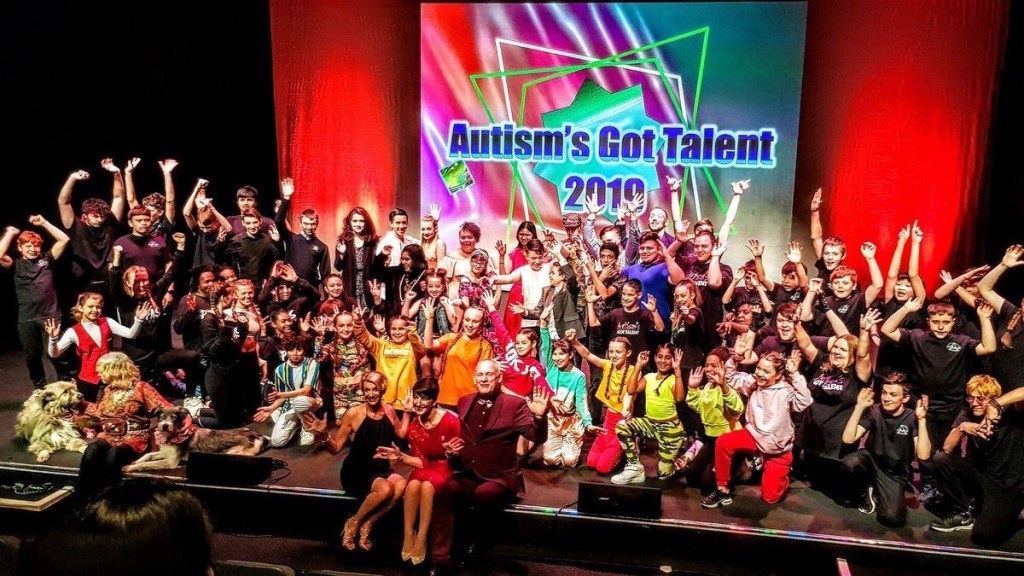
September is already proving to be an incredibly busy month, and I am super excited with the preparations for the 15th anniversary of Autism’s Got Talent, taking place on 10th October.
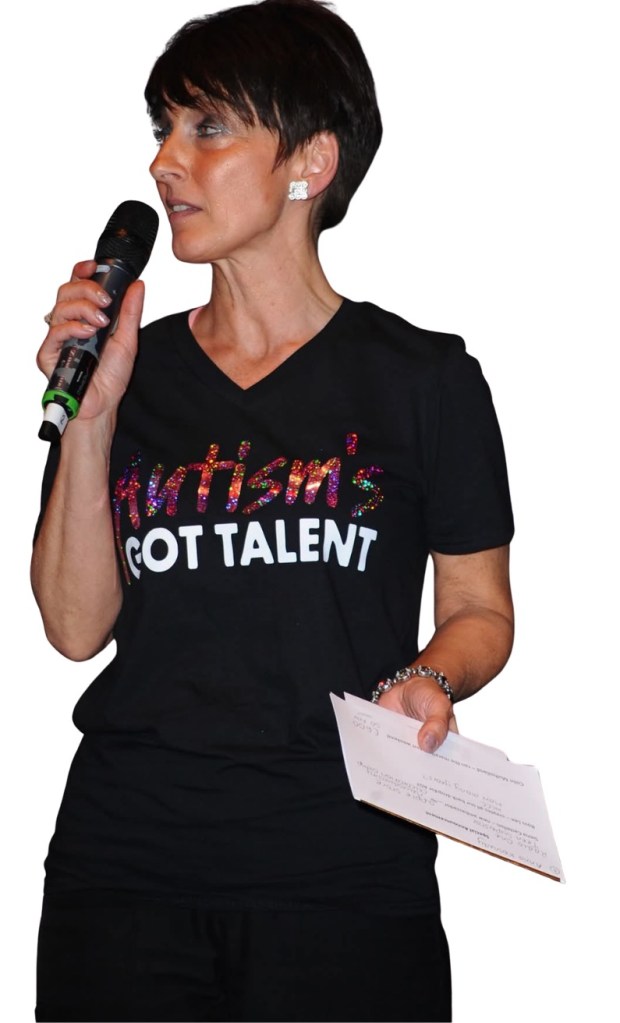
It’s hard to believe that we are celebrating 15 years of this very special event! Over the years, Autism’s Got Talent has given so many talented autistic performers the opportunity to take to the stage, showcase their abilities and, most importantly, shine.

We are still looking for sponsors to support this year’s Autism’s Got Talent, so if you, your business or someone you know would like to get involved and help us make our 15th anniversary celebration extra special, you can find all the sponsorship details here in 2Shades:

We are also still buzzing from the huge success of Autism & Art. The response to the exhibition was absolutely wonderful, and it was fantastic to see so much incredible creativity on display.

In fact, it was such a success that Marcus Jake at the FirePit Gallery, with the help of one of our patrons, Steven Smith, has agreed to host Autism & Art again next year!
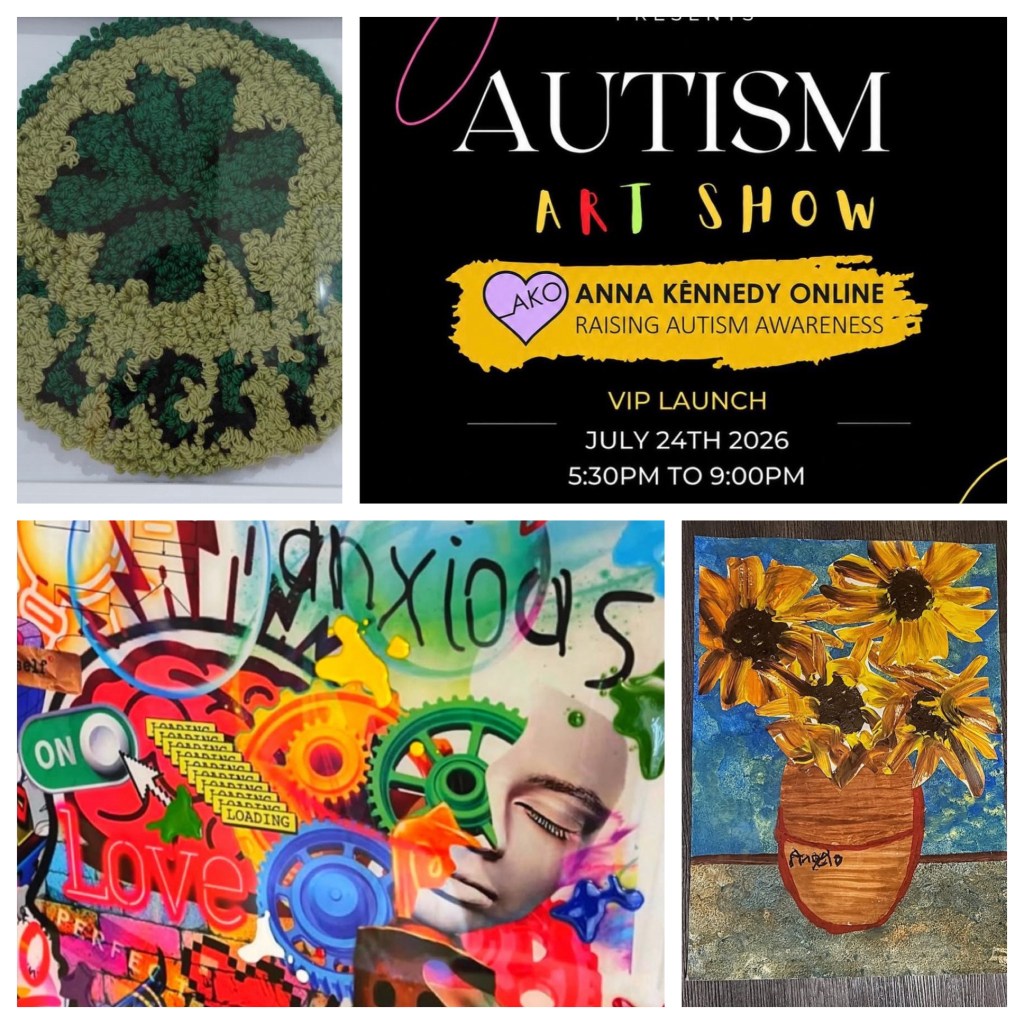
So, to all of our wonderful artists and budding artists out there, please get painting and creating. You could have the opportunity to see your artwork proudly displayed at next year’s exhibition. We cannot wait to see what you create!

We also managed to let our hair down a little at the gallery with a fantastic karaoke evening. It was a wonderful opportunity to celebrate the birthdays of Marcus Jake and another of our biggest supporters, talented artist and photographer Anne-Marie Bickerton. There was plenty of singing, laughter and, most importantly, a chance to celebrate with some very special friends and supporters.
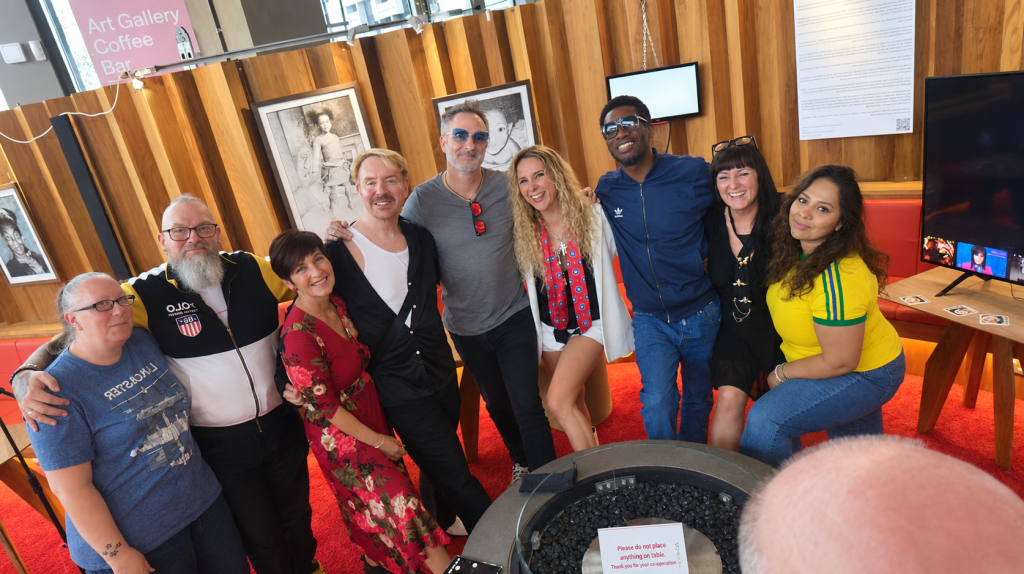
Letting our hair down at the Firepit gallery for owner Marcus Jake and Anne-Marie Bickerton’s birthday .

Another great moment came courtesy of Aston Avery, who did us proud at Chelmsford Theatre when he was Highly Commended at the BBC Make a Difference Awards.

What a sleek and wonderful awards show it was, with so many impressive and inspiring entries. It was fantastic to see people being recognised for the difference they make within their communities, and we were extremely proud to see Aston receive such well-deserved recognition.
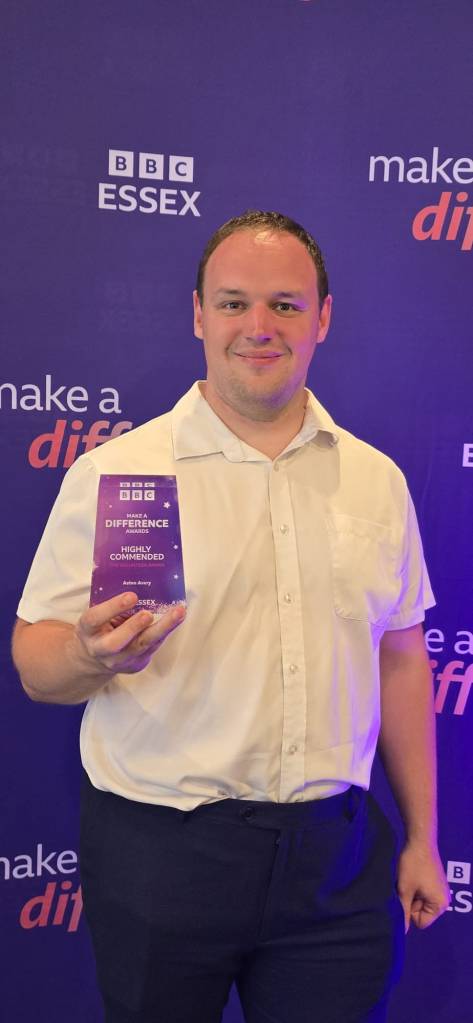
Patron Aston Avery receives his award

Finally, don’t forget to get your tickets for the 15th anniversary of Autism’s Got Talent on 10th October. It promises to be another unforgettable evening celebrating some truly incredible talent.

You can get your tickets here:

Thank you, as always, for your continued support. There is so much happening, and I’m looking forward to sharing more news with you very soon!

Anna Kennedy OBE
ANNA’S BOOK REVIEW

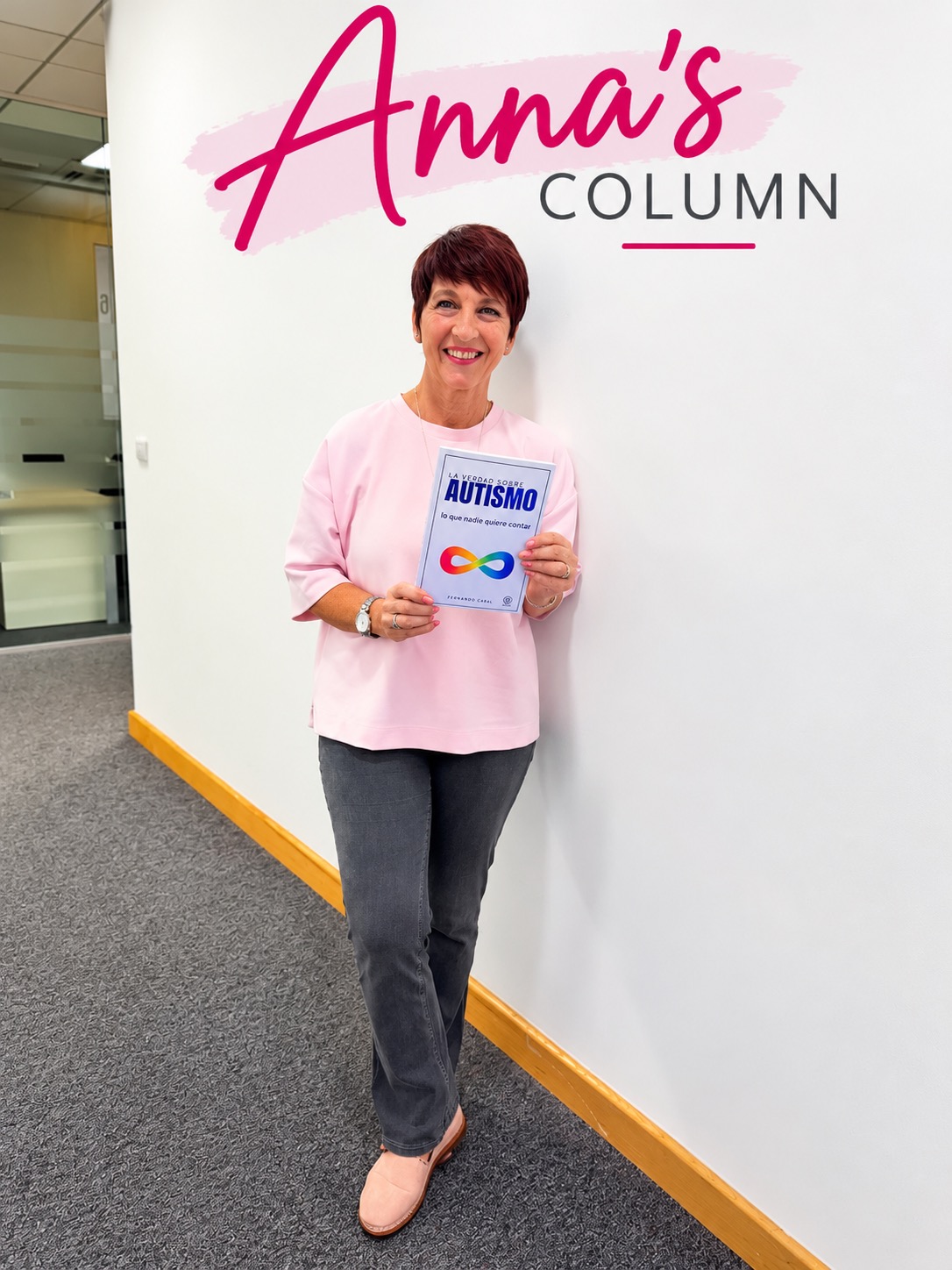
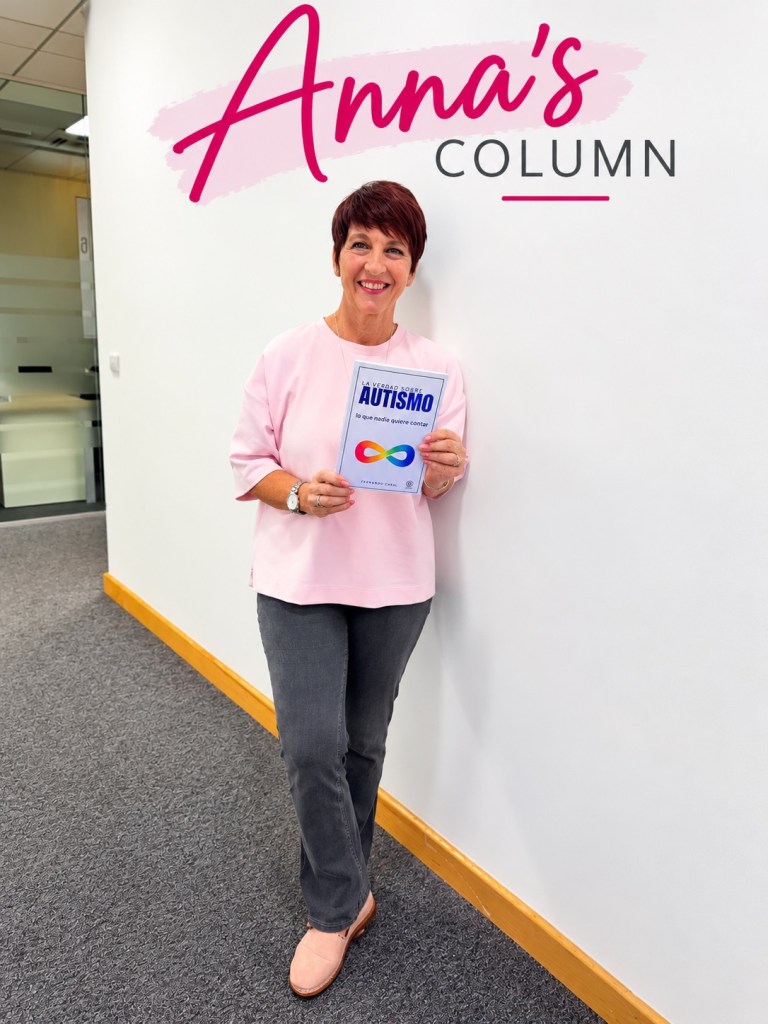
La Verdad Sobre el Autismo – Lo que nadie quiere contar

The Truth About Autism – What Nobody Wants to Talk About

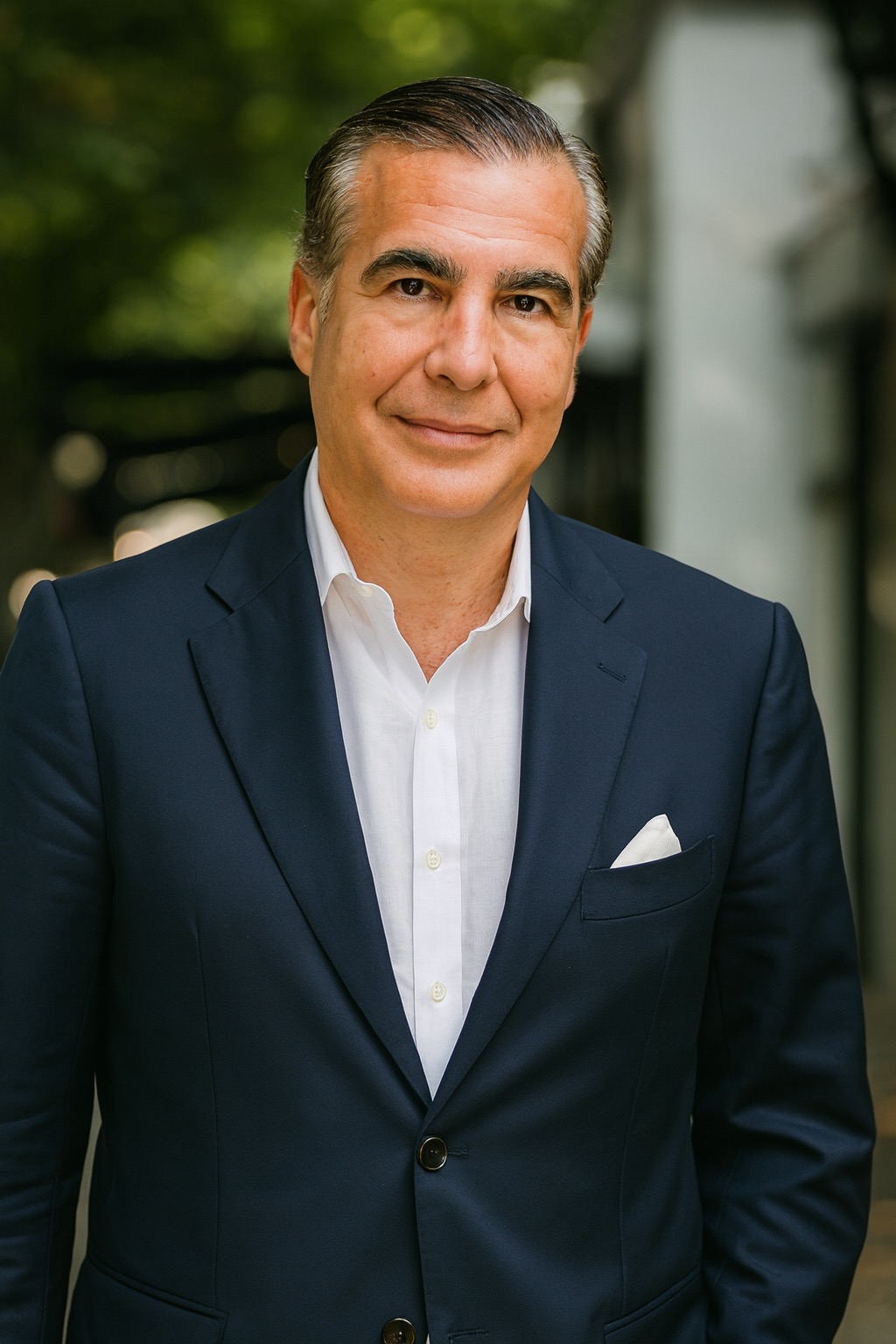
By Fernando Cabal

For almost 30 years, I have been campaigning for autistic children and adults and, just as importantly, for the families who love them, care for them and sometimes have to fight very hard to get the right support.

If there is one thing I have learned over the years, it is that there is no single autism story.

Every autistic person is different, every family is different, and their experiences can be very different too.

Fernando Cabal’s La Verdad Sobre el Autismo is not an easy or comfortable read, and I don’t think it is meant to be.

Fernando wants people to talk about a side of autism that he believes is too often overlooked.

We quite rightly celebrate autistic talent, achievements and difference. Through my charity and Autism’s Got Talent, I have had the privilege of meeting some incredible autistic performers, artists, speakers and young people who have achieved things that perhaps other people once thought were impossible.

I will always celebrate those achievements.

However, we must also make sure we don’t forget autistic people with more complex support needs, like my son Angelo, and the families supporting them day and night.

Fernando writes about autistic people who may be non-speaking or pre-verbal, who may self-injure, who need round-the-clock supervision or who will require significant support throughout their lives.

This is a reality for many families, and their voices matter too.

One part of the book that particularly struck a chord with me was the question of what happens when an autistic child becomes an autistic adult.

Autism doesn’t suddenly stop when someone turns 18 or 25.

Fernando challenges systems that diagnose too late, fail to provide the right educational support and then leave families fighting their way through yet more paperwork and bureaucracy when their children become adults.

Although he is writing mainly about the situation in Spain, I know many families here in the UK will recognise some of these same worries.

What happens when education finishes?

Where is the right support?

Where are the opportunities, appropriate services, supported living and specialist provision for those who need it?

Then there is the question that I know keeps many parents awake at night:

Who will look after my son or daughter when I am no longer here?

This is something I have also raised through my petition, and as a mam of two autistic sons, that question is very close to my heart.

There will be parts of this book, including some of its language and arguments, that autistic people, advocates and professionals may disagree with or challenge. That is OK. We do need these conversations.

No one person, organisation, campaigner or author can speak for everyone across such a wide and diverse spectrum.

We absolutely need to listen to autistic voices. We also need to remember those autistic people who cannot easily tell us what they need and who rely on the people who know and love them to advocate alongside them.

For me, Fernando Cabal’s book leaves us with an important challenge.

Inclusion has to be more than a word.

It has to mean something in real people’s everyday lives.

Yes, let’s celebrate autistic talent and achievement.

But let’s also talk about the difficult days, the sleepless nights I shared recently, the lack of services, the battles for support and the worries about the future.

Those stories matter too.

If La Verdad Sobre el Autismo gets governments, professionals and society talking about autistic people and families who sometimes feel forgotten or invisible, then perhaps it has started a conversation that we very much need to have.

Anna Kennedy OBE

La Verdad Sobre el Autismo – Lo que nadie quiere contar by Fernando Cabal was published by Mandala Ediciones in August 2026.


Anna Kennedy OBE
Chairperson

Brook House
54A Cowley Mill Road
Uxbridge
Middlesex
UB8 2FX

Office: 01895 540187
Website: www.annakennedyonline.com
Registered Charity Number: 1143630
https://www.firepit.art

Categories
Columns Lifestyle People

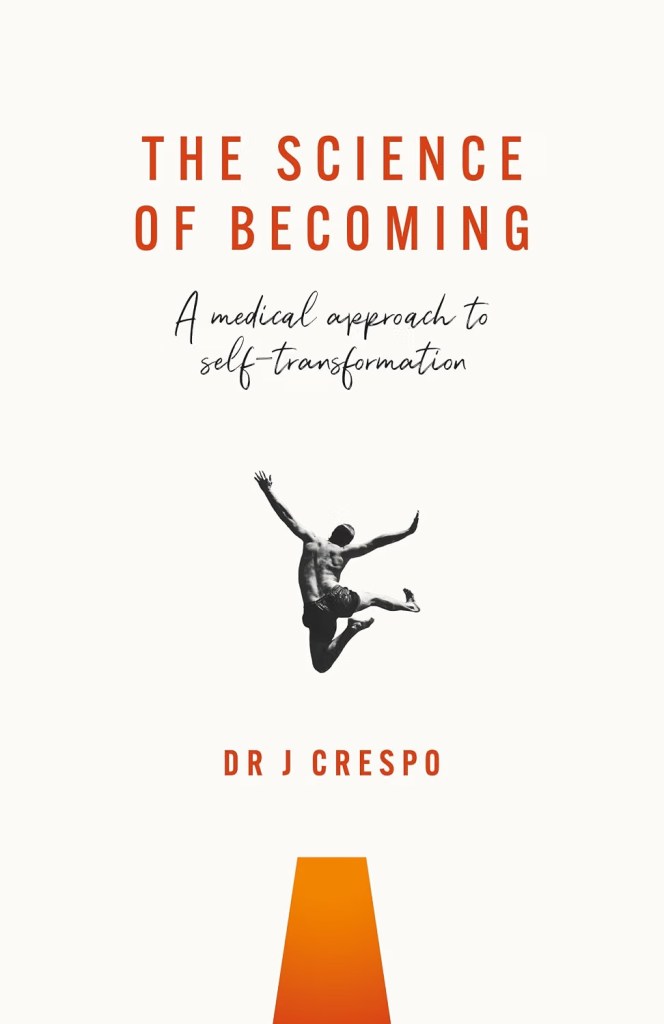
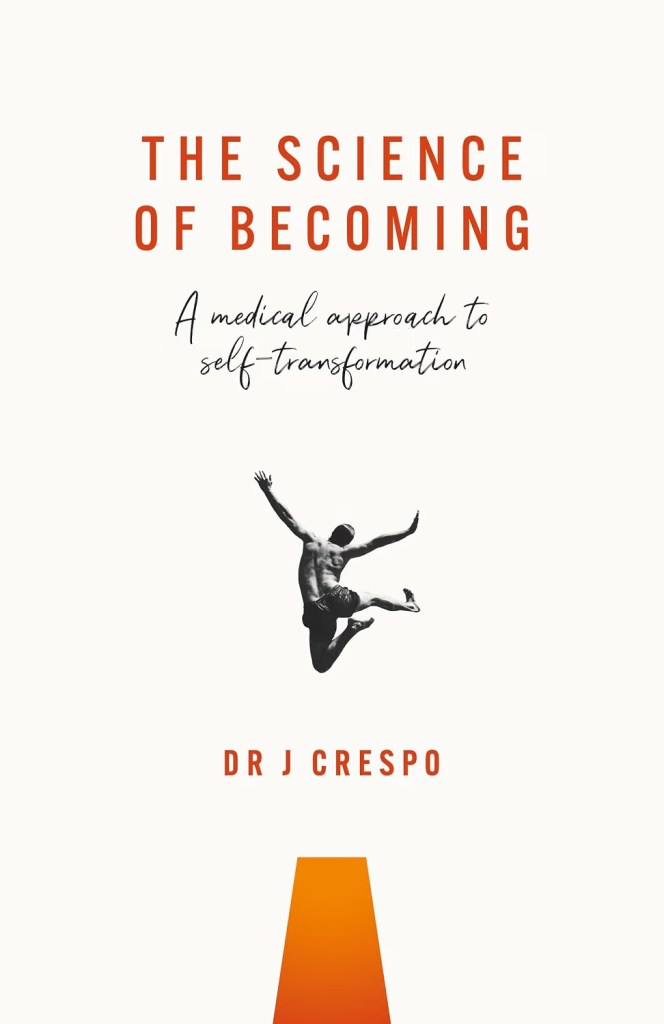
THE SCIENCE OF BECOMING: A MEDICAL APPROACH TO SELF-TRANSFORMATION

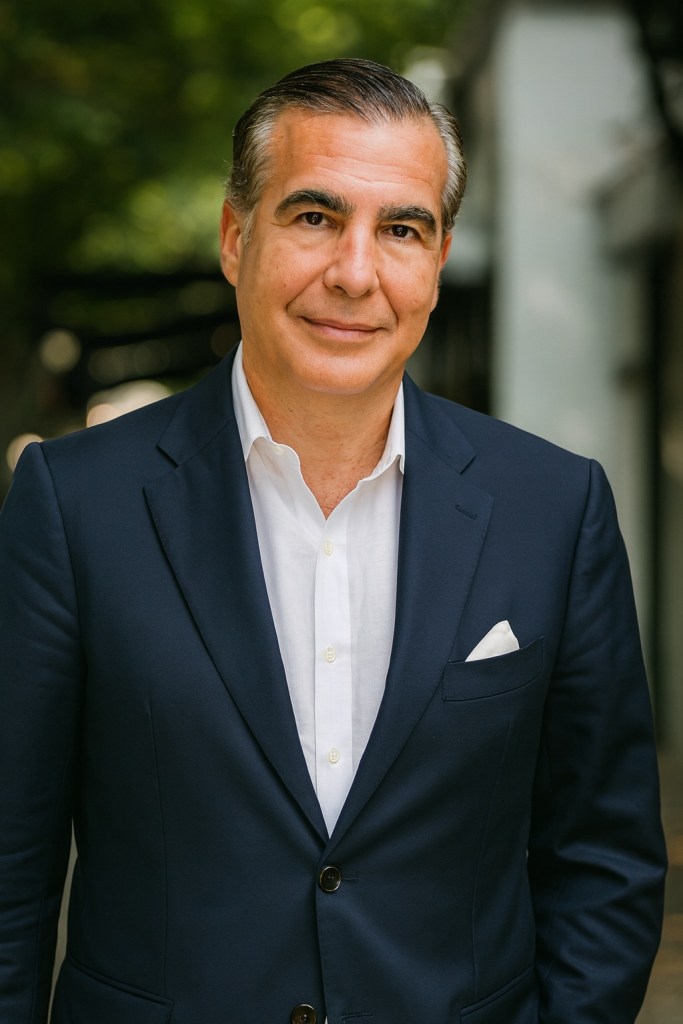
DR JOSEPH CRESPO chats to Steven Smith

THE SCIENCE OF BECOMING: A MEDICAL APPROACH TO SELF-TRANSFORMATION

By Steven Smith

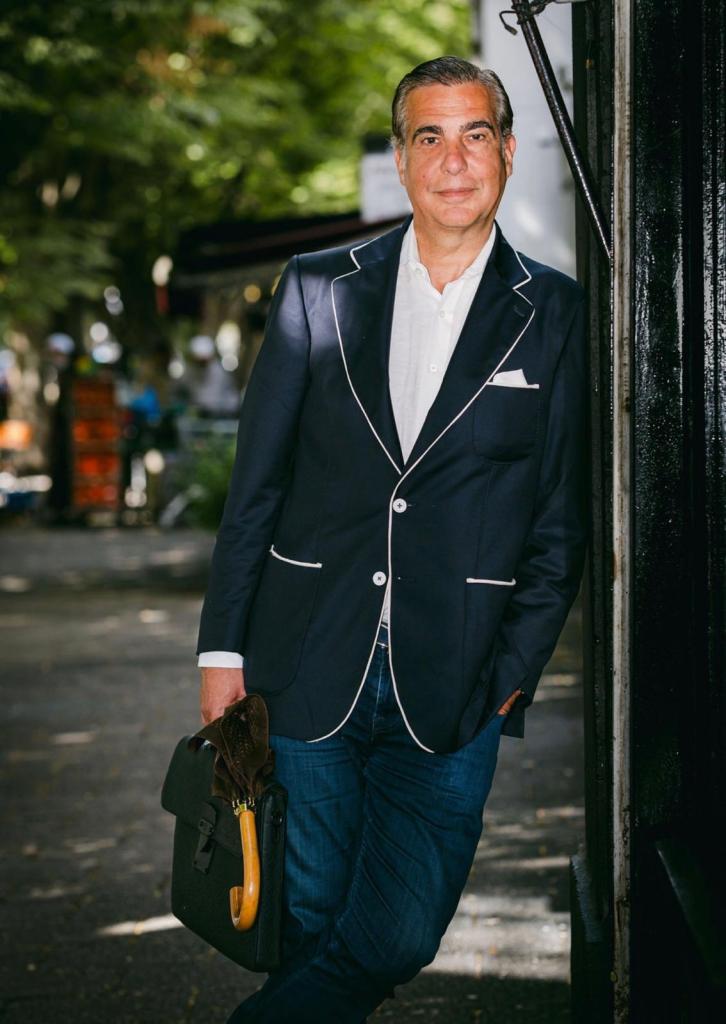
DR JOSEPH CRESPO

Buy The Science of Becoming on Amazon

There are some people whose careers follow a fairly predictable path, and then there are those who take a completely different route. Dr Joseph Crespo certainly falls into the latter category.

London-based Dr Crespo has a fascinating and varied background. Before entering the world of medicine, he studied law and went on to complete an MBA in London, before working in the financial sector as a consultant and analyst. But his story didn’t end there. He made the considerable decision to change direction and retrain as a doctor — beginning a new chapter that would eventually see him working across both NHS and private healthcare.

His medical career has been equally varied, with experience ranging from GP surgeries and urgent care to walk-in centres, out-of-hours services and even HM Prisons. He has also been involved in teaching the next generation of doctors as a GP tutor and clinical examiner, alongside undertaking medical charity work in India.

It is perhaps not surprising, then, that someone who has reinvented his own life more than once should become interested in the science behind our ability to change.

That interest has now resulted in his book, The Science of Becoming: A Medical Approach to Self-Transformation. Rather than simply telling us to think positively or try harder, Dr Crespo looks at personal change through the eyes of a medical professional, exploring subjects including habits, decision-making, stress, sleep and nutrition — and asking how science can help us make changes that actually last.

At a time when social media seems to offer us a new wellness trend, miracle solution or life-changing hack almost every day, separating good advice from clever marketing has arguably never been more important.

So who better to ask than the doctor who has made transformation not only the subject of his book, but something of a feature of his own extraordinary career?

I caught up with Dr Joseph Crespo to find out more…

Dr Crespo, tell me a little about you. What was your journey into medicine, and what eventually made you want to write a book about changing our lives?

My journey into medicine was long and unorthodox, training first as a lawyer and then a financier. When I finally left it all behind to follow my passion, I trained and practise as a primary care physician, and for years my work sat at the intersection of diagnostics, chronic illness and prevention.

What struck me again and again in clinic was that the biggest lever for most people’s health wasn’t a prescription. It was the slow accumulation of daily choices: how they slept, how they handled stress, what they ate, how they thought about themselves. I kept watching patients try to change with sheer determination and fail, not because they lacked willpower but because nobody had ever given them a framework. Medicine has one. It’s called clinical reasoning, and I realised the same discipline doctors use to diagnose and treat could be turned inward, applied to the process of changing a life rather than treating a disease. That’s where the book came from.

The title is The Science of Becoming. Becoming what? Is there actually an optimum version of ourselves, or are we in danger of constantly being told that we need to improve?

Becoming isn’t about arriving at some fixed, optimised endpoint. There’s no single best version of a person waiting to be unlocked. What I mean by becoming is closer to what we mean clinically by healing: a direction, not a destination. It’s the ongoing process of reducing the gap between how you’re currently living and what your body and mind actually need to function well. I’m wary of the “optimisation” culture that treats a person like a machine to be tuned for maximum output.

That framing burns people out. The question I ask is not “how do I become the best version of myself” but “what is actually true about my biology, my history and my circumstances, and what does that call for right now.”

You argue that we rely too much on willpower. Why doesn’t willpower always work, and what should we be doing instead?

Willpower is a finite, fatiguing resource, and it’s also the wrong tool for the job. In clinic, we don’t tell a patient with a chest infection to try harder not to be infected. We diagnose, then we design an intervention suited to the underlying problem. Most of what looks like a willpower failure is actually a design failure: an environment, a routine or a belief system working against the change someone is trying to make. Instead of asking for more willpower, I encourage people to reduce the number of decisions that require willpower in the first place, by changing defaults, removing friction, and building systems that make the desired behaviour the easy and enjoyable behaviour.

You take clinical decision-making and apply it to everyday life. Can you give me a real-world example? How could I use clinical reasoning to make a better decision tomorrow morning?

Clinical reasoning follows a simple sequence: gather data, form a differential, test it, act, then reassess. Take something as ordinary as feeling constantly tired. Instead of reaching straight for caffeine or willing yourself through it, treat it like a case. What’s the data: how did you sleep, what did you eat yesterday, who did you mix with, what’s your stress load this week. What’s the differential: is this poor sleep quality, is it dehydration, is it emotional load, is it simply overtraining. Pick the most likely cause, make one small deliberate change, and observe the result over a few days rather than guessing forever. Tomorrow morning, that might be as simple as noticing what you automatically reach for and asking, briefly, what problem am I actually trying to solve with this.

We’re bombarded with wellness advice on social media — supplements, fasting, cortisol, sleep hacks, diets and longevity treatments. As a doctor, how do you separate genuine science from very clever marketing?

I look for three things. First, is the claim built on a mechanism that’s been demonstrated in humans, not just in a petri dish or a mouse. Second, does the person selling it benefit financially from your belief in it, and how large is that incentive. Third, is the advice generalised or personalised. Genuine science tends to come with caveats, uncertainty and “it depends.” Marketing tends to come with certainty, urgency and a product at the end of it. If a claim can’t survive the question “compared to what, and for whom,” I treat it with real caution.

Neuroscience has become a fashionable word in the self-help world. What do we genuinely know about changing the brain and forming new habits, and what claims do you think go beyond the evidence?

What we know reasonably well is that the brain retains plasticity throughout life, that repetition genuinely does strengthen certain neural pathways, and that habits form through consistent cues and rewards over time, typically longer than the popular twenty-one-day myth suggests. What goes beyond the evidence is the tendency to take a genuine finding from a controlled lab study and present it as a guaranteed personal transformation protocol. Dopamine, cortisol and neuroplasticity get used as marketing words rather than as the specific, conditional findings they actually are. I try to be honest with readers about where the solid ground ends and the speculation begins.

What about someone in their 60s or 70s? Can we genuinely make substantial changes to our habits, health and outlook later in life, or does change become significantly harder as we get older?

Change is absolutely still possible, and I say that as a clinician who sees it happen. What changes with age isn’t the capacity for change itself, it’s the margin for error and the starting conditions: more accumulated habits, sometimes more comorbidity, less physiological reserve to draw on. The clinical reasoning approach actually suits older patients well, because it isn’t about dramatic overhaul, it’s about identifying the one or two changes that will have the greatest effect given someone’s specific situation, and building from there patiently. I’ve seen patients in their seventies transform their sleep, their mobility and their outlook once they had a clear, individualised plan rather than a generic one.

Stress, sleep and nutrition all feature in your approach. If someone came to you and said, “I’m overwhelmed, I can’t change everything,” which one would you tackle first, and why?

Sleep, almost every time. It’s the foundation the other two rest on. Poor sleep drives stress reactivity, disrupts appetite regulation and blunts willpower and decision-making the following day. It’s also usually the most tractable of the three, because unlike stress or nutrition, sleep responds fairly quickly to specific, well-evidenced changes: consistent timing, light exposure, and a wind-down routine. Fix sleep first and the other two often become noticeably easier to address.

Self-help is an enormous industry, and every year we’re offered another formula for transforming ourselves. What makes your approach different, and what evidence is there that it can produce lasting change rather than the short burst of motivation people often get after reading a self-help book?

Most self-help sells motivation. Motivation is a mood, and moods pass. What I’m offering instead is a method: the same diagnostic, iterative process doctors are trained to use, which doesn’t depend on how inspired you feel on a given day. It assumes you will fail at points, and builds reassessment into the process rather than treating failure as proof the whole effort was doomed. Lasting change, in my clinical experience, comes from small, testable, personalised interventions rather than a single dramatic reinvention. That’s a much less glamorous story than the one the industry usually sells, but it’s the one that holds up over years rather than weeks. In addition, I offer documented medical research studies to substantiate every idea.

DR JOSEPH CRESPO

Not everyone is a reader or someone who would naturally pick up a self-help book. For those people listening to us today, what’s one simple thing they could start doing right now to make a positive change in their lives?

Pick one thing you do automatically every single day, and simply notice it for a week before you try to change anything. Don’t judge it, don’t fix it yet, just observe it the way a clinician observes a patient before making a diagnosis. Most people skip straight to changing behaviour without ever accurately understanding what they’re currently doing and why. That single week of honest observation is often the most useful health intervention I can suggest, and it costs nothing and requires no willpower at all.

Quick-fire questions

Favourite place to relax?

My home.

If you were Mayor of London for a day, what’s the first thing you’d change?

The institutionalisation of common sense, and an understanding that our individual rights end where others’ begin. Sadly, I see a growing number of entitled people imposing their views and beliefs, and condemning anybody who disagrees.

A restaurant you particularly love dining at?

Many, but if I have to choose one, Oliveto on Elizabeth Street, a proper Italian trattoria offering high quality food, friendly service, and a home feel environment. https://www.olivetolondon.uk/about

What has been the proudest moment of your life so far?

Every moment I made the decision to keep growing.

What motivates you to keep going when life gets difficult?

Difficulties are circumstantial, and overcoming them requires only a change in perspective. One thing that has helped me a great deal was when I stopped worrying about things which outcome I cannot change.

https://drjcrespo.com

Categories
Columns Culture Lifestyle People

A Sanctuary Built on Compassion

By Dr Anna Kennedy OBE – Guest Writer for 2Shades Magazine

Anna Kennedy Obe

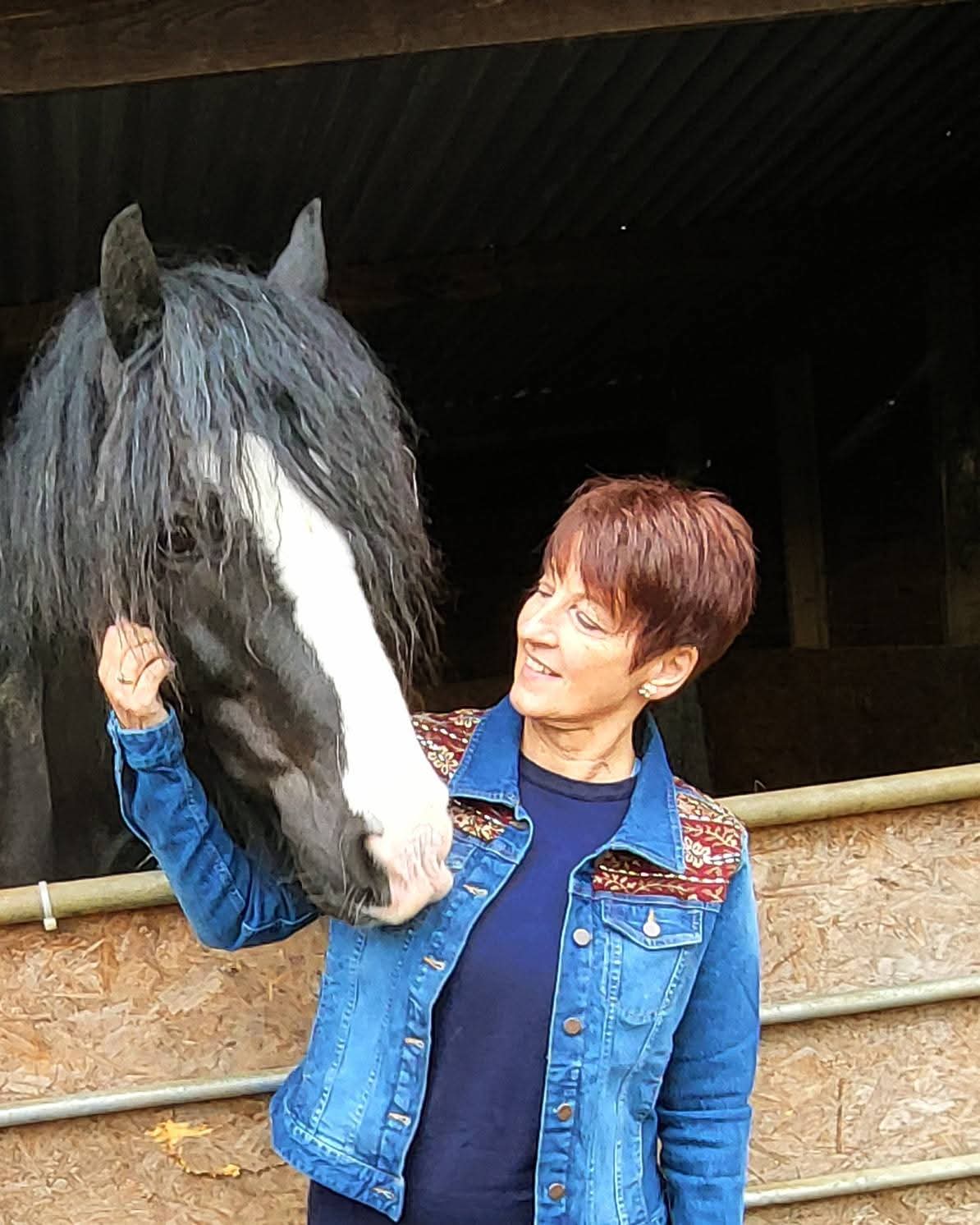
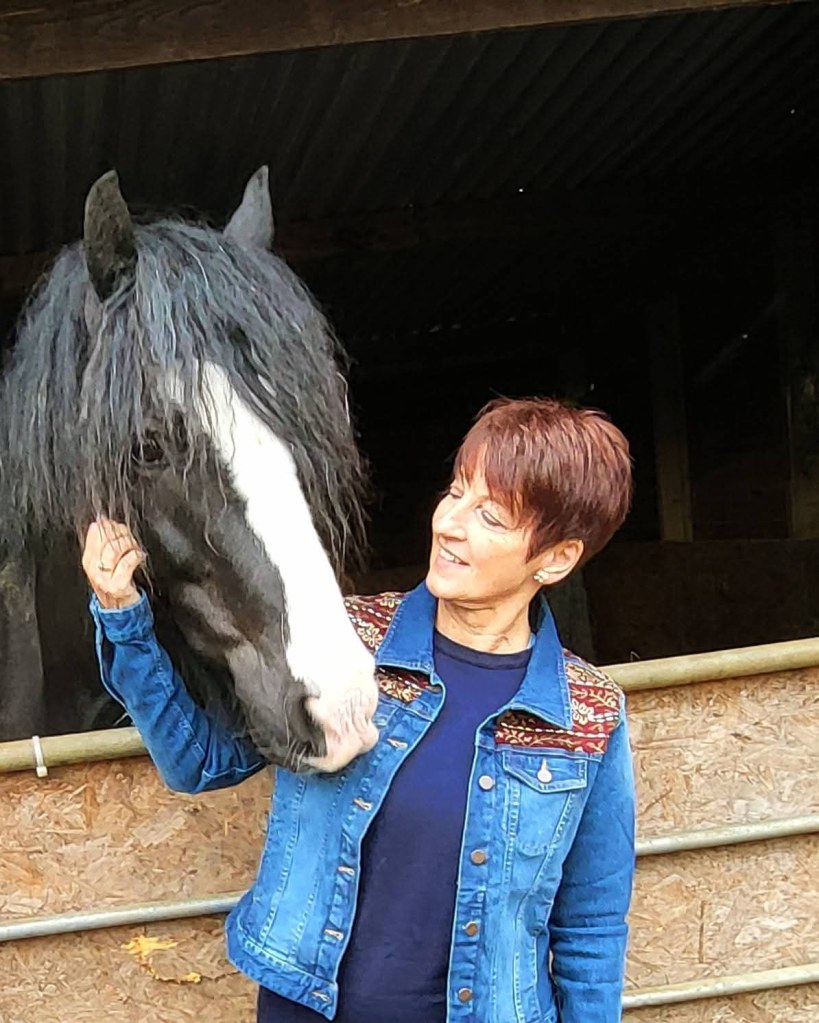
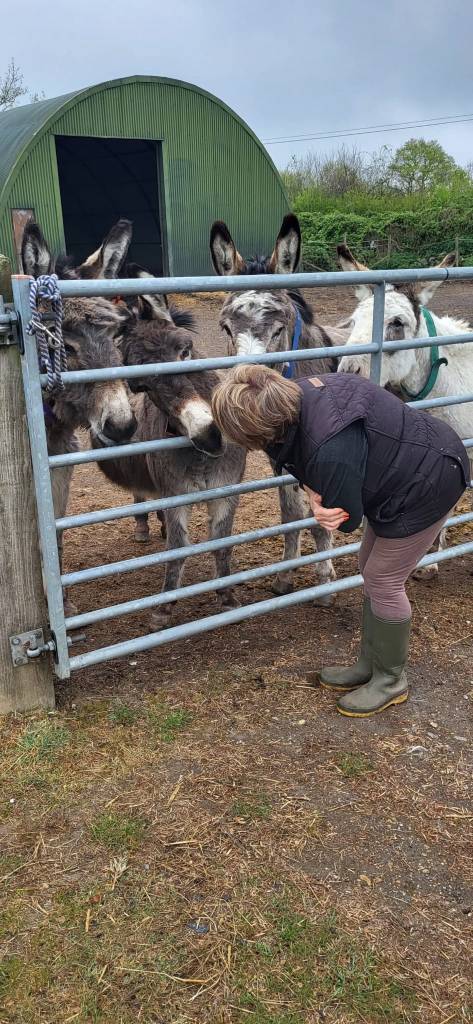
There are some places that instantly remind you just how much kindness still exists in the world, and Kilmarnock Horse, Pony and Donkey Rescue in Sussex is certainly one of them.

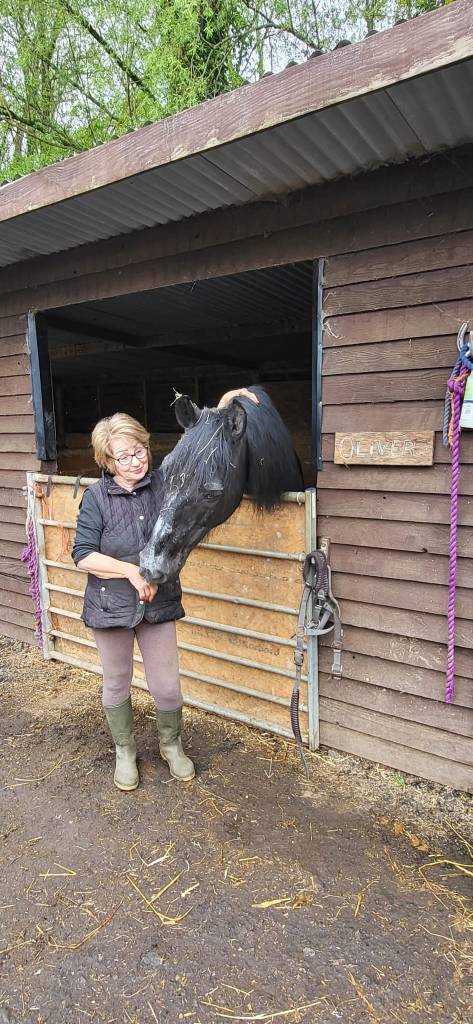
Recently, I had the pleasure of catching up with the wonderful Carol Jackson, founder of this remarkable sanctuary, where I have proudly served as Patron since 2015. Every visit leaves me inspired, not only by the incredible work being done but by the dedication, resilience and compassion shown by Carol and her amazing team.

For more than 26 years, Carol has devoted her life to rescuing animals that have been abandoned, neglected, mistreated or simply forgotten. It is a commitment that never stops. Every single day brings new challenges, yet her determination to give vulnerable animals a second chance has never wavered.

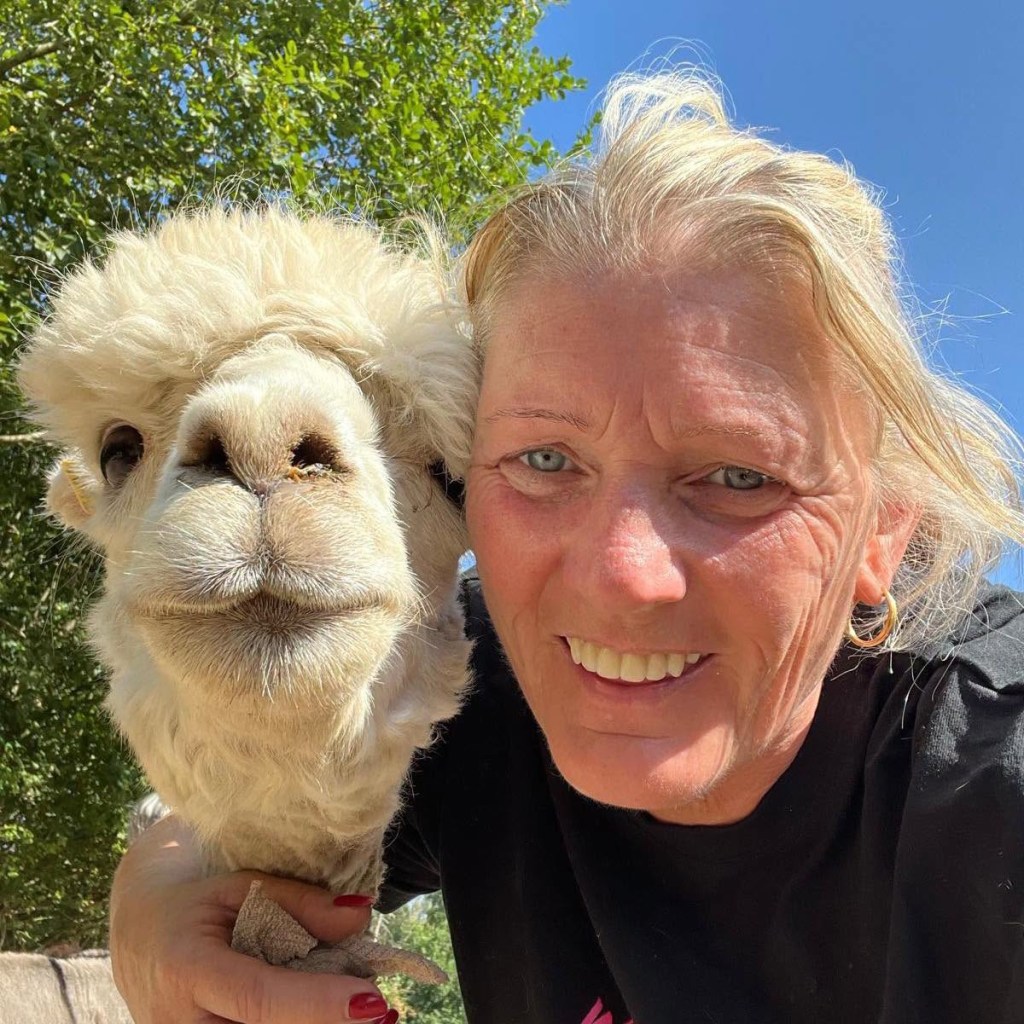
Walking around the sanctuary is a truly humbling experience. Horses, ponies, donkeys, goats, sheep and alpacas all live peacefully together, each with their own story. Many have suffered unimaginable hardship before finding safety, while others arrive elderly, frightened or in poor health. Thanks to Carol and her volunteers, they are given exactly what every living creature deserves—care, dignity, kindness and, above all, love.

Not every animal can be rehomed. Many spend the rest of their lives at the sanctuary, where they receive the specialist care they need in a safe and nurturing environment. Watching these beautiful animals thrive after everything they have endured is incredibly moving and a reminder of the difference that compassion can make.

Like so many charities across the country, however, Kilmarnock Horse, Pony and Donkey Rescue is facing increasingly difficult times.

This year’s lack of rainfall has had a significant impact on grazing land, leaving very little natural grass for the animals. As a result, the sanctuary has had to purchase far more hay than usual, and with rising costs, the financial pressure continues to grow.

Carol with some of the donkeys

Alongside these challenges comes uncertainty surrounding the future of the land and its lease. For any charity, that uncertainty can be deeply worrying, especially when so many animals rely on the sanctuary every single day. It highlights just how vital fundraising and public support have become.

Despite everything, what always impresses me most is Carol’s unwavering spirit.

She doesn’t complain. She simply gets on with the job because the animals need her. That quiet determination is something I admire enormously. She understands that every horse, every donkey and every rescued animal depends on the sanctuary, and she never loses sight of why she began this journey over two decades ago.

Of course, Carol could never achieve all of this alone.

The sanctuary is supported by an incredible team of volunteers who generously give their time, energy and compassion. During my visit I met a lovely young woman who spends her holidays volunteering while studying to become a veterinary surgeon. Seeing young people choosing to dedicate their free time to helping vulnerable animals gives me great hope for the future. Acts of kindness like these remind us that compassion is alive and well, and that the next generation is ready to make a difference.

As many of you know through my work with Anna Kennedy Online, I have always believed that communities become stronger when people come together to support one another. Whether we are helping autistic individuals and their families, supporting vulnerable people, or caring for rescued animals, the message is exactly the same—every life matters and everyone deserves kindness, respect and the opportunity to flourish.

That is why I am so proud to be Patron of this wonderful charity.

If you are able to help, no matter how small the contribution, it really can make a world of difference. Carol is currently asking supporters to visit the Kilmarnock Horse Rescue Facebook page, as the charity’s website is being updated. There are many ways to become involved. You might choose to make a donation, volunteer your time, help with fundraising, or even adopt one of the sanctuary’s elderly residents from as little as £5 a month.

Every pound raised helps provide food, shelter, veterinary care and a secure future for these beautiful animals. Your support allows Carol and her dedicated volunteers to continue giving hope where it is needed most.

I would like to thank Carol personally for everything she has done over the past 26 years. Her kindness, resilience and unwavering commitment are truly inspiring. Every time I visit the sanctuary, I leave feeling uplifted, and I always enjoy our conversations as much as meeting the wonderful animals in her care.

It remains an honour to serve as Patron of Kilmarnock Horse, Pony and Donkey Rescue, and I hope that by sharing their story, more people will discover this very special sanctuary and help secure its future for generations to come.

Together, we really can make a difference.

https://www.khrsussex.co.uk

Categories
Columns Culture Lifestyle People

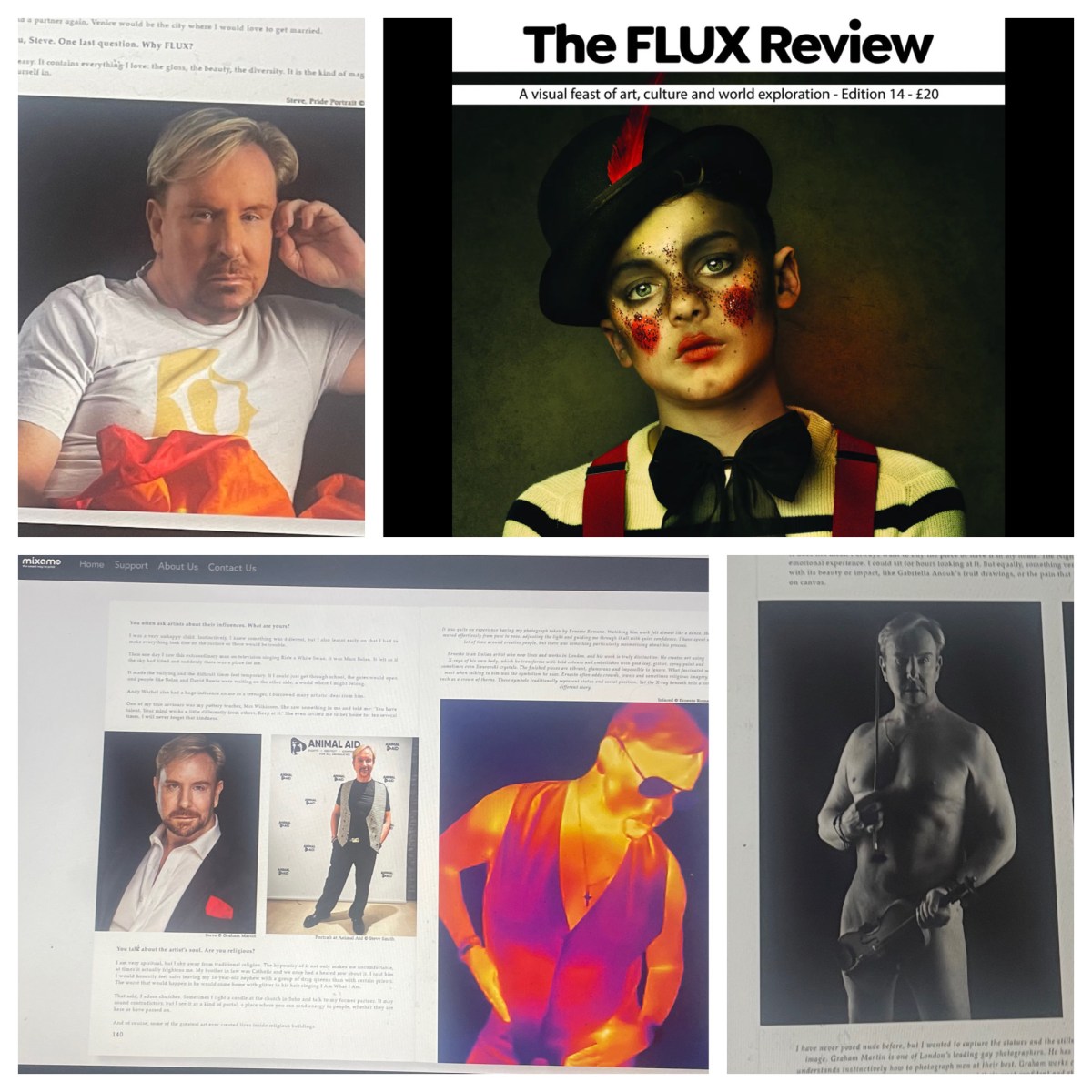
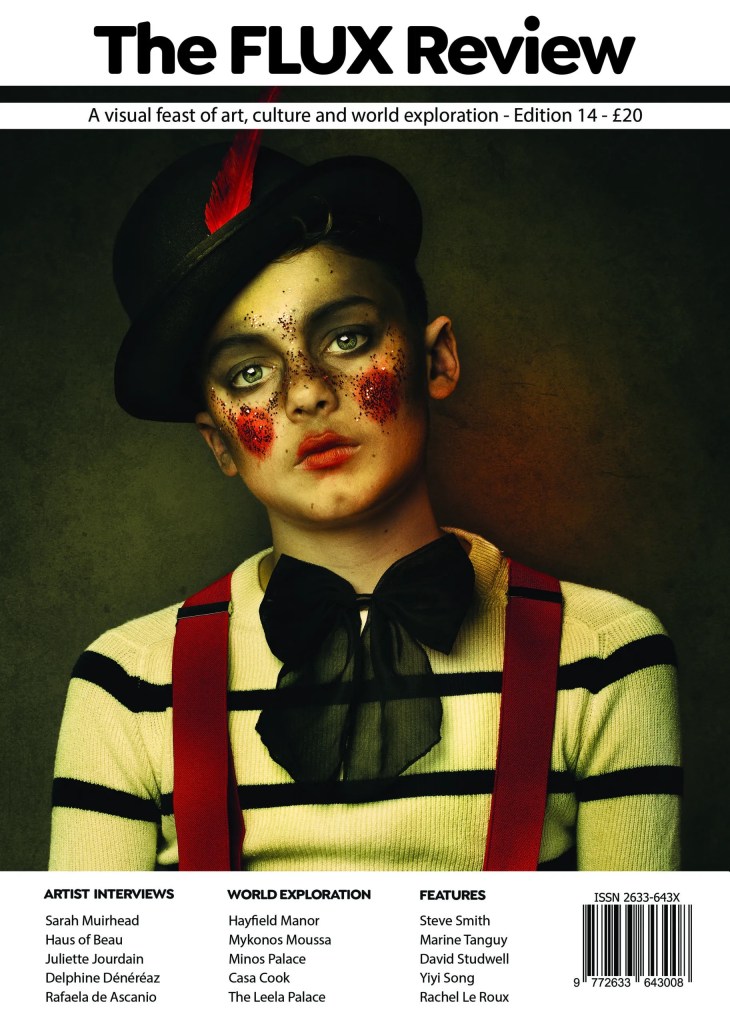
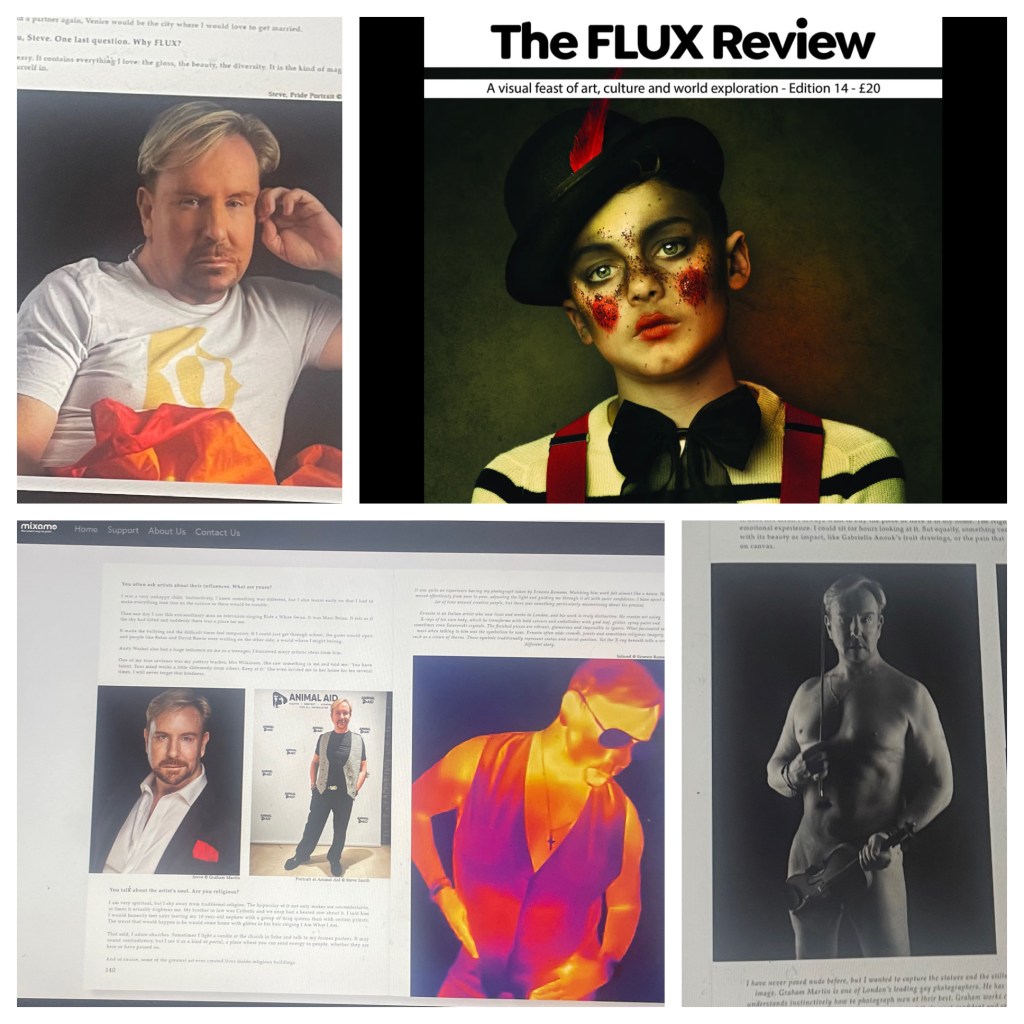
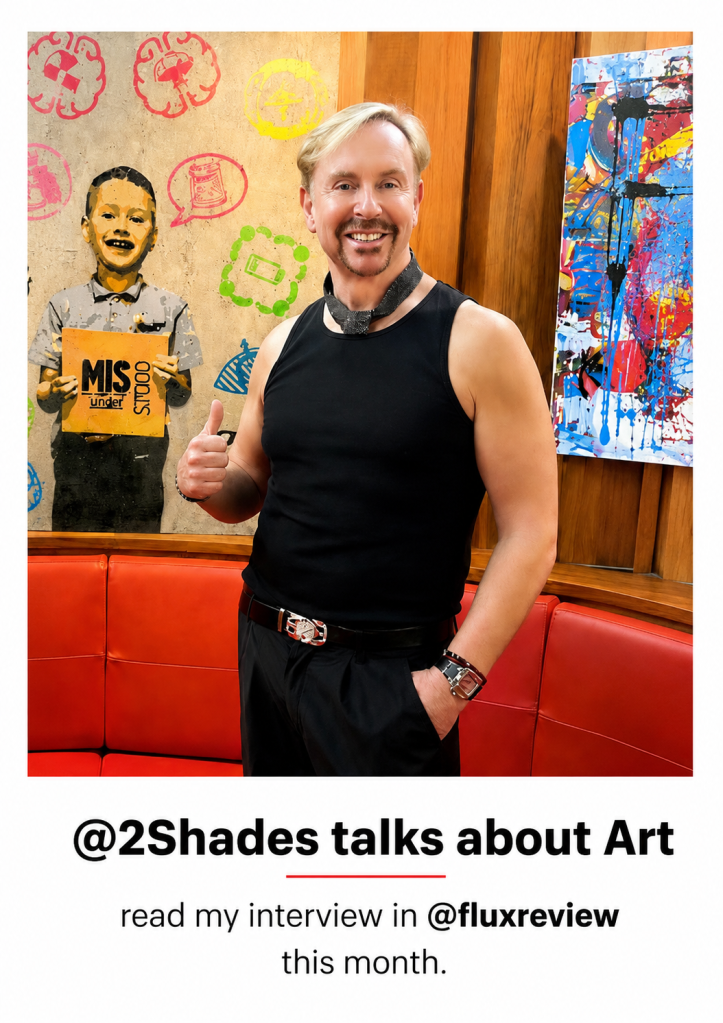
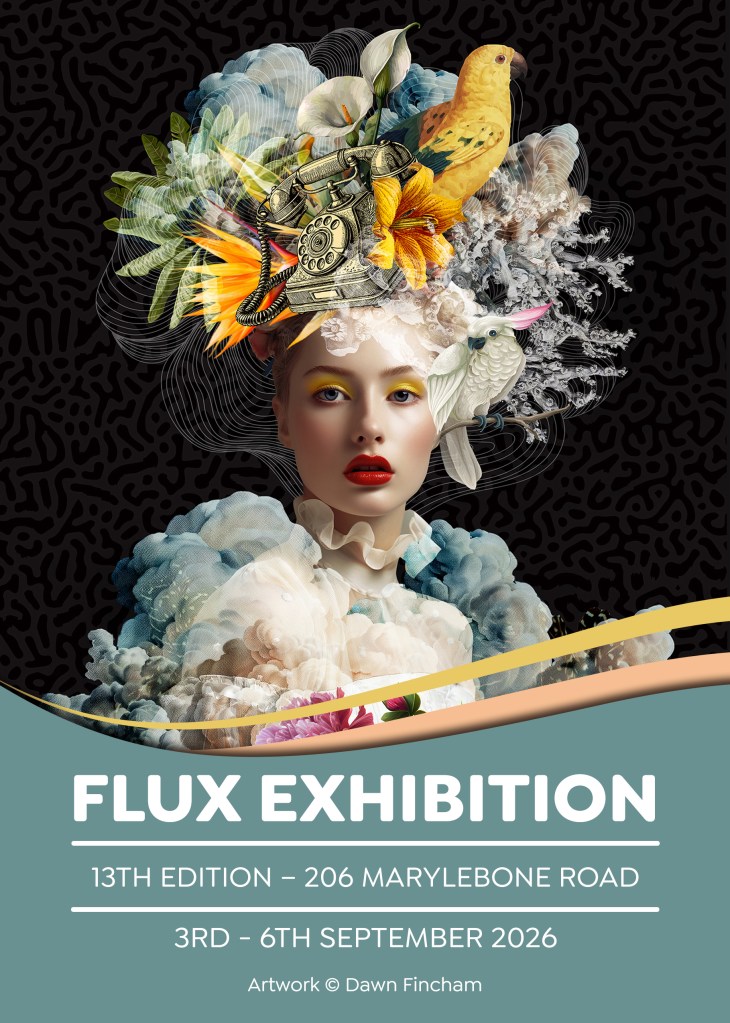
Steven’s in FLUX REVIEW magazine

Talking Life, Art and Creativity with FLUX Review

As someone who has spent many years interviewing artists, actors, musicians and creative minds from around the world, it felt both exciting and slightly surreal to find myself on the other side of the questions.

I am absolutely delighted to be featured in the latest edition of FLUX Review, one of the UK’s most beautifully produced independent arts and culture magazines. The interview gave me the opportunity to reflect on my own journey through journalism, broadcasting and publishing, while sharing my lifelong passion for art and the incredible people I’ve been fortunate enough to meet along the way.

Art has always fascinated me because it speaks a universal language. It can inspire, challenge, comfort and bring people together regardless of background or circumstance. Throughout my career I have been privileged to interview emerging artists as well as internationally recognised names, and every conversation has reinforced my belief that creativity has the power to change lives.

In the interview I also discuss the importance of championing new talent through 2Shades Magazine, my work with Anna Kennedy Online, and why giving creative people a platform has always been one of the most rewarding aspects of my career.

A huge thank you must go to Lisa Gray, founder and editor of FLUX Review, for such a thoughtful and engaging interview. Under her guidance the magazine has become a respected showcase for artists, photographers, designers and writers from across the globe. Every issue is packed with inspiring features, outstanding photography and exceptional artwork, making it a publication to treasure rather than simply read.

If you would like to discover more about my story, my love of art and the people who have inspired me throughout my career, I hope you’ll pick up a copy. Alongside my interview you’ll find nearly 200 pages celebrating creativity in all its forms.

The latest edition of FLUX Review is available now from the official online store: The FLUX Review Store. Happy reading—and thank you, as always, for your continued support.

Categories
Columns Culture Lifestyle People Uncategorized

Steven’s Viewz

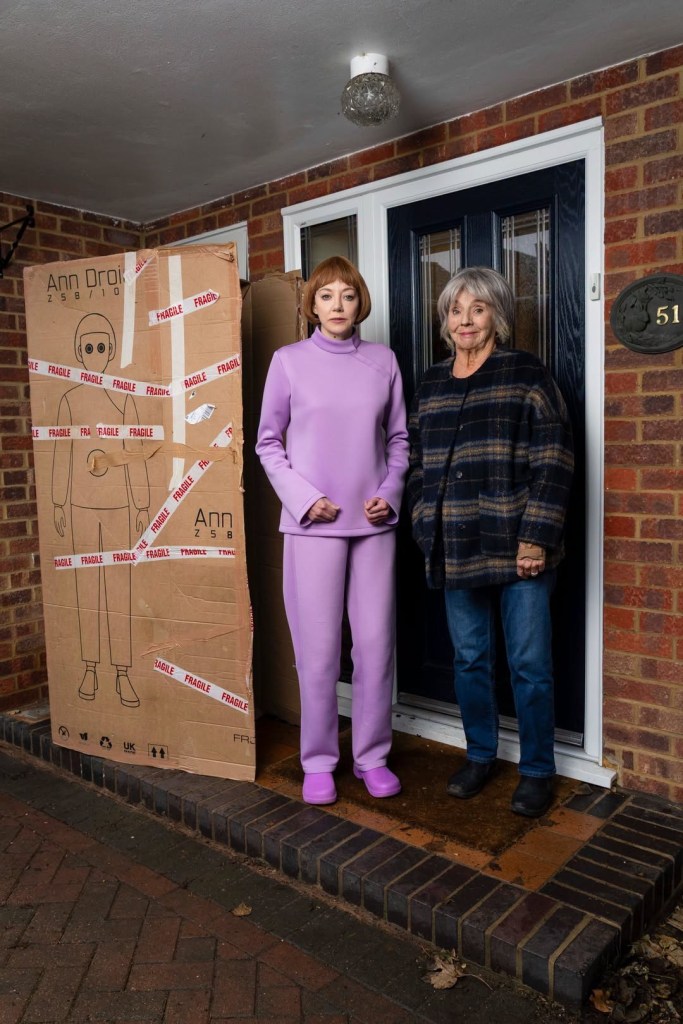
BBC Ann Droid is TV Gold .

Once in a while comes something that is an unexpected delight 

Who has not become a huge fan of Diane Morgan in Motherland and Mandy 

Wonderful writer and actress animal rights activist . News of  her new sitcom BBC’’s  Ann Droid  did make me think is this the end of the run for her. The plot sounded vauely famillair and might be a one stand joke even with the incredible Sue Johnston in it the trailer left me a little cold . 

But how wrong can I be Diana Morgan has produced one of the funniest poignant and beautifully crafted comedy features to date . 

The first episode just sets the tone and to be honest it is a slow start  Morgan plays Android Linda after Sue Johnsons charcters sister  and I was still not sold on it half way through , But then what could easlily be a corny ride a journey of lonless ness old age and life has you not just shed a tear it has you ironically in fits of laughters . 

Ann Droid is a beautiful look at humans as we age but manages to bring issues of how families manage with the edelry and do we ever really go far from the play ground 

Paul Ready as Sue’ son Michael plays yet another down trauden man desperate to find his mascuilnty it is possibly the week part of the show as you just want to slap him but his comic timing and acting is seemless just be nice to see him play something less sumbimsive  Kathry Hunter is the cherry on the cake in this gem and steels every scene she in 

The wonderful thing about the six episode is not just I could not stop watching . I complain that sometimes comedy gems should stop at one or two like Faulty towers honestly I wanted more as It ended .

Ann Droid is warm, witty, heartfelt and quietly profound. It proves that the very best comedy doesn’t just make us laugh—it makes us think, feel and perhaps look at ourselves a little differently. Diane Morgan has once again reminded us why she is one of Britain’s finest comedy talents.

★★★★★

Ride or Die – Amazon Prime ★★★☆☆

Hannah Waddingham once had a drama teacher tell her she would never work on screen.

How wonderfully wrong they were.

I first met Hannah when she was appearing in the stage production of Joey and Gina’s Wedding, and even then she had star quality written all over her. Since then she has become one of Britain’s most versatile performers, equally at home in comedy, drama and musical theatre.

In Ride or Die, she completely owns the screen as Judith, a glamorous and deadly hitwoman. Alongside her is the ever-brilliant Octavia Spencer as Debbie, an ordinary American wife married to a British MP. Together they have genuine chemistry. They’re very much the Thelma and Louise of 2026, and whenever they share the screen the series springs into life.

It’s just such a shame that they’re trapped in this turkey of a show.

The idea itself isn’t a bad one. A high-octane action comedy built around two very different women thrown together has enormous potential, and at times you can almost see the series it wanted to become. Waddingham throws herself into the role with real commitment, looking every inch the sophisticated action heroine. Her wardrobe alone deserves its own credit, and there’s more than a hint that the producers are trying to create a female James Bond.

Octavia Spencer is, as always, effortlessly likeable. She brings warmth, humour and vulnerability to Debbie, making her the emotional heart of the series. When the two actresses are together, the show crackles with energy and wit. You find yourself wishing every scene involved just the pair of them.

Sadly, the plot lets them down at almost every turn.

What begins as an entertaining premise quickly becomes an overly complicated and increasingly implausible tangle of twists, double-crosses and unlikely situations. Instead of building suspense, it becomes confusing and, ultimately, rather boring. It almost feels like a slap in the face to viewers who simply want a smart, well-written thriller with believable stakes.

Perhaps things improve later on, but I have to be honest—I gave up after two episodes. That’s something I rarely do, especially when the cast is this talented.

What a wasted opportunity. Hannah Waddingham and Octavia Spencer deserved material worthy of their considerable talents. Give these two actresses a stronger script and a sharper writer, and they could have had an absolute smash on their hands.

Instead, Ride or Die ends up being a stylish series with two wonderful performances that simply can’t overcome a story that loses its way.

★★★☆☆

FLUX REVIEW INTERVIEW

My friends know just how much I love art. Over the years I’ve had the privilege of interviewing and writing about many incredibly talented artists, from those just beginning their creative journey to internationally recognised names. Art has always fascinated me because it has the power to tell stories, challenge perceptions and connect people in ways that words sometimes can’t.

That is why it was such a genuine honour to find myself on the other side of the interview, being featured in the stunning FLUX Review magazine. It felt rather surreal to be talking about my own journey, my passion for creativity and the wonderful people I have been fortunate enough to meet along the way.

Edited by the incredible Lisa Gray, FLUX Review is far more than just another magazine. It is a beautifully produced publication that celebrates artists, photographers, designers and creative thinkers from around the world. Every edition is packed with inspiring interviews, breathtaking imagery and thought-provoking features. It is one of those rare magazines that you don’t simply read—you keep, return to and proudly leave on your coffee table.

I would like to say a heartfelt thank you to Lisa for such a thoughtful interview and for all the support she gives to artists and the wider creative community. Her passion shines through every page, and it is easy to see why FLUX Review has become so highly respected.

If you’d like to know a little more about me, my work and what inspires me, I hope you’ll pick up a copy. At the same time, you’ll be discovering an exceptional magazine that champions creativity in all its forms. In a world where so much is viewed on a screen and quickly forgotten, there is something wonderfully special about holding such a beautifully produced glossy publication in your hands.

I hope you enjoy reading it as much as I enjoyed being part of it. Thank you, as always, for your continued support—it means more than you know.

Steven Viewz

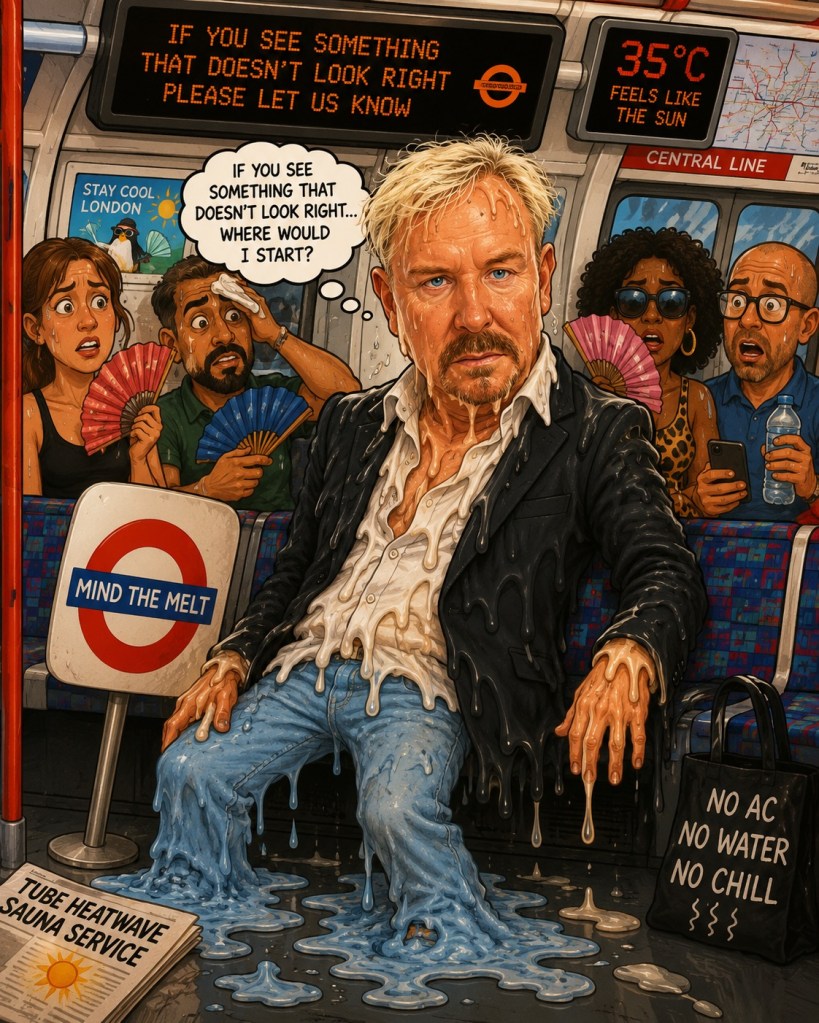
“If you see something that doesn’t look right, please let us know.” It’s a phrase constantly blasted out across the London Underground. My question is… where would you like me to start?

The Tube during this recent heatwave has been nothing short of a nightmare. If the lack of air conditioning doesn’t finish you off, someone—who really should know better—forgets to carry a bottle of water, faints, and has to be helped off the train. Naturally, that means the whole line grinds to a halt while the rest of us sit there slowly cooking in what feels like a giant metal sauna.

What I simply cannot understand is this: Lisbon regularly reaches temperatures far higher than London, yet their transport system seems to cope perfectly well. We get a few days of sunshine, and the capital appears to melt faster than an ice cream on Brighton Pier. Surely, in 2026, we can do better.

Now for my second moan!

Can we please introduce a law banning people from staring at their phones while walking? Honestly, the number of people wandering around completely oblivious to everyone else is unbelievable. They drift from side to side like shopping trolleys with a wonky wheel, stop dead in the middle of busy pavements, and then look surprised when they walk straight into someone. If Andy Burnham can champion common sense in Manchester, perhaps Sir Sadiq Khan could start a campaign here. My solution? A gentle public awareness campaign first—and if that doesn’t work… maybe a few fines! It might just encourage people to look up once in a while.

Finally, on a much happier note, I’m really looking forward to the Autism & Art Show, taking place on Thursday 23rd July from 5.30 pm. It’s a wonderful evening celebrating the incredible talents of autistic artists, and I’m proud to be involved once again. If you’re able to come along, please do pop over and say hello. It would be lovely to see some familiar faces and support such an inspiring event.
Until next time… keep cool, keep looking where you’re going, and if you really do see something that doesn’t look right—well, perhaps start with the Tube!

Screenshot
Categories
Columns Culture People

“It’s Just like a prayer for Madonna fans but Graham doesn’t take you there “

IT’S JUST LIKE A PRAYER FOR MADONNA FANS … BUT GRAHAM NORTON DOESN’T TAKE YOU THERE

By Steven Smith

There are few chat show hosts in the world who can match Graham Norton when it comes to creating entertaining television. For well over a decade, The Graham Norton Show has been essential viewing, bringing together Hollywood royalty, music legends, comedians and sporting icons on one famous sofa. His effortless charm, quick wit and ability to make even the biggest stars relax have earned him a loyal audience and countless awards.

The format is brilliantly simple. Big personalities gather together, stories are exchanged, laughter follows, and viewers feel like they’re eavesdropping on an exclusive dinner party. It works because Norton never tries to dominate the conversation. Instead, he gently nudges it along, allowing his guests to bounce naturally off one another.

However, there is one important distinction.

Norton is a superb chat show host.

He is not an in-depth interviewer.

Unlike Oprah Winfrey, Louis Theroux or the late Sir Michael Parkinson, Graham rarely pushes beyond entertaining anecdotes and witty conversation. He seldom asks the difficult follow-up questions or explores the emotional experiences that have shaped the people sitting opposite him.

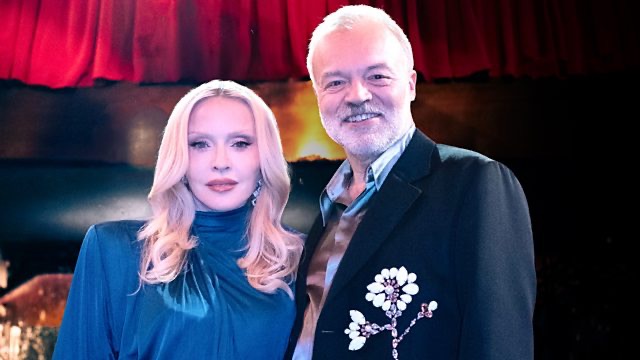
Unfortunately, that weakness became painfully obvious in what the BBC heavily promoted as one of television’s biggest interviews of the year: Graham Meets Madonna.

The Interview That Never Quite Begins

As a lifelong Madonna fan, I couldn’t wait to watch it.

Madonna remains one of the most fascinating figures in popular culture. Over four decades she has reinvented herself more successfully than perhaps any artist in history. Behind the global superstar lies an intensely private woman who has experienced extraordinary success, devastating personal loss, family conflict and relentless public scrutiny.

Surely this was the opportunity to finally meet the woman behind the icon.

Sadly, it wasn’t.

The programme opens with Graham Norton sitting in the back of a classic London taxi.

“I always get nervous when meeting Madonna,” he admits.

It’s an honest opening, but it also establishes the tone. Rather than appearing like an experienced broadcaster preparing to interview one of the world’s biggest stars, Norton almost feels like a fan about to meet his hero.

From the outset, it becomes clear that either the production team—or perhaps Madonna’s own management—have tried far too hard to make this landmark interview feel different.

Instead of simply sitting two intelligent people down for an honest conversation, viewers are taken through a series of carefully staged moments that never quite work.

One particularly awkward sequence sees Graham climbing to the top of an empty theatre before dramatically looking down onto the stage, where Madonna slowly emerges under the spotlight like an apparition. He then races down the stairs to greet her with all the excitement of a teenager meeting their idol.

Rather than feeling cinematic, it simply feels forced.

Where’s the Real Madonna?

Madonna has always been something of an enigma. Friends and collaborators frequently describe her as warm, witty and possessing a wonderfully dry sense of humour, yet that side of her rarely appears during television interviews.

This was Graham Norton’s golden opportunity.

Instead of discussing costumes, boots and backstage stories, he could have explored the remarkable woman behind one of music’s greatest careers.

Instead, the opening conversation drifts aimlessly.

In fact, Madonna often asks Graham more questions than he asks her.

They wander around the theatre chatting about boots, stolen clothes from Coachella and nostalgic memories, almost like two dinner guests waiting for their table to become available.

You keep expecting the interview to begin.

It never really does.

At times, Madonna herself appears visibly bored.

Stuart Price Steals the Show

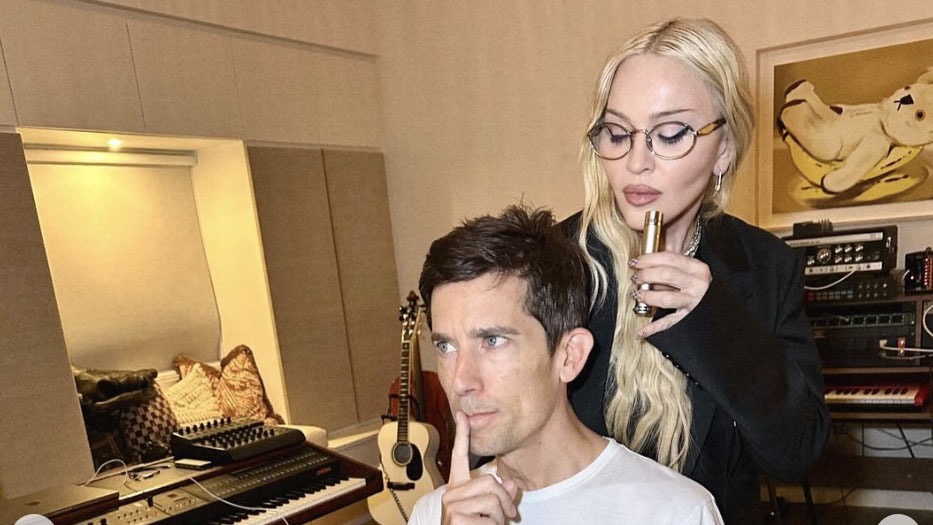
Stuart Price a welcome relief with Madonna

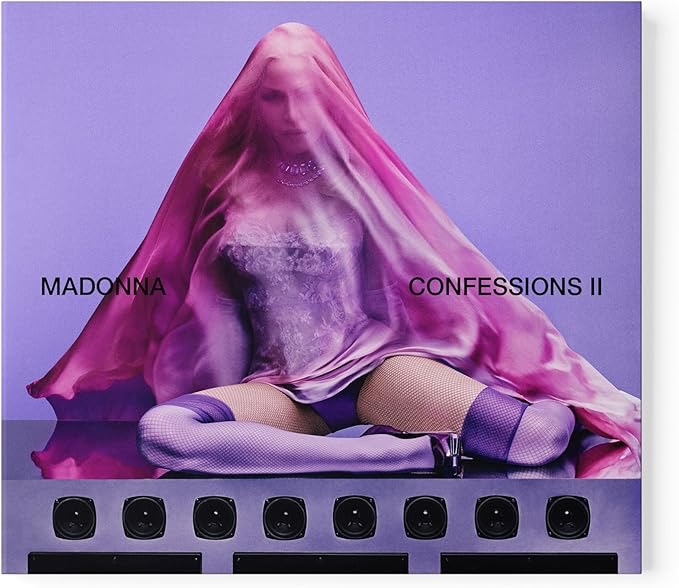
Thankfully, the programme briefly comes alive when Graham and Madonna head upstairs to meet legendary producer Stuart Price, the creative force behind Confessions on a Dance Floor and Madonna’s latest musical project.

Ironically, this becomes the documentary’s strongest section.

Price discusses Madonna’s perfectionism, her musical instincts and her relentless pursuit of excellence. As he plays tracks from the forthcoming album, viewers are finally given a genuine glimpse into how one of the world’s greatest pop stars creates her music.

It’s fascinating television.

In truth, Stuart Price provides more insight into Madonna in ten minutes than Graham Norton manages throughout the rest of the programme.

Still Waiting for the Questions

One exchange perfectly captures the imbalance between interviewer and interviewee.

“Why do you have to know everything?” Madonna jokes.

It’s a line that amusingly echoes Julie Walters’ famous quip on The Graham Norton Show“Leave me alone!”

Norton laughs before replying,

“It’s a chat show.”

Except, with Madonna, it never quite becomes one.

Instead of taking control, asking meaningful follow-up questions or steering the conversation into more revealing territory, Graham remains slightly starstruck throughout.

The next stop is a bar.

By this stage, the audience probably deserves a drink too.

Waiting behind the bar is another surprise guest—Kylie Minogue.

For many LGBTQ+ viewers, seeing Kylie and Madonna together is genuinely enjoyable. Graham excitedly declares, “I’m in gay heaven!”

It should be one of the funniest moments in the programme.

Instead, it feels heavily rehearsed.

The chemistry simply isn’t there.

A Missed Opportunity

Perhaps the most telling moment comes when Madonna looks directly at Graham and asks:

“When are you going to start asking me questions?”

“I have been,” Graham replies while swapping drinks with her.

The problem is…

He really hasn’t.

Most of the questions remain stubbornly on the surface.

There are countless fascinating areas of Madonna’s life that receive little or no attention: her battles with ageism, motherhood, spirituality, surviving four decades in an industry that constantly writes women off after forty, and the loneliness that often accompanies global fame.

Instead of meaningful exploration, viewers are offered snippets rather than substance.

One particularly frustrating moment briefly touches upon the death of Madonna’s younger brother, Christopher Ciccone. For a split second, it feels as though the documentary is finally about to reveal something deeply personal.

Then the moment disappears almost as quickly as it arrived.

Whether that decision came from Madonna herself or her management, we’ll probably never know.

Either way, it leaves viewers wanting much more.

The Verdict

Of course, it’s impossible to ignore the programme’s real purpose.

This is ultimately a promotional vehicle for Madonna’s new music.

There are some genuinely wonderful archive photographs from her early days performing at New York’s legendary Danceteria nightclub, reminding viewers just how extraordinary her journey has been.

Visually, Madonna looks fantastic—confident, elegant and entirely comfortable in her own skin. She remains every inch the cultural icon she has always been.

Which makes it even more disappointing that the programme never truly matches its subject.

Rather than trying so hard to create quirky television through staged walks, surprise guests and theatrical entrances, a simple sit-down interview may well have produced something far more memorable.

Sometimes, less really is more.

Madonna has given exceptional interviews before. Her legendary conversation with Ruby Wax in Paris remains one of the finest celebrity interviews ever recorded because Wax wasn’t afraid to challenge her while allowing humour and vulnerability to emerge naturally.

More recently, her thoughtful discussion with Jay Shetty revealed another side of Madonna—reflective, intelligent and surprisingly open. It proved that, when asked the right questions, she is still willing to reveal the woman behind the myth.

Sadly, Graham Meets Madonna never reaches those heights.

That’s not because Madonna isn’t interesting.

Far from it.

It’s because Graham Norton never quite takes us where we wanted to go.

For fans, there is still enough to enjoy. Seeing Madonna revisit her past, hearing Stuart Price discuss her music and watching two entertainment giants share the screen certainly has its appeal.

But what could have been the definitive Madonna interview ultimately settles for pleasant conversation.

Like one of Madonna’s greatest songs, it promises revelation.

Unlike Like a Prayer, however, it never quite takes you there.

https://www.bbc.co.uk/programmes/m002y4g5

https://www.amazon.co.uk/CONFESSIONS-II-Madonna/dp/B0GXC72FF7/ref=asc_df_B0GXC72FF7?mcid=18fa45e6d409344d9f9dc8d664ef43d0&th=1&psc=1&tag=googshopuk-21&linkCode=df0&hvadid=788531771417&hvpos=&hvnetw=g&hvrand=15638585306469593212&hvpone=&hvptwo=&hvqmt=&hvdev=c&hvdvcmdl=&hvlocint=&hvlocphy=9045885&hvtargid=pla-2502536493354&psc=1&hvocijid=15638585306469593212-B0GXC72FF7-&hvexpln=0&gad_source=1
Categories
Columns Lifestyle People

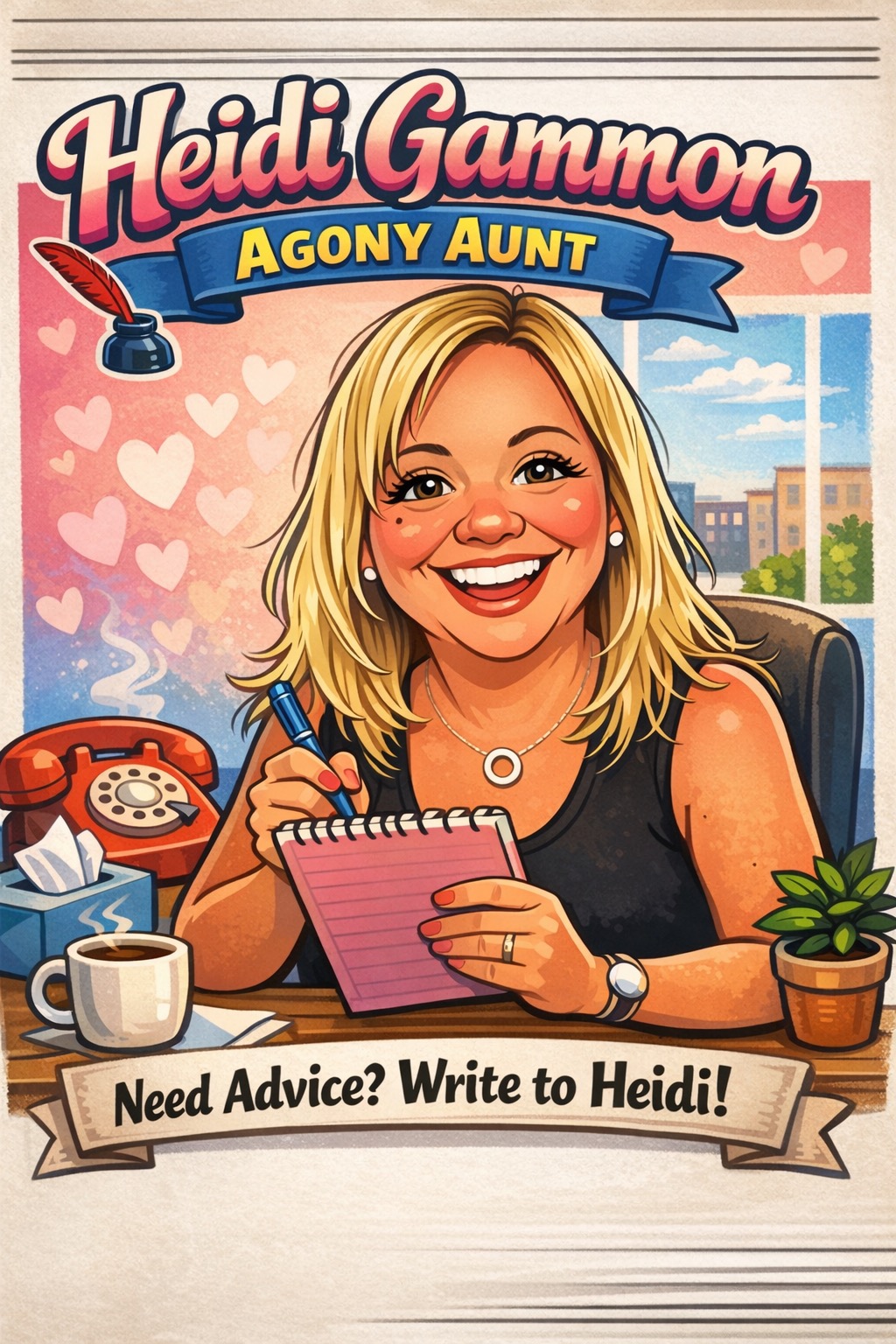
Agony Aunt Heidi Gammon is back .

Dear Heidi: Secrets, Scandals and Saying It Straight

Life rarely arrives neatly wrapped. It tends to crash in—uninvited guests, complicated families, late-night worries, and questions that don’t come with easy answers. This week’s inbox is a heady mix: secrets hovering just beneath the surface, friendships being quietly tested, and the kind of family drama that would make even the most seasoned soap writer raise an eyebrow. From Pride-season dilemmas to Ibiza invasions, from hoarding chaos to the emotional minefield of a changing will, one thing is clear—when life gets messy, honesty may not fix everything, but it’s usually the best place to start. As ever, Heidi is here to cut through the noise, call it as it is, and offer a little perspective—with a knowing wink when needed.

Dear Heidi,
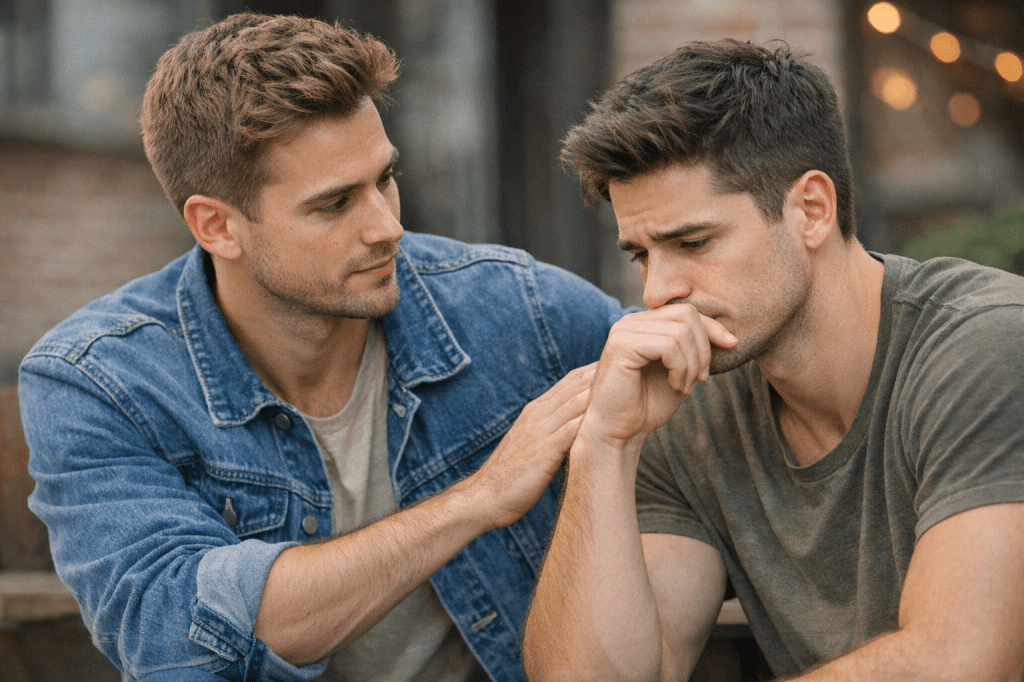
It’s Pride season coming up, and I’m a big ally. I’m attracted to the same sex, though I’m engaged to a lovely girl. My best pal dates girls, but nothing ever comes of it, and he’s very good-looking. I’ve noticed him looking at guys, and I think he may be gay. However, he’s Catholic, so coming out might be an issue. I feel that, as his best friend, I should have that chat. How do you go about it?
Steven, Ilford


Heidi:
Slow down, Agony Uncle—this isn’t your grand reveal to orchestrate. I know you mean well, but you don’t get to pull back the curtain on someone else’s life, no matter how sharp your “eagle eye” might be. Sexuality is not a group discussion, and it certainly isn’t something to be gently cornered into over a pint.

What you can do is far more powerful—and far less intrusive. Be the friend who makes it obvious, without fanfare, that you’re open, accepting, and entirely unshockable. Talk naturally about LGBTQ+ issues, share your own experiences honestly, and remove any sense that there’s something to fear in being open. That quiet reassurance often speaks louder than any “big chat.”

And don’t underestimate the weight of his background. Faith, family, culture—these things can create a knot that takes years to untangle. If he is struggling, the last thing he needs is to feel observed or analysed. So step back, be kind, and let him lead. If he chooses you as the person to confide in, that’s a privilege. Until then, your job is simple: be safe, be steady, and—occasionally—be silent.

Dear Heidi,
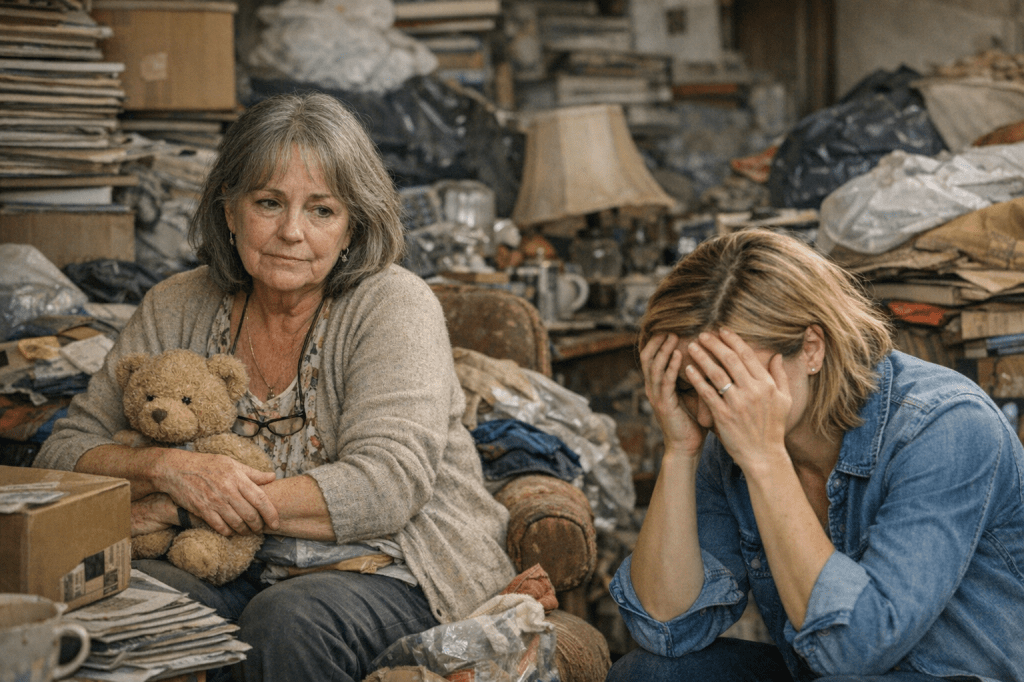
I’m living a nightmare. My mother is a hoarder, and I’ve been forced to move in with her after losing my job. My friend says hoarding is an illness. What can I do about it? It’s driving me mad and affecting my mental health.


Vicky, Raleigh
Heidi:
Nightmare is exactly the word—and yes, your friend is right. Hoarding isn’t just a bad habit or a refusal to tidy up; it’s a recognised mental health condition, often tangled up with anxiety, loss, or trauma. That doesn’t make it any easier to live with, of course—it just explains why a few stern words and a skip outside won’t magically fix it.

Here’s the uncomfortable truth: you cannot solve this for her. You can support, encourage, and gently nudge—but you cannot force change, and trying to will only exhaust you. So before anything else, protect yourself. Claim a space that is yours alone, however small—a room, a corner, even just a desk—and keep it clear. That’s not selfish; it’s survival.

Encourage her to seek help, but do it without judgement. A GP is a good starting point, and there are specialist services that deal specifically with hoarding behaviours. But timing matters—push too hard, and she’ll dig in further.

And you? You need support too. Living in that environment is emotionally draining, and it’s entirely reasonable to say, “This is affecting me.” Whether it’s a friend, a counsellor, or simply time out of the house, find ways to protect your own mental health. You can care about her without sacrificing yourself in the process—and that’s a boundary worth holding.

Dear Heidi,
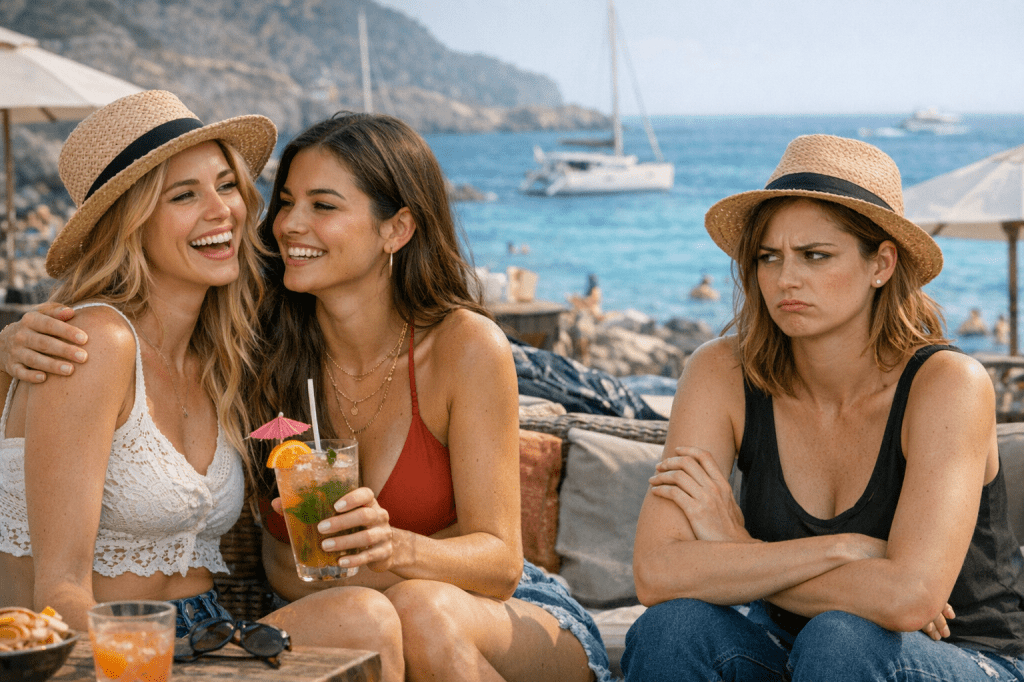
My best friend and I are going to Ibiza—we’ve been pals since high school. Out of the blue, one of her friends from the salon she works in is coming too. She didn’t even ask if it was OK; it was more like, “Great news—Danielle’s coming, and she’s got her own room.” I don’t want this. What can I do?


Dawn, Basildon
Heidi:
Ah, Ibiza—the land of sun, cocktails, and the occasional friendship reality check. Let’s be clear: this wasn’t “great news,” it was a decision made without you, and you’re absolutely entitled to feel put out. Holidays, especially ones rooted in long friendships, come with expectations—and one of those is mutual respect.

Now, before you start mentally reassigning sun loungers, have the conversation. Not a dramatic showdown, just a calm, honest moment. Tell your friend you were really looking forward to it being your time together, and that being told—rather than asked—has knocked you sideways. That’s not being difficult; that’s being honest.

This isn’t about banning Danielle or creating an awkward triangle—it’s about balance. Suggest carving out time that’s just for the two of you, and time when the three of you can all get along. Most situations can be salvaged with a bit of clarity and a dash of compromise.

But here’s the thing: if your feelings are dismissed or brushed aside, don’t ignore that. Ibiza might come and go, but how someone treats you in moments like this tends to stick. Consider it less a holiday hiccup and more a helpful insight.

Dear Heidi,
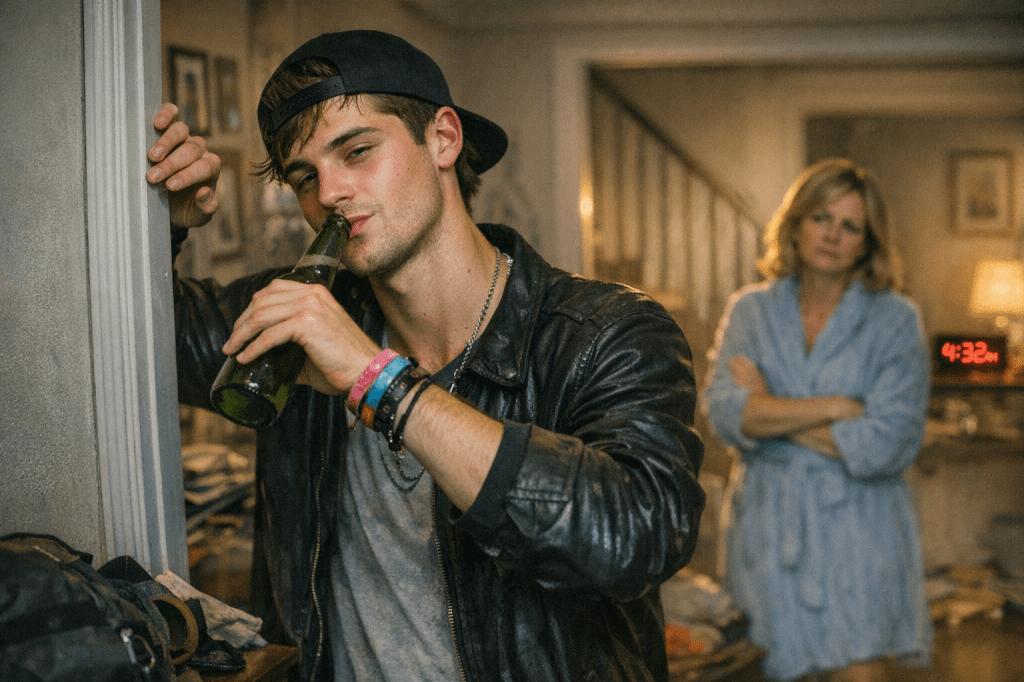
I’m in a terrible state. My 18-year-old son goes out at all hours, and I’m almost certain he’s taking drugs. The problem is, he has a job and his grades are good at college. When I tell him it’s not on, he threatens to move out. I don’t know what to do about the drugs—what should I say?


Ann, Uxbridge


Heidi:
Welcome to the tightrope of parenting a young adult—where control slips through your fingers just as your worry ramps up. It’s a tricky place to be, because technically he’s an adult, but emotionally—and practically—he still needs guidance.

Charging in with accusations will only push him further away. At 18, independence is currency, and if he feels policed, he’ll spend it elsewhere. So the strategy here is softer, but smarter. Choose a calm moment—no raised voices, no dramatic entrances—and speak from a place of concern. “I’m worried about you” lands very differently from “I know what you’re doing.”

Focus on safety, not morality. The reality is, if there is drug use, the risks are real, and that’s where your concern should sit. Keep the door open, even if the conversation doesn’t go perfectly. Sometimes it’s not about winning the argument—it’s about keeping the connection.

And don’t carry this alone. There are support services for parents dealing with exactly this situation, and seeking advice doesn’t mean you’ve failed—it means you’re taking it seriously. The goal isn’t to control him; it’s to stay close enough to guide him when it matters.

Dear Heidi,
My sister has suddenly reappeared in our lives as our mother is dying. Mum hasn’t seen her for five years but has welcomed her back like the prodigal daughter. Now she’s changing her will to include her again. My brother and I are furious—what can we say to them both?
Samantha, Bromley


Heidi:
Ah, family—the one arena where history, emotion, and timing collide with spectacular force. I can hear the hurt in this, and it’s completely understandable. Someone disappears for years, returns at the eleventh hour, and suddenly the script is rewritten—it’s bound to sting.

But here’s the part you won’t like: it’s your mother’s decision. Her money, her will, her sense of closure. That doesn’t mean your feelings don’t matter—it just means you can’t dictate the outcome.

What you can do is choose how you respond. Marching in with anger will only entrench positions and risk turning a painful situation into an all-out war. Instead, opt for calm honesty. Tell your mother how this has made you feel—hurt, confused, perhaps even overlooked. Keep it about your feelings, not accusations about your sister.

As for your sister, this may not be the moment for a full reckoning of the past. Sometimes, timing matters more than being right. There may be conversations to be had later—but right now, with emotions heightened and time possibly limited, a degree of restraint might serve you better.

You may not get the outcome you want, but you do have control over how you carry yourself through it. And when all is said and done, that dignity will matter far more than winning an argument that can’t truly be won.

Cath Heidi on Gateway Radio with Aston Avery and Steven Smith

https://switchboard.lgbt

Categories
Columns Lifestyle People

Anna Kennedy on lines ambassador Kieron Lee on the Assembly .

The Assembly: Kieron Lee Brings the Room to Tears in a Moment of Pure Television Gold

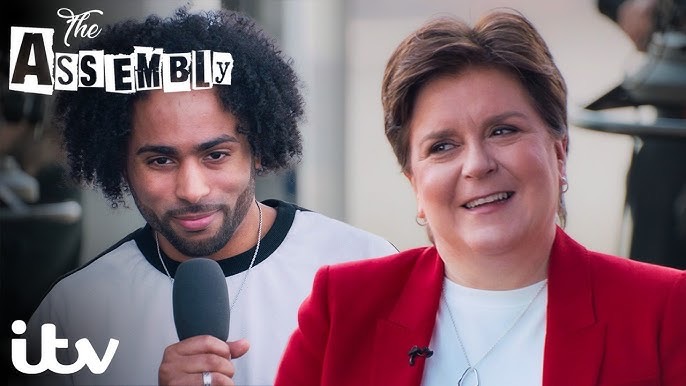
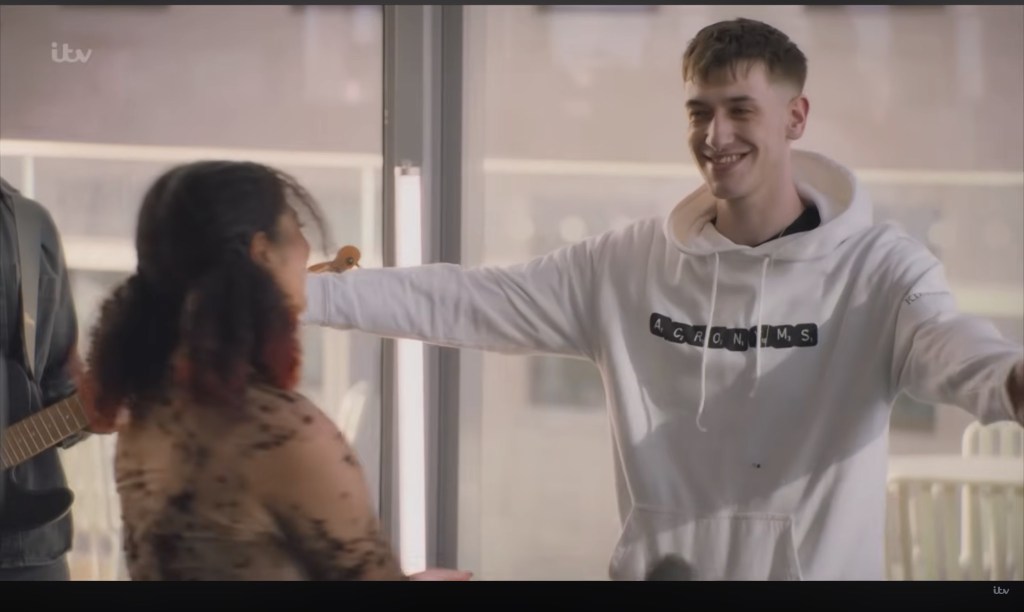
The Assembly has built a reputation for doing something television rarely dares to attempt—stripping away the polish, the PR filters, and the rehearsed answers to reveal something altogether more human. In last week’s episode, aired on 10 April, that raw authenticity reached a powerful crescendo, thanks to Anna Kennedy Online ambassador Kieron Lee, whose emotional performance for Nicola Sturgeon left not only the former First Minister visibly moved, but much of the audience in tears.

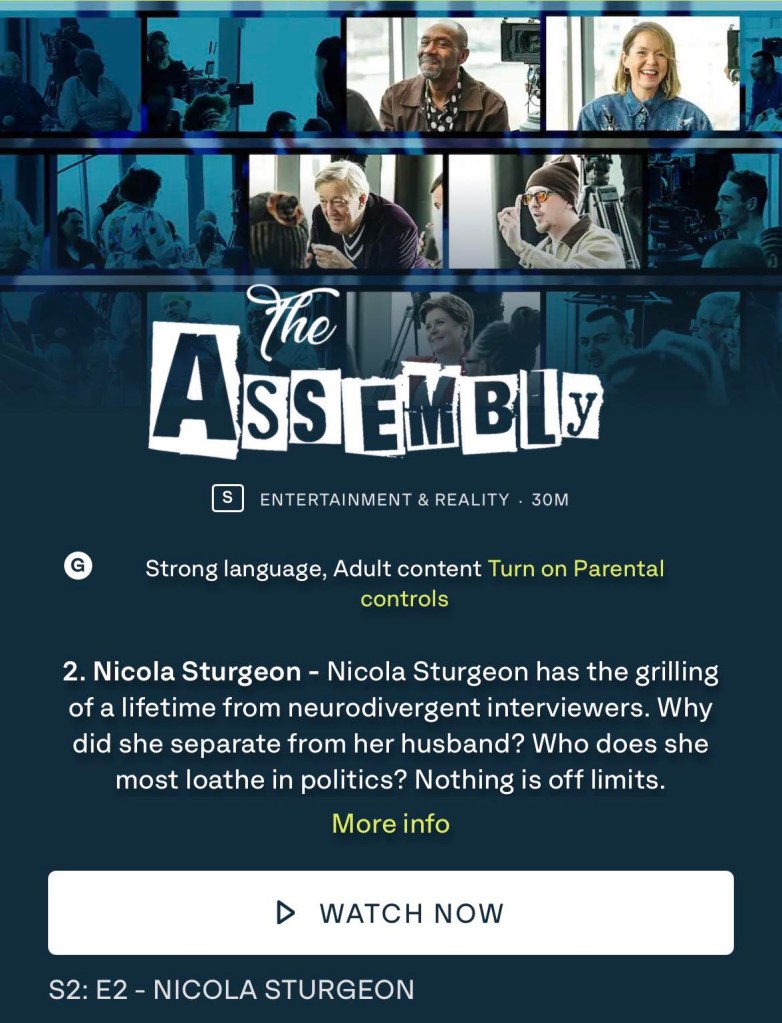
Anna Kennedy Online charity ambassador Mr. Kieron Lee makes a memorable debut in Episode 2 of ITV’s powerful and thought-provoking series, featuring Nicola Sturgeon. Over the past few months, he has been filming for The Assembly, stepping into a format that is as challenging as it is rewarding. The episode is available now on ITVX, or viewers can tune in on ITV, where it sits comfortably alongside some of the channel’s biggest primetime programming.

For those familiar with Kieron Lee, this moment will come as no surprise. An EDM/R&B producer and artist with a gift for blending vulnerability with musical precision, Kieron has long had the ability to stop a room in its tracks. I first witnessed that magic myself during Autism’s Got Talent, where his performance carried the same emotional weight—quietly building, then landing with a resonance that lingers long after the final note.

Kieron’s journey with Anna Kennedy Online dates back to 2016, when he contributed his track Letting Go to the charity’s debut album Building Bridges. Since then, his career has steadily grown, with his debut album Acronyms reaching listeners in over 100 countries on Spotify. Importantly, his work continues to give back, with each project donating a portion of proceeds to the charity—a reflection of both his talent and his integrity.

But The Assembly is not a typical stage, and this was not a typical performance.

The ITV series turns the traditional interview format on its head. In this episode, Nicola Sturgeon is interviewed by a panel of autistic and learning-disabled contributors who ask honest, fearless, and uncompromising questions. The discussion moves seamlessly between the personal and the political—covering everything from her separation from her husband to her least favourite politicians, her arrest, and even her love life. Nothing is off-limits, and that is precisely what gives the programme its edge.

Kieron Lee was not simply there to observe. He was part of that panel—an active voice shaping the tone of the conversation. Reflecting on the experience, he described it as “surreal” and something he will treasure for the rest of his life. It also marked a significant personal milestone: his first time travelling to London alone, stepping far outside his comfort zone and into a completely new environment.

Then came the moment that would define the episode.

Closing the programme, Kieron delivered a moving duet of Dignity by Deacon Blue. It was a choice that felt both poignant and perfectly pitched—its themes of aspiration and quiet resilience echoing the spirit of the show itself.

Kieron Lee always a standing ovation.

“Performing for Nicola Sturgeon was an honour,” he said. “Her warmth and genuineness were so admirable.”

What makes this moment even more remarkable is what viewers did not see. Kieron had been incredibly unwell in the hours leading up to filming. “I was sick twice before going on,” he revealed, “and when I got home, I was bedridden all week with a terrible flu.” Yet despite this, he stepped forward and delivered a performance that resonated deeply with everyone in the room.

There was no artifice—just honesty, courage, and talent.

As the final notes faded, Nicola Sturgeon was visibly emotional, and she was not alone. Across the room, there was a shared sense that something special had taken place. It was one of those rare television moments that cannot be manufactured—only felt.

For Kieron, the experience was about more than performance. “Being part of a project that gives a voice to people who often feel unheard is something I strive to do in other areas of my life through music,” he said. “To see that come to life on mainstream television has been truly life-changing.”

He also paid tribute to the production team behind the series, describing The Assembly as “an exceptional piece of television, with a beautiful cast,” and expressing his gratitude for being invited to take part in its second series.

This is precisely why programmes like The Assembly matter. In an era of over-produced content, it offers something refreshingly real—championing neurodiverse voices, creating unscripted moments, and breaking down barriers between public figures and the public.

Kieron Lee’s appearance embodies all of that. He was not there to perform for someone in the traditional sense—he was there as an equal, a voice, a presence. And yet, when the moment called for it, he delivered something unforgettable.

At Anna Kennedy Online, there is immense pride in all that Kieron continues to achieve. His journey is not only inspiring but deeply meaningful, reflecting the very ethos of the charity.

And the story does not end here.

Kieron is set to perform at the Autism Hero Awards on 9 May 2026—an event that continues to celebrate extraordinary individuals within the autism community. If his appearance on The Assembly is anything to go by, it will be a performance not to be missed.

The episode is available now on ITVX and across digital platforms.

Just be prepared—this is television that doesn’t just entertain. It moves you.

https://www.itv.com/watch/the-assembly/10a6350/10a6350a0008

https://www.facebook.com/reel/1272981491000254

Categories
Columns Lifestyle People Poetry Travel

Please help 2Shades keep going for another year .

https://gofund.me/7a5217480

Please help 2shades

The interest in 2Shades continues to grow from strength to strength. We have not only given a platform to new talent, but also created a vital space for charities and voices that are not always heard.

As you may know, I do not make any money from 2Shades. With my wonderful partner Adishri now back in India, I have been holding the fort alone and dedicating many hours to keeping the magazine going.

We are actively looking for advertisers, sponsors, or a potential partner. However, the time has come to cover our renewal costs. If you have enjoyed the magazine, we would be truly grateful for any contribution towards next year’s expenses.

With your support, we hope that over the coming year we can secure a partner or advertisers to help sustain and grow 2Shades.

With love,
Steven

https://gofund.me/94a9c37e.

https://gofund.me/94a9c37e3

2Shades Magazine

2Shades Magazine is a United Kingdom–based online lifestyle and culture publication. It highlights diverse voices in fashion, art, entertainment, and social issues, emphasizing inclusivity and modern creative expression. The magazine serves as a digital platform for emerging and established talents across multiple disciplines.

Key facts

Country: United Kingdom

Medium: Online magazine

Focus areas: Fashion, arts, culture, lifestyle, social commentary

Audience: Global readers with interest in creative industries

Format: Digital features, interviews, and visual editorials

Origin and mission

Founded to amplify underrepresented perspectives, 2Shades Magazine positions itself as an inclusive alternative to mainstream fashion and culture outlets. It encourages dialogue around identity, creativity, and representation while offering editorial space to artists, models, and thinkers often overlooked by traditional media.

Content and style

The publication blends long-form features, interviews, and curated photography with a strong visual aesthetic. Its content typically explores themes of diversity, self-expression, and the intersections of culture and identity. The magazine’s digital format allows it to showcase immersive visuals and multimedia storytelling.

Cultural relevance

2Shades Magazine has become part of a broader wave of independent digital publications redefining UK media through inclusivity and innovation. By championing new talent and challenging conventional narratives, it contributes to a more representative cultural landscape within and beyond Britain.

https://www.gofundme.com/f/keep-2shades-going

Categories
Columns Health and Fitness Lifestyle People

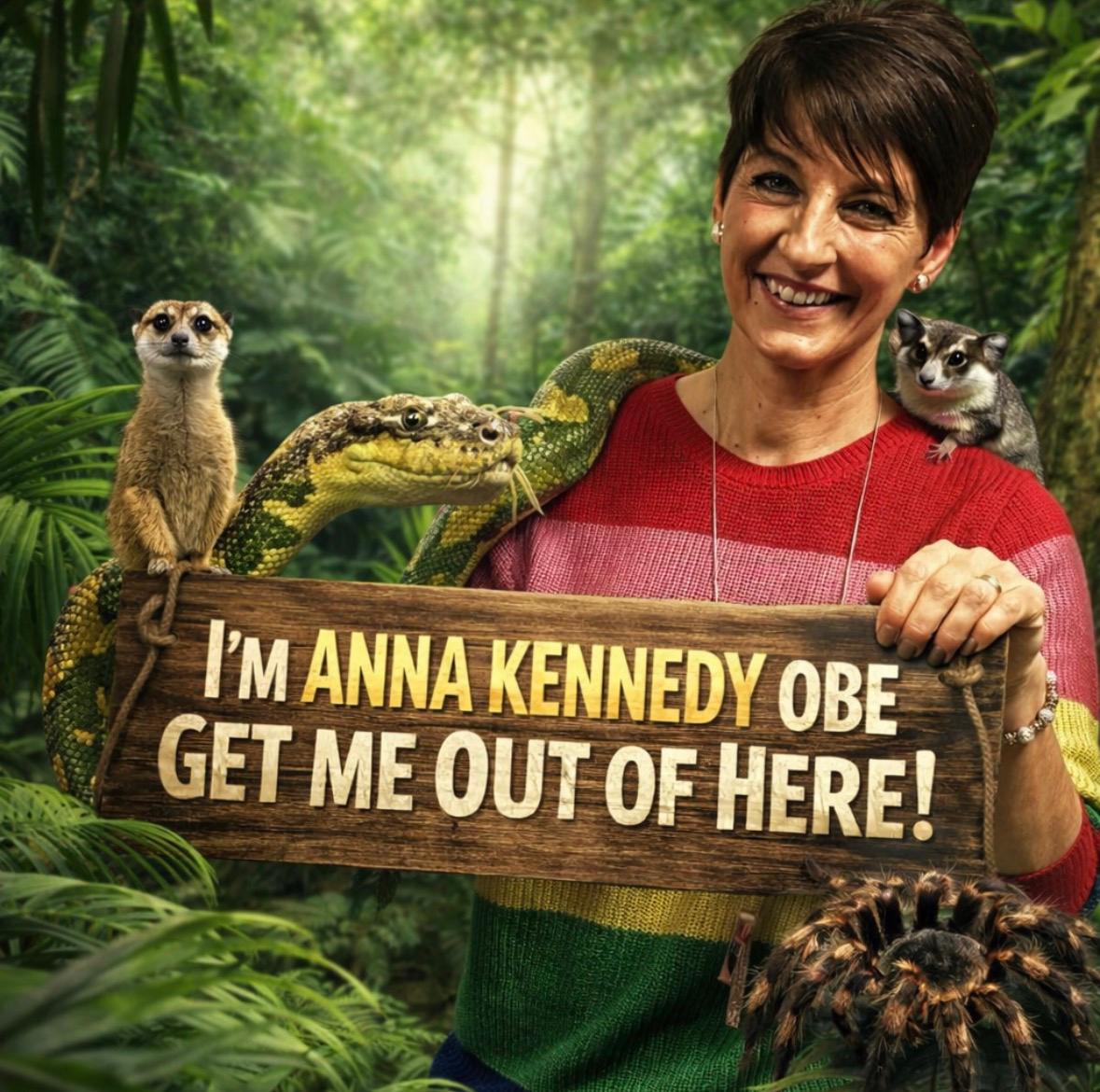
In celebration of “Autism Awareness and acceptance day ” we set Anna Kennedy OBE a bush trucker trail.

“I’m a Celebrity… Get Me Out of Here!” – Anna Kennedy Faces Her Fears in Essex

Words: Steven Smith

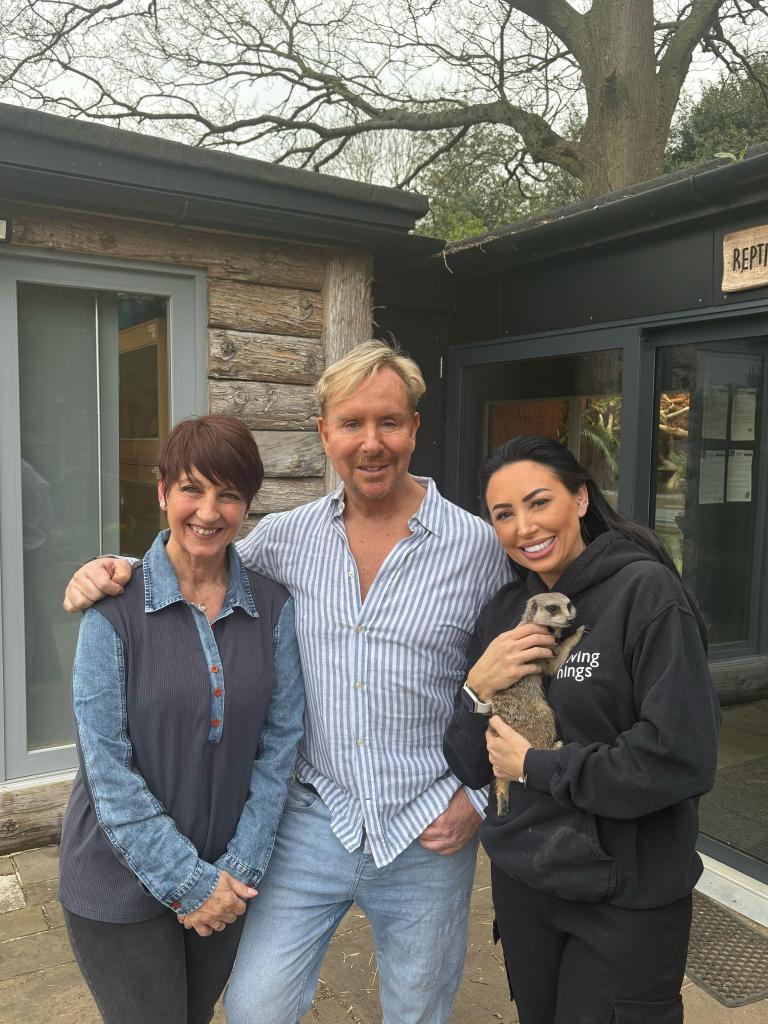
It could easily have been mistaken for a scene straight out of I’m a Celebrity… Get Me Out of Here! as screams, laughter, and nervous anticipation filled the air in Essex yesterday. But this was no television stunt. This was something far more meaningful — a deeply personal challenge undertaken by the remarkable Anna Kennedy OBE, a woman known for her relentless determination, boundless compassion, and tireless advocacy for the autism community.

Thank-you my friend Nicky Rodrigues I am so proud of you .

This time, however, Anna was stepping far outside her comfort zone — not into a boardroom, a stage, or a campaign, but into a world of exotic creatures that have long sparked fear rather than fascination.

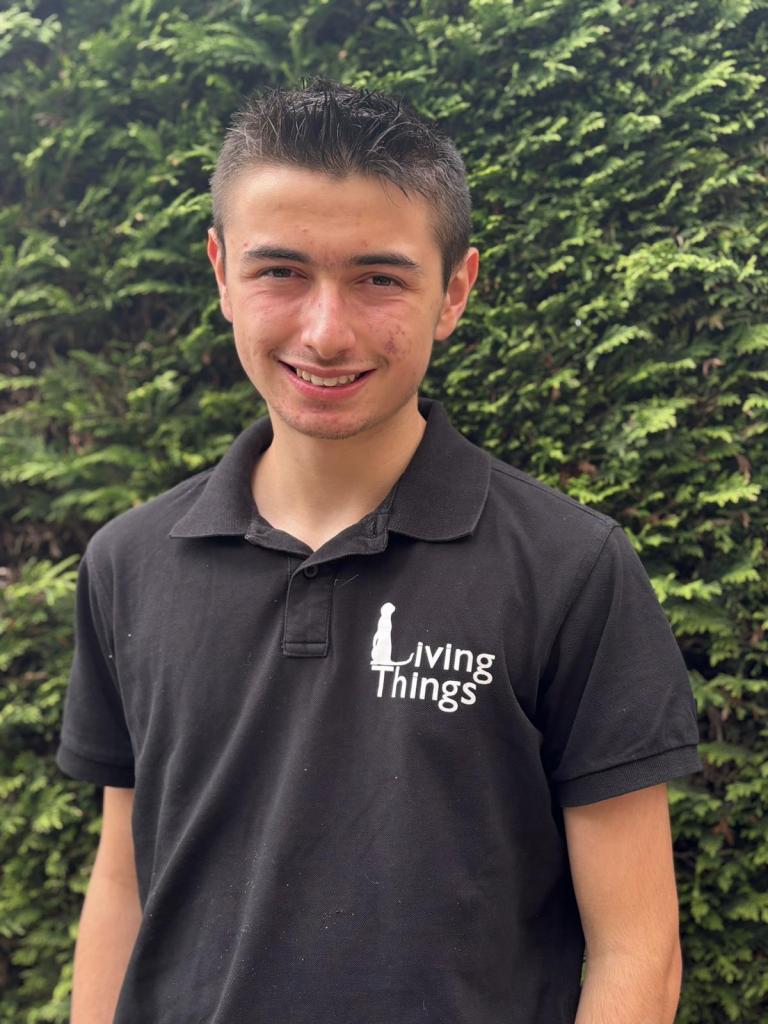
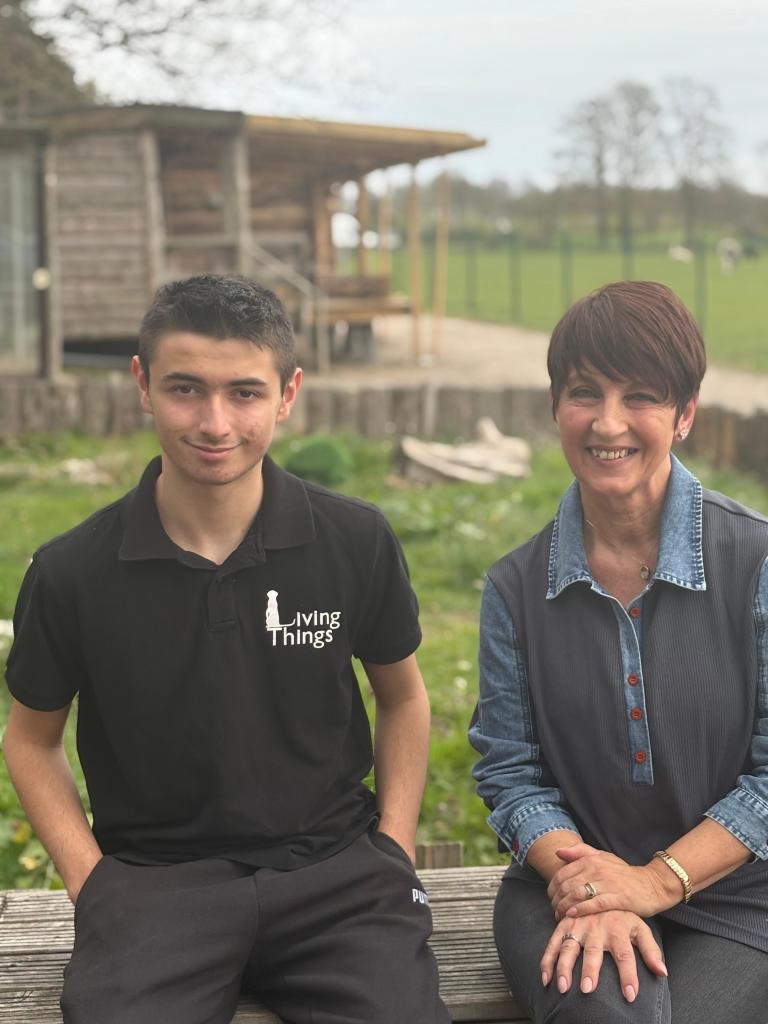
The challenge was set by long-time friend Nicky Rodrigues and her son Harry, who now both work at Living Things UK, an organisation renowned for its immersive and educational wildlife encounters.

A World of Wildlife — With a Purpose

Living Things UK is not your typical animal experience. Behind the scenes is a dedicated team of skilled animal handlers, welfare specialists, educators, and passionate wildlife advocates. Their mission is simple yet powerful: to bring people closer to nature in a way that is safe, educational, and deeply engaging.

Their enclosures are carefully designed to replicate natural habitats, ensuring each animal thrives in an environment suited to its needs. Over the past decade, they have built an impressive reputation, delivering unforgettable experiences across schools, SEN groups, hospitals, care homes, festivals, and corporate settings.

Ordinarily closed to the general public, Living Things made a special exception for this visit in support of autism awareness, aligning perfectly with the work of Anna Kennedy Online.

A Friendship Rooted in Advocacy

Nicky Rodrigues’ connection to Anna dates back to 2014, when she volunteered with Anna Kennedy Online as a Charity Champion covering Essex.

“I met so many incredible people during my time there,” Nicky recalls. “It was an experience that stayed with me. When Harry and I began working with these amazing animals, I knew I wanted to share that world with Anna — and perhaps help her face a few fears along the way.”

And what a journey it turned out to be.

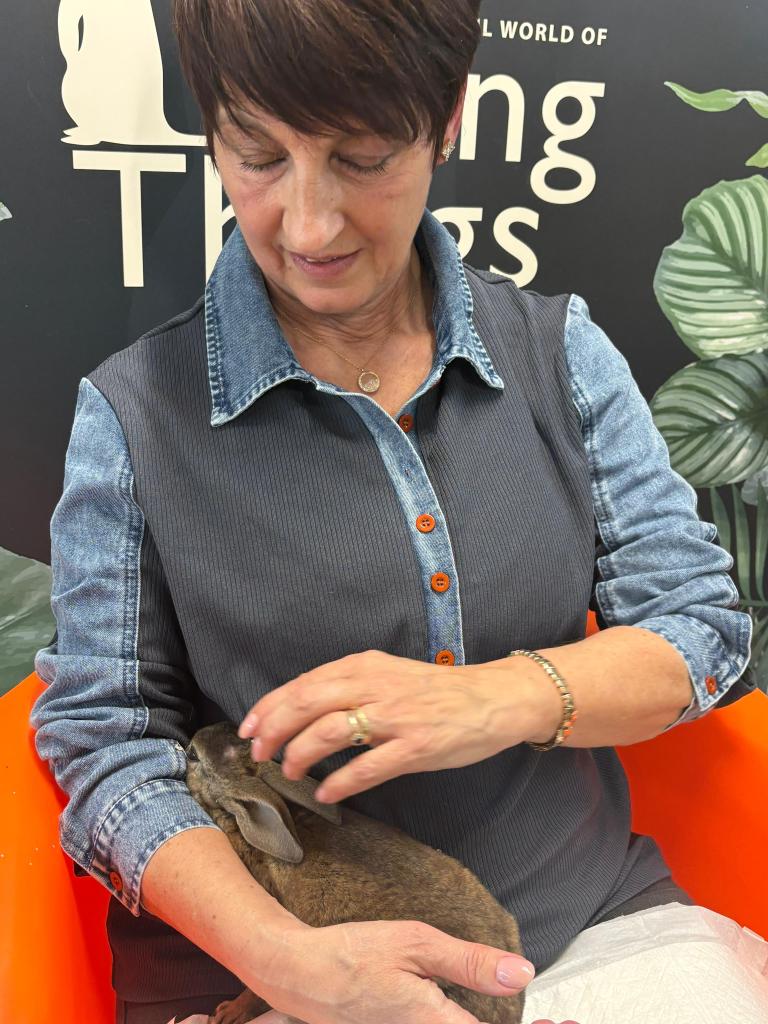
A not so scary bunny .

Enter the Animals… and the Fear

Of course, no such adventure would be complete without a witness — or, as Anna jokingly put it, “support” — from 2Shades Magazine’s Steven Smith, who joined as a patron of Anna Kennedy Online.

“I am terrified,” Anna admitted at the outset, laughing nervously. It’s a rare confession from a woman often described as having “the tenacity of a Rottweiler with a bone” when it comes to achieving her goals. Yet when it comes to insects, reptiles, and the more unusual corners of the animal kingdom, Anna is refreshingly human.

What followed was nothing short of extraordinary.

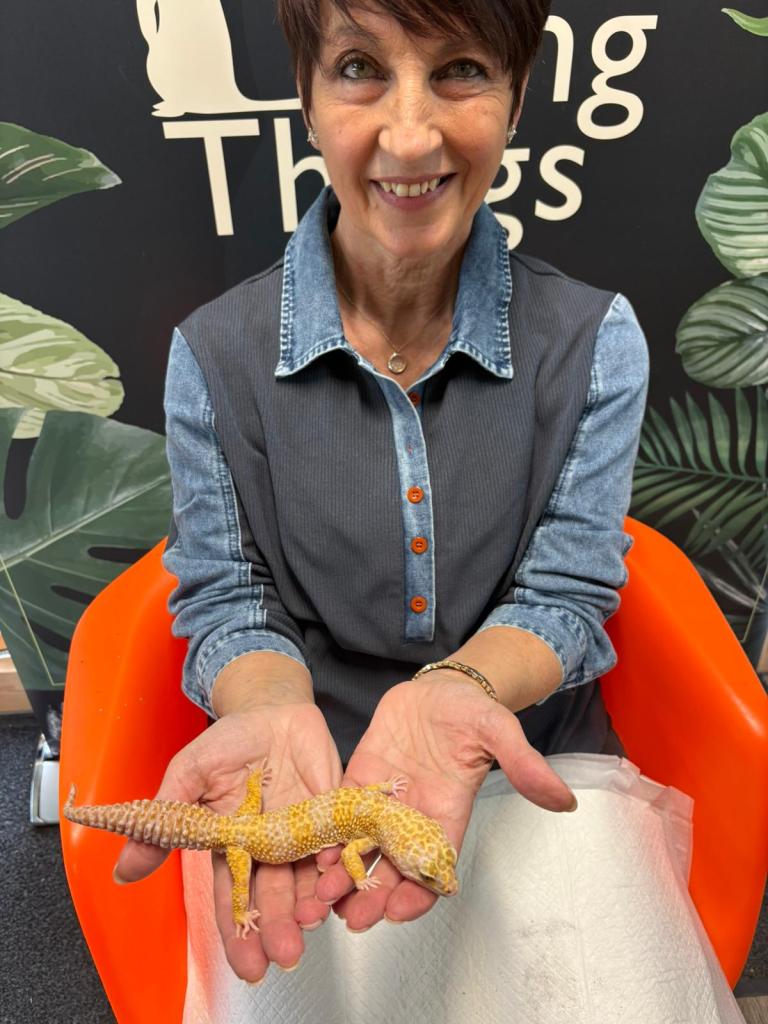
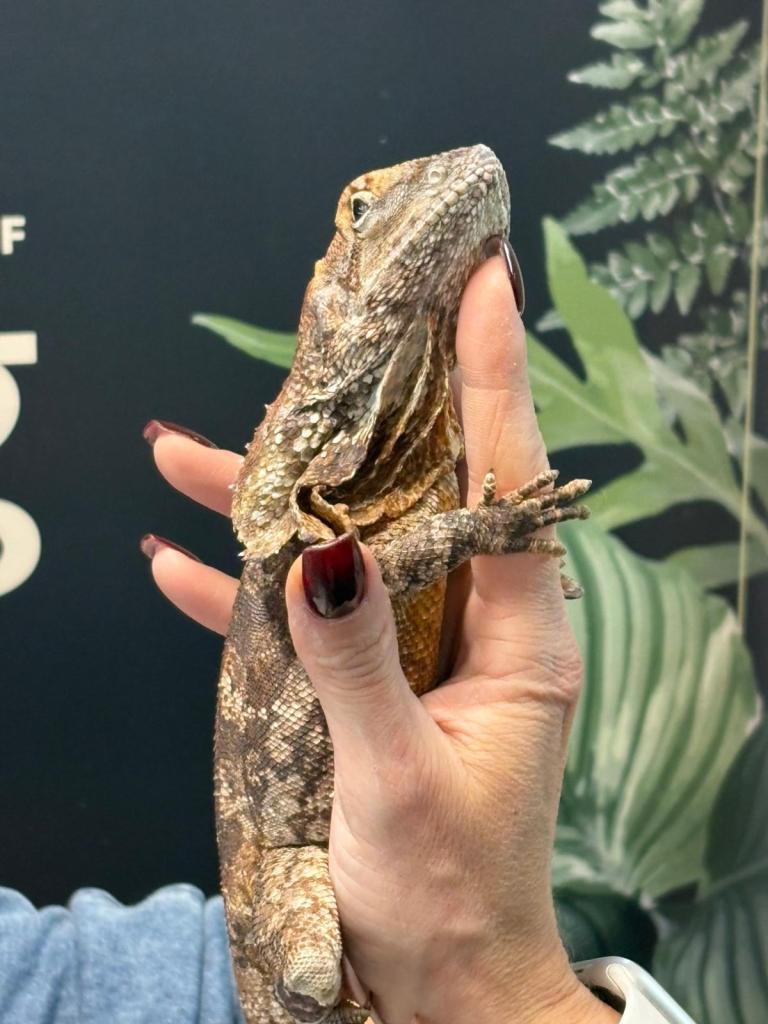
Harry, who led the experience, introduced Anna to an astonishing array of creatures. Among them were a Russian Horsfield tortoise, a leopard gecko, a bearded dragon, a frilled-neck lizard, and a striking blue iguana. The mammals proved equally captivating — a Madagascan lesser tenrec, a soft and gentle chinchilla, a playful sugar glider, and the ever-curious African meerkat.

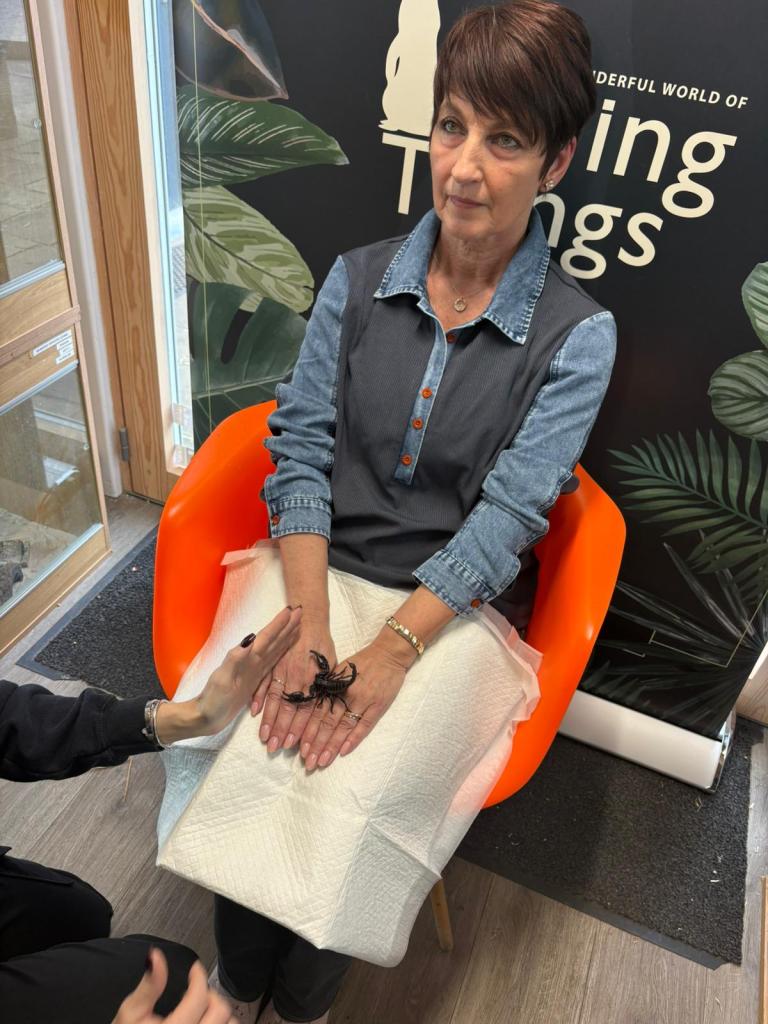
Then came the creatures that would test Anna’s resolve to its limits: a cornsnake, a Chilean rose tarantula, an Asian forest scorpion, a giant African millipede, and the unmistakable Madagascan hissing cockroach.

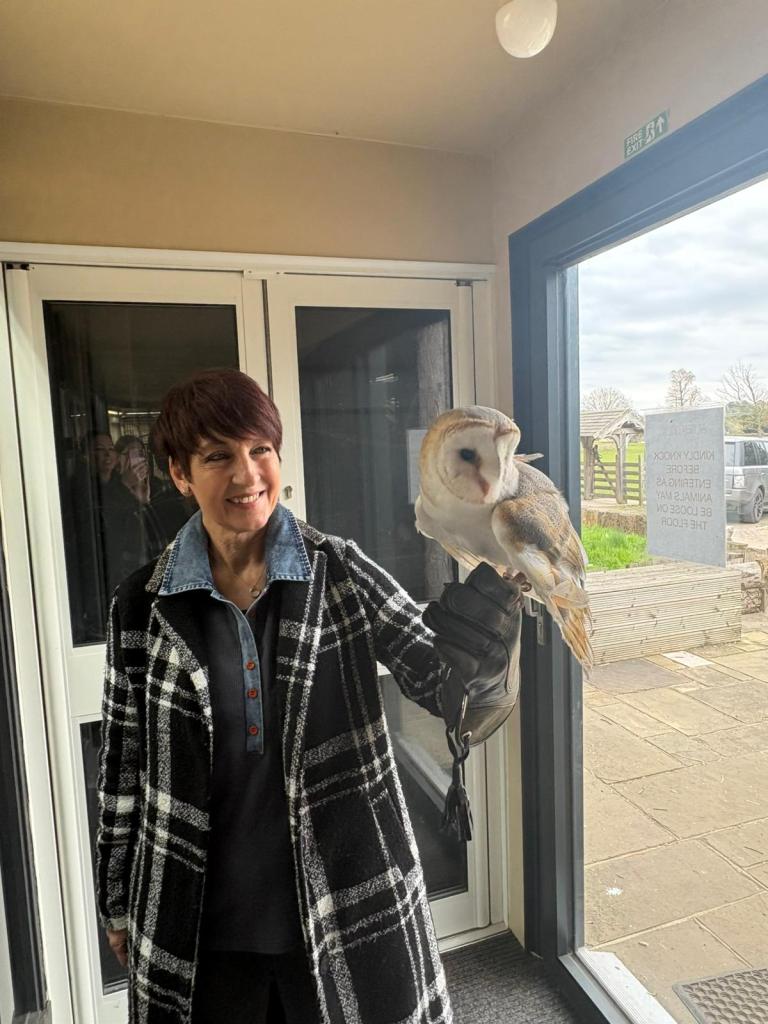
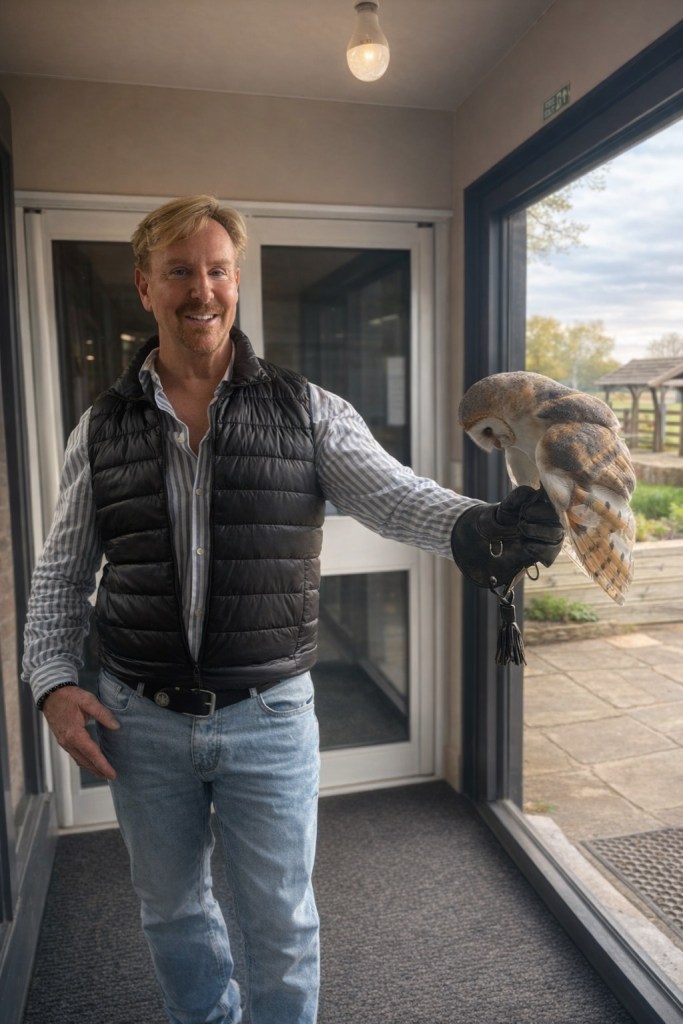
And finally — a moment of calm, grace, and beauty — Juliet, the British barn owl, who would quickly become Anna’s favourite.

Harrys knowledge was impressive

Harry’s Moment to Shine

Perhaps the most moving aspect of the day was watching Harry in action. Once non-verbal as a young child, he now confidently handled and introduced each animal with knowledge, care, and quiet authority.

For Nicky, it was an emotional moment.

“To see Harry like this today — confident, engaged, and sharing his passion — is just beautiful,” she said. “Moments like this remind you how far people can come with the right support and opportunities.”

It was a powerful reflection of everything Anna Kennedy Online stands for: inclusion, empowerment, and the celebration of individual potential.

Facing Fear, Finding Joy

As for Anna, she rose to the challenge with surprising courage.

“Honestly, I’m not saying I didn’t have a flush or two,” she laughed. “The tarantula was definitely a worry! But I absolutely adored the owl. And Harry taught me so much about the animals — things I never knew before.”

What began as a fear-filled experience transformed into something joyful, educational, and even uplifting. Anna handled animals she never imagined she would go near, let alone hold.

It was, in many ways, a metaphor for her life’s work: facing the unknown, challenging perceptions, and embracing growth.

Me showing Anna how it is done ,

A Legacy of Dedication

Anna Kennedy’s achievements are nothing short of extraordinary. Awarded an OBE for her services to the autism community, she has dedicated her life to improving opportunities and understanding for autistic individuals.

She has founded and developed some of Europe’s largest autism-specific schools, while also raising her two sons, Patrick and Angelo, both of whom are autistic. Her work continues to inspire families, educators, and advocates across the UK and beyond.

Her visit to Living Things was not just a personal challenge — it was a continuation of that mission. By stepping into an unfamiliar world, she demonstrated the importance of openness, learning, and breaking down barriers.

More Than an Experience

The visit, timed just ahead of World Autism Acceptance Day, was a celebration of inclusion in its truest form.

Together, Anna and Steven explored a world that many might shy away from, proving that with the right support — and a little bravery — anything is possible.

For Living Things UK, the day was equally meaningful.

“Moments like these remind us why we do what we do,” the team shared. “Creating inclusive, unforgettable experiences that bring people and nature together is at the heart of everything we believe 

A Favourite Feathered Friend

Among all the creatures encountered, one stood out above the rest — Juliet the barn owl.

Elegant, calm, and quietly majestic, she provided a moment of serenity amidst the excitement. For Anna, it was love at first sight.

And perhaps that’s the lasting image of the day: a woman who has spent her life fighting for others, standing still for a moment, holding something beautiful, and discovering that even fear can give way to wonder.

Anna so thrilled in the end with Harry.

Find out more:
Living Things UK: https://www.living-things.co.uk
Anna Kennedy Online: https://annakennedyonline.com