
“Let’s Hear It for the Boy”
When I am in the United States and someone overhears my British accent, at some point during the trip someone will inevitably say — when she was alive — “I just love your Queen.”
It is almost impossible for me not to reply, “Boy George, or the one in the palace?”
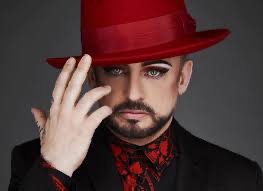
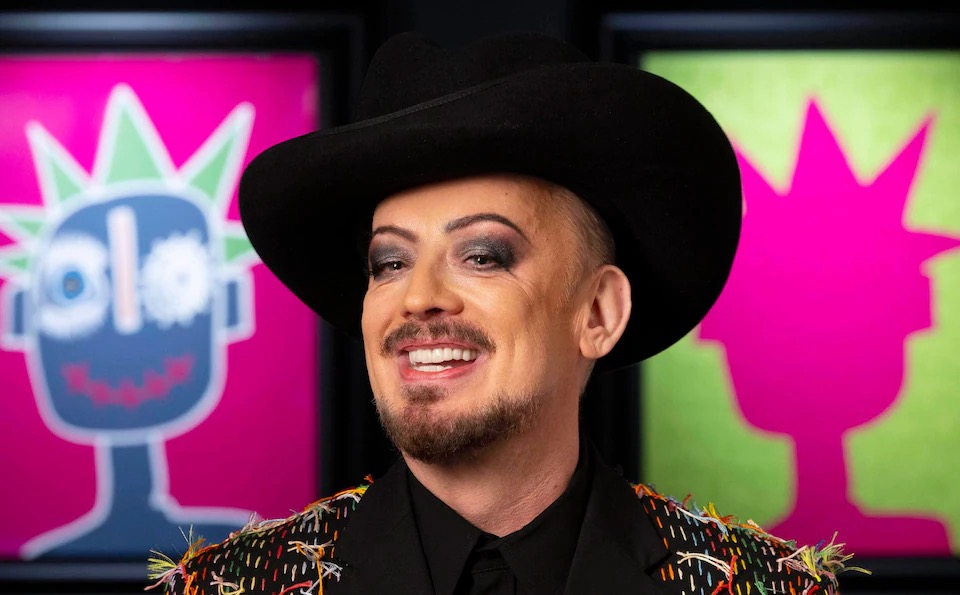
Arguably, Boy George has done more to promote British fashion, music and style around the world than many who have appeared on the Honours List. In many ways he has been a global ambassador for the United Kingdom.
More importantly, George made it possible for countless young LGBTQ people to see a beacon — a figure who said, unapologetically, do not be afraid to be yourself. His honesty about his struggles with addiction has also helped many others find the courage to seek help.
Boy George burst onto Top of the Pops in 1982 with Culture Club performing their first major hit, “Do You Really Want to Hurt Me.” Today there is scarcely anyone in the world who does not recognise the name Boy George.
Back then I was living in Brighton and was nineteen years old. My sister, who was sixteen and still at school in Surbiton, rang me in excitement. She had been a huge fan of Culture Club even before their television debut, and they were about to play in Brighton. Could she come down?
A couple of weeks later there I was, surrounded by girls chanting “George! George!” at what is now the Odeon cinema, waiting for him to step on stage. Even though Culture Club were not yet household names, the excitement in the room was electrifying. When Boy George finally appeared, the crowd went wild. In the end I resorted to putting my sister on my shoulders so she could get a better view.
George reminded me of someone who had earlier brought light into my life and given me hope. When I was just nine years old, Marc Bolan flashed onto Top of the Pops singing “Ride a White Swan.”
At the time I often felt painfully different. Bullying at school — and sometimes at home — left me wondering whether I wanted to be here at all. But Marc Bolan, along with David Bowie, gave many gay men of my generation hope. They told us, in their own way: it will be OK — keep going.
Years later I realised I had actually encountered Boy George and his entourage long before his rise to global fame. I was sixteen in a club called the Regency in Great Newport Street when Phillip Sallon cheekily pinched my bottom. I turned around to see these fabulously flamboyant figures — Sallon with a black-and-white walking stick — and I was utterly speechless.
Marilyn and George were more beautiful than most of the girls I knew. They were intimidating, to say the least. My friend whispered, “Blitz Kids.” I muttered barely two words and quickly moved away, but the moment left a lasting impression.
I would later see them again at the legendary Bangs gay night on Mondays at the Astoria club. Marilyn, with his incredible Monroe-style hair, stood out from a mile away.
Boy George’s first appearance on BBC Top of the Pops immediately made tabloid headlines. Words like androgynouswere thrown around, and newspapers asked the now infamous question: “Is it a boy or a girl?”
As always happens when something genuinely different appears, critics lined up to condemn it. “One-hit wonder,” they cried. “He’ll corrupt our children,” shouted others from the moral high ground of the Thatcher era.
My sister left that Brighton concert glowing with happiness — much like I had after my first T. Rex concert at Newcastle City Hall. One thing was certain: George was a star, and he was here to stay.
Even those in the know recognised it. Freddie Mercury once said in an interview that Boy George would be around for a very long time and was no flash in the pan. Madonna, despite their occasional differences, has cited him as an inspiration. And Lady Gaga has always been unabashedly mad about the boy.
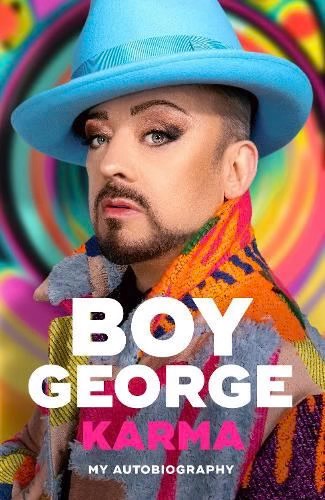
Labels such as camp, drag queen and trans were quickly attached to him — particularly within the gay community, which is not always shy about labelling its own. George himself addressed it with humour at the 1984 Grammys, declaring:
“Thank you, America — you know a good drag queen when you see one.”
The remark reportedly caused Culture Club’s popularity in parts of the American Bible Belt to dip sharply.
Personally, I never thought George was particularly camp — a word often used to describe effeminate entertainers such as John Inman, Larry Grayson or Kenneth Williams. It takes a real man to live authentically. Beneath the thick foundation and those famously highlighted blue eyes, the strength of a proud Irishman has always shone through.
Both my sister and I eventually spent time living in the United States, but when I returned to London I received an invitation to Boy George’s book launch for Take It Like a Man, written with Spencer Bright.
The party came with strict instructions from George himself: guests had to dress as something to do with school — or not bother turning up.
Daily Mail journalist Lester Middlehurst and I arrived dressed as school prefects, complete with blazers and badges. Spencer Bright appeared as a headmaster carrying a cane.
True to George’s word, several corporate bigwigs were turned away at the door for failing to dress up. Meanwhile George himself wandered around the room in disguise while his mother attended dressed as a dinner lady.
The next time I encountered him was in 1999 at LWT during An Audience with Diana Ross. Ross unexpectedly pulled George from the largely celebrity audience and invited him to sing. I had brought along my partner of eighteen years, Martin Annand, and we both agreed that George’s voice easily held its own alongside Miss Ross.
At the after-party George stood nearby chatting happily with anyone who approached him.
My next brush with him came in 2002 at the opening of Taboo at the Leicester Square Theatre. It was an extraordinary evening — Alan Cumming, Phillip Sallon and countless other personalities were there.
Taboo was not simply George’s life story; it was a tribute to a generation of performers who defined an era: Steve Strange, Leigh Bowery, Phillip Sallon, Marilyn — and of course Boy George himself.
The show was electric, the kind of night you never wanted to end. Marilyn was absent from the opening night, but during the speeches someone joked that she was probably hiding somewhere backstage in rollers and a headscarf.
The production closed in London in 2003 before transferring to New York. Judging by the number of young people around London today dressed in Bowery and Boy George-inspired outfits, perhaps it is time for a revival.
Like me, George is a Gemini — a star sign known for moving between extremes. Over the years Mr O’Dowd has been very open about his struggles with addiction. Under the guidance of DJ Fat Tony he began attending Narcotics Anonymous meetings and, by all accounts, happily volunteers to make the tea for fellow attendees.
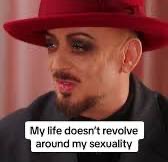
George has spoken openly and honestly about his battles, helping others confront their own.
Listening to one of his recent interviews was not only enlightening but genuinely moving. It was refreshing to hear him say, “I don’t live in a gay bubble.”
It is something I often tell people myself — just because someone else is gay does not mean you instantly want to date them or start screaming, “Let’s be sisters!”
I hope George continues giving interviews like this. They will help many people.
Yes, George has been a naughty boy at times — but who among us hasn’t? What he has contributed to music, entertainment, fashion and LGBTQ visibility is extraordinary.
Which raises the question:
Perhaps it is finally time we started calling him Sir George — or at the very least awarding him an OBE.

 2Shades Magazine