Categories
Columns Culture People Uncategorized

2Shades Standing Against Antisemitism in London

What is happening on our streets and across the world right now is deeply unsettling, and for many of my Jewish friends, it’s not just something they’re reading about—it’s something they’re feeling, living, and navigating every single day. In a city like London—a place that prides itself on diversity, tolerance, and community—there is simply no excuse for hatred to rear its head in any form. Whether it’s whispered prejudice, online abuse, or something far more frightening, it chips away at the very fabric of who we are supposed to be. What happened in Golders Green this week was, quite simply, horrific. A community shaken, people frightened, and a stark reminder that hate is not something happening “somewhere else”—it’s here, and it needs calling out.

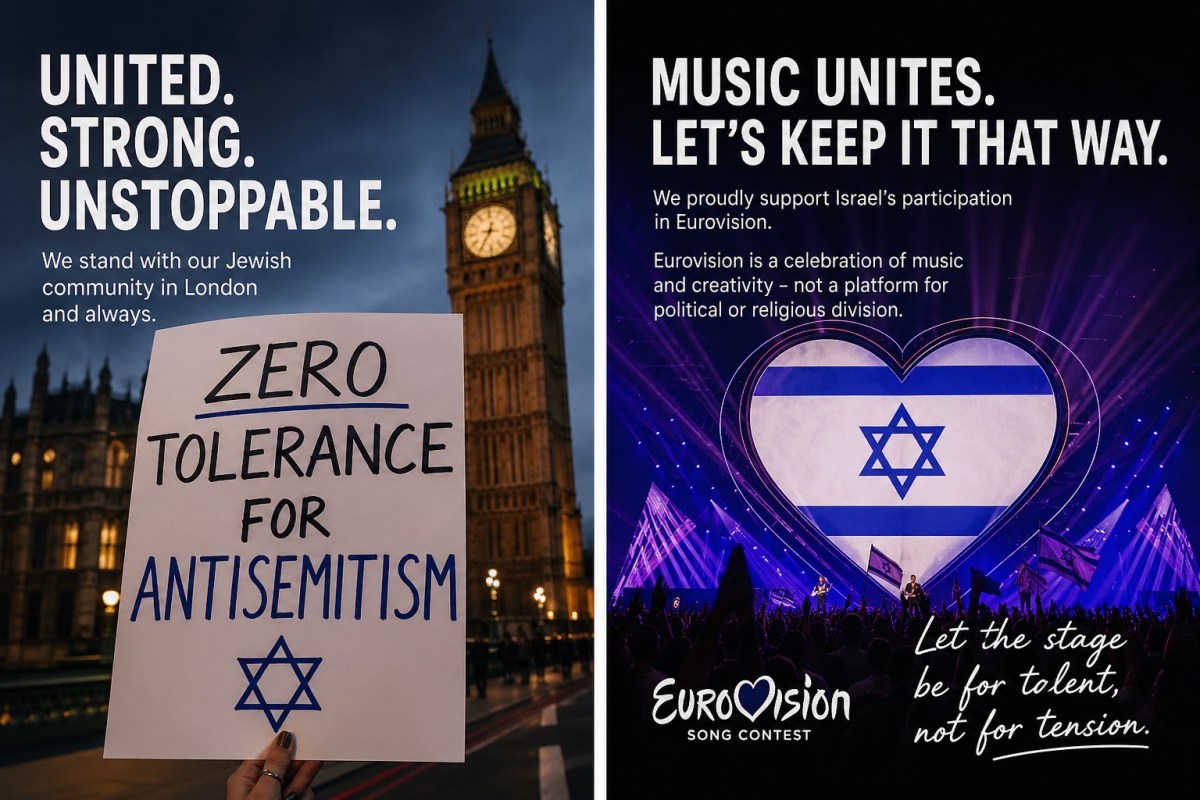
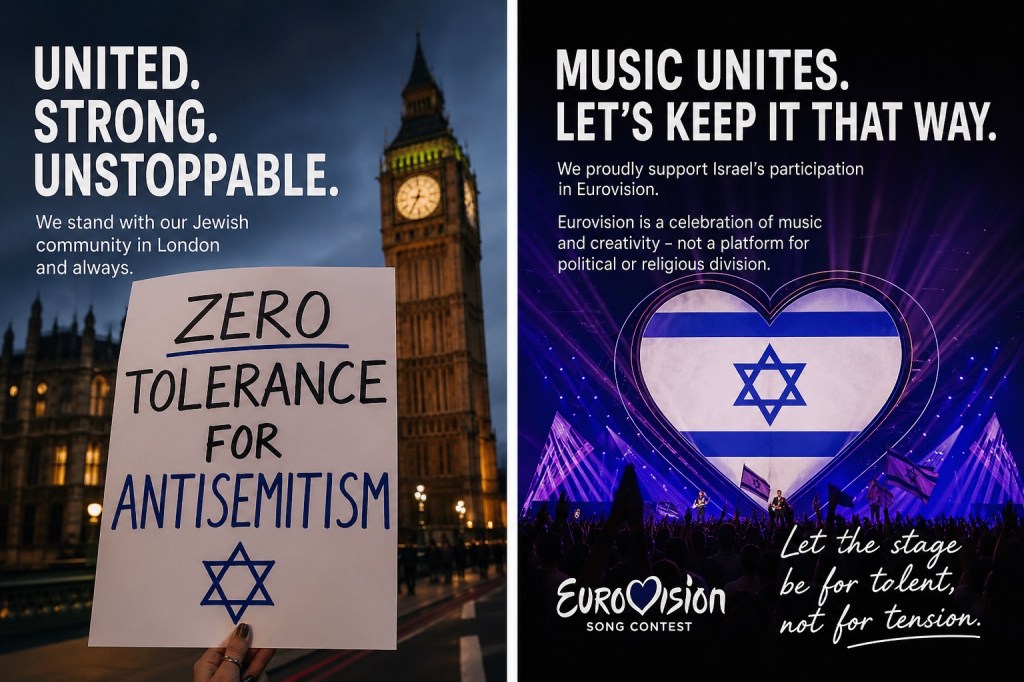
Let’s be absolutely clear: standing against antisemitism is not a political statement, it’s a human one. Nobody should feel unsafe because of their faith, their heritage, or who they are. And in the same breath, we need to start drawing a line when it comes to how we allow global tensions to spill into spaces that are meant to unite us. Take the Eurovision Song Contest—a celebration of music, creativity, and shared culture. It is not, and should never become, a battleground for political or religious division. At 2Shades, we proudly support Israel’s participation in Eurovision, just as we support every artist who takes to that stage to share their talent. Music is meant to bring people together, not tear them apart.

The arts, in all their forms, should be a sanctuary—a place where differences are not just accepted but celebrated. Actors, performers, musicians—whatever their background or belief—should feel safe to express themselves without fear of hostility or intimidation. The idea that someone could be targeted or made to feel unsafe simply for their identity is not only unacceptable, it’s a betrayal of everything the creative world stands for. From the West End to grassroots venues, the message must be consistent: there is no room for hate here.

At 2Shades, we’ve always championed voices, celebrated difference, and stood firmly on the side of inclusion—and that doesn’t waver when times get tough. Terror, in any form, is designed to divide, to instil fear, and to make people retreat into silence. But silence is not an option. We stand with our Jewish community—today and always—with solidarity, compassion, and a refusal to let hate win. Because if we allow fear to dictate how we treat one another, then we’ve already lost something far more valuable than we realise.

This is about unity. It’s about dignity. And it’s about remembering that London—our London—is strongest when it stands together, not apart.

Noam Bettan, Israel’s 2026 Eurovision contestant, poses for a photo in Neve Ilan, near Jerusalem, January 21, 2026. (Yael Abas Guisky/Flash90)

Categories
Columns Lifestyle People

There is no room for any antisemitic behaviour in any civilised country .


There is no room for antisemitic behaviour of any kind in any civilised country. Antisemitism is not merely a matter of offensive language or misguided opinion; it is a corrosive force that undermines the very foundations of a democratic and inclusive society. Wherever it appears, it erodes trust, fuels division, and threatens the safety and dignity of Jewish people, who have faced centuries of persecution rooted in prejudice and misinformation.

A civilised nation is defined not only by its laws and institutions, but by its moral compass. It is measured by how it protects its minorities, upholds human rights, and challenges hatred in all its forms. Antisemitism stands in direct opposition to these values. Whether expressed through casual remarks, harmful stereotypes, conspiracy theories, vandalism, intimidation, or violence, it must be recognised for what it is: racism, plain and simple.

History has shown us the devastating consequences of allowing antisemitic attitudes to go unchallenged. When hatred is normalised or dismissed as trivial, it creates fertile ground for discrimination and, ultimately, atrocity. The lessons of the past place a responsibility on all of us—individuals, communities, institutions, and governments alike—to remain vigilant. Silence in the face of antisemitism is not neutrality; it is complicity.

In recent years, antisemitism has taken on new and often insidious forms, spreading rapidly through online platforms and social media. Disinformation, coded language, and dog-whistle rhetoric can make hatred appear respectable or “debate-worthy,” when in fact it is neither. Free speech is a cornerstone of democratic societies, but it does not extend to the promotion of hatred or the dehumanisation of others. Robust debate must never be used as a shield for prejudice.

Education plays a crucial role in combating antisemitism. Teaching accurate history, encouraging critical thinking, and fostering empathy are essential tools in dismantling ignorance and fear. Equally important is leadership—political, cultural, and civic—that is willing to speak out clearly and unequivocally. There can be no ambiguity when it comes to condemning antisemitism; half-measures only embolden those who seek to divide.

Ultimately, standing against antisemitism is not solely about defending Jewish communities, though that is vital. It is about defending the principles of equality, justice, and human dignity for everyone. A society that tolerates hatred against one group will, inevitably, find that hatred spreading to others. Civilisation demands better. It demands courage, clarity, and compassion—and an unwavering refusal to allow antisemitism, in any form, to take root.

https://cst.org.uk/antisemitism/report-antisemitism?fbclid=IwY2xjawOse5hleHRuA2FlbQIxMABicmlkETBjV2oxMGtkNmFCMGVaUXhYc3J0YwZhcHBfaWQQMjIyMDM5MTc4ODIwMDg5MgABHm5dvAXnMRI9LX6w-wZlK308i23FOhXl2q2CadWlMYXPHj70rbWBipllFC4T_aem_fQAV-FAQ9lnBEn37LBhCZg#:~:text=Report%20Antisemitism%20–%20CST%20–%20Protecting%20Our,24%2Dhr

Categories
Columns Lifestyle People Uncategorized

Why Israel Should Be Included in the Eurovision Song Contest

Keep Israel in the Eurovision contest .


Steven’s Viewz

We hear it time and time again: “The Eurovision Song Contest is not political.” And while we all know that the voting patterns can sometimes be… entertaining, to say the least, at its heart Eurovision remains a celebration of music, creativity, and community. It has long been affectionately referred to as the “Gay New Year,” bringing joy, glamour, and unapologetic self-expression to millions around the world. For many viewers, it is more than a show — it is a moment of unity.

The spirit of Eurovision has always been about artists coming together to share their talent, culture, and stories. It was never intended to be a platform for political punishment, nor a place where artists are excluded because of the actions of their governments.

When I interviewed Peter Tatchell this year, he said something that resonated deeply with me: the way forward for the LGBTQ+ community is to keep being a shining beacon across all platforms. I couldn’t agree more. Visibility, inclusion, and dialogue are how progress is made — not through shutting doors.

Madonna in Israel at the Eurovision Song Contest .

I don’t live in some insulated “gay bubble,” nor would I want to. Real change happens when we remain open to conversation, even with those whose governments or policies we may profoundly disagree with. Excluding countries from Eurovision is not a solution; it brings nothing constructive to the table. In fact, it risks undermining the very principles Eurovision claims to stand for: openness, inclusivity, and the celebration of cultural diversity.

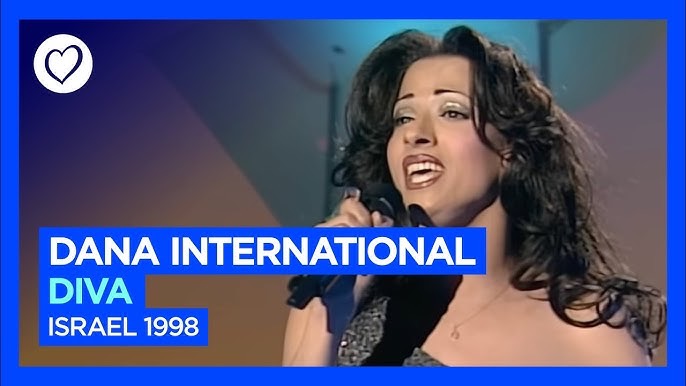
Israel, in particular, has a long and meaningful relationship with the contest. It is a country where LGBTQ+ people are welcomed, recognised, and celebrated — a fact often overlooked in broader political debates. Eurovision itself has benefited enormously from Israel’s participation. It gave us Dana International, the first (known) transgender winner, whose victory in 1998 was a landmark moment for queer visibility worldwide. Beyond Dana, Israel has consistently showcased diverse performers and daring artistic vision, enriching the contest’s legacy.

Rather than silencing or excluding, Eurovision should remain a platform where artists from all backgrounds, beliefs, and nations can share their voice. Music has always had the power to connect people beyond politics, beyond borders, and beyond conflict. Using your voice to send a message is a beautiful and powerful thing — but using silence as a form of punishment rarely fosters understanding or change.

When we welcome artists from countries whose governments we may disagree with, we create the possibility for conversation, empathy, and cultural exchange. When we block them, we lose that opportunity. Eurovision should not become a battleground of boycotts and bans; it should remain what it was created to be: a stage that celebrates unity in diversity.

Let’s not allow hatred, division, or political pressure to turn Eurovision into something it was never meant to be. Let’s welcome all who bring music to the stage — and keep the contest a place where voices are heard, not silenced.

END