Categories
Columns Culture People Poetry

Dear Oscar 2Shades thinks you are the next big thing .

Oscar William Clarke one to look out for

Hi Oscar,
We at 2Shades think you are art. We love your openness about living with addiction, and we would love to know more.

Thank you so much—that’s a wonderful thing to say. And thank you for having me. It was lovely meeting you at the Routine exhibition recently.

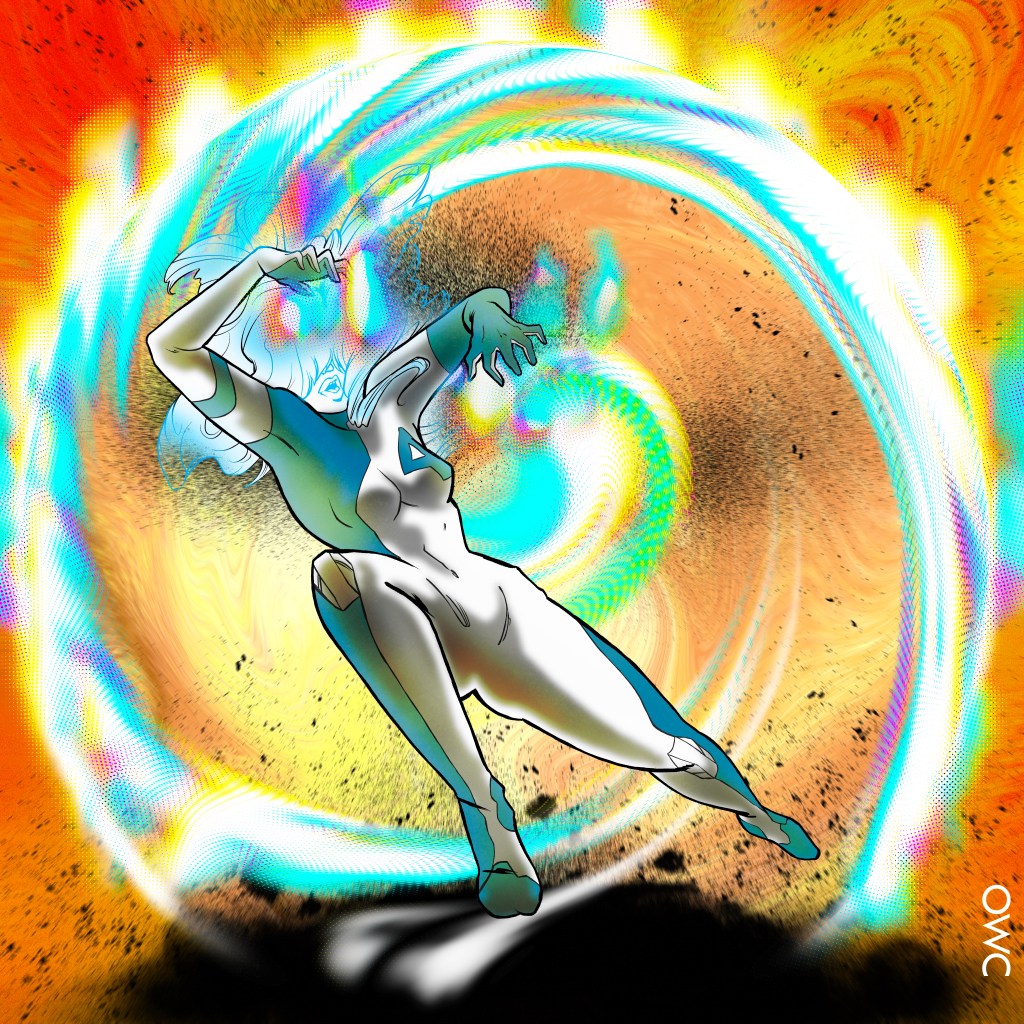
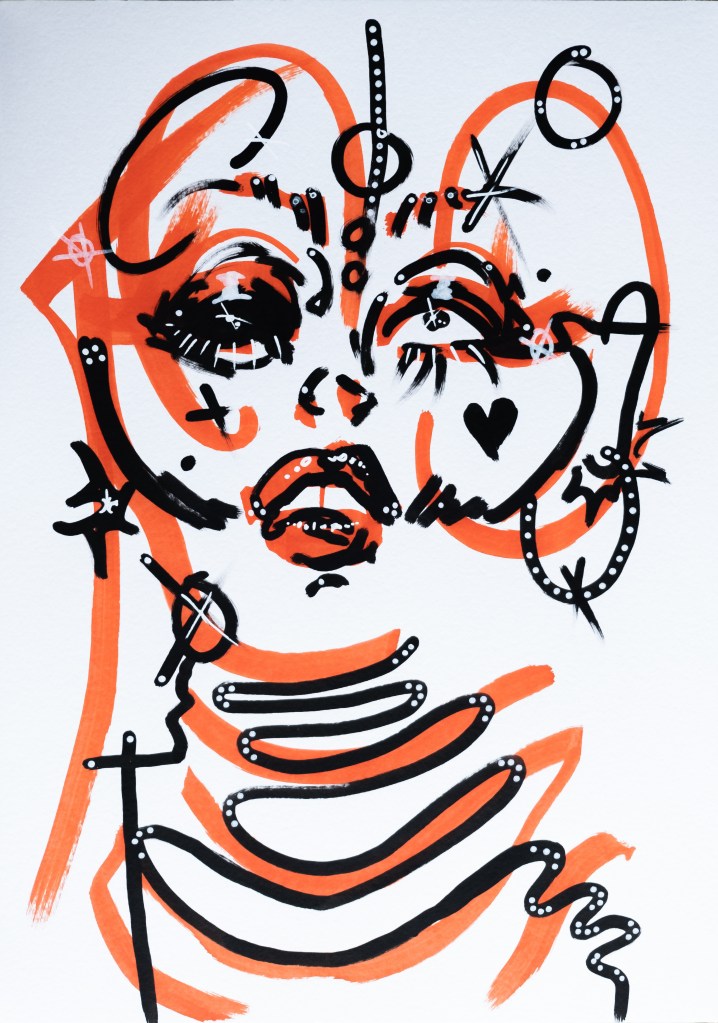
I’m Oscar, an artist based in London. I make a lot of different things, but mostly graphic illustrations that revolve around fashion, comic books, or BDSM. I’m a recovering alcoholic and addict. I’ve been sober for a while now, and I’ve been working on both my creative career and rebuilding my life—I’m even back at university. I love bold colours, especially red (my absolute favourite), which features heavily in my work. But sometimes, just simple black-and-white linework can be really rewarding too. You’ll usually find me watching horror movies, rocking out to the Sugababes, drawing some femme fatale in a fabulous outfit—or playing video games, of course.

I’ve been drawing for as long as I can remember. It’s been a way for me to express so much—my sexuality, my adoration of femininity, my experience as a queer person, or just the thrill of an incredible superhero fight scene. Now I’ve had the chance to exhibit and work as an illustrator, which has been amazing. I’m only getting better, so I’m excited to see what the future holds.

What does it feel like to create, for you?

For me, creating is perfect concentration and calm. My head is usually full of thoughts—non-stop—except when I’m drawing or designing. That’s when everything quiets down. I get totally absorbed in the world of the piece, in the details of the colours—or I just disappear into the flow of (deafening) music and let the pen take me somewhere new.

I’ve grown a lot as an artist since getting sober. I had to figure out how to be creative again, because my addiction robbed me of that desire—and the ability. I worried it wouldn’t come back. Part of me thought art was lost to me, or at least the passion for it was.

Thankfully, it came back—but it feels different now. These days, I create with less intention and let my emotions and the pen guide me. Trusting my skills is a big part of that. I’m the best I’ve ever been, and there’s a sense of security in that, because it allows me to just let go. That freedom is why creativity is such a safe space for me.

When you’re an addict, so much of your life is micromanaged. I avoid certain places when I’m too tired or upset because the pull of alcohol or drugs can be dangerous when I’m not stable. I have to constantly protect myself in a world where addiction is everywhere. Being around alcohol and drugs is exhausting—so I make sure I recharge, or I crash.

Creation is free of all the mental admin I have to do every day around addiction. That’s why it’s such a solace. I get to be somewhere else, someone else—feeling, seeing, and doing something else. It’s incredibly freeing.

Can you remember the earliest thing you created artistically?

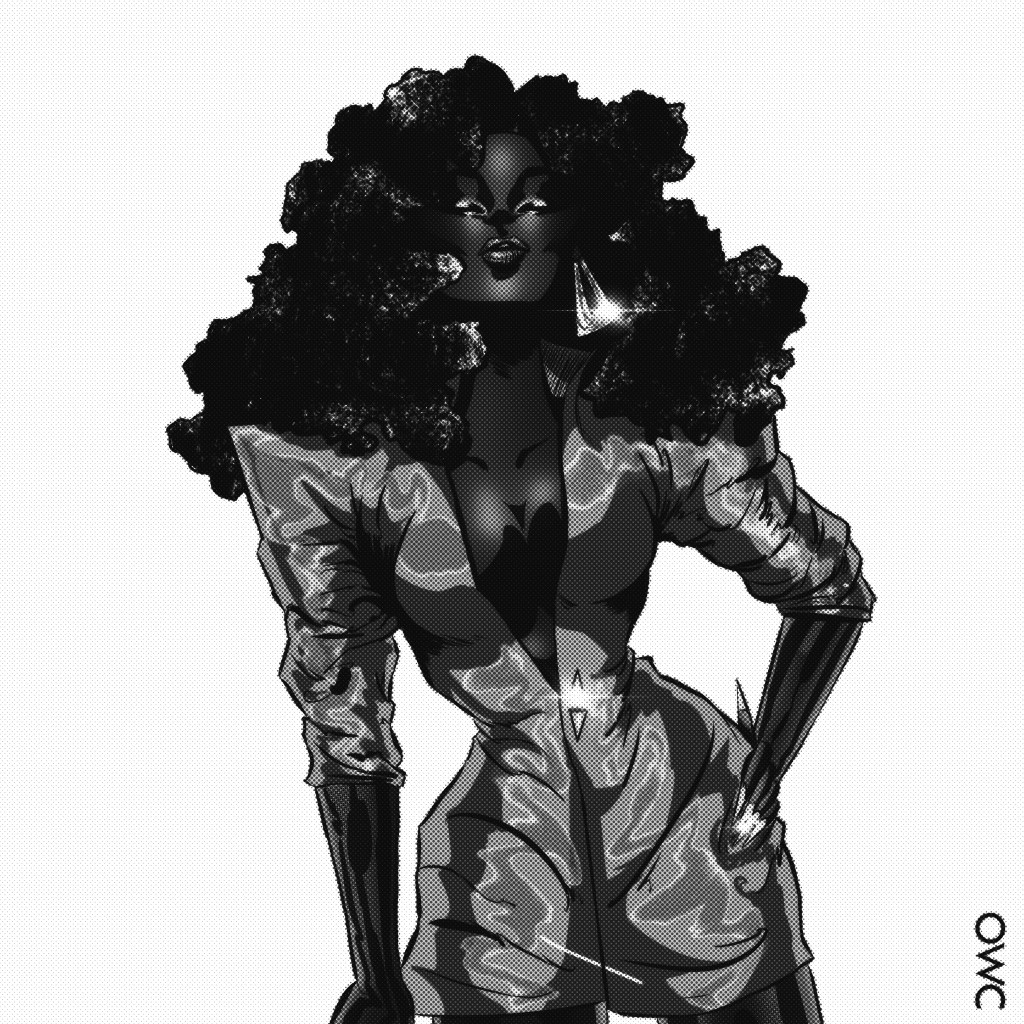
Absolutely. I’ve always loved comic books and still collect them—I’ve got hundreds in my room. They were my gateway into art. I used to print out images of my favourite characters at primary school and try to redraw them as best I could.

Around that time, I also became obsessed with the brides of Dracula—after seeing Van Helsing with Kate Beckinsale. Those brides were everything to a young gay boy from South London. Flowing sleeves that turned into wings? Iconic.

I also drew Storm, Elektra, Catwoman, and Raven from Teen Titans because I grew up watching all those shows, not even realising there were decades of comics about these amazing women I could be reading. I started copying comic pages and poses from books I bought or found online. Comic artists are incredibly underrated—the technical and artistic skill needed is mind-blowing.

Redrawing other artists’ work was how I learned. It’s a great skill to develop early on. Even now, I love watching artists create on YouTube. That’s how I pick up new techniques—watching how someone shades or sketches anatomy, then figuring out how I’d do it. I tell every new artist I meet: understand the process. See how other people use the medium. It’ll change your practice.


What correlation does addiction and art have for you?

Addiction seeps into parts of who I am and, by extension, my art. My obsessive focus on one subject or style until I burn out feels very much like addiction. My love of recurring colours or patterns feels repetitive—like addiction did.

But, honestly, addiction was the opposite of being an artist for me. Toward the end of my using, I just stopped creating. There was nothing left inside to work with—no soul to put into art. Addiction stole that from me. Even though it was my own doing, it still feels like a theft.

That whole “depressed addict artist” stereotype? It wasn’t me. There was no creating going on. I don’t know how people stay functional in addiction. I couldn’t. Everything outside of using and, occasionally, working just faded away.

That said, art can be just as self-indulgent as addiction—just without the destruction. And it can pay! Which is the opposite of addiction, where I only ever lost money. So in that way, it’s gratifying.


Do you have any stand-out influences in your creative journey?

Yes!
René Gruau is my favourite fashion illustrator. The first time I saw his work, I was blown away by his minimalism—but also by the drama and flair. His use of red (swoon) and sheer elegance… phenomenal.

Simone Bianchi is a comic book artist I’ve loved for over a decade. He paints many of his pieces, which makes them feel unique—especially in comics. His grasp of anatomy and colour is chef’s kiss. He drew Storm better than anyone at Marvel. Big hair, boots, cape—flawless.

Tim Sale is another one. Famous for Batman: The Long Halloween and one of my favourites, Catwoman: When in Rome. His work feels like a fashion illustrator started doing comics. Perfect intersection of the things I love. He passed recently, which devastated me. The industry lost a legend.

Music is also a huge influence. I have a very visual connection to it—like a movie trailer in my head. I never draw without music. It’s the emotional gateway to my creative brain. I often play the same song on repeat for hours when I’m trying to stay in a feeling.

Nowadays, my inspiration is more internal. I rarely use references unless I’m doing commissioned work. But I still like life drawing sometimes—to keep my skills sharp.


How did you control the battle with addiction?

I wouldn’t call it “control,” because there’s not much you can control. For me, it all comes down to one non-negotiable truth: Sobriety or death. If I use again, I know I’ll die. That’s not melodramatic—it’s just the reality. So there is no choice. I’ve worked too hard to rebuild my life and relationships. I’m not throwing that away.

I take my peace seriously. Work is work, but my life means more. If I don’t want to go out, I don’t. If I need a day to myself, I take it. I fought for my happiness. I’m not sacrificing it for anyone.

AA helped me massively—especially early on. Those people saved my life. But as it’s anonymous and not about promotion, I’ll leave it at that.

Do you remember your darkest moment dealing with addiction?

Yes. Any time I tried to end my life. It happened a few times during my addiction. Thankfully, I wasn’t successful—but I remember that feeling of walking around not wanting to be here. I truly believed the world would be better off without me.

That feeling consumed me for years. The only relief came through explosive, manic episodes that never ended well. I felt hollow, like I had nothing left to offer.

These days, I still have hard moments—days or even weeks of depression—but now I know it’s not forever. That helps. Therapy helps too. Lots of it.


What’s next in your journey?

I just graduated with a first in Graphic Design! So right now, I’m job hunting and creating more art. I’ve been lucky to exhibit a few times and would love to do more of that. I’ve also got some creative projects in the works I can’t talk about yet—but I want to do everything. I didn’t think I’d live past 21, so the fact that I have time now? That feels powerful.

I’d love to put my work on clothing. That would be amazing. But for now, it’s more art, more exhibitions—and staying open to new projects. Commission work has always surprised me in the best ways.


Do you feel people are quick to judge you?

Probably. But it doesn’t bother me.

I’m gay. I live in a world where my community is still criminalised in many countries. Judgment comes with the territory. I have a small circle of people whose opinions matter. Everyone else? Irrelevant.

I love heels, claws, and makeup sometimes. Any queer person will tell you: being visibly queer means being hyper-aware of how you’re perceived. But I’m not hiding any part of myself to appease someone else’s discomfort. That’s a terrible deal.

I’m also quite introverted now. I enjoy my own company. And if someone doesn’t like me? Not my problem. I’m not for everyone—and I don’t want to be. That sounds exhausting.

I’m not unkind. I’ll apologise if I’m wrong. I work hard in therapy so my issues don’t hurt my people. But I also stand by myself. If I’m not sorry, I don’t say it. There’s great power in saying, “I’m not sorry.”

And hey—I draw men being sexually tied up. I expect judgment. But art is made to be disliked as much as it is to be loved. If someone hates my work, great. That’s their job as the audience: to respond. Love or hate—it means it made them feel something. That’s all that matters.


Quick Fire
Sushi or Chinese – Neither
Kiss or Slap – Both
Bowie or Madonna – Madonna
Favourite Place in London – My house
First thing you’d change as mayor for a day – Free dental / Legal protections for trans people that can’t be undone by a moron
https://aa-london.com

Categories
Columns Culture Lifestyle People

ADDICTION

Steven Smith looks at the affect addiction has on us all, how it can be so prolific among the LGBTQ And celebrity community, the often-misguided views people have about those living with addiction, and of course shares his own tale.

November 26th, 2010, the phone rang with news I had been expecting—my lifelong friend Lester Middlehurst, the witty, Machiavellian, and brilliant journalist was dead at 55. He had been in coma for days after a suspected suicide attempt.

I know how I was supposed to feel to the world. But putting down the phone, there was complete numbness followed by anger, and then an overwhelming relief that the man who had formerly been my friend, but had in later years become my tormenter was no longer. No more waking to drunken abusive messages, or being the brunt of his jokes or outburst at parties, and I’d no longer have to apologise to other people for his behaviour towards them.

Lester in his prime

Lester Middlehurst was one of the first openly gay staff members at The Daily Mail. He was legendary. At the coroner’s inquest it turned out he had not killed himself, rather his death certificate said that he died of a hypoxic brain damage attack. Everyone agreed it was his addictive lifestyle that killed him.

Sadness

Lester was one the most addicted people that I have ever met, and he was my friend and I loved him. A month later I must have spent a day crying over him. The sadness was really that he never got help for his addiction, and you could say that my lack of knowledge of it prevented me from helping him…but that would be romanticising a terrible situation.

Back in 2009 I got him to agree to attend the Meadows Clinic in Arizona, but the next day he told me not to be so stupid. In truth, I did not feel strong enough to stand up to him. As my knowledge about addiction has grown, I have become more aware that there was nothing I could have done unless Lester had wanted to do anything about it.

According to the Centre of Addiction, members of the LGBTQ community are at greater risk of substance use and mental health issues compared to those identifying as heterosexual.

Members of the LGBTQ community face chronically high levels of stress, often due to having to suffer from social prejudice and discrimination. Fear, isolation, and depression increase the chances of self-medicating with alcohol and drugs. As a man that has lived a life in big cities, I have witnessed addiction in all classes and types of people. Addiction is a mistress that does not care who she dances with, yet the LGBTQ community are often her favourite partners.

As the self-confessed addict, actor Russell Brand explains that the distinction of any compulsive or addictive behaviour is when it begins to negatively impact on the rest of your life.

Compulsive

So, you might love chocolate so much that you’ll ignore all logical reasoning, “I have to have chocolate…I have to have chocolate…I don’t care what else happens”. If you’re crashing your car because of chocolate, that’s a problem.

According to Wikipedia, addiction is a brain disorder characterised by compulsive engagement in a rewarding stimulation despite adverse consequences.

Of course, addiction is certainly an illness and not a lifestyle choice, and if we are honest, addiction is in all of us in some way or another.

For me, I just can’t not buy a large French baguette, cut a few slices off, and put it back for later. I end up devouring the whole thing. Subsequently, I do not buy French baguettes unless I am feeling poorly. Whether it’s chocolate, coffee, or your favourite tipple, we all have cravings.

Russell Brand

Much as Russell Brand is right, there are so-called functioning addicts who you would not even realise are hooked on their drug of choice, and it can take many years for the effects to begin to show. Often referred to as “high functioning addicts” owing to their having powerful jobs or enough money to effectively hide their addiction from others. This knocks on the head the commonly presented image of an addict being down-and-out or living on the streets. According to the American Psychiatric Association, there is no such thing…they are all just addicts who have created coping mechanisms.

My father, God rest his soul, came home after holding down a high-powered job and drank whisky every day of his life, yet he would be horrified at the idea of being described as an addict. But when he left hospital after lung cancer removal surgery, he sat down and demanded, “Get me a whisky and a cigarette.” On the suggestion that was not a good idea and that he would end up back in hospital, he snapped “Are you threatening me?”

Growing up, I was told that an addict was someone who got up and drank first thing. Drinking after coming home from work and weekends was seen as normal for many in the 60s and through to the 90s. All of our soaps were featured around a pub, making alcohol look like a socially acceptable way of life.

I had a volatile relationship with my dad, but his fight with cancer gave me a better understanding of the nature of his addiction and where it had come from. He had been a talented jazz trumpeter and played with the BBC orchestra, but his nerves had come to the forefront and he started to self-medicate by having a few whiskies before his shows. Eventually, he gave up and started a family, but the drinking did not stop.

Charismatic

My father adored my best pal who also fights  addiction, and is a truly remarkable human being who I was fortunate to love, and my dad did not like many people. The two were like two peas in a pod and talked for ages.

Spending time with my dad before he died made me wonder whether, if he had managed to overcome obvious anxiety and continued playing, perhaps he would have been happier. Of course, back then mental health was seen by many as a weakness and not to be spoken about.

My world has been filled with people who are addicts in one form or another. They are the most charismatic and amazing people and the arts are full of them. In my opinion, they all have one thing in common—they can snap and become almost frightening at the drop of a hat, and then suddenly they are wonderful and make you feel like you mean the world when they are OK. Sadly, during my childhood there was more of the former with my dad. Though I knew in the end that he loved me.

There are so many people living with addiction, anxiety, and mental health issues who are in denial. Even with all the help groups and open discussions there seems to be a quite a bit of stigma attached to it still.

Dr Pam Spurr, a popular self-help expert and radio television personality, says she often encounters people who are in denial about their issues that are the source of their addiction problems. They say things like “I just have a little problem with confidence” which ignores the fact that they drink excessively to help make them feel more confident. Or they say, “I only drink after work to take the edge off.” But when they count up the units, they are far in excess of government guidelines. It’s at times like these that I encourage them to think honestly about their drinking (or drug taking) and consider expert advice.

https://drpam.co.uk

Many addicts get clean either by joining the 12-step programme, by checking into rehab, or by seeking counselling. The journey of recovery can be different and what works for one person might not work for another person. It is important to point out that as much as the newspapers show pictures of celebrities dashing off to glamorous-looking rehabs, getting into a state-run rehab in the UK can be very difficult for mere mortals.

While helping a friend who was using OxyContin (a pain killer) and had got into a mess from ordering online and then become addicted, the general health services did not want to know. Even going through other channels, she was advised that her chances of getting into rehab were slim, although she did come away from it with a strong network of friends around her.

A beautiful girlfriend of mine found her sobriety in a man as her anchor who was also living with addiction. They have both been clean for seven years now.

Living in LA, the 12 steppers (12 step programme) were like the mafia, and rumour had it that all the best movie deals were done at their meetings and also that many there did not have addiction issues and instead just wanted to pitch ideas.

There is no doubt that the 12-step programme helps many, and even if the meetings can become the new addiction it’s a healthy one.

I agree with Doctor Pam that it is amazing how much of a lack of understanding there is about addiction.

Cake

My gorgeous bubbly friend Monica is originally from California. She is a super bright academic having gone to Yale, lectured all over the world, and she also ran a school for a while.

Yet three years ago she decided to open an up-market catering company as her award-winning chef sister is a goddess in the business. People actually beg for invites to try her canapés.

Lunch with Monica is always fun—it starts off with “Darling shall we share a cake after?” Despite being gorgeous, she is always on some kind of diet. Her little addiction would be cake.

Like one or two other intellectuals I have met with qualifications coming out of every orifice, their life skills sometimes leave me speechless. Despite having a gay brother, she once commented on a photo shoot involving five men I had directed “Is the man with his foot up against the wall a sign he is gay?” I replied “No darling, there are no secret signs; it’s a James Dean inspired clothing shoot.” She just smiled and continued eating.

Today, however, she was on the warpath. She was catering for a big party we had worked on together to get celebrities at. One of the celebs had behaved inappropriately to some of the other guests and to a couple of waitresses.

She was not amused when I laughed, “Well darling, at least he did not get his cock out and try and pee in the champagne fountain like at my other friend’s launch. How that did not end up in the papers is beyond me.” I got the school ma’am look.

He was living with addiction – not surprising considering his childhood trauma and the abuse he lived with. He really should not have been drinking. I am not excusing him, but it’s not the end of the world that I did not invite him to the next few. I said that I’d have a word. Her eyes got wider, and she seemed shocked that I had empathy with the celebrity at all. She wanted him banned for life.

Taboo

As much as I have some reservations about the 12-step programme, saying you’re sorry to those you may have hurt is not easy to do, but it sometimes isn’t enough. I started talking about addiction, and a few minutes in it was clear that it was going nowhere, even though I was sharing this with someone highly intelligent.

Addiction remains a taboo subject. There are so many people in denial and as much as the newspapers are full of celebrity headlines about them being addicted, most of us don’t want to talk about it or feel labelled by it.

A year ago my phone rang—it was a friend who had come out of family day at a rehab centre that her daughter was attending. She was fuming that they suggested that it may run in the family, “They had better not be blaming this on me. I have no addiction.” She was not amused when I laughed “It’s not about you and I will remind you of that next time you refuse to come home from the bar or spend two weeks obsessing about something.”

Outside those who are counsellors, therapists, and those who talk openly about their addiction and some of their loved ones, I have found very few people who understand those living with addiction.

A very wise woman, author, presenter, and journalist, Jane Moore was one person who seemed to understand it. Lester and Jane were great friends and the two together were hysterical. Yet Lester had gone on a tirade about her and I was mortified since she was a true loyal friend to him, and he was starting to run out of friends due to his behaviour.

Lester Middlehurst and Jane Moore

While ringing her and offering full apologies asking her not to fall out with him, she calmly said, “I could never be offended by Lester. He is hurting too much, but he’s lucky to have a friend in you.”

At the time I just thought, but I wish if I had taken those words more to heart I might not have taken his behaviour personally and got as hurt as I did in the end. It helped later in life as I saw the pain addiction brings too.

The LGBTQ community have learnt to talk more as we have needed to be heard to survive. Most surveys say that a larger proportion of those identifying drug and alcohol use as a coping mechanism are LGBTQ, but I beg to differ.

I have sat in many restaurants and bars in London watching the city boys and their entourage go back and forth to the toilets, passing each other along the way. I am pretty sure they are not the kind found in the survey.

Addiction is a worldwide human crisis according to the World Drug Report. Unless we start talking about it, spotting the signs at an early age, and treating it as an illness, many will die with all the new and powerful drugs flooding the market. Whole towns have been wiped out in the US due to drug addiction.

Chemsex is the consumption of drugs to facilitate sexual activity. Both terms refer to a subculture of recreational drug users who engage in high-risk sexual activities under the influence of drugs within groups. Chemsex parties are said to be prolific on the London gay scene, but that is a different story. Not wanting to be righteous, I have no experience of it or want to engage in it. Recent reports in the gay press say chemsex parties are held across UK, but there is a correlation between addiction and sex shame.

The perfect storm

Sadly no longer with us David Stewart of 56 Dean Street, an award-winning HIV and sexual health clinic in the heart of London, explains that this trend is driven by a convergence of factors: “Vulnerable gay men with issues around sex, new drugs that tapped into that problem and changing technology. What they call the perfect storm.”

There was enough of a problem for the government to lay out guidelines in 2017.

Actress Danielle Westbrook, who I have interviewed many a time, put it simply to me, “Look Steve, you get ten people at a party and they all try coke for the first time. Four never try it again, four have it once in a blue moon, and two poor things are addicted six months later.”

The answer would be to never take the risk, but human nature is never that simple.

My friend Lester will never come back but it led me to have so much more of an understanding of addiction and how to protect myself around addiction. Many of the world’s  beautiful people are soldiers fighting addiction every day of their lives.

Relevant links

For the whole story on Lester Middlehurst see  It Shouldn’t Happen To A Hairdresse

http://www.thecabinchiangmai.com

Dean Street is in Soho to help with all types of issues from chemsex, HIV, sexual health, and counselling.

http://dean.st/chemsex-support/

Comments