
An evening with Sea Shepherd that changed the way I look at one of the ocean’s most extraordinary creatures.
By Steven Smith
When one of my dearest friends Marieanne Nanson announced a few years ago that she was becoming vegan, naturally, we were devastated.
There were tears, expressions of disbelief and the inevitable question: was this simply a phase? Was it something we had done At one point, I even considered whether a little conversion therapy might bring her back to her senses.
Her son, however, was rather less sympathetic.
“Pay no attention,” he remarked. “It’s just another excuse for her to be even more difficult in restaurants.”
Reflecting on some of our previous dining experiences, I had to admit he had a point.
Of course, I jest. Being a pescatarian myself, I’ve always been perfectly comfortable visiting vegan cafés, restaurants and bars. In fact, I’ve enjoyed some truly outstanding plant-based food over the years. I even attended the launch of the Vegan Women’s Club, founded by my gorgeous friend Victoria Featherstone Pearce.
But I have never felt particularly inclined to abandon fish altogether. After all, surely a little seafood couldn’t be doing that much harm?
Well, as it turns out, I may have been rather naïve.
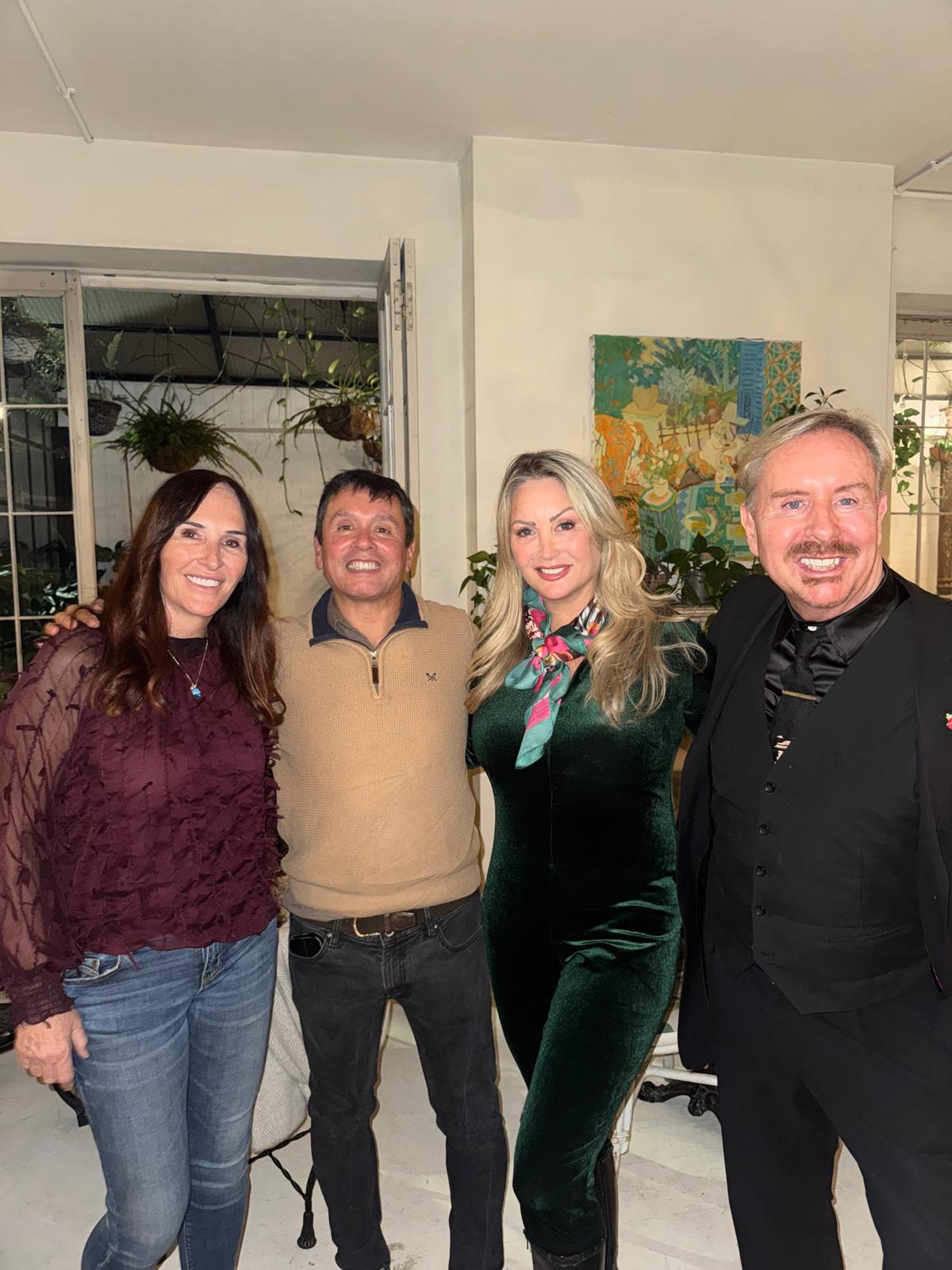
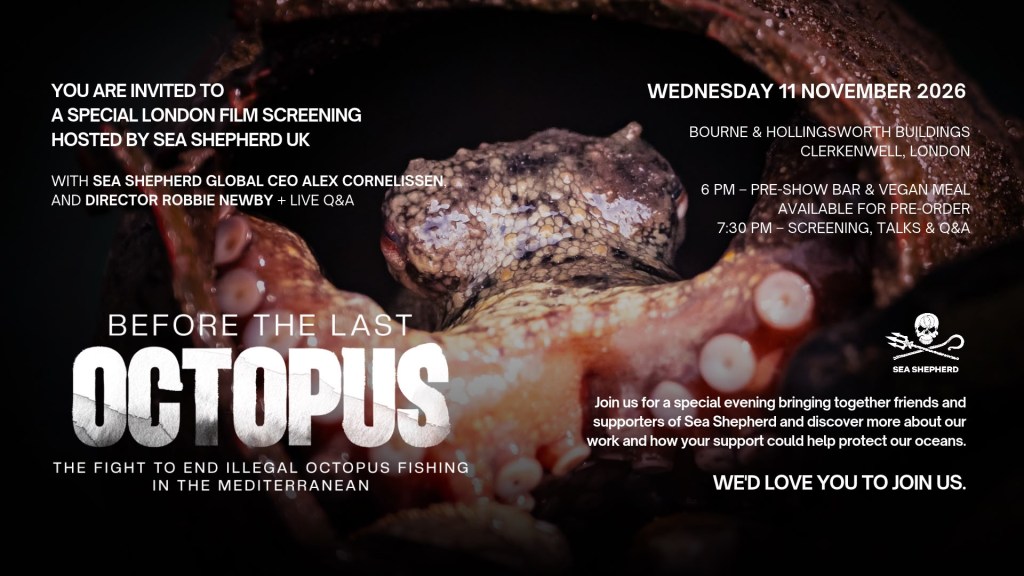
On Wednesday evening, 11 November, I joined my dear friend Marieanne Nanson , Dr Anna Kennedy OBE and Victoria Featherstone Pearce for a special London screening of Before the Last Octopus, a documentary presented by the extraordinary marine conservation organisation Sea Shepherd.
The event, held at Bourne & Hollingsworth Buildings in Clerkenwell, began with vegan food before the screening, followed by talks and a question-and-answer session featuring Sea Shepherd Global CEO Captain Alex Cornelissen and the film’s director, Robbie Newby.
I arrived expecting an interesting evening, perhaps a few uncomfortable truths and certainly something worthwhile to write about.
What I hadn’t anticipated was leaving with an entirely different attitude towards a creature I had already been aware how intelligent an octopus is
Let’s face it, who hasn’t sat in a beautiful Greek taverna or beside a harbour in Spain, enjoying a glass of wine while a waiter presents a plate of grilled octopus?
It’s all part of that delicious holiday experience. Sunshine, sea air and the romance of Mediterranean living.
But behind that picture-postcard scene lies a reality that many holidaymakers, myself included, rarely stop to consider.
And that is precisely what Before the Last Octopus forces us to confront.
THE INTELLIGENCE BENEATH THE WAVES
Octopuses are astonishing creatures.
With eight remarkable arms, the ability to camouflage themselves almost instantly and an intelligence that continues to fascinate scientists, they are among the most extraordinary animals inhabiting our oceans.
They can solve puzzles, open containers, navigate complicated environments and demonstrate impressive problem-solving abilities.
They are curious, adaptable and, in their own mysterious way, individual.
Unlike us, much of their nervous system is distributed throughout their arms, allowing them to explore and respond to their surroundings in ways that seem almost unimaginable.
Yet we continue to treat these extraordinary creatures as nothing more than another item on a restaurant menu.
The documentary tells the story of Sea Shepherd’s mission to confront illegal octopus fishing in the Mediterranean, particularly in the waters surrounding northern Greece.
And some of the figures are absolutely staggering.
In 2022, Sea Shepherd removed 7,672 illegal traps from a protected marine area in Tuscany, Italy. With trapping pressure reduced, the organisation reported encouraging signs that octopus populations were beginning to recover.
The campaign subsequently moved to Greece, where the scale of the problem became even more alarming.
In 2024, crews recovered more than 6,500 traps and approximately 32 miles of rope in just three weeks, freeing over 570 octopuses.
The following year, the operation expanded dramatically. More than 34,500 traps and 179 miles of rope were removed from the Thracian Sea, with over 1,500 octopuses released.
Sea Shepherd’s published campaign figures for Greece record at least 51,946 illegal traps removed and 2,894 octopuses released since 2024.
Just consider those numbers for a moment.
Thousands of living creatures caught in underwater traps, often with little hope of escape, while abandoned fishing equipment continues to threaten marine life long after it has been discarded.
THE PEOPLE FIGHTING BACK
What makes Sea Shepherd’s work particularly compelling is that these are not simply campaigners standing on the sidelines demanding change.
They are out on the water doing something about it.
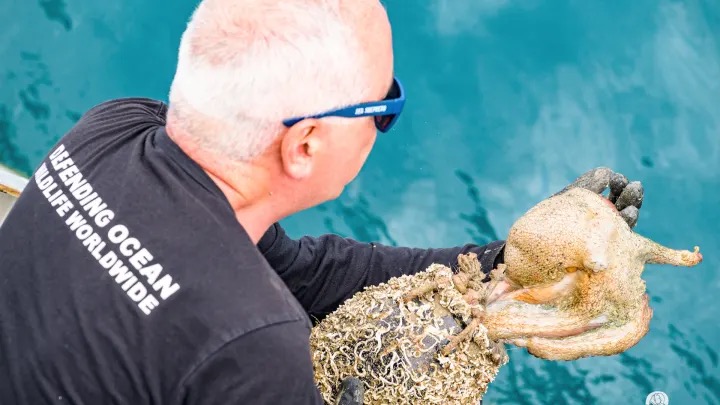
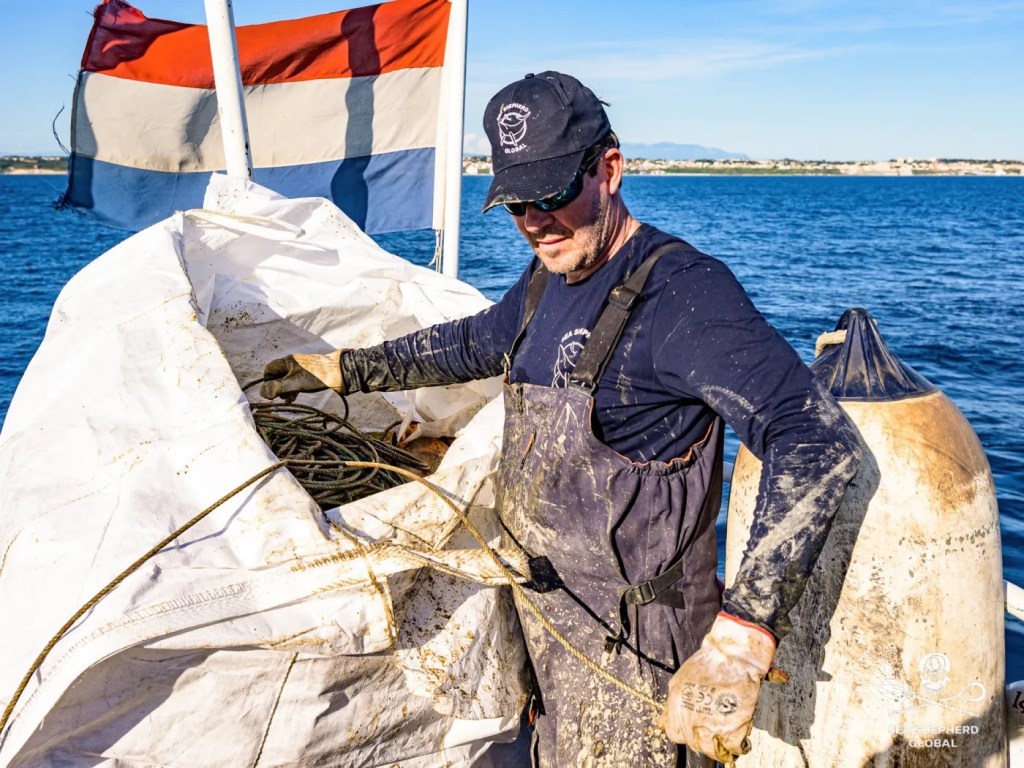
Working alongside Greek authorities, marine specialists and the Coastguard, their crews spend exhausting days locating and recovering illegal fishing equipment.
Every trap must be hauled from the seabed, inspected and cleared. Every living creature that can be saved is returned to the water.
The work is physically demanding, painstaking and far from glamorous.
But it matters.
In Greek waters, trap fishing is prohibited from July through September. Sea Shepherd’s operation focuses on removing traps deployed illegally during this period, protecting marine life while supporting enforcement.
There is also the dreadful problem of abandoned fishing gear, often described as ghost gear, which can continue trapping and killing animals long after its owners have disappeared.
The ocean, unfortunately, cannot speak for itself.
That is why organisations such as Sea Shepherd are so important.
Their crews are giving a voice to creatures whose suffering is largely invisible to those of us enjoying the luxury of life on dry land.
A LESSON I WASN’T EXPECTING
I am not about to announce that I have suddenly become a fully fledged vegan.
My friends would probably faint, and certain restaurants might immediately declare a national day of celebration.
Nor do I believe that everyone who eats fish or seafood should be condemned. Food choices are personal, and responsible fishing supports communities whose livelihoods have depended on the sea for generations.
But surely we can begin to question where our food comes from, how it is obtained and whether our appetite is placing an unacceptable burden on the natural world.
There is an enormous difference between responsible fishing and the industrial-scale exploitation of wildlife.
For me, that is the message at the heart of this documentary.
We cannot continue taking from the oceans without considering what we are leaving behind.
I also came away with renewed admiration for people such as Victoria Featherstone Pearce, Dr Anna Kennedy OBE and the countless campaigners who encourage us to look beyond our own habits and consider the welfare of other living beings.
We may not always agree on everything, but sometimes those passionate voices are precisely the ones we need to hear.
I began the evening laughing about veganism and joking about the complications of dining with friends who refuse to eat animal products.
I ended it thinking about the thousands of extraordinary creatures being rescued from traps beneath the Mediterranean.
And the next time I find myself sitting in a beautiful seaside restaurant, watching the sunlight dance across the water, I know one thing for certain.
There will be no octopus on my plate.
Not because someone has ordered me to stop eating it, or because I have suddenly developed a passion for preaching about food.
But because I have learned something I cannot unlearn.
Once you understand that the creature on your plate was capable of curiosity, intelligence and extraordinary behaviour, it becomes rather more difficult to dismiss it as simply dinner.
Perhaps that is the greatest achievement of Before the Last Octopus.
It doesn’t just ask us to save a species.
It asks us to reconsider our relationship with the natural world.
And sometimes, changing the world begins with something as simple as changing what we choose to eat.
For me, the octopus is no longer a Mediterranean delicacy. It is a remarkable living creature that deserves our respect, our protection and, above all, the chance to remain in the ocean where it belongs.
To learn more about Sea Shepherd’s work protecting octopuses and marine life, visit www.seashepherd.org/octopus/.

