
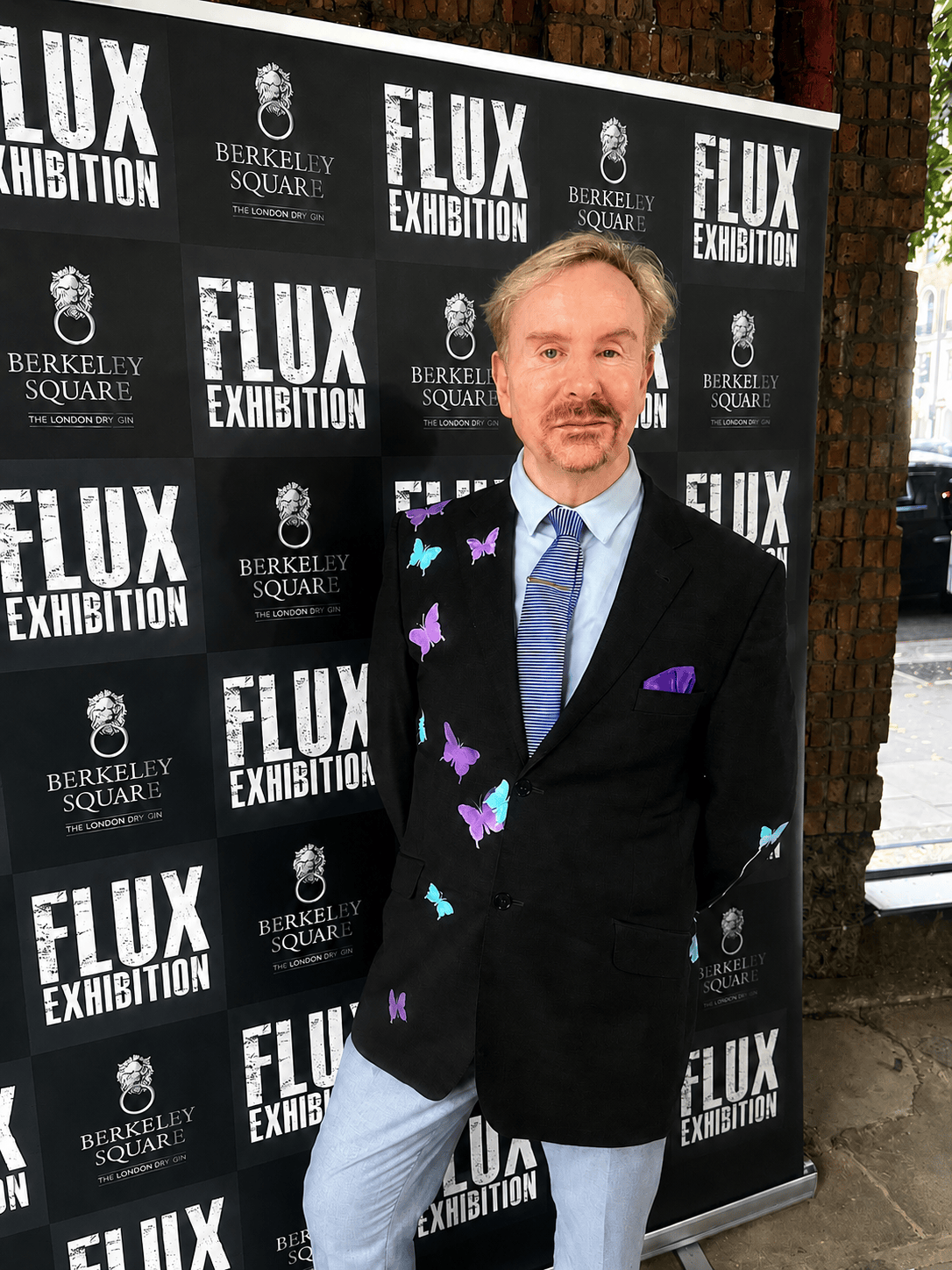
By Steven Smith
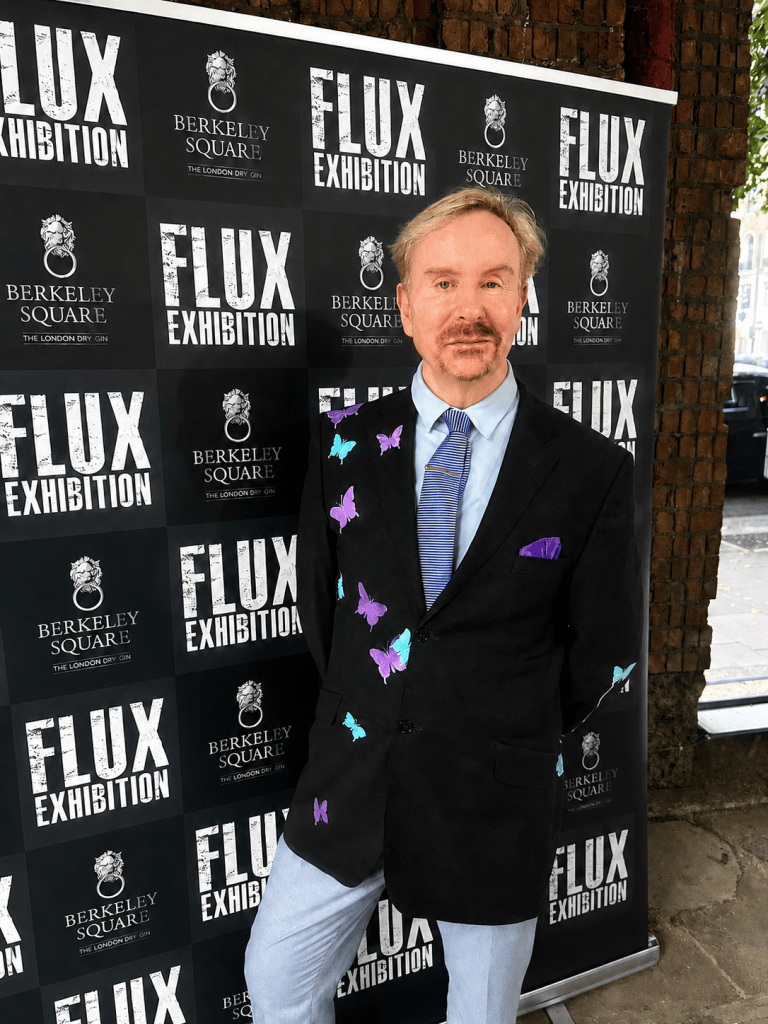
A labyrinth of talent, colour, diversity and a little bit of fabulousness
By Steven Smith
When I walk into an art exhibition, I feel rather like a kid entering a candy shop. I want to see everything, taste everything and discover something I haven’t encountered before. My thirst for something new, exciting and slightly unexpected is endless.
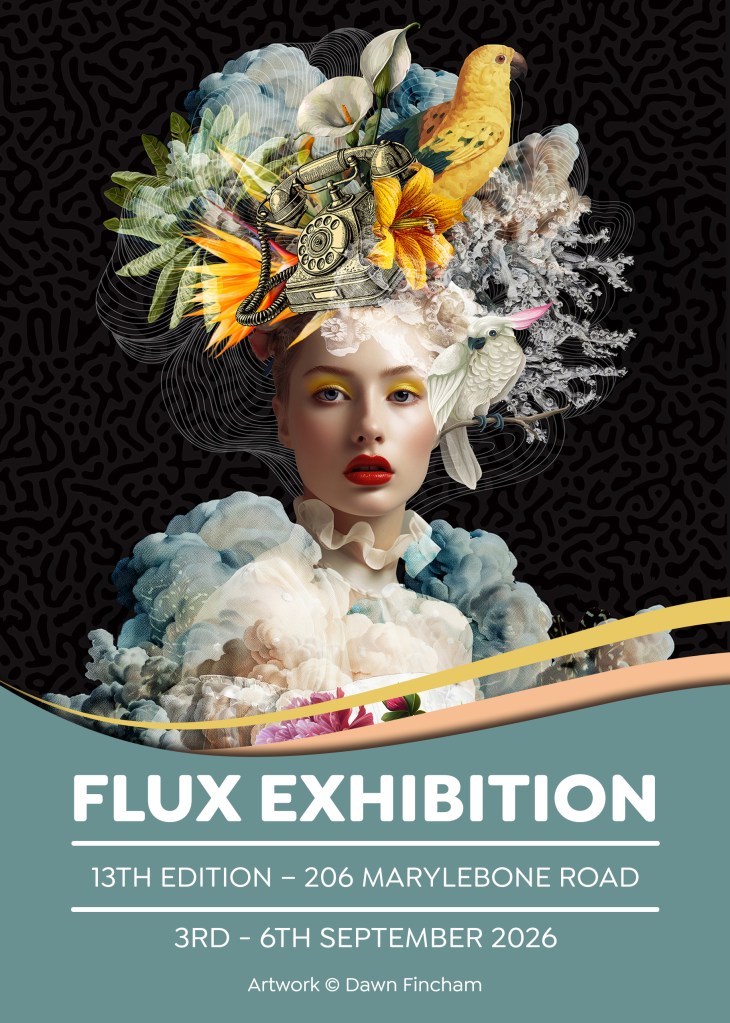
That is perhaps why FLUX and I get along so well.
Lisa Gray’s wonderful magazine, FLUX Review, never disappoints. It is one of those publications that feels luxurious before you have even turned the first page. Mine sits proudly on my coffee table — not tucked away on a bookshelf — because it is as much an object to admire as it is a magazine to read.
And Lisa’s exhibitions have that same quality.
Now in its 13th edition, the FLUX Exhibition has developed into far more than simply another London art show. There is an energy surrounding it. Artists, collectors, performers, personalities and people who simply love creativity come together, and somehow the evening manages to feel glamorous without becoming stuffy.
In fact, FLUX exhibitions have become so renowned that people apparently turn up without an invitation in the hope of getting inside.
Frankly, I can understand why.
This year’s exhibition, staged at 206 Marylebone Road in London, brought together the work of 70 artists, encompassing painters, sculptors and performance artists from a mixture of established and emerging talent.
But statistics don’t really tell the story of FLUX.
You have to walk through it.
There is something around every corner. One moment you are looking at an extraordinary painting; the next you are confronted by sculpture, textiles, portraiture or something you cannot immediately put into a category at all.
That is part of the fun.
From drag queens to the who’s who of the art and social world, the evening glistened with excellence, eccentricity and individuality. There was a sense that everyone was welcome and that creativity, rather than convention, was running the show.
And I love that.
FLUX has always championed diversity, and it doesn’t feel like diversity has simply been added to satisfy a fashionable checklist. Different people, backgrounds, artistic disciplines and perspectives genuinely seem to belong together here.
Of course, in an exhibition containing so many artists, everyone will discover their own favourites.
Everyone is a star, but inevitably some stars shine particularly brightly.
For me, one of those was Gregory John Ford, whose Snow leopard immediately caught my attention.
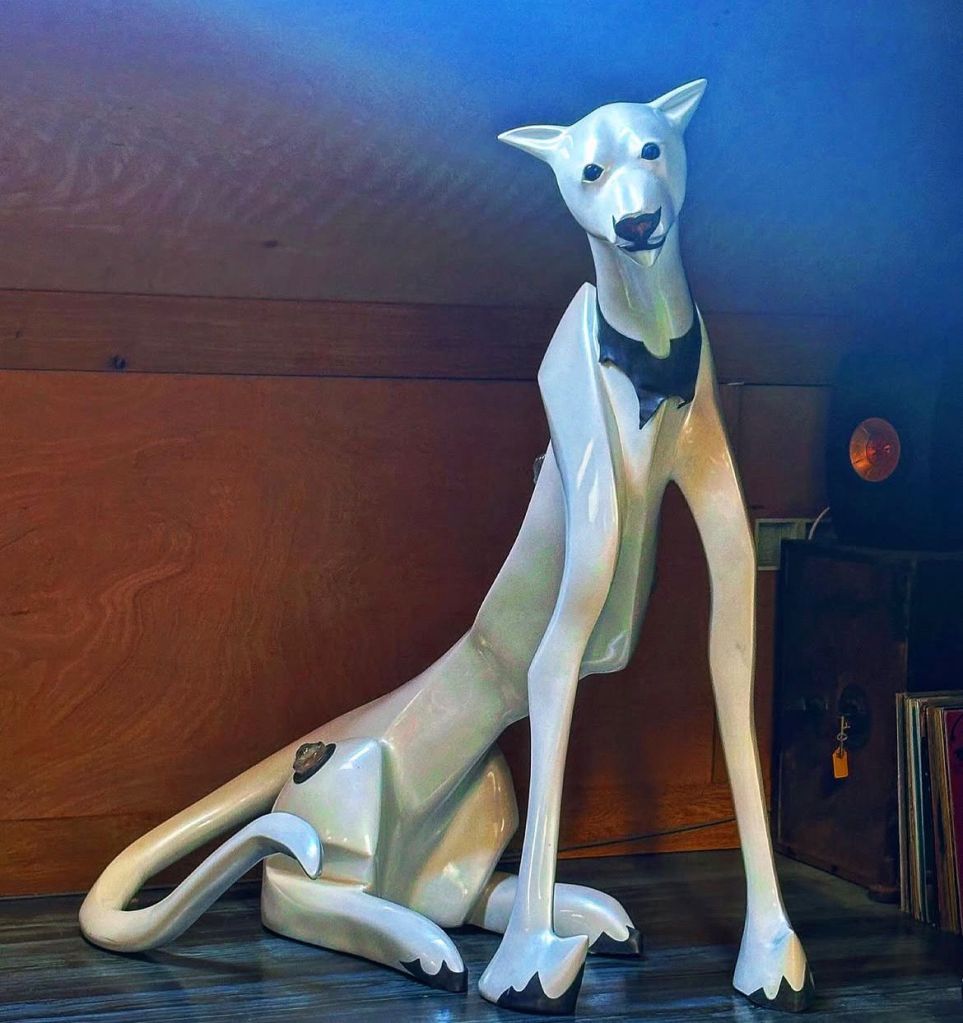
His sculptures made me stop — and that, in an exhibition packed with work competing for your attention, is an achievement in itself.
There is something contemporary, playful and slightly rebellious about his work. It has a new-age feeling without trying too hard to announce itself as “modern art”.
Yes, there are some skeletons in his collection.
Regular readers will know my feelings about skeletons in art. I have never understood the fascination and probably never will. I spend enough time trying to avoid becoming one without wanting one staring at me from the corner of the living room.
But put my skeleton prejudice aside and there is an artist here with genuine imagination. Amongst some brilliant work, his pieces made you stop, look again and want to know more.
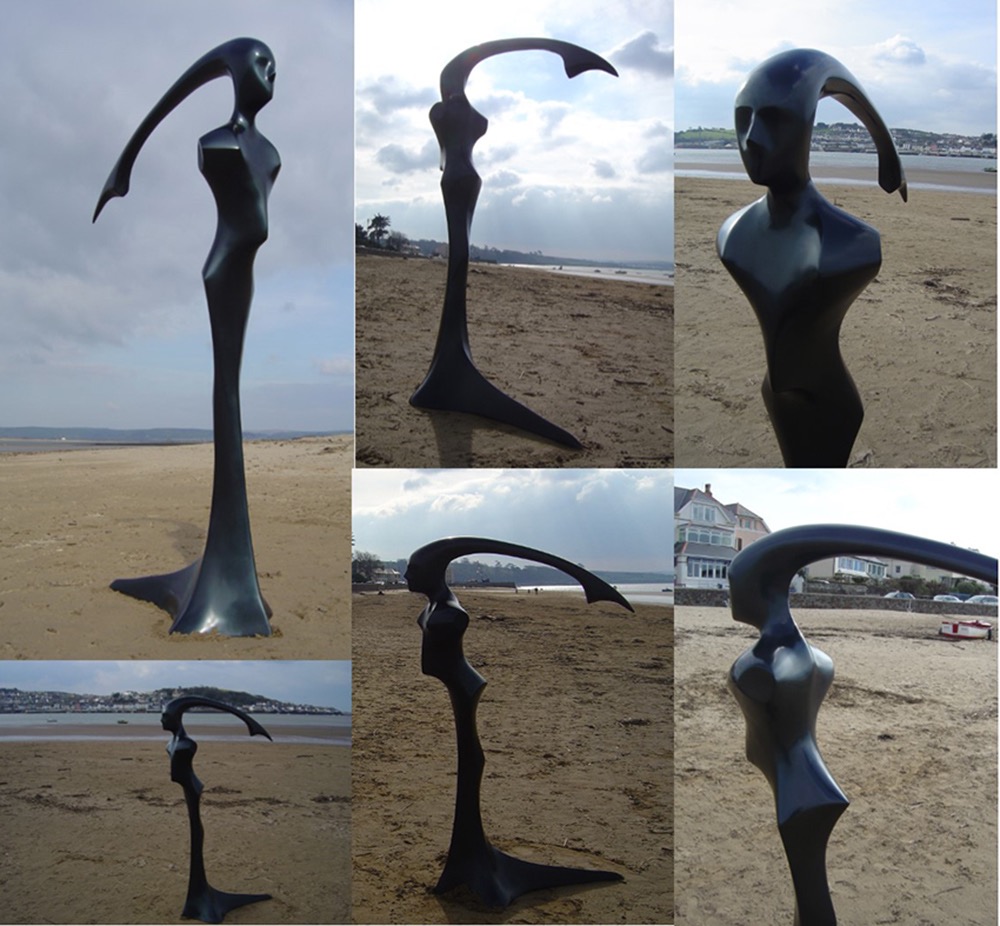
That, surely, is what art is supposed to do.
Then there was René Porter, who positively slays the canvas with her incredible drag portraits.
These are not timid portraits.
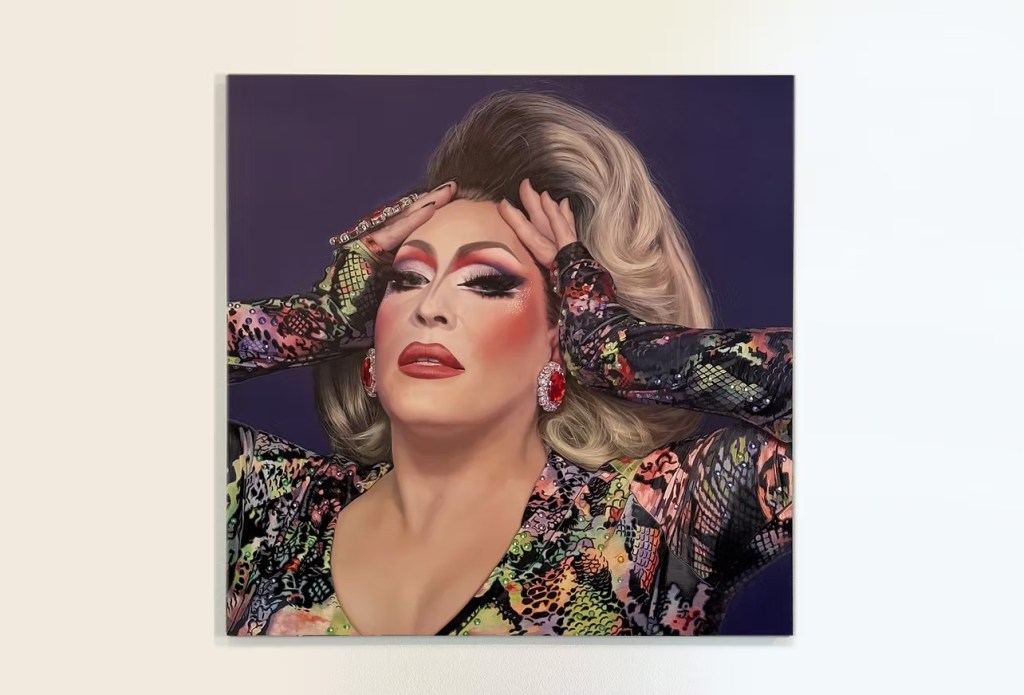
They have glamour, personality, theatricality and attitude. You almost expect the subjects to step out of the canvas, demand a spotlight and ask why the champagne hasn’t arrived yet.
Looking at them made me think what a tragedy it is that the legendary Madame Jojo’s no longer exists. René’s work should be adorning the walls of some fabulous, slightly decadent nightclub where drag queens, performers and assorted creatures of the night hold court until the early hours.
There is something wonderfully celebratory about the portraits. Drag has always been about transformation, exaggeration, humour and, underneath all the glitter, tremendous artistry. René captures that spirit beautifully.
Another artist who made me pause was Tayo Ayelowo, whose textile work felt wonderfully refreshing.
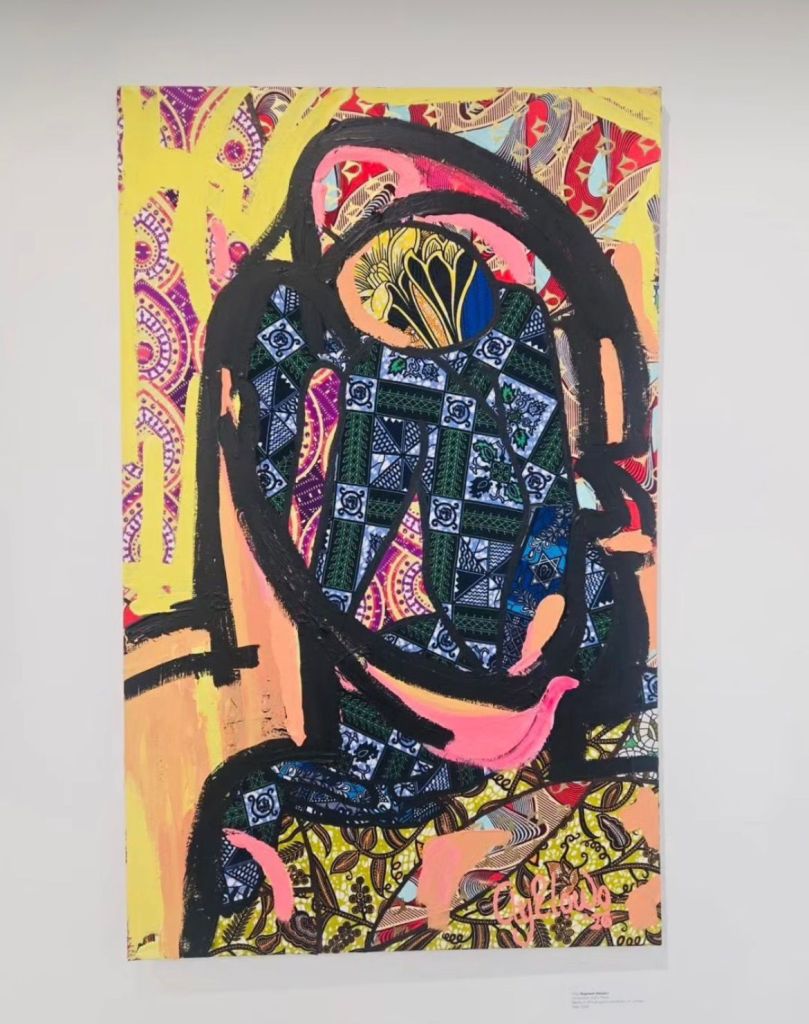
Textiles can sometimes be overlooked when surrounded by traditional painting and sculpture, but here they held their own. There was texture, craftsmanship and a distinctive visual language that felt different from much of the work surrounding it.
And perhaps “different” is the word that kept returning to me throughout the exhibition.
FLUX doesn’t appear interested in presenting rows of artwork that all look as though they have been selected by the same person for the same white living room.
Instead, you find contrast.
The participating artists included Neil Ashton, Annette Aspen, Rina Bakis, John Carpenter, Stuart John Cashmore, Janet Cawthorne, Catarina Diaz, Marcela Olivia Dorantes, Marina Emphietzi, Richard Eveleigh, Bushra Fakhoury, Dawn Fincham, Michael French, Karin Jolly, Gwenda Jones, Greg Kent, Rachel Le Roux, Jamal Masarwa, Caia Matheson, Olga McClelland, Iryna Miro, Holly Nerreter, Gary Nicholls, René Porter, Usha Rajagopal, Nadiia Rom, David Studwell, Wei Keong Tan, Christine Terres and Kathryn Thomas, amongst many others.
It is an extraordinary roll call and illustrates the breadth of talent involved.
Collectors were also given another little incentive: anyone purchasing artwork at the exhibition received a complimentary artwork by Catarina Diaz valued at £200. A rather lovely touch — although, knowing me, I would probably arrive intending to look and leave wondering where on earth I was going to hang everything I had fallen in love with.
But FLUX isn’t only about buying art.
For me, the greatest pleasure is discovery.
We live in an age when so much of what we see is dictated by an algorithm. Our phones decide what we might like based on what we liked yesterday. Social media serves us more of the same, and eventually our visual world can become surprisingly small.
Walking around an exhibition such as FLUX is the antidote to that.
You can turn a corner and be confronted by something you would never have searched for, never expected to like and perhaps cannot even explain why you like.
Suddenly you are having a conversation with an artist whose work you had never seen before.
That is exciting.
Lisa Gray deserves enormous credit for continuing to create a platform where established artists can sit alongside emerging talent and where painting, sculpture, textiles, performance and portraiture can all share the spotlight.
Thirteen exhibitions in, it would be very easy to play safe.
FLUX does the opposite.
It remains colourful, inclusive, occasionally eccentric and gloriously unpredictable.
My mentions of Gregory John Ford, René Porter and Tayo Ayelowo are exactly that — personal shout-outs from a labyrinth of talent. Another visitor could walk the same rooms and come away with three completely different favourites.
And that is precisely the point.
Art should divide opinion. It should make you stop. Occasionally it should make you laugh. Sometimes it should make absolutely no sense to you whatsoever.
And every now and then, something should make you think: I need that on my wall.
The 13th FLUX Exhibition gave us plenty of those moments.
Lisa Gray has once again gathered together an extraordinary collection of people who aren’t frightened of being different, and created an exhibition where individuality is something to celebrate rather than tone down.
Roll on number fourteen.
Steven Smith


