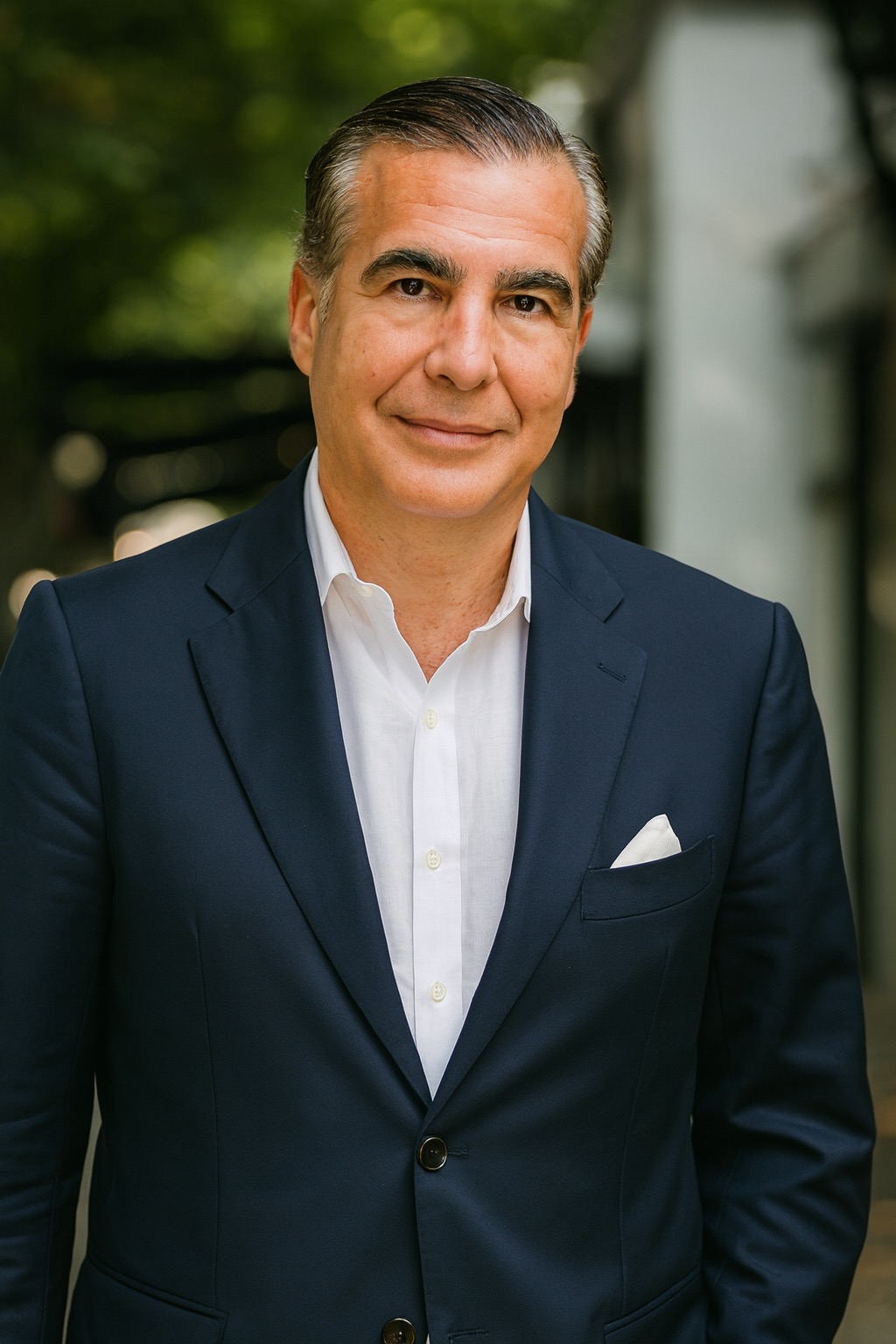
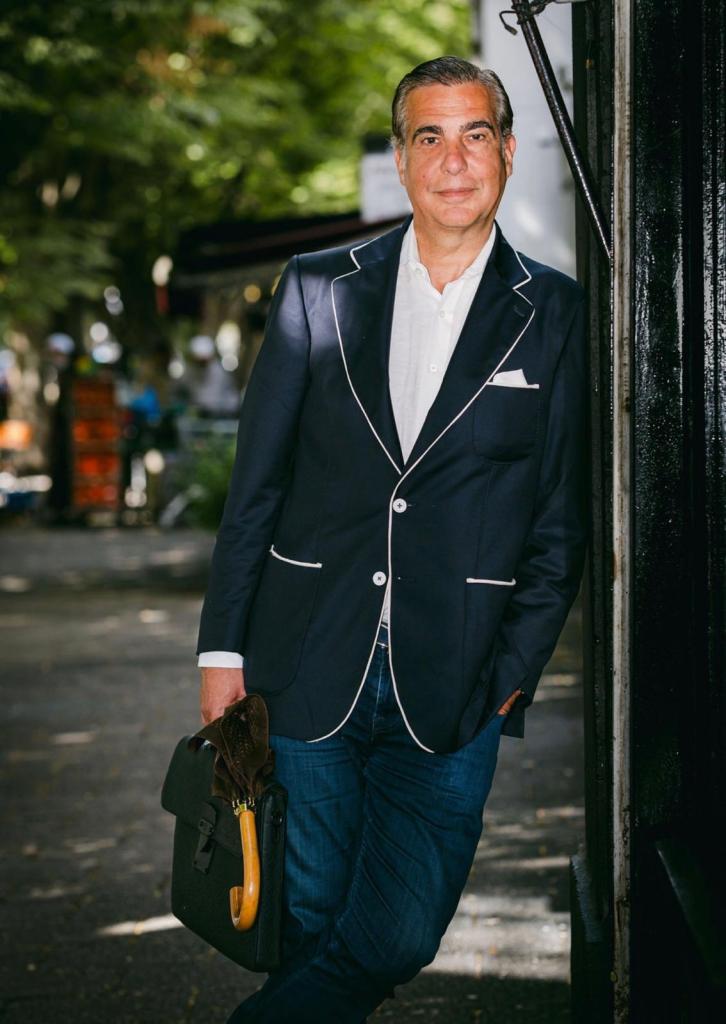
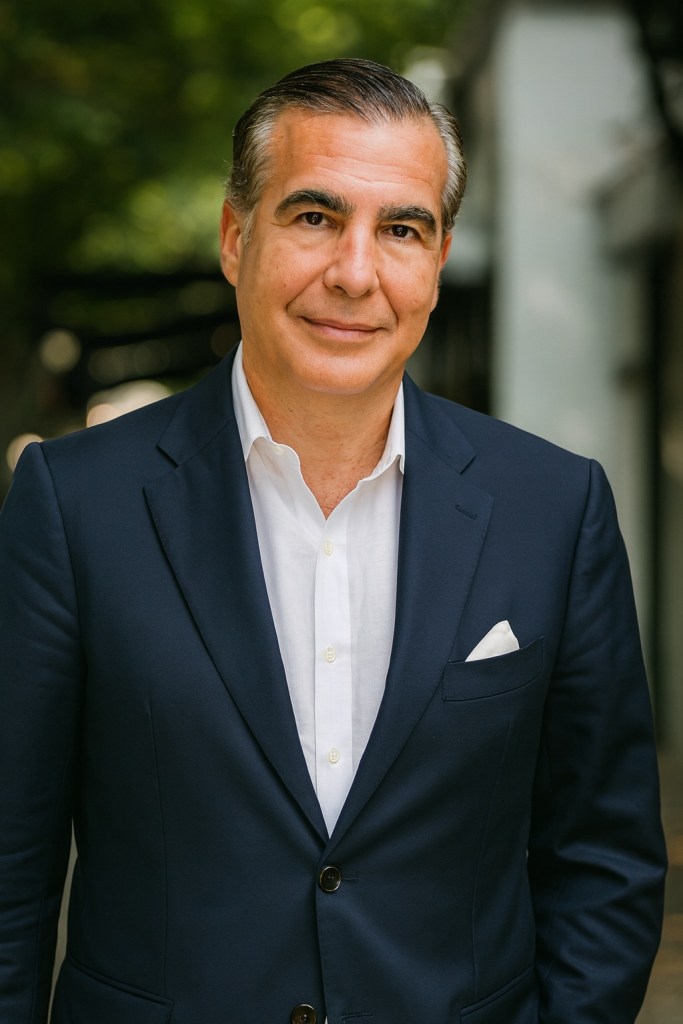
DR JOSEPH CRESPO chats to Steven Smith
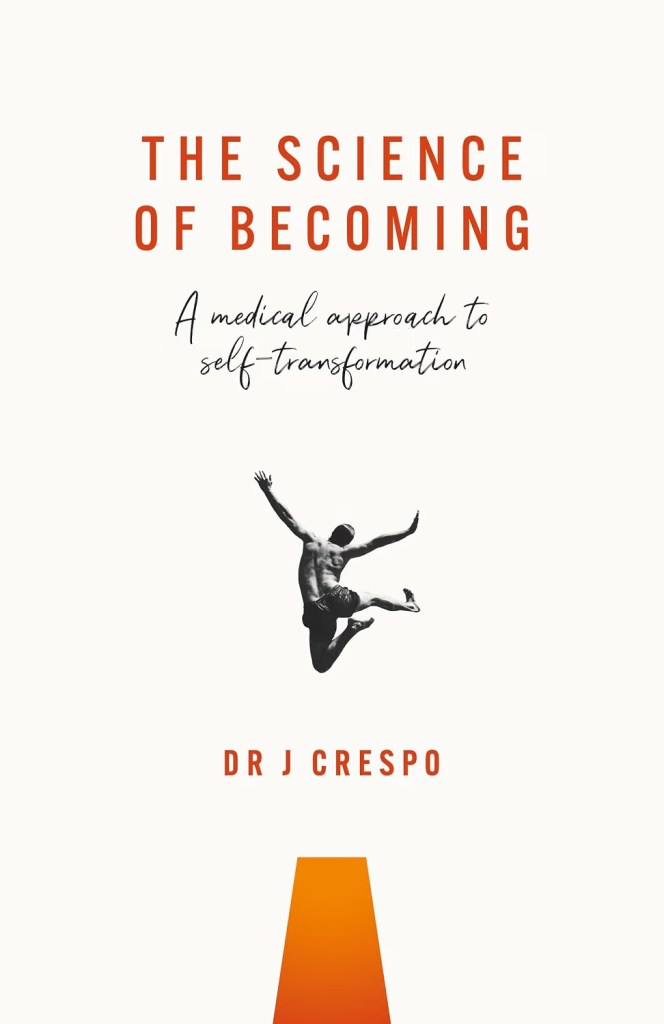
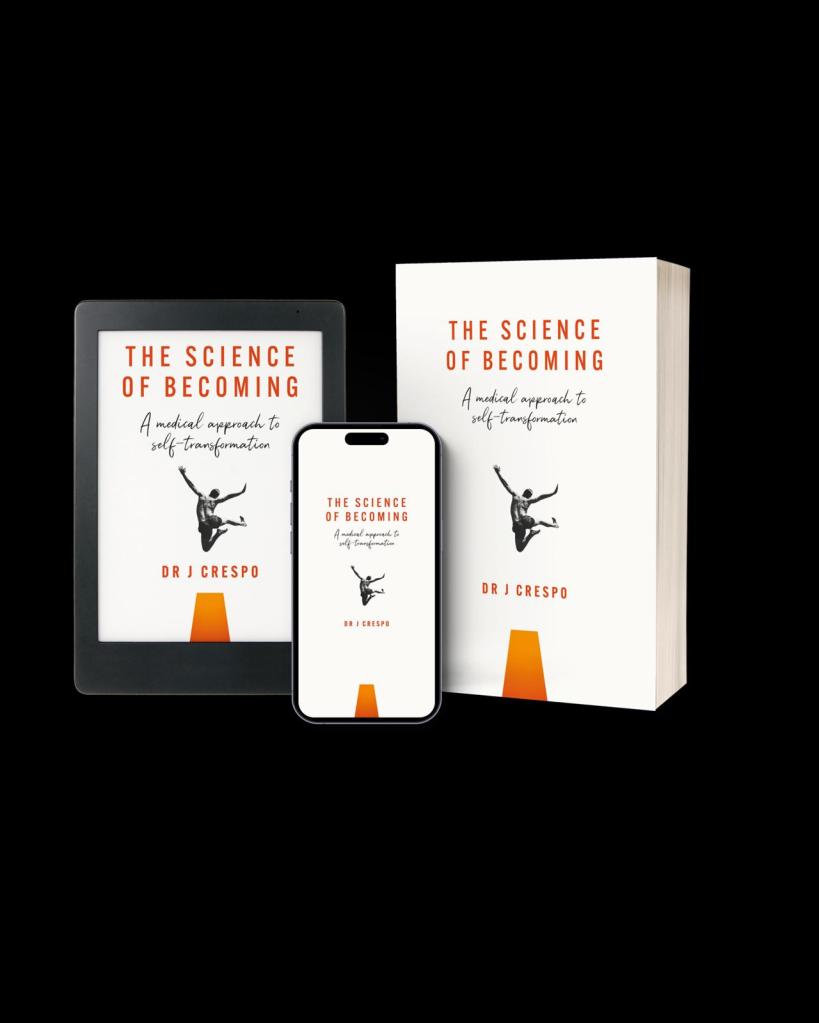
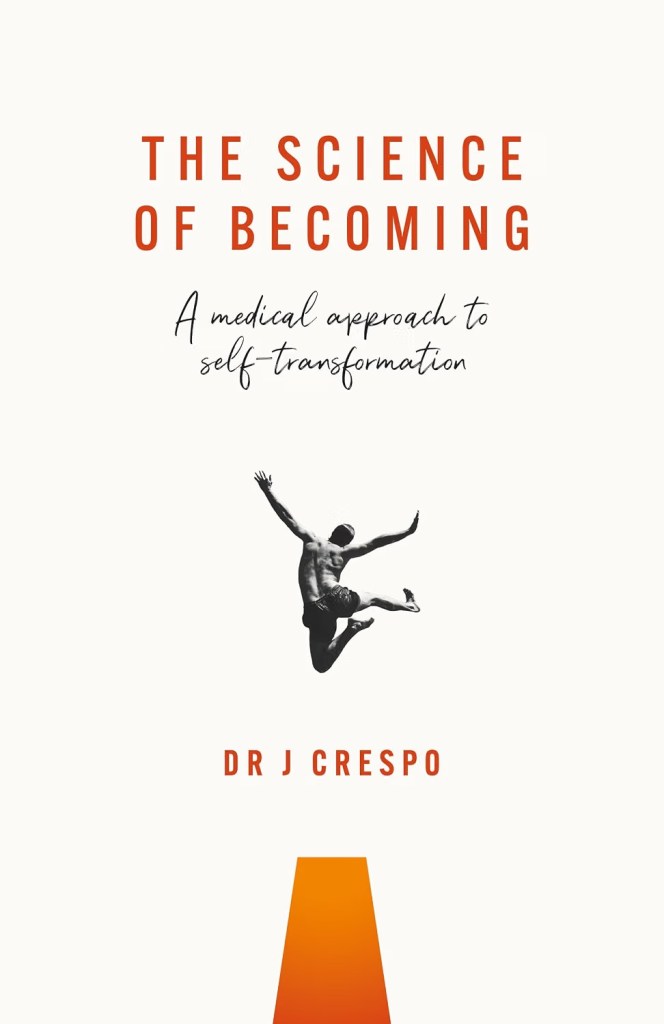
THE SCIENCE OF BECOMING: A MEDICAL APPROACH TO SELF-TRANSFORMATION
By Steven Smith
Buy The Science of Becoming on Amazon
There are some people whose careers follow a fairly predictable path, and then there are those who take a completely different route. Dr Joseph Crespo certainly falls into the latter category.
London-based Dr Crespo has a fascinating and varied background. Before entering the world of medicine, he studied law and went on to complete an MBA in London, before working in the financial sector as a consultant and analyst. But his story didn’t end there. He made the considerable decision to change direction and retrain as a doctor — beginning a new chapter that would eventually see him working across both NHS and private healthcare.
His medical career has been equally varied, with experience ranging from GP surgeries and urgent care to walk-in centres, out-of-hours services and even HM Prisons. He has also been involved in teaching the next generation of doctors as a GP tutor and clinical examiner, alongside undertaking medical charity work in India.
It is perhaps not surprising, then, that someone who has reinvented his own life more than once should become interested in the science behind our ability to change.
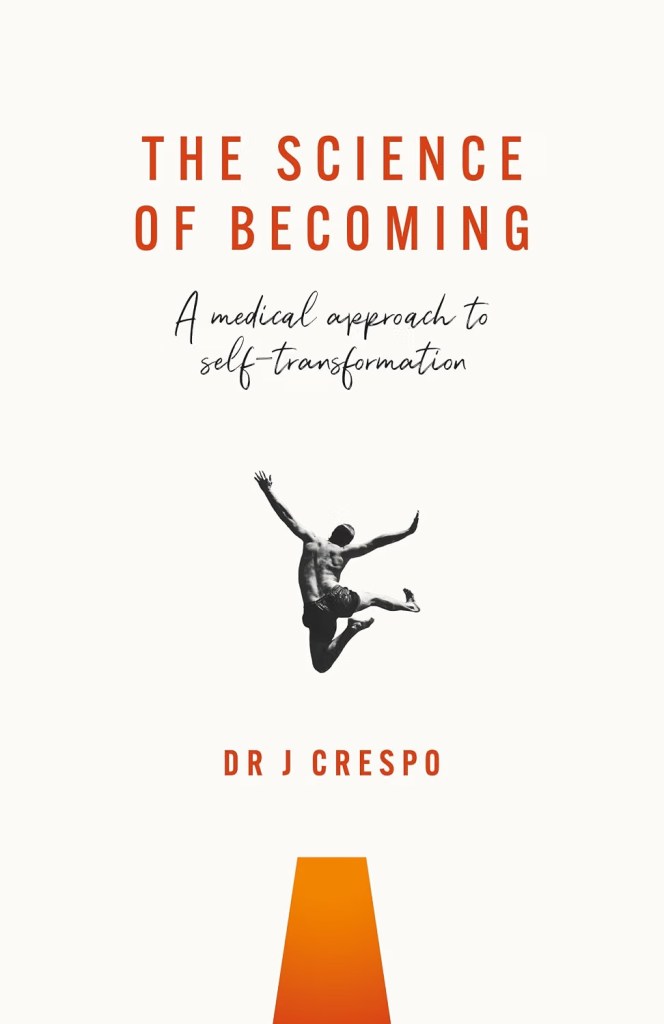
That interest has now resulted in his book, The Science of Becoming: A Medical Approach to Self-Transformation. Rather than simply telling us to think positively or try harder, Dr Crespo looks at personal change through the eyes of a medical professional, exploring subjects including habits, decision-making, stress, sleep and nutrition — and asking how science can help us make changes that actually last.
At a time when social media seems to offer us a new wellness trend, miracle solution or life-changing hack almost every day, separating good advice from clever marketing has arguably never been more important.
So who better to ask than the doctor who has made transformation not only the subject of his book, but something of a feature of his own extraordinary career?
I caught up with Dr Joseph Crespo to find out more…
Dr Crespo, tell me a little about you. What was your journey into medicine, and what eventually made you want to write a book about changing our lives?
My journey into medicine was long and unorthodox, training first as a lawyer and then a financier. When I finally left it all behind to follow my passion, I trained and practise as a primary care physician, and for years my work sat at the intersection of diagnostics, chronic illness and prevention.
What struck me again and again in clinic was that the biggest lever for most people’s health wasn’t a prescription. It was the slow accumulation of daily choices: how they slept, how they handled stress, what they ate, how they thought about themselves. I kept watching patients try to change with sheer determination and fail, not because they lacked willpower but because nobody had ever given them a framework. Medicine has one. It’s called clinical reasoning, and I realised the same discipline doctors use to diagnose and treat could be turned inward, applied to the process of changing a life rather than treating a disease. That’s where the book came from.
The title is The Science of Becoming. Becoming what? Is there actually an optimum version of ourselves, or are we in danger of constantly being told that we need to improve?
Becoming isn’t about arriving at some fixed, optimised endpoint. There’s no single best version of a person waiting to be unlocked. What I mean by becoming is closer to what we mean clinically by healing: a direction, not a destination. It’s the ongoing process of reducing the gap between how you’re currently living and what your body and mind actually need to function well. I’m wary of the “optimisation” culture that treats a person like a machine to be tuned for maximum output.
That framing burns people out. The question I ask is not “how do I become the best version of myself” but “what is actually true about my biology, my history and my circumstances, and what does that call for right now.”
You argue that we rely too much on willpower. Why doesn’t willpower always work, and what should we be doing instead?
Willpower is a finite, fatiguing resource, and it’s also the wrong tool for the job. In clinic, we don’t tell a patient with a chest infection to try harder not to be infected. We diagnose, then we design an intervention suited to the underlying problem. Most of what looks like a willpower failure is actually a design failure: an environment, a routine or a belief system working against the change someone is trying to make. Instead of asking for more willpower, I encourage people to reduce the number of decisions that require willpower in the first place, by changing defaults, removing friction, and building systems that make the desired behaviour the easy and enjoyable behaviour.
You take clinical decision-making and apply it to everyday life. Can you give me a real-world example? How could I use clinical reasoning to make a better decision tomorrow morning?
Clinical reasoning follows a simple sequence: gather data, form a differential, test it, act, then reassess. Take something as ordinary as feeling constantly tired. Instead of reaching straight for caffeine or willing yourself through it, treat it like a case. What’s the data: how did you sleep, what did you eat yesterday, who did you mix with, what’s your stress load this week. What’s the differential: is this poor sleep quality, is it dehydration, is it emotional load, is it simply overtraining. Pick the most likely cause, make one small deliberate change, and observe the result over a few days rather than guessing forever. Tomorrow morning, that might be as simple as noticing what you automatically reach for and asking, briefly, what problem am I actually trying to solve with this.
We’re bombarded with wellness advice on social media — supplements, fasting, cortisol, sleep hacks, diets and longevity treatments. As a doctor, how do you separate genuine science from very clever marketing?
I look for three things. First, is the claim built on a mechanism that’s been demonstrated in humans, not just in a petri dish or a mouse. Second, does the person selling it benefit financially from your belief in it, and how large is that incentive. Third, is the advice generalised or personalised. Genuine science tends to come with caveats, uncertainty and “it depends.” Marketing tends to come with certainty, urgency and a product at the end of it. If a claim can’t survive the question “compared to what, and for whom,” I treat it with real caution.
Neuroscience has become a fashionable word in the self-help world. What do we genuinely know about changing the brain and forming new habits, and what claims do you think go beyond the evidence?
What we know reasonably well is that the brain retains plasticity throughout life, that repetition genuinely does strengthen certain neural pathways, and that habits form through consistent cues and rewards over time, typically longer than the popular twenty-one-day myth suggests. What goes beyond the evidence is the tendency to take a genuine finding from a controlled lab study and present it as a guaranteed personal transformation protocol. Dopamine, cortisol and neuroplasticity get used as marketing words rather than as the specific, conditional findings they actually are. I try to be honest with readers about where the solid ground ends and the speculation begins.
What about someone in their 60s or 70s? Can we genuinely make substantial changes to our habits, health and outlook later in life, or does change become significantly harder as we get older?
Change is absolutely still possible, and I say that as a clinician who sees it happen. What changes with age isn’t the capacity for change itself, it’s the margin for error and the starting conditions: more accumulated habits, sometimes more comorbidity, less physiological reserve to draw on. The clinical reasoning approach actually suits older patients well, because it isn’t about dramatic overhaul, it’s about identifying the one or two changes that will have the greatest effect given someone’s specific situation, and building from there patiently. I’ve seen patients in their seventies transform their sleep, their mobility and their outlook once they had a clear, individualised plan rather than a generic one.
Stress, sleep and nutrition all feature in your approach. If someone came to you and said, “I’m overwhelmed, I can’t change everything,” which one would you tackle first, and why?
Sleep, almost every time. It’s the foundation the other two rest on. Poor sleep drives stress reactivity, disrupts appetite regulation and blunts willpower and decision-making the following day. It’s also usually the most tractable of the three, because unlike stress or nutrition, sleep responds fairly quickly to specific, well-evidenced changes: consistent timing, light exposure, and a wind-down routine. Fix sleep first and the other two often become noticeably easier to address.
Self-help is an enormous industry, and every year we’re offered another formula for transforming ourselves. What makes your approach different, and what evidence is there that it can produce lasting change rather than the short burst of motivation people often get after reading a self-help book?
Most self-help sells motivation. Motivation is a mood, and moods pass. What I’m offering instead is a method: the same diagnostic, iterative process doctors are trained to use, which doesn’t depend on how inspired you feel on a given day. It assumes you will fail at points, and builds reassessment into the process rather than treating failure as proof the whole effort was doomed. Lasting change, in my clinical experience, comes from small, testable, personalised interventions rather than a single dramatic reinvention. That’s a much less glamorous story than the one the industry usually sells, but it’s the one that holds up over years rather than weeks. In addition, I offer documented medical research studies to substantiate every idea.
Not everyone is a reader or someone who would naturally pick up a self-help book. For those people listening to us today, what’s one simple thing they could start doing right now to make a positive change in their lives?
Pick one thing you do automatically every single day, and simply notice it for a week before you try to change anything. Don’t judge it, don’t fix it yet, just observe it the way a clinician observes a patient before making a diagnosis. Most people skip straight to changing behaviour without ever accurately understanding what they’re currently doing and why. That single week of honest observation is often the most useful health intervention I can suggest, and it costs nothing and requires no willpower at all.
Quick-fire questions
Favourite place to relax?
My home.
If you were Mayor of London for a day, what’s the first thing you’d change?
The institutionalisation of common sense, and an understanding that our individual rights end where others’ begin. Sadly, I see a growing number of entitled people imposing their views and beliefs, and condemning anybody who disagrees.
A restaurant you particularly love dining at?
Many, but if I have to choose one, Oliveto on Elizabeth Street, a proper Italian trattoria offering high quality food, friendly service, and a home feel environment. https://www.olivetolondon.uk/about
What has been the proudest moment of your life so far?
Every moment I made the decision to keep growing.
What motivates you to keep going when life gets difficult?
Difficulties are circumstantial, and overcoming them requires only a change in perspective. One thing that has helped me a great deal was when I stopped worrying about things which outcome I cannot change.