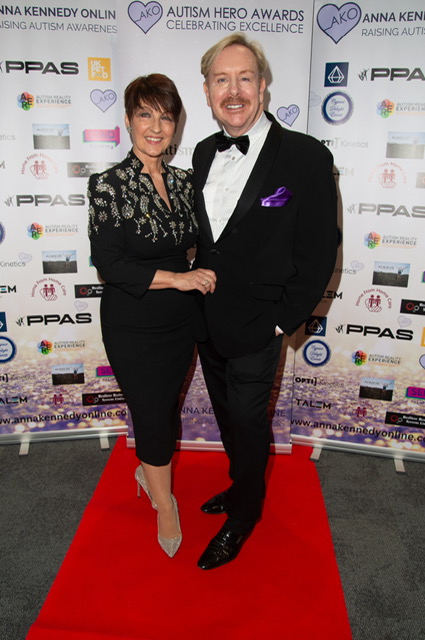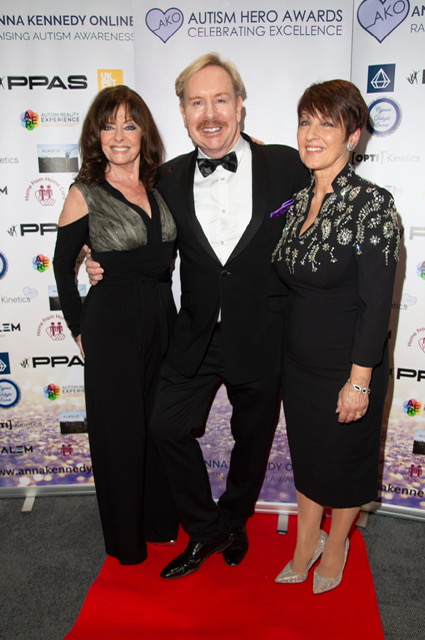
Dr. Anna Kennedy shares with Steven Smith her life and treasured memories of the late Robin Windsor
From reigniting her passion for dance to becoming a dedicated supporter of her charity, Anna Kennedy Online, Robin’s influence was felt deeply in both her personal and professional life.
His joy, warmth, and unwavering encouragement left a lasting mark not only on Anna but also on everyone involved in Autism’s Got Talent. Robin’s humour, empathy, and dedication to helping others shine through in every story she tells, highlighting the strength and joy of their friendship.
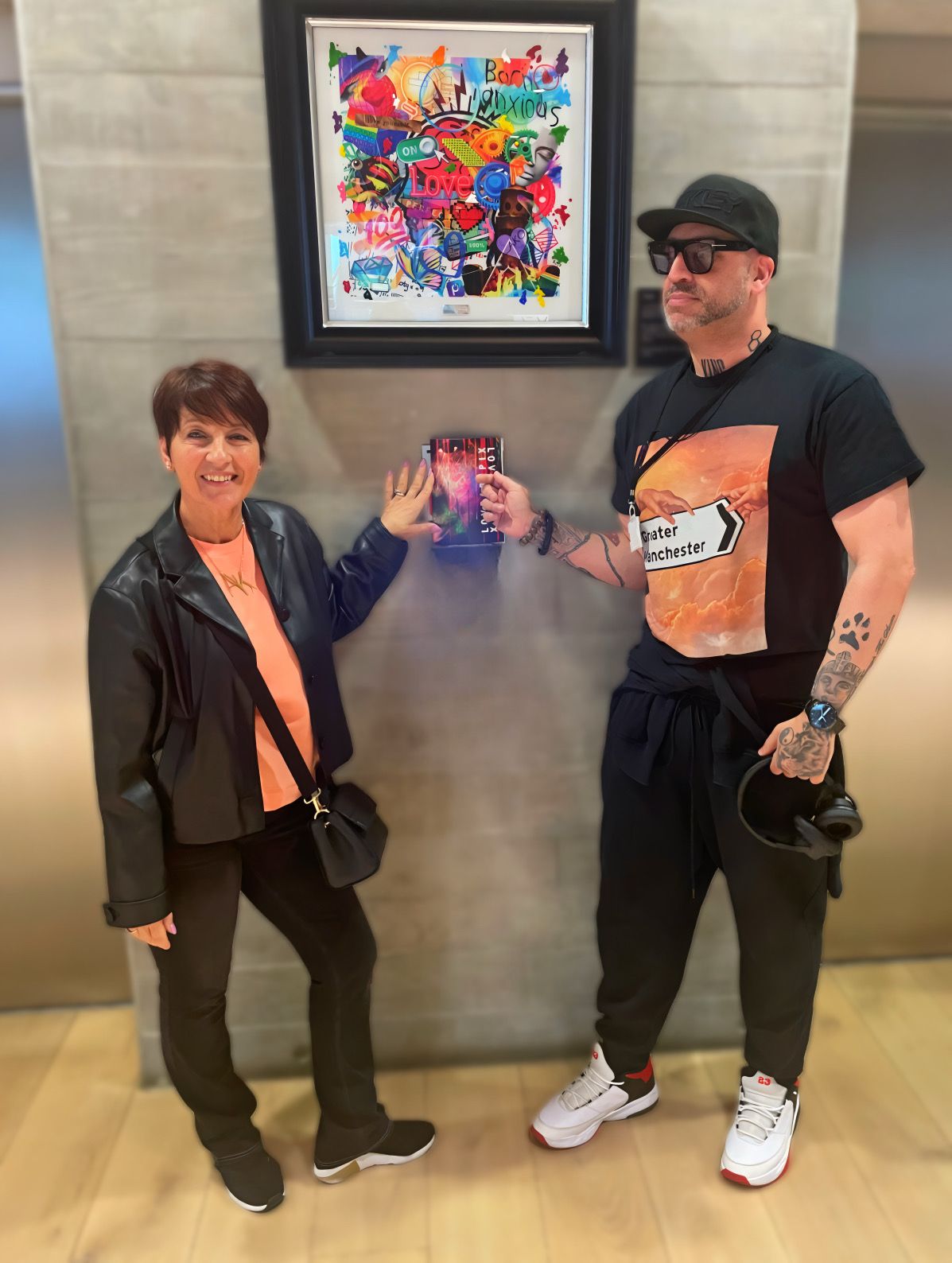
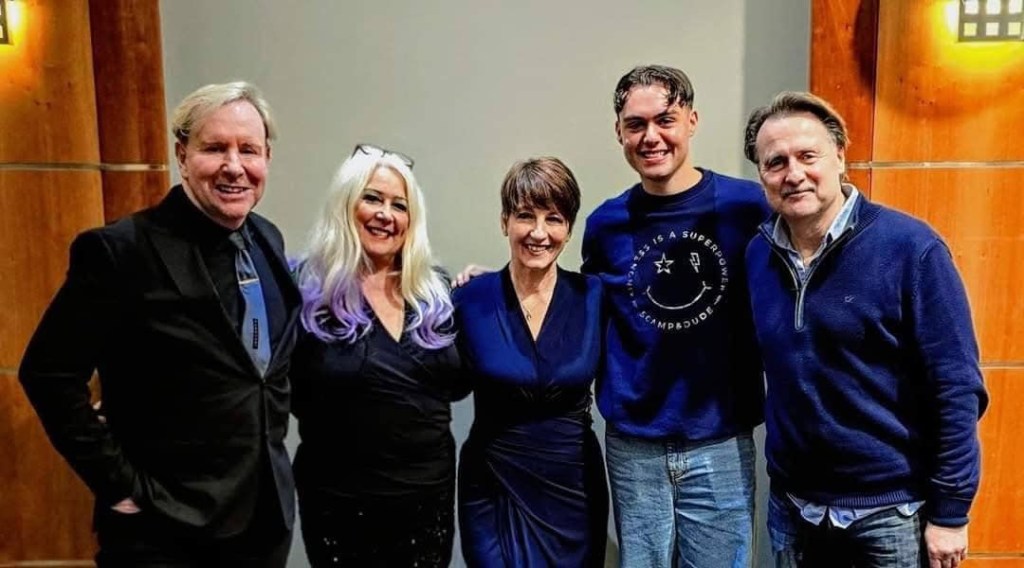
A beautiful time with Anna’s great friend the late Robin Windsor .
The tribute Anna attended for Robin felt like a heartfelt celebration of his life and spirit. A small white feather, spotted floating throughout the event, felt like a sign that he was right there, celebrating alongside them.
While she mostly dances at home now, Anna cherishes the memories of performing their Charleston together, a dance that remains close to her heart.
Thank you, Dr. Kennedy, for sharing these beautiful memories—a fitting tribute to Robin’s legacy and the lasting friendship you shared.
1. How did you first meet Robin? I first met Robin in December 2014 when I was chosen as one of six participants for The People’s Strictly for Comic Relief out of 11,000 entries.
2. How did he change your life? Robin reignited my love of dance and reminded me how it makes me feel—free, joyful, and alive. He showed me it was okay to take time out for myself and have fun, even amidst my work with the charity and my responsibilities to my boys.
3. Where were you when you heard of his passing, and how did it affect you? I saw it pop up on social media and thought it was one of those awful hoaxes. But then the reality hit, and I felt completely numb, like my heart dropped. I cried while driving Angelo to college. It was a deep, wrenching sadness.
4. Robin was very involved with your charity, Anna Kennedy Online. In what ways did he help? When I told Robin about AnnaKennedyOnline and our work, he was immediately interested. He came to Autism’s Got Talent, where we danced our Charleston together at the end, bringing all the performers on stage with us for a standing ovation. He was deeply moved by our performers, often teary-eyed. Robin supported Autism Dance Day as well, even donating dance lessons for us to auction off.
5. You did a tribute to him at Autism’s Got Talent? Yes, Robin was an integral part of our show, presenting some of our performers and participating in a magician’s act. He usually sat front row beside me, and his absence was deeply felt. I recently attended The Last Act, a show celebrating Robin’s life at the Theatre Royal Drury Lane. The event was filled with his friends performing in his honor. Anton Du Beke called Robin “the human glitter ball,” which was so fitting. I thought I saw a small white feather floating during the show, as if he were celebrating with us.
Lisa Riley at last night tribute in London at the Theatre Royal
6. Do you still dance now? I mostly dance at home. But when Robin was on tour, I joined him at seven venues near me, where we performed the Charleston together.
7. You’ve always been surrounded by friends from the LGBTQ+ community without making it a big deal. How do you view that? Why should I make an issue about it? They’re simply my friends, and I treasure their company.
8.Does Robin’s passing make you worry for any close friends? I hope that they know they can talk to me or reach out to mental health charities like SANE if they’re struggling. There should be no stigma about seeking help, especially in today’s uncertain world.
9. Did Robin ever talk about struggles with his mental health? Robin was always upbeat, helping others without hesitation. But he did share struggles “between the lines.” He had a way of carrying his burdens quietly, which makes it even more important to honour his memory by promoting mental health awareness.
10. What one memory of Robin sums him up? One that always makes me smile is our first meeting when I learned he was my dance partner. He flung his arms wide, wearing a feather boa, a smart suit, and an enormous smile, saying, “Hello darling!” Another cherished memory was when we received 4 x 10s for our Charleston. We were absolutely bouncing off the walls. He said, “My first 4 x 10s, and it was with you, Anna!”
2Shades meets husband and husband team Tiano. The London cabaret duo of Christopher Hamilton and Shimi Goodman
It is an almost unthinkable scenario that Liberace and Pavarotti had secret love children, let alone that those children went on to inherit their fathers’ talents!
Described in one five star review
Then they met one another, fell deeply in love and married. Well, you would be forgiven for thinking just that, as married couple Chris Hamilton (Piano) and Shimi Goodman (Tenor) take to the stage to perform to a sell-out audience of dedicated fans
2Shades wanted to know more about the boys and we fired some questions at them.
What are you both doing for Christmas?
It’s all very glamorous! We will be performing on a six star luxury cruise ship called the Silver Muse sailing from Melbourne, Australia to Auckland, New Zealand. But before jetting off to the other side of the world we have our Christmas show at the Crazy Coqs in London which sold out pretty much minutes after we announced it during our last show there. We are so grateful to all the people who keep coming to our shows in London and elsewhere.
What four Christmas songs would you sing at a Christmas Concert and why?
Oh Holy Night – This song really fits our style of music as it is a classical song but has been covered by the likes of Mariah Carey, the Queen of Christmas. Shimi particularly enjoys singing it as it really taps into the classical genre which he loves.
All I Want for Christmas – Speaking of Miss Carey, this song is unavoidable during the festive period so although it’s done to death, it would be Scrooge like not to sing it.
All I Want for Christmas is for Someone to Cancel It – To counteract the Christmas schmaltz and to honour all grinches out there, Chris wrote this tongue in cheek, irreverent song himself. If you can’t make it to our Christmas show, you can hear this song on YouTube.
Have Yourself a Merry Little Christmas – It’s such a bitter sweet moment when Judy Garland sings this beautiful song in the 1944 film Meet Me in St. Louis. It makes most people feel all warm and fuzzy inside.
When did you both know you loved each other?
We met at Guildford School of Acting in 2000 and it was something like love at first sight over a jacket potato in Cathy’s Cafe!
What is the most romantic gift you bought each other?
Shimi: Chris always wanted to go on the Orient Express. His birthday is in December and after a bit of research I discovered to my dismay that the train wasn’t active during the winter. I had to break it to him that it wouldn’t happen for a certain big birthday of his but then a few weeks before his birthday he saw an advert online saying that the Orient Express had started a winter journey. I quickly booked it and we travelled from Paris to Vienna overnight. The train was relatively empty and it was magical looking out of the window watching the snowy scenery whilst being treated like royalty! We had the pleasure of jamming with an amazing Italian jazz group until the early hours. Even the waiters started filming us! We stayed at the famous Sacher Wien hotel when we reached our final destination. We went to see an opera and walked around the Christmas markets. Very memorable.
Chris: I always knew how much Shimi loves the movie franchise Back to The Future or indeed anything to do with the 1980s, so for one of his birthdays following a tasting menu dinner (which I absolutely hate) at a brand new restaurant in Covent Garden I got us top tickets to the West End musical. He knew all the text by heart.
The festival of lights Hanukkah is a big holiday. How do you both celebrate that? Is there a song that jumps to mind?
Shimi: I love Hanukkah. We light the hanukkiah which is an eight stemmed candelabra. You light a candle for every day of the holiday and eat sufganiyot which are yummy jam doughnuts. My favourite song is Maoz Tzur or Rock of Ages as it is known in English.
When did you both last laugh together?
Every day. We have our own silly sense of humour and can find the humour in most situations.
What are your wishes for 2025?
There’s a lyric in one of our original songs which says: “Music can heal and make it a better day”. We truly believe that it can, so we wish for our music to reach more and more people around the world and to keep travelling and entertaining. We would love to perform in America. Chris did a series of cabarets in New York a while back so it would be good for Tiano to take the States by storm! We’re currently in talks to hopefully make this happen during the next couple of years.
Who would you most like to work with in the music industry?
Barbra Streisand and Shirley Bassey are two of our idols. It would be an absolute dream to perform with them. We also love a Welsh singer called Ellen Williams and would love to collaborate with her. One of our songs “It’s Not Goodbye” would be a beautiful duet for her and Shimi.
Who is the best cook?
Shimi does most of the cooking when we’re home. But Chris makes a mean chilli con carne named “the famous” because he only cooks it once a year but when he does people rave about it. Whether they’re raving about the dish or the fact he’s actually put an apron on is anyone’s guess….
Tell our readers what you can expect from a Tiano concert.
Every show we put on in London is different for a couple of reasons. Firstly, we owe it to our loyal supporters to present different music to keep each performance fresh. Secondly, it challenges us as artists to keep learning new material. For instance at Crazy Coqs in Piccadilly, London we’ve become known for presenting a ten minute medley at each show which is devoted to a decade (for example the 80’s), an artist (for instance Whitney Houston), or perhaps a movie musical (maybe Dirty Dancing which incidentally Shimi performed in in the West End). It’s always challenging arranging and rehearsing an intricate medley of songs with constant key changes and mood changes and then performing it for a live audience for the very first time without looking at lyrics or music. However, it’s so worthwhile because the audience has come to really appreciate this moment in the show. In the last two shows people loved singing along during our medley devoted to The Carpenters and at our most recent one, ABBA. We spend all that time on each ten minute set piece and only perform it once!
Chris is a multi award winning composer and lyricist so we always share music he has written which once again the audience usually loves. Chris recently released an album of his very mellow original piano pieces called Sempre Piano (you can listen to it on Spotify). It’s so gratifying to see an audience respond so favourably to these moments of calm when he shares one of these pieces during a show. Shimi has also co written a few songs with Chris, a couple of which are on their debut album Tiano which you can also hear on Spotify. They have become firm favourites with the audience.
We put so much thought into our programme with the hope of taking our audience on a real journey. You’ll laugh, cry, sing along and leave our show with a big smile on your face!
Cinzi Lavin, an award-winning musical dramatist and writer
Cinzi Lavin, an award-winning artist from the States reached out to 2Shades to tell her story
When I read about her, I was shocked to find out how she isn’t better known for her contributions. But that wasn’t the point, Cinzi’s calm yet captivating approach to life is a distinct voice that 2Shades is honoured to provide a platform for.
Here’s how Cinzi’s journey with life has taught her a great deal about the unexpected turns it might take, and how you can make it easier for yourself, in her own words.
“Everyone’s success story is different. As an award-winning musical dramatist and writer, my work involves telling stories, so I’ll gladly share mine in hopes of inspiring others.
I’ve seen life from many angles: as a child growing up in a wealthy Manhattan suburb and as a young woman eking out a living as an impoverished musician. I’ve been a New Yorker and a Texan. I’ve been an actress, playwright, educator, and lifelong student (and may I never graduate!).
My career path, if it were printed out like an EKG reading, would look like someone having a coronary seizure. Far from straight and uneventful, it included forays into multiple fields in every direction. However, all the paths I followed—from journalism to teaching to performing (and more)—played a crucial role in developing the skill-set I use today.
Early on, I wanted to do amazing things, and I was good at writing and had an ear for music. I took piano lessons for a few years with a neighbor-woman, and I was her worst student. A few decades later, I’d created and produced three full-length original musical dramas and performed by invitation at the White House.
The short answer to the question of how I achieved this is that I made bread out of straw—I created something out of nothing. Circumstances dictated that if I wanted to enjoy success, it would take more than hard work, luck, ambition, or even talent: it would require my humanity, my creativity, and my ability to recognize that obstacles are only illusions.
Here are my three crucial components for success:
1.) Helping Others – There is much to gain by the intentional, systematic, unselfish, and abundant donation of your time and talents. Imagine someone putting a teaspoon of vegetable seeds in a hole in the ground and returning to discover a football-field size crop has grown from it.
I’m a huge proponent of volunteering, because it represents an opportunity to learn valuable skills in a supportive atmosphere, boosts confidence and self-esteem, and encourages networking which may lead to furthering your goals. Additional ways of helping others include always striving for a win-win scenario and mentoring others in your field.
2.) Thinking Creatively – Particularly when you start with nothing, creativity is a powerful way to optimize your talent. Always do things the way you think they should be done, even if it’s not how everyone else does it. In addition, don’t be afraid to utilize unique or unusual ways of promoting your work, such as lecturing in local clubs or libraries.
3.) Ignoring Obstacles – My artist’s statement is as follows: “As an artist, my two most valuable tools are my index fingers; when someone tries to point out obstacles to my dreams, I place them firmly in my ears and say, ‘La la la! I can’t hear you!’ It works every time.”
One of my favorite stories involves a young man who took a job selling encyclopedias door to door many years ago. On his first morning at work, his employer provided him with six sets of the heavy books; he put them into his car, and set forth. Around noon, he returned, saying “I’m ready for the next six sets to sell this afternoon.” His boss and his fellow salesmen were shocked. Nobody had told him that the six sets he’d received that morning were intended for him to sell during the upcoming month. Thinking the six encyclopedias were his morning’s quota, he didn’t suffer any preconceived failure.
As for success itself, I recommend that anyone aspiring to greatness not only define what they want but why they want it. For example, if you want to make a lot of money, it’s not the pieces of paper or the multi-digit numbers on your bank statement that you actually want—you want something the money represents, whether that be financial security, power, or the freedom to do whatever you wish with your time.
I highly recommend practicing economy in your career—not necessarily of money, but of everything good that comes your way. Envision a pathway to success where not a scrap is wasted. During America’s Great Depression in the 1930s, when money and resources were scarce, there was a popular saying: “Use it up, wear it out; make it do, or do without.” People did what they could to make the most of whatever they had. They even created a recipe for a delicious dessert called “Water Pie”!
One of my favorite films is Apollo 13. It recounts the true story of America’s 1970 mission to the moon, during which things went terribly wrong. An oxygen tank ruptured two days into the flight, endangering the crew members, whose life-support system was disabled. The film shows how the three astronauts, with help from NASA’s ground control workers, improvised a means of reestablishing the carbon dioxide filter system using various materials foraged in the tiny spacecraft.
The first time I saw the film, I was spellbound, watching the men in outer space—whose only hope for survival depended upon whatever they had with them that could be used to make the necessary repair. Suddenly, inconsequential bits of plastic tubing or similarly unremarkable items literally meant the difference between life and death. It impressed upon me the importance of taking nothing for granted, and of utilizing everything at one’s disposal even when survival isn’t at stake. Put another way, if those astronauts could save their own lives more than 200,000 miles from our planet with a few bits and bobs they collected in their space capsule, what more could I do here on earth with a wealth of resources available to me? (Not least of which is oxygen!)
In pursuit of your dream, waste nothing; treasure every networking connection, every professional invitation, and every promotional opportunity. I rejoice for those for whom success is within easy reach, but those who are starting with nothing are the ones whom I congratulate, because the world of possibilities opens before them.”
George Khoury, a 40-year old bouncer who touched our souls at 2Shades on our night out, unaware that we’d be meeting an angel at the doorstep of a pub in Elephant & Castle
He will be writing for 2Shades whenever his wisdom takes the wheels and he’s got plenty of it.
George Khoury’s, “Let’s start with you” in his own words.
“One of the deepest yearnings I’ve had is to learn and understand who I am, what my purpose is, what I need to do to continue to grow, develop and flourish. This is something that each of us require to feel true happiness, ensuring we put ourselves first and utilise the people and opportunities around us to be the best version of ourselves that we can. This emphasis on your own existence is what really brings about the concept of self-love.
George Khoury
“If you don’t love yourself, who else will….” These are the truest words that my mother once told me. I remember hearing this but not truly listening or understanding the implications.
What do we want for the people and things we love? To protect them and keep them safe, to make them happy, support them through difficult times, encourage them to understand their self-worth, their positive qualities, develop their strengths while improving and managing their weaknesses. We would do anything for these people to show them that life is worth living and that everything will be okay. There is a sense of fulfilment and joy that comes with encouraging someone to shine. In most cases the person that loses out on this support, encouragement, and love is ourselves. How can someone who has been there your whole life be unappreciated, disregarded, and sacrificed?
From birth we are pure, vulnerable, and dependent. We are a product of the life we are born into. We learn what we’re shown and understand the world in that way. Our surroundings become our reality and we are told what is right and wrong, what our values should be, what is important, what is expected, and how we can be as happy or successful as the people before us. Everyone needs a mentor, a support mechanism, and a community that helps you build the road ahead rather than leave you to find your own way in a complicated and challenging world,
I was born into a mixture of cultures, ethnicities, and languages. I always knew I was a boy but I didn’t care. My gender was fluid and not defined. I was allowed to be a curious child and was never judged or labelled from a very young age.
I was occasionally asked at the after-school club “are you a girl or a boy?” With my long hair that I could tie into a small ponytail like my fathers. He has always been my hero. He is strong, brave, resilient, and gives everything he has to better himself and provide for his family. The first one to respond to a loud noise at night and the first one out of the door to get to work early and put food on the table. These are qualities that are inspiring and meant that I was lucky enough to have a strong father figure in my life. My only issue was feeling that I would never be good enough or be able to make him proud.
From the moment I started year 7 I stood out from everyone else. I was a positive and curious soul who wanted to make friends and learn. The reality was much different. Either the pupils were confused by the way I was, felt threatened or generally disliked me because I did not fit the idealistic norms of society. The people who did want to be my friend had to accept the burden of being associated with me. The name calling, being singled out, laughed at, scrutinised and analysed daily. Everyone wants an easy life and I made things complicated for them by being me, whatever that was.
My entire being contradicted the norms that these young people had been adapted to. Male presenting with a feminine and caring nature and a distinct voice that people associated with being gay. That was my reality and if it wasn’t for the values, morals, and wisdom that my parents had planted deep into my consciousness, I can honestly say that I would not be here today.
The physical and emotional abuse I was subjected to on a daily basis took away my light, my uniqueness and my purpose. It labelled and categorised me into boxes I didn’t understand or choose for myself. How could I defend something I didn’t understand or have the opportunity to identify and love? I was already what they called me and was in a body that I had no emotional connection to.
The only way I could survive was to try my hardest to be what everyone felt was normal. Lowering my voice and using less of an emotive tone, restricting my natural body movements to not stand out, trying to please everyone to make them happy and in return feel accepted and included with an actual purpose.
George Khoury
As I turn 40 and reflect on my life, I realise that there was never an issue with me at all. I have always been that same happy and glowing soul I was when I was a child. The world twisted and pulled me into a box I couldn’t fit into no matter how much I tried to.
It took losing myself and wanting a way out of this life to truly understand how special and unique I am. Exactly what my parents had been trying to show me from a young age, and why they would get so angry and disappointed in me for not recognising it. They knew I could do better and be a more successful version of myself and that the potential was always there.
This came across as disappointment and never feeling like I could be the child they wanted. I came across a key ring my parents bought me for my birthday which I never took real notice of at the time. It was during a low moment where I had to try really hard to get up and do anything.
It said “…if we could give you one thing in life, we would give you the ability to see yourself through our eyes. Only then would you realise how special you are to us,” This was the turning point for me and after wiping my tears I realised who I was, and saw the purpose I have in the world, something I had never been able to do. In this life you need to listen to the people who love you unconditionally whoever they are and find your people. If I hadn’t found my queer community and beautiful people that see me as I am without any other judgement or labelling, I would never have believed that I was an actual human being that was allowed to be me and not what the world bullied me into becoming.
I am a glowing ray of positive energy that walks through life climbing the barriers and mountains that humanity have placed in my way and keeping my fire burning no matter how cold or dark it gets, however windy or overwhelming things are, no matter how much my anxiety tries to hold me still and stop me growing, I will carry this light to bring happiness and laughter into the world.
Challenging discrimination, bullying and representing every minority that exists in this world through my gender, sexuality, and ethnic background, I will keep being me, as this was what I was always created to do.
Look after yourself and remember that it all starts with you. You can only give all of your love and soul if you have your housekeeping in order and this starts with knowing who you are. Not the constructed and created you by society, peers, and family but the true being that you are with no deflection or distraction from the issues that come with living. The beautiful, unique, and wonderful you, Let’s start there, let’s start with you.”
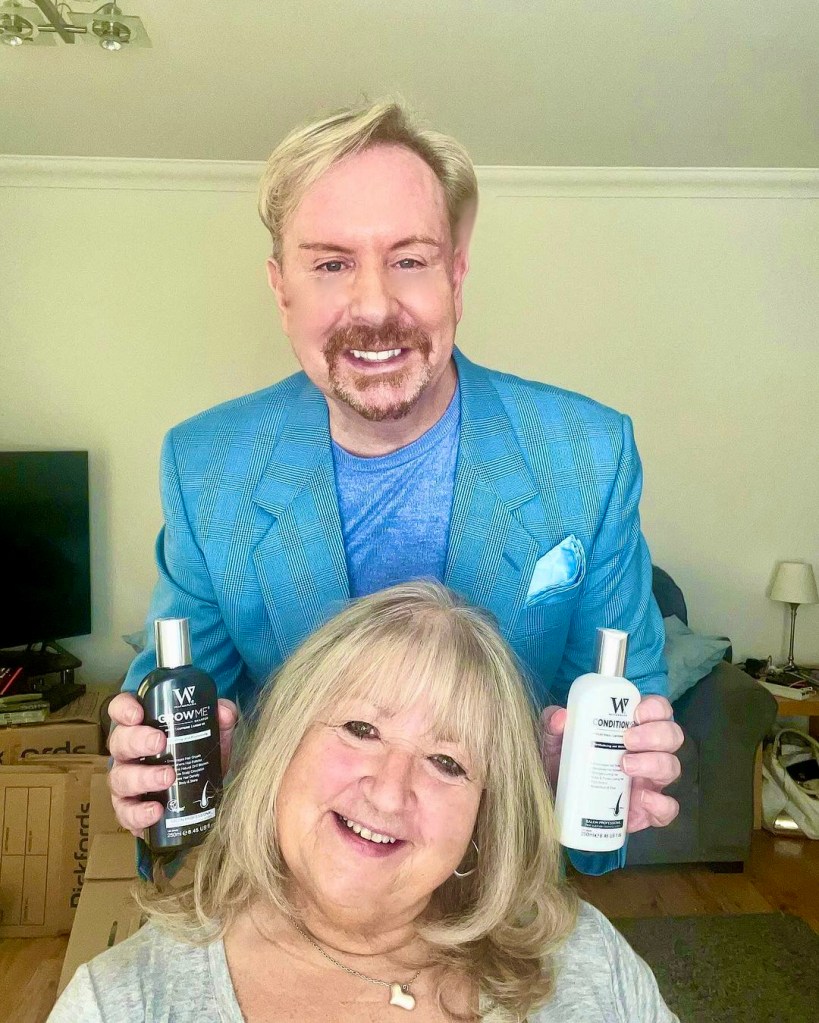
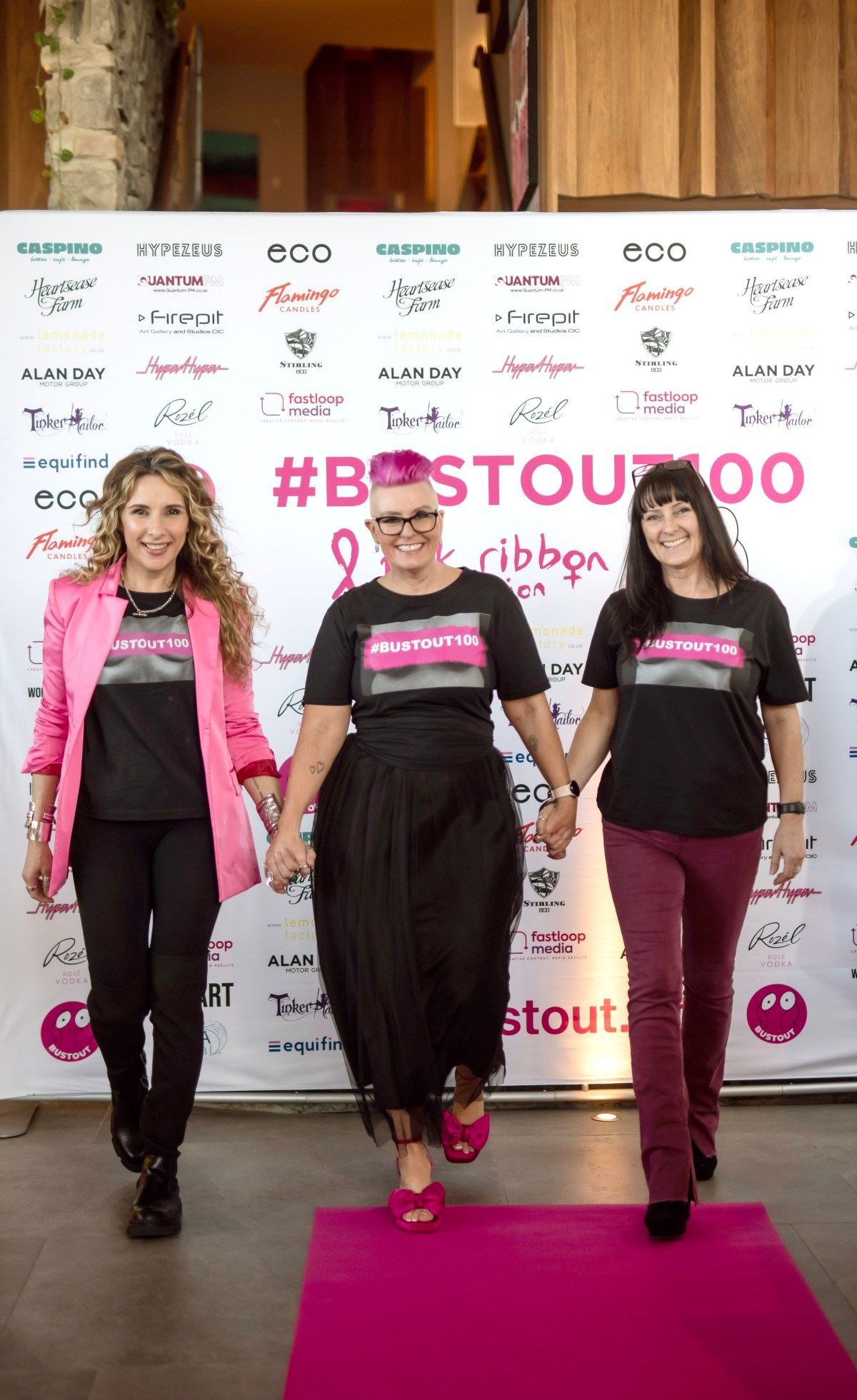
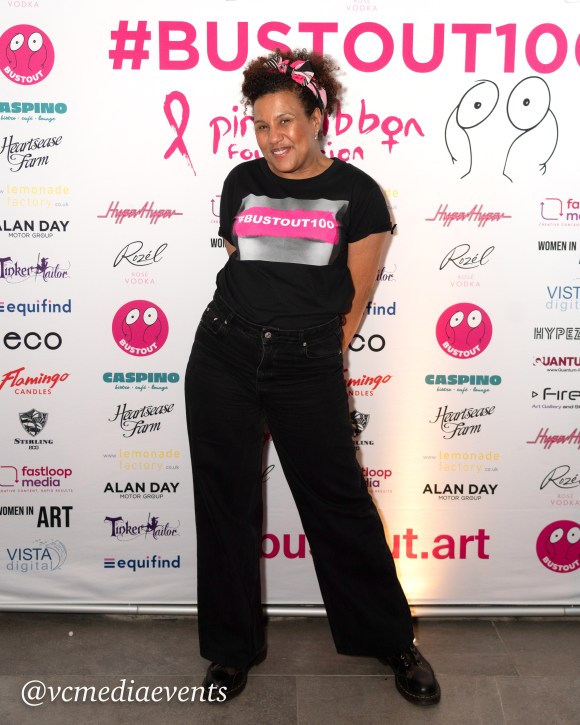
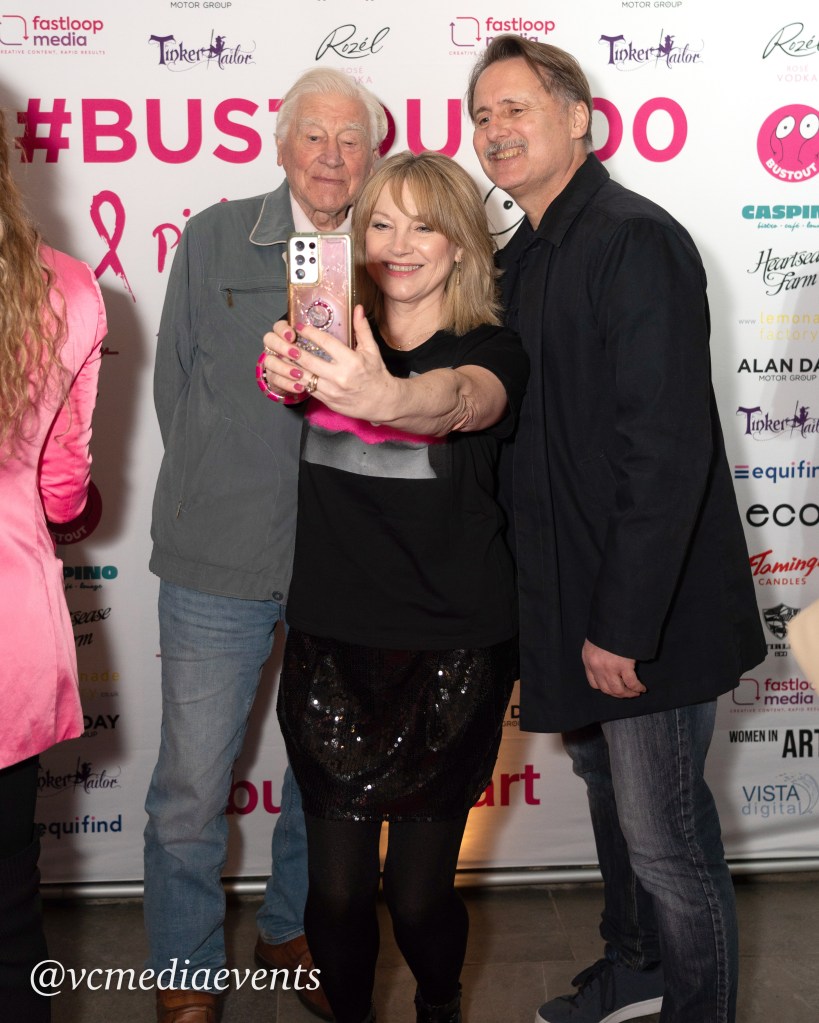
Glitz and glamour gathered in London on Thursday night for the launch of the coffee table photo book, BOLD.
BOLD features pictures of women who have lost their hair—80 percent of them due to treatment for breast cancer.
The venue for the launch, The House of Keune by Bloom Salon, was impossible to miss; it stood out like a beacon of light. A hair salon might seem like an unusual choice to launch a book about being bald, but as an ex-hairdresser, I can say it was the perfect place.
Ten years ago, I was featured in My Left Boob, the story of my dear friend, actress and socialite Sally Farmiloe-Neville, who I shaved her head, styled wigs, and helped grow her hair back.
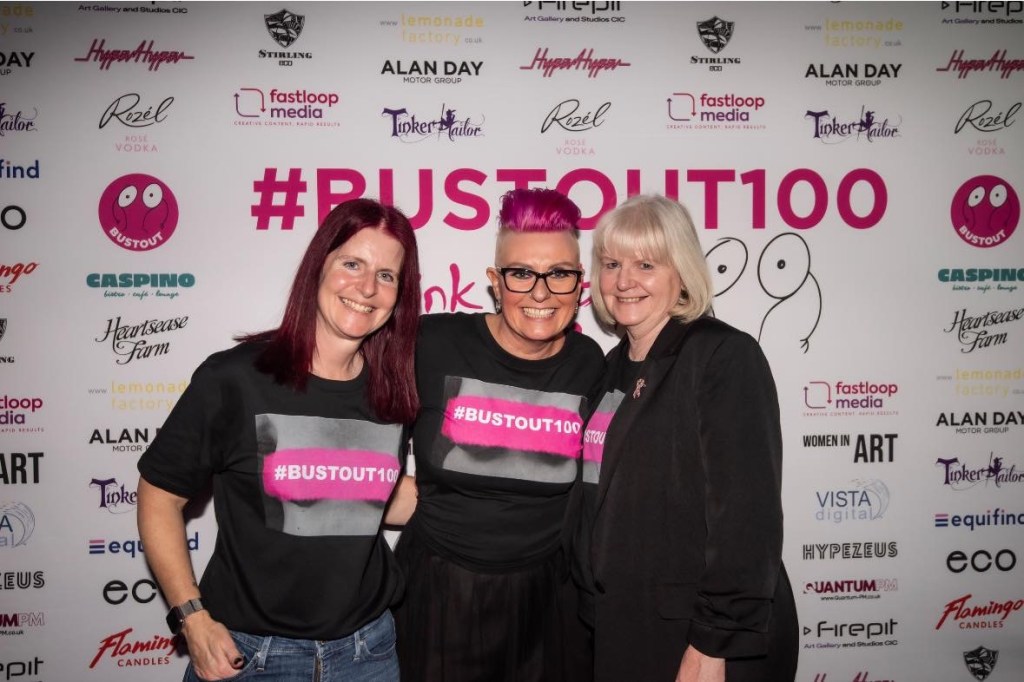
The BOLD photo book is a powerful project that captures the beauty and resilience of women who have experienced hair loss due to breast cancer treatment, alopecia, or other conditions. The collaboration between the Pink Ribbon Foundation and Caroline Sikkenk Photography highlights the strength and femininity of these women through stunning portraits, offering a new perspective on beauty beyond hair.
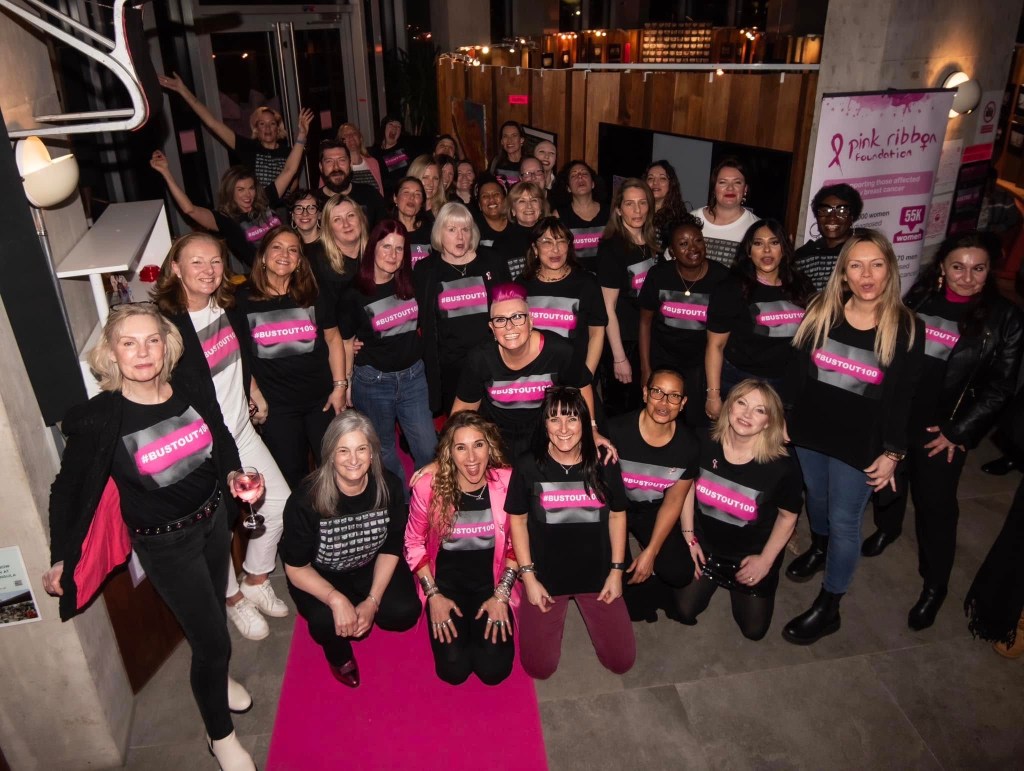
Many of the women featured in the book were present at the launch, with their hair now grown back. The room was electric with love, laughter, and tears.
The photo book, with its high-quality presentation and 192 pages of artistic images, serves as a tribute to the courage of the women who participated. It’s also a meaningful way to support the Pink Ribbon Foundation, as all profits from the book’s sales go towards the charity’s efforts. Pre-orders are available now, offering a chance to own a piece of this empowering project while contributing to a vital cause.
The evening began with a chance to explore the BOLD exhibition, stylishly displayed around the salon’s shampoo area. It was an exciting atmosphere with celebrities such as Wendy Turner Webster (Pet Rescue), Dr. Anna Kennedy OBE, celebrity artist Piluca, and comedian Sarah Mulindwa joining the guests.
The real stars of the night were revealed as the guests sat down to listen to a panel headed by Lisa Allen and Dutch photographer Caroline Sikkenk. Models Lauren Plumb, Tricia Bailey, and Anais Muczynski, all from the iconic photo collection Bald and Beautiful, shared their stories of battling cancer with courage and great humor. The audience laughed, cried, and found inspiration in their stories. There was a standing ovation when Tricia shared her vocal talents and sang Sweet Caroline.
There wasn’t a dry eye in the house when a tribute was paid to one of the amazing models who is sadly no longer with us. Sally Franklin passed away after a recurrence of breast cancer, but her brave and supportive family was present to share their love and memories of this incredible woman.
Sally Franklin
Lisa hopes to take the panel and show to Scotland next, and we at 2 Shades salute her, her team, and the incredible women of BOLD.
Alex said, “Tarot is there to reaffirm your intuition, it’s not there to replace your intuition. It’s an inner knowing”
There are days when I can’t seem to arrange my thoughts in a linear fashion. I catch myself in moments like these and ask myself, what am I trying to align myself to?
I listen to music and await a lyric to collide in my mind to feel heard and define a state of misalignment.
I read books to familiarise myself with situations of a fictional character and believe that I was meant to read that one line in a chapter according to the universe’s clock.
It comforts me to know that in moments of despair and blinding confusion, art and spirituality exists to create a bridge that leads me out of a complex forest and into a community park where everyone re-energises.
Sometimes I lay on the grass with my eyes closed and an open book napping on my chest. Shadows of people eclipse the brightness of the sun behind my eyelids as they walk past me. And in the blissful presence of nature and humanity, I seek messages from my version of a spiritual podcast, a tarot reading video.
I’m fascinated by the soothing voices of tarot readers. I always wonder how radiant their energy must be in real life to sit down for hours and tune into intuitive channelled messages from the spirit realm.
How did they even begin? When did they know this is who they were meant to be?
My dear friend Alex Reads Tarot’s words resurfaced and her introduction to tarot amused me. She said, “I kind of sat one night and I thought, what am I doing? This is not me. Something in me just flipped a switch and it felt like I’m meant to be somewhere else.
I saw readers on TikTok, people like Curious Magpie and Madam Adam and I was just mesmerised. I thought, this is incredible. I’d only heard about tarot but this inspired me to get a deck of cards. I wanted the original. I’m very traditional. If I’m going to learn something, I have to do it the traditional way and then I can go for the fancy stuff. Ever since the first day I got my deck of cards, which I still have nearly five years on, I never parted ways. I slept with them under my pillow. I carried them around with me every day doing different spreads. I was just so invested in it, something just felt right. It felt like a missing limb that I’d finally found.”
There’s a purity in Alex’s connection to tarot that I understand now but I can’t lie when I say I questioned if tarot was even true. And if it is, I found the accuracy of the messages so bizarre that my belief turned into scepticism. How can an entire collective of people be going through the same thing?
There’s nothing sweeter than hearing the words, “They’re thinking about you right now. They wish to contact you.” The temptation of these words from a lost love filled me with hope and anger. Anger at the tarot reader who stirred my dormant emotions and anger at myself for allowing them to say the words I wanted to hear.
My ego convinced me that I was being fooled but a deep desire wished the message was true. It is true because it’s my desire, the tarot reader simply reflected the thoughts I hoard in denial.
I scanned the comments section to see if others felt the same way, I wanted someone to validate my doubts for a cheeky laugh. But to my surprise I saw people using words of hatred to demean the tarot reader, I wouldn’t go so far.
Among many nasty comments they famously say, “Stop feeding my delulu!” A valiant act to protect their own ego, so did I when I bothered to read the comments section because hurt can be a hard pill to swallow. The struggle to accept brews into hatred when we fail to acknowledge the simple emotion of missing someone, that we do wish they would contact us and that life feels sad without them.
Alex said, “The word ‘delulu’ really does irk me. But I’ve had to learn over the years to just let people actually delude themselves with their own delulu buying into it. Which to me is kind of ironic you know, you’re almost setting the intention that it’s delusional. You’re essentially saying that it’s therefore not possible for you. It’s the classic phrase, you can lead a horse to water, but you can’t make it drink. You can give advice, but it’s up to people how they use it.”
I wanted to educated myself, I googled, “What exactly is Tarot?” and the answer is quite plain and simple. Tarot does not predict the future, it gives you guidance and insight in the present moment. It’s a useful tool to align our current situation to our manifestations and our authenticity.
That became a healthy filter to have in my brain to navigate whom I can trust when I come across readers online, it urges me to be real with myself in the moment. I see a few readers who interrupt my scrolling to say, “STOP! This message is for you!” and I immediately think, don’t tell me what to do?
But there’s a few whom I intuitively feel drawn to, their aura matches mine and my energy feels safe to intermingle with theirs.
It could be their sense of taste, their style of delivering a message or just my intuition, the reasons are varied. But I ask my heart, do I want to receive this message? Does it provide reason for the voices I have circulating in my mind? And if it doesn’t, I do indeed scroll away.
Alex added, “I sometimes have readers that I don’t follow or haven’t come across before. And I get a bit of a feeling that maybe I wouldn’t connect so well with that person. I always listen to my intuition. But do I send them hate? No, I send them absolute love and I thank them for their service.
The best readers, in my own humble opinion (which is that there are no best readers), are the ones who can harness such a deep connection with tarot, you don’t just look for the generic meanings. You have to kind of overlay it with intuition. And that’s allowing that inner feeling to just go with it. It doesn’t have to make sense to other people. A 1000 people could look at a painting and interpret it differently. And that’s almost like tarot, you might be drawn to the knapsack or the colour yellow, or the symbology of the tunic. It’s allowing that intuitive nature to override and work with the generic meaning as well.”
The concept of tarot runs across generations as a form of witchcraft, taboo and mystical voodoo. The representation of tarot in films and shows have always been about a kooky woman dressed in either ragged clothes or absurd ornaments in a dingy lair that accentuates her connection to the unknown.
The undertone of portraying them as crazy women or evil witches can cause a stereotype for our automatic rejection towards it. Alex said it best, “People often fear what they don’t know.”
In recent times, tarot has transformed into an entertaining practice that people do for fun as a party trick, while some rely on it to seek guidance or advice. What’s more, literally anyone can learn tarot! Try it, you’re not going to burst into flames.
But there exists a community of extreme religionists who wish to send the art form its messengers to hell before they can even attempt to live out their purpose.
Alex shared a similar sentiment by saying, “As readers, we’re kind of expected to take on the brandishing that we are satanic, that we’re demonic and that we are evil. I get told quite a lot that I need to turn towards the light, and that I need to repent for my sins. And for me, I’ve always been very accepting.
I don’t care if you’re a Buddhist, if you’re a Hindu, if you’re a Christian, there’s such a big Christian and Catholic community in my AlexReadsTarot community and they are very respectful. They see it as God’s work or however they view it. You can have your faith and still enjoy tarot. As long as you’re not using your faith as ammunition against someone’s choice for how they live.”
When you’re divinely connected to any art form, there’s a powerful journey an individual takes to solely focus inward. It’s not easy to maintain the perfect measurement of self-confidence all of the time but it matters very little what others have to say about the inexplicable relationship between an artist and their art.
It also comes with the realisation that not everyone can be pleased and that someone will be disappointed. A portion of people will retaliate, ridicule, resonate with it fully and obsess over it more than they need to. They accept the rejection and move along the course of satisfying their soul.
Alex continues, “I think the biggest thing that I’ve kind of come to, I think it’s for my own comfort, because being any kind of creator on social media, you are expected to take the rough with the smooth, you are expected to take people’s hatred, people’s negativity. And for me, I do fortunately have a very good support system. But I’m still a human being.”
I have personally misjudged tarot readers and spiritual healers a lot too. I thought they dressed simple, were out of touch with material pleasures, embodied a holier-than-thou persona and slept with a cross on their nose. I assumed that nothing could break their resilience, that anger or sadness were fleeting emotions after much penance and are always at peace in the face of all adversities.
After meeting a lot of professional psychic mediums, I realised I was wrong; they live just like us and are learning about life just as much as we are. They only wish to pull out an inner wisdom that resides within us. And offer words that reverberate a positive, healing perspective.
Alex agreed and added, “But you know, it’s not a 24 hour kind of hotline. Your tarot reader is not your therapist or best friend. I get a lot of people asking me, do you do emergency readings? I’ve always vowed that I would never do an emergency reading because for me as a reader, a huge red flag in a client is when they use phrasing like, this is urgent I’m struggling! I actually message these people privately and say, what are we actually talking about here? Because for me, if you’re in such an intense need for reading, I don’t know if it’s always the right thing to do because then you’re depending on a reading. When you’re not then actually listening to yourself.
I do have compassion for people in a sense, because some people are just really lonely and struggling. And a lot of people say, I can’t speak to anyone about this, you’re the only person. And I do take that on with such care and compassion with anything. But there have been the odd occasions where people have crossed over that boundary repeatedly. And I think it has taught me to make sure that my boundaries are clear.”
What I admire most about some of the professional tarot readers I follow is that they level with me, they’re unafraid to tell me they go through the same struggles, they’re silly and yet so unique. They allow me to see them for who they are while delivering exactly what I need to hear and not what I want to hear.
I thoroughly enjoy readers who let their hair down and express that they’ve had a bad week. Or that they followed a similar pattern of toxic relationships and took a long time to make peace with difficult family situations. It’s human, ordinary but magical at the same time.
Alex concluded by saying, “I think that for me personally, it’s understanding that you don’t have to just meditate or journal. Some of us are just not equipped to deal with things in such a calm way. We need something that’s a bit more fiery and aggressive to get it out. Like I go for a drive and blast some loud music. So that’s really how I kind of do it, which I’ve learned how to accept. I’m not like a 5D Star Ascension love and light person. I’m very real. I’m just like, yeah, let’s get angry and then let’s get through this and then we’re okay.
Some of us experience happiness in bigger waves than others. But the beauty of being human is that it’s a spectrum. And if you deny yourself essentially half of that, you’re denying yourself of exploring half of who you are.
Accept that you are going to be aggressive, you are going to be annoying, you are going to be mopey, you are going to be maybe anxious at times and a bit of a nervous wreck. If you can accept that, you’re just going to be accepting who you are. And that is what we’re here to do.”
It is my favourite time of year, and the incredible Autism’s Got Talent is back.
Since its inception by Dr. Anna Kennedy OBE in 2012, Autism’s Got Talent has evolved into a legendary showcase that shines a spotlight on the unique talents of individuals living with autism. This one-of-a-kind event has captivated audiences and received high-profile media attention for over a decade, setting itself apart from other talent shows by offering an evening filled with surprises, inspiration, and diverse performances. Hosted at the renowned Mermaid Theatre in Blackfriars, the 2024 edition promises to be another unforgettable celebration of talent and inclusion
Steven Smith chats to 2Shades columnist and founder of Anna Kennedy on line
Unlike conventional talent competitions, Autism’s Got Talent is dedicated to celebrating neurodiversity and empowering autistic individuals of all ages. The show features a star-studded lineup of performers, including singers, dancers, actors, musicians, poets, magicians, and more. These gifted artists not only entertain but also challenge perceptions and break down barriers, demonstrating what people with autism can achieve. This event serves as a platform to replace stereotypes with messages of hope, fun, laughter, and inclusion, making it truly unique on the global stage.
This year proved to be a show-stopping extravaganza with over 17 acts.
The show was opened by Dr. Anna Kennedy as she introduced well-wishes from Loose Women star Denise Welch, Blue band icon Anthony Costa, EastEnders actress Kacey Ainsworth, and the legendary Carol Vorderman. Celebrities such as ‘Allo ‘Allo!’s Vicki Michelle, Pet Rescue author Wendy Turner, Taino’s Christopher Hamilton, and performer Tru Blue were among some of the showbiz names that turned out to introduce the evening’s performers.
Allo Allo Vicki Michelle and the inspirational Lisa Allen from Pink Ribbon foundation
Comperes for the evening were Gateway Radio DJ and Ambassador of the charity, Aston Avery, along with former The People’s Strictly contestant and amateur dramatic theatre enthusiast Phillip Barnett.
Christopher Hamilton
Pineapple Dance studio lead by teacher Maggie Paterson who have supported the event from the start team of 40 dancers
Gateways radio DJ Aston Avery one of the presenters of AGT “Autistic and Proud ”
This year’s acts, who travelled from far and wide, did not disappoint. It kicked off with Alba Pulido Brocklebank’s stunning rendition of Burn. There were so many outstanding acts this year, it is hard to highlight them all. From guitar supremo Caydian Evans, who described the experience as an amazing, unique opportunity, to father-and-son team Aaron and Andy Clark, who said, “This is a memory that will last a lifetime, and we are deeply grateful for the opportunity.”
Caydian Evans
Northern Ireland seemed to feature prominently this year with two singers: Andrew McMurdie, who said, “There were so many uniquely talented people in one room, like I have never seen before,” and Ty Williams, who brought the house down.
Somerset singer Lianne Vessier was blown away by the diversity of the event, and the standing ovation for her performance left us all in awe.
Lianne Vessier
Stepping in at the last minute was Swaran Hayer, who dazzled the audience with his calendar skills (even revealing Anna Kennedy’s age and date of birth!). His mum, Mandy, said, “It will forever be an unforgettable and memorable experience.”
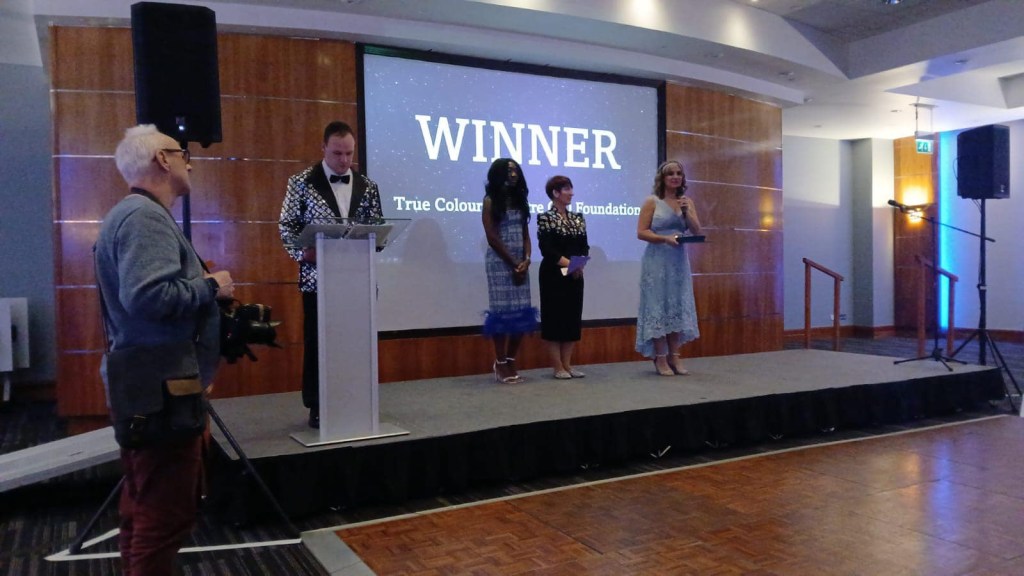
Theatre group True Colours had the audience cheering as well.
True Colours
Anna Kennedy, founder of Anna Kennedy Online and Autism’s Got Talent, shares her hopes for the event: “We aim to continue to build Autism’s Got Talent year by year. We want all those involved to have fun, do what they love, make friends, be themselves, and have one night that is all about them.” This ethos of inclusion and empowerment continues to drive the event’s growth and inspire its participants.
Tears of joy marked the end of the show, with all the wonderful performers on stage, proud parents, families, and friends in the audience.
They all had one message for the AKO family: “You’re all amazing, and we all rock!”
With allegations of sexual abuse against pop stars, actors and high-profile business people at an all-time high, Steven Smith looks back at his own experiences as a 16-year-old on the celebrity party circuit in the late 70s. He asks whether society at the time was just as much to blame for the exploitation of teenagers as those that are having the finger pointed at them.
It’s a Monday morning. I’m at Soho Gym in Covent Garden and I’m working out. My book It Shouldn’t Happen to a Hairdresserhas been out for a month now. It’s my autobiography and follows my journey from coming out at 16 to tending to the hair of the rich and famous around the world. Though now I work mainly in the media, I still keep my scissors handy.
The book has caused quite a stir and there’s been a lot of press. Many are asking who the pop star was that seduced me when I was 16.
Wanna buy it? Link at the bottom of this article.
I decline to answer. It was not something I wanted to talk about further, plus, having worked for the tabloids for over a decade, I knew exactly where that conversation would lead. Having been harmlessly misquoted in some of the papers (one claimed that I hung out with Madonna), I still knew that interviews were a road that needed to be trodden carefully.
My phone goes. It’s a lady agent friend of mine who has been quite supportive in promoting the book.
“Hello darling. I simply couldn’t put the book down, it’s marvellous.”
She goes on to ask how the book is doing and who could imagine how difficult Katie Price could be. We both laugh, but then we get to the reason for the call.
“Darling, who was that awful pop star that seduced an innocent 16-year-old you?”
Innocent! Back in the late 70s, 16 was more like 20. Now, it’s not something that I felt was integral to my life and I won’t be naming him. But it was important to my story in the book. The gist of the call is she thinks that I should chat with one of her clients, a gorgeous police officer called Dan Neal. It could be beneficial to us both – he had read the book and was branching into showbiz.
My agent friend had always been good to me, so I agreed. Almost immediately, Dan called. He was involved with the Jimmy Saville inquiry and was making quite a name for himself (he later went on to marry Rylan Clark). Charming and full of life. He said how much he had enjoyed the book. But then came the cough!
“The pop star who seduced you when you were sixteen, would you name him?”
“No”, I replied quickly.
Dan asked if he could hazard a guess. Judging by the tennis courts in my description, was it —– ? I had heard that they were after this particular person, and funnily enough, I had met him. And a more asexual but charming person you could not want to meet. (Although rumours of his early years hold that he was rampant – but not with young men.)
“No, it was not.”
He went on about his duty to uncover these people.
Cutting Dan off, I pointed out that I was not about to be induced to join a witch hunt. There was a big difference between boys and girls who had been groomed (or been downright taken advantage of) and the youths who attended parties and venues dressed like they were in their twenties, who were desperate to bag a pop star or anyone in the limelight. Back in the 70s, 16-years-olds were very independent, with some passing themselves off as 20-something.
Many of them only seem to have decided they were taken advantage of after the star has died or when they’re in their late 50’s, when many (I’ve found, having done research) have money problems.
In the late 70s no-one asked for ID or carried it. We grew up in an era when, as soon as you could carry a bag of newspapers, you had a job as a paperboy. I was working at ten.
Benny Hill chasing a woman dressed as a schoolgirl around the garden and Barbara Windsor being sexually harassed dressed as a nurse in the “Carry On” films was acceptable in comedy, and for many in the UK (and the US) it still is.
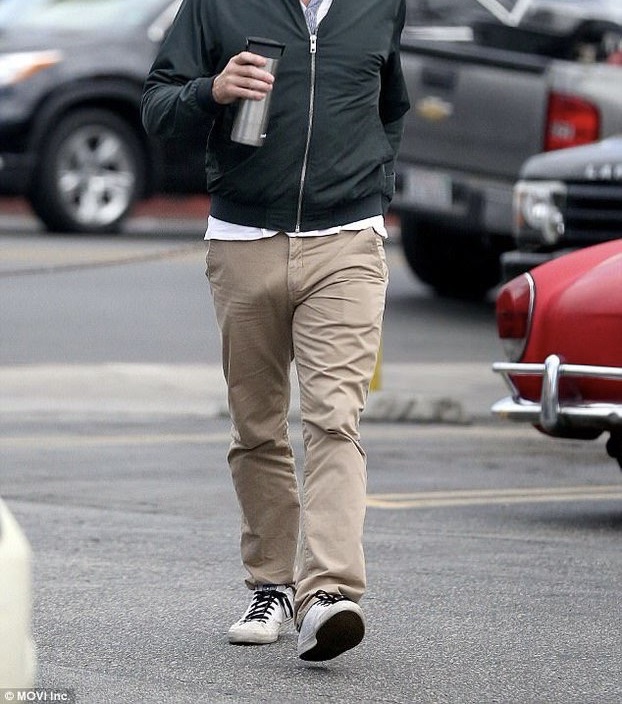
Your correspondent 40 years ago.
When I was 16 the club to go to was BANGS! On Tottenham Court Road on Monday nights, Donna Summer blasted from the speakers and we dressed to impress. We danced on the stage as the beautiful, gay, stylish and soon-to-be famous mingled in an electric atmosphere.
There was a whole group of lads and lasses aged 15-16 who lived for Monday night. It was not unusual to be approached, asked to come to other parties or asked out.
A young air steward invited me to a party one night. It was being held the following Sunday and he said that a car would be sent for me. He wouldn’t tell me whose home it was but said it would be great fun. He was very cute, and Sundays were boring.
I slipped out on the Sunday from my parents’ home and picked up the car at the end of the road, where the steward was waiting with the driver. As we reached the destination, I was stunned by what I saw – it was the most magnificent house, more of a mansion really, with fake butler and maid statues to greet you in the huge entrance hall. It was like nothing I had ever seen before.
We parked the car around the back of the house and went to meet our host on the tennis court. I was shocked when I saw who he was – he had played with one of my favourite bands when I was growing up and here he was, greeting me on his tennis court! He was down to earth and seemed genuinely interested in me. Before long we ended up in his disco, where the cocktails flowed. And so did some other things. Some of the other guests offered me cocaine and laughed when I refused.
Not changed a bit
“Hey, have you brought a good kid to the party?” they asked.
Nevertheless, one too many gin and tonics and as Dorothy Parker said, I ended up under the host. Still, it was a great day, and I went home with my host’s autograph. That was enough excitement for me.
As he brought me home, the steward suggested I might like to meet other friends of his and intimated that it could be quite profitable for me. But I was streetwise beyond my 16 years and said no, thanks.
So, I was somewhat surprised when I received a call from the star’s right-hand man asking me to come down again, which I did. I found myself liking the guy, who even played a song for me on his piano, across from his statues of Snow White and the Seven Dwarfs.
Really, I preferred T-Rex. He sent cars for me several times and we even watched a movie in his cinema room.
He only stopped sending for me after I told him that I’d mentioned the visits to my family. He almost passed out! After all, I was still only 16. This, despite me pointing out that I’d been in the theatre and it wouldn’t seem unusual that I was hanging out with the likes of him.
Still, much as his interest in me waned once he discovered that, he still invited me to the parties. They were great fun and he always got me home safely.
All these years later, though, whenever I smell Opium perfume, I think of him. The fragrance filled the bathrooms in his fabulous house and I even bought some for my mother that Christmas.
One of the most wonderful moments was when a famous pop manager held a boat party along the Thames for his birthday and Freddie Mercury and Kenny Everett were among the many celebrity guests. It was a dream come true and all I did was dance the afternoon away.
I was even hired briefly at the Embassy Club (in shorts).
With no age check.
Other parties were not so innocent. (Let’s not get started on the famous journalist with the three-way mirror whose parties hosted many a squaddie, some of whom went on to appear in the work of Mike Arlen (a gay photographer).
But I was lucky there was always an out. So, I never felt trapped or taken advantage of.
Of course, if I felt like playing victim I could rewrite this story in a different colour.
Many of the boys at the parties have passed on with HIV or disappeared. One or two I still bump into, and they talk of the good old times.
I’m sure that some may have regretted the follies of youth and even feel like they had been taken advantage of. But we can’t just blame the celebrities. The ’70s was a time that allowed freedom for the young and sexually promiscuous behaviour was rife.
Only when my nephew turned 16 I looked at his face. Suddenly it hit me how wrong the pop star and others were .
Luckily, we have ID now and people check. I feel great empathy with those that have been hurt. But regarding those who, in their teens, labelled themselves groupies, only to say many decades later they were victims, responsibility must lie with more than one party.
There is a difference between the casting couch, grooming – and dressing up, passing yourself off as older and consenting to things.
Steven Smith looks at the affect addiction has on us all, how it can be so prolific among the LGBTQ And celebrity community, the often-misguided views people have about those living with addiction, and of course shares his own tale.
November 26th, 2010, the phone rang with news I had been expecting—my lifelong friend Lester Middlehurst, the witty, Machiavellian, and brilliant journalist was dead at 55. He had been in coma for days after a suspected suicide attempt.
I know how I was supposed to feel to the world. But putting down the phone, there was complete numbness followed by anger, and then an overwhelming relief that the man who had formerly been my friend, but had in later years become my tormenter was no longer. No more waking to drunken abusive messages, or being the brunt of his jokes or outburst at parties, and I’d no longer have to apologise to other people for his behaviour towards them.
Lester in his prime
Lester Middlehurst was one of the first openly gay staff members at The Daily Mail. He was legendary. At the coroner’s inquest it turned out he had not killed himself, rather his death certificate said that he died of a hypoxic brain damage attack. Everyone agreed it was his addictive lifestyle that killed him.
Sadness
Lester was one the most addicted people that I have ever met, and he was my friend and I loved him. A month later I must have spent a day crying over him. The sadness was really that he never got help for his addiction, and you could say that my lack of knowledge of it prevented me from helping him…but that would be romanticising a terrible situation.
Back in 2009 I got him to agree to attend the Meadows Clinic in Arizona, but the next day he told me not to be so stupid. In truth, I did not feel strong enough to stand up to him. As my knowledge about addiction has grown, I have become more aware that there was nothing I could have done unless Lester had wanted to do anything about it.
According to the Centre of Addiction, members of the LGBTQ community are at greater risk of substance use and mental health issues compared to those identifying as heterosexual.
Members of the LGBTQ community face chronically high levels of stress, often due to having to suffer from social prejudice and discrimination. Fear, isolation, and depression increase the chances of self-medicating with alcohol and drugs. As a man that has lived a life in big cities, I have witnessed addiction in all classes and types of people. Addiction is a mistress that does not care who she dances with, yet the LGBTQ community are often her favourite partners.
As the self-confessed addict, actor Russell Brand explains that the distinction of any compulsive or addictive behaviour is when it begins to negatively impact on the rest of your life.
Compulsive
So, you might love chocolate so much that you’ll ignore all logical reasoning, “I have to have chocolate…I have to have chocolate…I don’t care what else happens”. If you’re crashing your car because of chocolate, that’s a problem.
According to Wikipedia, addiction is a brain disorder characterised by compulsive engagement in a rewarding stimulation despite adverse consequences.
Of course, addiction is certainly an illness and not a lifestyle choice, and if we are honest, addiction is in all of us in some way or another.
For me, I just can’t not buy a large French baguette, cut a few slices off, and put it back for later. I end up devouring the whole thing. Subsequently, I do not buy French baguettes unless I am feeling poorly. Whether it’s chocolate, coffee, or your favourite tipple, we all have cravings.
Russell Brand
Much as Russell Brand is right, there are so-called functioning addicts who you would not even realise are hooked on their drug of choice, and it can take many years for the effects to begin to show. Often referred to as “high functioning addicts” owing to their having powerful jobs or enough money to effectively hide their addiction from others. This knocks on the head the commonly presented image of an addict being down-and-out or living on the streets. According to the American Psychiatric Association, there is no such thing…they are all just addicts who have created coping mechanisms.
My father, God rest his soul, came home after holding down a high-powered job and drank whisky every day of his life, yet he would be horrified at the idea of being described as an addict. But when he left hospital after lung cancer removal surgery, he sat down and demanded, “Get me a whisky and a cigarette.” On the suggestion that was not a good idea and that he would end up back in hospital, he snapped “Are you threatening me?”
Growing up, I was told that an addict was someone who got up and drank first thing. Drinking after coming home from work and weekends was seen as normal for many in the 60s and through to the 90s. All of our soaps were featured around a pub, making alcohol look like a socially acceptable way of life.
I had a volatile relationship with my dad, but his fight with cancer gave me a better understanding of the nature of his addiction and where it had come from. He had been a talented jazz trumpeter and played with the BBC orchestra, but his nerves had come to the forefront and he started to self-medicate by having a few whiskies before his shows. Eventually, he gave up and started a family, but the drinking did not stop.
Charismatic
My father adored my best pal who also fights addiction, and is a truly remarkable human being who I was fortunate to love, and my dad did not like many people. The two were like two peas in a pod and talked for ages.
Spending time with my dad before he died made me wonder whether, if he had managed to overcome obvious anxiety and continued playing, perhaps he would have been happier. Of course, back then mental health was seen by many as a weakness and not to be spoken about.
My world has been filled with people who are addicts in one form or another. They are the most charismatic and amazing people and the arts are full of them. In my opinion, they all have one thing in common—they can snap and become almost frightening at the drop of a hat, and then suddenly they are wonderful and make you feel like you mean the world when they are OK. Sadly, during my childhood there was more of the former with my dad. Though I knew in the end that he loved me.
There are so many people living with addiction, anxiety, and mental health issues who are in denial. Even with all the help groups and open discussions there seems to be a quite a bit of stigma attached to it still.
Dr Pam Spurr, a popular self-help expert and radio television personality, says she often encounters people who are in denial about their issues that are the source of their addiction problems. They say things like “I just have a little problem with confidence” which ignores the fact that they drink excessively to help make them feel more confident. Or they say, “I only drink after work to take the edge off.” But when they count up the units, they are far in excess of government guidelines. It’s at times like these that I encourage them to think honestly about their drinking (or drug taking) and consider expert advice.
Many addicts get clean either by joining the 12-step programme, by checking into rehab, or by seeking counselling. The journey of recovery can be different and what works for one person might not work for another person. It is important to point out that as much as the newspapers show pictures of celebrities dashing off to glamorous-looking rehabs, getting into a state-run rehab in the UK can be very difficult for mere mortals.
While helping a friend who was using OxyContin (a pain killer) and had got into a mess from ordering online and then become addicted, the general health services did not want to know. Even going through other channels, she was advised that her chances of getting into rehab were slim, although she did come away from it with a strong network of friends around her.
A beautiful girlfriend of mine found her sobriety in a man as her anchor who was also living with addiction. They have both been clean for seven years now.
Living in LA, the 12 steppers (12 step programme) were like the mafia, and rumour had it that all the best movie deals were done at their meetings and also that many there did not have addiction issues and instead just wanted to pitch ideas.
There is no doubt that the 12-step programme helps many, and even if the meetings can become the new addiction it’s a healthy one.
I agree with Doctor Pam that it is amazing how much of a lack of understanding there is about addiction.
Cake
My gorgeous bubbly friend Monica is originally from California. She is a super bright academic having gone to Yale, lectured all over the world, and she also ran a school for a while.
Yet three years ago she decided to open an up-market catering company as her award-winning chef sister is a goddess in the business. People actually beg for invites to try her canapés.
Lunch with Monica is always fun—it starts off with “Darling shall we share a cake after?” Despite being gorgeous, she is always on some kind of diet. Her little addiction would be cake.
Like one or two other intellectuals I have met with qualifications coming out of every orifice, their life skills sometimes leave me speechless. Despite having a gay brother, she once commented on a photo shoot involving five men I had directed “Is the man with his foot up against the wall a sign he is gay?” I replied “No darling, there are no secret signs; it’s a James Dean inspired clothing shoot.” She just smiled and continued eating.
Today, however, she was on the warpath. She was catering for a big party we had worked on together to get celebrities at. One of the celebs had behaved inappropriately to some of the other guests and to a couple of waitresses.
She was not amused when I laughed, “Well darling, at least he did not get his cock out and try and pee in the champagne fountain like at my other friend’s launch. How that did not end up in the papers is beyond me.” I got the school ma’am look.
He was living with addiction – not surprising considering his childhood trauma and the abuse he lived with. He really should not have been drinking. I am not excusing him, but it’s not the end of the world that I did not invite him to the next few. I said that I’d have a word. Her eyes got wider, and she seemed shocked that I had empathy with the celebrity at all. She wanted him banned for life.
Taboo
As much as I have some reservations about the 12-step programme, saying you’re sorry to those you may have hurt is not easy to do, but it sometimes isn’t enough. I started talking about addiction, and a few minutes in it was clear that it was going nowhere, even though I was sharing this with someone highly intelligent.
Addiction remains a taboo subject. There are so many people in denial and as much as the newspapers are full of celebrity headlines about them being addicted, most of us don’t want to talk about it or feel labelled by it.
A year ago my phone rang—it was a friend who had come out of family day at a rehab centre that her daughter was attending. She was fuming that they suggested that it may run in the family, “They had better not be blaming this on me. I have no addiction.” She was not amused when I laughed “It’s not about you and I will remind you of that next time you refuse to come home from the bar or spend two weeks obsessing about something.”
Outside those who are counsellors, therapists, and those who talk openly about their addiction and some of their loved ones, I have found very few people who understand those living with addiction.
A very wise woman, author, presenter, and journalist, Jane Moore was one person who seemed to understand it. Lester and Jane were great friends and the two together were hysterical. Yet Lester had gone on a tirade about her and I was mortified since she was a true loyal friend to him, and he was starting to run out of friends due to his behaviour.
Lester Middlehurst and Jane Moore
While ringing her and offering full apologies asking her not to fall out with him, she calmly said, “I could never be offended by Lester. He is hurting too much, but he’s lucky to have a friend in you.”
At the time I just thought, but I wish if I had taken those words more to heart I might not have taken his behaviour personally and got as hurt as I did in the end. It helped later in life as I saw the pain addiction brings too.
The LGBTQ community have learnt to talk more as we have needed to be heard to survive. Most surveys say that a larger proportion of those identifying drug and alcohol use as a coping mechanism are LGBTQ, but I beg to differ.
I have sat in many restaurants and bars in London watching the city boys and their entourage go back and forth to the toilets, passing each other along the way. I am pretty sure they are not the kind found in the survey.
Addiction is a worldwide human crisis according to the World Drug Report. Unless we start talking about it, spotting the signs at an early age, and treating it as an illness, many will die with all the new and powerful drugs flooding the market. Whole towns have been wiped out in the US due to drug addiction.
Chemsex is the consumption of drugs to facilitate sexual activity. Both terms refer to a subculture of recreational drug users who engage in high-risk sexual activities under the influence of drugs within groups. Chemsex parties are said to be prolific on the London gay scene, but that is a different story. Not wanting to be righteous, I have no experience of it or want to engage in it. Recent reports in the gay press say chemsex parties are held across UK, but there is a correlation between addiction and sex shame.
The perfect storm
Sadly no longer with us David Stewart of 56 Dean Street, an award-winning HIV and sexual health clinic in the heart of London, explains that this trend is driven by a convergence of factors: “Vulnerable gay men with issues around sex, new drugs that tapped into that problem and changing technology. What they call the perfect storm.”
There was enough of a problem for the government to lay out guidelines in 2017.
Actress Danielle Westbrook, who I have interviewed many a time, put it simply to me, “Look Steve, you get ten people at a party and they all try coke for the first time. Four never try it again, four have it once in a blue moon, and two poor things are addicted six months later.”
The answer would be to never take the risk, but human nature is never that simple.
My friend Lester will never come back but it led me to have so much more of an understanding of addiction and how to protect myself around addiction. Many of the world’s beautiful people are soldiers fighting addiction every day of their lives.
This year’s presenter for “Autism’s Got Talent” Aston Avery chats to 2Shades
We were all thrilled to hear that one of the main presenters of “Autism’s Got talent” this year is going to be Aston Avery Gateway’s radio host and ambassador for Anna Kennedy on line.
Both Anna Kennedy and myself share a monthly spot with him on Gateway. He is for sure someone to be truly admired. He will bring an authenticity and sparkle to the show. I took time out to have chat with him before the big night.
Aston- Avery: A Journey of Passion, Perseverance, and Pride
How excited are you to be presenting Autism’s Got Talent?
I am really thrilled to be presenting this year’s Autism’s Got Talent. “It’s beyond exciting,” “I think it might surprise some people, seeing me in this role. But I’m looking forward to the challenge and seeing what I can improve on for the future.”
When did you first meet and get involved with Annakennedyonline?
My journey with Autism’s Got Talent began in 2015, when I first met Anna Kennedy while performing a bit of Elvis at the event. “That was the same year Anna did The People’s Strictly with Robin Windsor. Since then, I’ve been deeply involved with her charity, AnnaKennedyonline. In 2016, I was honored to become an ambassador for the charity, and I’ve had the privilege of performing at events like Wear It For Autism and various Autism’s Got Talent roadshows. Anna also helped me secure a scholarship with Pineapple Performing Arts, which was an incredible opportunity.”
At what age were you diagnosed with Autism ?
I was diagnosed with autism at the age of two and a half. My mum remembers it vividly. When they received the diagnosis, my dad had a tear running down his cheek. That’s why my mum’s book about our journey is called From A Tear to Here.
Astons as baby with his brother
You raise a lot of money for the cause?
You are right, I am no stranger to the world of fundraising and raising awareness for autism. It has seen me skydiving, playing in charity football matches, organising charity discos, and even hosting charity balls. it’s not just about the money. “It’s about raising acceptance within the community. That’s my real goal.
Aston Sky Diving
Being a previous act on Autism’s Got Talent, what advice would you give this years performers?
Having been a past performer at Autism’s Got Talent, my advice for this year’s participants is: Enjoy every moment. Make friends—talk to your fellow performers, and even reach out to past performers. It’s about connection as much as performance.
Who are your hero’s Aston?
My heroes are close to home: My parents and my brother. They’ve stood by me through everything—my autism diagnosis, my battle with enterocolitis, and even my fundraising efforts. They’ve been there for the good and the rough times.
Aston with his brother, Aaron
Your very vocal about bullying what is your advice to people being bullied ?
Being an advocate for anti-bullying, I feel strongly about speaking up about it. If you’re being bullied, don’t let them break you. Talk to someone—a parent, a sibling, a professional like a teacher or manager. You don’t have to go through it alone.
How did you get involved with Gateway 97.8?
My media journey began in 2013 when I got involved with Gateway 97.8, working behind the scenes on the technical side of things. By 2015, I was presenting his own daytime show. I’ve spoken to so many people—celebrities, regular contributors, and people from the local area. It’s been such a rewarding experience.
What are your future ambitions?
I’d love to perform in a pantomime one day, and I really hope to become a TV presenter. My dream is to appear on Strictly Come Dancing—that’s my favourite show. Fingers crossed!
What would you say gives you inspiration each day?
My daily inspiration comes from the people around me and my own drive. I wake up motivated to do what I love—whether it’s performing, presenting, or connecting with people to share experiences. I always say, my name is Aston-Martin Avery, I am autistic, and I am proud!