
Why Piers Morgan Might Miss a Beat on Mental Health — But He Is on the Side of the LGBTQ+ Community
“I disapprove of what you say, but I will defend to the death your right to say it.” — Voltaire
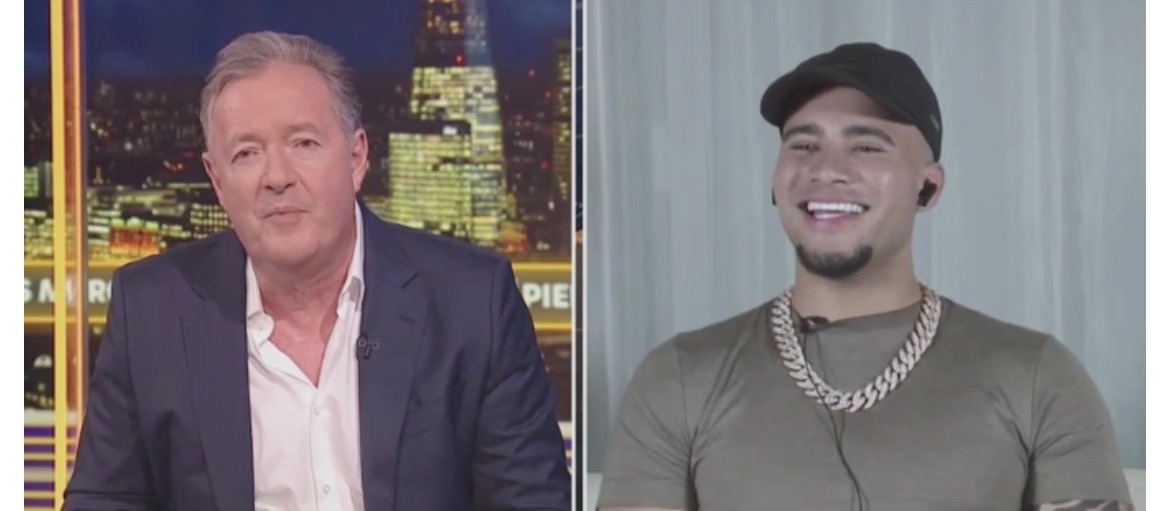
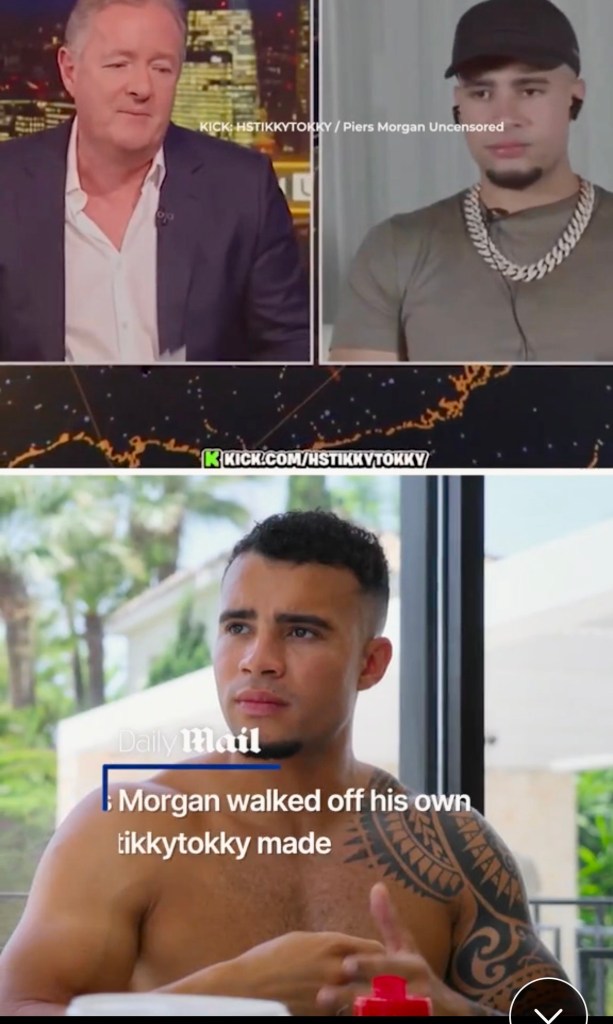
Let’s get one thing straight about Piers Morgan: he is no homophobe. I am re-running a feature I penned around the time he walked out of Good Morning Britain. No, I do not agree with his views on mental health for the most part, but he is entitled to his opinion. I was dumbfounded that he did not take Kevin Spacey to task over giving Elton John as a moral character reference. Having been a guest as a teenager at the Rocket Man’s house, I believe the truth will come out. His interview with the deluded TikTok personality HSTikkyTokky showed his stance against homophobia, and I will be writing about that in my column next month. For now, please read why Piers is, in fact, an LGBTQ+ ally.
Steven Smith takes a look at the meteoric rise of what could arguably be the ultimate school bully, Piers Morgan. He asks: as an adult society that often does not move far beyond the playground, do we actually revel in Morgan’s Machiavellian ways? Is he a friend to the LGBTQ+ community, and should he be fired from Good Morning Britain for his apparent sexist views and for questioning whether we should teach children that there are 100 genders?
Victoria Wood is about to come on stage at the Royal Albert Hall, and I am in the box, hosted by her PR, Neil Reading, with a variety of celebrities, journalists, and media types. The lovely Dale Winton is chatting away to me—fabulously bronzed, styled to perfection, charming and witty. Everyone is excited about the show when suddenly the air changes.
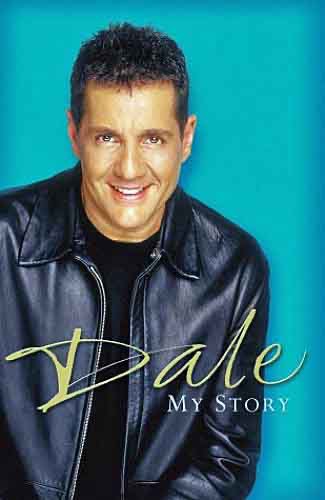
“Oh God, no!” Dale shrieks, as if Maleficent herself had appeared to cast a spell over us. Some of the other guests look uncomfortable too. No—it is not Maleficent. It is Piers Morgan, then the youngest editor of the Daily Mirror. Dale does all he can to avoid him, but Piers makes a beeline, grinning from ear to ear. “How’s that bottom doing, Dale?” Dale’s tan deepens two shades. “Fine, Piers, thanks,” he replies, avoiding eye contact. The penny drops. The Daily Mirror had splashed that Dale had been paying for colonic irrigation treatments at a clinic in London’s trendy Beauchamp Place—the same clinic frequented by Princess Diana. Somehow, they had photos of him leaving.
If Dale had turned around and said, “Oh, just great! You should try it, Piers—wash some of that rubbish you write straight out of you!” I suspect both men might have laughed, and Piers might even have offered him a column. The scenario did make me chuckle. Piers was goading his subject like a provocateur returning to the scene of the crime. It was no big deal—but Dale was private, kind, and is still sadly missed.
The next “victim” was Anthea Turner, splashed across the tabloids during her very public relationship scandal involving Grant Bovey. Piers had that unmistakable school bully energy—unable to resist the poke. Yet here’s the paradox: he also wanted to be one of them, a celebrity himself.
Let’s be clear—Piers Morgan is a genius. Rupert Murdoch made him editor of the now-defunct News of the World at just 29. He has the rare ability to remain calm while provoking others—an ability that later defined his interviewing style. Sometimes uncomfortable, often gripping, always headline-making. And when he chooses, he can be kind.
At a wedding with Barbara Windsor and her husband Scott Mitchell, Piers joined our table. He was delightful, charming, engaging. Until a PR woman confronted him. Piers remained calm while she became increasingly furious, eventually storming off. He had that effect—controlled chaos.
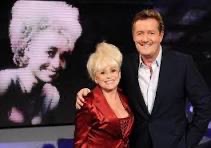
Under his leadership, the Daily Mirror became more progressive on gay issues, especially compared to rival tabloids. He helped elevate voices like Sue Carroll, a fierce advocate for LGBTQ+ rights and a dear friend of mine. He also co-created the Pride of Britain Awards alongside Peter Willis. But let’s not kid ourselves—we still have a long way to go before tabloids are truly safe ground for the LGBTQ+ community.
After the Abu Ghraib scandal and other controversies, which he has always denied wrongdoing in, Piers was sacked. You might expect him to disappear. Instead, like a phoenix, he came back stronger. From television appearances to America’s Got Talent, from winning The Celebrity Apprentice under Donald Trump, to taking over Larry King’s CNN slot, he rebuilt himself as a global media personality.
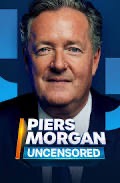
And here’s the key point: on LGBTQ+ issues, Piers Morgan has consistently shown support. He has challenged so-called conversion therapy advocates on air, telling one, “Shut up, you bigot.” He has supported figures like India Willoughby and publicly backed trans rights in debates. There is simply no credible evidence that he is anti-gay.
Now critics call for him to be cancelled—over gender debates, over tone, over clashes with guests. But should he be fired? No. If we silence every voice we disagree with, we risk losing something vital: dialogue, understanding, and progress.
I want to hear opposing views—even uncomfortable ones. That is how we measure how far we still have to go. We have made huge progress. Ten years ago, LGBTQ+ role models speaking in schools would have been unthinkable. But progress requires conversation, not cancellation.
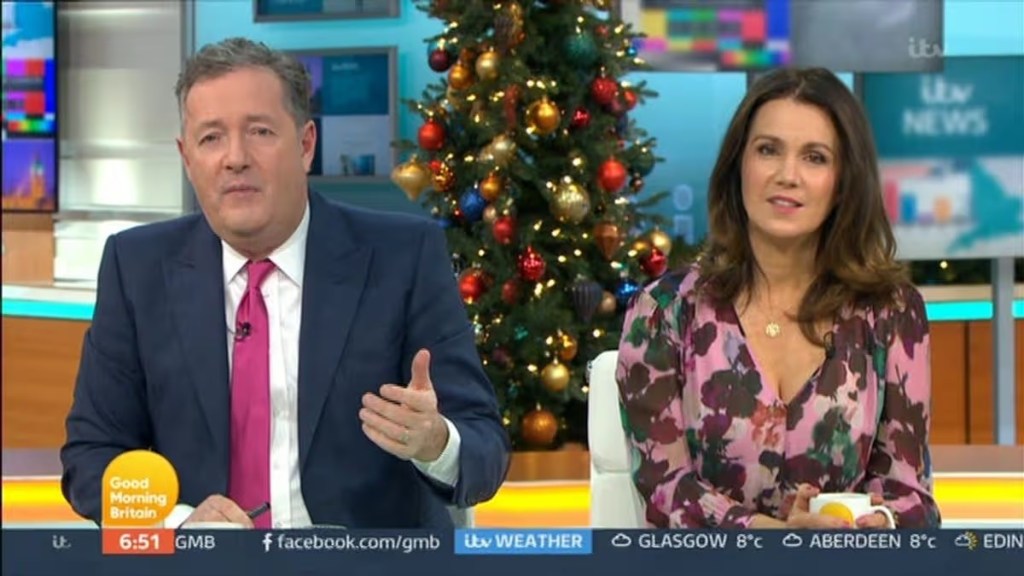
Yes, Piers gets it wrong, especially on mental health. I believe he owes Denise Welch an apology. But he also reflects a segment of public opinion we cannot ignore. We must challenge hatred, but not silence debate. Because if we push dissenting voices underground, we risk something worse: backlash.
So no, I do not agree with everything Piers Morgan says. But I would still want him on my side.
And one final thought: can someone explain the “100 genders” to me? Not out of defiance, but because I want to understand. Asking questions does not make someone a bigot—it makes them human.
END

 2Shades Magazine