
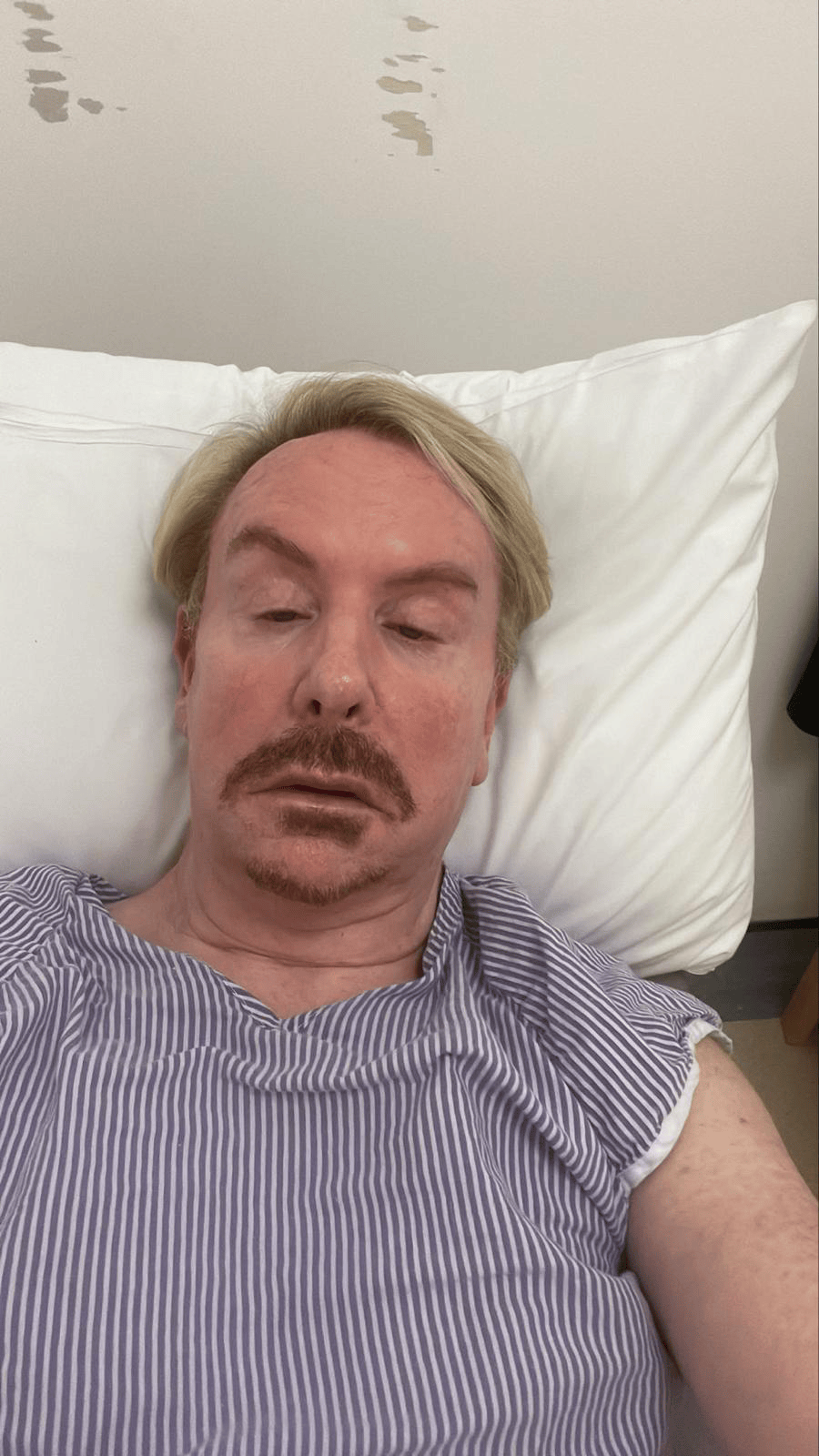
“Just like a prayer, I’ll take you there “
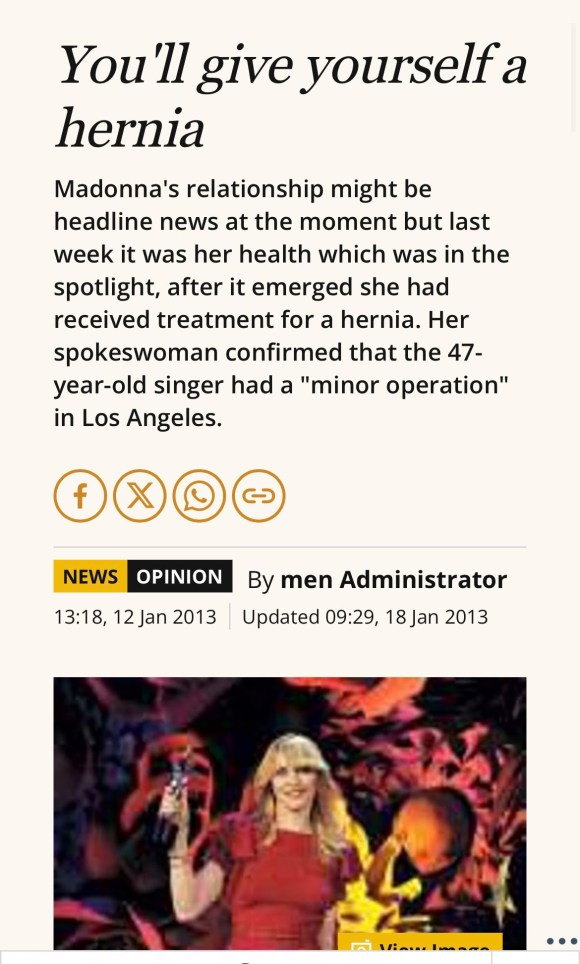
It is not just global superstar diva Madonna who has been diagnosed with a hernia. After an agonising pain in my groin that very nearly brought me to my knees, I too discovered that I had joined the hernia club — a membership I certainly hadn’t applied for.
Suddenly, I was well and truly knocked out of my groove. I went from gym bunny to couch potato almost overnight. There would be no Vogue-ing for me for a while.
So here is one diva’s tale of overcoming the pain, indignity and unexpected challenges that come with having a hernia.
I admit that, at 65, my activity levels sometimes make my 26-year-old nephew groan.
“I’m exhausted just watching you,” he says, shaking his head.
I’m rarely out of the gym or sitting still for very long. Add to that a busy social and work life and people often ask me, “How do you do it?”
Well, unexpectedly, it all ground to a rather spectacular halt.
I was dashing with my nephew to catch the Tube at Victoria station when, completely out of the blue, a pain shot through my groin. It was so sharp and sudden that it felt as though someone had stabbed me.
“What’s wrong?” my nephew asked as I doubled over.
Then, almost as quickly as it had arrived, the pain disappeared.
I was left standing there slightly shaken, but we were due to leave for what promised to be an amazing trip to Spain in just a day’s time, visiting one of my closest friends. Surely a little groin pain wasn’t going to stop me?
Later that day, however, the discomfort returned, accompanied by a strange tiredness. But being me, I decided that a few cocktails, some Spanish sunshine and the sea would have me right as rain. I would still be the soul of the party.
And, of course, I was.
I even managed a divine two-and-a-half-hour walk along the Marbella seafront. Pain or no pain, this diva was not giving in without a fight.
But underneath the bravado, I knew something wasn’t right. And like any self-respecting male diva with access to Google and an overactive imagination, naturally I feared the worst.
Having been registered at the same GP surgery for around 20 years, I rarely seem to see the same doctor twice. Once back in London — and while simultaneously dealing with the stress of the airline losing my luggage — I managed to secure that rarest of modern treasures: an actual GP appointment.
I saw a lovely female doctor. With the problem being in the groin area, it was already slightly embarrassing, but almost immediately she began asking about my sex life.
“What sex life?” I joked.
She didn’t laugh.
“When did you last have intercourse?”
Then came questions about my HIV status and other sexual-health matters.
“I abstain,” I replied, by now becoming slightly irritated.
Every avenue seemed to be explored except the one word that eventually mattered: hernia.
That came almost at the last minute.
The doctor disappeared to seek advice and returned saying that it could indeed be a hernia. More worryingly, if there was any possibility that it was a strangulated hernia — a potentially serious complication — I needed to go to A&E.
“Don’t worry,” I was told. “You just need some blood tests and an ultrasound. Take this letter and they should fast-track you.”
Famous last words.
During the hours that followed, I met four other people who appeared to have fallen for a similar line.
Now, this is absolutely not about knocking the NHS. As God is my witness — and all that Gone with the Wind stuff — I remain incredibly grateful that we have it. But dear God, in this age of technology, surely we have to find a better way of managing A&E departments.
Why should people routinely have to sit for four or five hours waiting? There must be a better system.
I have visited hospitals in countries such as Thailand where, if you knew nothing about the healthcare system beforehand, you might wrongly expect something rather old-fashioned. The reality can be the complete opposite: modern, efficient and surprisingly streamlined.
A London A&E waiting room, meanwhile, can occasionally feel like its own form of theatre.
At one point, I encountered a rather terrifying character who suddenly shouted at me like the male version of Catherine Tate’s Nan:
“What the hell is wrong with you? You look like you’re off for a night out. I’ve never seen such healthy people!”
Charming.
Anyway, around five hours later, the very reason we should celebrate the NHS finally appeared in the form of a doctor.
He was excellent.
After examining me and reading the GP’s letter, he looked slightly puzzled and asked why on earth I had been sent to A&E in the first place. They didn’t even perform the particular ultrasound I needed there.
But his advice proved invaluable.
Rather than potentially waiting weeks for the scan, I decided to pay privately for an ultrasound.
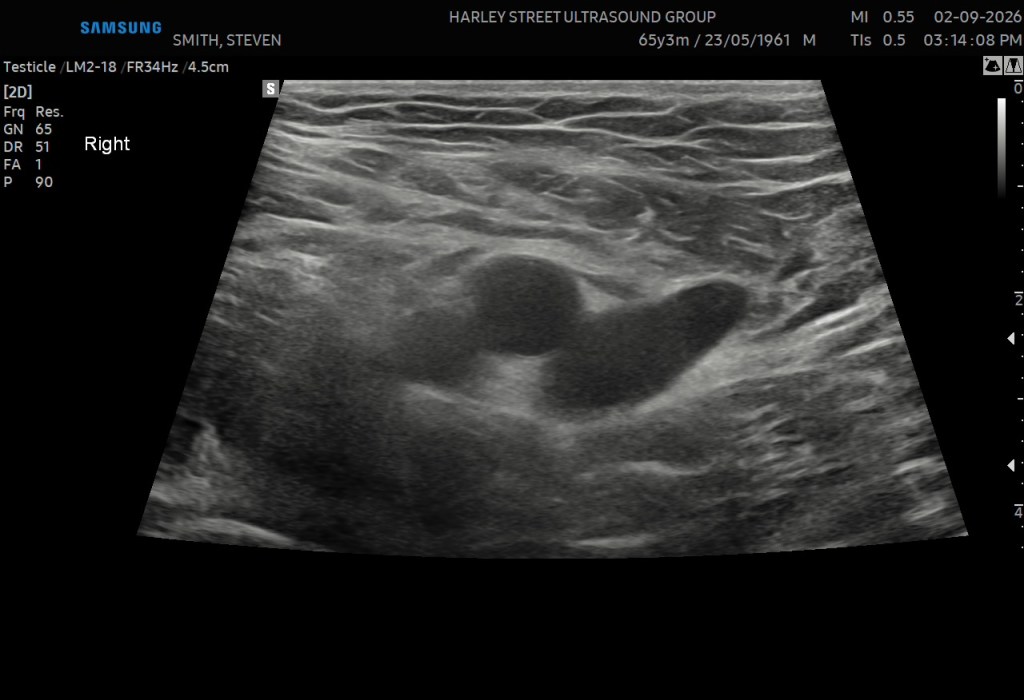
And sure enough, there it was.
A hernia.
Suddenly, the stabbing pain, the discomfort while walking and the strange sensation in my groin all had a name.
Then came one side effect I certainly hadn’t expected — an apparent increase in my male libido.
Now, before anyone rushes off in search of a hernia in the hope of spicing up their love life, I should point out that there doesn’t appear to be medical evidence that a groin hernia actually increases libido. It may simply have been that, with pain, pressure and irritation in an area packed with nerves, I had suddenly become far more aware of that particular region of my anatomy.
Either way, confined increasingly to the sofa, banned from the gym and temporarily deprived of my usual bouncing around, it was reassuring to discover that while the hernia may have slowed me down, it certainly hadn’t switched everything off.
Still looking good — just moving at a slightly more dignified pace.
And unfortunately, my hernia story was only just beginning…
When the Hernia Took Charge
Despite everything, I was still trying to dash around as though nothing had happened.
My hernia, however, had other ideas.
I only had to walk so far before the pain would suddenly kick in and become so intense that I could barely put one foot in front of the other. On one occasion, it became so bad that I found myself clinging to a wall, seriously considering calling an ambulance.
For someone who is normally fiercely independent, constantly on the move and more likely to be found in the gym than lying on the sofa, it was frightening.
Nothing highlighted just how much my life had changed more than a journey home from my pre-operative assessment.
By what felt like a combination of luck, divine intervention and a minor miracle, I had been given a date for surgery. Even more impressively, the staff at Chelsea and Westminster Hospital were carrying out pre-operative assessments on a Sunday.
My assessment was incredibly thorough. Blood tests, an ECG, questions, checks — the lot. Everything seemed fine and, reassured, I headed home.
That was when I realised I had overdone it.
By the time I reached the Underground, the pain was excruciating. I found myself gripping the wall just to stay upright. Two incredibly kind men stopped and asked if they could help me, but there really wasn’t much anybody could do.
I simply had to stop, wait for the pain to ease and somehow get myself home.
The severity of the pain had already made me seek a private surgical opinion. Because the pain seemed disproportionate to what had been described as a relatively small hernia, an MRI was suggested to rule out another cause.
At around £1,300, however, that was simply not within my budget.
Besides, the hernia still needed repairing. My thinking became very simple: deal with what we know is there first. If the pain continued afterwards, then we could investigate something else.
And so, finally, the big day arrived.
Operation Diva
29 September. 7.30am.
Check-in time.
I arrived at Chelsea and Westminster Hospital full of nerves and running on an empty stomach after fasting overnight. Thankfully, I was still allowed clear fluids until two hours beforehand, which meant one thing was non-negotiable: coffee.
And what an excellent black coffee it was, courtesy of Social Impact Coffee inside the hospital. Frankly, at that hour of the morning, facing surgery on no breakfast, it felt medicinal.
Then I met a lovely nurse called Katalina, who told me to take a seat.
Katalina, incidentally, barely seemed to take a break herself for the entire time I was there. She was constantly on the move, looking after everyone, answering questions and somehow remaining cheerful throughout.
At around 8.30am, the anaesthetist appeared carrying his motorcycle helmet.
Very reassuring. Presumably, if anything went wrong, he had a fast getaway vehicle.
He explained the anaesthetic and the drugs I would be given.
My immediate thought was Edina Monsoon in Absolutely Fabulous: “I want every drug going, and I want them now.”
Joking aside, this was probably the moment when my nerves really kicked in.
Before surgery, the anaesthetist has to explain the possible risks and side effects. Of course, it is important that patients know these things, but when you are already nervous and sitting there waiting to be knocked unconscious, hearing a list of everything that could happen is hardly relaxing.
Did you know about redheads and anaesthesia? Research has suggested that people with naturally red hair can respond differently to certain anaesthetics and may sometimes require different amounts.
Who knew being ginger could even complicate being knocked out?
Around 9.30am, one of the surgical team came to see me.
He was wonderfully reassuring.
I raised my concern about whether I should have had the MRI first, particularly because of the amount of pain I had been experiencing. He explained that size does not necessarily determine how painful a hernia will be. Smaller hernias can sometimes cause considerable pain, particularly depending on what is protruding through the defect and the surrounding tissues involved.
That immediately made me feel better. Perhaps the hernia really was responsible for all this pain after all.
Then came the news that tested even my patience.
The room I had been given was mine for the duration of my day stay because my operation was not scheduled until around 3pm.
Three o’clock!
I had checked in at 7.30 in the morning.
By midday, Katalina suddenly appeared with much more promising news.
“You’re next.”
Music to my ears.
I was instructed to change into the glamorous surgical ensemble — gown and compression stockings. Not quite Versace, but needs must.
I thought this meant I was about to be whisked straight into theatre.
It didn’t.
Meanwhile, I had now gone around 17 hours without food and, whether through nerves, my digestive system staging its own protest, or both, I had been to the toilet about five times.
There is nothing quite like impending surgery for discovering bodily functions you didn’t know you had.
Then, finally, at around 3.10pm, a porter appeared.
This was it.
Unfortunately, there was one more hurdle between me and the operating theatre.
I was on the fifth floor and I have a serious fear of heights. Glass walkways are my idea of hell. Put me on solid ground and I am fine; let me see five floors beneath my feet and suddenly my legs stop cooperating.
The staff arranged a wheelchair.I closed my eyes.
Problem solved.
Or so I thought.
As we crossed a ramp, the wheelchair was pulled rather forcefully and the sudden movement sent an agonising pain through my groin.
By the time I reached the theatre area and was lying there waiting to go under, all fear had temporarily disappeared.
I just wanted the hernia gone.
Lights above me. People moving around. Final checks.
Then the anaesthetic.
And darkness.
“Where Am I?”
Sometime after five o’clock, I began to wake up.
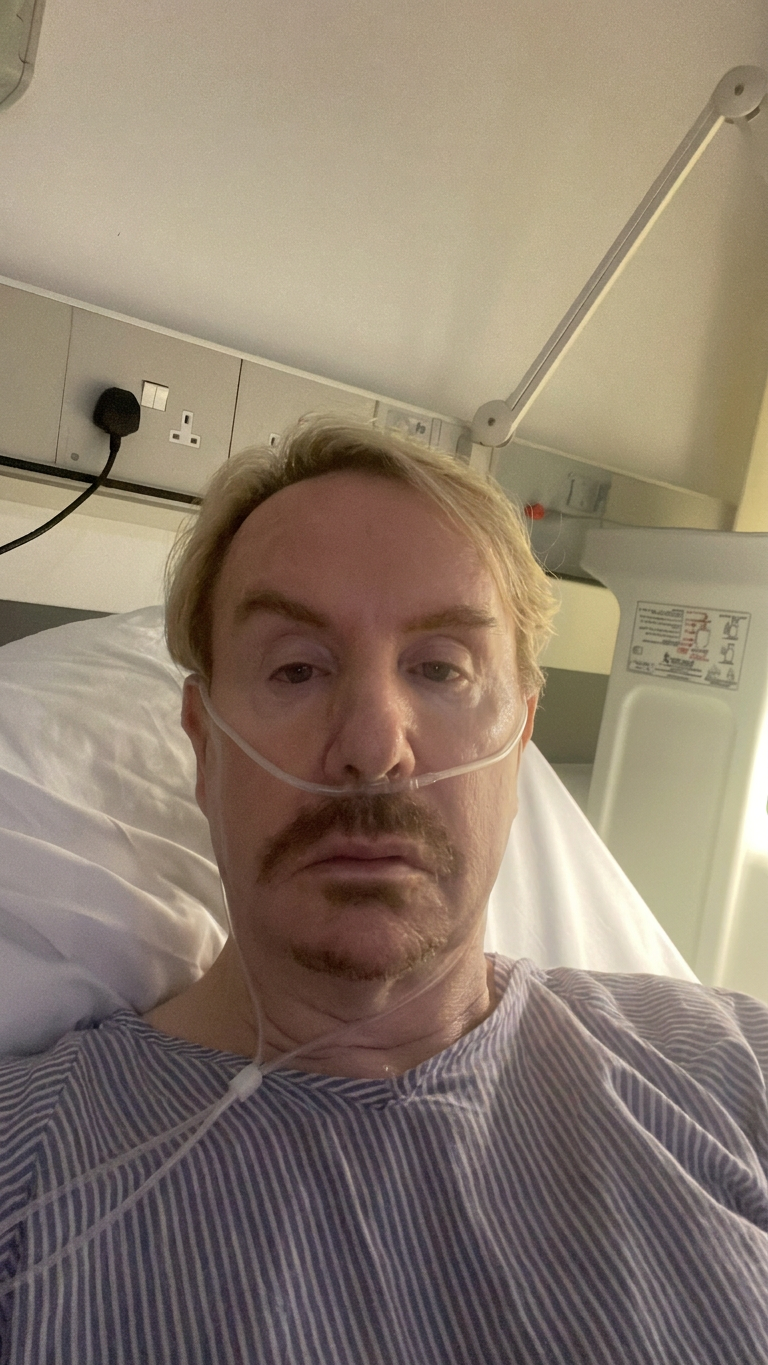
Or at least I think I did.
Everything was hazy. I was extremely disorientated and struggling to work out where I was or what was happening around me.
The operation itself was over.
The surgeon was apparently happy with how things had gone and, surgically, there was no immediate reason why I couldn’t go home.
But the recovery team had other ideas.
I was simply too disorientated.
There followed a conversation between the medical staff about whether I should be discharged or kept in overnight. For a while, it seemed I might still be heading home.
Then the decision was made.
The Hernia Diva was staying the night.
Not quite the glamorous overnight stay I might usually have chosen.
No room service, no champagne, no fluffy bathrobe — but plenty of observations, painkillers and nurses keeping a very close eye on me.
Rain, my nurse, was truly remarkable, and what followed turned into a night to remember.
The man next to me was living with Alzheimer’s and believed there was a conspiracy going on. He thought people were trying to kill and sexually assault him. Adjacent to him was another man in such severe pain that the slightest noise was setting him off, and he began threatening the man with Alzheimer’s.
Then the gentleman with Alzheimer’s went off on a rant about gay sex, despite being heterosexual himself, and eventually the man next to him had simply had enough.
Seemingly, as I nodded off thanks to the magic of morphine, security arrived to remove the gentleman with dementia.
I felt incredibly sorry for him. He was clearly frightened, confused and unwell, but it also seemed that nobody was properly equipped to deal with his level of distress. What he was doing on a general ward in that condition raised some serious questions for me about the NHS and how we care for people living with dementia.
Rain and the rest of the staff were incredible. They even gave me breakfast. However, at certain points during the night, I did wonder whether I was in a hospital or somehow appearing on the set of the prison drama Oz.
Next, the surgeon arrived to discharge me. He was rather non-committal, although everything appeared to have gone well and my discharge papers confirmed that the operation had been completed.
I asked him, “Had there been any complications?”
His reply wasn’t exactly reassuring.
“There are always possibilities. That’s why we tell you about them before and after.”
Well, I was alive.
Then I was given some strong painkillers and told to go downstairs to the pharmacy for the rest of my medication.
Forty-five minutes later, we were still waiting, only to discover that they were over-the-counter medications.
Finally, after a rather bumpy drive home with my adorable friend Remmia, there was only one thing on my mind.
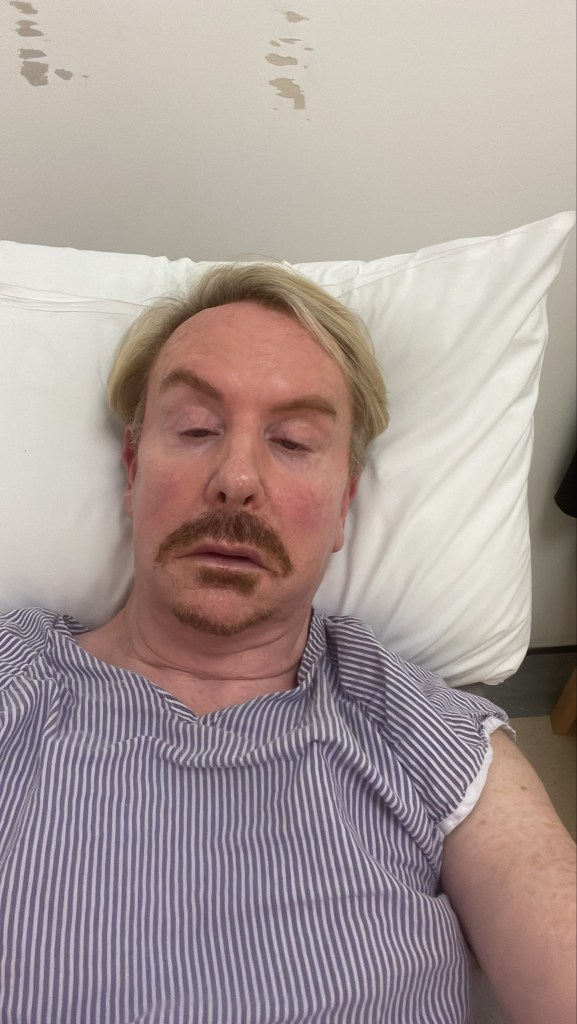
I couldn’t wait to sleep.
And after weeks of pain, worry, cancelled plans, Google searches, hospital visits and wondering whether something else might be wrong, one enormous question remained:
Had the operation actually worked?


