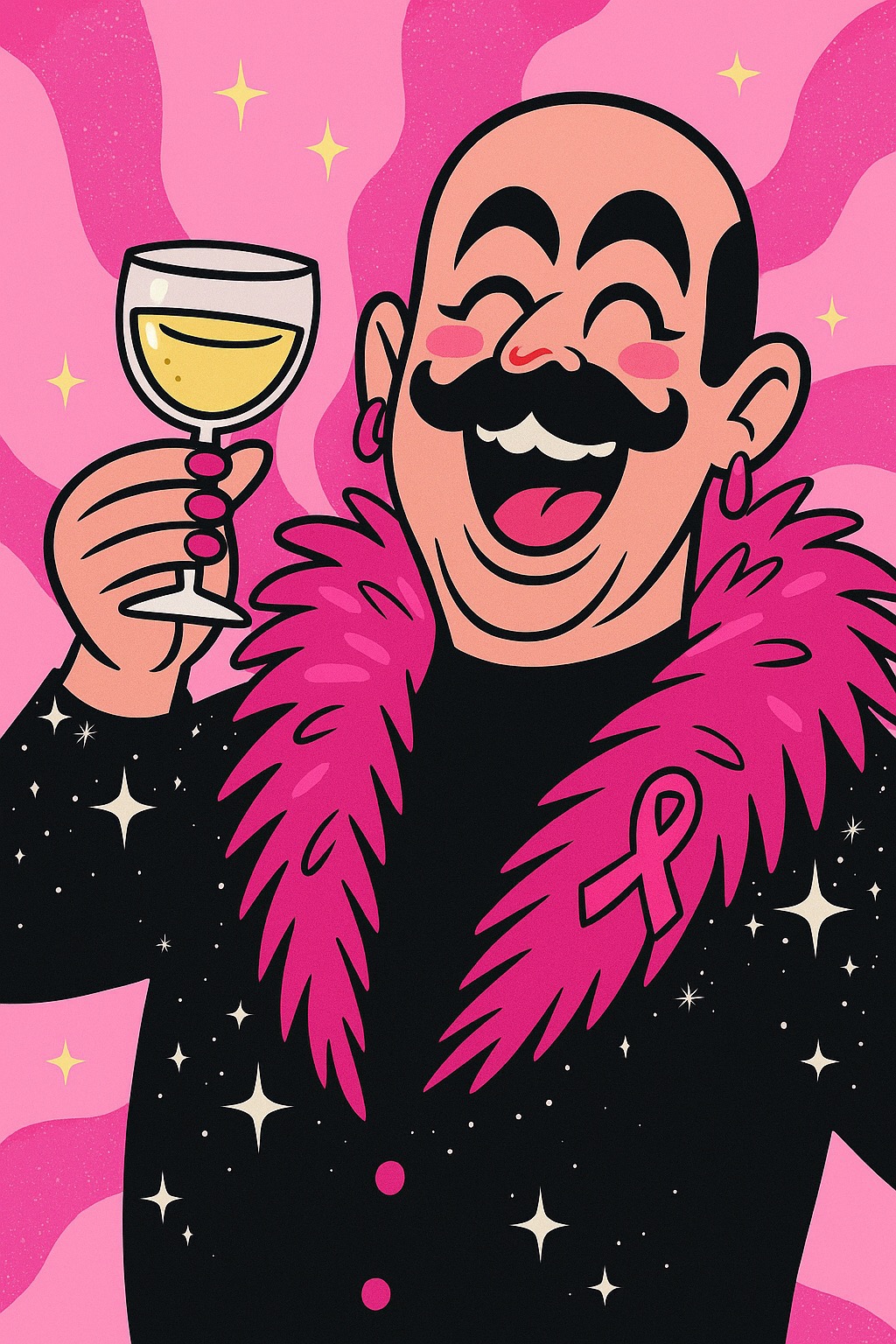
My last two dining experiences began with a maître d’ who seemed to have stepped straight out of a sitcom, delivering the inevitable line — “Have you booked?” — in a tone that somehow manages to feel both accusatory and theatrical. Honestly, it makes me want to scream, “If I had booked, I would have told you!” It’s a small moment, but it can instantly drain the anticipation from what should be a relaxed and enjoyable evening out.
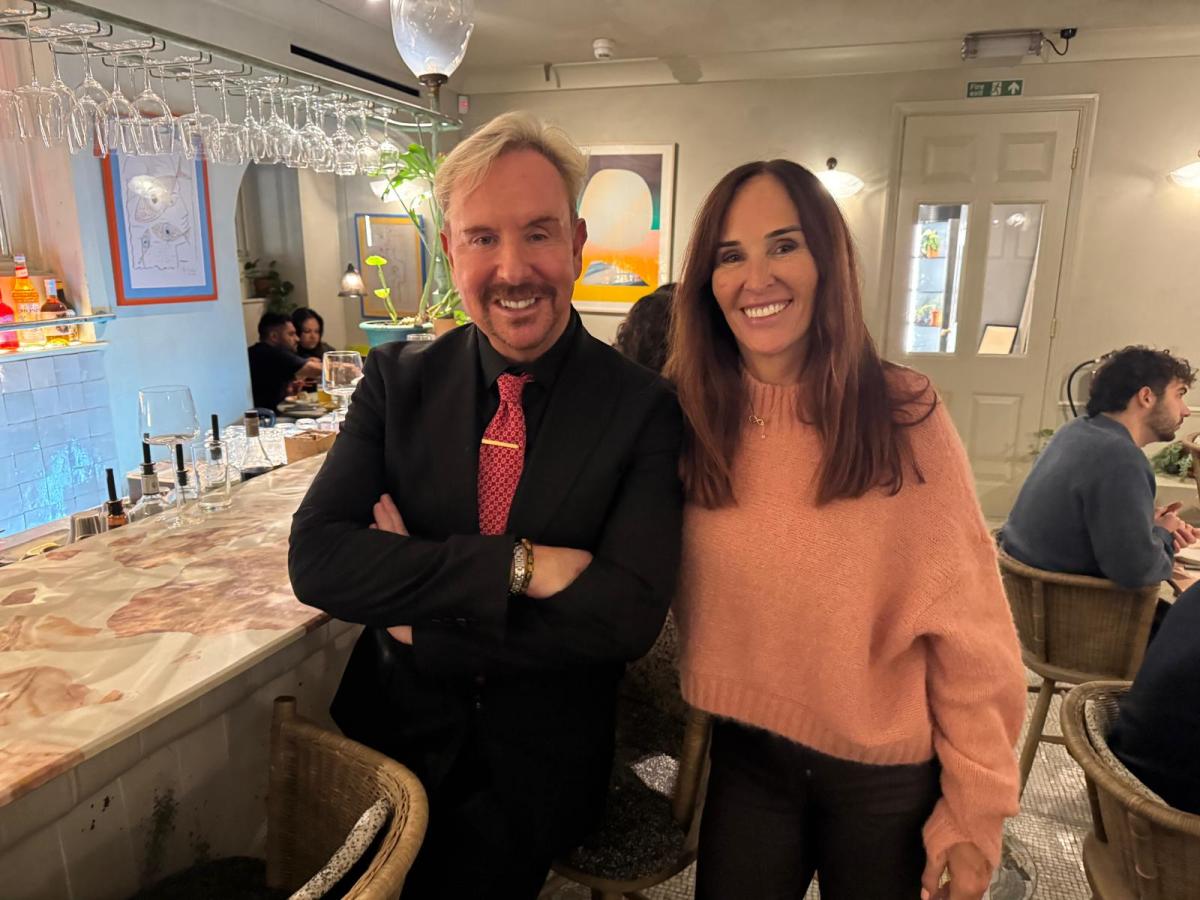
Thankfully, any lingering irritation melted away entirely when I arrived at 123 Browns. It isn’t the easiest place to find, but trust me — it is absolutely worth the search. Tucked away like a secret waiting to be discovered, this intimate yet beautifully curated venue feels calm, thoughtful, and quietly confident. From the moment you step inside, there is a sense that this is a place created with care. The space is stylish without being showy, warm without being overbearing, and there is also a charming outdoor area that feels perfect for long conversations and unhurried evenings.
Specialising in plant-based cuisine, 123 Browns proves — emphatically — that vegan dining can be indulgent, creative, and deeply satisfying. This is not food that relies on novelty or gimmicks; it is food that speaks for itself. The service plays a huge part in setting the tone. With only two members of staff working, the experience felt remarkably seamless. From the outset, we were treated less like customers and more like welcome guests. The team took time to explain the menu clearly and enthusiastically, answering questions with genuine warmth. My friend’s rather complex dietary requirements were handled with complete ease, and the wine and food recommendations were thoughtful, informed, and delivered without even a hint of judgement or impatience.
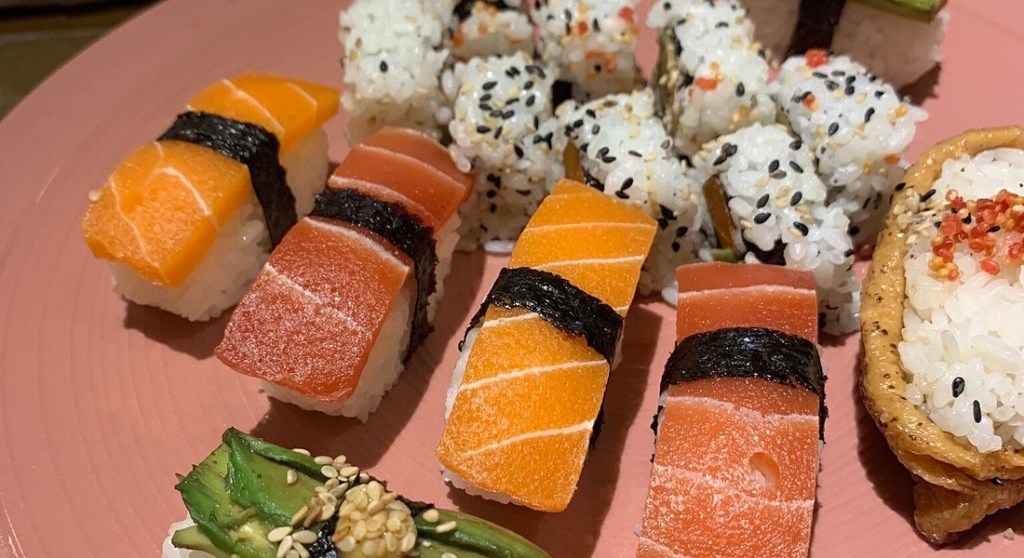
The food itself was outstanding. Every dish felt carefully considered, beautifully presented, and packed with flavour. This is plant-based cooking that doesn’t attempt to imitate meat unnecessarily, but instead celebrates texture, balance, and freshness. The seasoning was confident without being heavy-handed, allowing individual ingredients to shine. If you love sushi, the plant-based sushi here is nothing short of divine — fresh, inventive, and genuinely memorable. Each bite felt clean, vibrant, and indulgent in equal measure. My only regret is that I didn’t order more savoury dishes before sensibly — or foolishly — leaving room for dessert.
And then there was the dessert. The matcha cheesecake deserves its own paragraph, possibly its own fan club. It may genuinely be the dessert of the century. Silky smooth and perfectly balanced, it was indulgent without ever feeling heavy. The matcha flavour was subtle rather than overpowering, lending depth and elegance rather than bitterness. I had two. Yes, two. Naughty? Absolutely. Worth it? Without question.
What truly sets 123 Browns apart, however, is its atmosphere. There is a calm, welcoming energy that makes you feel instantly at ease — almost like coming home. It feels like a safe, comforting space where you are encouraged to slow down, be present, and enjoy food that has clearly been prepared with intention and care. Honestly, just go. It is a treat in every sense, and once you have been, you will already be planning your return.
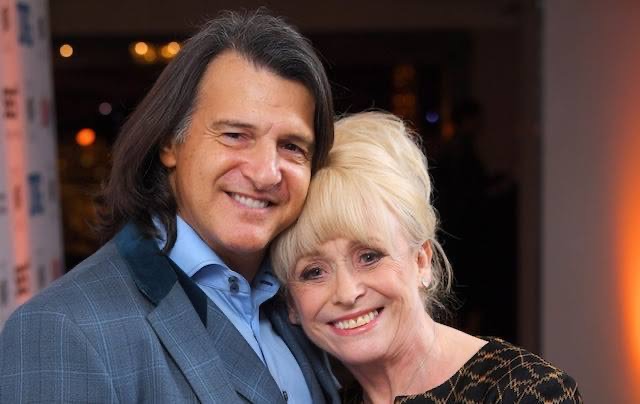
My tribute to the legend Dame Barbara Windsor (1931–2020)This article was first published in the year of Barbara’s passing. I felt it was important that it did not fade away, not only as a tribute to Barbara’s extraordinary talent and character, but also in recognition of Scott Mitchell , who has since gone on to do remarkable things.
By Steven Smith
Who did not love Barbara Windsor — the second Queen of the UK and true British acting royalty? I genuinely do not know a single person who, on Thursday 10th December, did not shed a tear at the (though expected) loss of the world’s most bubbly blonde. We will never forget that infectious, suggestive laugh, nor the extraordinary talent of that iconic Cockney bird.
Dame Barbara Windsor was best known for her roles in EastEnders and the Carry On films. Her acting saw her BAFTA-nominated for her role in Sparrows Can’t Sing and Tony-nominated for her Broadway performance in Oh! What a Lovely War.
Barbara became a Dame not just for her work in entertainment, but also for her incredible dedication to charity. Her support spanned a diverse range of causes, including Age Concern, Age UK, the Amy Winehouse Foundation, Great Ormond Street Hospital — the list truly is endless.
I can’t hand on heart say that Barbara was a close friend of mine — the word friend is used so liberally these days. But over the years, I encountered her many times and was fortunate enough to spend quality time with her. You never forgot a chat with Barbara, because in a world of showbiz magic, she was refreshingly real and wonderfully to the point.
My first outing on the London showbiz scene was with journalist Lester Middlehurst. It was a little nerve-wracking for me, and among the celebrities present was Barbara Windsor, who knew Lester well. My dad was a huge fan of the Carry On films, as was I, and I felt star-struck and slightly out of my depth. Before I knew it, there were around five flamboyant men all vying for Barbara’s attention.
Standing beside me was a very handsome dark-haired fellow named Scott. It was a relief chatting to him — he was down-to-earth, funny, and instantly put me at ease. Not long after, Barbara came over to us. Of course, Scott was her fella, and together they were simply lovely — a genuinely warm and affectionate couple.
Being keen on theatre, I asked Barbara what it was like working at the Royal Court with Joan Littlewood. She looked at me quizzically and said, “What did you ask me, darling?” I repeated the question just as her posse of admirers returned.
At June Browns book launch with Scott and Barbra
“Sshhshh,” she said. “I’m talking to Steven.” She took Scott and me aside and laughed, “That’s not the usual question I get asked.” We had a wonderful chat, and Lester later commented, “Barbara seemed to like you.” She had that rare quality of making people feel special — she genuinely made others feel good.
Over the next few years, I chatted more with Scott — he shared my sense of humour. My next meeting with Barbara was at my dear friend, Irish singer Rose-Marie’s 50th birthday, held in a pub on the Edgware Road. Barbara made a beeline for me.
“You’re always chatting to my Scott,” she said. “You know, darling, some people who ought to know better aren’t always nice to him.”
We spent ages talking about relationships. At the time, my partner was 28 years older than me, and we discussed people’s reactions to age gaps.
I asked her, “Are you looking forward to becoming a Dame?”
“Never — not with my history with Ronnie and the boys,” she laughed.
But right it was — and a Dame she most deservedly became.
There was also a wonderfully camp trip to Marbella with some of the Coronation Street cast, including the fabulous Denise Welch. EastEnders were filming there, and Barbara, Scott, and Rula Lenska joined us for dinner. What a wild night that was.
The last time I saw Barbara and Scott was at June Brown’s book launch, Before the Year Dot. Executives were desperately trying to lure Barbara back into EastEnders — even that night they were pitching it to her. But she wasn’t budging.
“I’ve had enough,” she told me and Rose-Marie.
Something struck me when news of her death broke. So many people began by commenting on her height. Perhaps because I’m not a size-queen, it never once crossed my mind. Barbara was huge in stature — she filled every room with personality and talent. She certainly did not suffer fools gladly. She was, without doubt, a giant of the industry.
Barbara was a true professional. She always had a smile on her face at every event. As her on-screen daughter Daniella Westbrook recently said, Barbara believed you owed it to the public to always put on your happy face: “If you’re not at your best, don’t go out.” Daniella added that once Barbara got home, she liked nothing more than putting the kettle on, taking her shoes off, sitting on the sofa — and simply being Babs.
Many moons ago, I arrived at Gatwick Airport filled with a mixture of nervous anticipation and mild panic. I was heading to the Dominican Republic on a press trip, tasked with writing about its pristine white sands, enticing turquoise waters, and lush tropical surroundings. As usual, my luggage was overweight—my perennial travel hazard—but that wasn’t the biggest source of my unease. What truly unsettled me was the idea of travelling with a group of complete strangers.
Press trips can be unpredictable. They sometimes feel like entering a version of the Big Brother house: you meet people who may turn out to be lifelong friends, or you spend the entire time wishing for an early eviction. Thankfully, fate was on my side. Among my fellow journalists were two exceptional women—now widely known and respected—Sarah White and Gemma Calvert. Even back then, it was clear they were destined to shine in their field. Warm, witty, and brilliant, they lit up the trip from the moment we met, and we laughed our way across the Caribbean.
So, when a WhatsApp message pinged onto my phone recently from Sarah announcing she would be swimming the English Channel, I wasn’t remotely surprised. If anyone possesses the determination, spirit, and zest for life required to take on one of the world’s toughest endurance challenges, it is Sarah.
At 2Shades, we are immensely proud to support this amazing woman. Here is her remarkable story—and how you can join us in helping her raise funds for a truly life-changing cause.
Sarah’s Challenge: A Swim Like No Other
Sarah White, a passionate sea swimmer from Hythe, has long admired those courageous enough to take on the English Channel. Considered the Everest of open-water swimming, the Channel is unpredictable, cold, and relentlessly demanding. Yet, on 29 August 2026, Sarah will join a team of five fellow swimmers to attempt an English Channel Relay Swim, covering an extraordinary 21 miles in what may become a grueling 14–16 hour journey.
This is not simply a personal challenge; it is a mission driven by heart.
Sarah is aiming to raise £5,000 for Aspire, a charity devoted to supporting people with life-changing spinal cord injuries. Their work helps individuals regain independence, rebuild confidence, and reclaim their futures. The need is urgent: every two hours, someone in the UK becomes paralysed due to a spinal cord injury.
A Message from Sarah White
“As a passionate sea swimmer from Hythe, I’ve been inspired by the incredible journeys of others who have taken on the challenge of swimming the Channel.
On 29 August 2026, I will join five others in attempting the English Channel Relay Swim, covering approximately 21 miles in what could be a gruelling 14- to 16-hour journey.
I am raising £5,000 for Aspire, a charity dedicated to providing support and fostering independence for individuals with life-changing spinal injuries. This cause is incredibly important; every two hours someone is paralysed due to a spinal cord injury. By supporting Aspire, we can make a significant difference to the lives of those affected.
I’ve already begun my training regime to prepare for this monumental challenge, but I need your help to reach my fundraising goal. Please consider donating whatever you can to this worthy cause. Your contribution will not only support Aspire but also inspire hope and resilience in those facing spinal injuries.
Donating through JustGiving is simple, fast, and completely secure. Your details are safe with them—they will never sell your information or send unwanted emails. Once you donate, your money goes directly to the charity, making it the most efficient way to contribute and ensuring that every penny counts towards helping those in need.”
Why Her Story Matters
Sarah’s challenge is more than a swim—it’s a powerful reminder of the strength of community, determination, and empathy. Watching someone you once giggled with on a sun-drenched beach take on one of the world’s greatest endurance feats is nothing short of inspiring.
Her journey is a testament to what can happen when courage meets compassion.
And she isn’t doing it alone. Every donation, every share, and every message of support helps carry her across those vast, unpredictable waters.
2Shades introduces Richard Andrews new column ” Money Matters ” He’s not a financial adviser — but with more than a decade in banking, years of coaching executives, and hands-on experience running his own business, Richard Andrews knows a thing or two about money. As households prepare for one of the most expensive seasons of the year, Richard shares his no-nonsense advice on spending smart, avoiding debt, and keeping Christmas joyful without breaking the bank.
“Finance expert is very kind… but let’s clarify that first!”
Q: Richard, you’ve been described as a finance expert. Is that fair? A: “‘Finance expert’ is very kind, but I’m not a financial adviser. I did spend over ten years working for a high street bank, including as a business manager supporting small businesses. Today, I run my own company and coach executives and individuals to help them achieve the outcomes they want. All of that gives me plenty of real-world insight to share with your audience.”
The Cost of Christmas
Q: Why is Christmas such an important time to talk about money? A: “Because we spend a lot of it. The average UK household will spend around £1,626 on Christmas this year. That includes £350 on food and drink and £181 on presents. But the biggest spend comes from the hidden extras — entertainment, wrapping paper, cards, batteries — all those little things that add up fast. If you’re not careful, the consequences can follow you well into January.”
Teaching children about the value of this is important even at Christmas .
Rule Number One: Don’t Spend What You Don’t Have
Q: What’s your core message for managing Christmas spending? A: “Don’t spend money you can’t afford. I’m not suggesting a gloomy, ‘bah humbug’ Christmas — just decide what you can realistically spend and stick to it. Overspending without a plan leads straight to a miserable January.”
The Credit Card Trap
Q: Many people rely on credit cards at Christmas. What’s the danger? A: “Most of us use them, but the issue is that people often add £250–£500 to their debt at Christmas. That £250 gadget can become £500+ once interest kicks in if you’re not paying it off quickly. Some instalment services like Klarna can help if you can afford them — but remember, they’re not free money.”
Black Friday: Bargain or Illusion?
Q: Are Black Friday deals worth it? A: “Often they’re not. Some retailers raise prices beforehand to make the ‘discounts’ look dramatic. The best thing you can do is track the prices of items you genuinely want. Don’t fall for impulse buys — that’s dead money.”
Cost of Living vs Christmas Spirit
Q: In a cost-of-living crisis, how can people avoid overspending? A: “Plan and budget. The UK will throw away almost £450 million worth of food over Christmas. Don’t get into debt buying food you’re going to bin. Freeze leftovers, plan meals properly, and remember that the real gift is time with loved ones. Debt in January is the fastest way to ruin the joy of Christmas.”
Managing Children’s Expectations
Q: How should parents handle kids’ wish-lists? A: “Kids are smart and constantly targeted by influencers. Be honest, don’t promise what you can’t deliver, and don’t go into debt to keep up with the Joneses — that’s a race you can never win. Set realistic budgets, talk openly, and consider refurbished or discounted-return tech. ‘New to them’ is just as good.”
Short-Term Loans: A Firm No
Q: Are short-term loans ever a good idea during the holidays? A: “Never. A £500 loan over six months can cost you £640 or more. These loans spiral quickly and trap people in a cycle of borrowing. No Christmas is worth that risk.”
Planning Ahead for Christmas 2026
Q: What’s the best strategy for next year? A: “Start in January. Put aside whatever you can each month into a savings account. Christmas Club schemes can help, but make sure you’re not stuck with a single retailer. Buy gifts throughout the year if you spot a good deal and remember that adults don’t need expensive presents — thoughtful tokens count.”
The Real Gift
Q: Any final advice for a calmer Christmas? A: “Christmas is stressful enough without money worries. Don’t add pressure you don’t need. Focus on an affordable, joyful Christmas with the people you love — because that is the true gift.”
Zohran Mamdani: A New Dawn for New York — and a Setback for Trump’s America
By Steven Smith
Let’s get one thing straight: Sadiq Khan is a terrible mayor — but not because he is Muslim. He’s a terrible mayor because, quite simply, he hasn’t done the job well. Faith has nothing to do with competence.
I would like to think I ever judge anyone by their religion. Yet when I hear from certain extreme right-wing Christians, my instinct is that they’re often deeply uncomfortable with the LGBTQ+ community. Many cherry-pick verses from the Bible to justify their prejudices, conveniently ignoring the passages about kindness, humility and turning the other cheek — a principle that seems to have lost all meaning for them. As are extreme Muslims and many other religious devotees. I do not want them in power.
And how many of these self-proclaimed moral crusaders have later been exposed as hypocrites, caught in scandals that betray the very values they preach? No one wants to live under Sharia law, but equally, most of us are not rejecting Eastern culture or faith. Jewish politicians, for instance, aren’t out trying to convert everyone. The truth is simple: people should be judged on their integrity, their empathy, and their ability to lead — not the faith they were born into.
Historically, the right wing has struggled with LGBTQ+ acceptance. Look at Reform’s Ann Widdecombe, a devout Christian who remains openly opposed to gay rights, or Nigel Farage, who rails against same-sex marriage yet hasn’t exactly been a shining example of domestic harmony himself.
So, why shouldn’t New York — one of the most diverse cities in the world — have a Muslim mayor? The measure of leadership isn’t found in the label of one’s faith but in the breadth of one’s humanity.
When Zohran Mamdani swept to victory as New York’s new mayor, he didn’t just win an election — he ignited a cultural and political shift. At just 33, the Ugandan-born, Queens-raised son of Indian immigrants and the first Muslim to hold the office, Mamdani represents a fresh, progressive vision of leadership grounded in empathy, equity, and inclusivity. For women and LGBTQ+ citizens, his victory signals something powerful: a mayor who sees diversity not as a slogan, but as the city’s greatest strength. And for Donald Trump and the hard-right movement that thrives on fear and division, Mamdani’s rise is a direct ideological defeat.
Mamdani’s political roots run deep in social justice. Long before his mayoral run, he made his name in the New York State Assembly by fighting for tenant protections, affordable housing, and workers’ rights. But what sets him apart is his understanding that social equality must include gender and sexual equality. His policies go beyond token representation — they promise tangible protections and support for women, LGBTQ+, and trans individuals who continue to face discrimination and economic barriers in one of the world’s most diverse cities.
During his campaign, Mamdani declared: “New York must be a sanctuary — not just for immigrants, but for every person whose existence has been politicised.” That message resonated strongly with LGBTQ+ voters and women’s advocacy groups, weary of years of policy rollbacks and toxic rhetoric at the national level.
His mayoral platform includes one of the most comprehensive pro-equality agendas ever proposed for New York City. At its heart are three major commitments: establishing an Office for LGBTQIA+ Affairs to coordinate inclusive policies and investigate discrimination; pledging $65 million for gender-affirming healthcare and reproductive rights clinics; and strengthening women’s economic and reproductive rights through expanded paid family leave, subsidised childcare, and increased funding for domestic violence shelters and legal aid. These policies represent not just symbolic progress but systemic reform, tackling the intertwined roots of inequality and positioning New York as a beacon for progressive governance in a deeply divided nation.
Some observers initially wondered whether a devout Muslim mayor could fully champion LGBTQ+ and women’s rights. Mamdani’s leadership has already answered that question decisively. He has stated repeatedly that his faith teaches compassion, justice, and respect for human dignity — values entirely consistent with protecting the vulnerable. By separating personal belief from public duty, he embodies the pluralism that defines modern New York. His election sends a potent message that faith and equality are not mutually exclusive.
To understand why Mamdani’s victory is such a blow to Donald Trump, one must look beyond New York’s borders. Trumpism thrives on nostalgia — a yearning for a rigid, exclusionary version of America defined by dominance and division. Mamdani represents the opposite: a confident, multicultural future where inclusion and equality are strengths, not threats. Under Trump, the federal government rolled back protections for transgender people, restricted abortion access, and emboldened hate groups. Mamdani’s success proves that this politics of fear no longer holds sway everywhere — especially not in America’s largest city.
What happens in New York often echoes nationally. Just as Fiorello La Guardia’s social reforms and Michael Bloomberg’s urban policies shaped national conversations in their eras, Mamdani’s agenda may set the tone for a new wave of progressive mayors. His approach fuses social justice with fiscal realism — leveraging the city’s enormous budget to create measurable improvements in equality and opportunity. His administration’s first-year priorities include making the Metropolitan Transportation Authority free for students and low-income riders, expanding affordable housing projects on city-owned land, increasing investment in public schools with inclusive sex education, and introducing gender-balanced representation in city boards and commissions.
Mamdani’s election is also a cultural moment — one that renews New York’s identity as a sanctuary for those who dream of freedom in all its forms. From Stonewall to suffrage, the city has long been a crucible of progress. His leadership promises not only policy change but also a revival of civic optimism: a belief that governance can be both compassionate and competent. His first speech after victory captured this perfectly: “We are not here to manage decline. We are here to imagine abundance — for women, for queer and trans people, for every New Yorker who has been told to shrink their dreams.”
Let’s get one thing straight: Sadiq Khan is a terrible mayor — but not because he is Muslim. He’s a terrible mayor because, quite simply, he hasn’t done the job well. Faith has nothing to do with competence.
Nor would I ever judge anyone by their religion. Yet when I hear from certain extreme right-wing Christians, my instinct is that they’re often deeply uncomfortable with the LGBTQ+ community. Many cherry-pick verses from the Bible to justify their prejudices, conveniently ignoring the passages about kindness, humility and turning the other cheek — a principle that seems to have lost all meaning for them.
And how many of these self-proclaimed moral crusaders have later been exposed as hypocrites, caught in scandals that betray the very values they preach? No one wants to live under Sharia law, but equally, most of us are not rejecting Eastern culture or faith. Jewish politicians, for instance, aren’t out trying to convert everyone. The truth is simple: people should be judged on their integrity, their empathy, and their ability to lead — not the faith they were born into.
Historically, the right wing has struggled with LGBTQ+ acceptance. Look at Reform’s Ann Widdecombe, a devout Christian who remains openly opposed to gay rights, or Nigel Farage, who rails against same-sex marriage yet hasn’t exactly been a shining example of domestic harmony himself.
So, why shouldn’t New York — one of the most diverse cities in the world — have a Muslim mayor? The measure of leadership isn’t found in the label of one’s faith but in the breadth of one’s humanity. rise represents a decisive shift away from the politics of grievance and exclusion. His administration promises to put women’s rights, LGBTQ+ equality, and social justice at the heart of city governance. For a nation still grappling with polarisation, his victory is both an inspiration and a challenge: proof that diversity can win, compassion can govern, and inclusion can be a source of strength rather than division. For Donald Trump and those who profit from cultural conflict, Mamdani’s triumph is a warning shot: the future belongs to those who build bridges, not walls. He is a mayor for all and a flash that thinking Americans have had enough of the red hat .
This month, she chats to the editor of 2Shades, Steven Smith, about her journey in the aesthetics field and the exciting news that she is joining Aroma Clinic in Shenfield, Essex.
1. What first drew you to the world of aesthetics, and how has your philosophy on beauty evolved along the way? I’ve always been fascinated by beauty. I trained as a beautician first, then as a nurse — it’s exciting how subtle changes can completely transform the way someone feels about themselves. What drew me in initially was that blend of creativity and science. Over the years, my philosophy has become much more about harmony rather than perfection. True beauty isn’t about altering who you are, but enhancing what’s already there — refining balance, proportion, and confidence.
Clare is a regular on Gateway radio with her expert advice ,
2. In an industry where innovation moves fast, how do you stay ahead of trends while maintaining timeless results for your clients? I believe in curiosity with discernment. I’m constantly researching, attending international conferences, and trialling emerging technologies — but I never chase trends for their own sake. My focus is on results that will still look elegant ten years from now. Classic beauty never goes out of style, so I combine the best of modern advancements with a respect for natural proportion and restraint.
3. There’s so much conversation around ‘natural enhancement’ — what does that mean to you in practice? To me, natural enhancement is about invisible artistry. When a treatment is done well, no one should be able to pinpoint what’s changed — only that you look refreshed, rested, and radiant. It’s about creating balance and softness rather than obvious volume or overcorrection. I often tell my clients, “You, but after a wonderful night’s sleep.”
4. Every client’s definition of beauty is unique. How do you tailor your approach to make each individual feel their most confident self? I spend time really listening. Every consultation starts with understanding how my client feels about their reflection, not just what they want to change. From there, I design a treatment plan that complements their features, personality, and lifestyle. Confidence is deeply personal — when someone looks in the mirror and sees a version of themselves they love, that’s where the magic happens.
5. If you could dispel one common myth about aesthetic treatments, what would it be? That aesthetics is about vanity. In truth, it’s about self-care and empowerment. The goal isn’t to change your identity — it’s to help you feel more comfortable in your own skin. Aesthetic medicine, when done thoughtfully, can be a profoundly positive experience that supports mental well-being as much as physical appearance.
6. Looking ahead, what innovations or emerging techniques are you most excited about in the aesthetics space? I’m particularly excited by regenerative aesthetics — treatments that stimulate the body’s own collagen and elastin for natural, long-lasting results. Biostimulators, skin boosters, and energy-based technologies are transforming the field. It’s less about filling and more about rejuvenating, which aligns beautifully with my philosophy of subtle, sustainable beauty.
7. And finally, what’s your personal beauty ritual — the one indulgence you can’t live without? A morning ritual of cold water, a vitamin C serum, and a silk pillowcase for my skin — and a moment of stillness before the day begins. Beauty isn’t just what we apply; it’s how we treat ourselves. I see it as a ritual of respect — for the skin, the mind, and the body that carries us through life. But balancing three kids with a busy career can be difficult — sometimes I forget about me.
Celebrating my best pals birthday was just a dream.
My best pals birthday in superb surroundings .
France’s Dordogne is no stranger to charm, but this tiny wine-soaked village might just be its best-kept secret
By Steven Smith
Five days in a southwest French village left me sun-warmed, wine-softened, and wondering how I’d lived this long without knowing Saussignac existed. This is rural France at its most painterly — all rolling vineyards, candlelit dinners, and the slow thrum of a life well-lived.
The Birthday That Changed Everything
When my best friend invited me away for her birthday, I braced for Dubai. Maybe Ibiza. Somewhere loud and expensive, where my idea of a lie-in would be drowned out by basslines and foam cannons.
Instead, she said, “Saussignac.”
The name meant nothing to me — until an artist friend described it as “wines of the gods, food like nectar, and a village so pretty it could be in a Merchant Ivory film.” He added, with a wink, “Some hotels feel like art galleries — all taste, style, and warmth.”
Two weeks later, we were landing at Bergerac Airport, a dinky 1960s gem that could double as a film set. In 10 minutes, we were in the hire car. In 20, we were in another world.
“Darling, you don’t do anything there. You immerse yourself in beauty.”
First Glimpse of a Slower Life
The drive was a moving painting: rolling vineyards, fields of wildflowers, terracotta-tiled farmhouses unchanged for centuries. Every curve of the road offered a new gasp-worthy view.
My Secret Sanctuary
While the rest of the party checked into the lively hub of the village, I chose a private B&B run by Dutch hostess Ingrid Leenders.
Her place is a pocket of peace: rustic gardens, a tiled pool, and rooms with open-plan bathrooms (romantics, take note). No TV, but strong Wi-Fi, a coffee machine, and a small fridge. Each morning at seven sharp, breakfast appeared — fresh bread, cheeses, eggs, and orange juice.
Ingrid herself? A doll. Always ready with tips, and never in the way.
Meanwhile, my friends took over Le 1500, a 12th-century building transformed into a boutique haven by retired businessman-turned-artist 58 year old Michael F. Rumsby and his husband, Lee McNeal.
Every room is a curated mix of antiques and art. A history room and library invite slow afternoons. Outside, the walled garden hides a pool, bar, and dining terrace that in summer becomes an event space — open-air films, long-table dinners, and the infamous Bad Boys Burger Night.
Our first evening was spent at Mélange, a family-run restaurant with stone walls, castle views, and a menu that changes weekly. Owners Melanie and Charlie are culinary magicians — especially for those of us with “difficult” diets. My pescatarian self and vegan friends were both spoiled.
If I ever marry, it will be at Château Lestevenie.
Owners Petrie and Jaco, both South Africans trained in the Stellenbosch winelands, host Summer Soirées so perfect they feel scripted: live jazz, vineyard sunsets, and rotating menus of Mexican, Indian, and French cuisine — all paired with their own sparkling Lestevenie Brut.
Just a short stroll from the village, Château Fayolle offers 130 acres of vines and woodland, plus terrace lunches that must be pre-ordered.
Wine here is history: since 1254, Saussignac and Bergerac bottles have graced Europe’s finest tables. Today, owners Frank and Riki Campbell are taking it global.
Some in our group opted for Château des Vigiers — a blend of fairways, fine dining, and château glamour between Bergerac and Saint-Émilion. It’s home to a championship golf course, a Michelin-starred restaurant, and a choice between historic suites or sleek relais rooms.
Saussignac isn’t about ticking off sights. It’s about strolling past shuttered stone houses, tasting wine under vine-laced terraces, and lingering until the sky blushes.
Bring a car — taxis are rare and expensive. Pre-book meals and flag any dietary quirks in advance. And then? Let the place work its quiet magic.
“By the end of the week my body was lighter, my mind calmer, my soul recharged.”
If You Go
Best time to visit: May–September for warm evenings and vineyard events. Getting there: British Airways (London City) and Ryanair (Stansted) fly direct to Bergerac. Car hire essential. Don’t miss: Mélange for dinner, Château Lestevenie’s Summer Soirée, Château Fayolle’s terrace lunch. Pack for: Lazy afternoons, lingering dinners, and the urge to never leave.
The drink of choice for celebrities , and health enthusiasts world over.
10 Reasons Why Coconut Water is Good For You
It has absolutely no cholesterol – this is in addition to being a low-calorie drink.
Coconut water is identical to blood plasma. In World War II and even today in very rare cases in countries, coconut water has saved lives by being used as an intravenous hydration fluid instead of the standard IV fluid.
Despite being naturally sweet, it is extremely low in sugars.
It is low in sodium compared to energy drinks and high in chloride compared to sports drinks.
Regulates and controls the body’s temperature and boosts the immune system.
It boosts your metabolism, which is an important step in a person’s weight loss process.
It is a natural isotonic beverage i.e. is the perfect drink to rehydrate your body and replenish lost electrolytes.
It cleanses and settles the digestive tract by actively killing intestinal worms that makes for easier digestion and less chances of digetsive illnesses.
Coconut water controls vomiting making it extremely important for those suffering from ailments that cause vomiting like typhoid, malaria or fevers.
In case you haven’t noticed a distinct connection between the last few benefits –coconut water is an excellent drink for hangovers
Steven Smith explores the emotional impact of going on holiday—how it can make or break friendships, test your sanity, and turn dream escapes into nightmare getaways. PLUS: His top tips for surviving travel with friends.
According to a Daily Telegraph survey conducted by Lloyds of London, eight out of ten people suffer from pre-holiday stress. In fact, numerous studies suggest that after divorce, house moves, and bereavement, going on holiday ranks as one of life’s most stressful events.
The Passion for Travel
Like many in the LGBTQ+ community, I’m fortunate to have the means and opportunity to travel widely—something linked to higher disposable income among our demographic. For me, travel is a passion. I’ve trekked Machu Picchu in Peru, cruised the Nile, dived beneath waterfalls, and flown over volcanoes by helicopter in Maui. I cherish those moments. Travelling with my partner of 18 years was always a joy. Sure, we had the odd delay or hiccup, but I adore airports and took most things in stride.
Add college friends into the mix, however, and you’ve got a different story. Assuming your friends have the same holiday agenda—or are as organised as you—can be a huge mistake.
Chiang Mai erotic garden.
Underpants Around His Ankles
It was Christmas morning in Gran Canaria. In the living room of my one-bedroom apartment, a large bearded bear of a man lay passed out on the floor. No, it wasn’t Santa. He had his trousers and underpants around his ankles—but had forgotten to remove his shoes. Behind him stood a naked, naughty elf. It was my friend, Brian Murphy, and I was ready to kill him.
My other friend, Blake Matthews, was in the villa next door and had been banging the headboard all night with a man who claimed to be a straight male escort from Croydon. Right.
Not quite the festive morning I had imagined. Despite our prior agreement not to bring random men home—so we could enjoy a calm Christmas breakfast together—it had quickly descended into chaos.
I packed my rucksack, stepped over the bear, and went off to enjoy a solo breakfast on the seafront.
What had I been thinking?
Gran Canaria wasn’t even my idea. A travel company, pleased with a few articles I’d written, gifted me a flight and villa for Christmas. It was more of a studio apartment, really. They kindly offered a discounted flight for a guest, and before long, five people wanted in. Suddenly, I was playing travel agent, and everyone started bitching about each other. Stress had already set in before we’d even packed our bags.
Two days before departure, I sent out a group text with flight times, terminal info, and villa directions. I added that I’d be checking in solo and would see them either at the gate or on the flight.
Blake replied: “CONTROL FREAK. RELAX. I’LL BE THERE.”
Another couple pulled out, saying Blake had offended them. I didn’t have the energy to argue.
At Gatwick, I stood alone at the gate. Just as boarding began, Brian appeared, full of excuses. No sign of Blake—until mid-air, when I felt a strange sense of relief. Blake had spent the last few days moaning about Brian, only to suddenly announce: “Oh, I love Brian,” as he puffed a menthol cigarette. A week later, the arrangement of Brian and me sharing an apartment—with Blake next door—became another source of friction.
Welcome to Hell
Arriving in Gran Canaria, my jaw dropped. “Ye Olde Queen Vic” pub signs flashed before me. The apartment was basic but expected. That didn’t stop Brian from moaning. He couldn’t wait to hit the notorious Yumbo Centre in search of his first conquest. The only upside? It was a five-minute walk, saving us taxi fares.
Determined to make the best of it, we set out. En route, we saw a fight—and a man get stabbed. Charming.
The Yumbo Centre—a giant shopping mall by day, gay Mecca by night—was surreal. You’d hope to be inspired by loving couples.
“We’ve been together for 29 years and we’re totally faithful,” said a pair from Blackpool.
“Gosh, I hope I can say that one day,” I replied. “Although… why is your hand on my bottom?”
“Oh, we share people.” So much for romance.
The drinks were cheap, the sun was shining, and I told myself everything would be fine—if I made it back to the apartment alive.
Act Two, Scene One
Blake finally arrived, fresh from flying British Airways business class—and made sure everyone knew it. Still drunk, he boasted: “Darling, I had gear with me and did a line with the steward in the galley.” Pure fiction, but the crowd laughed.
Blake, who had travelled with me many times, was always a walking contradiction. With his Freddie Mercury moustache, even a blind dog could tell he was gay. Yet he’d hide his Spartacus Guide under a Jackie Collins novel and insist on getting out of cabs a few streets away from gay bars.
Now he and Brian were lounging like extras from Dynasty, wrapped in white towels and robes, trashing the accommodation. “Steven, we’re not complaining but… what were you thinking?” said Blake, dramatically.
I found them a new place—one that suited their tastes. They weren’t thrilled. Now half-naked and on their fourth glass of bubbly, Blake puffed on another menthol and quipped, “I’m sure I’ll grow fond of the pet cockroach in my room.”
Then he hugged me. “Darling, we want to be with you. That’s why we came.”
Thankfully, my ex and his partner arrived, bringing some much-needed sanity. I hired a car and explored Gran Canaria properly. The island is beautiful—surprisingly so. Even the Yumbo grew on me. As long as I left before Alexis and Krystal stirred from their beauty sleep, I could enjoy peaceful days and return for cocktails and Blake’s nightly one-man show.
Did I mention I met my dream guy there, too?
The Police Officer’s Boyfriend
He wasn’t single—his partner was head of LGBTQ+ liaison for the police. “We share,” he said. “Are you up for it?”
“You’re kidding! If he were mine, no one would be touching him but me.”
I may have added, “Shame on you. You’re supposed to set an example.”
No judgment—so long as it’s consensual and no one is exploited—it’s just not my bag.
We saw each other a few times back home. But what goes around comes around. He stayed with his partner.
Was it bad friend choices? Or just me, dreaming of a jolly gay Christmas and failing to plan the logistics?
Holiday Rules and Snorers
There are so many stories. Like the time I woke to a stranger in bed with me and my best friend. Or when someone “forgot” their stage name didn’t match their passport.
Then there’s Adam.
Ours was a mature friendship. We talked things through. A year in, he asked, “Fancy a holiday?”
Alarm bells. Holidays can make or break a friendship. But I liked Adam, and when he suggested a cruise down the Nile from Luxor, I was sold.
Adam warned me he snored—and wow, did he. I recorded it (he wasn’t thrilled), but it prompted him to finally address the issue. Snoring can ruin holidays; one of my friends recently had to sleep by the pool just to escape her partner’s decibels.
Egypt. Wow.
The Nile cruise was magical. A shaky start (our airport transfer never arrived), but even dashing through dark backstreets in a cab to find our boat, we laughed all the way.
Sitting in the Winter Palace Hotel in Luxor—home of Agatha Christie’s Death on the Nile—Adam asked, “Shall we go see the sights?”
“Let’s just do Glamour’s Five-Star Hotel of the Nile for now,” I said.
We howled.
We discussed finances before the trip—essential. “It all comes out in the wash” was our motto. Sometimes one of us was more flush, and we’d cover each other. No awkwardness.
We all know the tightwad friend: the one who orders a starter and tap water, then helps themselves to the shared wine. But when it’s their round? Crickets.
Salmonella and Sensibility
Adam and I had many great adventures. He was the perfect pseudo-boyfriend. But eventually, someone else would come along. In Sitges, that’s exactly what happened.
We never planned for it—mistake. Sitting alone at dinner while he held hands with someone else wasn’t fun. We should’ve talked it through, as we usually did. Thankfully, it didn’t harm our friendship.
I can be a walking holiday disaster. Mosquitoes treat me like a buffet. I’ve caught Hepatitis B in India and salmonella in the Dominican Republic. But it never puts me off.
Because travel is freedom. And when shared with the right friend, it’s unforgettable. No matter how grown-up we are, caring for one another never goes out of fashion.
Have a great holiday season.
My Top 6 Tips for Travelling With a Friend:
Talk first. Discuss your expectations for the trip.
Be honest. Are you going for fun—or just to split costs?
Acknowledge your quirks. Any snoring, early riser habits, etc.
Talk about money. Set clear agreements in advance.
Respect personal space. Holidaying together doesn’t mean joined at the hip.
Look after each other. The best travel souvenir is a stronger friendship.
It was hard not to stifle a chuckle when I spotted the old familiar sign on the London Underground: “DO NOT STARE.”Really? How is it even possible to avoid making eye contact—no matter how hard you try—when there’s a man across from you mining his nose with such vigour that you worry his fingers might pop out through his eyeball? Or that couple in the corner, so utterly absorbed in each other that you’re not quite sure where to look—especially when she takes a break from kissing to slide her tongue into his ear. lets not start on ” If you see something that does not look right please report it ”
But that’s London for you. A glorious, bustling, cosmopolitan city teeming with people from every walk of life, each more stylish or eccentric than the last. The Tube isn’t just a means of transportation—it’s a rolling reality show. Every trip, every change of line, brings a new cast of characters and a fresh episode of human theatre.
Personally, I’ve always loved the art of people-watching. Airports were once my favourite stage. I’d arrive early just for the chance to observe humanity in transit. Back when loudspeakers used to blare out dramatic announcements—“Mrs Jones, please come to Desk Seven. You have an urgent message.” I never followed to see who Mrs Jones was, but oh, how my imagination ran wild. Maybe she was running away with a lover who’d had a sudden change of heart. Maybe she was being lured back to a secret double life. Most likely, it was something terribly dull—but still, it was enough to get the mental movie reels spinning.
Imagination has always been my saving grace. It’s carried me through life’s best and worst moments. The joy of observing life and its never-ending cast of characters continues to fuel me. As Shakespeare said: “All the world’s a stage, and all the men and women merely players; They have their exits and their entrances, And one man in his time plays many parts.”
But let’s return to the Underground, which has been whisking Londoners beneath the city’s streets since 1863. That “DO NOT STARE” sign, upon closer inspection, had smaller print I hadn’t noticed before: “INTRUSIVE STARING OF A SEXUAL NATURE IS SEXUAL HARASSMENT AND IS NOT TOLERATED.” Fair point—and an important one.
Over a decade ago, I interviewed twelve Page 3 models about their experiences with dating and sex. Shockingly—but sadly not surprisingly—every single one of them had experienced some form of sexual harassment on the Tube. From groping in crowded carriages to lingering, uncomfortable touches during rush hour, it was a grim reminder of the darker side of commuting. Everyone deserves to travel safely, without fear of violation or discomfort.
Yes, let’s stamp out intrusive behaviour. But while we’re putting up signs, how about a few more reminders—common courtesies that could make life better for all of us packed into those rolling metal sausages?
Here’s my updated list of suggested announcements for the London Underground, to be posted right alongside “DO NOT STARE”:
Uncross your legs. No one wants your muddy footprint on their trousers when the train jerks to a stop.
Remove your backpack. Place it between your feet—don’t swing it around like a medieval weapon during rush hour.
Move your bags. That seat is not reserved for your handbag. Let others sit down.
Offer your seat. A little kindness never goes out of fashion. If you see someone elderly, pregnant, or visibly struggling, give up your seat. Don’t pretend to be engrossed in your phone or suddenly blind. But again… DO NOT STARE.
Leave the snacks at home. This isn’t the Orient Express. No one wants to arrive smelling like a bucket of fried chicken or a spicy chow mein from Mr Wok.
Escalator etiquette matters. DO NOT stop dead at the top to check your phone or sort your shopping. Move clear—or risk being shoved, bumped, or bruised.
If someone touches you inappropriately, report it immediately. We all have a right to feel safe.
London’s Underground is legendary around the world for good reason. It’s fast, far-reaching, and, if you ask me, oddly charming. Yes, the fares could be more reasonable—please, Sadiq Khan, no more price hikes—but it remains one of the most efficient and fascinating ways to travel.
So let’s respect it. Let’s love it. And let’s all do our bit to keep the journey pleasant for everyone.
And remember—DO NOT STARE. Even if that Colin Farrell lookalike in rugby shorts gets on at Clapham.