Categories
Columns Lifestyle People

THE SCIENCE OF BECOMING: A MEDICAL APPROACH TO SELF-TRANSFORMATION

DR JOSEPH CRESPO chats to Steven Smith
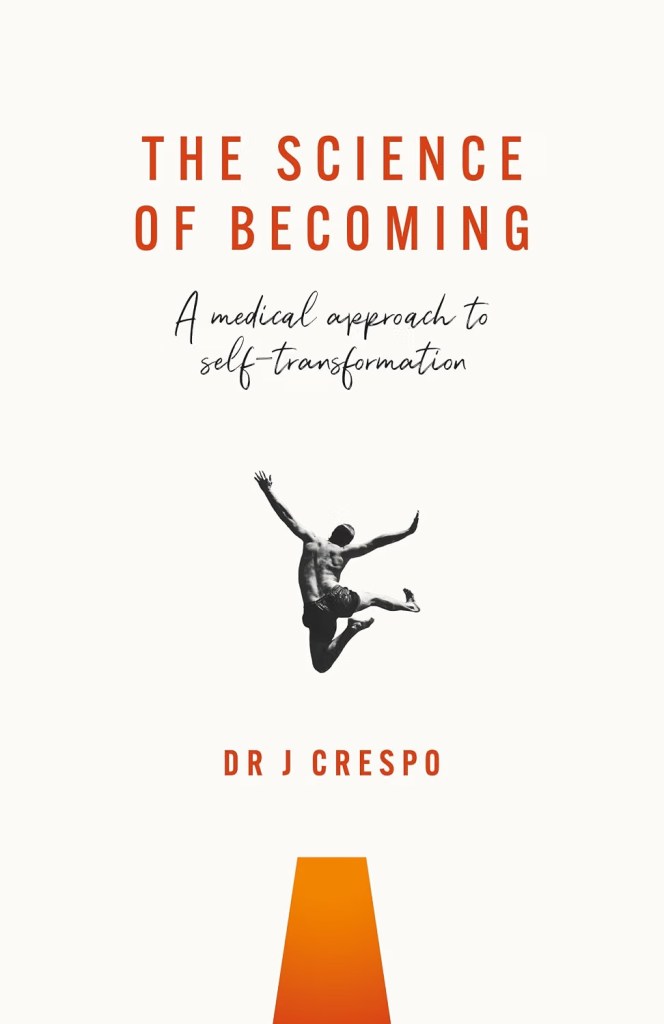
THE SCIENCE OF BECOMING: A MEDICAL APPROACH TO SELF-TRANSFORMATION

By Steven Smith

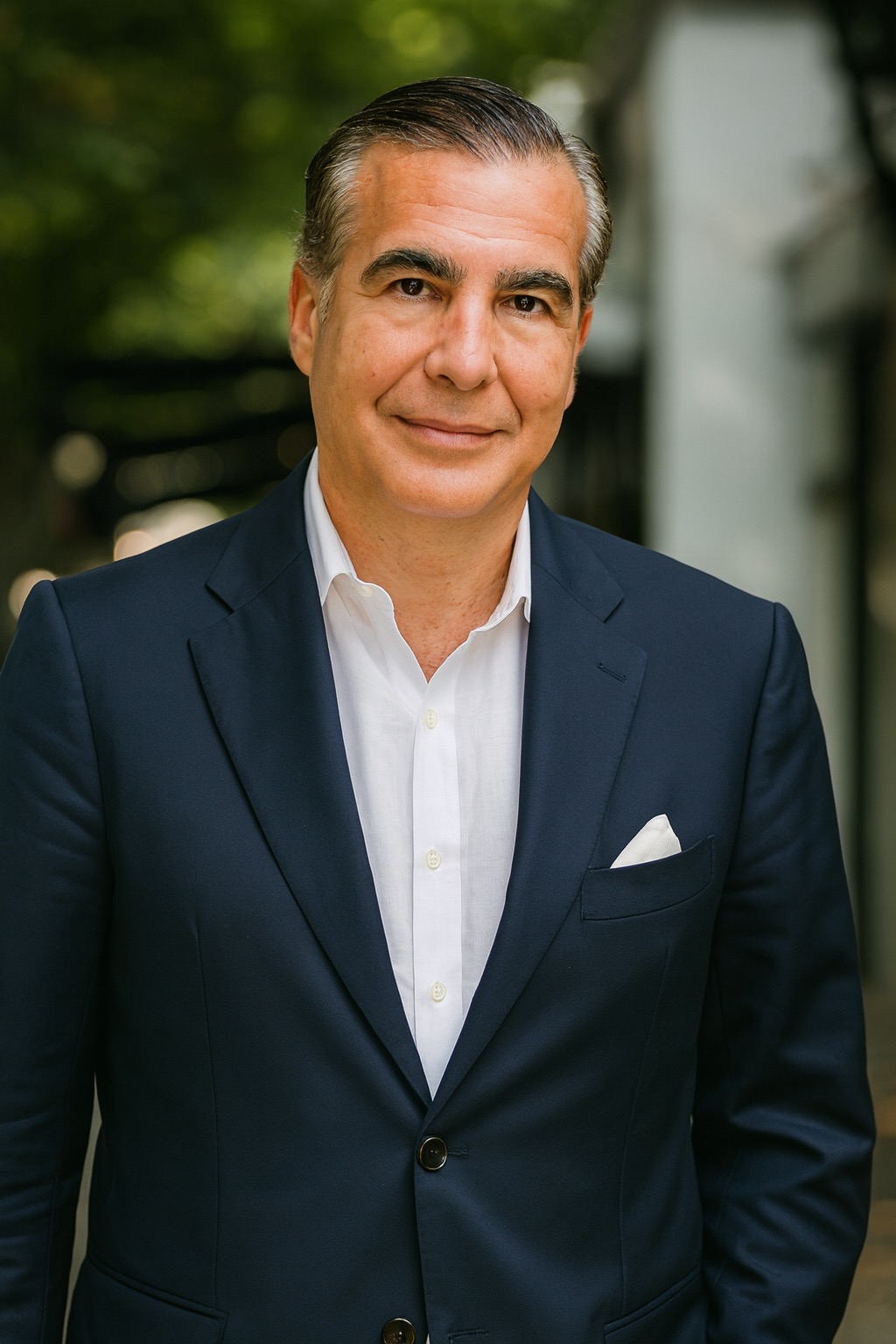
DR JOSEPH CRESPO

Buy The Science of Becoming on Amazon

There are some people whose careers follow a fairly predictable path, and then there are those who take a completely different route. Dr Joseph Crespo certainly falls into the latter category.

London-based Dr Crespo has a fascinating and varied background. Before entering the world of medicine, he studied law and went on to complete an MBA in London, before working in the financial sector as a consultant and analyst. But his story didn’t end there. He made the considerable decision to change direction and retrain as a doctor — beginning a new chapter that would eventually see him working across both NHS and private healthcare.

His medical career has been equally varied, with experience ranging from GP surgeries and urgent care to walk-in centres, out-of-hours services and even HM Prisons. He has also been involved in teaching the next generation of doctors as a GP tutor and clinical examiner, alongside undertaking medical charity work in India.

It is perhaps not surprising, then, that someone who has reinvented his own life more than once should become interested in the science behind our ability to change.

That interest has now resulted in his book, The Science of Becoming: A Medical Approach to Self-Transformation. Rather than simply telling us to think positively or try harder, Dr Crespo looks at personal change through the eyes of a medical professional, exploring subjects including habits, decision-making, stress, sleep and nutrition — and asking how science can help us make changes that actually last.
At a time when social media seems to offer us a new wellness trend, miracle solution or life-changing hack almost every day, separating good advice from clever marketing has arguably never been more important.

So who better to ask than the doctor who has made transformation not only the subject of his book, but something of a feature of his own extraordinary career?

I caught up with Dr Joseph Crespo to find out more…

Dr Crespo, tell me a little about you. What was your journey into medicine, and what eventually made you want to write a book about changing our lives?

My journey into medicine was long and unorthodox, training first as a lawyer and then a financier. When I finally left it all behind to follow my passion, I trained and practise as a primary care physician, and for years my work sat at the intersection of diagnostics, chronic illness and prevention.

What struck me again and again in clinic was that the biggest lever for most people’s health wasn’t a prescription. It was the slow accumulation of daily choices: how they slept, how they handled stress, what they ate, how they thought about themselves. I kept watching patients try to change with sheer determination and fail, not because they lacked willpower but because nobody had ever given them a framework. Medicine has one. It’s called clinical reasoning, and I realised the same discipline doctors use to diagnose and treat could be turned inward, applied to the process of changing a life rather than treating a disease. That’s where the book came from.

The title is The Science of Becoming. Becoming what? Is there actually an optimum version of ourselves, or are we in danger of constantly being told that we need to improve?

Becoming isn’t about arriving at some fixed, optimised endpoint. There’s no single best version of a person waiting to be unlocked. What I mean by becoming is closer to what we mean clinically by healing: a direction, not a destination. It’s the ongoing process of reducing the gap between how you’re currently living and what your body and mind actually need to function well. I’m wary of the “optimisation” culture that treats a person like a machine to be tuned for maximum output.

That framing burns people out. The question I ask is not “how do I become the best version of myself” but “what is actually true about my biology, my history and my circumstances, and what does that call for right now.”
You argue that we rely too much on willpower. Why doesn’t willpower always work, and what should we be doing instead?

Willpower is a finite, fatiguing resource, and it’s also the wrong tool for the job. In clinic, we don’t tell a patient with a chest infection to try harder not to be infected. We diagnose, then we design an intervention suited to the underlying problem. Most of what looks like a willpower failure is actually a design failure: an environment, a routine or a belief system working against the change someone is trying to make. Instead of asking for more willpower, I encourage people to reduce the number of decisions that require willpower in the first place, by changing defaults, removing friction, and building systems that make the desired behaviour the easy and enjoyable behaviour.

You take clinical decision-making and apply it to everyday life. Can you give me a real-world example? How could I use clinical reasoning to make a better decision tomorrow morning?

Clinical reasoning follows a simple sequence: gather data, form a differential, test it, act, then reassess. Take something as ordinary as feeling constantly tired. Instead of reaching straight for caffeine or willing yourself through it, treat it like a case. What’s the data: how did you sleep, what did you eat yesterday, who did you mix with, what’s your stress load this week. What’s the differential: is this poor sleep quality, is it dehydration, is it emotional load, is it simply overtraining. Pick the most likely cause, make one small deliberate change, and observe the result over a few days rather than guessing forever. Tomorrow morning, that might be as simple as noticing what you automatically reach for and asking, briefly, what problem am I actually trying to solve with this.

We’re bombarded with wellness advice on social media — supplements, fasting, cortisol, sleep hacks, diets and longevity treatments. As a doctor, how do you separate genuine science from very clever marketing?

I look for three things. First, is the claim built on a mechanism that’s been demonstrated in humans, not just in a petri dish or a mouse. Second, does the person selling it benefit financially from your belief in it, and how large is that incentive. Third, is the advice generalised or personalised. Genuine science tends to come with caveats, uncertainty and “it depends.” Marketing tends to come with certainty, urgency and a product at the end of it. If a claim can’t survive the question “compared to what, and for whom,” I treat it with real caution.

Neuroscience has become a fashionable word in the self-help world. What do we genuinely know about changing the brain and forming new habits, and what claims do you think go beyond the evidence?

What we know reasonably well is that the brain retains plasticity throughout life, that repetition genuinely does strengthen certain neural pathways, and that habits form through consistent cues and rewards over time, typically longer than the popular twenty-one-day myth suggests. What goes beyond the evidence is the tendency to take a genuine finding from a controlled lab study and present it as a guaranteed personal transformation protocol. Dopamine, cortisol and neuroplasticity get used as marketing words rather than as the specific, conditional findings they actually are. I try to be honest with readers about where the solid ground ends and the speculation begins.

What about someone in their 60s or 70s? Can we genuinely make substantial changes to our habits, health and outlook later in life, or does change become significantly harder as we get older?

Change is absolutely still possible, and I say that as a clinician who sees it happen. What changes with age isn’t the capacity for change itself, it’s the margin for error and the starting conditions: more accumulated habits, sometimes more comorbidity, less physiological reserve to draw on. The clinical reasoning approach actually suits older patients well, because it isn’t about dramatic overhaul, it’s about identifying the one or two changes that will have the greatest effect given someone’s specific situation, and building from there patiently. I’ve seen patients in their seventies transform their sleep, their mobility and their outlook once they had a clear, individualised plan rather than a generic one.

Stress, sleep and nutrition all feature in your approach. If someone came to you and said, “I’m overwhelmed, I can’t change everything,” which one would you tackle first, and why?

Sleep, almost every time. It’s the foundation the other two rest on. Poor sleep drives stress reactivity, disrupts appetite regulation and blunts willpower and decision-making the following day. It’s also usually the most tractable of the three, because unlike stress or nutrition, sleep responds fairly quickly to specific, well-evidenced changes: consistent timing, light exposure, and a wind-down routine. Fix sleep first and the other two often become noticeably easier to address.

Self-help is an enormous industry, and every year we’re offered another formula for transforming ourselves. What makes your approach different, and what evidence is there that it can produce lasting change rather than the short burst of motivation people often get after reading a self-help book?

Most self-help sells motivation. Motivation is a mood, and moods pass. What I’m offering instead is a method: the same diagnostic, iterative process doctors are trained to use, which doesn’t depend on how inspired you feel on a given day. It assumes you will fail at points, and builds reassessment into the process rather than treating failure as proof the whole effort was doomed. Lasting change, in my clinical experience, comes from small, testable, personalised interventions rather than a single dramatic reinvention. That’s a much less glamorous story than the one the industry usually sells, but it’s the one that holds up over years rather than weeks. In addition, I offer documented medical research studies to substantiate every idea.

DR JOSEPH CRESPO

Not everyone is a reader or someone who would naturally pick up a self-help book. For those people listening to us today, what’s one simple thing they could start doing right now to make a positive change in their lives?

Pick one thing you do automatically every single day, and simply notice it for a week before you try to change anything. Don’t judge it, don’t fix it yet, just observe it the way a clinician observes a patient before making a diagnosis. Most people skip straight to changing behaviour without ever accurately understanding what they’re currently doing and why. That single week of honest observation is often the most useful health intervention I can suggest, and it costs nothing and requires no willpower at all.

Quick-fire questions

Favourite place to relax?

My home.

If you were Mayor of London for a day, what’s the first thing you’d change?

The institutionalisation of common sense, and an understanding that our individual rights end where others’ begin. Sadly, I see a growing number of entitled people imposing their views and beliefs, and condemning anybody who disagrees.

A restaurant you particularly love dining at?

Many, but if I have to choose one, Oliveto on Elizabeth Street, a proper Italian trattoria offering high quality food, friendly service, and a home feel environment. https://www.olivetolondon.uk/about

What has been the proudest moment of your life so far?

Every moment I made the decision to keep growing.

What motivates you to keep going when life gets difficult?

Difficulties are circumstantial, and overcoming them requires only a change in perspective. One thing that has helped me a great deal was when I stopped worrying about things which outcome I cannot change.
https://drjcrespo.com

Categories
Columns Health and Fitness Lifestyle People

“Enough for the Men too “

https://enoughwellness.co.uk

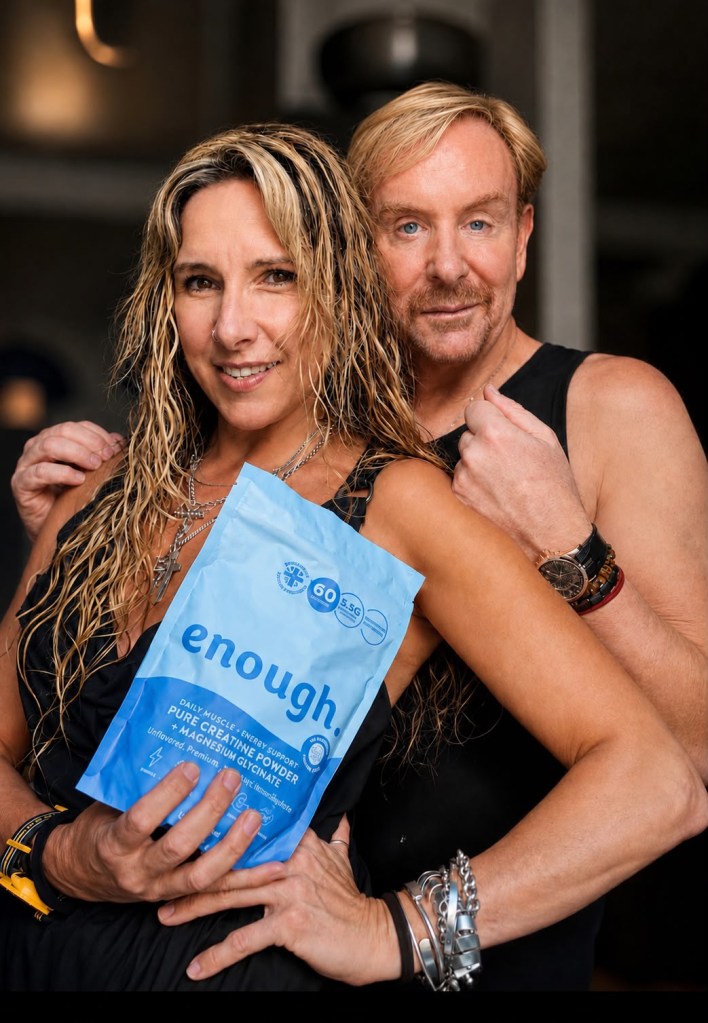
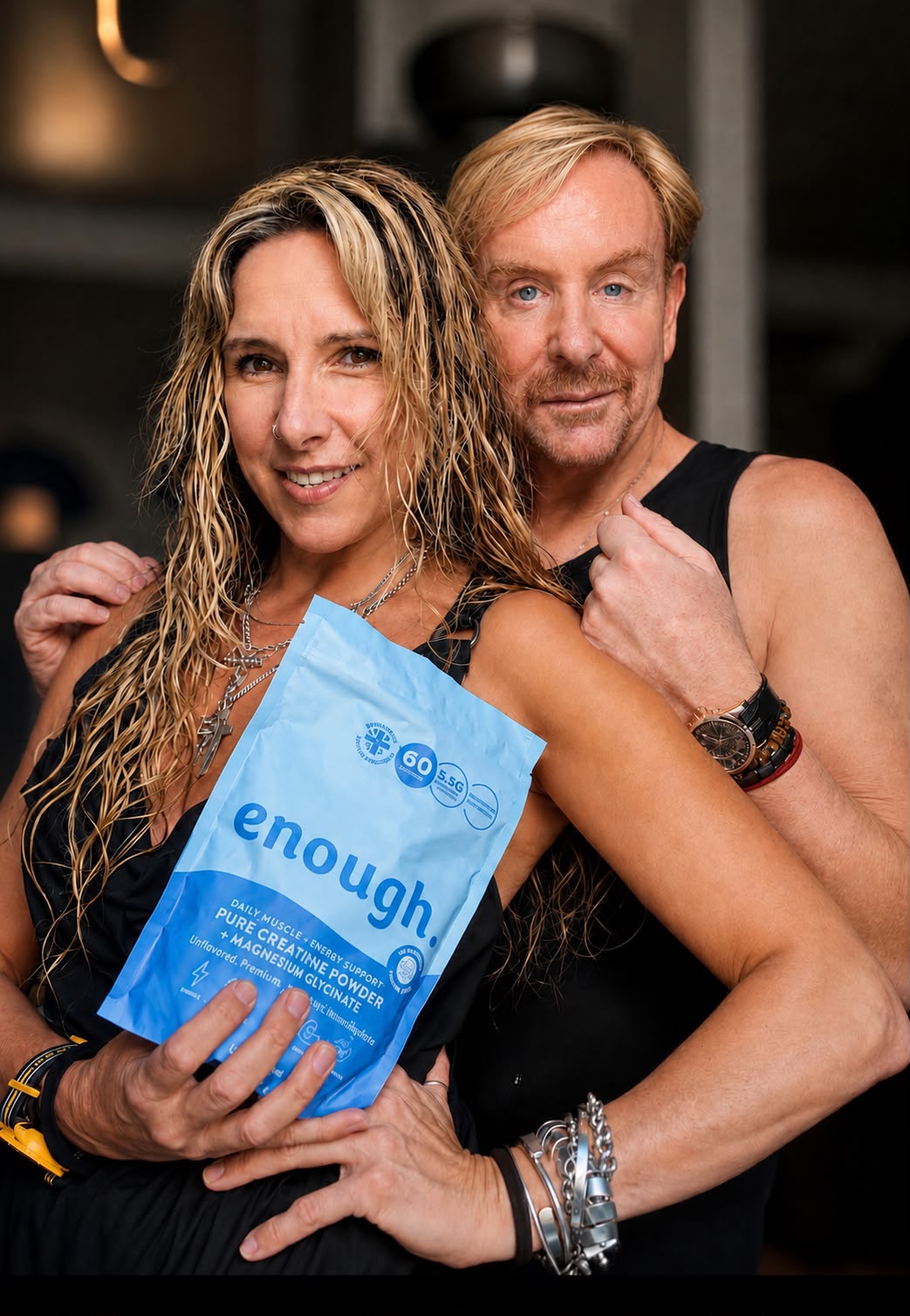
The image of fitness and art Piluca and me behind her . https://www.pilucaworld.com

Steven Smith looks at the supplement company taking the UK by storm

Made for women, by women. But good news, fellas — you can nick it too when she’s not looking, because it turns out it works rather well for us as well.

There is no one I know who better embodies the words fitness and health than the artist Piluca When she is not painting something extraordinary, she is usually in the gym, lifting weights, stretching, or somehow making the rest of us feel mildly guilty for cancelling leg day.

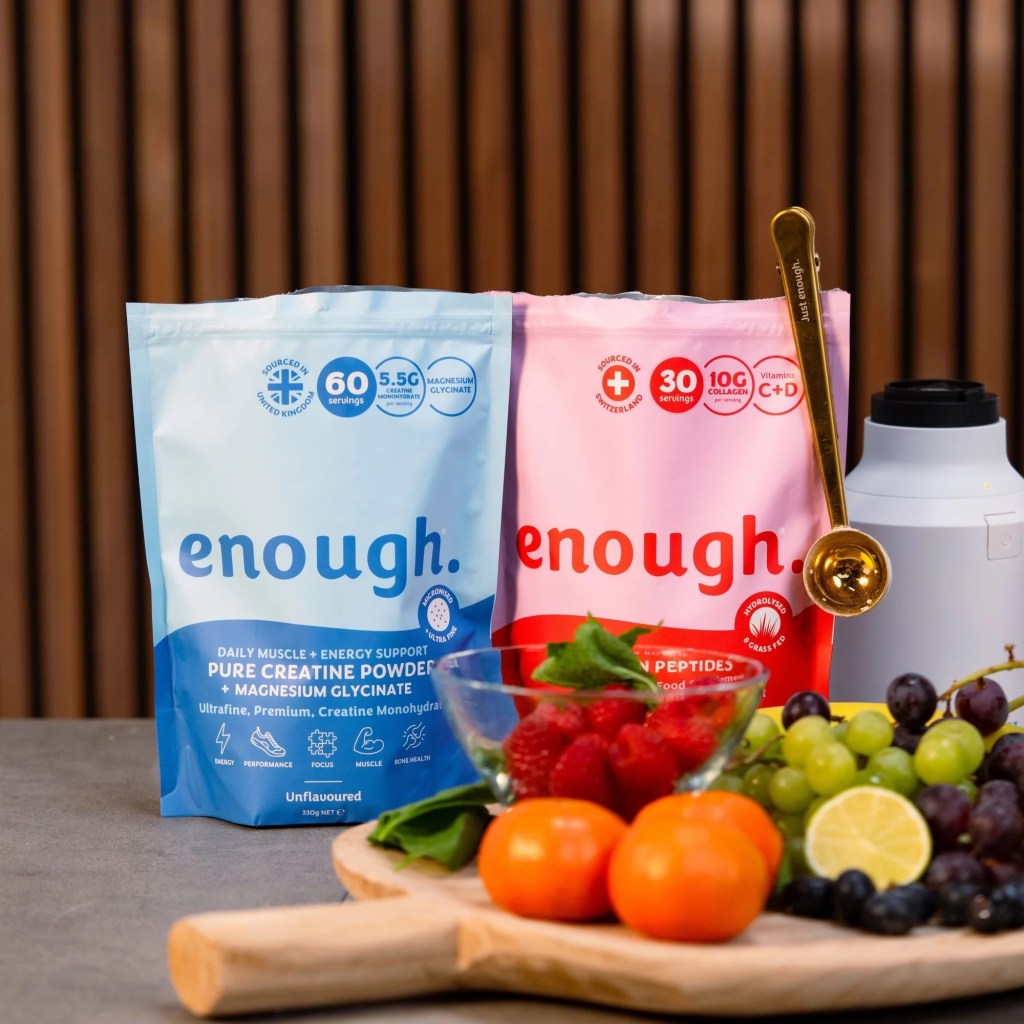
So, imagine my curiosity when I spotted her creatine — or as I lovingly call it, the powder of the gods. Only this was not the rather dull, masculine tub I am used to seeing in greys and blacks with promises of “extreme performance” shouted across the packaging. No, this came in a rather stylish bright blue pack that looked far more exciting than mine.

Naturally, being me, I had to have a nose.

Checking the ingredients, I found myself genuinely impressed. This was not simply another supplement jumping onto the wellness bandwagon with flashy branding and very little substance. The formulas appeared considered, clean, and thoughtfully put together.

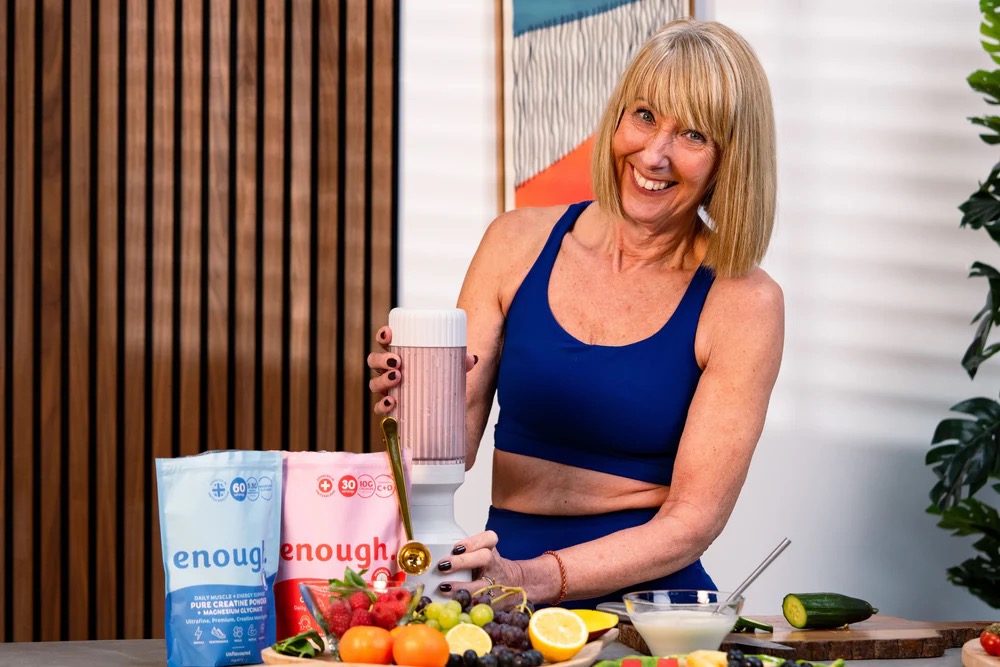
Then there was the collagen powder — beautifully packaged in pink, easy to reseal, and surprisingly elegant for something designed to be stirred into your morning routine. More importantly, if Piluca’s glowing skin is anything to go by, clearly something is working. Quite frankly, if looking fabulous is the side effect, sign me up.

The company behind the products is Enough Wellness, a female-founded British supplement brand created with one very clear mission: to help women feel stronger, healthier, and more confident at every stage of life. Founded by women who became frustrated with confusing health messaging and supplements that often felt more gimmick than science, the brand was designed to simplify wellness rather than complicate it. Their aim is refreshingly straightforward — products backed by research and created for real women navigating real lives.

https://enoughwellness.co.uk

Now before the men stop reading and assume this is all about collagen, glowing skin, and conversations involving “hormonal wellness” over herbal tea — hear me out.

What intrigued me most was their creatine.

For years, creatine has been unfairly labelled the territory of young men in string vests grunting aggressively beside squat racks. Yet increasingly, women are embracing creatine for strength, recovery, energy, and even cognitive wellbeing — and frankly, the rest of us can benefit too.

I decided to give it a try.

https://enoughwellness.co.uk

Now, before anyone writes in accusing me of suddenly becoming a fitness influencer, let me be clear: I am not claiming miracles. I did not wake up looking like a Marvel superhero after one scoop. But what I did notice was this — I felt better.

There was more energy in the gym, better recovery, and a sense of feeling stronger rather than depleted. As someone who exercises regularly, fasts, and tries to take care of himself without becoming obsessed, I genuinely noticed a difference. It felt clean, easy to take, and perhaps most importantly, it slotted effortlessly into everyday life.

The collagen, too, deserves a mention. Increasingly popular for skin, joints, hair, and overall wellbeing, collagen has become something of a quiet revolution in wellness circles. Enough Wellness has built much of its identity around supporting women through changes in energy, skin, confidence, and ageing — not with scare tactics or impossible promises, but with the rather refreshing idea that ageing can be embraced positively.

What also struck me was the branding. Supplements have changed. Gone are the days of dusty tubs hidden in kitchen cupboards. Wellness is becoming more accessible, more stylish, and — dare I say it — more fun. Enough Wellness understands that people want products that feel approachable rather than clinical. It is wellness without the intimidation.

So, ladies, congratulations. Yet again, you have discovered something fabulous before the rest of us.

And gentlemen? Here is my advice — if you happen to notice a bright blue pouch or elegant pink collagen pack sitting on the kitchen counter, perhaps quietly borrow a scoop when no one is looking.

Just don’t blame me when she notices it running out faster than usual.

Because this woman-focused supplement company may well have accidentally created something the boys want in on too.

https://enoughwellness.co.uk The team behind the brand.
Categories
Columns Health and Fitness Lifestyle People

“If you want to get drowsy, it starts with your sleep: my tips—alongside sleep expert Michelle Langer—for a better night’s rest.”

https://www.drowsysleepco.com

Having spent years in the beauty industry, I can proudly say I am technically a qualified beautician in the USA—by proxy, of course—because I had to complete it as part of getting my hairdressing licence. And yes, I can give you a rather fabulous facial… but do not, under any circumstances, ask me to do your nails.

Over the years—through television, radio, and various media appearances—my “expert advice” has never been limited to hair alone. It has always extended to the full picture: looking good, feeling good, skin care, and the elusive art of ageing gracefully (or at least convincingly).

And here it is—my number one tip, the holy grail, the one thing people never want to hear: get a good night’s sleep.

Eight hours, if you can manage it. Regular, consistent, proper sleep. Not the “I’ll catch up at the weekend” fantasy we all cling to.

And for heaven’s sake, step away from the television—and the seventh circle of hell otherwise known as your mobile phone. You know the one. Sitting there, glowing at you, whispering, “Please scroll me… please…” like a neglected child denied sweets.

I don’t know about you, but I lead a fairly active life—gym, socialising, being out and about, and, of course, writing what will undoubtedly be the next great novel. Yet despite all that, I often find myself utterly exhausted during the day. No amount of coffee or vitamins seems to touch it. My bed calls to me like a long-lost lover.

Meditation? Don’t make me laugh. It usually turns into a nap—though I romantically refer to it as a “power nap.” And yes, afterwards there’s that fleeting moment of feeling refreshed… before the fog creeps back in.

Help him get some sleep .

Naturally, the mind starts to wander. Is it anxiety? Is it depression? In today’s world, who doesn’t have a touch of both? And then comes the spiral—something else to worry about, rather than the root of the problem itself.

Because here’s the irony: the moment my head hits the pillow at night, I have never felt more awake. I toss, I turn, I overthink, and I stubbornly refuse sleeping tablets.

And I know—I know—this is one of the worst things you can do when it comes to anti-ageing and skin care. Sleep is everything.

So, I decided to tackle it head-on before running to the doctor (though please—if your sleep is seriously affecting your health, do seek medical advice).

Here is my journey—and a few strategies that may help you too.

Go to bed armed.

1. Prepare your body (about an hour before bed):
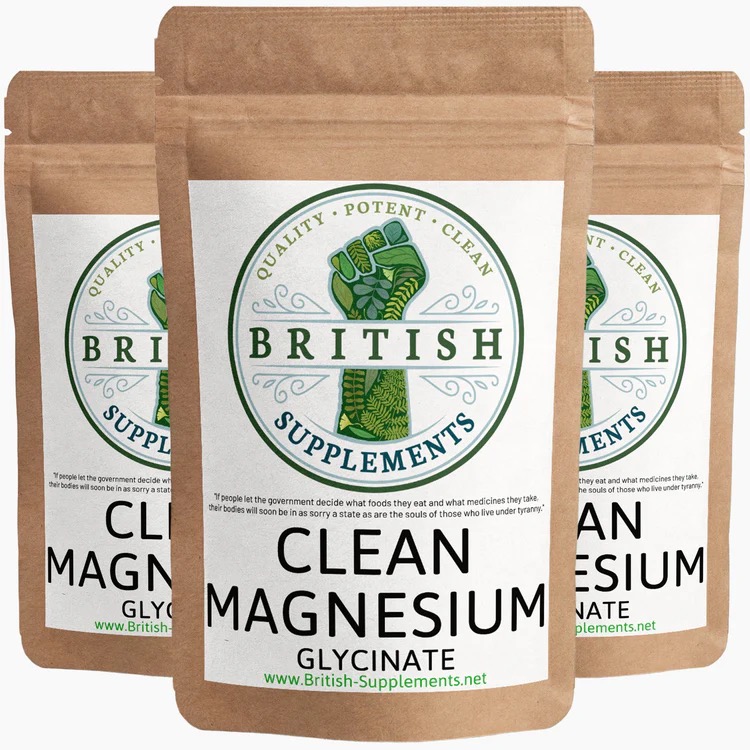
Take a good magnesium supplement—it really does help with relaxation and sleep quality.
Add one of the following: https://www.british-supplements.net/products/clean-genuine-magnesium-glycinate?currency=GBP&variant=55136794444162&stkn=c7b690bf9e3d&utm_source=chatgpt.com

  • A glass of tart cherry juice
  • A cup of chamomile tea

And avoid alcohol or caffeine—yes, even that “harmless” late-night glass of wine.

2. Switch off properly:
Turn off the TV. Put the phone away—ideally in another room. Not beside you. Not “just in case.” Away.
If you need background noise, ask Alexa for calming sleep music—she’s very good at that sort of thing.

3. Create the perfect sleep environment:
Your bedroom should be cool—not too warm—and as dark as possible.

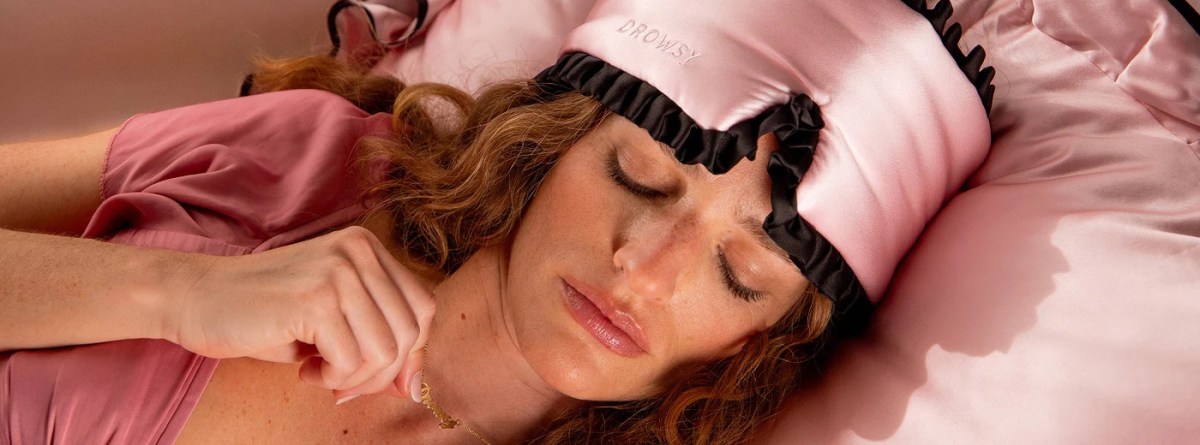
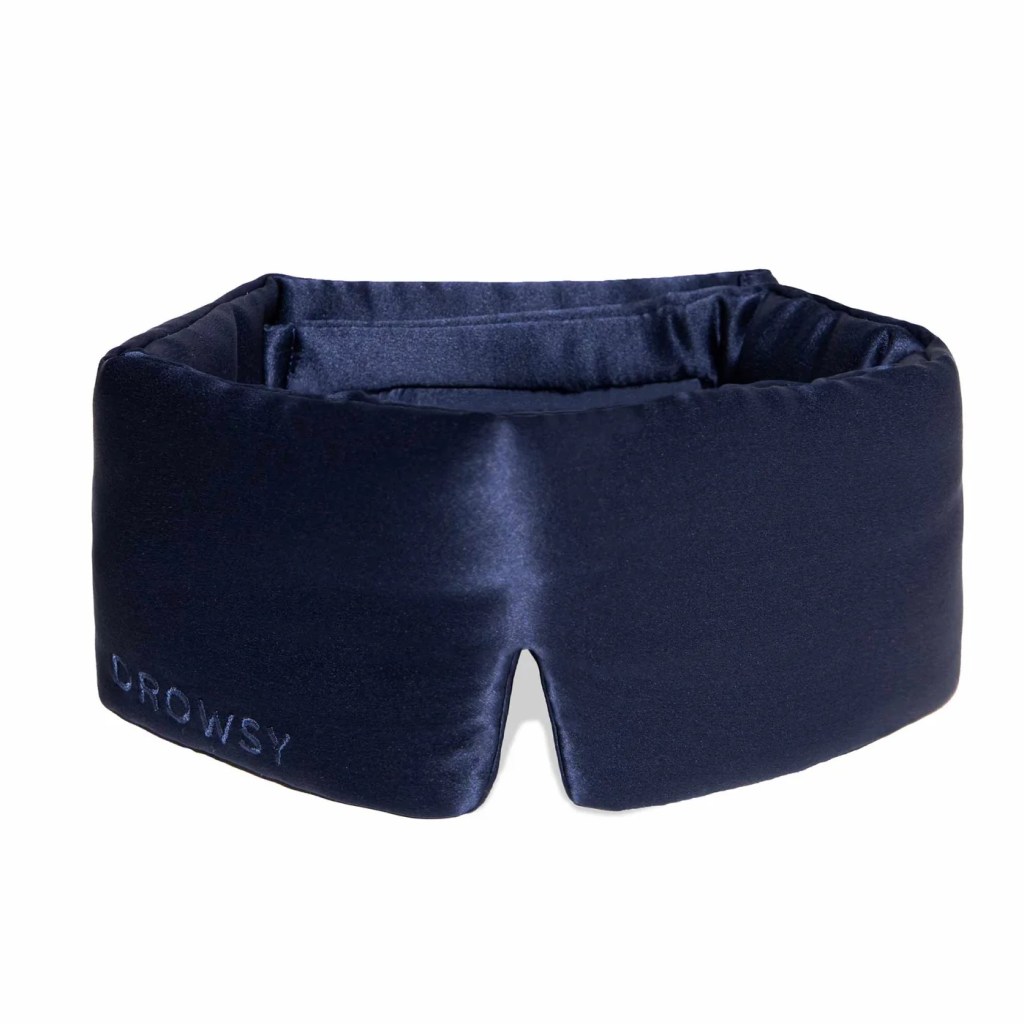
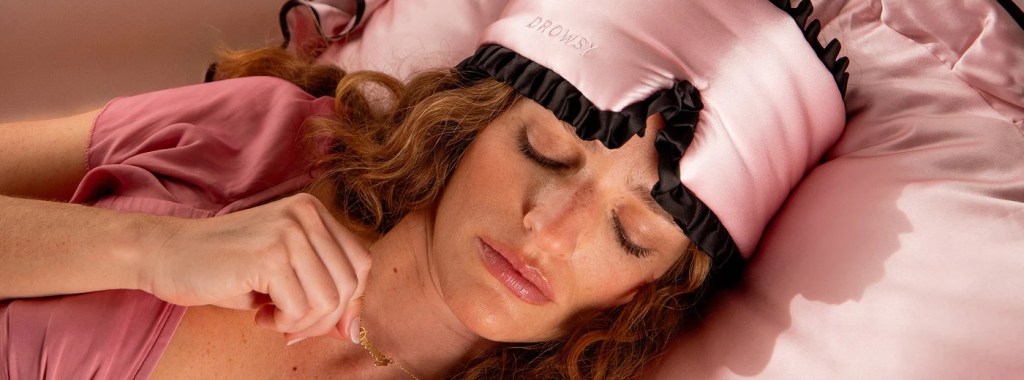
A good eye mask is, in my opinion, the ultimate sleep accessory. Not just any mask—a proper silk one. Silk is gentle on the delicate eye area, allows the skin to breathe, and even helps prevent wrinkles. (Yes, really—beauty sleep is not a myth.)

This has to be the best on the market I have found and a bit of luxury by https://www.drowsysleepco.com/?utm_source=Klaviyo&utm_medium=flow&utm_campaign=Email+%233&_kx=v5O126oGp6JO5GmteXl5RlfqvByHYVYqReRG72c9a9E.YiPMVR

I also recommend silk pillowcases for the same reason.

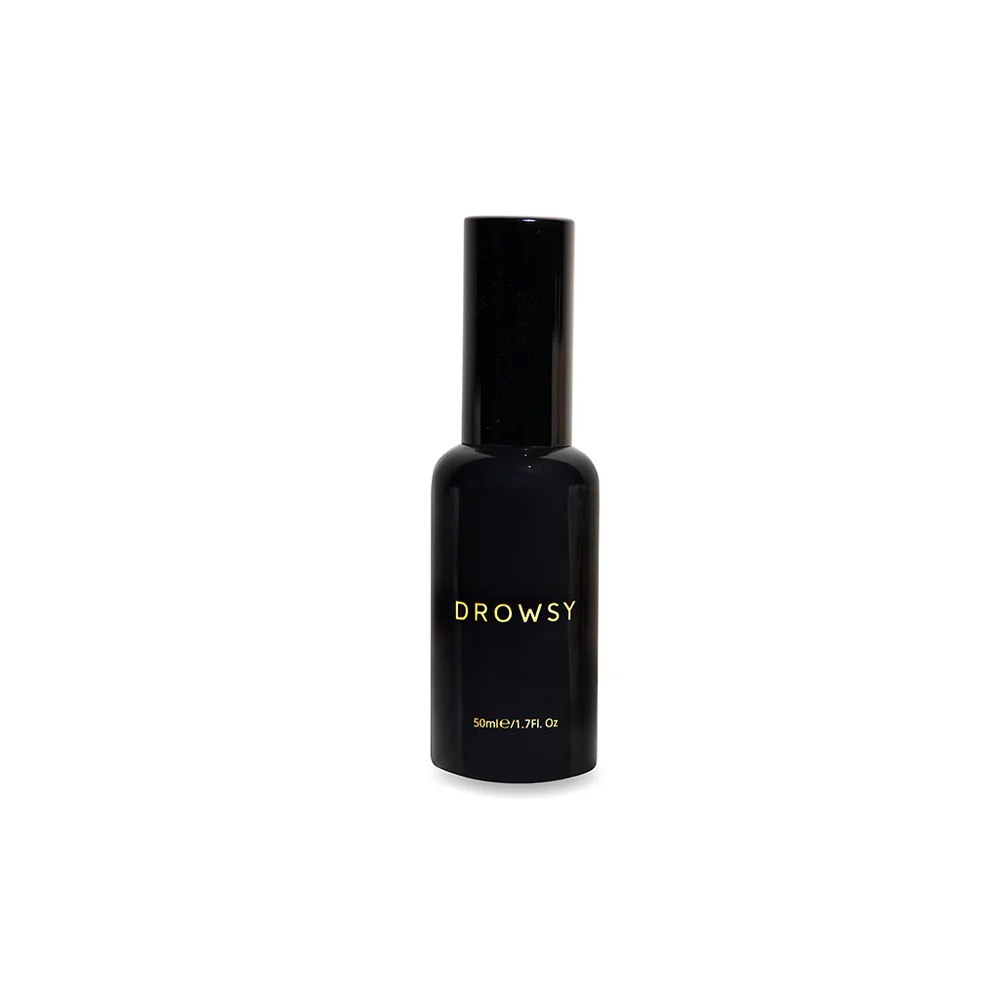
Add a light spritz of a lavender-based aromatherapy sleep spray about an hour before bed. You can use candles too but do remember to blow them out—this is sleep advice, not a fire hazard. 

https://www.drowsysleepco.com/products/sleep-spray

Now, once you’re tucked in, phone banished and mind (hopefully) calmer, I thought it only fair to bring in an expert.

Enter Michelle Langer, whose sleep strategies elevate this from hopeful guesswork to something far more grounded and effective.

Here’s a summary of some of Michelle’s wonderfully simple but powerful techniques to help you drift off into dreamland:

https://www.michellelanger.com/about

Breathing & Relaxation Techniques

The 4-7-8 breathing method is a favourite: inhale for 4 seconds, hold for 7, and exhale slowly for 8. It calms the nervous system and signals the body it’s time to wind down.

Box breathing is another excellent tool—inhale, hold, exhale, and pause for 4 seconds each. Perfect for quieting anxious thoughts.

Progressive muscle relaxation works beautifully: start at your toes, gently tense each muscle group, then release as you exhale, working your way up the body.

And finally, diaphragmatic breathing—slow, deep breathing that allows your stomach to rise and fall—activates the body’s natural rest-and-digest response.

Behavioural & Environmental Sleep Aids

Establish a calming wind-down routine: dim the lights, read, take a warm bath, or even journal.

Stick to a consistent sleep schedule—even at weekends (I know, I know).

Avoid screens for at least an hour before bed. Blue light suppresses melatonin and keeps the brain alert—exactly what we don’t want.

Apps such as Calm, Headspace, or Insight Timer can help guide you into sleep with meditations and stories.

And finally, make your bedroom a sanctuary: cool, dark, quiet, and blissfully clutter-free.

Michelle’s background is as impressive as it is reassuring. A Cambridge graduate with over 30 years’ experience as a television executive, she understands pressure, deadlines, and the demands of modern life better than most.

Now a wellbeing consultant and executive coach, she trained personally with Dr Deepak Chopra at The Chopra Centre for Wellbeing and has spent over fifteen years teaching mindfulness, meditation, and stress-reduction techniques to everyone from CEOs to public figures.

She is also an accredited member of the Association of Facilitators and works with Arianna Huffington’s Thrive Global. Her client list includes major names such as Microsoft, Accenture, Pfizer, Mastercard, the NFL, and Channel 4.

As if that weren’t enough, she co-founded Tranquillo—a beautifully immersive wellbeing experience combining live cello music, guided meditation, and essential oils.

If sleep is something you struggle with, I genuinely cannot recommend her work highly enough. Sometimes, just a small shift can make a lifetime of difference.

For more information, visit: www.michellelanger.com/about

https://www.drowsysleepco.com

Categories
Columns Health and Fitness People

KA-EX®: The Future of Sports Supplementation

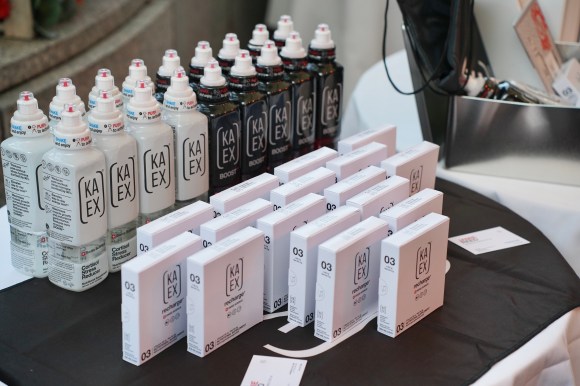
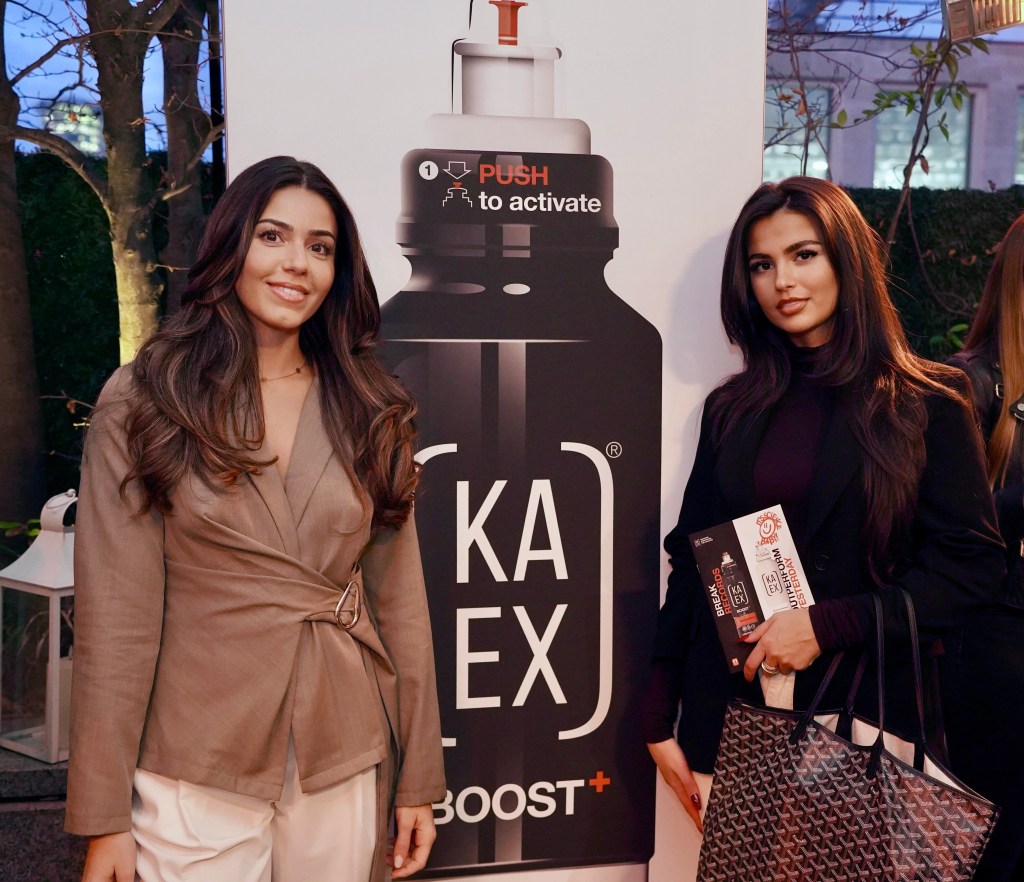
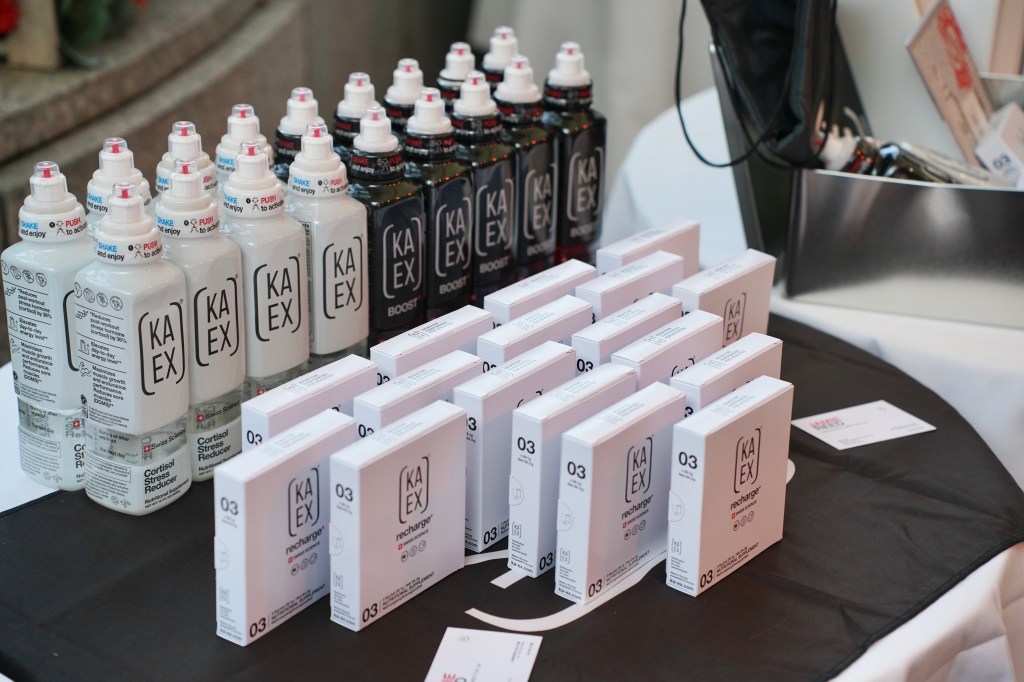
Everyone who knows me can confirm that if there’s a new health trend or supplement, I’m all over it. Remember NAD+when it first arrived? Many laughed when I sat there with an infusion drip attached, determined to reap the benefits. Now it’s everywhere! With the recent revelations about my go-to protein bars, I found myself searching for something new — and how thrilling it would be if it not only boosted my workout but also helped me sleep. Last night, I joined a team offering something new including former The Only Way Is Essex star turned entrepreneur Jamie Reed for the UK launch of KA-EX®, the new supplement that promises exactly that. So, what is it?

Celebrity. Jamie Reed brining KA-EX to the Uk . with Roger Wilfinger and Florian

Innovation in a Bottle

In the ever-evolving world of athletic performance, innovation is the key to staying ahead. From advanced wearable tech to nutritional breakthroughs, athletes and trainers are constantly searching for the next edge. One of the most revolutionary developments to emerge in recent years is KA-EX®, a scientifically formulated recovery and performance system that has been quietly transforming the way professionals approach physical regeneration, mental focus, and long-term health. Far from being just another “energy drink,” KA-EX® is a functional beverage built on research, biology, and the science of recovery. Its creators have taken a holistic approach, targeting not only physical fatigue but also the biochemical imbalances that limit an athlete’s potential — specifically, stress hormones, inflammation, and cellular damage.

A glamours evening for the launch of KA-EX

Origins and Purpose: The Science Behind KA-EX®

Launched in 2017, KA-EX® began as a little-known secret among elite sports circles. At a time when recovery supplements were dominated by protein powders, amino acid blends, and carbohydrate-based drinks, KA-EX® introduced something entirely new: a formula designed to combat cortisol — the body’s primary stress hormone — while simultaneously supporting sleep, reducing inflammation, and enhancing cognitive clarity. Its founders understood that performance is more than physical strength. Stress, sleep deprivation, and oxidative damage can silently sabotage progress, especially in high-intensity sports. KA-EX®’s breakthrough came from identifying how these internal stressors hindered recovery and performance — and then formulating a natural, clinically supported blend to counteract them. Over time, this approach caught the attention of professional trainers, nutritionists, and elite athletes across Europe. Top football clubs, cycling teams, and endurance competitors began integrating KA-EX® into their recovery routines. The results were measurable: lower cortisol levels, improved muscle recovery, faster sleep onset, and higher daytime energy.

The KA-EX® Advantage: Beyond Conventional Supplements

Traditional sports supplements tend to focus on a single metric — building muscle, replenishing glycogen, or reducing soreness. KA-EX®, by contrast, is multidimensional, targeting the biological systems that govern energy, stress, and restoration.

Here are the key differentiators that make KA-EX® the future of sports supplementation:

Creater Pedro Schmidt

1. Cortisol Regulation

Cortisol is the body’s “fight or flight” hormone — essential in small amounts but detrimental when chronically elevated. Intense training spikes cortisol levels, which can impair muscle repair, suppress immunity, and reduce mental clarity. KA-EX®’s RECHARGE+ formula directly addresses this issue, making it the world’s first cortisol stress reducer for athletes. By balancing cortisol, the product allows the body to recover faster and prevents the catabolic effects that break down muscle tissue.

2. Enhanced Sleep Quality

Recovery begins with rest. KA-EX®’s ingredients are formulated to improve both the quality and duration of sleep, supporting the body’s natural regenerative processes. Better sleep means better hormonal balance, reduced inflammation, and sharper mental focus — the trifecta of elite performance.

3. Anti-Inflammatory and Antioxidant Support

Exercise-induced inflammation is a natural response, but chronic inflammation slows recovery and increases injury risk. KA-EX® incorporates anti-inflammatory and antioxidant compounds that neutralise free radicals and promote tissue repair without blocking the body’s adaptive processes. This balance supports long-term, sustainable performance.

4. Cellular Regeneration

Through targeted micronutrients and bioactive compounds, KA-EX® helps cells recover from oxidative stress. This cellular-level protection enhances endurance, reduces post-exercise fatigue, and maintains optimal function even under heavy training loads.

5. Mental Clarity and Focus

Athletic performance isn’t just physical — it’s also mental. KA-EX® includes nutrients that stabilise mood, sharpen focus, and improve decision-making under pressure. In sports where split-second timing and composure determine victory, this cognitive advantage is invaluable.

RECHARGE+ and BOOST+: A New Era in Recovery and Performance

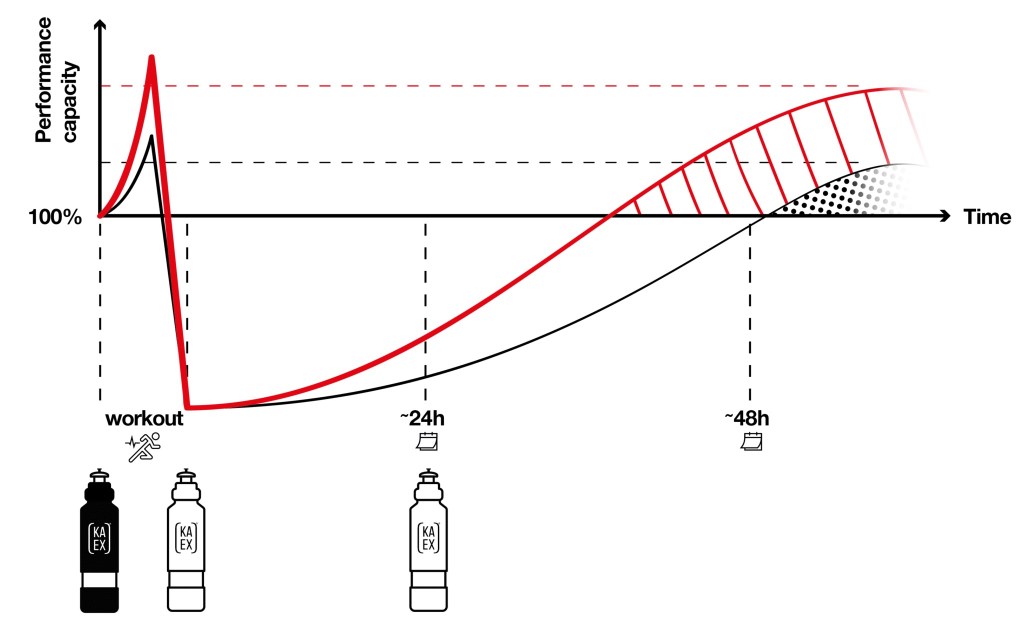
Building on the success of its original formula, KA-EX® has introduced two next-generation products — RECHARGE+and BOOST+ — each designed to optimise a specific phase of the athletic cycle.

RECHARGE+: The World’s First Cortisol Stress Reducer

RECHARGE+ continues KA-EX®’s mission of redefining recovery. Unlike typical post-workout shakes that focus solely on protein and carbohydrates, RECHARGE+ actively supports hormonal balance, neurological restoration, and cellular repair. It’s particularly effective for reducing post-exercise fatigue and soreness, improving deep sleep and relaxation, enhancing immune function, and accelerating muscle and joint recovery. By targeting cortisol regulation, RECHARGE+ represents a paradigm shift in recovery. It acknowledges that the greatest barrier to progress for many athletes isn’t physical strain — it’s the body’s inability to recover from chronic stress.

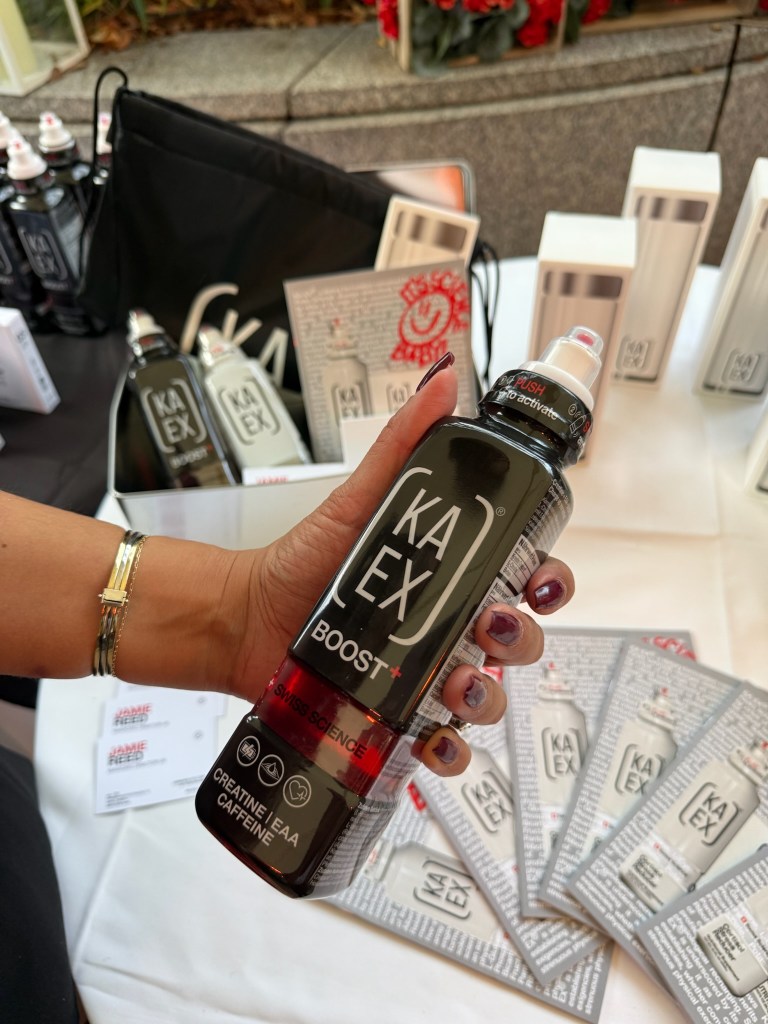
BOOST+: The World’s First Creatine Workout Booster

BOOST+ complements RECHARGE+ by powering the performance phase. As the world’s first creatine-based workout booster designed for sustained energy without the crash of stimulants, it optimises ATP (adenosine triphosphate) production — the molecule responsible for muscular power. Creatine remains one of the most researched and effective ergogenic aids in sports science. BOOST+ elevates its benefits by combining it with synergistic compounds that enhance uptake, delay fatigue, and support mental concentration. The result? Cleaner energy, greater endurance, and enhanced output — without caffeine or artificial stimulants. Together, RECHARGE+ and BOOST+ create a 360° performance ecosystem, ensuring athletes are primed before competition and fully recovered afterwards.

Backed by Science, Trusted by Champions

What truly sets KA-EX® apart is its scientific validation. Unlike many supplement brands that rely on anecdotal claims, KA-EX® has undergone clinical trials showing statistically significant benefits in stress reduction, sleep quality, and inflammation control. This evidence-based foundation has earned KA-EX® credibility among sports scientists and medical professionals alike. Nutritionists within elite clubs have praised its efficacy, and its adoption by professional teams is a testament to its real-world impact. The brand’s success underscores a broader shift in sports science — from merely fuelling performance to optimising recovery and longevity. KA-EX® isn’t just a supplement; it’s a philosophy redefining what it means to perform sustainably at the highest level.

A Holistic Vision for the Future

Athletes today face unprecedented physical and psychological demands. Whether in professional sport or amateur competition, the pressure to perform has never been greater. Yet the human body’s capacity for regeneration remains finite. KA-EX® represents the next generation of sports supplementation — a science-led, whole-body approach that acknowledges the interconnectedness of mind, muscle, and metabolism. By restoring balance where modern training and stress create depletion, it paves the way for a new era of athletic resilience. The future of performance isn’t about training harder — it’s about recovering smarter.

Why KA-EX® Leads the Way Forward

In a market saturated with energy drinks, pre-workout powders, and synthetic boosters, KA-EX® stands as a beacon of intelligent innovation. Its commitment to scientific integrity, measurable results, and athlete wellbeing sets it apart. By tackling the root causes of fatigue — cortisol imbalance, inflammation, oxidative stress, and poor sleep — KA-EX® doesn’t just enhance short-term performance; it promotes long-term health and sustainability. As more athletes, trainers, and health professionals recognise that recovery is the real frontier of performance, KA-EX® is positioned not merely as a product but as a movement — ushering in a smarter, healthier, and more balanced era of athletic achievement.

KA-EX® isn’t the supplement of the future. It is the future is the claim , I will keep you posted as I try it .

Steven Smith spman@btinternet.com

Categories
Columns Health and Fitness Lifestyle Uncategorized

The Fab Four for sleep.

Fab 4 for Sleep

Having trouble sleeping—or just want the best natural help to drift off without taking a pill? Here are my fab four to stop you from counting sheep as you float away to la-la land.


1) Sour Cherry Juice

Tart cherries, among many other benefits, contain melatonin. Increasing your melatonin levels can help you fall asleep quicker and stay asleep longer, offering a natural way to drift through the night. Cherry juice can also help fight inflammation, reduce muscle soreness, and boost your immune system.

Try drinking a glass of juice an hour before bedtime. This gives it time to enter your system—and gives you time to use the bathroom, so your bladder won’t wake you up in the night! If you don’t like the taste of cherry juice, try it in capsule form. Another great tip is to have a warm lavender bath before bed.

🔗 Buy Cherry Juice Concentrate on Amazon


2) Fresh Face Pillows

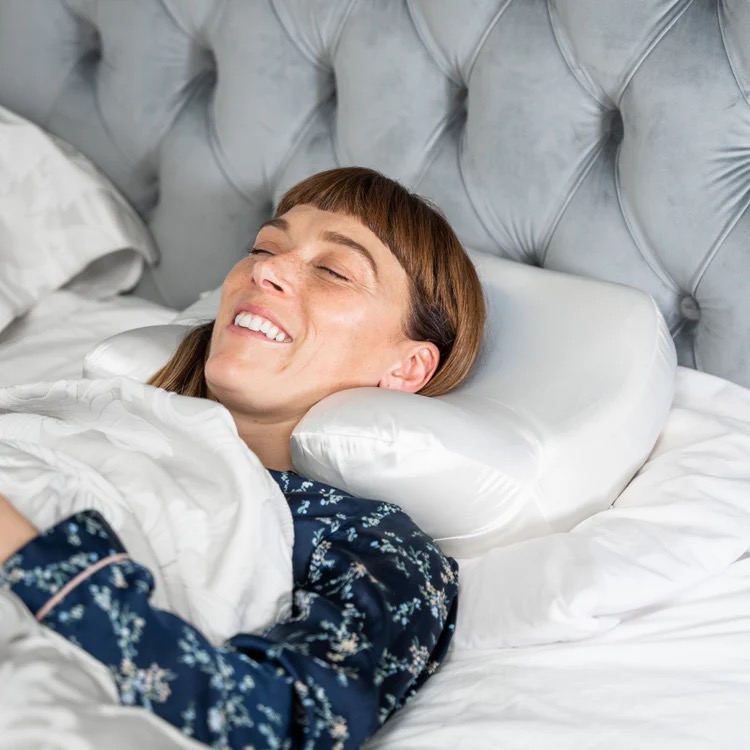
Your bedding plays a big part in how well you sleep. My secret weapon is the Fresh Face Pillow—a memory foam pillow wrapped in a silk pillow slip. I’ve always been a devotee of silk and memory foam pillows, but this is different: this pillow literally gives you a cuddle. It’s sheer heaven as you lie back and prepare to dream. It’s also an incredible anti-ageing tool—the silk allows your face to breathe and glide, while the pillow’s unique shape encourages back sleeping, helping prevent those dreaded sleep lines.

If you’re like me and used to sleeping on your side, the Fresh Face Pillow may take some getting used to. In fact, it felt a little claustrophobic the first time I tried it! But the idea of waking up without looking like a giant gorilla had assaulted me in the night made me persevere.

During the first few weeks, I’d use it for short lie-downs with a face mask—it felt like I was at the beautician’s! By the second week, I started using it for full nights. At first, I still woke on my side, but soon it became a must at bedtime. I cannot recommend it enough. Just remember to hand-wash your silk pillowcase or use a delicate setting.

🔗 Visit freshfacepillow.com


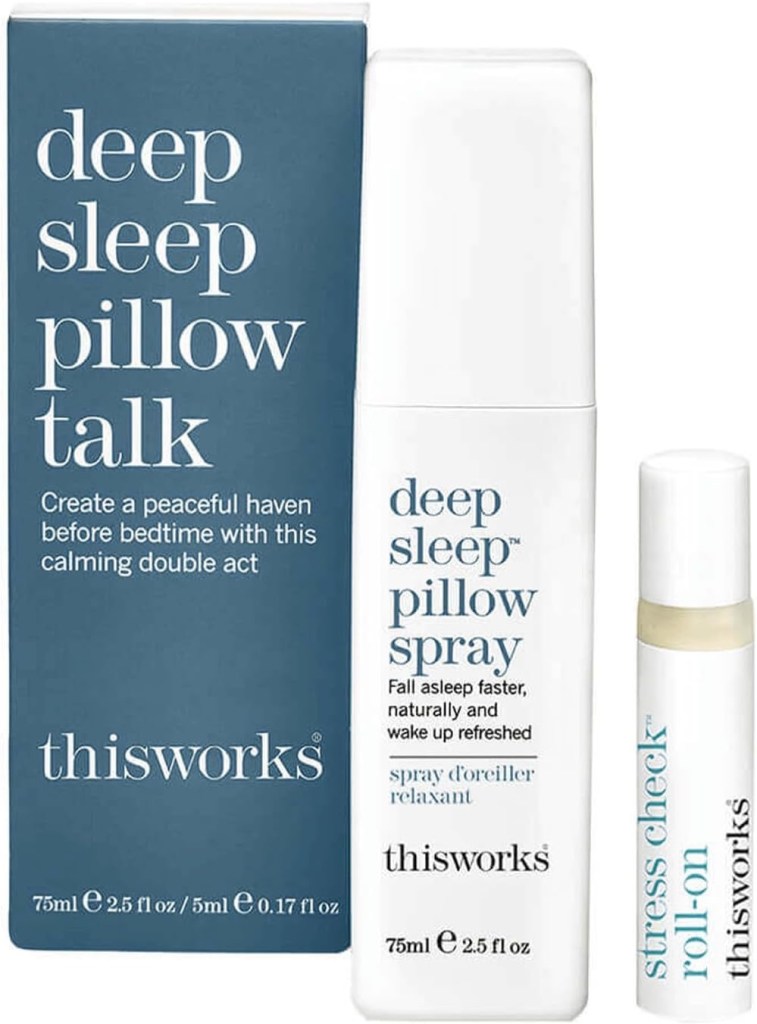
3) This Works Best-Selling Deep Sleep Pillow Spray

This Works Deep Sleep Pillow Spray not only claims to help you fall asleep faster—it also makes your pillows and bedroom smell gorgeous. With a calming blend of lavender, vetivert, and wild camomile, it eases anxiety and helps improve sleep quality. When we sleep, our skin cells repair damage and remove toxins, making deep sleep one of the best beauty secrets.

A few sprays on your pillow before bed is all it takes. And if you have time, a warm lavender bath beforehand works wonders too.

🔗 Buy on thisworks.com


4) The Mirari Life Grace Silk Velvet Eye Mask

One of the best aids for sleep and beauty is an eye mask. Blocking out light can be a game-changer—especially on long-haul flights. But not just any mask will do. The delicate skin around your eyes deserves something gentle. I always recommend a silk eye mask, and the Mirari Life Grace Silk Velvet Eye Mask is pure perfection.

Made from a luxurious silk-velvet blend, this mask is thick enough to give a complete blackout effect—ideal for even the most light-sensitive sleepers. It also helps reduce sleep creases and preserve your skincare. Yes, it’s a bit pricier than standard eye masks, but it’s a wonderful investment in your beauty regime. Plus, it’s perfect for travel.

🔗 Shop the Grace Silk Velvet Eye Mask

Categories
Columns Health and Fitness Travel

The Fab 4 Beer Bottle Pockets, Champagne Tastes


We’ve all been there—wanting the best in skin and hair care to help us look our best, but without the budget for high-end brands. This month’s Fab 4 features top-quality beauty products that deliver amazing results without breaking the bank.

https://www.waitrose.com/ecom/shop/browse/groceries/baby_child_and_parent/bathtime_and_toiletries/baby_creams_balms_and_lotions?srsltid=AfmBOorWjVq3s04aXXi0X-QsLDooJcxh_e3wgcGfzsICZ8iCC7UG5dI-

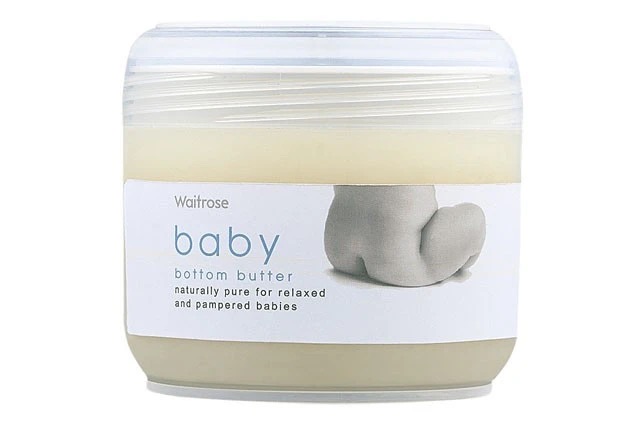
1) Best Moisturiser: Waitrose Baby Bottom Butter
Originally designed to soothe and protect babies’ skin from infection and irritation, this wonder cream doubles as one of the best anti-ageing moisturisers I’ve ever used. At just £2.54 a pot, it’s a must-have for any beauty cabinet.

Waitrose’s Baby Bottom Butter is my number one skincare essential. I apply it at night before bed and wake up with fresh, dewy skin. It can be used during the day, but only sparingly—as it can leave a waxy finish, particularly if you’ve had Botox, which may result in a mask-like look. That said, slather it on at night and prepare to be amazed. It sells out quickly, so stock up when you find it!

https://www.ocado.com/products/original-source-i-m-plant-based-lavender-and-rosemary-shower-gel-554362011?utm_source=google&utm_medium=cpc&utm_campaign=21056899371&utm_content=non-brand&gclsrc=aw.ds&gad_source=1&gad_campaignid=21066892480&gbraid=0AAAAADi6iHlhRKrWDxVWQ5oHKVOv6l3Fd&gclid=CjwKCAjwgb_CBhBMEiwA0p3oOAHBnWXl1chxg1_ZiDPStTr8TpNlq8yHWLnE87VqBbh88N6aUe9kcxoCWxAQAvD_BwE

2) Best Shower Gel: I’m Plant-Based – Original Source Body Wash
If Jo Malone or Molton Brown shower gels are out of your price range, try Original Source’s “I’m Plant-Based” collection. Bursting with consciously sourced natural ingredients, this body wash delivers a luxurious lather and a fresh, sensorial experience.

The Lavender & Rosemary scent is particularly divine, packed with blooming lavender harvested straight from the field and fragrant sprigs of rosemary. It’s 96% naturally derived, cruelty-free, and wonderfully foamy. I keep one in my gym bag and another at home. At around £2, it’s a no-brainer.


https://www.amazon.co.uk/Arm-Hammer-Pure-Baking-Soda/dp/B007SUVIXS/ref=asc_df_B007SUVIXS?mcid=e9b5d0d84efc380590430f44f2f30c04&hvocijid=5456473174898625950-B007SUVIXS-&hvexpln=74&tag=googshopuk-21&linkCode=df0&hvadid=696285193871&hvpos=&hvnetw=g&hvrand=5456473174898625950&hvpone=&hvptwo=&hvqmt=&hvdev=c&hvdvcmdl=&hvlocint=&hvlocphy=9045885&hvtargid=pla-2281435177578&gad_source=1&th=1

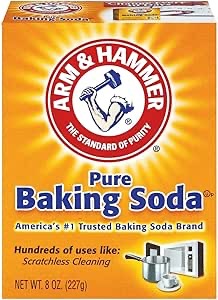
3) Secret Weapon: Baking Soda for Hair and More
For a hair-boosting trick, mix two teaspoons of baking soda with your favourite shampoo. Apply to wet hair, massage well, leave for a minute, rinse, and condition as normal. This simple treatment adds volume, shine, and a fresh feel—ideal for use every two weeks.

Baking soda also doubles as an effective natural deodorant. Just apply a teaspoon under each arm. Important: Do not confuse baking soda with baking powder—they are not the same!

https://watermanshair.com/?tw_source=google&tw_adid=551969531980&tw_campaign=12888053217&gad_source=1&gad_campaignid=12888053217&gbraid=0AAAAABbiWeN-OpKRXbWWM4nlWx42fUwxQ&gclid=CjwKCAjwgb_CBhBMEiwA0p3oOId_ZcBmsmj-FcHUe4XY40GZUeR4O4VMLmNoNWaEandAm4FoXRcbRRoCigcQAvD_BwE

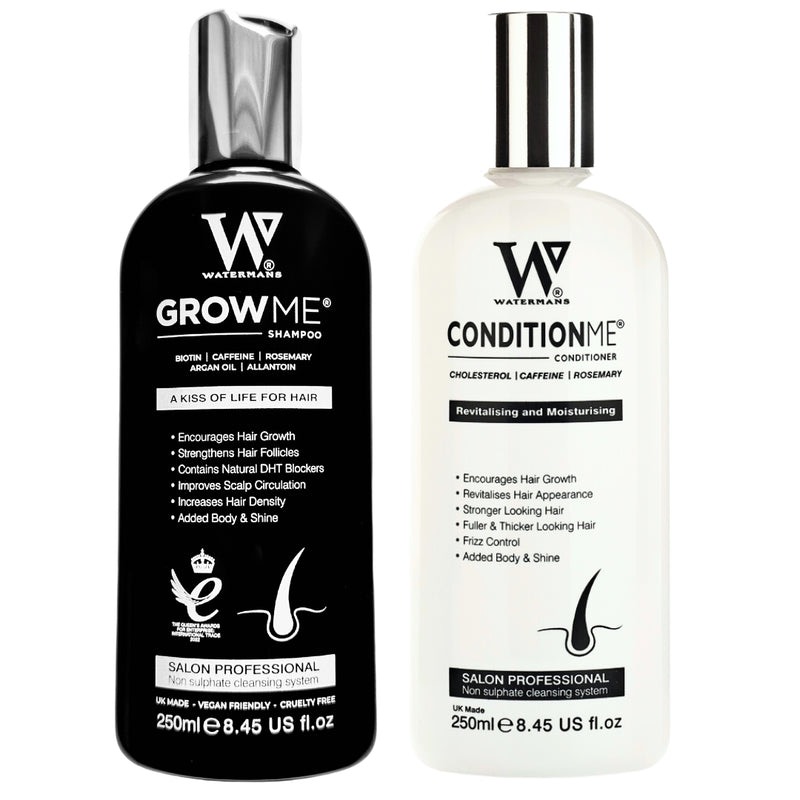
4) Best Hair Growth Shampoo: Watermans ‘Grow Me’
Hair loss treatments can be eye-wateringly expensive. If you’re noticing thinning hair or simply want to boost volume, Watermans Grow Me shampoo is a fantastic, affordable alternative.

Founded by Gail and Matt Waterman—both of whom experienced hair loss—Watermans launched in 2012 and now sells a product every 30 seconds worldwide. The company is driven by results and community support, not just profits. They donate ‘Grow Me’ shampoo to chemotherapy wards across the UK and other products to the NHS and Ukraine, while also backing grassroots football teams nationwide.

If you want fuller, stronger hair without the high price tag, this is a great place to start.
From £13.95 GBP

END

Categories
Health and Fitness Lifestyle Uncategorized

Sleeping Soundly: How Michelle Langer’s Wellbeing Workshop Changed My Nights By Steven Smith


www.michellelanger.com/about

Sleep. It’s something most of us take for granted—until we can’t get any. For years, I struggled with sleepless nights, tossing and turning while my mind refused to switch off. That changed when I discovered that Michelle Langer, an old friend and wellbeing expert, was running a sleep workshop at Soho House in White City. What I experienced there genuinely transformed my approach to rest and relaxation.

I’ve known Michelle for over twenty years. One of my most unforgettable memories with her goes back to a holiday in Sitges. We’d hired a large pedalo and taken it out to sea. I was in charge of steering while Michelle and the late journalist Lester Middlehurst went for a swim. The Mediterranean was calm—until I spotted a giant Portuguese Man O’ War drifting nearby. I shouted a warning just in time, and what followed was pure chaos: a near-hysterical Lester trying to save himself by pushing Michelle underwater! Thankfully, no one was hurt, but the memory of that surreal moment has stayed with me ever since.https://www.youtube.com/watch?v=j26AqJKd-F4

Years later, I ran into Michelle again on the set of Dancing on Ice. We hadn’t seen each other in ages, but the reunion was lovely. A few of my friends in the show were clearly starstruck when they realised I knew her. “She’s the producer!” they whispered in awe. Yet Michelle was as grounded and unassuming as ever—no airs, no ego. As they say, never judge a book by its cover.

When I heard she was running a sleep workshop, I knew I had to go. I was amazed by how many people were there—each of us grappling with our own version of sleeplessness. Some shared personal stories, while Michelle delivered her guidance with grace, empathy, and deep insight. She offered a range of techniques, but one in particular completely changed the game for me. For the first time in ages, I began to feel like I’d actually slept. The workshop lasted just 55 minutes, but the results have been lasting.

Here’s a summary of some of Michelle’s top sleep strategies—simple yet powerful tools that can help you drift off with ease.

Breathing & Relaxation Techniques
Try the 4-7-8 Breathing Method: inhale for 4 seconds, hold for 7, exhale slowly for 8. It soothes the nervous system and helps you wind down.
Box Breathing is another great option—inhale, hold, exhale, and pause for 4 seconds each. This helps calm anxious thoughts.
Progressive Muscle Relaxation starts at your toes: tense each muscle group for a few seconds, then release as you breathe out, moving slowly up your body.
Diaphragmatic (or belly) breathing, where you allow your stomach to rise and fall with each breath, helps trigger the body’s rest-and-digest response.

Behavioural & Environmental Sleep Aids
Establish a gentle wind-down routine: dim the lights, read a book, take a warm bath, or journal.
Stick to a consistent sleep schedule—even on weekends—to regulate your internal clock.
Avoid screens for an hour before bed. Blue light suppresses melatonin and keeps the brain alert.
Apps like CalmHeadspace, or Insight Timer offer guided meditations and sleep stories that help quiet the mind.
Essential oils such as lavender or chamomile can be diffused or spritzed on your pillow for a natural calming effect.
Finally, make your bedroom a haven: keep it cool, dark, quiet, and clutter-free for optimal rest.

Michelle’s background is as impressive as it is diverse. A Cambridge graduate with 30 years’ experience as a television executive, she understands pressure, deadlines, and public scrutiny better than most. She now channels that experience into her work as a Wellbeing Consultant and Executive Coach. Personally trained by Dr. Deepak Chopra at The Chopra Centre for Wellbeing, she’s spent over fifteen years teaching mindfulness, meditation, and stress reduction strategies to public figures, CEOs, and individuals worldwide.

Michelle is also an accredited member of the Association of Facilitators and works as a coach for Arianna Huffington’s Thrive Global. Her client list reads like a who’s who of corporate and entertainment powerhouses—Microsoft, Accenture, Pfizer, Mastercard, NFL, Channel 4, and many more. And if that weren’t enough, she co-founded Tranquillo, a unique experience that blends live cello by world-class musician Jane Oliver, guided meditation, and essential oils into deeply immersive wellbeing sessions for companies.

If you’ve ever struggled with sleep, I can’t recommend Michelle’s work highly enough. A short session may just make a lifetime of difference.

For more about Michelle and her services, visit: www.michellelanger.com/about


Categories
Lifestyle

Best foot forward! Meet the Queen of Feet

With all this talk about Lily Allen’s perfect feet Steven Smith decided to chat to an expert on maintaining or achieving those ultimate tootsies.
The foot Queen of London. , brings you perfect feet https://www.beauchampfootcare.com


When it comes to our feet, many of us take them for granted and are rather neglectful. From my personal experience, thirty years of standing on my tippy toes to style people’s hair caused my toes to rebel, and suddenly one problem after another began to emerge. 

It started with an unpleasant ingrowing toenail, and moved on to developing Plantar Fasciitis. I am no stranger to pedicures. Still, if I were not being treated at the hands of an expert, treatment could become a torture rather than an enjoyable experience. I realised that just having my toenails cut and filed was not doing the trick, and in fact, was leading to health issues.

Many of my pals and those in the know raved about a woman they called “The Foot Queen”, Fiona Patterson, who was based at Beauchamp Foot Care

Fiona trained under the renowned Dr Scholl in Islington, obtaining her degree in Podiatry at Durham University in 2010. Additionally. she also undertook her degree in anaesthesia at Dublin University. Fiona has worked at Beauchamp Foot Care for 24 years, along with her three partners.

Fiona is a fantastically camp but no-nonsense lady who really fills you with confidence. I personally hate anything to do with my feet and so I spent the first two minutes apologising for how neglected they were. Fiona just nodded, however, reassuring me that they were just fine, and she would get them back to their original glory. I quickly felt relaxed and at ease, and as she expertly worked on my feet, I felt like I was being lifted into the air. I got chatting to the Foot Queen and tried to prize out some gossip about which famous people have wiggled their toes at her. 

Let’s find out more from the women herself.

What inspired you to start treating people’s feet?

I decided to do podiatry as I knew I liked treating people and I’m not squeamish. 

Results fell into place. It all kind of came naturally to me, to be really honest. 

How did you train?

I trained at the London School of Chiropody (as it was then) and then obtained my BSc degree from Durham. 

What are the most common foot problems?

I would put them in this order:

Callouses

Nail problems – there are a plethora of those!

Corns

Verrucae, athlete’s foot, and other conditions.  

How can we best care for our feet between visits to the clinic?

I would advise that before washing them, you file them, and after washing them, thoroughly dry them, not forgetting in between the toes. Hardly anyone does this. Keep nails straight and short (ish). Cream them every day too. Any problems should be seen by a podiatrist. 

Some of Fiona’s awards and qualifications .

What would you suggest athletes, who are more prone to sweating, use to look after their feet?

For athletes, see above re drying, especially between toes. If you have any signs of a fungal infection (itching, maceration of the skin, little blisters), see a podiatrist. Do not spend all day in your trainers. Take them off when you can. 

How do you treat ingrowing toenails?

Ingrown toenails are usually self-inflicted. Be careful how you cut them. I treat them in two ways. If it’s a one-off event, a conservative treatment is required – carefully cutting the offending spike out. 

If they’re recurrent, nail surgery is required under local anaesthetic. Sounds traumatic but isn’t, and well worth it for pain-free toes. 

Who are your average clients at the clinic?

I’d say the average age are people in their fifties. We have tended the feet of pop royalty, actors, and the odd client you might want to curtsy for (shall we say).  

How do you care for your shoes to make sure your feet are healthy? 

You must make sure your shoes fit. Take into consideration the length, width and also the depth of the toe box. Loose shoes are nearly as bad as tight ones, so don’t keep your favourite ones if you are slipping in them. 

Are my feet ready for only fans like lily’s?

Steven!!!! I am not even justifying that with a reply .

You also perform pedicures at the clinic. What is the most popular nail-polish colour?

We use Essie products in the clinic, and I’d say two colours. Wicked, a deep plum colour. It’s been around for years. Also, Ballet Slippers.

Quick-fire round

Favourite place in London?

Favourite place in London is Greenwich. Really nice vibe.

The one thing you would change in London.

I’d get rid of the bike lanes that seem to have popped up everywhere. 

The one thing that would turn you off a person.

Can I say two things? Noisy eaters and ill-mannered people are a put off for me. 

Your favourite film?

My favourite film is Phantom Thread with Daniel Day-Lewis. 

What do you most love about your job?

The sense of satisfaction when a patient leaves me pain free

 https://www.youtube.com/watch?v=3uXlft9e7Ww&t=2s

Chiropody Services:

41 Beauchamp Place
Knightsbridge
London SW3 1NX

To book an appointment for chiropody services, call
020 7225 0794