Heidi Gammon, Agony Aunt, Answers Your Valentine’s Questions
Love, desire, doubt, and the courage to speak honestly — Valentine’s Day has a way of stirring emotions we sometimes keep carefully tucked away. Whether you’re navigating friendship, long-term relationships, new love, or loneliness, these questions remind us that matters of the heart are rarely straightforward.
You can hear Heidi Gammon, alongside Steven Smith and Aston Avery, discussing these real-life dilemmas on Gateway Radio on February 10th at 10am, with the full show available to catch up on YouTube shortly after.
Dear Heidi,
I hope you are well.
My best friend of twelve years is gay. We’ve known each other since high school, and his sexuality has never been an issue for me or my family — we love him unconditionally. Over the years he’s had various partners, but nothing serious.
Two months ago, after we’d been drinking, he kissed me and told me he loved me. I honestly don’t know why I let it happen. It stopped there, and we’ve never spoken about it since.
Looking back, I think I may have been in denial. He’s always had a crush on me, and I’m now worried that this might be stopping him from meeting someone who can truly return his feelings. There is no chance of it being reciprocal, but I feel I need to talk to him — for both our sakes. What should I say?
All my love,
Adam, Brentwood
Dear Adam,
Thank you for trusting me with something so sensitive.
What stands out most here is how much care and respect you have for your friend — and that matters. Love doesn’t always fit neatly into boxes, and sometimes unspoken feelings linger quietly until they surface in unexpected ways.
You didn’t do anything wrong by freezing in the moment. Alcohol lowers boundaries, but it doesn’t create feelings that weren’t already there. What does matter is what you do next.
Avoiding the conversation protects neither of you. The kindest thing you can do is speak honestly and gently. Choose a calm moment and tell him that you value him deeply, but that your feelings are firmly platonic. Reassure him that your friendship matters and that you don’t want him holding onto hope that prevents him from finding someone who can fully return his love.
It may feel awkward — but clarity is an act of love too. You’re the best Heidi
Dear Heidi,
My boyfriend of four years really looks forward to Valentine’s Day. Each year he buys me gifts from Ann Summers and similar places. While he always takes me out to dinner, the evening usually ends with him wanting to dress up, role-play, and act out fantasies.
I think our relationship is loving and generally good. I do go along with some dressing up at times, but I feel like I’m not giving him what he really wants — and if I’m honest, the focus on “dress-up time” at Valentine’s is actually off-putting for me.
What can I do? Stella Southend
Dear Stella
Long-term relationships often stumble when desire becomes an expectation rather than a shared experience.
Your boyfriend’s enthusiasm isn’t wrong — but your discomfort isn’t either. Valentine’s Day has somehow become loaded with pressure, particularly around sex and fantasy, when it should be about connection.
This isn’t about you failing him. It’s about mismatched expectations. The answer lies in conversation, not performance. Try saying something like: “I love being close to you, but when dressing up becomes the focus, I feel pressured rather than desired.”
Intimacy thrives when both partners feel safe and excited — not obliged. If you can’t meet in the middle, it’s worth asking whether this dynamic works for you long term.
Hi Heidi,
I love your column.
My mum is 55 and looks great. My dad left when I was 12, and she hasn’t really met anyone since. I’m 19 now and leaving home in September, and I’d love for her to meet someone.
She insists she’s fine and tells me to leave it, but I worry about her being lonely. There’s a man who works for the council who’s been to the flat a few times to do jobs. She always smiles at him and makes him a cup of tea. He’s divorced and around her age.
Should I try to set them up? I sometimes see him at my gym.
Thanks, Darren, Basildon
Dear Darren,
Your concern for your mum is genuinely touching — but tread carefully.
Loneliness looks different at every age, and contentment doesn’t always announce itself loudly. Your mum may truly be at peace with her life as it is, even if it doesn’t look like what you imagine happiness should be.
That said, a gentle nudge is fine — a shove is not. Instead of playing matchmaker, open a conversation. Ask her how she feels about dating now, not what she’s missed in the past.
And one important rule: never involve a third party without consent. If she does express interest in meeting someone, you can mention the council worker — lightly — and then step back.
Let her lead. Love, at any age, deserves dignity.
Dear Heidi,
I’m in my sixties, gay, and single. I don’t like bars or dating apps, and the idea of going on a date makes me feel physically sick.
What can I do?
Mike, Romford
Dear Mike,
You are far from alone — and nothing is “wrong” with you.
Dating culture can feel exhausting, performative, and frankly brutal, especially if bars and apps don’t suit your personality. The good news? They’re not the only doors into connection.
Consider spaces built around shared interests rather than romance: walking groups, book clubs, volunteering, community classes, or LGBTQ+ social groups that aren’t centred on nightlife.
Connection grows more naturally when the focus isn’t dating but being. And remember — companionship doesn’t always begin with fireworks. Sometimes it begins with comfort.
Love Heidi
Dear Heidi,
I’m taking my new girlfriend out for our first Valentine’s Day together. I try to be a good boyfriend — I open doors, pick her up, and help out whenever she needs something done at her place.
But I’m honestly terrible at the romantic side. Flowers, yes — but beyond that, I’m stuck. What can I do to make Valentine’s Day feel truly special?
Eric, Brighton
Dear Eric,
You may not realise it, but you’re already doing many things right.
Romance isn’t about grand gestures or perfect scripts. It’s about thoughtfulness. The most memorable Valentine’s moments are rarely expensive — they’re personal.
Think about her. What makes her feel seen? A handwritten note. A playlist. A meal you cook yourself. A walk somewhere meaningful. Even saying, “I’m nervous because I really care” can be incredibly romantic.
Romance isn’t performance — it’s intention.
Heidi
Hello Heidi,
My husband and I have been married for twelve years. Recently, he suggested spicing things up by having a threesome. He says he doesn’t mind whether it’s with a man or a woman.
If I’m honest, the idea does appeal to me — but I’m scared it could either strengthen our marriage or completely ruin it.
Are there ground rules I should put in place? Or is this a bad idea altogether? I’ve told him I need time to think about it.
Anonymous
Dear Anonymous,
I’m glad you didn’t rush into an answer.
A threesome is not just a sexual experience — it’s an emotional one, and once a third person enters the picture, there’s no “undo” button.
Before discussing rules, ask deeper questions. Why does your husband want this? What does it represent for him — novelty, validation, curiosity? And equally important: what does it represent for you?
If you decide to explore it, boundaries are essential: who, when, emotional limits, aftercare, and the right to stop at any time — even at the last minute.
But if your gut says “this might damage us,” listen to it. Desire should never come at the cost of safety or trust.
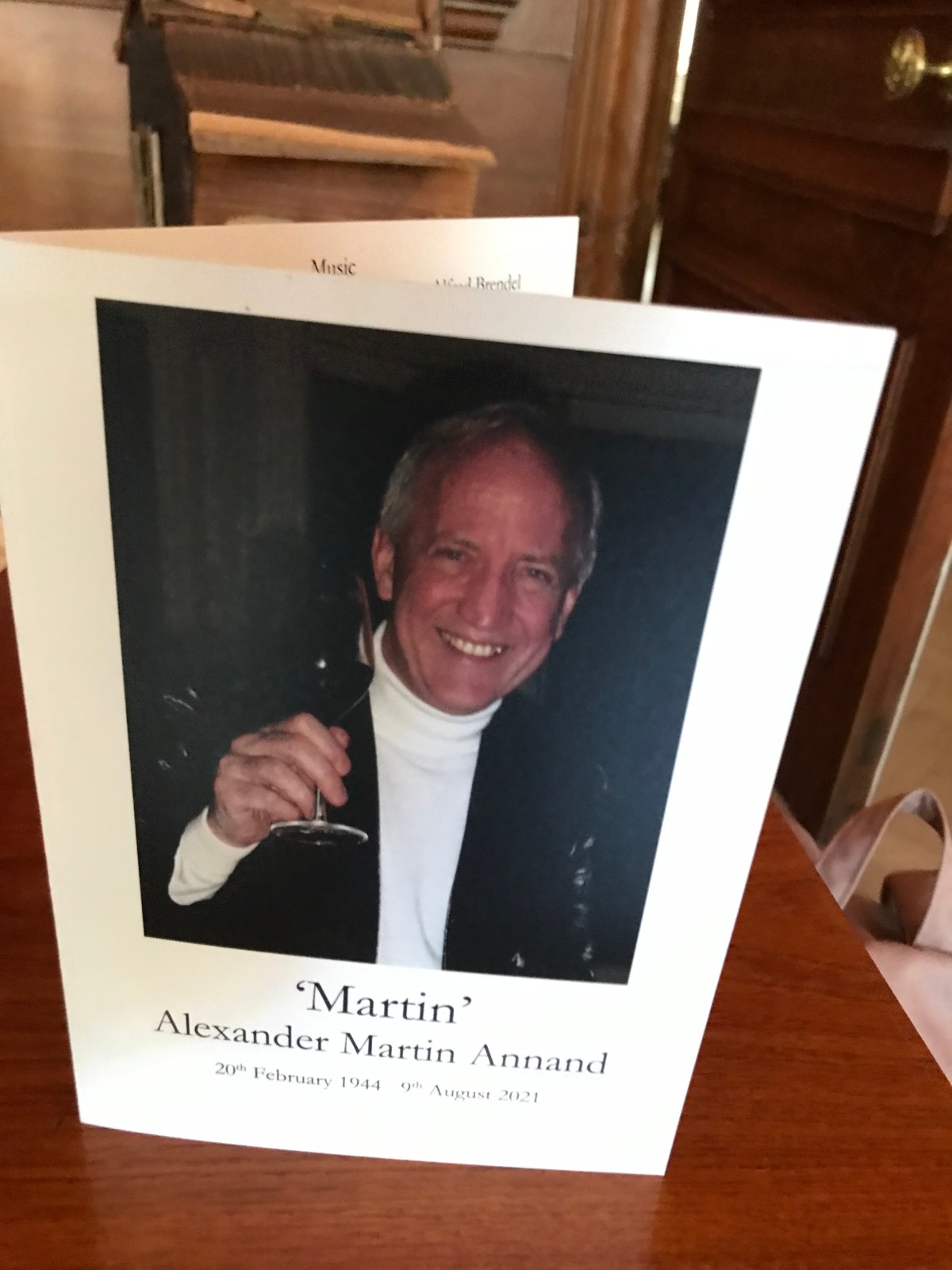
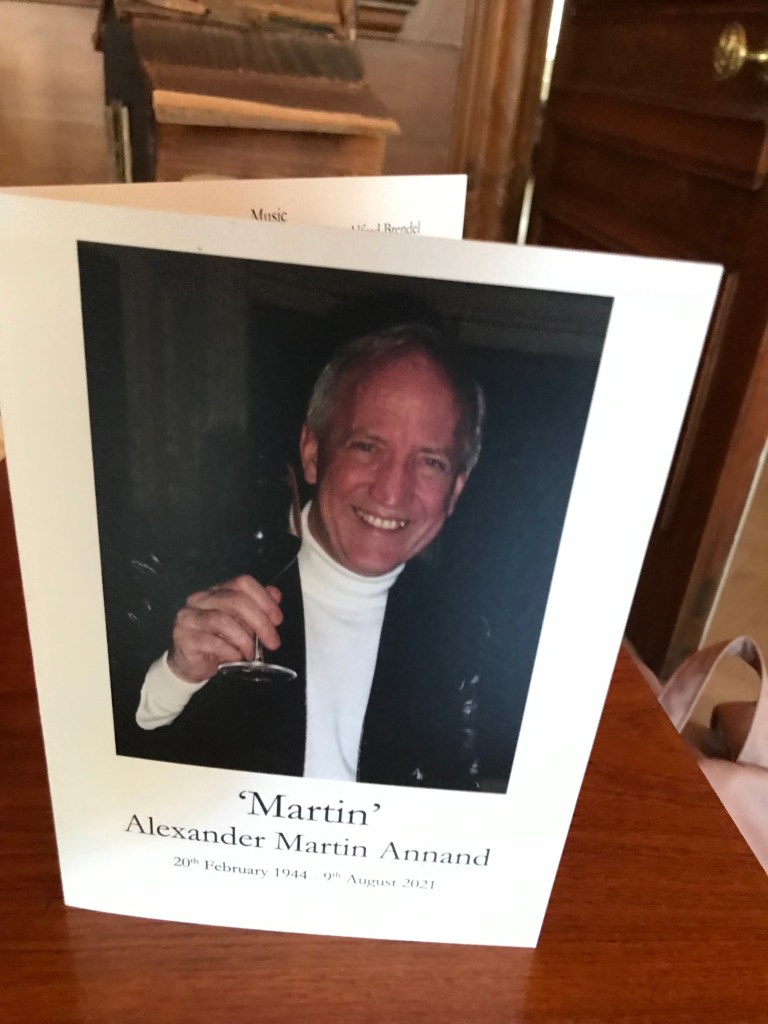
Other people’s issues. Martin and I had a beautiful relationship but there was always someone who had an issue with it . It may seem strange to start my story at the end of someone’s life to tell their tale. The remarkable Mr Annand was no ordinary man, so his journey should be told just as the curtain is about to fall on his extraordinary life, an existence that for most parts was never quite what it seemed to so many.
Mr Annand, or as we called him, Martin, looked up at me from the brown mobility chair, which he had become confined to during the day over the last few weeks of his life, his beautiful big blue eyes still reminding me of Jiminy Cricket from Pinocchio. Still full of hope, he smiled at me, pulled gently on my shirt and asked me to go and get a nice French bread stick – warm if possible – and some soup. He had been off his food for the last few days so it was a relief to hear him want something.
There was only one problem. We needed to hide the bread from Nicos, Martin’s Greek Cypriot trust fund civil partner, as gluten and bread were taboo in the soulless flat that they shared in trendy Bloomsbury. Though the wood and lighting were incredible, it resembled an art gallery with uncomfortable furniture. Nicos ruled the roost in this place and would become hysterical and cruel when not getting his own way. Even traditional cooking was banned for fear that it would cause damage to any of the many art works.
A splash of water, not wiped up from the sink tap, could cause a rage so powerful you would have thought you had flooded the flat.
Nicos had allowed me to take joint care of Martin with great reluctance; only after he had worked out the actual cost of private nurses did he reluctantly give in. At first it was only to be when Nicos was at cross fit for three hours a day, or when he had his own hospital appointments. However, the workload was constant and eventually I stayed there 24 hours a day, and for this I was grateful Nicos allowed me to do so as it was so painful not to be with Martin
It seemed odd to me: Nicos’ art collection in the UK and Cyprus had a value in the millions so if he had sold just one piece, it could have funded 24-hour private care. Martin always said that, despite Nicos’ wealth given to him by his father, he was incredibly tight.
Nicos had just left for a workout and was meeting a friend after. Dashing up Tottenham Court Road to M&S, I returned quickly with some of Martin’s favourite fruit jellies, two small warm bread flutes and heart-warming chicken noodle soup. Frantically I cut the bread up into small slices and buttered them cleaning up after myself for fear that crumbs would be found.
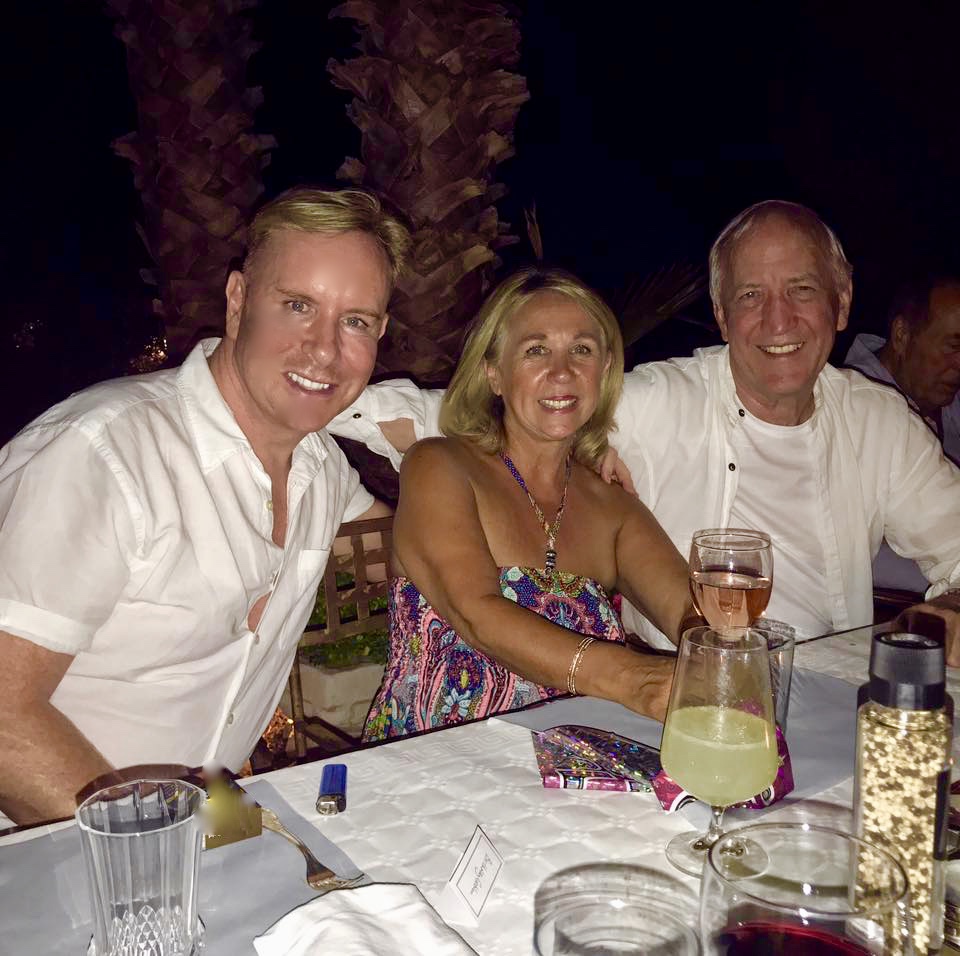
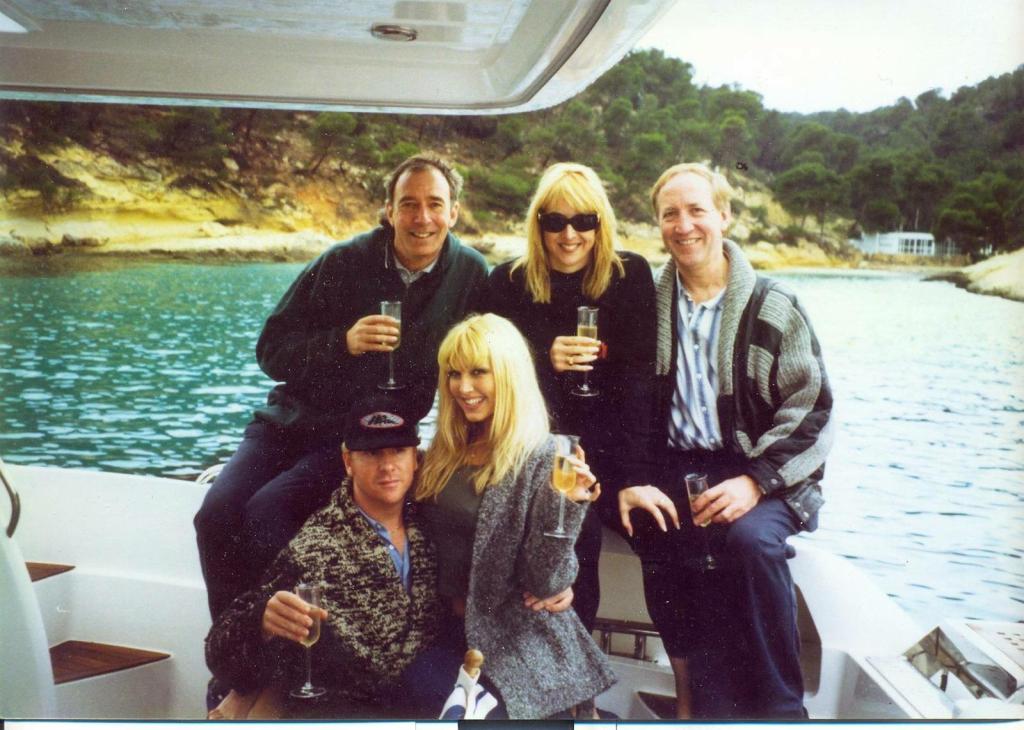
Martin Annand and Pam Sharrock and me in the South of France
The soup was being cooked in the microwave that was hidden so high up, cooking anything in it was a challenge. Even the kettle was in a cupboard to stop steam hitting any artwork that adorned the kitchen walls. Martin smiled as I brought it to him, “I am getting my appetite back”, he said, with some hope. Pointing out it was a good sign, I gave him a wink
. The man I had loved for forty years was dying and I was determined to keep my emotions in check and just be his rock. If I ever allowed the flood gates to open and show how I was feeling, my fear was that the tears would never stop, and that was the last thing he needed. Martin had a beautiful childlike quality that most people never got to see. He gave me a paw as I put the food down.
Of course, he only managed a little bread and some soup. Just as he was about to get me to take it away the door opened. Nicos was there. “All right my love, what’s that you have got there?” he enquired, with his eyes throwing daggers of steel towards me. Explaining that he really wanted a bread roll and some soup, strangely Nicos did not react, although I made a hasty retreat to the kitchen to discard the evidence out into the bin in the communal areas of the block.
There was only one flute of bread left by the side of the sink that was left to hide. Nicos had not gone to shower as he usually did on return from the gym and he was in the kitchen. To my amazement, he was cutting the spare French bread flute in to slices and covered them in strawberry Jam and organic Honey. Instinct told me to get out of the way to see Martin, and a wise decision it was.
Ten minutes later Nicos came charging down the wooden plank floors of the corridor towards the bathroom slamming the door. He spent twenty minutes in there inducing himself to vomit. Eventually he came out and marched up to Martin, shoving his hands that stunk of sick up into Martin’s pale face. “Look what you made me do bring that into our home!”
There was nothing I could do to stop Nicos. My heart often went out to him as he was so uncomfortable in his own body, I can only imagine what it must be like to wake up every day so unhappy in life. I do not think that I had ever seen him do a full day’s work in the twenty years I knew him. Martin wrote his correspondence for him, Nicos went for the odd meeting in Cyprus but for the most part, he went to the gym, shopped, attended gallery openings, and holidayed abroad a lot. What he devoted a lot of time to was sitting in judgement of other’s efforts, which he did with great ease. He really was the quintessential trust fund baby.
Though Nicos’ and my relationship made Joan’s and Bette’s look like an easy one, he always had the upper hand. At first I had liked him as he was amusing, witty and we shared many of the same interests. He clearly had huge mental health issues, so to take him on was a fruitless task and only caused issues with me seeing my ex-partner, Martin.
Over the years my radar went into no comment regarding his hatred of me, even during the campaign of daily phone text’s calling me every name you could imagine. Once he caught me off guard with the malicious comment, “No wonder your boyfriend killed himself and the latest is missing!” That text was a step too far and I threatened to call the police, although for the sake of Martin, we did eventually make up
. There was always someone who had an issue with my relationship with Martin. Nico’s just could not cope with the fact that Martin still loved me and him in different ways. It was not long before Nicos was in the kitchen and you could just tell he was looking for a fight. He was opening and closing drawers for no reasons when suddenly he spied a small amount of water that had escaped me whilst cleaning, next to the marble sink. That was it, he hit the roof. “YOU RESPECT THE QUALITY OF NOTHING!” he bellowed behind me as I made my excuses to Martin and decided to spend one night at my home let Nicos calm down. When an apologetic text from Nicos did come through, I told him all was fine.
Returning the next day at 6:30 I found there were two patients in bed: Nicos had piles and might need to go the hospital, possibly for four days. Nicos had fired four of the helpers the NHS had sent us. Looking after Martin really needed two, but the idea of spending some time with him was a relief to me. In the end Nicos just went to a specialist. Looking after Martin was not the hard part, though it was breaking my heart every day. Dealing with Nico’s, who was devious and underhand, was horrendous. He seemed obsessed with my every move.
However if you think he sounded bad, nothing could prepare you for his sidekick we will call “The Cousin”. A woman as equally uncomfortable in her own skin as Nicos, Martin had only known her for five years. On the face of it she seemed nice, with an air of the teacher about her. Nicos had decided that she was Martin’s replacement sister, as the relationship with his own sister Pen had become strained over the years due to her dominating girlfriend. Martin ‘just loved her’, Nicos would inform me with some command. Martin, though fond of her, did not see her that way.
She was a walking nightmare and expert on everything to do with cancer. My first hint that she needed to be stopped was when Martin called me telling she was trying to roll a tennis ball up and down his spine. Luckily, I got there in time to challenge her and that went down like a lead balloon.
The cousin had a habit of putting her hand up like she was teaching at school. I did not want Martin doing those exercise she was trying to make him do and reiterated that he had spinal cancer so his specialist would need to approve any exercise. If she was teaching or instructing, she was fine. Nicos went away for two weeks and left me with Martin. The Cousin started coming over bringing lots of sugary desserts, all well-meaning but not good for cancer and definitely not to Martin’s taste. It seemed well meaning so Martin would smile and say, “Save for later, yummy!” I would chuck them in the bin as soon as she left.
The first time she came over was to give me an hour off. Martin asked me to call and cancel her, he would be fine, but I felt it would be rude to do so, and if she did come, it would pacify Nicos and assure him that everything was ok. Politely, I thanked her for coming. “I was coming whether you wanted it or not”, she replied, with the coldness of a witch at midnight. “Nicos and I have a plan for Martin, so don’t you worry yourself”, she went on. People must have wondered why I did not tell her to go F— herself. Instead, I hid the various things she brought to roll on Martin. The last thing Martin needed was her exercises that still needed to be approved by a professional.
We nearly had words when she waltzed in all sweetness and light with more desserts. With her empathetic face she asked, “Anything I can do to help?” For once I was happy to oblige, asking if she minded making Martin’s bed. Her face fell as what she really had meant was if there was anything she could teach or instruct. Her face perked up as she replied, “I will teach you how to do it.” Of course, I declined.
There was zero empathy from Nicos when I explained Martin was not as keen on her visits as he thought. But more important please could he supervise her teaching exercises as she had zero experience. Having breast cancer did not make you an expert on all cancers. Nicos hollered, “She is like a sister to him!” Nicos had ostracised most of Martin’s close friends and substituted them with ones he approved of over the years they were together.
We were told by the nurse visiting Martin that under NO circumstances should he make any financial, work related or personal decisions at this stage. It became incredibly difficult to handle the Cousin and Nicos, as no matter what I suggested, it was wrong. Dr Prakash who had helped Martin with his injections and treated him privately for free was branded an idiot, whereas the cousin, who really needed locking up, was always right whatever she said.
To this day it is my belief that she helped speed the cancer up. I grieved for Martin deeply. When one considers grief, it is foremost for the person you have lost. You could not begin to comprehend how grief magnifies when also confronted with two such devious, plotting malcontents, whose subsequent aim was to erase me from Martin’s eulogy along with any memories we shared. But I’m getting ahead of myself.
Apart from a lunch with my dear friend Marieanne, I had been there with Martin for twenty four hours. However I had a doctor’s appointment that I could not miss, but the whole thing would take only four hours tops. Warning signs should have flagged in my brain as the pair seemed unusually enthusiastic about this and confirmed several times that I was still going. Despite the warning given by the professionals, whilst I was out they got the lawyers in and established power of attorney.
Worse still, in his weakened state, Martin signed standing orders to pay monthly into the joint bank account in the Isle of Man the sum of £10,000 from Princess Salimah Aga Khan’s bank account. When I returned, Nico’s was quick to tell me he had power of attorney and only he had the right to deal with things. But again he allowed me to stay. I only found out about the Princess Salimah standing order when she noticed it. It honestly finished Martin off, he was SO distressed. How could this ever have been allowed? Simple Greed on one person’s part. Salimah was distraught though she did attend the funeral by zoom.
My beautiful Martin Annand died in St Johns hospice on the 9th of August surrounded by his civil partner Nicos and myself, his lover and friend of forty years. I was wiping his mouth with a moist tiny sponge. He was ice cold, and I knew it was the end. He made a noise then went, Nicos screamed and ran to the door, missing the fact Martin had taken one more breath, and then the beautiful angel left us for good.
Martin and I had been of the same mind; if we took ill, we would go to Switzerland and end it with dignity. In hindsight it was easier said than done. Whilst Nicos was in Greece, Martin had all the details. He had gone on business to Geneva working with Salimah Aga Khan and had everything planned, it was just down to me to take him. He was having a bad day and was booking flights. Martin’s chemo had been tremendous, although his hair had stayed, and we were full of hope.
He would shower at night trying to ease the agonising pain, but he refused to take the morphine for fear of being hooked. The doctors said it was all down to the side effects of the radiation treatment. Believing them I begged him just to give it two more weeks, then we would go and Nicos would never need to know. But they were wrong, and the cancer had spread. I would not let a dog suffer the indignity my beautiful Martin went through. My deep regret is not saying yes and flying him down to Switzerland when he wanted to go. There was no time for me to grieve at the bedside
. Nicos was hysterical and threw himself on Martin’s body. It was the opposite of what Martin stood for. It was not long though before Nicos became aware of my obvious grief. “I am his civil partner and have rights!” he shrieked at the nurse. Not for one minute did I challenge that, even though Martin was in fact still legally married to an American and she never divorced him. For five minutes I excused myself and went to the bathroom, locked the door and broke down.
This was not what Martin would have wanted, so I stood up and went to aid Nicos. He was actually kind to me, thanked me, and he was full of questions. Martin would have wanted me to look after him and, as much as he would let me, I did. It did not take long for him to hit the phone. He asked The Cousin to meet him at the house.
He called Phillipa, a long-term friend in Cyprus that Martin and I both liked, and was furious that she could not come straight away. He turned to his old friend Tee, who was also in Cyprus. The pair had fallen out for years, but a mutual ailment had brought them back together, and that Tee did not like me was a huge bonus. He was flying over the next day. I offered to stay, but it was refused. Accompanying Nicos back home, I came up to make some tea.
It was not long before the cousin arrived, she was of course kind. To my horror they jumped into funeral arrangements. Worse still, “Has anyone told Danielle. Martin was very fond of her?” was the next question. They both knew that I had fallen out with Danielle as she had taken great advantage of Martin. He had paid for her partner to be flown from Cyprus as a medical emergency. He had set up a bank account up for her and had been paying the price. I saw her as a user although Martin said “She’s great at parties”. If I was throwing a party, number one on the guest list would certainly not have been Danielle. I realised that I was on a hiding to nothing and left the pair to it.
Though I had helped Nicos as much as I could, The Cousin quickly jumped in and took over; my little eulogy was judged too much about me by the pair and not used. The actual funeral had to be seen to be believed and if Martin had not been cremated he would have rolled in his grave. In fairness I was in the funeral procession car. Arriving at their home, Nicos was not there.
I was outside as the coffin pulled up and Nicos jumped from the car wearing ripped jeans, flanked by Tee and another friend, who both seemed to be dressed like crows. He fell onto the ground of the apartment steps, wailing, “My Martin is here!” calling up to Phillipa. Ironically it looked like a scene from Tosca, a favourite opera of Martin and I. Nicos saw me then and I thought he was coming to hug me, but instead all the drama was over. “You get in the second car”. It was a shape of things to come for the day. I was only allowed a few people as mourners. Nicos did not realise that Martin still had had a life with me and he saw people like Denise Welch and others when Nicos was not around. Still, I was not going to argue and held my head with dignity. Just as I was about to enter the crematorium at Golders Green on a beautiful sunny day, Nico’s whispered to me, “I am afraid I have been a bit selfish with the eulogy.”
Looking back at him, I replied I would not expect anything else. Nicos outdid himself with the downright pack of lies contained in the eulogy. Yes, there were moments of truth but it was hard for me to comprehend what was being read out. If there was any doubt that this was not a bad dream, the beautiful friends I shared with Martin, who were there to support me, gasped in places. Darling Marieanne, a long-term friend of Martin’s and my best pal at the time, squeezed my arm each time something was read out that made Nicos sound a hero and omitted my name completely. We were instructed not to look at Nicos as we left, but he should not have worried as there was absolutely no danger of that.
Walking through the crematorium doors into the beautiful memorial gardens, my numbness started to thaw out as one of my oldest friends exclaimed, “What the fuck was that?” Nicos had had the nerve to ring my kid sister in the US and ask her to watch. It was not long before she was on the phone to find out if I was ok. “Why did he say those things?!” She knew how humiliated I must have felt and said how restrained I had been. If she had been there in person with a baseball bat…
Do not think the thought had not passed my mind. However, holding my head high was what Martin would have wanted, not some ugly drama. His eulogy was heard by 42 people. A week later I released mine on the net and it has been seen by over 4000,000 people. Many of Martin’s family and friends asked why it had not been used. It is below. My hope is to hold a proper ceremony on the anniversary of Martin’s death.
The wonder that was Martin Annand A beautiful light has left the world. But I just know he is sparkling above us full of love. Martin Annand passed away at St John’s hospice London at 12.15 on the 9th of August 2021, with Mozart piano concerto 15 playing, and his civil partner Nicos Steratzias and his former partner Steven Smith lovingly by his side. https://www.stjohnshospice.org.uk/about/
Christopher Robin said to Winne the Pooh: “You’re braver than you believe, stronger than you seem, and smarter than you think.” Martin Annand was the quintessential Christopher Robin and he loved his eclectic friends, no matter their flaws, and he embraced their strengths. He would often joke, “I think he is having an Eeyore moment”, if a friend was down or not seeing the positive about something. He would reference more of Christopher’s pals, saying, “You’re very Tigger-y today”, if one of us was particularly bouncy, and even though Martin enjoyed a healthy lifestyle, he also empathised with Pooh, adoring a sneaky sweet or two. Martin was a true English gentleman, whose style and grace made him so wonderfully unique
. People just adored him as he made every person feel important, taking an interest in everyone he met. From classic cars to a hand of bridge, the latest song by the Pet Shop Boys, or even a glance at what Robbie Williams was wearing; Martin could talk about it all. He just loved everything in life. I would often laugh to myself when people thought Martin was “serious” and “a little unapproachable”
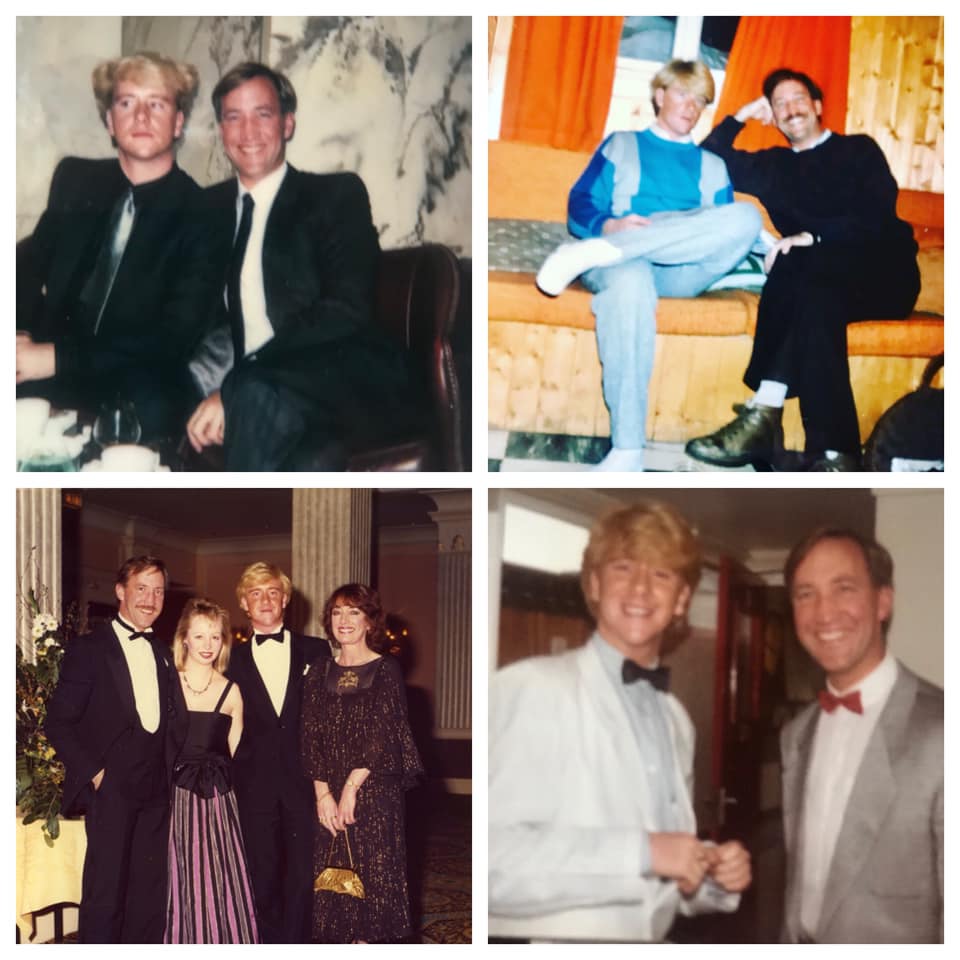
Martin with Ian Phillips Samantha Phillips and Emma Noble and me
. He was one of the funniest people I have ever met, bringing the phrase “Don’t judge the book by its cover” to mind. Martin’s inner child beamed out to those who knew him and took the time to see the beautiful man for who he really was. When I first met him, he told me a story that could only happen to Martin. He said, “I went to a dinner party last night. When I got there, the house was awfully dark. When I pressed the doorbell, the hostess answered in her night attire. “Oh, has the dinner been cancelled?” I enquired. “It was last week”, the hostess answered, wide mouthed. “And what is more, you came to it!”
Martin had the ability to laugh at himself. He was funny, sometimes forgetful and, what is a rare quality these days, loyal. Whenever you saw him, he opened his wide blue eyes and smiled, and he made you believe you could do whatever you wanted to do. He was fortunate enough to have danced with Princess Margaret, but always said he enjoyed dancing at his friend Denise Welch’s ball, with a group of bright young things, more than with Her Royal Highness. Martin just loved the dance of life and he threw himself into everything – whether it was captaining a boat or dancing the Conga in Rio de Janeiro.
Or partying in St. Tropez for his friend Pam Sharrock’s 60th. I recall him skiing down a black run in Klosters Ski Resort with such ease, leaving the soon-to-be-famous Denise Welch and myself way behind. Of course, Martin being Martin, he was straight back up the slope to come to the aid of his friends. There is so much to write on The Exceptional Mr Annand that it could fill two volumes. If there is a Heaven, he will be up there playing bridge and chatting to his friends who journeyed there before him. If he is looking down, all he would want for us is love, success and happiness, as Martin embodied in everything he did in life. But please continue reading as this is a story of one of the most glamorous, quintessential gentlemen, whose story will make you laugh, gasp and cry. He was the accountant for some of the world’s wealthiest and most famous people despite never training as an accountant. The man that could make you feel like you could fly…
Welcome to Steven’s Viewz — the first of 2026. And let’s start the year with an uncomfortable truth.
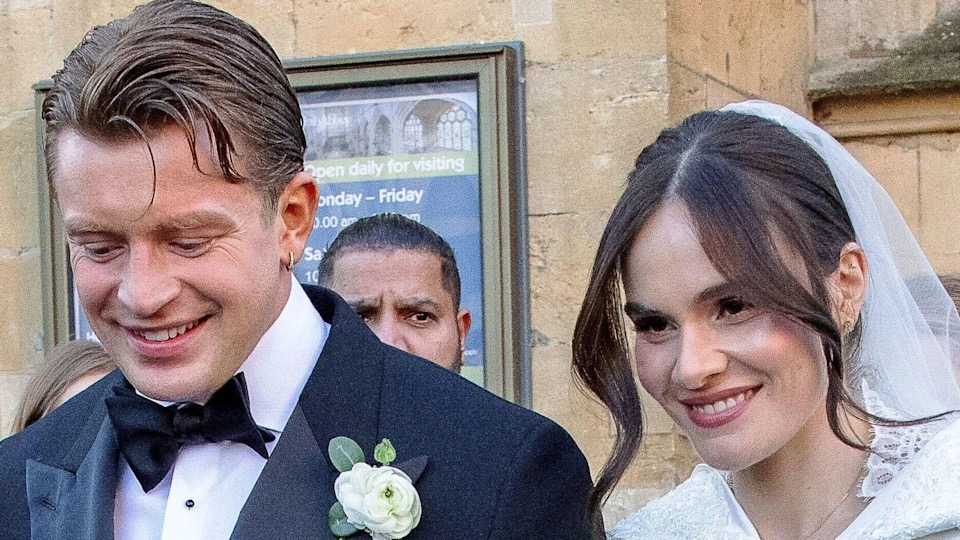
Adam and Holly
Is it ever okay not to invite a family member to a major life event? Is it ever acceptable to distance yourself — or even cut ties completely?
The short answer is this: yes, sometimes it is not only acceptable, it is necessary.
The question has been dragged into the spotlight following the wedding of the year, as Adam Peaty married Holly Ramsay and chose not to invite his mother. Predictably, the outrage machine kicked into gear. Headlines screamed. Opinions flooded in. Armchair judges — armed with no facts and limitless certainty — rushed to condemn.
Here’s what struck me most: how quick people are to defend family in theory, and how unwilling they are to accept the damage family can cause in reality.
Not all families are The Waltons. Some families are battlegrounds dressed up as photo albums.
Behind the smiling Christmas cards and Facebook posts lie power struggles, control, emotional manipulation, and silence that screams louder than words. And when someone finally says “enough,” the world often turns on them — not the behaviour that pushed them there.
I know this terrain well.
I grew up in a family where people disappeared without explanation. At nine years old, I came home to find myself locked out. Eventually, the letterbox opened and my mother asked, “Are you on your own?” A row between her and her mother — my grandmother — had ended the relationship entirely. One moment she was part of our lives; the next, she was erased.
Visiting my grandparents had once been a joy. Then it became forbidden. When I later wrote to my gran, there were consequences. At fourteen, I was sent alone to Glasgow — not to reconnect, but to persuade my grandparents not to take my father’s side in court. That was the last time I ever saw them.
That isn’t family warmth. That’s family politics.
So when people scoff and say, “But she’s his mother,” I don’t hear wisdom — I hear denial.
Adam and muu Caroline .
Because sometimes family isn’t a source of love. Sometimes it’s a source of fear, obligation, and emotional exhaustion. And no wedding day — no milestone — should be overshadowed by anxiety about who might erupt, undermine, or hijack the moment.
Much as you try to make it work, some people are only content when they are in control. When they aren’t centre stage, they create drama to pull the spotlight back. And when confronted, they cast themselves as the victim — never acknowledging the trail of damage behind them.
Let’s be honest: if a friend behaved that way — belittling you, calling you names, sabotaging your happiness — would you keep them in your life? Of course you wouldn’t. Yet when it’s family, we’re told to endure it. Smile through it. Absorb it.
Why?
Mental health does not become optional because someone shares your DNA.
Often, when people move into new social circles or build lives different from the ones they were raised in, it triggers insecurity in those left behind. Even when efforts are made to include them, their anxiety spills out as disruptive behaviour. Weddings, birthdays, celebrations — all become stages for unresolved resentment.
If Adam’s mother were truly the injured party, dignity would have been her strongest ally. Silence, reflection, restraint — not public outrage. Those who are genuinely wronged rarely need to shout the loudest.
Adam didn’t just make a decision about a wedding invitation. He changed his surname. That is not impulsive. That is not petty. That is the culmination of years of internal conflict, careful thought, and emotional cost.
And I applaud him for doing it early — before resentment calcifies, before damage multiplies, before patterns repeat. Family member may love you but it does not allow them to hurt you and be in denial.
No family member should ever make you feel small, fearful, or unworthy. Family should be the safest place — not the one you brace yourself for.
Sometimes the bravest, healthiest choice is to step away. Not out of bitterness, but out of self-respect. Not to punish, but to protect.
And if that makes people uncomfortable, perhaps it’s because it forces them to confront a truth they’d rather ignore:
Family doesn’t get a free pass to hurt you.
Why Amandaland Was the Christmas Treat We Didn’t Know We Needed
There is a particular kind of Christmas television that feels like slipping into a familiar jumper: slightly stretched, deeply comforting, and faintly ridiculous. The Amandaland Christmas special is exactly that kind of viewing — and all the better for it.
Christmas Day television is a battlefield. Big budgets, earnest dramas, and aggressively “heartwarming” narratives often jostle for attention, all while families argue over the remote and someone burns the sprouts. Amandaland cuts through the noise by doing something radical: it knows precisely what it is. A sharp, character-driven comedy about social aspiration, emotional repression, and the very British terror of appearing ordinary — now wrapped in tinsel.
The episode’s premise is delightfully simple. Amanda, our tightly wound heroine, decides to recreate a “perfect” childhood Christmas at her aunt’s country home. Naturally, this requires absolute aesthetic control, emotional denial, and an unwavering belief that nothing — not weather, children, or other people — should interfere with her vision. What follows is a festive slow-motion collapse, played with exquisite comic timing.
Enter Jennifer Saunders, who turns up as Aunt Joan like a glitter cannon fired directly into the episode. Saunders doesn’t merely steal scenes — she annexes them. Her performance is gloriously unfiltered, full of physical comedy, throwaway lines, and the sense that she is enjoying herself enormously. This is not nostalgia casting; this is a master at work, reminding us how joyful comedy can be when it’s driven by confidence rather than caution.
Then there’s Joanna Lumley, a woman who could make a shopping list sound withering. As Amanda’s emotionally glacial mother, Lumley delivers her lines with that unmistakable mix of elegance and quiet disdain. Every raised eyebrow lands like a punchline. She doesn’t chase laughs — she allows them to come to her, which somehow makes them sharper. Watching Lumley and Saunders share the screen again is less a reunion and more a reminder: this is what happens when comic icons are trusted to do what they do best.
What makes Amandaland such perfect Christmas viewing is its refusal to be falsely sentimental. Yes, there’s warmth here — but it’s earned, not imposed. The show understands that Christmas isn’t magical because it’s perfect; it’s memorable because it rarely is. The forced cheer, the unresolved family tensions, the desperate attempts to manufacture tradition — all of it rings painfully, hilariously true.
In an era where television often feels either too bleak or too bland, Amandaland occupies a sweet spot we desperately need more of. It’s clever without being smug, affectionate without being soft, and funny without shouting for attention. Most importantly, it trusts its audience — and its performers — to appreciate humour rooted in character rather than spectacle.
By the time the credits roll, you feel lighter. Not because everything’s been neatly resolved, but because you’ve laughed at the chaos instead of pretending it doesn’t exist. And really, isn’t that the whole point of Christmas television?
My tribute to the legend Dame Barbara Windsor (1931–2020)This article was first published in the year of Barbara’s passing. I felt it was important that it did not fade away, not only as a tribute to Barbara’s extraordinary talent and character, but also in recognition of Scott Mitchell , who has since gone on to do remarkable things.
By Steven Smith
Who did not love Barbara Windsor — the second Queen of the UK and true British acting royalty? I genuinely do not know a single person who, on Thursday 10th December, did not shed a tear at the (though expected) loss of the world’s most bubbly blonde. We will never forget that infectious, suggestive laugh, nor the extraordinary talent of that iconic Cockney bird.
Dame Barbara Windsor was best known for her roles in EastEnders and the Carry On films. Her acting saw her BAFTA-nominated for her role in Sparrows Can’t Sing and Tony-nominated for her Broadway performance in Oh! What a Lovely War.
Barbara became a Dame not just for her work in entertainment, but also for her incredible dedication to charity. Her support spanned a diverse range of causes, including Age Concern, Age UK, the Amy Winehouse Foundation, Great Ormond Street Hospital — the list truly is endless.
I can’t hand on heart say that Barbara was a close friend of mine — the word friend is used so liberally these days. But over the years, I encountered her many times and was fortunate enough to spend quality time with her. You never forgot a chat with Barbara, because in a world of showbiz magic, she was refreshingly real and wonderfully to the point.
My first outing on the London showbiz scene was with journalist Lester Middlehurst. It was a little nerve-wracking for me, and among the celebrities present was Barbara Windsor, who knew Lester well. My dad was a huge fan of the Carry On films, as was I, and I felt star-struck and slightly out of my depth. Before I knew it, there were around five flamboyant men all vying for Barbara’s attention.
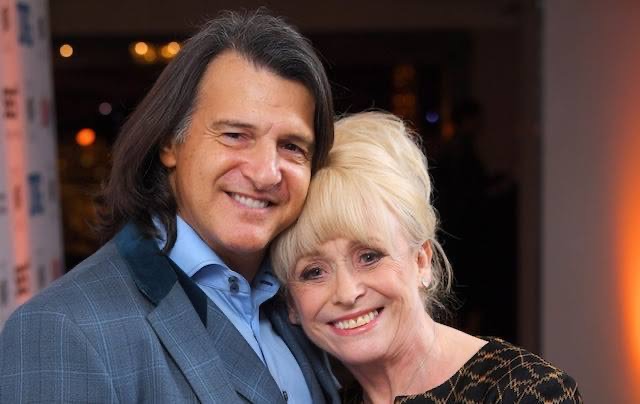
Standing beside me was a very handsome dark-haired fellow named Scott. It was a relief chatting to him — he was down-to-earth, funny, and instantly put me at ease. Not long after, Barbara came over to us. Of course, Scott was her fella, and together they were simply lovely — a genuinely warm and affectionate couple.
Being keen on theatre, I asked Barbara what it was like working at the Royal Court with Joan Littlewood. She looked at me quizzically and said, “What did you ask me, darling?” I repeated the question just as her posse of admirers returned.
At June Browns book launch with Scott and Barbra
“Sshhshh,” she said. “I’m talking to Steven.” She took Scott and me aside and laughed, “That’s not the usual question I get asked.” We had a wonderful chat, and Lester later commented, “Barbara seemed to like you.” She had that rare quality of making people feel special — she genuinely made others feel good.
Over the next few years, I chatted more with Scott — he shared my sense of humour. My next meeting with Barbara was at my dear friend, Irish singer Rose-Marie’s 50th birthday, held in a pub on the Edgware Road. Barbara made a beeline for me.
“You’re always chatting to my Scott,” she said. “You know, darling, some people who ought to know better aren’t always nice to him.”
We spent ages talking about relationships. At the time, my partner was 28 years older than me, and we discussed people’s reactions to age gaps.
I asked her, “Are you looking forward to becoming a Dame?”
“Never — not with my history with Ronnie and the boys,” she laughed.
But right it was — and a Dame she most deservedly became.
There was also a wonderfully camp trip to Marbella with some of the Coronation Street cast, including the fabulous Denise Welch. EastEnders were filming there, and Barbara, Scott, and Rula Lenska joined us for dinner. What a wild night that was.
The last time I saw Barbara and Scott was at June Brown’s book launch, Before the Year Dot. Executives were desperately trying to lure Barbara back into EastEnders — even that night they were pitching it to her. But she wasn’t budging.
“I’ve had enough,” she told me and Rose-Marie.
Something struck me when news of her death broke. So many people began by commenting on her height. Perhaps because I’m not a size-queen, it never once crossed my mind. Barbara was huge in stature — she filled every room with personality and talent. She certainly did not suffer fools gladly. She was, without doubt, a giant of the industry.
Barbara was a true professional. She always had a smile on her face at every event. As her on-screen daughter Daniella Westbrook recently said, Barbara believed you owed it to the public to always put on your happy face: “If you’re not at your best, don’t go out.” Daniella added that once Barbara got home, she liked nothing more than putting the kettle on, taking her shoes off, sitting on the sofa — and simply being Babs.
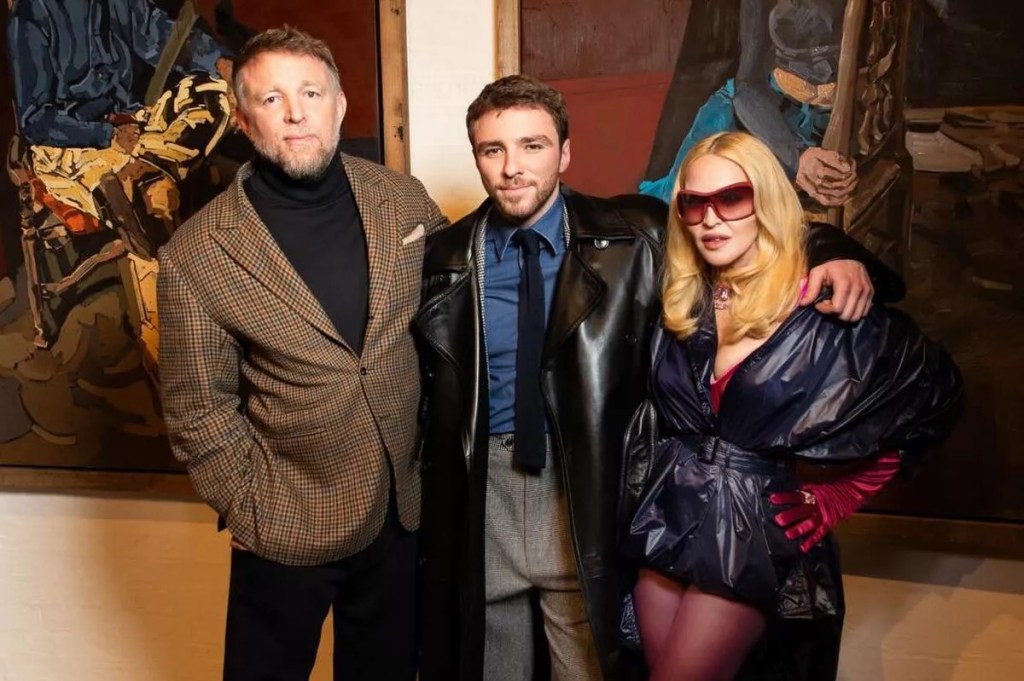
It would be easy to rush to call Rocco Ritchie a “nepo baby” and dismiss his artistic success as being down to his famous parents. Of course, any help in an industry riddled with nepotism and driven by who you know can be an advantage. However, I am the first to say that Rocco is a huge talent with an original voice — if there is such a thing — and that originality is precisely why he is taking the art world by storm.
Rocco Ritchie is gaining recognition not because of who his parents are, but because of who he is becoming. In an industry often suspicious of famous surnames, he has quietly and confidently carved out a space that feels earned rather than inherited. Far from the caricature of a “nepo baby,” he has demonstrated discipline, originality, and a genuine commitment to craft that has surprised critics and collectors alike.
The label of nepotism is an easy one to reach for. As the son of global icon Madonna and filmmaker Guy Ritchie, Rocco grew up surrounded by creativity, privilege, and cultural capital. Yet what is striking about his artistic rise is how deliberately he stepped away from the spotlight that might have guaranteed instant attention. For years, he worked under a pseudonym, allowing his art to speak before his name did. That decision alone signals intent: Ritchie wanted critique, not cushioning.
His work does not rely on imitation or celebrity gimmickry. While many emerging artists fall into the trap of echoing fashionable trends or overtly referencing their influences, Ritchie resists this. Too often, artists with minimal talent but strong PR and marketing skills are sold to naïve buyers on the strength of a story rather than substance. The work may look good on a wall, but when it comes time to resell, the narrative unravels. Ritchie’s art does not rely on hype; it stands on its
own.
His work feels personal and idiosyncratic, and my hunch is that it will one day sell at serious auction houses. His paintings often explore mood, texture, and form with a restraint that belies his youth. There is confidence in his mark-making and composition, but also vulnerability — an understanding that art is as much about questioning as it is about declaring.
What sets Ritchie apart is that his work resists easy categorisation. There are echoes of classic portraiture, abstract expressionism, and urban grit, yet these elements are filtered through a distinctly contemporary lens. His use of layered surfaces and muted palettes gives the impression of images emerging from memory rather than being presented as finished statements. This refusal to over-explain is refreshing in an age of overexposure.
Equally compelling is Ritchie’s personal evolution. Over recent years, he has grown into a strikingly handsome and self-assured man, yet without the performative bravado often associated with celebrity offspring. There is a quietness to his public presence — a sense that he is more comfortable in the studio than on the red carpet. This grounded demeanour enhances his credibility as an artist committed to longevity rather than instant fame. He does not overtly reference other artists in his work, though there may be subtle echoes of the Mexican greats Frida Kahlo and Diego Rivera — favourites of his mother — woven quietly into his visual language.
Public fascination has also been reignited by rare and genuinely touching moments of unity between his parents. Seeing Madonna and Guy Ritchie together in public for the first time in years, supporting their son, struck a chord. In an era where celebrity family dynamics are often reduced to spectacle, their shared pride felt sincere. It underscored that Rocco’s journey has not been about rebellion or reaction, but about reconciliation — between heritage and independence, privilege and purpose.
It would be naïve to deny the influence of Madonna’s deep love of art. A lifelong collector with a formidable eye, she has immersed herself in fine art, from classical masters to cutting-edge contemporary works. Growing up around such visual literacy undoubtedly shaped Rocco’s sensibilities. But influence is not imitation. Rather than copying his mother’s tastes, Ritchie appears to have absorbed an understanding of art as dialogue — between past and present, self and society.
What makes his rise feel so timely is that audiences are craving authenticity. Collectors and critics alike are increasingly weary of hype without substance. Ritchie’s work rewards slow looking. It invites interpretation without dictating meaning. This approach has helped him build genuine momentum, with exhibitions that attract attention not because of scandal or surname, but because viewers are curious to see what he will do next.
Rocco Ritchie’s emergence reminds us that legacy does not have to be a burden. It can be a foundation — one that still requires effort, risk, and humility to build upon. He is not storming the art world with noise, but with nuance. And in today’s cultural climate, that quiet confidence may be the most radical statement of all.
If there is one woman capable of shaking up the Christmas charts, unseating the usual pop titans, and bringing pure chaotic joy to the holiday season, it’s Denise Welch. With Slayyy Bells, she hasn’t just released a festive single — she’s unleashed a cultural moment. A glittery, high-camp, tongue-in-cheek masterpiece that captures everything the British public secretly craves at Christmas: humour, heart, a bit of mischief, and a full-throttle, unapologetic “hun energy.”
Denise has long been adored for her honesty, her warmth, and her refusal to take herself too seriously. That’s why the LGBTQ+ community has embraced her with open arms. She doesn’t perform camp — she embodies it. Whether it’s fiery daytime TV realness, chaotic comic timing, or her glamorous, self-deprecating sparkle, Denise is the kind of icon who walks into a room and immediately becomes everyone’s mum, best friend, and backstage confidante. She is the definition of a British hun: fierce, funny, fabulous, and fearlessly herself.
Slayyy Bells captures that spirit perfectly. It’s a sugary cocktail of festive beats, wink-wink lyrics, and nightclub-ready chaos — the kind of song that would make even the Grinch put on a sequinned jumpsuit. In a chart landscape dominated by perfectly polished megastars like Taylor Swift, Dua Lipa, or Ed Sheeran, Denise offers something the others can’t: pure personality. She’s not trying to be slick, she’s trying to be fun — and that’s exactly what people cling to at Christmas.
Let’s be honest: the UK loves an underdog, and Denise is the ultimate comeback queen. She’s lived a life, she’s told her story, and she has emerged with more charisma than half the industry put together. When she releases a Christmas single, it isn’t just music — it’s a movement. It’s the collective national desire for something joyful, camp, inclusive, and proudly silly.
The LGBTQ+ community in particular knows a gay icon when it sees one. Denise is outspoken, loyal, emotionally open, and effortlessly dramatic. She’s relatable yet glamorous; chaotic yet wise; messy yet magnificent. She’s the woman who will cry with you, dance with you, and drag you out to karaoke at 2 a.m. — the Patron Saint of Huns.
This is why Slayyy Bells deserves to beat the global juggernauts. Christmas Number One shouldn’t always go to the most streamed, the most marketed, or the most algorithmically optimised. Sometimes it should go to the artist who brings the most joy. The one who makes people laugh, sing, and feel part of something bigger.
Denise Welch is that artist. She’s the people’s diva, the hun-in-chief, the LGBTQ+ fairy godmother of festive chaos — and Slayyy Bells is the anthem worthy of her crown.
This Christmas, let’s make history. Let’s give the Number One to the woman who would celebrate it harder than anyone else: Queen Denise Welch.
Heidi is back, and she’s here to help you get through and enjoy the holiday period.Hear her on Gateway Radio on the Aston Avery Show and on YouTube.Please write to her at 2Shades: spman@btinternet.com if you have a problem.Heidi can only answer so many, but she will try her best. Heidi is back, and she’s here to help you get through and enjoy the holiday period.spman@btinternet.com if you have a problem.Heidi can only answer so many, but she will try her best.
Dear Heidi Hope you are well. My son is coming with his girlfriend for Christmas. She is a lovely girl, but she’s not really my kind of person — though she makes my son happy. Lunch is going to be a problem: she is vegan and we are all meat eaters. Making it worse, she talks about animal cruelty while we’re eating. Now my son has decided he’s vegan too. I will make a nut roast and vegetables for them, but is it acceptable to tell them I don’t want to hear about animals and cruelty while we eat? Diana, Uxbridge
Heidi replies: You’re being considerate by preparing vegan options, and it’s perfectly reasonable to set boundaries at the table. Explain kindly that you respect their choices, but mealtimes need to stay pleasant for everyone. A gentle, “Let’s save the debate for later,” is enough. Mutual respect works both ways. Maybe try having a coffee with her before Christmas, go over the menu, and then explain your boundaries so it doesn’t become a big issue on the day.
Dear Heidi My boyfriend and I like to party and occasionally take drugs. I feel it’s under control on my end — high days and low days, that kind of thing — but I am a traditionalist when it comes to Christmas. He wants to invite two friends over and seems more interested in getting drugs in for after lunch than the food or the day itself. What can I do? I want a white Christmas — not that kind of white one. Mike, Bournemouth
Heidi replies: You deserve a Christmas that feels safe and joyful. Tell your boyfriend clearly that you want a drug-free day and that you aren’t comfortable hosting a gathering that revolves around substances. If he can’t respect that boundary, it’s a sign something needs addressing in the relationship — and perhaps in your habits as a couple. A peaceful Christmas requires mutual respect. Any regular drug use is not only illegal but a sign of addiction; once it’s in your life, it has a habit of resurfacing.
Dear Heidi Can you please help me? My mother is a total control freak and she runs Christmas like a military operation. This year I want to go to my friends’ in Cornwall. I am 19, at college, and have a part-time job. How do I break the news? I hinted at the idea and she brushed it off. How do I tell her? Malcolm, Newcastle
Heidi replies: You’re an adult now, and part of growing up is making your own plans. Be direct, calm and kind: “Mum, I love Christmas here, but this year I’m spending it with friends.” She may protest, but stick to your decision. Set the boundary with respect, not guilt, and give her time to adjust. The sooner you tell her, the better — and be aware she may not stop being controlling, so learning to stand firm now will help.
Dear Heidi Please help. We are going to my fiancé’s for Christmas. His mum is nice, but his dad is awful — he constantly makes crude comments and flirts with me when no one is looking. What can I do? Do I tell my fiancé or just put up with it since we don’t go that often? Tiffany, Leeds
Heidi replies: You should not put up with inappropriate behaviour, no matter how infrequent the visits. Tell your fiancé privately and calmly what has been happening. He needs to know, and the two of you can decide together how to handle it — whether that’s him speaking to his father or setting clearer boundaries. You deserve to feel safe and respected.
Dear Heidi I am going home for Christmas. This summer I came out at university. My parents are religious and it is going to be a shock to them. Should I go down sooner to tell them? I don’t want to ruin Christmas. Paul, Cardiff
Heidi replies: If you feel emotionally ready, telling them before Christmas may ease some of the pressure on the day itself. It gives them time to process without the intensity and expectations of the holiday. Choose a calm moment, be honest, and remember: their reaction is about their adjustment, not your worth. You deserve to be loved and accepted as you are.
Dear Heidi How are you? Please can I beg for your help? My best friend is driving me mad. She goes from one bad relationship to another. She loves the bad boy look — covered in tattoos and looking like they got out of prison last week. It’s always a car crash, and to be honest, my empathy is running low. It’s my birthday soon, and honestly, her whining on about her love life is not my idea of fun. Would it be wrong not to invite her? — Nadine, Essex
Dear Nadine, Oh, the endless bad-boy drama — I think we’ve all had a friend like this! It’s exhausting watching someone you care about drive straight into the same brick wall again and again, isn’t it? Here’s the thing: you can’t fix her, and it’s not your job to. If she chooses chaos, that’s her story to live — but you’re allowed to protect your own peace. For your birthday, surround yourself with people who bring joy, not stress. If inviting her will spoil your day, then don’t. You can see her another time when you have the energy to listen. Being a good friend doesn’t mean being a doormat — sometimes it means stepping back with love. Or be brave and tell her how you feel, that it’s draining you. Love, Heidi
Dear Heidi Really love the show. My husband has always been a bit homophobic. Six months ago, he liked my hair so much he wanted a few highlights. Knowing he’s not great about the gay thing, I suggested he shouldn’t go to my beautiful stylist — who is also a friend — but he insisted. His hair looked amazing, but a few weeks later I was shocked to find he’d been out for drinks with my hairdresser, and now they’ve become friends. He says it’s rubbish that he’s homophobic and that he enjoys the laughs they have together. There’s a lads’ weekend to Ibiza coming up — no ladies allowed, which is fine — but can you imagine my hairdresser going too? I asked him why, and he said he’s going anyway and will get them into a few clubs. What’s going on? — Marieanne, Southend
Dear Marieanne, Well, this is a twist! It sounds like your husband has discovered that friendship doesn’t have to come with labels — and that’s actually a good thing. Maybe getting to know your hairdresser has opened his eyes a little and softened his old prejudices. As for the Ibiza trip — I can see why your eyebrows are raised! But before your imagination books a one-way ticket to Jealousville, take a breath. This might simply be two people enjoying new company and shared humour. If your instincts tell you there’s something deeper going on, have an honest, calm chat. But don’t jump to conclusions — this could be the best thing to happen to your husband’s attitude. Who knows? He might come home with a tan, a hangover, and a new respect for your fabulous friend. Love, Heidi
Dear Heidi I am madly in love with this lad, and he’s only gone and asked my friend to the dance! Honestly, Heidi, I am fuming — and she knew I liked him. I’m fifteen, and she dresses like she’s a dancer, while my mum says no to lashes and short skirts. It’s not fair. I’ll probably never speak to her again. What can I do? — Mandy, Basildon
Dear Mandy, Oh sweetheart, teenage love can feel like the end of the world — but I promise, it isn’t. You’re fifteen, and your heart is still learning who deserves it. This boy clearly doesn’t, and your friend’s choices say more about her than they ever could about you. You don’t need lashes or short skirts to shine — confidence is far more magnetic than mascara. Let her have her dance; you focus on being you. One day soon, someone will see the real you and won’t want to dance with anyone else. For now, dry your tears, hold your head high, and remember — nothing burns brighter than self-respect. Love, Heidi
Dear Heidi I’m feeling really down. I’m so fat, my budget won’t stretch to fat injections, and the gym just leaves me flat. No girls like me, and I’m nineteen and not going out anymore. What can I do? — Peter, Brighton
Dear Peter, First, let me tell you this — you are not alone. So many young people feel exactly the way you do, especially with all the “perfect” bodies plastered across social media. But real attraction doesn’t come from injections or six-packs — it comes from self-worth, kindness, and confidence. Start small: walk, move, cook decent food, talk to people. Find one thing every day that makes you feel good — music, a hobby, helping someone, anything that builds you up instead of tearing you down. The more you value yourself, the more others will see your worth. Confidence isn’t something you buy — it’s something you grow, and it lasts far longer than any gym membership. Love, Heidi
Dear Heidi My husband has announced that his mother is coming for Christmas. She’s horrible — the most passive-aggressive, rude woman you could meet. We’ve never got on; she has a way of finding a cloud in every silver lining. She’s on her own, and honestly, that’s what she deserves. My husband says she’s not that bad. Should I tell him it’s me and the children or her — and leave home for Christmas? — Sandra
Dear Sandra, Ah, the mother-in-law Christmas horror — a timeless festive classic! I can hear the carols already: “Silent night? Not likely.” You clearly feel hurt and unseen by your husband, but issuing ultimatums rarely ends well. Instead, set clear boundaries. Tell him you’ll welcome his mother — but only if everyone treats each other respectfully. If she can’t manage that, then maybe she stays elsewhere next year. Remember, Christmas is one day. Don’t let her steal your sparkle — pour a glass of something festive, smile sweetly, and rise above her barbed comments. Nothing annoys a passive-aggressive person more than calm happiness. Love, Heidi
Hi Heidi Not really a problem, but how do you get to be a counsellor or agony aunt? — Simon
Dear Simon, What a lovely question! Becoming a counsellor or agony aunt starts with empathy — and you clearly have that. Training in counselling, psychology, or journalism helps, but life experience and genuine curiosity about people matter just as much. Start small: volunteer with support organisations, write advice pieces online, or train in active listening. The best agony aunts aren’t perfect — they’re just honest, compassionate, and willing to help others make sense of their messiest moments. And who knows, Simon — you might be writing your own “Dear Simon” column one day! Love, Heidi
In a world where many talk about what they might do someday, there are others who quietly get on with it—people who take action, push boundaries, and in doing so inspire those around them. Artist and photographer Annemarie Bickertonbelongs firmly in the latter category.
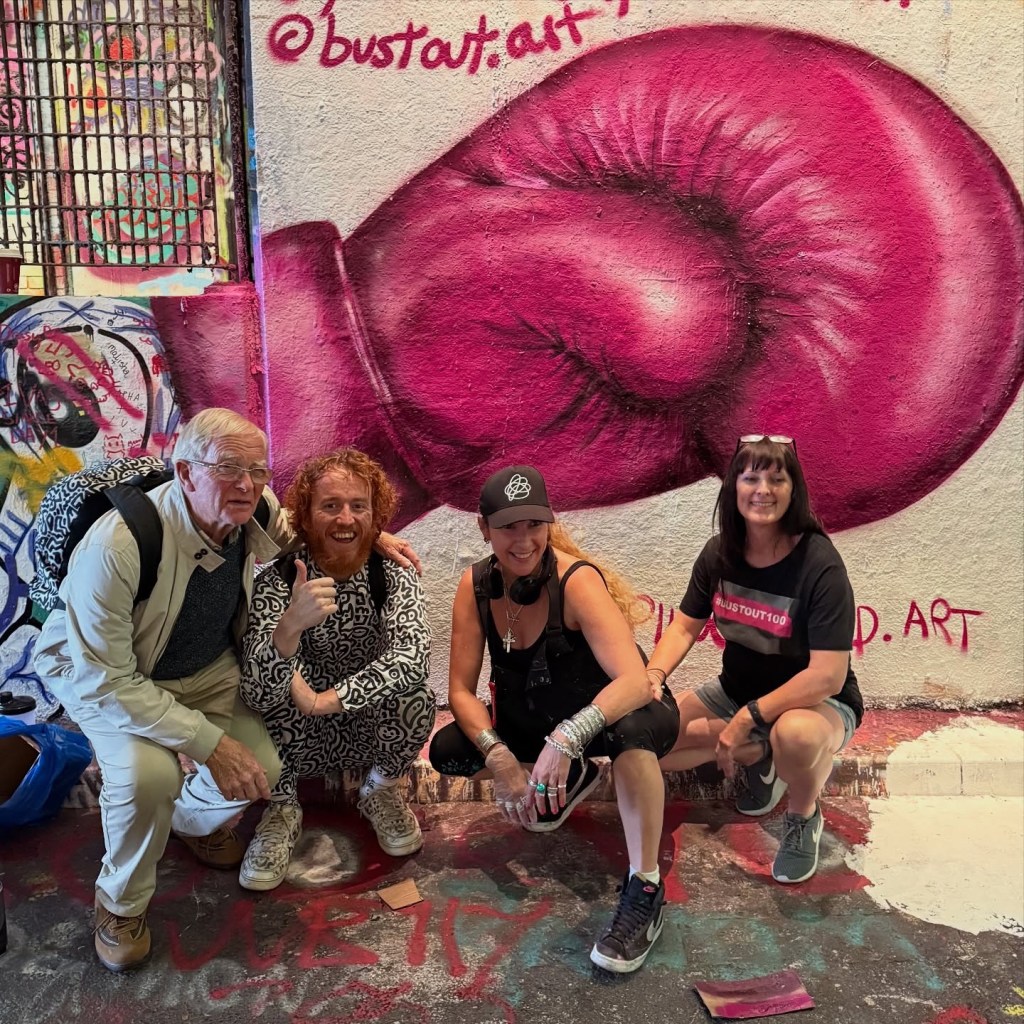
On Saturday, September 27, 2025, Bickerton swapped her camera for boxing gloves, stepping into the ring at The Troxy in London for an Ultra White Collar Boxing (UWCB) charity event. The evening brought together novice boxers from across the capital, each of them having undergone ten weeks of intensive training, with the dual aim of testing themselves and raising money for good causes.
For Bickerton, that cause was the Pink Ribbon Foundation, a UK charity that provides financial support to organisations helping those affected by breast cancer. It was a natural fit: she has previously worked with the foundation, staging her acclaimed “BustOut” exhibition at the Firepit Gallery at the O2. That exhibition combined bold visual art with advocacy, raising awareness and funds in equal measure.
This time, however, the setting was very different. The Troxy’s historic stage was transformed into a boxing arena, the atmosphere electric as friends, family, and supporters packed into the venue. Bickerton’s match ended officially as a draw, though audience members were quick to call it a clear win on her part.
The result, though, tells only part of the story. What makes Bickerton’s achievement stand out is the journey that led her there. For ten weeks, she trained with discipline and determination, rising early, attending gruelling sessions, and absorbing the technical and mental demands of boxing. “It was not natural for me at all,” she admitted beforehand. Yet she persevered, embodying the UWCB ethos of ordinary people doing extraordinary things for charity.
Bickerton’s decision to take up boxing was not made in isolation. She had first introduced the sport to her son, who lives with autism, as a way to build confidence and resilience. Facing bullying at school, he found empowerment in the discipline and structure of training. Inspired by his progress, Bickerton decided to follow suit. “Lead by example” became more than a phrase—it became a lived reality.
Those who know her were not surprised. Bickerton has long been recognised for her willingness to tackle challenges head-on, whether in her artistic practice or personal life. As a photographer and artist, she has built a reputation for bold, thought-provoking work that often blends beauty with social commentary. As a mother, she has consistently sought opportunities that empower her son and others facing adversity.
Her move into boxing might seem like a departure, but in many ways, it continues a consistent theme: using creativity, courage, and perseverance to make an impact.
Events like UWCB are not only about individual achievement but also about collective contribution. Since its founding, the organisation has raised millions of pounds for charities across the UK, with participants from all walks of life. Bickerton’s fight was one of dozens staged that evening, each carrying a personal story and a charitable purpose. Together, they highlighted the power of community fundraising through unconventional means.
For Bickerton, the fight capped months of hard work and represented more than just a physical test. It was a statement about resilience, visibility, and the importance of action. “Annemarie is a great example of what’s right in this world,” said one supporter. “She doesn’t just talk—she does.”
That ethos has earned her admiration not only from those close to her but from a wider circle who see in her story a reminder of what determination can achieve. In an age when so much energy is spent on words, Bickerton’s actions—whether through art, activism, or sport—speak louder.
As the cheers faded at the Troxy, the impact of her fight extended far beyond the ring. Funds had been raised for a vital cause, awareness had been heightened, and a powerful example had been set for her son and others: that courage comes in many forms, and that sometimes the greatest victories are not about titles or trophies but about showing up, standing tall, and refusing to back down.
With her gloves now set aside, Bickerton returns to her life as an artist, mother, and advocate. Yet the echoes of that night in the ring remain—a testament to the fighting spirit of a woman who refuses to be defined by limits.
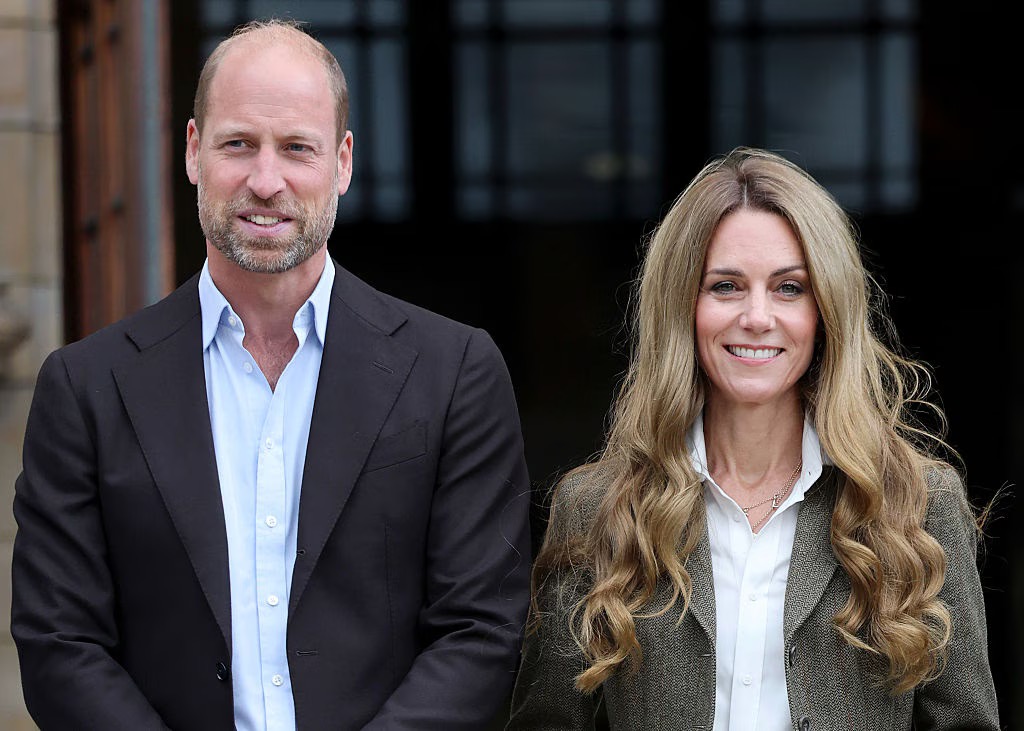
Let’s be honest: a woman’s hair is her crown and glory. It’s part of her identity, her confidence, her style. And when it comes to royalty, that crown is both literal and symbolic. Princess Catherine—Kate, as we fondly call her—always manages to look spectacular. She carries herself with elegance and dignity, and despite facing health struggles, she continues to shine as my favourite member of the Royal Family.
So why, then, does the we feel the need to dissect every strand on her head? Recently, Kate decided to lighten her hair a touch. Not platinum, not peroxide blonde—just a soft, subtle lift. Hardly headline material, yet suddenly it’s splashed across the front pages. Is this really news?
I say this as someone who spent years as a celebrity hairdresser: hair is deeply personal. It’s not just style, it’s self-expression, sometimes even reinvention. I actually admire Kate for trying something new under the relentless glare of the cameras. Personally, I think she suits brunette best—but that’s beside the point. The point is, it’s her hair, her choice, and she looks radiant either way.
But what left me utterly flabbergasted was what happened next. A few days later, she attended a women’s rugby match with her hair pulled back in a ponytail—practical, appropriate, perfectly normal. And would you believe it? That too became a headline. A ponytail! Honestly, are we that short of news?
It makes me wonder about our priorities. Wars are raging, the cost of living is biting, families are struggling—and yet we’re fixated on whether a princess wears her hair up or down. Surely, we can do better.
Here’s what really matters: Kate represents grace, resilience, and positivity at a time when good news is hard to come by. She continues to serve, smile, and inspire, even while facing challenges of her own. She is a mother, a wife, a public figure, and a future queen—and she handles it all with poise. That deserves admiration, not nit-picking.
So, my view is simple. Leave Kate’s hair alone. Celebrate the woman, not the ponytail. Applaud her courage, her elegance, her humanity. Hair grows; styles change—but the strength of character she shows every day? That’s what truly deserves the front page.
Why Do So Many Smart Women Fall Under the Spell of Con Men?
It’s not about weakness—it’s about hope, empathy, and the universal desire to be loved.
Before we begin, let’s be clear: this isn’t unique to women. Men, too, can fall victim to manipulation, deceit, and what we might call a “love con.” Yet it remains striking how often we see bright, accomplished women—lawyers, doctors, business leaders, and artists—caught in the webs spun by controlling, Svengali-type men.
This was brought home to me recently while watching Love Con: Revenge on Netflix. The series exposes the astonishing ways charismatic fraudsters charm their way into people’s lives, leaving devastation behind. The victims are not naïve or unintelligent. Quite the opposite—they’re usually sharp, capable, and worldly. Yet even they are drawn into the con, sometimes for years.
The Psychology of the “Love Con”
Why does this happen? Why do intelligent women—women who can negotiate boardrooms, run companies, and juggle families—become vulnerable when love enters the picture? Is there, as cynics suggest, something in female nature that makes women more susceptible when romance is involved?
I don’t believe it’s about weakness. If anything, it’s about strength—and hope. Many women are deeply empathetic, nurturing, and generous. They are also willing to give people the benefit of the doubt. These qualities are admirable, yet they are the very traits manipulators exploit. Con men mirror back what their victims long to see: affection, stability, the promise of being cherished. By the time the illusion cracks, the emotional investment is so deep that leaving feels impossible.
Neuroscience sheds light here. Falling in love floods the brain with dopamine, oxytocin, and serotonin—the same chemicals associated with addiction. Under their influence, judgment clouds and red flags fade. Intelligence doesn’t disappear; it’s simply overwhelmed by biology.
The Celebrity Trap
Even women with power, influence, and entire teams of advisors aren’t immune. How many times have we seen successful actresses or performers introduce a new partner, only to announce within months that he is now their manager? Management is a skilled profession requiring experience and industry knowledge. Yet suddenly, the boyfriend is running the show.
Rarely does it end well. Take Joan Collins, who married Peter Holm in 1985. Within weeks, he had become her manager and co-producer. By 1987, the marriage collapsed in a storm of bitterness.
I’ve seen the same pattern in everyday life. Brilliant women who once spoke their minds now begin every sentence with, “And Joe says…”—as if their identity has been swallowed whole. The pattern is chillingly predictable: isolate her from friends, cut ties with anyone who might see through the act, and gradually take total control. Netflix’s Dirty John dramatises this cycle with unnerving accuracy.
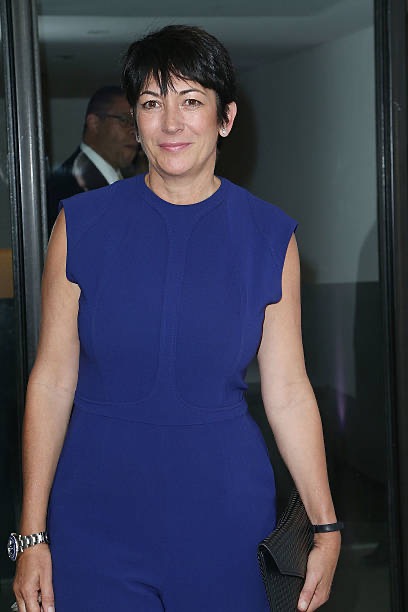
Ghislaine Maxwell:
Consider, too, the controversial case of Ghislaine Maxwell. An intelligent, educated woman from a powerful family, she nonetheless became the enabler of Jeffrey Epstein. Was he a replacement father figure for the domineering Robert Maxwell? Did her need for validation blind her to the enormity of his crimes?
Whatever the reason, it is telling that Epstein’s male associates have largely escaped accountability, while Maxwell sits behind bars. She has become, many argue, the fall guy in a sordid melodrama. Her case is a stark reminder of how even the brightest women can be drawn into the orbit of a manipulative man.
Beyond Blame
So why do smart women fall for con men? Because intelligence is not a shield against love, against hope, or against the human desire to be needed. These women are not foolish—they are human.
If anything, their empathy, generosity, and optimism make them prime targets. And until society learns to place blame squarely where it belongs—on the men who manipulate, control, and exploit—the cycle will continue.
The question, then, should not be “Why do women fall for con men?” but rather, “Why do we allow con men to keep exploiting love so freely?”
Because in the end, the real con is not about women being weak—it’s about predators preying on the very best of human qualities.
Will Harry Meet Charlie?
There is so much speculation surrounding Prince Harry’s upcoming visit. Will he meet with his father, or won’t he? That’s the question on everyone’s lips.
First of all, he is King Charles’s son—and whether he is seen as the prodigal son or not, I truly hope a meeting takes place. After all, no amount of titles or headlines can change the simple truth of family.
As a nation, we watched Harry and his brother William Walk behind their mother’s coffin. They were just boys, and the emotional and psychological impact of that moment must have been unimaginable. It shaped both of them forever, and perhaps explains much about the men they have become.
Of course, all families have rifts. Harsh words get said, mistakes are made, and Harry has certainly made some. His marriage added another layer of complexity, and Meghan herself is another story entirely. But to dismiss him outright would be unfair.
Harry was always one of my favourite royals. He brought a youthful sparkle and an authenticity to public life that made him stand out. Whatever the differences, I hope father and son can find their way back to each other.