There is no room for antisemitic behaviour of any kind in any civilised country. Antisemitism is not merely a matter of offensive language or misguided opinion; it is a corrosive force that undermines the very foundations of a democratic and inclusive society. Wherever it appears, it erodes trust, fuels division, and threatens the safety and dignity of Jewish people, who have faced centuries of persecution rooted in prejudice and misinformation.
A civilised nation is defined not only by its laws and institutions, but by its moral compass. It is measured by how it protects its minorities, upholds human rights, and challenges hatred in all its forms. Antisemitism stands in direct opposition to these values. Whether expressed through casual remarks, harmful stereotypes, conspiracy theories, vandalism, intimidation, or violence, it must be recognised for what it is: racism, plain and simple.
History has shown us the devastating consequences of allowing antisemitic attitudes to go unchallenged. When hatred is normalised or dismissed as trivial, it creates fertile ground for discrimination and, ultimately, atrocity. The lessons of the past place a responsibility on all of us—individuals, communities, institutions, and governments alike—to remain vigilant. Silence in the face of antisemitism is not neutrality; it is complicity.
In recent years, antisemitism has taken on new and often insidious forms, spreading rapidly through online platforms and social media. Disinformation, coded language, and dog-whistle rhetoric can make hatred appear respectable or “debate-worthy,” when in fact it is neither. Free speech is a cornerstone of democratic societies, but it does not extend to the promotion of hatred or the dehumanisation of others. Robust debate must never be used as a shield for prejudice.
Education plays a crucial role in combating antisemitism. Teaching accurate history, encouraging critical thinking, and fostering empathy are essential tools in dismantling ignorance and fear. Equally important is leadership—political, cultural, and civic—that is willing to speak out clearly and unequivocally. There can be no ambiguity when it comes to condemning antisemitism; half-measures only embolden those who seek to divide.
Ultimately, standing against antisemitism is not solely about defending Jewish communities, though that is vital. It is about defending the principles of equality, justice, and human dignity for everyone. A society that tolerates hatred against one group will, inevitably, find that hatred spreading to others. Civilisation demands better. It demands courage, clarity, and compassion—and an unwavering refusal to allow antisemitism, in any form, to take root.
Zohran Mamdani: A New Dawn for New York — and a Setback for Trump’s America
By Steven Smith
Let’s get one thing straight: Sadiq Khan is a terrible mayor — but not because he is Muslim. He’s a terrible mayor because, quite simply, he hasn’t done the job well. Faith has nothing to do with competence.
I would like to think I ever judge anyone by their religion. Yet when I hear from certain extreme right-wing Christians, my instinct is that they’re often deeply uncomfortable with the LGBTQ+ community. Many cherry-pick verses from the Bible to justify their prejudices, conveniently ignoring the passages about kindness, humility and turning the other cheek — a principle that seems to have lost all meaning for them. As are extreme Muslims and many other religious devotees. I do not want them in power.
And how many of these self-proclaimed moral crusaders have later been exposed as hypocrites, caught in scandals that betray the very values they preach? No one wants to live under Sharia law, but equally, most of us are not rejecting Eastern culture or faith. Jewish politicians, for instance, aren’t out trying to convert everyone. The truth is simple: people should be judged on their integrity, their empathy, and their ability to lead — not the faith they were born into.
Historically, the right wing has struggled with LGBTQ+ acceptance. Look at Reform’s Ann Widdecombe, a devout Christian who remains openly opposed to gay rights, or Nigel Farage, who rails against same-sex marriage yet hasn’t exactly been a shining example of domestic harmony himself.
So, why shouldn’t New York — one of the most diverse cities in the world — have a Muslim mayor? The measure of leadership isn’t found in the label of one’s faith but in the breadth of one’s humanity.
When Zohran Mamdani swept to victory as New York’s new mayor, he didn’t just win an election — he ignited a cultural and political shift. At just 33, the Ugandan-born, Queens-raised son of Indian immigrants and the first Muslim to hold the office, Mamdani represents a fresh, progressive vision of leadership grounded in empathy, equity, and inclusivity. For women and LGBTQ+ citizens, his victory signals something powerful: a mayor who sees diversity not as a slogan, but as the city’s greatest strength. And for Donald Trump and the hard-right movement that thrives on fear and division, Mamdani’s rise is a direct ideological defeat.
Mamdani’s political roots run deep in social justice. Long before his mayoral run, he made his name in the New York State Assembly by fighting for tenant protections, affordable housing, and workers’ rights. But what sets him apart is his understanding that social equality must include gender and sexual equality. His policies go beyond token representation — they promise tangible protections and support for women, LGBTQ+, and trans individuals who continue to face discrimination and economic barriers in one of the world’s most diverse cities.
During his campaign, Mamdani declared: “New York must be a sanctuary — not just for immigrants, but for every person whose existence has been politicised.” That message resonated strongly with LGBTQ+ voters and women’s advocacy groups, weary of years of policy rollbacks and toxic rhetoric at the national level.
His mayoral platform includes one of the most comprehensive pro-equality agendas ever proposed for New York City. At its heart are three major commitments: establishing an Office for LGBTQIA+ Affairs to coordinate inclusive policies and investigate discrimination; pledging $65 million for gender-affirming healthcare and reproductive rights clinics; and strengthening women’s economic and reproductive rights through expanded paid family leave, subsidised childcare, and increased funding for domestic violence shelters and legal aid. These policies represent not just symbolic progress but systemic reform, tackling the intertwined roots of inequality and positioning New York as a beacon for progressive governance in a deeply divided nation.
Some observers initially wondered whether a devout Muslim mayor could fully champion LGBTQ+ and women’s rights. Mamdani’s leadership has already answered that question decisively. He has stated repeatedly that his faith teaches compassion, justice, and respect for human dignity — values entirely consistent with protecting the vulnerable. By separating personal belief from public duty, he embodies the pluralism that defines modern New York. His election sends a potent message that faith and equality are not mutually exclusive.
To understand why Mamdani’s victory is such a blow to Donald Trump, one must look beyond New York’s borders. Trumpism thrives on nostalgia — a yearning for a rigid, exclusionary version of America defined by dominance and division. Mamdani represents the opposite: a confident, multicultural future where inclusion and equality are strengths, not threats. Under Trump, the federal government rolled back protections for transgender people, restricted abortion access, and emboldened hate groups. Mamdani’s success proves that this politics of fear no longer holds sway everywhere — especially not in America’s largest city.
What happens in New York often echoes nationally. Just as Fiorello La Guardia’s social reforms and Michael Bloomberg’s urban policies shaped national conversations in their eras, Mamdani’s agenda may set the tone for a new wave of progressive mayors. His approach fuses social justice with fiscal realism — leveraging the city’s enormous budget to create measurable improvements in equality and opportunity. His administration’s first-year priorities include making the Metropolitan Transportation Authority free for students and low-income riders, expanding affordable housing projects on city-owned land, increasing investment in public schools with inclusive sex education, and introducing gender-balanced representation in city boards and commissions.
Mamdani’s election is also a cultural moment — one that renews New York’s identity as a sanctuary for those who dream of freedom in all its forms. From Stonewall to suffrage, the city has long been a crucible of progress. His leadership promises not only policy change but also a revival of civic optimism: a belief that governance can be both compassionate and competent. His first speech after victory captured this perfectly: “We are not here to manage decline. We are here to imagine abundance — for women, for queer and trans people, for every New Yorker who has been told to shrink their dreams.”
Let’s get one thing straight: Sadiq Khan is a terrible mayor — but not because he is Muslim. He’s a terrible mayor because, quite simply, he hasn’t done the job well. Faith has nothing to do with competence.
Nor would I ever judge anyone by their religion. Yet when I hear from certain extreme right-wing Christians, my instinct is that they’re often deeply uncomfortable with the LGBTQ+ community. Many cherry-pick verses from the Bible to justify their prejudices, conveniently ignoring the passages about kindness, humility and turning the other cheek — a principle that seems to have lost all meaning for them.
And how many of these self-proclaimed moral crusaders have later been exposed as hypocrites, caught in scandals that betray the very values they preach? No one wants to live under Sharia law, but equally, most of us are not rejecting Eastern culture or faith. Jewish politicians, for instance, aren’t out trying to convert everyone. The truth is simple: people should be judged on their integrity, their empathy, and their ability to lead — not the faith they were born into.
Historically, the right wing has struggled with LGBTQ+ acceptance. Look at Reform’s Ann Widdecombe, a devout Christian who remains openly opposed to gay rights, or Nigel Farage, who rails against same-sex marriage yet hasn’t exactly been a shining example of domestic harmony himself.
So, why shouldn’t New York — one of the most diverse cities in the world — have a Muslim mayor? The measure of leadership isn’t found in the label of one’s faith but in the breadth of one’s humanity. rise represents a decisive shift away from the politics of grievance and exclusion. His administration promises to put women’s rights, LGBTQ+ equality, and social justice at the heart of city governance. For a nation still grappling with polarisation, his victory is both an inspiration and a challenge: proof that diversity can win, compassion can govern, and inclusion can be a source of strength rather than division. For Donald Trump and those who profit from cultural conflict, Mamdani’s triumph is a warning shot: the future belongs to those who build bridges, not walls. He is a mayor for all and a flash that thinking Americans have had enough of the red hat .
We’ve all witnessed the sudden outpouring of grief, tributes, and public mourning for Charlie Kirk. Before I get the inevitable backlash, let me be clear: the loss of any human life is a tragedy. Death, no matter the circumstances, is not something to celebrate. But that doesn’t mean we must ignore the uncomfortable truth about who a person was and the impact they had on the world around them.
Anyone who dies while promoting hatred—whether it be racism, homophobia, misogyny, or transphobia—has left behind a legacy of division. And while it’s wrong to revel in someone’s death, it’s equally wrong to pretend that their life was lived in service of goodness, compassion, or truth when the opposite is much closer to reality.
There’s an old saying: “Keep your friends close, but your enemies closer.” I am one hundred percent against cancel culture. Silencing voices and driving them underground only makes them more dangerous; it allows toxic ideologies to fester where they cannot be challenged or confronted. We need to keep our eyes on the people who preach hate, not push them into the shadows.
But here’s my question: where is the same level of public mourning for the innocent children killed in American school shootings? Where are the candlelit vigils, the elaborate civil ceremonies, the hours of televised tributes for those whose only “crime” was going to class in a nation that has normalised mass shootings? Where is the nationwide grief for the everyday victims of America’s gun obsession?
The outpouring for Charlie Kirk feels performative—dramatic, over the top, and completely misplaced. I scrolled through social media and was struck by the sheer number of posts about him. Yet for the children lost in Uvalde, in Sandy Hook, in countless other tragedies, there was silence after the first wave of news coverage. No weeks-long grief, no cultural pause for reflection. The contrast is staggering.
Let’s get something straight: Charlie Kirk did not save lives. He didn’t cure HIV, discover a vaccine for the common cold, or dedicate his life to lifting people out of poverty. He built a platform by spreading fear, misinformation, and divisiveness. To canonise him now as if he were some kind of saint is not just dishonest, it is deeply disrespectful to those he harmed with his rhetoric.
And what exactly was “Christian” about his teachings? Jesus—let’s remember, a brown-skinned, Arabic-speaking man from the Middle East—preached love, compassion, and radical inclusion. He spent his time with outcasts, outsiders, and the marginalised: fishermen, tax collectors, a prostitute, and a ragtag group of twelve unmarried men. The essence of his teaching was simple: love thy neighbour as thyself.
Religion, like a gun, can be used for protection and peace when in the right hands. But in the wrong hands, it becomes a weapon of hate and fear. Charlie Kirk chose the latter. He wielded scripture selectively, twisting it into a justification for exclusion rather than inclusion, for condemnation rather than compassion. That is not godly—it is a betrayal of the very faith he claimed to represent.
What baffles me most is why so many people queued up to debate him, as though he were some kind of great theological authority. He wasn’t. He was poorly informed, cherry-picking passages of scripture to suit his agenda, ignoring centuries of scholarship, and offering nothing more than the shallowest of arguments. This was not a man who should be celebrated as a thinker, let alone a prophet.
I do feel for his family. Losing a loved one is painful, no matter who they were. I wish he had used his influence for good—to inspire, to uplift, to build bridges instead of walls. Instead, he chose narcissism, self-promotion, and hate. That is the legacy he leaves behind.
The most ungodly thing of all is an ill-informed Christian who believes their interpretation of the Bible gives them licence to judge others. Freedom of speech must exist for both sides, but so too must accountability. Words matter. Influence matters. And when someone spends their life spreading division, we cannot in good conscience rewrite history just because they are no longer here.
Yes, love thy neighbour. Yes, treat others with compassion. But let us also extend that compassion to the innocent children gunned down in schools, to the victims of bigotry, to those whose lives were cut short by violence. If Charlie Kirk is to receive public mourning, then surely those who lived with love in their hearts, rather than hate, deserve at least as much.
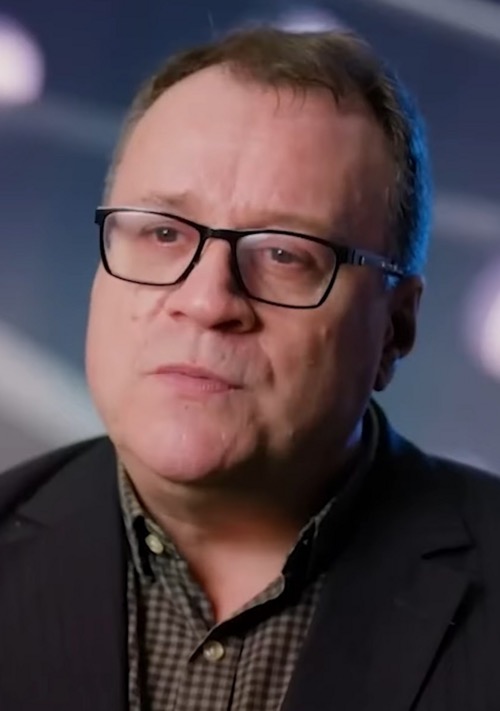
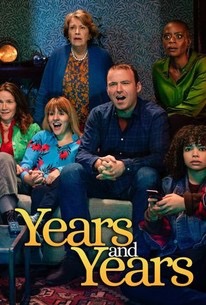
The word visionary gets thrown around far too easily. But Russell T Davies’s Years and Years earns the label. Six years after it first aired, it looks less like drama and more like a blueprint for the world we’re stumbling into.
Rewatch it now, and it feels psychic. Political chaos, social unrest, the rise of populism—it’s all there. And unless we wise up, the show won’t be a warning. It will be a prophecy.
Russell T Davies a psychic for sure a genius in his craft .
No, we don’t have Vivienne Rook. But we do have her male counterpart: Nigel Farage. Like Rook, he plays the grinning “man of the people,” shaking hands in Runcorn and smiling for the cameras. But behind the performance lies something darker—homophobia, intolerance, and politics built on fear.https://en.wikipedia.org/wiki/Russell_T_Davies
I do not support Reform UK, but it would be foolish to dismiss their rise. This isn’t business as usual. Their growing popularity is dangerous, particularly for LGBTQ+ communities and minority groups. A few months ago, I pointed out how clever it was to put Sarah Pochin—the friendly, mum-next-door figure—front and centre in Runcorn, a town already uneasy about immigration and crime. But that was just a mask. The real Reform heavyweights—Anne Widdecombe and others—are waiting in the wings.
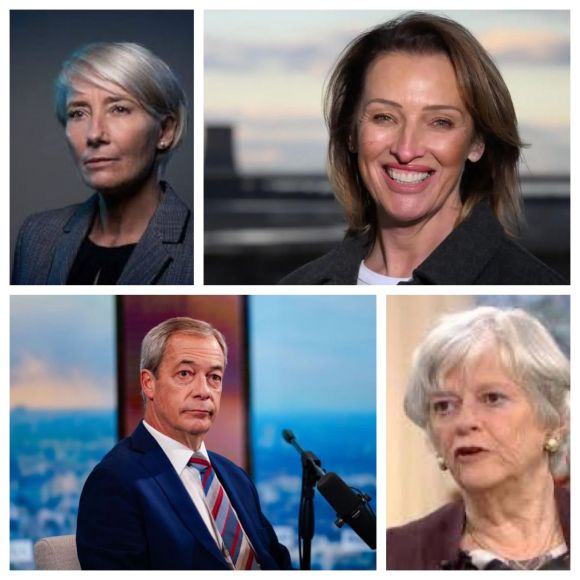
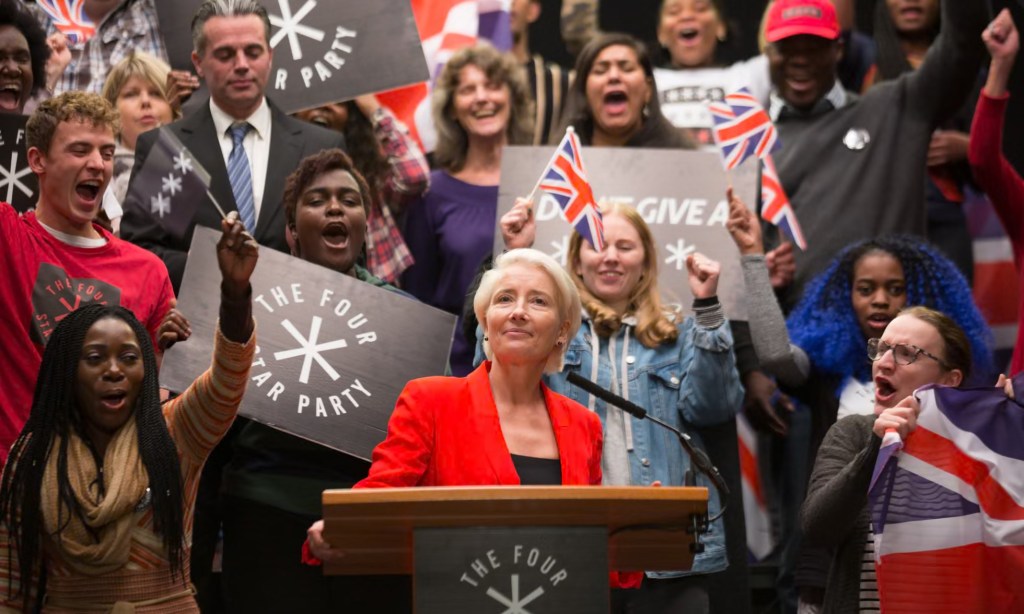
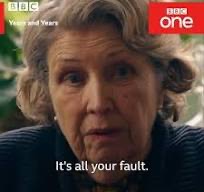
Vivienne Rook played by Emma Thompson . The smiling pr face of Reform Sarah Pochin and the real deal Farage and Widecombe .
Meanwhile, protests against asylum seekers grow louder. Hotels are shutting, talk of “temporary camps” is surfacing, and once again Years and Years looks disturbingly accurate.
The truth is simple: Britain needs immigration. Since Brexit, we’ve been short of workers. And asylum seekers are not faceless statistics—they’re people fleeing torture, persecution, or death. Yes, a small minority will cause problems, but scapegoating the many for the sins of the few is cowardly politics.
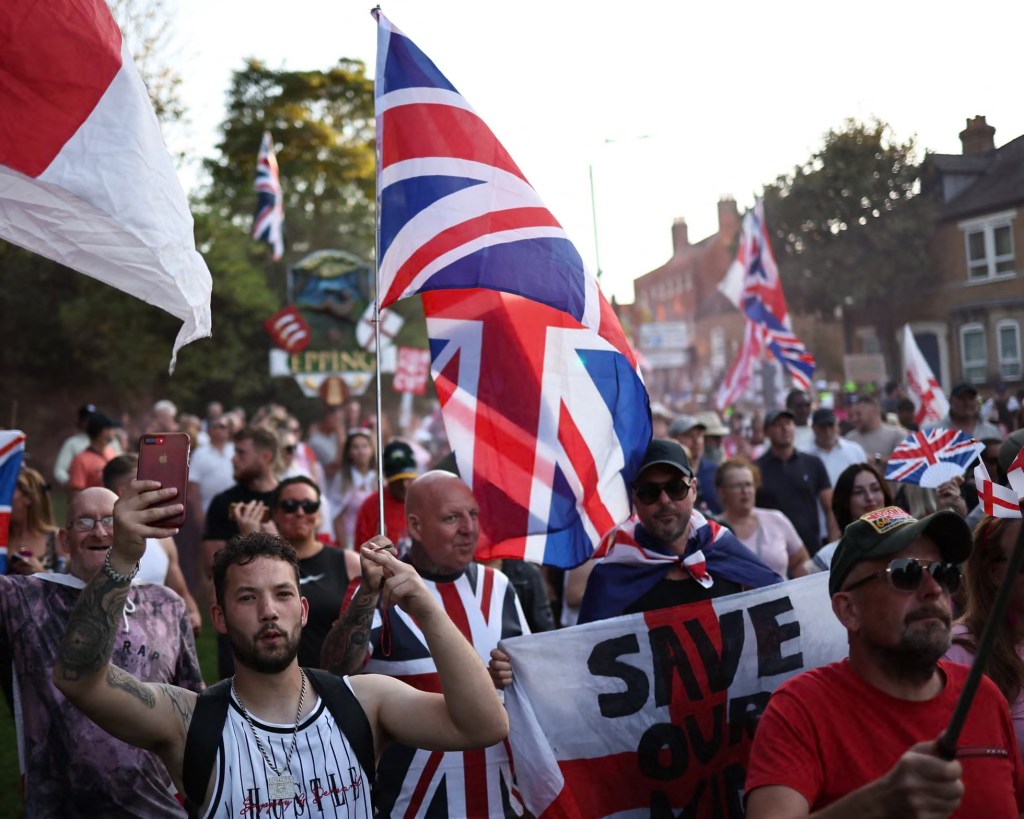
And what do the hotel protests achieve? Nothing but anger. The Vile e image of men and woman wrapped in the St George’s Cross turning the English flag into a symbol of division.
A flag of our country we should be proud of . Not one used for racism .
Davies warned us about this too. Suppressing extreme voices doesn’t silence them—it pushes them underground, where they grow more dangerous. In Years and Years, those who should never have been jailed became martyrs. In real life, extremists are being elevated in exactly the same way.
Meanwhile, fear grips ordinary people. In London, as in most major towns, there are streets best avoided at night. That fear is oxygen for extremists.
We’re also hollowing out our culture. Hard-won expertise is being replaced with one-week certificates. People call themselves “experts” in trades and professions that once took years of graft. We let them.
And we celebrate the wrong things. We tell ourselves we want a country built on skills, morals, and manners—yet we reward celebrity over substance. How can we build anything solid when voters shrug at lies, when eight-year-old girls aspire not to be nurses or teachers but the next Katie Price? If we don’t act, the rot will be ours to own.
Then there’s technology. Phones have become extensions of our bodies. AI is already replacing jobs. Humans risk becoming redundant in a world they created.
And celebrity still rules. We’ve already lived through the reality TV star who became President of the United States. His orange finger hovered over the nuclear button while he shouted, “You’re fired!” The laugh track is gone. The danger is real.
Davies even nailed the imagery: the “£1 T-shirt,” the slow creep of authoritarianism, the erosion of freedoms. Years and Years feels less like fiction with every passing headline.
Unless we wake up, unless we stop normalising dangerous rhetoric, it won’t be long before Farage—or someone worse—takes the helm. And then Years and Years will no longer be television. It will be our future.
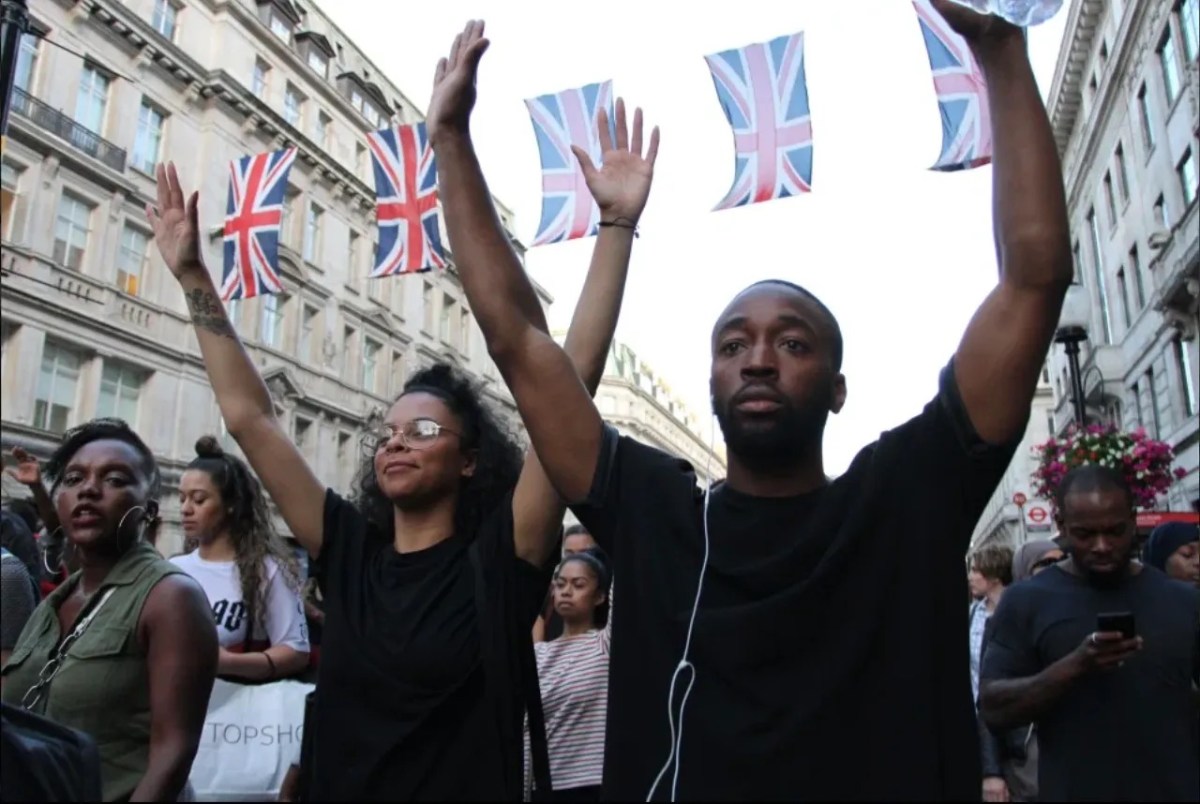
In the wake of current events, 2Shades asks the question: “Is everyone unintentionally a little racist?” Are we, as a society, guilty of labelling others at a glance? Does our upbringing dictate our fear of those perceived as different? How can we move forward and ensure that everyone is seen — and treated — as equal?
These days, you can’t escape slogans like “Black Lives Matter” and “Trans Rights.” They’re everywhere — and it breaks my heart that we still need to say those words. We think of ourselves as a civilised society, yet some people still feel the need to proclaim that their lives have value. Even during the pandemic, crowds took to the streets, desperate to have their voices heard.
Strike at the Root
How, in 2025, do people still feel like their lives matter less? And why does anyone need reminding that a life matters? We all breathe the same air and wake up with similar hopes, dreams, and stresses. Why should anyone feel like others see them as lesser?
It’s time to ensure that future generations never need to be reminded of their worth. As with many serious issues, we must strike at the root. Since no one is born a racist, let’s teach children that we are all the same.
Racist — someone who believes that other races are inferior to their own and therefore treats them unfairly, discriminating against other races, religions, or anyone perceived to be part of a minority group.
Avenue Q and the Racist Song
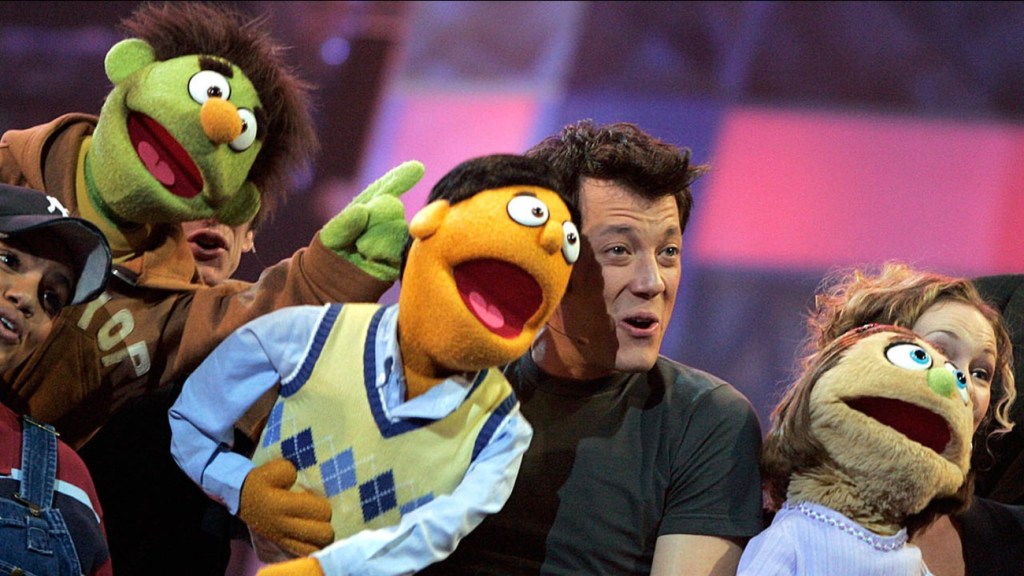
About ten years ago, I was sitting in the notoriously uncomfortable Noël Coward Theatre — wondering if the Marquis de Sade had designed the seats for people under 5’2” who hadn’t eaten in weeks — waiting to see one of my guilty pleasures: Avenue Q. It’s a kind of adult puppet show that has me in stitches every time.
But there’s one song that makes me squirm: “Everyone’s a Little Bit Racist.”
Princeton, the puppet, asks Kate Monster, “You’re a monster, right? So are you related to Tricky Monster, my neighbour?” Horrified, Kate calls him out — and Princeton points out some of her own biases. Then they burst into song:
“Everyone’s a little bit racist sometimes…”
At first, I was indignant. “Don’t put me in that category!” I thought, leaving the theatre. Yet Kate Monster’s reaction hit a nerve. You wouldn’t believe how many times I’ve been asked if I know a certain gay person — just because I’m gay.
The Gay Book
At a wedding in Guernsey, a woman I’d never met ran up to me and blurted out, “I hear you’re gay! David from EastEnders is gay — do you know him?”
I replied, “No, but I’ll look him up in the gay book.”
Her eyes widened. “There’s a book?”
I assured her there was (she didn’t get the irony) and off she went to tell her friends — who seemed to find me fascinating purely because of my sexuality.
Was it ignorance, racism, homophobia, or just misguided curiosity? Either way, I felt uncomfortable — half-expecting a wicker man to be erected in the town square.
Yes, many people — even with good intentions — can be unintentionally racist or discriminatory. This subject is close to my heart, which is why I’ve hesitated to speak out. Take my beautiful best friend of ten years, Dee. Her incredible personality and talent struck me first — not the colour of her skin.
“This Is My Gay Friend”
My eyes roll when I hear someone say, “This is my gay friend.”
My friends aren’t defined by race, sexuality, or religion. They’re defined by loyalty, kindness, and character. That’s what I see in another human being.
The N Word
Race only becomes relevant when a friend opens up about painful experiences — like when, as a child, her white friend’s mother told her she wasn’t allowed to play with her anymore because she was a n——. She ran home in tears. Her mother gently said, “Sometimes people in this world aren’t very nice.”
Even as she told me this story, I could see from her eyes — from her posture — that the wound still hurt.
Statues and Cancel Culture
How do we fix things so that no child ever feels this way? Peaceful protest is one way — but let’s steer clear of mob mentality. Keep perspective.
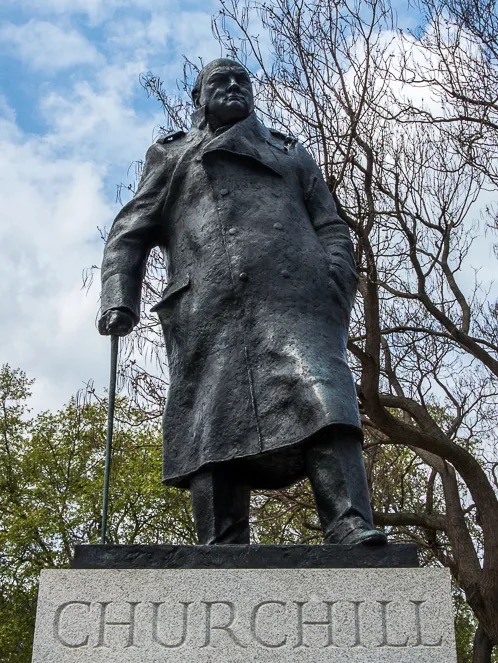
Churchill, Gandhi, and other historic figures were undeniably racist by today’s standards. But judging them solely by modern values brings little progress. Where do we draw the line?
If a statue needs to come down due to proven atrocities, let’s campaign — legally and collectively — for its removal. Not through vigilantism.
I’m also unsure we’re achieving anything by banning old TV shows. These are cultural artefacts — uncomfortable, yes, but historically significant.
When I heard Fawlty Towers’ “The Germans” had been banned, it felt like the final straw. Little Britain is apparently gone too.
Racism Off the Scale
If you want to see truly racist shows, look at the 1970s — Alf Garnett, George and Mildred, or Not on Your Nellie. In one episode, Hylda Baker asks a Black policeman for directions, then says, “You won’t know, you’re not from here either.”
Benny Hill was rife with misogyny, homophobia, and racism — yet celebrated in the US. Even the Carry On films were full of it. Bo’ Selecta! was criticised by Trisha Goddard, though Mel B and Craig David participated. And White Chicks, where two Black men disguise themselves as white women, is still one of my favourites.
Trying to erase the past is futile. By all means, campaign — but let’s make democratic decisions, not let the loudest voices dictate.
“All Lives Matter” — But You’re Missing the Point
Yes, all lives do matter — but that’s not the point. It’s not that Black lives matter more — it’s that they haven’t mattered enough. Imagine seeing images implying your ancestors’ lives were worthless. How would you feel?
Foundations of Prejudice
Let’s not pretend racism only comes from white people. It exists in every race. So let’s examine the root causes.
It starts with children. Schoolbooks shouldn’t include just one token non-white character. Representation should be equal and authentic. Let’s integrate, educate, and explore our complex past while teaching why things must change.
Redheads
Growing up in 1970s Scotland, there were no children of colour in my school. But I still stood out — red hair, Scottish accent. I was different. I was bullied.
Even today, redheads are mocked. I’ve explained that redheads often have more sensitive skin — and even educated people look puzzled.
Katie Hopkins once said, “There’s nothing worse than a ginger boy in younger years.” Hateful. Nasty.
Me at 63 but back in school being a red head got be bullied ,
Your Correspondent
We may not be born racist, but it’s a poisonous lesson many absorb early. My dad hated the Welsh. He’d tell stories about a man who stole his army uniform and say, “Never trust them.” Yet he adored Katherine Jenkins. His views were racist, misogynistic, and homophobic — but typical of his time.
Enoch Powell
At family gatherings, kindly grandmothers would say things like, “I don’t mind the coloureds, as long as they don’t move in next door — it brings down the property value.”
A friend’s mum once declared, “Enoch Powell had the right idea.” His Rivers of Blood speech still echoes in some circles.
We must teach our children that judging or bullying others is never acceptable. We may come from different heritages, but we are one people.
Grace Jones and Harlem
My musical influences included Diana Ross, Nina Simone, and Ella Fitzgerald. Moving to London, I encountered other cultures — clubbing at places like The Embassy and Bangs Adams, dancing to Grace Jones and Sister Sledge. To me, dark skin was beautiful.
In New York, I was warned not to go to “Black neighbourhoods.” Why? “They’re dangerous.” That attitude is the problem. I went anyway.
Harlem in the ’70s was vibrant, full of life. But segregation — fuelled by fear — persists.
My early musical influences Diana Ross , Nina Simone , Sister Sledge
Hair
One good thing about the US: to become a licensed hairdresser, you must learn to style all hair types. Not so in the UK, where separate salons still exist for Black and white clients.
I’ve shown up to jobs where actresses looked horrified. One woman said, “No offence, honey, but no white boy’s touching my weave.”
She loved it in the end. The UK could learn a lot from America on this front.
Dee and Me
Dee and I are often mistaken for a couple. We’re not. But we’ve faced attitude — from both Black and white people — even in cosmopolitan London.
At a Caribbean funeral, I was twice asked to park cars. One man said, “Easy mistake. You all look the same.”
Harlem 1970
Conclusion
Racism is learned — and it’s everywhere. Real change won’t come from reactive outbursts. It starts with education. It starts with talking, not shouting.
Let’s stop teaching kids that some people are worth less. Let’s support organisations like Diversity Role Models, which go into schools and promote inclusivity.
Sometimes I wonder — if Earth were attacked by aliens, would we finally unite? Looking at today’s governments, I doubt it. After all, they can’t even agree on how to fight a virus.
Yes — Steven’s Viewz is back, and this month’s edition is bursting with variety, insight, and just the right dose of controversy! As always, Steven brings his unique voice and unfiltered perspective to the table, tackling topics that range from the deeply thought-provoking to the wonderfully unexpected.
This issue explores everything from equality in marriage — reminding us how far we’ve come and how far we still have to go — to the growing interest in magic mushrooms and their potential benefits in mental health treatment. It’s bold, it’s current, and it’s never afraid to ask the uncomfortable questions.
Farage and the Marriage Debate
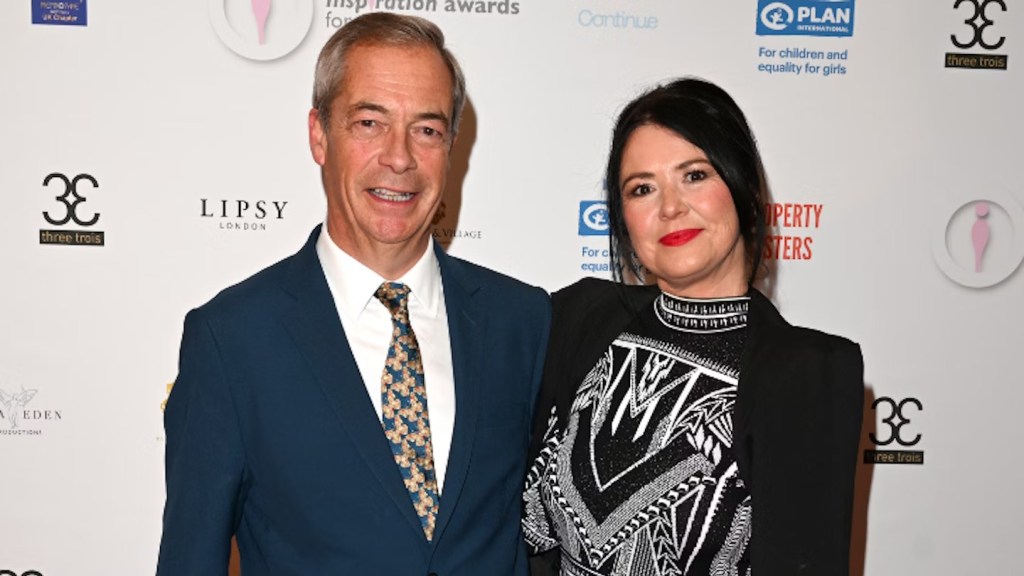
Laure Ferrari with Nigel charming lady .
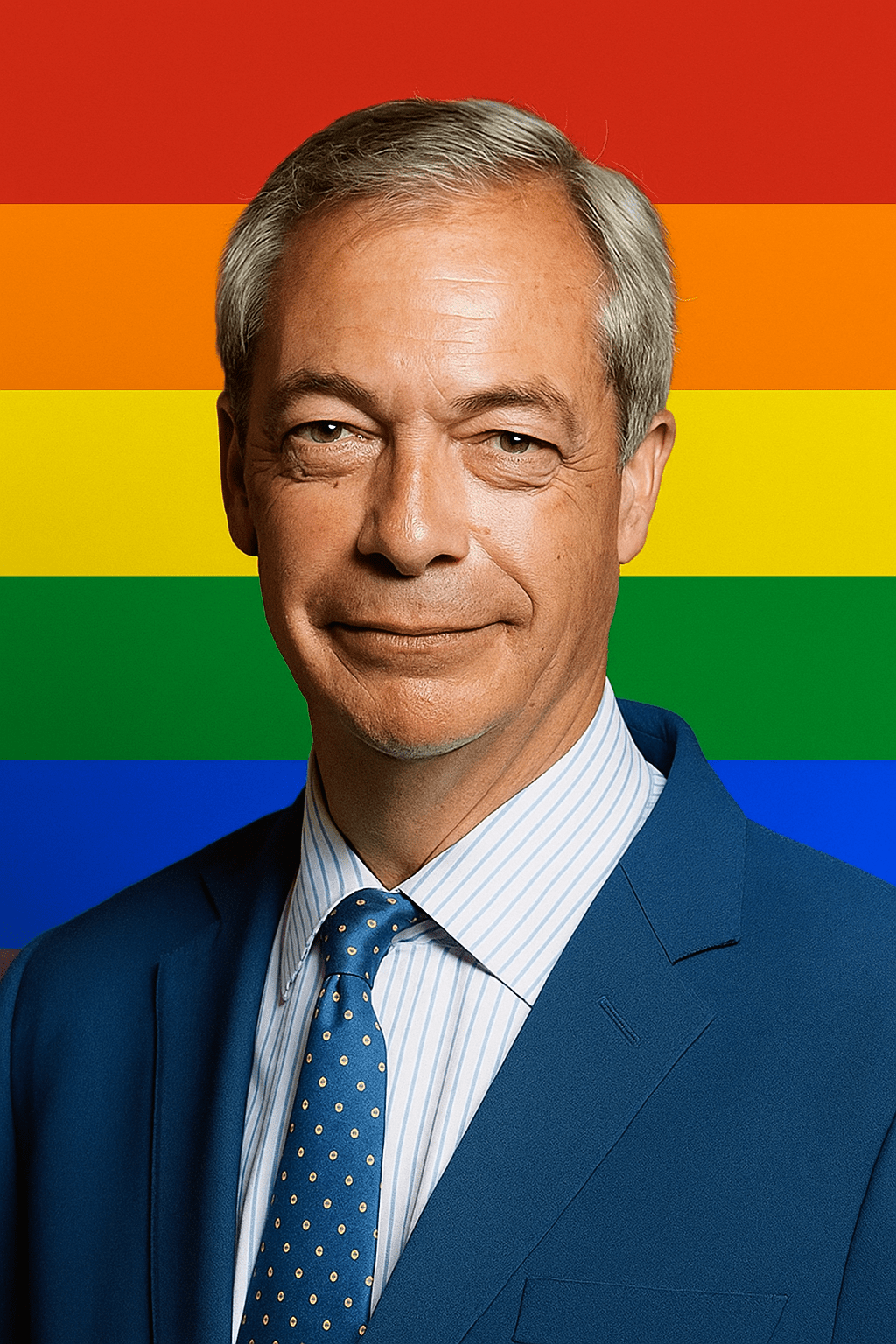
If you’re wondering whether the Reform Party under Nigel Farage might take a stance against the LGBTQ+ community, you may not have to look very far. A closer glance at Farage’s voting record reveals that he once voted against same-sex marriage—a move that speaks volumes about his social and political outlook.
This position seems somewhat ironic, given Farage’s own colourful marital history. Having been through two failed marriages himself, one might imagine he’d be a little more open-minded—or at the very least, more humble—when it comes to other people’s right to marry. Love, after all, comes in many forms, and marriage is a deeply personal choice that should be available to all consenting adults, regardless of gender or sexual orientation.
I had the chance to meet Farage briefly once, and I’ll say this: his current partner, Laure Ferrari, is a charming and intelligent woman. But perhaps Farage would be better served reflecting on his own relationship history before trying to legislate who can and cannot get married. A man who has struggled to sustain long-term commitments might want to tread lightly before denying others the right to even try.
If Farage is basing his stance on traditional or biblical values—as he often implies—then perhaps he should revisit those same values in the mirror. The Bible, after all, says a great deal about humility, compassion, and loving thy neighbour—principles that seem to get conveniently overlooked in his rhetoric. Selective morality has never made for good leadership, and voters are waking up to that.
Farage often touts his children as a source of pride, and no doubt he is a dedicated father. One of his children is an outspoken supporter of Donald Trump, which tells you a great deal about the household dynamic and political leanings. That said, it’s good to hear that despite having had testicular cancer, he’s clearly not firing blanks.
Isabelle Farage did an internship in Washington DC
While loyalty to family is admirable, it doesn’t excuse positions that marginalise entire communities or strip people of their rights in the name of so-called tradition. It’s worth asking: what kind of future does the Reform Party really envision? A society where love is judged and legislated? Where equality is rationed out depending on who fits into a narrow, outdated mould? The UK has made great strides in LGBTQ+ rights, and going backwards is not what people want—or need.
In the end, Farage’s views on marriage may say more about him than they do about society at large. Rather than acting as the moral gatekeeper, perhaps it’s time he looked inward and asked himself why love between two people—regardless of gender—should ever be up for debate.
Love is love. And no politician, no matter how many headlines they chase, should have the power to decide otherwise.
I think it’s safe to say that no one will be rushing to give Erin Patterson — the so-called “mushroom murderer” — a job in the prison kitchen anytime soon. The tragic case has cast a long shadow over what has always seemed like a fairly harmless food.
Come to think of it, all my wonderful vegan friends who create amazing mushroom-based dishes might find me double-checking what varieties they’re actually using from now on! Mushrooms truly are one of nature’s wonders — packed with nutrients, flavour, and even potential healing properties. In fact, magic mushrooms (when used in microdosing) are showing promising results in mental health treatments, including anxiety, PTSD, and depression.
However, not all mushrooms are safe. Some look similar to edible varieties but are highly toxic, even deadly. It’s always best to source mushrooms from trusted suppliers or foragers who are fully trained in identification.
Death Cap mushrooms .
Here are a few of the most dangerous mushrooms to avoid:
Death Cap (Amanita phalloides)
Destroying Angel (Amanita virosa)
Funeral Bell (Galerina marginata)
Deadly Webcap (Cortinarius rubellus)
Panther Cap (Amanita pantherina)
False Morel (Gyromitra esculenta)
Mushrooms can nourish or kill — respect is key.
Driving me mad
Let’s make one thing clear: this is not a rant about women drivers. That said, there’s one male driver left such an impression that part of my heart still feels stranded in the Cotswolds — I’ve no idea how I survived that journey.
Now, one friend, bless her, assured me she had an advanced driving licence. This was just as we found ourselves parked in the central reservation, waiting for the next juggernaut to thunder past or into us I was gasping for air. “If I take the wrong one, it can be miles before I can turn back,” she said calmly — completely puzzled by my look of terror.
With the number of high-profile motorway deaths recently, I think I’m fully justified in being a back-seat driver. One friend drove with a small dog on her lap, a slurpy drink in one hand, and then decided it was the perfect time to apply lipstick. She seemed genuinely shocked when I wanted to get out of the car.
Taking a call while holding the phone in one hand should absolutely be illegal — and yet, some of my lady friends seem to do it as if it’s second nature. Zero awareness. Zero empathy.
One particularly playful argument — when I declined a Greggs coffee in favour of a Starbucks ” How can you afford that your broke ” — nearly ended in disaster, as the car narrowly missed a truck. When I instinctively threw my hands up onto the dashboard, I got snapped at: “That’s their fault — and if you keep doing that, you can get out!”
Apparently I’m the difficult one. But when we finally reached one friend’s house, her daughter-in-law took one look at me and said, “How did you survive that? It’s a suicide mission waiting to happen.”
Another friend got a ticket (thankfully not while I was in the car).
With drones now being used to catch drivers holding phones, drinks, or simply not holding the wheel — well, I say: bring it on!
Happily Ever After
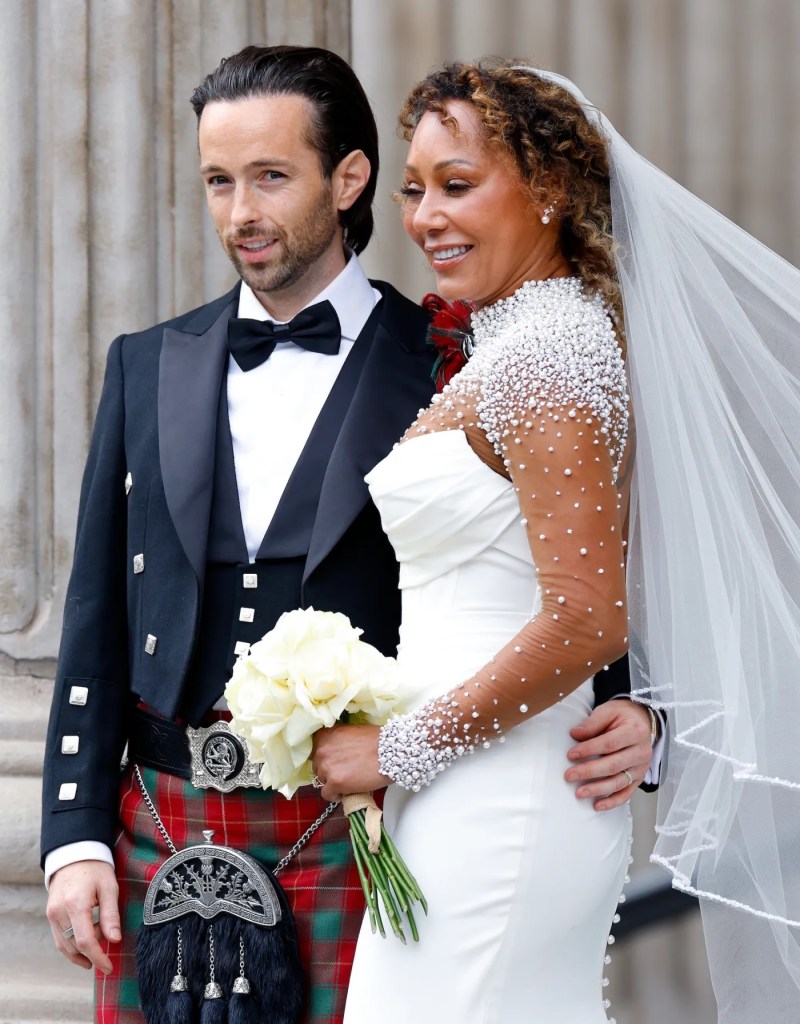
The gorgeous couple Mel B and Rory McPhee
It’s lovely to finally see some heartwarming news in the papers for a change! Scary Spice herself — the fabulous Mel B — has officially tied the knot with her long-time partner, Rory McPhee. He’s a professional hairdresser, and from the photos, they both looked absolutely gorgeous on their big day. There was an effortless glamour about them, and Mel B radiated happiness.
After everything Mel has been through in her personal life, it’s refreshing to see her smiling, looking confident, and surrounded by love. The wedding seemed like something straight out of a modern-day fairytale — intimate, stylish, and full of joy. I really hope that, just like in the stories, this marks the beginning of a “happily ever after” for the couple.
It’s easy to forget that celebrities are real people, with real hopes, heartbreaks, and dreams. Mel has always been a bold, outspoken figure, and her resilience over the years is truly inspiring. Seeing her find love again is a reminder that there’s always hope — no matter what life throws at us.
Here’s to new beginnings, lasting happiness, and a bit of Spice Girls sparkle. Congratulations, Mel and Rory — wishing you a lifetime of love and laugher .
Picture Annemarie Bickerton The brilliant Maggie Oliver pointed this out years ago , She should be made a Dame.,
Please stop using the phrase “Asian grooming gang” when referring to the perpetrators of certain crimes. This terminology is inaccurate, misleading, and deeply harmful. Asia is a vast continent made up of 49 countries, including China, India, Japan, Thailand, and many others. The term “Asian” encompasses a wide and diverse range of ethnicities, cultures, and nationalities. Using such a broad and general label unfairly tarnishes millions of innocent people and communities who have no connection whatsoever to the crimes being discussed.
In fact, 99 percent of the perpetrators in these high-profile grooming cases are groups of men who are almost all of British-Pakistani heritage. It is important to be precise and responsible in the language we use, especially when discussing sensitive topics like criminal behaviour and ethnicity. Referring to them simply as “Asian” is not only factually incorrect but also fuels prejudice and racial stereotyping against a much broader group of people. If we are serious about justice and protecting victims, we must also be committed to accuracy and fairness in how we speak about perpetrators. Let’s challenge harmful generalisations and work towards more honest and respectful conversations.
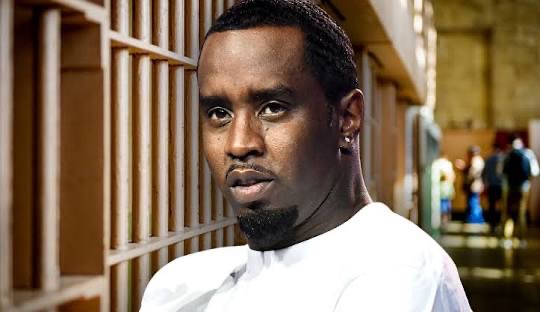
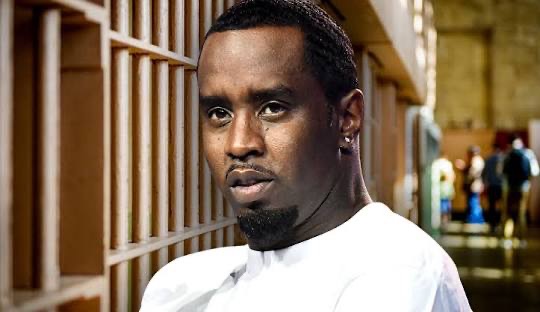
Is anyone else watching the Sean Combs trial and having mixed feelings about what’s really going on here? On the surface, it’s easy to say he’s a misogynist, a sex addict, and someone with serious control and ego issues. From the evidence and stories that have come out, it seems very likely that he was physically abusive to his partner, and there’s no doubt that he treated women terribly and surrounded himself with yes-people who enabled his behavior. There are, unfortunately, a lot of men in power who behave this way. But the real question is: is he actually guilty of the specific criminal charges being brought against him right now?
What strikes me is the timing and context of these allegations. Many of the so-called “victims” being interviewed attended his parties multiple times — not just once. They were around him, in his world, apparently of their own choice. Then, after his lawsuit with Cassie was suddenly and quietly settled, more people rushed forward. It feels less like a search for justice and more like a feeding frenzy. My guess is that Combs paid Cassie off in hopes of burying the scandal and keeping his chaotic lifestyle — which included drugs, sex parties, and power games — out of the public eye. But ironically, that move seems to have backfired. It may have opened the floodgates for others who saw an opportunity to cash in, whether or not they were truly victims.
Another strange point is how the prosecution is painting every decision he made in the worst possible light. They even suggested that asking children to leave his famous White Party was done to make way for a dark and sinister after-party. But when he said his own children were in bed, it sounded to me like a parent being responsible. Not everything has to be spun into something criminal. Yes, he’s no role model. He’s not boyfriend of the year, or a gentleman by any means, and he clearly has a serious problem with self-control. But does he really deserve to spend life in prison? He is clearly a great dad and son.
To be clear, I’m not defending his past behavior or saying he’s a good man. . But this trial seems to be built on a very shaky foundation. It feels more like a pile-on driven by money, media attention, and opportunism rather than a solid case based on undeniable evidence. It’s also hard not to notice how quickly public opinion can turn — one moment he’s a powerful mogul, and the next he’s being torn to pieces before a verdict has even been reached.
There’s a lot about this case that doesn’t sit right with me. It’s messy, full of contradictions, and seems more about dollars than truth. If he’s truly guilty of a crime, then justice should absolutely be served. But right now, it feels like the court of public opinion is doing more talking than the actual courtroom.
Do not be fooled by the smiling face .
In a very clever PR move, the Reform Party has put Sarah Pochin forward as a candidate in Runcorn and Helsby, and she won by just six votes from Labour. Sarah is attractive, clean-cut, and comes across as wonderfully composed.
Runcorn is an area with ongoing issues surrounding immigration, and many locals are uneasy. But let’s not forget the real face of Reform in its female form: Ann Widdecombe. She may have called it right on the Meghan Markle saga long before our brief national love affair with her was over, but let’s not pretend she represents progress. Widdecombe is staunchly anti-LGBT, deeply religious, and belongs more in The Handmaid’s Tale than modern British politics.
Reform UK boldly claims it will “sort out the migrant crisis.” Will they?
Let’s be honest—none, and I mean none, of the main political parties have come up with one sensible idea about how to handle the Channel crossings. From deporting so-called illegals to Rwanda (at huge cost to the taxpayer), to the absurd idea of sending the army to patrol beaches—none of it amounts to a workable plan.
Some might suggest, sarcastically, stationing the army on the coast to shoot migrants as they arrive. Or even going full medieval—beheading them and putting their heads on poles as a warning. That would surely deter others, right?
Of course not. We do not live in the Dark Ages.
But look around the world. In places like Singapore, simply overstaying your visa can get you locked up and caned. Unsurprisingly, they have very little trouble with illegal immigration. In Denmark, the government banned the burka, denied benefits to migrants who fail to integrate, and charged newcomers for public services. The result? A sharp drop in new arrivals.
To be clear, I’m not suggesting we copy Singapore or Denmark. My point is this: where is the clear, practical plan from any UK party? Even listening to Ann Widdecombe, all we hear is bluster—Reform will “sort it out”—but with no explanation of how.
The truth is, we need immigration. Not just highly educated professionals, but hard-working labourers too. After Brexit, I listened to developers across the country who were stuck because their brilliant, dedicated Eastern European workers had gone home. Let’s welcome those people back. But if they commit a crime—out they go.
At its core, this is not just a British problem. The real issue lies in the countries people are fleeing. Until we help fix the root causes—war, poverty, corruption—the tap won’t turn off.
Reform UK won’t stop immigration. What they will do is damage the rights of LGBTQ people and harm the arts and culture sectors in this country.
So don’t be fooled by Sarah’s smiling face. Remember her friend Ann—she is the real face of Reform UK.
My dream job.
I can. not wait for The Autism and Art show my this week.
No One Wins in This High Court Ruling By Steven Smith
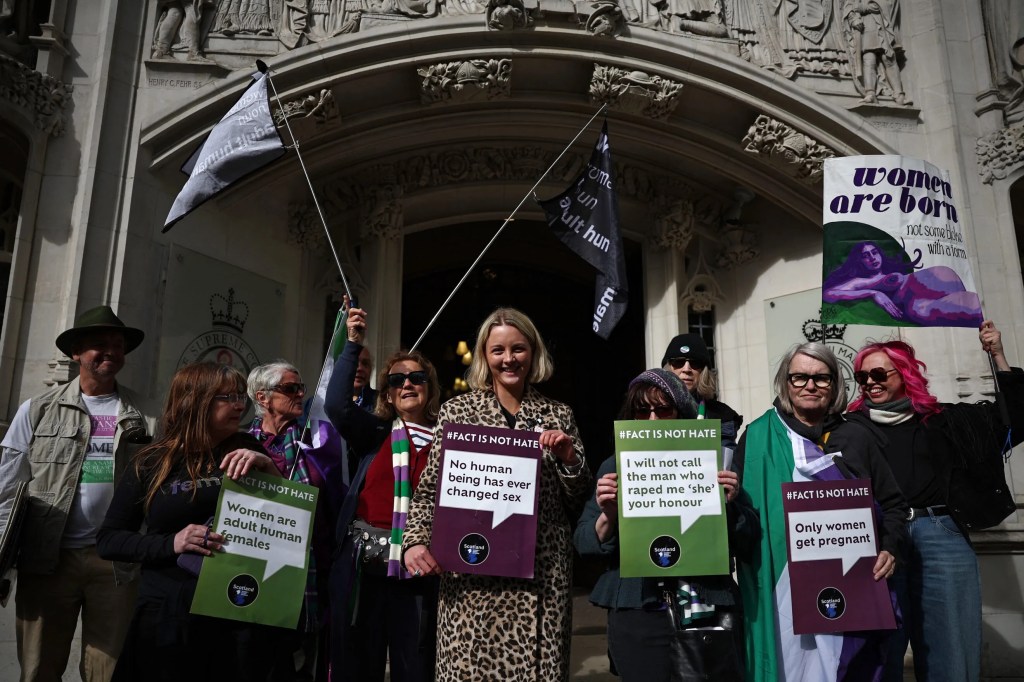
This week’s High Court ruling has left many people reeling—disappointed, divided, and more confused than ever. But one thing is clear: no one truly wins in the aftermath of this decision. Whatever legal boundaries were reinforced or redrawn, they’ve done little to offer protection or peace to the people affected most. If anything, the result is further division, and the human cost is growing.
Let’s start with a blunt truth. If there is a god who allows a child to be born with bone cancer—or worse—then perhaps, just perhaps, that same god may have placed a soul in the wrong body. It’s a difficult thought, but one that challenges traditional notions of perfect design and invites empathy over judgment.
In this debate, one group’s rights cannot come at the expense of another’s safety. Women—especially those who’ve suffered trauma at the hands of men—deserve dignity, privacy, and protection in spaces like bathrooms, hospital wards, and shelters. These are not just physical places; they are emotional safe zones, where healing and recovery often begin. To ignore the fear and anxiety many women feel about sharing intimate spaces with anyone who presents as male—even if that person identifies as female—is to ignore real, lived experience. We must listen with compassion, not condescension.
This isn’t a rejection of transgender people. On the contrary, I’ve known incredible trans women since I was a teenager. These are brave, passionate human beings who have committed to a long, often painful journey to live authentically. They undergo extensive psychological evaluations, hormone therapy, and surgery. Some reintegrate into society quietly; others become public figures or advocates. All of them, in my eyes, are women.
Which is why this ruling cuts so deep. Many trans people who have taken every step available to become their true selves now find themselves swept up in a storm of legal and cultural backlash. Instead of being seen as individuals with complex stories, they’re being lumped in with others who have not taken the same path—or who may not even identify as trans in the same way.
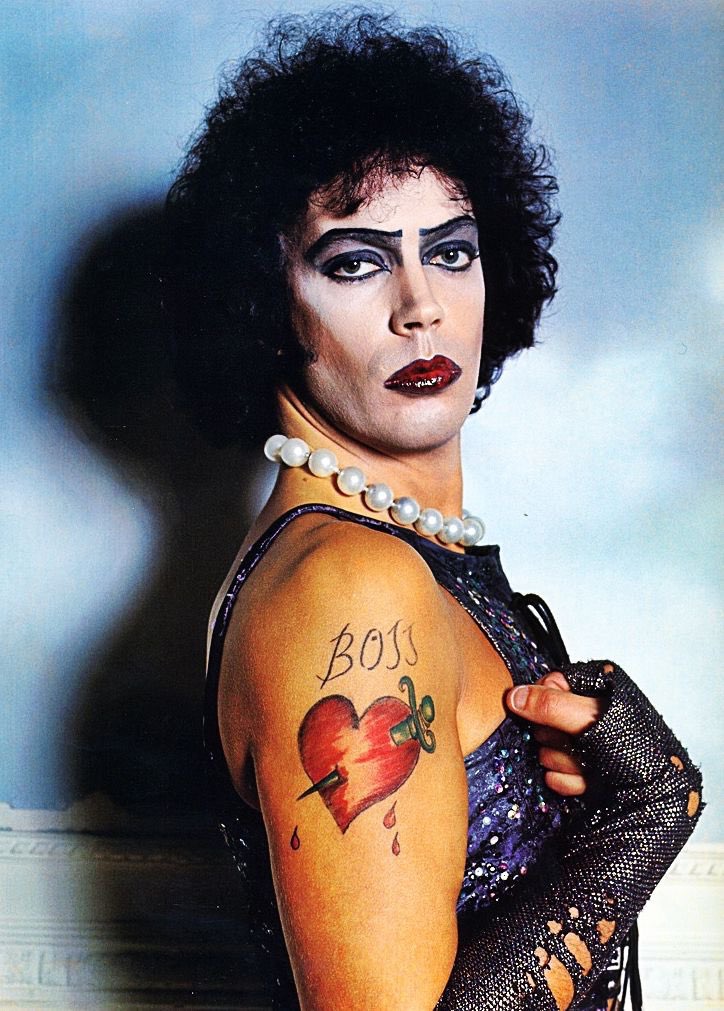
Part of the problem is ignorance. When I first heard the term “trans,” my mind went straight to “transvestite” or flamboyant characters like Frank-N-Furter from The Rocky Horror Picture Show. And while I adore a good performance, let’s be clear: wearing a dress and heels doesn’t make someone a woman. There’s a vast difference between performance and identity. A man in a frock might enjoy the expression, the character, even the fantasy—but it doesn’t make him female.
True transition is not about fantasy. It’s about becoming. It involves sacrifice, struggle, and a level of self-awareness many of us never have to face. For those who take that journey, they earn a place in the world as their authentic selves—and they deserve respect, not suspicion.
Children, too, are part of this complex conversation. Some express gender discomfort from a young age. These feelings must be taken seriously—but also approached with caution. Many people I know went through periods of gender confusion in their youth, only to feel secure in their biological identity as adults. Others continued to struggle, and those individuals deserve full support. But irreversible medical decisions should, in most cases, wait until late adolescence, when a person’s sense of self has had more time to develop.
Still, it bears repeating: having a penis does not make someone a woman. That is not a statement of hate—it is a statement of biology. If someone is transitioning, that’s a journey we can honor and support. But biology does matter, especially when it intersects with the rights and safety of others.
What’s heartbreaking is that this ruling, intended perhaps to draw clearer lines, may only deepen misunderstanding. Trans women who have undergone surgery, therapy, and lived experience are now at greater risk of being misjudged, targeted, and excluded. The backlash is likely to hit the wrong people hardest. We risk punishing those who’ve made the most effort to live honestly.
The public discourse on transgender rights is failing everyone. The messaging is chaotic, the tone often cruel, and the nuance lost in a sea of outrage. Education is vital. We need thoughtful, well-informed conversations—conversations that recognize the humanity in everyone involved. The issue of gender identity has been reduced to a political football when it should be a human rights discussion rooted in compassion and science.
One of the most shameful chapters in this saga was when President Donald Trump banned transgender individuals from serving in the military. Anyone willing to risk their life for their country has my full respect, regardless of how they identify. That level of courage transcends gender—it defines character. In my eyes, that’s the truest identity of all: brave.
As society evolves, we must also evolve our understanding of gender. It may be time to acknowledge a third, even fourth category of sex or gender. The binary system doesn’t serve everyone, and clinging to it may be doing more harm than good. The law should reflect the complexity of human experience, not flatten it into rigid boxes.
Ultimately, this ruling doesn’t protect anyone—it creates more confusion, more pain, and more opportunities for discrimination. Women’s safety is still not fully addressed. Transgender individuals are now more vulnerable than ever. And society, caught in the middle, is left with more questions than answers.
No one has truly won this week. But if we learn anything from this moment, let it be this: the path forward must include better laws, deeper understanding, and above all, compassion for every human being trying to live their truth.
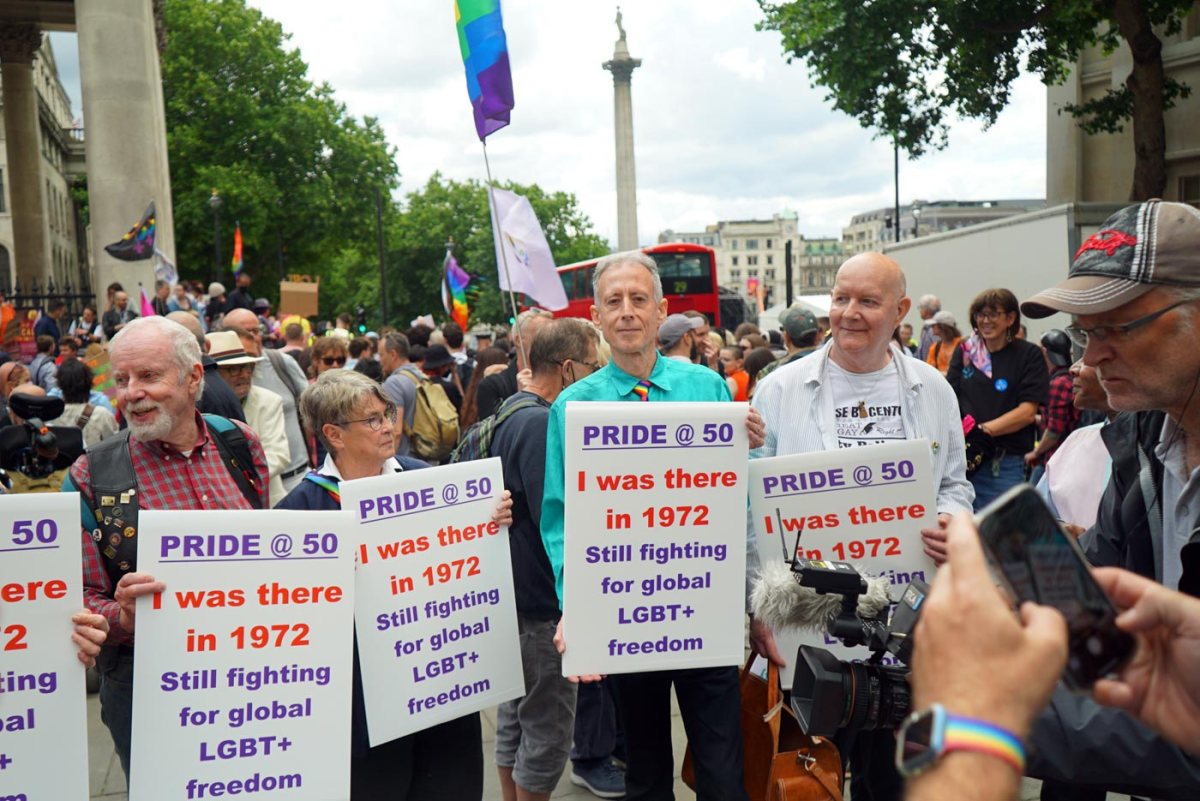
Last week, I joined some of the legendary children from the original Pride at the Curzon Cinema Bloomsbury to watch the powerful documentary Legendary Children (All of Them Queer), directed by Rob Falconer.
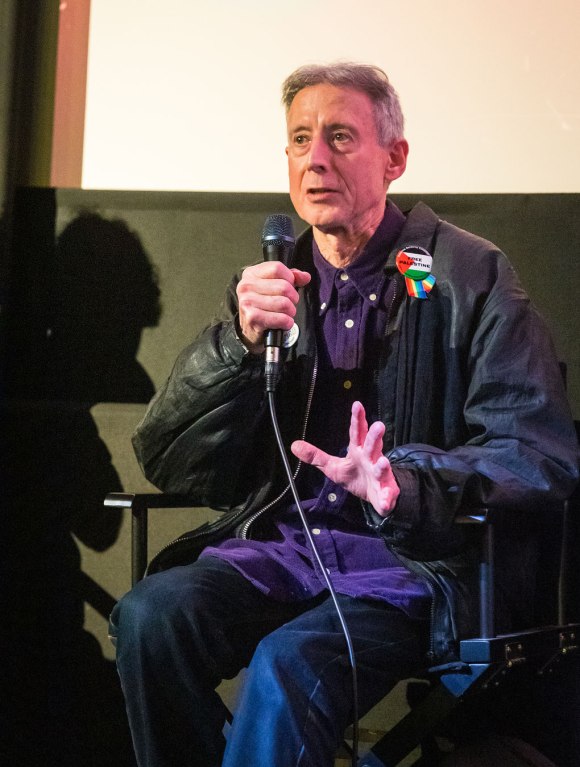
The film had its highly anticipated London premiere, playing to a an enthusiastic audience. Serving as the closing event for LGBT+ History Month, the screening was followed by an engaging Q&A session featuring renowned human rights activist Peter Tatchell.
Tatchell expressed his hope that the film would serve as both a historical reflection and a call to action for new generations of activists.
“I hope this film demonstrates that real social change is possible and inspires others to take up activism,” Tatchell stated. “It’s a story of then and now. I always say, even if you can’t be on the front lines, you can still make an impact—just by amplifying the struggles and voices of LGBT+ people across the world.”
His remarks followed a strong statement from the International Committee for LGBTQ+ History Months, a coalition representing 16 such initiatives globally. The committee issued a scathing condemnation of the U.S. government’s recent efforts to systematically remove LGBTQIA+ resources, educational materials, and visibility from schools.
“The erasure of books, knowledge, historical records, and community groups has never led to anything positive,” they wrote, warning that “the actions of the Trump administration are emboldening other governments and institutions to follow suit.”
Filmed over two years, Legendary Children chronicles the lives and activism of the pioneers who helped establish the first UK Pride in 1972. Director Rob Falconer reflected on the film’s profound relevance, not only in light of the growing wave of anti-LGBTQIA+ sentiment in the United States but also due to the loss of many of the trailblazers featured in the documentary.
“We won’t see their like again,” Falconer said, acknowledging the passing of numerous activists who fought to carve out a space for LGBTQ+ rights in Britain and beyond. The film stands as both a tribute to their courage and a reminder of the ongoing fight for equality—one that remains as urgent today as it was five decades ago.
The second film, The Fragility of Freedom, follows an inspiring group of humanitarian secondary school students from Essex, Suffolk, and Vancouver, Canada, as they participate in The Dora Love Prize 2024.
Since its inception, The Dora Love Prize has engaged over 1,500 secondary school and college students in Essex, Suffolk, and beyond in a unique, youth-driven human rights initiative. Inspired by Holocaust survivor Dora Love, the project continues her lifelong mission to educate young people about the atrocities of the Nazi Holocaust. Dora’s goal was simple: to empower students with this knowledge so they could challenge identity-based prejudice, discrimination, marginalization, and violence in today’s world.
Founder Rainer Schulze explains, “The Dora Love Prize provides young people with knowledge beyond the school curriculum and the confidence to create positive change in the world around them. We invite you to ‘see the world differently.’”
Dora Love
I am not always on the same page as the wonder that is Peter Tatchell, but I am in awe of him and his work. His speech about stepping into other organizations and being a shining light is so important that 2Shades has decided to print it as a landmark speech.
Peter Tatchell – March 5, 2025, Curzon Bloomsbury, London
*”To start with, I’d like to say that I had a very difficult choice tonight. I was also asked to speak at the U.S. Embassy in the solidarity protest with Ukraine and against Donald Trump’s withdrawal of aid from that country’s battle for self-determination.
What we are witnessing now is the rise of Russian and U.S. imperialism in alliance with each other to carve up Ukraine. Putin wants the territory; Trump wants the minerals. That is the new imperialism.
For LGBT+ Ukrainians, a Russian victory would be a devastating blow. It would mean the imposition of Russian-style laws on LGBT+ Ukrainians, never mind all the other civic and political repressions that would follow. The trade union movement in Ukraine would be dismantled, women’s rights campaigners would face severe repression, and so on. This is a critical moment where we must show the kind of international solidarity that the Gay Liberation Front demonstrated in the early 1970s. Back then, we stood with the people of Vietnam against U.S. aggression, with the people of Greece battling the Colonels’ junta, and with the people of Spain fighting the Franco dictatorship.
We saw our struggle as international, not just limited to LGBT+ rights but part of a broader democratic human rights movement.
So, to go back to your question—history shows that if you care about something, don’t just care, do something. Action equals life; silence equals death. We must get organized.
For young people who feel passionate, get involved with an organization that is making a difference. Many groups across Britain and around the world need financial support, online campaigners, and solidarity. Some young people I know make a point of attending Pride parades in repressive European countries like Georgia, Hungary, and Poland. They do this to show their support, and no one should underestimate the power of solidarity.
For people living under dictatorship or repression, knowing that others care is a massive morale boost. It’s psychologically uplifting.
The other thing I’d say is—don’t feel confined to LGBT+ movements. A lot of my work isn’t LGBT+ focused. I support the liberation movements in Indonesian-occupied West Papua, the Balochistan freedom struggle against Pakistan’s occupation, and the fight of the Arab Ahwazis in Iran against subjugation by Tehran. I don’t do this for LGBT+ reasons—I do it because they have a just freedom struggle, just like the people of Ukraine, Palestine, or anywhere else.
Because I’m openly gay, my support has forced many people in these communities to rethink their attitudes toward LGBT+ people.
Take Balochistan—it’s a very tribal, patriarchal, and, frankly, ‘backward’ society in terms of LGBT+ rights. But because I’ve been one of the champions of their freedom cause for the last two decades—getting them huge media coverage—I’m now well known there. Many people have told me, ‘I used to hate homosexuals. I believed all the propaganda. But you stood with us, and now I’m rethinking my attitude.’
That’s incredibly important.
The same applies across the board. I’ve been campaigning for 50 years in support of Palestine’s right to a homeland. Again, as an openly gay man, I’ve had countless Muslim people tell me, ‘I used to hate gays, but your support over the decades has changed my mind.’
So, if you’re young, get involved in these movements as an openly LGBT+ person. Show that we stand with them. At first, they may not stand with us, but if you persist, not only will you be supporting a just cause, but you’ll also be changing hearts and minds along the way.”*
My viewz and not of 2Shades brought to you bi -monthly a column that does not hold back
“Where to pee or not to pee, is that really a question?”
Trans. Trans, dear God has there ever been a topic that will have you cancelled simply for not agreeing and get so many hot under the collar?
Now let us get this straight and to help the right-wing God squad: if your apparent higher power allowed a child to be born with bone cancer or deformed, is there not a chance he popped one or two in the wrong body too?
For me, if a man or woman feels they have been born in the wrong body and have undergone two years of therapy and gender reassignment, as far as I am concerned, they are now the sex of their choice.
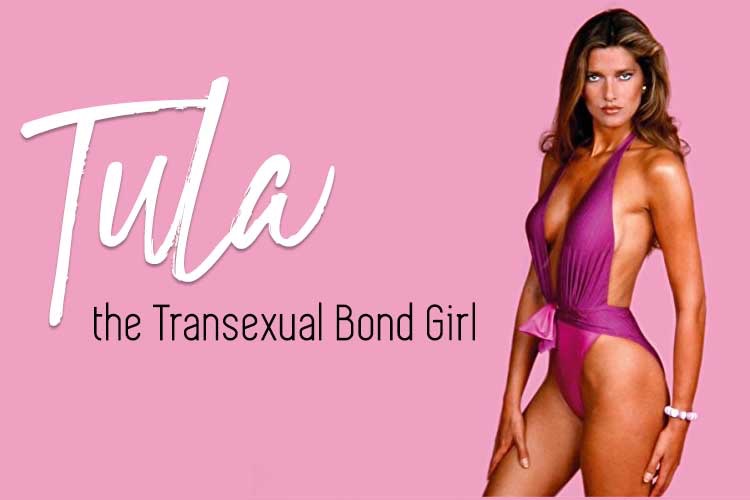
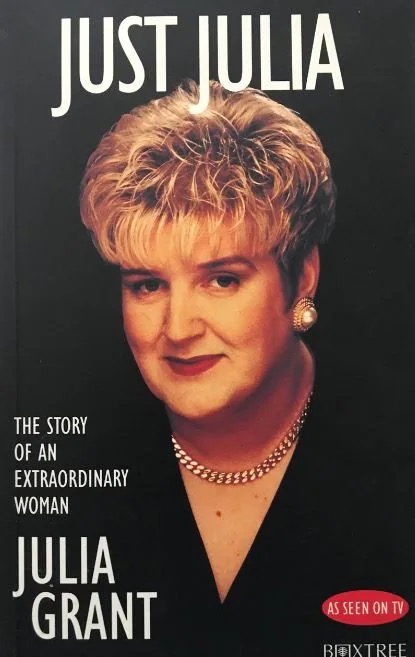
People who have had gender-affirming surgery have been in my life since I was 16. The Famous Julia / George dropped coffee all over my Fiorucci white jump suit at “Scandals” night club when she ran the coffee shop there. Strangely we became friends. From April Ashley to Tallulah, famous sex changes have been in the news. Many have played under the radar and of course with some there was the odd whisper, but all for most part got on with their new lives. Wonderful India Willoughby, whom I admire, campaigns for
Transvestites who enjoy popping a frock on are not in that transgender category, however.
Nor is drag. Drag has been around since time began and in the theatrical sense it is a performance. So many people seem to be labelling drag artists as trans which, for the most part, they are not. Men that suddenly announce they are trans and pop on a frock, an acrylic wig and some false nails are not women.
Sure, some might be starting a journey towards being a woman. Others never will make that trip and must appreciate it is a dream and not expect rights as a woman.
Tim Curry in the incredible The Rocky Horror show is a sweet Transvestite not to be confused with gender reassignment https://rockyhorror.co.uk
Much as mixed toilets have been in many venues for years, the right for a woman or, when it comes to it, a man to go the toilet that is used by their own sex should be enforced. What many forget is some women are coping with trauma, having been raped or abused badly by men. They will find the idea of sharing a bathroom (where they are in a vulnerable state) with anyone with a penis utterly terrifying. Simply put, if you have a penis stay out of the ladies loo.
What is bizarre to me and many of the trans is this “Dead Life”, i.e. if you are now identify as woman, your prior life is “Dead Life” and you can suddenly create a whole past as girl. One (who we all know)
described how she slept with a variety of celebrities as a beautiful young girl – the issue here is she was a 17-year-old spotty boy at the time she claims it happened. It is just a lie, a “Fantasy Life” that to my mind is closer to criminal fraud.
I certainly would have been trans back in my school years. I used to pray that I would wake as a girl because being a boy was pure misery for me. Today I love being a man, in fact after about 14 that desire to be a girl eventually passed. For many it does not, and they have my
empathy and support to be who they want to be after a certain age.
Forcing kids into boxes i.e. boys like football and action and
girls like Barbie and cooking is one of the unhealthiest things I can think of. It is responsible for so many mental health issues in those kids who do not fit into society’s false expectations. But please do not let kids undergo surgery till they are fully matured and can decide if it is still what they really want.
Personally there would be no way I would even want a child of mine to have a piercing or tattoo until they were in their late teens. There are support groups such as Mermaids that help young people who feel they are struggling with gender
Finally, practise what you preach. A lovely trans woman who I respected and addressed as a woman (even though they had not had surgery, or any work done), berated me for not eating what I was given at a dinner table (I do not eat red meat or pork).
“In my day you ate what you were given!” she chastised me.
Thank God for you it is not “your days” as you would be running for the hills dressed as woman. The problem is, if we expect people to accept us for who we are, it has to be reciprocal, not one-sided.
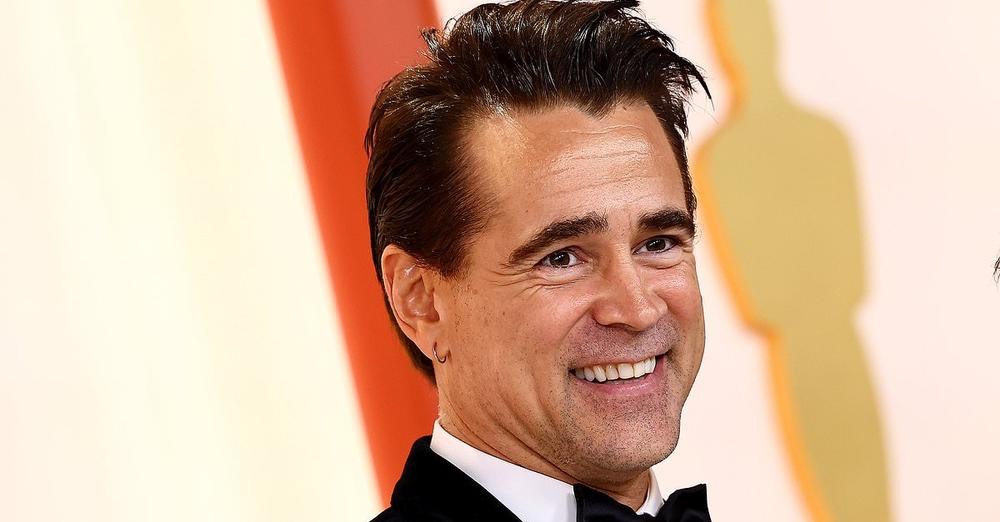
Colin Farrell – a real man of action
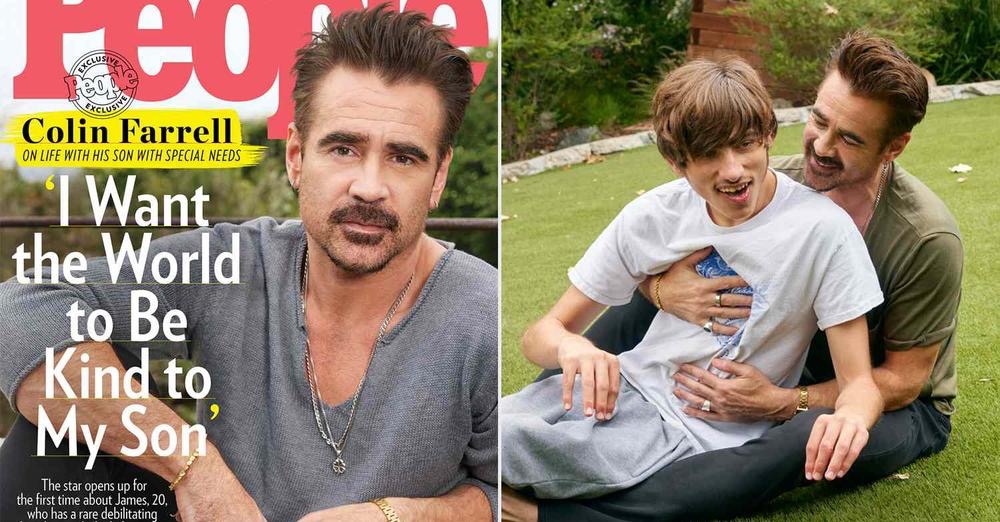
As if we could not love Colin Farrell enough already, the actor and his son James have melted our hearts this month. Colin has been talking about his 20-year-old son James who lives with Angel Syndrome.
“I want the world to be kind to James. I want the world to treat him with kindness and respect.”
Angelman syndrome is genetic disorder that mainly affects the nervous system. Symptoms include a small head and a specific facial appearance, severe intellectual disability, developmental disability, limited to no functional speech, balance and movement problems, seizures, and sleep problems.
Farrell has started a foundation in honour of his son in the US. The Colin Farrell Foundation will provide support for adult children who have an intellectual disability through advocacy, education and innovative programs.
As for the foundation, for years Farrell has wanted to do something in the realm of providing greater opportunities for families who have a child with special needs, to receive the support that they deserve and the assistance in all areas of life.
“Once your child turns 21, they’re kind of on their own,” Farrell says. “All the safeguards that are put in place, special ed classes, that all goes away, so you’re left with a young adult who should be an integrated part of our modern society and often is left behind.”
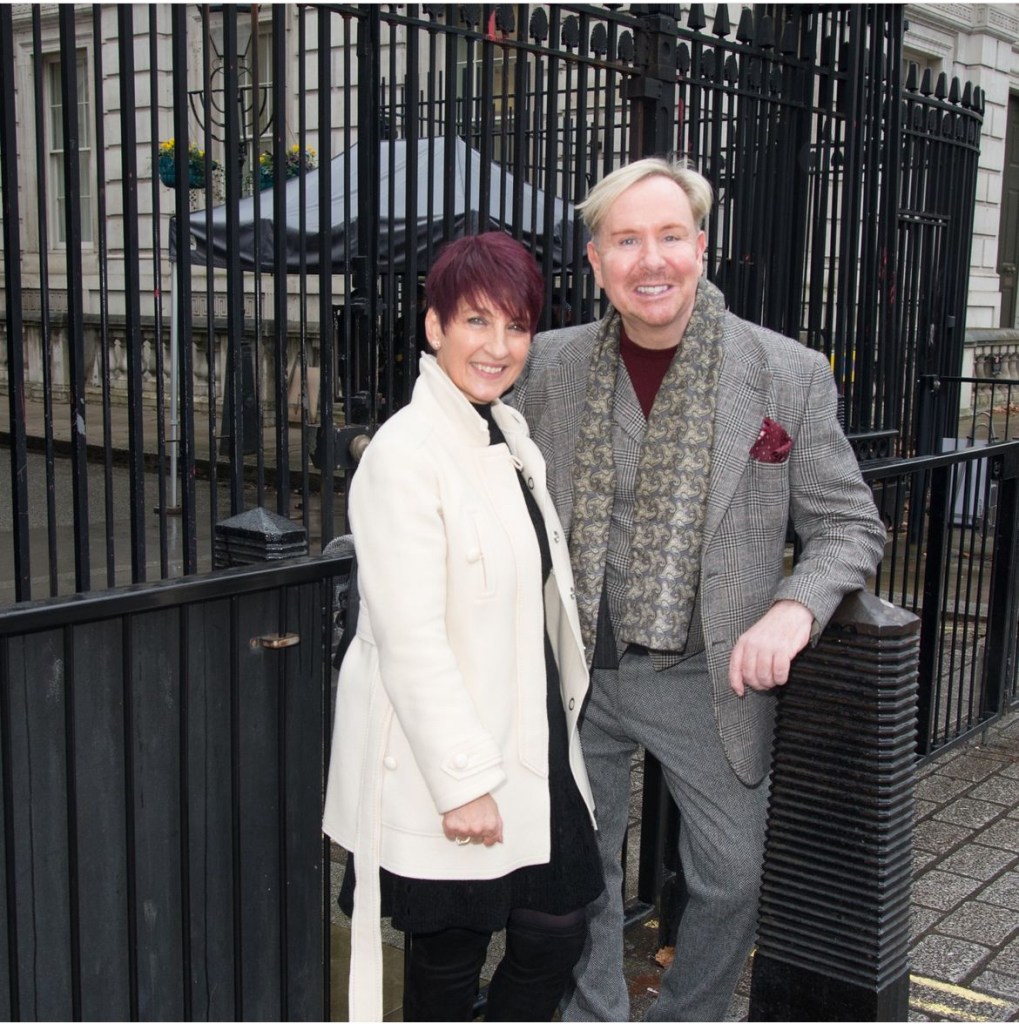
This is mirrored in the UK. Last year Dr Anna Kennedy OBE petitioned Number 10 Downing Street to help those living with autism to be aided after the age of 24 where government aid stops. “Who will look after my sons when I am gone?” is a question Anna has raised along with many parents of children with special needs.
Dr Anna Kennedy OBE and me delivering a petition to Number 10 downing street picture Terry Scott ,
Colin and Anna are real heroes and we need more of the likes of these two in this world.
Yet more bad news for the BBC as their top-rated show “Strictly Come Dancing” comes under fire for apparent bullying as previous contestants have been complaining.
Oh do get a grip. You go into a reality show and you are really expecting it to be plain sailing?
These people complaining of bad treatment have agents and a
right to walk out at any time. Stop, enough already. Do not go into a
show like “Strictly” or “I’m a Celebrity” and expect back rubs and hugs.
Dance is a highly disciplined practice and anyone who has properly
trained at the ballet or dance school will tell you it is not for the faint
hearted.
To conclude .
When your bear friend has been taking Ozempic and asks if
you have noticed any visible side effects on them…





























 2Shades Magazine