Categories
Columns Lifestyle People

Is Everyone a Little Bit Racist? By Steven Smith

Avenue Q

Is everyone a little bit racist ?

In the wake of current events, 2Shades asks the question: “Is everyone unintentionally a little racist?” Are we, as a society, guilty of labelling others at a glance? Does our upbringing dictate our fear of those perceived as different? How can we move forward and ensure that everyone is seen — and treated — as equal?

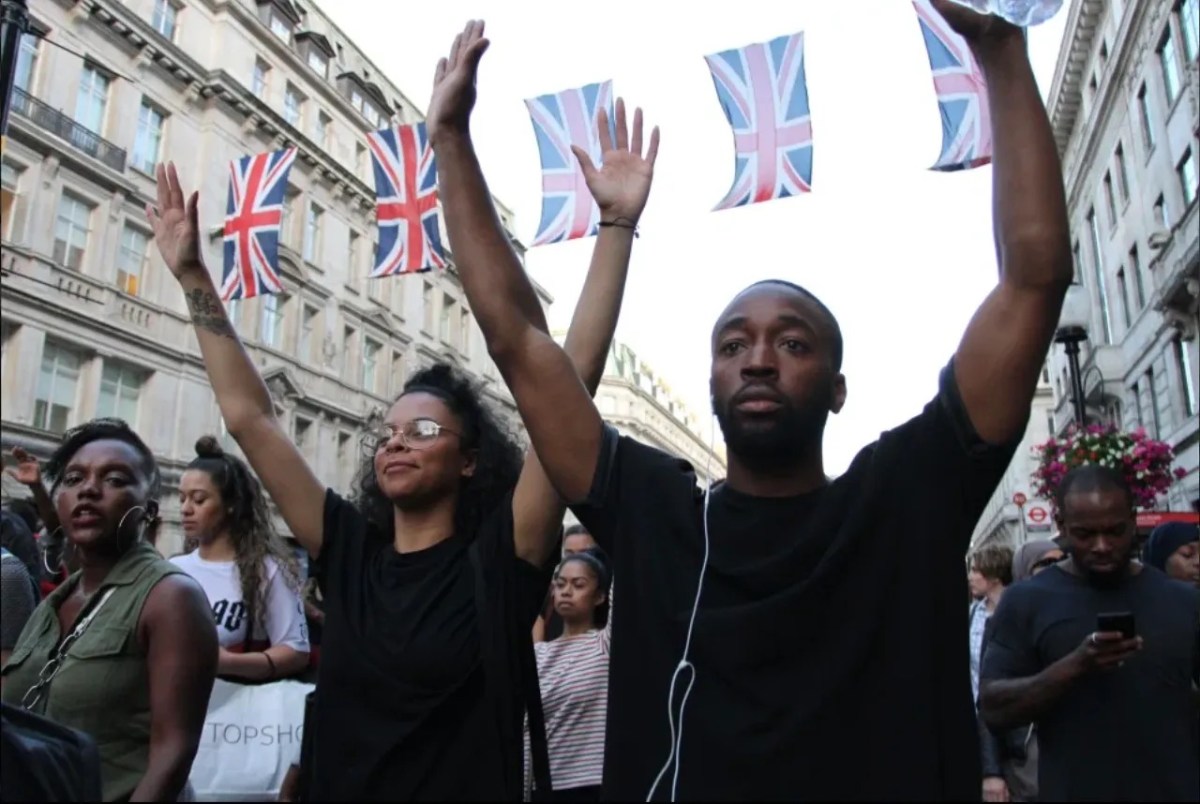
These days, you can’t escape slogans like “Black Lives Matter” and “Trans Rights.” They’re everywhere — and it breaks my heart that we still need to say those words. We think of ourselves as a civilised society, yet some people still feel the need to proclaim that their lives have value. Even during the pandemic, crowds took to the streets, desperate to have their voices heard.


Strike at the Root

How, in 2025, do people still feel like their lives matter less? And why does anyone need reminding that a life matters? We all breathe the same air and wake up with similar hopes, dreams, and stresses. Why should anyone feel like others see them as lesser?

It’s time to ensure that future generations never need to be reminded of their worth. As with many serious issues, we must strike at the root. Since no one is born a racist, let’s teach children that we are all the same.

Racist — someone who believes that other races are inferior to their own and therefore treats them unfairly, discriminating against other races, religions, or anyone perceived to be part of a minority group.

Avenue Q and the Racist Song

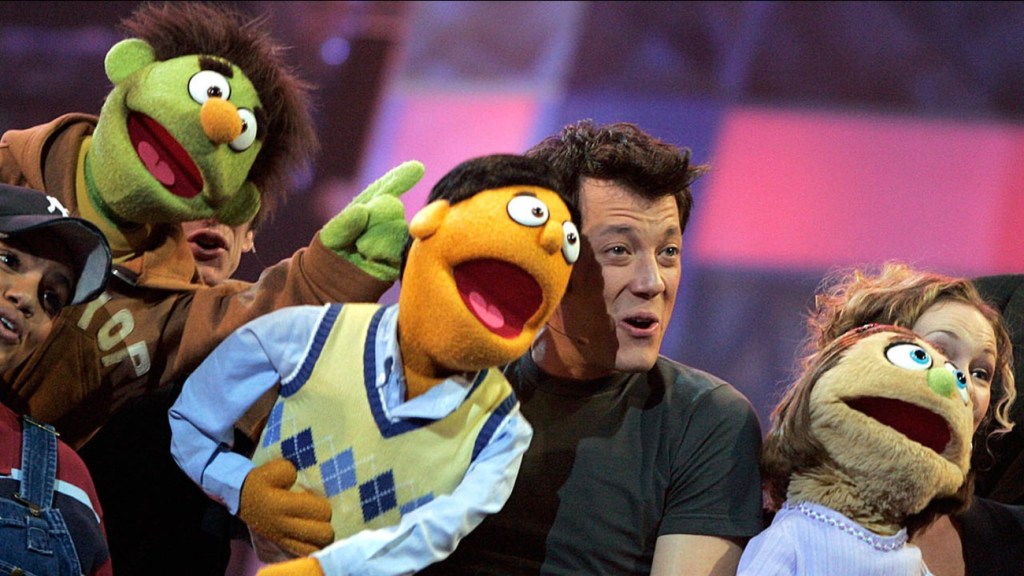
About ten years ago, I was sitting in the notoriously uncomfortable Noël Coward Theatre — wondering if the Marquis de Sade had designed the seats for people under 5’2” who hadn’t eaten in weeks — waiting to see one of my guilty pleasures: Avenue Q. It’s a kind of adult puppet show that has me in stitches every time.

But there’s one song that makes me squirm: “Everyone’s a Little Bit Racist.”

Princeton, the puppet, asks Kate Monster, “You’re a monster, right? So are you related to Tricky Monster, my neighbour?” Horrified, Kate calls him out — and Princeton points out some of her own biases. Then they burst into song:

“Everyone’s a little bit racist sometimes…”

At first, I was indignant. “Don’t put me in that category!” I thought, leaving the theatre. Yet Kate Monster’s reaction hit a nerve. You wouldn’t believe how many times I’ve been asked if I know a certain gay person — just because I’m gay.


The Gay Book

At a wedding in Guernsey, a woman I’d never met ran up to me and blurted out, “I hear you’re gay! David from EastEnders is gay — do you know him?”

I replied, “No, but I’ll look him up in the gay book.”

Her eyes widened. “There’s a book?”

I assured her there was (she didn’t get the irony) and off she went to tell her friends — who seemed to find me fascinating purely because of my sexuality.

Was it ignorance, racism, homophobia, or just misguided curiosity? Either way, I felt uncomfortable — half-expecting a wicker man to be erected in the town square.

Yes, many people — even with good intentions — can be unintentionally racist or discriminatory. This subject is close to my heart, which is why I’ve hesitated to speak out. Take my beautiful best friend of ten years, Dee. Her incredible personality and talent struck me first — not the colour of her skin.


“This Is My Gay Friend”

My eyes roll when I hear someone say, “This is my gay friend.”

My friends aren’t defined by race, sexuality, or religion. They’re defined by loyalty, kindness, and character. That’s what I see in another human being.


The N Word

Race only becomes relevant when a friend opens up about painful experiences — like when, as a child, her white friend’s mother told her she wasn’t allowed to play with her anymore because she was a n——. She ran home in tears. Her mother gently said, “Sometimes people in this world aren’t very nice.”

Even as she told me this story, I could see from her eyes — from her posture — that the wound still hurt.


Statues and Cancel Culture

How do we fix things so that no child ever feels this way? Peaceful protest is one way — but let’s steer clear of mob mentality. Keep perspective.

Churchill, Gandhi, and other historic figures were undeniably racist by today’s standards. But judging them solely by modern values brings little progress. Where do we draw the line?

If a statue needs to come down due to proven atrocities, let’s campaign — legally and collectively — for its removal. Not through vigilantism.

I’m also unsure we’re achieving anything by banning old TV shows. These are cultural artefacts — uncomfortable, yes, but historically significant.

When I heard Fawlty Towers’ “The Germans” had been banned, it felt like the final straw. Little Britain is apparently gone too.


Racism Off the Scale

If you want to see truly racist shows, look at the 1970s — Alf GarnettGeorge and Mildred, or Not on Your Nellie. In one episode, Hylda Baker asks a Black policeman for directions, then says, “You won’t know, you’re not from here either.”

Benny Hill was rife with misogyny, homophobia, and racism — yet celebrated in the US. Even the Carry On films were full of it. Bo’ Selecta! was criticised by Trisha Goddard, though Mel B and Craig David participated. And White Chicks, where two Black men disguise themselves as white women, is still one of my favourites.

Trying to erase the past is futile. By all means, campaign — but let’s make democratic decisions, not let the loudest voices dictate.


“All Lives Matter” — But You’re Missing the Point

Yes, all lives do matter — but that’s not the point. It’s not that Black lives matter more — it’s that they haven’t mattered enough. Imagine seeing images implying your ancestors’ lives were worthless. How would you feel?


Foundations of Prejudice

Let’s not pretend racism only comes from white people. It exists in every race. So let’s examine the root causes.

It starts with children. Schoolbooks shouldn’t include just one token non-white character. Representation should be equal and authentic. Let’s integrate, educate, and explore our complex past while teaching why things must change.


Redheads

Growing up in 1970s Scotland, there were no children of colour in my school. But I still stood out — red hair, Scottish accent. I was different. I was bullied.

Even today, redheads are mocked. I’ve explained that redheads often have more sensitive skin — and even educated people look puzzled.

Katie Hopkins once said, “There’s nothing worse than a ginger boy in younger years.” Hateful. Nasty.

Me at 63 but back in school being a red head got be bullied ,

Your Correspondent

We may not be born racist, but it’s a poisonous lesson many absorb early. My dad hated the Welsh. He’d tell stories about a man who stole his army uniform and say, “Never trust them.” Yet he adored Katherine Jenkins. His views were racist, misogynistic, and homophobic — but typical of his time.


Enoch Powell

At family gatherings, kindly grandmothers would say things like, “I don’t mind the coloureds, as long as they don’t move in next door — it brings down the property value.”

A friend’s mum once declared, “Enoch Powell had the right idea.”
His Rivers of Blood speech still echoes in some circles.

We must teach our children that judging or bullying others is never acceptable. We may come from different heritages, but we are one people.


Grace Jones and Harlem

My musical influences included Diana Ross, Nina Simone, and Ella Fitzgerald. Moving to London, I encountered other cultures — clubbing at places like The Embassy and Bangs Adams, dancing to Grace Jones and Sister Sledge. To me, dark skin was beautiful.

In New York, I was warned not to go to “Black neighbourhoods.” Why? “They’re dangerous.” That attitude is the problem. I went anyway.

Harlem in the ’70s was vibrant, full of life. But segregation — fuelled by fear — persists.


My early musical influences Diana Ross , Nina Simone , Sister Sledge

Hair

One good thing about the US: to become a licensed hairdresser, you must learn to style all hair types. Not so in the UK, where separate salons still exist for Black and white clients.

I’ve shown up to jobs where actresses looked horrified. One woman said, “No offence, honey, but no white boy’s touching my weave.”

She loved it in the end. The UK could learn a lot from America on this front.


Dee and Me

Dee and I are often mistaken for a couple. We’re not. But we’ve faced attitude — from both Black and white people — even in cosmopolitan London.

At a Caribbean funeral, I was twice asked to park cars. One man said, “Easy mistake. You all look the same.”

Harlem 1970

Conclusion

Racism is learned — and it’s everywhere. Real change won’t come from reactive outbursts. It starts with education. It starts with talking, not shouting.

Let’s stop teaching kids that some people are worth less. Let’s support organisations like Diversity Role Models, which go into schools and promote inclusivity.

Sometimes I wonder — if Earth were attacked by aliens, would we finally unite?
Looking at today’s governments, I doubt it. After all, they can’t even agree on how to fight a virus.


Contact Steven at: spman@btinternet.com

Categories
Columns Culture People Poetry

Dear Oscar 2Shades thinks you are the next big thing .

Oscar William Clarke one to look out for

Hi Oscar,
We at 2Shades think you are art. We love your openness about living with addiction, and we would love to know more.

Thank you so much—that’s a wonderful thing to say. And thank you for having me. It was lovely meeting you at the Routine exhibition recently.

I’m Oscar, an artist based in London. I make a lot of different things, but mostly graphic illustrations that revolve around fashion, comic books, or BDSM. I’m a recovering alcoholic and addict. I’ve been sober for a while now, and I’ve been working on both my creative career and rebuilding my life—I’m even back at university. I love bold colours, especially red (my absolute favourite), which features heavily in my work. But sometimes, just simple black-and-white linework can be really rewarding too. You’ll usually find me watching horror movies, rocking out to the Sugababes, drawing some femme fatale in a fabulous outfit—or playing video games, of course.

I’ve been drawing for as long as I can remember. It’s been a way for me to express so much—my sexuality, my adoration of femininity, my experience as a queer person, or just the thrill of an incredible superhero fight scene. Now I’ve had the chance to exhibit and work as an illustrator, which has been amazing. I’m only getting better, so I’m excited to see what the future holds.


What does it feel like to create, for you?

For me, creating is perfect concentration and calm. My head is usually full of thoughts—non-stop—except when I’m drawing or designing. That’s when everything quiets down. I get totally absorbed in the world of the piece, in the details of the colours—or I just disappear into the flow of (deafening) music and let the pen take me somewhere new.

I’ve grown a lot as an artist since getting sober. I had to figure out how to be creative again, because my addiction robbed me of that desire—and the ability. I worried it wouldn’t come back. Part of me thought art was lost to me, or at least the passion for it was.

Thankfully, it came back—but it feels different now. These days, I create with less intention and let my emotions and the pen guide me. Trusting my skills is a big part of that. I’m the best I’ve ever been, and there’s a sense of security in that, because it allows me to just let go. That freedom is why creativity is such a safe space for me.

When you’re an addict, so much of your life is micromanaged. I avoid certain places when I’m too tired or upset because the pull of alcohol or drugs can be dangerous when I’m not stable. I have to constantly protect myself in a world where addiction is everywhere. Being around alcohol and drugs is exhausting—so I make sure I recharge, or I crash.

Creation is free of all the mental admin I have to do every day around addiction. That’s why it’s such a solace. I get to be somewhere else, someone else—feeling, seeing, and doing something else. It’s incredibly freeing.


Can you remember the earliest thing you created artistically?

Absolutely. I’ve always loved comic books and still collect them—I’ve got hundreds in my room. They were my gateway into art. I used to print out images of my favourite characters at primary school and try to redraw them as best I could.

Around that time, I also became obsessed with the brides of Dracula—after seeing Van Helsing with Kate Beckinsale. Those brides were everything to a young gay boy from South London. Flowing sleeves that turned into wings? Iconic.

I also drew Storm, Elektra, Catwoman, and Raven from Teen Titans because I grew up watching all those shows, not even realising there were decades of comics about these amazing women I could be reading. I started copying comic pages and poses from books I bought or found online. Comic artists are incredibly underrated—the technical and artistic skill needed is mind-blowing.

Redrawing other artists’ work was how I learned. It’s a great skill to develop early on. Even now, I love watching artists create on YouTube. That’s how I pick up new techniques—watching how someone shades or sketches anatomy, then figuring out how I’d do it. I tell every new artist I meet: understand the process. See how other people use the medium. It’ll change your practice.


What correlation does addiction and art have for you?

Addiction seeps into parts of who I am and, by extension, my art. My obsessive focus on one subject or style until I burn out feels very much like addiction. My love of recurring colours or patterns feels repetitive—like addiction did.

But, honestly, addiction was the opposite of being an artist for me. Toward the end of my using, I just stopped creating. There was nothing left inside to work with—no soul to put into art. Addiction stole that from me. Even though it was my own doing, it still feels like a theft.

That whole “depressed addict artist” stereotype? It wasn’t me. There was no creating going on. I don’t know how people stay functional in addiction. I couldn’t. Everything outside of using and, occasionally, working just faded away.

That said, art can be just as self-indulgent as addiction—just without the destruction. And it can pay! Which is the opposite of addiction, where I only ever lost money. So in that way, it’s gratifying.


Do you have any stand-out influences in your creative journey?

Yes!
René Gruau is my favourite fashion illustrator. The first time I saw his work, I was blown away by his minimalism—but also by the drama and flair. His use of red (swoon) and sheer elegance… phenomenal.

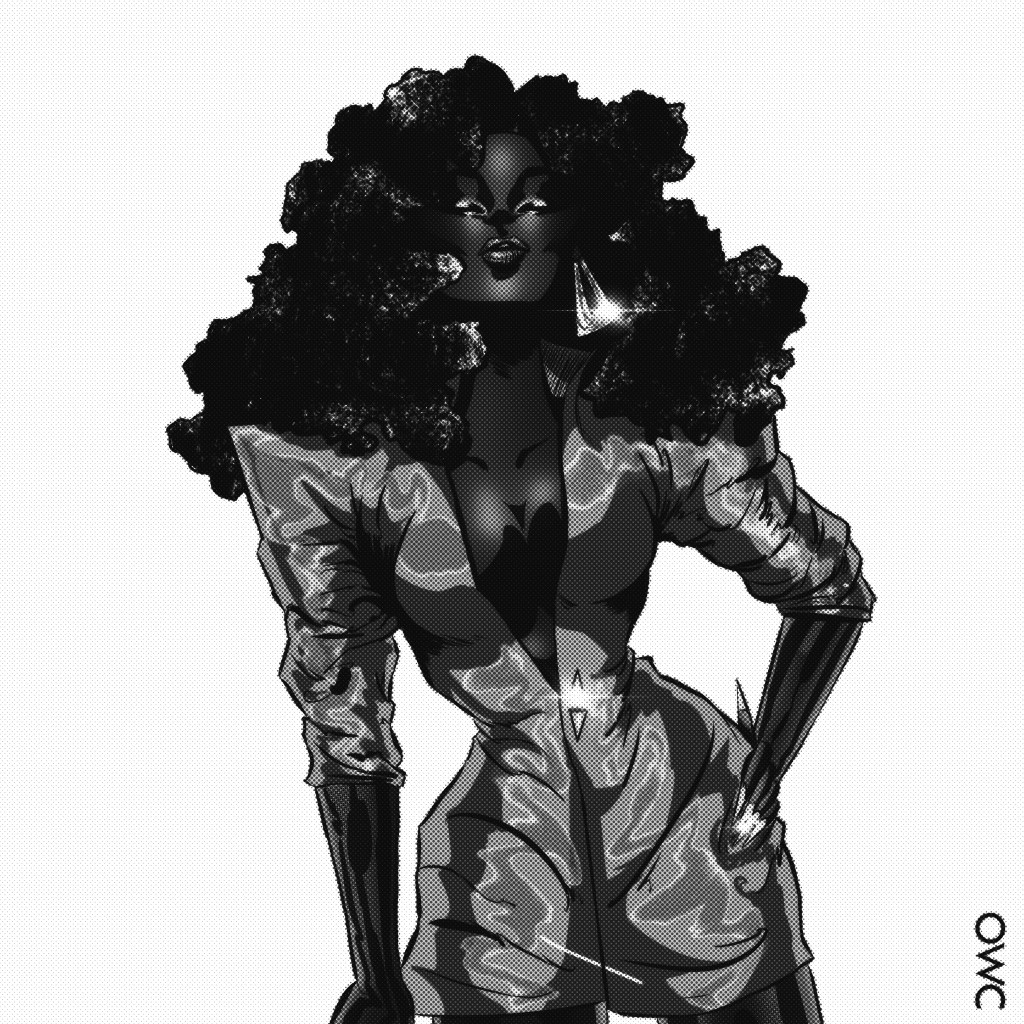
Simone Bianchi is a comic book artist I’ve loved for over a decade. He paints many of his pieces, which makes them feel unique—especially in comics. His grasp of anatomy and colour is chef’s kiss. He drew Storm better than anyone at Marvel. Big hair, boots, cape—flawless.

Tim Sale is another one. Famous for Batman: The Long Halloween and one of my favourites, Catwoman: When in Rome. His work feels like a fashion illustrator started doing comics. Perfect intersection of the things I love. He passed recently, which devastated me. The industry lost a legend.

Music is also a huge influence. I have a very visual connection to it—like a movie trailer in my head. I never draw without music. It’s the emotional gateway to my creative brain. I often play the same song on repeat for hours when I’m trying to stay in a feeling.

Nowadays, my inspiration is more internal. I rarely use references unless I’m doing commissioned work. But I still like life drawing sometimes—to keep my skills sharp.


How did you control the battle with addiction?

I wouldn’t call it “control,” because there’s not much you can control. For me, it all comes down to one non-negotiable truth: Sobriety or death. If I use again, I know I’ll die. That’s not melodramatic—it’s just the reality. So there is no choice. I’ve worked too hard to rebuild my life and relationships. I’m not throwing that away.

I take my peace seriously. Work is work, but my life means more. If I don’t want to go out, I don’t. If I need a day to myself, I take it. I fought for my happiness. I’m not sacrificing it for anyone.

AA helped me massively—especially early on. Those people saved my life. But as it’s anonymous and not about promotion, I’ll leave it at that.


Do you remember your darkest moment dealing with addiction?

Yes. Any time I tried to end my life. It happened a few times during my addiction. Thankfully, I wasn’t successful—but I remember that feeling of walking around not wanting to be here. I truly believed the world would be better off without me.

That feeling consumed me for years. The only relief came through explosive, manic episodes that never ended well. I felt hollow, like I had nothing left to offer.

These days, I still have hard moments—days or even weeks of depression—but now I know it’s not forever. That helps. Therapy helps too. Lots of it.


What’s next in your journey?

I just graduated with a first in Graphic Design! So right now, I’m job hunting and creating more art. I’ve been lucky to exhibit a few times and would love to do more of that. I’ve also got some creative projects in the works I can’t talk about yet—but I want to do everything. I didn’t think I’d live past 21, so the fact that I have time now? That feels powerful.

I’d love to put my work on clothing. That would be amazing. But for now, it’s more art, more exhibitions—and staying open to new projects. Commission work has always surprised me in the best ways.


Do you feel people are quick to judge you?

Probably. But it doesn’t bother me.

I’m gay. I live in a world where my community is still criminalised in many countries. Judgment comes with the territory. I have a small circle of people whose opinions matter. Everyone else? Irrelevant.

I love heels, claws, and makeup sometimes. Any queer person will tell you: being visibly queer means being hyper-aware of how you’re perceived. But I’m not hiding any part of myself to appease someone else’s discomfort. That’s a terrible deal.

I’m also quite introverted now. I enjoy my own company. And if someone doesn’t like me? Not my problem. I’m not for everyone—and I don’t want to be. That sounds exhausting.

I’m not unkind. I’ll apologise if I’m wrong. I work hard in therapy so my issues don’t hurt my people. But I also stand by myself. If I’m not sorry, I don’t say it. There’s great power in saying, “I’m not sorry.”

And hey—I draw men being sexually tied up. I expect judgment. But art is made to be disliked as much as it is to be loved. If someone hates my work, great. That’s their job as the audience: to respond. Love or hate—it means it made them feel something. That’s all that matters.


Quick Fire
Sushi or Chinese – Neither
Kiss or Slap – Both
Bowie or Madonna – Madonna
Favourite Place in London – My house
First thing you’d change as mayor for a day – Free dental / Legal protections for trans people that can’t be undone by a moron

https://aa-london.com

Categories
Columns Lifestyle People Uncategorized

Steven’s Viewz

Yes — Steven’s Viewz is back, and this month’s edition is bursting with variety, insight, and just the right dose of controversy! As always, Steven brings his unique voice and unfiltered perspective to the table, tackling topics that range from the deeply thought-provoking to the wonderfully unexpected.

This issue explores everything from equality in marriage — reminding us how far we’ve come and how far we still have to go — to the growing interest in magic mushrooms and their potential benefits in mental health treatment. It’s bold, it’s current, and it’s never afraid to ask the uncomfortable questions.

Farage and the Marriage Debate

Laure Ferrari with Nigel charming lady .

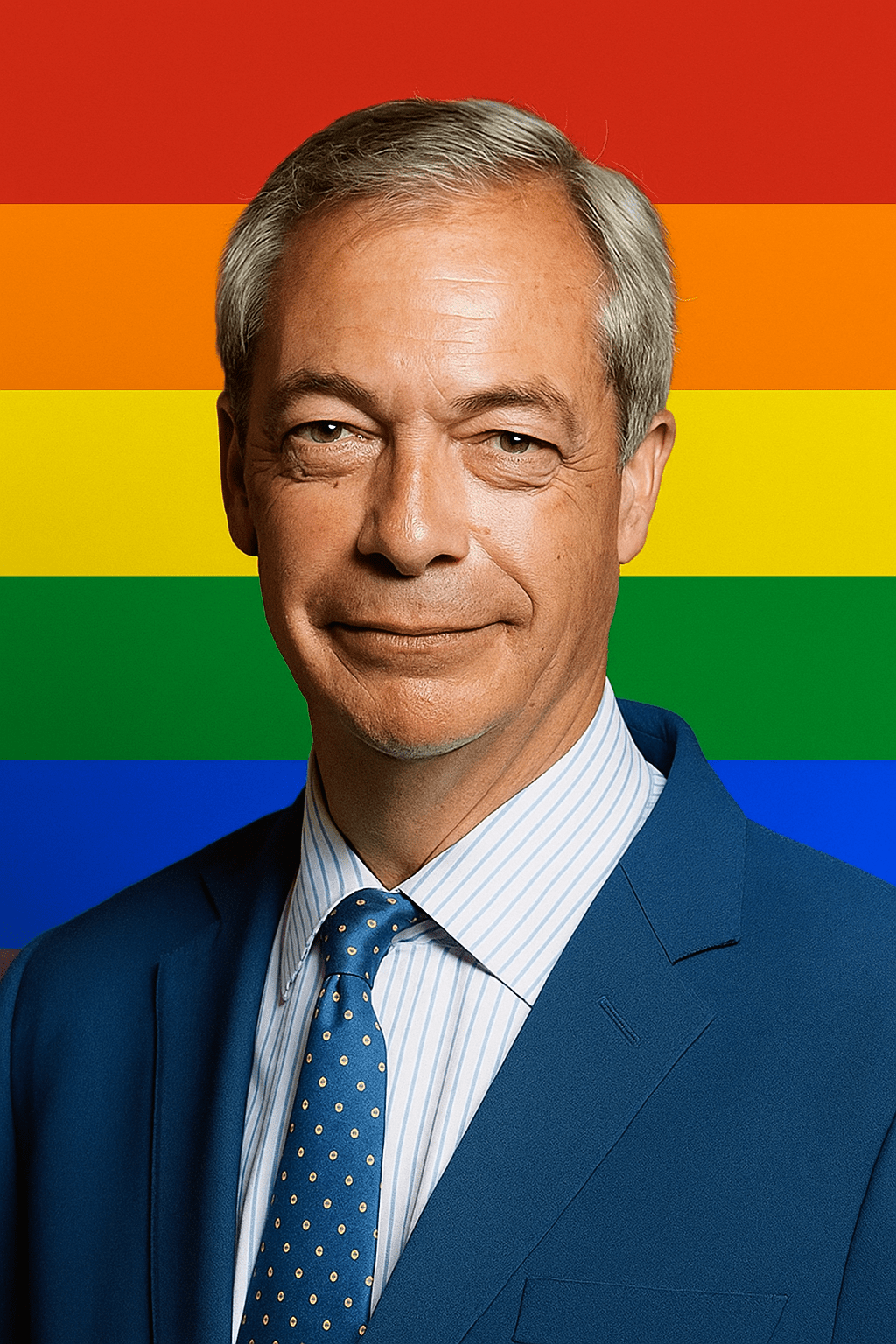
If you’re wondering whether the Reform Party under Nigel Farage might take a stance against the LGBTQ+ community, you may not have to look very far. A closer glance at Farage’s voting record reveals that he once voted against same-sex marriage—a move that speaks volumes about his social and political outlook.

This position seems somewhat ironic, given Farage’s own colourful marital history. Having been through two failed marriages himself, one might imagine he’d be a little more open-minded—or at the very least, more humble—when it comes to other people’s right to marry. Love, after all, comes in many forms, and marriage is a deeply personal choice that should be available to all consenting adults, regardless of gender or sexual orientation.

I had the chance to meet Farage briefly once, and I’ll say this: his current partner, Laure Ferrari, is a charming and intelligent woman. But perhaps Farage would be better served reflecting on his own relationship history before trying to legislate who can and cannot get married. A man who has struggled to sustain long-term commitments might want to tread lightly before denying others the right to even try.

If Farage is basing his stance on traditional or biblical values—as he often implies—then perhaps he should revisit those same values in the mirror. The Bible, after all, says a great deal about humility, compassion, and loving thy neighbour—principles that seem to get conveniently overlooked in his rhetoric. Selective morality has never made for good leadership, and voters are waking up to that.

Farage often touts his children as a source of pride, and no doubt he is a dedicated father. One of his children is an outspoken supporter of Donald Trump, which tells you a great deal about the household dynamic and political leanings. That said, it’s good to hear that despite having had testicular cancer, he’s clearly not firing blanks.

Isabelle Farage did an internship in Washington DC

While loyalty to family is admirable, it doesn’t excuse positions that marginalise entire communities or strip people of their rights in the name of so-called tradition. It’s worth asking: what kind of future does the Reform Party really envision? A society where love is judged and legislated? Where equality is rationed out depending on who fits into a narrow, outdated mould? The UK has made great strides in LGBTQ+ rights, and going backwards is not what people want—or need.

In the end, Farage’s views on marriage may say more about him than they do about society at large. Rather than acting as the moral gatekeeper, perhaps it’s time he looked inward and asked himself why love between two people—regardless of gender—should ever be up for debate.

Love is love. And no politician, no matter how many headlines they chase, should have the power to decide otherwise.

https://www.testicularcanceruk.com

Erin Patterson mushroom murderer .

I think it’s safe to say that no one will be rushing to give Erin Patterson — the so-called “mushroom murderer” — a job in the prison kitchen anytime soon. The tragic case has cast a long shadow over what has always seemed like a fairly harmless food.

Come to think of it, all my wonderful vegan friends who create amazing mushroom-based dishes might find me double-checking what varieties they’re actually using from now on! Mushrooms truly are one of nature’s wonders — packed with nutrients, flavour, and even potential healing properties. In fact, magic mushrooms (when used in microdosing) are showing promising results in mental health treatments, including anxiety, PTSD, and depression.

However, not all mushrooms are safe. Some look similar to edible varieties but are highly toxic, even deadly. It’s always best to source mushrooms from trusted suppliers or foragers who are fully trained in identification.

Death Cap mushrooms .

Here are a few of the most dangerous mushrooms to avoid:

  • Death Cap (Amanita phalloides)
  • Destroying Angel (Amanita virosa)
  • Funeral Bell (Galerina marginata)
  • Deadly Webcap (Cortinarius rubellus)
  • Panther Cap (Amanita pantherina)
  • False Morel (Gyromitra esculenta)

Mushrooms can nourish or kill — respect is key.

Driving me mad

Let’s make one thing clear: this is not a rant about women drivers. That said, there’s one male driver left such an impression that part of my heart still feels stranded in the Cotswolds — I’ve no idea how I survived that journey.

Now, one friend, bless her, assured me she had an advanced driving licence. This was just as we found ourselves parked in the central reservation, waiting for the next juggernaut to thunder past or into us I was gasping for air. “If I take the wrong one, it can be miles before I can turn back,” she said calmly — completely puzzled by my look of terror.

With the number of high-profile motorway deaths recently, I think I’m fully justified in being a back-seat driver. One friend drove with a small dog on her lap, a slurpy drink in one hand, and then decided it was the perfect time to apply lipstick. She seemed genuinely shocked when I wanted to get out of the car.

Taking a call while holding the phone in one hand should absolutely be illegal — and yet, some of my lady friends seem to do it as if it’s second nature. Zero awareness. Zero empathy.

One particularly playful argument — when I declined a Greggs coffee in favour of a Starbucks ” How can you afford that your broke ” — nearly ended in disaster, as the car narrowly missed a truck. When I instinctively threw my hands up onto the dashboard, I got snapped at: “That’s their fault — and if you keep doing that, you can get out!”

Apparently I’m the difficult one. But when we finally reached one friend’s house, her daughter-in-law took one look at me and said, “How did you survive that? It’s a suicide mission waiting to happen.”

Another friend got a ticket (thankfully not while I was in the car).

With drones now being used to catch drivers holding phones, drinks, or simply not holding the wheel — well, I say: bring it on!

Happily Ever After

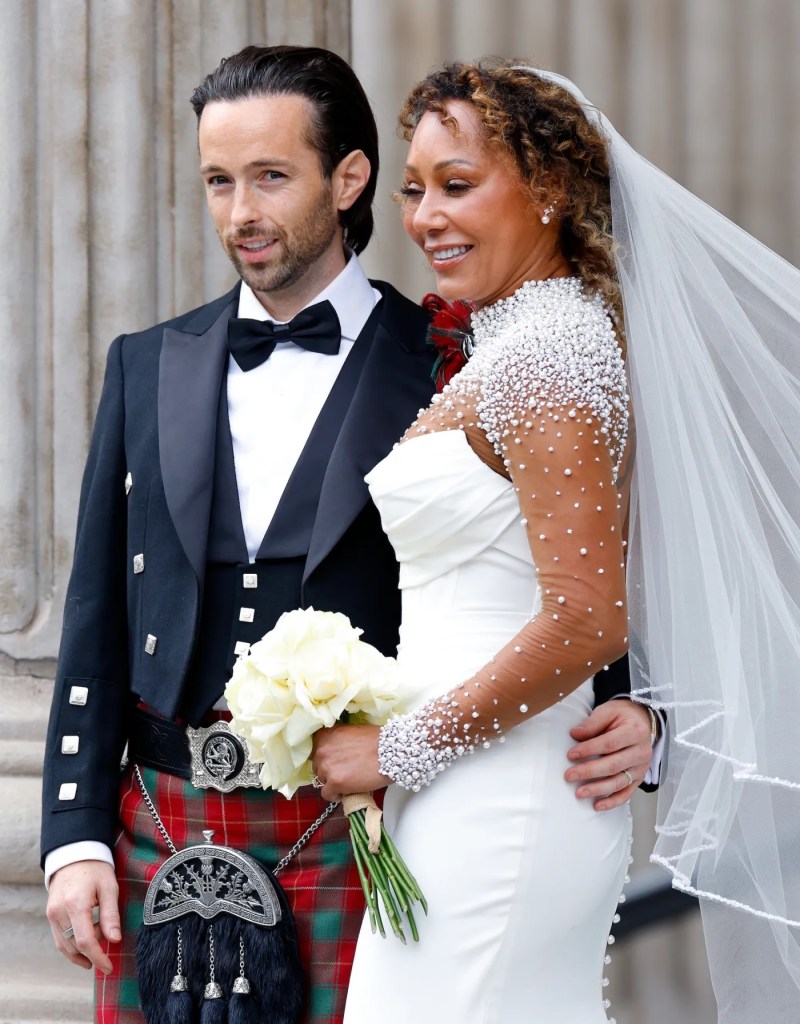
The gorgeous couple Mel B and Rory McPhee

It’s lovely to finally see some heartwarming news in the papers for a change! Scary Spice herself — the fabulous Mel B — has officially tied the knot with her long-time partner, Rory McPhee. He’s a professional hairdresser, and from the photos, they both looked absolutely gorgeous on their big day. There was an effortless glamour about them, and Mel B radiated happiness.

After everything Mel has been through in her personal life, it’s refreshing to see her smiling, looking confident, and surrounded by love. The wedding seemed like something straight out of a modern-day fairytale — intimate, stylish, and full of joy. I really hope that, just like in the stories, this marks the beginning of a “happily ever after” for the couple.

It’s easy to forget that celebrities are real people, with real hopes, heartbreaks, and dreams. Mel has always been a bold, outspoken figure, and her resilience over the years is truly inspiring. Seeing her find love again is a reminder that there’s always hope — no matter what life throws at us.

Here’s to new beginnings, lasting happiness, and a bit of Spice Girls sparkle. Congratulations, Mel and Rory — wishing you a lifetime of love and laugher .

END

E-mail Steven at spman @btinternet.com

Categories
Columns Culture Health and Fitness People

Lewis Capaldi “There are tears for a star of The People”

Steven Smith sheds a tear at Glastonbury .

Lewis Capaldi at Glastonbury


Lewis Capaldi at Glastonbury

It’s hard to believe it’s a beautiful sunny day. I’m standing in a field surrounded by almost ten thousand people, with one of my best friends beside me It should be a moment of sheer joy. And yet, I’m crying.

Why? Because Lewis Capaldi is performing.

More than just singing, he is baring his soul. And somehow, it feels as though he’s opening it just for me. There’s a rawness in his voice and vulnerability in his presence that goes beyond a typical performance. As a man, I felt an instant, emotional connection to his struggle, his humour, and his humanity.

Capaldi’s return to the stage feels like one of the landmark performances of this century. Not simply because “he’s back,” as he says but because he has redefined what it means to be a male performer in the modern age. There was a time when baring your soul in music was reserved for iconic women—Judy Garland, Liza Minnelli, Nina Simone—divas who transformed pain into power and emotion into art. But Capaldi proves that a man can do the same. His voice isn’t just strong; it’s expressive, vulnerable, and unashamedly real.

There’s a reason we relate to artists like these so deeply: they tell our stories. And when we see them, we feel seen. Capaldi doesn’t posture or hide behind image or ego. He stumbles, jokes, apologises, laughs at himself—and keeps going. In a world often obsessed with perfection, his imperfections are his greatest strength.

Capaldi may not see himself this way, but he is one of the great performers of our time. Not only because of his incredible voice, but because of his natural wit, honesty, and charm. Who could forget his now-famous moment on The Graham Norton Show, when he hilariously recounted watching Fifty Shades of Grey star Jamie Dornan wield a whip, joking that he was holding one part of his anatomy while Dornan had the other? It’s outrageous, but entirely Capaldi—bold, cheeky, and completely unfiltered.

But behind the banter lies something even more powerful. His recent public struggles with mental health and Tourette’s have made him not just relatable but important. His openness has created space for men to talk about vulnerability without shame. Watching him on stage—pausing mid-song, taking deep breaths, letting the audience carry him when needed—is nothing short of brave.

I’ve attended many performances in my life, from pop concerts to opera at the Royal Opera House, where I once saw a devastatingly beautiful Tosca. I cried But nothing prepared me for the emotional impact of Capaldi live—it was so unexpected. He may not wear a tuxedo or stand beneath a chandelier, but make no mistake—this was high art. And perhaps more importantly, it was deeply human.
There’s a rare intimacy between Capaldi and his audience. At times, the concert felt more like a conversation than a show. People sang not just with him, but for him, filling in lyrics when his voice cracked or faltered. It wasn’t just support—it was love. Genuine, messy, joyous love.

In a world full of polished pop stars, here is someone who dares to be completely himself. He reminds us that music isn’t always about escapism; sometimes, it’s about facing pain head-on and finding beauty in the cracks. His songs speak to heartbreak, loneliness, and the strange, funny bits of life that connect us all.

So yes, on this perfect sunny day, in the middle of a field with thousands of others and one of my dearest friends, I cried. Not because I was sad, but because I felt something real—raw, universal, and unforgettable.

Lewis Capaldi, whether he realises it or not, has become a star of the people. And as tears rolled down my face, I felt honoured to witness it.

Categories
Columns Lifestyle People Uncategorized

” I just love gay men “

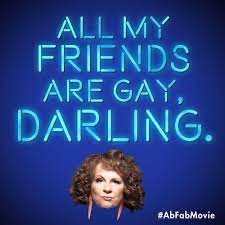
“Fag Hag” – `’ ALL My Friends are Gay !!”

By Steven Smith

‘Fag hag’ or beard is a gay slang phrase referring to women who associate generally or exclusively with gay or bisexual men. But you knew that already, didn’t you?

Now, I hate labels of any kind, but when a woman tells me, “I love the gays,” my toes curl. Even my nephew, at thirteen, was smart enough not to fall for that one. “They’re just like everyone else—good and bad,” he shrewdly pointed out. It’s funny in Ab Fab when Edina blurts out, “All my friends are gay.” Oh, the irony.

However, women who proudly label themselves as fag hags often raise serious red flags. I’ve heard it too many times: “Other women just don’t get me, but you and the gay guys do.” This is usually followed by something about liking bad boys in bed. That’s nice for them. Me? I want to be liked for who I am—not for my sexuality or a label.

On my first visit to a gay club—New York’s Limelight—I noticed lots of model-type women dancing. My friend said, “They feel safe here. They can dance and not get hit on.” It wasn’t long before straight men caught onto this and started frequenting the more glamorous gay venues. One night, I was with a group of guys when a stunning girl approached and said, “So sad you’re all gay. I’d f*** the lot of you!”

A little voice piped up, “I’m straight.” It was my pal who, though he leads the way in gay fashion, is 100% straight. Many men have tried their luck with him—the lady and him were in a taxi home minutes later.

Elizabeth Taylor. Wowza.


She loved the company of gay men—from Rock Hudson to Tab Hunter and Montgomery Clift—calling them her confidants. Tallulah Bankhead, when she wasn’t famously trying to sleep with gay men, preferred their company too. Even Mary Queen of Scots liked to quote the pretty men.

As for me—I just like people. It just so happens many of my closest friends are women: glamorous, powerful, and fabulous. But none of them would call themselves fag hags. With them, I’m still the old-fashioned gent: opening doors, walking roadside on the pavement, even pulling out chairs. Though some of these women try to lead while dancing—and pull out my chair instead.

Despite having my picture taken for a dating site, I’m no further along in love. One of my rocks, Liz Branson, is on the phone from her New York office. She splits her time between there, Dubai, and London.

“Have you done it?” she asks. Trying to change the subject, I ask when she’s next in London. There’s a pause.

“You haven’t,” she snaps, irritated. Then she barks: “Jo Allen’s. Tuesday. 9:30.” She doesn’t wait to see if I’m free—and hangs up. Ten minutes later, she texts: “If you are free, can you book it?”

Liz is great fun—always right, obsessively so at times. That’s part of what makes her successful, alluring, and fascinating. She’s also always late, often with some story. The truth? It takes her half an hour to oil her body so it glistens. That’s just part of her prep to go out. Despite her brass balls in business and her ability to crush high-powered men, she still likes to be every inch the high-maintenance woman.

She’s my Grace—as in Will & Grace. But it’s a myth that all women “get” gay men just because they hang out with us. Even women who say, “I’m a gay man trapped in a woman’s body,” can be shockingly naive.

The brilliant Will and Grace

A long-time friend recently remarked, after a theatre visit, that I’d loved the show because it had five scantily dressed young men. As pretty as they were, they left me sexually cold. She must’ve missed the memo—none of my boyfriends have been under 40.

My best gay mate knows that the cast of Peaky Blinders or Colin Farrell gets my pulse racing. Teen boys? They’re like watching Dita Von Teese dance—entertaining, but that’s all. This same friend once asked, “Why would you want to give head rather than take?” Well…

Peaky Blinders Top Men

Liz, for the record, didn’t really know any gay men before me—aside from one man who lived with her as straight and came out later. I think she assumed we all came from the same mould. She even rushed into another relationship with a gay man who promptly took her to gay bars and more.

Personally, I think friendships should be mutual. I’m fine in straight bars, and when I do visit gay bars, it’s usually for dinner or an event. Once, Liz called whispering: “I’m on Clapham Common.” Thinking there was a concert, I asked what was on. “No,” she replied, “I’m cruising with— Have you done this?” I nearly screamed. That was a step too far. That relationship ended when the guy tried to seduce Liz’s then-husband.

It wasn’t the first time I heard of women going cruising with gay men. My former boss was in a Freedom cab once when the driver said he was dropping condoms off at Hampstead Heath. She piped up, “Oh, I’ve been there!” Her gay friends had taken her. This phenomenon passed me by. I don’t cruise—it’s scary. And as broad-minded as I am, why would you take a woman?

Anyway—Liz is late again. She’s texted multiple times, blaming an Uber driver, a lion escaping from Regent’s Park Zoo, and a fire at a local orphanage. But when she finally arrives, she looks spectacular, and the whole restaurant turns to stare. Liz waves, hair glossy, eyes sparkling.

She’s now vegan—though she was already a nightmare in restaurants. After sending an omelette back four times once, I took a photo of the “perfect” omelette and handed it to the waiter the next day. She wasn’t amused—but it was funny.

Back to the evening. Only one waiter and one chef resigned since she placed her order—kidding. I suggest popping to Tesco for the soya sauce she insists on. That goes down like a lead balloon, as usual. She has everyone fussing over her.

There’s the usual gossip: a gorgeous executive she went skinny dipping with in Dubai (amazing in bed—15 years younger—is that too much?). Then, yet again, she brings up Darryl, the best sex of her life, who turned out to be a complete asshole. I’ve heard about him 90 times.

The good thing about Liz—she’s no energy vampire. She wants to know about you. Unfortunately, she’s fixated on my love life. She thinks my best pal and I should be together. “Why aren’t you with someone?” she asks.

People often miss this: gay men can have purely platonic friendships with other gay men. Of course, I love my best mate—but I have no plans to marry him. I joke, “Fine. I’ll propose next week.” Liz screams and wants champagne—until I admit I’m joking. Her face falls (as much as it can, post-Botox).

We laugh, drink, and just when I think we’re winding down, Liz insists we head to Old Compton Street. “Why?” I ask. She loves G-A-Y, apparently. But my gut tells me she’s obsessing about finding me a fella. I suggest Radio Bar instead. Blank look.

There’s no queue at G-A-Y. Inside, Liz grabs a drink and immediately turns into Cilla Black, introducing me to random men. “Who do you like?” she shouts. I feel like a rabbit in the headlights. “I’ll be discreet,” she yells. “I’m all good, thanks,” I say, hugging her.

She dances with drag queens and shouts, “I’m a gay icon!” Naturally, they all agree. She’s no Madonna or Judy, but for one night—she was. It was actually quite sweet.

Flushed with her success, we head to Rupert Street to meet a friend. Her one-woman show goes down well there too. I brief her beforehand not to mention dating him. She thinks he’s too young, so I’m safe.

Then Liz starts chatting to the handsome doorman—who’s straight and married. He calls me over: “Why don’t you take your girlfriend somewhere she can meet a man?” I grin. “She wanted to come here—not me.”

Who says she couldn’t meet a man there? My sister had a holiday romance with a gay club manager in Key West. Another female friend married a bartender from a gay bar.

So, Liz and I are still happily single—but watch this space for more

Categories
Columns People Travel

Steven’s Viewz looks at Holidays


HOLIDAYS

Me on holiday in the Grand Cayman Islands

Steven Smith explores the emotional impact of going on holiday—how it can make or break friendships, test your sanity, and turn dream escapes into nightmare getaways. PLUS: His top tips for surviving travel with friends.


According to a Daily Telegraph survey conducted by Lloyds of London, eight out of ten people suffer from pre-holiday stress. In fact, numerous studies suggest that after divorce, house moves, and bereavement, going on holiday ranks as one of life’s most stressful events.

The Passion for Travel

Like many in the LGBTQ+ community, I’m fortunate to have the means and opportunity to travel widely—something linked to higher disposable income among our demographic. For me, travel is a passion. I’ve trekked Machu Picchu in Peru, cruised the Nile, dived beneath waterfalls, and flown over volcanoes by helicopter in Maui. I cherish those moments.
Travelling with my partner of 18 years was always a joy. Sure, we had the odd delay or hiccup, but I adore airports and took most things in stride.

Add college friends into the mix, however, and you’ve got a different story. Assuming your friends have the same holiday agenda—or are as organised as you—can be a huge mistake.


Underpants Around His Ankles

It was Christmas morning in Gran Canaria. In the living room of my one-bedroom apartment, a large bearded bear of a man lay passed out on the floor. No, it wasn’t Santa. He had his trousers and underpants around his ankles—but had forgotten to remove his shoes. Behind him stood a naked, naughty elf. It was my friend, Brian Murphy, and I was ready to kill him.

My other friend, Blake Matthews, was in the villa next door and had been banging the headboard all night with a man who claimed to be a straight male escort from Croydon. Right.

Not quite the festive morning I had imagined. Despite our prior agreement not to bring random men home—so we could enjoy a calm Christmas breakfast together—it had quickly descended into chaos.

I packed my rucksack, stepped over the bear, and went off to enjoy a solo breakfast on the seafront.

What had I been thinking?

Gran Canaria wasn’t even my idea. A travel company, pleased with a few articles I’d written, gifted me a flight and villa for Christmas. It was more of a studio apartment, really. They kindly offered a discounted flight for a guest, and before long, five people wanted in. Suddenly, I was playing travel agent, and everyone started bitching about each other. Stress had already set in before we’d even packed our bags.

Two days before departure, I sent out a group text with flight times, terminal info, and villa directions. I added that I’d be checking in solo and would see them either at the gate or on the flight.

Blake replied: “CONTROL FREAK. RELAX. I’LL BE THERE.”

Another couple pulled out, saying Blake had offended them. I didn’t have the energy to argue.

At Gatwick, I stood alone at the gate. Just as boarding began, Brian appeared, full of excuses. No sign of Blake—until mid-air, when I felt a strange sense of relief. Blake had spent the last few days moaning about Brian, only to suddenly announce: “Oh, I love Brian,” as he puffed a menthol cigarette. A week later, the arrangement of Brian and me sharing an apartment—with Blake next door—became another source of friction.


Welcome to Hell

Arriving in Gran Canaria, my jaw dropped. “Ye Olde Queen Vic” pub signs flashed before me. The apartment was basic but expected. That didn’t stop Brian from moaning. He couldn’t wait to hit the notorious Yumbo Centre in search of his first conquest. The only upside? It was a five-minute walk, saving us taxi fares.

Determined to make the best of it, we set out. En route, we saw a fight—and a man get stabbed. Charming.


The Yumbo Centre—a giant shopping mall by day, gay Mecca by night—was surreal. You’d hope to be inspired by loving couples.

“We’ve been together for 29 years and we’re totally faithful,” said a pair from Blackpool.

“Gosh, I hope I can say that one day,” I replied. “Although… why is your hand on my bottom?”

“Oh, we share people.” So much for romance.

The drinks were cheap, the sun was shining, and I told myself everything would be fine—if I made it back to the apartment alive.


Act Two, Scene One

Blake finally arrived, fresh from flying British Airways business class—and made sure everyone knew it. Still drunk, he boasted: “Darling, I had gear with me and did a line with the steward in the galley.” Pure fiction, but the crowd laughed.

Blake, who had travelled with me many times, was always a walking contradiction. With his Freddie Mercury moustache, even a blind dog could tell he was gay. Yet he’d hide his Spartacus Guide under a Jackie Collins novel and insist on getting out of cabs a few streets away from gay bars.

Now he and Brian were lounging like extras from Dynasty, wrapped in white towels and robes, trashing the accommodation. “Steven, we’re not complaining but… what were you thinking?” said Blake, dramatically.

I found them a new place—one that suited their tastes. They weren’t thrilled. Now half-naked and on their fourth glass of bubbly, Blake puffed on another menthol and quipped, “I’m sure I’ll grow fond of the pet cockroach in my room.”

Then he hugged me. “Darling, we want to be with you. That’s why we came.”

Thankfully, my ex and his partner arrived, bringing some much-needed sanity. I hired a car and explored Gran Canaria properly. The island is beautiful—surprisingly so. Even the Yumbo grew on me. As long as I left before Alexis and Krystal stirred from their beauty sleep, I could enjoy peaceful days and return for cocktails and Blake’s nightly one-man show.

Did I mention I met my dream guy there, too?


The Police Officer’s Boyfriend

He wasn’t single—his partner was head of LGBTQ+ liaison for the police. “We share,” he said. “Are you up for it?”

“You’re kidding! If he were mine, no one would be touching him but me.”

I may have added, “Shame on you. You’re supposed to set an example.”

No judgment—so long as it’s consensual and no one is exploited—it’s just not my bag.

We saw each other a few times back home. But what goes around comes around. He stayed with his partner.

Was it bad friend choices? Or just me, dreaming of a jolly gay Christmas and failing to plan the logistics?


Holiday Rules and Snorers

There are so many stories. Like the time I woke to a stranger in bed with me and my best friend. Or when someone “forgot” their stage name didn’t match their passport.

Then there’s Adam.

Ours was a mature friendship. We talked things through. A year in, he asked, “Fancy a holiday?”

Alarm bells. Holidays can make or break a friendship. But I liked Adam, and when he suggested a cruise down the Nile from Luxor, I was sold.

Adam warned me he snored—and wow, did he. I recorded it (he wasn’t thrilled), but it prompted him to finally address the issue. Snoring can ruin holidays; one of my friends recently had to sleep by the pool just to escape her partner’s decibels.


Egypt. Wow.

The Nile cruise was magical. A shaky start (our airport transfer never arrived), but even dashing through dark backstreets in a cab to find our boat, we laughed all the way.

Sitting in the Winter Palace Hotel in Luxor—home of Agatha Christie’s Death on the Nile—Adam asked, “Shall we go see the sights?”

“Let’s just do Glamour’s Five-Star Hotel of the Nile for now,” I said.

We howled.

We discussed finances before the trip—essential. “It all comes out in the wash” was our motto. Sometimes one of us was more flush, and we’d cover each other. No awkwardness.

We all know the tightwad friend: the one who orders a starter and tap water, then helps themselves to the shared wine. But when it’s their round? Crickets.


Salmonella and Sensibility

Adam and I had many great adventures. He was the perfect pseudo-boyfriend. But eventually, someone else would come along. In Sitges, that’s exactly what happened.

We never planned for it—mistake. Sitting alone at dinner while he held hands with someone else wasn’t fun. We should’ve talked it through, as we usually did. Thankfully, it didn’t harm our friendship.

I can be a walking holiday disaster. Mosquitoes treat me like a buffet. I’ve caught Hepatitis B in India and salmonella in the Dominican Republic. But it never puts me off.

Because travel is freedom. And when shared with the right friend, it’s unforgettable. No matter how grown-up we are, caring for one another never goes out of fashion.


Have a great holiday season.


My Top 6 Tips for Travelling With a Friend:

  1. Talk first. Discuss your expectations for the trip.
  2. Be honest. Are you going for fun—or just to split costs?
  3. Acknowledge your quirks. Any snoring, early riser habits, etc.
  4. Talk about money. Set clear agreements in advance.
  5. Respect personal space. Holidaying together doesn’t mean joined at the hip.
  6. Look after each other. The best travel souvenir is a stronger friendship.
Categories
Columns Culture Lifestyle People

The Passive Aggressive’s

By Steven Smith Stevens Viewz

Ah… the Passive Aggressives. We’ve all met them. They open their mouths and what comes out sounds like a compliment—but it’s actually a veiled put-down. Before you can respond, they’ve already moved on to a new subject. Like silent assassins, they strike, then dare you to recover from the blow.

If you say, “Hey, would you like that said to you?”, they recoil in horror and reply, “Why are you so sensitive, darling? It was a compliment,” shaking their heads like they’re the victim of #PassiveAggression.

From:
“I do admire how you keep going when others would have thrown in the towel ages ago—so brave,”
to:
“You know that outfit suits you—don’t let others put you off, whatever they say.”

Favourite?

My personal favourite came from a friend who’d actually introduced me to my now-best male pal. She told me:
“So glad it’s going well with you two… you shouldn’t care what others are saying about you both.”

Let’s not forget the classic:
“You can’t tell anyone I told you this, but so-and-so said XYZ about you.”
My reply? Always: “Why were they so comfortable telling you?”

Now, much passive aggression comes from strangers, but the deepest cuts usually come from people we love, see regularly—or worse—family members.

Madeleine, a dear friend of mine, simply can’t help herself.

We All Know a Few Wicked Queens

The trouble is, I love her, and I tend to overlook her barbed remarks. Picture this: dinner with a group of friends as she regales the table with a story—
“Oh darling, we were sitting up in premium class while Steven was way back in economy, squashed between two people.”

Everyone chuckles and looks at me sympathetically. In reality, she was also in economy. A bit further from me, yes—but the same class. Why make me the fall guy in her tale?

I don’t correct her. Honestly, I’m speechless. And who wants to play #PassiveAggressiveTennis? I know she loves me—really.

Spelling Lessons

Another agent friend, Antonia, has a wicked sense of humour, and her loyalty redeems a lot. I was so looking forward to lunch with her. She’d just returned from New York, promoting her girlfriend’s record, and we planned to pop into a gallery event where one of her friends was exhibiting.

But it didn’t take long for the first blow:
“Darling Donna [her girlfriend] and I were just saying—you forget what a great writer you are—pause—as you’re just such an appalling speller.”
Then, after another pause:
“Does someone help you?” she asked, casually munching a root vegetable like we were discussing the weather.

It’s true—I’m dyslexic. Spelling is not my strong suit. But after over 20 years writing for publications around the world, and two published books, I’ve earned my place. If it weren’t for journalist and presenter Jane Moore encouraging me—
“You have the voice. The rest will come—just do it.”

With technology, hard work, and mentors like Jane, I carved out a writing career. These days, people actually rate my work—and that means a lot. So I just smile and explain that yes, I have editors and tech, and the tools are better now.

Before I finish, the topic shifts—to Donna hitting the charts in the U.S.

Still Not Done

Later, at the packed gallery event, Madeleine introduces me to a group of people:
“Everyone, this is Steven. He’s a great writer—but can’t spell.”

They look bemused. Madeleine has struck—and vanished—leaving me standing there hoping no one starts a crowdfund for my spelling lessons.

Arlena & Real Life

Life isn’t like the movies when the passive-aggressive gang comes for you. Most of us feel like rabbits in headlights—unlike the deliciously sharp Dames Diana Rigg and Maggie Smith in Evil Under the Sun.

Maggie, as Daphne Castle, greets Diana Rigg’s character Arlena Marshall:
“Arlena and I were in the chorus of a show together—not that I could compete. Even in those days, she could always throw her legs in the air higher than any of us—and wider!”

Arlena retorts,
“Kenneth, what a surprise. When you told me the island was run by a quaint little landlady, I had no idea it was Daphne Castle.”

There’s a fine line between bitchy and passive-aggressive.

Mother-in-Law Moments

A friend’s mother-in-law, taken backstage after a show, hugged the leading man and gushed about how amazing he was. The leading lady popped in to say hello. She turned to her and said,
“I thought you were great… don’t listen to those reviews.”

Silence. The actress smiled, made her excuses, and left. When we later pointed out it was a line from The Feud (Joan Crawford vs. Bette Davis), the poor woman was mortified—she hadn’t meant it to cut. In hindsight? Hysterically funny.

The day before, she’d overheard me chatting to a famous pop star:
“Who was that?” she asked.
I should’ve said, “Mind your own business,” like my mum would. But I answered. Her reply?
“Why would they want to talk to you?”

Gobsmacked. And somehow, older people get away with more. She really is lovely, though.

LGBTQ and the Passive Blow

As a member of the LGBTQ+ community, we often face passive aggression. It’s exhausting.

At a wedding in Guernsey, where the bride was 20 years older than the groom (so you’d think a liberal crowd, right?), a woman rushed up:
“Oh, you two must be Mandy’s gay friends from London!”

She beamed like she expected us to burst into I Am What I Am. I tried some small talk. She wasn’t done:
“David is gay—from EastEnders!”
I replied, “Really? Amazing. I’ll look him up in the book.”
Her eyes widened, “There’s a book?”
“Yes, we’re all registered. I’ll bring you a copy next time I visit Mandy.”

Okay, that may have been me being passive-aggressive.

From:
“I don’t mind the gays. My hairdresser’s one.”
to:
“I’m all for it—but don’t you mind not being able to have children?”
We’ve all heard those.

Let’s not get started on the “bitchy queen” lines:
“Don’t mind me, it’s all in jest. I’m just a bitch.”
You’re waiting for them to hand you the poisoned apple. “Go on, bite, dear.”

What the Experts Say

Experts say the best way to handle passive-aggressive people is not to react.

Self-help psychologist Dr Pam Spurr (@DrPamSpurr) says:

“People can be passive-aggressive for many reasons, but usually it’s because they have a manipulative streak.

If they want to put you down, the easiest way is with a backhanded compliment. It wrong-foots you and leaves you wondering what they really meant. That’s emotional manipulation.

She adds:

“Passive aggression often comes from resentment, envy, or jealousy—sometimes without them even realising it.

Some people, however, do know exactly what they’re doing. They enjoy the power of the subtle jab.”

Her advice?

  • Call it out calmly—especially if you see the person often.
  • If it’s someone you barely know—ignore it, put it in perspective.
  • Realise: it’s more about them than it is about you.

According to LearningMind.com, passive aggression also includes chronic lateness (to gain attention), controlling events, undermining others behind their backs, playing the victim, or pretending there’s no issue when there clearly is.

Psychology Today agrees:

  • Recognise the behaviour.
  • Stay calm.
  • Don’t take it personally.
  • Confront it if needed.

Blackmail and Backlash

These all sound simple on paper. But for people like me—who hate confrontation—even a kind challenge results in tears and emotional blackmail. I’ll do anything to stop someone crying.

Growing up, pointing out when someone was wrong led to a meltdown. Still today, if I gently mention something upsetting, I get:
“I can’t say anything right,”
soon followed by,
“I had a terrible childhood.”

Let’s be honest—in the UK, from the 60s to the 80s (and sometimes now), talking about feelings can feel like a deadly sin.

Teach Them Young

Signe Whitson, LSW, writing for Psychology Today, notes:

“Without directly addressing passive-aggressive behaviour, the pattern will play out again and again. For real change, benign confrontation is necessary.”

She argues being assertive isn’t something to fear.

I agree. Imagine if we taught kids that if someone they love says something hurtful, it’s okay to speak up and share how it made them feel.

As Dr Pam says,

“Sometimes they don’t even realise what they’re doing.”

END


Steven Smith
@asksteve2c
Psychology Today – Passive Aggressive Diaries
@DrPamSpurr
Dr Pam’s show + podcast series

Categories
Columns Lifestyle People Uncategorized

Steven’s Viewz How to Give a Bad or Good Dinner Party

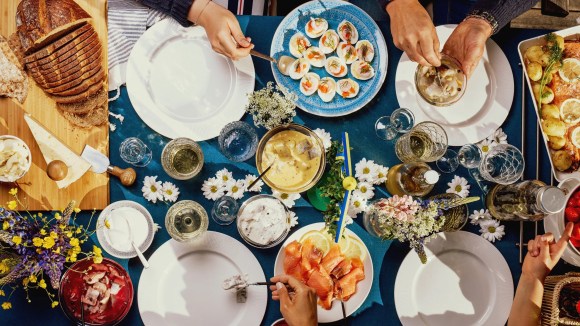
it is not always the food that makes a perfect dinner party


Steven’s Viewz
How to Give a Bad Dinner Party

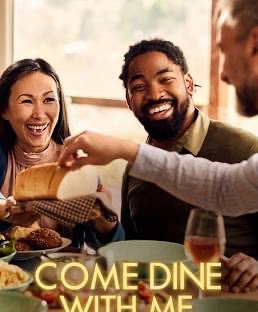
In the ’70s and ’80s, dinner parties were a regular thing. With shows like Come Dine with Me and the rising costs of eating out, dinner parties are making a huge comeback. Though some still entertain at venues such as restaurants, there’s nothing more intimate and fun than having a group of friends—or interesting people—over to your home for a private dinner party. But as much as a good host can make it a terrific night to remember, the wrong recipe for an evening can lead to a dinner party your guests will talk about for weeks—for all the wrong reasons.

When you’re hosting for wine connoisseurs or food gourmets, the conversation may revolve around cuisine and drink. But believe it or not, the best dinner parties don’t always centre on either. Of course, putting on a good show that doesn’t have you locked away in the kitchen all night is still a good idea.

In fact, one of the most amusing dinner parties I attended began with a call from a hostess who, not being known for her culinary skills and usually opting to dine out, invited me over to see her new kitchen. The day after the invite, she phoned:
“Darling, would you do your marvellous chicken fajitas on Friday?”
Asking was she planning a potluck (when everyone brings a course), Fajitas , don’t travel well. There was a pause before she added, “Oh, I thought you could cook?”
I replied, “No, it’s your turn,” and hung up!

Not my chicken fajitas , Mine look better .

I arrived at her stunning Hampstead home on the Friday. The table was beautifully set, and the new oven was lit—I was suitably impressed. The hostess had that pleased-with-herself look written all over her face; in fairness, this wasn’t her forte. Wine flowed, and nibbles were served, but an hour and a half later, no food had appeared. Looking at the oven, the chicken was still as raw as it had been on the Waitrose shelf.
“My love, is the oven actually working?” I gently enquired.

An hour later, we were still no further along. The hostess declared the new oven faulty and called for Chinese. We laughed and put the world to rights until two-thirty in the morning—it was just an amazing night.

It was topped off by a call on Tuesday: the repairman said the oven wasn’t broken—she’d simply forgotten to turn it on. I couldn’t help but ask when she was auditioning for Come Dine with Me. how she was going to cook ?
She replied, “Darling, you’re coming over and doing it for me!”

However, for your standard dinner party—especially if you’re not ordering in—don’t cook something that keeps you in the kitchen half the night or that hasn’t been tried and tested. Your guests have come to see you, not watch you stress. Pre-cooking as much as possible is always wise.

Also, always check what your guests eat. At one dinner I attended, they served an enormous piece of goat’s cheese as a starter. Honestly, I’d rather suck someone’s feet than eat that. I used the trick of eating without chewing, washing it down with water. Every time I looked at the plate, it seemed no smaller. Eventually, the host noticed, and I had to admit defeat. They looked less than impressed.

It’s smart to have eggs or a vegan option on standby—just in case a guest hasn’t disclosed their dietary needs.

What really makes a dinner party memorable is the company. Years ago, a socialite who was an expert at entertaining shared some tips with me. Never bring the same type of people together. Lady X would be far more intrigued sitting next to an up-and-coming artist than another socialite. Invite those who can sing for their supper—interesting, amusing guests who can tell a good story or keep up with the latest in books, style, or theatre.

Dinner or lunch party’s can be great but think it out first .

Bring five actors together (unless they’re in the same production) and you risk them trying to outdo each other.

Being a good host is more than just checking glasses and topping up wine. It’s about ensuring your guests are enjoying themselves and actually get to speak. We’ve all been to that dinner where the narcissist dominates the conversation—and even when they pause, they jump back in to reclaim the spotlight. As host, it’s your role to steer the conversation so quieter guests also get a chance. Ask about books, films, theatre—whatever might draw them out.

And please, don’t try to be controversial. Sure, a lively debate can be great—if you know your guests well—but don’t go looking for drama. It could end your night on a sour note.

Avoid topics like age, weight, salaries, and politics. One evening, a guest at a dinner I hosted turned to another and said, “You know, when we get to our age it all needs a little lift—but I love my forties.”
The guest was livid: “I’m 32!” she cried, getting up and leaving the table.

Let the conversation flow. Unless you’re lucky enough to have a Stephen Fry at your table, make sure everyone has a voice. And never, ever be the Machiavellian host who opens the night with, “So, who voted for Brexit?!”

Do not be that machiavellian host and try and spark controversy .

One of the worst dinner parties I’ve attended had all the wrong ingredients. We were eating out, so the food was decent—for some. There were quite a few of us, and things started badly: someone I love had reprimanded another guest for being late, which was rich coming from them. Pot, kettle, black, I thought. They’ve never been on time in their life. When I pointed that out, offence was taken—and they were still seething as we arrived.

Our host, Mark—though lovely and amusing—wanted to talk about one topic: a certain lady we’ll call Alice. He and Alice were once close, but no longer, which made her a target. Now, I love gossip as much as the next person, but I prefer it light, witty, and name-free. I’m known for knowing the gossip—but those who know me also know I rarely name names. I’m educated enough to entertain without tearing someone down.

But this monologue about Alice’s every fault dragged on and on. It felt like the only thing missing was Alice’s corpse—she was being verbally hacked to pieces. One hour later, Mark was still talking about Alice, with brief interruptions for “Let’s get another round in,” and one guest returning their starter three times. Some guests had begun looking at their phones. One even mouthed “Come sit with me!”

I suggested that, since we’d established Alice was a c—, perhaps we could move on.
That was met with, “Mark is talking—sssh!”

I would have left, but I was staying with one of the guests. Just when I thought the evening couldn’t get worse, a very late guest arrived—the cuckoo, who had seemingly replaced Alice in Mark’s affections. She briefly talked about another of my least favourite subjects—dieting—before the topic swerved straight back to Alice, in which the cuckoo revelled.

The toxic energy was palpable. Our host, smart as he was, was no Oscar Wilde, and only seemed aware of his own voice. Thank God I smoke—those breaks saved me. I even got a text from another guest: “Help!” They were bored stiff.

The cherry on top? Mark wasn’t even hosting. We were all going Dutch. After over two hours of his monologue, one of the guests even drove home drunk.

Here’s my final tip: If you’re hosting drinkers, be responsible. Make sure they have somewhere to stay, book a cab, or use a company that will drive their car home for them. As you pour that last tequila shot, you do not want to hear that someone was in an accident on the way home.

Happy dining,
Steven

Categories
Columns Lifestyle People Poetry

Michael Edde top hair and beard tips for summer.

Love Island star drops into see Michael.

Michael Edde, celebrity barber and owner of a legendary shop in Earl’s Court, London, is creating a buzz among locals, celebrities, and some of the best-groomed men in the city.

Known for his sharp cuts, signature fades, and impeccable beard work, Michael has become a go-to name for those who take grooming seriously.

In this issue of 2Shades magazine, he shares his top 5 summer tips to keep your hair and beard looking fresh, stylish, and perfectly on point — no matter how high the temperatures rise.

From heat-proof styles to beard maintenance in the sun, Michael’s expert advice will have you turning heads all season long.

Michael with presenting star Eamonn Holmes .

Top five tips for Summer hair .

Summer is all about keeping it sharp but effortless. I always tell my clients to go for clean, textured cuts that work with the natural flow of their hair — not against it. Think lighter on the sides and a little movement on top; it keeps things fresh without needing too much product.

Humidity can be your enemy, so choose styling products wisely. Swap out heavy waxes or pomades for lightweight clays or sea salt sprays. They give hold without weighing the hair down, and they let you run your hands through it without that greasy feel.

If you’re growing out a fade or wearing a buzz cut, now’s the perfect time to experiment. Sunlight adds natural dimension, and a well-blended skin fade can really frame the face and show off bone structure — especially with a bit of tan.

Shorter styles are ideal in the heat, but that doesn’t mean boring. Ask your barber for a cut that suits your face shape and hair type — something that looks good messy or styled, so you’re not locked into one look.

And finally, book in for regular neck trims and tidy-ups. Nothing kills a clean summer look faster than a fuzzy neckline or untamed sideburns. Little maintenance goes a long way in looking polished without looking overdone.

Top Five tips for summer beards.

Summer can be brutal on beards, so it’s all about smart grooming. The sun, heat, and humidity will dry out your beard faster than you think, so hydration is everything. I always recommend using a lightweight beard oil daily — it softens the hair, nourishes the skin underneath, and keeps you from itching like mad in the heat.

Washing your beard properly is key. Don’t just use your regular shampoo — that’ll strip out the natural oils. Go for a dedicated beard wash two to three times a week, and follow it up with a conditioner if your beard’s longer or feeling coarse.\

If you’re growing it out, patience is your best friend — but so is a good shape-up. Don’t wait until it’s wild and uneven. Pop in every couple of weeks for a tidy-up around the cheeks, neckline, and ‘tache. A clean outline makes even a shorter beard look intentional and stylish.

Exfoliating the skin beneath your beard might sound over-the-top, but trust me — it helps prevent ingrown hairs, flakiness, and clogged pores, especially in the heat. A gentle scrub once a week keeps everything fresh underneath.

And finally, protect your beard from the sun. Yep, that’s a thing. Just like your scalp, your beard can get UV damage. Look for beard products with SPF or run a tiny bit of your facial sunscreen through the beard — it’ll save you from dryness and colour fade.

Address54C Kenway Rd, London SW5 0RA

Phone020 7370 6983

Categories
Columns Lifestyle People Uncategorized

Welcome to Heidi Gammon’s Advice Column PRIDE addition


https://www.counselling-foryou.co.uk/about-us

Happy Pride, everyone! just reflecting on Pride I thought Id share some background about me .

Becoming a counsellor wasn’t my first career choice. From a young age, my true passion was doing people’s hair. But strangely enough, hairdressing and counselling are closely linked. You know what they say: if you can’t afford a therapist, see your hairdresser!

In my case, it actually worked the other way around. My hairdressing career took off—I specialised in colour and built a hugely successful business. My CV includes working with celebrities and the rich and famous, and my colouring talent brought me into collaboration with some of the biggest names in the hair world.

But I always had a burning desire to really listen to my clients. No matter who they were—a rock star, a socialite, or a fashion icon—it became clear early on that we all face similar challenges: heartbreak, divorce, bereavement, anxiety, depression… the list goes on. People might argue that wealthy clients don’t have the same worries, but I’ve seen both ends of the spectrum. Money doesn’t always bring happiness.

That 16-year-old girl living in a Chelsea townhouse who wants to come out to her family isn’t so different from the one growing up in a council flat. Their circumstances may differ, but they’re both human and both deserving of support.

My fascination with people and their stories led me to retrain as a therapist. But it wasn’t just my clients who inspired me—it was also my own life.

I’m a gay woman and I came out in the 1990s. It was a brave move at the time—it certainly wasn’t trendy or widely accepted. We had very few role models: K.D. Lang, Melissa Etheridge, and Ellen DeGeneres were among the few out and proud. And let’s face it, lesbian characters in TV and film were usually portrayed as mad, bad, or dead. For many of us, The Killing of Sister George was the only reference point. Though it’s a classic with sensational performances, it doesn’t exactly paint a rosy picture of lesbian life.

(That’s why I’m so looking forward to the upcoming documentary on The Gate Club—the legendary lesbian venue on the King’s Road where parts of Sister George were filmed.)

When I came out, it raised a few eyebrows—even at the very trendy Vidal Sassoon salon in central London, where I was working at the time. Once word got out, some of my regular clients switched to other colourists.

While I had amazing support from some colleagues, moving on to other salons often meant facing homophobia—surprisingly, sometimes even from gay men. It’s not something we talk about often, but it’s real. Although my inner circle included fabulous gay men, there were definitely some who didn’t welcome us lesbians with open arms.

And believe it or not, I was refused entry to some gay clubs for looking “too straight”! Apparently, I was too femme.

Thankfully, times are changing. But we mustn’t take that progress for granted. Homophobia still exists in many forms, and we need positive role models, education, and continued activism to keep moving forward.

When I started studying to become a therapist, going back to college felt surreal. One classmate broke the ice by saying, “So proud to be your first lesbian!”—we’re still great friends to this day. But not everyone was welcoming. One peer was consistently rude and passive-aggressive. It was never openly discussed, but I strongly sensed a kind of veiled homophobia. Thankfully, the rest of the class were amazing, inclusive, and my tutor was truly sensational.

Back in the day, it would have been unthinkable to be openly gay in one successful career, let alone two.

Happy Pride, everyone! Let’s celebrate how far we’ve come. There’s still plenty of work to do, but I’m proud to be waving the rainbow flag—and I can’t wait to answer your emails.

Love,
Heidi


Dear Heidi,

My girlfriend dumped me before the pandemic because she enjoys clubbing and going to bars. That’s just not my scene. I’m looking for something more meaningful—I want to meet someone and settle down. But dating apps and websites scare me, and the bar scene isn’t for me.
Alex, Bethnal Green

Hi Alex,
Thank you for writing in. You’re not alone—plenty of people feel intimidated by the modern dating world. The key is to find spaces that align with your values. Consider LGBTQ+ book clubs, walking groups, art classes, or volunteering for a cause you care about. These are great ways to meet like-minded people in a low-pressure environment. And if you ever decide to try dating apps, choose ones with detailed profiles—look for people who are also looking for something serious. Take small steps—you’ve got this!
Love,
Heidi


Dear Heidi,

My girlfriend and I have been together for two years and plan to marry next year. Recently, she’s expressed a desire to try threesomes, saying it’ll “spice things up.” I don’t want to lose her, but honestly, it’s not for me. What should I do?
Madeline, Manchester

Hi Madeline,
Your feelings are completely valid. Relationships should be based on mutual respect and clear boundaries. If something doesn’t feel right to you, you shouldn’t feel pressured to agree. Talk to your partner openly and honestly—express your feelings without judgement. A strong relationship can withstand differences, as long as there’s communication and compromise. The right partner will respect your comfort zone.
Take care,
Heidi


Dear Heidi,

I’m 19 and come from what you’d call a “rough” family. My two brothers and I are all amateur boxers. My dad is a real “man’s man” and uses words like “queer” as an insult. I’ve been dating girls to hide who I really am, but one of them suspected something when I didn’t want to go all the way—she called me a “poof.” I love my family, but what can I do, Heidi? Should I risk coming out?
Mike, Blackpool

Dear Mike,
Thank you for your honesty. Coming out is deeply personal, and only you can decide when the time is right. It’s okay to take your time. You don’t have to come out until you feel safe and ready. Remember, there’s no shame in protecting yourself emotionally and physically. If you ever feel unsafe at home, reach out to LGBTQ+ support groups—there is a community out there that will support and celebrate you for who you are. You’re not alone.
With warmth and strength,
Heidi.

END

https://www.counselling-foryou.co.uk/about-us Do you have a question for Heidi e-mail us at spman@btinternet.com. mention Heidi