Categories
Columns People

Chapter 3 BLANKY

Orangey Blanky

Art Alastair Blaster words Steven Smith  

“We are all born as blank canvases; hate, racism, and a lack of understanding are learned.”
How you choose to see the world and create the tapestry of your life is up to you.
Blanky is here to “Make Earth Safe Again.”

Blanky told Patrick not to worry. He assured him that everything would be fine now, and encouraged him to keep shining brightly, just as he always had. Patrick’s new friends, though they noticed he was a little different, were happy to welcome him into their games. It had only taken a little time to explain how truly amazing Patrick was, and once they understood, they accepted him with open arms.
“But you’re going,” said Patrick, his voice trembling as he clutched Blanky tightly. “What will I do without you?”
Blanky’s gentle voice carried calm reassurance. “No, Patrick. I won’t really be gone. I am energy, and energy can never disappear—it just changes form. I’ll always be here, watching over you. If you ever really need me, just shout, and I’ll come. But please, Patrick, promise me something. Be your own unique energy. Be proud of who you are. Only call for me if it’s a true emergency. The rest of the time, I want you to stand tall and make yourself proud.”
With those words, Blanky shimmered, the soft glow around him brightening before he vanished into the air like starlight carried away by the wind.
Far away, 7,000 miles from Waterloo in London, lay the warm and glittering shores of the Dominican Republic. Though oceans stretched between them, Blanky could still hear faint cries for help echoing across the world. Something was wrong—deeply wrong. He could feel it in the atmosphere. The balance was shifting, and a dark presence stirred. Blanky recognised it instantly: the Olethros. They were near, and they were meddling again, leaving the planet weak and gasping for breath.
His worst fears were soon confirmed. On a sandy beach, lying helplessly on its side, was a dolphin. Its sleek silver body was scratched and bruised, its breath ragged as it struggled to survive.
Being made of pure energy, Blanky could communicate with all living creatures. He knelt by the suffering animal, his voice soft and kind.
“Help me… help me to the water,” the dolphin squeaked weakly.
First, Blanky placed his glowing hands upon the dolphin’s wounds. A gentle light poured out of him, soothing the creature’s pain and knitting torn skin. Slowly, the dolphin’s panic subsided. Then Blanky transformed—his body reshaping into that of a tall, powerful man. With strength that came not from muscle but from energy itself, he lifted the dolphin carefully and carried it back into the turquoise sea.
The moment they touched the water, the dolphin raised its head and spoke clearly. “I am Stinggal,” it said, its voice now stronger, though tinged with sorrow.


As the waves lapped around them, Blanky allowed his energy to flow once more, transforming himself into a dolphin so he could swim alongside Stinggal. Their fins cut through the water with ease as they dived into the deeper blue, exploring the world beneath the surface.
But there was little joy to be found there. The sea was clouded, its once-crystal depths marred by floating waste. Fish darted nervously, entangled in nets that stretched endlessly across the ocean floor. The corals, once glowing with colour, were bleached and broken.
“The sea is being poisoned,” Stinggal said, his tone heavy with grief. “It is the work of the one they call the Orange Man. He cares only for money and fame. He tears down forests and scars the earth. He pours filth into the oceans and poisons the air. He does not care for life, only for power and wealth. If this continues, my kind—and many others—will soon vanish forever.”
Blanky swam alongside him, listening intently as Stinggal continued.
“They no longer respect the natural order. Fishing is allowed everywhere, without limit. Great nets are dragged across the seas, destroying entire habitats. The young are caught with the old. The strong are trapped with the weak. Nothing is spared. If something is not done, the oceans will become empty deserts, and the balance of the whole world will collapse.”
Blanky’s heart, though made of energy, ached with sorrow. He had seen the Olethros bring destruction before, but this was different. This was not just one species in danger—this was the very foundation of the planet being eroded. He looked at Stinggal, whose bright eyes flickered with both hope and fear.
“Then we must fight,” Blanky said firmly. “Not with anger, but with courage and truth. The Orange One may have power, but the Earth has a voice of its own. We will remind the world to listen.”
Stinggal gave a small, hopeful leap from the water, droplets sparkling around him like diamonds. “Then perhaps there is still a chance,” he said softly. “The Orange One lives in the country of stars and stripes. He silences anyone who is different, anyone who dares to protect the planet.”
“Then let’s swim,” said Blanky.
Side by side, the two dolphins swam into the vast horizon, ready to face whatever darkness lay ahead. After many days, they reached the shores of Florida, where it was time to part. Stinggal nuzzled Blanky gently. “Do not worry. I’ll be back when you need me.”
The Orange One—whom the world called Orangey—was guarded in a huge white house. For most, it would be impossible to reach him.
He was in human form, but his skin was unnaturally orange and crispy-looking. Sitting behind a great oak desk, he shuffled papers, smirking at his own power. The heavy doors swung open, and a pale, sharp-faced woman entered.
“I have some prizes for you, for being so amazing,” she said with a smile.
“Thank you. Put them on the desk,” Orangey replied, barely looking up.
“You’ll be impressed,” the woman continued. “We’ve just brought plastic back everywhere—no restrictions. We’ve reopened drilling for oil. And best of all, we’ve banned the words global warming from every official report.”
“Fake news!” Orangey barked, slamming his hand on the desk.
The blonde woman jumped up and down with excitement. “Well done! Did you also ban those who don’t speak English fluently from entering the country?”
“All done,” Orangey said proudly. “Soon, we will drain this world of every resource. When it is broken and empty, we’ll move on—just like we did with Alacritas.”
The woman clapped her pale hands, though her skin did not yet have the telltale orange hue of the Olethros. But Blanky knew what they were. The Olethros always revealed themselves in the end, their bodies glowing with a sickly orange light as they fed on destruction.
This time, he could not allow it. Earth would not be their next victim.
Blanky hovered at the window of the great white house, his body shimmering with invisible energy. He could see Orangey and his pale companion celebrating their victories, blind to the damage they had sown across the planet.
It was time.
The battle to save Earth was about to begin.

Categories
Columns Lifestyle People Uncategorized

“I Was Nearly Exterminated !”

Picture Anna Marie Bickerton

An Interview with David J Howe

How Doctor Who – and the Daleks – saved his life.

Even before David J Howe was born, the world of print and storytelling was already close at hand. His father worked in the printing department at the Daily Express newspaper, a job he kept until the paper moved out of Fleet Street in 1984. Neither father nor son could have foreseen that David’s fascination with a certain Saturday evening television programme would grow into a lifelong obsession — one that would shape his career, his friendships, and ultimately even save his life.

We sat down with David to talk about Doctor Who, the Daleks, and his extraordinary new memoir Who Me!.

John Pertwee and David ,,,

From Fan to Creator

Q: Do you remember when the magic of Doctor Who first gripped you?

David: I was just a boy in South London during the 1960s, when Dalek toys were everywhere. Like a lot of children, I was completely captivated. By the time I was 15, I was so inspired that I decided to build my own Dalek. My father used to bring home waste plastic from the printing floor, and I scavenged other bits and pieces. Using those materials, I built a full-size Dalek from scratch. It was a labour of love — and in a way, the start of everything that followed.

Father and son build a Dalek

Working with the Doctor

Q: Your journey from fan to authority on the show is remarkable. What were the big turning points?

David: I began collecting, writing, and eventually contributing to the world of Doctor Who. One of the most extraordinary moments was working with Jon Pertwee himself. Helping him with his autobiography was a privilege and a huge learning experience. Over the years, I became more and more involved in chronicling the programme’s history — from conventions and events to writing books that many fans now consider reference staples.


https://www.amazon.co.uk/Who-Me-publishing-decades-history/dp/1835013309/ref=sr_1_1?crid=2W87D524O4N1M&dib=eyJ2IjoiMSJ9.XwlZPLdXkWi3Ck2dDv-GKE6NXSnDhUCaHdD3b4JylbmbCUnODIzOKyFW2m8kTV531EvFaZRAxejNEfL7VG0Eblc2p5CT28I47AUl8YByXr6QnaD5oDRQ218XrpxrrAZkyf0ahVXBZfewIpymAyhu1hw7wGmL5GGdmv2fw8IK1pImipMHSf2HQMbngr3JM3Ujj8-z7pOjolY5CeioCONO1RgP0HaSEMXOBUMyq1o2Or8.rE0qe7VVeX6Nqlde2kQArEPPWrUAzswxxBufU-VZyb8&dib_tag=se&keywords=dr+who+books+david+j+howe&qid=1756821305&sprefix=david+j+howe+%2Caps%2C238&sr=8-1

A Life-Saving Detour

Q: You’ve said that Doctor Who quite literally saved your life. Can you tell us about that?

David: Yes, it’s true. A few years ago, I was heading to Cardiff for a Doctor Who exhibition — specifically to see the Daleks. On the way, I suffered a massive heart attack. If I had been at home, I wouldn’t have survived. But because of that trip, I happened to pass right by Cardiff University Hospital, one of the best cardiac hospitals in the country. I was rushed straight there. Without that coincidence, without that journey to see the Daleks, I simply wouldn’t be here today.

And of course, I wasn’t alone. My wife, bestselling author Samantha Lee Howe, has been my rock through it all. Without her support, recovery would have been a much harder road.

David with his beautiful wife and best selling author Samantha Lee Howe .

The Memoir: Who Me!

Q: Your new book, Who Me!, comes out this October. What can readers expect?

David: The book is my story, but it’s also the story of Doctor Who told through a very personal lens. I wanted to show how a television programme can shape a life, a culture, and even a country. I take readers behind the scenes — from the earliest fan conventions to my work documenting the series in print. I talk about working with Jon Pertwee, interviewing actors like Peter Davison, and even how the BBC began to understand and build its merchandise empire.

More than that, it’s about the joy of fandom, the friendships forged, the challenges faced, and the way Doctor Whobecame — and remains — a defining part of British popular culture.


Final Thoughts

Q: Why should readers pick up Who Me!?

David: Because it’s not just a fan’s tale. It’s a story about passion, perseverance, and the power of popular culture. Anyone interested in Doctor Who, or in British television history more broadly, will find something to enjoy. And I hope it shows that sometimes, what we love most can guide our lives in ways we never expect.

David with 70;s icon and Dr Who assistant Frazer Hines

📖 Who Me! by David J Howe
Publication date: 9 October 2025
Formats: Hardback, Digital, Audio
Publisher: Bedford Square
Available on Amazon

Categories
Columns Lifestyle People

Tyson Fury a sensitive man .?

On the back of Tommy Fury documentary The Good . The Bad .The Fury that I really enjoyed I am re running my article on Tyson from 2022


Hero or villain? Steven Smith looks at what it takes to be the man who has everyone talking, the heavyweight boxing champion of the world, Tyson Fury. 

A hero to the poor with his charitable donations to the homeless, a champion for mental health and the self-proclaimed ‘King of the Gypsies’. Tyson standing at 6’9” embodies all that can be labelled as masculine, yet unlike many hard men, this giant breaks the mould. He has started to wear his heart on his sleeve and has opened up, talking frankly of his demons, depression, and personal battles with addiction.

Tyson also adds to the list that he is bipolar and suffers from anxiety. But is it possible that the man of the moment, who is so desperate for the world to perceive him as super masculine is still, as his father John Fury described him, a shy and sensitive overweight boy inside? Was it this shy boy that begged for the acceptance of his boxing coach father? Was it his unconventional gypsy upbringing that pushed him into a mould of boxing and masculinity, which subsequently became the root of Tyson’s demons and depression? Is it the often toxic masculinity that is piled on to so many young men during their upbringing, the cause of his trauma and mental health issues later in life?

Now, I like Tyson Fury. He is fascinating, and from the minute he burst on to our screens, I was aware of him. There was something that made me want to stop and listen; he appeared to be a model hero on paper. His smile lights up the screen, and his enthusiasm for life makes me want to know more. Then there is the unconditional love that he has for his family, which simply melts your heart.

The best part of my life is taking my kids to school. I could live in a cardboard box and eat cheese sandwiches, as long as my family is with me“.

Tyson tells us though it is doubtful that his gorgeous wife Paris, who he has been with since they were teenagers, would ever let it come to that. She is one shrewd cookie and lives like a footballer’s wife rather than a gypsy though you can’t imagine Victoria Beckham arriving in Vegas and going straight in to do David’s dirty dishes.

But of course, once it was pointed out that this man, who I would want on my team in any battles, did not just have traditional values but what some might consider downright prehistoric values, I was speechless.

Unbelievably, in 2015, in an interview on The Jeremy Vine show, with gay rights campaigner Peter Tatchell, he compared gays to paedophiles, claiming that homosexuality is “One of the three things that will lead to the apocalypse; the other two being abortion and paedophilia”.

Even his younger brother Love Island star Tommy seems to have taken the anti-gay stance  On a now disabled Twitter account, Tommy tweeted his older brother, Tyson, allegedly stating “Come on bro, let’s get dis win good luck brother and Chisora is a f***** and he’s gettin it proper @TysonFury”.

In 2018 he was nominated for Sports Personality of the Year, yet his homophobic comments and derogatory sex views came back to haunt him, with calls to remove him and comments made including:

So, when Tyson Fury is called the people’s champion, it begs the question: which people?”

Challenged about his views by one reporter, he sat in his van replying “Jesus loves you”.

Tyson has since apologised for his outburst and controversial views.

Were these Tyson’s views or were they opinions that had been drummed into him from an early age by someone else? Or was it a culture of growing up in the gypsy community, not known to embrace and welcome gay people among their tribe?

Fellow gypsy fighter, Billy Joe Saunders says, “Where we come from, if you show weakness, you might as well give up on life as a fighter”. It’s a world where men fought, and women, as quoted by Tyson himself, were ‘best flat on their back or in the kitchen’.

Tyson comes from a world where LGBTQ is stamped on with ferocity. Anyone who has read ‘Gypsy Boy’ by Mikey Walsh will find it not only a harrowing experience but a moving and humorous one too. Brilliantly written, it tells the story of a gay boy brought as a Romanian and unable to conform to his expectations of masculinity. The description of the brutality he suffered, at the hand of his father, as the reader, stained the pages with my tears.

Yet, at the end of the book, his father unexpectedly turned up to see Walsh, now a teacher, despite the violence

Could growing up in a tightly knit community with some values and beliefs that are from a by-gone age, be like other, almost closed communities or cults and brainwash their young?

Tyson appears to be an intelligent man, embracing all that life has to offer, in a way an old soul that could see that the bright lights of Hollywood or Vegas could not compare to his roots in Morecambe, or make him any happier for that matter.

“From the age of six, all I ever dreamed of was being a boxer, now I have it all; I am the greatest boxer in the world yes, I have sinned, suffered from depression and anxiety, and I am bipolar”, he tells viewers.

Tyson does not have it all; regrettably, he does not have good mental health, something money or fame can’t replace.

His dad, John Fury, is not a likeable character; there is something a little sad about him, almost broken, floored and in denial. He tells us that Tyson’s mental health has been impacted due to being so successful and mixing with millionaires and celebrities.

There is something that screams ‘pushy show biz mum’ about him. That statement about his son confirmed my suspicions; that he would like very much to have been Tyson.

I am sure that I have depression but, in my day, we had to worry about keeping a roof over my family’s head and food on the table, there was no time to think of any of that”.

I am sure at heart he loves his son, but he displays little understanding or empathy for mental health issues. To be fair to John, however, he did come from an age where issues such as mental health were rarely discussed.

In the first of the series John who is banned from America for a criminal conviction, after being released from prison in 2015 following a four-year completion of an 11-year sentence, for gouging another man’s eye out during a brawl at a car auction, tells us that Tyson was a shy, sensitive, fat kid. “I brought all my boys up the same; to fight; I trained them myself”. John, a bare-knuckle boxer must have had the same training from his father as a boy and probably would not think that any of his boys could be different. Young men or boys who have toxic masculinity forced upon them can have extreme consequences to their mental wellbeing, particularly on the sensitive child or those that do not fit the macho mould.

What does toxic masculinity mean?

Researchers have defined it as encompassing;

  • Suppressing emotions or masking distress
  • Maintaining an appearance of hardness
  • Violence as an indicator of power (think: “tough-guy” behaviour)

In other words, toxic masculinity is what can come of teaching boys that they can’t express their emotions openly; that they have to be “tough all the time”; that anything other than that makes them feminine or weak. (No, it doesn’t mean that all men are inherently toxic.) The harmful side effects can, however, develop into homophobia, or misogyny. 

Toxic masculinity, according to Psycom and several surveys, can lead to suicide, depression, anxiety, addiction, and drug use.

A 2017 survey by the Equality and Human Rights Commission found that gypsies, travellers and Roma were found to suffer “poorer mental health than the rest of the population in Britain” and were “more likely to suffer from anxiety and depression”.

Only last year Billy and Joe Smith, stars of My Big Fat Gypsy Wedding were found dead in a suicide pact. They had both been struggling with mental health issues.

Now, looking back, I was a sensitive kid too. My dad introduced me to football by heading the ball at my head in the front room. It made me cry, and I hated football from then on. As an adult, I am quite sporty, but Dad could never really teach me anything. The last thing I needed was tough love.

Is it not possible that locked in this huge massive man is the shy, sensitive kid at loggerheads with who he has become? Desperate to please his father, who needed his shy son to “Man up”. The poor man can find a cloud in every silver lining; it must have been hard for the young Fury.

To be honest, the penny drops on what it was that that I saw in Tyson. He had the traits of another beautiful man who had the same personal scenario. He too could be charming, but many said he was bad news; he lived with depression, anxiety and had addiction issues, yet there was something I adored about him.

He had a troubled childhood and was abandoned as a kid by his father. He told me about the days his dad left, with such vivid description, despite being only 8 years old at the time. It was at that moment I saw that very child looking at me through man’s eyes. Taking a shot, I told him “that frightened child is with you every day, you protect him with your front”. There was a silence and the relief that someone had seen the real him, and because he did not feel judged, he could be himself. That’s what I saw in Tyson.

My money is on the fact that Tyson is at loggerheads with himself.

Everyone around him seems to be at loggerheads with Tyson’s new direction. Whilst embracing wealth and lifestyle, some of them claim to want to stay with the traditions of the travelling community.

Tyson wants to set precedents and make changes within the gypsy community. He hates “dream crushers”, whatever his kids want to be, he will be fully supportive.

Yet in a U-turn, wife Paris, who earlier in the show, ‘Tyson Fury Gypsy King’, says she lived her earlier years as a traveller in a caravan now says that she could not bear to leave her beautiful home with hot water and mod cons and her beloved trips to Marbella.

GQ picture Tommy Fury BBC I player .

Paris wants the kids raised as travellers. The kids will leave school at 11, and when they marry, they can then leave home, (No room for any of the kids to be gay in that plan then). Daughter Venezuela, who wants to be a dancer or gymnast, calls her mum ‘dream crusher’. Paris comments that Venezuela is already too tall to become either; Venezuela does have a point.

You like Paris in the show, but it’s hard not to, but you want to give her a reality check. When she is not cooking for the massive family, Paris seems to spend the rest of her time in the hairdressers.

Tyson clashes with her; he is keen as ‘King’ to make changes; the kids should stay in school; they can embrace both lifestyles. Here is where I thought he could bring about change, as he moves among the likes of the ‘queens’ dream’ gay ally, Robbie Williams, along with other showbiz pals.

It is possible to educate a homophobe, misogynist, or even a bigot, especially if you take them out of an environment that is steeped in it.

My bet is if Tyson’s demons do not cause him to self-destruct, let’s hope he fights them as hard as any opponent. Tyson could be the king that brings a kinder, more tolerant era to the gypsy community.

After all, a man who pays €200 for two lobsters and sets them free can’t be all that bad!

https://www.psycom.net/depression-in-men/depression-in-men-toxic-masculinity/

https://www.mirror.co.uk/sport/boxing/tyson-fury-pays-200-two-21531982

Categories
Columns Lifestyle

Why Years and Years Should Be Compulsory Viewing for All

Steven’s Viewz

https://www.netflix.com/gb/title/80219056

The word visionary gets thrown around far too easily. But Russell T Davies’s Years and Years earns the label. Six years after it first aired, it looks less like drama and more like a blueprint for the world we’re stumbling into.

Rewatch it now, and it feels psychic. Political chaos, social unrest, the rise of populism—it’s all there. And unless we wise up, the show won’t be a warning. It will be a prophecy.

Russell T Davies a psychic for sure a genius in his craft .

No, we don’t have Vivienne Rook. But we do have her male counterpart: Nigel Farage. Like Rook, he plays the grinning “man of the people,” shaking hands in Runcorn and smiling for the cameras. But behind the performance lies something darker—homophobia, intolerance, and politics built on fear.https://en.wikipedia.org/wiki/Russell_T_Davies

I do not support Reform UK, but it would be foolish to dismiss their rise. This isn’t business as usual. Their growing popularity is dangerous, particularly for LGBTQ+ communities and minority groups. A few months ago, I pointed out how clever it was to put Sarah Pochin—the friendly, mum-next-door figure—front and centre in Runcorn, a town already uneasy about immigration and crime. But that was just a mask. The real Reform heavyweights—Anne Widdecombe and others—are waiting in the wings.

Vivienne Rook played by Emma Thompson . The smiling pr face of Reform Sarah Pochin and the real deal Farage and Widecombe .

Meanwhile, protests against asylum seekers grow louder. Hotels are shutting, talk of “temporary camps” is surfacing, and once again Years and Years looks disturbingly accurate.

The truth is simple: Britain needs immigration. Since Brexit, we’ve been short of workers. And asylum seekers are not faceless statistics—they’re people fleeing torture, persecution, or death. Yes, a small minority will cause problems, but scapegoating the many for the sins of the few is cowardly politics.

And what do the hotel protests achieve? Nothing but anger. The Vile e image of men and woman wrapped in the St George’s Cross turning the English flag into a symbol of division.

A flag of our country we should be proud of . Not one used for racism .

Davies warned us about this too. Suppressing extreme voices doesn’t silence them—it pushes them underground, where they grow more dangerous. In Years and Years, those who should never have been jailed became martyrs. In real life, extremists are being elevated in exactly the same way.

Meanwhile, fear grips ordinary people. In London, as in most major towns, there are streets best avoided at night. That fear is oxygen for extremists.

We’re also hollowing out our culture. Hard-won expertise is being replaced with one-week certificates. People call themselves “experts” in trades and professions that once took years of graft. We let them.

And we celebrate the wrong things. We tell ourselves we want a country built on skills, morals, and manners—yet we reward celebrity over substance. How can we build anything solid when voters shrug at lies, when eight-year-old girls aspire not to be nurses or teachers but the next Katie Price? If we don’t act, the rot will be ours to own.

Then there’s technology. Phones have become extensions of our bodies. AI is already replacing jobs. Humans risk becoming redundant in a world they created.

And celebrity still rules. We’ve already lived through the reality TV star who became President of the United States. His orange finger hovered over the nuclear button while he shouted, “You’re fired!” The laugh track is gone. The danger is real.

Davies even nailed the imagery: the “£1 T-shirt,” the slow creep of authoritarianism, the erosion of freedoms. Years and Years feels less like fiction with every passing headline.

Unless we wake up, unless we stop normalising dangerous rhetoric, it won’t be long before Farage—or someone worse—takes the helm. And then Years and Years will no longer be television. It will be our future.

https://www.netflix.com/gb/title/80219056

END Steven Smith contact Jane Compton or spman@btinternet.com

Categories
Columns Culture People Uncategorized

Steven’s Viewz

MUM’S NOT ALWAYS THE WORD

Steven’s Viewz


Why Katie Price Needs to Back Off and Let Her Kids Shine Without Her Interference

Growing up is never easy — not for the average teenager, and certainly not for those with famous parents. For most young people, adolescence is about carving out your own identity, deciding who you want to be, and pursuing your chosen career or further education. It’s a period of self-discovery and independence. But when your every move has been played out in the glare of the press since childhood, the challenge is far greater.

Children of celebrities live with a unique pressure. They’re often unfairly labelled with the now-infamous tag “Nepo Baby” — short for “nepotism baby” — a term referring to someone whose career mirrors or is connected to that of their famous parent. The implication is clear: their achievements aren’t earned but handed to them through family connections. The phrase is often used as an insult, suggesting that their success is unearned, undeserved, or simply the result of privilege.

Of course, this isn’t always the case. Some celebrity children go out of their way to avoid using their family name, working hard to make it on their own merits. In many instances, the public only learns of their famous parentage long after they’ve established themselves. On the flip side, stepping into the same spotlight as a parent and not quite measuring up can be devastating for mental health. The pressure to “live up to” a legacy can crush even the most talented young person.

Take Princess Andre, for example. She’s a young woman with dreams, ambition, and — crucially — talent. Under the guidance of Clare Powell, a woman I’d call a genius in the world of entertainment management, Princess has been making strides toward building her own career. Powell is the same powerhouse who played a key role in shaping Katie Price’s early career. Importantly, Katie is not directly involved in Princess’s current projects.

Stunning Princess Andrea

Now, I’ve been a huge supporter of Katie Price over the years — I’ve defended her when many wouldn’t. But on this occasion, Katie, it’s time to take a step back. In fact, take one hundred steps back. Be a proud mum, but let Princess shine without you hovering in the background. It’s about dignity — a word that doesn’t often appear in the Pricey vocabulary — and allowing your daughter to succeed on her own terms.

I have a close friend whose sons are both stars now: one’s a famous rock musician, the other a West End performer. Before their success, my friend made a conscious decision to stay out of their spotlight. No hanging around at every audition, no being photographed at every event. She let them find their own way, even if it meant watching from the sidelines. That kind of quiet support is invaluable — and something Katie could learn from.

The truth is, Princess already has “star” written all over her. Yes, her famous parents have opened some doors — there’s no denying that. But she’s also beautiful, poised, polite, and grounded in a way that the teenage Jordan (Katie’s former alter ego) simply wasn’t. While Katie at that age was known for her brashness and colourful vocabulary, Princess seems to have a quiet charm and grace that’s refreshing to see.

Of course, fame dynamics can get tricky within families. I’ve seen it happen. Sometimes a parent who’s spent years in the spotlight finds it hard when their child begins to eclipse them. I remember a friend whose mother was always the centre of attention. We once attended a concert together, and during the show, the star actually stopped mid-performance to compliment my friend’s daughter — “Who is this beauty?” they asked. The girl was thrilled. But when she turned to share the moment with her mum, the mother had vanished, unable to handle not being the one in the spotlight.

Even Hollywood royalty have faced this. Liza Minnelli once admitted that her mother, Judy Garland, struggled to accept her daughter’s fame. It’s a reminder that parental pride can sometimes be mixed with a very human sense of insecurity.

In Princess’s case, the potential is huge. She has the looks, the talent, and the personality to carve out a significant career in modelling, media, or whatever creative path she chooses. The worst thing that could happen is for her efforts to be overshadowed by her mum’s drama, headlines, or interference.

Some might argue that Katie’s involvement is only natural — after all, she’s been in the industry for decades. But let’s be honest: sometimes experience comes with baggage. Katie’s falling-out with Clare Powell has been well documented, but that shouldn’t affect Princess’s choices. Powell helped make Katie a household name in the first place. This is show business — not “show friends” — and if I had a daughter with career ambitions, I’d want her with the best possible management team. Personal disagreements shouldn’t dictate professional decisions when a young career is on the line.

Clare Powell star maker https://thecangroup.co.uk

If Katie truly wants to support her daughter, she needs to be a cheerleader, not a co-star. Let Princess have her own brand, her own media moments, and her own relationship with the public. This doesn’t mean disappearing from her life — just from her professional life. Turn up to watch from the audience, not to stand centre stage. Offer advice privately, not through the pages of a tabloid.

In today’s media-saturated world, it’s hard enough for young people to find their place without the shadow of a famous parent looming over every opportunity. Princess deserves the space to make mistakes, learn lessons, and earn her own applause. And if she’s anything like she seems — poised, polite, and full of potential — she’ll do just fine.

The bottom line? Princess Andre has a bright future. But for her to truly shine, Katie Price needs to take not one or two, but one hundred steps back — and stay there until she’s invited forward. That’s what real support looks like

.

Good luck to Jack Kay .

If proof was ever needed that you can flog your soul to the devil for fame, look no further than the sudden, stratospheric rise of Ibiza’s self-styled “final boss.” One click of a camera, one cheeky social media post, and bang — he’s out-trending the Pricey and even the Trump. That’s no small feat, considering those two can normally generate headlines by simply breathing in public.

The man behind the moniker? Jack Kay. No chart-topping singles. No Oscar-bait performances. No tell-all autobiography written “in his own words” but suspiciously sounding like it was dictated to a ghostwriter over Zoom. Just… Jack. A man who, by all accounts, was minding his own business until fate, flash photography, and the internet combined to anoint him this week’s celebrity overlord.

And do you know what? Fair play to him. He’s a smashing lad by all appearances, and I can’t help but root for him. In fact, I’m practically booking my front-row seat for his inevitable debut on Celebrity Big Brother or I’m a Celebrity… Get Me Out of Here! Picture it now: Jack in the jungle, wearing a head torch, looking mildly confused while chewing kangaroo testicles for the nation’s amusement. It’s practically destiny.

Of course, his overnight success has sent a few noses wildly out of joint in the fame industry. Imagine clawing your way up the greasy celebrity pole — posting your best pout, cultivating “scandals,” leaking your own “leaked” texts — only to have Jack Kay swoop in with one photo and walk off with the nation’s attention like it’s a free canapé at a launch party. Delicious.

It’s not just the wannabe-set bristling either; the whole saga has become a sort of cultural Rorschach test. Some see Jack as proof of the absurdity of fame in the age of the algorithm. Others see him as the internet’s latest crush. I see a man who’s managed to play the game without even reading the rulebook.

Because let’s be honest, the rules have changed. Once, you needed a record deal, a primetime slot, or a scandal big enough to get a mention in the News of the World (RIP). Now? You just need a single moment that makes the internet collectively say: Yes, this one. This is our new obsession. It could be a photograph. It could be a TikTok. It could be an ill-advised comment made in a kebab shop at 3am. And suddenly, you’re hot property.

Will Jack’s reign as Ibiza’s final boss last? Who knows. The internet’s love affairs are fickle. One minute you’re the meme of the moment, the next you’re that guy people vaguely remember seeing “on something once.” But for now, Jack’s milking his fifteen minutes with style, and I, for one, am here for it. If he has done a deal with the devil, I hope it came with a decent rider — champagne, sunglasses, and maybe a small island.

Hurray — Wednesday is back on Netflix! And if that wasn’t already a big enough treat for fans of the macabre, there’s an extra twist in the cobweb this season: the legendary Joanna Lumley has joined the cast as Wednesday’s formidable grandmother.

Yes, you read that right. From Absolutely Fabulous to The Wolf of Wall Street, Lumley has always brought her own brand of razor-sharp wit and undeniable glamour to every role. Now, she’s stepping into the delightfully creepy world of the Addams family, and honestly, it feels like a match made in gothic heaven.

Contact Steven on spman@btinternet.com

Categories
Columns Health and Fitness Poetry Uncategorized

Heidi Gammon is Back

Heidi Gammon is BACK — and school’s in session!
Sharpen those pencils, unpack the lunchbox, and brace yourself — because whether you’re heading to high school, moving into halls, or just trying to survive term-time drama, I’ve got the answers you need. From messy roommates to holiday hook-ups, from bullies to big life changes — let’s crack open the advice book and dive right in.


Hello Heidi,
Love you and the show! I’m going to uni next month and sharing accommodation with my best friend. Over the summer, I realised that I’m gay and attracted to other women. Apart from telling my mum, no one else knows. I don’t fancy my best friend, so that’s not a problem, but should I tell her before we move in together in case she freaks out?
Amber, Southend


Heidi says:
Amber, the only “freak out” here would be if your friend suddenly forgot you’re still the same person you were last term. Your sexuality isn’t a warning label you have to stick on before move-in day. If you want to tell her, do it because you trust her, not because you’re scared of her reaction. And if she’s a real friend, she’ll be more interested in who’s nicking her milk from the fridge than who you fancy.


Dear Heidi,
This is awful. I’m not gay, but I’m friends with a guy who is what you might call “fluid.” We got very drunk on holiday, and I remember him performing an oral sex act on me. There’s no way it would have happened sober, and now it’s made it difficult to be friends. I tried to talk to him about it, but he just said, “What happens in Ibiza stays in Ibiza.” I have a girlfriend, and I’m terrified she’ll find out. What do I do?
Colin, Billericay


Heidi says


Colin, Ibiza clearly needs a new slogan: “What happens in Ibiza… tends to follow you home.” You’ve got a friendship issue and a relationship issue — and both need honesty. Tell your mate the boundaries from now on. As for your girlfriend, decide whether you’re confessing to ease your guilt or because it’s something she genuinely needs to know. Either way, learn your lesson: too much booze and fuzzy boundaries are a recipe for regret.


Hi Heidi,
How are you? Last year I shared uni accommodation with a great guy — honestly, we were like brothers — but sadly he’s moved to the States. A new guy is moving in, but I bumped into his old roommate who warned me: he doesn’t mind him personally, but apparently he walks around naked, smokes weed, and puts porn on openly. Plus, he’s messy and leaves everything for others to clean up. That’s my idea of hell! It’s too late to back out — what can I do?
Hunter, Basildon


Heidi says:
Hunter, sounds like you’ve been dealt the ultimate “uni flatmate bingo” card. On day one, set the house rules in plain English: no nakedness in shared spaces, no weed inside, and mess gets cleaned. If he ignores that, fortress your room — lock, headphones, maybe even a mini-fridge. And remember: it’s one academic year, not a life sentence.
What’s up Heidi,
I’m still at high school and I hate it. There’s a girl who bullies me so badly that my life is a misery, and I don’t want to go back. What can I do?
Stella, Brentwood


Heidi says:
Stella, no one should dread school because of one cruel person. Tell a teacher, a school counsellor, or your parents — and keep a record of everything she says or does. If it’s online, screenshot it. Schools are legally obliged to act on bullying. I promise you this: she is not as powerful as she seems. One day you’ll be out in the world living your best life, and she’ll still be stuck in her small one.


Heidi,
My girlfriend and I have been together for five years and we want to adopt a child — maybe two. How do we go about it? My mum says it’s a terrible idea and refuses to help.
Mandy, Brighton


Heidi says:
Mandy, if love, stability, and commitment are in place, you’re already halfway there. Start with your local council or an approved adoption agency — they’ll guide you through assessments, training, and matching with a child. It’s a long process, but worth it. most local authorities and agencies like pact do information evenings for people thinking about adoption these are great and informative and well worth going to

As for your mum, her approval would be lovely, but it’s not a requirement on the application form. Build your family your way.

https://www.counselling-foryou.co.uk

https://pinktherapy.com/therapist-directory/heidi-gammon/

Categories
Columns People

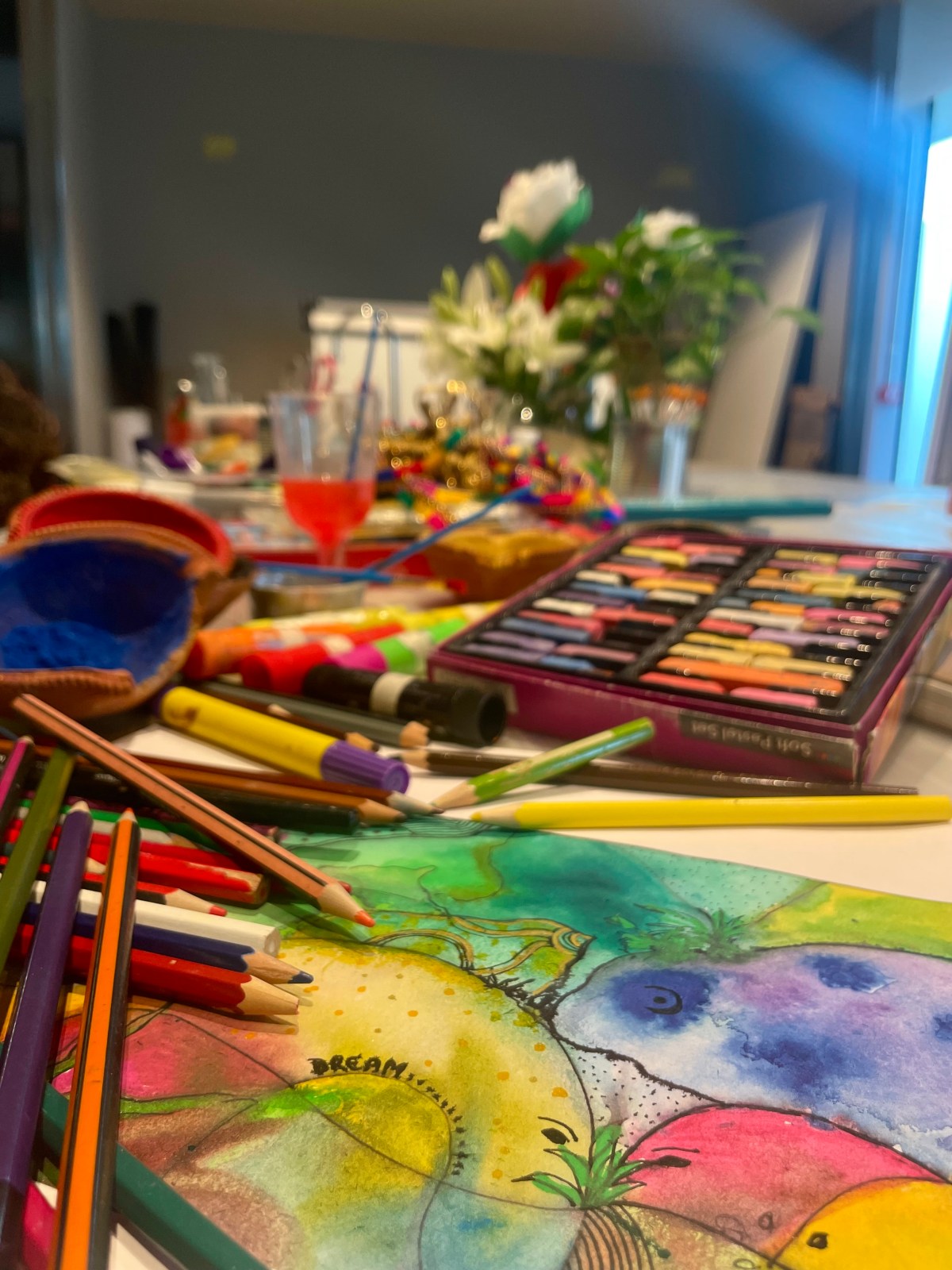
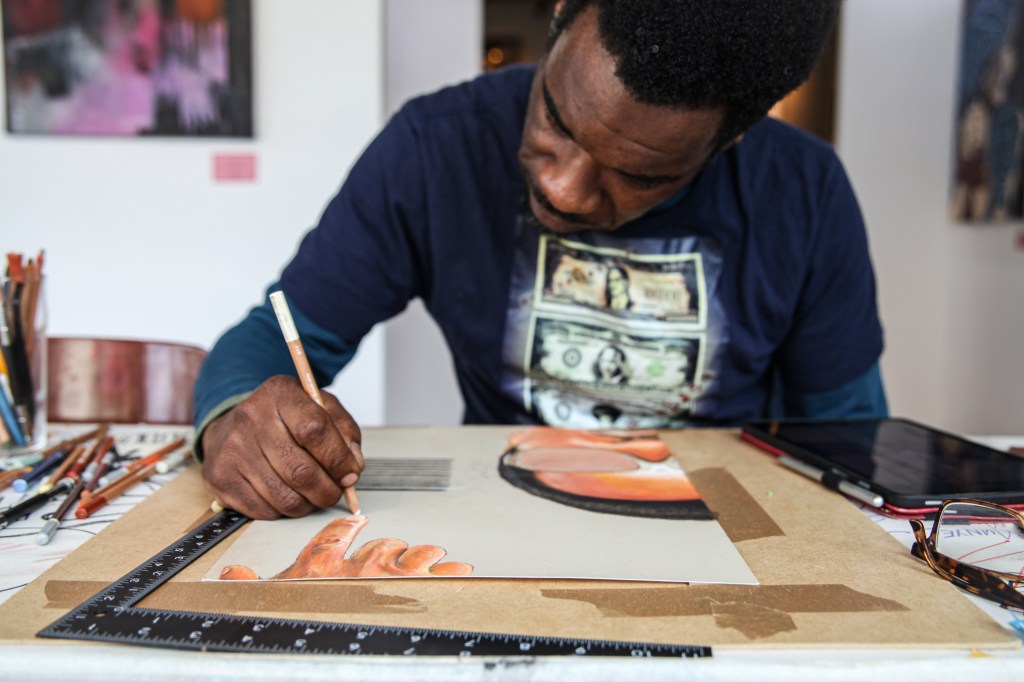
BLANKY

Alastair BlasterArtzand me are really proud to announce BLANKY #ART will be available to buy along with his friend and enemies soon .

A percentage will go to AAnnakennedyonlineeach story will tell how BLANLY helps teach about diversity and saving the planet you can read chapter one here . Chapter two is below Any publishers interested in the series please inbox me

Chapter Two – The Game Changer

Patrick stood at the edge of the basketball court, the ball clutched tightly in his hands. He’d watched the other boys play from his window countless times, imagining himself out there, hearing the thump of the ball and the cheers after a good shot.

Today, he’d worked up the courage to try.

But as soon as he stepped forward, the tallest boy—blond hair sticking up like he’d just rolled out of bed—blocked his way.

“What’s he doing here?” the boy called out.

The others turned.

“He’s… you know… strange,” another said, circling Patrick like a curious cat. “Doesn’t talk much. Always staring. Probably can’t even dribble.”

Laughter rippled around the court. One boy tilted his head in a mocking imitation of the way Patrick sometimes looked at things.

Patrick’s throat tightened. He wished they’d just let him play—but the words to explain himself never came easily.

In his pocket, Blanky stirred.

Patrick, came the gentle voice, let me help.

Before Patrick could answer, the little clay figure leapt from his pocket, soaring into the air. Mid-flight, Blanky’s form stretched, shifted, and solidified into a tall, muscular basketball player, wearing a gleaming red jersey and spotless sneakers.

The court went silent.

“Whoa… where did he come from?” one of the boys whispered.

Blanky caught Patrick’s ball, dribbling it with effortless speed before passing it back. Then he faced the group.

“You’ve got a problem,” he said calmly. “You think Patrick is strange because he’s different from you. But that’s not strange—it’s human.”

The boys shuffled uncomfortably.

“You don’t know this,” Blanky continued, “but Patrick lives with something called autism. That means his brain works in a unique way—he might see, hear, and understand things differently than you do. He might need a little more time to speak, or prefer to do things in his own way. But here’s the thing—different doesn’t mean less. And it definitely doesn’t mean weird.”

The blond boy frowned. “So… he’s just… him?”

“Exactly,” Blanky said. “And if you judge someone before you understand them, you’ll miss out on knowing amazing people. Like Patrick—who, by the way, is about to show you what he can really do.”

He passed the ball to Patrick, who took a steadying breath. Dribble. Step. Jump. The ball sailed through the air and dropped neatly through the hoop.

“Nice!” one of the boys said, surprised.

They played for the next half hour. At first, the passes to Patrick were cautious, but soon the others were calling his name, trusting his shots, laughing with him instead of at him.

When the game ended, Blanky smiled, stepped back, and shimmered down into his small clay form. No one noticed as he darted back into Patrick’s pocket.

See? Blanky whispered. Sometimes people just need to be taught how to see differently.

Patrick’s lips curled into a small, proud smile. Today, he wasn’t the “weird” kid. Today, he was just Patrick—the boy who could play.

Categories
Columns Health and Fitness

The New Beauty Rules: Protecting Yourself in the Aesthetics Boom

Beware the cowboy injectors .

Clare McSweeney reports

Finally, laws are being introduced to stop unqualified people performing cosmetic treatments. It won’t be easy to enforce, but it’s a vital step forward.

The aesthetics industry is now worth billions, with social media piling on the pressure to look “perfect” or copy a celebrity face. Both mindsets are unhealthy. Real beauty is about confidence—being the best version of yourself, not a clone of someone else. Done well, aesthetics should enhance your natural features, not disguise them.

We’ve all seen beautiful people lose their uniqueness through overfilled lips, frozen foreheads, or mask-like faces. Sometimes, it’s not the doctor’s fault—addiction to treatments is real, and when reputable practitioners refuse to go further, some clients shop around until they find someone who will. That’s where the danger lies.

The truth? Aesthetics should only be carried out by skilled doctors, nurses, or dentists with specialist training. Sadly, it’s still possible for someone with no background in beauty or healthcare to take a short course and start injecting. With treatments marketed as casually as a haircut, many clients never think to check credentials.

So, protect yourself. Always see qualifications, check medical registration, and insist on meeting the actual practitioner—not just a “patient coordinator” in sales mode. Avoid clinics that rely on flashy ads (unless they’re new) and trust word-of-mouth recommendations from people you know.

In the right hands, aesthetics can be a subtle art form that brings out your best features. But remember: even the top professionals can’t promise perfection, and complications do happen. That’s why your treatments should only ever be in the hands of a true expert—one who values your safety, skillfully enhances your beauty, and keeps your privacy sacred.

Clare’s quick tips for finding the right practitioner:

  1. Ask around – hairdressers, beauty therapists, and make-up artists often know the best.
  2. Check the space – it should be spotless and professional.
  3. Guard your privacy – no loud “Are you here for Botox?” in reception.
  4. Demand hygiene – you should be properly draped and protected.
  5. Verify credentials – never assume they’re qualified; check.
  6. Have a consultation – speak directly to the person treating you.
  7. Look for aftercare – a follow-up appointment should be standard.
Categories
Columns People

A gender Neutral Bond ?


A gender-neutral James Bond? The idea has left me not just stirred, but shaken. It is time to put the brakes on the more extreme woke and cancel culture, otherwise I predict that we will soon see an enormous backlash against some of the minority groups in our country. Some more extreme activists undo the hard work, sacrifices, and tireless fighting of the many heroes of the LGBTQ+ community which gave us the rights we have now. 

When I first heard the news that there could be a gender-neutral James Bond, all I could think was “NO!”. James Bond was created by the writer Ian Fleming. The character studied at Cambridge University, where he achieved a first in Oriental Languages. In Fleming’s novels, Bond alluded to briefly attending the University of Geneva (as did Fleming) before being taught to ski in Kitzbühel. His character is rumoured to be based on Sir William Stephenson. In fact, Fleming’s first choice actor to play James Bond was David Niven. It is documented that Fleming was less than impressed by Sean Connery playing what he called a glorified stunt man who used to drive a lorry. What the character was certainly not was trans, gender-neutral or a woman. 

We do not need to rewrite the classics to force inclusion. Instead, we need to positively and proactively introduce strong gay characters into new films, television series and cartoons.

Boarding school

True, in “Skyfall,” Daniel Craig’s Bond hints that he may have tried sleeping with a man (it was almost cut). Let’s face it, while the character may be fictional, he did go to boarding school, so it is a plausible possibility. Craig is considered the closest actor to Fleming’s original description of Bond in the first novel. Casino Royale was published in 1953, with a further 11 novels making up the series.  

According to the book, Bond was a womaniser, a man’s man. Rather the antithesis of a gay or gender-neutral person. He embodied, for the most part, what heterosexual men aspire to be, next to being a footballer or sports star. If those fighting for change and we all are were sensible, they would leave well alone and leave this classic macho character to be just that.

There is, for sure, room for LGBTQ+ superheroes or villains on mainstream television or in films. It is important that everyone is given roles to give exposure to all communities. But this needs to be positive exposure, done with tact and not at the expense of “the other side”. 

Lesbian Snow White

I do not want a lesbian Snow White. Nor do I want a socially challenged Queen with narcissism issues carrying a fair-trade organic apple. Or Cinderella, who obviously lost the shoe because she was drunk, being transformed into Buttons, who lost his shoe while getting ready for Ru Paul’s Drag Race. Or Indiana Jones and the Last Top on Old Compton Street. Leave them alone!

Sure, many of us in the LGBTQ+ community did not have role models growing up and those of us who grew up in the 70s and 80s can thank God for Bowie and T-Rex, Boy George and Quentin Crisp!

We do not need to rewrite the classics to force inclusion. Instead, we need to positively and proactively introduce strong gay characters into new films, television series and cartoons. Netflix recently released “Single All The Way,” which was a brave attempt at exposing general audiences to gay characters with a sense of normality – just a typical rom-com where the main characters just happened to be gay (it’s a shame though that Jennifer Coolidge could not save that turkey!). But, as my sister says, heterosexuals have to endure Hallmark. It is only fair we have a bad movie too.

Joan Collins

The last thing we need is to start to attack something that is seen as masculine or feminine and try to turn what is seen as a heterosexual character into an LGBTQ+ character. If the heterosexual community thinks we are attacking them, we are in trouble as fear has caused more wars in history – that is what will happen if we attack their foundation.

Why do we need to do this when so many of our community are such heroes? 

Joan Collins has so eloquently expressed that cancel culture is a problem, but so are extremists in the LGBTQ+ community. Trust me: we have a huge backlash approaching as extremism in any group is not a good thing. All the incredible work so many in the community have dedicated themselves to accomplishing to fight for our community rights can quickly be undone. We are already seeing this unravelling –  homophobic hate crimes have trebled in the UK this year…and that’s just crime that is reported. 

Mermaids

Talking, not arguing, is the way forward. Recently, I had the pleasure of having drinks with two friends. The topic of trans children came up. I know many trans activists who think children should wait until they are 18 years old to start treatment but are frightened to say so in case they are cancelled or abused on social media. I was wondering what the author’s perspectives were, and the conversation quickly went quiet. So, we moved on. Later in a very entertaining hour or so, the subject of Mermaids, the charity for trans children and their parents. It turned out that one of the groups had been involved with the charity. I asked if they had gone quiet before as the subject had offended them. They said no: they just said they didn’t want an argument. The statement “I do not argue, I merely correct” sprung to mind as they said this, and it made me realise that different perspectives within the LGBTQ+ community may not be heard. We need to calmly listen to one another, as we still have a lot to learn. Thanks to the conversations I have had, I have learned a different point of view and, that night, I started to look into Mermaids and find out about how they help trans kids who need support through what, for many, is a difficult and often traumatic experience.

The LGBTQ+ community is still under attack every day. Like all wars, a good strategy is a key factor in survival. Education in schools is essential – using positive role models and making kids feel safe who do not fit the masculine or feminine stereotypes. This is still going to take time, understanding, and some amazing people to give a strong voice to this community. This is NOT going to be achieved by trying to rewrite classic characters, as this will only antagonise those not affiliated with the community.  

If we do not box clever, one day, we could wake up to someone ruling the world that will make Trump look like a fairytale character. Just think back to 1933 when a failed artist persuaded an entire nation to turn against minorities. Let’s not be naive and think it could not happen again.

Daniel Craig My favourite Bond

Contact  Steven. Smith on 07969106222 

Categories
Columns People

The Rise in Male Rape.

Stephen Merchant stars as Stephen Port (inset) in the BBC drama Four Lives

This article was first published five years ago But is very relevant right now.

Ten years ago, on a warm summer’s afternoon I am in a well-known clothes rental store getting a kilt for a Scottish friend’s wedding (I have since bought one) laughing and chatting with the lady who’s serving me. She is about to measure me up when a male assistant interrupts.

“Oh, I can see what size he is, I’ll pop down and get a couple for him to try.”

There is nothing unusual here and the lady shuffles off. Minutes later the man returns and ushers me to the changing room. “Try that one on first” – and he leaves me. Barely seconds before I have it on, he is back. This time he has tape measure in hand. “Oh, that’s too loose, let me double check the measurements.”

Are you gay?

To be honest, I really loathe trying clothes on in shops, so my thought was, at this point, that was what that girl was doing before you interrupted. Before I know it, he has the tape measure around me and as he releases it his hand goes up the kilt and he grabs the Crown Jewels. “Sorry, it slipped, I’ll get you the right size.”

Now I feel like a rabbit in the headlights. “Did that just happen?”

If I am left in any doubt, he returns with a third kilt in hand and whispers,

“Are you gay?”

I lie and say no!!! Taking the kilt I close the curtains on him and just stand there thinking “What the fuck?” Funnily enough, the lady who was originally serving me checks me out while he is nowhere to be seen.

Anyone reading this may well say, “The man doth protest too much.” But unless you have been sexually assaulted, you have no idea how you will react.

My first thought was, what did I do to encourage that behaviour? Second, if I complain, it is going to be, “You’re a gay man, you must have encouraged it.” If you were that traumatised you should have run out of the shop.”

My gay friends were not any help either. “Lucky you, dear, you’re no chicken but the boys keep coming”, one laughed. “It can only happen to you,” said another. “Do you have his number?”

Your correspondent

This is not the first time this kind of thing has happened to me. I don’t want to sound like a victim but I always blame myself. Much as I have been out since 15 and a spokesperson for LGBTQ and Walk with Pride, due to various experiences there is still some shame and trauma around my sexuality. But I built a wall around myself so nobody can tell.

Terrified

This experience is common to so many gay men I have spoken to who have been sexually abused or raped. “We must have done something to deserve this.” Trust me, this is not unusual. There are men, gay and straight, walking around who have been raped and are terrified anyone finds out.

My heart goes go out to the bravery of Sam Thompson. What a man. Sam was raped by two men in Manchester. He has led the way in encouraging reporting and talking about sexual abuse and rape.

Sam Thompson (pic, BBC)

Though in macho British society men are raised on the “big boys don’t cry” motto, we are getting better. Talking about feelings is hard for men because society’s labelling of what a man should. It’s almost impossible to live up to.

What really stands out about Sam’s horrific ordeal – he is heterosexual – is there are so many comments claiming that it must have been so much worse for him as he was straight.

Internalised homophobia

This shows a complete lack of understanding. And exactly one of the reasons there is so much shame around reporting being raped among both gay and straight men. It’s as if it was “not as bad” if you’re gay. Almost as if we would take some pleasure in it.

Another human forcing them on you is wrong, no matter what your sexuality is. The fear that you’ll be judged can be as bad as the act itself. Sexual-awareness experts say that probably only nine percent of men raped or sexually abused will report it due to the fear they won’t be seen as “real men” or, perhaps, because of internal homophobia.

In fact, many of the men who commit the act of rape don’t identify as gay. They are not typically to be found on the gay scene, though they may hunt on the periphery for victims.

Who could forget the film “Shawshank Redemption” set in a prison when Andy, the hero, hears that the nicknamed “Sisters” (three men) have taken, “a shine to him”? Andy replies, “I don’t suppose it would help if I told them I am not homosexual?”

Red replies, “Neither are they. You’d have to be human first. They don’t qualify.”

Shawshank Redemption (pic: Columbia Pictures)

Male rape has been seen as a taboo subject in the media. It only raises its head in the prison genre of movies. It caused shock revelations when the movie “Scum” came out in 1979 (it was set in a boys’ reformatory) due in part to the male-rape scene.

Seventeen years ago, Channel 4’s Hollyoaks tackled the subject with the Luke Morgan storyline. The victim was brilliantly played by Gary Lucy. It remains their most popular storyline to date.

A recent, horrible turn of events has forced the subject of male rape to hit the headlines, with Britain’s worst rapist, Reynhard Sinaga, 36, found guilty of luring 48 men from outside bars and clubs in Manchester back to his flat where he drugged and assaulted them. In many cases he filmed them. The actual number of victims has been estimated to be in the hundreds, but fear, guilt or just not realising what happened meant that many assaults went unreported.

Reynhard Sinaga

It is so important that these assaults are reported, and that men talk about sexual assault and rape.

I know what the risks are because now I am going to talk about the rape of a 16-year-old boy. Me! And just how easy it is for it to happen.

My home life was a nightmare. I had come out just before my 16th birthday but those details or for another day. Needless to say, I was desperate for some kindness and positive male role models. We had moved from Whitley Bay to what was supposed to be London, but it was Surbiton and I knew no one, let alone having the chance to meet another gay person in suburbia.

Earl’s Court

There were no apps or dating sites. The rules of my house, apparently there to protect me, actually put me in more danger as I had to be home by a silly time and could never stay out overnight in case the “homosexuals got me”. But it was fine to leave me and go to Spain for two weeks before I came out. Still, we all make mistakes and I am sure my folks meant well. I’m not judging, just giving you a bit of background.

Being a resourceful sort, it did not take long for me to come up with a plan, and I discovered Earl’s Court and a bar called The Coleherne on Brompton Road. Apart from a pint with some of the people at the theatre school in Newcastle I went to when I was 15, I had never really been to a bar, let alone a gay bar. Honestly, it felt like entering the genie’s cave. It was overwhelming – people like me! – and it was exciting. It wasn’t long before a lad a few years older than me approached me and asked, “Where are you going next?” He thought it was hysterical when I said I had a curfew.

Pembroke, Earl’s Court

“Well lovely, you have time to get down to Catacombs. They don’t sell booze, but we can have boogie and coffee.” He was called Ian and he was going to be my “sister” (gay slang).

Oh god, I fell in love with the Catacombs. The rich music of Grace Jones’ La Vie En Rose came bursting up to greet me as I walked down the stairs into the small, vibrant club. I felt free and safe as I danced and laughed with people that seemed to be like me. Honestly. the music of Donna Summer and the like meant I could not wait to go back the following Saturday. It insulated me from the often-miserable time during the week.

One night, one of the guys running the club, who was older, starting chatting. He told me that hanging out with Ian, I might get myself a reputation. It was a shame as I was “a nice lad”.

“Listen, some of us are going to lunch tomorrow, around one o’clock. Why don’t you come too? Don’t tell your mate though. I’ll fill you in when we chat tomorrow.”

I was getting what seemed to be approval and he seemed so nice. I honestly could not wait to get home that night and then back to Earl’s Court. I arrived a little early to make a good impression and had dressed up. He was a few minutes late and patted me on the back, so smiley.

“Do you mind if we nip down the club? I need to do a bit of cashing up, the others are running late.”

Mind? Of course not. I was actually excited to go. Once in, he popped some music on, and he had some alcohol behind the coffee bar – hidden, as it had no licence.

“Drink?” he said. Who was going to refuse, and he was so interested in me. He was counting money and he eventually topped me up and next thing I feel like I am spinning and in a dream state, and my body was almost limp with the red lights of the club beaming on me. In my hazy recollection there were two men on me.

Luckily, they took me to Ian’s car (worse could have happened). I was being very sick. Ian knew I was a not a big drinker at the time. Honestly, I could hear him going mad and the men saying that too much drink had been consumed.

“That’s not drink,” he screamed. He had to give me saltwater as the sick was black. We got a friend of Ian’s to take me home, but I was in an awful state. I dared not tell anyone what had happened and – to be honest – I was not sure what had happened at the time. But I knew it wasn’t good.

Parents

Of course, I stuck to the story that it was drink. However, my parents decided that, on top of me being gay, I was now a drug addict, and mum started calling helplines. This had given them all the ammunition to confirm that everything about being gay was bad. Of course, it was all my fault. It was my fault that in my need for validation from a male, so sadly lacking, I had listened to gossip and not told my friend Ian. My heartfelt apologies went out to him and it was a lesson.

There were other consequences, and luckily Ian helped me see a doctor so I could keep what had happened covered up from family and work. Yet who did I blame. Myself, of course. So, as in other traumatising situations from my childhood, I internalised it and coped.

I moved on and never spoke about it ever again, Of course I apologised for being such a terrible person. Bless my parents, they really were not to know. Still, one of the best things that happened was that I moved out a few months later to Chiswick and was much safer and happier.

Gary Lucy, Hollyoaks

But only a month later, one Monday night, was Bangs, the UK’s biggest gay club night, and I managed to persuade my parents that as Tuesday was my day off it would be easier to stay with Ian. Dancing was my escape. I loved it, and quickly I was approached by a young air steward who asked me to a party in the countryside. It was being hosted that Sunday by someone famous who “would love me”.

Well, he was young and nice, and it was different, and it was someone famous.

Gin and tonic

They would even pick me up. Of course, when I got there, and my host greeted me it was straight off to the tennis court. It was only the four of us and we quickly moved into the disco room and drinks flowed.

But in all my excitement and nerves, wanting to please, I got drunk on gin and tonic.

There was no food, but it became clear I was the main course for the host. Only later in life, when my nephew got to 15 -16, I thought never would I do something to a young person and take advantage of them. I honestly don’t think I would be responsible for my actions if anyone touched my nephew. It is funny, the celeb is busy dishing the dirt on so many people. I won’t name him, but according to a celebrity pal of mine her friend says he still has young people shipped in. Trust me, there is another Prince Andrew story out there.

It’s only now I don’t blame myself, but I could not talk about things till now: what happened in the Catacombs club, even my best friend and sister don’t know.

What is so frightening is the rise of chem-sex parties in London, with so many deaths and stories of apparent rape. I have never been to one and I am not judging, but it’s just not what would turn me on. But I guarantee there will be a line crossed and men will leave blaming themselves for just being there or feel they asked for it for just being gay.

GHB, one of the common drugs used at the parties, comes in a clear liquid form and was apparently used by Reynhard Sinaga on his victims (and also by gay serial-killer rapist Stephen Port). Is incredibly dangerous and can either kill the user or invoke a sensation of euphoria. It’s a fine line, though.

With the rise of this drug and the rise in male rapes too, is it possible we can all talk about it and start to make a difference? No means no and it’s never okay to put anything in anyone’s drink.

If you have been raped or sexually abused and would like to talk you can find support below:

http://www.mensadviceline.org.uk/help-and-information/gay-and-bi-male-victims-of-domestic-violence/

https://rapecrisis.org.uk/get-help/looking-for-information/support-for-men-and-boys/

https://sapac.umich.edu/article/53

Contact Steven Smith 

on spman@btinternet.com