‘Fag hag’ or beard is a gay slang phrase referring to women who associate generally or exclusively with gay or bisexual men. But you knew that already, didn’t you?
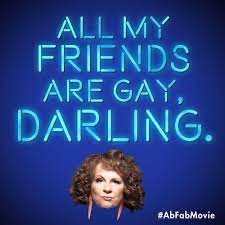
Now, I hate labels of any kind, but when a woman tells me, “I love the gays,” my toes curl. Even my nephew, at thirteen, was smart enough not to fall for that one. “They’re just like everyone else—good and bad,” he shrewdly pointed out. It’s funny in Ab Fab when Edina blurts out, “All my friends are gay.” Oh, the irony.
However, women who proudly label themselves as fag hags often raise serious red flags. I’ve heard it too many times: “Other women just don’t get me, but you and the gay guys do.” This is usually followed by something about liking bad boys in bed. That’s nice for them. Me? I want to be liked for who I am—not for my sexuality or a label.
On my first visit to a gay club—New York’s Limelight—I noticed lots of model-type women dancing. My friend said, “They feel safe here. They can dance and not get hit on.” It wasn’t long before straight men caught onto this and started frequenting the more glamorous gay venues. One night, I was with a group of guys when a stunning girl approached and said, “So sad you’re all gay. I’d f*** the lot of you!”
A little voice piped up, “I’m straight.” It was my pal who, though he leads the way in gay fashion, is 100% straight. Many men have tried their luck with him—the lady and him were in a taxi home minutes later.
Elizabeth Taylor. Wowza.
She loved the company of gay men—from Rock Hudson to Tab Hunter and Montgomery Clift—calling them her confidants. Tallulah Bankhead, when she wasn’t famously trying to sleep with gay men, preferred their company too. Even Mary Queen of Scots liked to quote the pretty men.
As for me—I just like people. It just so happens many of my closest friends are women: glamorous, powerful, and fabulous. But none of them would call themselves fag hags. With them, I’m still the old-fashioned gent: opening doors, walking roadside on the pavement, even pulling out chairs. Though some of these women try to lead while dancing—and pull out my chair instead.
Despite having my picture taken for a dating site, I’m no further along in love. One of my rocks, Liz Branson, is on the phone from her New York office. She splits her time between there, Dubai, and London.
“Have you done it?” she asks. Trying to change the subject, I ask when she’s next in London. There’s a pause.
“You haven’t,” she snaps, irritated. Then she barks: “Jo Allen’s. Tuesday. 9:30.” She doesn’t wait to see if I’m free—and hangs up. Ten minutes later, she texts: “If you are free, can you book it?”
Liz is great fun—always right, obsessively so at times. That’s part of what makes her successful, alluring, and fascinating. She’s also always late, often with some story. The truth? It takes her half an hour to oil her body so it glistens. That’s just part of her prep to go out. Despite her brass balls in business and her ability to crush high-powered men, she still likes to be every inch the high-maintenance woman.
She’s my Grace—as in Will & Grace. But it’s a myth that all women “get” gay men just because they hang out with us. Even women who say, “I’m a gay man trapped in a woman’s body,” can be shockingly naive.
The brilliant Will and Grace
A long-time friend recently remarked, after a theatre visit, that I’d loved the show because it had five scantily dressed young men. As pretty as they were, they left me sexually cold. She must’ve missed the memo—none of my boyfriends have been under 40.
My best gay mate knows that the cast of Peaky Blinders or Colin Farrell gets my pulse racing. Teen boys? They’re like watching Dita Von Teese dance—entertaining, but that’s all. This same friend once asked, “Why would you want to give head rather than take?” Well…
Peaky Blinders Top Men
Liz, for the record, didn’t really know any gay men before me—aside from one man who lived with her as straight and came out later. I think she assumed we all came from the same mould. She even rushed into another relationship with a gay man who promptly took her to gay bars and more.
Personally, I think friendships should be mutual. I’m fine in straight bars, and when I do visit gay bars, it’s usually for dinner or an event. Once, Liz called whispering: “I’m on Clapham Common.” Thinking there was a concert, I asked what was on. “No,” she replied, “I’m cruising with— Have you done this?” I nearly screamed. That was a step too far. That relationship ended when the guy tried to seduce Liz’s then-husband.
It wasn’t the first time I heard of women going cruising with gay men. My former boss was in a Freedom cab once when the driver said he was dropping condoms off at Hampstead Heath. She piped up, “Oh, I’ve been there!” Her gay friends had taken her. This phenomenon passed me by. I don’t cruise—it’s scary. And as broad-minded as I am, why would you take a woman?
Colin Farrell a dream .
Anyway—Liz is late again. She’s texted multiple times, blaming an Uber driver, a lion escaping from Regent’s Park Zoo, and a fire at a local orphanage. But when she finally arrives, she looks spectacular, and the whole restaurant turns to stare. Liz waves, hair glossy, eyes sparkling.
She’s now vegan—though she was already a nightmare in restaurants. After sending an omelette back four times once, I took a photo of the “perfect” omelette and handed it to the waiter the next day. She wasn’t amused—but it was funny.
Back to the evening. Only one waiter and one chef resigned since she placed her order—kidding. I suggest popping to Tesco for the soya sauce she insists on. That goes down like a lead balloon, as usual. She has everyone fussing over her.
There’s the usual gossip: a gorgeous executive she went skinny dipping with in Dubai (amazing in bed—15 years younger—is that too much?). Then, yet again, she brings up Darryl, the best sex of her life, who turned out to be a complete asshole. I’ve heard about him 90 times.
The good thing about Liz—she’s no energy vampire. She wants to know about you. Unfortunately, she’s fixated on my love life. She thinks my best pal and I should be together. “Why aren’t you with someone?” she asks.
People often miss this: gay men can have purely platonic friendships with other gay men. Of course, I love my best mate—but I have no plans to marry him. I joke, “Fine. I’ll propose next week.” Liz screams and wants champagne—until I admit I’m joking. Her face falls (as much as it can, post-Botox).
We laugh, drink, and just when I think we’re winding down, Liz insists we head to Old Compton Street. “Why?” I ask. She loves G-A-Y, apparently. But my gut tells me she’s obsessing about finding me a fella. I suggest Radio Bar instead. Blank look.
There’s no queue at G-A-Y. Inside, Liz grabs a drink and immediately turns into Cilla Black, introducing me to random men. “Who do you like?” she shouts. I feel like a rabbit in the headlights. “I’ll be discreet,” she yells. “I’m all good, thanks,” I say, hugging her.
She dances with drag queens and shouts, “I’m a gay icon!” Naturally, they all agree. She’s no Madonna or Judy, but for one night—she was. It was actually quite sweet.
Flushed with her success, we head to Rupert Street to meet a friend. Her one-woman show goes down well there too. I brief her beforehand not to mention dating him. She thinks he’s too young, so I’m safe.
Then Liz starts chatting to the handsome doorman—who’s straight and married. He calls me over: “Why don’t you take your girlfriend somewhere she can meet a man?” I grin. “She wanted to come here—not me.”
Who says she couldn’t meet a man there? My sister had a holiday romance with a gay club manager in Key West. Another female friend married a bartender from a gay bar.
So, Liz and I are still happily single—but watch this space for more
Steven Smith explores the emotional impact of going on holiday—how it can make or break friendships, test your sanity, and turn dream escapes into nightmare getaways. PLUS: His top tips for surviving travel with friends.
According to a Daily Telegraph survey conducted by Lloyds of London, eight out of ten people suffer from pre-holiday stress. In fact, numerous studies suggest that after divorce, house moves, and bereavement, going on holiday ranks as one of life’s most stressful events.
The Passion for Travel
Like many in the LGBTQ+ community, I’m fortunate to have the means and opportunity to travel widely—something linked to higher disposable income among our demographic. For me, travel is a passion. I’ve trekked Machu Picchu in Peru, cruised the Nile, dived beneath waterfalls, and flown over volcanoes by helicopter in Maui. I cherish those moments. Travelling with my partner of 18 years was always a joy. Sure, we had the odd delay or hiccup, but I adore airports and took most things in stride.
Add college friends into the mix, however, and you’ve got a different story. Assuming your friends have the same holiday agenda—or are as organised as you—can be a huge mistake.
Chiang Mai erotic garden.
Underpants Around His Ankles
It was Christmas morning in Gran Canaria. In the living room of my one-bedroom apartment, a large bearded bear of a man lay passed out on the floor. No, it wasn’t Santa. He had his trousers and underpants around his ankles—but had forgotten to remove his shoes. Behind him stood a naked, naughty elf. It was my friend, Brian Murphy, and I was ready to kill him.
My other friend, Blake Matthews, was in the villa next door and had been banging the headboard all night with a man who claimed to be a straight male escort from Croydon. Right.
Not quite the festive morning I had imagined. Despite our prior agreement not to bring random men home—so we could enjoy a calm Christmas breakfast together—it had quickly descended into chaos.
I packed my rucksack, stepped over the bear, and went off to enjoy a solo breakfast on the seafront.
What had I been thinking?
Gran Canaria wasn’t even my idea. A travel company, pleased with a few articles I’d written, gifted me a flight and villa for Christmas. It was more of a studio apartment, really. They kindly offered a discounted flight for a guest, and before long, five people wanted in. Suddenly, I was playing travel agent, and everyone started bitching about each other. Stress had already set in before we’d even packed our bags.
Two days before departure, I sent out a group text with flight times, terminal info, and villa directions. I added that I’d be checking in solo and would see them either at the gate or on the flight.
Blake replied: “CONTROL FREAK. RELAX. I’LL BE THERE.”
Another couple pulled out, saying Blake had offended them. I didn’t have the energy to argue.
At Gatwick, I stood alone at the gate. Just as boarding began, Brian appeared, full of excuses. No sign of Blake—until mid-air, when I felt a strange sense of relief. Blake had spent the last few days moaning about Brian, only to suddenly announce: “Oh, I love Brian,” as he puffed a menthol cigarette. A week later, the arrangement of Brian and me sharing an apartment—with Blake next door—became another source of friction.
Welcome to Hell
Arriving in Gran Canaria, my jaw dropped. “Ye Olde Queen Vic” pub signs flashed before me. The apartment was basic but expected. That didn’t stop Brian from moaning. He couldn’t wait to hit the notorious Yumbo Centre in search of his first conquest. The only upside? It was a five-minute walk, saving us taxi fares.
Determined to make the best of it, we set out. En route, we saw a fight—and a man get stabbed. Charming.
The Yumbo Centre—a giant shopping mall by day, gay Mecca by night—was surreal. You’d hope to be inspired by loving couples.
“We’ve been together for 29 years and we’re totally faithful,” said a pair from Blackpool.
“Gosh, I hope I can say that one day,” I replied. “Although… why is your hand on my bottom?”
“Oh, we share people.” So much for romance.
The drinks were cheap, the sun was shining, and I told myself everything would be fine—if I made it back to the apartment alive.
Act Two, Scene One
Blake finally arrived, fresh from flying British Airways business class—and made sure everyone knew it. Still drunk, he boasted: “Darling, I had gear with me and did a line with the steward in the galley.” Pure fiction, but the crowd laughed.
Blake, who had travelled with me many times, was always a walking contradiction. With his Freddie Mercury moustache, even a blind dog could tell he was gay. Yet he’d hide his Spartacus Guide under a Jackie Collins novel and insist on getting out of cabs a few streets away from gay bars.
Now he and Brian were lounging like extras from Dynasty, wrapped in white towels and robes, trashing the accommodation. “Steven, we’re not complaining but… what were you thinking?” said Blake, dramatically.
I found them a new place—one that suited their tastes. They weren’t thrilled. Now half-naked and on their fourth glass of bubbly, Blake puffed on another menthol and quipped, “I’m sure I’ll grow fond of the pet cockroach in my room.”
Then he hugged me. “Darling, we want to be with you. That’s why we came.”
Thankfully, my ex and his partner arrived, bringing some much-needed sanity. I hired a car and explored Gran Canaria properly. The island is beautiful—surprisingly so. Even the Yumbo grew on me. As long as I left before Alexis and Krystal stirred from their beauty sleep, I could enjoy peaceful days and return for cocktails and Blake’s nightly one-man show.
Did I mention I met my dream guy there, too?
The Police Officer’s Boyfriend
He wasn’t single—his partner was head of LGBTQ+ liaison for the police. “We share,” he said. “Are you up for it?”
“You’re kidding! If he were mine, no one would be touching him but me.”
I may have added, “Shame on you. You’re supposed to set an example.”
No judgment—so long as it’s consensual and no one is exploited—it’s just not my bag.
We saw each other a few times back home. But what goes around comes around. He stayed with his partner.
Was it bad friend choices? Or just me, dreaming of a jolly gay Christmas and failing to plan the logistics?
Holiday Rules and Snorers
There are so many stories. Like the time I woke to a stranger in bed with me and my best friend. Or when someone “forgot” their stage name didn’t match their passport.
Then there’s Adam.
Ours was a mature friendship. We talked things through. A year in, he asked, “Fancy a holiday?”
Alarm bells. Holidays can make or break a friendship. But I liked Adam, and when he suggested a cruise down the Nile from Luxor, I was sold.
Adam warned me he snored—and wow, did he. I recorded it (he wasn’t thrilled), but it prompted him to finally address the issue. Snoring can ruin holidays; one of my friends recently had to sleep by the pool just to escape her partner’s decibels.
Egypt. Wow.
The Nile cruise was magical. A shaky start (our airport transfer never arrived), but even dashing through dark backstreets in a cab to find our boat, we laughed all the way.
Sitting in the Winter Palace Hotel in Luxor—home of Agatha Christie’s Death on the Nile—Adam asked, “Shall we go see the sights?”
“Let’s just do Glamour’s Five-Star Hotel of the Nile for now,” I said.
We howled.
We discussed finances before the trip—essential. “It all comes out in the wash” was our motto. Sometimes one of us was more flush, and we’d cover each other. No awkwardness.
We all know the tightwad friend: the one who orders a starter and tap water, then helps themselves to the shared wine. But when it’s their round? Crickets.
Salmonella and Sensibility
Adam and I had many great adventures. He was the perfect pseudo-boyfriend. But eventually, someone else would come along. In Sitges, that’s exactly what happened.
We never planned for it—mistake. Sitting alone at dinner while he held hands with someone else wasn’t fun. We should’ve talked it through, as we usually did. Thankfully, it didn’t harm our friendship.
I can be a walking holiday disaster. Mosquitoes treat me like a buffet. I’ve caught Hepatitis B in India and salmonella in the Dominican Republic. But it never puts me off.
Because travel is freedom. And when shared with the right friend, it’s unforgettable. No matter how grown-up we are, caring for one another never goes out of fashion.
Have a great holiday season.
My Top 6 Tips for Travelling With a Friend:
Talk first. Discuss your expectations for the trip.
Be honest. Are you going for fun—or just to split costs?
Acknowledge your quirks. Any snoring, early riser habits, etc.
Talk about money. Set clear agreements in advance.
Respect personal space. Holidaying together doesn’t mean joined at the hip.
Look after each other. The best travel souvenir is a stronger friendship.
Ah… the Passive Aggressives. We’ve all met them. They open their mouths and what comes out sounds like a compliment—but it’s actually a veiled put-down. Before you can respond, they’ve already moved on to a new subject. Like silent assassins, they strike, then dare you to recover from the blow.
If you say, “Hey, would you like that said to you?”, they recoil in horror and reply, “Why are you so sensitive, darling? It was a compliment,” shaking their heads like they’re the victim of #PassiveAggression.
From: “I do admire how you keep going when others would have thrown in the towel ages ago—so brave,” to: “You know that outfit suits you—don’t let others put you off, whatever they say.”
Favourite?
My personal favourite came from a friend who’d actually introduced me to my now-best male pal. She told me: “So glad it’s going well with you two… you shouldn’t care what others are saying about you both.”
Let’s not forget the classic: “You can’t tell anyone I told you this, but so-and-so said XYZ about you.” My reply? Always: “Why were they so comfortable telling you?”
Now, much passive aggression comes from strangers, but the deepest cuts usually come from people we love, see regularly—or worse—family members.
Madeleine, a dear friend of mine, simply can’t help herself.
We All Know a Few Wicked Queens
The trouble is, I love her, and I tend to overlook her barbed remarks. Picture this: dinner with a group of friends as she regales the table with a story— “Oh darling, we were sitting up in premium class while Steven was way back in economy, squashed between two people.”
Everyone chuckles and looks at me sympathetically. In reality, she was also in economy. A bit further from me, yes—but the same class. Why make me the fall guy in her tale?
I don’t correct her. Honestly, I’m speechless. And who wants to play #PassiveAggressiveTennis? I know she loves me—really.
Spelling Lessons
Another agent friend, Antonia, has a wicked sense of humour, and her loyalty redeems a lot. I was so looking forward to lunch with her. She’d just returned from New York, promoting her girlfriend’s record, and we planned to pop into a gallery event where one of her friends was exhibiting.
But it didn’t take long for the first blow: “Darling Donna [her girlfriend] and I were just saying—you forget what a great writer you are—pause—as you’re just such an appalling speller.” Then, after another pause: “Does someone help you?” she asked, casually munching a root vegetable like we were discussing the weather.
It’s true—I’m dyslexic. Spelling is not my strong suit. But after over 20 years writing for publications around the world, and two published books, I’ve earned my place. If it weren’t for journalist and presenter Jane Moore encouraging me— “You have the voice. The rest will come—just do it.”
With technology, hard work, and mentors like Jane, I carved out a writing career. These days, people actually rate my work—and that means a lot. So I just smile and explain that yes, I have editors and tech, and the tools are better now.
Before I finish, the topic shifts—to Donna hitting the charts in the U.S.
Still Not Done
Later, at the packed gallery event, Madeleine introduces me to a group of people: “Everyone, this is Steven. He’s a great writer—but can’t spell.”
They look bemused. Madeleine has struck—and vanished—leaving me standing there hoping no one starts a crowdfund for my spelling lessons.
Arlena & Real Life
Life isn’t like the movies when the passive-aggressive gang comes for you. Most of us feel like rabbits in headlights—unlike the deliciously sharp Dames Diana Rigg and Maggie Smith in Evil Under the Sun.
Maggie, as Daphne Castle, greets Diana Rigg’s character Arlena Marshall: “Arlena and I were in the chorus of a show together—not that I could compete. Even in those days, she could always throw her legs in the air higher than any of us—and wider!”
Arlena retorts, “Kenneth, what a surprise. When you told me the island was run by a quaint little landlady, I had no idea it was Daphne Castle.”
There’s a fine line between bitchy and passive-aggressive.
Mother-in-Law Moments
A friend’s mother-in-law, taken backstage after a show, hugged the leading man and gushed about how amazing he was. The leading lady popped in to say hello. She turned to her and said, “I thought you were great… don’t listen to those reviews.”
Silence. The actress smiled, made her excuses, and left. When we later pointed out it was a line from The Feud (Joan Crawford vs. Bette Davis), the poor woman was mortified—she hadn’t meant it to cut. In hindsight? Hysterically funny.
The day before, she’d overheard me chatting to a famous pop star: “Who was that?” she asked. I should’ve said, “Mind your own business,” like my mum would. But I answered. Her reply? “Why would they want to talk to you?”
Gobsmacked. And somehow, older people get away with more. She really is lovely, though.
LGBTQ and the Passive Blow
As a member of the LGBTQ+ community, we often face passive aggression. It’s exhausting.
At a wedding in Guernsey, where the bride was 20 years older than the groom (so you’d think a liberal crowd, right?), a woman rushed up: “Oh, you two must be Mandy’s gay friends from London!”
She beamed like she expected us to burst into I Am What I Am. I tried some small talk. She wasn’t done: “David is gay—from EastEnders!” I replied, “Really? Amazing. I’ll look him up in the book.” Her eyes widened, “There’s a book?” “Yes, we’re all registered. I’ll bring you a copy next time I visit Mandy.”
Okay, that may have been me being passive-aggressive.
From: “I don’t mind the gays. My hairdresser’s one.” to: “I’m all for it—but don’t you mind not being able to have children?” We’ve all heard those.
Let’s not get started on the “bitchy queen” lines: “Don’t mind me, it’s all in jest. I’m just a bitch.” You’re waiting for them to hand you the poisoned apple. “Go on, bite, dear.”
What the Experts Say
Dr Pam
Experts say the best way to handle passive-aggressive people is not to react.
Self-help psychologist Dr Pam Spurr (@DrPamSpurr) says:
“People can be passive-aggressive for many reasons, but usually it’s because they have a manipulative streak.
If they want to put you down, the easiest way is with a backhanded compliment. It wrong-foots you and leaves you wondering what they really meant. That’s emotional manipulation.
She adds:
“Passive aggression often comes from resentment, envy, or jealousy—sometimes without them even realising it.
Some people, however, do know exactly what they’re doing. They enjoy the power of the subtle jab.”
Her advice?
Call it out calmly—especially if you see the person often.
If it’s someone you barely know—ignore it, put it in perspective.
Realise: it’s more about them than it is about you.
According to LearningMind.com, passive aggression also includes chronic lateness (to gain attention), controlling events, undermining others behind their backs, playing the victim, or pretending there’s no issue when there clearly is.
Psychology Today agrees:
Recognise the behaviour.
Stay calm.
Don’t take it personally.
Confront it if needed.
Blackmail and Backlash
These all sound simple on paper. But for people like me—who hate confrontation—even a kind challenge results in tears and emotional blackmail. I’ll do anything to stop someone crying.
Growing up, pointing out when someone was wrong led to a meltdown. Still today, if I gently mention something upsetting, I get: “I can’t say anything right,” soon followed by, “I had a terrible childhood.”
Let’s be honest—in the UK, from the 60s to the 80s (and sometimes now), talking about feelings can feel like a deadly sin.
Teach Them Young
Signe Whitson, LSW, writing for Psychology Today, notes:
“Without directly addressing passive-aggressive behaviour, the pattern will play out again and again. For real change, benign confrontation is necessary.”
She argues being assertive isn’t something to fear.
I agree. Imagine if we taught kids that if someone they love says something hurtful, it’s okay to speak up and share how it made them feel.
As Dr Pam says,
“Sometimes they don’t even realise what they’re doing.”
Happy Pride, everyone! just reflecting on Pride I thought Id share some background about me .
Becoming a counsellor wasn’t my first career choice. From a young age, my true passion was doing people’s hair. But strangely enough, hairdressing and counselling are closely linked. You know what they say: if you can’t afford a therapist, see your hairdresser!
In my case, it actually worked the other way around. My hairdressing career took off—I specialised in colour and built a hugely successful business. My CV includes working with celebrities and the rich and famous, and my colouring talent brought me into collaboration with some of the biggest names in the hair world.
But I always had a burning desire to really listen to my clients. No matter who they were—a rock star, a socialite, or a fashion icon—it became clear early on that we all face similar challenges: heartbreak, divorce, bereavement, anxiety, depression… the list goes on. People might argue that wealthy clients don’t have the same worries, but I’ve seen both ends of the spectrum. Money doesn’t always bring happiness.
That 16-year-old girl living in a Chelsea townhouse who wants to come out to her family isn’t so different from the one growing up in a council flat. Their circumstances may differ, but they’re both human and both deserving of support.
My fascination with people and their stories led me to retrain as a therapist. But it wasn’t just my clients who inspired me—it was also my own life.
I’m a gay woman and I came out in the 1990s. It was a brave move at the time—it certainly wasn’t trendy or widely accepted. We had very few role models: K.D. Lang, Melissa Etheridge, and Ellen DeGeneres were among the few out and proud. And let’s face it, lesbian characters in TV and film were usually portrayed as mad, bad, or dead. For many of us, The Killing of Sister George was the only reference point. Though it’s a classic with sensational performances, it doesn’t exactly paint a rosy picture of lesbian life.
(That’s why I’m so looking forward to the upcoming documentary on The Gate Club—the legendary lesbian venue on the King’s Road where parts of Sister George were filmed.)
When I came out, it raised a few eyebrows—even at the very trendy Vidal Sassoon salon in central London, where I was working at the time. Once word got out, some of my regular clients switched to other colourists.
While I had amazing support from some colleagues, moving on to other salons often meant facing homophobia—surprisingly, sometimes even from gay men. It’s not something we talk about often, but it’s real. Although my inner circle included fabulous gay men, there were definitely some who didn’t welcome us lesbians with open arms.
And believe it or not, I was refused entry to some gay clubs for looking “too straight”! Apparently, I was too femme.
Thankfully, times are changing. But we mustn’t take that progress for granted. Homophobia still exists in many forms, and we need positive role models, education, and continued activism to keep moving forward.
When I started studying to become a therapist, going back to college felt surreal. One classmate broke the ice by saying, “So proud to be your first lesbian!”—we’re still great friends to this day. But not everyone was welcoming. One peer was consistently rude and passive-aggressive. It was never openly discussed, but I strongly sensed a kind of veiled homophobia. Thankfully, the rest of the class were amazing, inclusive, and my tutor was truly sensational.
Back in the day, it would have been unthinkable to be openly gay in one successful career, let alone two.
Happy Pride, everyone! Let’s celebrate how far we’ve come. There’s still plenty of work to do, but I’m proud to be waving the rainbow flag—and I can’t wait to answer your emails.
Love, Heidi
Dear Heidi,
My girlfriend dumped me before the pandemic because she enjoys clubbing and going to bars. That’s just not my scene. I’m looking for something more meaningful—I want to meet someone and settle down. But dating apps and websites scare me, and the bar scene isn’t for me. Alex, Bethnal Green
Hi Alex, Thank you for writing in. You’re not alone—plenty of people feel intimidated by the modern dating world. The key is to find spaces that align with your values. Consider LGBTQ+ book clubs, walking groups, art classes, or volunteering for a cause you care about. These are great ways to meet like-minded people in a low-pressure environment. And if you ever decide to try dating apps, choose ones with detailed profiles—look for people who are also looking for something serious. Take small steps—you’ve got this! Love, Heidi
Dear Heidi,
My girlfriend and I have been together for two years and plan to marry next year. Recently, she’s expressed a desire to try threesomes, saying it’ll “spice things up.” I don’t want to lose her, but honestly, it’s not for me. What should I do? Madeline, Manchester
Hi Madeline, Your feelings are completely valid. Relationships should be based on mutual respect and clear boundaries. If something doesn’t feel right to you, you shouldn’t feel pressured to agree. Talk to your partner openly and honestly—express your feelings without judgement. A strong relationship can withstand differences, as long as there’s communication and compromise. The right partner will respect your comfort zone. Take care, Heidi
Dear Heidi,
I’m 19 and come from what you’d call a “rough” family. My two brothers and I are all amateur boxers. My dad is a real “man’s man” and uses words like “queer” as an insult. I’ve been dating girls to hide who I really am, but one of them suspected something when I didn’t want to go all the way—she called me a “poof.” I love my family, but what can I do, Heidi? Should I risk coming out? Mike, Blackpool
Dear Mike, Thank you for your honesty. Coming out is deeply personal, and only you can decide when the time is right. It’s okay to take your time. You don’t have to come out until you feel safe and ready. Remember, there’s no shame in protecting yourself emotionally and physically. If you ever feel unsafe at home, reach out to LGBTQ+ support groups—there is a community out there that will support and celebrate you for who you are. You’re not alone. With warmth and strength, Heidi.
I couldn’t agree more with the divine Joan Collins—who, as a fellow Gemini, always knows how to speak her mind. Just last month she said, “It is rude to ask a lady her age.” And I say, absolutely right. While we’re at it, let’s extend that rule to men, too. Age should never be the first thing people bring up at the dinner table—or anywhere, really. Yet, for some strange reason, some people still haven’t got the memo.
Even the legendary Ms Collins never misses a moment to bring up age on her own terms, and good on her. The problem is when others decide it’s their business to discuss or dissect your age as if it’s a defining feature of who you are.
Trust me, being asked, “Guess how old I am?” is the social equivalent of stepping on a rake. It’s awkward, unnecessary, and usually driven by vanity or insecurity. Worse still, when someone asks you how old you are in front of a group—what exactly are they hoping to achieve? Shock? Admiration? Or a bit of good old-fashioned one-upmanship?
Pictures by Graham Martin
Personally, I’m incredibly proud of the age I’ve reached. I’m in great company—hello, Tom Cruise and Boy George! To be able to say I’ve lived a full and colourful life, packed with lessons, laughter, a few bruises and many blessings, is something I treasure. But that doesn’t mean I want to be constantly labelled by it.
is 60 the new 40 well George and I hit 64 and still partying
Still, I must admit, the age hang-up isn’t mine—it’s other people’s. I’ve been at parties where someone makes an entrance like a movie star arriving late on the red carpet. You know the type—deliberate delays, dramatic flair, sunglasses indoors, and a whole production just to let everyone marvel at how good they still look. And yes, they do look amazing, but does everything have to revolve around how young or “well-preserved” someone is?
I’ve even been in situations where my own friends—who happen to look much younger than their age—draw the same “oohs” and “aahs.” I once attended a dinner with a long-time friend who, despite being in his twenties, has the soul and intellect of someone in his seventies. We were seated with a man I didn’t know, and from the moment he sat down, the conversation steered toward age. He asked if we still went clubbing, commented on siestas as “old man naps,” and suggested that we must prefer quiet evenings now. I stopped him mid-flow and said, “Darling, I don’t do the age thing or put labels on people.”
That’s when it hit me: his obsession with age wasn’t about us—it was about him. My young friend whispered to me later, “He’s projecting his own fears onto you.” And he was right. So many people are battling their own discomfort with growing older, and instead of embracing it, they try to deflect that discomfort onto others. Sad, really.
But here’s the truth: age isn’t a limit or a barrier unless you make it one. I’ve always envisioned myself living with a bit of swagger—relaxed, charming, and totally unbothered. I’ve seen people in their 70s, 80s, and 90s absolutely raving—living their best lives, dancing under disco lights, refusing to be boxed in by the number on their birth certificate. And I say: why not?
Of course, your priorities change. These days, I enjoy good dinners, meaningful conversations, and yes, a nap if needed. But that doesn’t make me any less fun, adventurous, or alive. I just don’t have the patience for drama or superficiality anymore—and I count that as progress.
Teenager to now .. living life to the full
One thing I wish people would do more is just be. Enjoy where you are, who you’re with, and the life you’re living. Stop measuring your worth—or anyone else’s—by youth, appearance, or how “on trend” you are. Confidence, kindness, and curiosity will outlast collagen and hair dye any day
So yes, age is just a number, and we should all be proud of the years we’ve lived and the experiences they’ve brought us. But really—can we stop bringing it up every five minutes?
A true gay icon blows into town this October with her one-woman show. No, I’m not talking about Madonna — this icon of the stage won’t charge you hundreds to see her and will be on time. Frances Barber will be reviving her role as Billie Trix, the washed-up, drug-taking pop star who will have you howling with laughter. Steven Smith chats with Frances ahead of the show.
You appeared in ‘Closer to Heaven’ at the Arts Theatre in 2001, written by Jonathan Harvey with music by the Pet Shop Boys. It’s said that ‘MUSIK’ was written especially for you. How did you get together, and what makes the collaboration work so well?
It seems like yesterday that Closer to Heaven opened to savage reviews. It was ahead of its time — the critics just didn’t know what to make of it. Most of them had no idea about clubs like Heaven or the gay scene and drug culture. But one thing they did take to was Billie Trix, the washed-up, drug-taking German singer I was lucky enough to play.
Jonathan Harvey is a brilliant writer, and the Pet Shop Boys’ music is superb. It’s been 19 years since the show opened and we’ve remained friends. One night at dinner we just said, “We have to do it.” We’re all passionate about what we do, so it works well.
I was lucky enough to see ‘MUSIK’ the first time around — it was simply genius! What were your musical influences growing up, and what about now?
Well, you might be surprised by how eclectic my taste is. Being one of six children, I had diverse music coming at me from all angles. My older siblings were into Eric Clapton, Cream and The Beatles, while Mum and Dad liked Sinatra and Shirley Bassey. My mum would’ve been bowled over if she’d seen me at her 80th birthday!
For me, Northern Soul, Punk, and David Bowie’s Aladdin Sane were huge influences.
If you had actually met Andy Warhol, what two questions would you have asked him?
Oh gosh! First, how did he come up with the idea for the Campbell’s soup images? Was he under the weather, opened a tin, and thought, “Here’s an idea”?
And second, the obsession he seemed to have with Marilyn — the four images he created: victim, survivor, manipulator, glamour. I’ve always wondered what he really thought of her.
Your character in ‘MUSIK’, Billie Trix, transitions from music to art. If you could spend one day at any gallery in the world, where would it be? Whose artwork do you find most inspiring?
To be straight with you, I’m not an art connoisseur myself. I just know what I like, and I enjoy going to galleries and looking at art. The Rijksmuseum in Amsterdam is one of my favourites — the lighting there is beautiful, and The Night Watch is so powerful.
Peter Greenaway brings art to his films in so many ways, but it’s his lighting that’s truly magical. Filming A Zed & Two Noughts was just a beautiful experience.
Billie Trix amusingly appears to inhale half of Peru during the show! Drugs are increasingly prevalent in the UK and LGBTQ+ party community — especially ‘Ket’ and ‘GHB’, which are sadly linked to deaths. Do you think ‘MUSIK’ will spark conversations about drug use or glamorise it? Is there enough public information about these newer drugs?
Look, what people do is none of my business — we’re all grown-ups and live our lives. But yes, this new trend does worry me, especially for young people. I only became aware of chem-sex parties while I was working in LA.
People can do what they like, but when you read that someone has raped over 170 people using one of these popular drugs, you really think: it’s time for more education and awareness.
You’re a gay icon and also a passionate supporter of LGBTQ+ rights. Are you concerned that these rights might be affected by the current political climate, those who voted against gay marriage and LGBTQ+ education in schools without parental consent?
My feeling is that Boris Johnson is more liberal than his predecessors. He has a little crazy streak in him and I don’t think he’ll allow LGBTQ+ rights to be rolled back — at least I hope he won’t. But let’s not forget, there are people in all parties who don’t exactly wave the rainbow flag.
You resigned from the Labour Party and criticised Jeremy Corbyn. Were you surprised by the election results? Would you consider returning under a new leader, and do you see any strong candidates emerging?
I joined the Jewish Labour Movement, so I still have a vote. Like many others, I was expecting a hung parliament — it was a bit of a wake-up call. Lisa Nandy is getting my attention as a potential leader, though.
You appeared alongside Annette Bening, Jamie Bell, Vanessa Redgrave and Julie Walters in Film Stars Don’t Die in Liverpool. Have you ever considered moving to Los Angeles? Do you feel more passionate about film or theatre?
Oh, I’ve done the LA thing! A few years ago, I gave it a go and it was… interesting. I’m glad I waited until later in life — I’m not sure the younger me would’ve coped with it, to be honest. It’s not as exciting as you’d think.
Who would you love to work with that you haven’t yet had the chance to?
There are so many wonderful people I’ve had the pleasure of working with — from Dame Judi Dench to Vanessa Redgrave. But Helen Mirren? She’d be a dream. She’s just superb.
You famously dated legendary director Danny Boyle. Are you in a relationship now?
Oh dear, Danny! It’s wonderful how well he’s done. Yes, we’re still in touch — I called him when he won the Golden Globe to congratulate him. And yes, I am in a relationship. Silence! (laughs) — They’re not in the business, but I’m happy.
Quickfire Round
City or beach break? Oh, beach break.
Your favourite place in London? The Tate Modern — I just love it there.
What film would you take your partner to see? Without a doubt, Some Like It Hot — Jack Lemmon, Tony Curtis, Marilyn Monroe. It’s perfect in so many ways.
Chinese or Japanese food? Japanese.
If you were Mayor for a day, what one thing would you change about London? This won’t make me popular, but I don’t care — get rid of those cycle lanes! They make the roads worse.
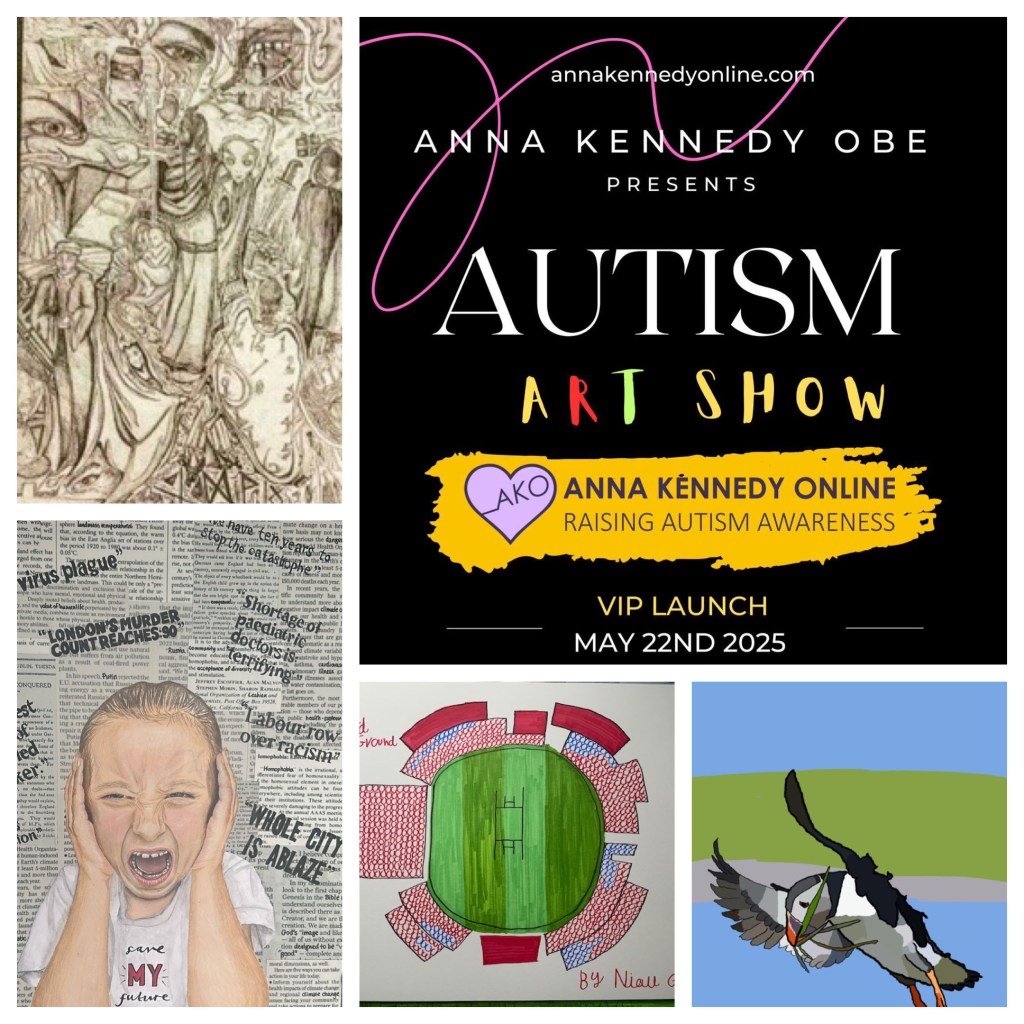
“For people on the autism spectrum, art is a powerful medium that encourages self-expression.”
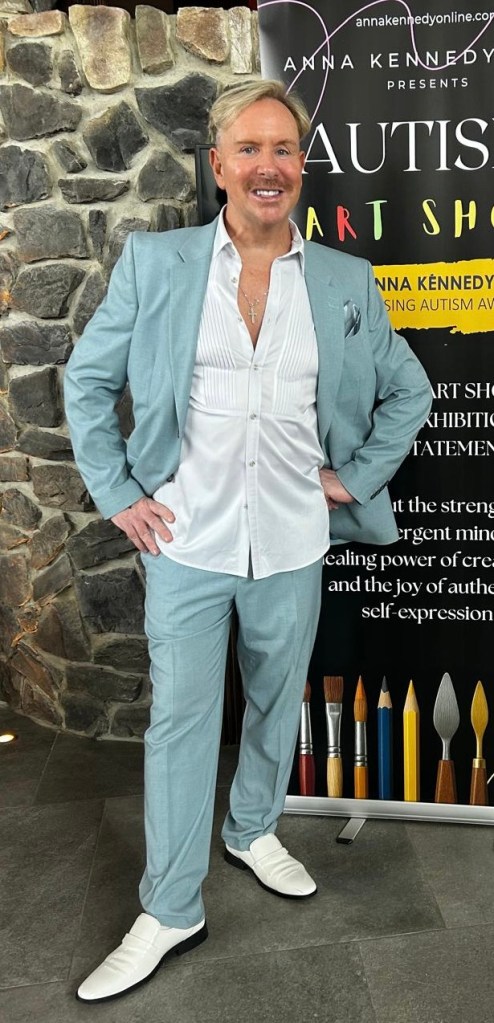
Anna Kennedy Online, in collaboration with the Firepit Art Gallery , is proud to present the first-ever “Autism & Art Show. “This exciting event showcases incredible artwork from autistic artists and their allies, with all profits supporting the charity Anna Kennedy Online. Art is more than just a passion—it serves as a therapeutic outlet, offering solace and joy to many individuals on the autism spectrum. With great enthusiasm, Anna Kennedy OBE, charity patron Steven Smith, and Firepit Art Gallery founder Markus Jake invite you to celebrate and support these talented artists. Ar) Event Location: Firepit Art Gallery CIC Firepit Gallery No.2, Upper Riverside, 10 Cutter Ln, Ground Floor Unit, Greenwich Peninsula London SE10 0XX Learn More & Support the Charity
jacket not for sale Aladdin Sane £200.
The Autism & Art Show — 22nd May 2025
Join us for a celebration of creativity, resilience, and neurodiverse voices at The Autism & Art Show, showcasing a rich tapestry of work by autistic artists from across the UK. Each participant brings a unique story and style, making this event a powerful tribute to the talents of individuals on the spectrum.
Featured Artists
Angelo Kennedy
Angelo, 32, is autistic and lives with significant sensory processing disorder. On display is a vibrant painting of sunflowers he created at just 10 years old. Angelo enjoys cooking, bowling, and continues to work hard on his independent living skills. His brother, Patrick, is also on the spectrum and works at Pinewood Studios.
£500 pounds by Angelo Kennedy for offers contact spman@btinternet 07969016222
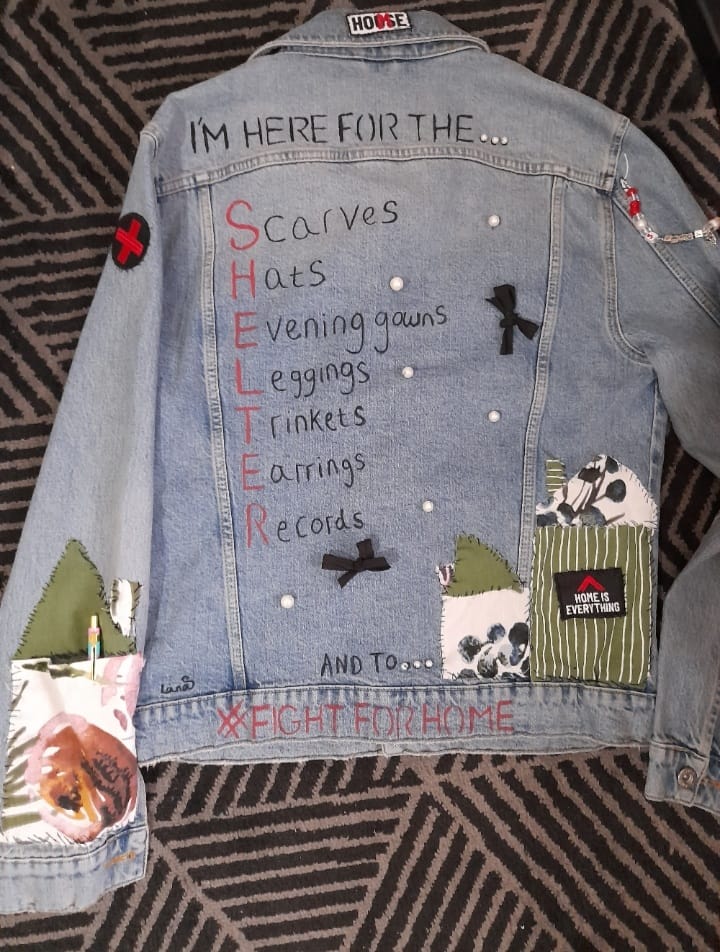
Lana Mitchell
Lana, who lives with autism, once feared unfamiliar environments. In 2024, she began volunteering at Shelter Crystal Palace, where her uniqueness was embraced and her creativity blossomed. She now designs themed window displays and, to celebrate her one-year anniversary, created a striking punk-style denim jacket.
sold
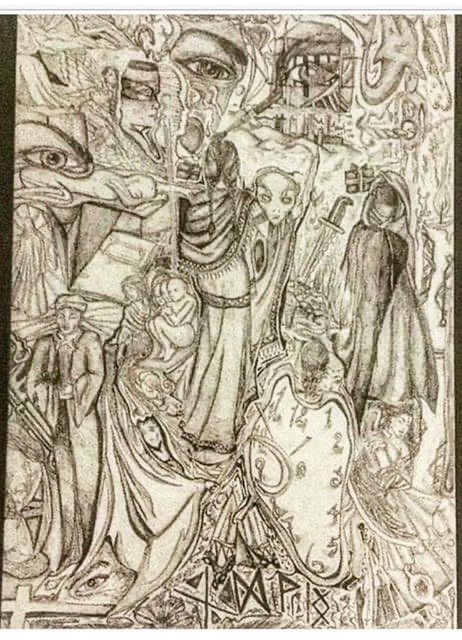
Collette Sherriffs
Collette, 47, from Kincardine, Scotland, has loved art since childhood. Despite working hard to earn a place at art school, her dreams were crushed when her mother told her she was “too stupid” to succeed. Heartbroken, she gave up art—until recently. One of the pieces on display is from her original portfolio, which her mother once threw away but was fortunately saved. Now a devoted mum of two, Collette champions her children’s creativity with pride and encouragement.
Offers over £250 inbox spman@btinternet.com
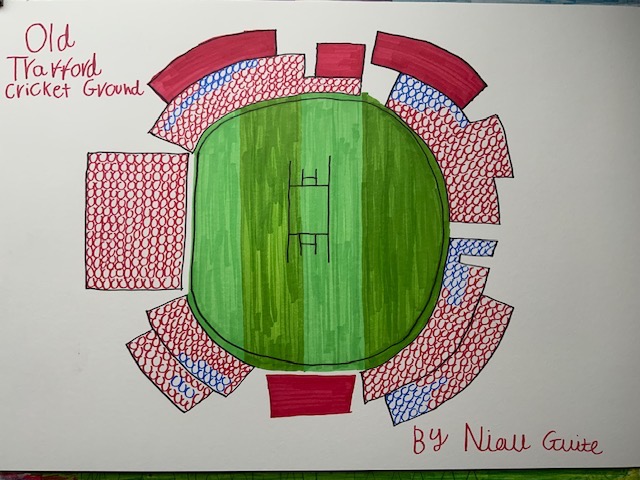
Niall Guite
Niall, 30, is an artist with autism, an intellectual disability, dyspraxia, and dyslexia. He gained international acclaim after raising funds for Special Olympics GB by selling his iconic stadium drawings. Niall has exhibited at the Royal Academy Summer Exhibition, delivered a TED Talk, and received an Honorary Doctorate from Sheffield Hallam University for his work promoting inclusion through art.
A collector piece offers over £250 inbox spman@btinternet.com
Piluca Artist
Piluca: Artist. Muralist. Fashion Visionary. Street Art Queen. Born in Madrid and ignited by Brixton’s wild heart, Piluca is a published illustrator, muralist, fashion designer, and founder of I Am Here 2 Play, launching this May at Hypezeus, London. Her vibrant murals and street art light up London’s iconic venues, turning the city into an open-air gallery. A WinTrade Awards finalist, she moves effortlessly across fine art, fashion, and branding with fearless, raw style. Piluca’s creative impact extends deep into communities—leading workshops, festivals, and campaigns with purpose. From fashion to neuroscience illustration, her work defies boundaries—and London proudly wears her name.
Offers above £350
Chris Wild
Chris is an author, artist, actor, care home consultant, government advisor, youth advocate, and charity patron. A passionate voice for young people in care, Chris’s first book, Damaged, shares his personal story. His second, The State of It, challenges the systemic failures affecting vulnerable youth. Through art and writing, he continues to inspire change and awareness.
Chris Wild painting offers over £500
Artism by Jake
Jake, 20, finds joy in painting. As a young man on the autism spectrum, his artwork offers a distinct and captivating perspective. All profits from his prints are donated to charitable causes.
Offers over £150
Heidi Simm
At 17, Heidi is the creative mind behind Disco City, a fusion of Disney characters and her own original creations. With a strong, determined spirit, she uses her art to express herself, manage her mental health, and explore new techniques. Her inquisitive nature and unique imagination make her work stand out.
Fabulous fun £250 please inbox me at spman@btinternet.com
Dr. Ian Hale
Based in Bristol, Dr. Ian Hale is an author, poet, autism specialist, and certified Master of Photography. His book, Asperger’s, Autism and You: Is the Epidemic Real and Are Vaccines the Cause?, blends personal insight with clinical research. Ian, who is autistic himself, shares his journey through media, public speaking, and art. His photography — praised by brands like Chanel and Vogue — offers a profound glimpse into his neurodiverse worldview.
Offers over £200 please .
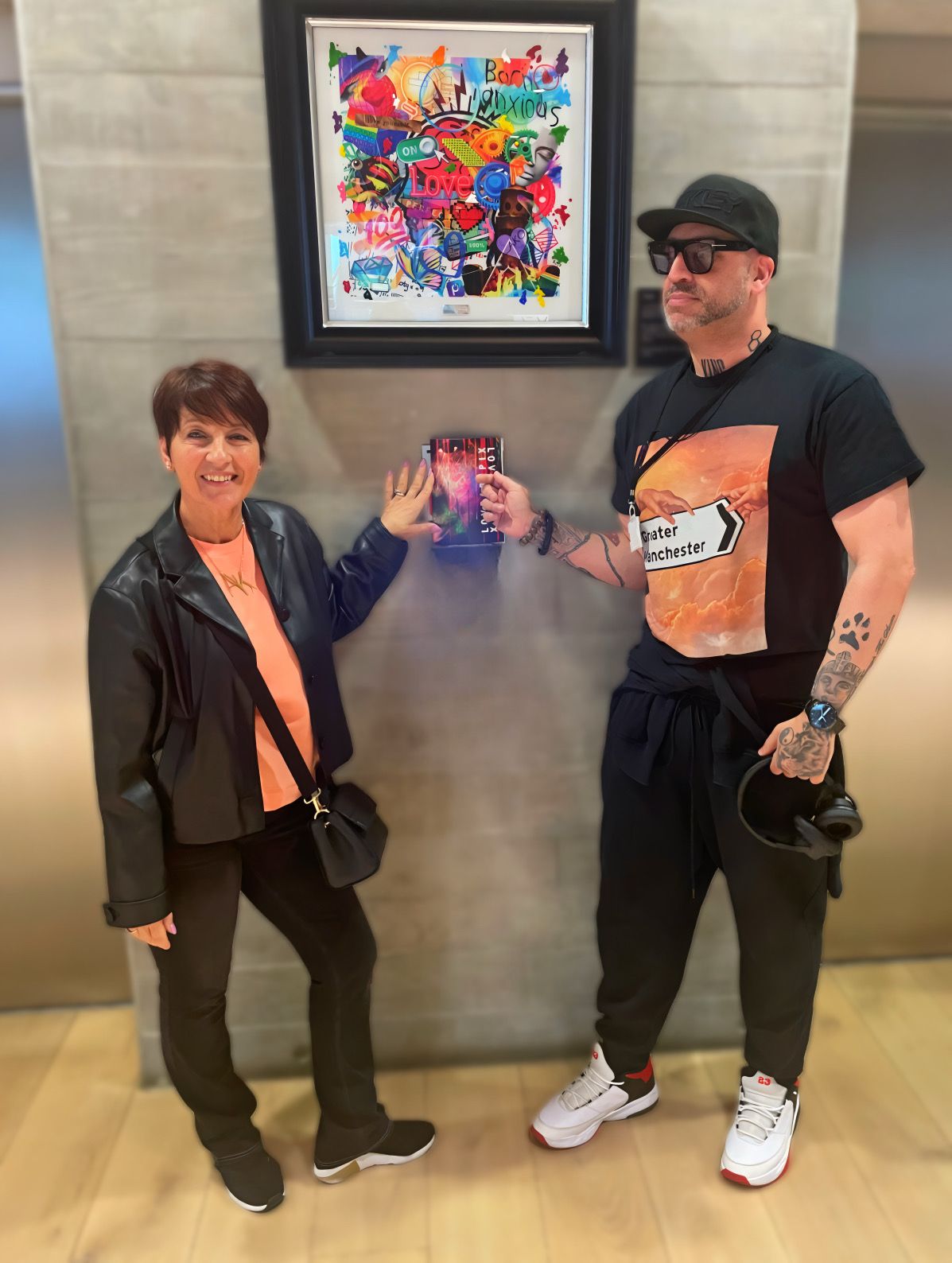
Loveartpix (Dez)
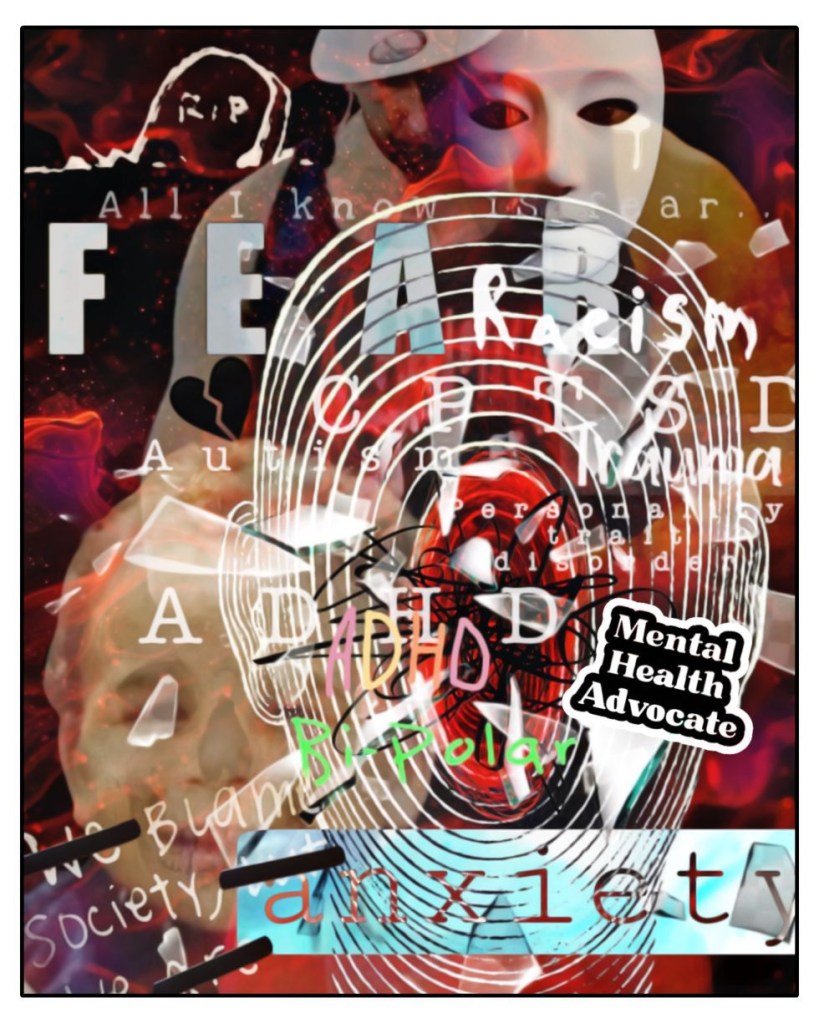
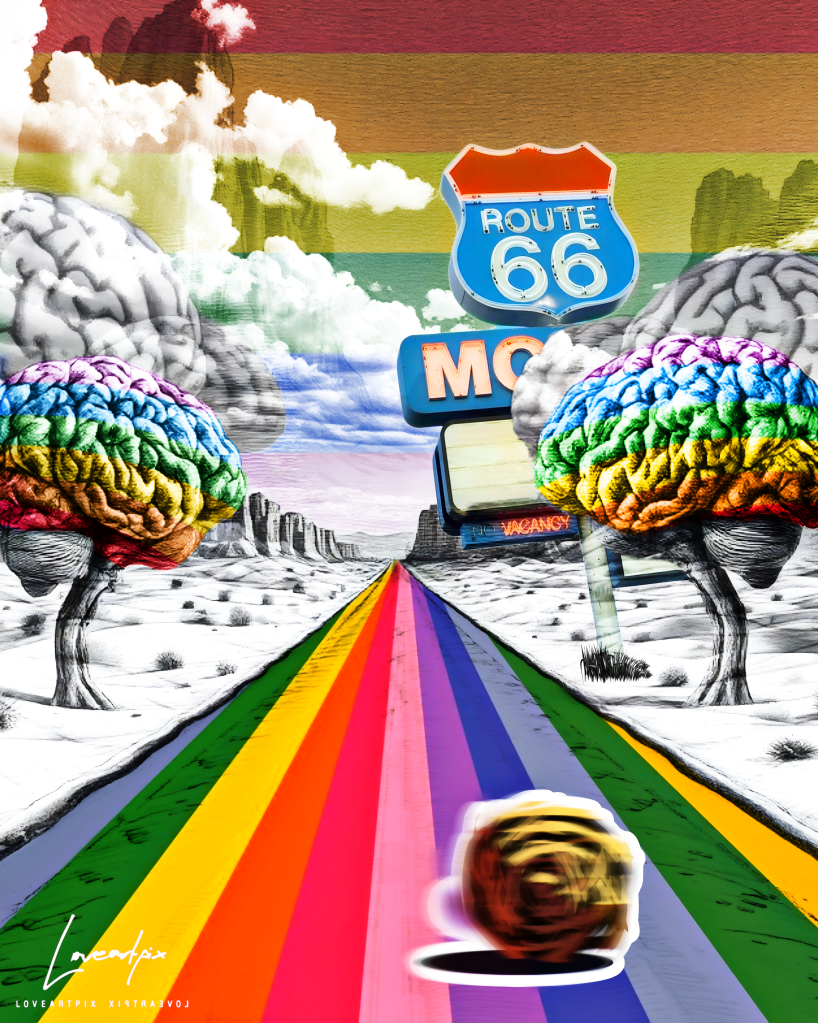
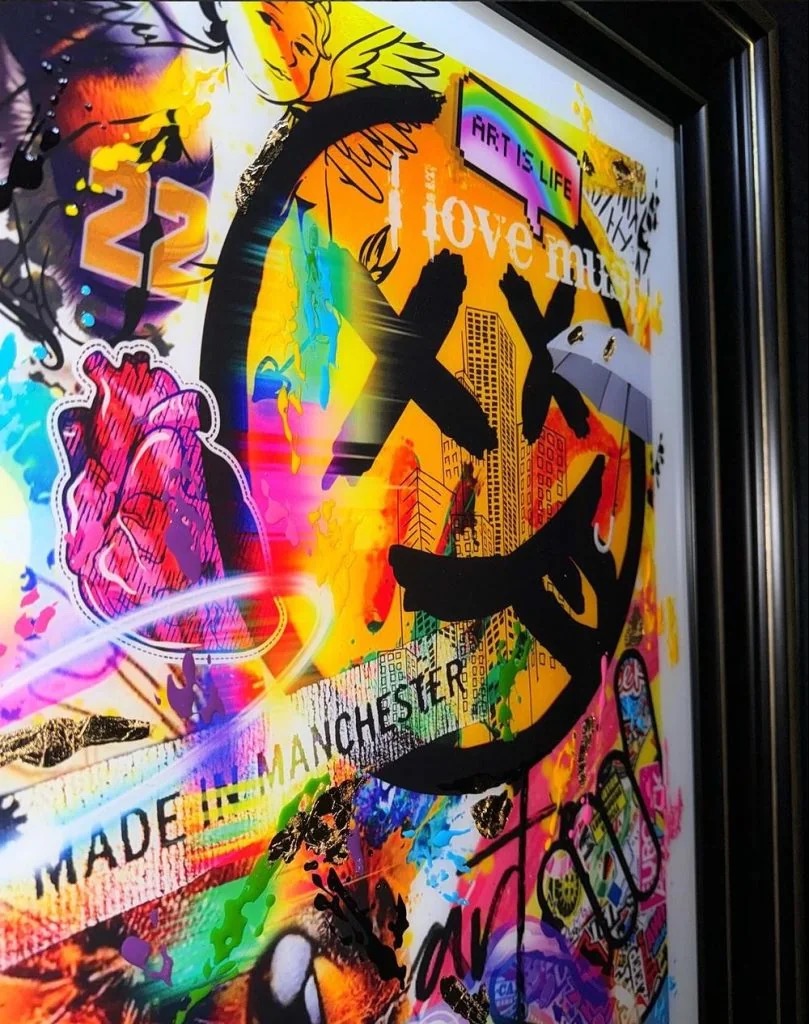
Loveartpix , a self-taught AudHD (Autism + ADHD) artist from Manchester, uses creativity as a vital outlet for mental health and self-expression. Diagnosed with Bipolar Disorder, Autism, and ADHD, he began his art journey in 2018 as therapy. His vibrant work often reflects the spirit of Manchester and the experiences of neurodivergence.
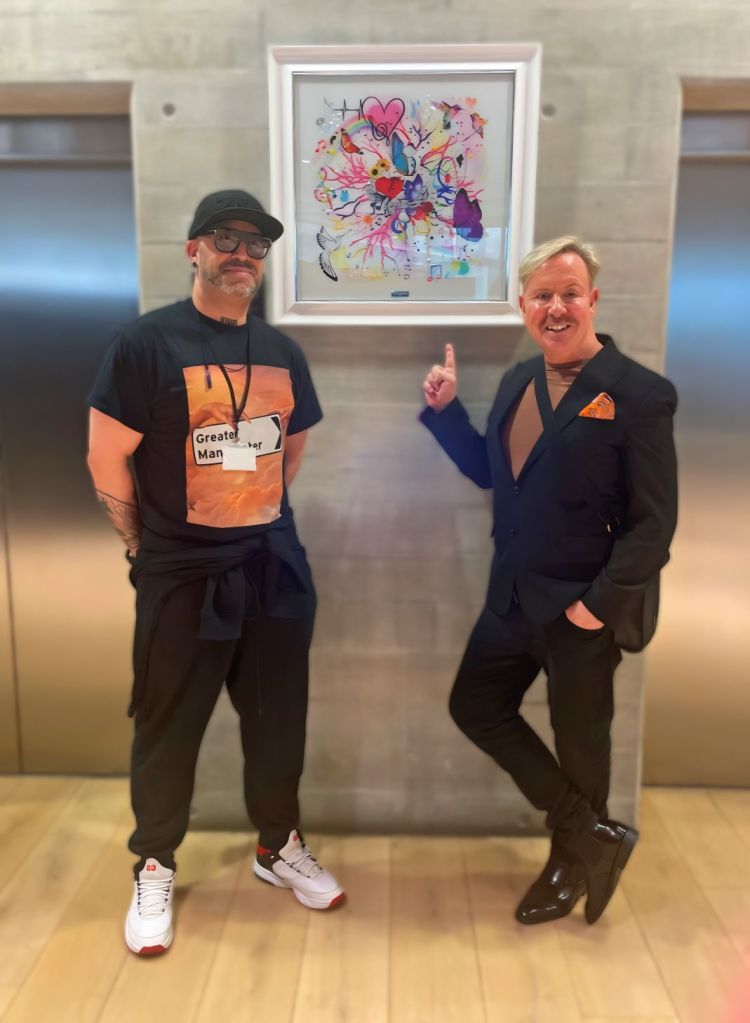
Loveartpix with the wonderful art he will be showing offers over £1000 please .
Annemarie Bickerton
With over 30 years in photography and art, Annemarie specializes in editorial portraiture. As digital photography evolved, she pivoted toward headshot work, applying her skills to editorial, corporate, and artistic projects. Annemarie is also a proud mum to Sam, who lives with autism, and continues to champion neurodiverse creativity in all its forms.
£500 by Annemarie Bickerton
Sam Bickerton
Sam, diagnosed with ASD and dyslexia, demonstrates resilience in the face of social and emotional challenges. From early Lego builds to his love for origami, mask-making, and boxing, Sam’s creativity offers a safe space for self-expression and calm. His journey is one of strength and self-discovery through art.
an example of Sam work the will be. bigger one on the night offers from £150 message me spman@btinternet.com
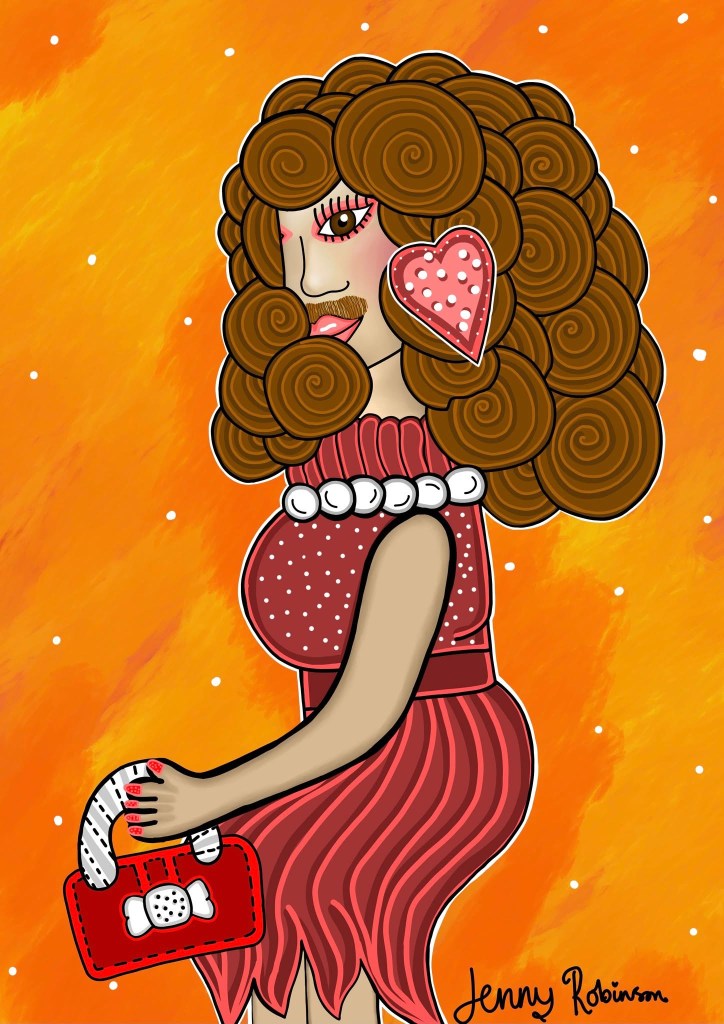
Jenny Robinson
Jenny is a self-taught digital artist and graphic designer with a love for Freddie Mercury. Her standout piece is a digital portrait of Freddie in a custom outfit inspired by the I Want to Break Free video. Although not included in her solo exhibition, Jenny has pledged to donate 100% of the sale proceeds to the Anna Kennedy charity. Diagnosed with autism a year ago, she now explores digital art as a core part of her creative identity.
Jenny Robinson £250 inbox spman@btinternet.com
Marcus Mason-Williams
Marcus is a multi-talented autistic artist and entrepreneur. As a founding member of The Lilac Review — a government-backed campaign spotlighting disabled-led businesses — Marcus uses his business, CoolArt2021, to share wildlife-inspired storytelling and merchandise. “Art and performing set me free,” he says. “Through my stories and performances, I connect with others and the world around me.”
Offers over £250 message Steven Smith 079069106222
AlastairBlasterArtz
Alastair McEwen, also known as BlasterArtz, is a full-time carer for both his disabled parent and autistic son. Through art, he finds a way to manage emotions, connect with loved ones, and reflect on mental health. His heartfelt piece Blanky, created with friend and writer Steven Smith, has moved many and embodies the power of art as a lifeline.
BLANKY offers over £200
Eddie Wells
Eddie grew up in East London, navigating life with undiagnosed ADHD and dyslexia. Creativity was his refuge. Following his father’s death in 2013, he realized that art wasn’t just an outlet — it was his salvation. His work reflects the inner world of someone living on the spectrum and overcoming silent battles through creative expression.
Offers over £2000. e-mail spman@btinternet.com
Shayla Curtis
At just 18, Shayla is already a passionate advocate for children with autism and complex needs. Diagnosed with autism herself, she struggled in most subjects at school — except for art. Encouraged by a supportive GCSE teacher, Shayla flourished creatively and now uses her skills to design activities that help young people express themselves, build confidence, and develop life skills.
SOLD
Tally Nothey
This piece is deeply personal. As the mother of an autistic child, Tally has faced days that felt overwhelmingly heavy—marked by worry, exhaustion, and the deep ache of feeling misunderstood. Yet, through every challenge, it has been the support of close friends that has carried her forward. Each woman represented in this work symbolizes someone who has stood beside her, held space for her fears, celebrated the smallest victories, and reminded her of her own strength when she struggled to find it.
This image reflects that journey. It acknowledges that while friendship may not solve everything, it makes the burdens easier to bear. Together, they have cried, laughed, and lifted one another—and because of them, she never walks alone.
work in progress £500 .
Darren Chapman – Actor & Artist
Darren Charman – Visual Artist & Storyteller
Darren Charman is a British visual artist and actor, originally from Hastings in Sussex. His creative journey began in the world of performance, training in the Meisner technique at The Actors Temple in London, where he developed a deep sensitivity to emotion, narrative, and human expression—qualities that now echo powerfully through his artwork.
Drawing on his background in character-driven storytelling, Darren’s art is bold, imaginative, and often laced with wit. Each piece invites viewers into a world that balances humour with poignancy, reflecting the layered perspectives of someone equally at home on a stage or behind a canvas.
Darren has received recognition for his work in comedy film, winning two DAFTA awards for The Fetishman (The Irishman Parody) and Living Dead (Living Parody). These accolades underscore his instinctive grasp of character, timing, and satire—all of which now inform his artistic practice.
Stunning bracelets by Darren £100 or above .
Gemma Lees is a Romany Gypsy, disabled and autistic fine art installationist, performance poet, comedian, facilitator and journalist from Bury. Her practise focuses on protest, advocacy, inclusion and telling the stories that no one else is.
Last year she worked with: Arts and Homelessness International, Traveller’s Times, Headteacher Update, SEN Magazine, ACERT, Queer Britain, Turnpike, Cartwheel Arts, BBC Radio Manchester, Triple C, Warwickshire Libraries, CultureDale, WOW Fest, Factory International, CIJ and CRIPtic.
A qualified post-compulsory teacher, she is a passionate advocate for GTRSB and neurodiverse inclusion in schools and wider education.
Sadie King is a 16-year-old student currently studying for her GCSEs. She has a strong passion for character design and storytelling. Sadie hopes to build a career in creating her own animated series. Her work often explores original concepts and imaginative worlds. She is eager to share more of her art and ideas with others. Sadie welcomes feedback and is open to showing additional work
Offers over £200
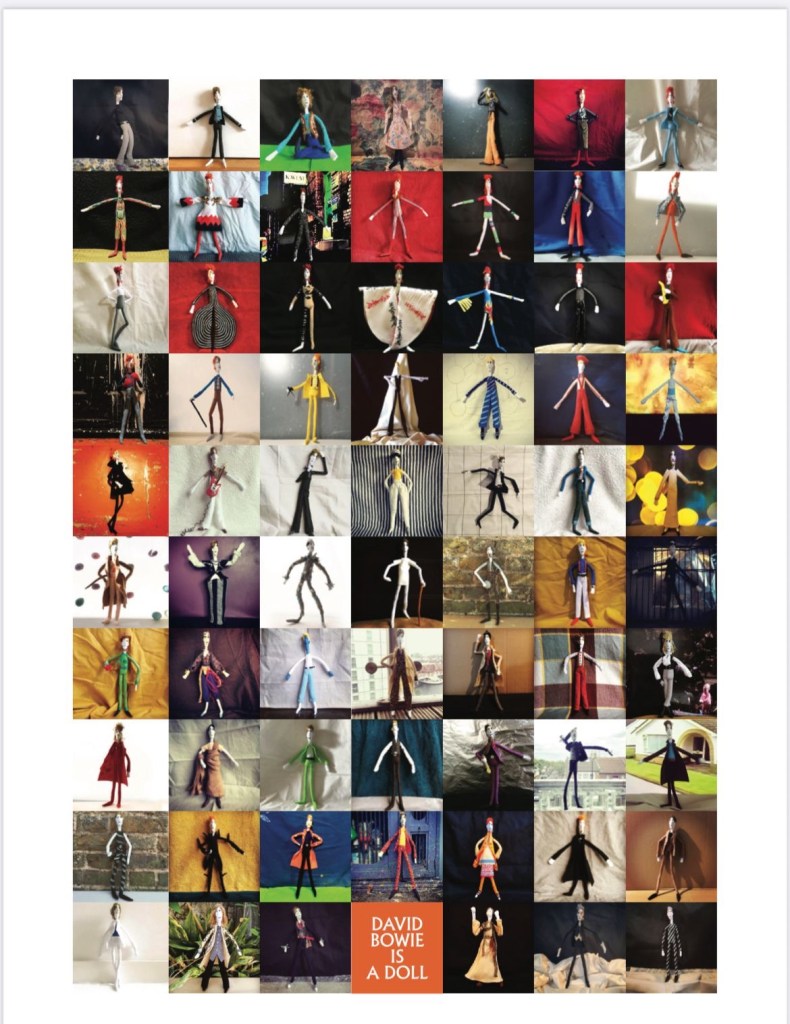
John Lee Bird is a multi-disciplinary artist known for his global exhibitions of paintings, collages, and sculptural work. His DOLLS project features over 2,000 hand-sewn textile sculptures celebrating idols, friends, and queer culture. Inspired by film, drag, cult TV, and music, each 13-inch doll is crafted from felt, beads, buttons, and embellishments. The project began during lockdown as a therapeutic return to textiles, starting with 69 David Bowie dolls. It has since grown into a rich portrait series spanning pop culture icons and personal heroes. John’s work is driven by obsession, emotion, and a deep love of music and storytelling. He also creates sound and film, collaborating with artists such as Simon Fisher Turner and Xiu Xiu. John co-runs the queer club night KNICKERS with musician Jemma Freeman.
Posters £25
PATRICK STEELE-BODGER Patrick calls himself a “Media Wikipedia” and “the Sheldon of Media” – a nod to his incredible recall of screen and sound. From a young age, he’s expressed himself through TV, film, books and comics. He recreates the tiniest details, from split-second sound effects to hidden cameos. Patrick loves drawing characters, writing fan fiction, and exploring music from Louis Armstrong to Daft Punk. As the in-house artist for Meet The Pods, now becoming a toy range, his creativity shines. He also designs bespoke greeting cards – and if you ask his favourite word? It’s “EXCELSIOR!”
£100 each
The Autism & Art Show isn’t just an exhibition — it’s a statement. It’s about the strength of neurodivergent minds, the healing power of creativity, and the joy of self-expression. Come and be inspired by these extraordinary artists.
The story of BLANKY .
SOLD OUT.
Blanky
Art Alastair Blaster words Steven Smith
“We are all born as blank canvases; hate, racism, and a lack of understanding are learned.” How you choose to see the world and create the tapestry of your life is up to you. Blanky is here to “Make Earth Safe Again.”
In another universe, under a different sun, there was a planet much like Earth called Alacritas. It was a world of lush tropical forests, crystal-clear lakes, and unpolluted seas. The people of Alacritas lived in harmony, where kindness and tolerance were deeply ingrained in their way of life. Their homes were built to exist in perfect balance with nature, and even in their cities, the air remained clean and pure.
Advertisement
Privacy Settings
The Alacritans were far more advanced than humans. Meditation and self-healing were essential practices, and their very beings were composed of energy molecules, allowing many to heal themselves from illness. Some possessed extraordinary abilities, such as telepathy and body transformations, harnessing the sun’s rays to bring goodness to their planet and others. While there were occasional exceptions, as the saying goes, “one bad apple”—but that is another story.
You could say it was a utopia—until they arrived.
The people of Olethros came claiming peace, seeking to live in harmony with the Alacritans. But the sun did not welcome them. Almost immediately, it burned their skin a bright orange, making them stand out. Rumours spread that their own planet had been devastated by pollution, war, and slavery.
It soon became clear that the orange ones had not come as friends but as conquerors. They sought to strip Alacritas of its rich minerals, enslave its people, and channel their energy into restoring their own dying world.
The peaceful Alacritans were unprepared for battle. Their civilization, built on unity and respect, was nearly wiped out. Only a few survived—those who could transform or scatter their molecules to avoid detection.
The Olethrans ravaged the planet like ants devouring sugar. Within a year, there was nothing left. In desperation, one Alacritan, Blanky, used his powers to escape. Transforming into pure energy, he fled into the cosmos in search of help. But as he left, Alacritas could take no more. The planet exploded, sending Blanky hurtling off course.
100 Years Later
Planet Earth
London, Waterloo
Patrick was fourteen, tall for his age, and loved playing basketball. From the window of his small ground floor apartment, he watched the other kids on the court, longing to join them. He knew he had the talent to be a star player. But his mother, protective as ever, rarely let him out alone. She feared he would be bullied or misunderstood because of his autism.
One Saturday afternoon, his mother had a friend over and asked them to watch Patrick while she ran errands in Stratford. With their eyes glued to The Real Housewives, they barely noticed Patrick, assuming he was immersed in his video game as usual.
But today was different. Quietly, Patrick put down the controller and crept toward the door. His apartment, on the ground floor, was only 200 yards from the basketball court. As he stepped outside, excitement surged through him. The sun’s rays warmed his face as he gently closed the door behind him and ran toward the court.
But then—he tripped.
As he hit the ground, something surrounded him, unlike anything he had ever seen. A strange, shifting cloud engulfed his body, sending tingles through his skin. As the mist dispersed, a small figure emerged.
Patrick couldn’t believe his eyes.
Before him stood a tiny being—completely blank, as if made of smooth, featureless clay. It pointed a stubby finger at Patrick’s baseball cap. Amused, Patrick handed it over. The moment the creature touched the fabric, the hat transformed into the same clay-like substance as its body.
Advertisement
Privacy Settings
Then, to Patrick’s shock, the small figure spoke.
“I am Blanky. Your planet needs me, or it may suffer the same fate as mine.”
Patrick stared, wide-eyed.
“I need sunlight to regain my strength,” Blanky continued. “With your help, I can transform and protect those who are hated and discriminated against. I have chosen you, Patrick, because you are special. For now, my body is just a canvas. Put me in your pocket, and let’s go play ball.”
Patrick didn’t hesitate. He gently scooped up Blanky and tucked him into the pocket of his jacket.
“I’ll tell you more soon,” Blanky assured him.
Patrick knew he had just made a special friend—one he would have to keep secret for now.
What neither of them realised was that Blanky had maybe arrived years too late.
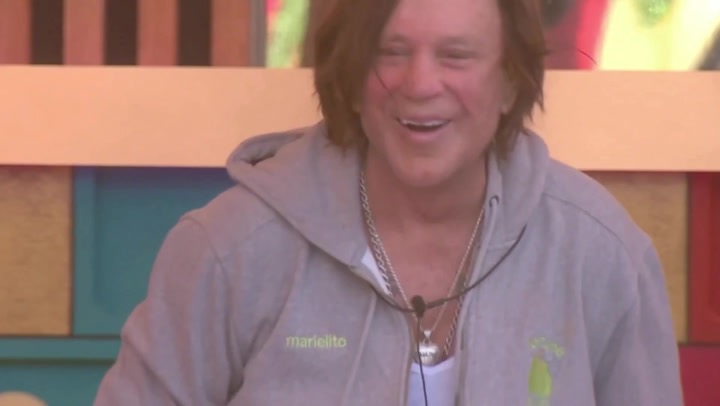
There is no doubt that Mickey Rourke has been the best thing to happen to Celebrity Big Brother this year. He is a fascinating mix of Victor Meldrew’s grumpy bluntness and Keith Richards’ wild, unpredictable charm. Arriving with no filter whatsoever and the wide-eyed confusion of Alice falling through the looking glass, he often seems unsure of exactly where he is. It’s not only comedy gold; it’s also a stark reminder of how hypersensitive our society has become — many ready to cry into their decaf almond milk lattes at the slightest provocation.
I had the pleasure of meeting Mr. Rourke many years ago at The Abbey Coffee Shop in West Hollywood, back when he was dating Carrie Otis. The Abbey, a famous LGBTQ+ venue, was buzzing as usual. Rourke, accompanied by his two beloved dogs, stopped me to ask about mine. We chatted briefly (I’ll admit I was a little starstruck — Angel Heart remains one of my all-time favourite films). My point is this: Mickey Rourke is not homophobic. He simply comes from a different time. The man is 72 years old. Perhaps, unlike some of the more publicity-hungry contestants, he doesn’t feel the need to self-censor or meticulously filter every word he utters.
My instinct tells me that JoJo might have handled the situation differently had she not been so consistently stunned — she often wore the look of a “rabbit in the headlights.” Fortunately, Chris Hughes, the charming and grounded contestant every parent would approve of, stepped in calmly to defend her. He restored order with dignity and compassion, providing a rare and refreshing moment of true humanity in a show increasingly dominated by outrage culture.
Chris Hughes the man you want your son or daughter to bring home
Let’s be honest: in the real world, prejudice and inappropriate comments are unfortunate realities many people will face. Mickey’s comments weren’t right, but they also didn’t merit his removal from the house. What’s needed is guidance and understanding, not instant condemnation and cancellation. We must be able to differentiate between malice and ignorance, between true harm and clumsy missteps.
Predictably, it wasn’t long before others saw an opportunity to capitalize on the situation. Donna Preston, a comedian by profession, was told by Rourke — while he lounged under an LED face mask — “You are what you eat.” Rather than respond with wit or humor, she ran crying to her team. For someone who makes a living out of comedy, it was a surprising reaction. Where was the banter, the quick retort that a seasoned performer should deliver with ease?
Donna Preston easily offended .
At this point, I began to feel genuinely sorry for Rourke. Things only deteriorated further when Patsy Palmer took offense at a mild comment about her cooking and ended up in tears. It begs the question: where has resilience gone? Life is full of difficult people who speak bluntly or unkindly. If we are reduced to tears by every offhand remark, how will we cope with the harsher realities that life inevitably throws our way?
Patsy non chewable broccoli leads to tears
As many know, I am a strong advocate for mental health awareness. I have faced my own battles with depression and anxiety. However, one of the most important lessons I have learned is the value of resilience. The only way to overcome bullies and unkind individuals is to develop inner strength. If we allow their words to break us, then they have won.
In my childhood, my imagination became my sanctuary. It helped me navigate bullying at both school and home, allowing me to rise above it rather than be crushed by it. Today, while mental health education is crucial, it is equally important that we teach children and young adults how to endure adversity. Bullying and cruelty will never disappear entirely. Learning how to manage, respond, and thrive despite them is essential.
Celebrity Big Brother has, perhaps unintentionally, become a mirror reflecting today’s cultural fragility. And frankly, it’s worrying.
We need a generation that can distinguish between genuine harm and an ill-judged comment. We need young people who can face challenges head-on, who can understand intent rather than automatically assuming the worst, and who can survive — and even thrive — in a world that will not always be kind.
Toughness doesn’t mean lacking empathy or kindness. It means having the inner strength to pick yourself up after a setback, to laugh off the jibes, and to rise above the noise. Without it, we risk raising a generation ill-equipped for real life.
Mickey Rourke’s stint on CBB might just end up being more than television entertainment. It might serve as a wake-up call about where we are heading — and a reminder of the resilience we so desperately need to reclaim.
Massive props to Danny Beard — he’s not just bringing the yeast to the bread, he’s practically baking a whole bakery at this point! As for Trisha… well, I’ll spare you the rant, but let’s just say Michael Fabricant and I are singing from the same hymn sheet.
Now, if Mikey manages to hang on much longer, he might just sneak a win — stranger things have happened! That said, my money’s still firmly on Chris or Danny to take the crown.
Danny Beard bringing the laughs to the CBB House .
Steven Smith joins Dr. Anna Kennedy OBE in Manchester to invite one of its leading artists, Dez, to become an ambassador of Anna Kennedy Online. https://annakennedyonline.com
In addition, this amazing artist has agreed to exhibit one of his incredible pieces at Autism & Art on May 22nd in London at the Fire Pit Gallery, generously donating the proceeds of the sale to the charity. Steven chats with the man everyone is talking about. https://www.firepit.art
Dez, known professionally as Loveartpix, is a self-taught Audhd artist and advocate from Manchester, England.
Diagnosed with Bipolar Disorder in his twenties and receiving late diagnoses of Autism and ADHD in his forties, Dez has navigated a complex mental health journey, also undergoing therapy for Complex PTSD. Art became a lifeline during this time, helping him process heightened emotional states and giving voice to his experiences.
Since fully immersing himself in art around 2018, Dez has used his creative work as both personal therapy and a platform for advocacy. Through his distinctive pieces — often centered around Manchester life and neurodiversity — he promotes the therapeutic power of art as a daily coping strategy. Sharing his creations widely under the name Loveartpix, Dez aims to raise awareness about neurodivergence in a largely neurotypical society.
His work is featured across the Northwest of England, including Manchester, Blackpool, and Cumbria, as well as internationally at the Normandy Memorial Trust in France. A passionate supporter of community initiatives, Dez regularly donates art to charities, raising thousands of pounds at auction.
In 2023, he won his first Autism Hero Award, recognizing his contributions to neurodiversity advocacy. He also launched the UK’s first Neurodivergent Art Focus Group, piloted at HMP Manchester with outstanding success.
For the past 3 years, Dez has been filmed for a documentary chronicling his late-diagnosis journey and the role of art therapy in his life. In March 2025, Loveartpix launched his debut Art exhibition where he also shared his platform collaborating with other neurodivergent artists. ‘A Neurodivergent Art Exhibition’ by Loveartpix showcased in Spinningfields, Manchester.
At 45, Dez sees himself as only just beginning to truly understand his conditions. He considers creativity not just a passion, but a vital tool for self-regulation and connection — and he remains dedicated to sharing his journey to inspire and support others.
Anna Kennedy says “We are thrilled to have Dez as an ambassador. I have followed him over the past few years and watched his passion and confidence grow through his creativity and digital artwork, especially after winning the Autism Hero Awards in 2023. As a self-taught autistic artist creating wonderful digital pieces, he will be a great role model for our charity. Dez can also share how his artwork has helped him through personal struggles, inspiring other autistic individuals to do the same.”
1. Hello, what does it mean to you to become a patron of Anna Kennedy Online?
Hi Steven,
Becoming a patron for Anna Kennedy Online (AKO) is such a privilege and an honour — not to sound too cliché! I have been involved with AKO for a few years through art donations, small projects, and also by winning the Autism Hero Award for Creative Arts and Media with them in 2023.
Since my late autism diagnosis in 2021 (at the age of 41), I have thrown myself into understanding my condition the best I can — not only to help myself, but to help others too, as I know there are so many people out there like me. Having been nominated for six awards in such a short time through my contributions in art donations and raising awareness, winning the AKO award was a major highlight for me.
Fast forward two years, and now being asked by Anna to be an ambassador just fills me with pride.
I have always had a creative flare but really started to focus on it when I was going through my autism assessment. It was a very difficult and disruptive point in my life processing such an epochal event. Stuggling a lot at night, using the Picsart app on my phone really fitted in, being the least disorderly. Any art piece I create, I really submerge myself into the topic and it gives my erratic thoughts focus. Realising that the art I was creating resonated with many people I decided that I wanted to use it as a tool to promote understanding and awareness as much as possible.
What artists inspire you?
To be perfectly honest, I don’t really get inspiration from artists — probably more from people. I am a naturally creative person, so when I look at life, I feel inspired by topics that intrigue and affect me, or by things I am passionate about. I am then drawn to create around those themes.
Being a self-taught artist, and because I use art as a tool for self-help, I haven’t formally studied art; I simply use it to process my emotions. It’s something I turn to when I’m struggling or when I need to focus my thoughts. I don’t feel like a traditional artist in the usual sense.
That said, I do follow many artists and art profiles on social media, and there are so many amazing artists out there. One artist I really like is @deanevansart on Instagram. His work is so vibrant and thought-provoking. If you get the chance, definitely check out his profile!
If you had to take someone out in Manchester, what one place would you take them to?
If I had to take someone to Manchester, it would have to be the Nag’s Head pub. The Nag’s Head is a true Manchester landmark, and I’m proud to say that, among the 4,000 images of the beautiful city I call home, I have two of my pieces in their collection.
One is a tribute to highly decorated war hero Harry Billinge MBE LdH — the largest piece in the building. (I had the honour of meeting Harry before he passed away and still stay in touch with his family.) The other is one of my ‘Bees About Town’ collection, displayed in the front window.
What does love mean to you and how important is it in your life?
Love is many things and shows itself in many forms. Helping and supporting people to make things better is love — depending on your personal feelings.
For me, putting myself in harm’s way to help others is a huge form of love. Missing out on events with my son due to my condition, but then being happy just spending time with him afterward — even though I felt upset about missing the event — is love.
Knowing that I would put my life in front of my family’s without hesitation, and valuing their lives far more than my own, is love. Self-sacrifice is love. Pain is love. Seeing others happy is love.
I actually find this a difficult question to answer, as there are so many variables to what love means.
They say “Big boys don’t cry” — do you think this is true?
I think this is such a harmful quote from a bygone era that still has a massive negative impact on society today — especially on the male suicide rate.
Crying is a way to process emotions. It’s part of being human. We all do it, and I find it such a bizarre notion that somehow suppressing it makes you tougher or better at dealing with life.
Being able to express yourself and be open about your emotions is, in my opinion, a very strong thing and speaks volumes about a person’s character. Yes, there are times when you have to deal with situations that require mental and physical strength, and you have to push through and fight — but I am really against this phrase.
No, I definitely do not think this quote is true.
How important is it to you to inspire and help others who want to create?
Art for me is the tool to understanding and processing things I struggle with. I know the positive impact it has first hand from my own experience. Obviously art comes in many forms too. Last year I piloted the first of its kind neurodivergent art focus group for prisoners in HMP Manchester which was a huge success. Art was the tool I used to get the prisoners to explore how their condition affects them in the hope of supporting rehabilitation. Some of the prisoners used words and created poems, some preferred to paint, and others liked to draw. I then collated what was created by each individual and edited the final pieces on the Picsart app to create a unique collection – which I will be displaying at a later date. It’s well documented the power of creativity and art therapy so for me I try to promote this at every chance I get.
What would you like to achieve next?
On a personal level, I would like to achieve a sense of mental contentment and balance. For me, this would mean understanding my condition much more deeply. Although beginning to understand it has already helped me so much, I still struggle and fight daily. I want to continue striving to be a good parent and family member.
In my career, I have a lot of projects in the works, so I will continue to develop these and, hopefully, help many more people and bring about positive change. I guess my main goals are to be a good role model, help others, and continue turning what I go through into something positive — oh, and now, to be a good ambassador for AKO!
No matter how good David Beckham looks in his BOSS underpants, there is absolutely no way I am paying £45 or more for a pack of three. Even if he personally delivered them to my door, it would still be a firm no from me.
It’s not that I’m being tight with money — far from it. I live a very busy and active life, constantly working out, dashing from place to place, and keeping on top of everything. For me, my underpants need to be practical above all else. They must offer strength, durability, and a feel-good factor against my skin. In short, they have to work hard and feel great at the same time.
From my personal experience, even some of the big-name designer brands don’t always deliver. In fact, some of them don’t last much longer than cheaper alternatives, and when you’re paying prices that rival the cost of a good pair of jeans, it’s hard not to feel resentful. I still want to look and feel good in my underwear, of course, especially with summer fast approaching. Warmer weather means I’ll be out and about a lot more, and let’s be honest — I’ll probably need to change my underpants at least twice a day.
Now, here’s the great news. Listen up, boys, girls, and everyone in between who loves staying up to date with the latest must-have fashion in men’s underwear. I have found the very best option out there — and it won’t break the bank!
Not only does it look fantastic on, but it feels absolutely incredible. Your body can breathe, the fit is spot-on, and you won’t believe the comfort. The brand you need to know about is FM London. Trust me, this is going to be the most talked-about brand very soon.
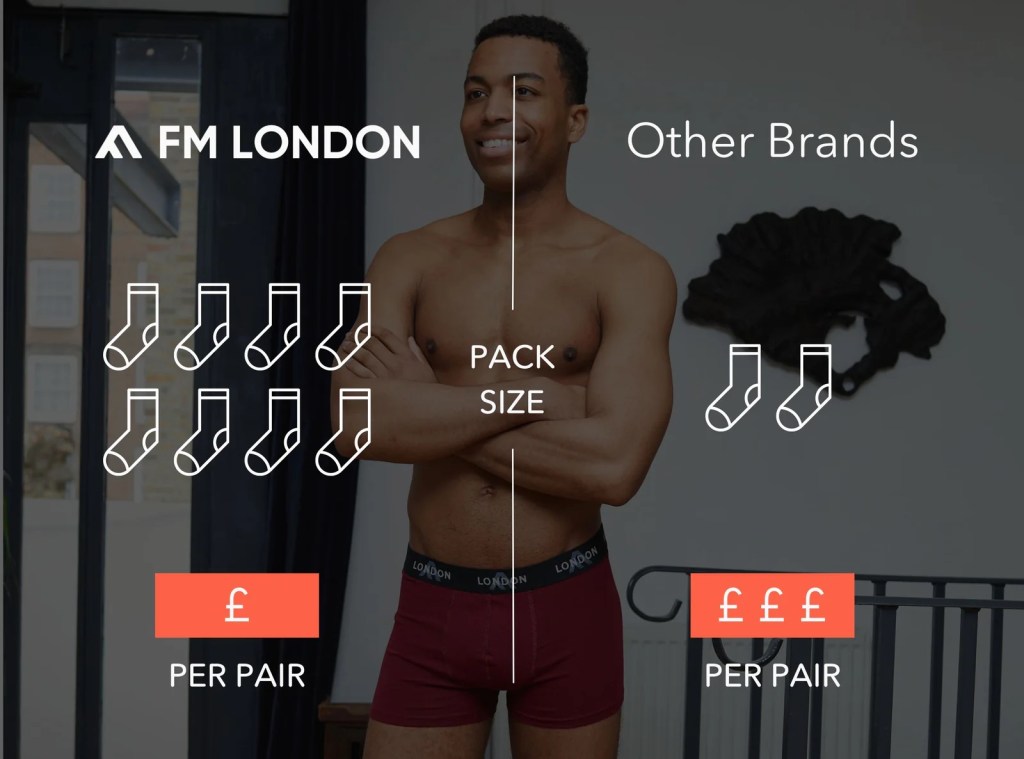
FM London started back in 2015 with three brothers who were completely fed up with paying ridiculous prices for basic clothing. They decided to do something about it and created a no-fuss brand that delivers real quality without the hefty price tag.
When it comes to men’s socks and underpants, these guys are truly onto a winner. Their underwear offers everything you could possibly want:
A stretchy, ergonomic fit
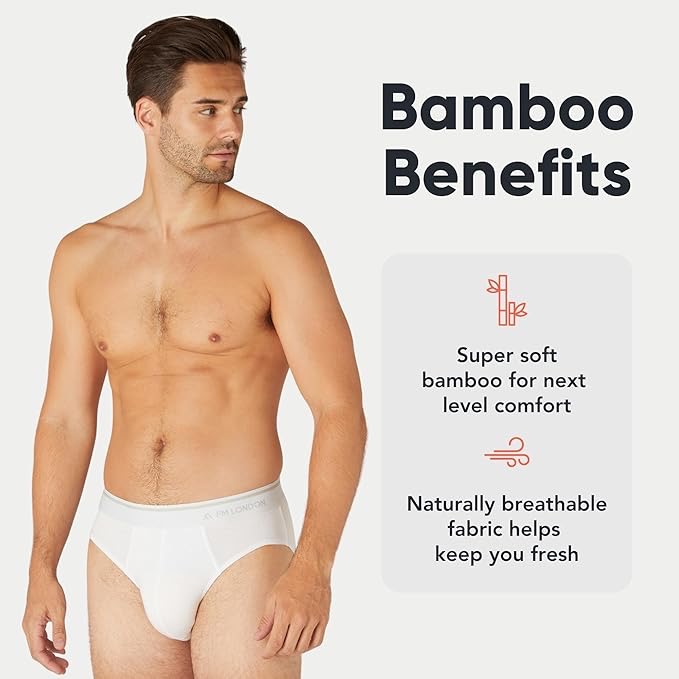
A cotton-rich blend that feels soft and breathable
Anti-chafing design for all-day comfort
Odour-fighting technology to keep you feeling fresh
This is my top recommendation for the summer — affordable, comfortable, and practical. Plus, they still look great enough to wear on a date night (whatever that is these days!) and bring a little bit of sexy back into your wardrobe.
So if you want to feel good, look good, and not spend a fortune, check them out. Trust me, your underwear drawer will thank you.















 Event Location:
 Learn More & Support the Charity





















 2Shades Magazine