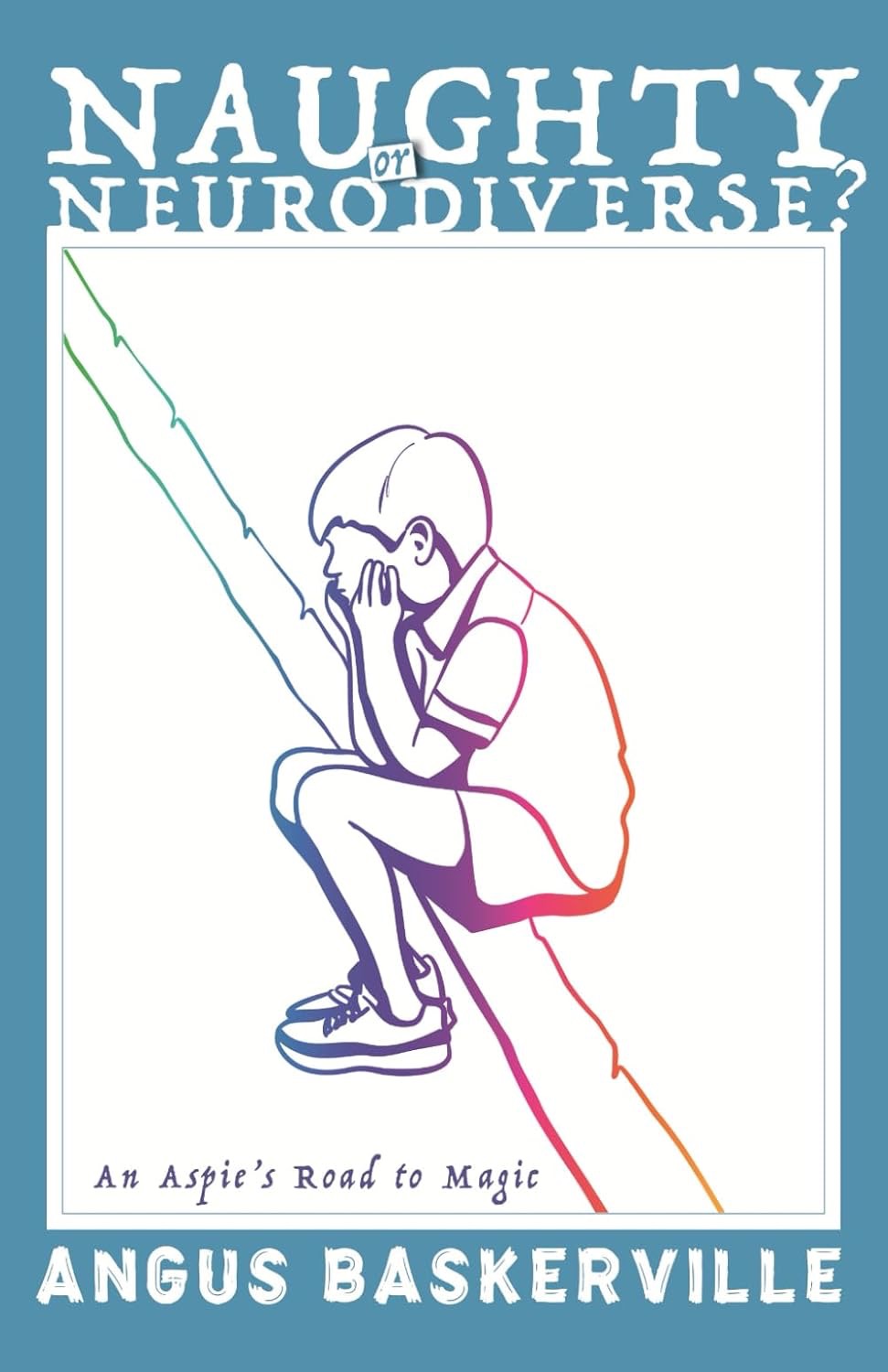
Grit, grace, and a touch of glittering illusion — that’s what defines Angus Baskerville’s extraordinary memoir, Naughty but Neurodiverse – An Aspie’s Road to Magic. It’s a book that doesn’t just tell a story; it invites you into the world of a young man who found light in the places most would have given up hope.
Bullied. Excluded. Expelled from three schools. For many, that might have been the end of the story. But for Angus, it was the beginning of something far more powerful. Diagnosed with autism and ADHD at fifteen, he finally had an explanation for the whirlwind he had lived with all his life. Yet it wasn’t until discovering magic at seventeen that everything changed.
Magic gave him more than a skill — it gave him purpose, structure, and a way to communicate in a world that often misunderstood him. His journey from isolation to inspiration unfolds with raw honesty and a quiet kind of triumph that lingers long after you turn the last page.
It’s impossible not to feel moved by his transformation. The pivotal moment comes when Angus performs at Autism’s Got Talent, the groundbreaking showcase created by Anna Kennedy OBE. Stepping into that spotlight, Angus wasn’t just performing tricks — he was reclaiming his identity. That night became the launchpad for a remarkable career that would take him from misunderstood teen to award-winning magician, Magic Circle member, and autism advocate.
Today, Angus Baskerville performs across the UK, dazzling audiences with performances that weave illusion and insight. He leads corporate workshops, runs school magic clubs, and continues to champion autism awareness with the charity Anna Kennedy Online. Through it all, his message remains beautifully simple — being different is not a flaw to fix, but a gift to embrace.
Naughty but Neurodiverse is an emotional, uplifting, and often funny read that captures the resilience of the human spirit. Baskerville writes with warmth and disarming honesty, sharing moments of confusion, humour, and triumph. His story gives readers — whether autistic, parents, teachers, or simply curious souls — a new lens through which to see neurodiversity: one filled with creativity, courage, and heart.
This isn’t just a memoir; it’s a manifesto for understanding and acceptance. Angus reminds us that the real magic lies not in illusion, but in authenticity — in daring to be unapologetically yourself in a world that often tells you to hide your light.
In a time when inclusion is still learning to find its true meaning, Angus Baskerville stands out as a shining example of what can happen when passion meets purpose.
A heartwarming, inspiring, and utterly magical read — one that deserves a standing ovation.
Where to Buy: Naughty but Neurodiverse – An Aspie’s Road to Magic is available now on Amazon UK.
Angus says:
“If even one person reads this and feels seen, understood, or inspired — then it’s all been worth it.”
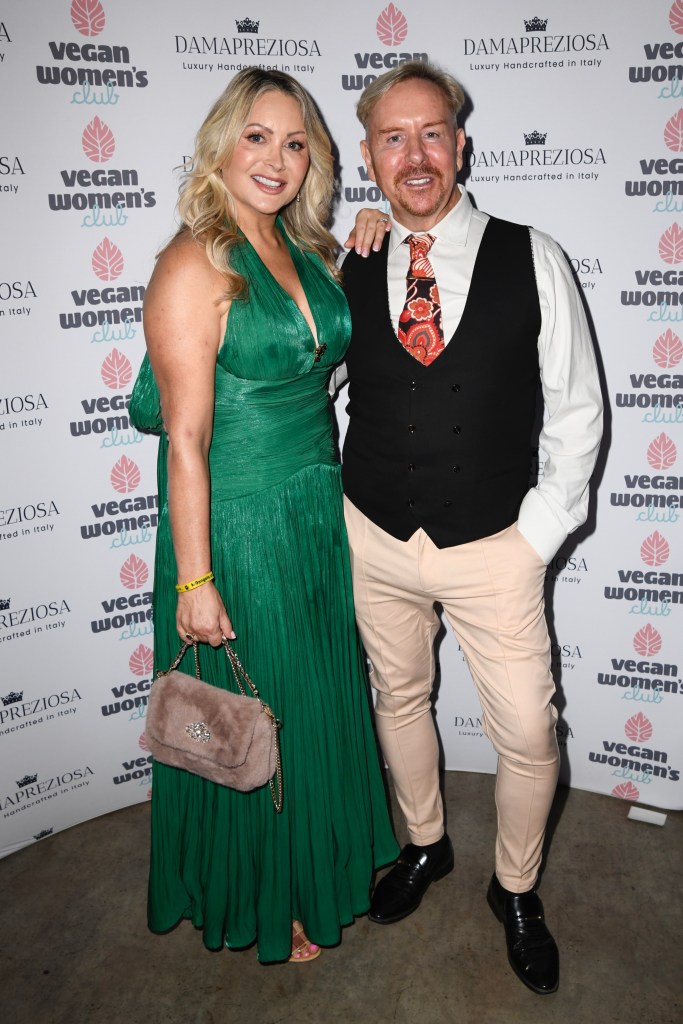
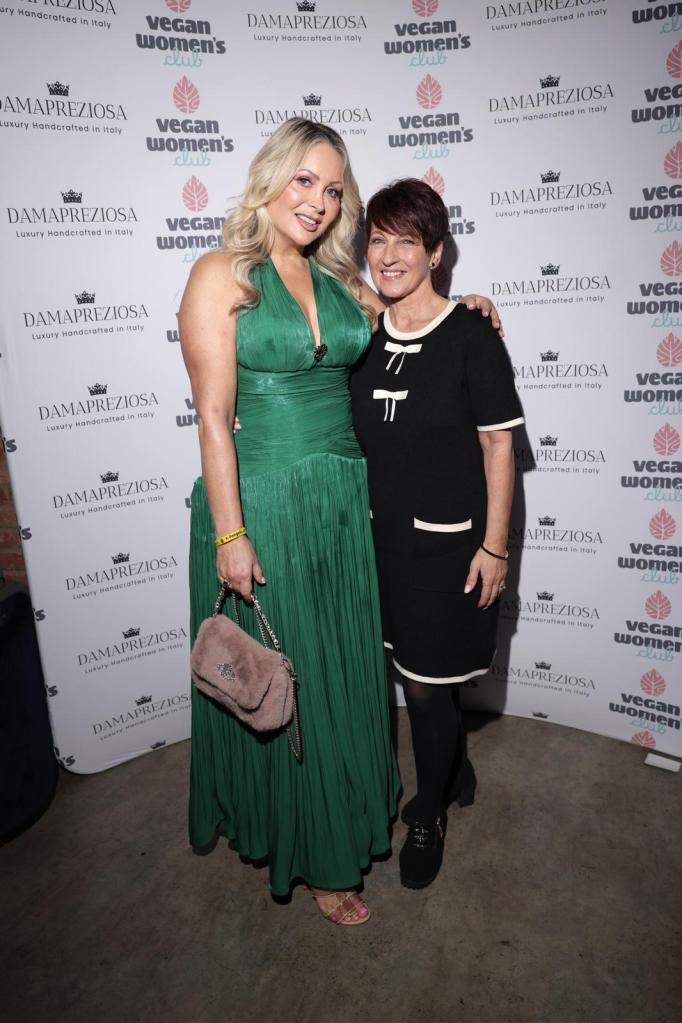
LONDON, ENGLAND - NOVEMBER 01: Victoria Featherstone Pearce and Karin Ridgers seen attending the Vegan Women's Club launch at 45 London in Shoreditch on November 01, 2025 in London, England. (Photo by Ricky Vigil M/GC Images)
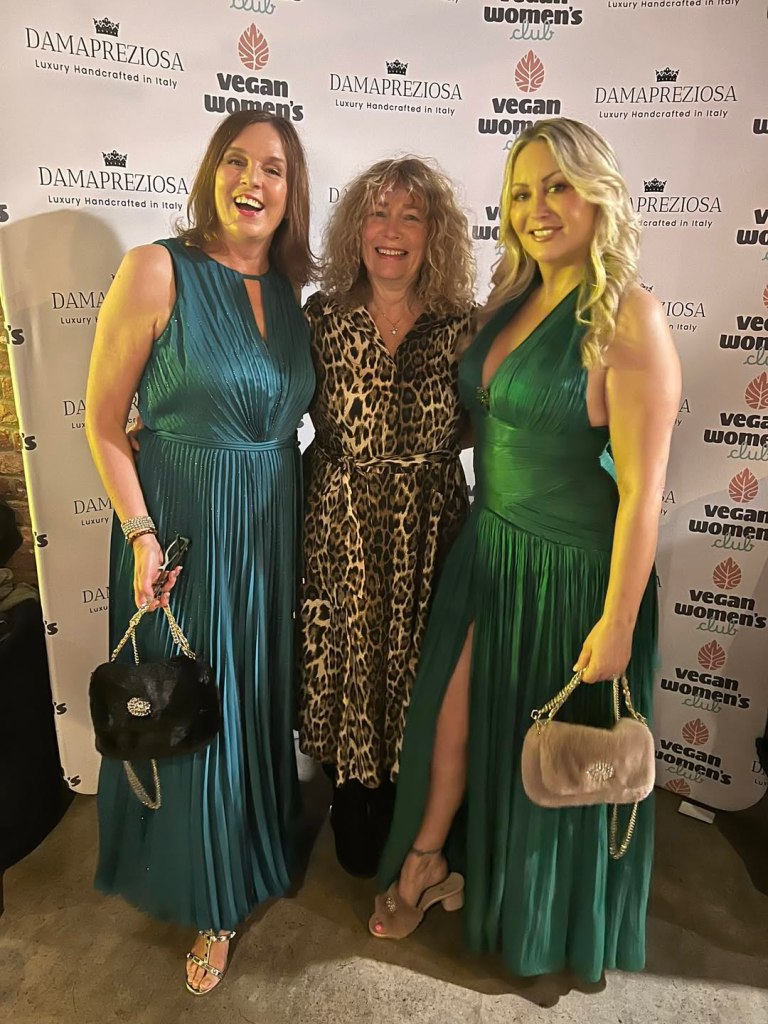
The Gorgeous Victoria Featherstone Pearce , with the glamours Karin Ridgers and Juliet Gellatley
Founder And Director @ Viva!
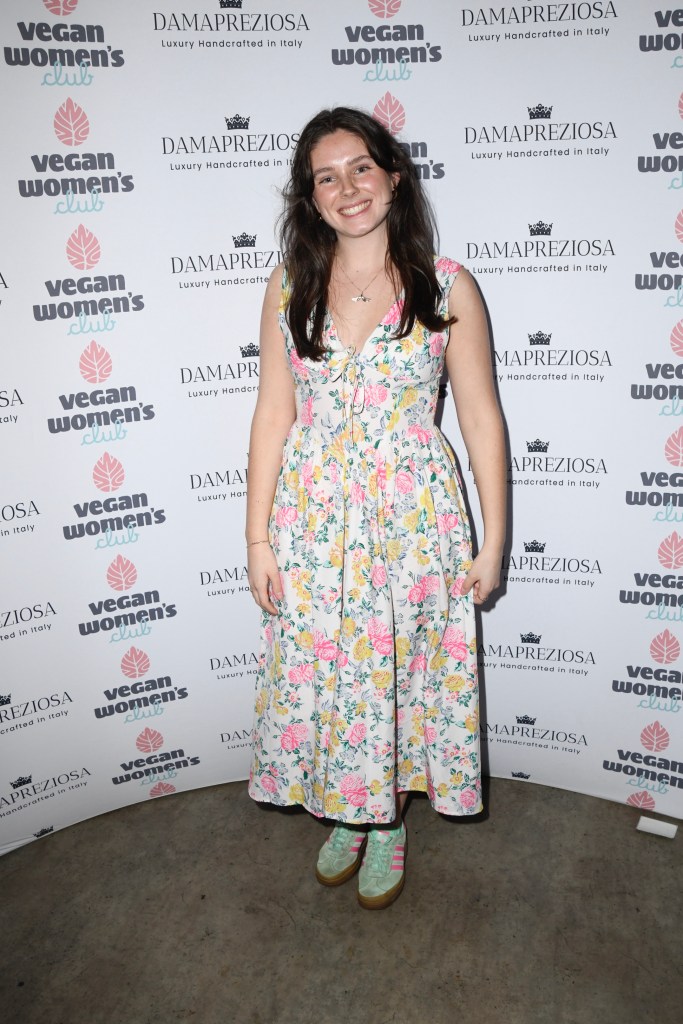
Glitz and glamour poured into Shoreditch on a rain-soaked Saturday night as 2Shades Magazine joined the celebration for the official launch of the Women’s Vegan Club at the ultra-chic 45 London Despite the downpour, nothing could dampen the excitement as guests in sequins, faux fur, and high spirits gathered to raise a glass — or rather, a coconut-rimmed cocktail — to compassion, community, and cruelty-free living.
The gorgeous Victoria Featherstone Pearce with 2shades Steven Smith at the launch of The Woman’s Vegan club
The event wasn’t just for women — men were warmly welcomed too — but it was very much a celebration of female empowerment and ethical entrepreneurship. The room shimmered with warmth and laughter as founders, patrons, and supporters mingled over divine canapés and cocktails, united by one shared passion: veganism.
In a world where being vegan can still attract raised eyebrows or outright discrimination — whether in the workplace, at the dinner table, or even in friendships — the Women’s Vegan Club has created a space where compassion is something to be proud of. This is a club about inclusion, not exclusion, and about supporting each other in living authentically and kindly.
Cake by Freya Cox
And what a line-up of women at its helm. Three of my favourite ladies are involved — one as an ambassador and two as co-founders — each an inspiring powerhouse in her own right.
Model, vegan activist, and lifelong animal rights advocate Victoria Featherstone Pearce is the embodiment of grace and grit. Best known for her tireless campaigning and for co-owning K-9 Angels, a charity dedicated to rescuing and rehabilitating dogs worldwide, Victoria has been a compassionate force for change in the animal welfare movement. As a VegfestUK blogger and campaigner for both PETA and Animal Aid, she has fronted numerous awareness initiatives encouraging a kinder lifestyle. A devoted mum to her seven rescue dogs, Victoria’s dream is to one day open her own animal sanctuary — a place where every creature has a home and a second chance. Her work reflects a lifetime of dedication to animal welfare and her belief that kindness should be the foundation of everything we do.
The other visionary behind the Women’s Vegan Club is Karin Ridgers, an award-winning entrepreneur, broadcaster, and vegan advocate of more than 30 years. Karin is the founder of MAD-Promotions PR and the creative force behind VeggieVision TV, an online platform championing vegan businesses and ethical living. Her energy is infectious, her passion unshakable. Karin has long been recognised for her dynamic public speaking and unwavering support for cruelty-free campaigns. Through her work, she continues to inspire and connect people across generations, proving that compassion and confidence go hand in hand. When Karin took the stage later that evening, her speech was electric — part rally cry, part love letter to the movement. Her words reminded us that veganism isn’t a passing trend, but a moral choice and a lifestyle built on empathy. As I watched her speak, I couldn’t help thinking she should be in Parliament — we need voices like hers there.
Representing the club as its ambassador is Wendy Turner Webster, a beloved British television presenter and producer best known for hosting the long-running UK show Pet Rescue. An award-winning animal rights campaigner, Wendy has dedicated much of her life to championing the ethical treatment of animals, both on-screen and behind the scenes. Her work spans decades of advocacy — from campaigning for cruelty-free beauty to promoting vegan living through her media appearances. Her passion is as genuine as her warmth, making her a perfect fit for a club that’s about real change, not just polished image.
Now, full disclosure — I’m not entirely vegan… yet. One of my best friends in Dubai is, and when I stay with her, I become a temporary convert. And I have to admit, I love it. So, as someone who flits between plant-based and pescatarian, I was fascinated to see how this night would blend style and ethics.
From the moment I arrived, it was clear this was no ordinary launch. Guests were greeted with a warming vegan ginger and rum cocktail — the perfect remedy for a chilly London evening. The canapés were works of art: the standout being a delicate broccoli and black garlic bite that I’m still thinking about days later. The atmosphere was buzzing yet intimate. The crowd was a lively mix of media personalities, campaigners, and creatives — the kind of people who make you believe that small changes can truly change the world.
The Great British Bake off Freya Cox
Victoria’s speech was heartfelt and deeply moving. I’ve known her since our days moving in the same media circles, and what has always struck me about her is her honesty and kindness. Hearing her speak about her personal journey into veganism — the challenges, the triumphs, and the quiet conviction behind her choices — left more than a few misty eyes in the room. Then came Karin’s rousing address — part Emmeline Pankhurst, part stand-up charm — reminding everyone that activism can be elegant, and leadership can be laced with humour. https://www.veganwomensclub.com/pricing
And then came a surprise highlight: an impromptu speech by Great British Bake Off’s own Freya Cox. Funny, humble, and full of life, Freya had the audience roaring with laughter — and soon queueing eagerly for a slice of the vegan cake she had created especially for the night. In true showbiz fashion, the cake even matched Victoria’s gown — a dazzling touch of edible couture. Imagine the jam roly-poly of your schooldays, only reinvented as a masterpiece of modern vegan patisserie.
But it wasn’t all “let’s hear it for the girls.” Victoria’s dashing husband, Stephen Pearce, added his own twist to the evening’s delights by introducing his line of vegan honey — made not from bees, but from pine needles. The taste was rich, aromatic, and unexpectedly moreish. As Dr Anna Kennedy OBE declared while snapping up a pot, “Just wonderful!” (Watch this space for more on that.) Stephen also unveiled a range of mouth-watering vegan cheeses that had even the most sceptical guests going back for seconds
The party carried on late into the evening, the room shimmering with the glow of good company and shared purpose. People danced, laughed, swapped numbers, and made plans for collaborations and causes. What united everyone there wasn’t just veganism — it was the belief that kindness, creativity, and community can coexist beautifully.
Annette Wardell seduces the crowd with her magical voice .
By the end of the night, it was clear that the Women’s Vegan Club isn’t just a social group — it’s a movement. A space where women can support one another, promote sustainable change, and still look absolutely fabulous while doing it. As I left, rain still falling softly on the cobbles of Shoreditch, I couldn’t help but smile. Compassion has never looked so glamorous.
Follow the Women’s Vegan Club https://www.veganwomensclub.comSteven’s Note: 2Shades Magazine celebrates women who lead with purpose, style, and heart — those who use their voice to make the world a kinder, brighter, and more inclusive place
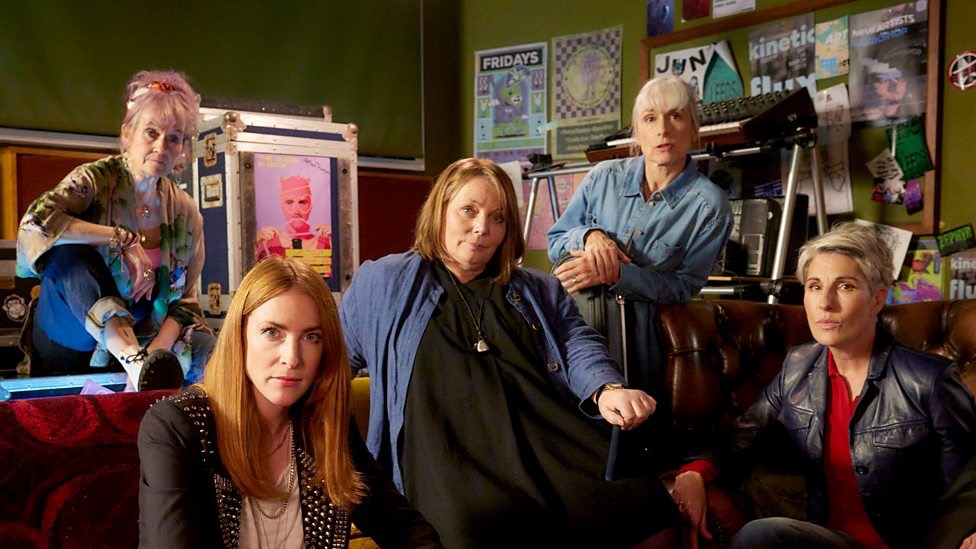
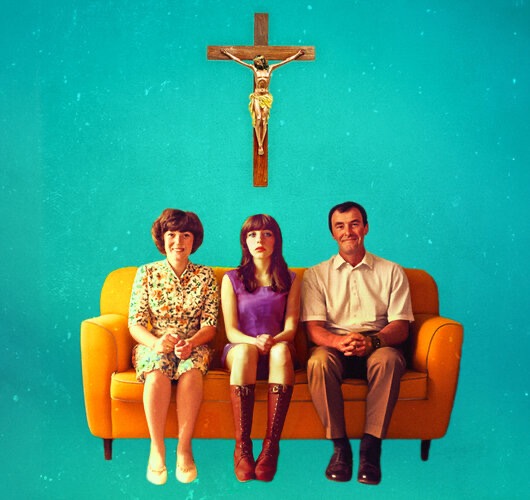
Riot Women — BBC’s Surprising Triumph of Grit, Wit and Pure Heart
There are times when you arrive home after a long day, craving nothing more profound than a cosy half-hour of television fluff — something light, comforting, and easy to disappear into. On the surface, Riot Women looks like exactly that: a vibrant title card, bold artwork, and a show pitched squarely at those who love a dash of spectacle. It would be very easy to hit play expecting a breezy, perhaps even camp, comedy-drama and settle back with a cup of tea.
But Riot Women is not that show. Not remotely.
If you only watch the first ten minutes, you could be forgiven for thinking you’ve been misled. The opening is stark, intense, and packed with enough emotional punch to make even the most resilient viewer mutter, “Oh no… this is going to be depressing,” and reach for the remote.
Yet turning it off would be a terrible mistake.
Because Riot Women quickly reveals itself to be television gold — unexpected, daring, and absolutely bursting with life.
At the centre of this explosive drama-comedy hybrid are the phenomenal Rosalie Craig and Joanna Scanlan, leading an ensemble cast that delivers performances of a calibre you rarely find in mainstream television. Between them, they light up the screen with such power and honesty you can’t look away. Rosalie Craig, especially, is a revelation. Known for her formidable stage presence in musical theatre, she brings the full breadth of her talent to this role: vocally electrifying and dramatically fearless, she swings from raw vulnerability to razor-sharp humour with impossible ease. It’s the kind of performance awards are invented for — at the very least, she deserves a BAFTA nomination.
Joanna Scanlan matches her beat for beat, offering a portrayal that is quietly astonishing — subtle, grounded, and capable of landing an entire emotional narrative with one look. Together, they create a dynamic that makes the story feel not just relevant but necessary.
Of course, no great television series exists without a masterful hand guiding it from the page. Here, that hand belongs to Sally Wainwright, one of Britain’s most exceptional screenwriters. Her voice is unmistakable: sharp, deeply empathetic, and rooted in the lived truths of women who refuse to be sidelined. Wainwright balances humour and heartbreak like a tightrope walker, proving again — as she did with Happy Valley and Last Tango in Halifax — that she knows exactly how to capture complicated, flawed, brilliant female characters. And then there’s Tamsin Greig, whose incomparable screen presence adds yet another layer of brilliance. Whether she’s delivering a deadpan line or revealing quiet vulnerability beneath stoic armour, Greig commands attention every moment she’s on screen. She becomes one of the show’s beating hearts — a character you’re compelled to follow, even in her silences.
What truly distinguishes Riot Women is its emotional honesty. The series dives into the frustrations, absurdities, and injustices faced by women whose lives haven’t gone according to plan — yet it refuses to let despair take the lead. Just when the narrative feels like it’s sinking into darkness, the humour kicks in. And not just comic relief for the sake of it — we’re talking whip-smart, laugh-out-loud writing delivered with perfect timing.
The absurdity is part of the point. Life can be relentless — but it can also be ridiculous.
The tone may zigzag, but that unpredictability is what makes the experience so exhilarating. One moment you’re laughing; the next you’re wiping away tears; then suddenly you’re cheering these women on as they find their voices and reclaim their stories. It’s a celebration of community, resilience, and rebellion — the quiet kind and the loud kind.
Yes, it can be camp — gloriously so — but never cheaply. The humour always comes from a place of truth. And through the satire, the show provides a sharp commentary on how society treats women who dare to age, to feel, to be imperfect, or to speak up.
The writing is confident and bold, unafraid of pushing boundaries. Each episode leaves you with a question — and a burning curiosity for what comes next. It is a story about what happens when ordinary women decide they’re done being polite and invisible. When they realise they have power. When they riot — not violently, but vocally, musically, and emotionally.
To call Riot Women a gem feels too small. It’s a series that arrives disguised as a guilty pleasure but reveals itself to be a gutsy, heartfelt, and beautifully crafted piece of British drama. It’s television that matters — without losing its sense of fun.
So if you begin watching and feel the instinct to switch over: don’t. Give it time. Let it breathe. Stick with the journey.
Because what you find is something rare: a show that reminds you we are all allowed to feel broken — and also allowed to dance, shout, laugh, and reclaim joy, whatever age we are.
Riot Women is bold. It’s brilliant. And it’s absolutely worth your time.
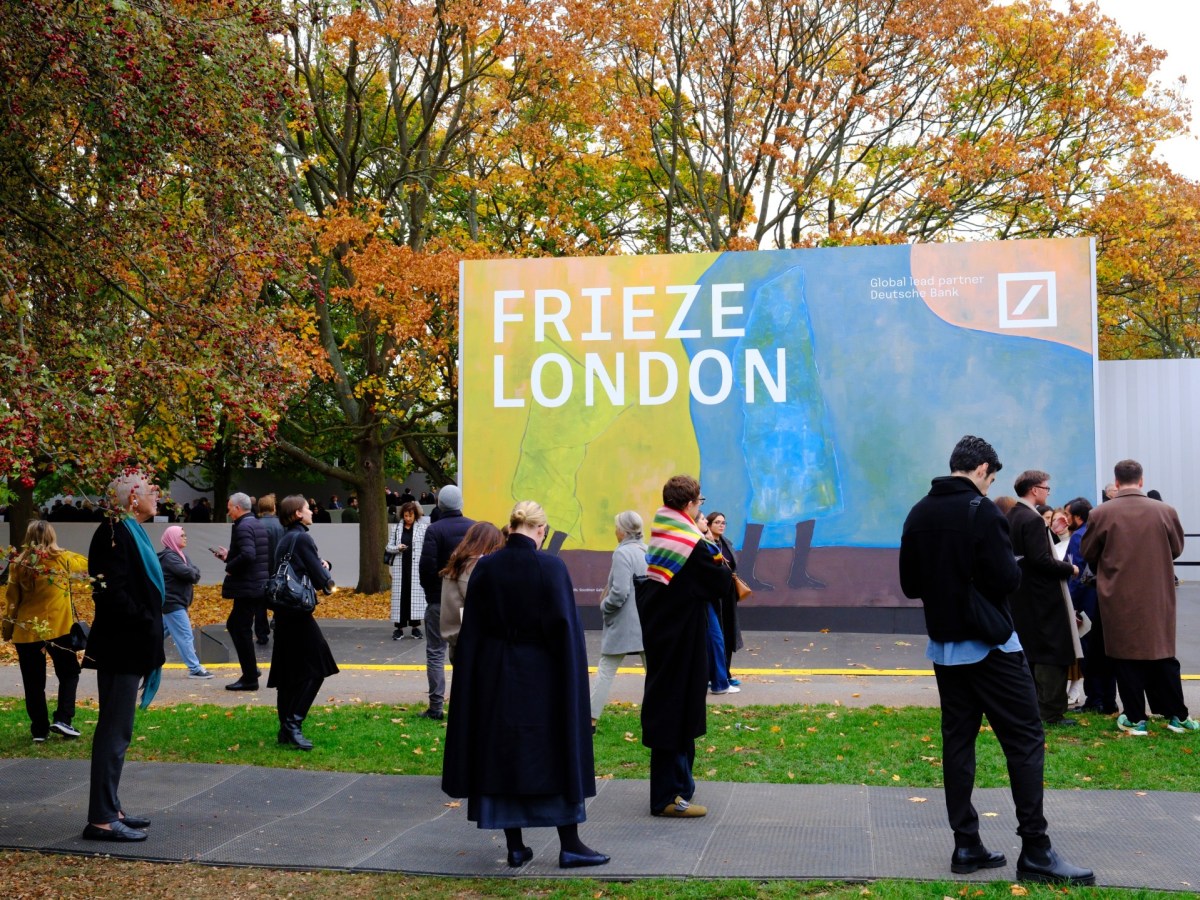
Frieze London 2025.PHOTO: LINDA NYLIND. COURTESY OF FRIEZE
By Steven Smith
“This was Frieze in its most mature form — calm, confident, and beautifully human.”
This October, Regent’s Park once again became the beating heart of contemporary culture, as London’s premier art fair returned with a noticeably more reflective air. Gone were the flashing lights and social-media gimmicks that once dominated the scene — in their place, a quiet confidence and an emphasis on meaning over market value. Frieze London 2025 proved that the true allure of art lies not in the roar of spectacle, but in surprise, sincerity, and the occasional whisper that lingers long after the tents come down.
A Quieter Kind of Dazzle
Each autumn, the white tents of Frieze rise like a sleek temporary city, drawing curators, collectors, and celebrities who glide between installations and champagne bars. But this year, something had shifted. The fair felt calmer — less about performance, more about purpose.
The tone was set from the outset. New entrance pavilions — elegant aluminium structures created by A Studio Between using 75 per cent recycled metal — signalled sustainability rather than status. It was a small yet telling gesture: Frieze has grown up.
Inside, the fair’s redesigned layout provided space to breathe. Instead of the crowding and visual overload of previous years, this edition privileged air, light, and contemplation. And what stood out most was originality. You weren’t left thinking “Hirst homage” or “Bacon knock-off” — though artistic lineage was there — the work felt boldly its own.
Frieze remains vast — more than 280 galleries across Frieze London and Frieze Masters — yet this year’s coherence was striking. Focus, the section dedicated to younger galleries, became its emotional anchor. Thirty-plus exhibitors explored climate, identity, displacement, and belonging with genuine urgency rather than opportunistic messaging.
One standout installation — a delicate shelter of reclaimed textiles and timber — spoke quietly yet powerfully of “home”. No gimmicks. Just humanity.
Even the major galleries opted for subtlety. Gagosian, Hauser & Wirth, and White Cube resisted spectacle in favour of introspection: small, thoughtful works that drew viewers in rather than overwhelming them.
“Frieze 2025 is a fair about stories, not stunts.”
The Market Mood
Frieze is both cultural pilgrimage and high-stakes shop floor — and the cooling market was impossible to ignore. Economic uncertainty has made collectors judicious, especially in Britain. Yet the fair thrived precisely because it did not mask reality.
Dealers confessed that sales were careful but consistent. Relationships mattered more than rapid-fire transactions. There was less frenzy, more trust — and with it, a sense of optimism that art still carries weight when times feel lean.
Art with Intention
What defined Frieze this year wasn’t a single blockbuster piece — but a collective tone of intentionality. Works spoke across booths about survival, memory, fragility, and the search for place.
Even architecture joined the conversation. Those aluminium pavilions — modest in shine yet rich in idea — mirrored the fair’s shift: modernism stepping into mindfulness.
Once known for glamour and provocation, Frieze has found its inner voice. No longer chasing viral moments, it invited something rarer: genuine attention.
“If previous years shouted, this one spoke — and everyone listened.”
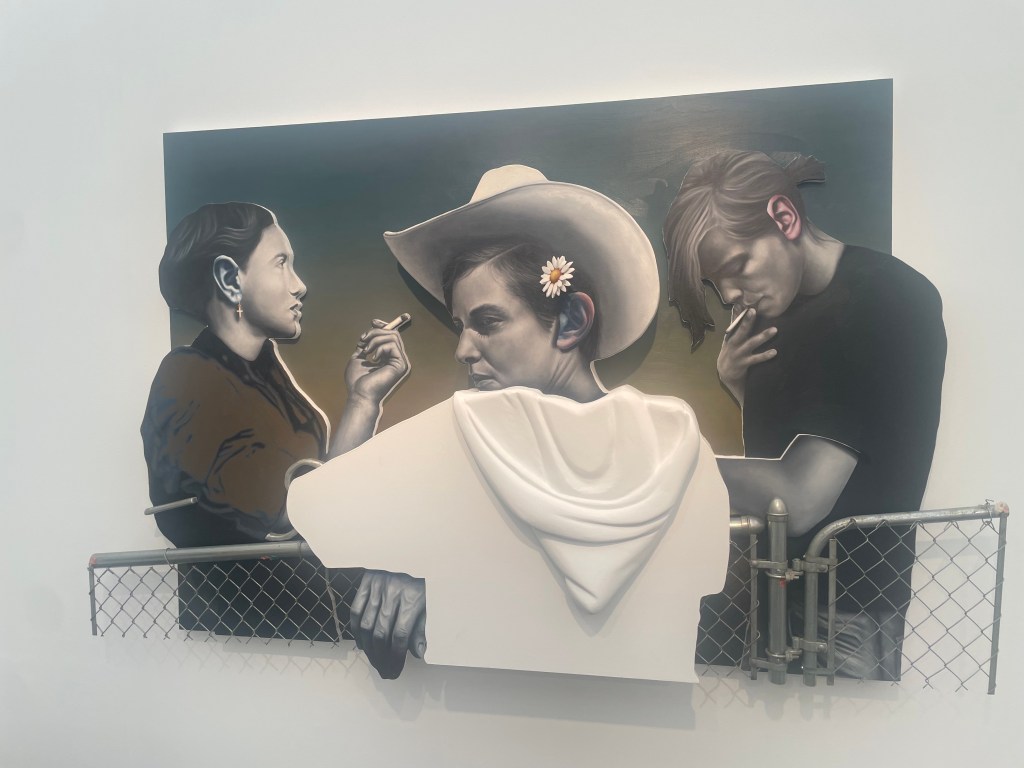
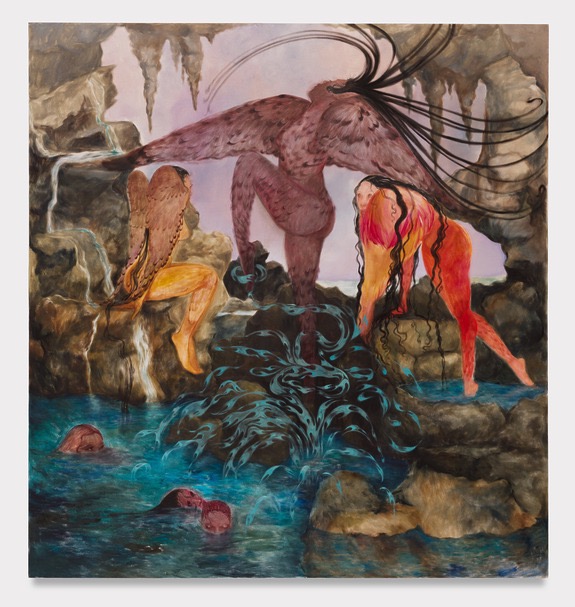
Naudline Pierre, Bathers, (2025). PHOTO: COURTESY OF NAUDLINE PIERRE AND JAMES COHAN
Moments of Stillness
Frieze 2025 balanced buzz with calm. The chatter of negotiations coexisted with long, quiet looks. Visitors paused not because works were famous — but because they were interesting.
Climate anxiety, migration and belonging were recurring ideas, but handled with nuance rather than sloganising. There was vulnerability — a powerful antidote in a world polished to a shine.
Where It Wobbles
A fair this size still overwhelms. After several hours, even the sharpest eye risks softening into what insiders call “booth blur”. And while sustainability was championed, the contradiction of air-freighted masterpieces inside temporary architecture remains unresolved.
Yet for Frieze, these were growing pains — not failings.
“After three hours, the brain begins to flatten everything into booth blur — but somehow, this year, the art fought back.”
London’s Moment
Amid market turbulence, Frieze reaffirmed London’s role as the art world’s soulful heart. Where Basel can feel clinical and New York transactional, London offers intellect tempered with humour — grit paired with grace.
A temporary city in a timeless park: that is its poetry.
Frieze London 2025 was the grown-up edition — less showmanship, more sincerity. It favoured ideas over Instagram, meaning over money. It reminded us that great art doesn’t always demand attention. Sometimes it waits. Sometimes it whispers. And sometimes, if you pause long enough, it tells you exactly what you needed to hear.
“This was Frieze in its most mature form — calm, confident, and beautifully human.”
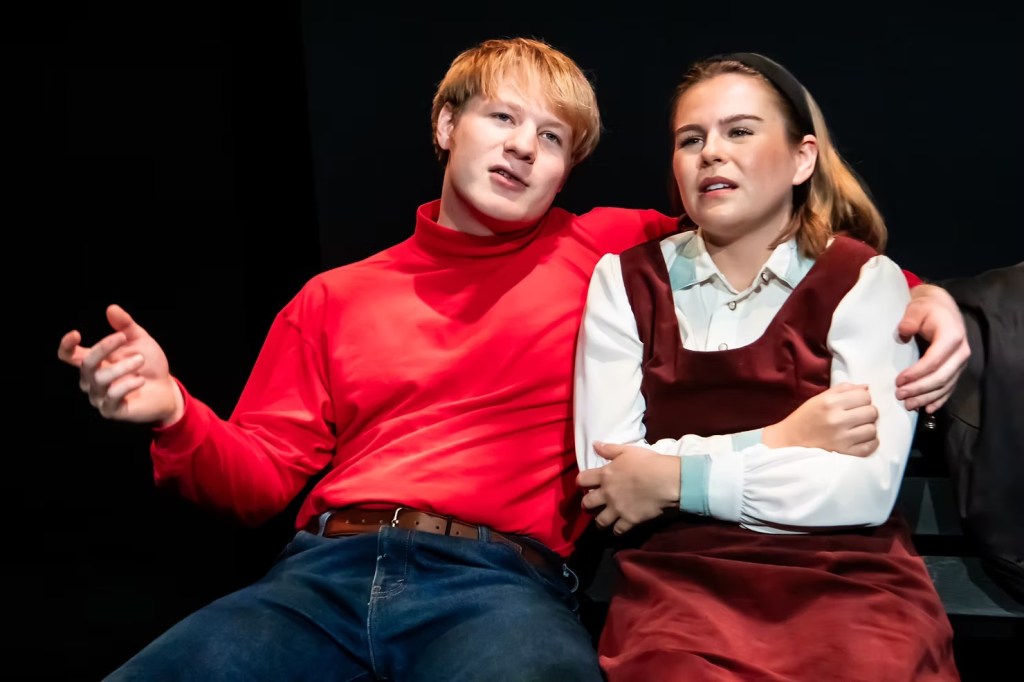
Blessings at Riverside Studios is a richly atmospheric and deeply human exploration of family, faith, and the moral turbulence of the 1960s. Directed with sensitivity and intelligence, the play captures a pivotal moment in British social history — a decade when traditional values clashed with the new freedoms of a changing world. It’s a thoughtful, gripping production brought vividly to life by a stellar cast, led by Gary Webster and an extraordinary debut performance by Freddie Webster.
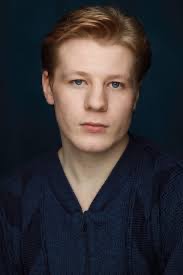
Freddie Webster.
Set against a backdrop of shifting class structures and cultural awakening, Blessings weaves its story around a working-class family grappling with the personal consequences of societal change. The writing is sharp and heartfelt, with themes of loyalty, pride, and redemption pulsing beneath every exchange. The set design immediately evokes the texture of the 1960s — all formica kitchens, nicotine-stained wallpaper, and muted optimism — drawing the audience into a world both familiar and fading.
Rising Star Freddie Webster
At the centre of it all is Gary Webster, whose commanding presence anchors the production. Best known for his iconic turns in Minder and EastEnders, Webster once again proves he is one of the UK’s most underrated actors. His performance here is layered and magnetic: a man torn between old loyalties and the unrelenting push of modern life. He brings a bruised dignity to the role — a quiet strength mixed with a sense of defeat that feels heartbreakingly authentic. In a just world, this performance would cement his reputation as one of Britain’s finest stage actors.
Underestimated Gary Webster
Equally striking is the breakout performance of Freddie Webster, making his professional stage debut after studying at Mountview Drama School. It’s rare to see such poise, nuance, and emotional truth in a first-timer. Freddie delivers a performance that is at once raw and refined, capturing the restless energy of youth alongside the vulnerability of someone desperate to find their place in a world that doesn’t quite make sense. His natural stage presence and impeccable timing mark him as a talent to watch — a future star in the making. The chemistry between father and son, both on stage and in spirit, is palpable and moving, adding an extra layer of resonance to the drama.
Hannah Traylen, as Frances, deserves special mention. She brings warmth, wit, and quiet steel to a role that could easily have been overshadowed in lesser hands. Traylen’s Frances is a woman of her time but also ahead of it — sharp-tongued yet tender, pragmatic yet passionate. It’s a beautifully judged performance suggesting that Traylen is another rising talent with a bright future
Gary Webster and Hannah Traylen .
The supporting cast contribute solidly, creating a believable ensemble that breathes life into every corner of the story. The pacing of the piece, while deliberate, allows each emotional beat to land fully. If there is a minor quibble, it’s that the play runs a little long without an interval — at times, one finds oneself wishing for a short pause to absorb the emotional intensity before diving back in. Yet, in truth, this is a small price to pay for the richness of the experience. The continuous flow also has its advantages: it keeps the audience immersed, never breaking the spell the actors have so carefully woven.
Technically, Blessings is beautifully realised. Lighting and sound design work in quiet harmony to evoke both nostalgia and unease. The director’s attention to period detail ensures that nothing feels contrived; instead, every moment feels lived-in and real. The dialogue crackles with authenticity, alternating between humour and heartbreak in a way that mirrors real life.
Ultimately, Blessings is a triumph — a play that reminds us why live theatre matters. It challenges, it moves, and it connects. It holds a mirror up to a time not so long ago, showing us how the struggles of the past still echo in the present. Gary Webster delivers a masterclass in restrained power,
The result is an evening of theatre that feels both timeless and immediate — .
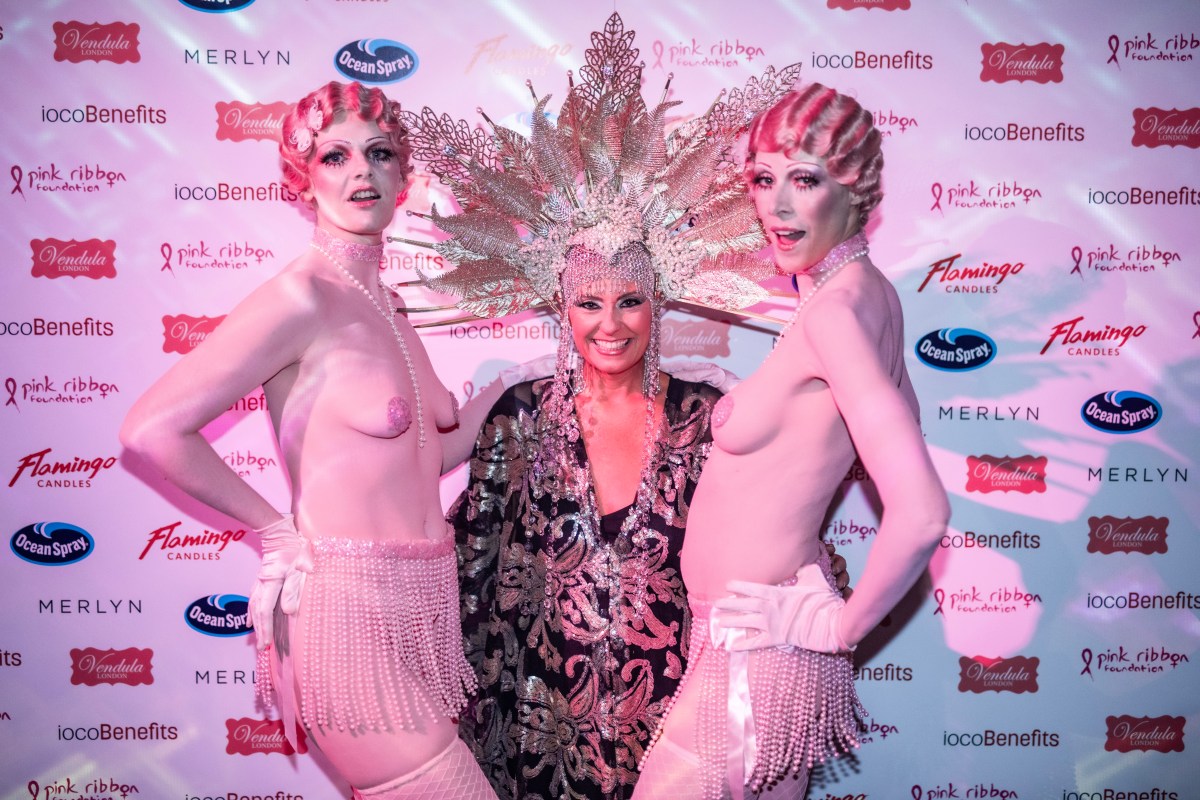
That spirit of unity was alive and shining at this year’s PINKLondon gala hosted by the Pink Ribbon Foundation and held on Thursday 2nd October at the magnificent Underglobe on the banks of the River Thames. The evening sparkled with generosity, elegance, and heartfelt emotion — a true celebration of hope and humanity.
PINKLondon2025, held in association with Filippo ioco, celebrated a double milestone this year — marking the 25th anniversary of the Pink Ribbon Foundation and the 11th PINKLondon event in collaboration with Filippo ioco and iocoBenefits.
At the heart of it all was Lisa Allen, the powerhouse behind the Pink Ribbon Foundation. Through her tireless work, Lisa continues to inspire countless people to raise awareness and funds for breast cancer charities across the UK.
The Power of Art and Connection
The magic of the evening began long before the first champagne cork was popped. Through my mutual connections, Lisa met Anne-Marie Bickerton, a self-taught artist and photographer whose work radiates empathy and creative passion.
Anne-Marie had previously curated a moving exhibition featuring Dr Pam Spurr, the much-loved psychologist and media personality. During that show, Dr Spurr auctioned one of her own paintings to support breast cancer charities — an inspiring gesture that beautifully captured the evening’s theme of giving through art.
Piluca artist .
Also lending her talents was the artist Piluca, a bold and brilliant street artist whose colourful murals speak of empowerment, identity, and strength. Her creative energy lit up the exhibition and later became an integral part of the Pink Ribbon story.
The wonder that is Annemarie Bickerton
Ambassadors of Art and Strength
On that glittering October night, Anne-Marie Bickerton and Piluca Camino Alcon were officially named Ambassadors for the Pink Ribbon Foundation. Their shared belief that “art doesn’t just heal — it educates” has driven remarkable projects that use creativity to inspire awareness.
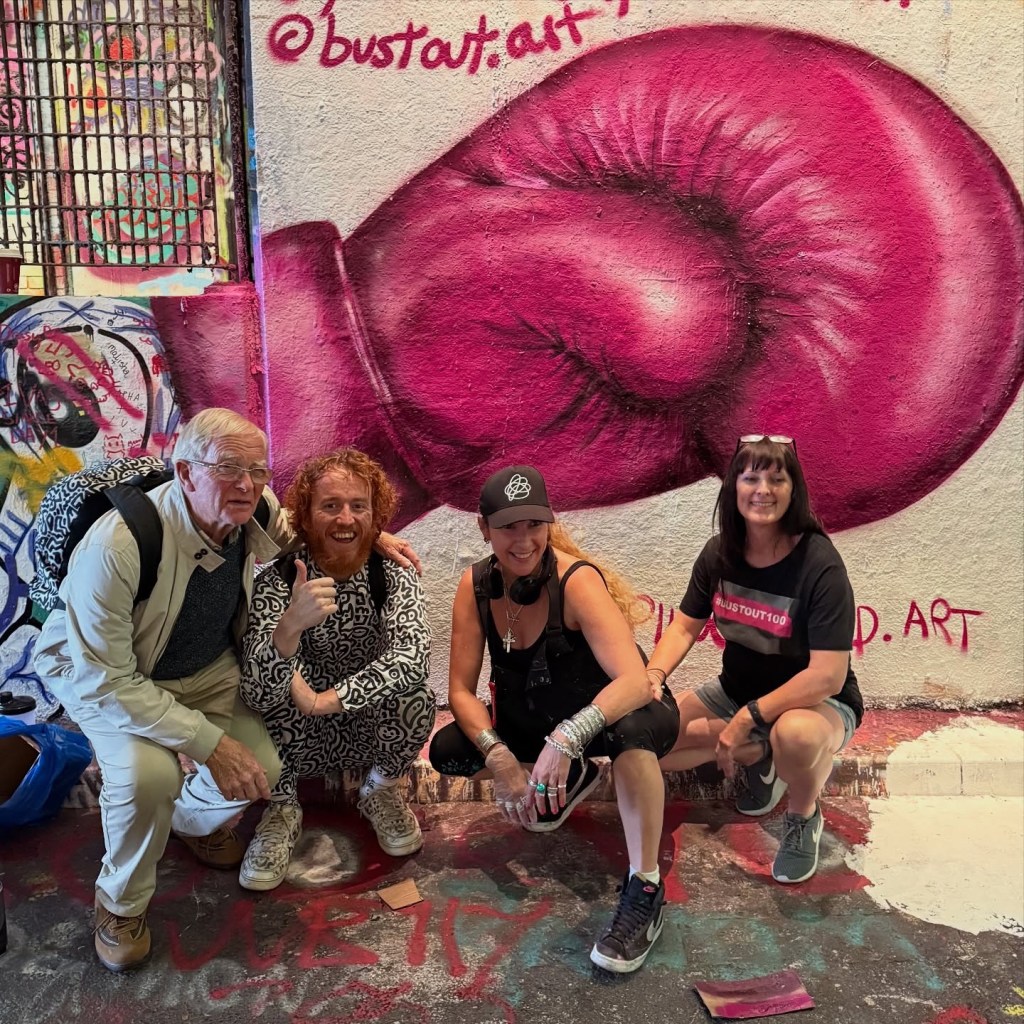
Among them is the groundbreaking exhibition “BUSTOUT”, featuring one hundred artistic photographs celebrating women’s bodies in all their diversity. Displayed at the Firepit Gallery, the show — curated by Anne-Marie and Piluca — was as provocative as it was empowering, challenging taboos and encouraging conversations about self-acceptance, self-checking, and health.
Lisa Allen and Piluca and Annemarie Bickerton at the Firepit Gallery
Anne-Marie’s Fight — In and Out of the Ring
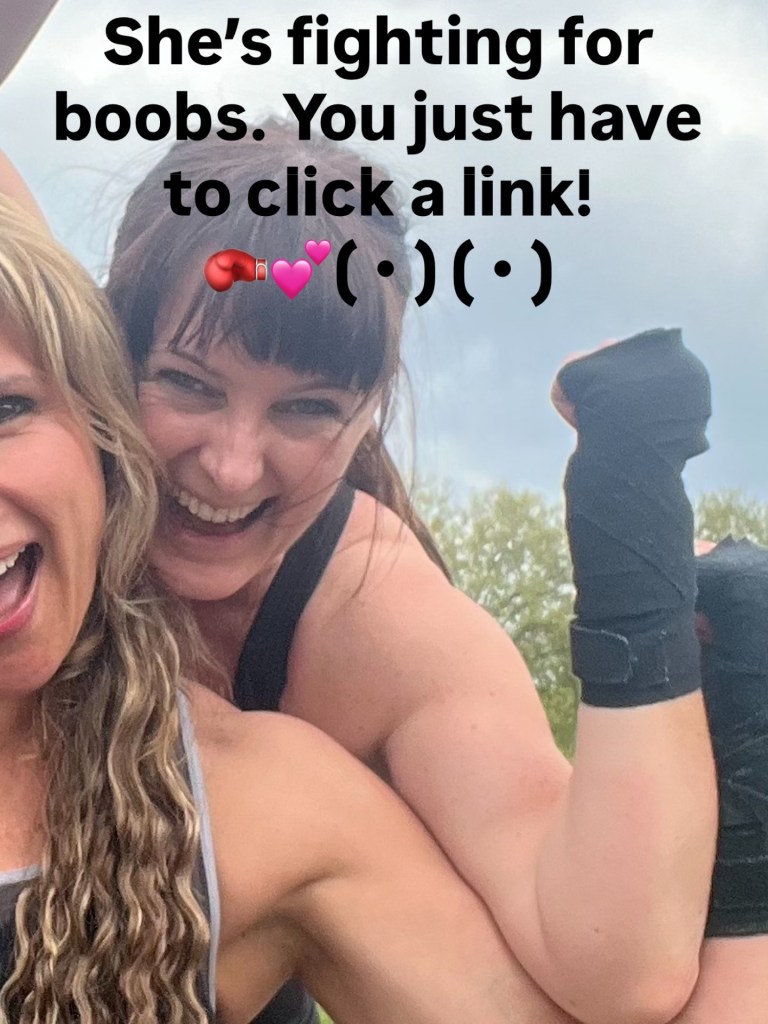
For Anne-Marie, 2025 has been a year of courage and change. Alongside her art, she’s taken up boxing — a decision born from both love and determination. Her 15-year-old son Sam, who lives with autism and had been the target of bullying, joined a local boxing class to build confidence. Wanting to support him and lead by example, Anne-Marie laced up her own gloves.
Months of hard training led to an extraordinary moment: a charity boxing match at The Troxy, where Anne-Marie stepped into the ring to raise funds and awareness for autism and mental health causes. Her bravery resonated deeply within the Pink Ribbon community — a powerful reminder that strength can take many forms.
Wonderful night with Annemarie Bickerton Piluca and Dave Peacock
The Great Gatsby Glamour
This year’s PINKLondon gala theme was pure vintage glamour — The Great Gatsby. Guests dazzled in sequins, pearls, and feathers, stepping into a scene straight out of the roaring 1920s. The historic Underglobe was transformed into a world of champagne bubbles, jazz melodies, and pink-tinted lights.
Leading the celebrations, Lisa Allen made a stunning entrance, embodying the glamour and grace of the era. Her passion and dedication shone as she welcomed guests, thanked supporters, and reminded everyone why they were there — to celebrate hope, honour survivors, and fund life-changing work.
Lisa as a cake went at auction for £250
In a moment of light-hearted fun, a spectacular pink cake featuring Lisa’s own face was auctioned for charity — lovingly created by Keith Scovell (aka Kakesby Keith), who outdid himself with a confection as stylish as its inspiration.
let them eat cake Keith Scovell and partner Daniel Molin
Stars, Ambassadors, and Friends
The guest list sparkled with Pink Ribbon’s brightest stars and supporters. Among them were:
Danielle Mason, actress and model, whose warmth and advocacy continue to inspire
Haley Sparkles, television presenter and long-time supporter of women’s health
Sally Morgan, the nation’s favourite psychic medium, who brought humour and heart to the night
Donna Preston, actress, writer, and comedian best known for her role as Despair in Netflix’s The Sandman, as well as The Hitman’s Bodyguard, Hard Cell, and Hey Tracey!
Shaun Dooley, actor and narrator known for his versatile roles in It’s a Sin, Gentleman Jack, Broadchurch, The Witcher, and Changing Ends — the autobiographical comedy about Alan Carr’s childhood
Lorraine Stanley, actress best known for her long-running role as Karen Taylor in EastEnders, as well as for London to Brighton, Call the Midwife, and Made in Dagenham
Kelly Reeves, the talented photographer whose stunning shots of the evening appear throughout this feature
The gorgeous Danielle Mason .
Also honoured were Juliette Morrison and her family — among Pink Ribbon’s most proactive ambassadors — for their ongoing dedication and tireless fundraising. Their recognition was one of the evening’s most touching moments.
Adding to the sense of family and continuity was the appearance of Jacqueline Abbott, Lisa’s remarkable mother, who became an ambassador last year. Her warmth and quiet strength embody everything the charity stands for.
Entertainment with Heart and Sparkle
The Brooks & Baker entertainment was as dazzling as the guests. Gatsby-style performers twirled across the stage, while guests joined in a lively Charleston dance class — feathers flying and laughter filling the room.
The event also featured fantastic entertainment from the talented West End Kids — invited back after a wonderful performance at PINKLondon2024 — along with a special performance by singer Russell Jones, who travelled all the way from Wales to join the celebration and support the cause.
Then came the show-stopper: an electrifying performance by Oulalahoop, whose energy and charisma set the crowd alight. It was impossible not to be swept up in the rhythm, as applause echoed around the theatre.
The evening’s raffle was led by Shaun Dooley, the acclaimed actor and patron of Pink Ribbon, known for his role in It’s a Sin. His heartfelt words about compassion and community struck a chord with every guest, reminding all present that the true purpose of the evening went far beyond glamour.
A Night of Unity and Friendship
Also in attendance was Dr Anna Kennedy OBE, renowned autism campaigner and founder of the charity Anna Kennedy Online. She attended in support of her friend, author Samantha Lee Howe, adding another layer of solidarity to the night — one that bridged communities and causes.
That sense of shared purpose defined the entire event. Whether through art, performance, or simple acts of kindness, the gala proved that compassion can connect worlds.
Dr Anna Kennedy OBE joined Lisa Allen in Gatsby gown .
The Heart Behind the Glamour
As the final song faded and glasses clinked in a final toast, there was a sense that something truly special had happened. The PINKLondon2025 gala wasn’t just another glamorous event — it was a statement of unity, creativity, and love.
Lisa Allen’s closing words summed up the evening perfectly:
“Pink Ribbon isn’t just about raising funds — it’s about raising each other up.”
And that’s exactly what she did.
From dazzling performances to heartfelt moments, from laughter to tears of joy, the night was a triumph. PINKLondon2025 reminded everyone that when passion meets purpose, miracles truly happen.
Some of the items in the goody bags ,
Photo Credits
Photography: Kelly Reeves and Brett Cove Cake: Keith Scovell
With special thanks to Lisa Allen, Anne-Marie Bickerton, Piluca, and all the Pink Ribbon ambassadors and supporters who made the evening unforgettable
Aston Avery. Phill Barnett Anna Kennedy OBE with the amazing OJ
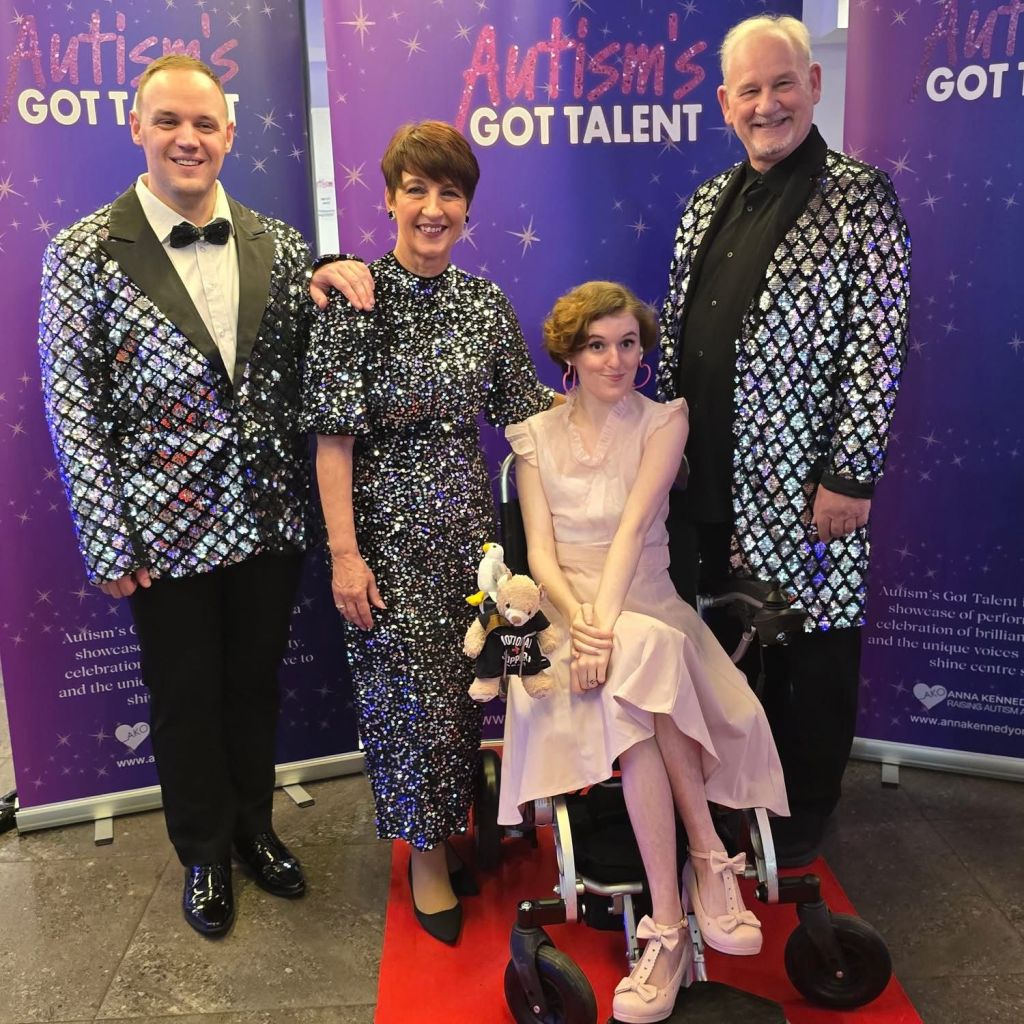
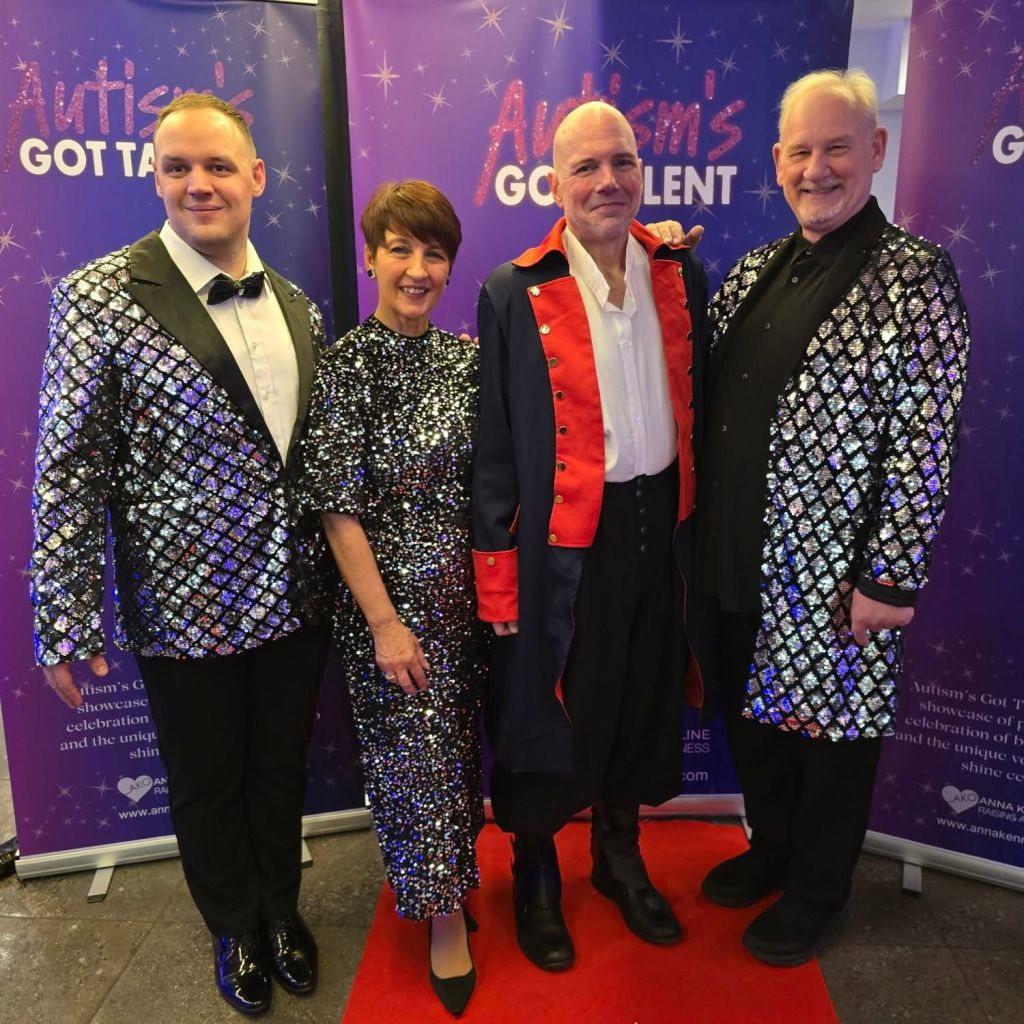
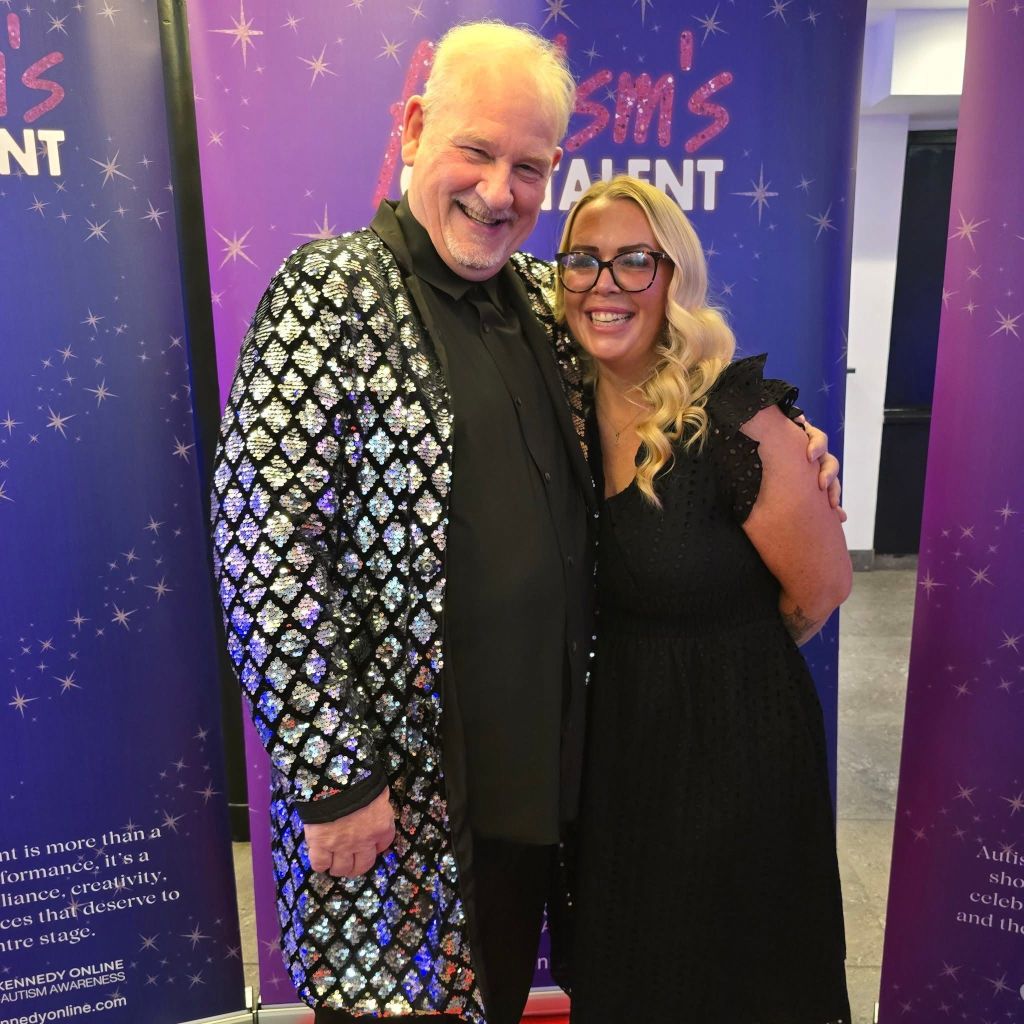
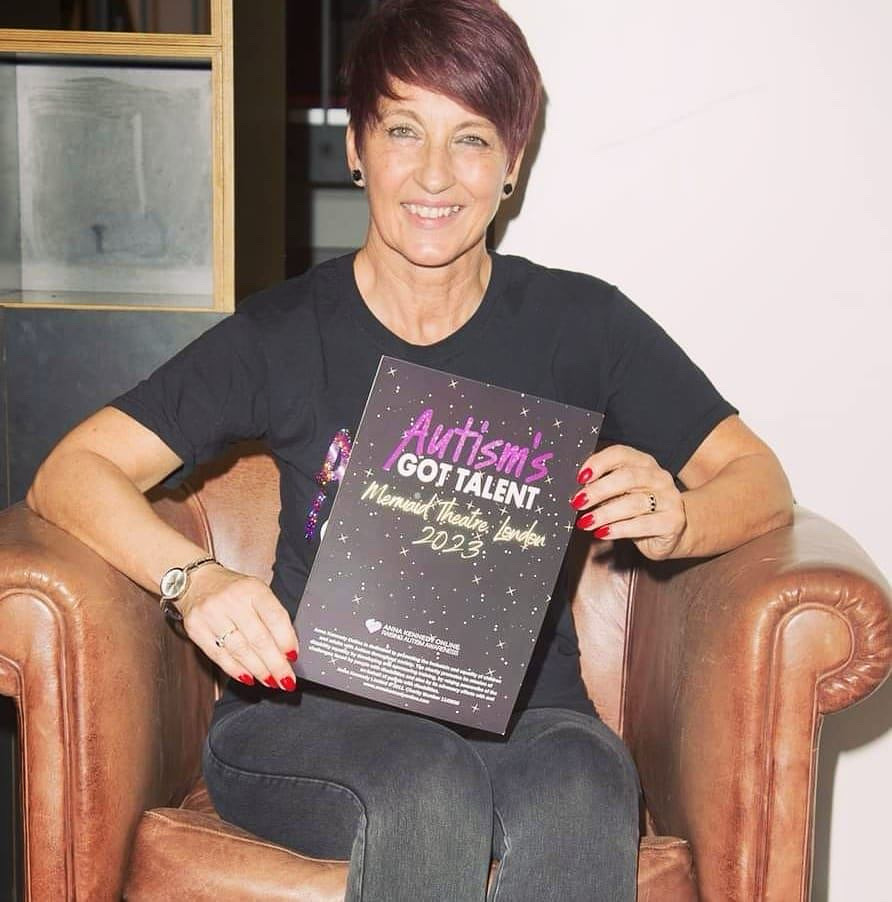
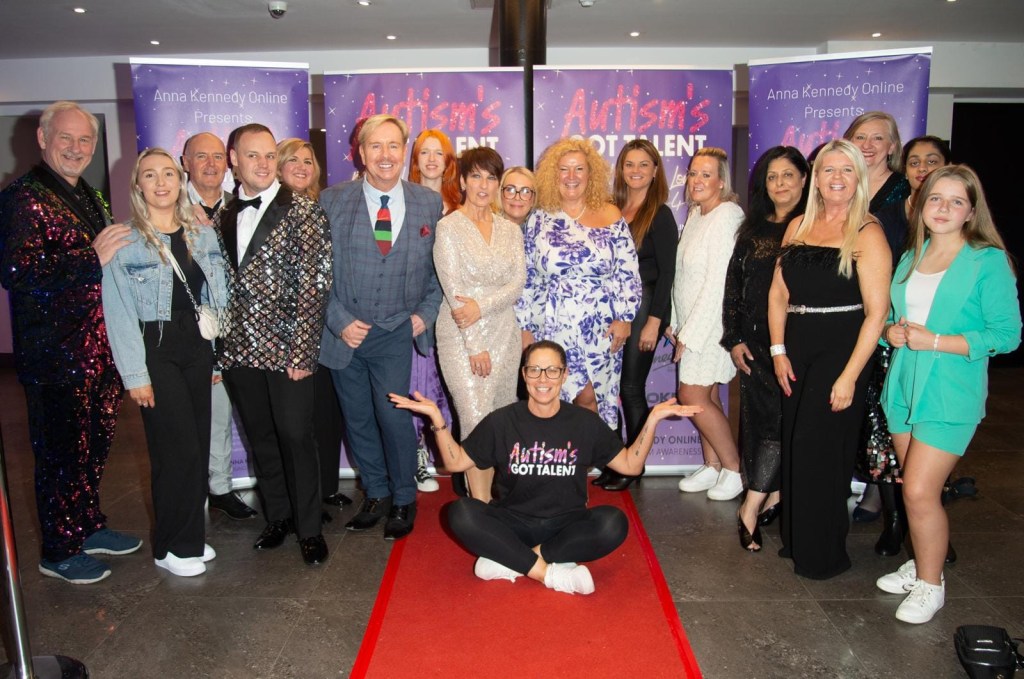
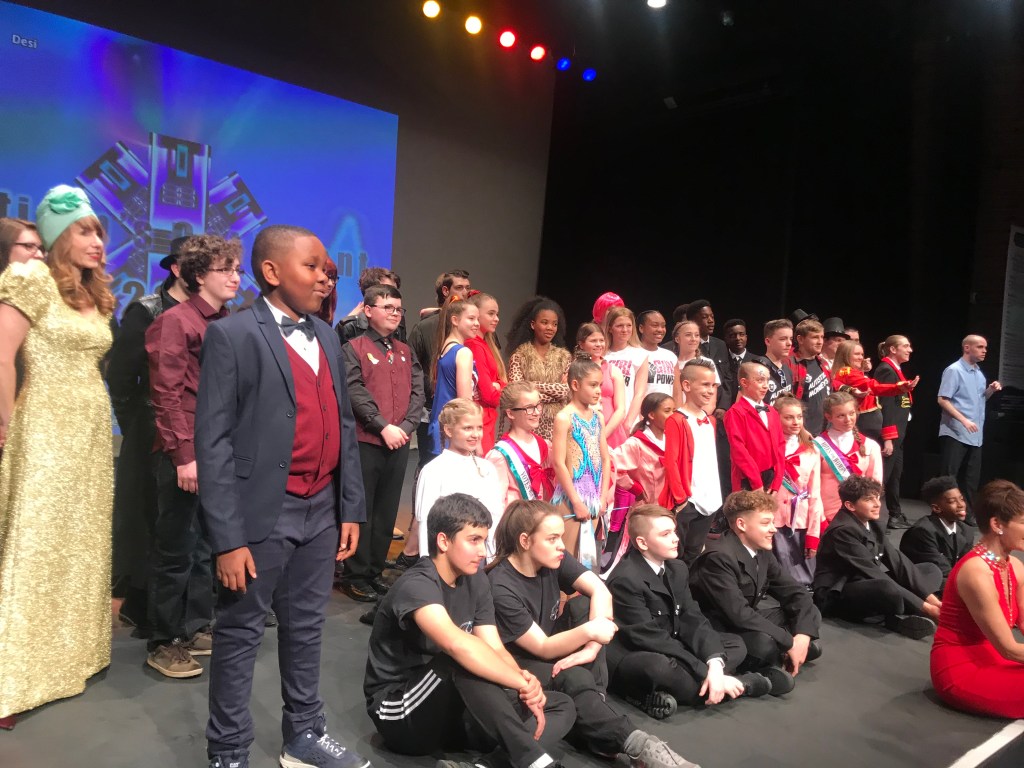
The stars shone brightly at London’s historic Mermaid Theatre on Saturday, October 11th, 2025, as it played host to Anna Kennedy Online’s “Autism’s Got Talent 2025.”
Now a highlight in the charity’s calendar, this dazzling showcase once again celebrated the creativity, courage, and individuality of autistic performers from across the UK — and beyond. With one act even flying in from the United States, the night proved that talent truly knows no borders.
A Stage Alive with Talent From the moment the curtain rose, the audience was captivated. Hosting the show with warmth and humour was Phil Barnett, youth theatre director and People’s Strictly finalist. His charm and easy rapport made every performer feel right at home. Alongside him was his co-presenter, Aston Avery — autistic, award-winning radio presenter and a true hero in his own right.
Joining them on stage was Dr Anna Kennedy OBE, founder of the charity and tireless advocate for autism awareness. Dressed in a sparkling black gown that “out-glittered the boys,” as Barnett playfully remarked, Dr Kennedy radiated pride and grace throughout the evening.
The show opened and closed with high-energy routines from Maggie Paterson’s PPAS Dance Performers, whose vibrant choreography, enthusiasm, and teamwork perfectly captured the inclusive spirit of the event.
“Autism’s Got Talent isn’t just a show — it’s a platform for hope, creativity, and inclusion.” — Dr Anna Kennedy OBE
All that glitters compares Aston Avery . Phill Barnett
The Stars Take the Stage With 21 acts performing, the line-up offered a kaleidoscope of creativity and talent. Among them was Xander Hall, whose soulful rendition of Simply Red’s Money’s Too Tight to Mention was, as the crowd agreed, not just good — it was simply brilliant. OJ O’Neil powerhouse vocals that filled the theatre with emotion and drew enthusiastic applause.
Xander Hall gives that simply special performance
Jessica Hamer showcased confidence and individuality, while Kirk Cramer, a devoted fan of Les Misérables, brought the house down with a stirring rendition inspired by his favourite musical — the passion in his voice earning a well-deserved standing ovation.
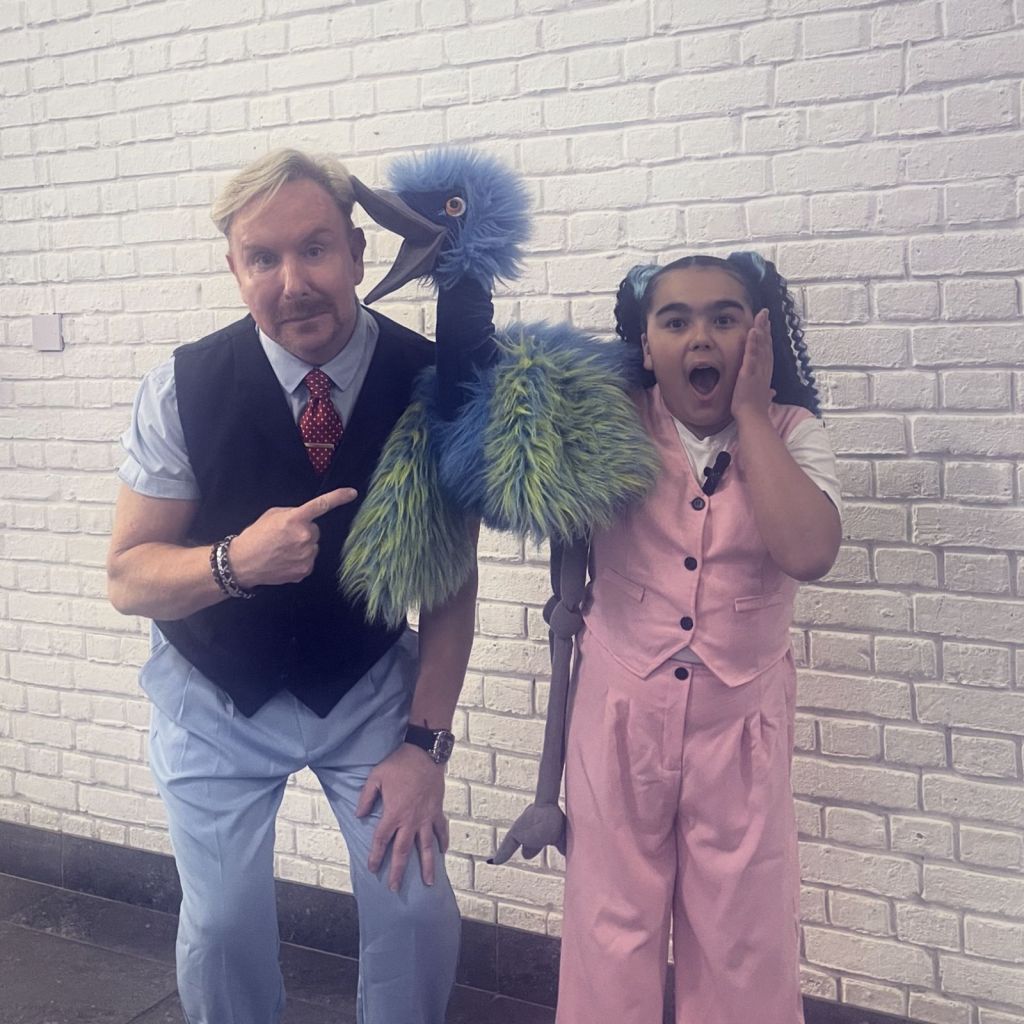
Laughter filled the theatre thanks to Xena-Ivy Devenney and her mischievous puppet Polly, whose cheeky jokes and comic timing delighted the audience. Polly’s antics became one of the night’s most funny moments, reminding everyone that humour can be its own form of artistry.
Oh no Charity patron Steven Smith is being eaten by the wonderful Polly let’s hope she does not get indigestion. . With comedy genus Xena
Dynamic duo David Sanchez-Ramade and Dani Cano brought rhythm and flair with their video that had people standing while Lucy Clewer, Bella Jackson, and Zoe Steede offered moments of reflection and grace.
George Pond, Chapman Shum, and Richard Stevens kept spirits high. Stevens, known for his fundraising walks for Anna Kennedy Online, swapped his walking boots for a microphone and delivered a performance worthy of the Rat Pack — smooth, confident, and full of charm.
Richard Stevens
Lucy Glennon and Joshua Fowler kept the energy flowing, paving the way for one of the night’s most unique acts: Lana Mitchell’s “Periodic Table Resistile.” Blending rhythm, science, and creativity, it left the audience in awe and earned thunderous applause for its originality.
Chirag and Mahendra Dodhi brought love and peace to the evening and Daisy Hutchinson had everyone moved ,
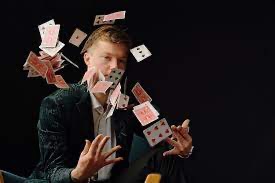
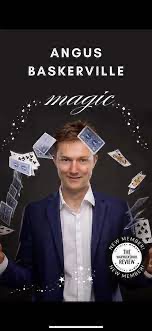
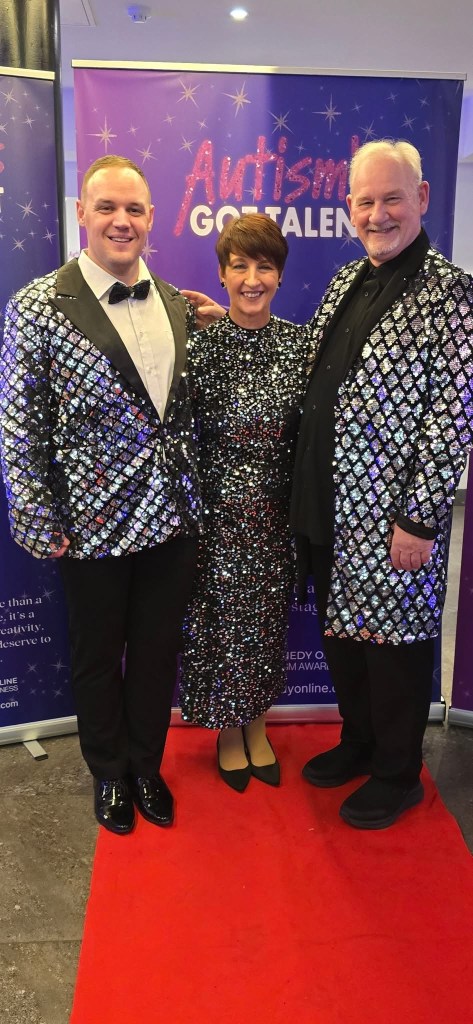
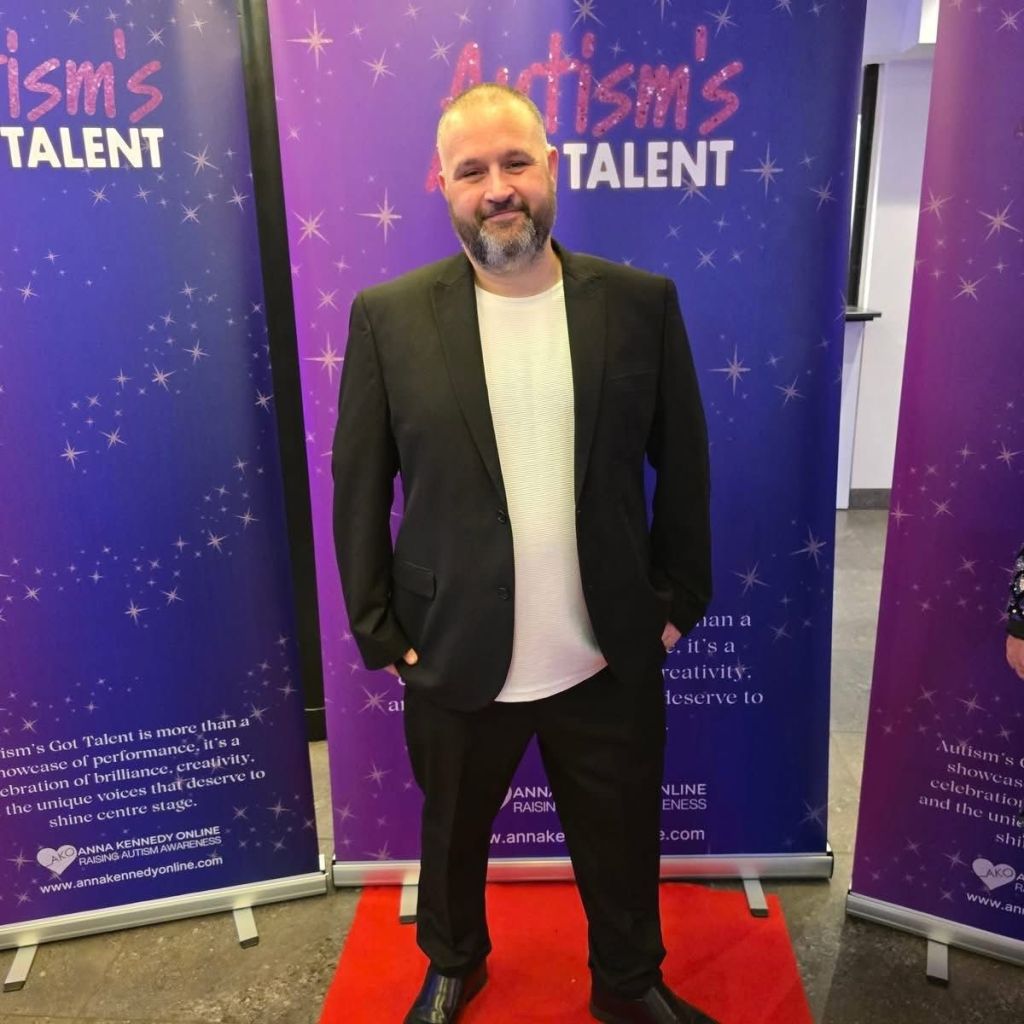
Angus Baskerville, who began his magic journey with Autism’s Got Talent, returned to the stage not only as a bestselling author but also to enthral the audience with his unique act. Angus is now one of the charity’s champions .
Angus Baskerville brought Magic to the evening .
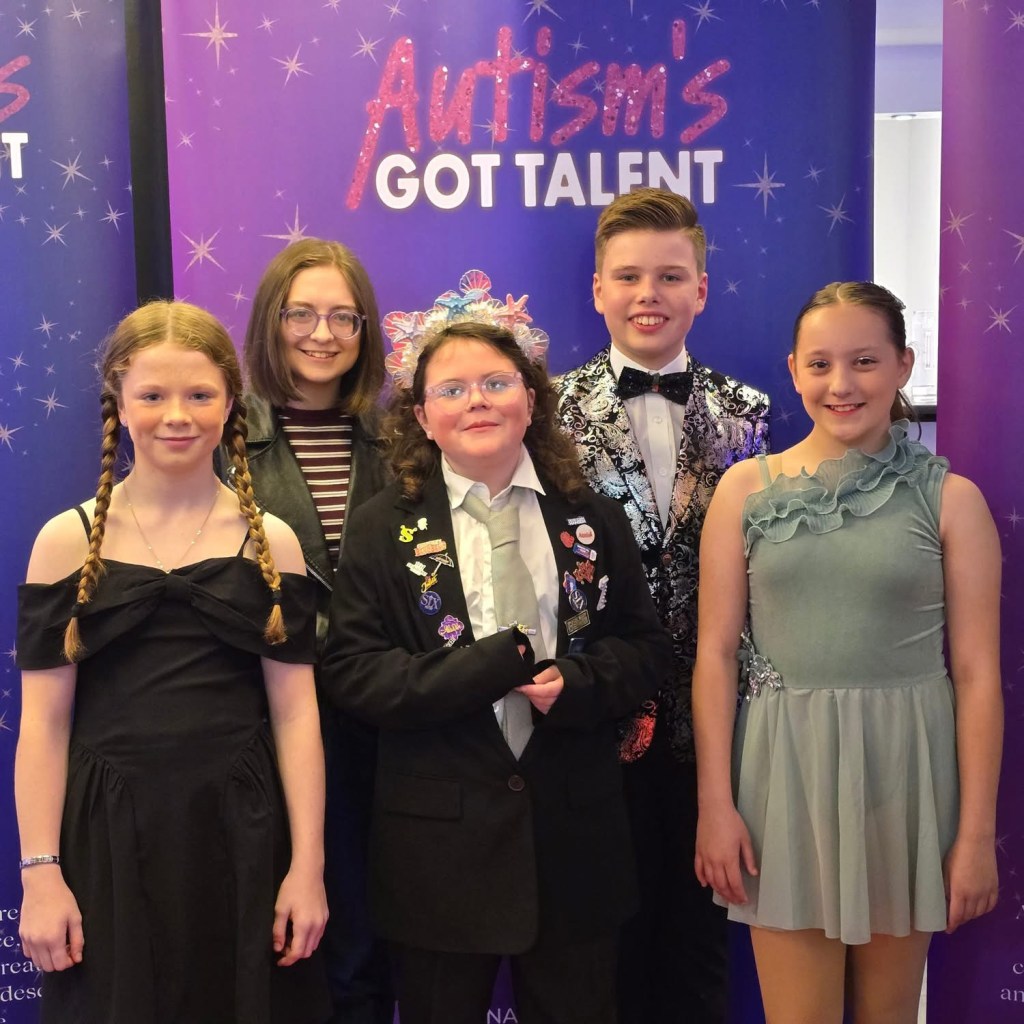
Glitter, Glamour, and Heart Beyond the performances, the evening radiated a genuine sense of community and celebration. Families, friends, and supporters filled the theatre with warmth and applause.
Vicky Michelle pictured by Terry Scott
Celebrities including ‘Allo ‘Allo! star Vicky Michelle, GB News presenter Nana Akua, charity patron and author Steven Smith, BBC Smoogie Queens actress Ionica Adriana, and Sophie Cooper from Harley Skin Group were among those showing their support and presenting some of the acts — a reflection of how widely Autism’s Got Talent has touched hearts across the board.
The lovely Sophie Cooper from Harley Street skin Clinic one of the main sponsors
“Every performer tonight is breaking barriers and showing the world what’s possible through understanding and inclusion.” — Steven Smith, Author and Charity Patron
A Global Stage for Neurodiversity Each performer brought something entirely their own — whether music, movement, storytelling, or laughter. It was a night that celebrated difference as a source of strength, and every act shone with authenticity and courage.
Audience reactions were unanimous: uplifting, inspiring, and unforgettable. There were moments of laughter, moments of awe, and moments where the entire theatre simply glowed with pride.
Earlier showcases, such as Autism’s Got Talent Whitley Bay, have drawn similar praise for being “positive, emotional, and full of pride.” The 2025 London event more than lived up to that legacy — in fact, it may have been the most spectacular edition yet.
The Magic of Anna Kennedy Online For over a decade, Anna Kennedy Online has been a driving force for autism awareness, education, and acceptance. Founded by Dr Kennedy after her personal experiences as a parent, the charity continues to empower autistic people and their families through advocacy, workshops, and creative projects.
Yet Autism’s Got Talent remains its shining jewel — a celebration of the many ways autistic individuals contribute to art, culture, and society. Every performance is a reminder that talent comes in countless forms, and every voice deserves to be heard.
“Together, we can make a difference — one talent at a time.” — Dr Anna Kennedy OBE
He flow in from the USA Kirk Cramer,
A Standing Ovation for Inclusion As Maggie Paterson’s dancers returned for the closing number, the Mermaid Theatre rose to its feet. The applause was thunderous — not just for the performers, but for the families, volunteers, organisers, and, of course, Dr Kennedy, whose vision continues to change lives.
In a world that often talks about inclusion, Autism’s Got Talent shows what it truly looks like — joy, creativity, and community coming together under the spotlight.
Autism’s Got Talent 2025 was more than an evening of entertainment. It was a statement — a glittering celebration of individuality, expression, and belonging.
The show would not be possible without the talents behind the scenes — Fiona Shepard and the invaluable Lisa Robins, the “glue” who keeps the team and talent together.
The wonderful Lisa Robbins and host Phillip Barnett
As the audience spilled out into the crisp London night, one thing was certain: when everyone is given the chance to shine, the world becomes brighter for us all.
On Saturday the 11 October, the spotlight shines on extraordinary talent as Autism’s Got Talent takes centre stage at the Mermaid Theatre in London. Organised by the award-winning charity Anna Kennedy Online, this uplifting and inclusive event brings together over 24 performers from around the world, including the United States, for an evening that promises inspiration, celebration, and unforgettable entertainment.
With doors opening at 6:00 PM and the show starting at 7:00 PM, this year’s event is set to be one of the biggest yet — showcasing not only incredible talent but also the power of inclusion and acceptance.
Dr Anna Kennedy OBE
A Stage That Changes Lives
Unlike traditional talent shows, Autism’s Got Talent isn’t about competition — it’s about celebration. It provides a rare and empowering platform for performers who are autistic or neurodivergent, allowing them to share their unique voices, stories, and creative gifts.
Founded by autism ambassador and campaigner Anna Kennedy OBE, the event was born out of a desire to challenge stereotypes, raise awareness, and offer meaningful opportunities for those often overlooked in mainstream media and entertainment.
“This is not just a show — it’s a movement,” says Anna Kennedy. “Autism’s Got Talent is about breaking down barriers and giving people a chance to shine. Every performer brings something special to the stage, and the audience leaves inspired and moved.”
From singers and dancers to poets, musicians, magicians and comedians, the show highlights the diverse range of talentwithin the autism community. Many of the performers have never had the chance to appear on a professional stage before — making the experience deeply personal and empowering.
Award winning presenter Aston Avery
Star-Studded Presenters & World-Class Venue
Hosting this year’s spectacular event are award wining Gateway DJ, Aston Avery, and youth theatre organiser PhilBarnett , a dynamic trio known for their charisma, warmth, and dedication to the autism community. Their presence helps create a relaxed, friendly atmosphere where performers feel supported and celebrated.
The iconic Mermaid Theatre — a central London venue known for its stunning acoustics and accessibility — is the perfect backdrop for the evening. Its state-of-the-art stage and welcoming environment make it ideal for a show of this scale and heart. Visit: www.the-mermaid.co.uk
What to Expect
With over two dozen acts from across the UK, Europe, and America, audiences can expect an exciting mix of performances filled with energy, passion, and originality. No two acts are alike, and every moment of the show is infused with authenticity and emotion.
The audience is encouraged to cheer, clap, and support every performer — creating an atmosphere of celebration rather than judgment. The focus is on ability, creativity, and joy.
Whether it’s a powerful vocal performance, an emotional poem, a jaw-dropping dance routine, or a surprise act that defies genre, every artist takes the stage with courage and pride.
Anna Kennedy and her dedicated team behind Anna Kennedy on line
More Than Just a Show
Proceeds from the event go directly to Anna Kennedy Online, a UK charity that provides vital support, resources, and advocacy for individuals and families diagnosed by autism. The charity works year-round to raise awareness, run workshops, support networks, and create opportunities like Autism’s Got Talent.
“This event shows what’s possible when we give people the space and support to thrive,” says Anna Kennedy. “It’s about changing perceptions, building confidence, and proving that being different is something to be celebrated.”
In a world where neurodiverse individuals often face barriers to expression, Autism’s Got Talent offers something truly special: a night where every voice matters, every performance is met with applause, and talent is judged not by convention — but by heart.
Whether you’re a long-time supporter of the autism community or simply looking for an evening of uplifting entertainment, this is one event you won’t want to miss.
In particular, Anna Kennedy on Line would like to thank their sponsors Mermaid Theatre, The Harley Street Skin Clinic, Orange Orchid, Talem Law, SEND Tutoring, and SEN Tutoring for their invaluable support. Without you, we simply could not continue to do what we do.
In a world where many talk about what they might do someday, there are others who quietly get on with it—people who take action, push boundaries, and in doing so inspire those around them. Artist and photographer Annemarie Bickertonbelongs firmly in the latter category.
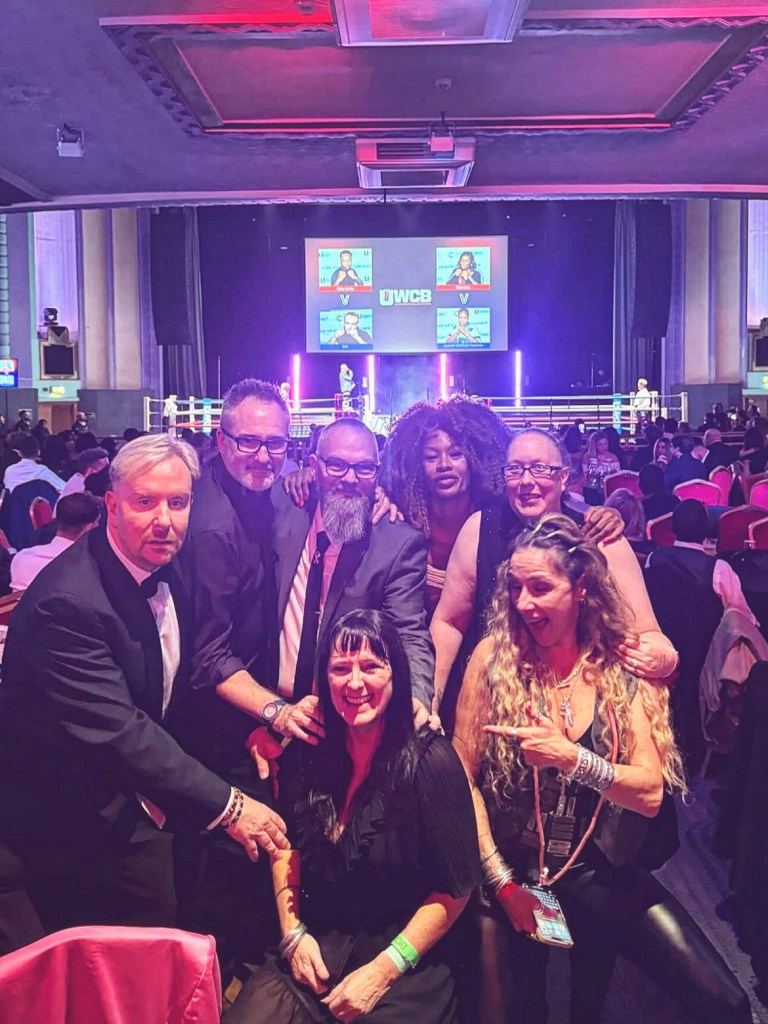
On Saturday, September 27, 2025, Bickerton swapped her camera for boxing gloves, stepping into the ring at The Troxy in London for an Ultra White Collar Boxing (UWCB) charity event. The evening brought together novice boxers from across the capital, each of them having undergone ten weeks of intensive training, with the dual aim of testing themselves and raising money for good causes.
For Bickerton, that cause was the Pink Ribbon Foundation, a UK charity that provides financial support to organisations helping those affected by breast cancer. It was a natural fit: she has previously worked with the foundation, staging her acclaimed “BustOut” exhibition at the Firepit Gallery at the O2. That exhibition combined bold visual art with advocacy, raising awareness and funds in equal measure.
This time, however, the setting was very different. The Troxy’s historic stage was transformed into a boxing arena, the atmosphere electric as friends, family, and supporters packed into the venue. Bickerton’s match ended officially as a draw, though audience members were quick to call it a clear win on her part.
The result, though, tells only part of the story. What makes Bickerton’s achievement stand out is the journey that led her there. For ten weeks, she trained with discipline and determination, rising early, attending gruelling sessions, and absorbing the technical and mental demands of boxing. “It was not natural for me at all,” she admitted beforehand. Yet she persevered, embodying the UWCB ethos of ordinary people doing extraordinary things for charity.
Bickerton’s decision to take up boxing was not made in isolation. She had first introduced the sport to her son, who lives with autism, as a way to build confidence and resilience. Facing bullying at school, he found empowerment in the discipline and structure of training. Inspired by his progress, Bickerton decided to follow suit. “Lead by example” became more than a phrase—it became a lived reality.
Those who know her were not surprised. Bickerton has long been recognised for her willingness to tackle challenges head-on, whether in her artistic practice or personal life. As a photographer and artist, she has built a reputation for bold, thought-provoking work that often blends beauty with social commentary. As a mother, she has consistently sought opportunities that empower her son and others facing adversity.
Her move into boxing might seem like a departure, but in many ways, it continues a consistent theme: using creativity, courage, and perseverance to make an impact.
Events like UWCB are not only about individual achievement but also about collective contribution. Since its founding, the organisation has raised millions of pounds for charities across the UK, with participants from all walks of life. Bickerton’s fight was one of dozens staged that evening, each carrying a personal story and a charitable purpose. Together, they highlighted the power of community fundraising through unconventional means.
For Bickerton, the fight capped months of hard work and represented more than just a physical test. It was a statement about resilience, visibility, and the importance of action. “Annemarie is a great example of what’s right in this world,” said one supporter. “She doesn’t just talk—she does.”
That ethos has earned her admiration not only from those close to her but from a wider circle who see in her story a reminder of what determination can achieve. In an age when so much energy is spent on words, Bickerton’s actions—whether through art, activism, or sport—speak louder.
As the cheers faded at the Troxy, the impact of her fight extended far beyond the ring. Funds had been raised for a vital cause, awareness had been heightened, and a powerful example had been set for her son and others: that courage comes in many forms, and that sometimes the greatest victories are not about titles or trophies but about showing up, standing tall, and refusing to back down.
With her gloves now set aside, Bickerton returns to her life as an artist, mother, and advocate. Yet the echoes of that night in the ring remain—a testament to the fighting spirit of a woman who refuses to be defined by limits.
We’ve all witnessed the sudden outpouring of grief, tributes, and public mourning for Charlie Kirk. Before I get the inevitable backlash, let me be clear: the loss of any human life is a tragedy. Death, no matter the circumstances, is not something to celebrate. But that doesn’t mean we must ignore the uncomfortable truth about who a person was and the impact they had on the world around them.
Anyone who dies while promoting hatred—whether it be racism, homophobia, misogyny, or transphobia—has left behind a legacy of division. And while it’s wrong to revel in someone’s death, it’s equally wrong to pretend that their life was lived in service of goodness, compassion, or truth when the opposite is much closer to reality.
There’s an old saying: “Keep your friends close, but your enemies closer.” I am one hundred percent against cancel culture. Silencing voices and driving them underground only makes them more dangerous; it allows toxic ideologies to fester where they cannot be challenged or confronted. We need to keep our eyes on the people who preach hate, not push them into the shadows.
But here’s my question: where is the same level of public mourning for the innocent children killed in American school shootings? Where are the candlelit vigils, the elaborate civil ceremonies, the hours of televised tributes for those whose only “crime” was going to class in a nation that has normalised mass shootings? Where is the nationwide grief for the everyday victims of America’s gun obsession?
The outpouring for Charlie Kirk feels performative—dramatic, over the top, and completely misplaced. I scrolled through social media and was struck by the sheer number of posts about him. Yet for the children lost in Uvalde, in Sandy Hook, in countless other tragedies, there was silence after the first wave of news coverage. No weeks-long grief, no cultural pause for reflection. The contrast is staggering.
Let’s get something straight: Charlie Kirk did not save lives. He didn’t cure HIV, discover a vaccine for the common cold, or dedicate his life to lifting people out of poverty. He built a platform by spreading fear, misinformation, and divisiveness. To canonise him now as if he were some kind of saint is not just dishonest, it is deeply disrespectful to those he harmed with his rhetoric.
And what exactly was “Christian” about his teachings? Jesus—let’s remember, a brown-skinned, Arabic-speaking man from the Middle East—preached love, compassion, and radical inclusion. He spent his time with outcasts, outsiders, and the marginalised: fishermen, tax collectors, a prostitute, and a ragtag group of twelve unmarried men. The essence of his teaching was simple: love thy neighbour as thyself.
Religion, like a gun, can be used for protection and peace when in the right hands. But in the wrong hands, it becomes a weapon of hate and fear. Charlie Kirk chose the latter. He wielded scripture selectively, twisting it into a justification for exclusion rather than inclusion, for condemnation rather than compassion. That is not godly—it is a betrayal of the very faith he claimed to represent.
What baffles me most is why so many people queued up to debate him, as though he were some kind of great theological authority. He wasn’t. He was poorly informed, cherry-picking passages of scripture to suit his agenda, ignoring centuries of scholarship, and offering nothing more than the shallowest of arguments. This was not a man who should be celebrated as a thinker, let alone a prophet.
I do feel for his family. Losing a loved one is painful, no matter who they were. I wish he had used his influence for good—to inspire, to uplift, to build bridges instead of walls. Instead, he chose narcissism, self-promotion, and hate. That is the legacy he leaves behind.
The most ungodly thing of all is an ill-informed Christian who believes their interpretation of the Bible gives them licence to judge others. Freedom of speech must exist for both sides, but so too must accountability. Words matter. Influence matters. And when someone spends their life spreading division, we cannot in good conscience rewrite history just because they are no longer here.
Yes, love thy neighbour. Yes, treat others with compassion. But let us also extend that compassion to the innocent children gunned down in schools, to the victims of bigotry, to those whose lives were cut short by violence. If Charlie Kirk is to receive public mourning, then surely those who lived with love in their hearts, rather than hate, deserve at least as much.
































 2Shades Magazine