Hello darlings, I’m back—with an interview with the divine darling of poetry, Joy Jewett, and some fabulous book reviews. Stand by for my own column, sweetie—it will be honest, a little wicked, and a full-on bitch fest that will have you laughing. Coming this April.
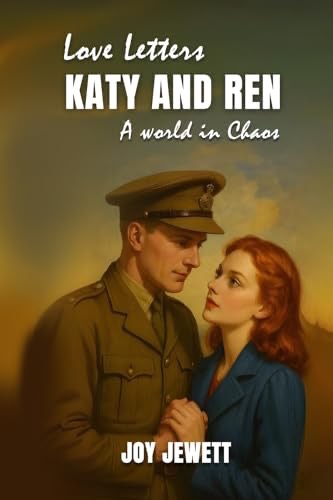
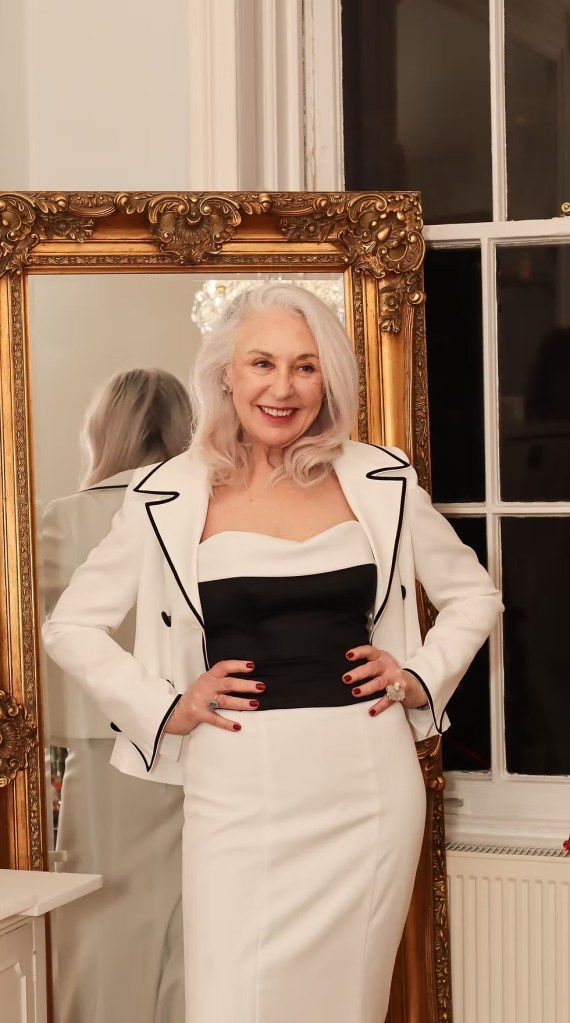
2Shades Magazine Exclusive Beauty, Brains and a Poet’s Soul — A Supermodel in Her Own Words
In a world obsessed with image, she offers something far more enduring: depth. Model, author, and keen observer of human nature, she sits down with David to discuss the passions that shaped her, the poetry that moves her, and the moments that make her laugh.
David: What was your childhood passion? Joy: My childhood passion was always reading. While others played with dolls, I found comfort and excitement in books. I could spend hours completely immersed in stories—it was my own little world.
David: How do you feel when you write? Joy: Writing, for me, is almost an out-of-body, spiritual experience. I am deeply drawn to human emotion—I observe people, listen to their stories, and then transform those feelings into poetry. It’s incredibly personal, yet universal at the same time.
David: Who are your favourite authors? Joy: In poetry, I greatly admire the Swedish poet Tomas Tranströmer and the incomparable Maya Angelou. When it comes to classic literature, I love Shelley, James Joyce, and, of course, the Brontë sisters. Their depth and timelessness continue to inspire me.
David: When did you last laugh? Joy: Just this morning. A friend from Sweden said to me, “Why don’t you have a man in your life? Are you just too cold-hearted?” My response was, “Why do you assume I have a heart?” We both laughed—it was one of those wonderfully sharp, unexpected moments.
David: What is your idea of a dream day out? Joy: A perfect day for me would be a long walk around historical sites with friends—places filled with ancient stories and atmosphere. We’d stop at a café for coffee or tea, imagining what life must have been like in those times. Then I’d return home inspired, writing poetry about the place, the people, and the echoes of history—ending the day with laughter and meaningful conversation with those I care about.
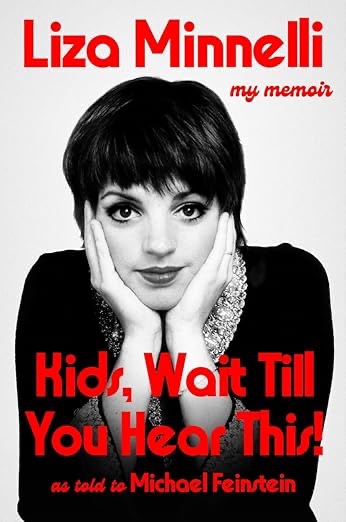
Liza Minnelli — Kids, Wait Till You Hear This! ⭐️⭐️⭐️⭐️⭐️ (5/5)
Kids, Wait Till You Hear This! is a dazzling, deeply personal memoir that captures the essence of a woman who has lived her life centre stage—both triumphantly and turbulently. Co-written with Michael Feinstein, the book pulls back the velvet curtain on Minnelli’s extraordinary upbringing as the daughter of Judy Garland and Vincente Minnelli. From the very first pages, readers are immersed in a world of Hollywood legend and Broadway brilliance, but what sets this memoir apart is its unmistakable honesty—Liza is not interested in myth-making; she is here to tell the truth.
What makes the memoir particularly compelling is its unflinching exploration of her personal struggles. Minnelli speaks candidly about her battles with addiction, offering a nuanced and often moving account of the pressures that come with fame, legacy, and expectation. Yet, the narrative never lingers too long in darkness. Instead, it balances vulnerability with resilience, weaving in vivid recollections of her career highs—from electrifying stage performances to iconic film roles. Her relationships, both romantic and professional, are painted with warmth, wit, and occasional heartbreak.
Ultimately, this is more than a celebrity memoir—it is a testament to survival, artistry, and reinvention. Minnelli’s voice is unmistakable: bold, theatrical, and laced with humour even in her most reflective moments. Fans will relish the behind-the-scenes stories, while newcomers will discover a richly layered narrative of fame, family, and identity. A truly star-studded triumph.
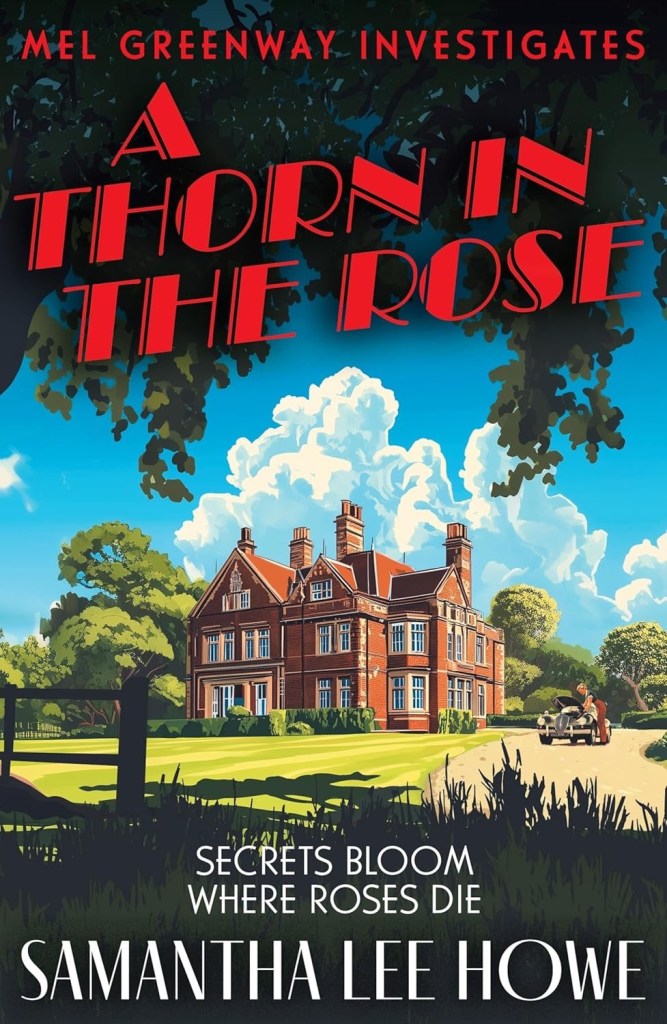
A Thorn in the Rose — A Haunting Tale of Secrets, Scandal and Survival ⭐️⭐️⭐️⭐️⭐️ Five Star
There is something irresistibly seductive about a crumbling estate and the ghosts it refuses to bury, and A Thorn in the Rose leans into that allure with confidence and style. Set in post-war Britain, Avonby Estate becomes a character in its own right—dripping with decay, privilege, and long-suppressed secrets. From the moment Lady Melinda “Mel” Greenway uncovers a body beneath the roses, the novel pulls you into a world where beauty and brutality exist side by side.
At the heart of the story is Mel—a refreshingly complex heroine whose grit as a former army mechanic sets her apart from the fragile aristocracy around her. Her dynamic with Inspector Derrin Bradley adds emotional tension that elevates the narrative beyond a traditional whodunnit. Their shared past crackles with unfinished business, while a richly drawn supporting cast ensures suspicion lingers around every corner.
What lingers long after the final page is the atmosphere—cinematic, brooding, and steeped in quiet menace. With its blend of suspense, romance, and class tension, this is a gripping and elegant mystery that keeps you guessing, even if it occasionally lingers a touch too long in its own shadows.
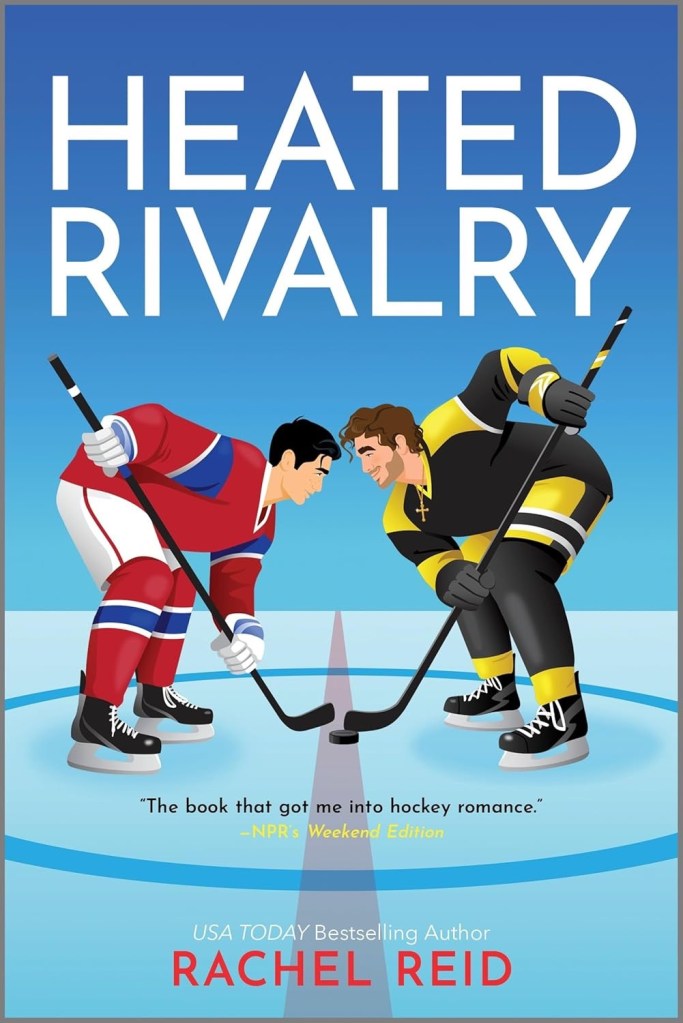
Heated Rivalry — Love, Lust and the Politics of the Ice ⭐️⭐️⭐️⭐️⭐️ (5/5)
Rachel Reid’s Heated Rivalry is not just a sports romance—it’s a cultural moment wrapped in sharp writing, raw chemistry, and emotional intelligence. Set in the brutal, high-pressure world of professional ice hockey, this bestseller delivers far more than locker-room tension. It’s slick, seductive, and surprisingly soulful.
Shane Hollander and Ilya Rozanov are electric—two rival captains locked in a dangerous game both on and off the ice. Public enemies, private lovers, their connection is explosive and deeply human. Reid explores masculinity, identity, and the suffocating expectations placed on elite athletes with refreshing honesty.
What sets this apart is its fearlessness. It challenges perceptions, breaks boundaries, and delivers a love story that feels both modern and necessary.
Steven’s Viewz: Sexy, smart, and unapologetically bold. If you think you know sports romance—think again. This one doesn’t just play the game… it rewrites the rules.
David Nailer’s Final Word: Darlings, whether it’s scandal in a crumbling estate, passion on the ice, or survival under the brightest of spotlights, one thing is certain—great storytelling always leaves a mark. And trust me… I’ve only just warmed up. See you in April—bring a thick skin and a sense of humour.
It’s All Hanky Panky as the London Fetish Film Festival Returns
It is all hanky-panky as the London Fetish Film Festival returns for its seventh year, once again lifting the curtain on a world that many people are curious about, some quietly participate in, and others still regard as taboo. Fetish, after all, has always occupied that fascinating space between the private and the performative, the misunderstood and the mythologised.
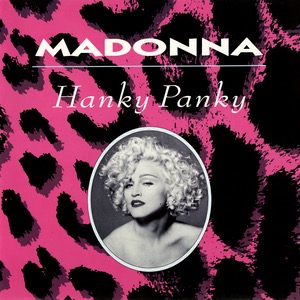
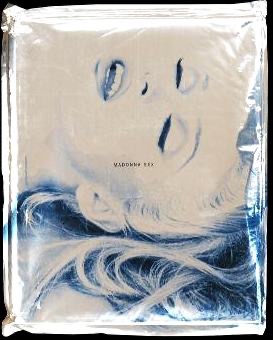
Long before hashtags and streaming platforms, Madonna helped drag fetish culture into the mainstream. In the 1990s she didn’t just flirt with provocation; she weaponised it. Her song Hanky Panky cheekily suggested there was nothing quite like a good spanking, while her 1992 book Sex boldly invited readers to explore fantasies ranging from bondage and domination to submission and exhibitionism. What had once been whispered about behind closed doors was suddenly glossy, photographed, and unapologetically public. Madonna didn’t just shock — she reframed desire as something to be examined rather than hidden, daring readers to “make love in Paris” or “let her be your mistress”.
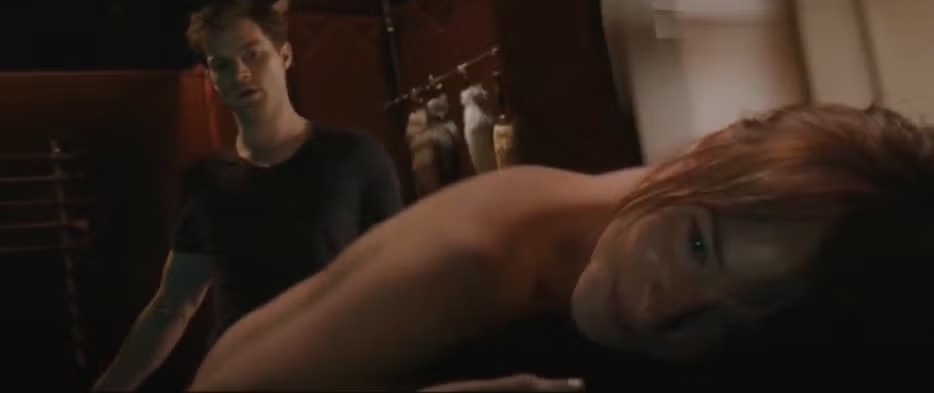
Then came Fifty Shades of Grey, which flew off bookshop shelves and dominated bestseller lists. Its story of a young woman entering a sexually dominant relationship with a billionaire reignited debates about power, consent, and feminism. Critics argued it set women’s liberation back decades, yet the reality was more nuanced. I couldn’t help noticing how many women were reading it openly — on trains, on planes, in cafés — suggesting that whatever the book’s flaws, it tapped into something real and widespread.
50 shades spanking .
It’s often said that one in three of us has a submissive side. But I’ve always wondered: if the dominant figure in Fifty Shades lived in a council flat rather than a penthouse, would the story have been as romanticised? Or would he have been slapped, arrested, or both? Wealth and aesthetics, it seems, can dramatically change how power dynamics are perceived.
Of course, fetish itself is nothing new. Evidence of flagellation, bondage, and erotic imagery can be traced back to cave drawings, ancient Egypt, and the Roman Empire, who were particularly enthusiastic when it came to indulgence. Some argue certain fetishes may stem from childhood trauma, but that’s a conversation for another article entirely.
Like many people coming of age in the 1990s, I wore the leather trousers and biker jacket, blissfully unaware that I was echoing a long-standing visual language of rebellion and desire well thats what I tell people . Clubs embraced biker and fetish aesthetics, encouraging people to explore what was often described as their “forbidden side”. London saw nights like Torture Garden spring up at venues such as the Hoist, while across the Atlantic the New York gay scene was already miles ahead. The Eagle, with its hyper-masculine leather culture in the 70s and 80s, set a template that still influences fetish spaces today.
I once thought of myself as very liberal and worldly — until Florida taught me otherwise. In a celebrity-frequented club with a strong fetish theme, people dressed as if they’d stepped straight out of Madonna’s Sex era or a George Michael video, playing with master-and-slave imagery. Much of it felt like cosplay: people loved the look but many would run a mile if a leather daddy’s belt actually landed near them. They admired the surface without really understanding the psychology beneath it.
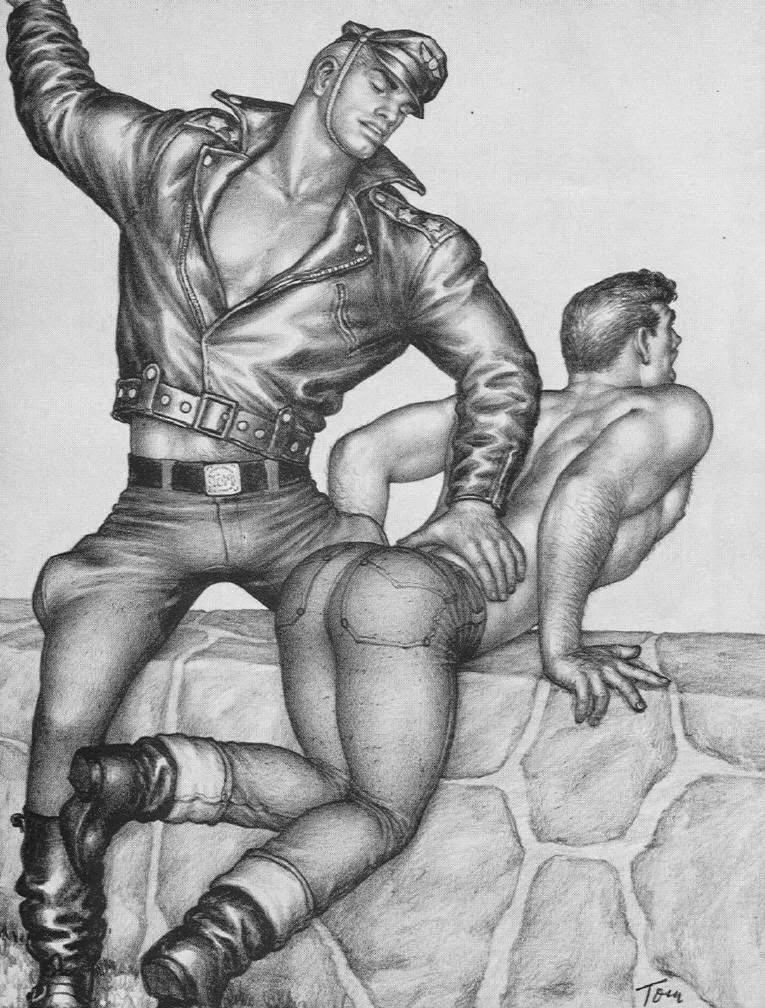
Tom Of Finland fantasy .
Over the years, many dominatrices have told me the same thing: a large number of their clients are men who hold immense power in everyday life — heads of companies, senior military figures, decision-makers used to absolute control. For an hour or two, giving that control away can be a profound relief. When discussed openly and practised safely, role-play can even strengthen relationships. Yet for a small section of society, this isn’t theatre at all — it’s identity.
One moment in particular floored me. A man at a club stared at me so intensely it became unsettling. My friend eventually asked him what he wanted. He vanished — or so we thought. Five minutes later, I felt something brush my ankles. Looking down, I discovered a man in a full black cat suit. My friend laughed and said, “It would happen to you.” I was told to at least stroke the poor thing. It was, quite literally, the last time I went for a pussy.
Just when you think you’ve seen it all.
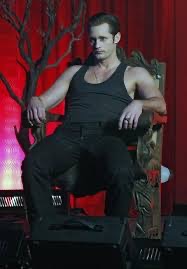
Which brings me to cinema. While the Fifty Shades films were largely dismal, I was curious about what a gay equivalent might look like. After all, who didn’t fall for Alexander Skarsgård in True Blood? As a vampire who commanded worship and dismissal in equal measure, he embodied dominance with chilling ease.
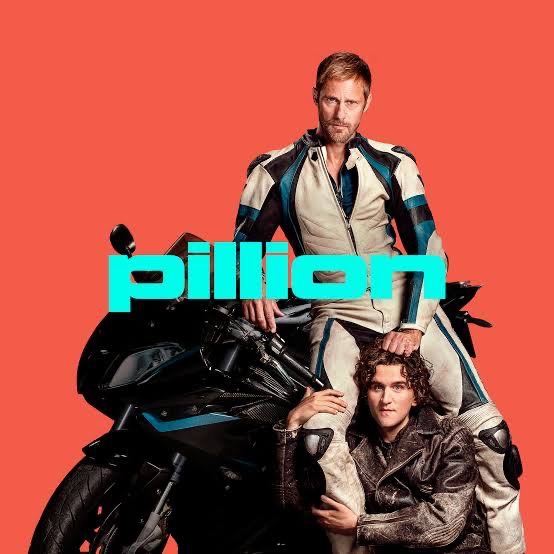
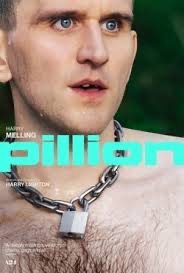
The film Pillion, despite rave reviews, sadly fails on many levels to explain the dom-sub relationship. While I admire the decision to use real fetishists, it never quite lands emotionally. Ironically, it does highlight one truth often misunderstood: the submissive is frequently the one truly in control, setting boundaries and rules. Beyond that, the sex scenes are oddly cold, and I found myself more worried about the dogs tied up and left alone than anything else.
There is a brilliant dom-sub film waiting to be made. Pillion isn’t it — not an amazing love story, not a revelatory exploration — but watching Alexander Skarsgård is reason enough to give it a look. That, of course, is just my opinion. Many people are raving about it.
The film is screening as part of the London Fetish Film Festival, and I’d urge you not to take my word alone. Dive in, make up your own mind, and perhaps discover that fetish, like all good cinema, tells us as much about ourselves as it does about what’s happening on screen.
HOWL is a sexual wellness brand revolutionising intimacy through innovative sex tech
products. They leverage the power of experiential events and a viral media channel to
dismantle shame and champion pleasure.
LFFF: Shorts Session 1
Saturday 21st February
4pm
93.47min run time
Featuring 8 short films
Tickets £12
Join us for a dripping new curation of ‘Fun Fetish’ and 2024 LFFF award winning short films!
Indulgent Delights
8mins 11secsAn electrifying front row seat as burlesque performer Leila Delicious adorns her body with
glitter.
Lee in Leatherland
6mins
The speaker, a queer man searching for the hypermasculine fantasy figures drawn by Tom
of Finland, journeys from Helsinki to London in pursuit of desire made flesh. In Vauxhall’s
clubs and darkrooms, he encounters the sweaty, neon-lit world of gay nightlife – full of
longing, bravado, and disappointment.
Darwin Fantasia
10mins 56secs
Canela immerses herself in Darwin’s studies on the plant world, focusing particularly on The
Fertilisation of Orchids. As she explores the meticulous accounts of interactions between
plants and insects, she discovers something that goes beyond mere survival: a web of
curiosity, play, and pleasure that also seems to captivate the naturalist himself.
2024 Award Winners: Best Short + Best Screenplay
A Pacific Touch
37mins 43secs
This is a story about love. Isolation, and an unusual obsession. Alexei , a young man,
becomes consumed by his passion for his new wallpaper, slowly withdrawing from the world
outside. As he drifts deeper into his fixation, Texture Pasifique explores the limits of love and
obsession, revealing the complexities of intimacy with both people and objects.
Jacked Out
7mins 53secs
What is a virtual pet in an era of mass surveillance? Jack out of the Y2KAGE in this erotic
hauntology film probing the persistent feedback loops of future’s past in our present, forces
of technological dominance, and virtual pets unleashed!
2024 Award Winners: Best Animation
Klimax
2min 47secs
Klimax explores the topic of female masturbation in order to redefine the already negatively
connoted image of the female sex and thus strives to create new aesthetic associations of
femininity. Our main protagonist, Barbie, undergoes a process of transformation.
My Perfect Dolly
17mins
A pretty pink dollification scene with two non-binary plus size femmes, followed by a
conversation.
Lupae x Hardwerk4mins 37secs
LFFF: Shorts Session 2
Saturday 21st February
6:30pm
Full run time with interval 149.24mins
Featuring 20 short films
Tickets £15
Join us for a dripping new curation of Kink Art, Fetish Horror and 2024 LFFF award winning
short films!
The Nest
7mins
It’s the first night he’s bringing someone home. They must be quiet.
2024 Award Winners: Best Edit
What if I Told You to
4mins 21secs
Official music video
2024 Award Winners: Best Comedy
Squeegee
10mins 54secs
A high-powered businesswoman meets a high-rise window-washer for an erotic rendezvous
on opposite sides of her skyscraper window.
Fetish
21mins
Oddball Clark meets the girl of his dreams, but the relationship is threatened by his foot
fetish.
2024 Award Winners: Best Production Design
The Debutante
14mins 35secs
When a young woman agrees to satisfy a peculiar request in exchange for a luxurious pair of
shoes, what begins as a simple act of submission soon spirals out of, and then into, control –
reshaping her identity and his shoe collection.
Guro
7minsIn the harsh Arctic landscape of Longyearbyen, Guro meets a mysterious client for a
straightforward transaction. However, as they travel together along the isolated, icy roads,
the client makes an unusual request that tests Guro in unexpected ways.
Virgin X – Billionaires
2mins 18secs
Official music video
20 MINS INTERVAL
Operotica: Stabat Mater
4mins 22secs
A music video for Operotica’s re-orchestration of the first movement of Pergolesi’s Stabat
Mater, featuring Operotica as latex-clad nuns, rigged together with shibari by Dominatrix
Veronica Viper. The awkwardness of their positioning reflects the close suspensions in the
music
Virgin X – Splinters
3mins 25secs
Official music video
Bath Bomb
9mins 55secs
A possessive doctor prepares an ostensibly romantic bath for his narcissistic boyfriend, but
after an accusation of infidelity, things take a deeply disturbing turn.
2024 Award Winners: Best Sound Design
Mutations of Desire
5mins 27secs
A queer tribute to the Cronenberg film, Deadringers. Sade and Odette create a disorienting
world of latex, strange medical instruments, and hallucination.
Woman ASMR
4mins 25secs
A woman and her microphone provide an erotic autonomous sensory meridian response.
Virgin X – Shame
3mins 48secs
Official music video
2024 Award Winners: Yes it’s F*cking Political
Dori Dori
3mins 39secs
In a world that tries to suppress who you are, Sara ATH shows
us that the soul can’t be caged and takes a stand against the shame and silencing of her
fellow queers. Rapping in Arabic, it’s her turn on the mic to sing out loud who she is and howproud she is – a rebellious act that may bar her from ever returning to her home country.
Symbolising the internal battles of accepting your sexuality and grappling with self-identity,
the music video explores the liberation and eventual acceptance of queer existence and how
‘orgasmic’ this enlightenment feels.
Vanessa
5mins
Making love to an inanimate body; the mannequin Vanessa.
2024 Award Winners: Best Costume + Best Music Video
Virgin X – Fuck Myself
3mins 23secs
Official music video
Hyperion
1min 44secs
Hyperion is a high order penitentiary complex. Walls rewrite identity, silence reshapes desire,
and every exit demands transformation. No one leaves Hyperion, at least not without
fundamentally changing themselves.
Blood – Humanification
1min
An intriguing creature seems to have fallen from the sky, confused and unmoored. It will
witness how its passage through Earth shapes its body and its identity, and how, slowly, we
all end in the same cage when we betray ourselves. Even the most rare and bizarre can be
shaped to humanity. No one escapes.
2024 Award Winners: Best Kink Moment (Human Chopping Board)
Thing
10mins 50secs
The everyday life of a mistress and her furniture slave. When he suddenly disappears, they
find themselves in an identity crisis.
Moan
8mins 38secs
Framed against a blood red haze of stark crimson backdrops, the conclusive short film
MOAN presents a visually penetrating feast. The ultimate climactic crescendo sees
unsuspecting strangers thrust into the throws of breath-slick tension, curdling curiosity
ultimately ending in a hypnotic descent of all-consuming indulgent, auditory stimulation.
Throbbing suspense, washed out groans and the illicit breathy moans staining the lips of
those who dare pick up the phone. The voice, wet, sticky and intoxicatingly close.LFFF: Documentaries
Sunday 22nd February
2:30pm
83.33mins runtime
Tickets £10
Sex in Colour: Kinky and Loving It
48mins 33secs
KINKY AND LOVING IT is an empowering documentary highlighting the transformative
potential of reclamation. Celebrating how Black folks reclaim agency over their desires,
bodies, and identities, KINKY AND LOVING IT is a liberating journey into the transformative
power of radical acceptance, reclamation, and love within Black kink.
Mr. Bound & Gagged
35mins
“Bob Wingate and Lee Clauss, former publishers of the legendary Bound & Gagged
magazine, open the archive and the floodgates in this richly layered excavation of queer
kink, media history, and erotic resistance. Set against the backdrop of the Leather Archives
& Museum in Chicago, this candid portrait splices salacious nostalgia with radical politics,
tracing decades of defiant desire, artistic transgression, and unapologetic love. A necessary
tribute to two aging icons of the underground.
” (CUFF32)
LFFF: Inside Fetish
Sunday 22nd February
4:30pm
92.43mins runtime
Tickets £12
On The Erotics Of Stuffing Large Objects Into Small Spaces
15mins
Aexperimental film about the submissive desire for restrictive bondage. The subject – a single figure
locked in a dog crate, hooded and caged – shares his internal monologue: “This cage will never be
comfortable, though I find it deeply comforting.
Ripples: Libra
5mins 36secs
A Shibari short from Director Guillaume Pin
Oasis6mins 34secs
Shot with super8 camera in the desert of Joshua Tree , this film is about a Gay Asian Cowboy
reconnecting with a version of his younger self via ropes.
Breakfast Time
17mins 58secs
A raw, intimate documentary about a queer pup eating breakfast from his dog bowl. As he eats, a
candid voiceover unfolds – reflections on the nature of desire and disgust, failed relationships,
encounters with gay-bashing, and the feeling of isolation that comes along with stigmatized desire.
Sanguine
4mins 54secs
A love letter to blood accompanied by seraphic, breathy music. Beau Flex (they/them) meditates on
the strength of flesh in this ritualistic solo scene. Engaging in self piercing play, Beau focuses on
coaxing blood out of their thigh, producing round ruby droplets. As they smear the blood upon their
skin, they smile at the release in their art.
Babyblue
4mins 27scs
An exploration of tenderness and catharsis through needle play. Shot on Finn’s last day in New York
City, this performance symbolises goodbyes and a rite of passage to mark their way back home.
σάρξ [Sarx]
1min 59secs
A masochist mortification of the flesh. A perversion of prayer.
A.S.F.R. (alt.sex.fetish.robots.)
5mins
Vudhi K., a Thai ASFR practitioner, recounts the process of transformation and the moment his fetish
first took hold. A memory, a primal scene, a mercurial awakening. The drag of a brush against skin
blurs the boundary between subject and object, drone and human. Featuring performers Damian
Dragon and Botan Peony.
2024 Award Winners: Best Director
The Pleasure in Pain
18mins 28secs
An arthouse short documentary following key figures of the London kink scene on an exploration into
BDSM and the notorious fetish event Klub Verboten. The film touches upon themes of psychology,
trauma, LGBTQ+ rights and black representation.
2024 Award Winners: Best Documentary
Lasting Marks
14mins 47secs
The story of a group of men with shared sexual desires, lucky to have found each other yet
unfortunate to be considered criminal for expressing them.LFFF: A Body to Live In + Short Films
Sunday 22nd February
6:30pm
122.57mins runtime
Tickets £15
2024 Award Winners: Best Performer + Best Cinematography + Festival Director’s
Choice
Subspace
20mins 18secs
This love-story being dom and sub is a BDSM film that explores the intimacy and trust
between partners.
Starring Commander Ares and Roughkicks
Dir. Matt Lambert
2024 Award Winners: Best Art Direction
The Architect
4mins 39secs
Odette Engle performing a process of inverted architectural mapping on the suspended body
of Cute But Deadly.
A Body to Live In
1hr 38mins
A BODY TO LIVE IN is a feature film that traces the life and work of legendary photographer,
performer, and “Gender Flex” cultural icon, Fakir Musafar (1930-2018). Through
investigating the body modification movement and the trajectory of Fakir’s art career and
philosophy, A BODY TO LIVE IN uncovers a riveting facet of queer history. Using Fakir’s
early experiments in body play and his photographic works from the 1940s and 50s as a
springboard, the film traces the body modification movement as it emerged in LGBT
subculture in the early 1970s. The film introduces us to early collaborative experimentation
at gay underground BDSM parties, leading to the first piercing shop, moving through the
radical faerie movement and the role of body modification during the AIDS epidemic, the
emergence of body-based performance art, and the rise of an entire subculture. Insights
from key figures including Annie Sprinkle, Ron Athey, Idexa Stern, Cléo Dubois, Jim Ward,
Midori, and others provoke deeper reflections about art making, surviving AIDS, and the
controversial collaging of various spiritual and cultural practices to build a philosophy.
Captured in static 16mm film portraits, A BODY TO LIVE IN unfolds conversationally
between Fakir’s archive of 100+ hours of unseen footage, and the voices of the canonical
elders of this movement, to create intergenerational dialog, question cultural responsibility,
and provoke larger ideas about the drive to transcend the limits of the body.Please do mention our 2026 sponsors and collaborators:
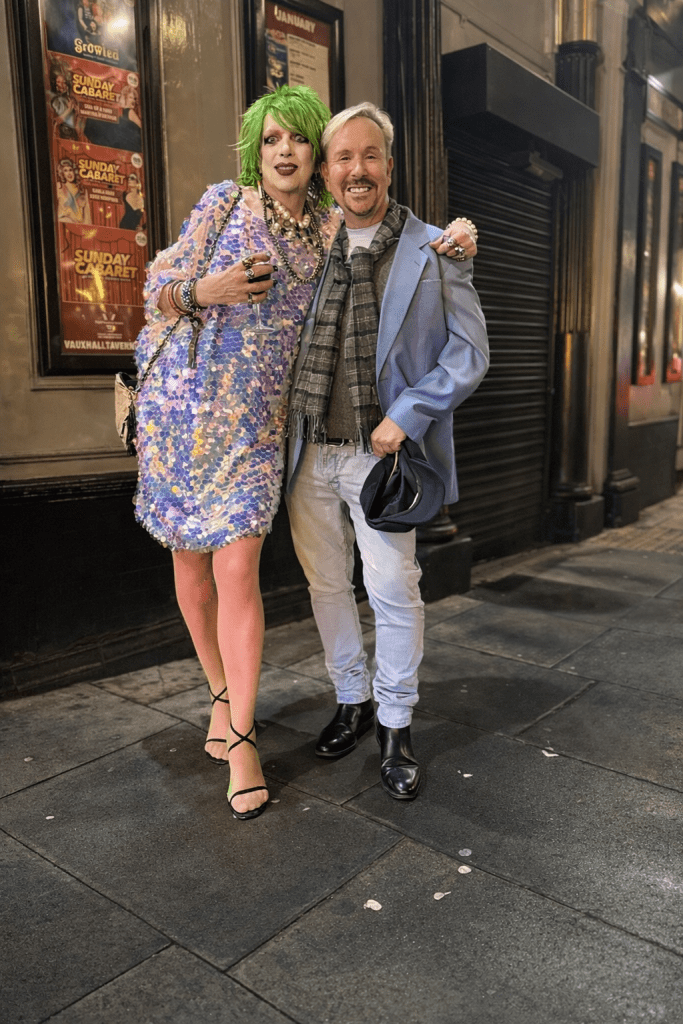
There are nights out, and then there are nights that feel like a rite of passage. One such evening found artist Piluca and myself stepping through the doors of the legendary Royal Vauxhall Tavern, to witness the singular brilliance of David Hoyle—a figure who exists somewhere between performer, prophet, poet, and living artwork.
I once described Hoyle as the love child of Kate Bush and Lindsay Kemp, and I stand by it. He is not merely an accomplished performer—with a career spanning television, film, and theatre—but an artist who uses his entire being as medium and message. Last year alone he appeared on stage in an adaptation of Hedda Gabler, proving once again that he is as comfortable in classical reinterpretation as he is in anarchic cabaret.
Hoyle is, quite simply, a walking piece of art. He cuts a vein—metaphorical, emotional, spiritual—and allows the audience to witness everything that spills out: his fears, his hopes, his contradictions. There is no armour, no polite distance. When I interviewed him previously for FLUX magazine, it was immediately clear that what you see on stage is not an act but an extension of the man himself. His work screams originality. It declares, unapologetically: This is me. This is David.
The Royal Vauxhall Tavern functions as his church, and Hoyle its high priest. From the roof—sometimes literally—he preaches love, acceptance, beauty, and defiance. His congregation is as eclectic as it is devoted. On any given night you might find Princess Julia rubbing shoulders with City bankers, artists, drag legends, first-timers, and the gloriously undefinable. It would not be absurd to compare the atmosphere to Warhols Factory in its heyday: a collision of art, celebrity, and counterculture, bound together by a shared understanding that something special is happening in the room.
What is striking is the complete absence of age anxiety. Hoyle himself dismisses it with a wave of the hand: “Everyone is beautiful in the room.” And they are. Young and old gather as equals at the metaphorical fountain, drinking in his wisdom, his wit, and his generosity of spirit. The atmosphere is electric yet oddly intimate, like a secret shared by hundreds.
Piluca and me at The Royal Vauxhall Tavern
This is not to say the evening is solemn. Far from it. Hoyle’s humour is razor-sharp, his observations hilariously precise—particularly when directed at the audience. Sit front and centre and expect to become fodder. But crucially, he is never cruel. There is warmth beneath the provocation, and affection behind the mischief.
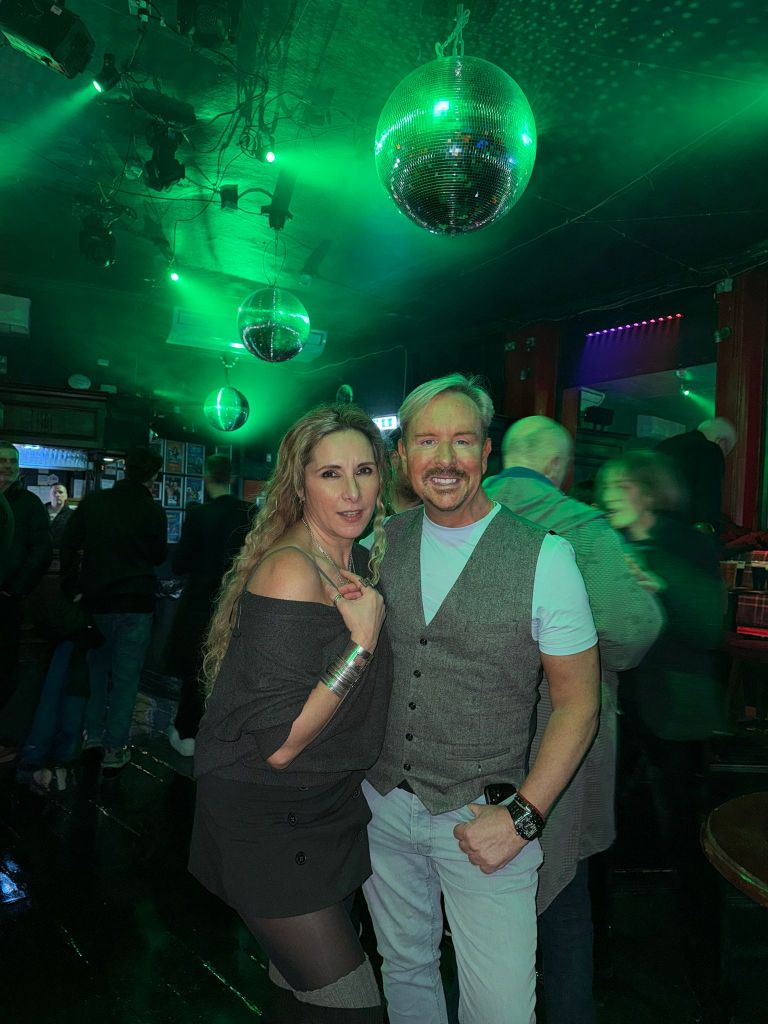
The man seated next to me informed me—without a hint of irony—that this was his 135th time seeing Hoyle perform. A true disciple. By contrast, my gorgeous friend Piluca—Spanish-born artist and creative force—was a virgin to the experience. I could think of no one better to introduce to what I consider a kindred artistic spirit.
Two incredible artist Piluca meets Hoyle
She was utterly blown away. The evening began with a film tribute to our shared hero, David Bowie, and Piluca leaned over to whisper, “It’s like being dipped in everything I love.” She could not wait to come back, already plotting a return before the night had even ended.
Adding to the richness of the evening, Pam—taking a brief pause from her charity work—took to the stage to read poetry. We were promised one poem and given two, a small but perfect act of generosity that felt entirely in keeping with the spirit of the night.
The show concluded with Hoyle playing cupid, creating a live portrait of two handsome men from the audience—art, flirtation, and theatre merging in real time. To be part of such an evening is to leave not only entertained, but altered. You walk out thinking differently, feeling differently, slightly braver perhaps.
This is not just a show. It is an experience—unique, communal, and deeply worthwhile. In a world increasingly starved of authenticity, David Hoyle remains gloriously, defiantly real.
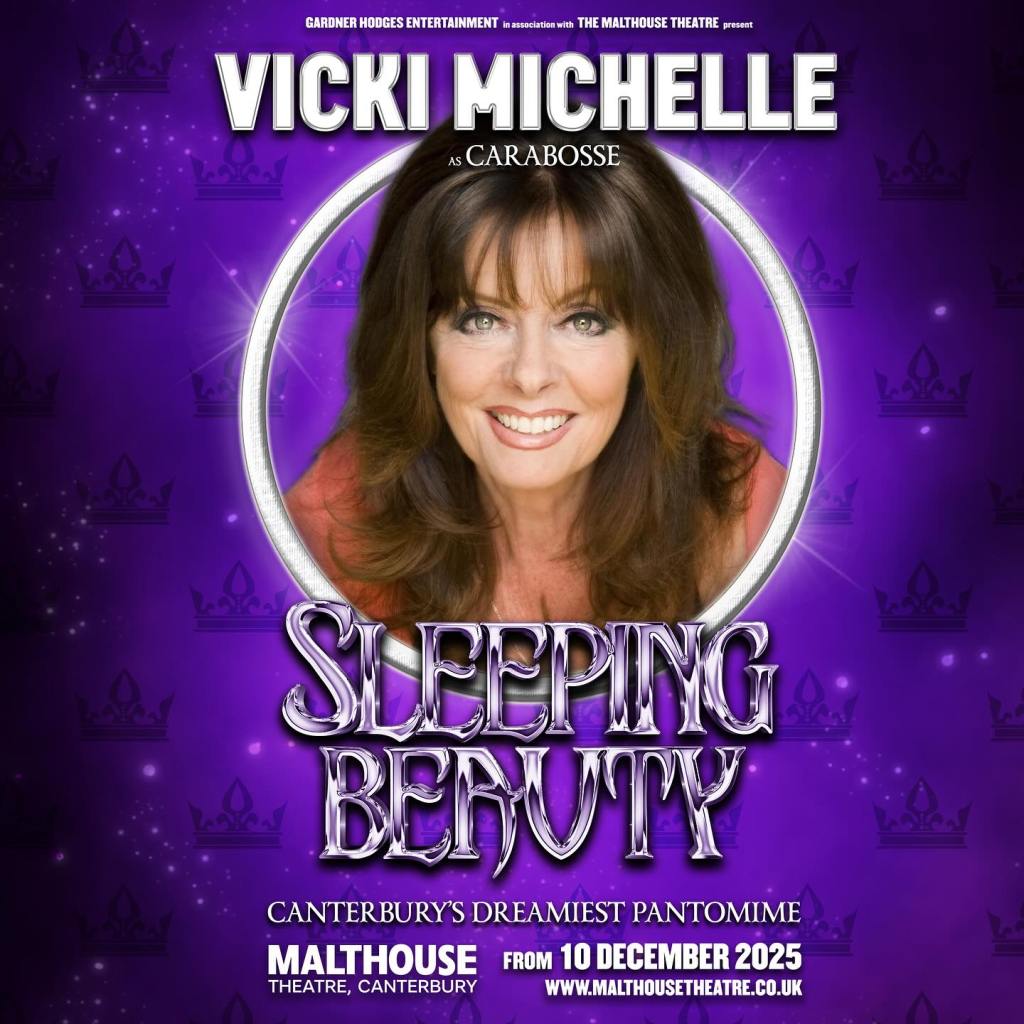
The unmistakable cry of British panto rang through the air at the Malthouse Theatre this week — and what followed was nothing short of a sparkling theatrical treat. Front and centre of this dazzling afternoon was the uber-talented Vicki Michelle.
I joined Dr Anna Kennedy for what promised to be a memorable afternoon — and it delivered in spades.
Just five minutes from Canterbury West station, the Malthouse Theatre is a gem of a venue. Housed in a former 19th-century malt house, it offers a warmth and intimacy that many larger theatres lack. From the moment we took our seats, there was a buzz in the air — the kind that tells you something special is about to unfold.
Anna and I had travelled to see a true British icon — and a good friend of Anna Kennedy Online — in action. While I was there to review the show, Anna had something rather important to ask the star of the performance once the curtain came down.
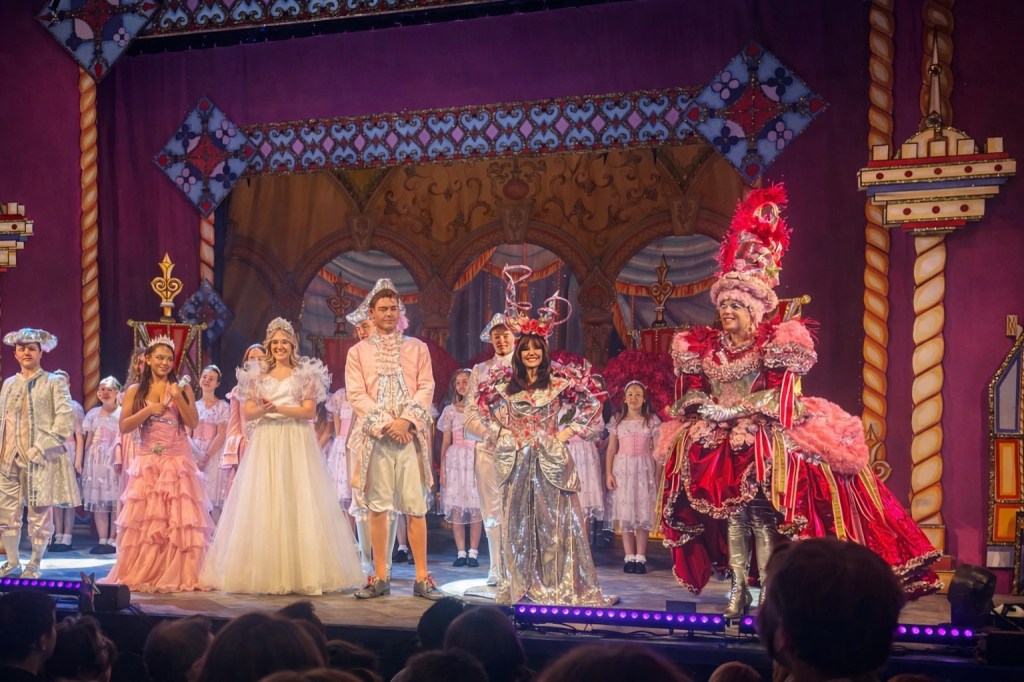
Let’s be clear: if you think you’re heading to see a “regional” panto, think again. Sleeping Beauty rivals anything currently on offer in the West End — and at a far more affordable price. The cast work tirelessly, delivering an action-packed, high-energy production that never once drops the pace.
There is nothing like a Dame as Joseph Gardner Hodges leads a stellar cast in Sleeing Beauty .
The show really kicks off brilliantly with Tim Edwards, one of the freshest comedy talents I’ve seen in a long while. Playing Jangles — Sleeping Beauty’s equivalent of Buttons — he holds the production together with effortless comic timing, youthful energy, and a commanding stage presence. He is a natural, and the audience instantly warms to him.
Joining him is one of the finest Dames I have ever seen: Joseph Gardiner-Hodges as Nurse Fanny. Hilarious, fearless, and utterly fantastic, Gardiner-Hodges is the yeast in the bread of this show — without him, it simply wouldn’t rise as far. Whether flirting shamelessly with the male members of the audience, delivering razor-sharp one-liners, or fiercely protecting Princess Aurora from the Wicked Queen (or should we say the “socially challenged” queen), he had the audience in stitches. The costume changes alone deserve their own round of applause — though a shoe change for Fanny would have made it an A+.
Then there’s Prince Charming, played by Jordan Calloway. Yes, he’s a good-looking in an Australian soap star way — but more importantly, he can sing. And not just “panto sing” — his voice genuinely stands out, rivalling many performers currently gracing the West End stage.
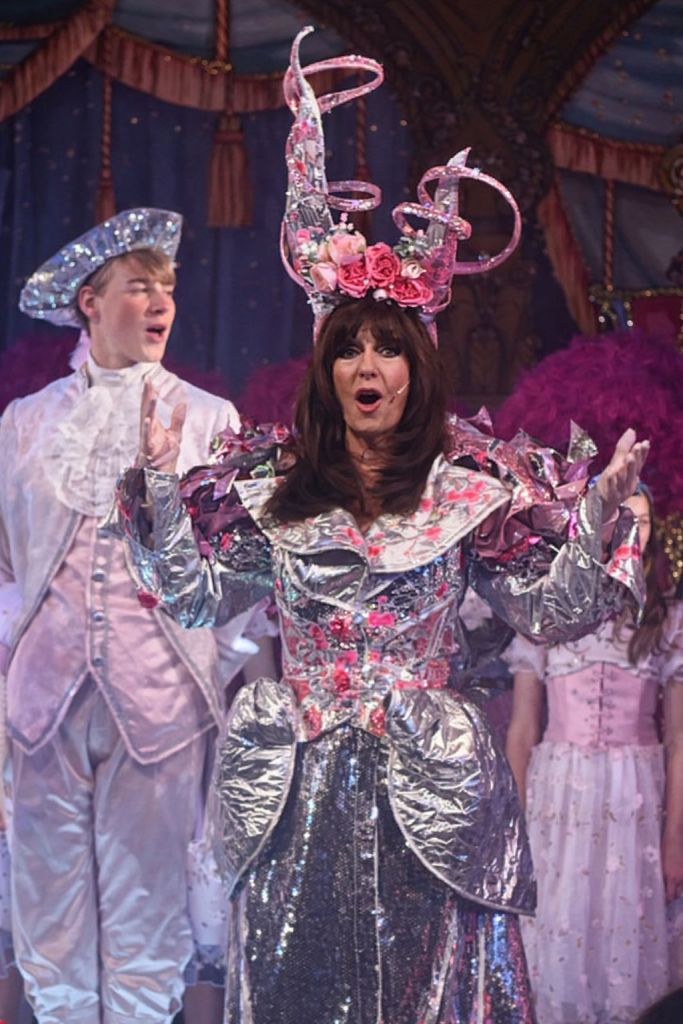
Just when you think the show can’t possibly get any better, on comes British icon and comedy legend Vicki Michelle as the deliciously evil Carabosse. From the moment she steps on stage, she commands attention. This is stage presence that simply cannot be taught. The former Allo Allo star looks phenomenal and proves exactly why she remains such a treasured figure in British entertainment. (And yes — we absolutely need her back in EastEnders.)
Fabulous costumes as Vicki Michelle captures the audience with her spells.
Her rendition of I Put a Spell on You brought the house down. Despite — or perhaps because of — the enthusiastic boos, Michelle revelled in the “baddie” role, clearly enjoying every moment. Watching an actress with such mastery of her craft is a joy; she knows exactly how to hold an audience in the palm of her hand.
The production values throughout are outstanding. The sets are dazzling, the costumes are richly detailed, and a particularly cute dragon called Caroline steals more than a few scenes. Remarkably, this was the company’s second performance of the day — yet they were as fresh as daisies, delivering with precision, warmth, and infectious enthusiasm.
Next year’s production is Goldilocks and the Three Bears, and on the strength of this alone, I’d say: book now.
After the show, Anna and I surprised Vicki by asking her to become a Patron of Anna Kennedy Online. A long-time friend and supporter of the charity, she was genuinely thrilled to accept. Only weeks earlier, she had joined Anna on GB News to discuss the charity’s work and her ongoing commitment to the autism community.
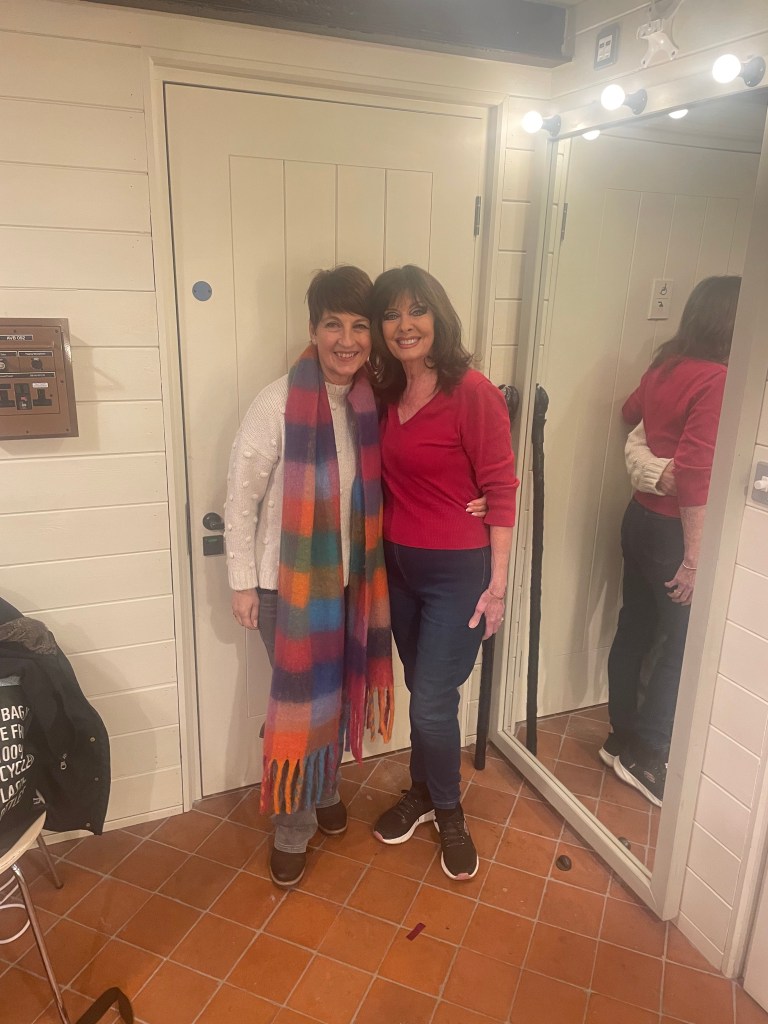
Dr Anna Kennedy OBE back stage with Vicki Michelle .
Anna summed it up perfectly:
“Vicki is someone who, when she says she will do something, it gets done. She has inspired so many within the autistic community, and we are incredibly proud to have her as a Patron.”
What a day. Huge thanks to the Malthouse Theatre and the wonderful city of Canterbury for such a magical afternoon — proof, if ever it were needed, that great theatre thrives far beyond the West End.
2Shades Heidi Gammon and Dr Anna Kennedy OBE with Steven Smith at the Hampton Hub
Heidi Gammon presents Dr Anna Kennedy OBE.
The Hampton Hub was buzzing with energy on Friday 20th November as esteemed autism ambassador Dr Anna Kennedy OBE took to the stage as the special guest speaker for the Counselling and Coaching Group. The event was proudly hosted by Heidi Gammon, 2Shades Magazine columnist and Gateway Radio agony aunt, who introduced Dr Kennedy to an enthusiastic and engaged audience.
Dr Kennedy, one of the UK’s most recognised voices in autism advocacy, immediately captivated the room with her warmth, humour, and honesty. She shared her remarkable journey: from a determined mother fighting for the right support for her two autistic sons, Patrick and Angelo, to becoming a national campaigner, charity founder, and distinguished OBE recipient for her services to autism.
Her story began with what she described as “a battle fought with love and necessity.” With limited educational options available for her boys, she took matters into her own hands—eventually helping establish specialist provision and launching her highly influential charity, Anna Kennedy Online, which now supports thousands of autistic individuals and their families across the UK and beyond.
The audience listened intently as she spoke about the evolution of her work, including the hugely popular Autism Hero Awards, which celebrate outstanding individuals who make a positive difference within the autism community. She also discussed her long-running digital platform, Anna Kennedy Online, which provides education, advocacy, and outreach.
A highlight of the evening was her reflection on appearing on ITV’s Lorraine, where she was honoured as a finalist for Woman of the Year—a moment she described as both surreal and deeply meaningful.
The event also shone a spotlight on important collaborative projects. Dr Kennedy spoke about Born Anxious, the anti-bullying campaign that raises awareness of the struggles many autistic children and adults face. As part of the session, the group viewed a touching dance performance video by Freya Prince, whose emotional and expressive choreography moved the room.
Adding festive cheer, former Autism’s Got Talent performer Ty Williams delighted the audience via video with a heartfelt rendition of “Driving Home for Christmas,” receiving warm applause from attendees.
There was also a special appearance by Steven Smith, a former celebrity hairdresser turned author and presenter, who is one of the patrons of Anna Kennedy Online. He shared his personal story of becoming part of the charity’s growing family and spoke passionately about the power of creativity and community in supporting individuals on the autism spectrum. He also highlighted the creation of Autism and Art, an inclusive exhibition held at the Firepit Gallery in London that celebrates neurodiverse artists and their unique perspectives.
The Hampton Hub Counselling and Coaching Group, led by Heidi Gammon and her dedicated team, provided a warm and supportive atmosphere, bringing together people from all walks of life who share a commitment to understanding, compassion, and positive action.
Attendees left energised and inspired, with many commenting on the emotional resonance and practical insight Dr Kennedy brought to the conversation. Her message was clear: with determination, community, and unwavering belief, real change is possible.
The event not only highlighted the vital work being done across the UK for autistic individuals, but also showcased the power of storytelling, advocacy, and human connection.
For more information on the organisations and initiatives mentioned, visit:
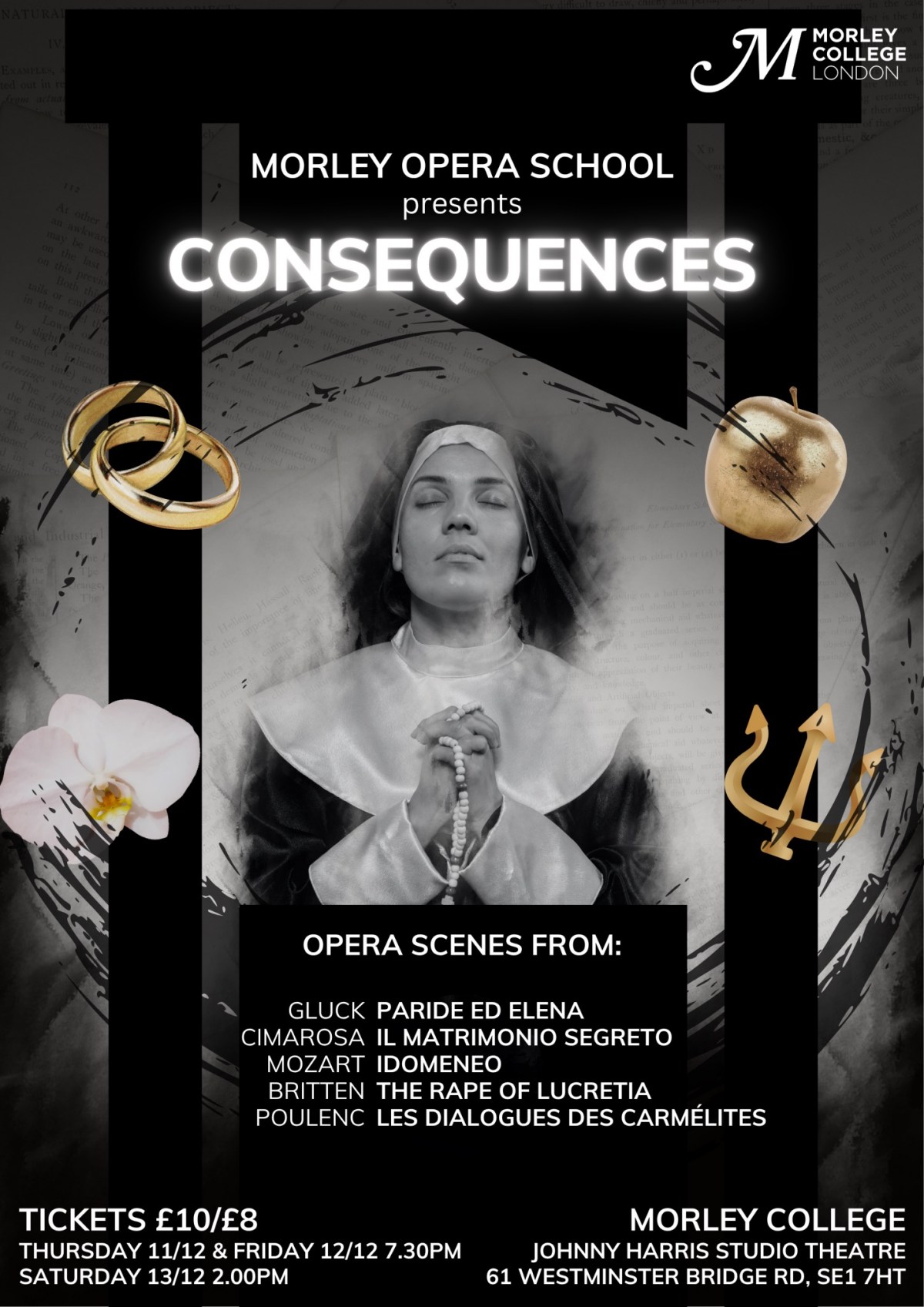
This December, Morley Opera School invites audiences to an evening of passion, wit, and reflection with Opera Scenes: CONSEQUENCES, a vivid exploration of human choices and their inevitable aftermath. Under the expert direction of William Kerley and musical direction by Panaretos Kyriatzidis, this production offers a captivating journey through some of opera’s most powerful and emotionally charged moments. With Nicholas Bosworth at the piano and Conor Costelloe crafting evocative lighting design, the performance promises to be both musically and visually enthralling.
The program brings together a diverse range of works, from the Classical elegance of Gluck and Mozart to the modern intensity of Britten and Poulenc. Each scene has been carefully chosen to highlight the theme of consequences—how human decisions, driven by love, pride, fear, or faith, shape the fates of individuals and societies alike.
The evening opens with Gluck’s Paride ed Elena, a lyrical portrayal of the mythic lovers whose choices ignite the Trojan War. Through Gluck’s graceful yet emotionally charged score, the audience witnesses how desire can lead to destiny’s most devastating turns. The theme of secrecy and consequence continues in Domenico Cimarosa’s Il Matrimonio Segreto(The Secret Marriage), where comic misunderstandings and clandestine vows lead to both hilarity and heartbreak. Cimarosa’s sparkling ensemble writing and elegant wit remind us that even the most humorous situations often conceal real emotional stakes.
From there, the performance moves to Mozart’s Idomeneo, a masterwork of the Classical era that delves into the tension between duty and compassion. When the Cretan king must sacrifice his own son to appease the gods, Mozart’s music swells with moral anguish and divine intervention—a striking depiction of how promises made in desperation can lead to unbearable consequences.
The evening then shifts to the haunting world of Benjamin Britten’s The Rape of Lucretia, a twentieth-century chamber opera that reimagines an ancient Roman tragedy. Britten’s sparse, evocative score and stark moral commentary confront audiences with questions of innocence, violation, and redemption. It is one of the evening’s most profound explorations of consequence—where an individual act of violence reverberates through history.
Finally, the performance concludes with scenes from Francis Poulenc’s Les Dialogues des Carmélites, a deeply moving account of faith, fear, and courage during the French Revolution. In this extraordinary work, a community of nuns faces execution for their beliefs, and each character must decide how to confront mortality with dignity. Poulenc’s luminous harmonies and spiritual depth offer a fitting conclusion to a night that examines the human condition in all its complexity.
Opera Scenes: CONSEQUENCES is more than a showcase of operatic talent—it is a reflection on the moral and emotional choices that define us. Presented by the students of Morley Opera School, it demonstrates the artistry, discipline, and dramatic insight cultivated within this renowned institution. Among its talented performers is Jadwiga, a classically trained singer and music graduate who offers private singing lessons in classical, opera, and musical theatre styles https://www.morleycollege.ac.uk/event/morley-opera-school-presents-opera-scenes-consequences/
Performances take place on Thursday, December 11 at 7:30 PM, Friday, December 12 at 7:30 PM, and Saturday, December 13 at 2:00 PM at the Johnny Harris Theatre Studio, Morley College London, 61 Westminster Bridge Road, SE1 7HT. Tickets are priced at £10.00 (plus booking fee £11.55 online).
An evening of beauty, reflection, and emotional truth, Opera Scenes: CONSEQUENCES is an essential event for opera lovers and newcomers alike—a reminder that every choice, whether divine or human, carries its echo.
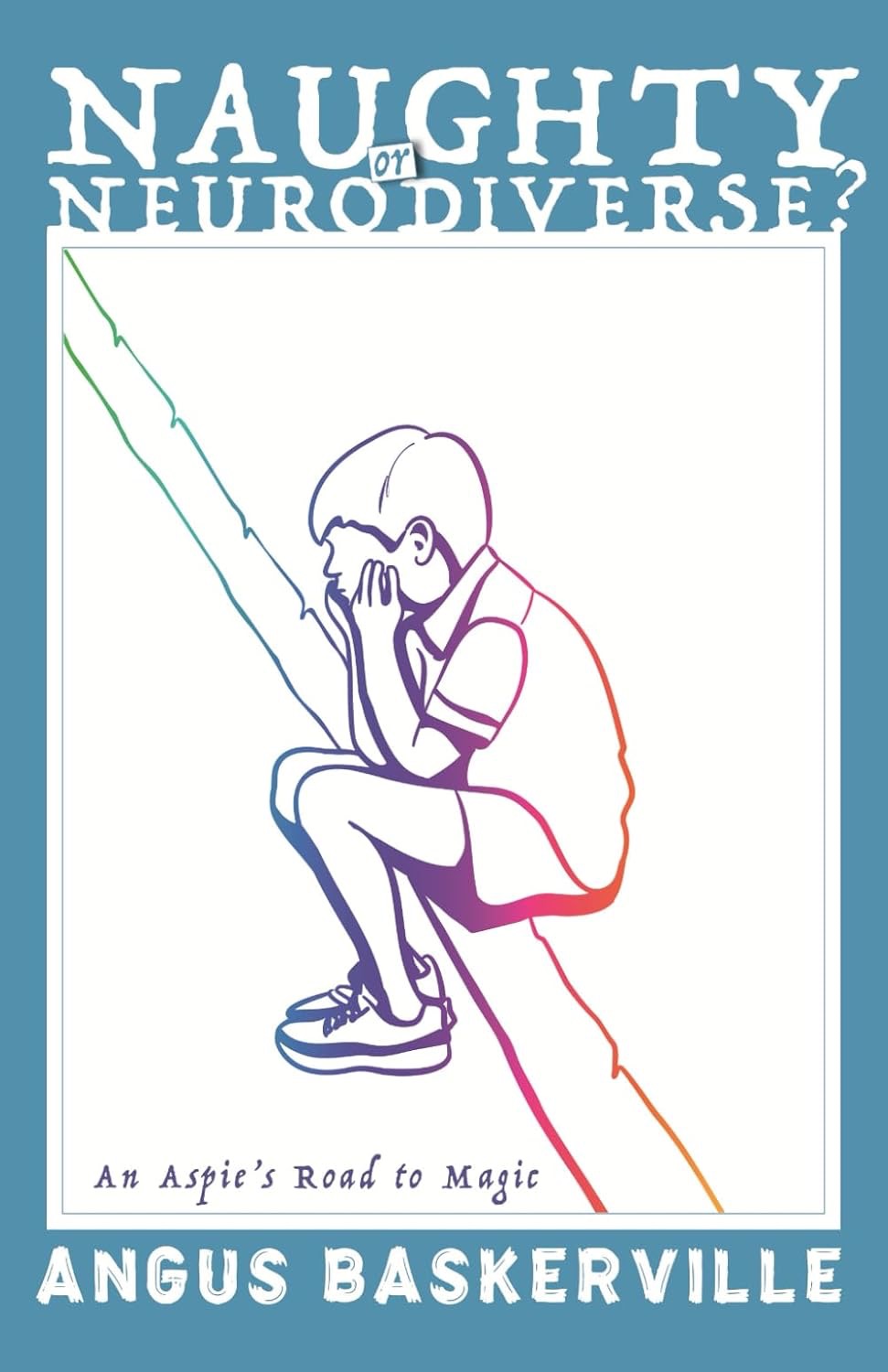
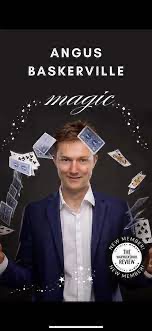
Grit, grace, and a touch of glittering illusion — that’s what defines Angus Baskerville’s extraordinary memoir, Naughty but Neurodiverse – An Aspie’s Road to Magic. It’s a book that doesn’t just tell a story; it invites you into the world of a young man who found light in the places most would have given up hope.
Bullied. Excluded. Expelled from three schools. For many, that might have been the end of the story. But for Angus, it was the beginning of something far more powerful. Diagnosed with autism and ADHD at fifteen, he finally had an explanation for the whirlwind he had lived with all his life. Yet it wasn’t until discovering magic at seventeen that everything changed.
Magic gave him more than a skill — it gave him purpose, structure, and a way to communicate in a world that often misunderstood him. His journey from isolation to inspiration unfolds with raw honesty and a quiet kind of triumph that lingers long after you turn the last page.
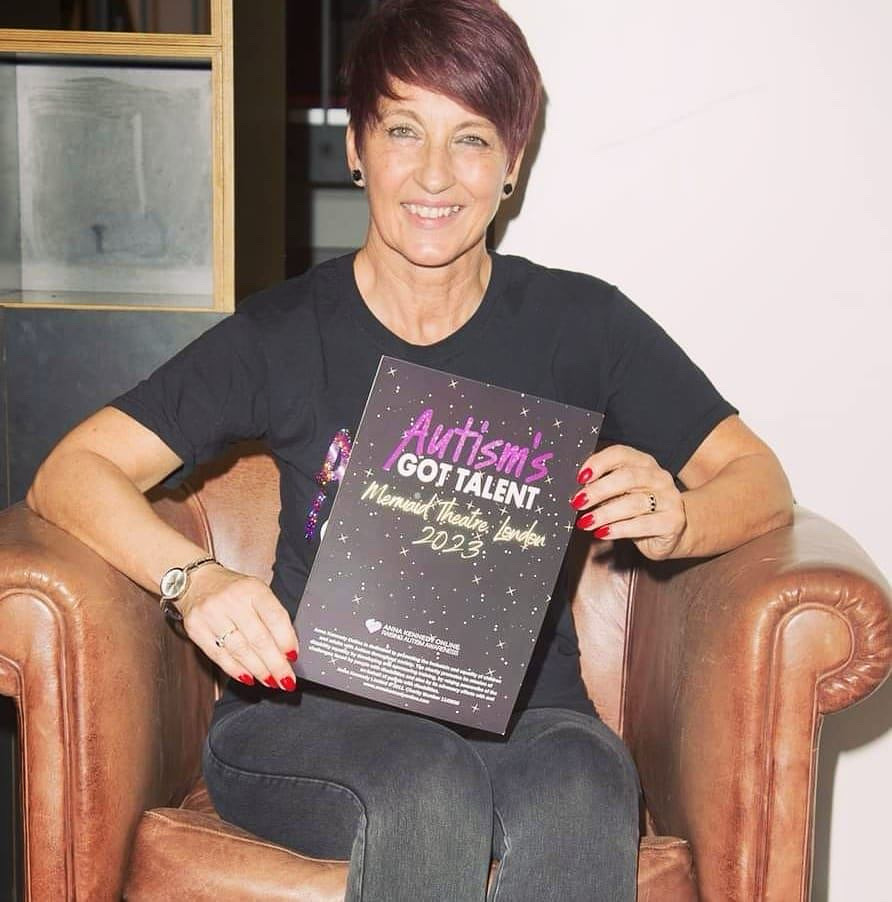
It’s impossible not to feel moved by his transformation. The pivotal moment comes when Angus performs at Autism’s Got Talent, the groundbreaking showcase created by Anna Kennedy OBE. Stepping into that spotlight, Angus wasn’t just performing tricks — he was reclaiming his identity. That night became the launchpad for a remarkable career that would take him from misunderstood teen to award-winning magician, Magic Circle member, and autism advocate.
Today, Angus Baskerville performs across the UK, dazzling audiences with performances that weave illusion and insight. He leads corporate workshops, runs school magic clubs, and continues to champion autism awareness with the charity Anna Kennedy Online. Through it all, his message remains beautifully simple — being different is not a flaw to fix, but a gift to embrace.
Naughty but Neurodiverse is an emotional, uplifting, and often funny read that captures the resilience of the human spirit. Baskerville writes with warmth and disarming honesty, sharing moments of confusion, humour, and triumph. His story gives readers — whether autistic, parents, teachers, or simply curious souls — a new lens through which to see neurodiversity: one filled with creativity, courage, and heart.
This isn’t just a memoir; it’s a manifesto for understanding and acceptance. Angus reminds us that the real magic lies not in illusion, but in authenticity — in daring to be unapologetically yourself in a world that often tells you to hide your light.
In a time when inclusion is still learning to find its true meaning, Angus Baskerville stands out as a shining example of what can happen when passion meets purpose.
A heartwarming, inspiring, and utterly magical read — one that deserves a standing ovation.
Where to Buy: Naughty but Neurodiverse – An Aspie’s Road to Magic is available now on Amazon UK.
Angus says:
“If even one person reads this and feels seen, understood, or inspired — then it’s all been worth it.”
Heidi Gammon is BACK — and school’s in session! Sharpen those pencils, unpack the lunchbox, and brace yourself — because whether you’re heading to high school, moving into halls, or just trying to survive term-time drama, I’ve got the answers you need. From messy roommates to holiday hook-ups, from bullies to big life changes — let’s crack open the advice book and dive right in.
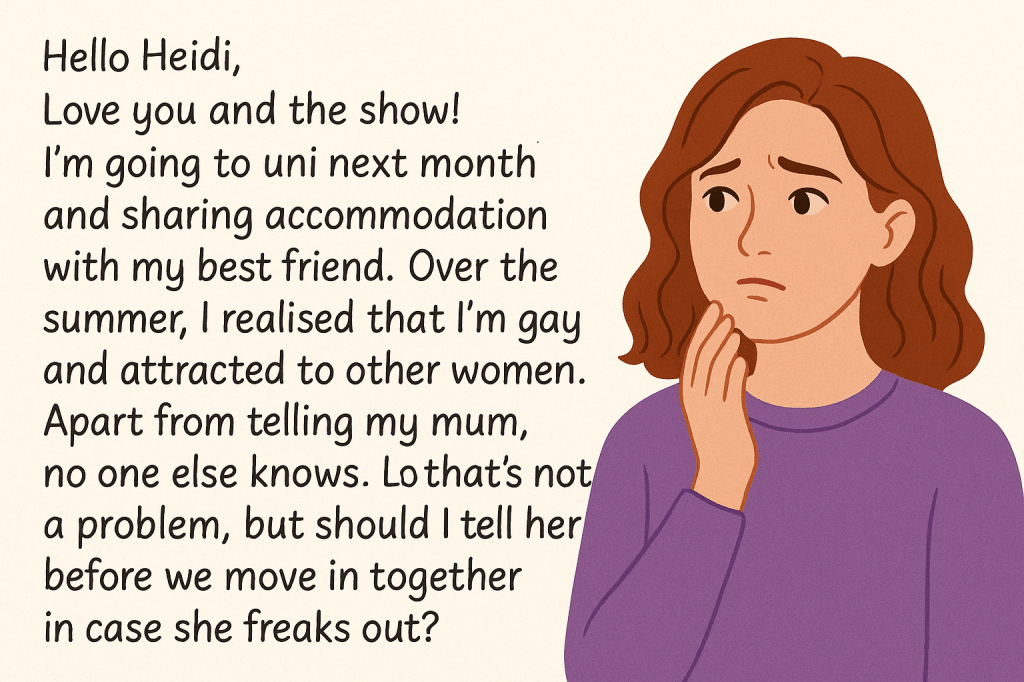
Hello Heidi, Love you and the show! I’m going to uni next month and sharing accommodation with my best friend. Over the summer, I realised that I’m gay and attracted to other women. Apart from telling my mum, no one else knows. I don’t fancy my best friend, so that’s not a problem, but should I tell her before we move in together in case she freaks out? Amber, Southend
Heidi says: Amber, the only “freak out” here would be if your friend suddenly forgot you’re still the same person you were last term. Your sexuality isn’t a warning label you have to stick on before move-in day. If you want to tell her, do it because you trust her, not because you’re scared of her reaction. And if she’s a real friend, she’ll be more interested in who’s nicking her milk from the fridge than who you fancy.
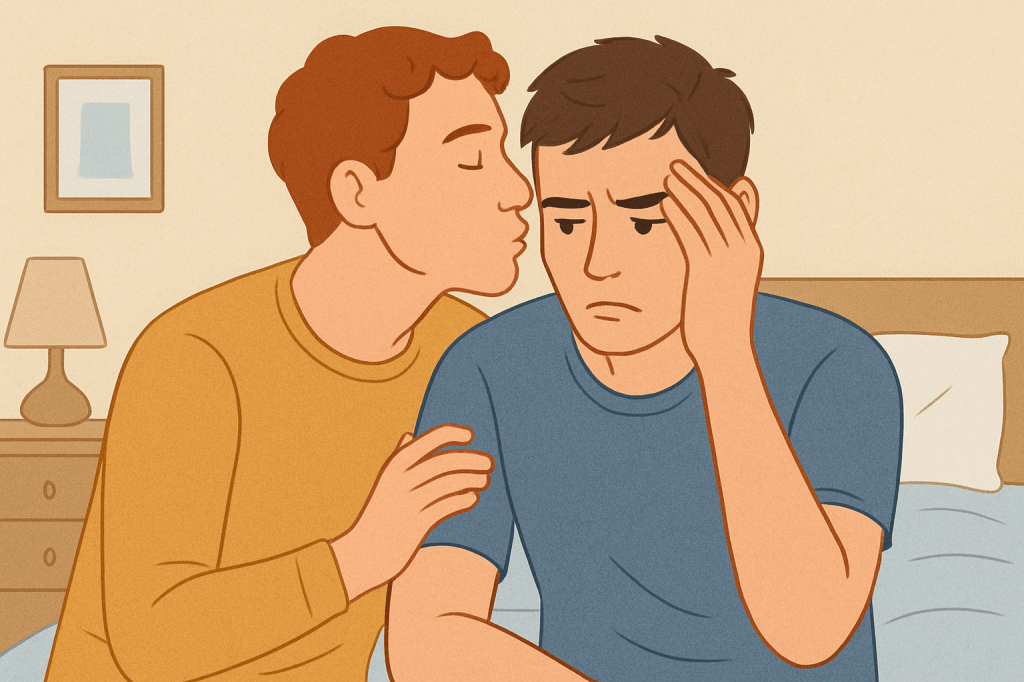
Dear Heidi, This is awful. I’m not gay, but I’m friends with a guy who is what you might call “fluid.” We got very drunk on holiday, and I remember him performing an oral sex act on me. There’s no way it would have happened sober, and now it’s made it difficult to be friends. I tried to talk to him about it, but he just said, “What happens in Ibiza stays in Ibiza.” I have a girlfriend, and I’m terrified she’ll find out. What do I do? Colin, Billericay
Heidi says
Colin, Ibiza clearly needs a new slogan: “What happens in Ibiza… tends to follow you home.” You’ve got a friendship issue and a relationship issue — and both need honesty. Tell your mate the boundaries from now on. As for your girlfriend, decide whether you’re confessing to ease your guilt or because it’s something she genuinely needs to know. Either way, learn your lesson: too much booze and fuzzy boundaries are a recipe for regret.
Hi Heidi, How are you? Last year I shared uni accommodation with a great guy — honestly, we were like brothers — but sadly he’s moved to the States. A new guy is moving in, but I bumped into his old roommate who warned me: he doesn’t mind him personally, but apparently he walks around naked, smokes weed, and puts porn on openly. Plus, he’s messy and leaves everything for others to clean up. That’s my idea of hell! It’s too late to back out — what can I do? Hunter, Basildon
Heidi says: Hunter, sounds like you’ve been dealt the ultimate “uni flatmate bingo” card. On day one, set the house rules in plain English: no nakedness in shared spaces, no weed inside, and mess gets cleaned. If he ignores that, fortress your room — lock, headphones, maybe even a mini-fridge. And remember: it’s one academic year, not a life sentence. What’s up Heidi, I’m still at high school and I hate it. There’s a girl who bullies me so badly that my life is a misery, and I don’t want to go back. What can I do? Stella, Brentwood
Heidi says: Stella, no one should dread school because of one cruel person. Tell a teacher, a school counsellor, or your parents — and keep a record of everything she says or does. If it’s online, screenshot it. Schools are legally obliged to act on bullying. I promise you this: she is not as powerful as she seems. One day you’ll be out in the world living your best life, and she’ll still be stuck in her small one.
Heidi, My girlfriend and I have been together for five years and we want to adopt a child — maybe two. How do we go about it? My mum says it’s a terrible idea and refuses to help. Mandy, Brighton
Heidi says: Mandy, if love, stability, and commitment are in place, you’re already halfway there. Start with your local council or an approved adoption agency — they’ll guide you through assessments, training, and matching with a child. It’s a long process, but worth it. most local authorities and agencies like pact do information evenings for people thinking about adoption these are great and informative and well worth going to
As for your mum, her approval would be lovely, but it’s not a requirement on the application form. Build your family your way.
Hi Oscar, We at 2Shades think you are art. We love your openness about living with addiction, and we would love to know more.
Thank you so much—that’s a wonderful thing to say. And thank you for having me. It was lovely meeting you at the Routine exhibition recently.
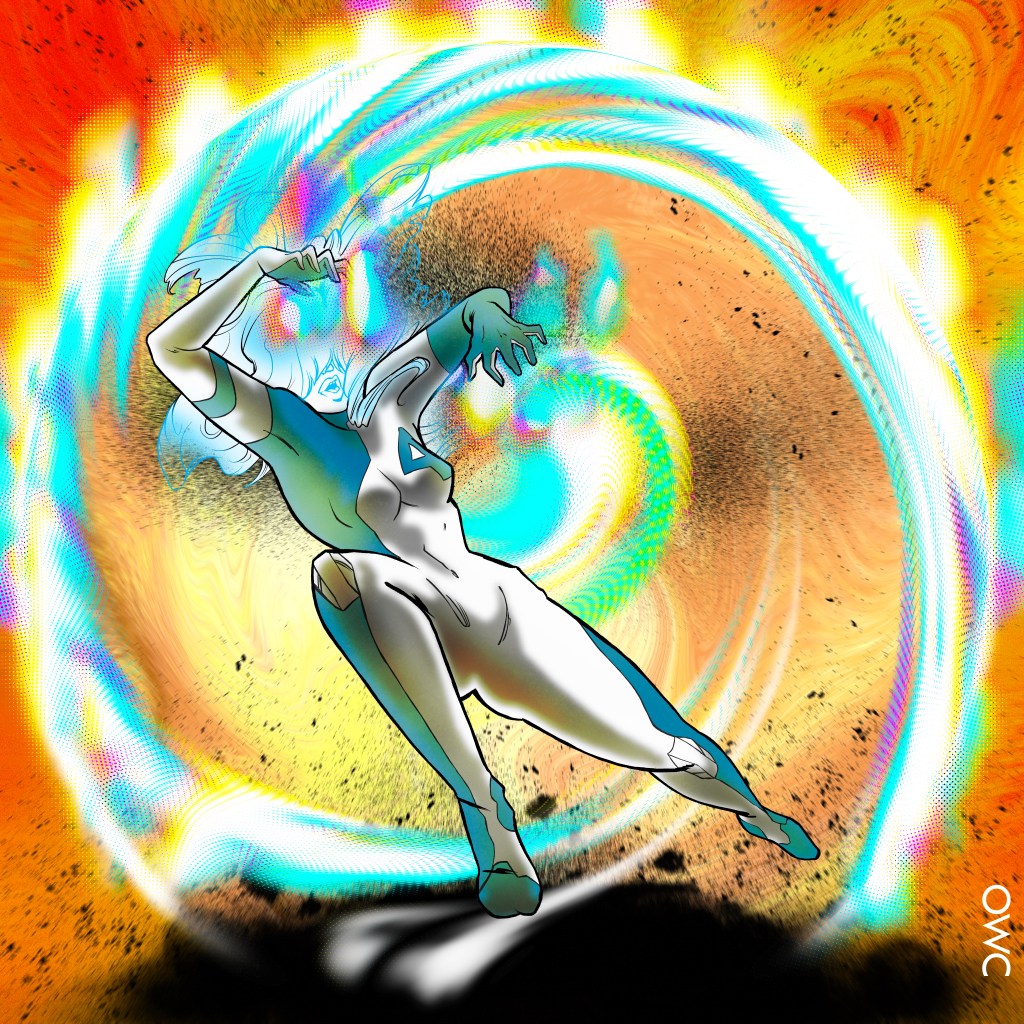
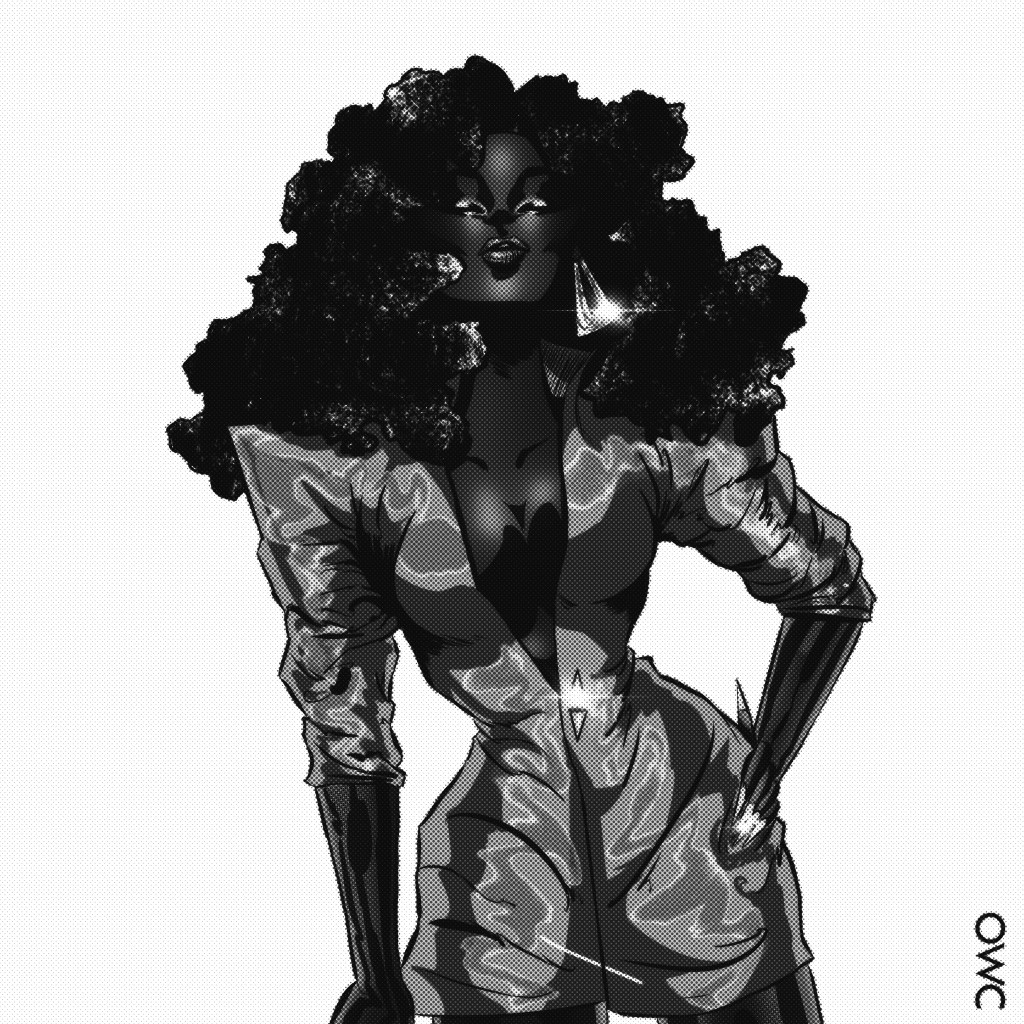
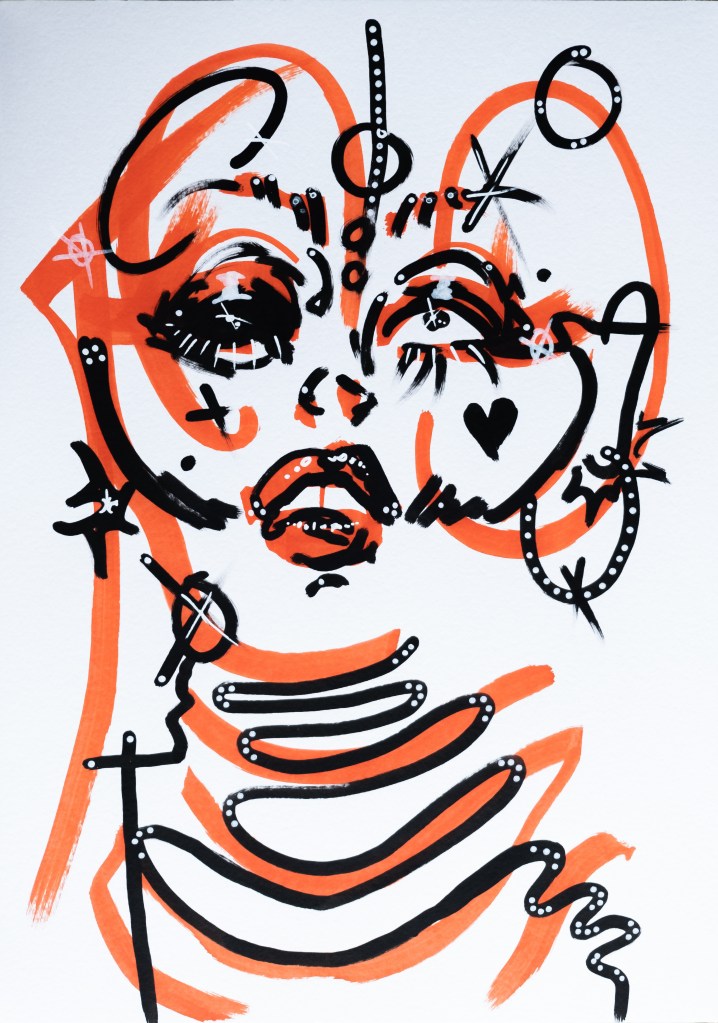
I’m Oscar, an artist based in London. I make a lot of different things, but mostly graphic illustrations that revolve around fashion, comic books, or BDSM. I’m a recovering alcoholic and addict. I’ve been sober for a while now, and I’ve been working on both my creative career and rebuilding my life—I’m even back at university. I love bold colours, especially red (my absolute favourite), which features heavily in my work. But sometimes, just simple black-and-white linework can be really rewarding too. You’ll usually find me watching horror movies, rocking out to the Sugababes, drawing some femme fatale in a fabulous outfit—or playing video games, of course.
I’ve been drawing for as long as I can remember. It’s been a way for me to express so much—my sexuality, my adoration of femininity, my experience as a queer person, or just the thrill of an incredible superhero fight scene. Now I’ve had the chance to exhibit and work as an illustrator, which has been amazing. I’m only getting better, so I’m excited to see what the future holds.
What does it feel like to create, for you?
For me, creating is perfect concentration and calm. My head is usually full of thoughts—non-stop—except when I’m drawing or designing. That’s when everything quiets down. I get totally absorbed in the world of the piece, in the details of the colours—or I just disappear into the flow of (deafening) music and let the pen take me somewhere new.
I’ve grown a lot as an artist since getting sober. I had to figure out how to be creative again, because my addiction robbed me of that desire—and the ability. I worried it wouldn’t come back. Part of me thought art was lost to me, or at least the passion for it was.
Thankfully, it came back—but it feels different now. These days, I create with less intention and let my emotions and the pen guide me. Trusting my skills is a big part of that. I’m the best I’ve ever been, and there’s a sense of security in that, because it allows me to just let go. That freedom is why creativity is such a safe space for me.
When you’re an addict, so much of your life is micromanaged. I avoid certain places when I’m too tired or upset because the pull of alcohol or drugs can be dangerous when I’m not stable. I have to constantly protect myself in a world where addiction is everywhere. Being around alcohol and drugs is exhausting—so I make sure I recharge, or I crash.
Creation is free of all the mental admin I have to do every day around addiction. That’s why it’s such a solace. I get to be somewhere else, someone else—feeling, seeing, and doing something else. It’s incredibly freeing.
Can you remember the earliest thing you created artistically?
Absolutely. I’ve always loved comic books and still collect them—I’ve got hundreds in my room. They were my gateway into art. I used to print out images of my favourite characters at primary school and try to redraw them as best I could.
Around that time, I also became obsessed with the brides of Dracula—after seeing Van Helsing with Kate Beckinsale. Those brides were everything to a young gay boy from South London. Flowing sleeves that turned into wings? Iconic.
I also drew Storm, Elektra, Catwoman, and Raven from Teen Titans because I grew up watching all those shows, not even realising there were decades of comics about these amazing women I could be reading. I started copying comic pages and poses from books I bought or found online. Comic artists are incredibly underrated—the technical and artistic skill needed is mind-blowing.
Redrawing other artists’ work was how I learned. It’s a great skill to develop early on. Even now, I love watching artists create on YouTube. That’s how I pick up new techniques—watching how someone shades or sketches anatomy, then figuring out how I’d do it. I tell every new artist I meet: understand the process. See how other people use the medium. It’ll change your practice.
What correlation does addiction and art have for you?
Addiction seeps into parts of who I am and, by extension, my art. My obsessive focus on one subject or style until I burn out feels very much like addiction. My love of recurring colours or patterns feels repetitive—like addiction did.
But, honestly, addiction was the opposite of being an artist for me. Toward the end of my using, I just stopped creating. There was nothing left inside to work with—no soul to put into art. Addiction stole that from me. Even though it was my own doing, it still feels like a theft.
That whole “depressed addict artist” stereotype? It wasn’t me. There was no creating going on. I don’t know how people stay functional in addiction. I couldn’t. Everything outside of using and, occasionally, working just faded away.
That said, art can be just as self-indulgent as addiction—just without the destruction. And it can pay! Which is the opposite of addiction, where I only ever lost money. So in that way, it’s gratifying.
Do you have any stand-out influences in your creative journey?
Yes! René Gruau is my favourite fashion illustrator. The first time I saw his work, I was blown away by his minimalism—but also by the drama and flair. His use of red (swoon) and sheer elegance… phenomenal.
Simone Bianchi is a comic book artist I’ve loved for over a decade. He paints many of his pieces, which makes them feel unique—especially in comics. His grasp of anatomy and colour is chef’s kiss. He drew Storm better than anyone at Marvel. Big hair, boots, cape—flawless.
Tim Sale is another one. Famous for Batman: The Long Halloween and one of my favourites, Catwoman: When in Rome. His work feels like a fashion illustrator started doing comics. Perfect intersection of the things I love. He passed recently, which devastated me. The industry lost a legend.
Music is also a huge influence. I have a very visual connection to it—like a movie trailer in my head. I never draw without music. It’s the emotional gateway to my creative brain. I often play the same song on repeat for hours when I’m trying to stay in a feeling.
Nowadays, my inspiration is more internal. I rarely use references unless I’m doing commissioned work. But I still like life drawing sometimes—to keep my skills sharp.
How did you control the battle with addiction?
I wouldn’t call it “control,” because there’s not much you can control. For me, it all comes down to one non-negotiable truth: Sobriety or death. If I use again, I know I’ll die. That’s not melodramatic—it’s just the reality. So there is no choice. I’ve worked too hard to rebuild my life and relationships. I’m not throwing that away.
I take my peace seriously. Work is work, but my life means more. If I don’t want to go out, I don’t. If I need a day to myself, I take it. I fought for my happiness. I’m not sacrificing it for anyone.
AA helped me massively—especially early on. Those people saved my life. But as it’s anonymous and not about promotion, I’ll leave it at that.
Do you remember your darkest moment dealing with addiction?
Yes. Any time I tried to end my life. It happened a few times during my addiction. Thankfully, I wasn’t successful—but I remember that feeling of walking around not wanting to be here. I truly believed the world would be better off without me.
That feeling consumed me for years. The only relief came through explosive, manic episodes that never ended well. I felt hollow, like I had nothing left to offer.
These days, I still have hard moments—days or even weeks of depression—but now I know it’s not forever. That helps. Therapy helps too. Lots of it.
What’s next in your journey?
I just graduated with a first in Graphic Design! So right now, I’m job hunting and creating more art. I’ve been lucky to exhibit a few times and would love to do more of that. I’ve also got some creative projects in the works I can’t talk about yet—but I want to do everything. I didn’t think I’d live past 21, so the fact that I have time now? That feels powerful.
I’d love to put my work on clothing. That would be amazing. But for now, it’s more art, more exhibitions—and staying open to new projects. Commission work has always surprised me in the best ways.
Do you feel people are quick to judge you?
Probably. But it doesn’t bother me.
I’m gay. I live in a world where my community is still criminalised in many countries. Judgment comes with the territory. I have a small circle of people whose opinions matter. Everyone else? Irrelevant.
I love heels, claws, and makeup sometimes. Any queer person will tell you: being visibly queer means being hyper-aware of how you’re perceived. But I’m not hiding any part of myself to appease someone else’s discomfort. That’s a terrible deal.
I’m also quite introverted now. I enjoy my own company. And if someone doesn’t like me? Not my problem. I’m not for everyone—and I don’t want to be. That sounds exhausting.
I’m not unkind. I’ll apologise if I’m wrong. I work hard in therapy so my issues don’t hurt my people. But I also stand by myself. If I’m not sorry, I don’t say it. There’s great power in saying, “I’m not sorry.”
And hey—I draw men being sexually tied up. I expect judgment. But art is made to be disliked as much as it is to be loved. If someone hates my work, great. That’s their job as the audience: to respond. Love or hate—it means it made them feel something. That’s all that matters.
Quick Fire Sushi or Chinese – Neither Kiss or Slap – Both Bowie or Madonna – Madonna Favourite Place in London – My house First thing you’d change as mayor for a day – Free dental / Legal protections for trans people that can’t be undone by a moron
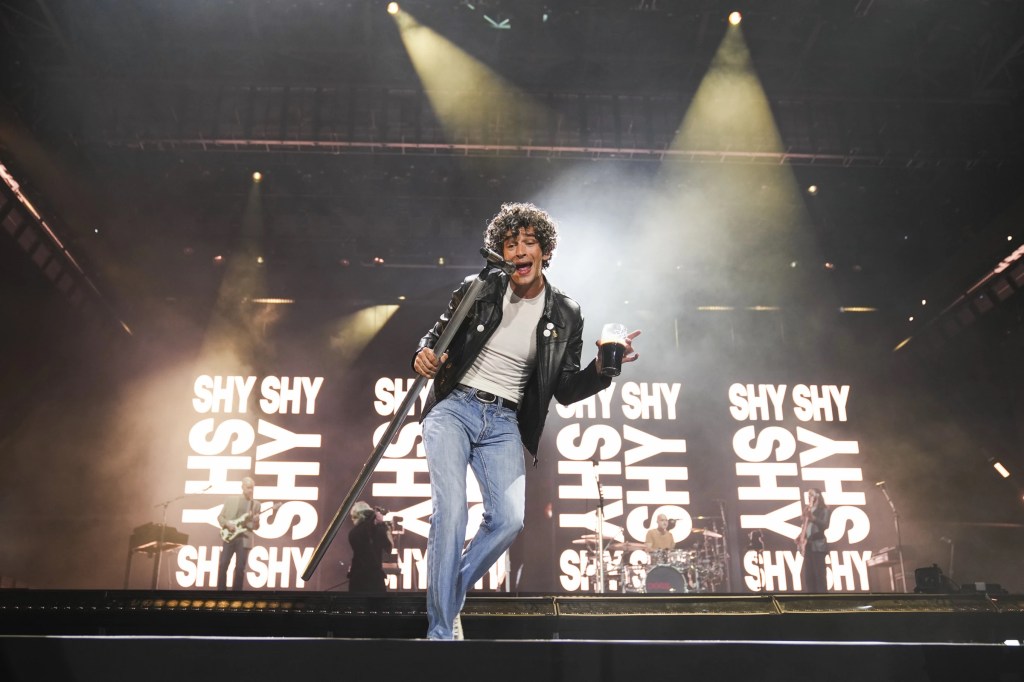
When you tune in to watch The 1975 perform live, you’re not just listening to a concert—you’re boarding an electrifying emotional rollercoaster. From the first beat to the final bow, Matty Healy doesn’t just sing; he commands, provokes, and enchants. At Glastonbury, he led his band into the annals of festival history with a performance that was nothing short of spellbinding—part protest, part performance art, and all heart.
There’s no doubt that watching The 1975 live is like being caught in a storm of sound and sentiment. Healy, a vocal advocate for mental health awareness, brings his audience on a journey that often feels bipolar in nature—veering from euphoric highs to moments of raw, painful vulnerability. One moment, you’re leaping in unison with thousands, lost in the pulse of a synth-heavy anthem; the next, you’re hushed and still, listening as he declares, “I’m bleeding for you.” Behind him, haunting visuals flash—images of human suffering, environmental destruction, animal cruelty—reminding the audience that this isn’t just music, it’s a call to consciousness.
“It’s not about politics anymore,” Healy said mid-set. “It’s about love. It’s about being kind. Only with that will we ever make a real difference.” It’s these moments of candour that transform his concerts from simple entertainment into deeply moving communal experiences. In an industry where many shy away from difficult truths, Healy walks straight into them, arms wide open.
His onstage persona oscillates between bravado and vulnerability. “I’m the greatest poet,” he quips with a grin—only to retract with a shrug in the next breath, “No, I’m an idiot.” The line between jest and confession blurs. It’s this constant tension—between confidence and self-doubt, performance and honesty—that makes him so captivating. Matty Healy was born for the stage, but it’s his disbelief in his own myth that makes the myth so powerful.
Critics often compare him to rock legends—Jagger, Iggy Pop, maybe even Bowie—but the truth is, Healy defies easy classification. He’s original, carving out a space that feels entirely his own. Perhaps the closest parallel is Marc Bolan, who stunned a generation with “Ride a White Swan,” opening the doors for glam rock and gender fluid performance styles. Bolan didn’t just sing songs—he shaped culture. Healy is doing the same, one provocative, glittering, gut-punch of a show at a time.
Musically, The 1975 occupy a unique space in modern rock. Their sound is a kaleidoscope—one moment polished pop, the next raw post-punk, with forays into jazz, soul, and experimental electronica. Healy’s songwriting is equally diverse. At times playful and catchy, at others profound and searching, he writes like someone trying to make sense of the world in real time. His voice—distinctly androgynous—is now fully formed. It’s a sound that feels both masculine and feminine, emotionally expressive without relying on the grit or aggression often associated with male rock vocalists.
Unlike performers such as Eminem or Macklemore, who often lean on female vocalists to soften or elevate their songs, Healy’s voice stands entirely on its own. There’s no need for a counterbalance. His vocal tone is rich, resonant, and complete. If a perfectly dressed salad needed no extra dressing, then Healy’s voice is that seasoned dish—balanced, flavorful, and satisfying all on its own.
And while Matty Healy is the band’s lightning rod, The 1975 is far more than just one man. The musicianship within the group is extraordinary. Drummer George Daniel is a master of rhythm—an innovator whose work deserves to be ranked alongside legends like Keith Moon and Ginger Baker. His beats are not just background; they are the spine of every song. Then there’s saxophonist John Waugh, whose solos are so expressive and vital that it’s easy to imagine David Bowie himself swooping in to steal him for a side project. Guitarist Adam Hann is no less impressive, crafting intricate textures and soaring riffs that elevate every performance.
1975 Drummer George Danielles a drummer for the hall of fame .
Together, they’re a cohesive force, a band in the truest sense. At Glastonbury, they played not like hired hands or background musicians, but like brothers—a family bound by the music they make. It was Healy, of course, who brought them all together, and it is his vision that they continue to follow. But it’s the synergy of all four that gives the band its power.
The 1975
The Glastonbury crowd, thousands strong, didn’t just watch—they listened. When Healy pleaded with them to “be kind” and to “make a difference,” they responded not with cheers but with thoughtful silence, a stillness that only true impact can elicit. Few performers have that kind of power. It’s the rare ability to hush a festival crowd, not with volume but with vulnerability.
And already, there are imitators—artists scrambling to mimic his stage presence, his fashion, his lyrical style. We won’t name names—let’s be kind, as Healy would urge—but the influence is undeniable. The 1975 are not just leading; they’re redefining the genre.
As the final chords rang out into the Glastonbury night, one thing became clear: this was a moment that would be remembered. The band could have easily played for another hour, and no one would have left. But sometimes, leaving them wanting more is the mark of a true master. And Matty Healy, for all his self-doubt and sarcasm, is exactly that—a master performer, a cultural touchstone, and yes, perhaps the Pied Piper of modern rock.
The world will keep watching. The arenas will fill. And The 1975 will continue to evolve, to provoke, and to inspire. Glastonbury may be behind them, but their story is far from over.
END
Why The 1975 and Matty Healy Support LGBTQ+ Rights and Fund Them
In an era where performative allyship is all too common in pop culture, The 1975 have carved out a reputation for genuine advocacy—particularly when it comes to LGBTQ+ rights. Fronted by the passionate and outspoken Matty Healy, the Manchester-based band not only vocalizes support but backs it with real action and funding.
Healy and his bandmates—George Daniels, Adam Hann, and Ross MacDonald—aren’t just a group with a large LGBTQ+ following; they’ve actively embraced and empowered the community. Their hit “Loving Someone” has become something of a modern gay anthem, resonating deeply with queer fans for its themes of identity, love, and resistance to conformity.
But their commitment goes well beyond lyrics. In a tangible display of support, The 1975 donated £16,000 to help create an LGBTQ+ centre in London—a meaningful contribution aimed at fostering safe spaces and community resources. As Healy himself said, “You might wonder why this is needed and ask what exactly everyone is still scared of, but sadly stigma still exists.” It’s clear he understands the ongoing challenges faced by LGBTQ+ individuals and refuses to remain silent.
Healy’s activism isn’t just about charity—it’s also about calling out injustices. At the BRIT Awards, he used his platform to highlight misogyny in the music industry, quoting journalist Laura Snapes to critique the double standards applied to male and female artists. This kind of intersectional awareness is why his advocacy rings true.
Part of Healy’s inclusive worldview stems from his upbringing. With a gay icon for a mother—actress Denise Welch—and a father known for playing drag characters on TV, he grew up immersed in queer culture. Labels never mattered in his household, and that open-mindedness clearly carries into both his personal life and public platform.
What truly sets The 1975 apart, though, is how authentic and accessible they remain despite global fame. Backstage at a packed O2 concert, Healy was more concerned about making sure a guest had a drink than what he was going to wear on stage. That sincerity, that desire to connect rather than dominate, defines their relationship with fans—especially LGBTQ+ fans who have long searched for artists that don’t just exploit queer culture but stand alongside it.
In short, The 1975 aren’t just the band everyone’s talking about because of their catchy songs or chart success. They matter because they’re using their platform with genuine purpose—offering representation, safe spaces, and support for those who need it most.

















 2Shades Magazine