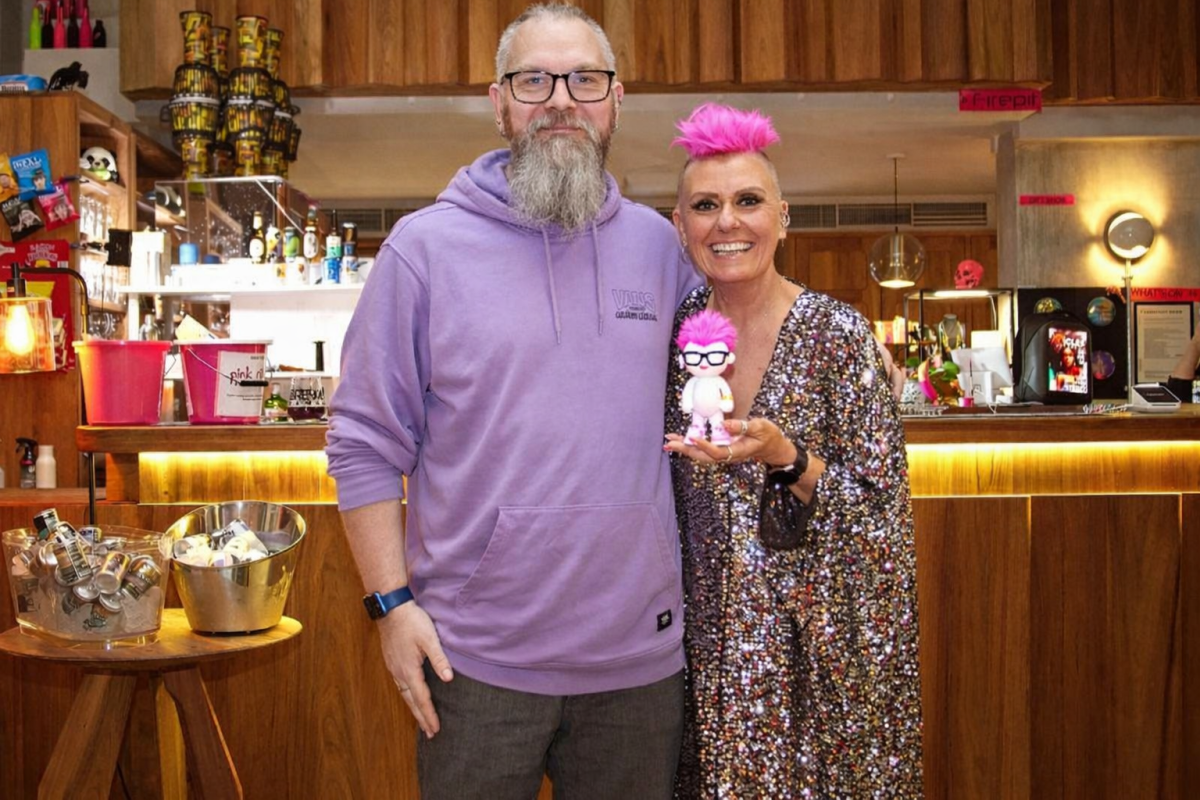
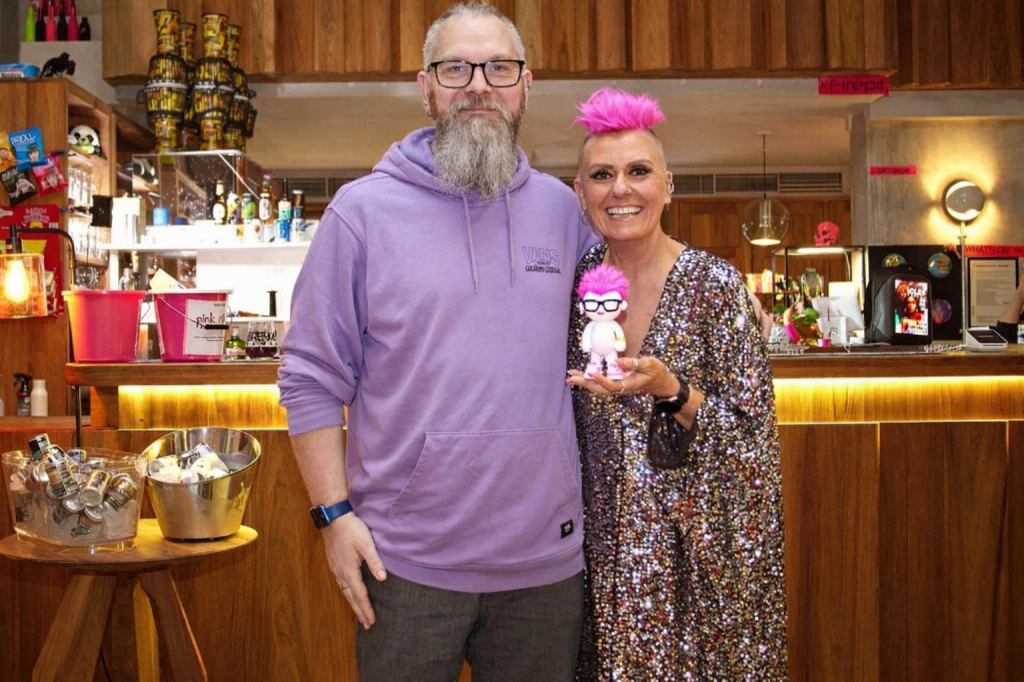
t was with palpable excitement that artist Alistair Blaster unveiled a deeply personal and touching tribute to Lisa Allen of the Pink Ribbon breast cancer charity—her very own “Blanky,” lovingly created in her image. The presentation took place at the Firepit Gallery by the O2, a vibrant creative hub that has become synonymous with championing grassroots art and meaningful causes. Surrounded by an enthusiastic and supportive crowd, the moment captured not only the spirit of artistic expression but also the profound sense of community that events like this inspire.
The evening was a celebration of both creativity and compassion, with attendees gathering to support the vital work of the Pink Ribbon charity. Alistair’s piece stood as a heartfelt acknowledgment of Lisa Allen’s tireless dedication and the impact she continues to make in raising awareness and supporting those affected by breast cancer. The “Blanky” itself—playful yet poignant—embodied warmth, comfort and resilience, echoing the very ethos of the charity it honoured.
Also on display was the striking work BustOut by artist Anne-marie Bickerton, whose bold and expressive style added another layer of depth to the evening’s artistic offering. Her work, known for its emotional intensity and fearless use of colour, complemented the tone of the event perfectly, reinforcing how art can be both visually captivating and socially powerful.
Alistair Blaster is rapidly emerging as a distinctive voice within the contemporary art scene. His unique creations—often character-driven and rich in narrative—have already attracted the attention of notable figures, including Vicki Michelle Allo Allo ” and Dr Anna Kennedy. OBE His work has also begun to cross into storytelling, inspiring children’s literature that carries the same warmth and imaginative spirit found in his visual pieces.
Speaking about the inspiration behind the “Blanky,” Alistair shared: “I am a huge supporter of Pink Ribbon, and I wanted to do something to celebrate not only the charity but Lisa Allen, who is truly inspirational in her work.” His words resonated with many in the room, underlining the importance of recognising the individuals behind charitable movements—those who quietly and consistently make a difference.
The event at Firepit Gallery was more than just an art showcase; it was a reminder of how creativity can be harnessed for good, bringing people together in support of causes that matter. With his growing reputation and heartfelt approach, Alistair Blaster is certainly an artist to watch.
Among the many remarkable talents emerging from Britain’s vibrant and ever-evolving music scene, there are rare artists who make you stop, listen, and instantly want to know more. Those moments are special. They are the moments when you sense that something extraordinary is unfolding.
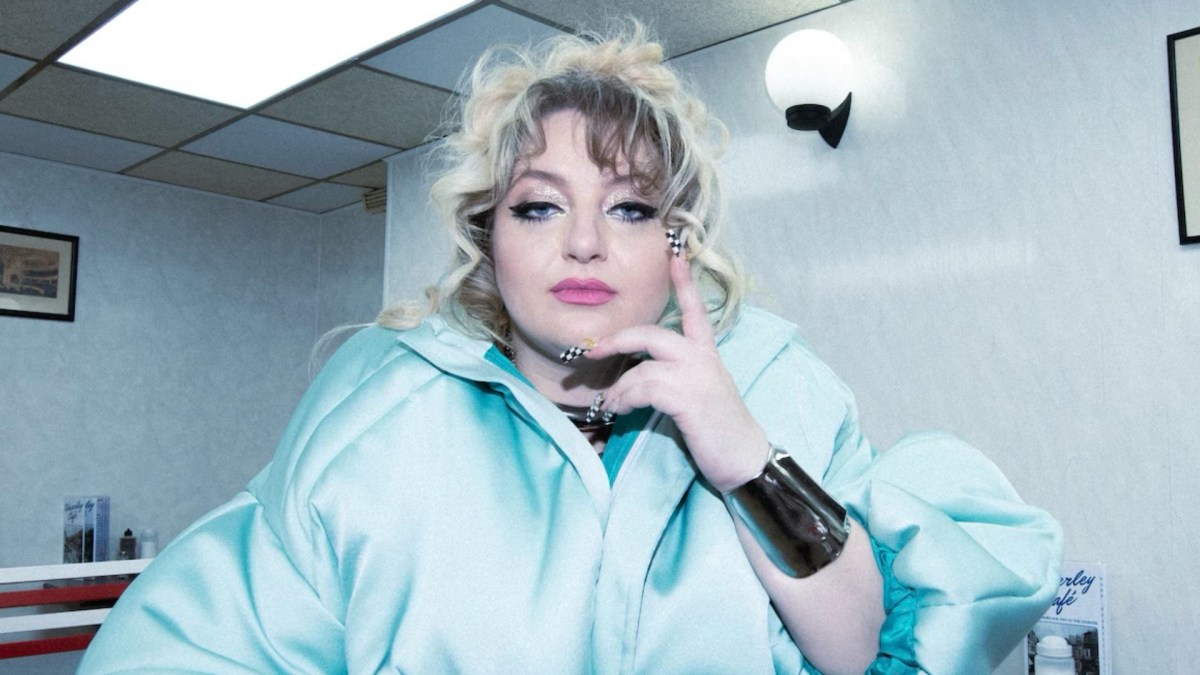
Recently, I had one of those momentswith MEEK, the Brixton-born singer who is quietly, and confidently, carving out her own space in pop music. One listen to her debut single, Fabulous, and I found myself putting down my latte and leaning in closer, eager to discover the voice behind the sound.
Fabulous, taken from her debut EP, is more than just an introduction—it is a statement of intent. From the very first notes, MEEK announces herself as an artist who understands exactly who she is and what she wants to express. Her voice is clear, confident, and emotionally resonant, drawing listeners in with effortless charm. There is a richness to her tone that feels both contemporary and timeless, blending modern pop sensibilities with classic showmanship.
Beyond her vocal talent, MEEK possesses something far rarer: presence. She commands attention without trying too hard. There is humour in her delivery, intelligence in her lyrics, and a distinctive style that makes her impossible to ignore. Watching her perform, you don’t simply hear a song—you experience a personality. Every gesture, expression, and note feels intentional, crafted to connect with her audience.
It would be easy to label her “the British Lady Gaga,” and while there are certainly echoes of boldness, theatricality, and fearless self-expression, such a comparison is ultimately limiting. MEEK is not following in anyone’s footsteps. She has developed her own musical identity—one that blends pop, performance, and personality into something refreshingly original. Her songs feel deeply personal yet universally relatable, celebrating individuality while inviting everyone along for the journey.
What also stands out is her natural ability to create joy. Her music is uplifting without being shallow, playful without losing depth. Fabulous is not just an anthem of confidence; it is a reminder that embracing who you are can be both powerful and fun. In an industry often driven by trends and formulas, MEEK’s authenticity feels like a breath of fresh air.
Crucially, she embodies the qualities of a modern pop icon: inclusivity, self-belief, creativity, and courage. She speaks to a generation that values honesty and representation, and she does so with glamour, wit, and heart. It is no surprise that many already see her as a potential LGBTQ+ icon in the making.
With her talent, charisma, and clear artistic vision, MEEK is not just another promising newcomer—she is an artist with global potential. If Fabulous is any indication of what lies ahead, this is only the beginning of a remarkable journey. The world should pay attention. A star is rising, and her name is MEEK.
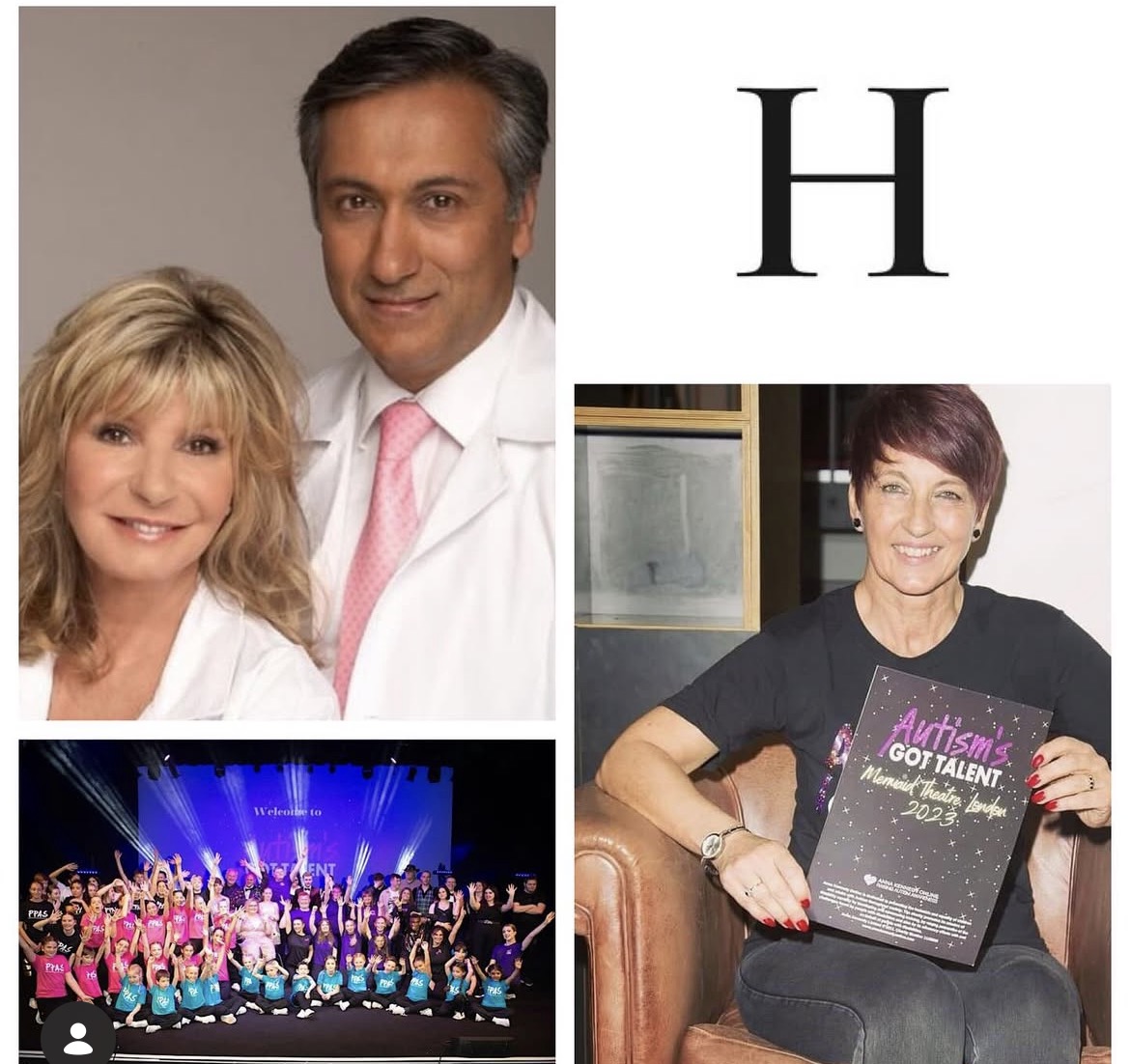
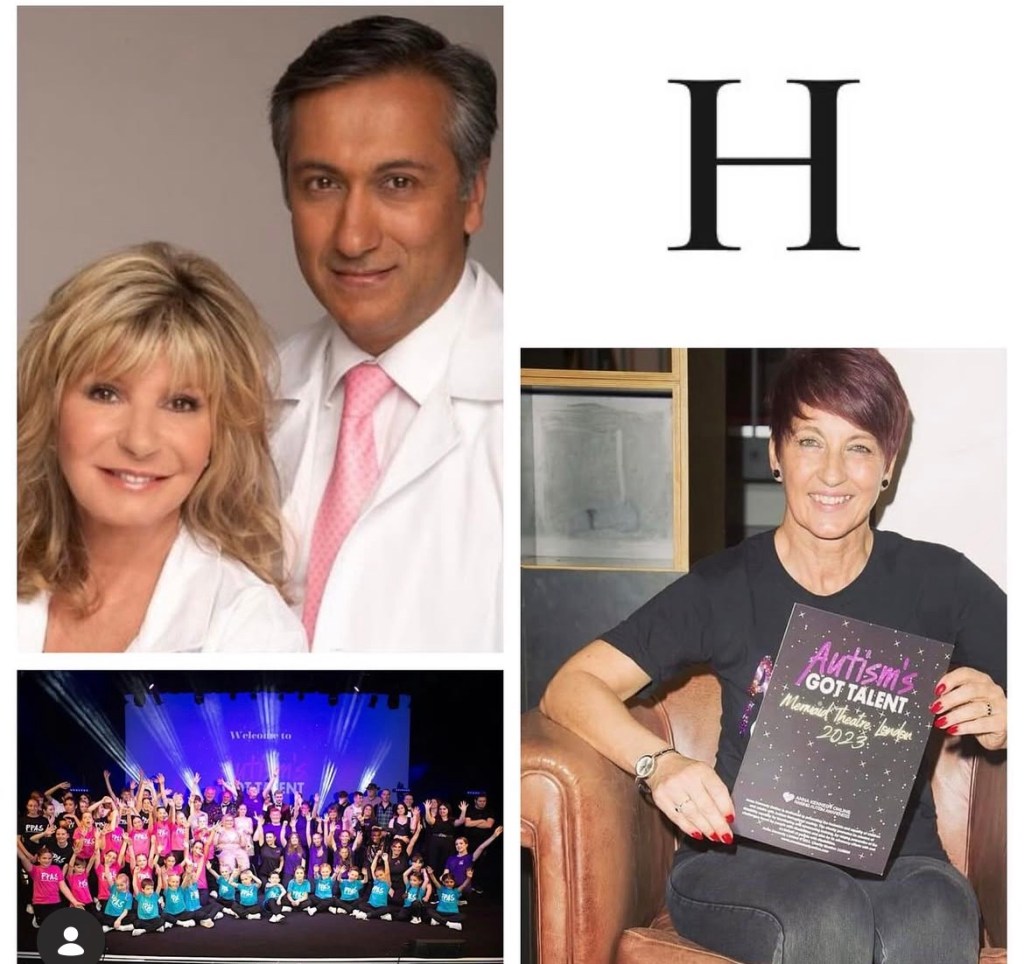
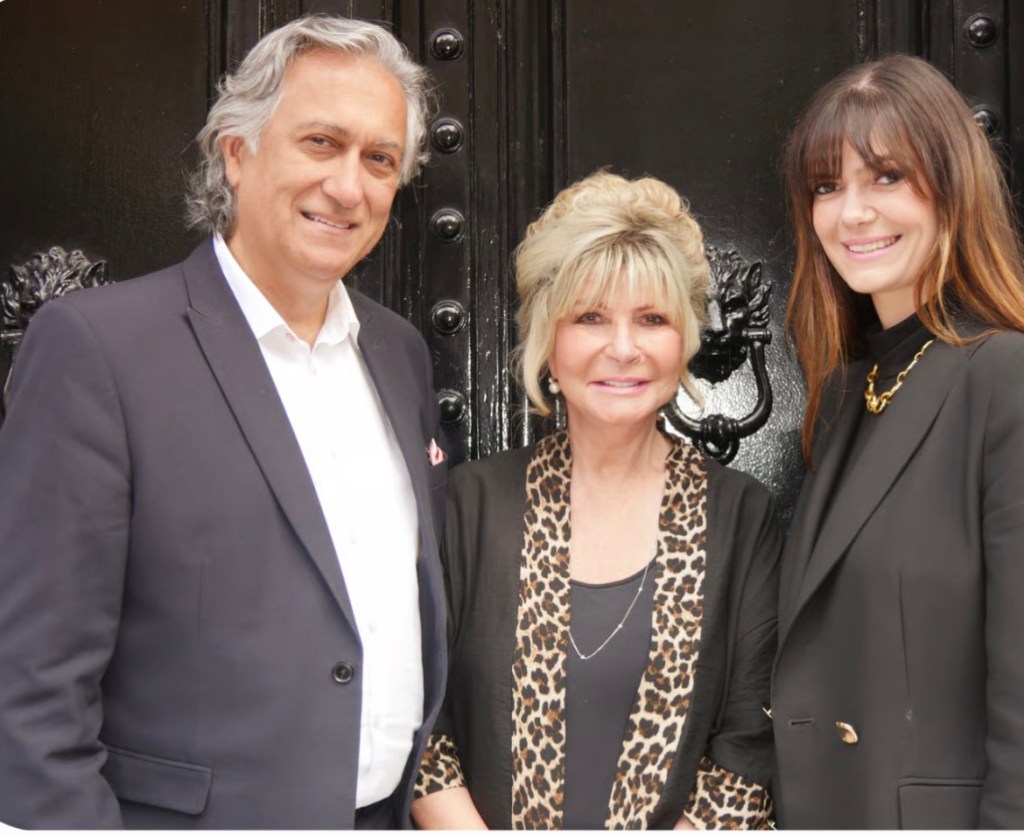
The Harley Street Skin Clinic is proud to sponsor the Personal Achievement Award at the 2026 Autism Hero Awards in London on 9 May, celebrating individuals who have shown exceptional courage, determination, and resilience in the face of adversity.
For decades, Harley Street has been synonymous with excellence in medicine, and the Harley Street Skin Clinic has remained firmly at the forefront of this tradition. Combining world-class medical expertise with compassionate, patient-centred care, the clinic continues to set the benchmark in both aesthetic and medical treatment.
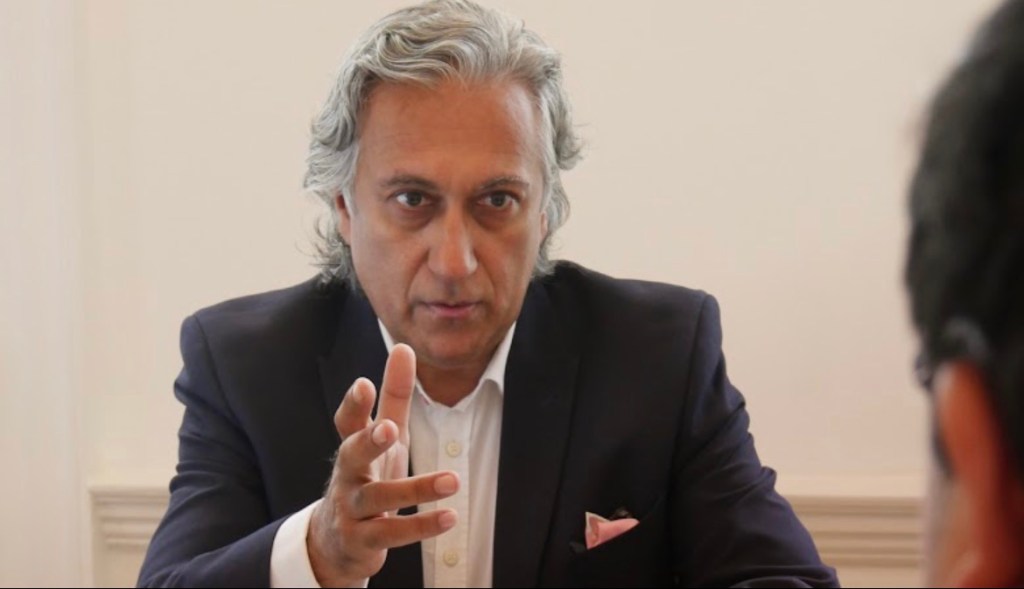
At the heart of this commitment is Dr Aamer Khan, who is widely recognised not only for his clinical expertise but also for his dedication to supporting autistic individuals and their families. Through thoughtful research, practical treatment approaches, and genuine empathy, Dr Khan helps people navigate everyday challenges with confidence, dignity, and understanding.
The clinic’s outstanding reputation has been built on trust, precision, and an unwavering focus on patient wellbeing. By blending a rich medical heritage with the latest technological advancements, Harley Street Skin ensures that every client receives the highest standard of care, from consultation to aftercare.
Co-founder Lesley Reynolds and Managing Director Sophie Cooper are equally admired, not only for their professional achievements but for their deeply empathetic approach to charity and community engagement. Their support for the autistic community extends far beyond the clinic walls and into their everyday lives, reflecting a genuine commitment to making a meaningful difference.
Through its sponsorship of the Autism Hero Awards, Harley Street Skin has become a proud champion of Anna Kennedy Online, the leading autism charity founded by Dr Anna Kennedy OBE. Speaking about the partnership, Dr Kennedy said:“To have the Harley Street Skin Clinic as a sponsor is truly wonderful.
Their approach to autism research and understanding is inspiring, and I am excited to work closely with them.”Since 2004, Dr Aamer Khan and Lesley Reynolds have worked tirelessly to build Harley Street Skin into a trusted name in cosmetic and medical excellence. With a family legacy in medicine spanning four generations, their dedication has earned the clinic an enviable reputation and a high-profile client base.
Their journey was even showcased on Sky Television in the acclaimed series Stitch Me, Lift Me, Tuck Me.Today, the clinic continues to flourish under Sophie Cooper’s leadership, bringing fresh vision and energy while preserving its family-run values.
Offering a comprehensive range of surgical and non-surgical treatments—from advanced body sculpting and cosmetic contouring to breast enhancement and anti-ageing procedures—Harley Street Skin remains committed to excellence at every level.Through innovation, compassion, and community spirit, the Harley Street Skin Clinic stands proudly alongside the Autism Hero Awards, honouring personal achievement and helping to build a more inclusive, understanding society.
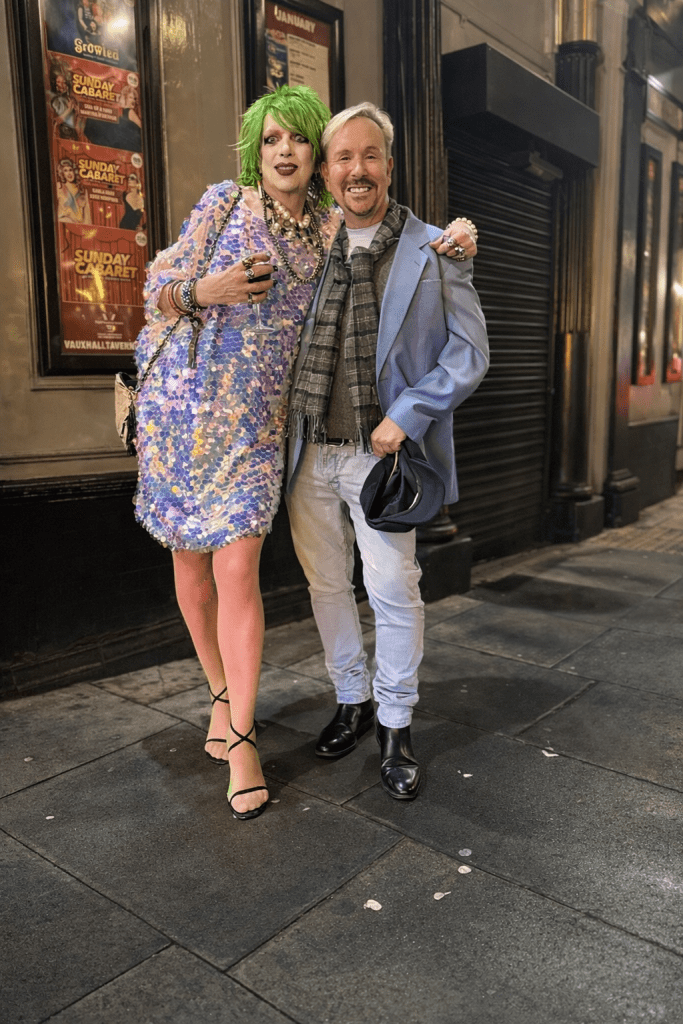
There are nights out, and then there are nights that feel like a rite of passage. One such evening found artist Piluca and myself stepping through the doors of the legendary Royal Vauxhall Tavern, to witness the singular brilliance of David Hoyle—a figure who exists somewhere between performer, prophet, poet, and living artwork.
I once described Hoyle as the love child of Kate Bush and Lindsay Kemp, and I stand by it. He is not merely an accomplished performer—with a career spanning television, film, and theatre—but an artist who uses his entire being as medium and message. Last year alone he appeared on stage in an adaptation of Hedda Gabler, proving once again that he is as comfortable in classical reinterpretation as he is in anarchic cabaret.
Hoyle is, quite simply, a walking piece of art. He cuts a vein—metaphorical, emotional, spiritual—and allows the audience to witness everything that spills out: his fears, his hopes, his contradictions. There is no armour, no polite distance. When I interviewed him previously for FLUX magazine, it was immediately clear that what you see on stage is not an act but an extension of the man himself. His work screams originality. It declares, unapologetically: This is me. This is David.
The Royal Vauxhall Tavern functions as his church, and Hoyle its high priest. From the roof—sometimes literally—he preaches love, acceptance, beauty, and defiance. His congregation is as eclectic as it is devoted. On any given night you might find Princess Julia rubbing shoulders with City bankers, artists, drag legends, first-timers, and the gloriously undefinable. It would not be absurd to compare the atmosphere to Warhols Factory in its heyday: a collision of art, celebrity, and counterculture, bound together by a shared understanding that something special is happening in the room.
What is striking is the complete absence of age anxiety. Hoyle himself dismisses it with a wave of the hand: “Everyone is beautiful in the room.” And they are. Young and old gather as equals at the metaphorical fountain, drinking in his wisdom, his wit, and his generosity of spirit. The atmosphere is electric yet oddly intimate, like a secret shared by hundreds.
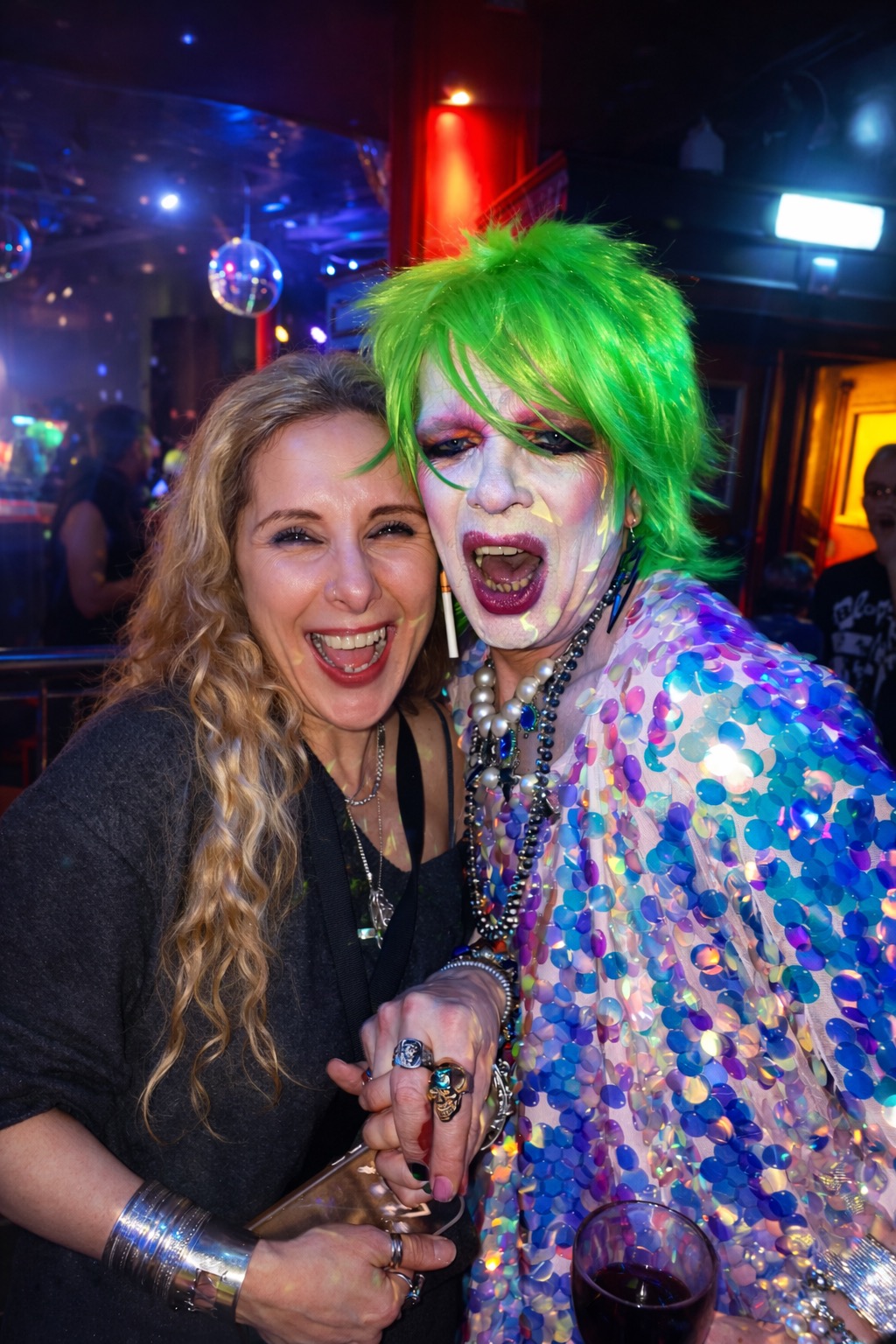
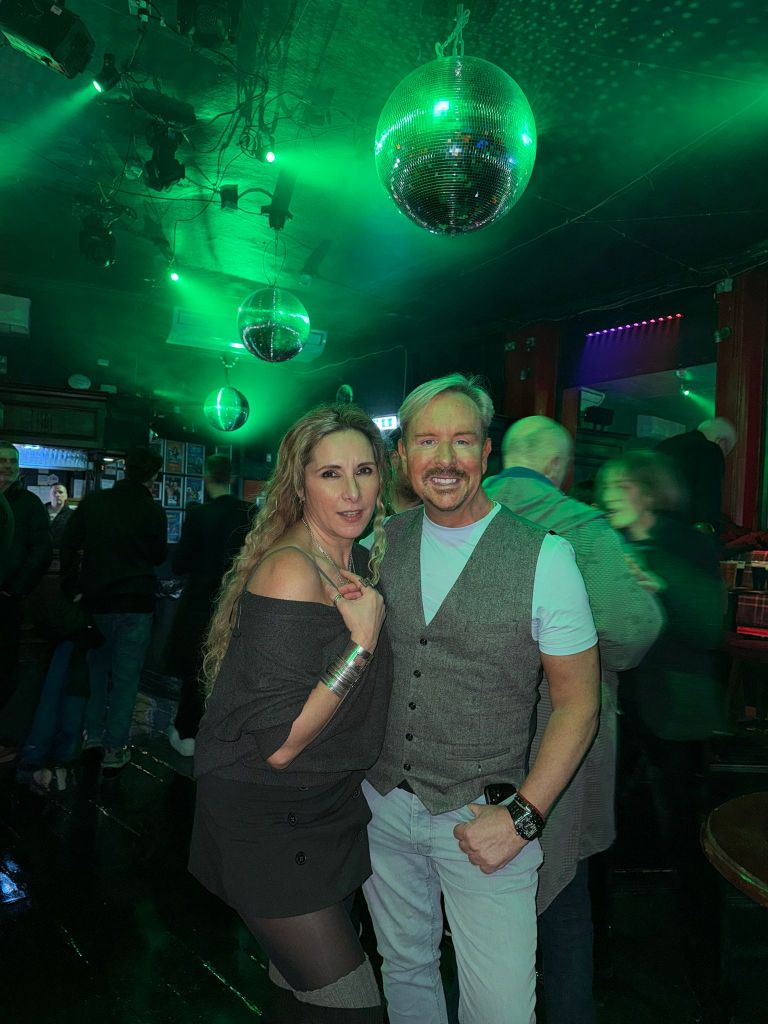
Piluca and me at The Royal Vauxhall Tavern
This is not to say the evening is solemn. Far from it. Hoyle’s humour is razor-sharp, his observations hilariously precise—particularly when directed at the audience. Sit front and centre and expect to become fodder. But crucially, he is never cruel. There is warmth beneath the provocation, and affection behind the mischief.
The man seated next to me informed me—without a hint of irony—that this was his 135th time seeing Hoyle perform. A true disciple. By contrast, my gorgeous friend Piluca—Spanish-born artist and creative force—was a virgin to the experience. I could think of no one better to introduce to what I consider a kindred artistic spirit.
Two incredible artist Piluca meets Hoyle
She was utterly blown away. The evening began with a film tribute to our shared hero, David Bowie, and Piluca leaned over to whisper, “It’s like being dipped in everything I love.” She could not wait to come back, already plotting a return before the night had even ended.
Adding to the richness of the evening, Pam—taking a brief pause from her charity work—took to the stage to read poetry. We were promised one poem and given two, a small but perfect act of generosity that felt entirely in keeping with the spirit of the night.
The show concluded with Hoyle playing cupid, creating a live portrait of two handsome men from the audience—art, flirtation, and theatre merging in real time. To be part of such an evening is to leave not only entertained, but altered. You walk out thinking differently, feeling differently, slightly braver perhaps.
This is not just a show. It is an experience—unique, communal, and deeply worthwhile. In a world increasingly starved of authenticity, David Hoyle remains gloriously, defiantly real.
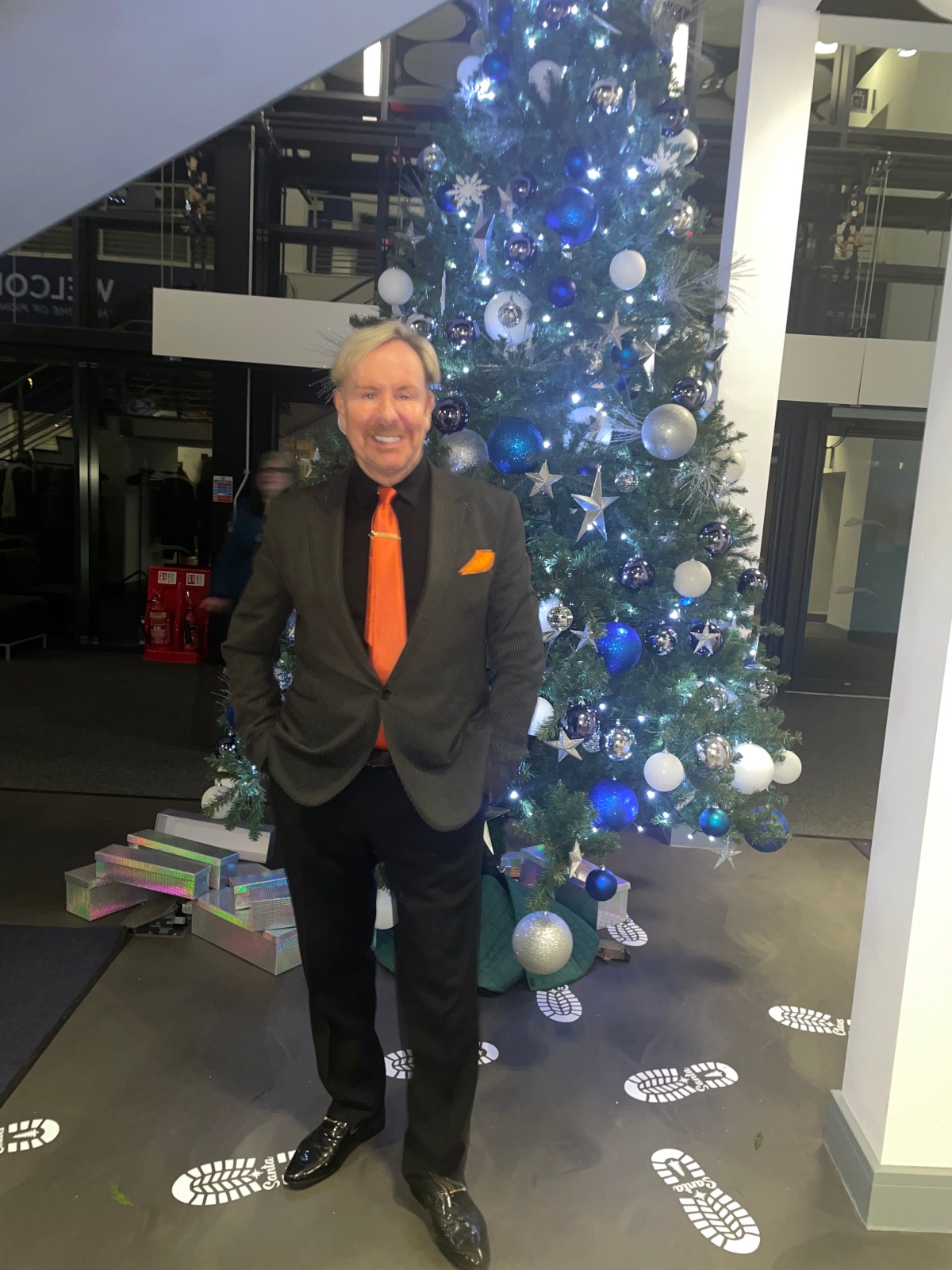
As we approach the end of another eventful year and step into the promise of 2026, I want to begin by wishing every one of you a very Happy Christmas. Whether you celebrate the season quietly, joyfully, or somewhere in between, I hope the coming weeks bring you warmth, connection, and moments of genuine peace. Christmas is a time of reflection as much as celebration, and for me, looking back over 2025 brings both change and gratitude.
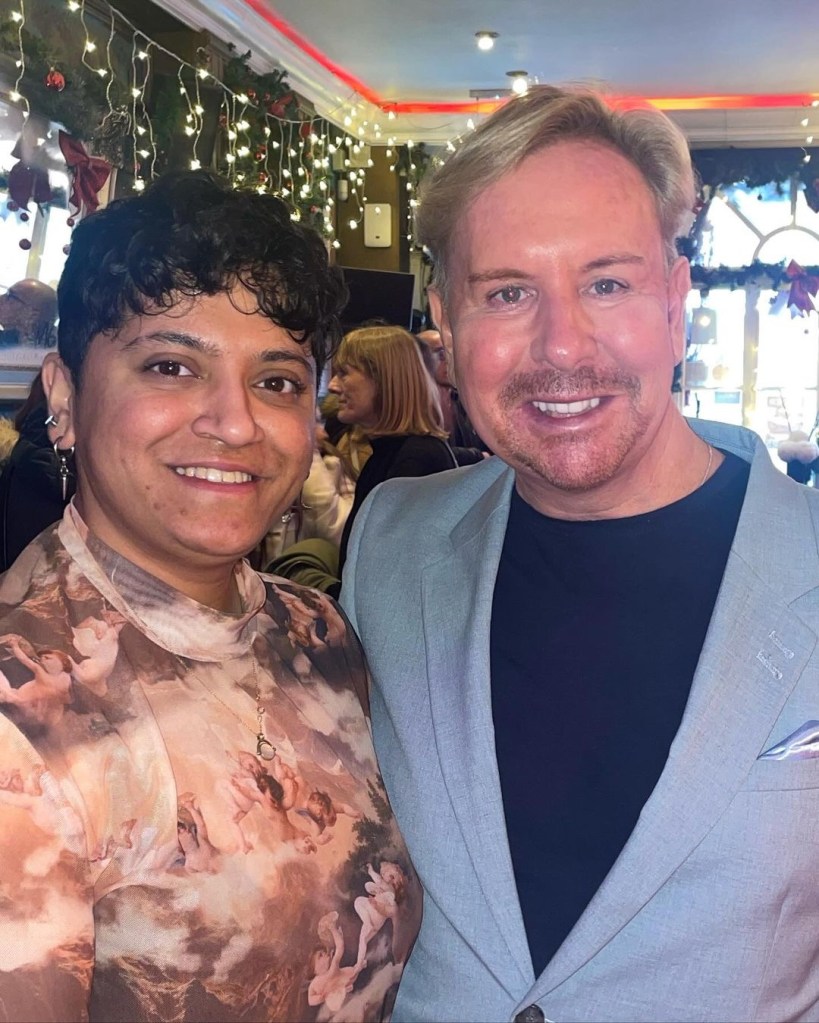
One of the biggest changes this year was saying farewell—though never goodbye—to my gorgeous friend and co-founder of 2Shades, Adishiri Chengappa. Many of you will know her as the bright, compassionate, and fiercely driven woman who helped bring this magazine to life. Adishiri has returned to India to study counselling, and I have absolutely no doubt she will become a brilliant one. Her heart, her empathy, and her ability to really listen to people make her an extraordinary human being, and those are precisely the qualities that will make her excel in her new profession.
Although Adishiri is stepping down from the magazine to focus on her studies, she remains a lifelong friend—both to 2Shades and to me personally. Our bond is permanent, and her contribution to the magazine will always be part of its foundations. Behind the scenes, we are now in discussions with a new partner who will join the 2Shades family and help carry the torch forward.
For those of you who may be newer readers, let me say this clearly: 2Shades has never been “just” an LGBTQ+ magazine. From day one, we envisioned a vibrant, inclusive space—a place for everyone. A magazine that is joyful yet unafraid; stylish yet unfiltered; a platform for voices that deserve to be heard. We speak our minds, we cover subjects that others shy away from, and we stand firmly by our philosophy that representation and honesty matter.
Over the years, we’ve covered everything from fashion, art, and entertainment to some of the most difficult and deeply important topics affecting people today. We have reported on male rape, mental health, identity, domestic violence, addiction, grief, and more. The world is multifaceted, and so are the people in it; 2Shades aims to reflect that complexity.
A huge part of what makes this magazine special is our remarkable team of columnists. Our Agony Aunt, Heidi Gammon, continues to grow in popularity, offering advice with wit, warmth, and plain-spoken honesty. Dr Anna Kennedy OBE brings vital insight, advocacy, and compassion through her work in autism awareness and support. Our beauty expert Clare McSweeney adds glamour, empowerment, and the kind of practical advice that boosts confidence. And this year we welcomed Richard Andrews, who’s new “Money Matters” column is already proving invaluable to readers navigating finances during turbulent times.
Clare 2Shades columnist with Aston Avery she is on Gateway every month .
All of them are thriving on social media, and their readership continues to soar—a testament to the authenticity and relevance they bring.
What makes all of this even more remarkable is that the magazine still has no sponsors. I work entirely for free, as do many involved. And we do it because we believe in 2Shades, in its purpose, and in the community surrounding it. But as we look ahead to the future—and to the possibility of expanding globally—sponsors and advertisers will eventually be essential. If you’ve enjoyed the work we’ve done, if the magazine has informed, entertained, or supported you in any way, then please help us grow by spreading the word. Share the link, recommend us, tell people who we are and what we stand for. That simple act makes a world of difference.
And speaking of difference: there is something else I’d like to ask this Christmas.
If you feel moved to show appreciation for the magazine’s work this year, please consider donating to Anna Kennedy Online, a charity that means an incredible amount to me personally. Not only is Anna a dear friend, but I am honoured to have been a patron of her autism charity for nearly twelve years—something I remain immensely proud of. The work AKO does is life-changing for autistic children, adults, and families across the UK. If you would like to donate, the details are below; even the smallest contribution helps.
Dr Anna Kennedy OBE with me.
Looking ahead, my biggest hope is that 2026 will be the year 2Shadesbecomes a global success. A huge portion of our readership already comes from the United States and Australia, which shows that our message resonates far beyond the UK. We speak to universal experiences—identity, struggle, connection, joy, and truth. These things transcend borders.
And that brings me to my wish for 2026, a simple yet powerful one: More empathy. More understanding. More respect.
We live in an increasingly polarised world, where disagreement is seen as a personal attack and differing opinions are met with hostility rather than curiosity. One of the wisest things I heard this year came from Peter Tatchell at the screening of “Legendary Children: All of Them Queer.” He said:
“By going into other places and organisations and being your authentic self, making a positive difference, people will start to change their views.”
That stayed with me, because it reminds us that real progress rarely comes from shouting or fighting—it comes from presence, compassion, and consistency.
Yet too often, respect is missing from the smallest everyday interactions. I’ll give you an example. I have not eaten red meat or pork for 49 years. It’s part of who I am. I don’t need to explain why; it doesn’t need to be debated. Yet more times than I can count, I’ve sat down to a meal only to be told, “Oh, just scrape it off,” as if my boundary were an inconvenience rather than something worthy of respect.
It’s such a small thing, but small things matter. Empathy shows itself in the details. Most people, of course, are thoughtful and considerate—but we all know others who refuse to see beyond their own beliefs. They hold strong opinions on everything yet become instantly outraged if you question theirs. They expect understanding but rarely offer it in return.
And then there are those who appear addicted to drama—who cannot be content unless they are creating conflict or turning an event into something about them. Rather than bringing joy, talent, or positive energy to a gathering, they bring chaos. It is, in my opinion, a kind of addiction in itself. A hunger for attention that stifles empathy and dims the light for everyone else. As such addiction is an illness and I have empathy there. However when an illness is contagious or has a knock on effect on your mental health you need to walk away in the end.
Imagine how different the world could be if empathy were something we practised as naturally as breathing. If instead of reacting, we paused. Instead of judging, we listened. Instead of assuming, we asked. If 2026 could bring even a fraction more understanding into everyday life, what a transformation we would see.
So as we wrap presents, raise glasses, and welcome the new year, my message is this: Celebrate with kindness. Speak with honesty. Live authentically. Respect differences—not just the ones that are easy, but the ones that challenge you. And above all, look for ways to make someone else’s world a little better.
To every reader, supporter, contributor, and friend of 2Shades: thank you for being part of this journey. Here’s to a beautiful Christmas, a hopeful New Year, and a 2026 filled with courage, connection, and compassion.
We hear it time and time again: “The Eurovision Song Contest is not political.” And while we all know that the voting patterns can sometimes be… entertaining, to say the least, at its heart Eurovision remains a celebration of music, creativity, and community. It has long been affectionately referred to as the “Gay New Year,” bringing joy, glamour, and unapologetic self-expression to millions around the world. For many viewers, it is more than a show — it is a moment of unity.
The spirit of Eurovision has always been about artists coming together to share their talent, culture, and stories. It was never intended to be a platform for political punishment, nor a place where artists are excluded because of the actions of their governments.
When I interviewed Peter Tatchell this year, he said something that resonated deeply with me: the way forward for the LGBTQ+ community is to keep being a shining beacon across all platforms. I couldn’t agree more. Visibility, inclusion, and dialogue are how progress is made — not through shutting doors.
Madonna in Israel at the Eurovision Song Contest .
I don’t live in some insulated “gay bubble,” nor would I want to. Real change happens when we remain open to conversation, even with those whose governments or policies we may profoundly disagree with. Excluding countries from Eurovision is not a solution; it brings nothing constructive to the table. In fact, it risks undermining the very principles Eurovision claims to stand for: openness, inclusivity, and the celebration of cultural diversity.
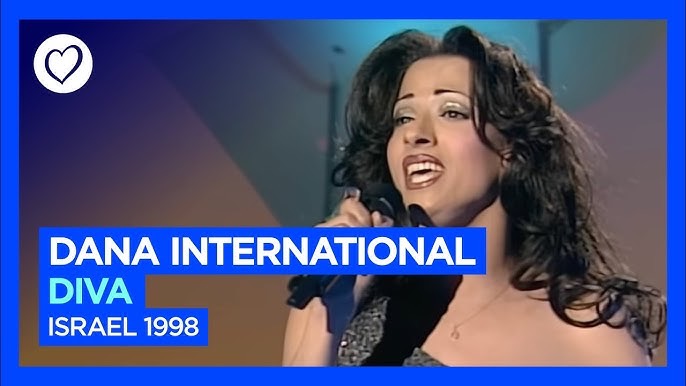
Israel, in particular, has a long and meaningful relationship with the contest. It is a country where LGBTQ+ people are welcomed, recognised, and celebrated — a fact often overlooked in broader political debates. Eurovision itself has benefited enormously from Israel’s participation. It gave us Dana International, the first (known) transgender winner, whose victory in 1998 was a landmark moment for queer visibility worldwide. Beyond Dana, Israel has consistently showcased diverse performers and daring artistic vision, enriching the contest’s legacy.
Rather than silencing or excluding, Eurovision should remain a platform where artists from all backgrounds, beliefs, and nations can share their voice. Music has always had the power to connect people beyond politics, beyond borders, and beyond conflict. Using your voice to send a message is a beautiful and powerful thing — but using silence as a form of punishment rarely fosters understanding or change.
When we welcome artists from countries whose governments we may disagree with, we create the possibility for conversation, empathy, and cultural exchange. When we block them, we lose that opportunity. Eurovision should not become a battleground of boycotts and bans; it should remain what it was created to be: a stage that celebrates unity in diversity.
Let’s not allow hatred, division, or political pressure to turn Eurovision into something it was never meant to be. Let’s welcome all who bring music to the stage — and keep the contest a place where voices are heard, not silenced.
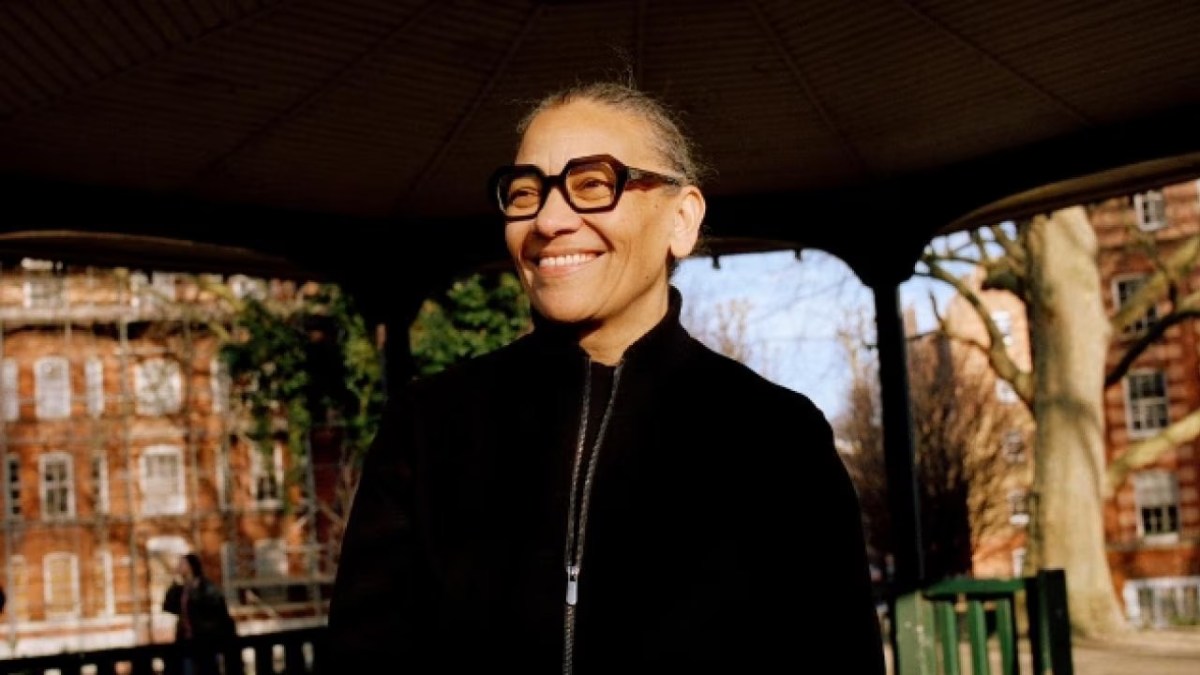
When news broke that Lubaina Himid RA, CBE would represent Britain at the 2026 Venice Biennale, the art world let out a collective cheer. At 72, the pioneering British artist—born in Zanzibar, based in Preston—has earned a place among the most influential voices of her generation. Her work, a dazzling blend of history, storytelling, and social critique, has long challenged the narratives that dominate Western culture, shining a light on the contributions of Black figures who have too often been overlooked.
Himid is no stranger to breaking ground. In the 1980s and 1990s, she curated trailblazing exhibitions like Five Black Women (1983) at London’s Africa Centre and The Thin Black Line (1985) at the ICA, putting Black female artists firmly on the map at a time when mainstream galleries barely noticed. Her daring vision earned her the Turner Prize in 2017, and a CBE followed in 2018, honours that recognise not just her artistry but her remarkable influence on the British cultural landscape.
And yet, Himid remains delightfully down-to-earth. On hearing of her Biennale invitation, she laughed, “with both disbelief and pleasure,” before reflecting on the opportunity:
“It is such a great honour and at the same time a brilliant and exciting opportunity to make something particularly special, which resonates with multiple audiences, communicates with complex histories, and looks to a more collaborative future.”
The Path to Venice
Being chosen to represent Britain in Venice is no small feat. The British Council, which manages the UK’s pavilion, conducts a rigorous selection process. Artists are nominated and assessed by curators, critics, and cultural institutions from across the country. Their proposals are scrutinised for artistic excellence, innovation, and international significance—a combination that signals not just mastery of craft, but an ability to spark conversation on a global stage. The final decision rests with the Pavilion Commissioner and the Visual Arts Advisory Group.
It’s a recognition that places an artist at the very pinnacle of contemporary British art, transforming their career and showcasing their vision to a global audience. For Himid, whose work thrives on dialogue, this platform offers a chance to create a profound, immersive experience in Venice’s historic spaces.
Reimagining the British Pavilion
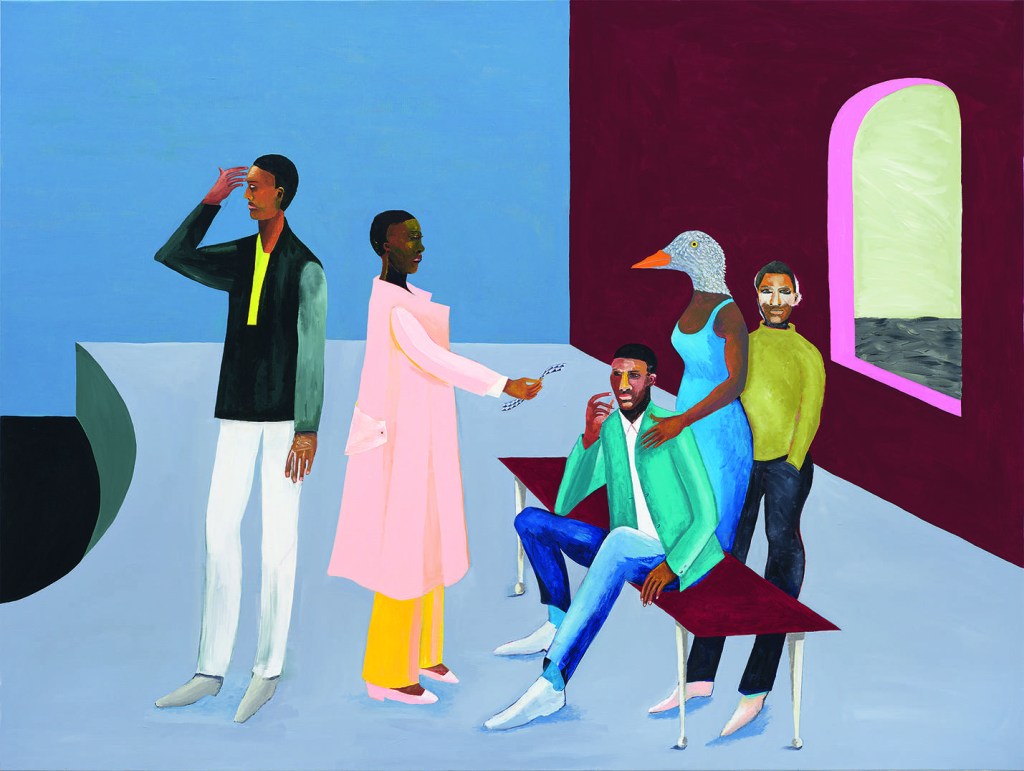
Himid is renowned for pushing the boundaries of painting, sculpture, and installation, fusing textures, narratives, and sound to construct spaces that feel alive, vivid, and socially urgent. Emma Dexter, Director of Visual Arts and the British Council Collection, describes Himid’s approach as “a radical optimism combined with incisive social critique,” noting that her exhibition will transform the Pavilion into a journey of discovery.
For Venice 2026, Himid’s work promises to be both playful and profound, intimate yet expansive—a conversation across centuries and continents, a reminder that history is never neutral, and that art can illuminate the stories we have forgotten.
From her early curatorial triumphs to her recent global recognition, Lubaina Himid has always worked at the intersection of history, identity, and imagination. Venice will be the latest—and most spectacular—stage for her audacious vision, a moment that promises to resonate far beyond the gilded canals and crowded pavilions of Italy’s floating city.
In 2026, the British Pavilion will not just exhibit art—it will tell a story, vibrant and urgent, through the eyes of one of Britain’s most brilliant and fearless artists.
We’re thrilled to share some fantastic news — Firepit Art Gallery and Studios CIC has received our very first grant as a Community Interest Company! Thanks to the Greenwich Healthier Communities Fund, we’re able to bring an inspiring new initiative to life: FIREPIT FEELS.
This milestone marks an exciting step forward in our mission to make creativity accessible, inclusive, and nurturing for everyone. With the support of this grant, we’re launching a pilot programme of free and pay-what-you-can workshopsdesigned to foster creative health and wellbeing within our local community.
About FIREPIT FEELS
FIREPIT FEELS is a culturally-rooted series of workshops taking place in Greenwich Peninsula, created to support and uplift individuals from Global Majority, LGBTQIA+, and Neurodiverse communities, particularly those from disadvantaged backgrounds. Our aim is to offer a welcoming, affirming space where creativity, culture, and connection come together to enhance emotional and mental wellbeing.
We warmly invite you to take part in any — or all — of our upcoming sessions:
November 12th, 7–9pm – 🎨 Inhabiting Uncertainty on the Canvas — Painting Workshop
November 23rd, 1–3pm – 🧘♀️ Unfold: Movement & Meaning — Yoga & Journalling
December 14th, 1–3pm – 🧵 Chinese Knotting Jewellery & Mindfulness
January 8th, 7–9pm – ✏️ Our Art Circle — Drawing Workshop
January 22nd, 7–9pm – 📚 Queer Narrative — Collaging and Storytelling
Every aspect of FIREPIT FEELS has been developed collaboratively, with guidance from an Accessibility Consultantand a Psychotherapist, ensuring that the programme is inclusive, neurodiversity-affirming, and trauma-informed.
Each session is relaxed and supportive. We’ll provide sensory aids for those who find them helpful, and a dedicated welfare support guide will be on hand to make sure everyone feels safe, comfortable, and welcome throughout.
About Firepit Art Gallery and Studios CIC
Located in the heart of Greenwich Peninsula, Firepit Art Gallery and Studios CIC is a community-led art hub that celebrates creativity in all its forms. Our mission is to make the arts accessible, inclusive, and sustainable by hosting co-created workshops, exhibitions, and events that reflect the diverse voices of our community.
Run by local artists, we believe in the power of art to connect people, spark dialogue, and support wellbeing. Whether you’re a seasoned creative or a complete beginner, Firepit is your space to explore, express, and belong.
To stay updated on our events, projects, and exhibitions,
Together, let’s make Firepit Feels a space where creativity truly heals, connects, and inspires.
Zohran Mamdani: A New Dawn for New York — and a Setback for Trump’s America
By Steven Smith
Let’s get one thing straight: Sadiq Khan is a terrible mayor — but not because he is Muslim. He’s a terrible mayor because, quite simply, he hasn’t done the job well. Faith has nothing to do with competence.
I would like to think I ever judge anyone by their religion. Yet when I hear from certain extreme right-wing Christians, my instinct is that they’re often deeply uncomfortable with the LGBTQ+ community. Many cherry-pick verses from the Bible to justify their prejudices, conveniently ignoring the passages about kindness, humility and turning the other cheek — a principle that seems to have lost all meaning for them. As are extreme Muslims and many other religious devotees. I do not want them in power.
And how many of these self-proclaimed moral crusaders have later been exposed as hypocrites, caught in scandals that betray the very values they preach? No one wants to live under Sharia law, but equally, most of us are not rejecting Eastern culture or faith. Jewish politicians, for instance, aren’t out trying to convert everyone. The truth is simple: people should be judged on their integrity, their empathy, and their ability to lead — not the faith they were born into.
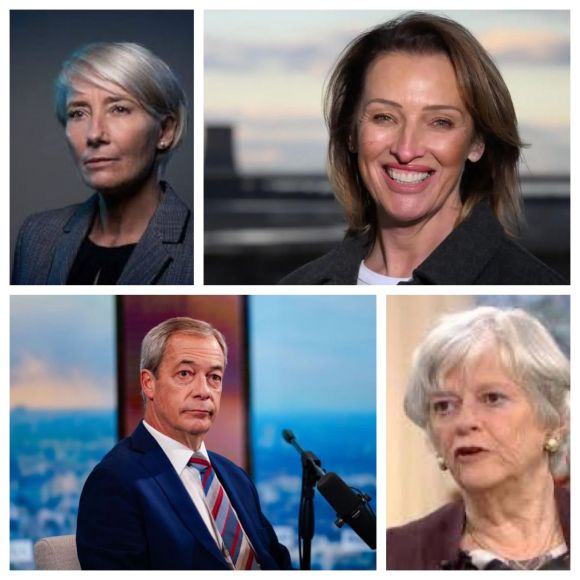
Historically, the right wing has struggled with LGBTQ+ acceptance. Look at Reform’s Ann Widdecombe, a devout Christian who remains openly opposed to gay rights, or Nigel Farage, who rails against same-sex marriage yet hasn’t exactly been a shining example of domestic harmony himself.
So, why shouldn’t New York — one of the most diverse cities in the world — have a Muslim mayor? The measure of leadership isn’t found in the label of one’s faith but in the breadth of one’s humanity.
When Zohran Mamdani swept to victory as New York’s new mayor, he didn’t just win an election — he ignited a cultural and political shift. At just 33, the Ugandan-born, Queens-raised son of Indian immigrants and the first Muslim to hold the office, Mamdani represents a fresh, progressive vision of leadership grounded in empathy, equity, and inclusivity. For women and LGBTQ+ citizens, his victory signals something powerful: a mayor who sees diversity not as a slogan, but as the city’s greatest strength. And for Donald Trump and the hard-right movement that thrives on fear and division, Mamdani’s rise is a direct ideological defeat.
Mamdani’s political roots run deep in social justice. Long before his mayoral run, he made his name in the New York State Assembly by fighting for tenant protections, affordable housing, and workers’ rights. But what sets him apart is his understanding that social equality must include gender and sexual equality. His policies go beyond token representation — they promise tangible protections and support for women, LGBTQ+, and trans individuals who continue to face discrimination and economic barriers in one of the world’s most diverse cities.
During his campaign, Mamdani declared: “New York must be a sanctuary — not just for immigrants, but for every person whose existence has been politicised.” That message resonated strongly with LGBTQ+ voters and women’s advocacy groups, weary of years of policy rollbacks and toxic rhetoric at the national level.
His mayoral platform includes one of the most comprehensive pro-equality agendas ever proposed for New York City. At its heart are three major commitments: establishing an Office for LGBTQIA+ Affairs to coordinate inclusive policies and investigate discrimination; pledging $65 million for gender-affirming healthcare and reproductive rights clinics; and strengthening women’s economic and reproductive rights through expanded paid family leave, subsidised childcare, and increased funding for domestic violence shelters and legal aid. These policies represent not just symbolic progress but systemic reform, tackling the intertwined roots of inequality and positioning New York as a beacon for progressive governance in a deeply divided nation.
Some observers initially wondered whether a devout Muslim mayor could fully champion LGBTQ+ and women’s rights. Mamdani’s leadership has already answered that question decisively. He has stated repeatedly that his faith teaches compassion, justice, and respect for human dignity — values entirely consistent with protecting the vulnerable. By separating personal belief from public duty, he embodies the pluralism that defines modern New York. His election sends a potent message that faith and equality are not mutually exclusive.
To understand why Mamdani’s victory is such a blow to Donald Trump, one must look beyond New York’s borders. Trumpism thrives on nostalgia — a yearning for a rigid, exclusionary version of America defined by dominance and division. Mamdani represents the opposite: a confident, multicultural future where inclusion and equality are strengths, not threats. Under Trump, the federal government rolled back protections for transgender people, restricted abortion access, and emboldened hate groups. Mamdani’s success proves that this politics of fear no longer holds sway everywhere — especially not in America’s largest city.
What happens in New York often echoes nationally. Just as Fiorello La Guardia’s social reforms and Michael Bloomberg’s urban policies shaped national conversations in their eras, Mamdani’s agenda may set the tone for a new wave of progressive mayors. His approach fuses social justice with fiscal realism — leveraging the city’s enormous budget to create measurable improvements in equality and opportunity. His administration’s first-year priorities include making the Metropolitan Transportation Authority free for students and low-income riders, expanding affordable housing projects on city-owned land, increasing investment in public schools with inclusive sex education, and introducing gender-balanced representation in city boards and commissions.
Mamdani’s election is also a cultural moment — one that renews New York’s identity as a sanctuary for those who dream of freedom in all its forms. From Stonewall to suffrage, the city has long been a crucible of progress. His leadership promises not only policy change but also a revival of civic optimism: a belief that governance can be both compassionate and competent. His first speech after victory captured this perfectly: “We are not here to manage decline. We are here to imagine abundance — for women, for queer and trans people, for every New Yorker who has been told to shrink their dreams.”
Let’s get one thing straight: Sadiq Khan is a terrible mayor — but not because he is Muslim. He’s a terrible mayor because, quite simply, he hasn’t done the job well. Faith has nothing to do with competence.
Nor would I ever judge anyone by their religion. Yet when I hear from certain extreme right-wing Christians, my instinct is that they’re often deeply uncomfortable with the LGBTQ+ community. Many cherry-pick verses from the Bible to justify their prejudices, conveniently ignoring the passages about kindness, humility and turning the other cheek — a principle that seems to have lost all meaning for them.
And how many of these self-proclaimed moral crusaders have later been exposed as hypocrites, caught in scandals that betray the very values they preach? No one wants to live under Sharia law, but equally, most of us are not rejecting Eastern culture or faith. Jewish politicians, for instance, aren’t out trying to convert everyone. The truth is simple: people should be judged on their integrity, their empathy, and their ability to lead — not the faith they were born into.
Historically, the right wing has struggled with LGBTQ+ acceptance. Look at Reform’s Ann Widdecombe, a devout Christian who remains openly opposed to gay rights, or Nigel Farage, who rails against same-sex marriage yet hasn’t exactly been a shining example of domestic harmony himself.
So, why shouldn’t New York — one of the most diverse cities in the world — have a Muslim mayor? The measure of leadership isn’t found in the label of one’s faith but in the breadth of one’s humanity. rise represents a decisive shift away from the politics of grievance and exclusion. His administration promises to put women’s rights, LGBTQ+ equality, and social justice at the heart of city governance. For a nation still grappling with polarisation, his victory is both an inspiration and a challenge: proof that diversity can win, compassion can govern, and inclusion can be a source of strength rather than division. For Donald Trump and those who profit from cultural conflict, Mamdani’s triumph is a warning shot: the future belongs to those who build bridges, not walls. He is a mayor for all and a flash that thinking Americans have had enough of the red hat .
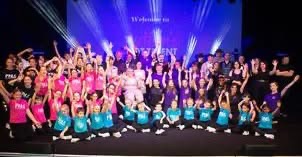
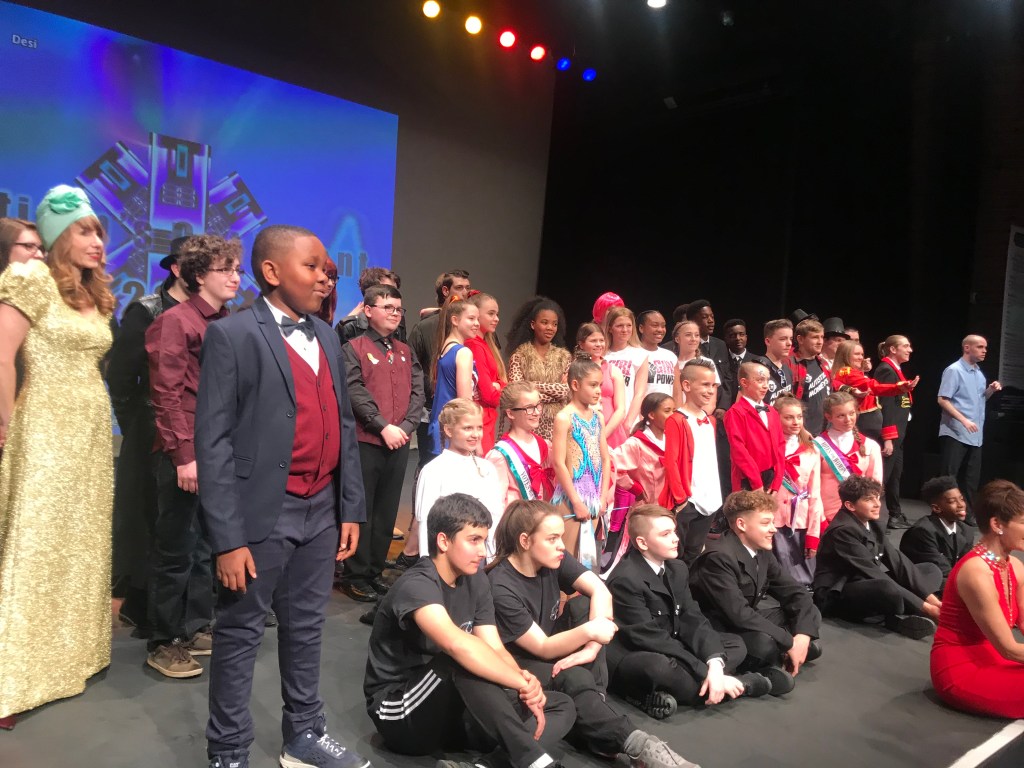
On Saturday the 11 October, the spotlight shines on extraordinary talent as Autism’s Got Talent takes centre stage at the Mermaid Theatre in London. Organised by the award-winning charity Anna Kennedy Online, this uplifting and inclusive event brings together over 24 performers from around the world, including the United States, for an evening that promises inspiration, celebration, and unforgettable entertainment.
With doors opening at 6:00 PM and the show starting at 7:00 PM, this year’s event is set to be one of the biggest yet — showcasing not only incredible talent but also the power of inclusion and acceptance.
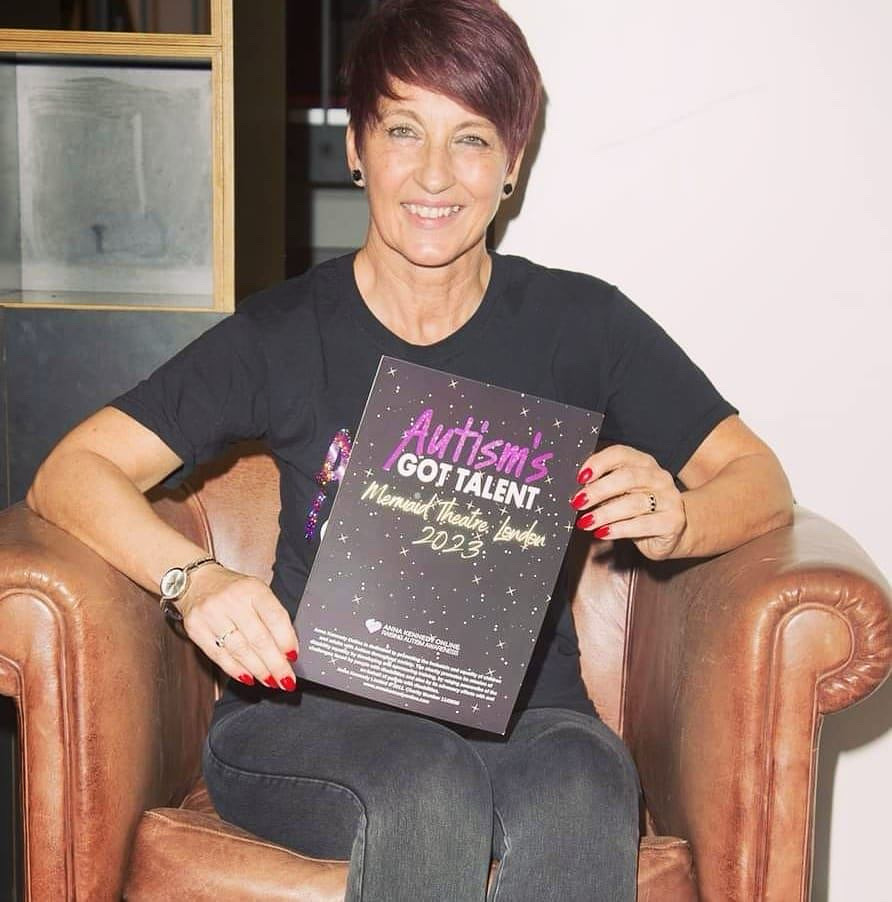
Dr Anna Kennedy OBE
A Stage That Changes Lives
Unlike traditional talent shows, Autism’s Got Talent isn’t about competition — it’s about celebration. It provides a rare and empowering platform for performers who are autistic or neurodivergent, allowing them to share their unique voices, stories, and creative gifts.
Founded by autism ambassador and campaigner Anna Kennedy OBE, the event was born out of a desire to challenge stereotypes, raise awareness, and offer meaningful opportunities for those often overlooked in mainstream media and entertainment.
“This is not just a show — it’s a movement,” says Anna Kennedy. “Autism’s Got Talent is about breaking down barriers and giving people a chance to shine. Every performer brings something special to the stage, and the audience leaves inspired and moved.”
From singers and dancers to poets, musicians, magicians and comedians, the show highlights the diverse range of talentwithin the autism community. Many of the performers have never had the chance to appear on a professional stage before — making the experience deeply personal and empowering.
Award winning presenter Aston Avery
Star-Studded Presenters & World-Class Venue
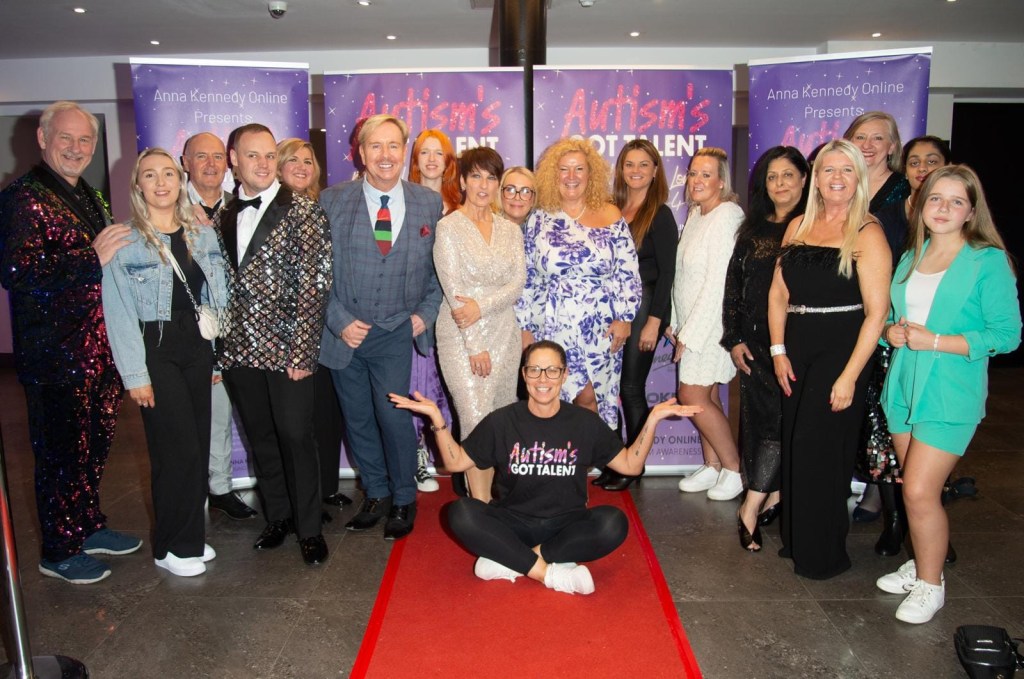
Hosting this year’s spectacular event are award wining Gateway DJ, Aston Avery, and youth theatre organiser PhilBarnett , a dynamic trio known for their charisma, warmth, and dedication to the autism community. Their presence helps create a relaxed, friendly atmosphere where performers feel supported and celebrated.
The iconic Mermaid Theatre — a central London venue known for its stunning acoustics and accessibility — is the perfect backdrop for the evening. Its state-of-the-art stage and welcoming environment make it ideal for a show of this scale and heart. Visit: www.the-mermaid.co.uk
What to Expect
With over two dozen acts from across the UK, Europe, and America, audiences can expect an exciting mix of performances filled with energy, passion, and originality. No two acts are alike, and every moment of the show is infused with authenticity and emotion.
The audience is encouraged to cheer, clap, and support every performer — creating an atmosphere of celebration rather than judgment. The focus is on ability, creativity, and joy.
Whether it’s a powerful vocal performance, an emotional poem, a jaw-dropping dance routine, or a surprise act that defies genre, every artist takes the stage with courage and pride.
Anna Kennedy and her dedicated team behind Anna Kennedy on line
More Than Just a Show
Proceeds from the event go directly to Anna Kennedy Online, a UK charity that provides vital support, resources, and advocacy for individuals and families diagnosed by autism. The charity works year-round to raise awareness, run workshops, support networks, and create opportunities like Autism’s Got Talent.
“This event shows what’s possible when we give people the space and support to thrive,” says Anna Kennedy. “It’s about changing perceptions, building confidence, and proving that being different is something to be celebrated.”
In a world where neurodiverse individuals often face barriers to expression, Autism’s Got Talent offers something truly special: a night where every voice matters, every performance is met with applause, and talent is judged not by convention — but by heart.
Whether you’re a long-time supporter of the autism community or simply looking for an evening of uplifting entertainment, this is one event you won’t want to miss.
In particular, Anna Kennedy on Line would like to thank their sponsors Mermaid Theatre, The Harley Street Skin Clinic, Orange Orchid, Talem Law, SEND Tutoring, and SEN Tutoring for their invaluable support. Without you, we simply could not continue to do what we do.

















 2Shades Magazine