Categories
Columns Health and Fitness People

Clare McSweeney Christmas beauty and aesthetic’s column .

Yes, Clare McSweeney is back with her beauty and aesthetic advice for your Christmas and New Year glow. Here are her top seasonal tips, woven together with your most-asked beauty dilemmas.

Diana from Basildon writes:
“My 14-year-old daughter is make-up mad. I try to limit when she wears it, and I’ve taught her how to apply it properly. All she wants for Christmas is make-up or beauty products. What should I buy her that won’t break the bank?”

Clare replies:
For a 14-year-old, focus on fun, gentle and budget-friendly products. Teen skin is delicate, so avoid anything too active. Lovely options include a lightweight tinted moisturiser, a cream blush, a neutral eyeshadow palette, a clear or lightly tinted gloss, and a gentle cleanser. Brands like e.l.f., Revolution, Catrice and NYX offer brilliant quality without stretching your budget. She’ll feel spoiled without you overspending.

Clare is also often asked for her top festive glow tips. Here are her five Christmas skin commandments:

  1. Hydrate with hyaluronic acid under your moisturiser.
  2. Exfoliate gently twice a week.
  3. Use a radiance-boosting primer for that candlelit finish.
  4. Brighten mornings with vitamin C.
  5. And yes — always SPF, even in winter.

Nicky from Basildon asks:
“My bestie is sun-mad — if she’s not on the sunbed, she’s applying fake tan. She’s starting to look a bit orange. I’m thinking of buying her a salon spray tan for Christmas, but what’s the best way to apply tan so it looks natural?”

Clare answers:
The secret is prep, patience and blending. Exfoliate the day before (never just before!), moisturise dry spots like elbows and ankles, and apply self-tan in light layers with a tanning mitt. Build slowly, blend wrists and ankles with a fluffy brush, and she’ll go from tangerine to tasteful glow.

And because you asked — Clare’s top three self-tanning products:

  1. Bondi Sands Aero
  2. St. Tropez Classic Mousse
  3. Tan-Luxe The Gradual

Sally from Southend writes:
“I’m thinking of getting Botox before a school reunion on the 18th. I’m in my 30s — how soon should I have it done so it looks natural?”

Clare replies:
Botox takes 10–14 days to settle fully, so book in around the 4th–6th. That’s the sweet spot for subtle, smooth and natural-looking results. And always choose a qualified medical practitioner — skill matters just as much as timing.

Clare’s top five tips for anyone considering aesthetic treatments:

  1. Research your practitioner thoroughly.
  2. Always have a consultation beforehand.
  3. Avoid party treatments — aesthetics need a clinical environment.
  4. Follow professional aftercare advice.
  5. Start with less — refinement beats over-correction every time.

Finally, May from Raleigh asks:
“My friends and I are having a Christmas sleepover party with masks and a pedicurist. Now someone has arranged for a practitioner to do Botox for us. I could do with having it done… but is this safe during a party?”

Clare responds:
Botox at a party is a festive no, darling. Aesthetics require proper lighting, hygiene, medical history, consent and concentration — not bubbles and nibbles. Enjoy the masks and pampering, then book your Botox separately in a proper clinical setting. Your face will thank you.

To finish, Clare’s three must-have beauty masks for the season:

  1. Garnier Moisture Bomb Sheet Masks
  2. Origins Drink Up Intensive
  3. The Ordinary Salicylic Acid 2% Mask (avoid if very sensitive)

Love Clare  have a great Festive season. 

https://aroma-beautyspa.com

Categories
Columns Culture Lifestyle People

Denise Welch is the ultimate hun, LGBTQ+ queen, and rightful heir to the 2025 Christmas Number One crown with Slayyy Bells.

If there is one woman capable of shaking up the Christmas charts, unseating the usual pop titans, and bringing pure chaotic joy to the holiday season, it’s Denise Welch. With Slayyy Bells, she hasn’t just released a festive single — she’s unleashed a cultural moment. A glittery, high-camp, tongue-in-cheek masterpiece that captures everything the British public secretly craves at Christmas: humour, heart, a bit of mischief, and a full-throttle, unapologetic “hun energy.”

Denise has long been adored for her honesty, her warmth, and her refusal to take herself too seriously. That’s why the LGBTQ+ community has embraced her with open arms. She doesn’t perform camp — she embodies it. Whether it’s fiery daytime TV realness, chaotic comic timing, or her glamorous, self-deprecating sparkle, Denise is the kind of icon who walks into a room and immediately becomes everyone’s mum, best friend, and backstage confidante. She is the definition of a British hun: fierce, funny, fabulous, and fearlessly herself.

Slayyy Bells captures that spirit perfectly. It’s a sugary cocktail of festive beats, wink-wink lyrics, and nightclub-ready chaos — the kind of song that would make even the Grinch put on a sequinned jumpsuit. In a chart landscape dominated by perfectly polished megastars like Taylor Swift, Dua Lipa, or Ed Sheeran, Denise offers something the others can’t: pure personality. She’s not trying to be slick, she’s trying to be fun — and that’s exactly what people cling to at Christmas.

Let’s be honest: the UK loves an underdog, and Denise is the ultimate comeback queen. She’s lived a life, she’s told her story, and she has emerged with more charisma than half the industry put together. When she releases a Christmas single, it isn’t just music — it’s a movement. It’s the collective national desire for something joyful, camp, inclusive, and proudly silly.

The LGBTQ+ community in particular knows a gay icon when it sees one. Denise is outspoken, loyal, emotionally open, and effortlessly dramatic. She’s relatable yet glamorous; chaotic yet wise; messy yet magnificent. She’s the woman who will cry with you, dance with you, and drag you out to karaoke at 2 a.m. — the Patron Saint of Huns.

This is why Slayyy Bells deserves to beat the global juggernauts. Christmas Number One shouldn’t always go to the most streamed, the most marketed, or the most algorithmically optimised. Sometimes it should go to the artist who brings the most joy. The one who makes people laugh, sing, and feel part of something bigger.

Denise Welch is that artist. She’s the people’s diva, the hun-in-chief, the LGBTQ+ fairy godmother of festive chaos — and Slayyy Bells is the anthem worthy of her crown.

This Christmas, let’s make history. Let’s give the Number One to the woman who would celebrate it harder than anyone else: Queen Denise Welch.

Categories
Columns Culture Lifestyle People Poetry Uncategorized

Dr Anna Kennedy OBE Inspires at the Hampton Hub Counselling and Coaching Group


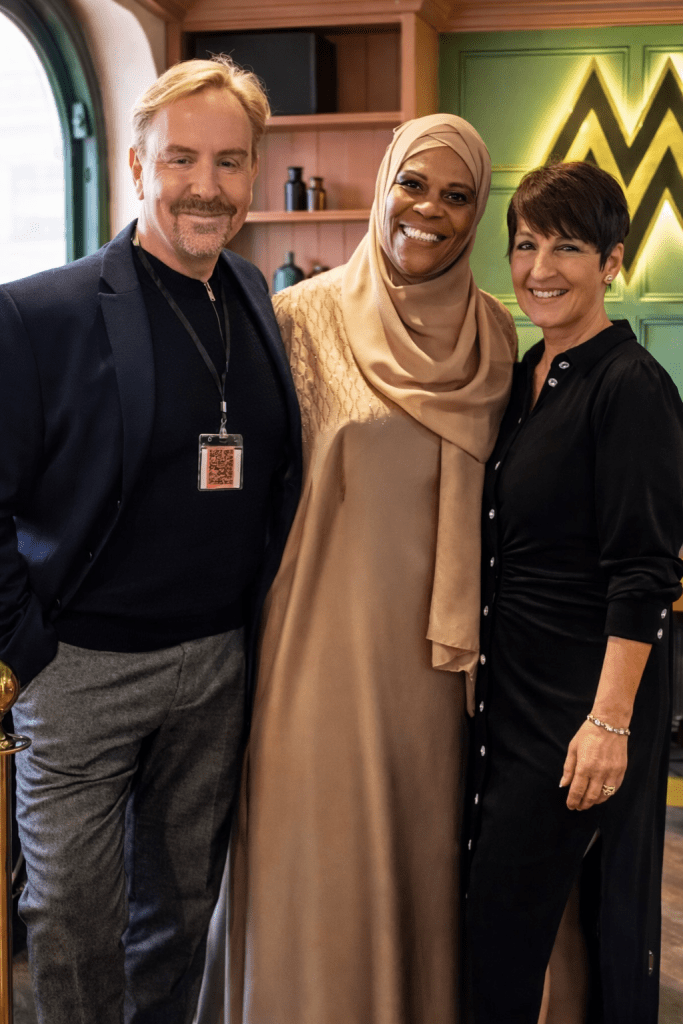
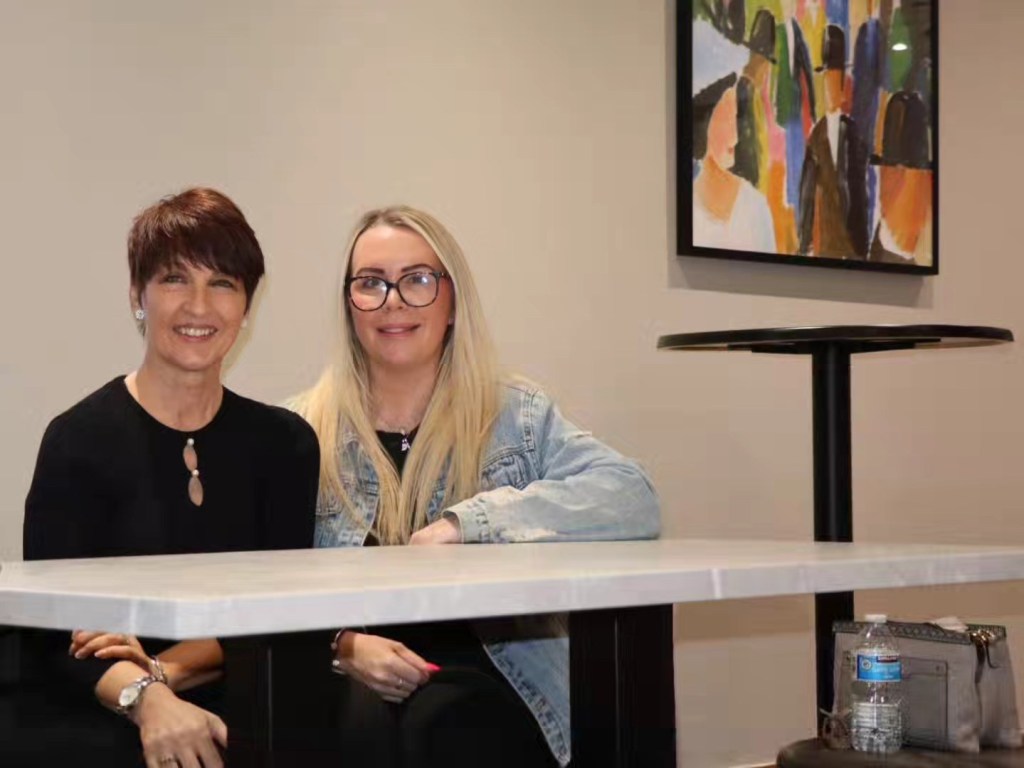
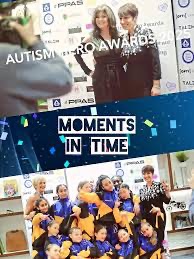
2Shades Heidi Gammon and Dr Anna Kennedy OBE with Steven Smith at the Hampton Hub

Heidi Gammon presents Dr Anna Kennedy OBE.

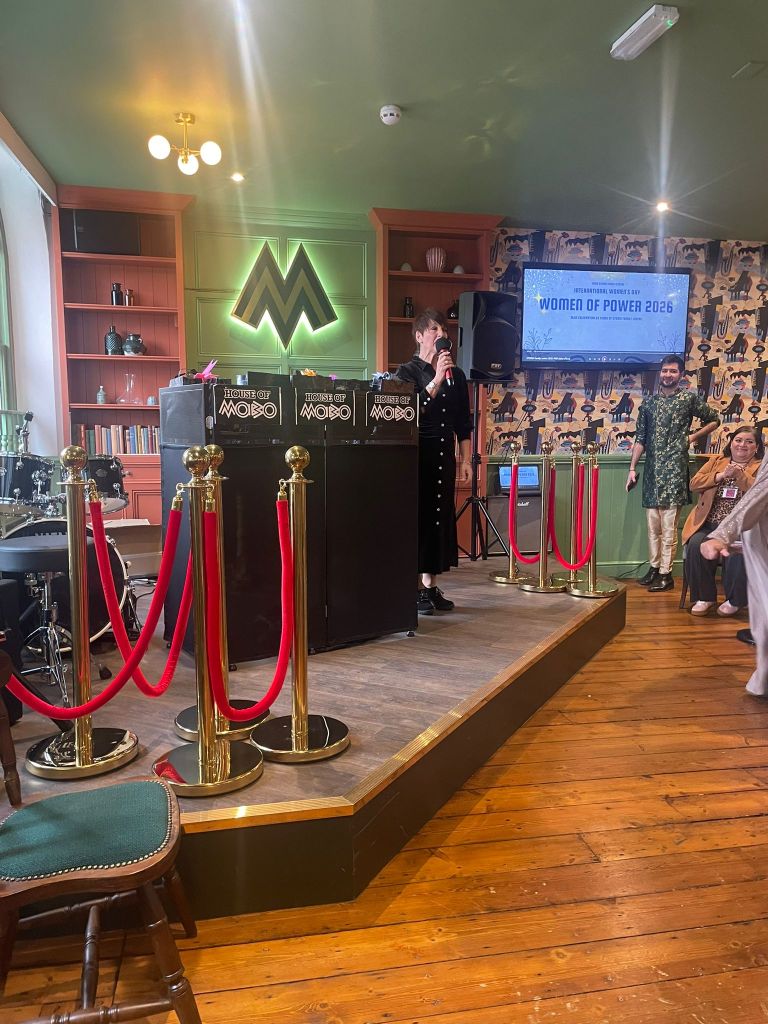
The Hampton Hub was buzzing with energy on Friday 20th November as esteemed autism ambassador Dr Anna Kennedy OBE took to the stage as the special guest speaker for the Counselling and Coaching Group. The event was proudly hosted by Heidi Gammon2Shades Magazine columnist and Gateway Radio agony aunt, who introduced Dr Kennedy to an enthusiastic and engaged audience.

Dr Kennedy, one of the UK’s most recognised voices in autism advocacy, immediately captivated the room with her warmth, humour, and honesty. She shared her remarkable journey: from a determined mother fighting for the right support for her two autistic sons, Patrick and Angelo, to becoming a national campaigner, charity founder, and distinguished OBE recipient for her services to autism.

Her story began with what she described as “a battle fought with love and necessity.” With limited educational options available for her boys, she took matters into her own hands—eventually helping establish specialist provision and launching her highly influential charity, Anna Kennedy Online, which now supports thousands of autistic individuals and their families across the UK and beyond.

The audience listened intently as she spoke about the evolution of her work, including the hugely popular Autism Hero Awards, which celebrate outstanding individuals who make a positive difference within the autism community. She also discussed her long-running digital platform, Anna Kennedy Online, which provides education, advocacy, and outreach.

A highlight of the evening was her reflection on appearing on ITV’s Lorraine, where she was honoured as a finalist for Woman of the Year—a moment she described as both surreal and deeply meaningful.

The event also shone a spotlight on important collaborative projects. Dr Kennedy spoke about Born Anxious, the anti-bullying campaign that raises awareness of the struggles many autistic children and adults face. As part of the session, the group viewed a touching dance performance video by Freya Prince, whose emotional and expressive choreography moved the room.

Adding festive cheer, former Autism’s Got Talent performer Ty Williams delighted the audience via video with a heartfelt rendition of “Driving Home for Christmas,” receiving warm applause from attendees.

There was also a special appearance by Steven Smith, a former celebrity hairdresser turned author and presenter, who is one of the patrons of Anna Kennedy Online. He shared his personal story of becoming part of the charity’s growing family and spoke passionately about the power of creativity and community in supporting individuals on the autism spectrum. He also highlighted the creation of Autism and Art, an inclusive exhibition held at the Firepit Gallery in London that celebrates neurodiverse artists and their unique perspectives.

The Hampton Hub Counselling and Coaching Group, led by Heidi Gammon and her dedicated team, provided a warm and supportive atmosphere, bringing together people from all walks of life who share a commitment to understanding, compassion, and positive action.

Attendees left energised and inspired, with many commenting on the emotional resonance and practical insight Dr Kennedy brought to the conversation. Her message was clear: with determination, community, and unwavering belief, real change is possible.

The event not only highlighted the vital work being done across the UK for autistic individuals, but also showcased the power of storytelling, advocacy, and human connection.

For more information on the organisations and initiatives mentioned, visit:

• Anna Kennedy Online: https://annakennedyonline.com
• Born Anxious: https://bornanxious.co.uk
• The Firepit Gallery: https://www.firepit.art
• Hampton Hub: https://www.hamptonhubclub.com
• Counselling For You (Heidi Gammon): https://www.counselling-foryou.co.uk/about-us

Categories
Columns Culture Lifestyle People

Heidi is back, and she’s here to help you get through and enjoy the holiday period.

Heidi is back, and she’s here to help you get through and enjoy the holiday period.Hear her on Gateway Radio on the Aston Avery Show and on YouTube.Please write to her at 2Shades: spman@btinternet.com if you have a problem.Heidi can only answer so many, but she will try her best. Heidi is back, and she’s here to help you get through and enjoy the holiday period.spman@btinternet.com if you have a problem.Heidi can only answer so many, but she will try her best.

https://www.counselling-foryou.co.uk/about-us#:~:text=To%20accommodate%20the%20varied%20needs,face%2C%20zoom%20or%20telephone%20sessions.&text=Heidi%20Gammon%20is%20a%20qualified,and%20Psychodynamic%20theories%20and%20CBT.

Dear Heidi
Hope you are well. My son is coming with his girlfriend for Christmas. She is a lovely girl, but she’s not really my kind of person — though she makes my son happy. Lunch is going to be a problem: she is vegan and we are all meat eaters. Making it worse, she talks about animal cruelty while we’re eating. Now my son has decided he’s vegan too. I will make a nut roast and vegetables for them, but is it acceptable to tell them I don’t want to hear about animals and cruelty while we eat?
Diana, Uxbridge

Heidi replies:
You’re being considerate by preparing vegan options, and it’s perfectly reasonable to set boundaries at the table. Explain kindly that you respect their choices, but mealtimes need to stay pleasant for everyone. A gentle, “Let’s save the debate for later,” is enough. Mutual respect works both ways. Maybe try having a coffee with her before Christmas, go over the menu, and then explain your boundaries so it doesn’t become a big issue on the day.

Dear Heidi
My boyfriend and I like to party and occasionally take drugs. I feel it’s under control on my end — high days and low days, that kind of thing — but I am a traditionalist when it comes to Christmas. He wants to invite two friends over and seems more interested in getting drugs in for after lunch than the food or the day itself. What can I do? I want a white Christmas — not that kind of white one.
Mike, Bournemouth

Heidi replies:
You deserve a Christmas that feels safe and joyful. Tell your boyfriend clearly that you want a drug-free day and that you aren’t comfortable hosting a gathering that revolves around substances. If he can’t respect that boundary, it’s a sign something needs addressing in the relationship — and perhaps in your habits as a couple. A peaceful Christmas requires mutual respect. Any regular drug use is not only illegal but a sign of addiction; once it’s in your life, it has a habit of resurfacing.

Dear Heidi
Can you please help me? My mother is a total control freak and she runs Christmas like a military operation. This year I want to go to my friends’ in Cornwall. I am 19, at college, and have a part-time job. How do I break the news? I hinted at the idea and she brushed it off. How do I tell her?
Malcolm, Newcastle

Heidi replies:
You’re an adult now, and part of growing up is making your own plans. Be direct, calm and kind: “Mum, I love Christmas here, but this year I’m spending it with friends.” She may protest, but stick to your decision. Set the boundary with respect, not guilt, and give her time to adjust. The sooner you tell her, the better — and be aware she may not stop being controlling, so learning to stand firm now will help.

Dear Heidi
Please help. We are going to my fiancé’s for Christmas. His mum is nice, but his dad is awful — he constantly makes crude comments and flirts with me when no one is looking. What can I do? Do I tell my fiancé or just put up with it since we don’t go that often?
Tiffany, Leeds

Heidi replies:
You should not put up with inappropriate behaviour, no matter how infrequent the visits. Tell your fiancé privately and calmly what has been happening. He needs to know, and the two of you can decide together how to handle it — whether that’s him speaking to his father or setting clearer boundaries. You deserve to feel safe and respected.

Dear Heidi
I am going home for Christmas. This summer I came out at university. My parents are religious and it is going to be a shock to them. Should I go down sooner to tell them? I don’t want to ruin Christmas.
Paul, Cardiff

Heidi replies:
If you feel emotionally ready, telling them before Christmas may ease some of the pressure on the day itself. It gives them time to process without the intensity and expectations of the holiday. Choose a calm moment, be honest, and remember: their reaction is about their adjustment, not your worth. You deserve to be loved and accepted as you are.

Categories
Columns Health and Fitness People

Mike’s Tips for Great Men’s Hairstyles This Christmas

Expert barber Mike Edde

The festive season is calling — champagne receptions, late-night parties, and the kind of photos that live online forever. Whether you’re raising a glass at the office do, wrapping up warm for the Christmas markets, or stepping into the New Year in style, your hair deserves to look the part. Here’s how to stay sharp, confident, and camera-ready with seven expert tips from your barber.

✂️ 1. Get Your Christmas Cut Early
December is crunch time for barbers — and the best styles belong to the men who plan ahead. Get in early and give yourself room for a final tidy-up before the big night. A fresh fade or refined shape-up is the difference between “I just rolled out of bed” and “leading man energy.”

Style it up and look more James Bond than Brooke Bond

💈 2. Refresh Your Style for the Season
The holidays are the perfect excuse to evolve your look. Try a modern textured cropclassic side part, or sleek pompadour — timeless, confident, and effortlessly photogenic. Ask your barber to tighten the fade, add volume on top, or sharpen the outline. A small change can transform your entire presence.

Love Island Star drops into get that clean cut look with Mike ,,

🪮 3. Keep It Clean and Conditioned
Cold weather is brutal on hair. Upgrade your routine with a hydrating shampoo and rich conditioner to combat dryness and static. A touch of argan oil or leave-in conditioner keeps everything smooth, polished, and party-ready. Healthy hair always styles better — no exceptions.

💨 4. Master the Blow-Dry
Great hair doesn’t just happen — it’s styled. Use a blow-dryer to add lift and structure before applying product. Always direct the air in the direction you want your hair to fall. It’s a small move that separates the men who “have good hair” from the men who know how to use it.

Champion make over by Mike ready for the holidays

🧴 5. Choose the Right Product
Your summer styling cream won’t cut it in December. Cold air, central heating, and long nights call for matte clays, pomades, or grooming creams with extra hold. Go matte for natural texture or add a hint of shine for an evening edge. Either way, make sure your product works as hard as you do.

🧔 6. Don’t Neglect the Beard
A well-kept beard is the ultimate accessory to a strong haircut. Keep it shaped, hydrated, and defined. Use beard oil for softness and a subtle, masculine scent — the kind people notice without quite knowing why. Precision is everything.

🥂 7. Style It Up for the Big Nights
The calendar’s closing parties call for extra polish. Add a little shine, slick it back, or go bold with volume — whatever gives you confidence. Remember: a great cut isn’t just about the hair. It’s about the energy you walk into the room with.

Final Word: Confidence is the best product in your grooming kit. A sharp cut, clean lines, and effortless style tell the world you’ve got it together — no matter how late the night runs.\

Michael’s Barber Shop, located at 54c Kenway Road, London SW5 0RA. It is a long-established barber shop known for its experienced staff and quality cuts at reasonable prices. You can contact them at 020 7370 6983

  • Address: 54c Kenway Road, London SW5 0RA
  • Phone: 020 7370 6983
  • Reputation: Known for being a leading barber in Earl’s Court with experienced and personable barbers
  • Details: The shop has a quaint feel and offers quality haircuts at reasonable prices 

Categories
Columns Culture Health and Fitness Lifestyle People

Let’s Include All Men – Men’s Mental Health Month 11.11.25

By Guest Writer Manchester based award winning artist and my friend  Loveartpix.

November is Men’s Mental Health Month, and as usual, I want to move beyond the usual catchphrases like ‘Talking Helps‘ as it’s far more complex than that. The question I keep returning to (because it’s personal) is this: does our generic, neurotypical framing of “men’s mental health “leave too many men like me behind?

https://loveartpix.co.uk portrait award winning artist Loveartpix

Campaigns, days, and months do matter – they reduce stigma by getting the much needed conversations going and remind us to check in on friends. But what is their impact if suicide rates are still just as high, and some of the men at greatest risk (neurodivergent men) are largely left out of the conversation?

We rarely say this plainly: autistic people face a much higher risk of suicide than non‑autistic people. A large Swedish population study found that autistic adults, especially those without intellectual disability, were around nine times more likely to die by suicide than their non‑autistic peers (Hirvikoski et al., 2016). 

Autistic adults without intellectual disabilities are, on average, more likely than non‑autistic peers to experience mental health conditions such as anxiety and depression. Factors that contribute include chronic camouflaging/masking, sensory overload, social mismatch and stigma, late or missed diagnosis, and barriers to tailored support.

In clinical samples, the picture is even starker: two‑thirds of autistic adults report lifetime suicidal ideation, and about one‑third report suicide plans or attempts (Cassidy et al., 2014). If the risk is this high, why isn’t this part of the headline of our November conversations?

And what about the many who are undiagnosed – men whose autistic traits are missed or misread due to lack of awareness? How many die by suicide after years of the wrong treatment, the wrong framework, or a string of mental‑health labels that never addressed neurodivergent needs in the first place? We don’t track this well enough to know – this, for me, is very worrying.

https://www.jsbainphoto.com/?fbclid=PAZXh0bgNhZW0CMTEAc3J0YwZhcHBfaWQMMjU2MjgxMDQwNTU4AAGn2BRZtQtTMUoE1U-M-wzDJNmWMc00xMXpFZCO7zsh-5Xl65S2ePHo_654k38_aem_CkdO2H_o2p3DNnlzJiEZnA

I’m not speaking in theory. For more than two decades, I repeated the same words over and over, and the responses I received didn’t fit their box – so it was a continuous battle creating more mental health issues.

Look Dez, you’ve taken every combination of medication we can offer you. What else do you want us to do?” – words you don’t want to hear from the psychiatrist in charge of your mental health and well being!

Even after my diagnosis, I’m basically begging for support in any way possible, but they still don’t have an answer. Right now, no services are willing to accept my case. That isn’t a lack of “talking.”It’s a system that doesn’t understand or accommodate neurodivergent needs.

Talk to someone.” “Pick up the phone.” “Open up.” These messages are well‑meant—and sometimes they help. But they assume a neurotypical nervous system. When distress is driven by sensory overload, alexithymia (difficulty identifying and describing feelings), shutdown, or the aftermath of masking, being asked to “speak up” on a phone call, or in fluorescent‑lit rooms, with vague questions, can be not only ineffective but also actively dysregulating and even traumatic.

Personally, I often communicate better in text when I go into meltdown (and after), I need time to process, and rely on concrete, direct language and clear communication. Standard CBT delivered at a pace, full of metaphors and homework that assumes neurotypical cognition, doesn’t work unless it’s really adapted. Yet adapted therapy is patchy across the UK, and post‑diagnostic support for adults remains weak at best – if it exists at all! I’ve learned this the hard way: I’ve been “talking” for years. What’s missing isn’t the willingness to speak – it’s services that listen but don’t know how to respond to neurodivergent communication without pathologising it.

Diagnostic waiting lists have exploded. There are now well over one hundred thousand people in England awaiting autism assessments, with many waiting far longer than the 13‑week standard – often 12–24 months or more. Adult ADHD pathways are similarly overloaded. Late diagnosis isn’t just an administrative delay; it can mean decades of inappropriate treatment plans, missed adjustments at school and work, and a build‑up of trauma from being told to “try harder” in systems not built for your brain. Each missed or delayed diagnosis is a missed opportunity for prevention – especially when we know suicidality is elevated in autistic populations.

89% of autistic adults in the UK aged 40-59 are undiagnosed – Kings College London (2025)

This is why the generic approach to “men’s mental health” feels inadequate to me. Awareness months aren’t wrong – they are just incomplete. We can’t keep telling men to “open up” while offering only neurotypical doorways.

Here’s a truth I wish we’d say out loud: it’s a huge barrier when men are already “talking,” but the system still can’t understand what they’re saying. I’ve used the same words for more than twenty years. The approaches offered back haven’t matched my needs – and I am not a unique case! Even after my diagnosis, when I articulate my needs clearly, services have no adapted pathway, no training, or no remit that fits. At this moment, I’m not being accepted by any service. That isn’t impartial; it’s exclusion by design.

Neurodiversity, complex trauma, and racialised stress each demand deep, specific knowledge. Very few clinicians are experts across all three. That’s not a criticism of individuals; it’s a system‑design problem. Our pathways remain separated: autism/adhd/dyslexia over here, trauma/cptsd over there, “men’s mental health” somewhere in a campaign toolkit. Meanwhile, men sit on waiting lists, collecting labels, and learn to mask harder. Many still struggle to speak openly – especially when their experiences don’t match neat, neurotypical scripts of sadness, worry, and recovery.

Campaigns must reflect the facts: men are not all the same, and neither are their minds – neurotypical and neurodivergent. Put neurodivergent men on the list and on the panels. Highlight that autistic burnout is not laziness; that ADHD‑related rejection sensitivity can look like despair; that shutdowns and meltdowns are not misbehaviour. And tell men this clearly: if standard tools haven’t worked, maybe it’s the tool and not you

And let’s make the suicide data visible, not buried in academic journals. If autistic men face a dramatically higher risk, surely that belongs on the first slide, the first poster, and the first funding line?

We should admit where the evidence base is thin and choose humility. Research is (hopefully) accelerating, but we’re years from fully understanding these intersections. Until then, ‘specialists’ need to listen more to lived experience – with an open mind, and not through the generalised, stereotypical lens that turns nuance into “non‑compliance.” Ask what helps. Believe the answers. Adapt!

https://loveartpix.co.uk

None of this diminishes the value of awareness months; it actually refocuses them. If we want November’s messages to be more than posters and hashtags, we have to build services that fit all men, not the imaginary neurotypical everymanThe stakes are life and deathA system designed around the most complex needs will serve everyone better.

‘I have personally reached out to some well-known men’s mental health services and asked how they handle neurodivergent individuals, and I have been met with half-hearted replies and almost snubbed to my face’ – an all too common response in my experience. 

Acceptance has been central to how I navigate life now – there isn’t any help out there at the moment, as the research simply isn’t there. Acceptance hasn’t removed the struggle, but it has reframed it for me. I have been ‘speaking up’ for years. I don’t need another generic neurotypical catchphrase. I need services that recognise what I’m saying – and are ready and able to respond with understanding, compassion and a willingness to make reasonable adjustments

Sources for the statistics mentioned:

– Hirvikoski, T. et al. (2016). Premature mortality in autism spectrum disorder. A population‑based study in Sweden. Findings include markedly elevated suicide mortality, especially among autistic adults without intellectual disability.

– Cassidy, S. et al. (2014). Suicidal ideation and suicide plans or attempts in adults with Asperger’s syndrome attending a specialist clinic. Reports 66% lifetime suicidal ideation and 35% plans/attempts.

https://loveartpix.co.uk

Categories
Culture Lifestyle People Uncategorized

Firepit Art Gallery and Studios CIC: Launching Our First Grant-Funded Project – FIREPIT FEELS

We’re thrilled to share some fantastic news — Firepit Art Gallery and Studios CIC has received our very first grant as a Community Interest Company! Thanks to the Greenwich Healthier Communities Fund, we’re able to bring an inspiring new initiative to life: FIREPIT FEELS.

This milestone marks an exciting step forward in our mission to make creativity accessible, inclusive, and nurturing for everyone. With the support of this grant, we’re launching a pilot programme of free and pay-what-you-can workshopsdesigned to foster creative health and wellbeing within our local community.

About FIREPIT FEELS

FIREPIT FEELS is a culturally-rooted series of workshops taking place in Greenwich Peninsula, created to support and uplift individuals from Global Majority, LGBTQIA+, and Neurodiverse communities, particularly those from disadvantaged backgrounds. Our aim is to offer a welcoming, affirming space where creativity, culture, and connection come together to enhance emotional and mental wellbeing.

We warmly invite you to take part in any — or all — of our upcoming sessions:

  • November 12th, 7–9pm – 🎨 Inhabiting Uncertainty on the Canvas — Painting Workshop
  • November 23rd, 1–3pm – 🧘‍♀️ Unfold: Movement & Meaning — Yoga & Journalling
  • December 14th, 1–3pm – 🧵 Chinese Knotting Jewellery & Mindfulness
  • January 8th, 7–9pm – ✏️ Our Art Circle — Drawing Workshop
  • January 22nd, 7–9pm – 📚 Queer Narrative — Collaging and Storytelling
  • January 31st, 1–3pm – 🌿 Creative Connections — Meditation & Sustainable Crafting

You can find more details and book your place for any of the sessions

Designed with Care and Accessibility in Mind

Every aspect of FIREPIT FEELS has been developed collaboratively, with guidance from an Accessibility Consultantand a Psychotherapist, ensuring that the programme is inclusive, neurodiversity-affirming, and trauma-informed.

Each session is relaxed and supportive. We’ll provide sensory aids for those who find them helpful, and a dedicated welfare support guide will be on hand to make sure everyone feels safe, comfortable, and welcome throughout.

About Firepit Art Gallery and Studios CIC

Located in the heart of Greenwich PeninsulaFirepit Art Gallery and Studios CIC is a community-led art hub that celebrates creativity in all its forms. Our mission is to make the arts accessible, inclusive, and sustainable by hosting co-created workshops, exhibitions, and events that reflect the diverse voices of our community.

Run by local artists, we believe in the power of art to connect people, spark dialogue, and support wellbeing. Whether you’re a seasoned creative or a complete beginner, Firepit is your space to explore, express, and belong.

To stay updated on our events, projects, and exhibitions, 

Together, let’s make Firepit Feels a space where creativity truly heals, connects, and inspires.

https://www.firepit.art

https://www.firepit.art/newsletter

Categories
Columns Lifestyle People

Join 2Shades Magazine — An Exciting Opportunity to Shape a Bright, Inclusive Future

Are you passionate about creativity, positivity, and representation? Would you like to be part of an uplifting magazine that celebrates diversity and individuality? Then this could be the opportunity for you.

I’m Steven Smith, Editor of 2Shades Magazine — a vibrant, happy LGBTQ+ publication where everyone is welcome. 2Shades is about joy, self-expression, and living life in full colour. We share stories that inspire, entertain, and connect people from every shade of the spectrum.

At the moment, the magazine is run independently and with heart. It doesn’t yet generate profit, and I’m not taking a salary for my writing or editorial work. But what we do have is potential, readership, and passion — a growing audience who believe in what 2Shades stands for: positivity, equality, and creative freedom.

Now, with my current partner stepping down who we loved and can not thank enough , The incredible Adishia chengappa,is going into full time eduction . I’m looking for a new collaborator or investor to join me on this journey.


🌈 Why Join 2Shades?

  • Be part of something meaningful. 2Shades isn’t just a magazine — it’s a community celebrating LGBTQ+ life, art, culture, and individuality.
  • Low entry, high potential. For £1,000, you can buy into the magazine and become my creative and business partner.
  • Help shape the next chapter. From editorial direction and digital strategy to sponsorship, advertising, and partnerships — your ideas will directly influence how we grow.
  • Your voice matters. Whether you’re a writer, marketer, designer, PR professional, or creative entrepreneur, this is a rare chance to make a real impact.
  • Build towards profit together. As the magazine grows through advertising, sponsorships, collaborations, and events, so does your stake and reward.

🌟 What I’m Looking For

  • Someone who believes in the message of inclusion and positivity — LGBTQ+ and allies alike.
  • Someone excited by independent media and the creative world.
  • A person who’s proactive, imaginative, and ready to build something with heart.
  • Ideally someone who can bring either creative skills, marketing ideas, or business insight — but most importantly, enthusiasm.

💬 Next Steps

If this sounds like you, let’s talk. I’ll share more about our readership, digital presence, plans for the year ahead, and how we can shape this partnership together.

Your £1,000 investment secures you a share in 2Shades, a say in editorial direction, and the chance to be part of something growing, inclusive, and joyfully unique.

Let’s make 2Shades not just a magazine — but a movement that celebrates difference and spreads happiness.

With warmth,
Steven Smith
Editor, 2Shades Magazine
🌐 2shadesmagazine.com

e-mail spman@btinternet.com

07969106222

Categories
Columns Lifestyle People

🎄 Mama Xmas: The Joyful, Wild World of Piluca Artist

https://www.pilucaworld.com/public

“I absolutely love Christmas,” says artist and designer Piluca Camino Alcón, her voice bright with the kind of infectious joy that instantly fills the room. “They used to call me Mama Xmas because I go all out. I host a big dinner on the 24th—that’s when we celebrate in Spain—and my doors are open to anyone who wants to join, especially those who might not have someone to spend it with.” For Piluca, the season is more than decorations or gifts. “I cook like a woman possessed,” she laughs. “Meats, seafood, you name it, it’s a proper bacanal! For me, Christmas is about people, laughter, music, and those real beautiful moments that make life worth living. My dinners are never those forced family affairs where everyone pretends to like each other. Mine are full of joy, dancing and love. It’s a celebration of life itself.”

This joyous, unfiltered energy seems to define everything about her. When asked if she’s been naughty or nice this year, Piluca laughs so hard she nearly spills her coffee. “This year I’ve been both gloriously naughty and impressively nice. I shattered expectations, ignored my own rulebook, and gave full permission to my wild inner freedom. I devoured all the cookies, then hit the gym like a warrior. Balance, darling—that’s the real art!” That combination of chaos and control, wildness and discipline, runs through both her personality and her work. Born in Madrid, she first came to London on holiday with her mother-in-law and fell in love with Brixton.

“The moment I stepped into Brixton in 1996, I fell in love. The energy, the cultural and ethnic mix, the unapologetic vibrancy—it was electric. There was this raw, unfiltered love for music and the arts, a non-judgmental openness in its people, and a market bursting with flavours, colours and life. It felt like home instantly.” She has stayed ever since, building a life and career rooted in that creative spirit. “I didn’t choose to become an artist,” she says simply. “I was born one. I have created for as long as I can remember. Being an artist is not a choice but a necessity. My ultimate aim is to connect, elicit a response and inspire through my practice.”

She has certainly done that. A published illustrator, sculptor, fashion designer and community organiser, Piluca was a finalist in the arts category for the WinTrade International Awards in 2018. During lockdown she threw herself into animation projects while developing her own fashion line. “Art is how I breathe,” she says. “My life and my creativity are so deeply intertwined that separating them would be impossible. Art is my voice, my refuge, and my power.” She speaks about her upbringing with disarming honesty. “My past shaped every part of me, and art became both my shield and my weapon. It has always been my therapy, my way of making sense of the world.” When she laughs, it’s the laughter of someone who has survived, rebuilt, and decided to celebrate it all anyway. Even under the mistletoe, she admits, there are no plans or rules. “Mistletoe’s kissing? Depends who’s standing under it first,” she grins. “I don’t plan these things. I improvise.”

That sense of improvisation seems to fuel her approach to both art and life. Her inspirations span from Spanish masters like Picasso, Dalí and Velázquez to contemporary icons such as Sarah Lucas, Judy Chicago and Yayoi Kusama. She’s also deeply influenced by the raw, expressive energy of street art. “It’s rebellious, emotional, connected to the real world. That’s what I love.” Yet, despite her international sensibility, she remains deeply rooted in Brixton. “London suits me fine,” she says. “I just dream of a bigger studio one day—warehouse big!”

“My dream for the year ahead is to keep evolving—becoming stronger, fitter, sharper. To keep inspiring my kids, pushing myself, and making the most of every moment.”

Family means everything to her. She has two sons, Carlos and Malachi, and both have inherited her creative fire. “Carlos reached Grade 8 on piano, and Malachi’s preparing for his Grade 5. They’re different but equally artistic. Carlos is grounded and business-minded, while Malachi is a free spirit, completely immersed in creativity, untouched by brands or status. At six, he said he wanted to be an artist, just like I did at his age.” Her eyes soften when she speaks about them. “What I teach them both is this: creativity is what sets us apart from the animal kingdom. It’s the ability to turn imagination into something tangible—to create what didn’t exist before. Life itself is art, and art gives life its meaning.”

Earlier this year, she travelled to Chicago to collaborate with acclaimed photographer Sandro Miller on his project I Am Beautiful, exploring inner beauty and self-love. “It was surreal,” she says. “Meeting him, his wife, his team—it felt like meeting someone from my tribe, someone who has used art as both shield and weapon. It was cathartic. I grew. I can’t wait to go back.” When asked what she wants most for 2026, her answer is immediate. “To keep being granted the strength, madness and magic to make things happen.”

As the conversation turns back to Christmas, Piluca’s eyes sparkle. “Christmas is the perfect metaphor for life,” she says. “It’s messy, loud, emotional—and if you open your heart to it, it’s beautiful. I don’t care about presents; I care about presence.” You can picture her back in Brixton, fairy lights strung from every corner, music playing, food piled high, her friends and family laughing and dancing around her. “That’s Christmas to me,” she says, smiling. “A celebration of life itself.”

https://www.pilucaworld.com/public

Categories
Columns Culture People Travel

Steven’s Viewz

Zohran Mamdani: A New Dawn for New York — and a Setback for Trump’s America

By Steven Smith

Let’s get one thing straight: Sadiq Khan is a terrible mayor — but not because he is Muslim. He’s a terrible mayor because, quite simply, he hasn’t done the job well. Faith has nothing to do with competence.

I would like to think I ever judge anyone by their religion. Yet when I hear from certain extreme right-wing Christians, my instinct is that they’re often deeply uncomfortable with the LGBTQ+ community. Many cherry-pick verses from the Bible to justify their prejudices, conveniently ignoring the passages about kindness, humility and turning the other cheek — a principle that seems to have lost all meaning for them. As are extreme Muslims and many other religious devotees. I do not want them in power.

And how many of these self-proclaimed moral crusaders have later been exposed as hypocrites, caught in scandals that betray the very values they preach? No one wants to live under Sharia law, but equally, most of us are not rejecting Eastern culture or faith. Jewish politicians, for instance, aren’t out trying to convert everyone. The truth is simple: people should be judged on their integrity, their empathy, and their ability to lead — not the faith they were born into.

Historically, the right wing has struggled with LGBTQ+ acceptance. Look at Reform’s Ann Widdecombe, a devout Christian who remains openly opposed to gay rights, or Nigel Farage, who rails against same-sex marriage yet hasn’t exactly been a shining example of domestic harmony himself.

So, why shouldn’t New York — one of the most diverse cities in the world — have a Muslim mayor? The measure of leadership isn’t found in the label of one’s faith but in the breadth of one’s humanity.

When Zohran Mamdani swept to victory as New York’s new mayor, he didn’t just win an election — he ignited a cultural and political shift. At just 33, the Ugandan-born, Queens-raised son of Indian immigrants and the first Muslim to hold the office, Mamdani represents a fresh, progressive vision of leadership grounded in empathy, equity, and inclusivity. For women and LGBTQ+ citizens, his victory signals something powerful: a mayor who sees diversity not as a slogan, but as the city’s greatest strength. And for Donald Trump and the hard-right movement that thrives on fear and division, Mamdani’s rise is a direct ideological defeat.

Mamdani’s political roots run deep in social justice. Long before his mayoral run, he made his name in the New York State Assembly by fighting for tenant protections, affordable housing, and workers’ rights. But what sets him apart is his understanding that social equality must include gender and sexual equality. His policies go beyond token representation — they promise tangible protections and support for women, LGBTQ+, and trans individuals who continue to face discrimination and economic barriers in one of the world’s most diverse cities.

During his campaign, Mamdani declared: “New York must be a sanctuary — not just for immigrants, but for every person whose existence has been politicised.” That message resonated strongly with LGBTQ+ voters and women’s advocacy groups, weary of years of policy rollbacks and toxic rhetoric at the national level.

His mayoral platform includes one of the most comprehensive pro-equality agendas ever proposed for New York City. At its heart are three major commitments: establishing an Office for LGBTQIA+ Affairs to coordinate inclusive policies and investigate discrimination; pledging $65 million for gender-affirming healthcare and reproductive rights clinics; and strengthening women’s economic and reproductive rights through expanded paid family leave, subsidised childcare, and increased funding for domestic violence shelters and legal aid. These policies represent not just symbolic progress but systemic reform, tackling the intertwined roots of inequality and positioning New York as a beacon for progressive governance in a deeply divided nation.

Some observers initially wondered whether a devout Muslim mayor could fully champion LGBTQ+ and women’s rights. Mamdani’s leadership has already answered that question decisively. He has stated repeatedly that his faith teaches compassion, justice, and respect for human dignity — values entirely consistent with protecting the vulnerable. By separating personal belief from public duty, he embodies the pluralism that defines modern New York. His election sends a potent message that faith and equality are not mutually exclusive.

To understand why Mamdani’s victory is such a blow to Donald Trump, one must look beyond New York’s borders. Trumpism thrives on nostalgia — a yearning for a rigid, exclusionary version of America defined by dominance and division. Mamdani represents the opposite: a confident, multicultural future where inclusion and equality are strengths, not threats. Under Trump, the federal government rolled back protections for transgender people, restricted abortion access, and emboldened hate groups. Mamdani’s success proves that this politics of fear no longer holds sway everywhere — especially not in America’s largest city.

What happens in New York often echoes nationally. Just as Fiorello La Guardia’s social reforms and Michael Bloomberg’s urban policies shaped national conversations in their eras, Mamdani’s agenda may set the tone for a new wave of progressive mayors. His approach fuses social justice with fiscal realism — leveraging the city’s enormous budget to create measurable improvements in equality and opportunity. His administration’s first-year priorities include making the Metropolitan Transportation Authority free for students and low-income riders, expanding affordable housing projects on city-owned land, increasing investment in public schools with inclusive sex education, and introducing gender-balanced representation in city boards and commissions.

Mamdani’s election is also a cultural moment — one that renews New York’s identity as a sanctuary for those who dream of freedom in all its forms. From Stonewall to suffrage, the city has long been a crucible of progress. His leadership promises not only policy change but also a revival of civic optimism: a belief that governance can be both compassionate and competent. His first speech after victory captured this perfectly: “We are not here to manage decline. We are here to imagine abundance — for women, for queer and trans people, for every New Yorker who has been told to shrink their dreams.”

Let’s get one thing straight: Sadiq Khan is a terrible mayor — but not because he is Muslim. He’s a terrible mayor because, quite simply, he hasn’t done the job well. Faith has nothing to do with competence.

Nor would I ever judge anyone by their religion. Yet when I hear from certain extreme right-wing Christians, my instinct is that they’re often deeply uncomfortable with the LGBTQ+ community. Many cherry-pick verses from the Bible to justify their prejudices, conveniently ignoring the passages about kindness, humility and turning the other cheek — a principle that seems to have lost all meaning for them.

And how many of these self-proclaimed moral crusaders have later been exposed as hypocrites, caught in scandals that betray the very values they preach? No one wants to live under Sharia law, but equally, most of us are not rejecting Eastern culture or faith. Jewish politicians, for instance, aren’t out trying to convert everyone. The truth is simple: people should be judged on their integrity, their empathy, and their ability to lead — not the faith they were born into.

Historically, the right wing has struggled with LGBTQ+ acceptance. Look at Reform’s Ann Widdecombe, a devout Christian who remains openly opposed to gay rights, or Nigel Farage, who rails against same-sex marriage yet hasn’t exactly been a shining example of domestic harmony himself.

So, why shouldn’t New York — one of the most diverse cities in the world — have a Muslim mayor? The measure of leadership isn’t found in the label of one’s faith but in the breadth of one’s humanity. rise represents a decisive shift away from the politics of grievance and exclusion. His administration promises to put women’s rights, LGBTQ+ equality, and social justice at the heart of city governance. For a nation still grappling with polarisation, his victory is both an inspiration and a challenge: proof that diversity can win, compassion can govern, and inclusion can be a source of strength rather than division. For Donald Trump and those who profit from cultural conflict, Mamdani’s triumph is a warning shot: the future belongs to those who build bridges, not walls. He is a mayor for all and a flash that thinking Americans have had enough of the red hat .

END