Heidi Gammon, Agony Aunt, Answers Your Valentine’s Questions
Love, desire, doubt, and the courage to speak honestly — Valentine’s Day has a way of stirring emotions we sometimes keep carefully tucked away. Whether you’re navigating friendship, long-term relationships, new love, or loneliness, these questions remind us that matters of the heart are rarely straightforward.
You can hear Heidi Gammon, alongside Steven Smith and Aston Avery, discussing these real-life dilemmas on Gateway Radio on February 10th at 10am, with the full show available to catch up on YouTube shortly after.
Dear Heidi,
I hope you are well.
My best friend of twelve years is gay. We’ve known each other since high school, and his sexuality has never been an issue for me or my family — we love him unconditionally. Over the years he’s had various partners, but nothing serious.
Two months ago, after we’d been drinking, he kissed me and told me he loved me. I honestly don’t know why I let it happen. It stopped there, and we’ve never spoken about it since.
Looking back, I think I may have been in denial. He’s always had a crush on me, and I’m now worried that this might be stopping him from meeting someone who can truly return his feelings. There is no chance of it being reciprocal, but I feel I need to talk to him — for both our sakes. What should I say?
All my love,
Adam, Brentwood
Dear Adam,
Thank you for trusting me with something so sensitive.
What stands out most here is how much care and respect you have for your friend — and that matters. Love doesn’t always fit neatly into boxes, and sometimes unspoken feelings linger quietly until they surface in unexpected ways.
You didn’t do anything wrong by freezing in the moment. Alcohol lowers boundaries, but it doesn’t create feelings that weren’t already there. What does matter is what you do next.
Avoiding the conversation protects neither of you. The kindest thing you can do is speak honestly and gently. Choose a calm moment and tell him that you value him deeply, but that your feelings are firmly platonic. Reassure him that your friendship matters and that you don’t want him holding onto hope that prevents him from finding someone who can fully return his love.
It may feel awkward — but clarity is an act of love too. You’re the best Heidi
Dear Heidi,
My boyfriend of four years really looks forward to Valentine’s Day. Each year he buys me gifts from Ann Summers and similar places. While he always takes me out to dinner, the evening usually ends with him wanting to dress up, role-play, and act out fantasies.
I think our relationship is loving and generally good. I do go along with some dressing up at times, but I feel like I’m not giving him what he really wants — and if I’m honest, the focus on “dress-up time” at Valentine’s is actually off-putting for me.
What can I do? Stella Southend
Dear Stella
Long-term relationships often stumble when desire becomes an expectation rather than a shared experience.
Your boyfriend’s enthusiasm isn’t wrong — but your discomfort isn’t either. Valentine’s Day has somehow become loaded with pressure, particularly around sex and fantasy, when it should be about connection.
This isn’t about you failing him. It’s about mismatched expectations. The answer lies in conversation, not performance. Try saying something like: “I love being close to you, but when dressing up becomes the focus, I feel pressured rather than desired.”
Intimacy thrives when both partners feel safe and excited — not obliged. If you can’t meet in the middle, it’s worth asking whether this dynamic works for you long term.
Hi Heidi,
I love your column.
My mum is 55 and looks great. My dad left when I was 12, and she hasn’t really met anyone since. I’m 19 now and leaving home in September, and I’d love for her to meet someone.
She insists she’s fine and tells me to leave it, but I worry about her being lonely. There’s a man who works for the council who’s been to the flat a few times to do jobs. She always smiles at him and makes him a cup of tea. He’s divorced and around her age.
Should I try to set them up? I sometimes see him at my gym.
Thanks, Darren, Basildon
Dear Darren,
Your concern for your mum is genuinely touching — but tread carefully.
Loneliness looks different at every age, and contentment doesn’t always announce itself loudly. Your mum may truly be at peace with her life as it is, even if it doesn’t look like what you imagine happiness should be.
That said, a gentle nudge is fine — a shove is not. Instead of playing matchmaker, open a conversation. Ask her how she feels about dating now, not what she’s missed in the past.
And one important rule: never involve a third party without consent. If she does express interest in meeting someone, you can mention the council worker — lightly — and then step back.
Let her lead. Love, at any age, deserves dignity.
Dear Heidi,
I’m in my sixties, gay, and single. I don’t like bars or dating apps, and the idea of going on a date makes me feel physically sick.
What can I do?
Mike, Romford
Dear Mike,
You are far from alone — and nothing is “wrong” with you.
Dating culture can feel exhausting, performative, and frankly brutal, especially if bars and apps don’t suit your personality. The good news? They’re not the only doors into connection.
Consider spaces built around shared interests rather than romance: walking groups, book clubs, volunteering, community classes, or LGBTQ+ social groups that aren’t centred on nightlife.
Connection grows more naturally when the focus isn’t dating but being. And remember — companionship doesn’t always begin with fireworks. Sometimes it begins with comfort.
Love Heidi
Dear Heidi,
I’m taking my new girlfriend out for our first Valentine’s Day together. I try to be a good boyfriend — I open doors, pick her up, and help out whenever she needs something done at her place.
But I’m honestly terrible at the romantic side. Flowers, yes — but beyond that, I’m stuck. What can I do to make Valentine’s Day feel truly special?
Eric, Brighton
Dear Eric,
You may not realise it, but you’re already doing many things right.
Romance isn’t about grand gestures or perfect scripts. It’s about thoughtfulness. The most memorable Valentine’s moments are rarely expensive — they’re personal.
Think about her. What makes her feel seen? A handwritten note. A playlist. A meal you cook yourself. A walk somewhere meaningful. Even saying, “I’m nervous because I really care” can be incredibly romantic.
Romance isn’t performance — it’s intention.
Heidi
Hello Heidi,
My husband and I have been married for twelve years. Recently, he suggested spicing things up by having a threesome. He says he doesn’t mind whether it’s with a man or a woman.
If I’m honest, the idea does appeal to me — but I’m scared it could either strengthen our marriage or completely ruin it.
Are there ground rules I should put in place? Or is this a bad idea altogether? I’ve told him I need time to think about it.
Anonymous
Dear Anonymous,
I’m glad you didn’t rush into an answer.
A threesome is not just a sexual experience — it’s an emotional one, and once a third person enters the picture, there’s no “undo” button.
Before discussing rules, ask deeper questions. Why does your husband want this? What does it represent for him — novelty, validation, curiosity? And equally important: what does it represent for you?
If you decide to explore it, boundaries are essential: who, when, emotional limits, aftercare, and the right to stop at any time — even at the last minute.
But if your gut says “this might damage us,” listen to it. Desire should never come at the cost of safety or trust.
Other people’s issues. Martin and I had a beautiful relationship but there was always someone who had an issue with it . It may seem strange to start my story at the end of someone’s life to tell their tale. The remarkable Mr Annand was no ordinary man, so his journey should be told just as the curtain is about to fall on his extraordinary life, an existence that for most parts was never quite what it seemed to so many.
Mr Annand, or as we called him, Martin, looked up at me from the brown mobility chair, which he had become confined to during the day over the last few weeks of his life, his beautiful big blue eyes still reminding me of Jiminy Cricket from Pinocchio. Still full of hope, he smiled at me, pulled gently on my shirt and asked me to go and get a nice French bread stick – warm if possible – and some soup. He had been off his food for the last few days so it was a relief to hear him want something.
There was only one problem. We needed to hide the bread from Nicos, Martin’s Greek Cypriot trust fund civil partner, as gluten and bread were taboo in the soulless flat that they shared in trendy Bloomsbury. Though the wood and lighting were incredible, it resembled an art gallery with uncomfortable furniture. Nicos ruled the roost in this place and would become hysterical and cruel when not getting his own way. Even traditional cooking was banned for fear that it would cause damage to any of the many art works.
A splash of water, not wiped up from the sink tap, could cause a rage so powerful you would have thought you had flooded the flat.
Nicos had allowed me to take joint care of Martin with great reluctance; only after he had worked out the actual cost of private nurses did he reluctantly give in. At first it was only to be when Nicos was at cross fit for three hours a day, or when he had his own hospital appointments. However, the workload was constant and eventually I stayed there 24 hours a day, and for this I was grateful Nicos allowed me to do so as it was so painful not to be with Martin
It seemed odd to me: Nicos’ art collection in the UK and Cyprus had a value in the millions so if he had sold just one piece, it could have funded 24-hour private care. Martin always said that, despite Nicos’ wealth given to him by his father, he was incredibly tight.
Nicos had just left for a workout and was meeting a friend after. Dashing up Tottenham Court Road to M&S, I returned quickly with some of Martin’s favourite fruit jellies, two small warm bread flutes and heart-warming chicken noodle soup. Frantically I cut the bread up into small slices and buttered them cleaning up after myself for fear that crumbs would be found.
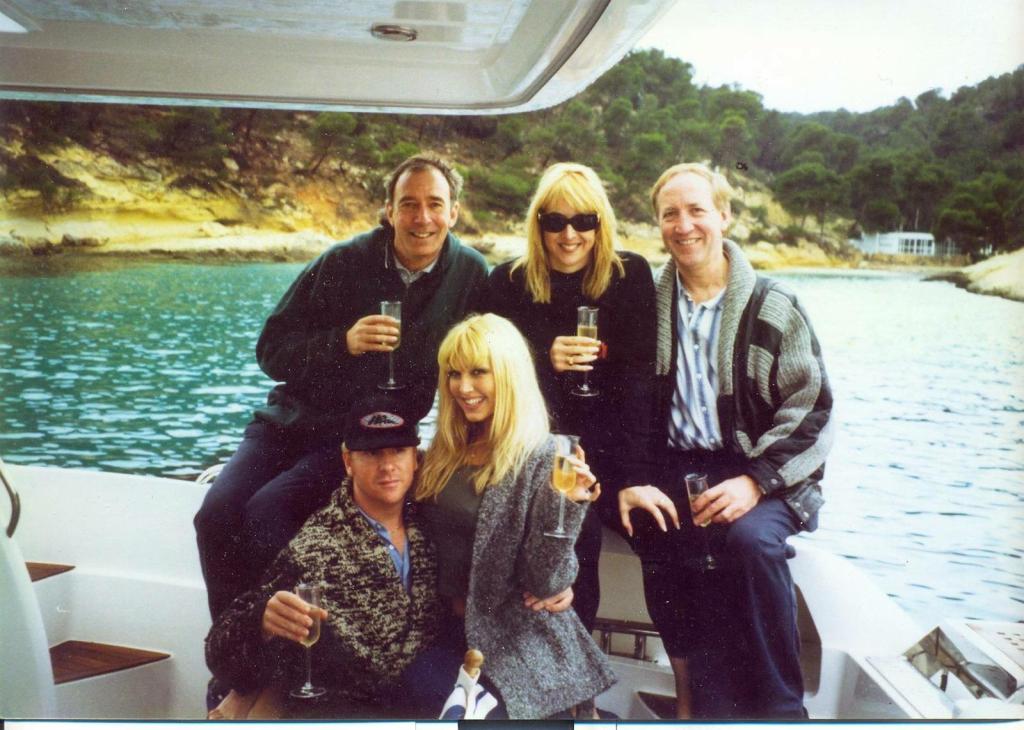
Martin Annand and Pam Sharrock and me in the South of France
The soup was being cooked in the microwave that was hidden so high up, cooking anything in it was a challenge. Even the kettle was in a cupboard to stop steam hitting any artwork that adorned the kitchen walls. Martin smiled as I brought it to him, “I am getting my appetite back”, he said, with some hope. Pointing out it was a good sign, I gave him a wink
. The man I had loved for forty years was dying and I was determined to keep my emotions in check and just be his rock. If I ever allowed the flood gates to open and show how I was feeling, my fear was that the tears would never stop, and that was the last thing he needed. Martin had a beautiful childlike quality that most people never got to see. He gave me a paw as I put the food down.
Of course, he only managed a little bread and some soup. Just as he was about to get me to take it away the door opened. Nicos was there. “All right my love, what’s that you have got there?” he enquired, with his eyes throwing daggers of steel towards me. Explaining that he really wanted a bread roll and some soup, strangely Nicos did not react, although I made a hasty retreat to the kitchen to discard the evidence out into the bin in the communal areas of the block.
There was only one flute of bread left by the side of the sink that was left to hide. Nicos had not gone to shower as he usually did on return from the gym and he was in the kitchen. To my amazement, he was cutting the spare French bread flute in to slices and covered them in strawberry Jam and organic Honey. Instinct told me to get out of the way to see Martin, and a wise decision it was.
Ten minutes later Nicos came charging down the wooden plank floors of the corridor towards the bathroom slamming the door. He spent twenty minutes in there inducing himself to vomit. Eventually he came out and marched up to Martin, shoving his hands that stunk of sick up into Martin’s pale face. “Look what you made me do bring that into our home!”
There was nothing I could do to stop Nicos. My heart often went out to him as he was so uncomfortable in his own body, I can only imagine what it must be like to wake up every day so unhappy in life. I do not think that I had ever seen him do a full day’s work in the twenty years I knew him. Martin wrote his correspondence for him, Nicos went for the odd meeting in Cyprus but for the most part, he went to the gym, shopped, attended gallery openings, and holidayed abroad a lot. What he devoted a lot of time to was sitting in judgement of other’s efforts, which he did with great ease. He really was the quintessential trust fund baby.
Though Nicos’ and my relationship made Joan’s and Bette’s look like an easy one, he always had the upper hand. At first I had liked him as he was amusing, witty and we shared many of the same interests. He clearly had huge mental health issues, so to take him on was a fruitless task and only caused issues with me seeing my ex-partner, Martin.
Over the years my radar went into no comment regarding his hatred of me, even during the campaign of daily phone text’s calling me every name you could imagine. Once he caught me off guard with the malicious comment, “No wonder your boyfriend killed himself and the latest is missing!” That text was a step too far and I threatened to call the police, although for the sake of Martin, we did eventually make up
. There was always someone who had an issue with my relationship with Martin. Nico’s just could not cope with the fact that Martin still loved me and him in different ways. It was not long before Nicos was in the kitchen and you could just tell he was looking for a fight. He was opening and closing drawers for no reasons when suddenly he spied a small amount of water that had escaped me whilst cleaning, next to the marble sink. That was it, he hit the roof. “YOU RESPECT THE QUALITY OF NOTHING!” he bellowed behind me as I made my excuses to Martin and decided to spend one night at my home let Nicos calm down. When an apologetic text from Nicos did come through, I told him all was fine.
Returning the next day at 6:30 I found there were two patients in bed: Nicos had piles and might need to go the hospital, possibly for four days. Nicos had fired four of the helpers the NHS had sent us. Looking after Martin really needed two, but the idea of spending some time with him was a relief to me. In the end Nicos just went to a specialist. Looking after Martin was not the hard part, though it was breaking my heart every day. Dealing with Nico’s, who was devious and underhand, was horrendous. He seemed obsessed with my every move.
However if you think he sounded bad, nothing could prepare you for his sidekick we will call “The Cousin”. A woman as equally uncomfortable in her own skin as Nicos, Martin had only known her for five years. On the face of it she seemed nice, with an air of the teacher about her. Nicos had decided that she was Martin’s replacement sister, as the relationship with his own sister Pen had become strained over the years due to her dominating girlfriend. Martin ‘just loved her’, Nicos would inform me with some command. Martin, though fond of her, did not see her that way.
She was a walking nightmare and expert on everything to do with cancer. My first hint that she needed to be stopped was when Martin called me telling she was trying to roll a tennis ball up and down his spine. Luckily, I got there in time to challenge her and that went down like a lead balloon.
The cousin had a habit of putting her hand up like she was teaching at school. I did not want Martin doing those exercise she was trying to make him do and reiterated that he had spinal cancer so his specialist would need to approve any exercise. If she was teaching or instructing, she was fine. Nicos went away for two weeks and left me with Martin. The Cousin started coming over bringing lots of sugary desserts, all well-meaning but not good for cancer and definitely not to Martin’s taste. It seemed well meaning so Martin would smile and say, “Save for later, yummy!” I would chuck them in the bin as soon as she left.
The first time she came over was to give me an hour off. Martin asked me to call and cancel her, he would be fine, but I felt it would be rude to do so, and if she did come, it would pacify Nicos and assure him that everything was ok. Politely, I thanked her for coming. “I was coming whether you wanted it or not”, she replied, with the coldness of a witch at midnight. “Nicos and I have a plan for Martin, so don’t you worry yourself”, she went on. People must have wondered why I did not tell her to go F— herself. Instead, I hid the various things she brought to roll on Martin. The last thing Martin needed was her exercises that still needed to be approved by a professional.
We nearly had words when she waltzed in all sweetness and light with more desserts. With her empathetic face she asked, “Anything I can do to help?” For once I was happy to oblige, asking if she minded making Martin’s bed. Her face fell as what she really had meant was if there was anything she could teach or instruct. Her face perked up as she replied, “I will teach you how to do it.” Of course, I declined.
There was zero empathy from Nicos when I explained Martin was not as keen on her visits as he thought. But more important please could he supervise her teaching exercises as she had zero experience. Having breast cancer did not make you an expert on all cancers. Nicos hollered, “She is like a sister to him!” Nicos had ostracised most of Martin’s close friends and substituted them with ones he approved of over the years they were together.
We were told by the nurse visiting Martin that under NO circumstances should he make any financial, work related or personal decisions at this stage. It became incredibly difficult to handle the Cousin and Nicos, as no matter what I suggested, it was wrong. Dr Prakash who had helped Martin with his injections and treated him privately for free was branded an idiot, whereas the cousin, who really needed locking up, was always right whatever she said.
To this day it is my belief that she helped speed the cancer up. I grieved for Martin deeply. When one considers grief, it is foremost for the person you have lost. You could not begin to comprehend how grief magnifies when also confronted with two such devious, plotting malcontents, whose subsequent aim was to erase me from Martin’s eulogy along with any memories we shared. But I’m getting ahead of myself.
Apart from a lunch with my dear friend Marieanne, I had been there with Martin for twenty four hours. However I had a doctor’s appointment that I could not miss, but the whole thing would take only four hours tops. Warning signs should have flagged in my brain as the pair seemed unusually enthusiastic about this and confirmed several times that I was still going. Despite the warning given by the professionals, whilst I was out they got the lawyers in and established power of attorney.
Worse still, in his weakened state, Martin signed standing orders to pay monthly into the joint bank account in the Isle of Man the sum of £10,000 from Princess Salimah Aga Khan’s bank account. When I returned, Nico’s was quick to tell me he had power of attorney and only he had the right to deal with things. But again he allowed me to stay. I only found out about the Princess Salimah standing order when she noticed it. It honestly finished Martin off, he was SO distressed. How could this ever have been allowed? Simple Greed on one person’s part. Salimah was distraught though she did attend the funeral by zoom.
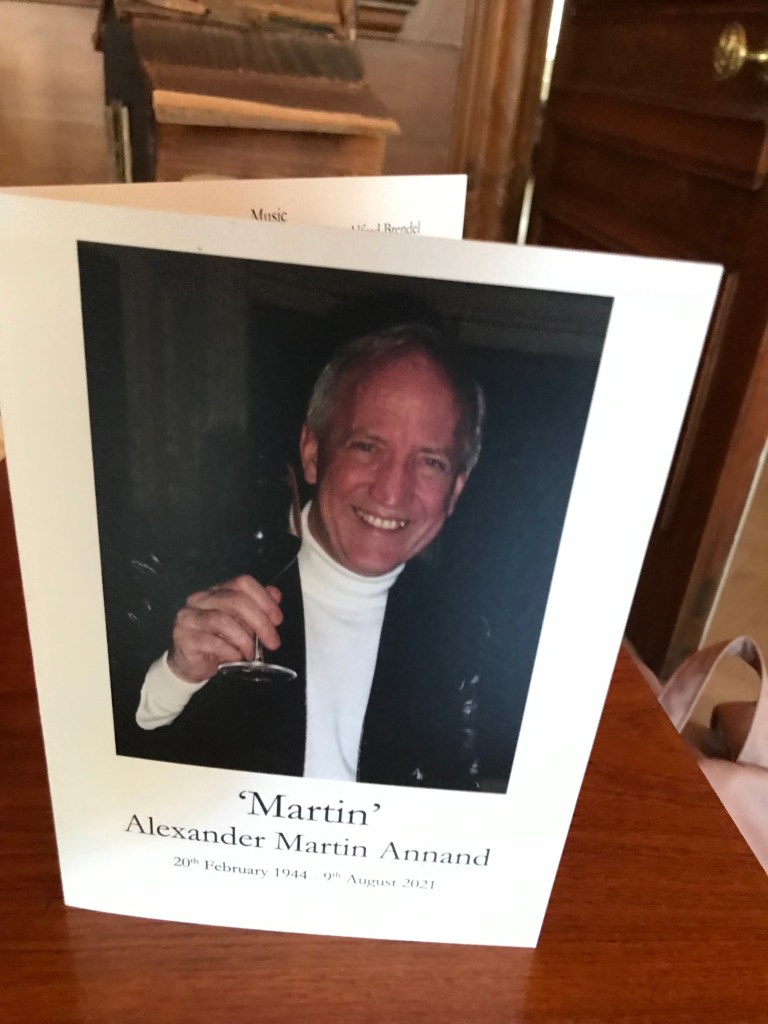
My beautiful Martin Annand died in St Johns hospice on the 9th of August surrounded by his civil partner Nicos and myself, his lover and friend of forty years. I was wiping his mouth with a moist tiny sponge. He was ice cold, and I knew it was the end. He made a noise then went, Nicos screamed and ran to the door, missing the fact Martin had taken one more breath, and then the beautiful angel left us for good.
Martin and I had been of the same mind; if we took ill, we would go to Switzerland and end it with dignity. In hindsight it was easier said than done. Whilst Nicos was in Greece, Martin had all the details. He had gone on business to Geneva working with Salimah Aga Khan and had everything planned, it was just down to me to take him. He was having a bad day and was booking flights. Martin’s chemo had been tremendous, although his hair had stayed, and we were full of hope.
He would shower at night trying to ease the agonising pain, but he refused to take the morphine for fear of being hooked. The doctors said it was all down to the side effects of the radiation treatment. Believing them I begged him just to give it two more weeks, then we would go and Nicos would never need to know. But they were wrong, and the cancer had spread. I would not let a dog suffer the indignity my beautiful Martin went through. My deep regret is not saying yes and flying him down to Switzerland when he wanted to go. There was no time for me to grieve at the bedside
. Nicos was hysterical and threw himself on Martin’s body. It was the opposite of what Martin stood for. It was not long though before Nicos became aware of my obvious grief. “I am his civil partner and have rights!” he shrieked at the nurse. Not for one minute did I challenge that, even though Martin was in fact still legally married to an American and she never divorced him. For five minutes I excused myself and went to the bathroom, locked the door and broke down.
This was not what Martin would have wanted, so I stood up and went to aid Nicos. He was actually kind to me, thanked me, and he was full of questions. Martin would have wanted me to look after him and, as much as he would let me, I did. It did not take long for him to hit the phone. He asked The Cousin to meet him at the house.
He called Phillipa, a long-term friend in Cyprus that Martin and I both liked, and was furious that she could not come straight away. He turned to his old friend Tee, who was also in Cyprus. The pair had fallen out for years, but a mutual ailment had brought them back together, and that Tee did not like me was a huge bonus. He was flying over the next day. I offered to stay, but it was refused. Accompanying Nicos back home, I came up to make some tea.
It was not long before the cousin arrived, she was of course kind. To my horror they jumped into funeral arrangements. Worse still, “Has anyone told Danielle. Martin was very fond of her?” was the next question. They both knew that I had fallen out with Danielle as she had taken great advantage of Martin. He had paid for her partner to be flown from Cyprus as a medical emergency. He had set up a bank account up for her and had been paying the price. I saw her as a user although Martin said “She’s great at parties”. If I was throwing a party, number one on the guest list would certainly not have been Danielle. I realised that I was on a hiding to nothing and left the pair to it.
Though I had helped Nicos as much as I could, The Cousin quickly jumped in and took over; my little eulogy was judged too much about me by the pair and not used. The actual funeral had to be seen to be believed and if Martin had not been cremated he would have rolled in his grave. In fairness I was in the funeral procession car. Arriving at their home, Nicos was not there.
I was outside as the coffin pulled up and Nicos jumped from the car wearing ripped jeans, flanked by Tee and another friend, who both seemed to be dressed like crows. He fell onto the ground of the apartment steps, wailing, “My Martin is here!” calling up to Phillipa. Ironically it looked like a scene from Tosca, a favourite opera of Martin and I. Nicos saw me then and I thought he was coming to hug me, but instead all the drama was over. “You get in the second car”. It was a shape of things to come for the day. I was only allowed a few people as mourners. Nicos did not realise that Martin still had had a life with me and he saw people like Denise Welch and others when Nicos was not around. Still, I was not going to argue and held my head with dignity. Just as I was about to enter the crematorium at Golders Green on a beautiful sunny day, Nico’s whispered to me, “I am afraid I have been a bit selfish with the eulogy.”
Looking back at him, I replied I would not expect anything else. Nicos outdid himself with the downright pack of lies contained in the eulogy. Yes, there were moments of truth but it was hard for me to comprehend what was being read out. If there was any doubt that this was not a bad dream, the beautiful friends I shared with Martin, who were there to support me, gasped in places. Darling Marieanne, a long-term friend of Martin’s and my best pal at the time, squeezed my arm each time something was read out that made Nicos sound a hero and omitted my name completely. We were instructed not to look at Nicos as we left, but he should not have worried as there was absolutely no danger of that.
Walking through the crematorium doors into the beautiful memorial gardens, my numbness started to thaw out as one of my oldest friends exclaimed, “What the fuck was that?” Nicos had had the nerve to ring my kid sister in the US and ask her to watch. It was not long before she was on the phone to find out if I was ok. “Why did he say those things?!” She knew how humiliated I must have felt and said how restrained I had been. If she had been there in person with a baseball bat…
Do not think the thought had not passed my mind. However, holding my head high was what Martin would have wanted, not some ugly drama. His eulogy was heard by 42 people. A week later I released mine on the net and it has been seen by over 4000,000 people. Many of Martin’s family and friends asked why it had not been used. It is below. My hope is to hold a proper ceremony on the anniversary of Martin’s death.
The wonder that was Martin Annand A beautiful light has left the world. But I just know he is sparkling above us full of love. Martin Annand passed away at St John’s hospice London at 12.15 on the 9th of August 2021, with Mozart piano concerto 15 playing, and his civil partner Nicos Steratzias and his former partner Steven Smith lovingly by his side. https://www.stjohnshospice.org.uk/about/
Christopher Robin said to Winne the Pooh: “You’re braver than you believe, stronger than you seem, and smarter than you think.” Martin Annand was the quintessential Christopher Robin and he loved his eclectic friends, no matter their flaws, and he embraced their strengths. He would often joke, “I think he is having an Eeyore moment”, if a friend was down or not seeing the positive about something. He would reference more of Christopher’s pals, saying, “You’re very Tigger-y today”, if one of us was particularly bouncy, and even though Martin enjoyed a healthy lifestyle, he also empathised with Pooh, adoring a sneaky sweet or two. Martin was a true English gentleman, whose style and grace made him so wonderfully unique
. People just adored him as he made every person feel important, taking an interest in everyone he met. From classic cars to a hand of bridge, the latest song by the Pet Shop Boys, or even a glance at what Robbie Williams was wearing; Martin could talk about it all. He just loved everything in life. I would often laugh to myself when people thought Martin was “serious” and “a little unapproachable”
Martin with Ian Phillips Samantha Phillips and Emma Noble and me
. He was one of the funniest people I have ever met, bringing the phrase “Don’t judge the book by its cover” to mind. Martin’s inner child beamed out to those who knew him and took the time to see the beautiful man for who he really was. When I first met him, he told me a story that could only happen to Martin. He said, “I went to a dinner party last night. When I got there, the house was awfully dark. When I pressed the doorbell, the hostess answered in her night attire. “Oh, has the dinner been cancelled?” I enquired. “It was last week”, the hostess answered, wide mouthed. “And what is more, you came to it!”
Martin had the ability to laugh at himself. He was funny, sometimes forgetful and, what is a rare quality these days, loyal. Whenever you saw him, he opened his wide blue eyes and smiled, and he made you believe you could do whatever you wanted to do. He was fortunate enough to have danced with Princess Margaret, but always said he enjoyed dancing at his friend Denise Welch’s ball, with a group of bright young things, more than with Her Royal Highness. Martin just loved the dance of life and he threw himself into everything – whether it was captaining a boat or dancing the Conga in Rio de Janeiro.
Or partying in St. Tropez for his friend Pam Sharrock’s 60th. I recall him skiing down a black run in Klosters Ski Resort with such ease, leaving the soon-to-be-famous Denise Welch and myself way behind. Of course, Martin being Martin, he was straight back up the slope to come to the aid of his friends. There is so much to write on The Exceptional Mr Annand that it could fill two volumes. If there is a Heaven, he will be up there playing bridge and chatting to his friends who journeyed there before him. If he is looking down, all he would want for us is love, success and happiness, as Martin embodied in everything he did in life. But please continue reading as this is a story of one of the most glamorous, quintessential gentlemen, whose story will make you laugh, gasp and cry. He was the accountant for some of the world’s wealthiest and most famous people despite never training as an accountant. The man that could make you feel like you could fly…
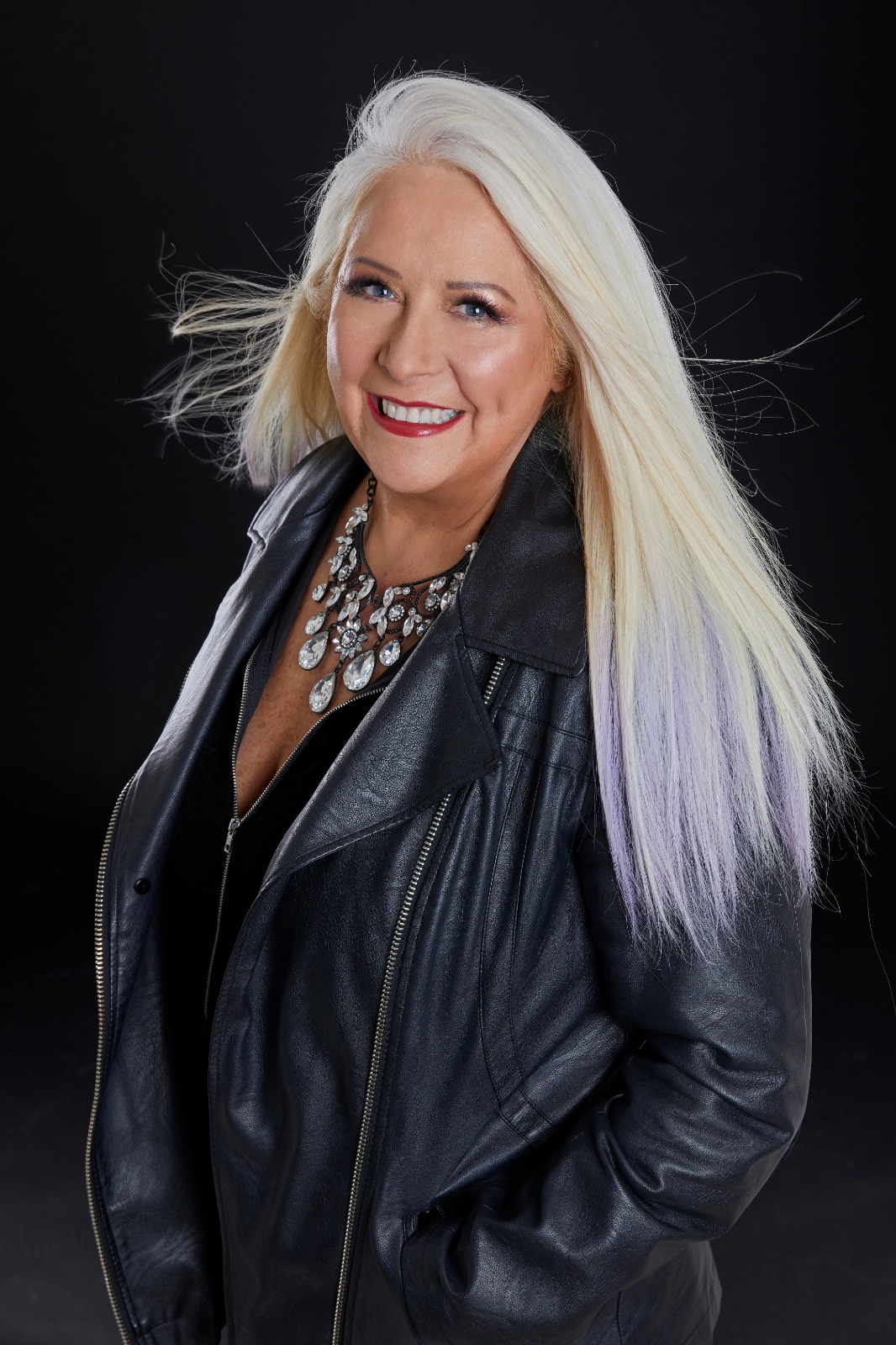
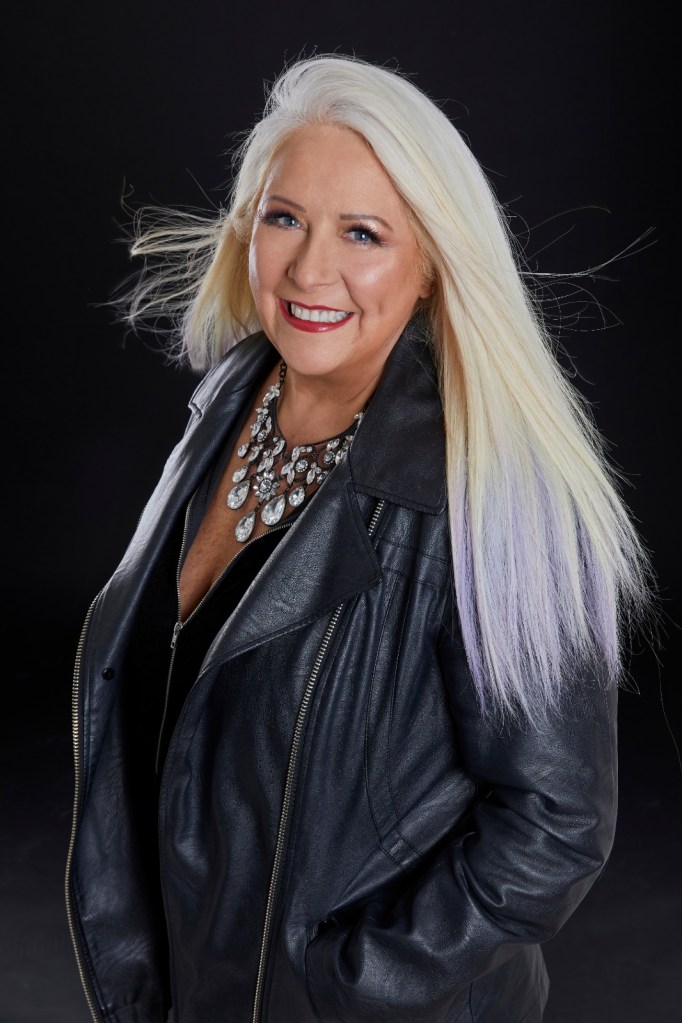
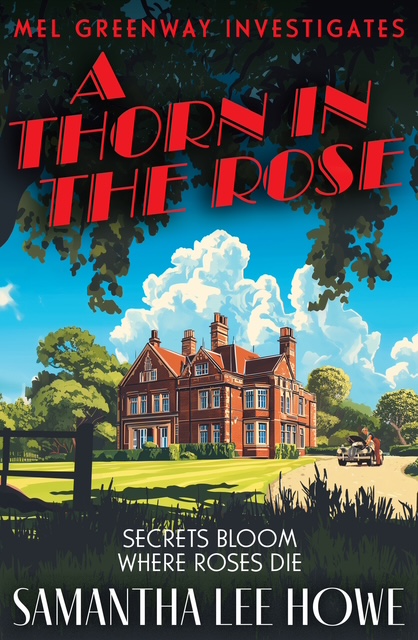
Samantha Lee Howe is an award-winning author, screenwriter, and broadcaster, known for her ability to craft gripping, emotionally rich narratives. Her latest release, A Thorn in the Rose, launches the Mel Greenway Investigates series, set in post-World War II Britain. The novel follows Lady Melinda “Mel” Greenway, a former army mechanic, who uncovers a body buried beneath the rose garden of the crumbling Avonby Estate. As Mel digs into the mystery, she faces a dangerous web of family secrets, class divisions, and unresolved romance, all while navigating the tensions between the estate’s wealthy residents and its resentful staff. Blending suspense with social history, Howe’s storytelling draws readers into a compelling world of intrigue and mystery.
Picture Annemarie Bickerton all make up Ayesha Baig
In celebration of her new book, Samantha shares her seven favourite things — offering a personal look into the inspirations and interests that fuel her creativity. From her fascination with forgotten histories to the quiet moments of reflection that help her develop unforgettable characters, Samantha’s list reveals the influences behind her writing and the passions that drive her. Whether it’s her love of storytelling, her advocacy work, or her dedication to unearthing hidden truths, Samantha’s journey as an author continues to resonate with readers worldwide. A Thorn in the Rose is just the beginning of an exciting new chapter in her career.
I have so many favourite things that this was a tough one. But in no particular order, here is my seven favourite things.
Ballgowns
Yes, I adore a fancy frock — particularly when there’s a suitably glamorous excuse to wear one. There is something wonderfully transformative about a ballgown: the weight of the fabric, the sweep of the skirt, the quiet confidence it lends the wearer.
My favourite gown was designed by the formidable businesswoman Heather Hardy, who owns the highly successful prom, wedding, and occasionwear shop Glitz and Glamour Boutique, where I regularly indulge my love of elegant dressing. Some time ago, Heather turned her considerable talent to creating her own VIP range — a venture that met with well-deserved success.
Most wonderfully of all, she designed a dress with my favourite style firmly in mind and even named it after me. It remains a deeply flattering honour — proof that sometimes a love of beautiful clothes can be rewarded with something truly personal and unforgettable.
My favourite wine is red, and I’m particularly partial to a good Malbec. Rich, smooth, and reassuringly full-bodied, it’s a wine I return to time and again. As a result, my go-to choice — reliable, consistent, and eminently quaffable — is Casillero del Diablo Malbec. It never disappoints, whether opened for a quiet evening at home or shared with friends.
They also produce a very fine Carménère, which I enjoy just as much — a slightly bolder companion with depth and character, perfect for lingering conversations and unhurried dinners.
Cheese.
Self-indulgent, I know — but wine and cheese truly do belong together. I have a particular fondness for baked Camembert, especially since I first shared one with my husband, David, on our very first date. It was a long time ago now, yet it has never been forgotten. Even today, a Camembert still feels like a small celebration in itself, and I love to bring one out for us on special occasions, as a quiet reminder of where our story began.
Cats
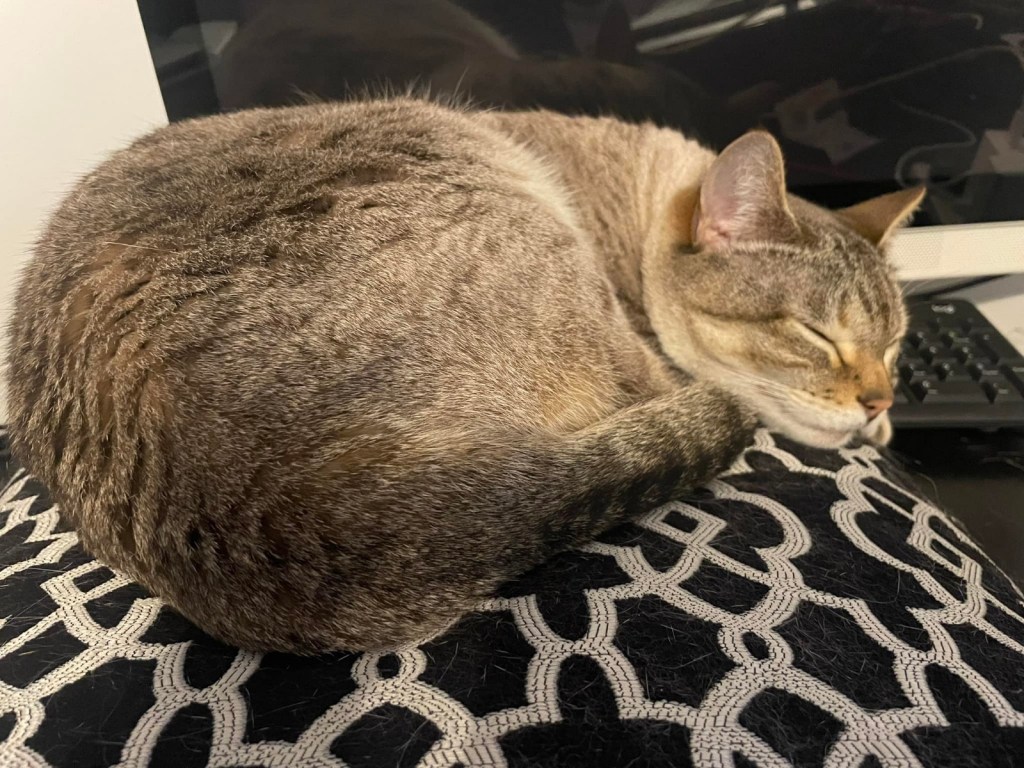
My beautiful furbaby, Skye, is my constant companion when I’m writing. Even now, she’s curled up against my leg as I type, quietly supervising proceedings in the way only a cat can.
What I love most about cats, in general, is their individuality. No two are ever quite the same; each has a personality entirely its own. Skye possesses the softest, sweetest nature, endlessly affectionate and reassuring — yet she also has a mischievous streak that appears whenever things fail to go her way.
Case in point: eating the fake snow off the Christmas tree, an act guaranteed to provoke a reaction from us and, I suspect, part of the appeal. It’s this blend of gentleness and gentle rebellion that makes her such a joy — and such an essential presence in my everyday life.
Skye the cat .
Birthday cake
I adore birthday cake, and the very best part is always the fondant icing. There’s something indulgent and irresistible about it — smooth, sweet, and unapologetically decadent. Still, I’m rather glad it only makes an appearance twice a year in our household, because it’s exactly the sort of pleasure one could develop a dangerous fondness for. Given half the chance, I suspect I could become thoroughly addicted
My Laptop
I honestly couldn’t live without my laptop. It’s an essential part of my daily life, serving as my main tool for work, communication, and social media. It’s where emails are written, ideas are shaped, and conversations are kept alive.
I don’t play computer games, but I do enjoy using it creatively — designing posters and banners, experimenting with layouts, and bringing ideas to life on the screen. Of course, it also has its less industrious moments. Every now and then, it becomes the perfect instrument for procrastination, doubling as a portal to streaming series when I really should be doing something else.
Practical, creative, and occasionally indulgent, my laptop has become far more than just a piece of technology — it’s a constant companion in both my working and wandering hours.
My Kitchen
As I love to cook, my kitchen is my favourite room in the house. It is also the hub of every party we have, and I’m always amazed by how everyone congregates in there each time. I take great pride in it too, and it always has to have clear and clean surfaces, ready, as I’m always saying, to cook the next meal.
Welcome to Steven’s Viewz — the first of 2026. And let’s start the year with an uncomfortable truth.
Adam and Holly
Is it ever okay not to invite a family member to a major life event? Is it ever acceptable to distance yourself — or even cut ties completely?
The short answer is this: yes, sometimes it is not only acceptable, it is necessary.
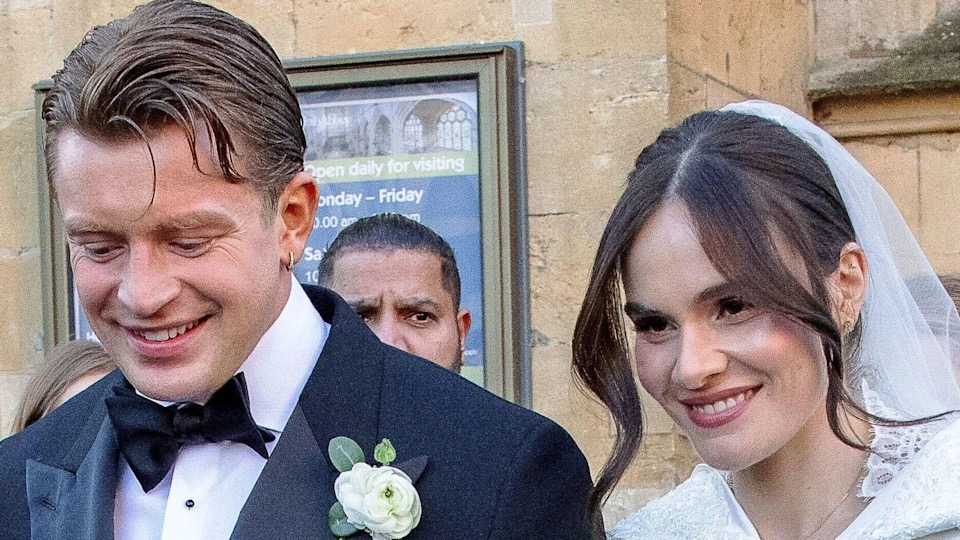
The question has been dragged into the spotlight following the wedding of the year, as Adam Peaty married Holly Ramsay and chose not to invite his mother. Predictably, the outrage machine kicked into gear. Headlines screamed. Opinions flooded in. Armchair judges — armed with no facts and limitless certainty — rushed to condemn.
Here’s what struck me most: how quick people are to defend family in theory, and how unwilling they are to accept the damage family can cause in reality.
Not all families are The Waltons. Some families are battlegrounds dressed up as photo albums.
Behind the smiling Christmas cards and Facebook posts lie power struggles, control, emotional manipulation, and silence that screams louder than words. And when someone finally says “enough,” the world often turns on them — not the behaviour that pushed them there.
I know this terrain well.
I grew up in a family where people disappeared without explanation. At nine years old, I came home to find myself locked out. Eventually, the letterbox opened and my mother asked, “Are you on your own?” A row between her and her mother — my grandmother — had ended the relationship entirely. One moment she was part of our lives; the next, she was erased.
Visiting my grandparents had once been a joy. Then it became forbidden. When I later wrote to my gran, there were consequences. At fourteen, I was sent alone to Glasgow — not to reconnect, but to persuade my grandparents not to take my father’s side in court. That was the last time I ever saw them.
That isn’t family warmth. That’s family politics.
So when people scoff and say, “But she’s his mother,” I don’t hear wisdom — I hear denial.
Adam and muu Caroline .
Because sometimes family isn’t a source of love. Sometimes it’s a source of fear, obligation, and emotional exhaustion. And no wedding day — no milestone — should be overshadowed by anxiety about who might erupt, undermine, or hijack the moment.
Much as you try to make it work, some people are only content when they are in control. When they aren’t centre stage, they create drama to pull the spotlight back. And when confronted, they cast themselves as the victim — never acknowledging the trail of damage behind them.
Let’s be honest: if a friend behaved that way — belittling you, calling you names, sabotaging your happiness — would you keep them in your life? Of course you wouldn’t. Yet when it’s family, we’re told to endure it. Smile through it. Absorb it.
Why?
Mental health does not become optional because someone shares your DNA.
Often, when people move into new social circles or build lives different from the ones they were raised in, it triggers insecurity in those left behind. Even when efforts are made to include them, their anxiety spills out as disruptive behaviour. Weddings, birthdays, celebrations — all become stages for unresolved resentment.
If Adam’s mother were truly the injured party, dignity would have been her strongest ally. Silence, reflection, restraint — not public outrage. Those who are genuinely wronged rarely need to shout the loudest.
Adam didn’t just make a decision about a wedding invitation. He changed his surname. That is not impulsive. That is not petty. That is the culmination of years of internal conflict, careful thought, and emotional cost.
And I applaud him for doing it early — before resentment calcifies, before damage multiplies, before patterns repeat. Family member may love you but it does not allow them to hurt you and be in denial.
No family member should ever make you feel small, fearful, or unworthy. Family should be the safest place — not the one you brace yourself for.
Sometimes the bravest, healthiest choice is to step away. Not out of bitterness, but out of self-respect. Not to punish, but to protect.
And if that makes people uncomfortable, perhaps it’s because it forces them to confront a truth they’d rather ignore:
Family doesn’t get a free pass to hurt you.
Why Amandaland Was the Christmas Treat We Didn’t Know We Needed
There is a particular kind of Christmas television that feels like slipping into a familiar jumper: slightly stretched, deeply comforting, and faintly ridiculous. The Amandaland Christmas special is exactly that kind of viewing — and all the better for it.
Christmas Day television is a battlefield. Big budgets, earnest dramas, and aggressively “heartwarming” narratives often jostle for attention, all while families argue over the remote and someone burns the sprouts. Amandaland cuts through the noise by doing something radical: it knows precisely what it is. A sharp, character-driven comedy about social aspiration, emotional repression, and the very British terror of appearing ordinary — now wrapped in tinsel.
The episode’s premise is delightfully simple. Amanda, our tightly wound heroine, decides to recreate a “perfect” childhood Christmas at her aunt’s country home. Naturally, this requires absolute aesthetic control, emotional denial, and an unwavering belief that nothing — not weather, children, or other people — should interfere with her vision. What follows is a festive slow-motion collapse, played with exquisite comic timing.
Enter Jennifer Saunders, who turns up as Aunt Joan like a glitter cannon fired directly into the episode. Saunders doesn’t merely steal scenes — she annexes them. Her performance is gloriously unfiltered, full of physical comedy, throwaway lines, and the sense that she is enjoying herself enormously. This is not nostalgia casting; this is a master at work, reminding us how joyful comedy can be when it’s driven by confidence rather than caution.
Then there’s Joanna Lumley, a woman who could make a shopping list sound withering. As Amanda’s emotionally glacial mother, Lumley delivers her lines with that unmistakable mix of elegance and quiet disdain. Every raised eyebrow lands like a punchline. She doesn’t chase laughs — she allows them to come to her, which somehow makes them sharper. Watching Lumley and Saunders share the screen again is less a reunion and more a reminder: this is what happens when comic icons are trusted to do what they do best.
What makes Amandaland such perfect Christmas viewing is its refusal to be falsely sentimental. Yes, there’s warmth here — but it’s earned, not imposed. The show understands that Christmas isn’t magical because it’s perfect; it’s memorable because it rarely is. The forced cheer, the unresolved family tensions, the desperate attempts to manufacture tradition — all of it rings painfully, hilariously true.
In an era where television often feels either too bleak or too bland, Amandaland occupies a sweet spot we desperately need more of. It’s clever without being smug, affectionate without being soft, and funny without shouting for attention. Most importantly, it trusts its audience — and its performers — to appreciate humour rooted in character rather than spectacle.
By the time the credits roll, you feel lighter. Not because everything’s been neatly resolved, but because you’ve laughed at the chaos instead of pretending it doesn’t exist. And really, isn’t that the whole point of Christmas television?
It was a celebrity-packed afternoon on London’s iconic King’s Road as guests gathered for the launch of A Covent Garden Christmas, the latest festive children’s book from the ever-popular duo Wendy Turner and Anthea Turner. The event took place at the chic White Coco store, which proved the perfect setting for an afternoon brimming with seasonal cheer, literary sparkle, and familiar faces.
From the moment the doors opened, there was a palpable buzz as fans clambered for signed copies, eager to exchange a few words with the authors and soak up the festive atmosphere. The King’s Road, already alive with Christmas energy, felt even more special as the boutique filled with laughter, conversation, and the unmistakable excitement that only a book launch can bring.
Anna and Wendy
Among those lending their support were 2Shades columnists Dr Anna Kennedy OBE and Steven Smith, both warmly welcomed as they joined the celebrations. Their presence added to the sense that this was not just a publishing event, but a gathering of friends, creatives, and supporters coming together to celebrate storytelling and imagination.
A Covent Garden Christmas is the latest instalment in the much-loved Underneath the Underground series and marks the fourth adventure to delight young readers. This time, the story unfolds with deliciously eccentric flair: a bald Christmas tree, a missing butler, and a runaway red bus ensure that the festive season begins in anything but ordinary fashion. When King Charles and Queen Camilla find their royal Christmas plans descending into chaos, the pair are forced to improvise decorations, shop in disguise, and navigate a series of comic mishaps that will keep children giggling from page to page.
Steven Joins in the festive fun ,
Running parallel to this royal mayhem is a tender and imaginative story set beneath the streets of London. Snowball, a lonely white mouse, escapes his neglectful owner and stumbles into a secret underground world where theatre mice rehearse a magical pantomime at the spectacular London Palladium. It is here that friendship, creativity, and courage come to the fore. When Snowball is suddenly snatched away and the Underground’s handmade Christmas presents mysteriously disappear, it falls to the daring Special Mouse Services to save the day. With teamwork, bravery, and a sprinkling of festive magic, Christmas Day itself hangs in the balance.
Friends join Wendy and Anthea to celebrate their book launch ,
Brimming with humour, heart, and festive adventure, the book introduces a host of delightful new mousy characters while welcoming back many familiar favourites who have already captured the imagination of children everywhere. It is a story that celebrates kindness, resilience, and the joy of working together—timeless messages wrapped up in a thoroughly modern and mischievous Christmas tale.
The guest list reflected the book’s broad appeal. Among the celebrities in attendance were Loose Women panellist Jane Moore, renowned hairdresser Nicky Clarke, and Minder star and acting royalty Gary Webster. Each took time to congratulate Wendy and Anthea, praising the warmth and imagination that have become hallmarks of their writing.
Lisa Allen from the Pink Ribbon charity joins the fund with Anthea and Wendy .
No festive launch would be complete without seasonal treats, and guests were duly indulged with glasses of bubbly and delicious vegan mince pies—an inclusive touch that reflected the thoughtful spirit behind the book itself. Conversations flowed easily as attendees browsed the boutique, thumbed through freshly signed copies, and posed for photographs amid tasteful Christmas décor.
As the afternoon drew to a close, it was clear that A Covent Garden Christmas is set to become a firm festive favourite. With its blend of gentle satire, heartfelt storytelling, and London-centric magic, the book captures the very essence of Christmas—proving that whether you are royal, mouse, or somewhere in between, friendship and imagination can make the season truly unforgettable.
If there is one woman capable of shaking up the Christmas charts, unseating the usual pop titans, and bringing pure chaotic joy to the holiday season, it’s Denise Welch. With Slayyy Bells, she hasn’t just released a festive single — she’s unleashed a cultural moment. A glittery, high-camp, tongue-in-cheek masterpiece that captures everything the British public secretly craves at Christmas: humour, heart, a bit of mischief, and a full-throttle, unapologetic “hun energy.”
Denise has long been adored for her honesty, her warmth, and her refusal to take herself too seriously. That’s why the LGBTQ+ community has embraced her with open arms. She doesn’t perform camp — she embodies it. Whether it’s fiery daytime TV realness, chaotic comic timing, or her glamorous, self-deprecating sparkle, Denise is the kind of icon who walks into a room and immediately becomes everyone’s mum, best friend, and backstage confidante. She is the definition of a British hun: fierce, funny, fabulous, and fearlessly herself.
Slayyy Bells captures that spirit perfectly. It’s a sugary cocktail of festive beats, wink-wink lyrics, and nightclub-ready chaos — the kind of song that would make even the Grinch put on a sequinned jumpsuit. In a chart landscape dominated by perfectly polished megastars like Taylor Swift, Dua Lipa, or Ed Sheeran, Denise offers something the others can’t: pure personality. She’s not trying to be slick, she’s trying to be fun — and that’s exactly what people cling to at Christmas.
Let’s be honest: the UK loves an underdog, and Denise is the ultimate comeback queen. She’s lived a life, she’s told her story, and she has emerged with more charisma than half the industry put together. When she releases a Christmas single, it isn’t just music — it’s a movement. It’s the collective national desire for something joyful, camp, inclusive, and proudly silly.
The LGBTQ+ community in particular knows a gay icon when it sees one. Denise is outspoken, loyal, emotionally open, and effortlessly dramatic. She’s relatable yet glamorous; chaotic yet wise; messy yet magnificent. She’s the woman who will cry with you, dance with you, and drag you out to karaoke at 2 a.m. — the Patron Saint of Huns.
This is why Slayyy Bells deserves to beat the global juggernauts. Christmas Number One shouldn’t always go to the most streamed, the most marketed, or the most algorithmically optimised. Sometimes it should go to the artist who brings the most joy. The one who makes people laugh, sing, and feel part of something bigger.
Denise Welch is that artist. She’s the people’s diva, the hun-in-chief, the LGBTQ+ fairy godmother of festive chaos — and Slayyy Bells is the anthem worthy of her crown.
This Christmas, let’s make history. Let’s give the Number One to the woman who would celebrate it harder than anyone else: Queen Denise Welch.
Heidi is back, and she’s here to help you get through and enjoy the holiday period.Hear her on Gateway Radio on the Aston Avery Show and on YouTube.Please write to her at 2Shades: spman@btinternet.com if you have a problem.Heidi can only answer so many, but she will try her best. Heidi is back, and she’s here to help you get through and enjoy the holiday period.spman@btinternet.com if you have a problem.Heidi can only answer so many, but she will try her best.
Dear Heidi Hope you are well. My son is coming with his girlfriend for Christmas. She is a lovely girl, but she’s not really my kind of person — though she makes my son happy. Lunch is going to be a problem: she is vegan and we are all meat eaters. Making it worse, she talks about animal cruelty while we’re eating. Now my son has decided he’s vegan too. I will make a nut roast and vegetables for them, but is it acceptable to tell them I don’t want to hear about animals and cruelty while we eat? Diana, Uxbridge
Heidi replies: You’re being considerate by preparing vegan options, and it’s perfectly reasonable to set boundaries at the table. Explain kindly that you respect their choices, but mealtimes need to stay pleasant for everyone. A gentle, “Let’s save the debate for later,” is enough. Mutual respect works both ways. Maybe try having a coffee with her before Christmas, go over the menu, and then explain your boundaries so it doesn’t become a big issue on the day.
Dear Heidi My boyfriend and I like to party and occasionally take drugs. I feel it’s under control on my end — high days and low days, that kind of thing — but I am a traditionalist when it comes to Christmas. He wants to invite two friends over and seems more interested in getting drugs in for after lunch than the food or the day itself. What can I do? I want a white Christmas — not that kind of white one. Mike, Bournemouth
Heidi replies: You deserve a Christmas that feels safe and joyful. Tell your boyfriend clearly that you want a drug-free day and that you aren’t comfortable hosting a gathering that revolves around substances. If he can’t respect that boundary, it’s a sign something needs addressing in the relationship — and perhaps in your habits as a couple. A peaceful Christmas requires mutual respect. Any regular drug use is not only illegal but a sign of addiction; once it’s in your life, it has a habit of resurfacing.
Dear Heidi Can you please help me? My mother is a total control freak and she runs Christmas like a military operation. This year I want to go to my friends’ in Cornwall. I am 19, at college, and have a part-time job. How do I break the news? I hinted at the idea and she brushed it off. How do I tell her? Malcolm, Newcastle
Heidi replies: You’re an adult now, and part of growing up is making your own plans. Be direct, calm and kind: “Mum, I love Christmas here, but this year I’m spending it with friends.” She may protest, but stick to your decision. Set the boundary with respect, not guilt, and give her time to adjust. The sooner you tell her, the better — and be aware she may not stop being controlling, so learning to stand firm now will help.
Dear Heidi Please help. We are going to my fiancé’s for Christmas. His mum is nice, but his dad is awful — he constantly makes crude comments and flirts with me when no one is looking. What can I do? Do I tell my fiancé or just put up with it since we don’t go that often? Tiffany, Leeds
Heidi replies: You should not put up with inappropriate behaviour, no matter how infrequent the visits. Tell your fiancé privately and calmly what has been happening. He needs to know, and the two of you can decide together how to handle it — whether that’s him speaking to his father or setting clearer boundaries. You deserve to feel safe and respected.
Dear Heidi I am going home for Christmas. This summer I came out at university. My parents are religious and it is going to be a shock to them. Should I go down sooner to tell them? I don’t want to ruin Christmas. Paul, Cardiff
Heidi replies: If you feel emotionally ready, telling them before Christmas may ease some of the pressure on the day itself. It gives them time to process without the intensity and expectations of the holiday. Choose a calm moment, be honest, and remember: their reaction is about their adjustment, not your worth. You deserve to be loved and accepted as you are.
Are you passionate about creativity, positivity, and representation? Would you like to be part of an uplifting magazine that celebrates diversity and individuality? Then this could be the opportunity for you.
I’m Steven Smith, Editor of 2Shades Magazine — a vibrant, happy LGBTQ+ publication where everyone is welcome. 2Shades is about joy, self-expression, and living life in full colour. We share stories that inspire, entertain, and connect people from every shade of the spectrum.
At the moment, the magazine is run independently and with heart. It doesn’t yet generate profit, and I’m not taking a salary for my writing or editorial work. But what we do have is potential, readership, and passion — a growing audience who believe in what 2Shades stands for: positivity, equality, and creative freedom.
Now, with my current partner stepping down who we loved and can not thank enough , The incredible Adishia chengappa,is going into full time eduction . I’m looking for a new collaborator or investor to join me on this journey.
🌈 Why Join 2Shades?
Be part of something meaningful. 2Shades isn’t just a magazine — it’s a community celebrating LGBTQ+ life, art, culture, and individuality.
Low entry, high potential. For £1,000, you can buy into the magazine and become my creative and business partner.
Help shape the next chapter. From editorial direction and digital strategy to sponsorship, advertising, and partnerships — your ideas will directly influence how we grow.
Your voice matters. Whether you’re a writer, marketer, designer, PR professional, or creative entrepreneur, this is a rare chance to make a real impact.
Build towards profit together. As the magazine grows through advertising, sponsorships, collaborations, and events, so does your stake and reward.
🌟 What I’m Looking For
Someone who believes in the message of inclusion and positivity — LGBTQ+ and allies alike.
Someone excited by independent media and the creative world.
A person who’s proactive, imaginative, and ready to build something with heart.
Ideally someone who can bring either creative skills, marketing ideas, or business insight — but most importantly, enthusiasm.
💬 Next Steps
If this sounds like you, let’s talk. I’ll share more about our readership, digital presence, plans for the year ahead, and how we can shape this partnership together.
Your £1,000 investment secures you a share in 2Shades, a say in editorial direction, and the chance to be part of something growing, inclusive, and joyfully unique.
Let’s make 2Shades not just a magazine — but a movement that celebrates difference and spreads happiness.
Riot Women — BBC’s Surprising Triumph of Grit, Wit and Pure Heart
There are times when you arrive home after a long day, craving nothing more profound than a cosy half-hour of television fluff — something light, comforting, and easy to disappear into. On the surface, Riot Women looks like exactly that: a vibrant title card, bold artwork, and a show pitched squarely at those who love a dash of spectacle. It would be very easy to hit play expecting a breezy, perhaps even camp, comedy-drama and settle back with a cup of tea.
But Riot Women is not that show. Not remotely.
If you only watch the first ten minutes, you could be forgiven for thinking you’ve been misled. The opening is stark, intense, and packed with enough emotional punch to make even the most resilient viewer mutter, “Oh no… this is going to be depressing,” and reach for the remote.
Yet turning it off would be a terrible mistake.
Because Riot Women quickly reveals itself to be television gold — unexpected, daring, and absolutely bursting with life.
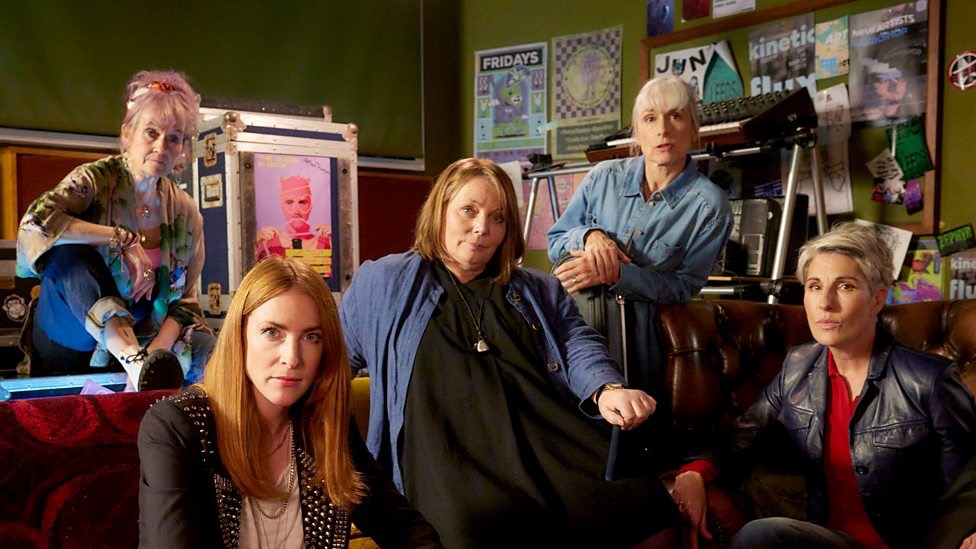
At the centre of this explosive drama-comedy hybrid are the phenomenal Rosalie Craig and Joanna Scanlan, leading an ensemble cast that delivers performances of a calibre you rarely find in mainstream television. Between them, they light up the screen with such power and honesty you can’t look away. Rosalie Craig, especially, is a revelation. Known for her formidable stage presence in musical theatre, she brings the full breadth of her talent to this role: vocally electrifying and dramatically fearless, she swings from raw vulnerability to razor-sharp humour with impossible ease. It’s the kind of performance awards are invented for — at the very least, she deserves a BAFTA nomination.
Joanna Scanlan matches her beat for beat, offering a portrayal that is quietly astonishing — subtle, grounded, and capable of landing an entire emotional narrative with one look. Together, they create a dynamic that makes the story feel not just relevant but necessary.
Of course, no great television series exists without a masterful hand guiding it from the page. Here, that hand belongs to Sally Wainwright, one of Britain’s most exceptional screenwriters. Her voice is unmistakable: sharp, deeply empathetic, and rooted in the lived truths of women who refuse to be sidelined. Wainwright balances humour and heartbreak like a tightrope walker, proving again — as she did with Happy Valley and Last Tango in Halifax — that she knows exactly how to capture complicated, flawed, brilliant female characters. And then there’s Tamsin Greig, whose incomparable screen presence adds yet another layer of brilliance. Whether she’s delivering a deadpan line or revealing quiet vulnerability beneath stoic armour, Greig commands attention every moment she’s on screen. She becomes one of the show’s beating hearts — a character you’re compelled to follow, even in her silences.
What truly distinguishes Riot Women is its emotional honesty. The series dives into the frustrations, absurdities, and injustices faced by women whose lives haven’t gone according to plan — yet it refuses to let despair take the lead. Just when the narrative feels like it’s sinking into darkness, the humour kicks in. And not just comic relief for the sake of it — we’re talking whip-smart, laugh-out-loud writing delivered with perfect timing.
The absurdity is part of the point. Life can be relentless — but it can also be ridiculous.
The tone may zigzag, but that unpredictability is what makes the experience so exhilarating. One moment you’re laughing; the next you’re wiping away tears; then suddenly you’re cheering these women on as they find their voices and reclaim their stories. It’s a celebration of community, resilience, and rebellion — the quiet kind and the loud kind.
Yes, it can be camp — gloriously so — but never cheaply. The humour always comes from a place of truth. And through the satire, the show provides a sharp commentary on how society treats women who dare to age, to feel, to be imperfect, or to speak up.
The writing is confident and bold, unafraid of pushing boundaries. Each episode leaves you with a question — and a burning curiosity for what comes next. It is a story about what happens when ordinary women decide they’re done being polite and invisible. When they realise they have power. When they riot — not violently, but vocally, musically, and emotionally.
To call Riot Women a gem feels too small. It’s a series that arrives disguised as a guilty pleasure but reveals itself to be a gutsy, heartfelt, and beautifully crafted piece of British drama. It’s television that matters — without losing its sense of fun.
So if you begin watching and feel the instinct to switch over: don’t. Give it time. Let it breathe. Stick with the journey.
Because what you find is something rare: a show that reminds you we are all allowed to feel broken — and also allowed to dance, shout, laugh, and reclaim joy, whatever age we are.
Riot Women is bold. It’s brilliant. And it’s absolutely worth your time.
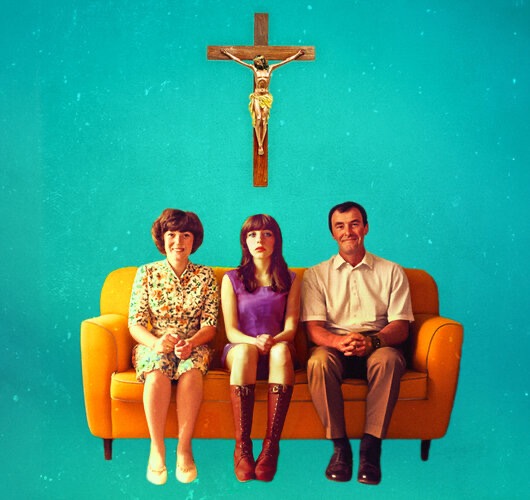
Blessings at Riverside Studios is a richly atmospheric and deeply human exploration of family, faith, and the moral turbulence of the 1960s. Directed with sensitivity and intelligence, the play captures a pivotal moment in British social history — a decade when traditional values clashed with the new freedoms of a changing world. It’s a thoughtful, gripping production brought vividly to life by a stellar cast, led by Gary Webster and an extraordinary debut performance by Freddie Webster.
Freddie Webster.
Set against a backdrop of shifting class structures and cultural awakening, Blessings weaves its story around a working-class family grappling with the personal consequences of societal change. The writing is sharp and heartfelt, with themes of loyalty, pride, and redemption pulsing beneath every exchange. The set design immediately evokes the texture of the 1960s — all formica kitchens, nicotine-stained wallpaper, and muted optimism — drawing the audience into a world both familiar and fading.
Rising Star Freddie Webster
At the centre of it all is Gary Webster, whose commanding presence anchors the production. Best known for his iconic turns in Minder and EastEnders, Webster once again proves he is one of the UK’s most underrated actors. His performance here is layered and magnetic: a man torn between old loyalties and the unrelenting push of modern life. He brings a bruised dignity to the role — a quiet strength mixed with a sense of defeat that feels heartbreakingly authentic. In a just world, this performance would cement his reputation as one of Britain’s finest stage actors.
Underestimated Gary Webster
Equally striking is the breakout performance of Freddie Webster, making his professional stage debut after studying at Mountview Drama School. It’s rare to see such poise, nuance, and emotional truth in a first-timer. Freddie delivers a performance that is at once raw and refined, capturing the restless energy of youth alongside the vulnerability of someone desperate to find their place in a world that doesn’t quite make sense. His natural stage presence and impeccable timing mark him as a talent to watch — a future star in the making. The chemistry between father and son, both on stage and in spirit, is palpable and moving, adding an extra layer of resonance to the drama.
Hannah Traylen, as Frances, deserves special mention. She brings warmth, wit, and quiet steel to a role that could easily have been overshadowed in lesser hands. Traylen’s Frances is a woman of her time but also ahead of it — sharp-tongued yet tender, pragmatic yet passionate. It’s a beautifully judged performance suggesting that Traylen is another rising talent with a bright future
Gary Webster and Hannah Traylen .
The supporting cast contribute solidly, creating a believable ensemble that breathes life into every corner of the story. The pacing of the piece, while deliberate, allows each emotional beat to land fully. If there is a minor quibble, it’s that the play runs a little long without an interval — at times, one finds oneself wishing for a short pause to absorb the emotional intensity before diving back in. Yet, in truth, this is a small price to pay for the richness of the experience. The continuous flow also has its advantages: it keeps the audience immersed, never breaking the spell the actors have so carefully woven.
Technically, Blessings is beautifully realised. Lighting and sound design work in quiet harmony to evoke both nostalgia and unease. The director’s attention to period detail ensures that nothing feels contrived; instead, every moment feels lived-in and real. The dialogue crackles with authenticity, alternating between humour and heartbreak in a way that mirrors real life.
Ultimately, Blessings is a triumph — a play that reminds us why live theatre matters. It challenges, it moves, and it connects. It holds a mirror up to a time not so long ago, showing us how the struggles of the past still echo in the present. Gary Webster delivers a masterclass in restrained power,
The result is an evening of theatre that feels both timeless and immediate — .










































 2Shades Magazine