Categories
Columns Culture Lifestyle People

The Passive Aggressive’s

By Steven Smith Stevens Viewz

Ah… the Passive Aggressives. We’ve all met them. They open their mouths and what comes out sounds like a compliment—but it’s actually a veiled put-down. Before you can respond, they’ve already moved on to a new subject. Like silent assassins, they strike, then dare you to recover from the blow.

If you say, “Hey, would you like that said to you?”, they recoil in horror and reply, “Why are you so sensitive, darling? It was a compliment,” shaking their heads like they’re the victim of #PassiveAggression.

From:
“I do admire how you keep going when others would have thrown in the towel ages ago—so brave,”
to:
“You know that outfit suits you—don’t let others put you off, whatever they say.”

Favourite?

My personal favourite came from a friend who’d actually introduced me to my now-best male pal. She told me:
“So glad it’s going well with you two… you shouldn’t care what others are saying about you both.”

Let’s not forget the classic:
“You can’t tell anyone I told you this, but so-and-so said XYZ about you.”
My reply? Always: “Why were they so comfortable telling you?”

Now, much passive aggression comes from strangers, but the deepest cuts usually come from people we love, see regularly—or worse—family members.

Madeleine, a dear friend of mine, simply can’t help herself.

We All Know a Few Wicked Queens

The trouble is, I love her, and I tend to overlook her barbed remarks. Picture this: dinner with a group of friends as she regales the table with a story—
“Oh darling, we were sitting up in premium class while Steven was way back in economy, squashed between two people.”

Everyone chuckles and looks at me sympathetically. In reality, she was also in economy. A bit further from me, yes—but the same class. Why make me the fall guy in her tale?

I don’t correct her. Honestly, I’m speechless. And who wants to play #PassiveAggressiveTennis? I know she loves me—really.

Spelling Lessons

Another agent friend, Antonia, has a wicked sense of humour, and her loyalty redeems a lot. I was so looking forward to lunch with her. She’d just returned from New York, promoting her girlfriend’s record, and we planned to pop into a gallery event where one of her friends was exhibiting.

But it didn’t take long for the first blow:
“Darling Donna [her girlfriend] and I were just saying—you forget what a great writer you are—pause—as you’re just such an appalling speller.”
Then, after another pause:
“Does someone help you?” she asked, casually munching a root vegetable like we were discussing the weather.

It’s true—I’m dyslexic. Spelling is not my strong suit. But after over 20 years writing for publications around the world, and two published books, I’ve earned my place. If it weren’t for journalist and presenter Jane Moore encouraging me—
“You have the voice. The rest will come—just do it.”

With technology, hard work, and mentors like Jane, I carved out a writing career. These days, people actually rate my work—and that means a lot. So I just smile and explain that yes, I have editors and tech, and the tools are better now.

Before I finish, the topic shifts—to Donna hitting the charts in the U.S.

Still Not Done

Later, at the packed gallery event, Madeleine introduces me to a group of people:
“Everyone, this is Steven. He’s a great writer—but can’t spell.”

They look bemused. Madeleine has struck—and vanished—leaving me standing there hoping no one starts a crowdfund for my spelling lessons.

Arlena & Real Life

Life isn’t like the movies when the passive-aggressive gang comes for you. Most of us feel like rabbits in headlights—unlike the deliciously sharp Dames Diana Rigg and Maggie Smith in Evil Under the Sun.

Maggie, as Daphne Castle, greets Diana Rigg’s character Arlena Marshall:
“Arlena and I were in the chorus of a show together—not that I could compete. Even in those days, she could always throw her legs in the air higher than any of us—and wider!”

Arlena retorts,
“Kenneth, what a surprise. When you told me the island was run by a quaint little landlady, I had no idea it was Daphne Castle.”

There’s a fine line between bitchy and passive-aggressive.

Mother-in-Law Moments

A friend’s mother-in-law, taken backstage after a show, hugged the leading man and gushed about how amazing he was. The leading lady popped in to say hello. She turned to her and said,
“I thought you were great… don’t listen to those reviews.”

Silence. The actress smiled, made her excuses, and left. When we later pointed out it was a line from The Feud (Joan Crawford vs. Bette Davis), the poor woman was mortified—she hadn’t meant it to cut. In hindsight? Hysterically funny.

The day before, she’d overheard me chatting to a famous pop star:
“Who was that?” she asked.
I should’ve said, “Mind your own business,” like my mum would. But I answered. Her reply?
“Why would they want to talk to you?”

Gobsmacked. And somehow, older people get away with more. She really is lovely, though.

LGBTQ and the Passive Blow

As a member of the LGBTQ+ community, we often face passive aggression. It’s exhausting.

At a wedding in Guernsey, where the bride was 20 years older than the groom (so you’d think a liberal crowd, right?), a woman rushed up:
“Oh, you two must be Mandy’s gay friends from London!”

She beamed like she expected us to burst into I Am What I Am. I tried some small talk. She wasn’t done:
“David is gay—from EastEnders!”
I replied, “Really? Amazing. I’ll look him up in the book.”
Her eyes widened, “There’s a book?”
“Yes, we’re all registered. I’ll bring you a copy next time I visit Mandy.”

Okay, that may have been me being passive-aggressive.

From:
“I don’t mind the gays. My hairdresser’s one.”
to:
“I’m all for it—but don’t you mind not being able to have children?”
We’ve all heard those.

Let’s not get started on the “bitchy queen” lines:
“Don’t mind me, it’s all in jest. I’m just a bitch.”
You’re waiting for them to hand you the poisoned apple. “Go on, bite, dear.”

What the Experts Say

Experts say the best way to handle passive-aggressive people is not to react.

Self-help psychologist Dr Pam Spurr (@DrPamSpurr) says:

“People can be passive-aggressive for many reasons, but usually it’s because they have a manipulative streak.

If they want to put you down, the easiest way is with a backhanded compliment. It wrong-foots you and leaves you wondering what they really meant. That’s emotional manipulation.

She adds:

“Passive aggression often comes from resentment, envy, or jealousy—sometimes without them even realising it.

Some people, however, do know exactly what they’re doing. They enjoy the power of the subtle jab.”

Her advice?

  • Call it out calmly—especially if you see the person often.
  • If it’s someone you barely know—ignore it, put it in perspective.
  • Realise: it’s more about them than it is about you.

According to LearningMind.com, passive aggression also includes chronic lateness (to gain attention), controlling events, undermining others behind their backs, playing the victim, or pretending there’s no issue when there clearly is.

Psychology Today agrees:

  • Recognise the behaviour.
  • Stay calm.
  • Don’t take it personally.
  • Confront it if needed.

Blackmail and Backlash

These all sound simple on paper. But for people like me—who hate confrontation—even a kind challenge results in tears and emotional blackmail. I’ll do anything to stop someone crying.

Growing up, pointing out when someone was wrong led to a meltdown. Still today, if I gently mention something upsetting, I get:
“I can’t say anything right,”
soon followed by,
“I had a terrible childhood.”

Let’s be honest—in the UK, from the 60s to the 80s (and sometimes now), talking about feelings can feel like a deadly sin.

Teach Them Young

Signe Whitson, LSW, writing for Psychology Today, notes:

“Without directly addressing passive-aggressive behaviour, the pattern will play out again and again. For real change, benign confrontation is necessary.”

She argues being assertive isn’t something to fear.

I agree. Imagine if we taught kids that if someone they love says something hurtful, it’s okay to speak up and share how it made them feel.

As Dr Pam says,

“Sometimes they don’t even realise what they’re doing.”

END


Steven Smith
@asksteve2c
Psychology Today – Passive Aggressive Diaries
@DrPamSpurr
Dr Pam’s show + podcast series

Categories
Columns Lifestyle People Uncategorized

Steven’s Viewz How to Give a Bad or Good Dinner Party

it is not always the food that makes a perfect dinner party


Steven’s Viewz
How to Give a Bad Dinner Party

In the ’70s and ’80s, dinner parties were a regular thing. With shows like Come Dine with Me and the rising costs of eating out, dinner parties are making a huge comeback. Though some still entertain at venues such as restaurants, there’s nothing more intimate and fun than having a group of friends—or interesting people—over to your home for a private dinner party. But as much as a good host can make it a terrific night to remember, the wrong recipe for an evening can lead to a dinner party your guests will talk about for weeks—for all the wrong reasons.

When you’re hosting for wine connoisseurs or food gourmets, the conversation may revolve around cuisine and drink. But believe it or not, the best dinner parties don’t always centre on either. Of course, putting on a good show that doesn’t have you locked away in the kitchen all night is still a good idea.

In fact, one of the most amusing dinner parties I attended began with a call from a hostess who, not being known for her culinary skills and usually opting to dine out, invited me over to see her new kitchen. The day after the invite, she phoned:
“Darling, would you do your marvellous chicken fajitas on Friday?”
Asking was she planning a potluck (when everyone brings a course), Fajitas , don’t travel well. There was a pause before she added, “Oh, I thought you could cook?”
I replied, “No, it’s your turn,” and hung up!

Not my chicken fajitas , Mine look better .

I arrived at her stunning Hampstead home on the Friday. The table was beautifully set, and the new oven was lit—I was suitably impressed. The hostess had that pleased-with-herself look written all over her face; in fairness, this wasn’t her forte. Wine flowed, and nibbles were served, but an hour and a half later, no food had appeared. Looking at the oven, the chicken was still as raw as it had been on the Waitrose shelf.
“My love, is the oven actually working?” I gently enquired.

An hour later, we were still no further along. The hostess declared the new oven faulty and called for Chinese. We laughed and put the world to rights until two-thirty in the morning—it was just an amazing night.

It was topped off by a call on Tuesday: the repairman said the oven wasn’t broken—she’d simply forgotten to turn it on. I couldn’t help but ask when she was auditioning for Come Dine with Me. how she was going to cook ?
She replied, “Darling, you’re coming over and doing it for me!”

However, for your standard dinner party—especially if you’re not ordering in—don’t cook something that keeps you in the kitchen half the night or that hasn’t been tried and tested. Your guests have come to see you, not watch you stress. Pre-cooking as much as possible is always wise.

Also, always check what your guests eat. At one dinner I attended, they served an enormous piece of goat’s cheese as a starter. Honestly, I’d rather suck someone’s feet than eat that. I used the trick of eating without chewing, washing it down with water. Every time I looked at the plate, it seemed no smaller. Eventually, the host noticed, and I had to admit defeat. They looked less than impressed.

It’s smart to have eggs or a vegan option on standby—just in case a guest hasn’t disclosed their dietary needs.

What really makes a dinner party memorable is the company. Years ago, a socialite who was an expert at entertaining shared some tips with me. Never bring the same type of people together. Lady X would be far more intrigued sitting next to an up-and-coming artist than another socialite. Invite those who can sing for their supper—interesting, amusing guests who can tell a good story or keep up with the latest in books, style, or theatre.

Dinner or lunch party’s can be great but think it out first .

Bring five actors together (unless they’re in the same production) and you risk them trying to outdo each other.

Being a good host is more than just checking glasses and topping up wine. It’s about ensuring your guests are enjoying themselves and actually get to speak. We’ve all been to that dinner where the narcissist dominates the conversation—and even when they pause, they jump back in to reclaim the spotlight. As host, it’s your role to steer the conversation so quieter guests also get a chance. Ask about books, films, theatre—whatever might draw them out.

And please, don’t try to be controversial. Sure, a lively debate can be great—if you know your guests well—but don’t go looking for drama. It could end your night on a sour note.

Avoid topics like age, weight, salaries, and politics. One evening, a guest at a dinner I hosted turned to another and said, “You know, when we get to our age it all needs a little lift—but I love my forties.”
The guest was livid: “I’m 32!” she cried, getting up and leaving the table.

Let the conversation flow. Unless you’re lucky enough to have a Stephen Fry at your table, make sure everyone has a voice. And never, ever be the Machiavellian host who opens the night with, “So, who voted for Brexit?!”

Do not be that machiavellian host and try and spark controversy .

One of the worst dinner parties I’ve attended had all the wrong ingredients. We were eating out, so the food was decent—for some. There were quite a few of us, and things started badly: someone I love had reprimanded another guest for being late, which was rich coming from them. Pot, kettle, black, I thought. They’ve never been on time in their life. When I pointed that out, offence was taken—and they were still seething as we arrived.

Our host, Mark—though lovely and amusing—wanted to talk about one topic: a certain lady we’ll call Alice. He and Alice were once close, but no longer, which made her a target. Now, I love gossip as much as the next person, but I prefer it light, witty, and name-free. I’m known for knowing the gossip—but those who know me also know I rarely name names. I’m educated enough to entertain without tearing someone down.

But this monologue about Alice’s every fault dragged on and on. It felt like the only thing missing was Alice’s corpse—she was being verbally hacked to pieces. One hour later, Mark was still talking about Alice, with brief interruptions for “Let’s get another round in,” and one guest returning their starter three times. Some guests had begun looking at their phones. One even mouthed “Come sit with me!”

I suggested that, since we’d established Alice was a c—, perhaps we could move on.
That was met with, “Mark is talking—sssh!”

I would have left, but I was staying with one of the guests. Just when I thought the evening couldn’t get worse, a very late guest arrived—the cuckoo, who had seemingly replaced Alice in Mark’s affections. She briefly talked about another of my least favourite subjects—dieting—before the topic swerved straight back to Alice, in which the cuckoo revelled.

The toxic energy was palpable. Our host, smart as he was, was no Oscar Wilde, and only seemed aware of his own voice. Thank God I smoke—those breaks saved me. I even got a text from another guest: “Help!” They were bored stiff.

The cherry on top? Mark wasn’t even hosting. We were all going Dutch. After over two hours of his monologue, one of the guests even drove home drunk.

Here’s my final tip: If you’re hosting drinkers, be responsible. Make sure they have somewhere to stay, book a cab, or use a company that will drive their car home for them. As you pour that last tequila shot, you do not want to hear that someone was in an accident on the way home.

Happy dining,
Steven

Categories
Columns Health and Fitness Lifestyle Uncategorized

The Fab Four for sleep.

Fab 4 for Sleep

Having trouble sleeping—or just want the best natural help to drift off without taking a pill? Here are my fab four to stop you from counting sheep as you float away to la-la land.


1) Sour Cherry Juice

Tart cherries, among many other benefits, contain melatonin. Increasing your melatonin levels can help you fall asleep quicker and stay asleep longer, offering a natural way to drift through the night. Cherry juice can also help fight inflammation, reduce muscle soreness, and boost your immune system.

Try drinking a glass of juice an hour before bedtime. This gives it time to enter your system—and gives you time to use the bathroom, so your bladder won’t wake you up in the night! If you don’t like the taste of cherry juice, try it in capsule form. Another great tip is to have a warm lavender bath before bed.

🔗 Buy Cherry Juice Concentrate on Amazon


2) Fresh Face Pillows

Your bedding plays a big part in how well you sleep. My secret weapon is the Fresh Face Pillow—a memory foam pillow wrapped in a silk pillow slip. I’ve always been a devotee of silk and memory foam pillows, but this is different: this pillow literally gives you a cuddle. It’s sheer heaven as you lie back and prepare to dream. It’s also an incredible anti-ageing tool—the silk allows your face to breathe and glide, while the pillow’s unique shape encourages back sleeping, helping prevent those dreaded sleep lines.

If you’re like me and used to sleeping on your side, the Fresh Face Pillow may take some getting used to. In fact, it felt a little claustrophobic the first time I tried it! But the idea of waking up without looking like a giant gorilla had assaulted me in the night made me persevere.

During the first few weeks, I’d use it for short lie-downs with a face mask—it felt like I was at the beautician’s! By the second week, I started using it for full nights. At first, I still woke on my side, but soon it became a must at bedtime. I cannot recommend it enough. Just remember to hand-wash your silk pillowcase or use a delicate setting.

🔗 Visit freshfacepillow.com


3) This Works Best-Selling Deep Sleep Pillow Spray

This Works Deep Sleep Pillow Spray not only claims to help you fall asleep faster—it also makes your pillows and bedroom smell gorgeous. With a calming blend of lavender, vetivert, and wild camomile, it eases anxiety and helps improve sleep quality. When we sleep, our skin cells repair damage and remove toxins, making deep sleep one of the best beauty secrets.

A few sprays on your pillow before bed is all it takes. And if you have time, a warm lavender bath beforehand works wonders too.

🔗 Buy on thisworks.com


4) The Mirari Life Grace Silk Velvet Eye Mask

One of the best aids for sleep and beauty is an eye mask. Blocking out light can be a game-changer—especially on long-haul flights. But not just any mask will do. The delicate skin around your eyes deserves something gentle. I always recommend a silk eye mask, and the Mirari Life Grace Silk Velvet Eye Mask is pure perfection.

Made from a luxurious silk-velvet blend, this mask is thick enough to give a complete blackout effect—ideal for even the most light-sensitive sleepers. It also helps reduce sleep creases and preserve your skincare. Yes, it’s a bit pricier than standard eye masks, but it’s a wonderful investment in your beauty regime. Plus, it’s perfect for travel.

🔗 Shop the Grace Silk Velvet Eye Mask

Categories
Columns Lifestyle Poetry Uncategorized

Anna Kennedy’s Pride Column Pride Month & Autism column

Dr Anna Kennedy OBE Pride picture BY Annemarie Bickerton https://www.annemariebickerton.co.uk

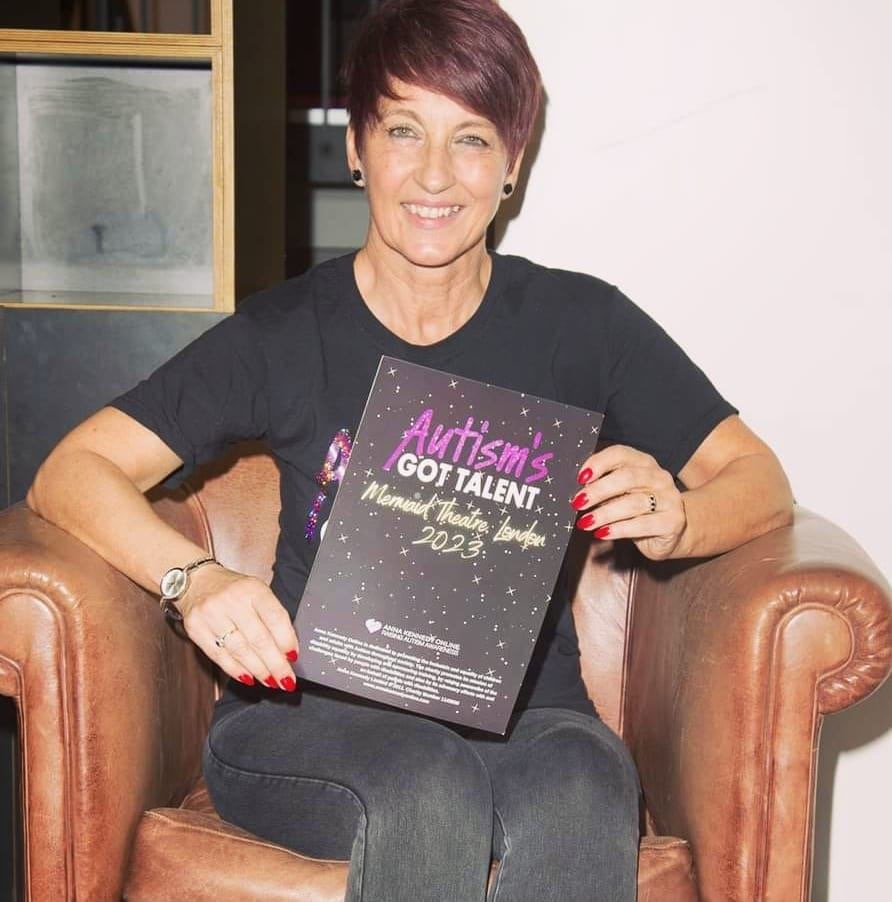
https://annakennedyonline.com Dr Anna Kennedy with charity patron Steven Smith. Photo Annemarie Bickerton

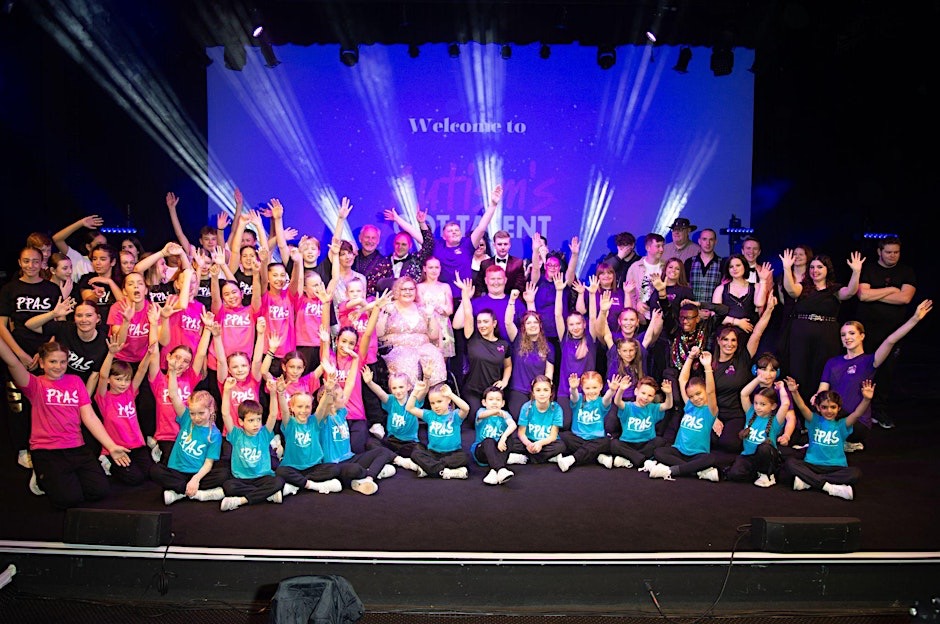
Hi it is Anna here founder of the autism charity Anna Kennedy Online. Since starting the charity in 2009, my passion has always been to raise awareness, acceptance, and understanding of autistic individuals and their families. Over the years, through our events like Autism’s Got Talent and The Autism Hero Awards, I’ve had the privilege of meeting so many incredible people who continue to inspire me every day.

This Pride Month, I want to take a moment to celebrate our autistic LGBTQ+ community members—many of whom still don’t feel fully seen or supported. Inclusion isn’t just a buzzword; it means accepting and embracing every part of who someone is. I’ve spoken to young people and families who are navigating this intersection, and I know how important it is to feel heard, respected, and safe to be your true self.

This column is a reminder that you are not alone. You matter. You belong. And we see you and your welcome at AKO Love Anna xxxx

Why do you think it’s important to recognise and celebrate Pride Month within the autism community?
Recognising and celebrating Pride Month within the autism community is important because it fosters a sense of belonging, validates the experiences of LGBTQ+ autistic individuals, and promotes greater understanding and acceptance. This recognition challenges the misconception that autism is solely a deficit and instead highlights the unique strengths and contributions of autistic people. We’ve seen this time and time again through our events such as Autism’s Got Talentand The Autism Hero Awards.

What are some of the unique challenges that autistic individuals who are also LGBTQ+ face?
Autistic individuals who are also LGBTQ+ often face the challenge of navigating two distinct communities. This can lead to increased isolation and mental health struggles. Some people I’ve spoken to find it difficult to feel fully understood and accepted, as they may not feel they completely fit within either the autistic or LGBTQ+ communities.

https://annakennedyonline.com

How does your organisation support autistic people who identify as part of the LGBTQ+ community throughout the year—not just during Pride Month?
Since launching our charity in 2009, we’ve always been supportive of the LGBTQ+ community. We’ve offered advice and support to individuals and families who’ve reached out, and we’ve proudly included many LGBTQ+ performers in Autism’s Got Talent, as well as nominees for the Autism Hero Awards. Our team includes a wonderfully diverse group of ambassadors, charity patrons, and volunteers who reflect our inclusive values.

Autisms Got Talent

Have you noticed an increase in autistic people feeling confident to express diverse gender or sexual identities in recent years?
In my opinion, yes—there is growing awareness, acceptance, and confidence among autistic individuals when it comes to expressing diverse gender and sexual identities. Research supports this trend, and organisations like Reframing Autism are playing an important role in empowering autistic people to explore and embrace who they are.

How can parents, carers, or educators better support young autistic people who are exploring their gender or sexual identity?
The most effective way to support young autistic individuals exploring their gender or sexual identity is through active listening, affirmation, and creating safe, respectful environments. This includes using preferred names and pronouns, sharing reliable resources, and helping them access both peer and professional support networks.

How can Pride events become more sensory-friendly or accessible to autistic attendees? Have you worked with any organisers to help with this?
To make Pride events more sensory-friendly, organisers should consider providing quiet zones, visual guides, clear schedules, and accessible information. It’s also vital to ensure authentic and diverse representation within the planning teams. While we haven’t yet partnered with organisers on this specifically, it’s something we’d be very open to in the future.

Do you see any stereotypes or misconceptions that still need to be challenged when it comes to autism and LGBTQ+ identities?
Yes, there are several. One persistent misconception is that being both autistic and LGBTQ+ is rare, when in fact, research shows a significantly higher prevalence of LGBTQ+ identities among autistic individuals. Another issue is the lack of visible role models and media representation. Although awareness is growing, we still need more positive stories and accurate portrayals of autistic LGBTQ+ people in the media and beyond.

What message would you like to share during Pride Month on behalf of the autistic community—especially those who often feel invisible in both autism and LGBTQ+ spaces?
My message is: “You are seen. You are valid. You are loved. Don’t be afraid to embrace your authentic self. Find your space, take your time, and know that there is a community ready to welcome and support you.”

Categories
Columns Lifestyle People Uncategorized

Welcome to Heidi Gammon’s Advice Column PRIDE addition


https://www.counselling-foryou.co.uk/about-us

Happy Pride, everyone! just reflecting on Pride I thought Id share some background about me .

Becoming a counsellor wasn’t my first career choice. From a young age, my true passion was doing people’s hair. But strangely enough, hairdressing and counselling are closely linked. You know what they say: if you can’t afford a therapist, see your hairdresser!

In my case, it actually worked the other way around. My hairdressing career took off—I specialised in colour and built a hugely successful business. My CV includes working with celebrities and the rich and famous, and my colouring talent brought me into collaboration with some of the biggest names in the hair world.

But I always had a burning desire to really listen to my clients. No matter who they were—a rock star, a socialite, or a fashion icon—it became clear early on that we all face similar challenges: heartbreak, divorce, bereavement, anxiety, depression… the list goes on. People might argue that wealthy clients don’t have the same worries, but I’ve seen both ends of the spectrum. Money doesn’t always bring happiness.

That 16-year-old girl living in a Chelsea townhouse who wants to come out to her family isn’t so different from the one growing up in a council flat. Their circumstances may differ, but they’re both human and both deserving of support.

My fascination with people and their stories led me to retrain as a therapist. But it wasn’t just my clients who inspired me—it was also my own life.

I’m a gay woman and I came out in the 1990s. It was a brave move at the time—it certainly wasn’t trendy or widely accepted. We had very few role models: K.D. Lang, Melissa Etheridge, and Ellen DeGeneres were among the few out and proud. And let’s face it, lesbian characters in TV and film were usually portrayed as mad, bad, or dead. For many of us, The Killing of Sister George was the only reference point. Though it’s a classic with sensational performances, it doesn’t exactly paint a rosy picture of lesbian life.

(That’s why I’m so looking forward to the upcoming documentary on The Gate Club—the legendary lesbian venue on the King’s Road where parts of Sister George were filmed.)

When I came out, it raised a few eyebrows—even at the very trendy Vidal Sassoon salon in central London, where I was working at the time. Once word got out, some of my regular clients switched to other colourists.

While I had amazing support from some colleagues, moving on to other salons often meant facing homophobia—surprisingly, sometimes even from gay men. It’s not something we talk about often, but it’s real. Although my inner circle included fabulous gay men, there were definitely some who didn’t welcome us lesbians with open arms.

And believe it or not, I was refused entry to some gay clubs for looking “too straight”! Apparently, I was too femme.

Thankfully, times are changing. But we mustn’t take that progress for granted. Homophobia still exists in many forms, and we need positive role models, education, and continued activism to keep moving forward.

When I started studying to become a therapist, going back to college felt surreal. One classmate broke the ice by saying, “So proud to be your first lesbian!”—we’re still great friends to this day. But not everyone was welcoming. One peer was consistently rude and passive-aggressive. It was never openly discussed, but I strongly sensed a kind of veiled homophobia. Thankfully, the rest of the class were amazing, inclusive, and my tutor was truly sensational.

Back in the day, it would have been unthinkable to be openly gay in one successful career, let alone two.

Happy Pride, everyone! Let’s celebrate how far we’ve come. There’s still plenty of work to do, but I’m proud to be waving the rainbow flag—and I can’t wait to answer your emails.

Love,
Heidi


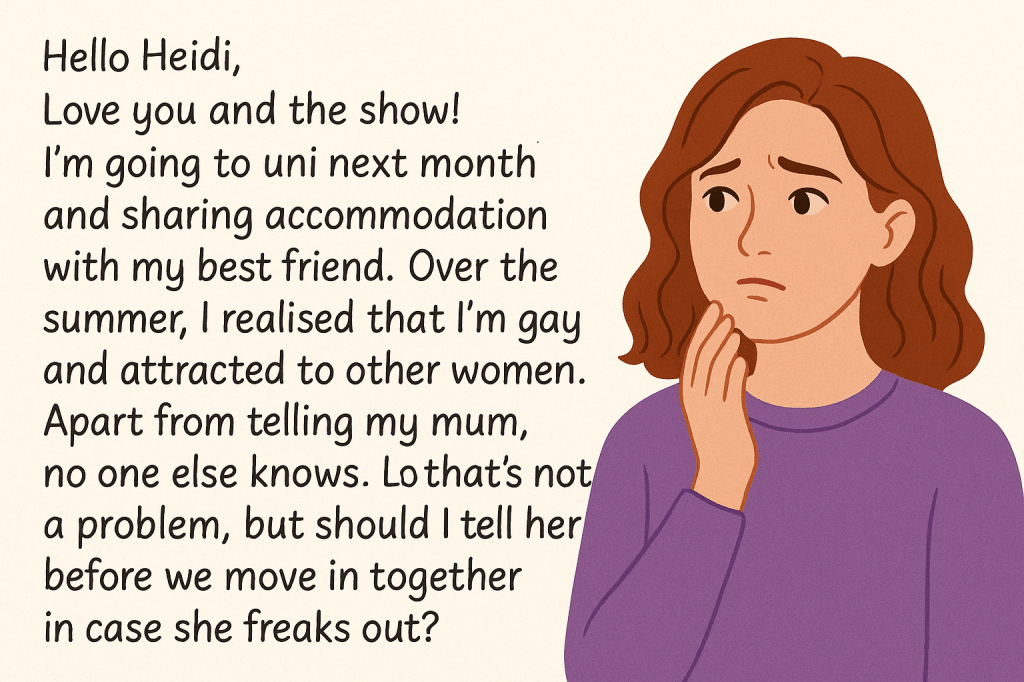
Dear Heidi,

My girlfriend dumped me before the pandemic because she enjoys clubbing and going to bars. That’s just not my scene. I’m looking for something more meaningful—I want to meet someone and settle down. But dating apps and websites scare me, and the bar scene isn’t for me.
Alex, Bethnal Green

Hi Alex,
Thank you for writing in. You’re not alone—plenty of people feel intimidated by the modern dating world. The key is to find spaces that align with your values. Consider LGBTQ+ book clubs, walking groups, art classes, or volunteering for a cause you care about. These are great ways to meet like-minded people in a low-pressure environment. And if you ever decide to try dating apps, choose ones with detailed profiles—look for people who are also looking for something serious. Take small steps—you’ve got this!
Love,
Heidi


Dear Heidi,

My girlfriend and I have been together for two years and plan to marry next year. Recently, she’s expressed a desire to try threesomes, saying it’ll “spice things up.” I don’t want to lose her, but honestly, it’s not for me. What should I do?
Madeline, Manchester

Hi Madeline,
Your feelings are completely valid. Relationships should be based on mutual respect and clear boundaries. If something doesn’t feel right to you, you shouldn’t feel pressured to agree. Talk to your partner openly and honestly—express your feelings without judgement. A strong relationship can withstand differences, as long as there’s communication and compromise. The right partner will respect your comfort zone.
Take care,
Heidi


Dear Heidi,

I’m 19 and come from what you’d call a “rough” family. My two brothers and I are all amateur boxers. My dad is a real “man’s man” and uses words like “queer” as an insult. I’ve been dating girls to hide who I really am, but one of them suspected something when I didn’t want to go all the way—she called me a “poof.” I love my family, but what can I do, Heidi? Should I risk coming out?
Mike, Blackpool

Dear Mike,
Thank you for your honesty. Coming out is deeply personal, and only you can decide when the time is right. It’s okay to take your time. You don’t have to come out until you feel safe and ready. Remember, there’s no shame in protecting yourself emotionally and physically. If you ever feel unsafe at home, reach out to LGBTQ+ support groups—there is a community out there that will support and celebrate you for who you are. You’re not alone.
With warmth and strength,
Heidi.

END

https://www.counselling-foryou.co.uk/about-us Do you have a question for Heidi e-mail us at spman@btinternet.com. mention Heidi

Categories
Columns Culture People

June’s Book Club with David Nailer

Hello darlings! It’s time for David’s Book Club Reviews, and I’m absolutely thrilled to be joining the fabulous folks at 2SHADES this month. What a dazzling array of reads we’ve had!

From a sSmelly kid who defies the odds to become a number-one porn star and entrepreneur (yes, really!) to a stylish serial killer stalking London’s high society and showbiz darlings—this month’s selection did not disappoint. And let’s not forget the gripping Bleeding Fabulous: The Life of a Haemosexual—a memoir bursting with sequins, survival, and serious heart.

There’s also a gorgeously dark gothic horror set in Victorian London that sent shivers down my spine and had me clutching my feather boa in suspense. Plus, 13 other twisty, chilling, and utterly addictive short stories in Criminal Pursuits 2—each one more devious than the last.

Yes, my loves, they all get five stars from me. Call me generous if you will, but I had an absolutely fabulous time reading every single one. Drama, danger, glamour, grit—and always a twist in the tail. What more could a queen ask for?

If you’re looking for thrills, spills, and a few cheeky chills, these are the books to curl up with (preferably with a cocktail in hand).

Until next time,
Love, David 💋

Screenshot

Review of Criminal Pursuits 2: This Is Me – 14 Dark Gems of Crime Fiction
⭐️⭐️⭐️⭐️⭐️

Criminal Pursuits 2: This Is Me is a superbly curated anthology of fourteen dark, twisted, and utterly engrossing short stories from some of the sharpest minds in contemporary crime fiction. As with the first volume, this second instalment delivers diverse voices and inventive plots, drawing readers into a variety of shadowy worlds where justice is murky, morality bends, and the human psyche is pushed to the brink.

Each story offers a unique lens into the criminal mind—ranging from psychological thrillers to revenge tales, noir romance, dystopian pacts, and unnerving hauntings. From the man teetering on the edge of a high building, to the woman whose inheritance turns deadly, the anthology brims with tension, clever twists, and haunting imagery. There’s a satisfying blend of styles, from hard-boiled grit to eerie suspense, that keeps the pacing lively and the reader guessing.

But the undeniable standout is Killer Queen by Steven Smith.
Stylish, razor-sharp, and steeped in a deliciously dark sense of camp, Killer Queen turns the serial killer trope on its head. Smith’s flair for the dramatic meets a gritty crime plot as he introduces a killer with charisma, vengeance, and unrelenting flair. The story pulses with queer energy and glittering menace, without ever losing sight of its emotional core. It’s daring, provocative, and gloriously subversive—exactly the kind of story crime fiction needs more of.

This powerful collection includes a heartfelt foreword by Lisa Allen, CEO of Pink Ribbon, who reminds us of the real-life battles many face every day. Fittingly, all profits from this anthology go to the breast cancer charity Pink Ribbon, making this both a gripping read and a meaningful cause.

An absolute must-read—for your bookshelf and your heart.

Review of Smelly Kid by Andy Lee 

Smelly Kid by Andy Lee (with Dave Taylor) is a raw, unflinching memoir that grips you from the first page and never lets go. With a title that hints at both humour and hardship, the book plunges readers into the unforgiving world of a poverty-stricken Dublin childhood, where abandonment, hunger, and homelessness were part of daily survival.

By the age of twelve, Andy had already experienced more loss than many do in a lifetime—left without parents and living on the margins of society. What makes Smelly Kid so compelling, however, is not just the depth of suffering, but the incredible resilience that rises from it. Through heartbreak, Andy never loses his fighting spirit, and his story becomes one of transformation and hope.

Lee’s voice is honest, gritty, and disarmingly humorous. He recounts harrowing moments with clarity and purpose, but also with surprising warmth. Whether it’s finding brief refuge in the kindness of a stranger or navigating the chaotic streets of inner-city Dublin, his story resonates with a raw authenticity. His later journey into the adult entertainment industry is told with the same candid honesty, showing how unexpected paths can lead to reinvention and, ultimately, self-empowerment.

Smelly Kid is not your typical rags-to-riches tale. It’s more than a memoir—it’s a testament to human endurance and the possibility of hope in even the bleakest circumstances. Gritty, heartbreaking, and ultimately inspiring, this is a story that lingers long after the final page.

For anyone who believes that the past defines the future, Andy Lee proves otherwise. Smelly Kid deserves its glowing 4.8-star rating—it’s bold, unforgettable, and deeply moving.

⭐️⭐️⭐️⭐️⭐️

The Soul Thief by S.L. Howe – 

Samantha Lee Howe’s The Soul Thief is a deliciously dark slice of gothic horror that plunges readers into the chilling depths of Victorian Manchester. A haunting and atmospheric tale, this novel is perfect for fans of Sarah Waters, Carly Reagon, and anyone who enjoys eerie mysteries by candlelight.

Set in 1888, the story follows the weary Dr. Warren Carter as he navigates long, gruelling nightshifts at a hospital cloaked in shadows. When the enigmatic and beautiful young nurse Rosie vanishes without a trace after a late-night drink, the unsettling tone is set. More disappearances follow, and soon, a private investigator is drawn into a web of creeping dread and escalating horror.

Howe masterfully conjures a fog-soaked world where danger flickers just beyond the reach of gaslight. The novel’s strength lies in its brooding atmosphere, tight pacing, and an undercurrent of psychological unease. From the moment Dr. Carter’s carefully ordered world begins to unravel, readers are drawn into a nightmare that feels both timeless and intensely personal.

The writing is richly evocative, and the characters are sharply drawn—each with secrets that deepen the mystery. The blend of supernatural elements with the harsh realism of Victorian medicine creates a visceral contrast that heightens the suspense. The twists are deftly delivered and genuinely surprising, with the final chapters veering into thrilling, pulse-pounding territory.

With glowing praise from readers and reviewers alike, The Soul Thief delivers on every gothic promise: a crumbling setting, spectral threats, and a slow-burn horror that lingers. This is a novel to savour on stormy nights, ideally with a flickering candle and a cup of something strong.

Dark, twisty, and utterly absorbing, The Soul Thief is Victorian horror at its finest.

⭐️⭐️⭐️⭐️⭐️

Review of Bleeding Fabulous by Mark Ward –

Bleeding Fabulous: The Life of a Haemosexual is a powerful and unapologetically bold memoir by Mark Ward—a man whose life defies the odds, the stigma, and the silence surrounding one of the darkest chapters in UK medical history. With extraordinary candour, wit, and resilience, Ward recounts his journey from an ordinary boy in Letchworth to becoming the world’s first LGBTQ+ Ambassador for Haemophilia.

Infected with blood-borne viruses through contaminated NHS blood products, Ward faced not one, but multiple death sentences. Yet, as he puts it, “Faced daily with my own mortality, I chose to live fabulously.” And live fabulously he does—feather boas and all—delivering a narrative that is as heartbreaking as it is uplifting.

Far more than a personal story, Bleeding Fabulous is a searing indictment of the Infected Blood Scandal, a tragedy that devastated thousands. Ward’s role in campaigning for justice, including his instrumental work toward securing the long-awaited public inquiry, demonstrates his tireless courage and commitment to others affected by bleeding disorders, regardless of their sexuality.

What sets this memoir apart is its fearless humour, warmth, and emotional honesty. Ward invites readers into the rawest parts of his life, without ever losing his sense of style or spirit. His writing is elegant, often funny, and always deeply human. With a foreword by Sam Stein KC and praise from leading legal and medical voices, this memoir is both a personal triumph and a vital historical record.

Bleeding Fabulous is, quite simply, remarkable—a testimony to survival, to living boldly, and to fighting for truth and dignity in the face of systemic injustice.

⭐️⭐️⭐️⭐️⭐️
A beautifully written, fiercely important, and undeniably fabulous read.

TATA FOR NOW . XXX David

Categories
Culture Lifestyle People

London’s Hidden Gem: The Firepit Gallery

Dr Anna Kennedy with the legendary John Lee Bird Gallery owner Marcus Jake .

In a city as vast and ever-evolving as London, it’s becoming increasingly rare to stumble upon a space that immediately feels like you’ve entered somewhere truly special. Tucked away on the Greenwich Peninsula, just a stone’s throw from the O2 Arena, The Firepit Gallery isn’t just another art venue — it’s a living, breathing community. The moment you step inside, you are immersed in a kaleidoscope of colour, creativity, and character. It feels like a sanctuary, a hive of inspiration and warmth, especially for those with an eye for flair, originality, and a desire for genuine connection.

Recently, Firepit Gallery played host to the closing night of The Autism & Art Show, a vibrant and inclusive celebration of neurodiverse talent. The event brought together an eclectic mix of artists and creatives, showcasing a dynamic range of work that broke boundaries and challenged perceptions. On hand to mark the occasion were some of the most exciting and diverse voices in the art world. Spanish-born street artist Piluca, known for her bold murals and graffiti-inspired work, joined celebrated photographer and artist Annemarie Bickerton. Also exhibiting was Alistair Blaster Artz, whose bold, futuristic pieces drew crowds.

Dt Anna Kennedy OBE with the acting royalty Vicki Michelle

The legendary John Lee Bird made a much-anticipated appearance, arriving just in time to greet Dr. Anna Kennedy OBE, a champion of autism awareness and inclusion. It’s moments like these — the spontaneous meetings, the shared laughs, the applause and admiration — that make the Firepit feel like much more than just a gallery. It’s a place where emerging and established talents mingle with activists, celebrities, and visitors from all walks of life. A kind of creative salon, echoing the golden age of artistic gatherings in Paris and London, where art wasn’t just displayed — it was lived.

Firepit is a home for Annemarie Bickerton celebrity photographer and artist .

I once described The Firepit as “the Willy Wonka of the art world,” and the comparison still holds true. There’s a sense of wonder in every corner, from the ever-changing exhibitions to the vibrant murals, installations, and sculptures that inhabit the space. It’s a gallery, yes, but also a home — one with a full-stocked bar, laughter in the air, and a real sense of belonging. It feels like stepping into a dreamscape where the lines between artist, viewer, and friend gently blur.

At the heart of it all is Marcus Jake, the visionary behind The Firepit Gallery. Marcus isn’t just the founder — he’s the soul of the place. Equal parts curator, host, mentor, and mischief-maker, Marcus has created something rare: a truly inclusive, vibrant, and welcoming environment where everyone feels seen. Whether you’re a collector, a curious wanderer, or someone simply seeking a safe and inspiring space, Marcus will greet you with open arms and infectious enthusiasm.

Gallery owner Marcus Jake

His vision for Firepit goes far beyond traditional art world boundaries. The gallery regularly hosts workshops, talks, performances, and community events. It’s a beacon of light for the LGBTQ+ community, a space where self-expression isn’t just accepted — it’s celebrated. From drag evenings to life-drawing classes, from vinyl DJ nights to panel discussions about mental health and inclusion, Firepit’s calendar is as diverse and electric as its art.

One of the gallery’s standout features is its monthly wine-tasting and dinner evenings. These events are less about formality and more about connection. Attendees gather around a long communal table, sampling wines and sharing stories while surrounded by stunning artwork. The conversations flow freely, from art and culture to politics, identity, and everything in between. These evenings have become a cherished ritual for many — a time to pause, reflect, and feel part of something bigger.

There’s also something very special about the way the gallery bridges the gap between high art and community. Too often, galleries can feel cold or elitist, but Firepit is the opposite. Here, art is accessible, emotional, and rooted in lived experience. Visitors are encouraged to talk to the artists, share their responses, and engage with the work on a personal level. Whether you’re buying your first print or attending your tenth show, you’re treated as part of the Firepit family.

The gallery’s physical space mirrors this ethos. With its industrial-chic aesthetic, vivid lighting, and rotating displays, it feels ever-changing yet instantly familiar. The bar is often the social centre of the room, where Marcus and his team are on hand not only to pour drinks but also to engage in meaningful conversation. There’s a nostalgia to the place — a reminder of the old salons and cabarets of Paris and Soho, where people came not just for the art, but for the dialogue, the inspiration, and the community.

Hanging out at The Firepitt with artists and friends

As London changes and gentrification continues to reshape its cultural spaces, The Firepit stands as a powerful counterpoint — fiercely independent, passionately inclusive, and gloriously vibrant. It’s a place where stories are shared, identities are embraced, and creativity flows freely.

In many ways, The Firepit Gallery is more than just a hidden gem. It’s a movement. A space that proves that art still has the power to unite, to challenge, and to heal. Whether you’re attending an exhibition, joining a wine tasting, participating in a workshop, or simply popping in for a chat, you leave feeling uplifted, seen, and inspired.

And perhaps that’s the greatest magic of all — not just what you find at The Firepit, but what it awakens in you.

So next time you find yourself near the O2, take a detour. Step into this creative haven where art, community, and a touch of magic collide. You may just discover your new favourite place in London.

The Firepit Gallery
No.2, Upper Riverside
10 Cutter Ln, Ground Floor Unit
Greenwich Peninsula
London SE10 0XX
📧 info@firepit.art
🌐 www.firepit.art

Categories
Columns People

Review: What It Feels Like for a Girl

xxxxxx 5 star


https://www.bbc.co.uk/iplayer/episodes/m002c6nx/what-it-feels-like-for-a-girl

There is no doubt that What It Feels Like for a Girl is one of the bravest, boldest, and most emotionally charged dramas the BBC has aired in recent memory. Dark, funny, and deeply moving, it doesn’t pull punches — and nor should it. In today’s climate, where LGBTQ+ rights are often politicised and marginalised, this series dares to dig into the raw truth of what it can feel like to grow up queer, different, and determined in an often hostile world.

At the heart of the drama is Byron — a teenager who doesn’t so much come out as leap flamboyantly out of the closet in heels and an acrylic wig. It’s a bold characterisation, and one that instantly divides viewers between admiration and concern. Byron is played with remarkable energy and vulnerability by the talented Elis Howard, whose performance captures both the sass and sadness behind a young person trying to define themselves on their own terms. Byron is no victim — he’s fierce, intelligent, witty — but the world he moves through doesn’t always treat him with the same kindness or understanding.

The series is packed with dynamic performances, but none more compelling than Jake Dunn as the chilling and unpredictable Liam. Liam is, quite frankly, terrifying — a young man full of rage, confusion, and violence, embodying a dangerous masculinity that feels all too familiar. Dunn’s performance is nothing short of remarkable, tapping into a deep well of menace and vulnerability. It would not be surprising to see this role lead to awards recognition — it’s a BAFTA-worthy turn from a young actor in complete control of his craft.

Jake Dunn as Liam has to be up for BAFTA

Just as striking is Michael Socha as Byron’s dad, Steve. Socha — one of the UK’s brightest acting talents, known for his powerful work in Big Boys Don’t Cry — brings incredible depth and complexity to a role that could easily have slipped into cliché. Steve is a working-class father trying to love and protect his child while also wrestling with his own fears, prejudices, and sense of masculinity. He isn’t perfect, but he tries — and that attempt, that effort to understand, is what gives the performance its emotional weight. Socha makes Steve both gruff and tender, occasionally heartbreaking, and always utterly human.

One of the UK’s finest actors Michael Socha gives a brilliant dimensional performance as Steve https://www.bbc.co.uk/iplayer/episodes/m002c6nx/what-it-feels-like-for-a-girl

The supporting cast is also excellent, rounding out a story that never feels one-note. Each character serves as a window into different facets of LGBTQ+ identity, family dynamics, and the brutal realities of adolescence. The script, while occasionally unflinching in its language and choices, never feels exploitative. Instead, it invites the viewer to sit in discomfort, to examine their assumptions, and to witness the daily negotiations and dangers that queer teens may face.

However, it would be dishonest to pretend the series is perfect — or without controversy.

In a time where LGBTQ+ and particularly trans communities are under increasing attack — in the media, in politics, and in public life — there is a growing call for stories that offer more balance, more hope, and more variation. While What It Feels Like for a Girl is undeniably powerful, it risks reinforcing some deeply damaging tropes. The depiction of young gay men becoming involved in sex work or aggressively pursuing unavailable straight men plays into harmful stereotypes that many activists and members of the LGBTQ+ community have spent decades working to dismantle.

There is a danger that a show like this, no matter how well-crafted, could be misinterpreted by those looking for ammunition to further vilify queer lives. It’s a delicate balance — representing the reality of some without suggesting it’s the reality for all. And in this case, that balance feels slightly off. Yes, some young people do struggle in these ways. But others do not. Some grow up in supportive families, thrive at school, fall in love safely, and live joyfully. Those stories matter too.

In many ways, this series is a reminder of the importance of representation — and the challenges that come with it. Authentic queer storytelling is vital, but so is diversity within that storytelling. Not every queer teen is a tragedy, and not every narrative needs to be soaked in trauma. What we need now, more than ever, is nuance. The right to be messy, yes — but also the right to be happy.

Despite these concerns, What It Feels Like for a Girl remains compelling, necessary viewing. The direction is confident and unflinching, the writing brutally honest, and the performances — particularly from Dunn, Howard, and Socha — are unforgettable. The series asks difficult questions and offers no easy answers. And perhaps that is its greatest strength.

This isn’t a show that ties everything up in a bow or gives us a neat resolution. It leaves viewers unsettled, maybe even angry. But it also invites conversation. It asks us to sit in the discomfort of the truth and to consider how we might do better — as parents, as friends, as a society.

In the end, What It Feels Like for a Girl doesn’t pretend to speak for everyone. It tells one version of the truth — raw, messy, painful, and defiant. It may not be the perfect flag-bearer for LGBTQ+ representation, but it doesn’t need to be. What it does do is open the door. It gets us talking. It reminds us that behind every label is a life — complicated, beautiful, and worthy of understanding.

https://www.bbc.co.uk/iplayer/episodes/m002c6nx/what-it-feels-like-for-a-girl

END

Categories
Health and Fitness Lifestyle Uncategorized

AGE is Just a Number… But There’s No Need to Keep Bringing It Up!


Stevens Viewz

By Steven

I couldn’t agree more with the divine Joan Collins—who, as a fellow Gemini, always knows how to speak her mind. Just last month she said, “It is rude to ask a lady her age.” And I say, absolutely right. While we’re at it, let’s extend that rule to men, too. Age should never be the first thing people bring up at the dinner table—or anywhere, really. Yet, for some strange reason, some people still haven’t got the memo.

Even the legendary Ms Collins never misses a moment to bring up age on her own terms, and good on her. The problem is when others decide it’s their business to discuss or dissect your age as if it’s a defining feature of who you are.

Trust me, being asked, “Guess how old I am?” is the social equivalent of stepping on a rake. It’s awkward, unnecessary, and usually driven by vanity or insecurity. Worse still, when someone asks you how old you are in front of a group—what exactly are they hoping to achieve? Shock? Admiration? Or a bit of good old-fashioned one-upmanship?

Pictures by Graham Martin

Personally, I’m incredibly proud of the age I’ve reached. I’m in great company—hello, Tom Cruise and Boy George! To be able to say I’ve lived a full and colourful life, packed with lessons, laughter, a few bruises and many blessings, is something I treasure. But that doesn’t mean I want to be constantly labelled by it.

is 60 the new 40 well George and I hit 64 and still partying

Still, I must admit, the age hang-up isn’t mine—it’s other people’s. I’ve been at parties where someone makes an entrance like a movie star arriving late on the red carpet. You know the type—deliberate delays, dramatic flair, sunglasses indoors, and a whole production just to let everyone marvel at how good they still look. And yes, they do look amazing, but does everything have to revolve around how young or “well-preserved” someone is?

I’ve even been in situations where my own friends—who happen to look much younger than their age—draw the same “oohs” and “aahs.” I once attended a dinner with a long-time friend who, despite being in his twenties, has the soul and intellect of someone in his seventies. We were seated with a man I didn’t know, and from the moment he sat down, the conversation steered toward age. He asked if we still went clubbing, commented on siestas as “old man naps,” and suggested that we must prefer quiet evenings now. I stopped him mid-flow and said, “Darling, I don’t do the age thing or put labels on people.”

That’s when it hit me: his obsession with age wasn’t about us—it was about him. My young friend whispered to me later, “He’s projecting his own fears onto you.” And he was right. So many people are battling their own discomfort with growing older, and instead of embracing it, they try to deflect that discomfort onto others. Sad, really.

But here’s the truth: age isn’t a limit or a barrier unless you make it one. I’ve always envisioned myself living with a bit of swagger—relaxed, charming, and totally unbothered. I’ve seen people in their 70s, 80s, and 90s absolutely raving—living their best lives, dancing under disco lights, refusing to be boxed in by the number on their birth certificate. And I say: why not?

Of course, your priorities change. These days, I enjoy good dinners, meaningful conversations, and yes, a nap if needed. But that doesn’t make me any less fun, adventurous, or alive. I just don’t have the patience for drama or superficiality anymore—and I count that as progress.

Teenager to now .. living life to the full

One thing I wish people would do more is just be. Enjoy where you are, who you’re with, and the life you’re living. Stop measuring your worth—or anyone else’s—by youth, appearance, or how “on trend” you are. Confidence, kindness, and curiosity will outlast collagen and hair dye any day

So yes, age is just a number, and we should all be proud of the years we’ve lived and the experiences they’ve brought us. But really—can we stop bringing it up every five minutes?

END

64 years old and proud .

Categories
Health and Fitness Lifestyle Uncategorized

Sleeping Soundly: How Michelle Langer’s Wellbeing Workshop Changed My Nights By Steven Smith


www.michellelanger.com/about

Sleep. It’s something most of us take for granted—until we can’t get any. For years, I struggled with sleepless nights, tossing and turning while my mind refused to switch off. That changed when I discovered that Michelle Langer, an old friend and wellbeing expert, was running a sleep workshop at Soho House in White City. What I experienced there genuinely transformed my approach to rest and relaxation.

I’ve known Michelle for over twenty years. One of my most unforgettable memories with her goes back to a holiday in Sitges. We’d hired a large pedalo and taken it out to sea. I was in charge of steering while Michelle and the late journalist Lester Middlehurst went for a swim. The Mediterranean was calm—until I spotted a giant Portuguese Man O’ War drifting nearby. I shouted a warning just in time, and what followed was pure chaos: a near-hysterical Lester trying to save himself by pushing Michelle underwater! Thankfully, no one was hurt, but the memory of that surreal moment has stayed with me ever since.https://www.youtube.com/watch?v=j26AqJKd-F4

Years later, I ran into Michelle again on the set of Dancing on Ice. We hadn’t seen each other in ages, but the reunion was lovely. A few of my friends in the show were clearly starstruck when they realised I knew her. “She’s the producer!” they whispered in awe. Yet Michelle was as grounded and unassuming as ever—no airs, no ego. As they say, never judge a book by its cover.

When I heard she was running a sleep workshop, I knew I had to go. I was amazed by how many people were there—each of us grappling with our own version of sleeplessness. Some shared personal stories, while Michelle delivered her guidance with grace, empathy, and deep insight. She offered a range of techniques, but one in particular completely changed the game for me. For the first time in ages, I began to feel like I’d actually slept. The workshop lasted just 55 minutes, but the results have been lasting.

Here’s a summary of some of Michelle’s top sleep strategies—simple yet powerful tools that can help you drift off with ease.

Breathing & Relaxation Techniques
Try the 4-7-8 Breathing Method: inhale for 4 seconds, hold for 7, exhale slowly for 8. It soothes the nervous system and helps you wind down.
Box Breathing is another great option—inhale, hold, exhale, and pause for 4 seconds each. This helps calm anxious thoughts.
Progressive Muscle Relaxation starts at your toes: tense each muscle group for a few seconds, then release as you breathe out, moving slowly up your body.
Diaphragmatic (or belly) breathing, where you allow your stomach to rise and fall with each breath, helps trigger the body’s rest-and-digest response.

Behavioural & Environmental Sleep Aids
Establish a gentle wind-down routine: dim the lights, read a book, take a warm bath, or journal.
Stick to a consistent sleep schedule—even on weekends—to regulate your internal clock.
Avoid screens for an hour before bed. Blue light suppresses melatonin and keeps the brain alert.
Apps like CalmHeadspace, or Insight Timer offer guided meditations and sleep stories that help quiet the mind.
Essential oils such as lavender or chamomile can be diffused or spritzed on your pillow for a natural calming effect.
Finally, make your bedroom a haven: keep it cool, dark, quiet, and clutter-free for optimal rest.

Michelle’s background is as impressive as it is diverse. A Cambridge graduate with 30 years’ experience as a television executive, she understands pressure, deadlines, and public scrutiny better than most. She now channels that experience into her work as a Wellbeing Consultant and Executive Coach. Personally trained by Dr. Deepak Chopra at The Chopra Centre for Wellbeing, she’s spent over fifteen years teaching mindfulness, meditation, and stress reduction strategies to public figures, CEOs, and individuals worldwide.

Michelle is also an accredited member of the Association of Facilitators and works as a coach for Arianna Huffington’s Thrive Global. Her client list reads like a who’s who of corporate and entertainment powerhouses—Microsoft, Accenture, Pfizer, Mastercard, NFL, Channel 4, and many more. And if that weren’t enough, she co-founded Tranquillo, a unique experience that blends live cello by world-class musician Jane Oliver, guided meditation, and essential oils into deeply immersive wellbeing sessions for companies.

If you’ve ever struggled with sleep, I can’t recommend Michelle’s work highly enough. A short session may just make a lifetime of difference.

For more about Michelle and her services, visit: www.michellelanger.com/about