Categories
Columns People

A gender Neutral Bond ?


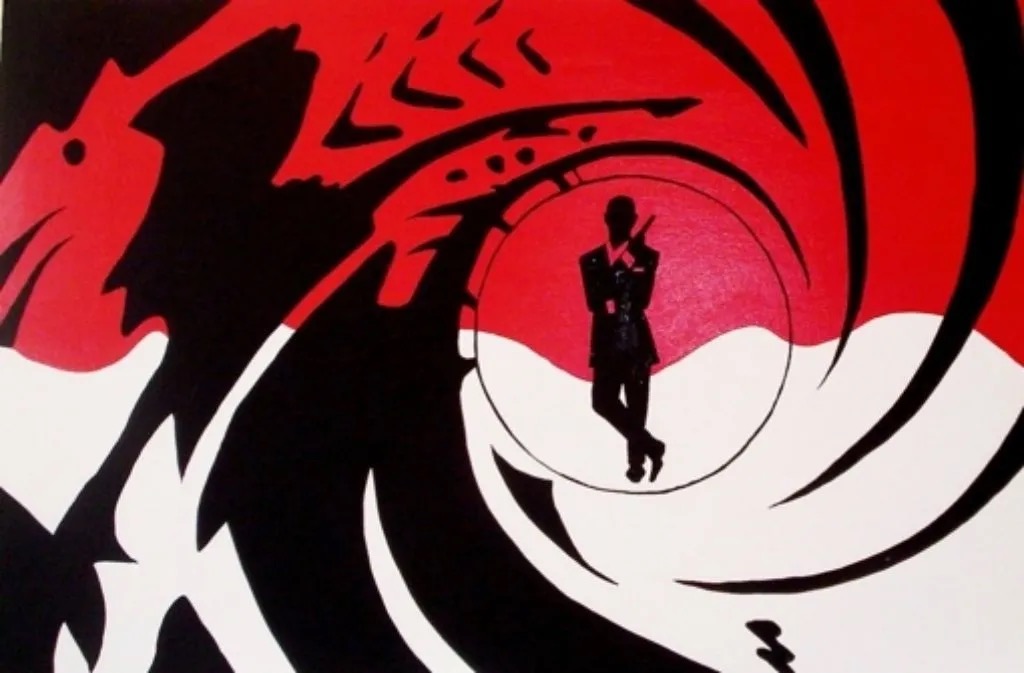
A gender-neutral James Bond? The idea has left me not just stirred, but shaken. It is time to put the brakes on the more extreme woke and cancel culture, otherwise I predict that we will soon see an enormous backlash against some of the minority groups in our country. Some more extreme activists undo the hard work, sacrifices, and tireless fighting of the many heroes of the LGBTQ+ community which gave us the rights we have now. 

When I first heard the news that there could be a gender-neutral James Bond, all I could think was “NO!”. James Bond was created by the writer Ian Fleming. The character studied at Cambridge University, where he achieved a first in Oriental Languages. In Fleming’s novels, Bond alluded to briefly attending the University of Geneva (as did Fleming) before being taught to ski in Kitzbühel. His character is rumoured to be based on Sir William Stephenson. In fact, Fleming’s first choice actor to play James Bond was David Niven. It is documented that Fleming was less than impressed by Sean Connery playing what he called a glorified stunt man who used to drive a lorry. What the character was certainly not was trans, gender-neutral or a woman. 

We do not need to rewrite the classics to force inclusion. Instead, we need to positively and proactively introduce strong gay characters into new films, television series and cartoons.

Boarding school

True, in “Skyfall,” Daniel Craig’s Bond hints that he may have tried sleeping with a man (it was almost cut). Let’s face it, while the character may be fictional, he did go to boarding school, so it is a plausible possibility. Craig is considered the closest actor to Fleming’s original description of Bond in the first novel. Casino Royale was published in 1953, with a further 11 novels making up the series.  

According to the book, Bond was a womaniser, a man’s man. Rather the antithesis of a gay or gender-neutral person. He embodied, for the most part, what heterosexual men aspire to be, next to being a footballer or sports star. If those fighting for change and we all are were sensible, they would leave well alone and leave this classic macho character to be just that.

There is, for sure, room for LGBTQ+ superheroes or villains on mainstream television or in films. It is important that everyone is given roles to give exposure to all communities. But this needs to be positive exposure, done with tact and not at the expense of “the other side”. 

Lesbian Snow White

I do not want a lesbian Snow White. Nor do I want a socially challenged Queen with narcissism issues carrying a fair-trade organic apple. Or Cinderella, who obviously lost the shoe because she was drunk, being transformed into Buttons, who lost his shoe while getting ready for Ru Paul’s Drag Race. Or Indiana Jones and the Last Top on Old Compton Street. Leave them alone!

Sure, many of us in the LGBTQ+ community did not have role models growing up and those of us who grew up in the 70s and 80s can thank God for Bowie and T-Rex, Boy George and Quentin Crisp!

We do not need to rewrite the classics to force inclusion. Instead, we need to positively and proactively introduce strong gay characters into new films, television series and cartoons. Netflix recently released “Single All The Way,” which was a brave attempt at exposing general audiences to gay characters with a sense of normality – just a typical rom-com where the main characters just happened to be gay (it’s a shame though that Jennifer Coolidge could not save that turkey!). But, as my sister says, heterosexuals have to endure Hallmark. It is only fair we have a bad movie too.

Joan Collins

The last thing we need is to start to attack something that is seen as masculine or feminine and try to turn what is seen as a heterosexual character into an LGBTQ+ character. If the heterosexual community thinks we are attacking them, we are in trouble as fear has caused more wars in history – that is what will happen if we attack their foundation.

Why do we need to do this when so many of our community are such heroes? 

Joan Collins has so eloquently expressed that cancel culture is a problem, but so are extremists in the LGBTQ+ community. Trust me: we have a huge backlash approaching as extremism in any group is not a good thing. All the incredible work so many in the community have dedicated themselves to accomplishing to fight for our community rights can quickly be undone. We are already seeing this unravelling –  homophobic hate crimes have trebled in the UK this year…and that’s just crime that is reported. 

Mermaids

Talking, not arguing, is the way forward. Recently, I had the pleasure of having drinks with two friends. The topic of trans children came up. I know many trans activists who think children should wait until they are 18 years old to start treatment but are frightened to say so in case they are cancelled or abused on social media. I was wondering what the author’s perspectives were, and the conversation quickly went quiet. So, we moved on. Later in a very entertaining hour or so, the subject of Mermaids, the charity for trans children and their parents. It turned out that one of the groups had been involved with the charity. I asked if they had gone quiet before as the subject had offended them. They said no: they just said they didn’t want an argument. The statement “I do not argue, I merely correct” sprung to mind as they said this, and it made me realise that different perspectives within the LGBTQ+ community may not be heard. We need to calmly listen to one another, as we still have a lot to learn. Thanks to the conversations I have had, I have learned a different point of view and, that night, I started to look into Mermaids and find out about how they help trans kids who need support through what, for many, is a difficult and often traumatic experience.

The LGBTQ+ community is still under attack every day. Like all wars, a good strategy is a key factor in survival. Education in schools is essential – using positive role models and making kids feel safe who do not fit the masculine or feminine stereotypes. This is still going to take time, understanding, and some amazing people to give a strong voice to this community. This is NOT going to be achieved by trying to rewrite classic characters, as this will only antagonise those not affiliated with the community.  

If we do not box clever, one day, we could wake up to someone ruling the world that will make Trump look like a fairytale character. Just think back to 1933 when a failed artist persuaded an entire nation to turn against minorities. Let’s not be naive and think it could not happen again.

Daniel Craig My favourite Bond

Contact  Steven. Smith on 07969106222 

Categories
Columns People

The Rise in Male Rape.

Stephen Merchant stars as Stephen Port (inset) in the BBC drama Four Lives

This article was first published five years ago But is very relevant right now.

Ten years ago, on a warm summer’s afternoon I am in a well-known clothes rental store getting a kilt for a Scottish friend’s wedding (I have since bought one) laughing and chatting with the lady who’s serving me. She is about to measure me up when a male assistant interrupts.

“Oh, I can see what size he is, I’ll pop down and get a couple for him to try.”

There is nothing unusual here and the lady shuffles off. Minutes later the man returns and ushers me to the changing room. “Try that one on first” – and he leaves me. Barely seconds before I have it on, he is back. This time he has tape measure in hand. “Oh, that’s too loose, let me double check the measurements.”

Are you gay?

To be honest, I really loathe trying clothes on in shops, so my thought was, at this point, that was what that girl was doing before you interrupted. Before I know it, he has the tape measure around me and as he releases it his hand goes up the kilt and he grabs the Crown Jewels. “Sorry, it slipped, I’ll get you the right size.”

Now I feel like a rabbit in the headlights. “Did that just happen?”

If I am left in any doubt, he returns with a third kilt in hand and whispers,

“Are you gay?”

I lie and say no!!! Taking the kilt I close the curtains on him and just stand there thinking “What the fuck?” Funnily enough, the lady who was originally serving me checks me out while he is nowhere to be seen.

Anyone reading this may well say, “The man doth protest too much.” But unless you have been sexually assaulted, you have no idea how you will react.

My first thought was, what did I do to encourage that behaviour? Second, if I complain, it is going to be, “You’re a gay man, you must have encouraged it.” If you were that traumatised you should have run out of the shop.”

My gay friends were not any help either. “Lucky you, dear, you’re no chicken but the boys keep coming”, one laughed. “It can only happen to you,” said another. “Do you have his number?”

Your correspondent

This is not the first time this kind of thing has happened to me. I don’t want to sound like a victim but I always blame myself. Much as I have been out since 15 and a spokesperson for LGBTQ and Walk with Pride, due to various experiences there is still some shame and trauma around my sexuality. But I built a wall around myself so nobody can tell.

Terrified

This experience is common to so many gay men I have spoken to who have been sexually abused or raped. “We must have done something to deserve this.” Trust me, this is not unusual. There are men, gay and straight, walking around who have been raped and are terrified anyone finds out.

My heart goes go out to the bravery of Sam Thompson. What a man. Sam was raped by two men in Manchester. He has led the way in encouraging reporting and talking about sexual abuse and rape.

Sam Thompson (pic, BBC)

Though in macho British society men are raised on the “big boys don’t cry” motto, we are getting better. Talking about feelings is hard for men because society’s labelling of what a man should. It’s almost impossible to live up to.

What really stands out about Sam’s horrific ordeal – he is heterosexual – is there are so many comments claiming that it must have been so much worse for him as he was straight.

Internalised homophobia

This shows a complete lack of understanding. And exactly one of the reasons there is so much shame around reporting being raped among both gay and straight men. It’s as if it was “not as bad” if you’re gay. Almost as if we would take some pleasure in it.

Another human forcing them on you is wrong, no matter what your sexuality is. The fear that you’ll be judged can be as bad as the act itself. Sexual-awareness experts say that probably only nine percent of men raped or sexually abused will report it due to the fear they won’t be seen as “real men” or, perhaps, because of internal homophobia.

In fact, many of the men who commit the act of rape don’t identify as gay. They are not typically to be found on the gay scene, though they may hunt on the periphery for victims.

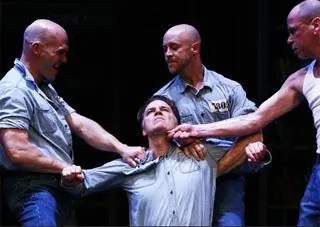
Who could forget the film “Shawshank Redemption” set in a prison when Andy, the hero, hears that the nicknamed “Sisters” (three men) have taken, “a shine to him”? Andy replies, “I don’t suppose it would help if I told them I am not homosexual?”

Red replies, “Neither are they. You’d have to be human first. They don’t qualify.”

Shawshank Redemption (pic: Columbia Pictures)

Male rape has been seen as a taboo subject in the media. It only raises its head in the prison genre of movies. It caused shock revelations when the movie “Scum” came out in 1979 (it was set in a boys’ reformatory) due in part to the male-rape scene.

Seventeen years ago, Channel 4’s Hollyoaks tackled the subject with the Luke Morgan storyline. The victim was brilliantly played by Gary Lucy. It remains their most popular storyline to date.

A recent, horrible turn of events has forced the subject of male rape to hit the headlines, with Britain’s worst rapist, Reynhard Sinaga, 36, found guilty of luring 48 men from outside bars and clubs in Manchester back to his flat where he drugged and assaulted them. In many cases he filmed them. The actual number of victims has been estimated to be in the hundreds, but fear, guilt or just not realising what happened meant that many assaults went unreported.

Reynhard Sinaga

It is so important that these assaults are reported, and that men talk about sexual assault and rape.

I know what the risks are because now I am going to talk about the rape of a 16-year-old boy. Me! And just how easy it is for it to happen.

My home life was a nightmare. I had come out just before my 16th birthday but those details or for another day. Needless to say, I was desperate for some kindness and positive male role models. We had moved from Whitley Bay to what was supposed to be London, but it was Surbiton and I knew no one, let alone having the chance to meet another gay person in suburbia.

Earl’s Court

There were no apps or dating sites. The rules of my house, apparently there to protect me, actually put me in more danger as I had to be home by a silly time and could never stay out overnight in case the “homosexuals got me”. But it was fine to leave me and go to Spain for two weeks before I came out. Still, we all make mistakes and I am sure my folks meant well. I’m not judging, just giving you a bit of background.

Being a resourceful sort, it did not take long for me to come up with a plan, and I discovered Earl’s Court and a bar called The Coleherne on Brompton Road. Apart from a pint with some of the people at the theatre school in Newcastle I went to when I was 15, I had never really been to a bar, let alone a gay bar. Honestly, it felt like entering the genie’s cave. It was overwhelming – people like me! – and it was exciting. It wasn’t long before a lad a few years older than me approached me and asked, “Where are you going next?” He thought it was hysterical when I said I had a curfew.

Pembroke, Earl’s Court

“Well lovely, you have time to get down to Catacombs. They don’t sell booze, but we can have boogie and coffee.” He was called Ian and he was going to be my “sister” (gay slang).

Oh god, I fell in love with the Catacombs. The rich music of Grace Jones’ La Vie En Rose came bursting up to greet me as I walked down the stairs into the small, vibrant club. I felt free and safe as I danced and laughed with people that seemed to be like me. Honestly. the music of Donna Summer and the like meant I could not wait to go back the following Saturday. It insulated me from the often-miserable time during the week.

One night, one of the guys running the club, who was older, starting chatting. He told me that hanging out with Ian, I might get myself a reputation. It was a shame as I was “a nice lad”.

“Listen, some of us are going to lunch tomorrow, around one o’clock. Why don’t you come too? Don’t tell your mate though. I’ll fill you in when we chat tomorrow.”

I was getting what seemed to be approval and he seemed so nice. I honestly could not wait to get home that night and then back to Earl’s Court. I arrived a little early to make a good impression and had dressed up. He was a few minutes late and patted me on the back, so smiley.

“Do you mind if we nip down the club? I need to do a bit of cashing up, the others are running late.”

Mind? Of course not. I was actually excited to go. Once in, he popped some music on, and he had some alcohol behind the coffee bar – hidden, as it had no licence.

“Drink?” he said. Who was going to refuse, and he was so interested in me. He was counting money and he eventually topped me up and next thing I feel like I am spinning and in a dream state, and my body was almost limp with the red lights of the club beaming on me. In my hazy recollection there were two men on me.

Luckily, they took me to Ian’s car (worse could have happened). I was being very sick. Ian knew I was a not a big drinker at the time. Honestly, I could hear him going mad and the men saying that too much drink had been consumed.

“That’s not drink,” he screamed. He had to give me saltwater as the sick was black. We got a friend of Ian’s to take me home, but I was in an awful state. I dared not tell anyone what had happened and – to be honest – I was not sure what had happened at the time. But I knew it wasn’t good.

Parents

Of course, I stuck to the story that it was drink. However, my parents decided that, on top of me being gay, I was now a drug addict, and mum started calling helplines. This had given them all the ammunition to confirm that everything about being gay was bad. Of course, it was all my fault. It was my fault that in my need for validation from a male, so sadly lacking, I had listened to gossip and not told my friend Ian. My heartfelt apologies went out to him and it was a lesson.

There were other consequences, and luckily Ian helped me see a doctor so I could keep what had happened covered up from family and work. Yet who did I blame. Myself, of course. So, as in other traumatising situations from my childhood, I internalised it and coped.

I moved on and never spoke about it ever again, Of course I apologised for being such a terrible person. Bless my parents, they really were not to know. Still, one of the best things that happened was that I moved out a few months later to Chiswick and was much safer and happier.

Gary Lucy, Hollyoaks

But only a month later, one Monday night, was Bangs, the UK’s biggest gay club night, and I managed to persuade my parents that as Tuesday was my day off it would be easier to stay with Ian. Dancing was my escape. I loved it, and quickly I was approached by a young air steward who asked me to a party in the countryside. It was being hosted that Sunday by someone famous who “would love me”.

Well, he was young and nice, and it was different, and it was someone famous.

Gin and tonic

They would even pick me up. Of course, when I got there, and my host greeted me it was straight off to the tennis court. It was only the four of us and we quickly moved into the disco room and drinks flowed.

But in all my excitement and nerves, wanting to please, I got drunk on gin and tonic.

There was no food, but it became clear I was the main course for the host. Only later in life, when my nephew got to 15 -16, I thought never would I do something to a young person and take advantage of them. I honestly don’t think I would be responsible for my actions if anyone touched my nephew. It is funny, the celeb is busy dishing the dirt on so many people. I won’t name him, but according to a celebrity pal of mine her friend says he still has young people shipped in. Trust me, there is another Prince Andrew story out there.

It’s only now I don’t blame myself, but I could not talk about things till now: what happened in the Catacombs club, even my best friend and sister don’t know.

What is so frightening is the rise of chem-sex parties in London, with so many deaths and stories of apparent rape. I have never been to one and I am not judging, but it’s just not what would turn me on. But I guarantee there will be a line crossed and men will leave blaming themselves for just being there or feel they asked for it for just being gay.

GHB, one of the common drugs used at the parties, comes in a clear liquid form and was apparently used by Reynhard Sinaga on his victims (and also by gay serial-killer rapist Stephen Port). Is incredibly dangerous and can either kill the user or invoke a sensation of euphoria. It’s a fine line, though.

With the rise of this drug and the rise in male rapes too, is it possible we can all talk about it and start to make a difference? No means no and it’s never okay to put anything in anyone’s drink.

If you have been raped or sexually abused and would like to talk you can find support below:

http://www.mensadviceline.org.uk/help-and-information/gay-and-bi-male-victims-of-domestic-violence/

https://rapecrisis.org.uk/get-help/looking-for-information/support-for-men-and-boys/

https://sapac.umich.edu/article/53

Contact Steven Smith 

on spman@btinternet.com

Categories
Columns Health and Fitness People

To beard or not to have a beard that is the question?.

2Shades writer Steven Smith grows. a beard picture by Graham Martin

As the singer Kelis would say, “Her milkshake brings all the boys to the yard”. One thing that will always bring me howling to the yard is a man with facial hair or, at the very least, that five o’clock shadow.

In the late 70’s, the clones with their check shirts and ’taches emulated what many gay men saw as the ultimate heterosexual man with Tom Selleck and Burt Reynolds the undisputed poster boys. And let’s not forget the fantasy images of Tom of Finland. 

Image: Tom of Finland foundation

In my experience, much as the clones looked “hot”, what was on the lid was often not what was in the can. Many were hiding their dislike of their own sexuality by playing it pseudo straight, something that was compounded when, in New York in the 80s, I was outside the Munster Bar and a friend advised me, “Babe: if you get into any trouble scream for the drag queens. They will come running. The clones will just go hollering back into the bar.” 

Freddie Mercury brought the clone ’tache look back to life for Queen’s third studio album, “The Game” – a trend many said was inspired by the San Francisco gay clubs. The look was prevalent in London at Heaven, the Coleherne and the Earl’s Court Catacombs. Freddie is actually quoted as saying that when he looked back on all that black nail varnish, chiffon and satin, he thought, “God, what was I doing?”

The much-missed Freddie Mercury.

I recall having lunch with the late, amazing Kenny Everett and the Daily Mail journalist Lester Middlehurst in early 90s Los Angeles, when I couldn’t help but notice that both men had moustaches. Kenny was delightful and so very sweet. Still, he commented that I should really grow a ’tache. Men without them simply looked like women to him.

My partner of 18 years had a sexy ’tache, and his hair was standing up on the crown where someone had cut it too short, when I first spotted him. Devilishly handsome, I loved his ’tache. Although I’ve always remained smooth faced, I guess I always went with the theory that opposites attract. It just did not feel right to me if I missed even one day with the razor. 

Movember, the well-known charity, was behind my only attempt to grow a ’tache. One week in and friends kept asking if I had not washed. Two weeks on and it was starting to show, and though not impressive, it was there. A beautician friend of mine offered to get rid of a few nose hairs.

During the action she waxed half my newly sprouted moustache off. I let out a little shriek of horror. “WHERE’S MY MOUSTACHE GONE?” 

“Is that what that was?” came the reply.

It seems that 2020 saw an explosion of male facial hair adorning our screens. My favourite actor, Colin Farrell, makes me go weak at the knees with his Irish accent and ’tache. Eurovision, though cancelled, gave us the Russian band “Little Big”. Joining them from the gypsy Russian band “The Hatters” was Yuriy Muzychenko. 

Yuriy – “Little Big”.

Yuriy, with his many stages of facial hair, is sex on legs, as well as being uber-talented. Since “Little Big” seem to embrace the ’tache so easily, it’s a pity their stance on LGBTQ issues seems a little questionable. Tom Hardy and Jake Gyllenhaal are wearing the beard this season and it looks (as Americans would say) totally  awesome on them.

Colin Farrell. Phwoarrr.

Graham Martin, one of London’s premier LGBTQ photographers, has seen an explosion of his clients sporting facial hair. Graham, who himself wears a distinguished silver-fox goatee, tells me that half his male clientele have some sort of ’tache or beard, compared to around one in ten just five years ago. Designer stubble started sneaking in, and the odd ’tache. The demand for the more rough-and-rugged look started pushing ahead of the usually popular twink or surfer look. 

Your correspondent with Graham Martin.

It could be that the gay scene is evolving. When I first came out in the late 70s, I was told at the tender age of 16 to have fun as “you’re washed up by 25”. Nasty lies fed to me by the chicken-hawks, as they were called back then.

At one point during the groundbreaking (and sure to win every award going) “It’s a Sin”, written by Russell T Davies, two of the characters are chatting. Curtis tells Richie he slept with a man who was 36; both express their disgust. Arguably the gay scene has always been youth obsessed, with a tendency towards the Dorian Gray complex.

Still, change certainly has come upon us. The Daddies, Silver Fox and The Bear, Wolf and Well-Over-40 seem to be the new in. One Silver-Haired Daddy who is in his sixties, wearing a ’tache and beard, says he is inundated with young men wanting to meet, as well as guys his own age. All seem to love the beard.

Michael Edde is a popular barber in London’s Earl’s Court with a large gay clientele. He has seen a huge increase in beards and ’taches. 

Legendary barber Michael Deeds.

“The best way to get your beard looking good is to grow it for ten to fifteen days and have it professionally shaped”, says Michael. “Obviously during lockdown this is impossible. My recommendation is to use conditioner or beard oil, and you might try using Buddha clippers. Start with the highest gauge and work down till you get the shape you’re happy with. Many of my male clients love a beard.” 

Picture Graham Martin

Being on my own during lockdown, I gave up shaving for a day or two and decided I quite liked the look. The second time around I had better luck, and my ’tache seemed to come through strongly this time. I had a little help from Watermans’ “GROWME” shampoo.

https://watermanshair.com

By week four, I had a beard and a ’tache for the first time in my 59 years.

Reactions were, erm, varied. Some people burst out laughing. Two girlfriends thought I looked like a Joe Swash tribute act. But for the most part, it went down very well. Graham Martin thought it was an attribute. My ex loved it, and even my sister thought it was cool. One thing that did stand out is the fact I am ginger, and much as I have hidden this since I was 18 by dyeing my hair blond, there was no way of hiding it with the beard. Maybe in my sixth decade, embracing my red-headed Scots heritage might not be a bad thing. It has certainly been fun trying it, and it may be here to stay. 

Certainly now, I can say with conviction, “Who’s your Daddy?” 


Graham Martin photography 

https://www.menart.co.uk

Movember: charity for men’s health and suicide prevention 

https://uk.movember.com

Click here for Michael’s Barbers. 

Categories
Columns Culture People Poetry

Dear Oscar 2Shades thinks you are the next big thing .

Oscar William Clarke one to look out for

Hi Oscar,
We at 2Shades think you are art. We love your openness about living with addiction, and we would love to know more.

Thank you so much—that’s a wonderful thing to say. And thank you for having me. It was lovely meeting you at the Routine exhibition recently.

I’m Oscar, an artist based in London. I make a lot of different things, but mostly graphic illustrations that revolve around fashion, comic books, or BDSM. I’m a recovering alcoholic and addict. I’ve been sober for a while now, and I’ve been working on both my creative career and rebuilding my life—I’m even back at university. I love bold colours, especially red (my absolute favourite), which features heavily in my work. But sometimes, just simple black-and-white linework can be really rewarding too. You’ll usually find me watching horror movies, rocking out to the Sugababes, drawing some femme fatale in a fabulous outfit—or playing video games, of course.

I’ve been drawing for as long as I can remember. It’s been a way for me to express so much—my sexuality, my adoration of femininity, my experience as a queer person, or just the thrill of an incredible superhero fight scene. Now I’ve had the chance to exhibit and work as an illustrator, which has been amazing. I’m only getting better, so I’m excited to see what the future holds.


What does it feel like to create, for you?

For me, creating is perfect concentration and calm. My head is usually full of thoughts—non-stop—except when I’m drawing or designing. That’s when everything quiets down. I get totally absorbed in the world of the piece, in the details of the colours—or I just disappear into the flow of (deafening) music and let the pen take me somewhere new.

I’ve grown a lot as an artist since getting sober. I had to figure out how to be creative again, because my addiction robbed me of that desire—and the ability. I worried it wouldn’t come back. Part of me thought art was lost to me, or at least the passion for it was.

Thankfully, it came back—but it feels different now. These days, I create with less intention and let my emotions and the pen guide me. Trusting my skills is a big part of that. I’m the best I’ve ever been, and there’s a sense of security in that, because it allows me to just let go. That freedom is why creativity is such a safe space for me.

When you’re an addict, so much of your life is micromanaged. I avoid certain places when I’m too tired or upset because the pull of alcohol or drugs can be dangerous when I’m not stable. I have to constantly protect myself in a world where addiction is everywhere. Being around alcohol and drugs is exhausting—so I make sure I recharge, or I crash.

Creation is free of all the mental admin I have to do every day around addiction. That’s why it’s such a solace. I get to be somewhere else, someone else—feeling, seeing, and doing something else. It’s incredibly freeing.


Can you remember the earliest thing you created artistically?

Absolutely. I’ve always loved comic books and still collect them—I’ve got hundreds in my room. They were my gateway into art. I used to print out images of my favourite characters at primary school and try to redraw them as best I could.

Around that time, I also became obsessed with the brides of Dracula—after seeing Van Helsing with Kate Beckinsale. Those brides were everything to a young gay boy from South London. Flowing sleeves that turned into wings? Iconic.

I also drew Storm, Elektra, Catwoman, and Raven from Teen Titans because I grew up watching all those shows, not even realising there were decades of comics about these amazing women I could be reading. I started copying comic pages and poses from books I bought or found online. Comic artists are incredibly underrated—the technical and artistic skill needed is mind-blowing.

Redrawing other artists’ work was how I learned. It’s a great skill to develop early on. Even now, I love watching artists create on YouTube. That’s how I pick up new techniques—watching how someone shades or sketches anatomy, then figuring out how I’d do it. I tell every new artist I meet: understand the process. See how other people use the medium. It’ll change your practice.


What correlation does addiction and art have for you?

Addiction seeps into parts of who I am and, by extension, my art. My obsessive focus on one subject or style until I burn out feels very much like addiction. My love of recurring colours or patterns feels repetitive—like addiction did.

But, honestly, addiction was the opposite of being an artist for me. Toward the end of my using, I just stopped creating. There was nothing left inside to work with—no soul to put into art. Addiction stole that from me. Even though it was my own doing, it still feels like a theft.

That whole “depressed addict artist” stereotype? It wasn’t me. There was no creating going on. I don’t know how people stay functional in addiction. I couldn’t. Everything outside of using and, occasionally, working just faded away.

That said, art can be just as self-indulgent as addiction—just without the destruction. And it can pay! Which is the opposite of addiction, where I only ever lost money. So in that way, it’s gratifying.


Do you have any stand-out influences in your creative journey?

Yes!
René Gruau is my favourite fashion illustrator. The first time I saw his work, I was blown away by his minimalism—but also by the drama and flair. His use of red (swoon) and sheer elegance… phenomenal.

Simone Bianchi is a comic book artist I’ve loved for over a decade. He paints many of his pieces, which makes them feel unique—especially in comics. His grasp of anatomy and colour is chef’s kiss. He drew Storm better than anyone at Marvel. Big hair, boots, cape—flawless.

Tim Sale is another one. Famous for Batman: The Long Halloween and one of my favourites, Catwoman: When in Rome. His work feels like a fashion illustrator started doing comics. Perfect intersection of the things I love. He passed recently, which devastated me. The industry lost a legend.

Music is also a huge influence. I have a very visual connection to it—like a movie trailer in my head. I never draw without music. It’s the emotional gateway to my creative brain. I often play the same song on repeat for hours when I’m trying to stay in a feeling.

Nowadays, my inspiration is more internal. I rarely use references unless I’m doing commissioned work. But I still like life drawing sometimes—to keep my skills sharp.


How did you control the battle with addiction?

I wouldn’t call it “control,” because there’s not much you can control. For me, it all comes down to one non-negotiable truth: Sobriety or death. If I use again, I know I’ll die. That’s not melodramatic—it’s just the reality. So there is no choice. I’ve worked too hard to rebuild my life and relationships. I’m not throwing that away.

I take my peace seriously. Work is work, but my life means more. If I don’t want to go out, I don’t. If I need a day to myself, I take it. I fought for my happiness. I’m not sacrificing it for anyone.

AA helped me massively—especially early on. Those people saved my life. But as it’s anonymous and not about promotion, I’ll leave it at that.


Do you remember your darkest moment dealing with addiction?

Yes. Any time I tried to end my life. It happened a few times during my addiction. Thankfully, I wasn’t successful—but I remember that feeling of walking around not wanting to be here. I truly believed the world would be better off without me.

That feeling consumed me for years. The only relief came through explosive, manic episodes that never ended well. I felt hollow, like I had nothing left to offer.

These days, I still have hard moments—days or even weeks of depression—but now I know it’s not forever. That helps. Therapy helps too. Lots of it.


What’s next in your journey?

I just graduated with a first in Graphic Design! So right now, I’m job hunting and creating more art. I’ve been lucky to exhibit a few times and would love to do more of that. I’ve also got some creative projects in the works I can’t talk about yet—but I want to do everything. I didn’t think I’d live past 21, so the fact that I have time now? That feels powerful.

I’d love to put my work on clothing. That would be amazing. But for now, it’s more art, more exhibitions—and staying open to new projects. Commission work has always surprised me in the best ways.


Do you feel people are quick to judge you?

Probably. But it doesn’t bother me.

I’m gay. I live in a world where my community is still criminalised in many countries. Judgment comes with the territory. I have a small circle of people whose opinions matter. Everyone else? Irrelevant.

I love heels, claws, and makeup sometimes. Any queer person will tell you: being visibly queer means being hyper-aware of how you’re perceived. But I’m not hiding any part of myself to appease someone else’s discomfort. That’s a terrible deal.

I’m also quite introverted now. I enjoy my own company. And if someone doesn’t like me? Not my problem. I’m not for everyone—and I don’t want to be. That sounds exhausting.

I’m not unkind. I’ll apologise if I’m wrong. I work hard in therapy so my issues don’t hurt my people. But I also stand by myself. If I’m not sorry, I don’t say it. There’s great power in saying, “I’m not sorry.”

And hey—I draw men being sexually tied up. I expect judgment. But art is made to be disliked as much as it is to be loved. If someone hates my work, great. That’s their job as the audience: to respond. Love or hate—it means it made them feel something. That’s all that matters.


Quick Fire
Sushi or Chinese – Neither
Kiss or Slap – Both
Bowie or Madonna – Madonna
Favourite Place in London – My house
First thing you’d change as mayor for a day – Free dental / Legal protections for trans people that can’t be undone by a moron

https://aa-london.com

Categories
Columns Lifestyle People Uncategorized

Steven’s Viewz

Yes — Steven’s Viewz is back, and this month’s edition is bursting with variety, insight, and just the right dose of controversy! As always, Steven brings his unique voice and unfiltered perspective to the table, tackling topics that range from the deeply thought-provoking to the wonderfully unexpected.

This issue explores everything from equality in marriage — reminding us how far we’ve come and how far we still have to go — to the growing interest in magic mushrooms and their potential benefits in mental health treatment. It’s bold, it’s current, and it’s never afraid to ask the uncomfortable questions.

Farage and the Marriage Debate

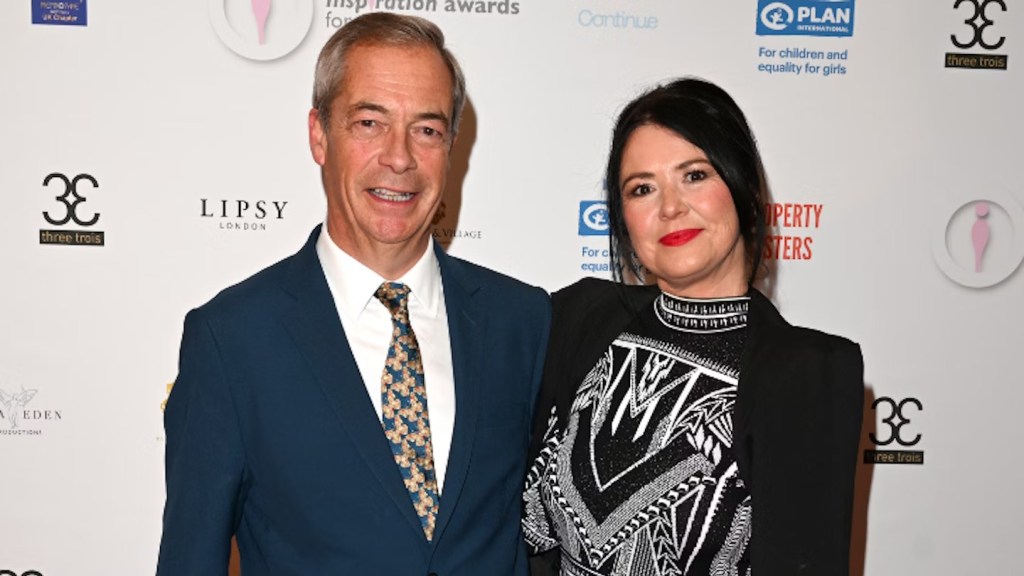
Laure Ferrari with Nigel charming lady .

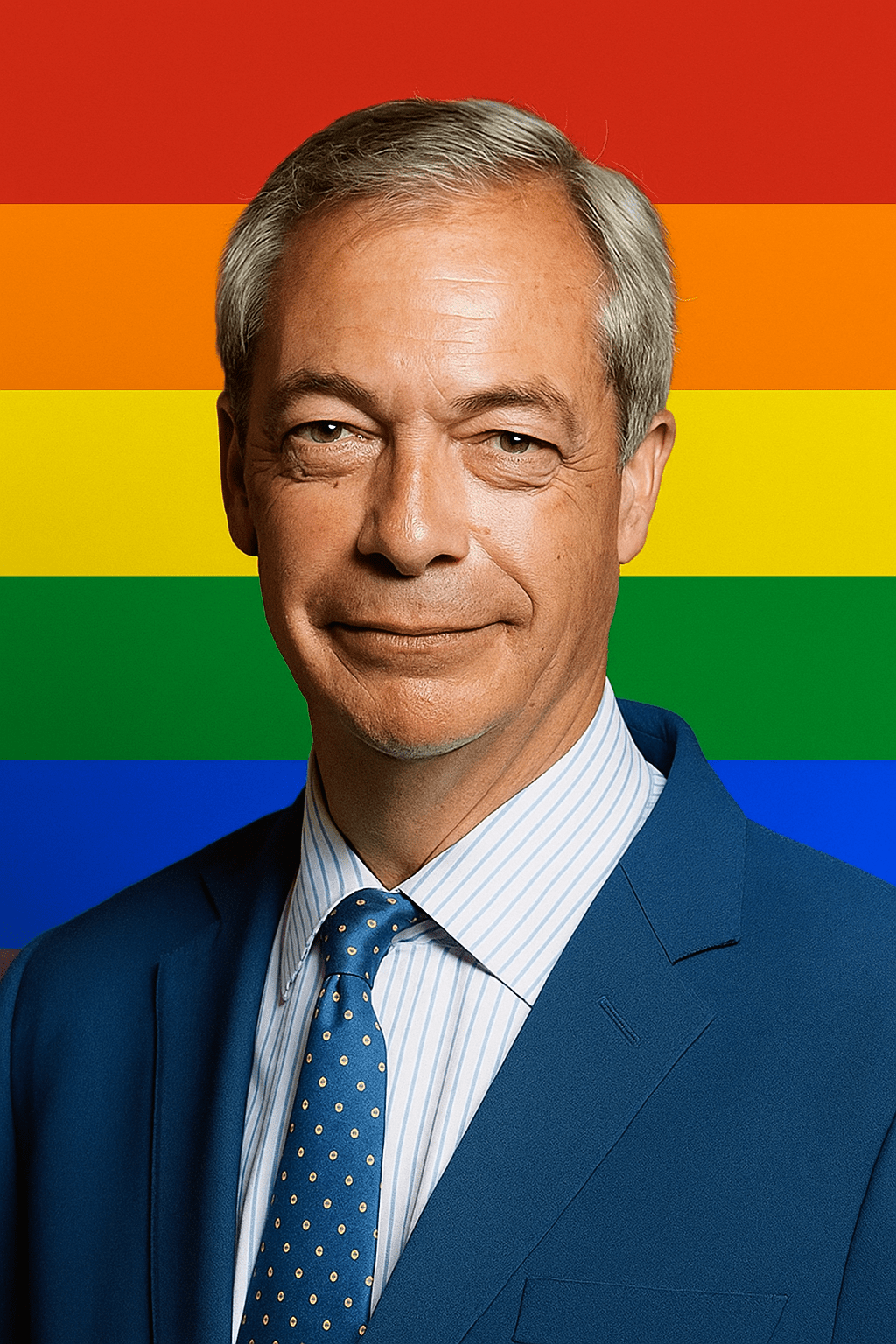
If you’re wondering whether the Reform Party under Nigel Farage might take a stance against the LGBTQ+ community, you may not have to look very far. A closer glance at Farage’s voting record reveals that he once voted against same-sex marriage—a move that speaks volumes about his social and political outlook.

This position seems somewhat ironic, given Farage’s own colourful marital history. Having been through two failed marriages himself, one might imagine he’d be a little more open-minded—or at the very least, more humble—when it comes to other people’s right to marry. Love, after all, comes in many forms, and marriage is a deeply personal choice that should be available to all consenting adults, regardless of gender or sexual orientation.

I had the chance to meet Farage briefly once, and I’ll say this: his current partner, Laure Ferrari, is a charming and intelligent woman. But perhaps Farage would be better served reflecting on his own relationship history before trying to legislate who can and cannot get married. A man who has struggled to sustain long-term commitments might want to tread lightly before denying others the right to even try.

If Farage is basing his stance on traditional or biblical values—as he often implies—then perhaps he should revisit those same values in the mirror. The Bible, after all, says a great deal about humility, compassion, and loving thy neighbour—principles that seem to get conveniently overlooked in his rhetoric. Selective morality has never made for good leadership, and voters are waking up to that.

Farage often touts his children as a source of pride, and no doubt he is a dedicated father. One of his children is an outspoken supporter of Donald Trump, which tells you a great deal about the household dynamic and political leanings. That said, it’s good to hear that despite having had testicular cancer, he’s clearly not firing blanks.

Isabelle Farage did an internship in Washington DC

While loyalty to family is admirable, it doesn’t excuse positions that marginalise entire communities or strip people of their rights in the name of so-called tradition. It’s worth asking: what kind of future does the Reform Party really envision? A society where love is judged and legislated? Where equality is rationed out depending on who fits into a narrow, outdated mould? The UK has made great strides in LGBTQ+ rights, and going backwards is not what people want—or need.

In the end, Farage’s views on marriage may say more about him than they do about society at large. Rather than acting as the moral gatekeeper, perhaps it’s time he looked inward and asked himself why love between two people—regardless of gender—should ever be up for debate.

Love is love. And no politician, no matter how many headlines they chase, should have the power to decide otherwise.

https://www.testicularcanceruk.com

Erin Patterson mushroom murderer .

I think it’s safe to say that no one will be rushing to give Erin Patterson — the so-called “mushroom murderer” — a job in the prison kitchen anytime soon. The tragic case has cast a long shadow over what has always seemed like a fairly harmless food.

Come to think of it, all my wonderful vegan friends who create amazing mushroom-based dishes might find me double-checking what varieties they’re actually using from now on! Mushrooms truly are one of nature’s wonders — packed with nutrients, flavour, and even potential healing properties. In fact, magic mushrooms (when used in microdosing) are showing promising results in mental health treatments, including anxiety, PTSD, and depression.

However, not all mushrooms are safe. Some look similar to edible varieties but are highly toxic, even deadly. It’s always best to source mushrooms from trusted suppliers or foragers who are fully trained in identification.

Death Cap mushrooms .

Here are a few of the most dangerous mushrooms to avoid:

  • Death Cap (Amanita phalloides)
  • Destroying Angel (Amanita virosa)
  • Funeral Bell (Galerina marginata)
  • Deadly Webcap (Cortinarius rubellus)
  • Panther Cap (Amanita pantherina)
  • False Morel (Gyromitra esculenta)

Mushrooms can nourish or kill — respect is key.

Driving me mad

Let’s make one thing clear: this is not a rant about women drivers. That said, there’s one male driver left such an impression that part of my heart still feels stranded in the Cotswolds — I’ve no idea how I survived that journey.

Now, one friend, bless her, assured me she had an advanced driving licence. This was just as we found ourselves parked in the central reservation, waiting for the next juggernaut to thunder past or into us I was gasping for air. “If I take the wrong one, it can be miles before I can turn back,” she said calmly — completely puzzled by my look of terror.

With the number of high-profile motorway deaths recently, I think I’m fully justified in being a back-seat driver. One friend drove with a small dog on her lap, a slurpy drink in one hand, and then decided it was the perfect time to apply lipstick. She seemed genuinely shocked when I wanted to get out of the car.

Taking a call while holding the phone in one hand should absolutely be illegal — and yet, some of my lady friends seem to do it as if it’s second nature. Zero awareness. Zero empathy.

One particularly playful argument — when I declined a Greggs coffee in favour of a Starbucks ” How can you afford that your broke ” — nearly ended in disaster, as the car narrowly missed a truck. When I instinctively threw my hands up onto the dashboard, I got snapped at: “That’s their fault — and if you keep doing that, you can get out!”

Apparently I’m the difficult one. But when we finally reached one friend’s house, her daughter-in-law took one look at me and said, “How did you survive that? It’s a suicide mission waiting to happen.”

Another friend got a ticket (thankfully not while I was in the car).

With drones now being used to catch drivers holding phones, drinks, or simply not holding the wheel — well, I say: bring it on!

Happily Ever After

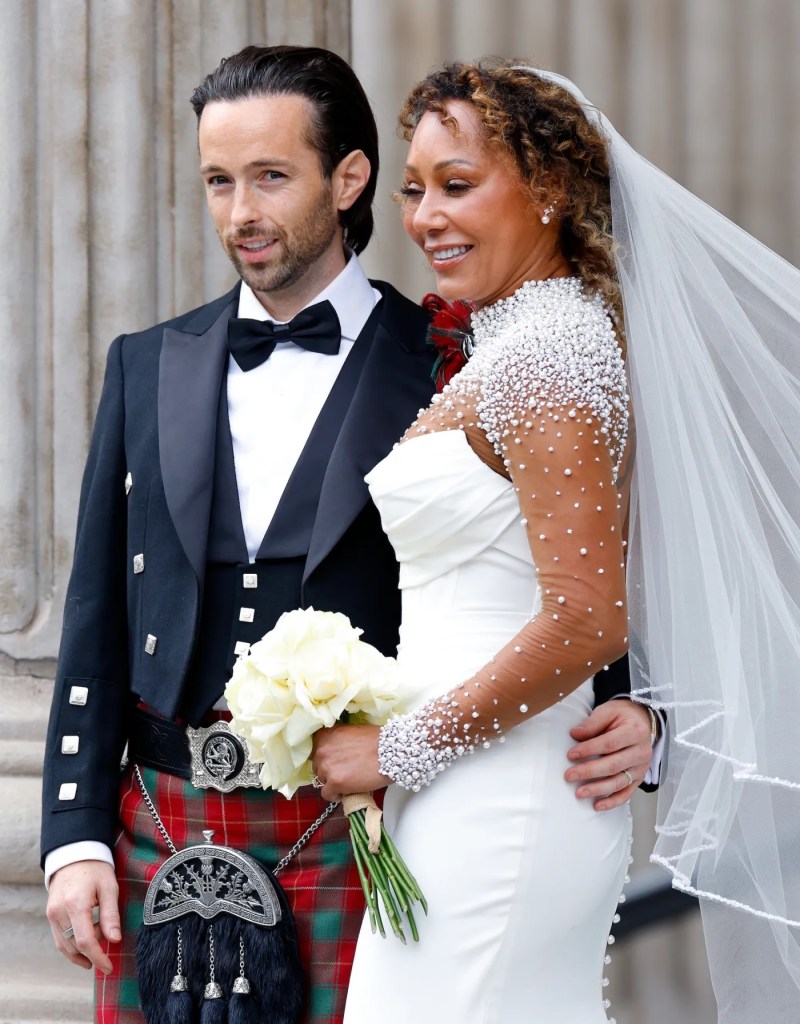
The gorgeous couple Mel B and Rory McPhee

It’s lovely to finally see some heartwarming news in the papers for a change! Scary Spice herself — the fabulous Mel B — has officially tied the knot with her long-time partner, Rory McPhee. He’s a professional hairdresser, and from the photos, they both looked absolutely gorgeous on their big day. There was an effortless glamour about them, and Mel B radiated happiness.

After everything Mel has been through in her personal life, it’s refreshing to see her smiling, looking confident, and surrounded by love. The wedding seemed like something straight out of a modern-day fairytale — intimate, stylish, and full of joy. I really hope that, just like in the stories, this marks the beginning of a “happily ever after” for the couple.

It’s easy to forget that celebrities are real people, with real hopes, heartbreaks, and dreams. Mel has always been a bold, outspoken figure, and her resilience over the years is truly inspiring. Seeing her find love again is a reminder that there’s always hope — no matter what life throws at us.

Here’s to new beginnings, lasting happiness, and a bit of Spice Girls sparkle. Congratulations, Mel and Rory — wishing you a lifetime of love and laugher .

END

E-mail Steven at spman @btinternet.com

Categories
Columns Lifestyle People Uncategorized

” I just love gay men “

“Fag Hag” – `’ ALL My Friends are Gay !!”

By Steven Smith

‘Fag hag’ or beard is a gay slang phrase referring to women who associate generally or exclusively with gay or bisexual men. But you knew that already, didn’t you?

Now, I hate labels of any kind, but when a woman tells me, “I love the gays,” my toes curl. Even my nephew, at thirteen, was smart enough not to fall for that one. “They’re just like everyone else—good and bad,” he shrewdly pointed out. It’s funny in Ab Fab when Edina blurts out, “All my friends are gay.” Oh, the irony.

However, women who proudly label themselves as fag hags often raise serious red flags. I’ve heard it too many times: “Other women just don’t get me, but you and the gay guys do.” This is usually followed by something about liking bad boys in bed. That’s nice for them. Me? I want to be liked for who I am—not for my sexuality or a label.

On my first visit to a gay club—New York’s Limelight—I noticed lots of model-type women dancing. My friend said, “They feel safe here. They can dance and not get hit on.” It wasn’t long before straight men caught onto this and started frequenting the more glamorous gay venues. One night, I was with a group of guys when a stunning girl approached and said, “So sad you’re all gay. I’d f*** the lot of you!”

A little voice piped up, “I’m straight.” It was my pal who, though he leads the way in gay fashion, is 100% straight. Many men have tried their luck with him—the lady and him were in a taxi home minutes later.

Elizabeth Taylor. Wowza.


She loved the company of gay men—from Rock Hudson to Tab Hunter and Montgomery Clift—calling them her confidants. Tallulah Bankhead, when she wasn’t famously trying to sleep with gay men, preferred their company too. Even Mary Queen of Scots liked to quote the pretty men.

As for me—I just like people. It just so happens many of my closest friends are women: glamorous, powerful, and fabulous. But none of them would call themselves fag hags. With them, I’m still the old-fashioned gent: opening doors, walking roadside on the pavement, even pulling out chairs. Though some of these women try to lead while dancing—and pull out my chair instead.

Despite having my picture taken for a dating site, I’m no further along in love. One of my rocks, Liz Branson, is on the phone from her New York office. She splits her time between there, Dubai, and London.

“Have you done it?” she asks. Trying to change the subject, I ask when she’s next in London. There’s a pause.

“You haven’t,” she snaps, irritated. Then she barks: “Jo Allen’s. Tuesday. 9:30.” She doesn’t wait to see if I’m free—and hangs up. Ten minutes later, she texts: “If you are free, can you book it?”

Liz is great fun—always right, obsessively so at times. That’s part of what makes her successful, alluring, and fascinating. She’s also always late, often with some story. The truth? It takes her half an hour to oil her body so it glistens. That’s just part of her prep to go out. Despite her brass balls in business and her ability to crush high-powered men, she still likes to be every inch the high-maintenance woman.

She’s my Grace—as in Will & Grace. But it’s a myth that all women “get” gay men just because they hang out with us. Even women who say, “I’m a gay man trapped in a woman’s body,” can be shockingly naive.

The brilliant Will and Grace

A long-time friend recently remarked, after a theatre visit, that I’d loved the show because it had five scantily dressed young men. As pretty as they were, they left me sexually cold. She must’ve missed the memo—none of my boyfriends have been under 40.

My best gay mate knows that the cast of Peaky Blinders or Colin Farrell gets my pulse racing. Teen boys? They’re like watching Dita Von Teese dance—entertaining, but that’s all. This same friend once asked, “Why would you want to give head rather than take?” Well…

Peaky Blinders Top Men

Liz, for the record, didn’t really know any gay men before me—aside from one man who lived with her as straight and came out later. I think she assumed we all came from the same mould. She even rushed into another relationship with a gay man who promptly took her to gay bars and more.

Personally, I think friendships should be mutual. I’m fine in straight bars, and when I do visit gay bars, it’s usually for dinner or an event. Once, Liz called whispering: “I’m on Clapham Common.” Thinking there was a concert, I asked what was on. “No,” she replied, “I’m cruising with— Have you done this?” I nearly screamed. That was a step too far. That relationship ended when the guy tried to seduce Liz’s then-husband.

It wasn’t the first time I heard of women going cruising with gay men. My former boss was in a Freedom cab once when the driver said he was dropping condoms off at Hampstead Heath. She piped up, “Oh, I’ve been there!” Her gay friends had taken her. This phenomenon passed me by. I don’t cruise—it’s scary. And as broad-minded as I am, why would you take a woman?

Anyway—Liz is late again. She’s texted multiple times, blaming an Uber driver, a lion escaping from Regent’s Park Zoo, and a fire at a local orphanage. But when she finally arrives, she looks spectacular, and the whole restaurant turns to stare. Liz waves, hair glossy, eyes sparkling.

She’s now vegan—though she was already a nightmare in restaurants. After sending an omelette back four times once, I took a photo of the “perfect” omelette and handed it to the waiter the next day. She wasn’t amused—but it was funny.

Back to the evening. Only one waiter and one chef resigned since she placed her order—kidding. I suggest popping to Tesco for the soya sauce she insists on. That goes down like a lead balloon, as usual. She has everyone fussing over her.

There’s the usual gossip: a gorgeous executive she went skinny dipping with in Dubai (amazing in bed—15 years younger—is that too much?). Then, yet again, she brings up Darryl, the best sex of her life, who turned out to be a complete asshole. I’ve heard about him 90 times.

The good thing about Liz—she’s no energy vampire. She wants to know about you. Unfortunately, she’s fixated on my love life. She thinks my best pal and I should be together. “Why aren’t you with someone?” she asks.

People often miss this: gay men can have purely platonic friendships with other gay men. Of course, I love my best mate—but I have no plans to marry him. I joke, “Fine. I’ll propose next week.” Liz screams and wants champagne—until I admit I’m joking. Her face falls (as much as it can, post-Botox).

We laugh, drink, and just when I think we’re winding down, Liz insists we head to Old Compton Street. “Why?” I ask. She loves G-A-Y, apparently. But my gut tells me she’s obsessing about finding me a fella. I suggest Radio Bar instead. Blank look.

There’s no queue at G-A-Y. Inside, Liz grabs a drink and immediately turns into Cilla Black, introducing me to random men. “Who do you like?” she shouts. I feel like a rabbit in the headlights. “I’ll be discreet,” she yells. “I’m all good, thanks,” I say, hugging her.

She dances with drag queens and shouts, “I’m a gay icon!” Naturally, they all agree. She’s no Madonna or Judy, but for one night—she was. It was actually quite sweet.

Flushed with her success, we head to Rupert Street to meet a friend. Her one-woman show goes down well there too. I brief her beforehand not to mention dating him. She thinks he’s too young, so I’m safe.

Then Liz starts chatting to the handsome doorman—who’s straight and married. He calls me over: “Why don’t you take your girlfriend somewhere she can meet a man?” I grin. “She wanted to come here—not me.”

Who says she couldn’t meet a man there? My sister had a holiday romance with a gay club manager in Key West. Another female friend married a bartender from a gay bar.

So, Liz and I are still happily single—but watch this space for more

Categories
Columns Culture Lifestyle People

The Passive Aggressive’s

By Steven Smith Stevens Viewz

Ah… the Passive Aggressives. We’ve all met them. They open their mouths and what comes out sounds like a compliment—but it’s actually a veiled put-down. Before you can respond, they’ve already moved on to a new subject. Like silent assassins, they strike, then dare you to recover from the blow.

If you say, “Hey, would you like that said to you?”, they recoil in horror and reply, “Why are you so sensitive, darling? It was a compliment,” shaking their heads like they’re the victim of #PassiveAggression.

From:
“I do admire how you keep going when others would have thrown in the towel ages ago—so brave,”
to:
“You know that outfit suits you—don’t let others put you off, whatever they say.”

Favourite?

My personal favourite came from a friend who’d actually introduced me to my now-best male pal. She told me:
“So glad it’s going well with you two… you shouldn’t care what others are saying about you both.”

Let’s not forget the classic:
“You can’t tell anyone I told you this, but so-and-so said XYZ about you.”
My reply? Always: “Why were they so comfortable telling you?”

Now, much passive aggression comes from strangers, but the deepest cuts usually come from people we love, see regularly—or worse—family members.

Madeleine, a dear friend of mine, simply can’t help herself.

We All Know a Few Wicked Queens

The trouble is, I love her, and I tend to overlook her barbed remarks. Picture this: dinner with a group of friends as she regales the table with a story—
“Oh darling, we were sitting up in premium class while Steven was way back in economy, squashed between two people.”

Everyone chuckles and looks at me sympathetically. In reality, she was also in economy. A bit further from me, yes—but the same class. Why make me the fall guy in her tale?

I don’t correct her. Honestly, I’m speechless. And who wants to play #PassiveAggressiveTennis? I know she loves me—really.

Spelling Lessons

Another agent friend, Antonia, has a wicked sense of humour, and her loyalty redeems a lot. I was so looking forward to lunch with her. She’d just returned from New York, promoting her girlfriend’s record, and we planned to pop into a gallery event where one of her friends was exhibiting.

But it didn’t take long for the first blow:
“Darling Donna [her girlfriend] and I were just saying—you forget what a great writer you are—pause—as you’re just such an appalling speller.”
Then, after another pause:
“Does someone help you?” she asked, casually munching a root vegetable like we were discussing the weather.

It’s true—I’m dyslexic. Spelling is not my strong suit. But after over 20 years writing for publications around the world, and two published books, I’ve earned my place. If it weren’t for journalist and presenter Jane Moore encouraging me—
“You have the voice. The rest will come—just do it.”

With technology, hard work, and mentors like Jane, I carved out a writing career. These days, people actually rate my work—and that means a lot. So I just smile and explain that yes, I have editors and tech, and the tools are better now.

Before I finish, the topic shifts—to Donna hitting the charts in the U.S.

Still Not Done

Later, at the packed gallery event, Madeleine introduces me to a group of people:
“Everyone, this is Steven. He’s a great writer—but can’t spell.”

They look bemused. Madeleine has struck—and vanished—leaving me standing there hoping no one starts a crowdfund for my spelling lessons.

Arlena & Real Life

Life isn’t like the movies when the passive-aggressive gang comes for you. Most of us feel like rabbits in headlights—unlike the deliciously sharp Dames Diana Rigg and Maggie Smith in Evil Under the Sun.

Maggie, as Daphne Castle, greets Diana Rigg’s character Arlena Marshall:
“Arlena and I were in the chorus of a show together—not that I could compete. Even in those days, she could always throw her legs in the air higher than any of us—and wider!”

Arlena retorts,
“Kenneth, what a surprise. When you told me the island was run by a quaint little landlady, I had no idea it was Daphne Castle.”

There’s a fine line between bitchy and passive-aggressive.

Mother-in-Law Moments

A friend’s mother-in-law, taken backstage after a show, hugged the leading man and gushed about how amazing he was. The leading lady popped in to say hello. She turned to her and said,
“I thought you were great… don’t listen to those reviews.”

Silence. The actress smiled, made her excuses, and left. When we later pointed out it was a line from The Feud (Joan Crawford vs. Bette Davis), the poor woman was mortified—she hadn’t meant it to cut. In hindsight? Hysterically funny.

The day before, she’d overheard me chatting to a famous pop star:
“Who was that?” she asked.
I should’ve said, “Mind your own business,” like my mum would. But I answered. Her reply?
“Why would they want to talk to you?”

Gobsmacked. And somehow, older people get away with more. She really is lovely, though.

LGBTQ and the Passive Blow

As a member of the LGBTQ+ community, we often face passive aggression. It’s exhausting.

At a wedding in Guernsey, where the bride was 20 years older than the groom (so you’d think a liberal crowd, right?), a woman rushed up:
“Oh, you two must be Mandy’s gay friends from London!”

She beamed like she expected us to burst into I Am What I Am. I tried some small talk. She wasn’t done:
“David is gay—from EastEnders!”
I replied, “Really? Amazing. I’ll look him up in the book.”
Her eyes widened, “There’s a book?”
“Yes, we’re all registered. I’ll bring you a copy next time I visit Mandy.”

Okay, that may have been me being passive-aggressive.

From:
“I don’t mind the gays. My hairdresser’s one.”
to:
“I’m all for it—but don’t you mind not being able to have children?”
We’ve all heard those.

Let’s not get started on the “bitchy queen” lines:
“Don’t mind me, it’s all in jest. I’m just a bitch.”
You’re waiting for them to hand you the poisoned apple. “Go on, bite, dear.”

What the Experts Say

Experts say the best way to handle passive-aggressive people is not to react.

Self-help psychologist Dr Pam Spurr (@DrPamSpurr) says:

“People can be passive-aggressive for many reasons, but usually it’s because they have a manipulative streak.

If they want to put you down, the easiest way is with a backhanded compliment. It wrong-foots you and leaves you wondering what they really meant. That’s emotional manipulation.

She adds:

“Passive aggression often comes from resentment, envy, or jealousy—sometimes without them even realising it.

Some people, however, do know exactly what they’re doing. They enjoy the power of the subtle jab.”

Her advice?

  • Call it out calmly—especially if you see the person often.
  • If it’s someone you barely know—ignore it, put it in perspective.
  • Realise: it’s more about them than it is about you.

According to LearningMind.com, passive aggression also includes chronic lateness (to gain attention), controlling events, undermining others behind their backs, playing the victim, or pretending there’s no issue when there clearly is.

Psychology Today agrees:

  • Recognise the behaviour.
  • Stay calm.
  • Don’t take it personally.
  • Confront it if needed.

Blackmail and Backlash

These all sound simple on paper. But for people like me—who hate confrontation—even a kind challenge results in tears and emotional blackmail. I’ll do anything to stop someone crying.

Growing up, pointing out when someone was wrong led to a meltdown. Still today, if I gently mention something upsetting, I get:
“I can’t say anything right,”
soon followed by,
“I had a terrible childhood.”

Let’s be honest—in the UK, from the 60s to the 80s (and sometimes now), talking about feelings can feel like a deadly sin.

Teach Them Young

Signe Whitson, LSW, writing for Psychology Today, notes:

“Without directly addressing passive-aggressive behaviour, the pattern will play out again and again. For real change, benign confrontation is necessary.”

She argues being assertive isn’t something to fear.

I agree. Imagine if we taught kids that if someone they love says something hurtful, it’s okay to speak up and share how it made them feel.

As Dr Pam says,

“Sometimes they don’t even realise what they’re doing.”

END


Steven Smith
@asksteve2c
Psychology Today – Passive Aggressive Diaries
@DrPamSpurr
Dr Pam’s show + podcast series

Categories
Columns Lifestyle People Uncategorized

Steven’s Viewz How to Give a Bad or Good Dinner Party

it is not always the food that makes a perfect dinner party


Steven’s Viewz
How to Give a Bad Dinner Party

In the ’70s and ’80s, dinner parties were a regular thing. With shows like Come Dine with Me and the rising costs of eating out, dinner parties are making a huge comeback. Though some still entertain at venues such as restaurants, there’s nothing more intimate and fun than having a group of friends—or interesting people—over to your home for a private dinner party. But as much as a good host can make it a terrific night to remember, the wrong recipe for an evening can lead to a dinner party your guests will talk about for weeks—for all the wrong reasons.

When you’re hosting for wine connoisseurs or food gourmets, the conversation may revolve around cuisine and drink. But believe it or not, the best dinner parties don’t always centre on either. Of course, putting on a good show that doesn’t have you locked away in the kitchen all night is still a good idea.

In fact, one of the most amusing dinner parties I attended began with a call from a hostess who, not being known for her culinary skills and usually opting to dine out, invited me over to see her new kitchen. The day after the invite, she phoned:
“Darling, would you do your marvellous chicken fajitas on Friday?”
Asking was she planning a potluck (when everyone brings a course), Fajitas , don’t travel well. There was a pause before she added, “Oh, I thought you could cook?”
I replied, “No, it’s your turn,” and hung up!

Not my chicken fajitas , Mine look better .

I arrived at her stunning Hampstead home on the Friday. The table was beautifully set, and the new oven was lit—I was suitably impressed. The hostess had that pleased-with-herself look written all over her face; in fairness, this wasn’t her forte. Wine flowed, and nibbles were served, but an hour and a half later, no food had appeared. Looking at the oven, the chicken was still as raw as it had been on the Waitrose shelf.
“My love, is the oven actually working?” I gently enquired.

An hour later, we were still no further along. The hostess declared the new oven faulty and called for Chinese. We laughed and put the world to rights until two-thirty in the morning—it was just an amazing night.

It was topped off by a call on Tuesday: the repairman said the oven wasn’t broken—she’d simply forgotten to turn it on. I couldn’t help but ask when she was auditioning for Come Dine with Me. how she was going to cook ?
She replied, “Darling, you’re coming over and doing it for me!”

However, for your standard dinner party—especially if you’re not ordering in—don’t cook something that keeps you in the kitchen half the night or that hasn’t been tried and tested. Your guests have come to see you, not watch you stress. Pre-cooking as much as possible is always wise.

Also, always check what your guests eat. At one dinner I attended, they served an enormous piece of goat’s cheese as a starter. Honestly, I’d rather suck someone’s feet than eat that. I used the trick of eating without chewing, washing it down with water. Every time I looked at the plate, it seemed no smaller. Eventually, the host noticed, and I had to admit defeat. They looked less than impressed.

It’s smart to have eggs or a vegan option on standby—just in case a guest hasn’t disclosed their dietary needs.

What really makes a dinner party memorable is the company. Years ago, a socialite who was an expert at entertaining shared some tips with me. Never bring the same type of people together. Lady X would be far more intrigued sitting next to an up-and-coming artist than another socialite. Invite those who can sing for their supper—interesting, amusing guests who can tell a good story or keep up with the latest in books, style, or theatre.

Dinner or lunch party’s can be great but think it out first .

Bring five actors together (unless they’re in the same production) and you risk them trying to outdo each other.

Being a good host is more than just checking glasses and topping up wine. It’s about ensuring your guests are enjoying themselves and actually get to speak. We’ve all been to that dinner where the narcissist dominates the conversation—and even when they pause, they jump back in to reclaim the spotlight. As host, it’s your role to steer the conversation so quieter guests also get a chance. Ask about books, films, theatre—whatever might draw them out.

And please, don’t try to be controversial. Sure, a lively debate can be great—if you know your guests well—but don’t go looking for drama. It could end your night on a sour note.

Avoid topics like age, weight, salaries, and politics. One evening, a guest at a dinner I hosted turned to another and said, “You know, when we get to our age it all needs a little lift—but I love my forties.”
The guest was livid: “I’m 32!” she cried, getting up and leaving the table.

Let the conversation flow. Unless you’re lucky enough to have a Stephen Fry at your table, make sure everyone has a voice. And never, ever be the Machiavellian host who opens the night with, “So, who voted for Brexit?!”

Do not be that machiavellian host and try and spark controversy .

One of the worst dinner parties I’ve attended had all the wrong ingredients. We were eating out, so the food was decent—for some. There were quite a few of us, and things started badly: someone I love had reprimanded another guest for being late, which was rich coming from them. Pot, kettle, black, I thought. They’ve never been on time in their life. When I pointed that out, offence was taken—and they were still seething as we arrived.

Our host, Mark—though lovely and amusing—wanted to talk about one topic: a certain lady we’ll call Alice. He and Alice were once close, but no longer, which made her a target. Now, I love gossip as much as the next person, but I prefer it light, witty, and name-free. I’m known for knowing the gossip—but those who know me also know I rarely name names. I’m educated enough to entertain without tearing someone down.

But this monologue about Alice’s every fault dragged on and on. It felt like the only thing missing was Alice’s corpse—she was being verbally hacked to pieces. One hour later, Mark was still talking about Alice, with brief interruptions for “Let’s get another round in,” and one guest returning their starter three times. Some guests had begun looking at their phones. One even mouthed “Come sit with me!”

I suggested that, since we’d established Alice was a c—, perhaps we could move on.
That was met with, “Mark is talking—sssh!”

I would have left, but I was staying with one of the guests. Just when I thought the evening couldn’t get worse, a very late guest arrived—the cuckoo, who had seemingly replaced Alice in Mark’s affections. She briefly talked about another of my least favourite subjects—dieting—before the topic swerved straight back to Alice, in which the cuckoo revelled.

The toxic energy was palpable. Our host, smart as he was, was no Oscar Wilde, and only seemed aware of his own voice. Thank God I smoke—those breaks saved me. I even got a text from another guest: “Help!” They were bored stiff.

The cherry on top? Mark wasn’t even hosting. We were all going Dutch. After over two hours of his monologue, one of the guests even drove home drunk.

Here’s my final tip: If you’re hosting drinkers, be responsible. Make sure they have somewhere to stay, book a cab, or use a company that will drive their car home for them. As you pour that last tequila shot, you do not want to hear that someone was in an accident on the way home.

Happy dining,
Steven

Categories
Columns Health and Fitness Lifestyle Uncategorized

The Fab Four for sleep.

Fab 4 for Sleep

Having trouble sleeping—or just want the best natural help to drift off without taking a pill? Here are my fab four to stop you from counting sheep as you float away to la-la land.


1) Sour Cherry Juice

Tart cherries, among many other benefits, contain melatonin. Increasing your melatonin levels can help you fall asleep quicker and stay asleep longer, offering a natural way to drift through the night. Cherry juice can also help fight inflammation, reduce muscle soreness, and boost your immune system.

Try drinking a glass of juice an hour before bedtime. This gives it time to enter your system—and gives you time to use the bathroom, so your bladder won’t wake you up in the night! If you don’t like the taste of cherry juice, try it in capsule form. Another great tip is to have a warm lavender bath before bed.

🔗 Buy Cherry Juice Concentrate on Amazon


2) Fresh Face Pillows

Your bedding plays a big part in how well you sleep. My secret weapon is the Fresh Face Pillow—a memory foam pillow wrapped in a silk pillow slip. I’ve always been a devotee of silk and memory foam pillows, but this is different: this pillow literally gives you a cuddle. It’s sheer heaven as you lie back and prepare to dream. It’s also an incredible anti-ageing tool—the silk allows your face to breathe and glide, while the pillow’s unique shape encourages back sleeping, helping prevent those dreaded sleep lines.

If you’re like me and used to sleeping on your side, the Fresh Face Pillow may take some getting used to. In fact, it felt a little claustrophobic the first time I tried it! But the idea of waking up without looking like a giant gorilla had assaulted me in the night made me persevere.

During the first few weeks, I’d use it for short lie-downs with a face mask—it felt like I was at the beautician’s! By the second week, I started using it for full nights. At first, I still woke on my side, but soon it became a must at bedtime. I cannot recommend it enough. Just remember to hand-wash your silk pillowcase or use a delicate setting.

🔗 Visit freshfacepillow.com


3) This Works Best-Selling Deep Sleep Pillow Spray

This Works Deep Sleep Pillow Spray not only claims to help you fall asleep faster—it also makes your pillows and bedroom smell gorgeous. With a calming blend of lavender, vetivert, and wild camomile, it eases anxiety and helps improve sleep quality. When we sleep, our skin cells repair damage and remove toxins, making deep sleep one of the best beauty secrets.

A few sprays on your pillow before bed is all it takes. And if you have time, a warm lavender bath beforehand works wonders too.

🔗 Buy on thisworks.com


4) The Mirari Life Grace Silk Velvet Eye Mask

One of the best aids for sleep and beauty is an eye mask. Blocking out light can be a game-changer—especially on long-haul flights. But not just any mask will do. The delicate skin around your eyes deserves something gentle. I always recommend a silk eye mask, and the Mirari Life Grace Silk Velvet Eye Mask is pure perfection.

Made from a luxurious silk-velvet blend, this mask is thick enough to give a complete blackout effect—ideal for even the most light-sensitive sleepers. It also helps reduce sleep creases and preserve your skincare. Yes, it’s a bit pricier than standard eye masks, but it’s a wonderful investment in your beauty regime. Plus, it’s perfect for travel.

🔗 Shop the Grace Silk Velvet Eye Mask

Categories
Columns Lifestyle Poetry Uncategorized

Anna Kennedy’s Pride Column Pride Month & Autism column

Dr Anna Kennedy OBE Pride picture BY Annemarie Bickerton https://www.annemariebickerton.co.uk

https://annakennedyonline.com Dr Anna Kennedy with charity patron Steven Smith. Photo Annemarie Bickerton

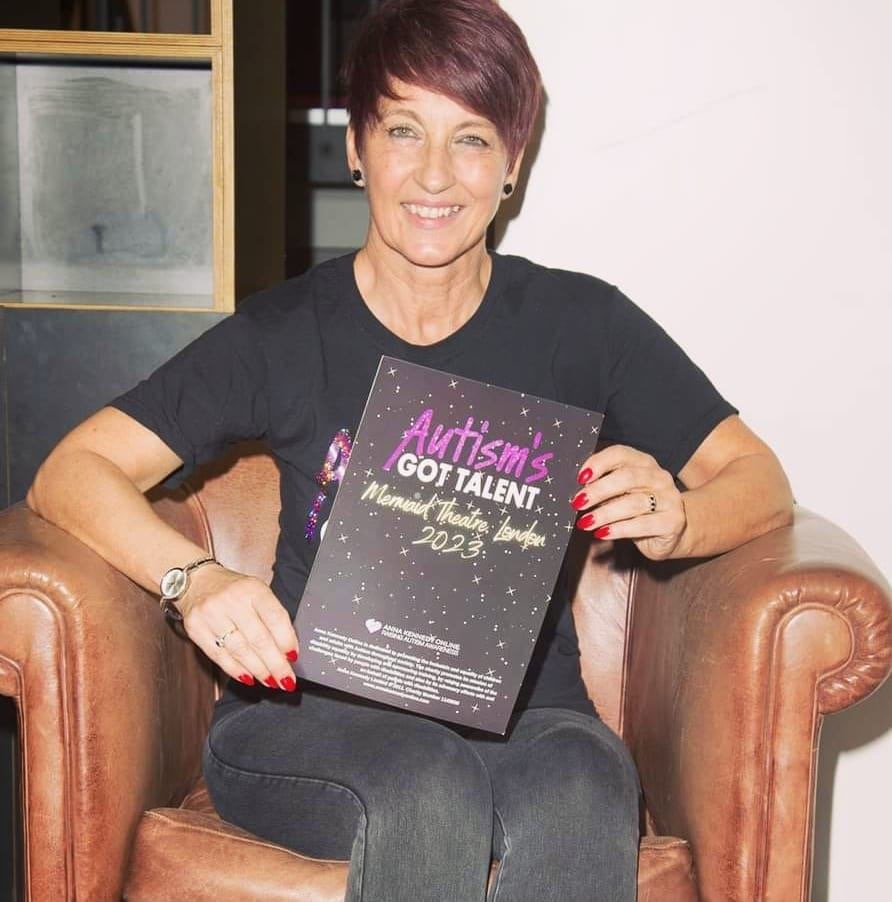
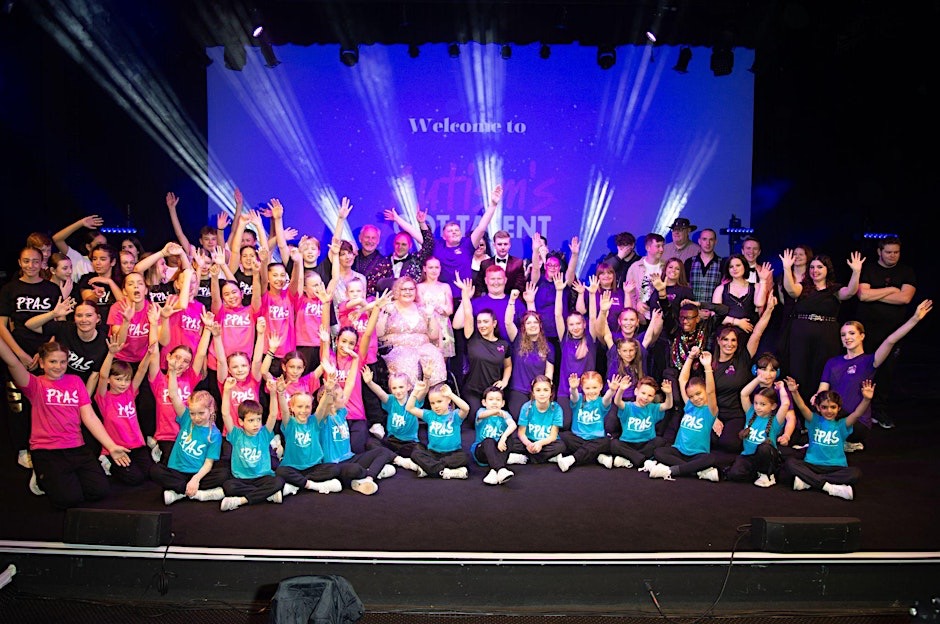
Hi it is Anna here founder of the autism charity Anna Kennedy Online. Since starting the charity in 2009, my passion has always been to raise awareness, acceptance, and understanding of autistic individuals and their families. Over the years, through our events like Autism’s Got Talent and The Autism Hero Awards, I’ve had the privilege of meeting so many incredible people who continue to inspire me every day.

This Pride Month, I want to take a moment to celebrate our autistic LGBTQ+ community members—many of whom still don’t feel fully seen or supported. Inclusion isn’t just a buzzword; it means accepting and embracing every part of who someone is. I’ve spoken to young people and families who are navigating this intersection, and I know how important it is to feel heard, respected, and safe to be your true self.

This column is a reminder that you are not alone. You matter. You belong. And we see you and your welcome at AKO Love Anna xxxx

Why do you think it’s important to recognise and celebrate Pride Month within the autism community?
Recognising and celebrating Pride Month within the autism community is important because it fosters a sense of belonging, validates the experiences of LGBTQ+ autistic individuals, and promotes greater understanding and acceptance. This recognition challenges the misconception that autism is solely a deficit and instead highlights the unique strengths and contributions of autistic people. We’ve seen this time and time again through our events such as Autism’s Got Talentand The Autism Hero Awards.

What are some of the unique challenges that autistic individuals who are also LGBTQ+ face?
Autistic individuals who are also LGBTQ+ often face the challenge of navigating two distinct communities. This can lead to increased isolation and mental health struggles. Some people I’ve spoken to find it difficult to feel fully understood and accepted, as they may not feel they completely fit within either the autistic or LGBTQ+ communities.

https://annakennedyonline.com

How does your organisation support autistic people who identify as part of the LGBTQ+ community throughout the year—not just during Pride Month?
Since launching our charity in 2009, we’ve always been supportive of the LGBTQ+ community. We’ve offered advice and support to individuals and families who’ve reached out, and we’ve proudly included many LGBTQ+ performers in Autism’s Got Talent, as well as nominees for the Autism Hero Awards. Our team includes a wonderfully diverse group of ambassadors, charity patrons, and volunteers who reflect our inclusive values.

Autisms Got Talent

Have you noticed an increase in autistic people feeling confident to express diverse gender or sexual identities in recent years?
In my opinion, yes—there is growing awareness, acceptance, and confidence among autistic individuals when it comes to expressing diverse gender and sexual identities. Research supports this trend, and organisations like Reframing Autism are playing an important role in empowering autistic people to explore and embrace who they are.

How can parents, carers, or educators better support young autistic people who are exploring their gender or sexual identity?
The most effective way to support young autistic individuals exploring their gender or sexual identity is through active listening, affirmation, and creating safe, respectful environments. This includes using preferred names and pronouns, sharing reliable resources, and helping them access both peer and professional support networks.

How can Pride events become more sensory-friendly or accessible to autistic attendees? Have you worked with any organisers to help with this?
To make Pride events more sensory-friendly, organisers should consider providing quiet zones, visual guides, clear schedules, and accessible information. It’s also vital to ensure authentic and diverse representation within the planning teams. While we haven’t yet partnered with organisers on this specifically, it’s something we’d be very open to in the future.

Do you see any stereotypes or misconceptions that still need to be challenged when it comes to autism and LGBTQ+ identities?
Yes, there are several. One persistent misconception is that being both autistic and LGBTQ+ is rare, when in fact, research shows a significantly higher prevalence of LGBTQ+ identities among autistic individuals. Another issue is the lack of visible role models and media representation. Although awareness is growing, we still need more positive stories and accurate portrayals of autistic LGBTQ+ people in the media and beyond.

What message would you like to share during Pride Month on behalf of the autistic community—especially those who often feel invisible in both autism and LGBTQ+ spaces?
My message is: “You are seen. You are valid. You are loved. Don’t be afraid to embrace your authentic self. Find your space, take your time, and know that there is a community ready to welcome and support you.”